

15 Balcony Vegetables for Renters Who Move Every Year
Moving every year changes what a garden can be. Heavy terracotta, fixed boxes, and crops that take all season to pay off all get left behind or given away.
This balcony vegetable garden for renters who move every year sticks to light pots, fabric bags, and crops that finish fast or travel well. Nothing here needs drilling, digging, or a van.
Grow bags fold flat, stack in a box, and weigh almost nothing empty. Plastic pots ride in the car beside you. The plants themselves finish in weeks, not months.
Time each sowing to your lease where you can. Fast crops go in right after a move, and the slowest pot, the tomato, is the one plant worth carrying.
This post contains affiliate links. If you buy through them, we may earn a small commission at no extra cost to you. See our Affiliate Disclosure.
1. Grow Lettuce in a Fabric Bag You Can Fold Flat
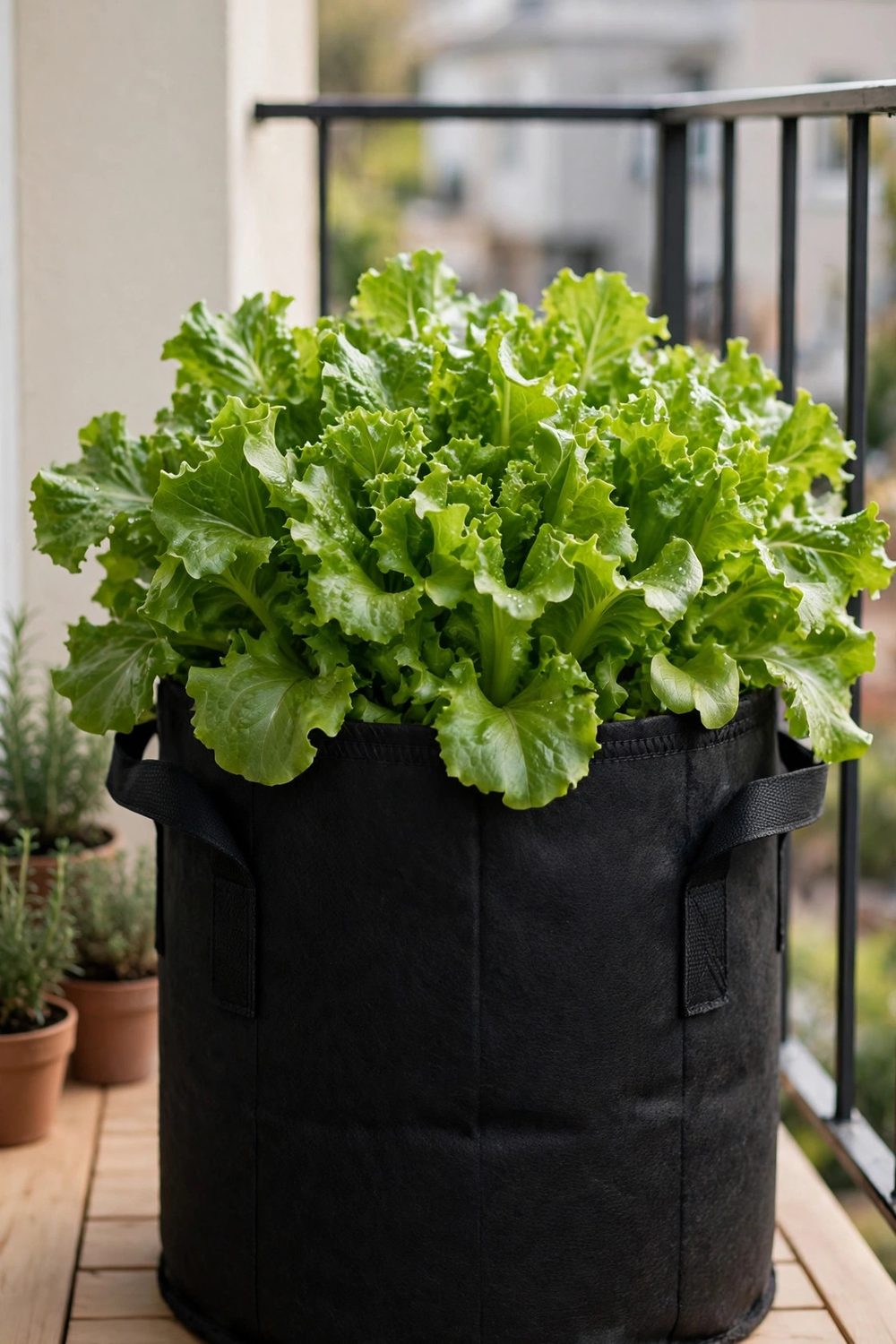
An empty grow bag weighs less than a paperback book. That single fact makes fabric the best container for anyone whose pots ride in a car every year.
Fill a 5-gallon (about 19-liter) bag with mix and sow loose-leaf lettuce thinly over the surface. Cover the seed with a dusting of mix and mist it daily.
Lettuce needs only 3 to 4 hours of sun and a bowl at least 12 inches (30 cm) wide in feel, which a soft bag gives it. Snip outer leaves often.
At moving time, harvest the whole bag hard, compost the mix, and fold the bag into your kitchen box. The next balcony starts again in ten minutes.
2. Sow Radishes the Week You Move In
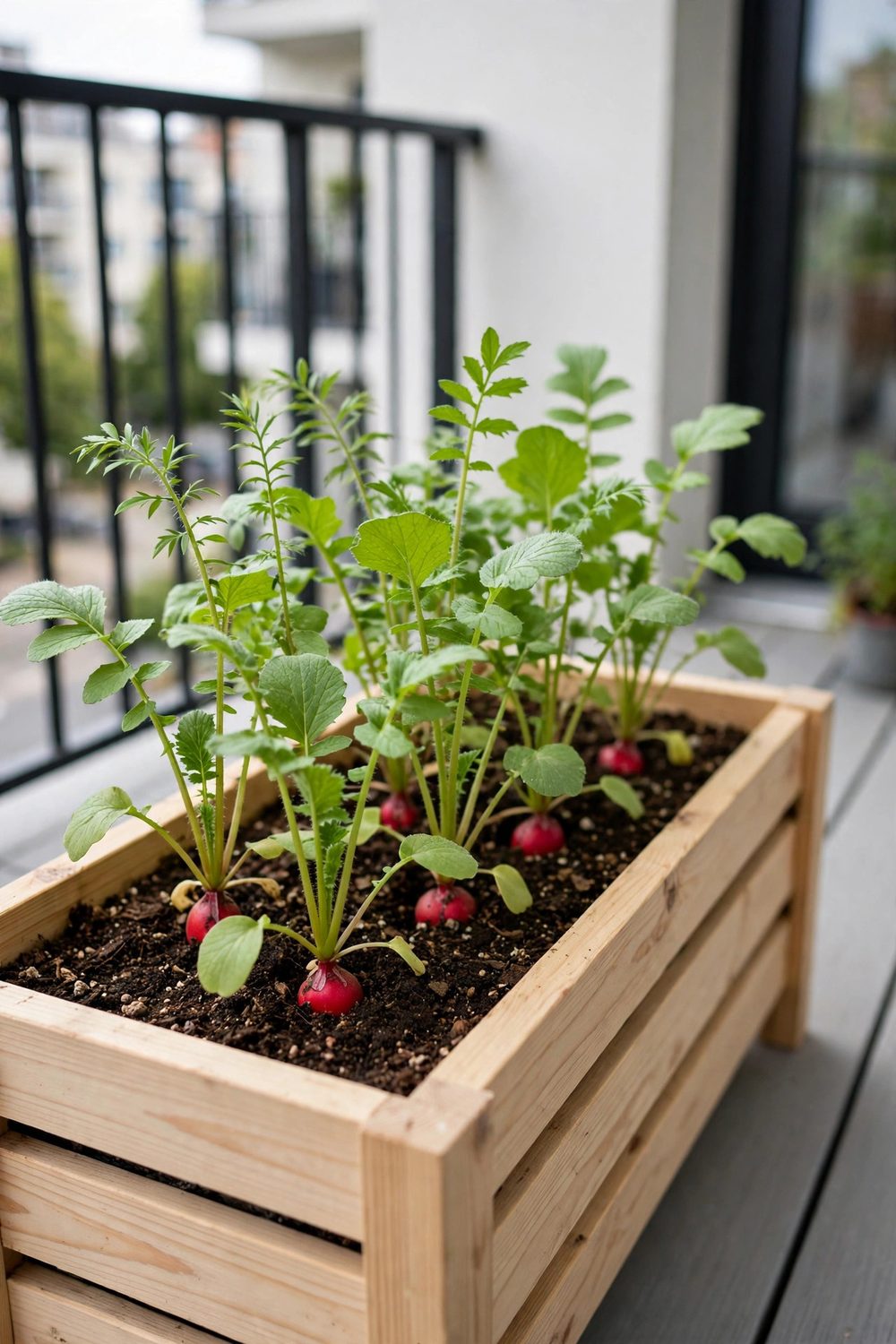
Radishes are the fastest way to make a new balcony feel like yours. Sow them the week you arrive and you will be pulling roots in about a month.
Use a trough or box at least 6 inches (15 cm) deep. Sow seed 1/2 inch (1 cm) deep and 1 inch (2.5 cm) apart, then thin to 2 inches (5 cm).
Keep the mix damp and pick roots young, before they turn woody. A short row every two weeks keeps the harvest steady without flooding the fridge.
Radish seed is cheap and the packet is tiny, so it travels in a kitchen drawer. Few crops ask for so little commitment from a short lease.
3. Keep One Herb Box That Rides in the Car
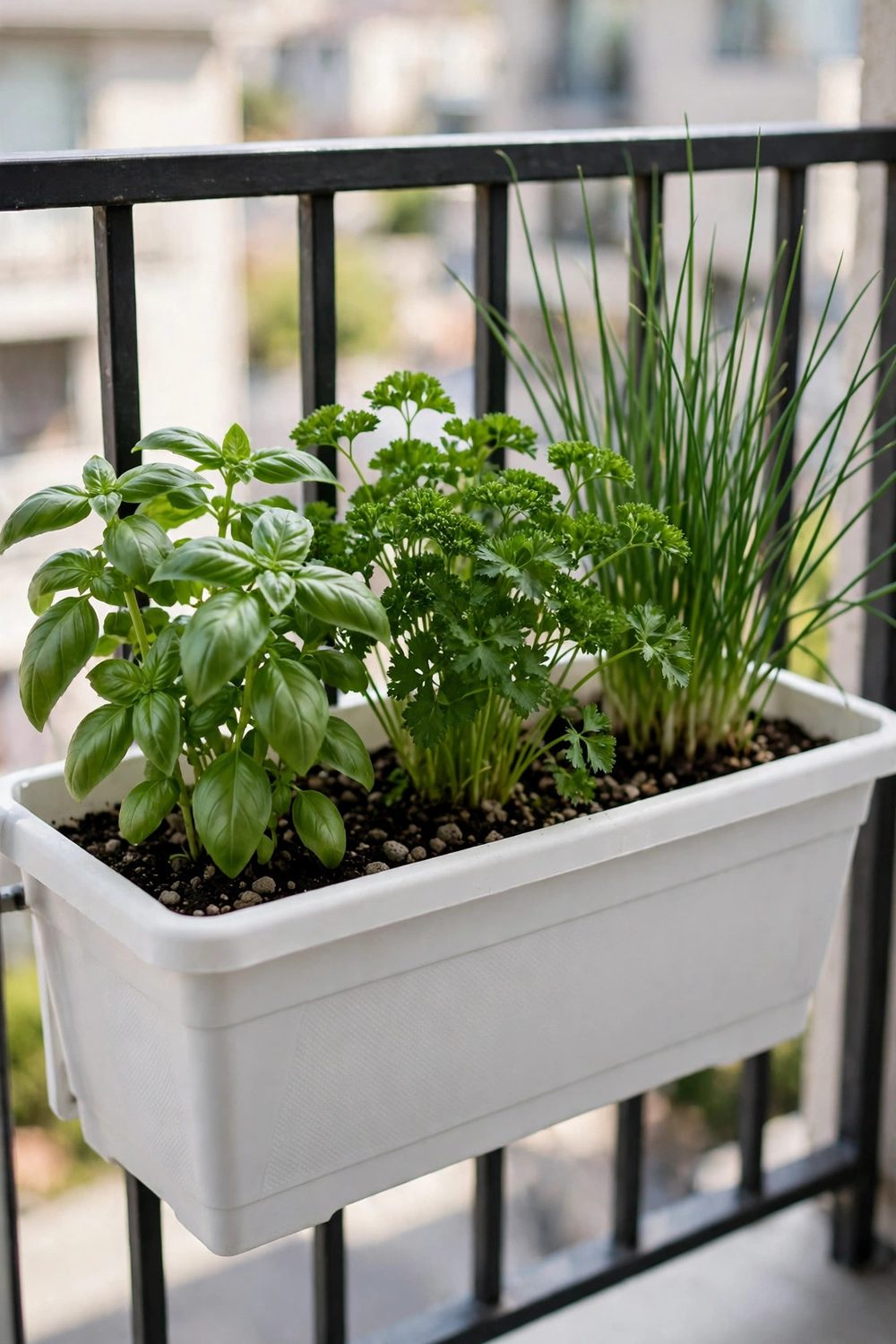
Herbs are the plants movers actually miss, because a living basil or parsley pot makes a new kitchen feel settled fast. One box, carried by hand, does the job.
Choose a light plastic box at least 8 inches (20 cm) deep. Plant basil, chives, and parsley, one plant per 8 inches (20 cm) of length, on the inside rail.
Basil wants full sun and steady water. Parsley and chives forgive a missed day, which helps during the chaos of unpacking week.
On moving day, water the box well, set it upright in the footwell, and carry it in first. Dinner on night one already tastes like home.
4. Carry One Tomato in a Bucket With a Handle
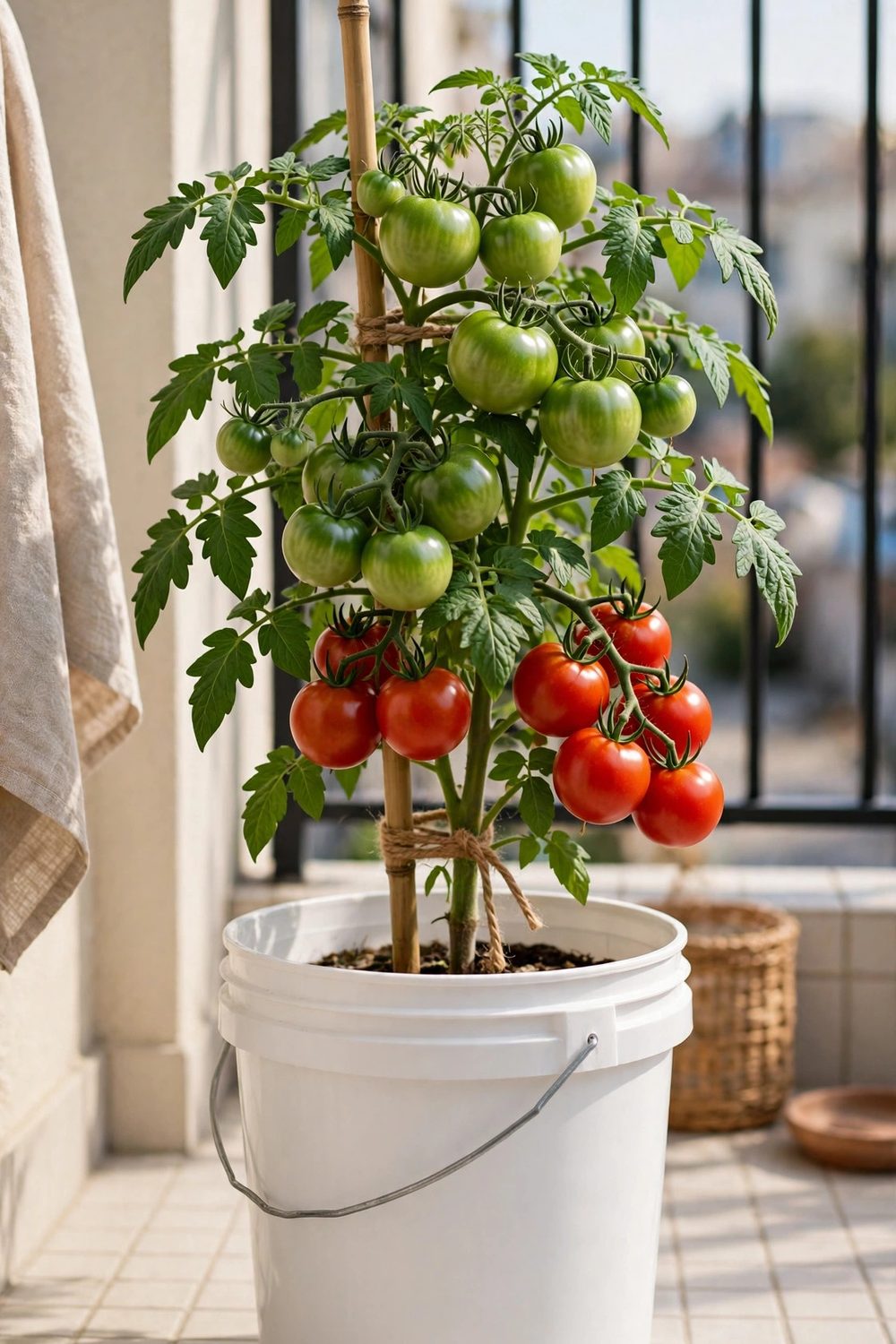
Most pots are awkward to carry when they are full of wet mix. A food-safe 5-gallon (about 19-liter) bucket with a handle moves like luggage instead.
Drill drainage holes in the base and plant one compact tomato, such as ‘Tiny Tim’ or ‘Patio Choice’. Tie the stem loosely to a short stake pushed in deep.
Give the bucket your sunniest spot, with 6 to 8 hours of light. Water deeply when the top inch (2.5 cm) of mix feels dry to a fingertip.
Feed every two weeks once flowers open. If a move lands mid-season, this is the one plant worth the car space, watered well and laid in shade on arrival.
5. Grow a Pepper in a Light Plastic Pot, Not Terracotta
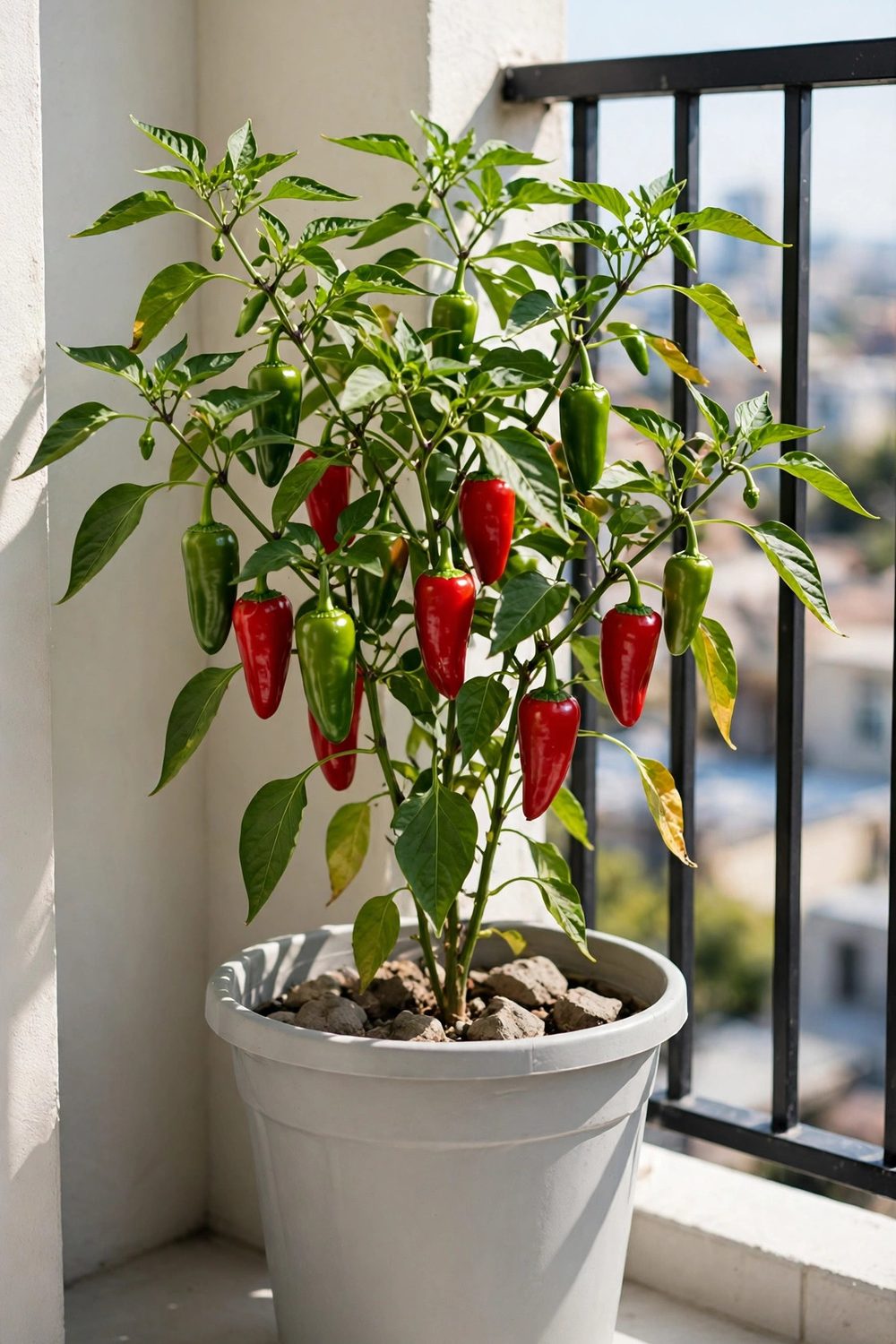
A wet terracotta pot can weigh as much as a small suitcase. The same pepper in a light plastic 5-gallon (about 19-liter) pot lifts with one hand.
Keep the one-plant rule: one pepper per pot, in your hottest corner, with 6 to 8 hours of sun. Reflected heat from a wall helps on cool nights.
Push a stake in at planting time so loaded branches do not snap in wind. Water evenly, because swings between dry and soaked can split the fruit.
Peppers crop until the first cold nights, so a late-summer move rarely wastes the plant. Our guide to a balcony vegetable garden in grow bags covers the other light containers worth owning.
6. Pick Kale That Keeps Cropping Until Moving Day
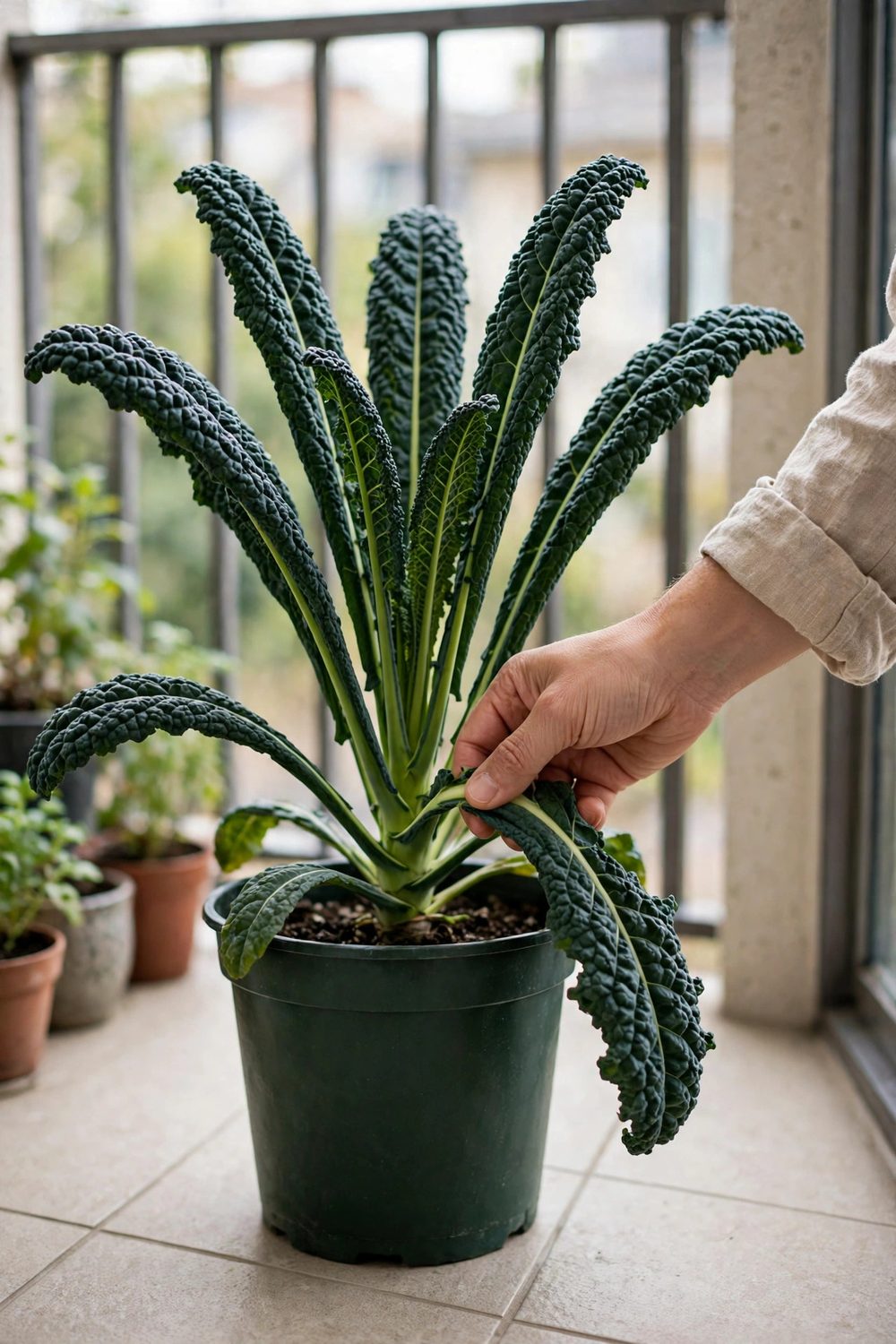
Kale suits short leases because it pays you back the whole time you own it. There is no single harvest date to miss if the move comes early.
Set one ‘Lacinato’ kale in a pot at least 12 inches (30 cm) deep. Pick outer leaves, leave the center crown, and the plant keeps growing for months.
Kale manages on about 4 hours of sun and shrugs off cool nights. Water when the top inch (2.5 cm) of mix dries and feed every two weeks.
In the final week before a move, pick the plant hard and cook the leaves down. Whatever remains can go to a neighbor with the pot itself.
7. Sow Bush Beans for a Crop That Finishes Fast
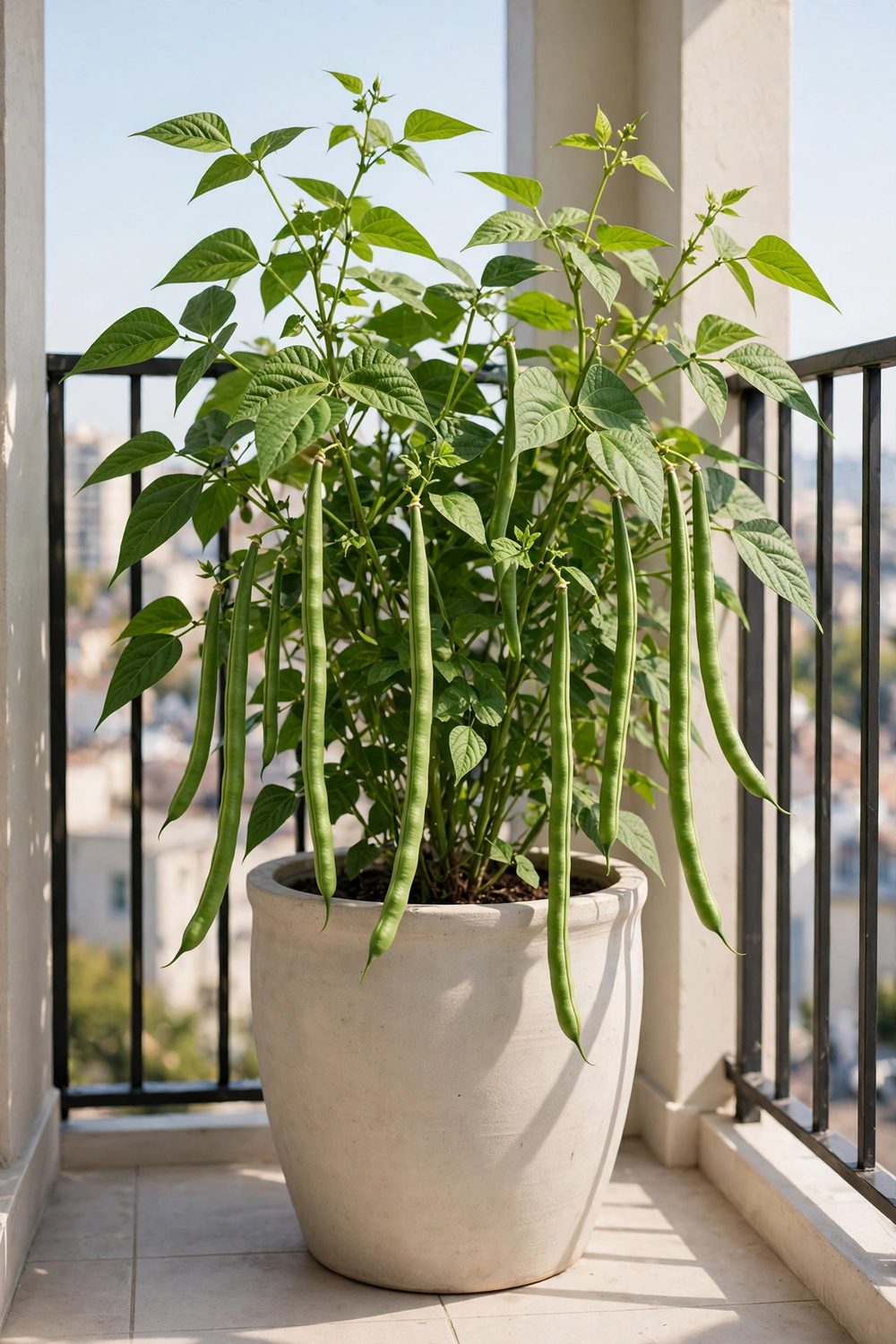
Bush beans go from seed to picking in one short stretch of summer, which makes them safe for a lease with months, not years, left to run.
Sow ‘Provider’ or ‘Contender’ seed 1 inch (2.5 cm) deep and 3 inches (8 cm) apart in a 5-gallon pot. Sow only after your last frost has passed.
Beans need little beyond warm mix and steady water in fresh potting mix. Give them 6 hours of sun and pick pods every two days once they start.
Regular picking keeps flowers coming. When the plants finish, the mix can be emptied and the pot rinsed, stacked, and packed in minutes. For no-fixings setups, see our balcony vegetable garden for renters with no drill and no damage.
8. Let Peas Finish Before the Summer Pots Start
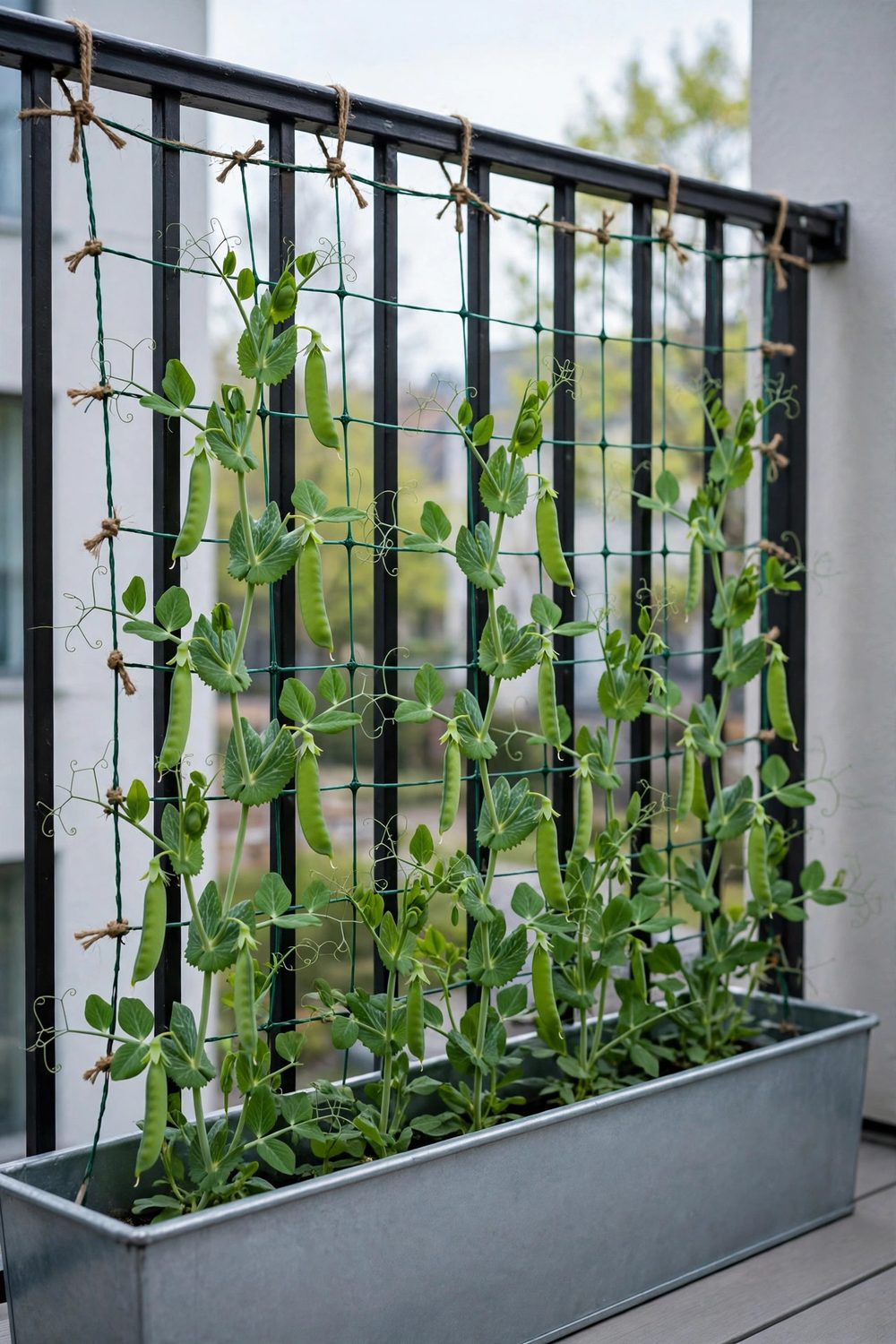
Peas fill the early-season gap that movers often waste. Sown in cool spring weather, they crop and finish before tomatoes and peppers hit their stride.
Sow ‘Sugar Snap’ peas 1 inch (2.5 cm) deep and 2 inches (5 cm) apart in a trough at least 8 inches (20 cm) deep, with netting tied to the rail.
Guide the first tendrils onto the net and the vines climb alone. Water at the base to keep mildew down in still balcony air.
Pick pods often to keep flowers coming. When the vines yellow, pull them out, and the same trough takes a late sowing of lettuce or beans.
9. Grow Rainbow Chard in One Deep, Portable Pot
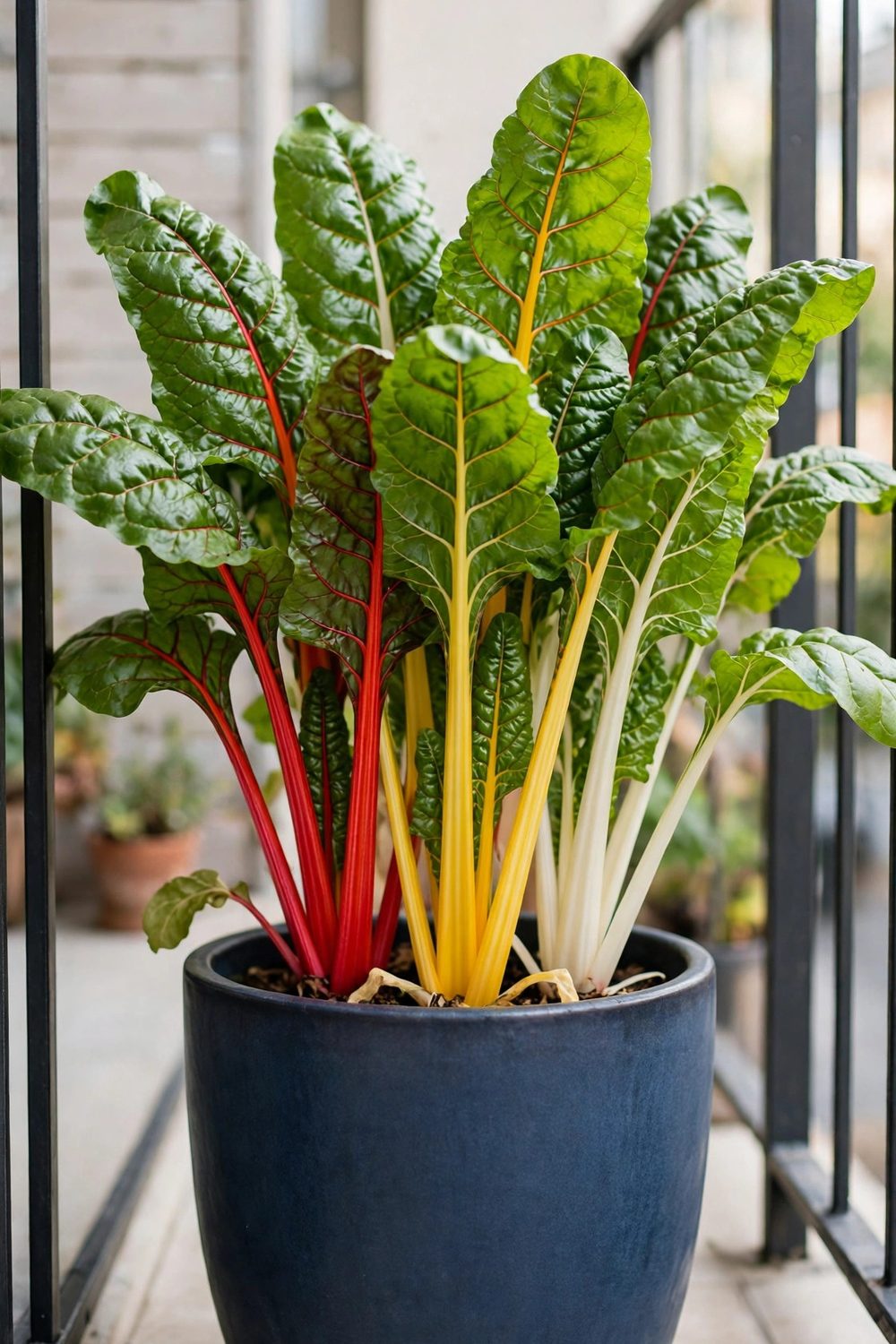
Chard is the leafy crop that keeps its good looks. Bright stems, steady picking, and no bolting in the first heat wave make it a reliable mover’s plant.
Set two or three plants in a pot at least 12 inches (30 cm) deep, spaced 6 inches (15 cm) apart. Chard settles for 4 hours of sun or more.
Pick the outer stems at the base and leave the center growing. Water when the top inch (2.5 cm) of mix dries, and feed every two weeks.
A plastic pot keeps the weight low enough to carry down stairs full. Chard also tolerates a shady week on a new balcony while you settle in.
10. Keep Spinach for the Short Spring and Autumn Windows
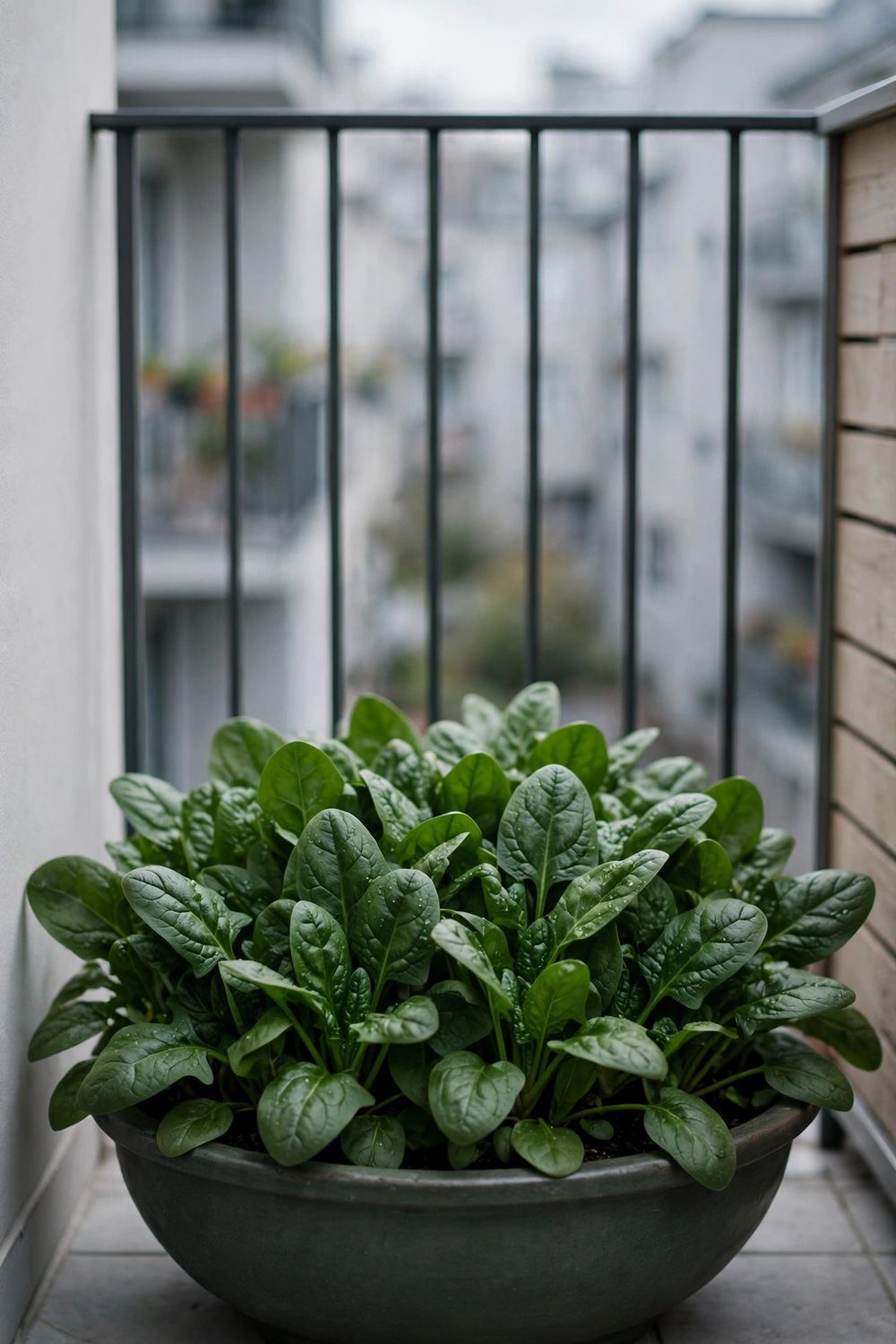
Spinach grows fast, finishes fast, and asks for no long commitment. That makes it a good fit for the short windows at either end of a tenancy.
Sow seed 1/2 inch (1 cm) deep and 2 inches (5 cm) apart in a wide pot at least 8 inches (20 cm) deep. Thin seedlings to 4 inches (10 cm).
Spinach manages on 3 to 4 hours of sun and likes cool weather. Sow in early spring and again in late summer, and skip the hot midsummer weeks.
Keep the mix evenly damp and pick outer leaves often. A pot sown six weeks before a move still gives you several real harvests.
11. Clip Spring Onions From a Narrow Pot All Season
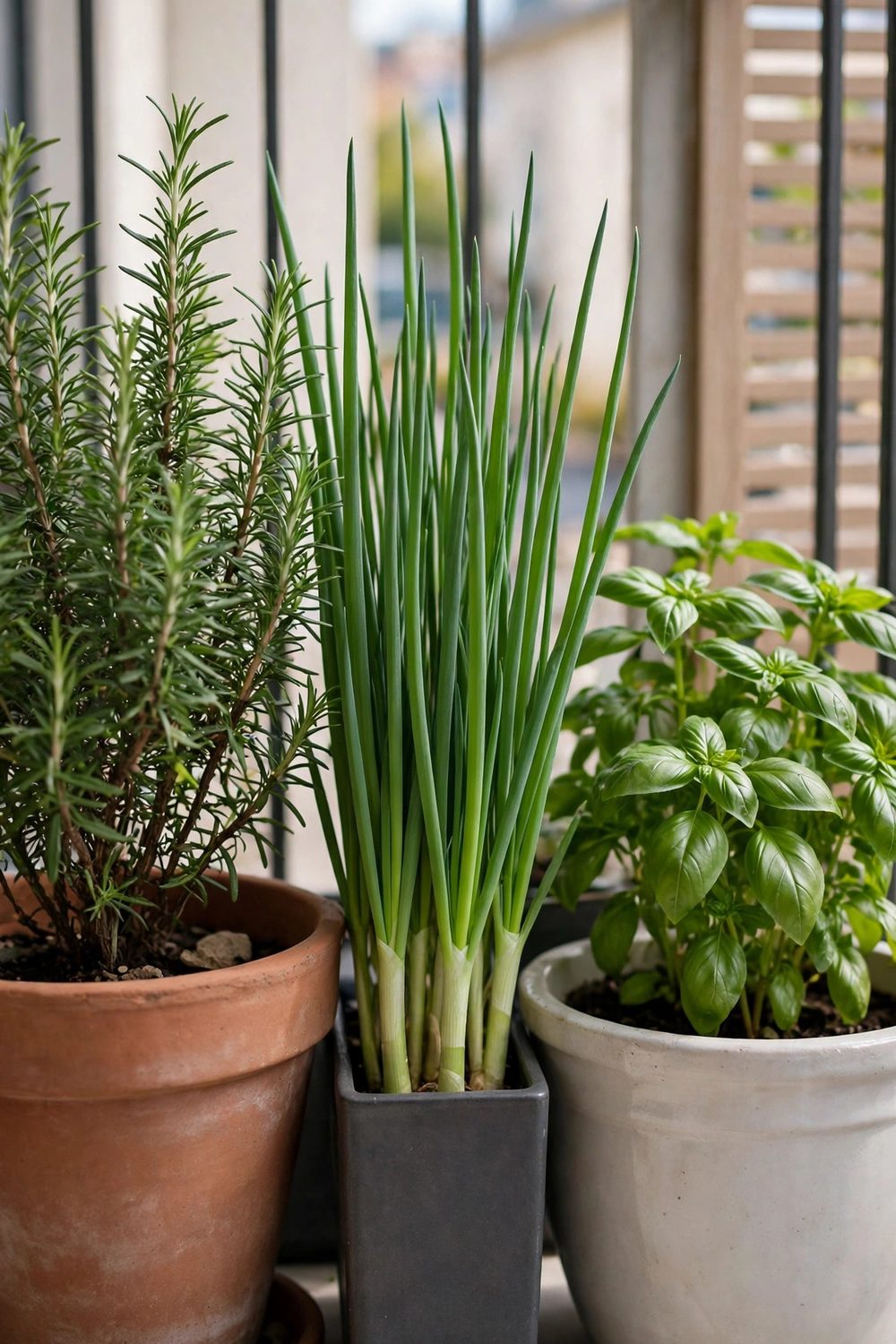
A narrow pot of spring onions fits the gaps other pots leave behind. It also travels well, because the roots are shallow and the pot is light.
Use a pot at least 8 inches (20 cm) deep and sow seed 1/4 inch (0.5 cm) deep in small clusters. Thin clumps to about 1 inch (2.5 cm) apart.
Water when the top inch (2.5 cm) of mix dries. Harvest the largest stems first and the rest keep thickening while you use them.
Spring onions regrow after cutting, so one sowing covers months of cooking. At moving time the whole pot fits in a tote bag without spilling.
12. Dig Carrots From a Deep Bag, Then Fold It Away
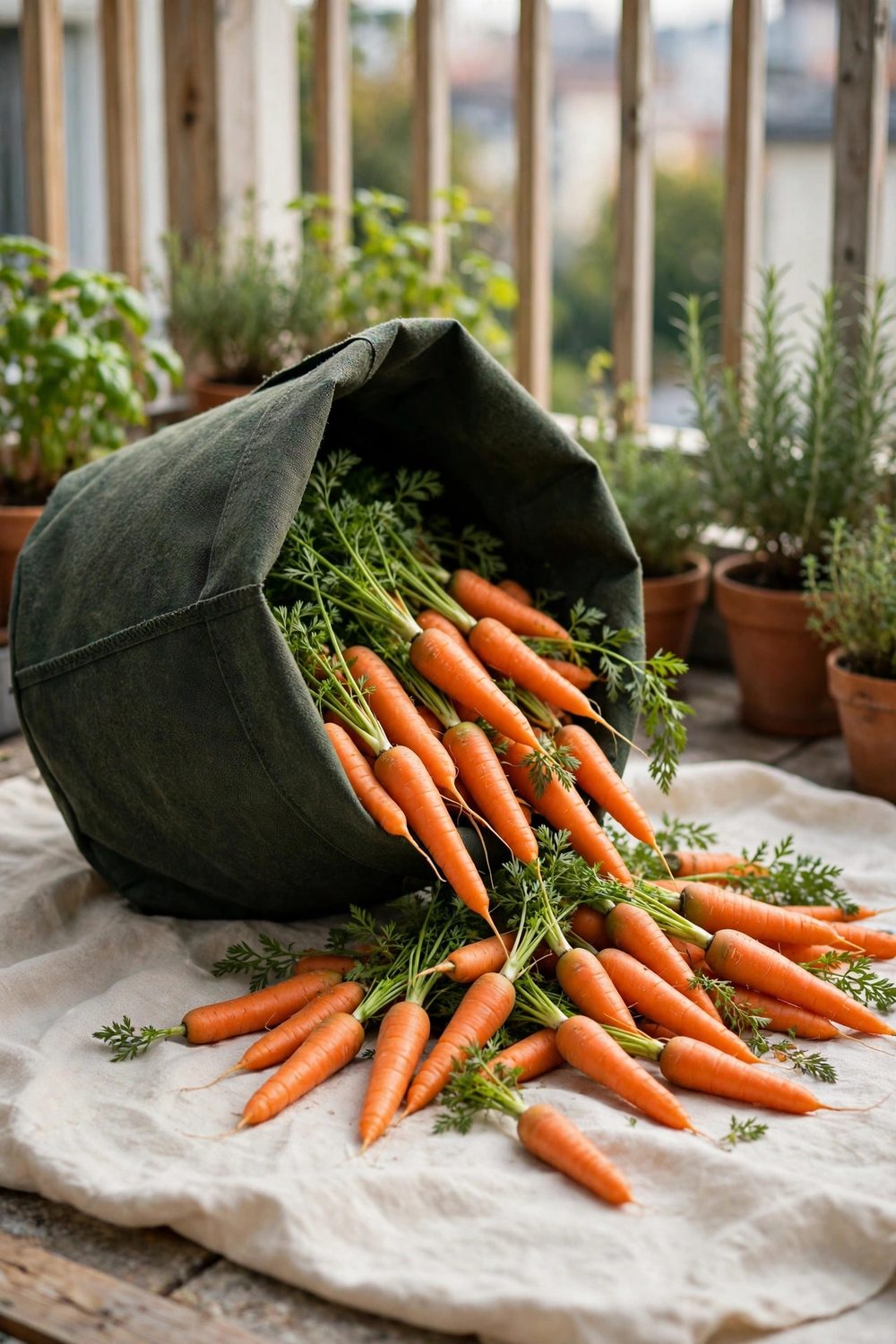
Carrots need depth, but depth does not have to mean a heavy pot. A deep fabric bag gives roots 12 inches (30 cm) of loose mix and packs flat after.
Fill the bag with stone-free potting mix and sow short types such as ‘Little Finger’. Scatter seed thinly, 1/4 inch (0.5 cm) deep, and keep the surface damp.
Carrots can take 2 to 3 weeks to sprout, so a board over the bag helps hold moisture. Thin seedlings to 2 inches (5 cm) apart.
Harvest by tipping the bag onto a sheet on the balcony floor. Nothing is dug, nothing is stained, and the bag rinses clean for the next home. Watering basics for bags sit in our guide on how often to water vegetables in pots.
13. Train a Cucumber Up the New Rail in Week One
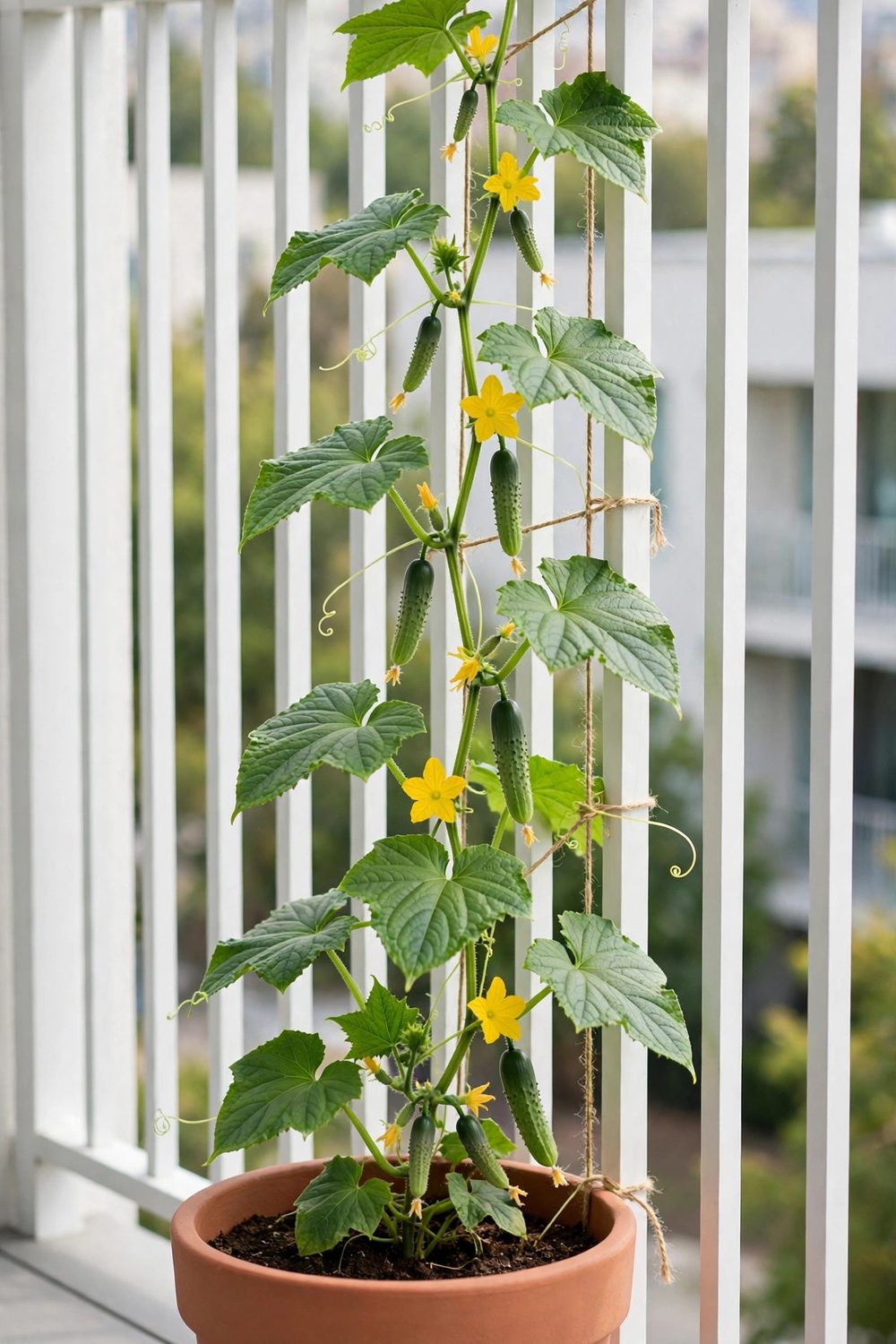
Every new balcony has a rail, and a cucumber turns that rail into growing space in the first week. No fixings are needed beyond soft ties.
Plant one ‘Spacemaster’ cucumber in a 5-gallon (about 19-liter) pot at the base of the rail. This bush type has shorter vines bred for small spaces.
Tie stems up as they grow and the fruit hangs clean and straight. Raised leaves also get better air, which cuts mildew on humid days.
Water deeply each morning in summer, because the mix should never dry out fully. Pick fruit at 6 to 8 inches (15 to 20 cm), before seeds harden.
14. Keep One Zucchini Bag as Your Summer Centerpiece
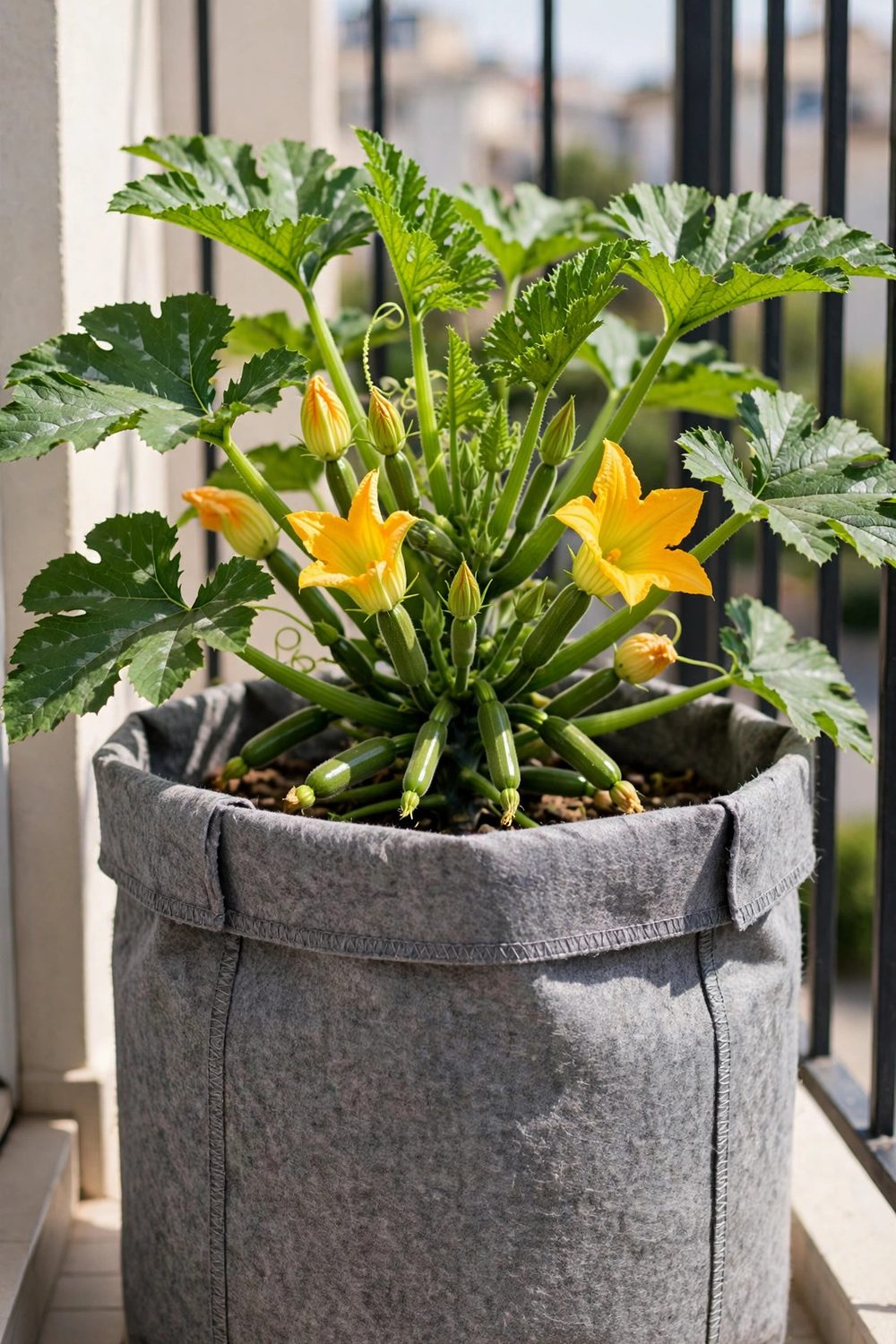
One zucchini (courgette) in a big fabric bag gives a new place a working garden fast. The bag is light empty, and the harvest starts within weeks.
Plant one ‘Astia’ zucchini in a 10-gallon (about 38-liter) grow bag in your sunniest spot. This compact variety was bred for containers.
Water daily in hot weather, because fabric dries fast. Feed every week once flowers start, and pick fruits at about 6 inches (15 cm) long.
Small fruit keeps the plant producing and tastes better. At season end, the empty bag folds into a drawer. Comparing fabrics and plastics first helps, and our notes on the best pots for growing vegetables on a balcony cover weights and sizes.
15. Finish the Season With Potatoes in a Collapsible Bag
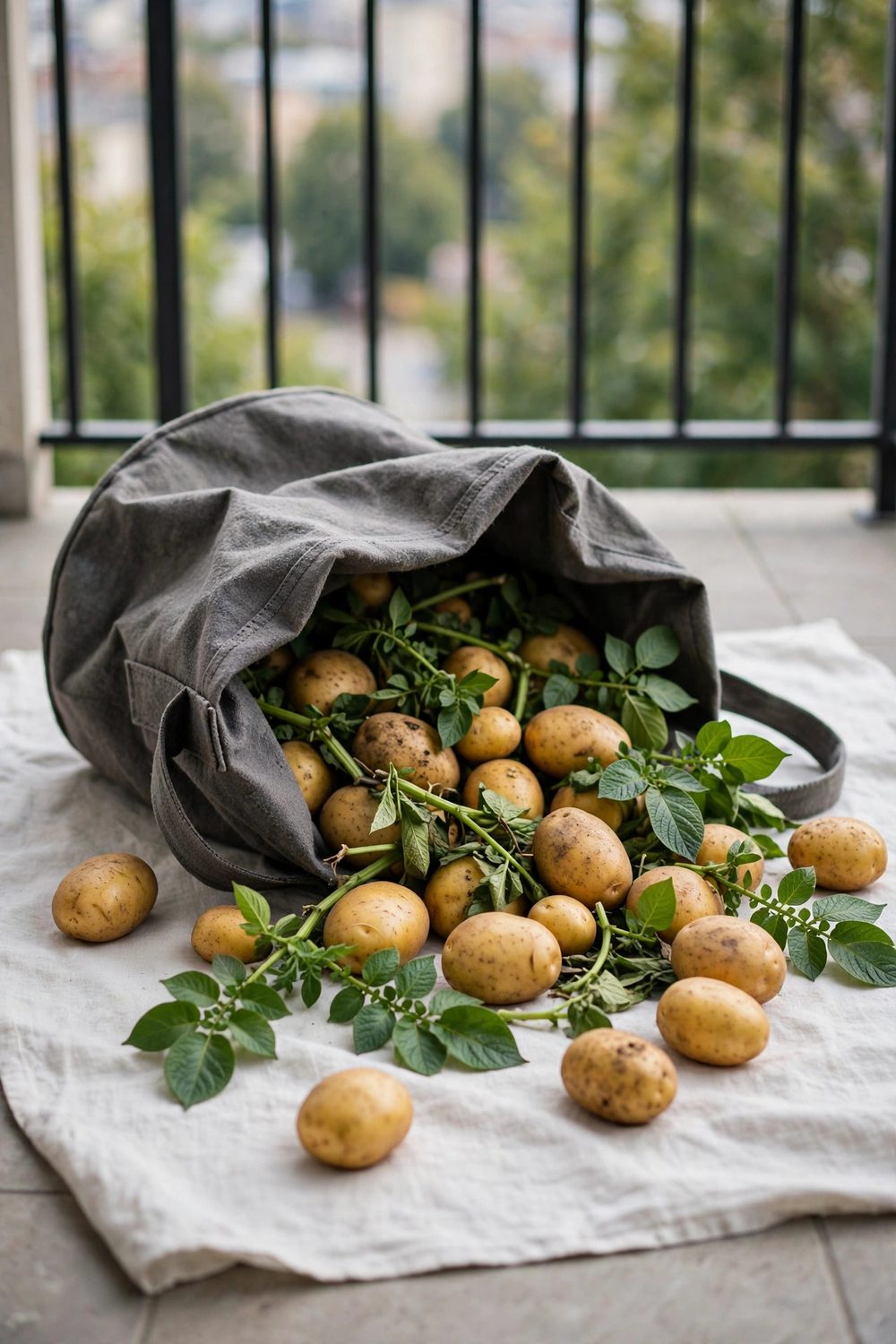
Potatoes in a bag end the season with a harvest you tip out, not dig up. The bag then collapses flat, ready for the next address.
Set three seed potatoes on 4 inches (10 cm) of mix in a 10-gallon (about 38-liter) bag. Cover them with 4 inches (10 cm) more mix.
Add more mix as the stems grow, burying them a few inches at a time. The buried stems are where the extra tubers form.
Water well in dry spells and harvest after the leaves yellow and die back. Our side-by-side of grow bags vs pots for vegetables helps you pick the right bag weight and size.
Keep your kit simple: fabric bags, light plastic pots, one bucket, and seed for fast crops. That whole garden fits in one car load.
A balcony vegetable garden for renters who move every year is not a smaller garden. It is a garden built to travel, season after season.
Save this list to your container garden board for later. Your next balcony can be growing within a week of the move.


