

15 Balcony Vegetables for a First Apartment on a Budget
A first apartment usually comes with a tight grocery budget and a balcony the size of a bath mat. Seed packets cost very little, though, and one packet can fill several pots.
This list builds a balcony vegetable garden for a first apartment on a budget from cheap seed, basic pots, and crops that pay you back fast. Every pick names its pot size and care.
Start with three or four pots, not fifteen. Add one new crop each payday and the cost stays painless. By midsummer, your rail can carry salads, beans, and a tomato or two.
Sun decides what will thrive, so watch your balcony for a day first. Fruiting crops want 6 to 8 hours of direct sun. Leafy crops manage well on 3 to 4 hours.
This post contains affiliate links. If you buy through them, we may earn a small commission at no extra cost to you. See our Affiliate Disclosure.
1. Sow Radishes First for the Cheapest Quick Win
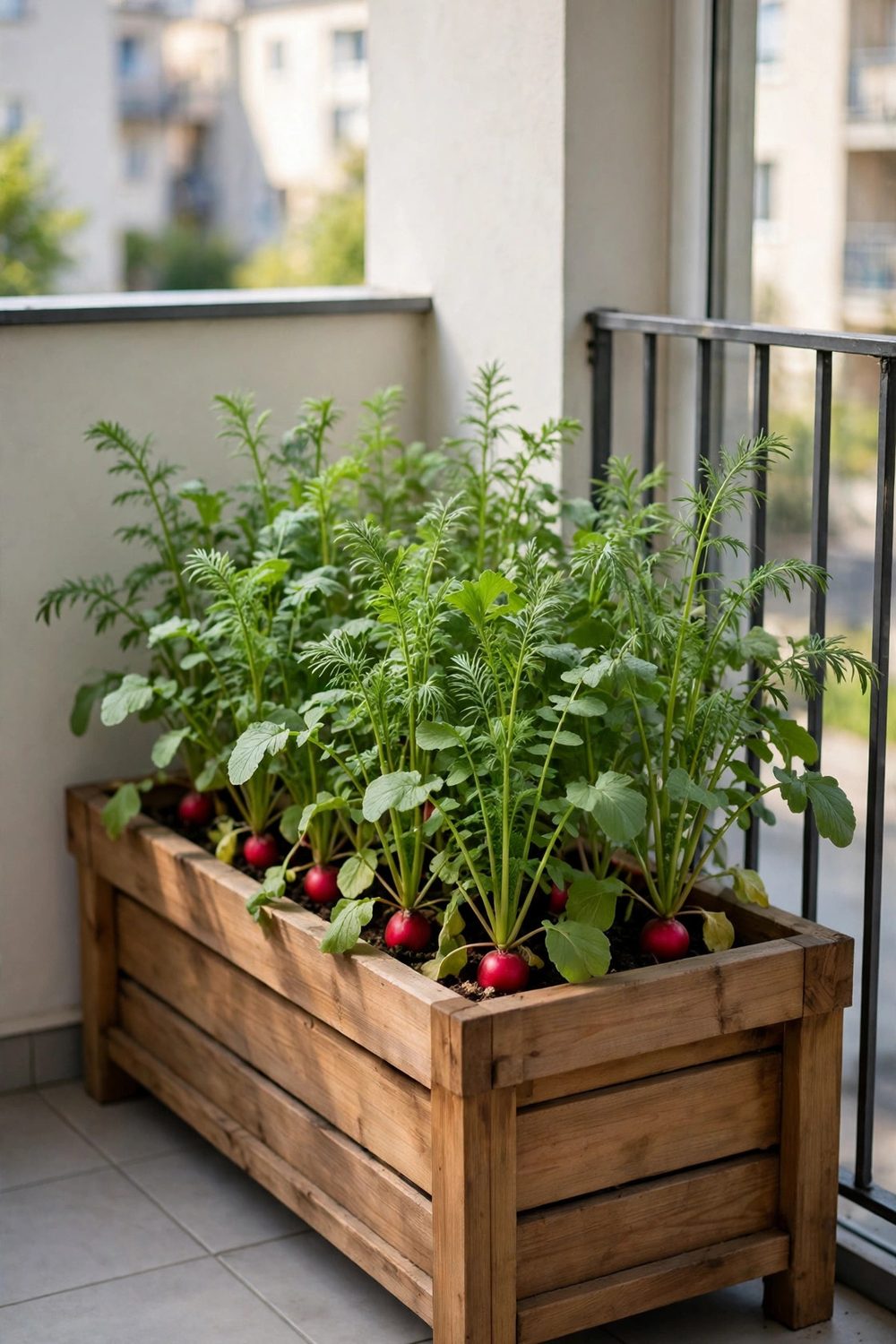
A packet of radish seed costs less than one store-bought bunch, and it holds hundreds of seeds. Radishes also finish fast, ready to pull about a month after sowing in spring.
Use any trough or box at least 6 inches (15 cm) deep. Sow seed 1/2 inch (1 cm) deep and 1 inch (2.5 cm) apart, then thin seedlings to 2 inches (5 cm).
Keep the mix damp and pull roots as soon as they fatten. Radishes left too long in warm mix turn woody and harsh, so pick them young and sow more.
Sow a short row every two weeks and the harvest never floods you at once. The empty corner of a bigger pot works fine for each small sowing.
2. Fill One Wide Bowl With Cut-and-Come-Again Lettuce
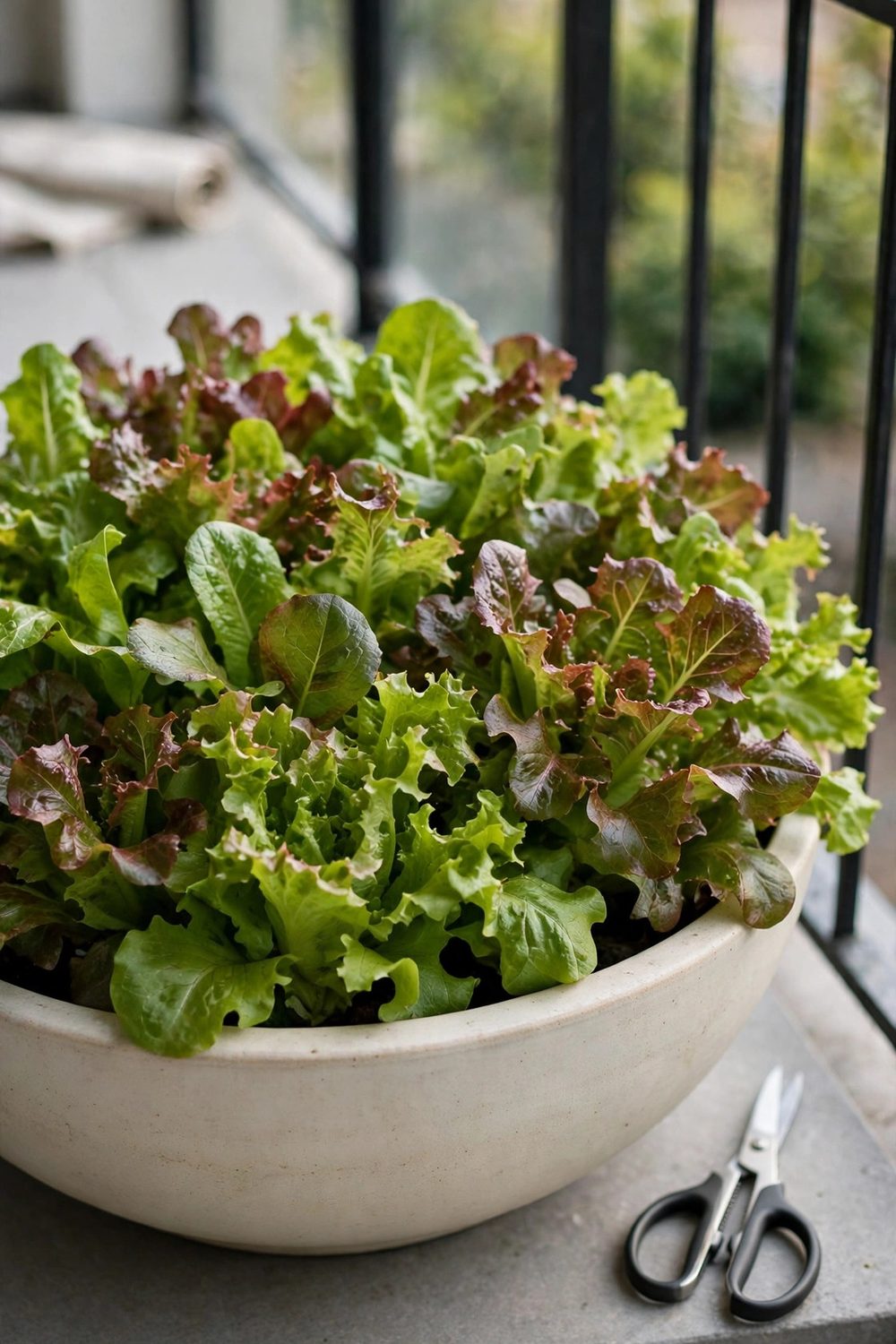
Bagged salad wilts in days and costs more every week. A bowl of loose-leaf lettuce on the rail gives you fresh leaves for weeks from one cheap sowing.
Pick a bowl at least 12 inches (30 cm) wide and 6 to 8 inches (15 to 20 cm) deep. Roots stay shallow, so width matters more than depth here.
Scatter seed thinly, cover it with a dusting of mix, and mist daily until sprouts show. Lettuce grows well on 3 to 4 hours of sun, which suits shadier balconies.
Snip outer leaves with scissors and leave the center to keep growing. A second bowl sown two weeks later covers the gap while the first one recovers.
3. Grow Spring Onions in the Gaps Between Pots
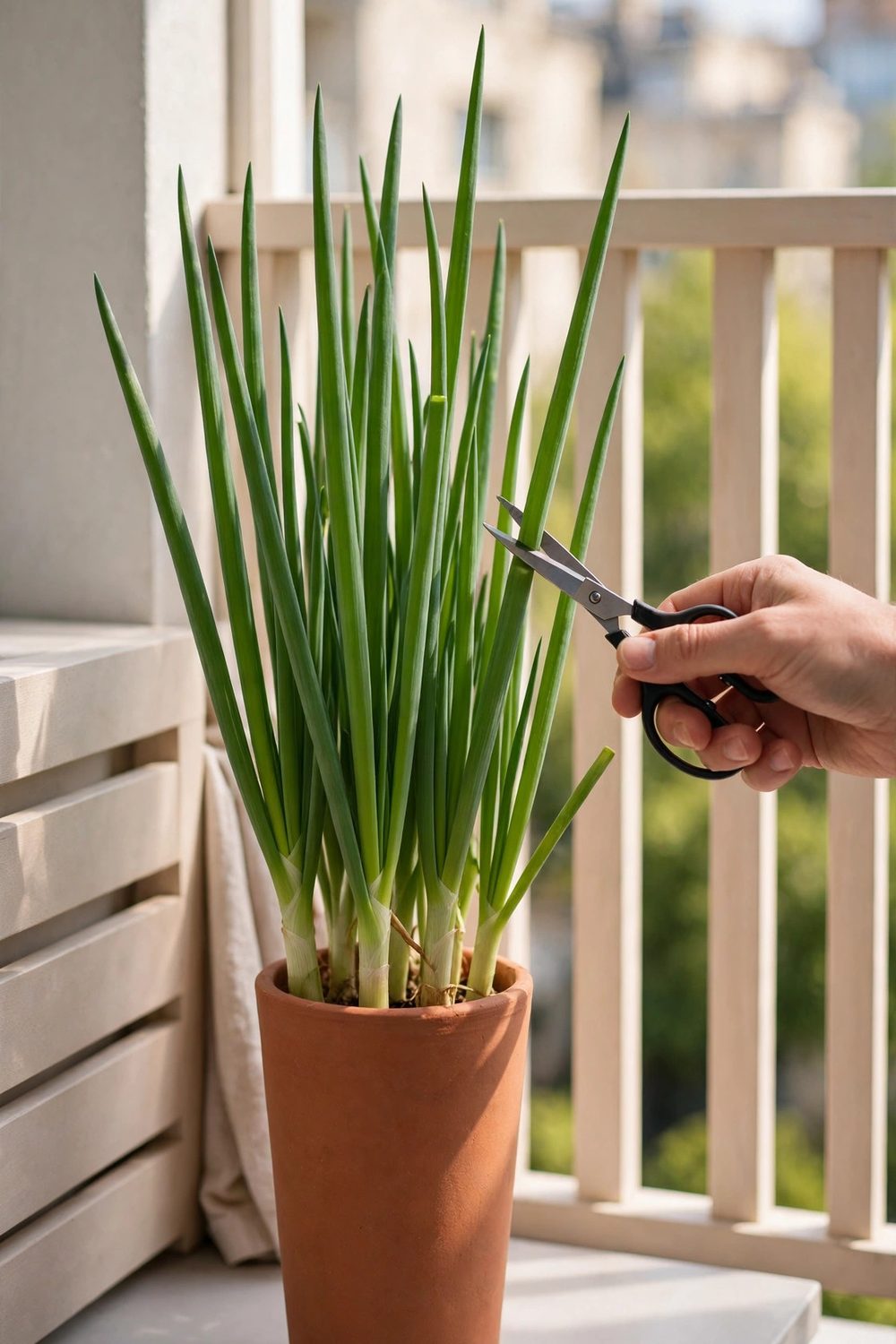
Spring onions ask for almost nothing: a narrow pot, some mix, and a sunny corner. One packet of seed gives you green tops for stir-fries, eggs, and salads all season.
Use a pot at least 8 inches (20 cm) deep, or tuck a row along the edge of a larger container. Sow seed 1/4 inch (0.5 cm) deep in small clusters.
Water when the top inch (2.5 cm) of mix dries out. Thin crowded clumps to about 1 inch (2.5 cm) apart so the stems can thicken up.
Harvest the biggest stems first and leave the rest growing. You can also regrow the white bases from a shop bunch in a jam jar of water, then pot them on.
4. Plant Bush Beans From Seed, Never From Transplants
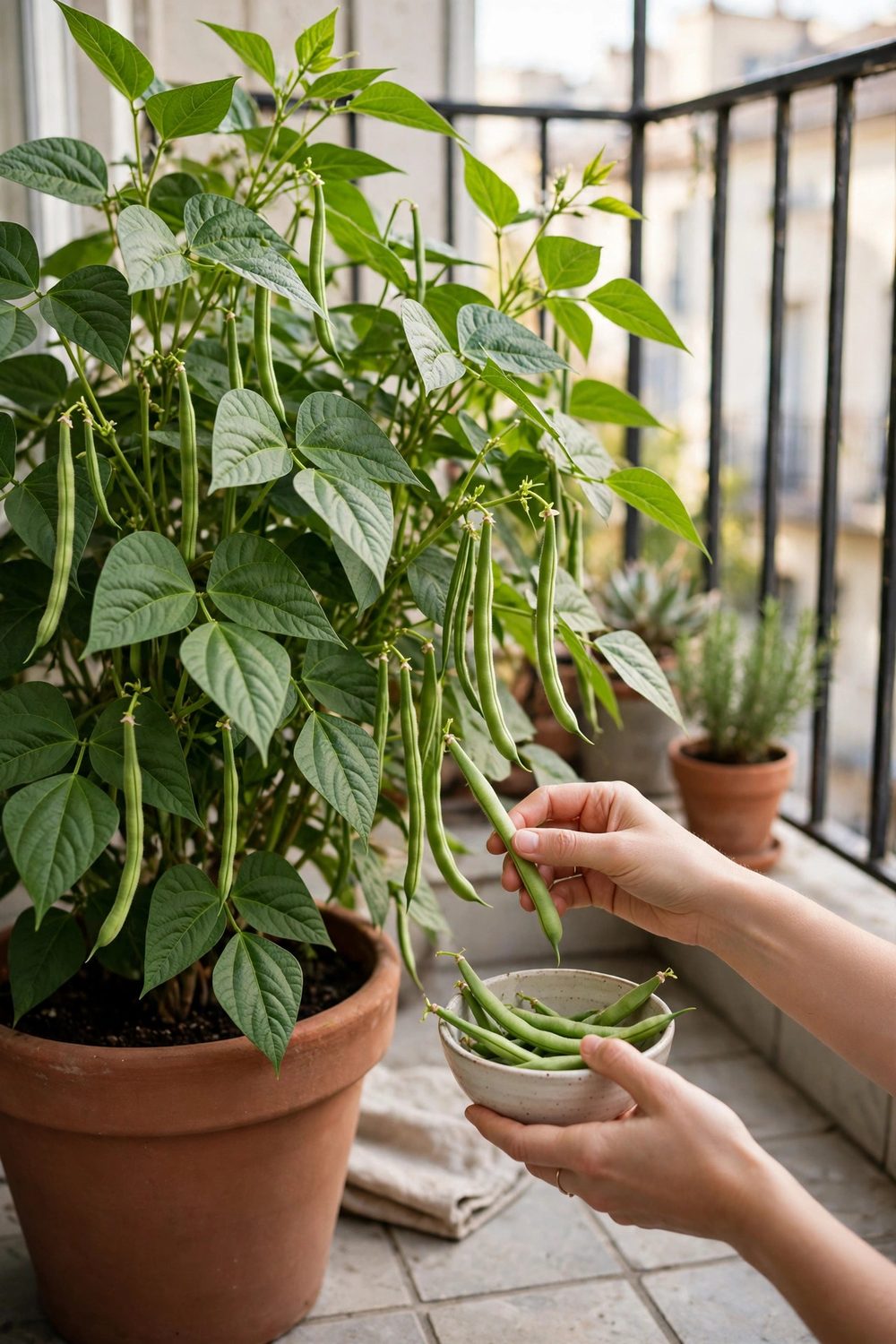
Beans are where a tight budget wins twice. Seed is cheap, the plants need no bought feed in fresh mix, and one pot of bush beans crops heavily for weeks.
Sow ‘Provider’ or ‘Contender’ seed 1 inch (2.5 cm) deep and 3 inches (8 cm) apart in a 5-gallon (about 19-liter) pot. Sow only after your last frost.
Beans rot in cold, wet mix, so patience in spring saves a second packet. Warm mix, steady water, and 6 hours of sun are the whole routine after that.
Pick pods every two days once they start. Regular picking keeps new flowers coming, while pods left to fatten tell the plant to slow down. More on spacing sits in our guide to how many vegetable plants per pot.
5. Buy One Good Tomato Plant and Skip the Rest
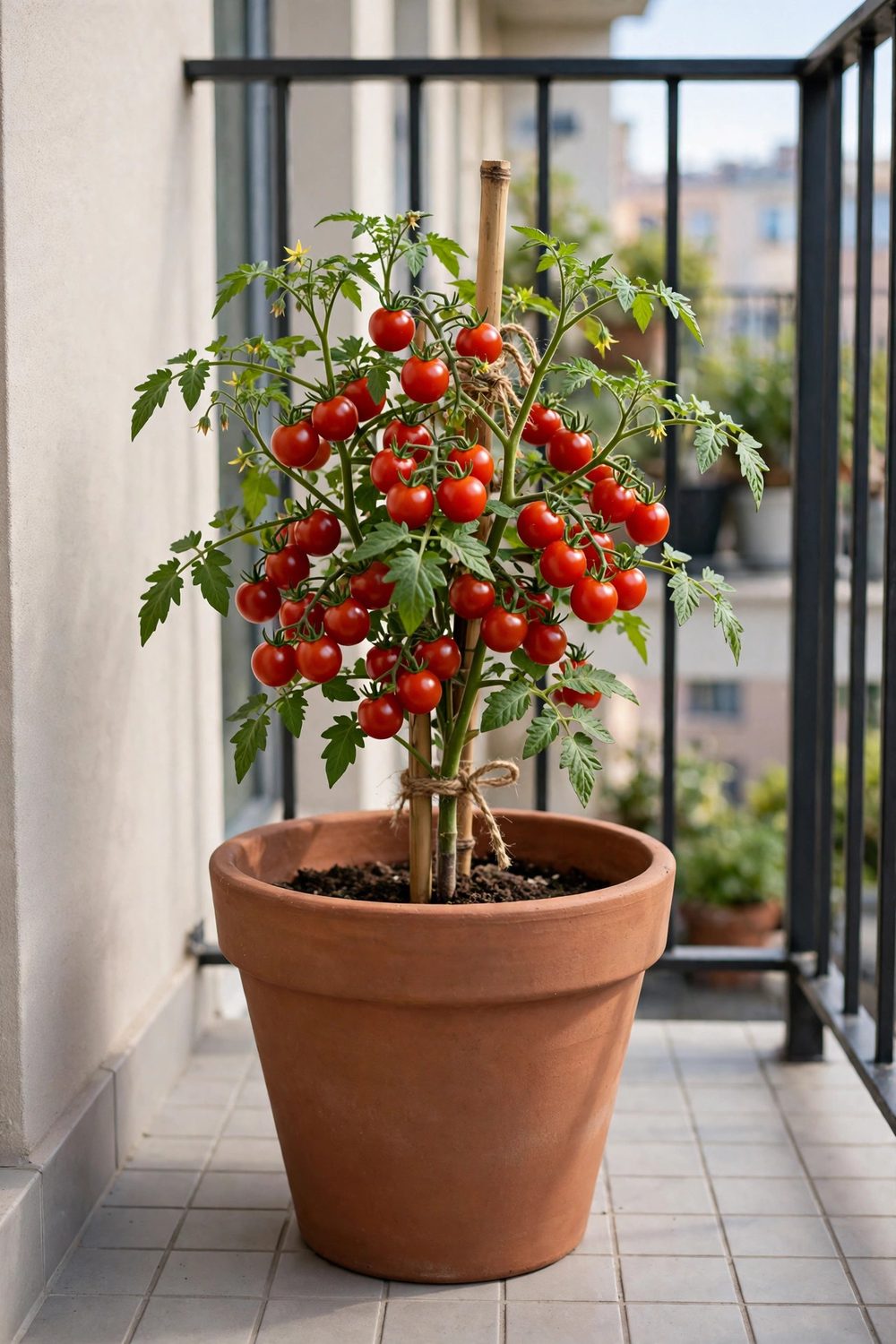
One strong tomato seedling costs less than a packet of fancy seed you may never finish. It also skips weeks of windowsill nursing, which suits a busy first job.
Set one compact plant, such as ‘Tiny Tim’ or ‘Patio Choice’, in a 5-gallon (about 19-liter) pot. Give it your sunniest spot, with 6 to 8 hours of light.
Tie the main stem loosely to a short stake. Water deeply when the top inch (2.5 cm) of mix feels dry, and feed every two weeks once flowers open.
Cherry types crop earliest and forgive small mistakes. If your balcony is new to you, our apartment balcony vegetable garden for beginners guide covers the full first setup in order.
6. Grow One Pepper Plant in Your Hottest Corner
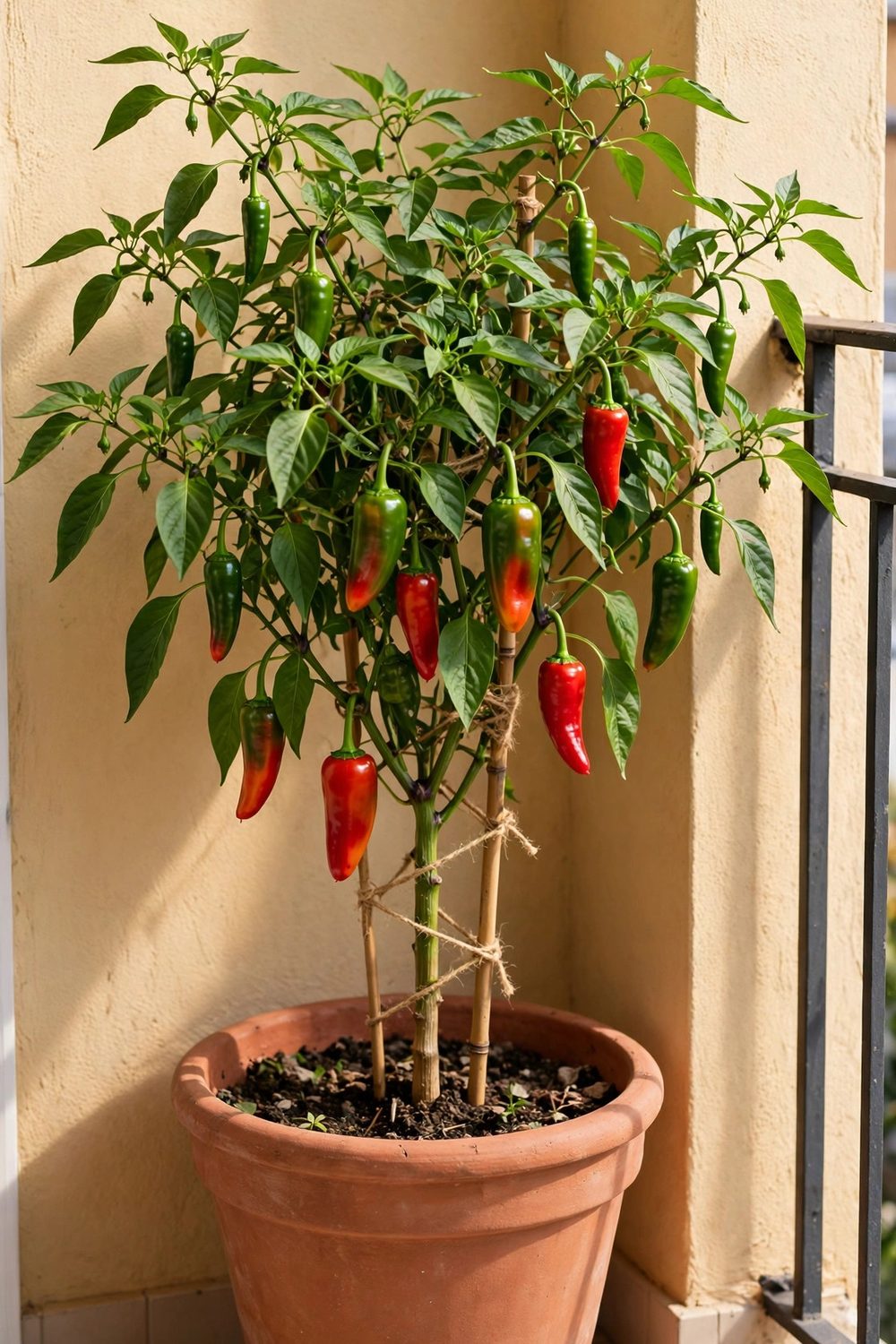
Peppers cost plenty in shops because they grow slowly. One plant in a pot turns that price on its head, producing fruit from midsummer until the first cold nights.
Follow the one-plant rule: one pepper, one 5-gallon (about 19-liter) pot. Two plants in one pot split the water and food, and both end up small.
Set the pot against a warm wall where reflected heat helps on cool evenings. Peppers want 6 to 8 hours of sun and even watering, so the mix never swings wildly.
Push a stake in at planting time, before roots spread. Branches loaded with fruit snap in wind, and a loose tie now is cheaper than a lost plant later.
7. Give a Single Zucchini the Biggest Bag You Own
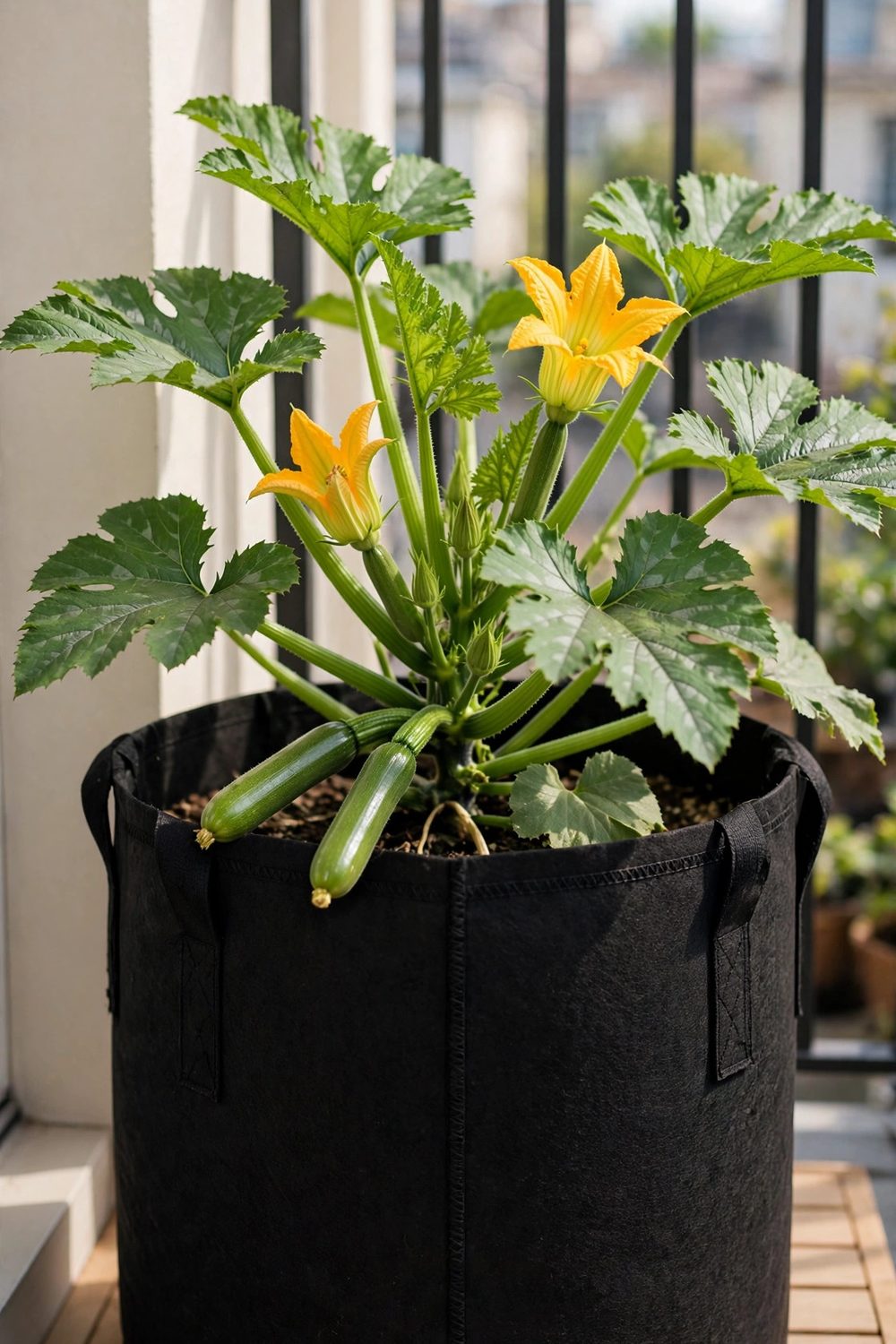
One zucchini (courgette) plant can out-produce everything else on the rail put together. The budget move is one plant, grown well, instead of three plants grown poorly.
Plant one ‘Astia’ zucchini in a 10-gallon (about 38-liter) grow bag or your largest pot. This compact variety was bred for containers and fruits over a long season.
Fabric bags drain fast, so water daily in hot weather. Feed every week once flowers start, and pick fruits at about 6 inches (15 cm) long.
Small fruits taste better and keep the plant producing. Left alone for a hot weekend, one fruit can swell into a club that slows the whole plant down.
8. Pick Kale Leaves for Months From One Plant
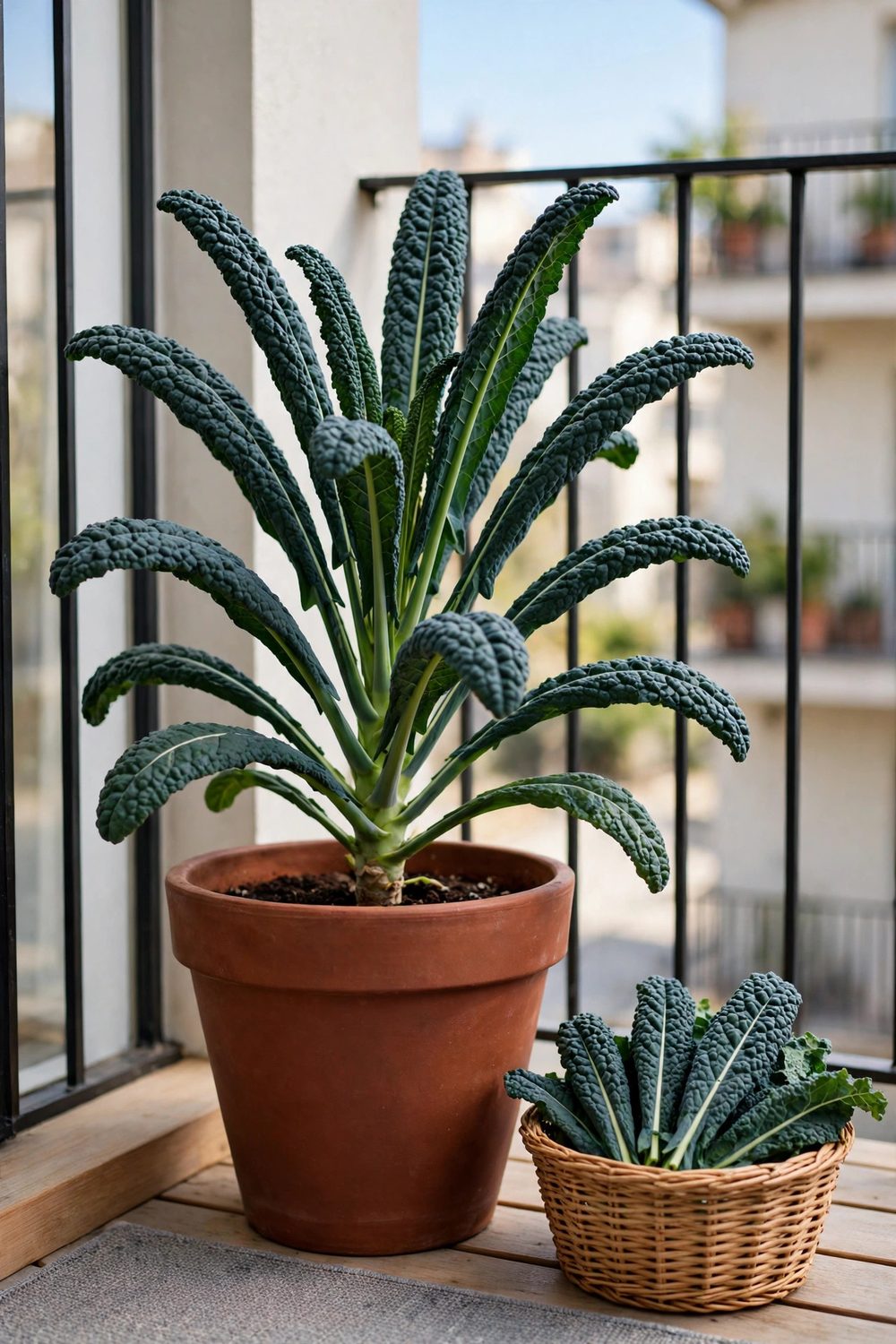
Kale earns its pot because one plant keeps giving. Pick the outer leaves, leave the center crown alone, and the same plant feeds you from spring into the cold months.
Set one ‘Lacinato’ kale in a pot at least 12 inches (30 cm) deep. It grows upright and narrow, so it takes very little floor space on a small balcony.
Kale settles for about 4 hours of sun, which helps on east-facing balconies. Water when the top inch (2.5 cm) of mix dries, and feed every two weeks.
Kale shrugs off cool nights and even a light frost. In mild-winter areas, roughly USDA zones 8 to 10, a healthy pot can crop right through winter.
9. Sow Short Carrots in a Deep Secondhand Pot
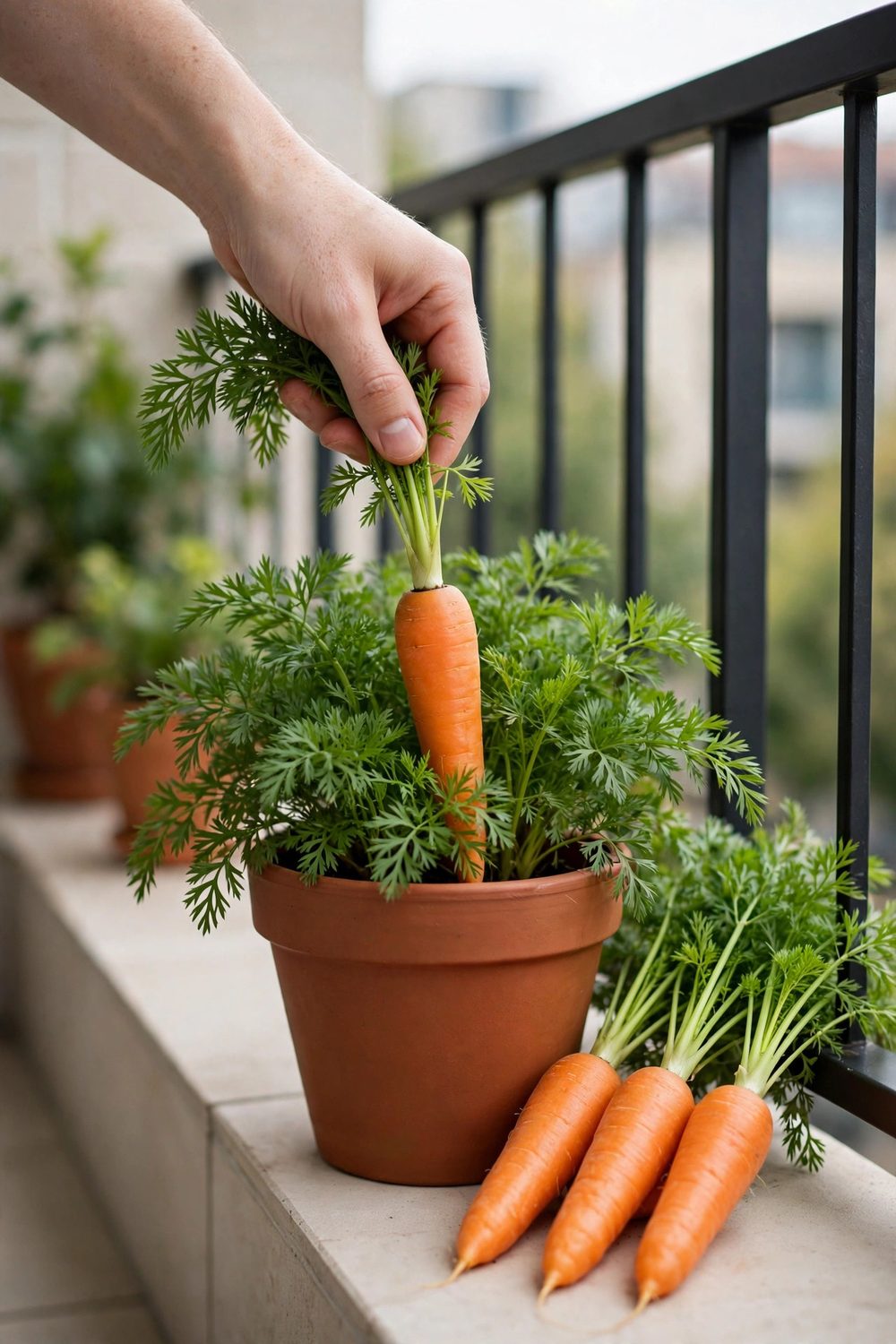
Carrots cost little to grow, but they do need depth. A deep pot from a thrift store or a neighbor’s clear-out solves that for almost no money at all.
Choose a pot at least 12 inches (30 cm) deep and fill it with loose, stone-free potting mix. Sow short types such as ‘Little Finger’ or ‘Parisian Market’.
Scatter seed thinly, 1/4 inch (0.5 cm) deep. Keep the surface damp until seedlings show, which can take 2 to 3 weeks, so patience is part of the crop.
Thin seedlings to 2 inches (5 cm) apart so each root can swell. A board laid over the pot holds moisture in while you wait for sprouts.
10. Let Sugar Snap Peas Climb the Rail for Free
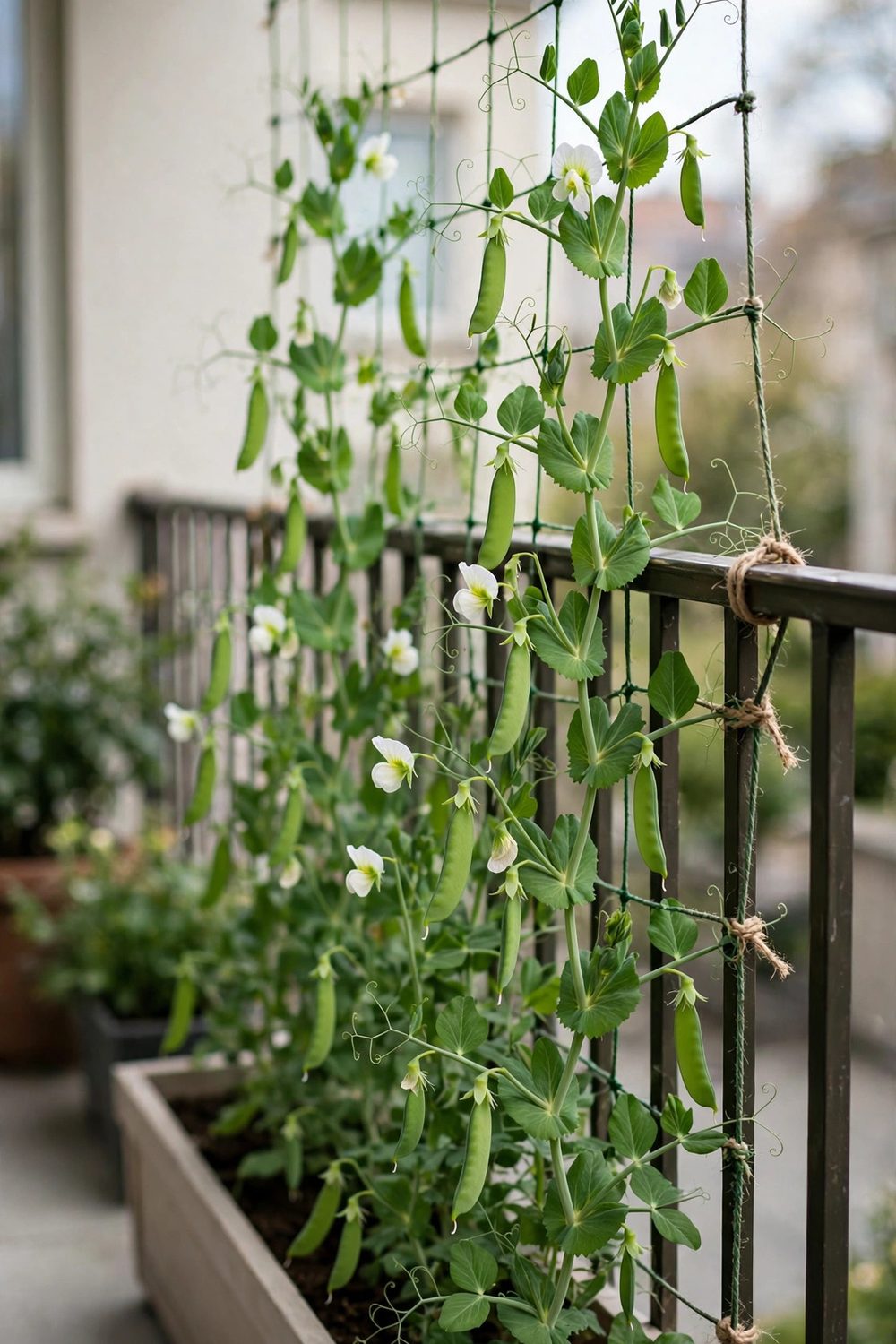
The rail you already have is a free trellis. Peas climb it happily, crop early in the season, and taste sweetest eaten outside beside the pot.
Sow ‘Sugar Snap’ peas 1 inch (2.5 cm) deep and 2 inches (5 cm) apart in a trough at least 8 inches (20 cm) deep. Tie netting to the rail behind.
Peas like cool weather, so sow weeks before tomatoes can go out. Guide the first tendrils onto the net and the plants climb alone after that.
Water at the base, not over the leaves, to keep mildew down. Pick pods often, because regular picking keeps new flowers coming for weeks.
11. Train One Spacemaster Cucumber Up, Not Out
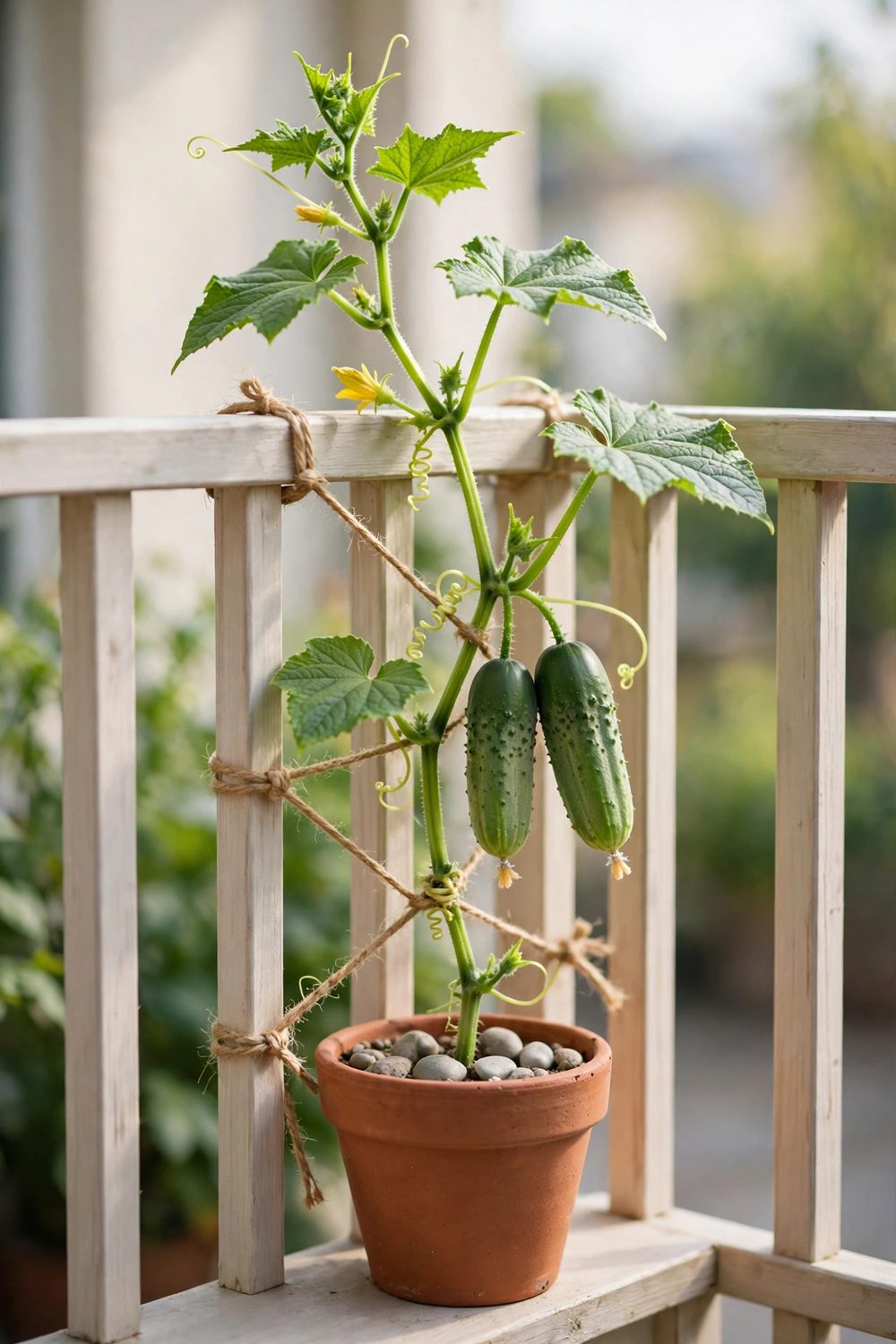
Cucumbers sprawl in garden beds, but one container variety grows up a rail in very little floor space. That makes it a smart buy for a small first balcony.
Plant one ‘Spacemaster’ cucumber in a 5-gallon (about 19-liter) pot at the base of the rail. This bush type was bred for small spaces and has shorter vines.
Tie the stems to the rail with soft ties as they grow. Raised leaves get better air flow, which cuts mildew on still, humid days.
The mix should never dry out fully, so water deeply each morning in summer. Pick fruit at 6 to 8 inches (15 to 20 cm), before the seeds harden.
12. Grow Basil From Seed Beside the Tomato Pot
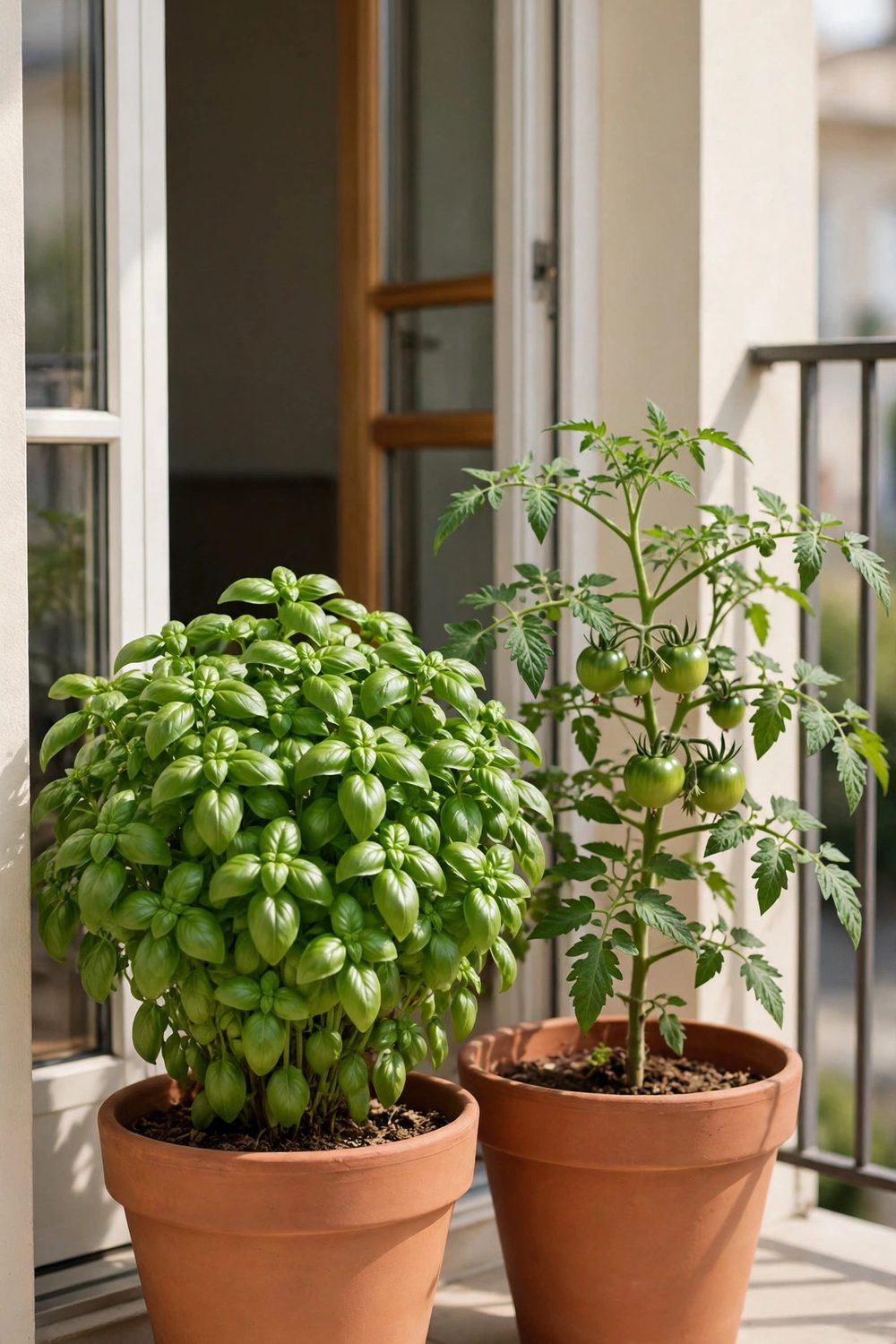
A small pot of basil from the store dies fast because it is really ten seedlings fighting in no soil. Seed and a real pot fix that for pennies.
Sow basil thinly in a 10 to 12 inch (25 to 30 cm) pot after your last frost. Thin to one plant per 4 inches (10 cm) once true leaves show.
Basil wants full sun and steady water. Pinch the tips weekly so the plant branches instead of racing to flower, and pick leaves from the top down.
Set the pot by the kitchen door if you can. Herbs you walk past get picked, and picked herbs keep growing instead of bolting. Our roundup of the best vegetables for a balcony garden shows which other crops earn small spaces.
13. Plant Potatoes in a Grow Bag You Can Fold Away
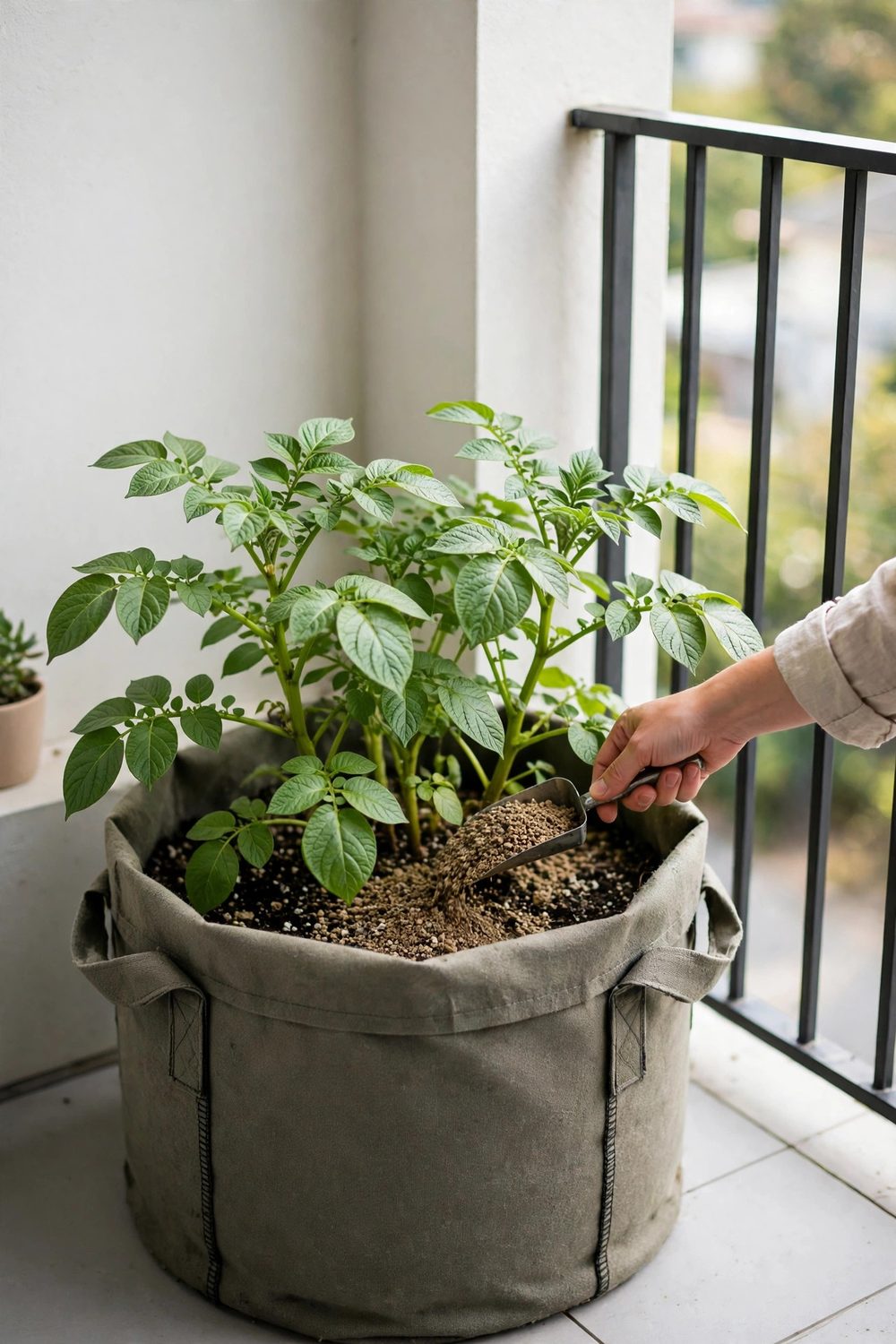
A grow bag of potatoes turns an empty balcony corner into a real staple crop. Seed potatoes cost little, and the bag folds flat in a drawer over winter.
Put 4 inches (10 cm) of mix in a 10-gallon (about 38-liter) bag and set three seed potatoes on top. Cover with 4 inches (10 cm) more mix.
As stems grow, add more mix to bury them, a few inches at a time. This earthing up is where the extra tubers form along the buried stems.
Water well in dry spells and tip the bag out onto a sheet at harvest. Comparing containers first helps, and our test of grow bags vs pots for vegetables lays out the trade-offs plainly.
14. Sow Spinach Early and Late, Not in High Summer
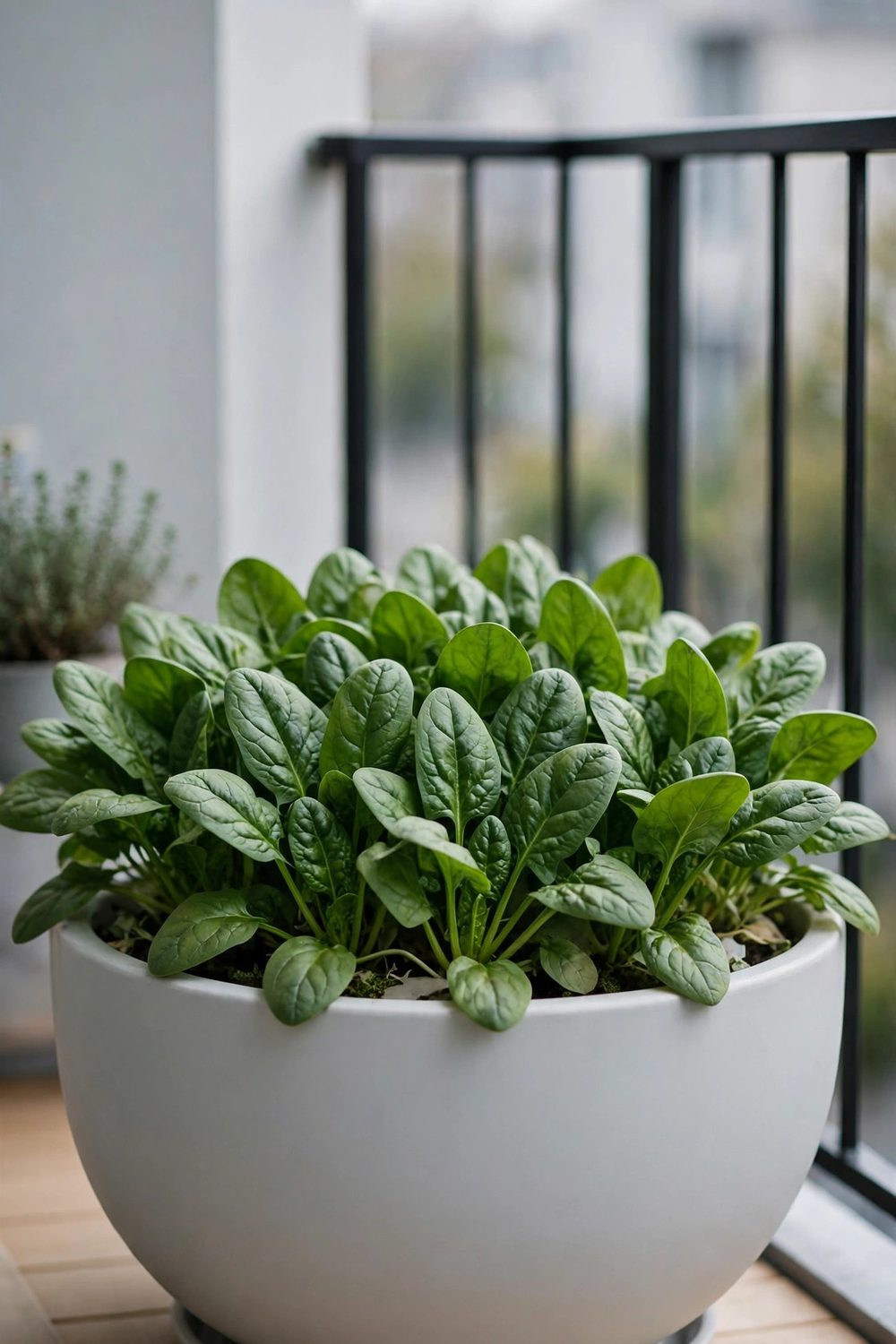
Spinach is a cool-season bargain that hates heat. Sow it in early spring and again in late summer, and skip the midsummer sowing that bolts in a week.
Use a wide pot at least 8 inches (20 cm) deep and sow seed 1/2 inch (1 cm) deep and 2 inches (5 cm) apart. Thin to 4 inches (10 cm).
Spinach manages on 3 to 4 hours of sun, so it suits the shadier end of the rail. Keep the mix evenly damp and pick outer leaves often.
In mild-winter areas, roughly USDA zones 8 to 10, an autumn sowing can crop slowly all winter. A light cover on frosty nights keeps leaves tender.
15. Reuse, Swap, and Save Seed Before You Buy More
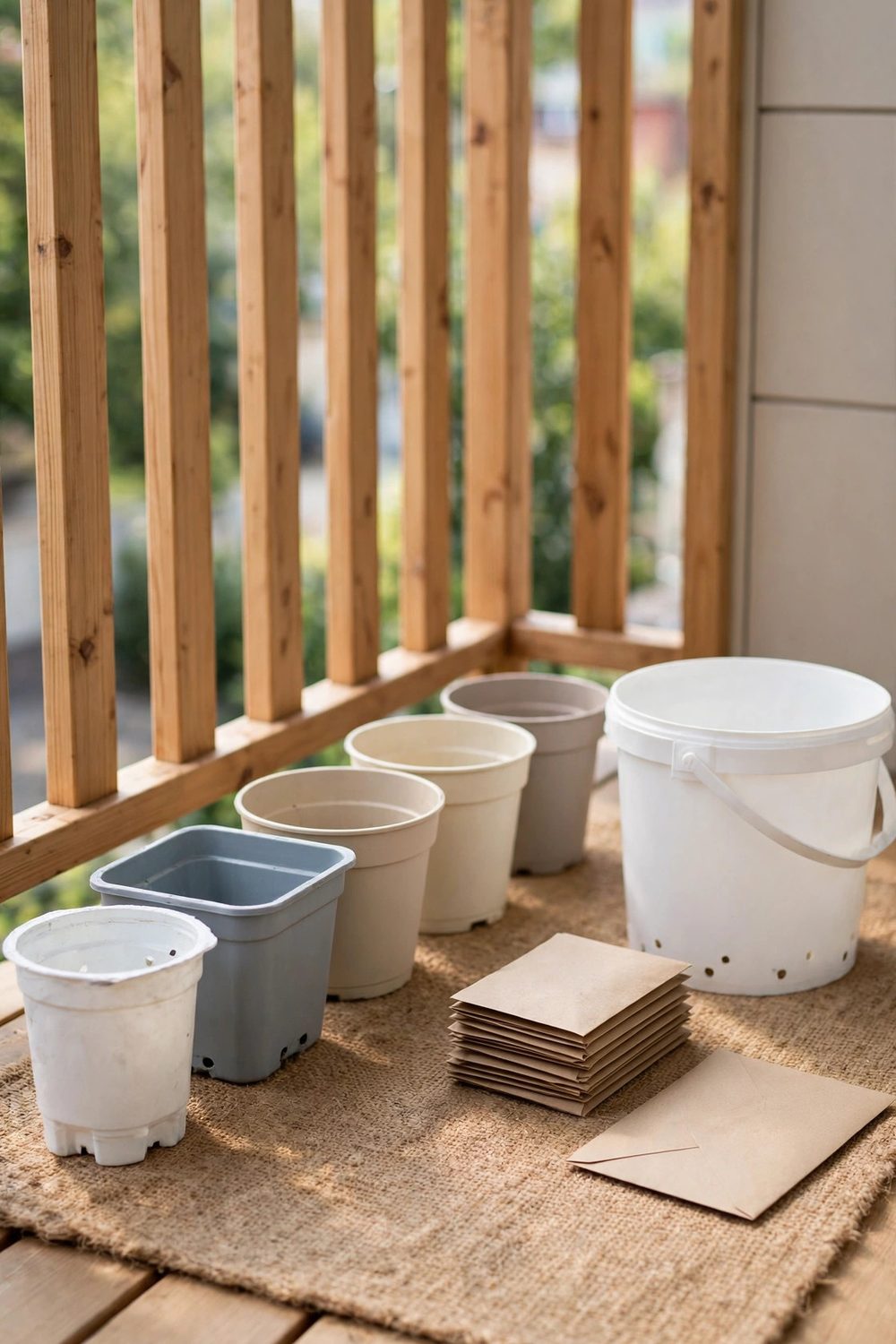
The cheapest pot is the one you already own. Food-safe buckets, sturdy storage boxes with drainage holes, and thrift-store pots all grow vegetables just as well as new ones.
Wash reused pots with hot soapy water before filling them. Drill or punch drainage holes in any container that lacks them, and sit it on a saucer to protect the floor.
Swap spare seed with a neighbor instead of buying a second packet of everything. Half a packet of radish seed is still months of sowings for one balcony.
Let one lettuce plant flower at the end of the season and save its seed in a labeled envelope. Next spring’s first bowl then costs you nothing. More starter guidance lives in container vegetable gardening for beginners with no yard at all.
Start with the radishes, the lettuce bowl, and one tomato. Those three pots teach you watering, feeding, and picking for very little money.
A balcony vegetable garden for a first apartment on a budget grows one payday at a time, and that pace is a strength, not a flaw.
Save this list to your container garden board for later. Add one pot each month and your rail will look very different by autumn.


