

15 Best Vegetables for a Balcony Garden: Small-Space Winners
Small balconies punish the wrong crop fast. A sprawling squash eats the floor, a thirsty melon sulks, and a slow crop ties up your only sunny pot for months.
These best vegetables for a balcony garden small space winners were chosen on yield per pot, speed, and how little floor they use. Every pick names its pot size, sun needs, and care.
The list favors compact and dwarf varieties bred for containers. They crop earlier, stay tidy, and fit the rail, a stand, or one sunny corner without a fight.
Match each crop to your light first. Fruiting crops want 6 to 8 hours of direct sun, while leafy crops and roots manage well on 3 to 4 hours.
This post contains affiliate links. If you buy through them, we may earn a small commission at no extra cost to you. See our Affiliate Disclosure.
1. Tiny Tim Tomato, the Small-Space Yield Champion
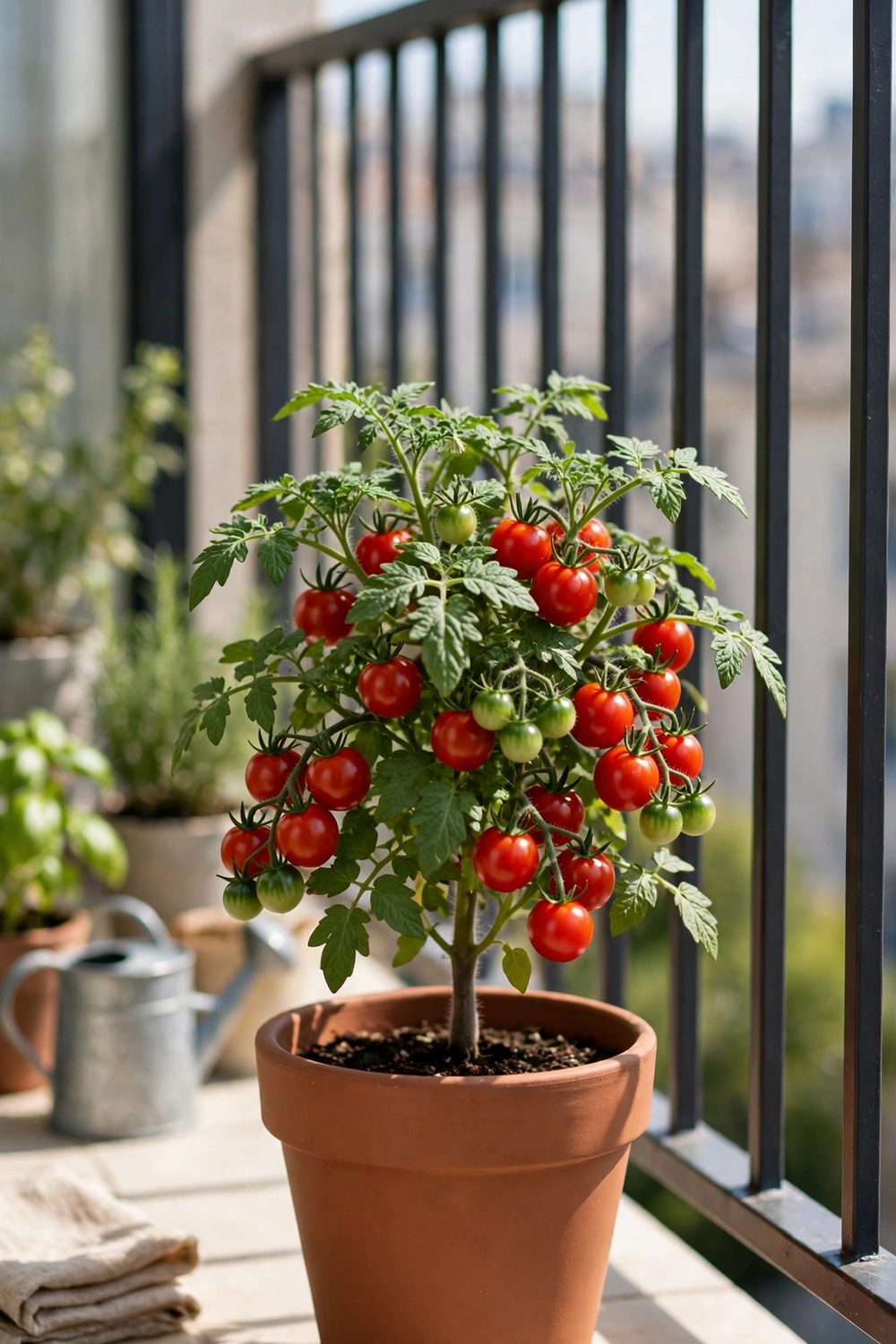
Some tomato plants grow taller than the gardener. ‘Tiny Tim’ stops at about knee height and still covers itself in cherry tomatoes, which is why it tops this list.
Set one plant in a 5-gallon (about 19-liter) pot in your brightest spot, with 6 to 8 hours of sun. A short stake tied loosely is all the support it needs.
Water deeply when the top inch (2.5 cm) of mix feels dry. Feed every two weeks once flowers open, and pick fruit as soon as it colors fully.
Small fruit ripens fast and rarely splits. For a first balcony, our apartment balcony vegetable garden for beginners guide sets out the starter order step by step.
2. Loose-Leaf Lettuce for the Fastest Return on Space
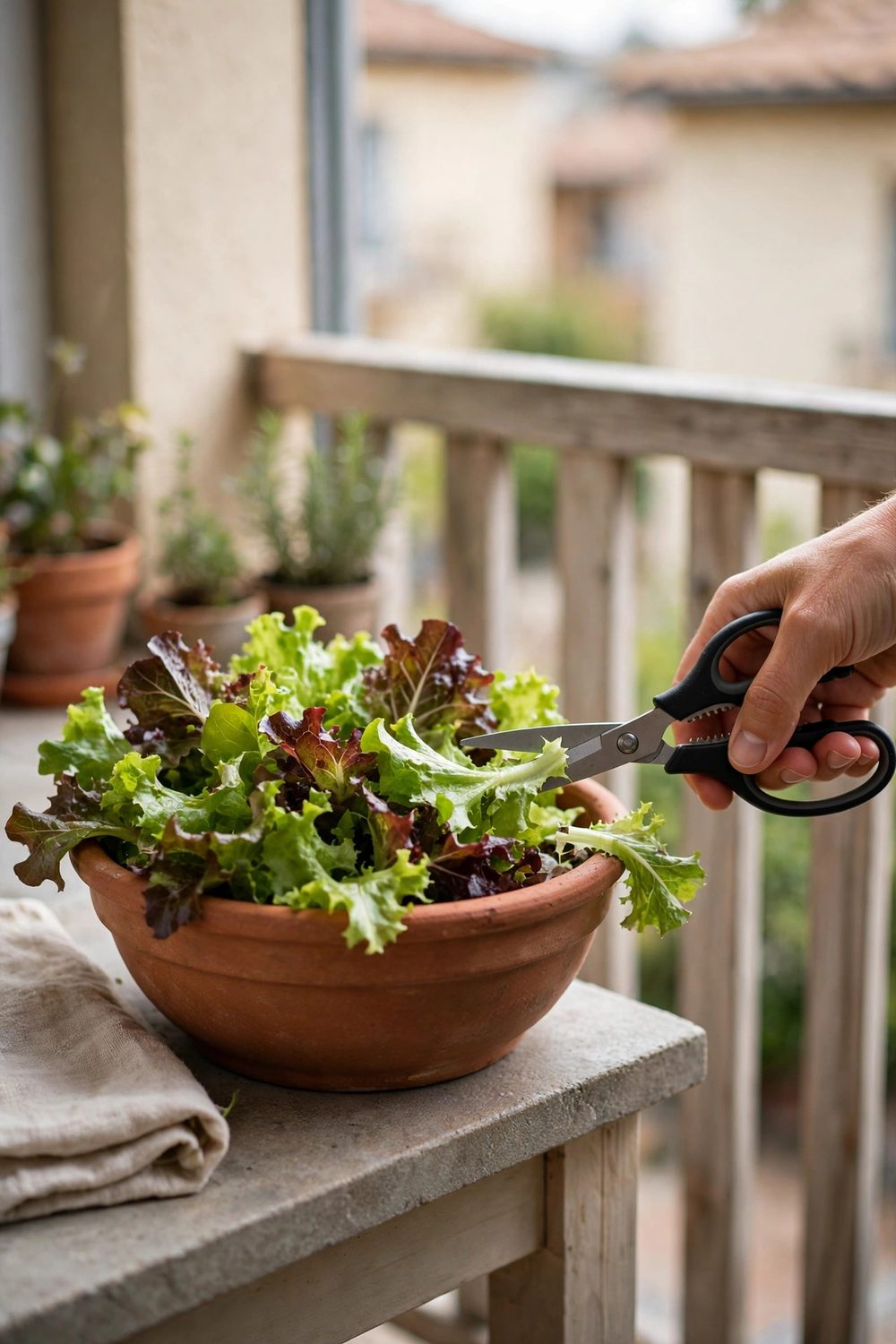
No crop pays back its pot faster than loose-leaf lettuce. You can pick the first outer leaves within weeks, and the plant keeps replacing them from the center.
Use a bowl at least 12 inches (30 cm) wide and 6 to 8 inches (15 to 20 cm) deep. Scatter seed thinly and cover it with a dusting of mix.
Lettuce grows on 3 to 4 hours of sun, so it takes the shadier end of the rail that fruiting crops refuse. Mist daily until sprouts show.
Snip leaves with scissors rather than pulling them. Sow a second bowl two weeks after the first and the salad supply never fully stops.
3. Radishes, Ready Before Anything Else in the Pot
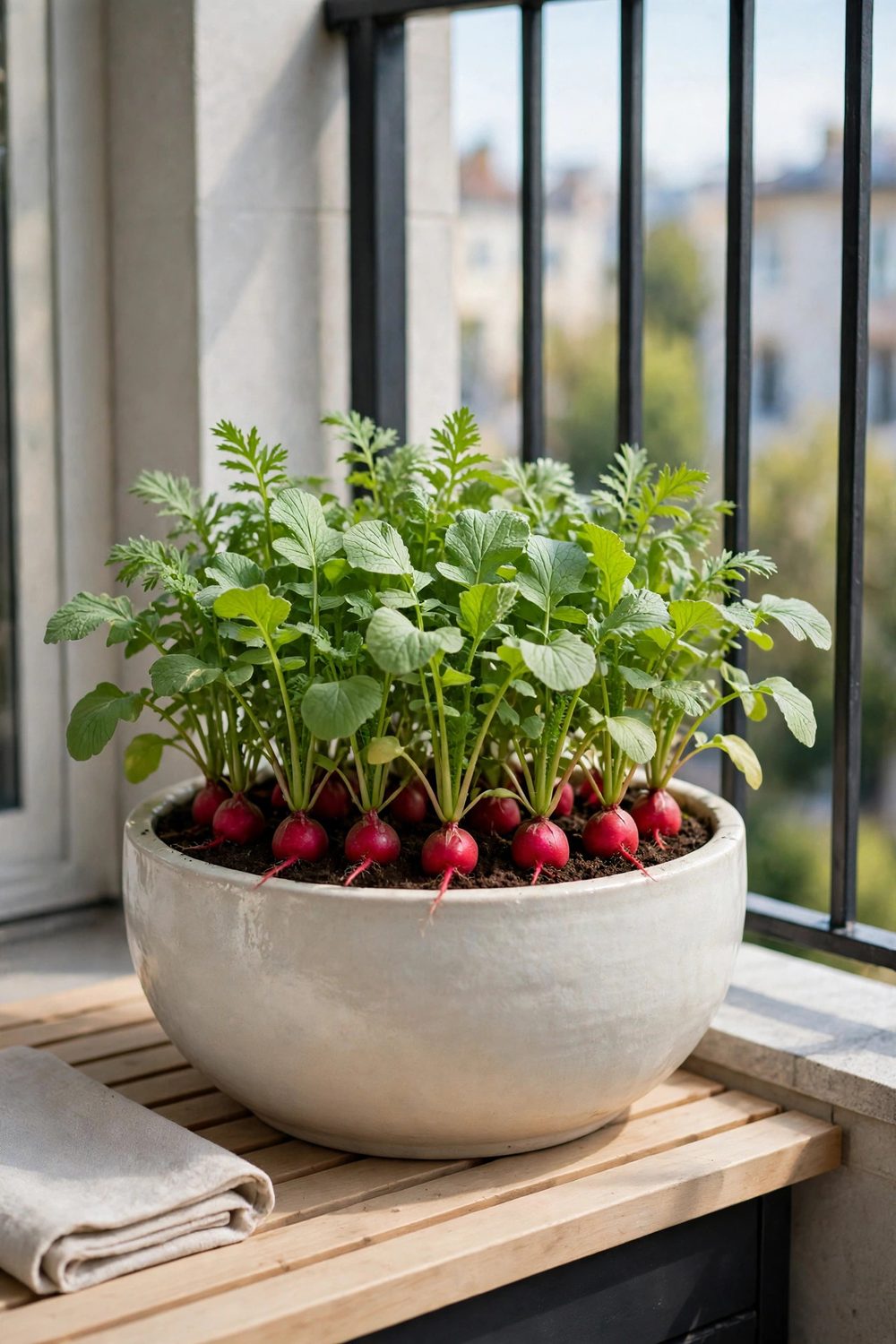
Radishes win on pure speed, ready to pull about a month after sowing in spring. They also fit the edges and corners that bigger crops leave empty.
Sow seed 1/2 inch (1 cm) deep and 1 inch (2.5 cm) apart in a trough at least 6 inches (15 cm) deep. Thin seedlings to 2 inches (5 cm).
Keep the mix damp and pull roots as soon as they fatten. Radishes left in warm mix turn woody, so pick young and sow little and often.
A short row every two weeks through spring and autumn keeps them coming. The seed packet is small, cheap, and lasts a whole season of sowings.
4. One Pepper Plant That Crops Until the Frost
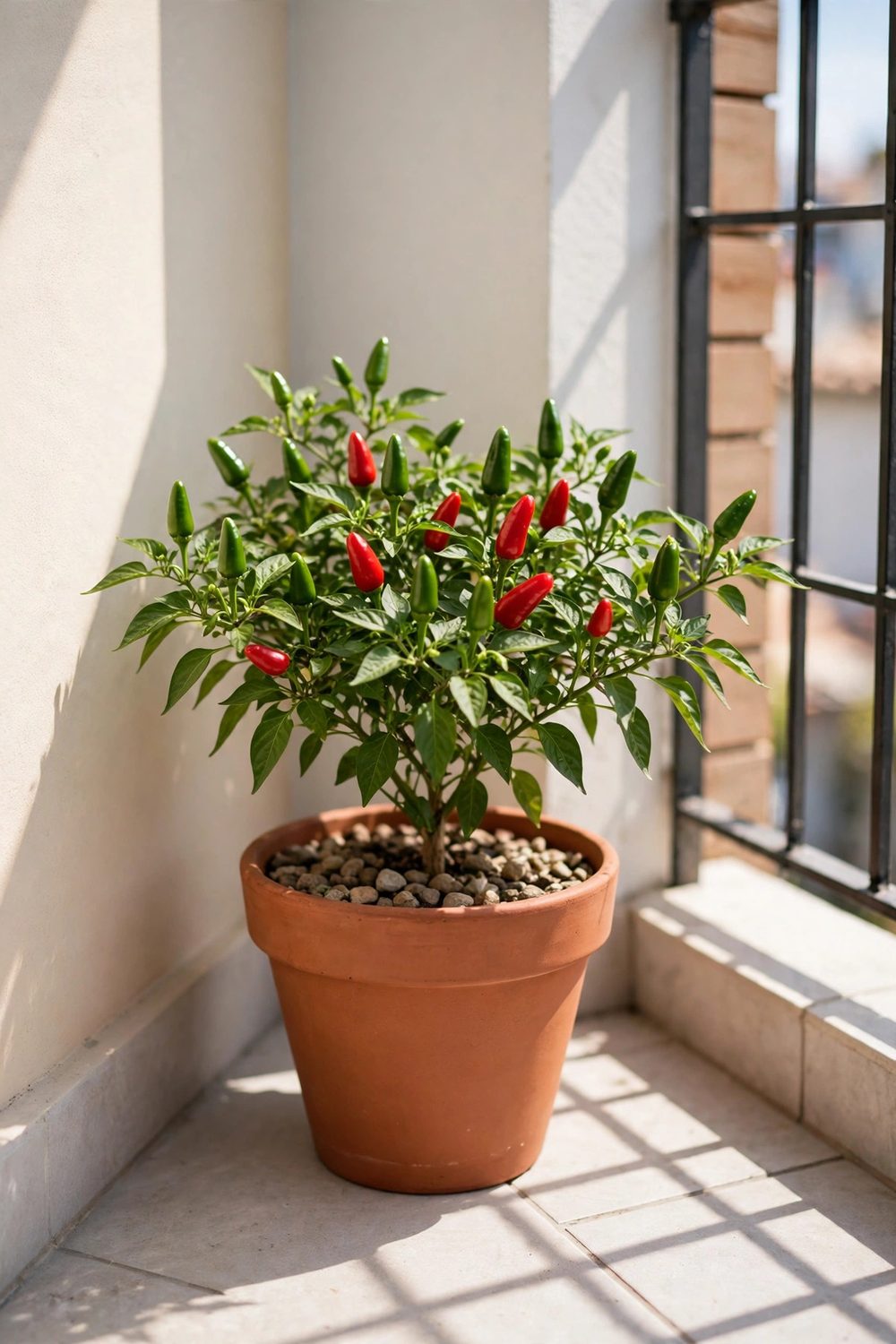
A single pepper plant is a long-season worker. It starts slowly, then hands you fruit from midsummer right through to the first cold nights of autumn.
Give one plant a whole 5-gallon (about 19-liter) pot in your hottest corner, with 6 to 8 hours of sun. Two plants in one pot both stay small.
Push a stake in at planting time, before the roots spread. Branches heavy with fruit snap in wind, and a loose tie now saves the plant later.
Water evenly and feed every two weeks once fruit sets. Compact jalapeño and small bell types suit balconies best, because the plants stay manageable.
5. Lacinato Kale for Months of Picking From One Pot
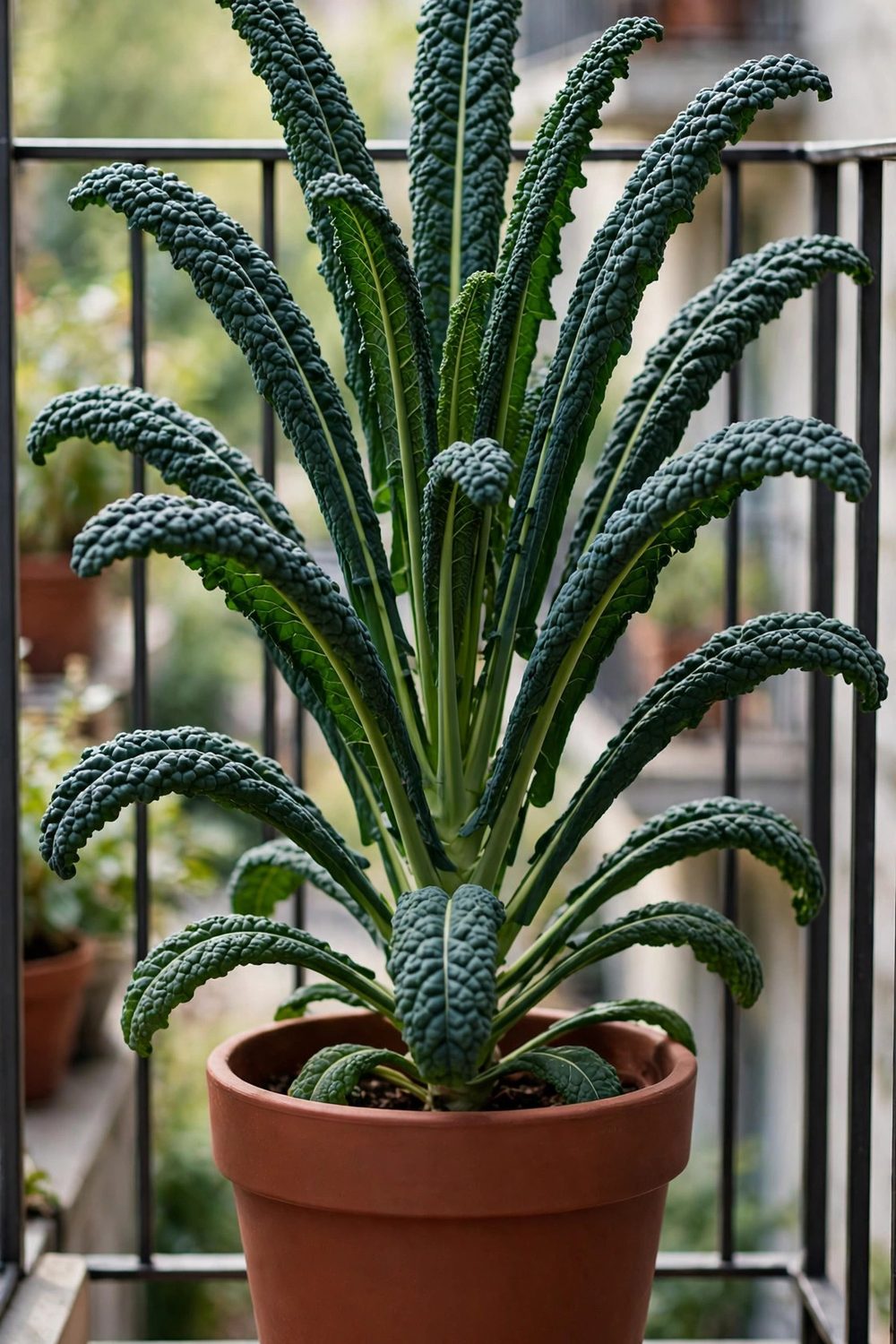
Kale wins on stamina. One upright plant gives you leaves for months, takes frost in stride, and asks for less sun than almost any fruiting crop.
Set one ‘Lacinato’ kale in a pot at least 12 inches (30 cm) deep. Its narrow, upright growth takes very little floor space on a crowded balcony.
Kale settles for about 4 hours of sun. Pick the outer leaves, leave the center crown alone, and always leave five or six leaves on the plant.
Water when the top inch (2.5 cm) of mix dries and feed every two weeks. In mild-winter areas, roughly USDA zones 8 to 10, kale crops through winter.
6. Bush Beans That Crop Heavily Without a Trellis
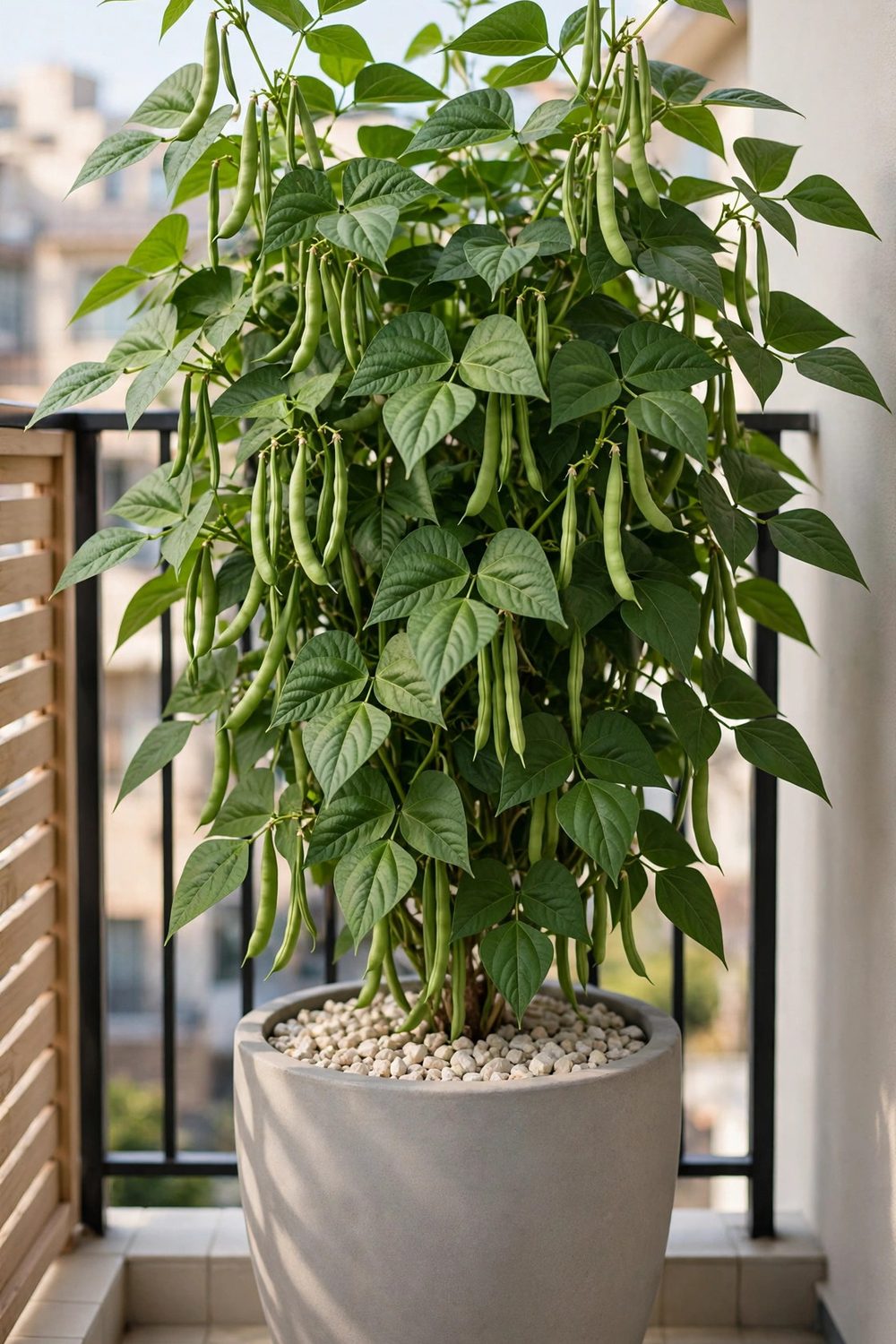
Pole beans climb 6 feet (about 2 m) and shade the pots behind them. Bush beans stop at knee height and crop in a fraction of the footprint.
Sow ‘Provider’ or ‘Contender’ seed 1 inch (2.5 cm) deep and 3 inches (8 cm) apart in a 5-gallon pot. Sow only after your last frost has passed.
Beans need little feeding in fresh potting mix, because their roots hold nitrogen. Warm mix, steady water, and 6 hours of sun cover the rest.
Pick pods every two days once they start. Regular picking keeps new flowers coming, while a week off tells the plant its job is done.
7. Sugar Snap Peas That Use the Rail, Not the Floor
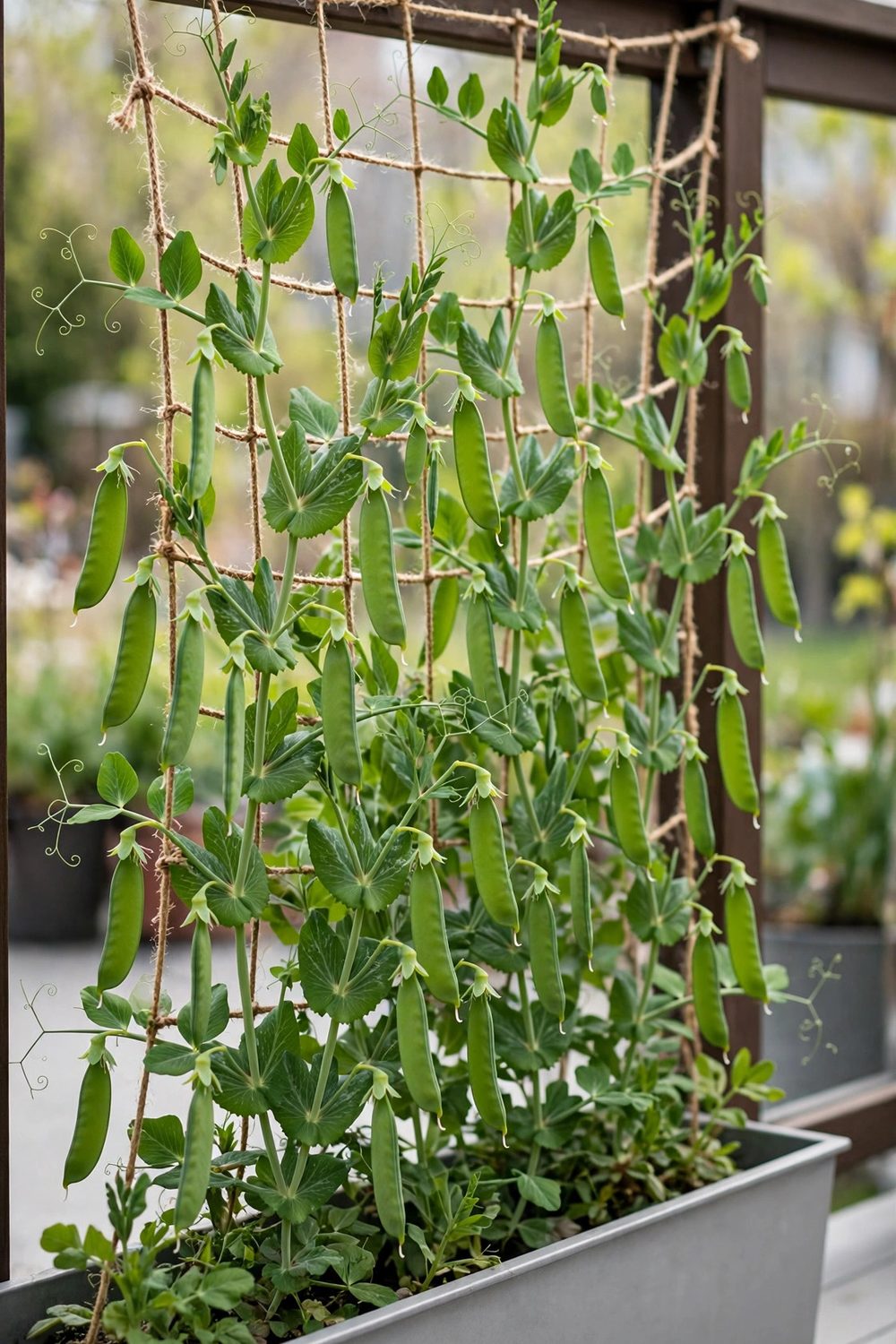
Peas win because they grow in the air, not on the floor. A trough on the ground and a net on the rail turn dead space into an early crop.
Sow ‘Sugar Snap’ peas 1 inch (2.5 cm) deep and 2 inches (5 cm) apart in a trough at least 8 inches (20 cm) deep. Sow in cool spring weather.
Guide the first tendrils onto the net and the vines climb alone. Water at the base, not over the leaves, to keep mildew down in still air.
Pick pods often and eat a few at the rail. Once the vines finish, the same trough takes a late sowing of lettuce or radishes.
8. Spacemaster Cucumber, Bred Short for Small Spaces
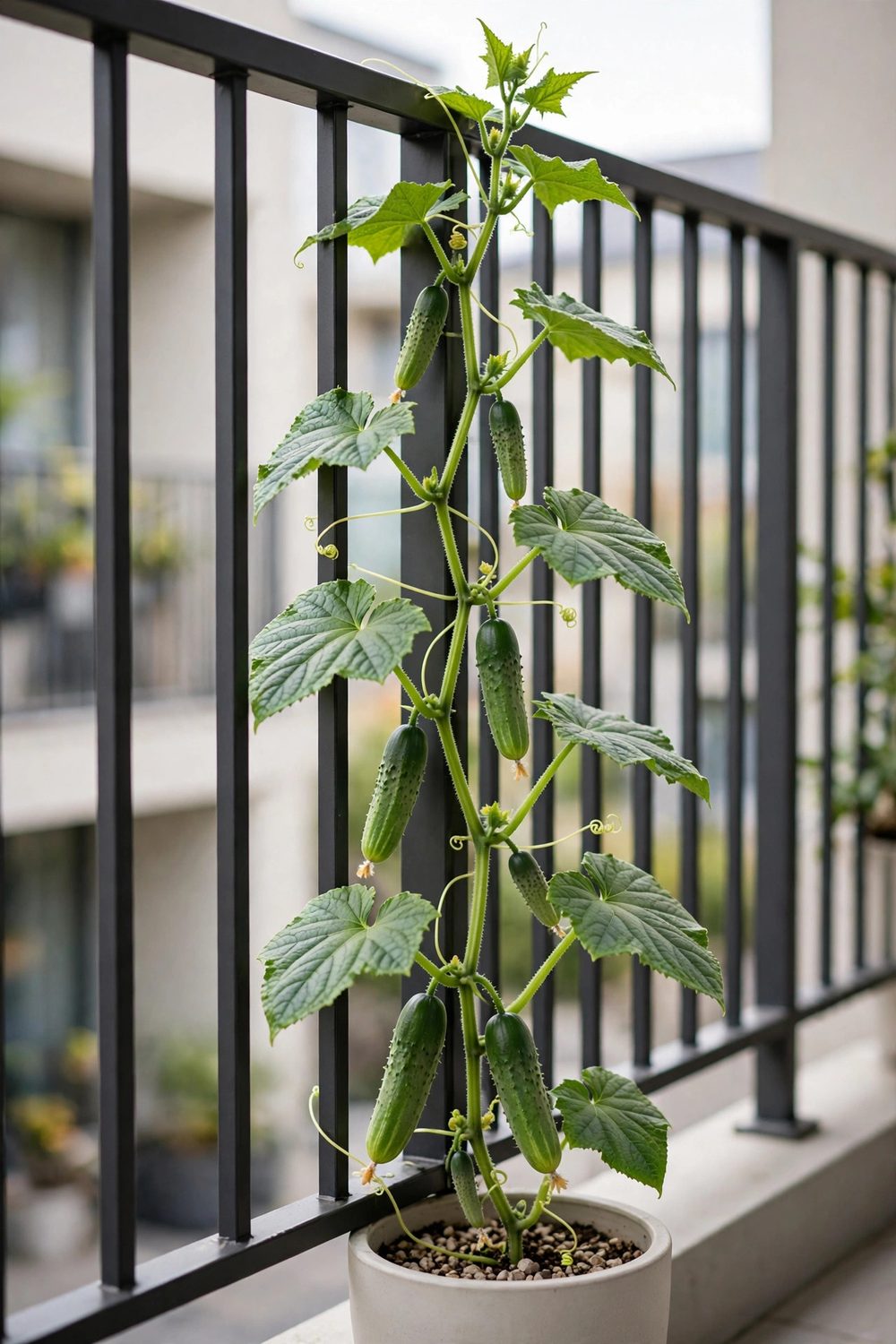
Standard cucumbers sprawl across a whole bed. ‘Spacemaster’ was bred with shorter vines for containers, so one plant fits a pot at the base of the rail.
Plant one cucumber in a 5-gallon (about 19-liter) pot and tie the stems to the rail with soft ties as they grow. Fruit hangs clean and straight.
Raised leaves get better air flow, which cuts mildew on humid days. Check under the big leaves twice a week, because ripe fruit hides well.
Water deeply each morning in summer and never let the mix dry out fully. Pick at 6 to 8 inches (15 to 20 cm), before the seeds harden.
9. Astia Zucchini, One Plant and a Long Harvest
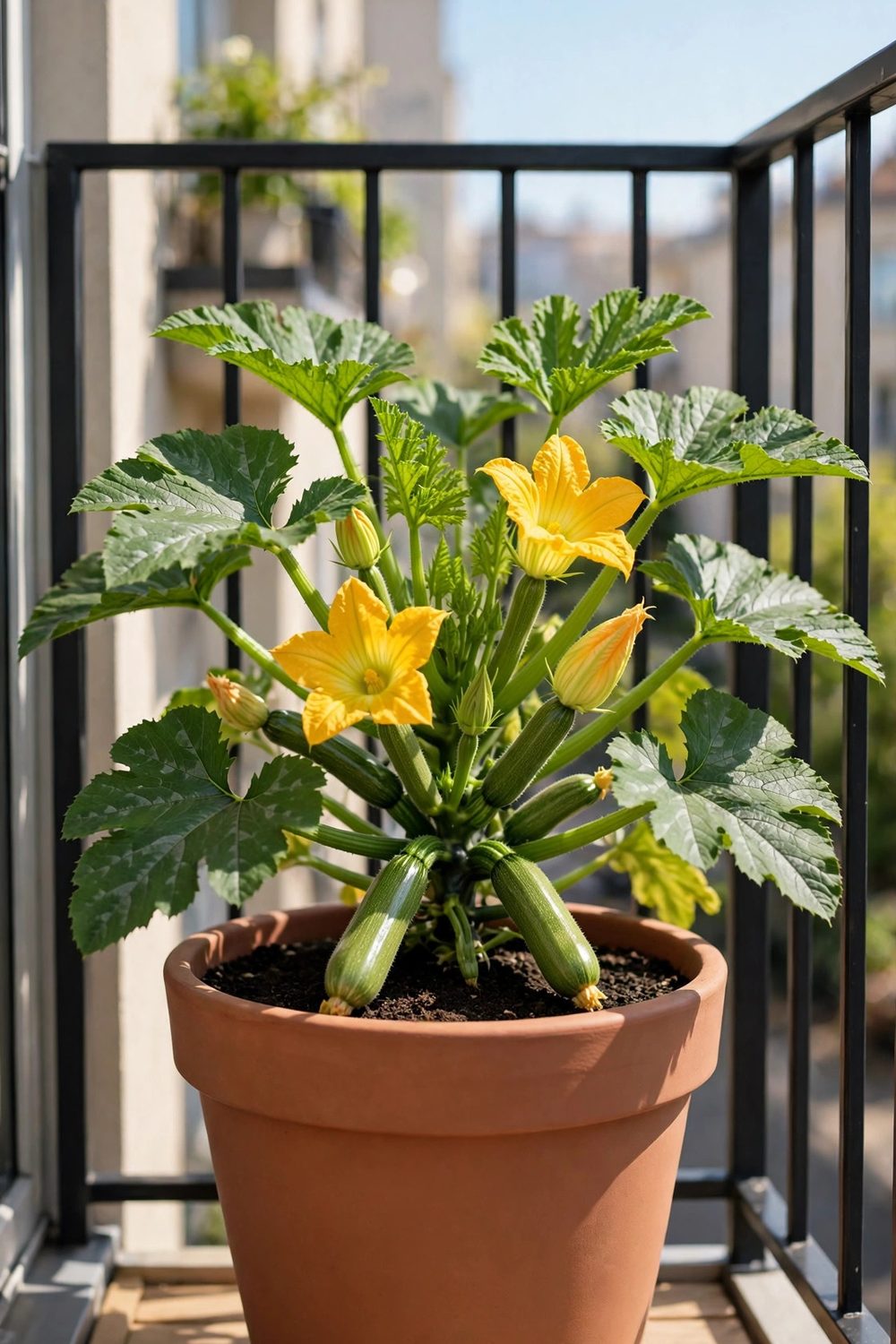
One zucchini (courgette) plant can out-produce the rest of the rail combined. ‘Astia’ was bred for containers, stays compact, and fruits over a long season.
Plant one zucchini in a 10-gallon (about 38-liter) grow bag or your largest pot. Give it your sunniest spot, with at least 6 hours of light.
Fabric bags drain freely, so water daily in hot weather. Feed every week once flowers start, because fruiting this heavily burns through food fast.
Pick fruits at about 6 inches (15 cm) long. Small fruit tastes better, and steady picking keeps the plant setting new flowers instead of swelling one giant.
10. Little Finger Carrots in a Deep, Loose Pot
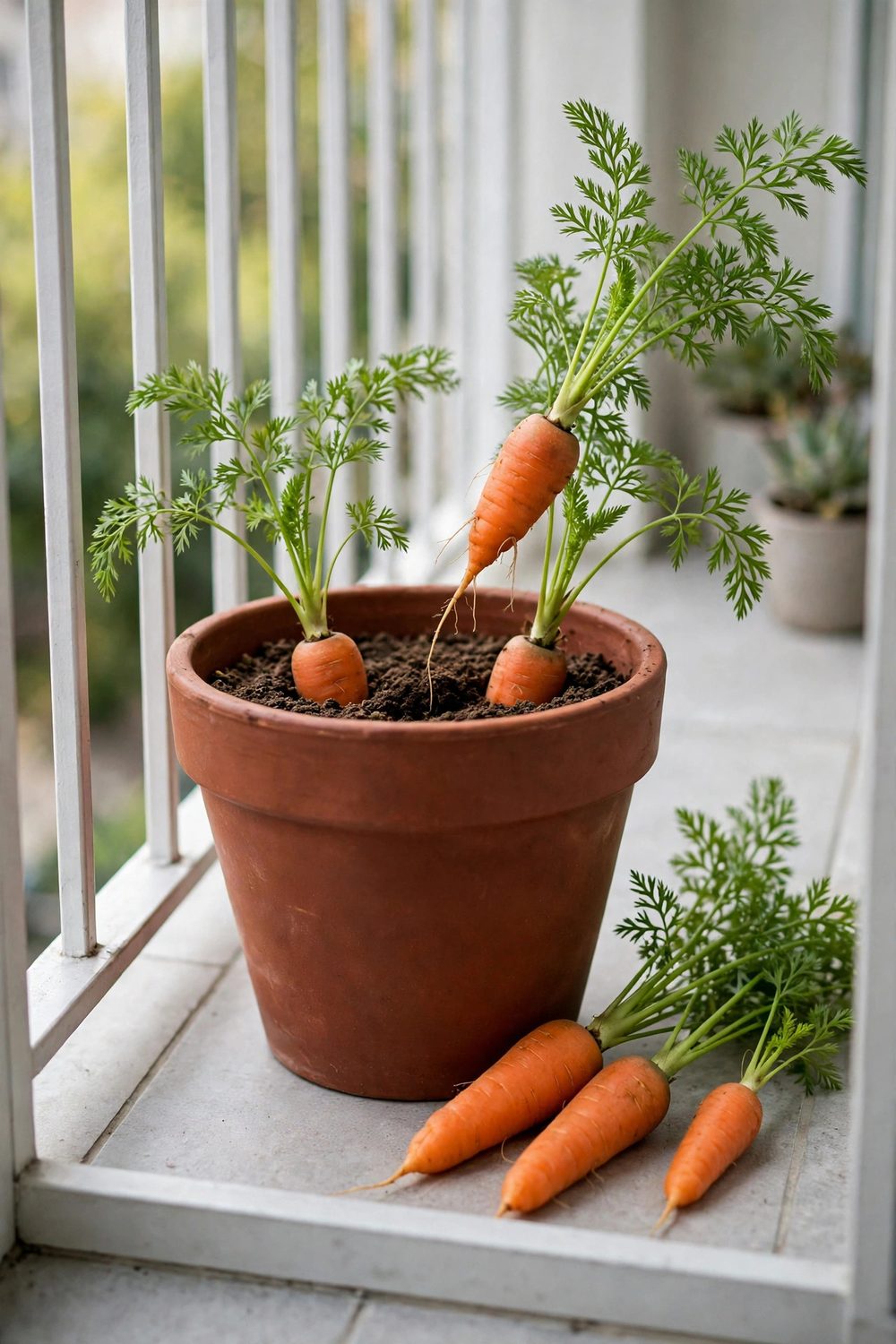
Carrots fork in stony ground, but a pot of loose mix removes the problem. Short varieties then give you sweet roots from a very small footprint.
Use a pot at least 12 inches (30 cm) deep and fill it with stone-free potting mix. Sow ‘Little Finger’ or ‘Parisian Market’ seed thinly, 1/4 inch (0.5 cm) deep.
Keep the surface damp until seedlings show, which can take 2 to 3 weeks. A board over the pot holds moisture in between waterings.
Thin to 2 inches (5 cm) apart so each root can swell. Crowded carrots stay pencil thin, however long you leave them in the pot.
11. Spring Onions in Every Gap Between Big Pots
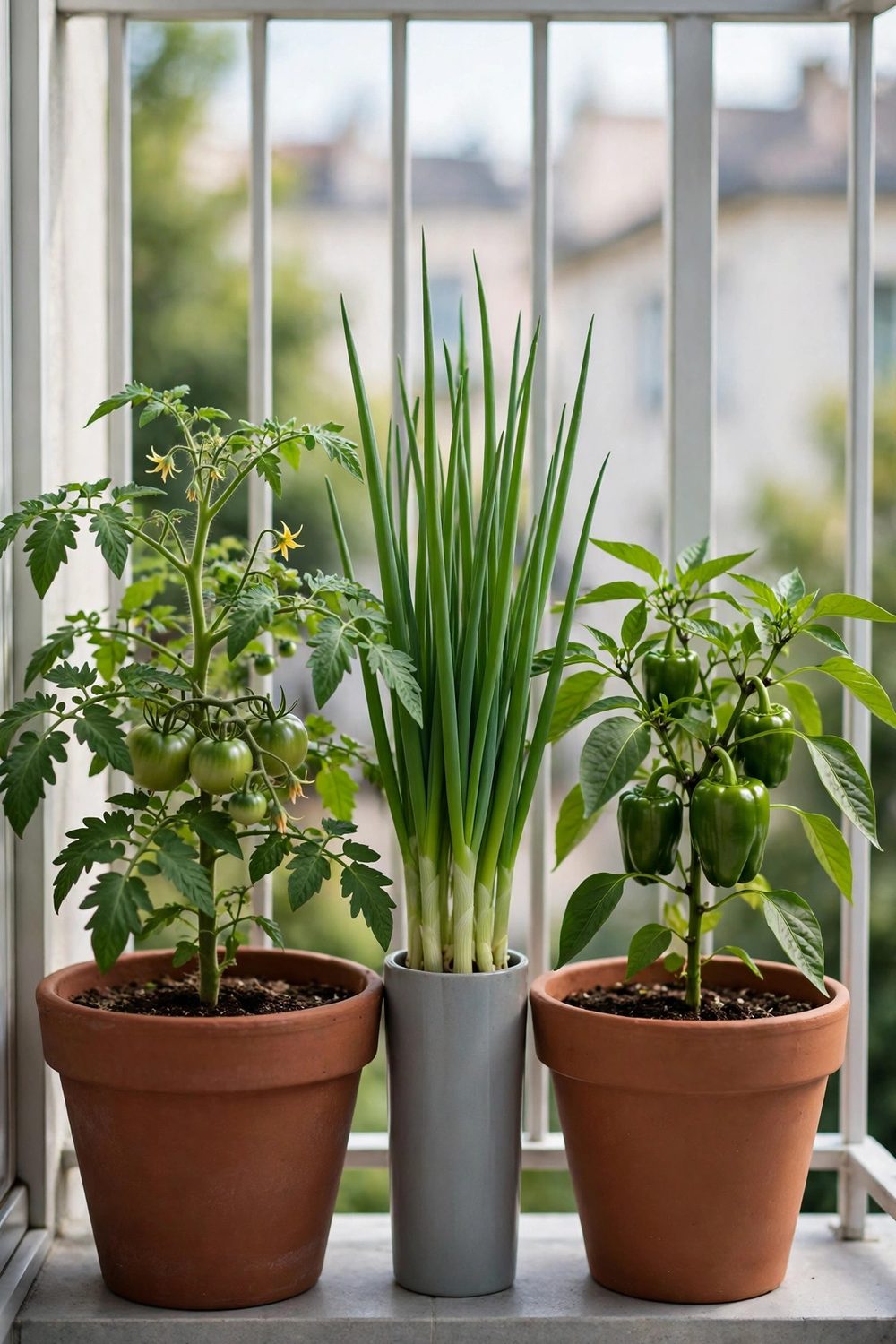
Spring onions win the leftover spaces. A narrow pot slipped between the tomato and the beans still gives you green tops for months of cooking.
Use a pot at least 8 inches (20 cm) deep, or sow a row along the edge of a bigger container. Sow seed 1/4 inch (0.5 cm) deep in clusters.
Thin clumps to about 1 inch (2.5 cm) apart so stems can thicken. Water when the top inch (2.5 cm) of mix dries out.
Harvest the biggest stems first and the rest keep growing. Spring onions also regrow after cutting, so one sowing covers a long stretch of meals.
12. Spinach for the Shady End of the Rail
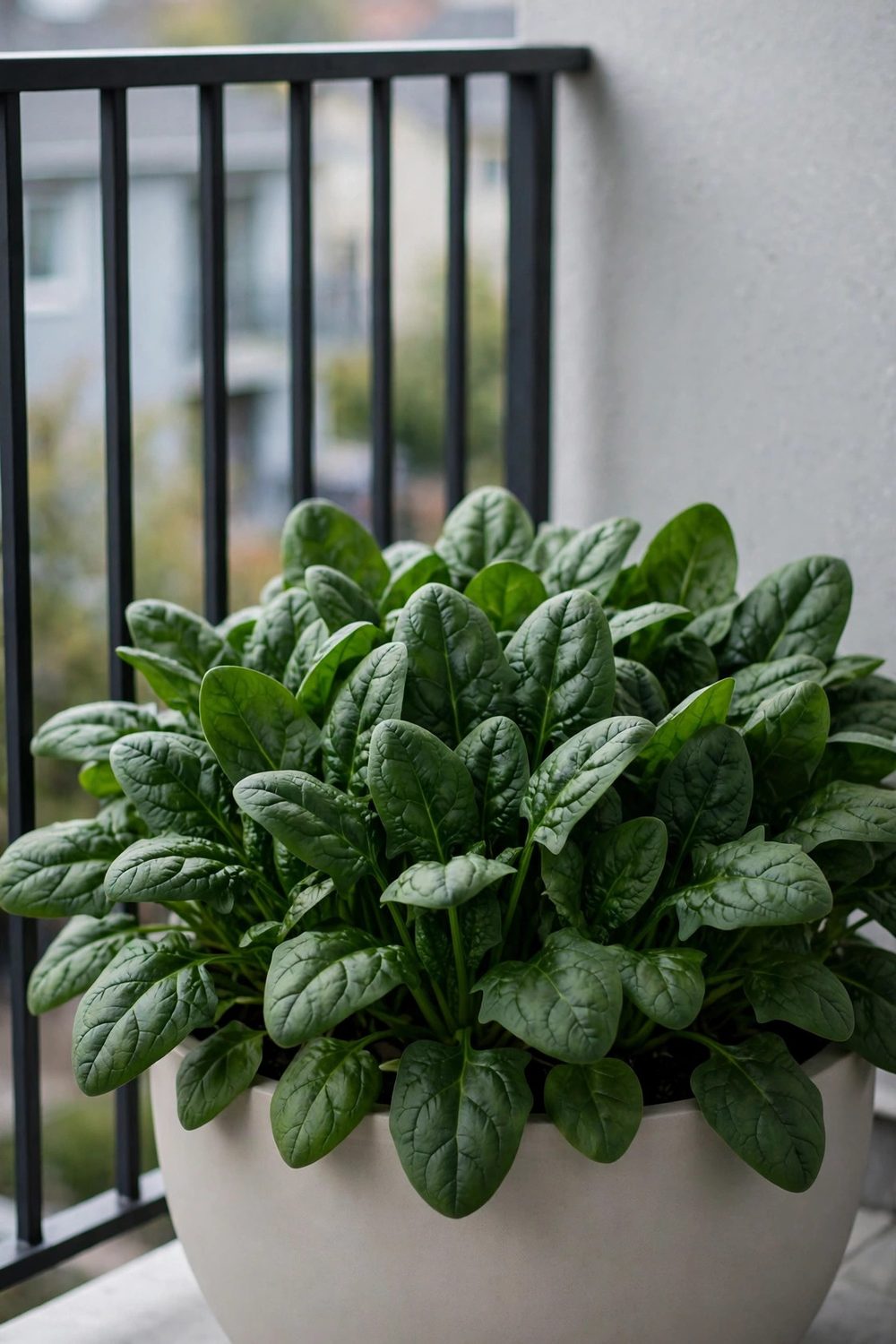
Every balcony has a shadier end that fruiting crops refuse. Spinach takes that spot happily in spring and autumn and turns it into real food.
Sow seed 1/2 inch (1 cm) deep and 2 inches (5 cm) apart in a wide pot at least 8 inches (20 cm) deep. Thin to 4 inches (10 cm).
Spinach manages on 3 to 4 hours of sun and likes cool weather. Keep the mix evenly damp and pick outer leaves as they size up.
Skip midsummer sowings, because heat makes spinach bolt to seed in days. A late-summer sowing crops into autumn, and longer in mild areas. Layouts that pair sun and shade crops sit in our guide to balcony vegetable garden layouts by balcony size.
13. Rainbow Chard That Keeps Its Looks All Season
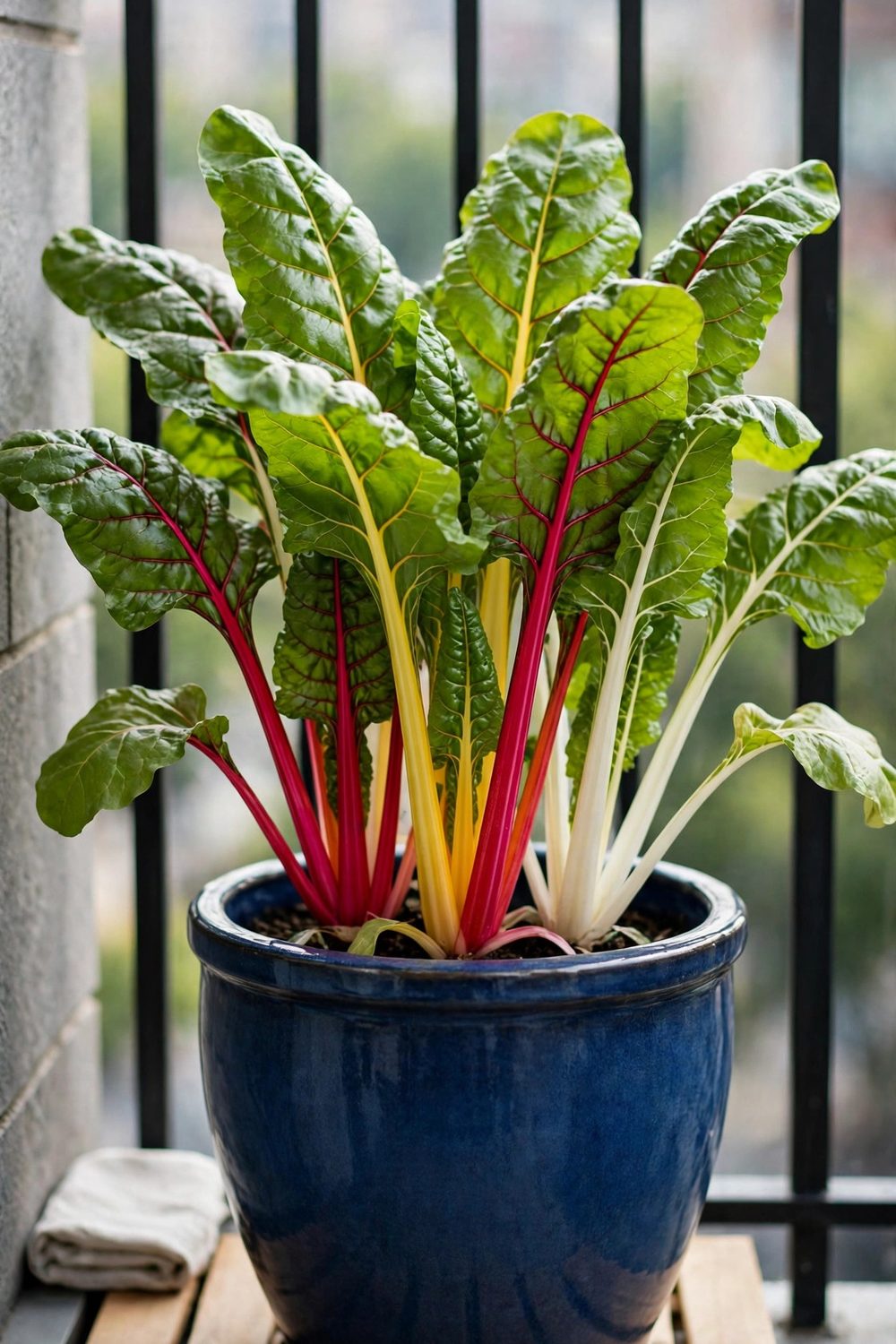
Chard is the leafy crop that never looks tired. Bright stems, upright leaves, and steady picking make it the best-looking workhorse on a small balcony.
Set two or three plants in a pot at least 12 inches (30 cm) deep, spaced 6 inches (15 cm) apart. Chard settles for 4 hours of sun or more.
Pick outer stems at the base and leave the center growing. Water when the top inch (2.5 cm) of mix dries and feed every two weeks.
Unlike spinach, chard shrugs off warm weeks without bolting straight away. One pot can carry you from spring salads to autumn sautés without a break.
14. Basil Grown From Seed in a Real Pot
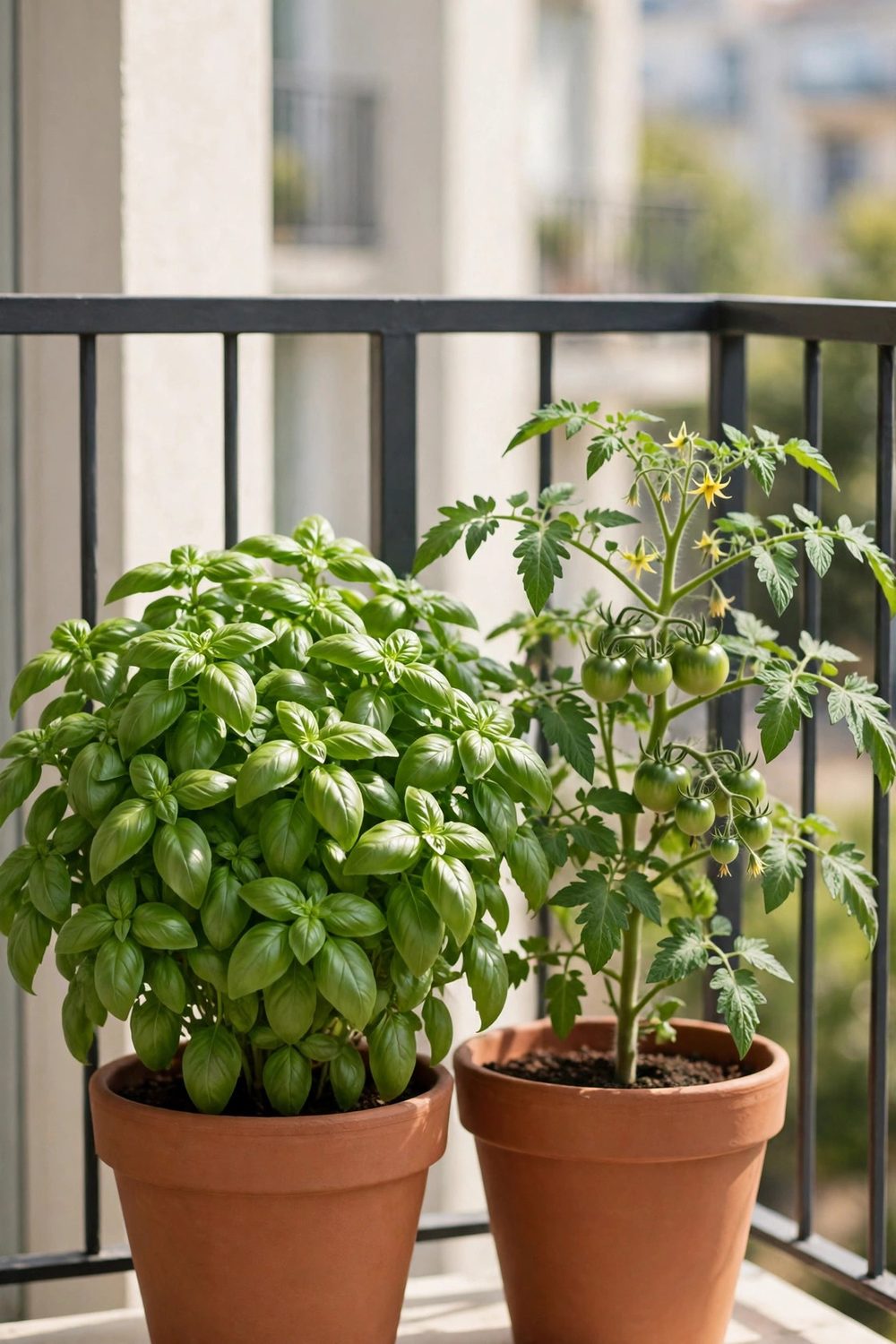
The supermarket basil pot is ten seedlings starving in no soil. Basil sown thinly in a real pot becomes one bushy plant that crops for months.
Sow after your last frost in a 10 to 12 inch (25 to 30 cm) pot. Thin to one plant per 4 inches (10 cm) once true leaves show.
Basil wants full sun and steady water. Pinch the tips weekly so the plant branches sideways instead of racing up to flower in midsummer.
Pick from the top down and the plant keeps its shape. Set the pot near the tomato, because the two end up in the same meals anyway. Pot counts for mixed herbs sit in our guide to how many vegetable plants per pot.
15. Potatoes in a Bag, Tipped Out at Harvest
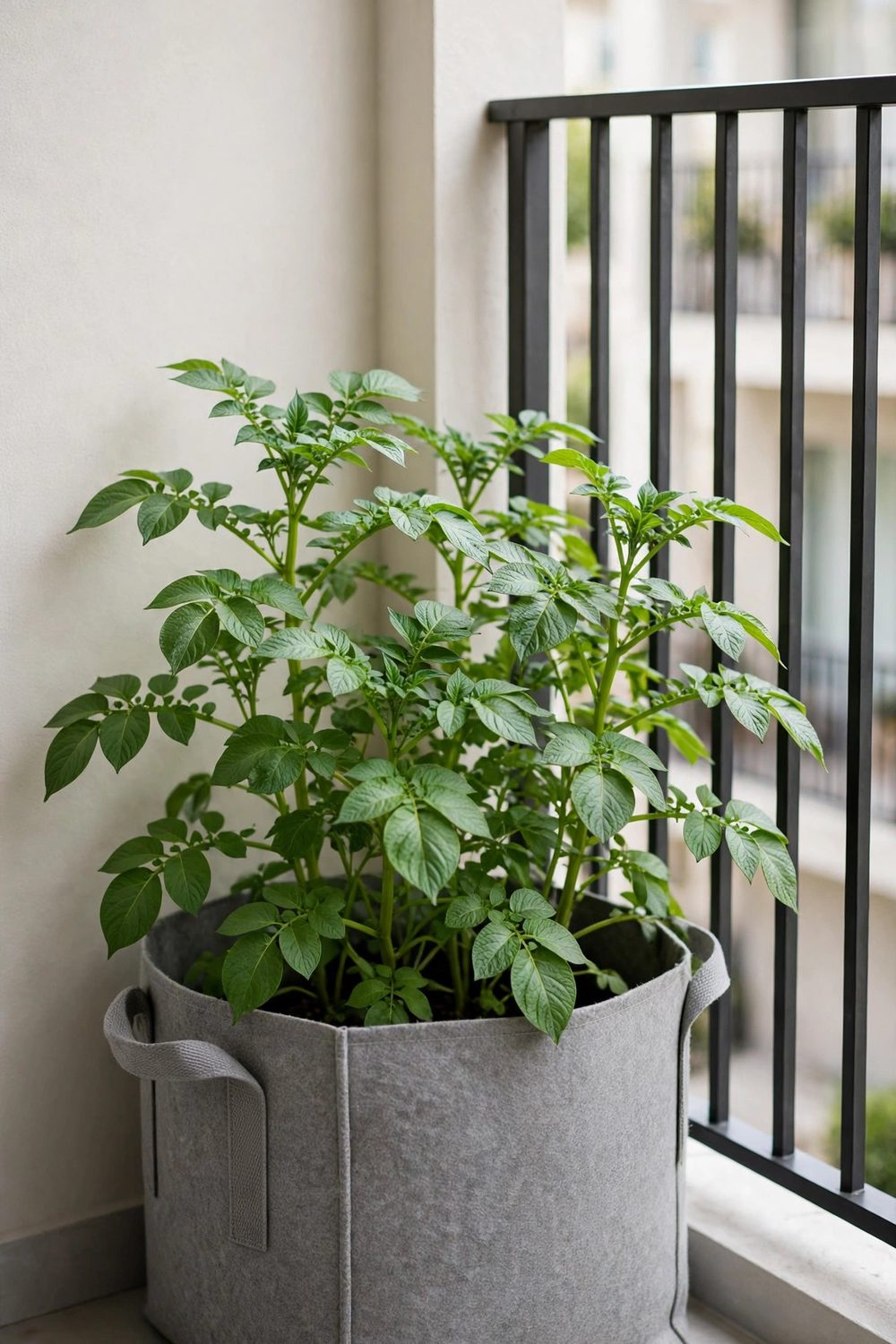
Potatoes sound like a field crop, but a grow bag turns them into a balcony winner. The harvest tips out onto a sheet, with no digging at all.
Set three seed potatoes on 4 inches (10 cm) of mix in a 10-gallon (about 38-liter) bag. Cover with 4 inches (10 cm) more mix.
Add mix as the stems grow, burying them a few inches at a time. The buried stem sections are where the extra tubers form over the season.
Water well in dry spells and harvest after the leaves yellow. Early varieties suit bags best, because they crop before the bag space is needed again. Spring timing help sits in our list of spring container vegetables to plant first.
If you plant only five pots, make them the tomato, the lettuce, the beans, the peas, and the kale. That set covers fruit, leaves, and pods.
The best vegetables for a balcony garden small space winners all share one trait: they pay you back fast for every inch they take.
Save this list to your container garden board for later. Pick your five, match them to your sun, and sow the first pot this week.


