

15 Pet-Safe Balcony Vegetables for Cat and Dog Owners
A cat on the rail and a dog at the door change what you can grow. Some common vegetables are toxic to pets, so the crop list has to be checked first.
Every crop in this balcony garden for cat and dog owners pet safe vegetables list is classed as non-toxic to cats and dogs on the ASPCA plant list. Pot sizes and care are included for each one.
Safe still needs sensible. Grow food in bought potting mix, keep pots raised where you can, and wash every harvest before anyone eats it, human or animal.
Skip sprays on anything a pet can reach, and check with your vet before you share garden food with a pet. A little care keeps the balcony fun for everyone.
This post contains affiliate links. If you buy through them, we may earn a small commission at no extra cost to you. See our Affiliate Disclosure.
1. Grow Carrots in a Deep Pot on a Low Stand
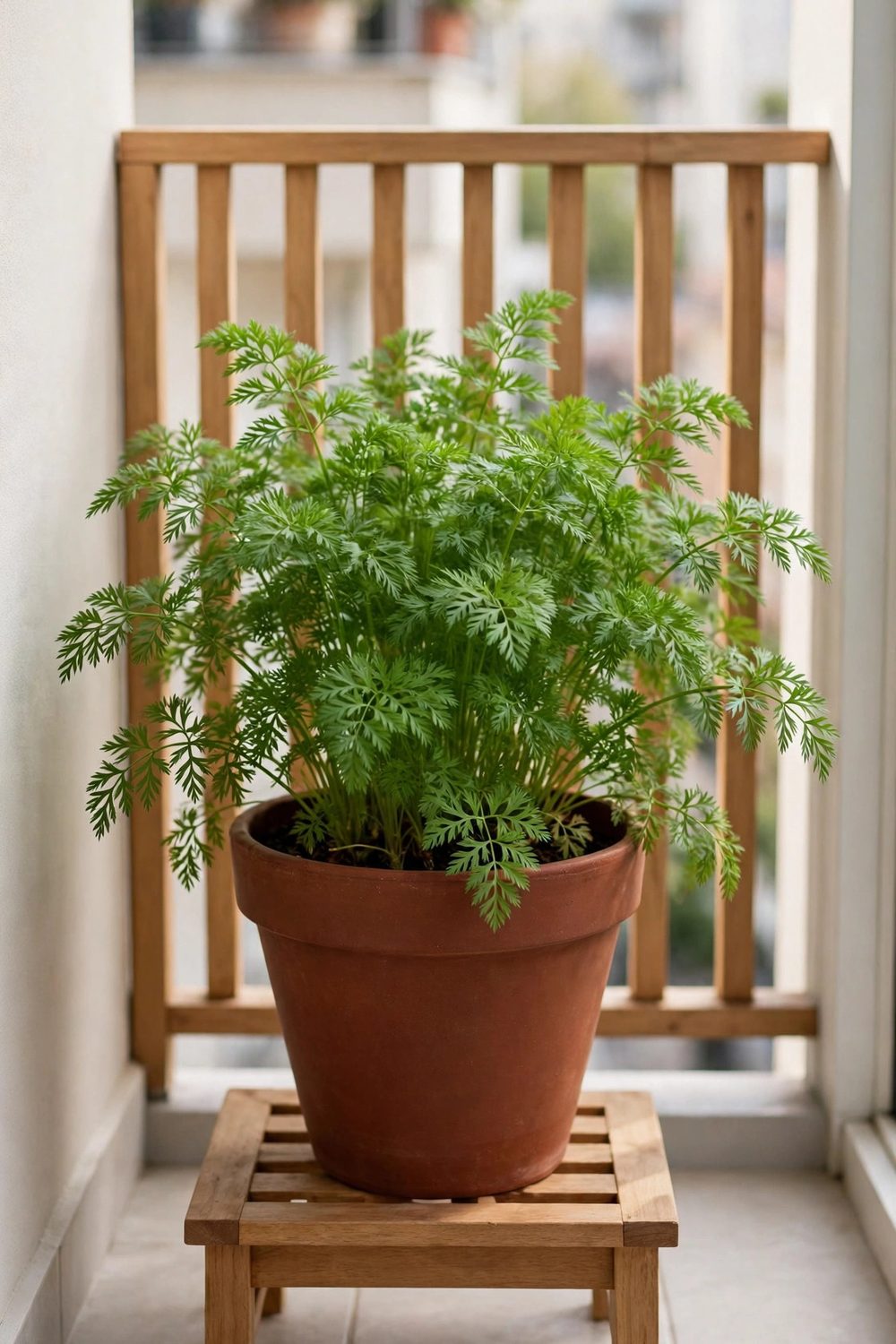
Carrots are non-toxic to cats and dogs, and the feathery tops draw no real interest from most pets. The deep pot does the hard work here.
Use a pot at least 12 inches (30 cm) deep, filled with loose, stone-free potting mix. Sow short types such as ‘Little Finger’ or ‘Parisian Market’ thinly.
Scatter seed 1/4 inch (0.5 cm) deep and keep the surface damp until sprouts show, which can take 2 to 3 weeks. Thin seedlings to 2 inches (5 cm).
Set the pot on a low stand if your dog digs. A raised pot keeps paws out of the mix and the harvest cleaner for the kitchen.
2. Plant Bush Green Beans a Cat Can Walk Past Safely
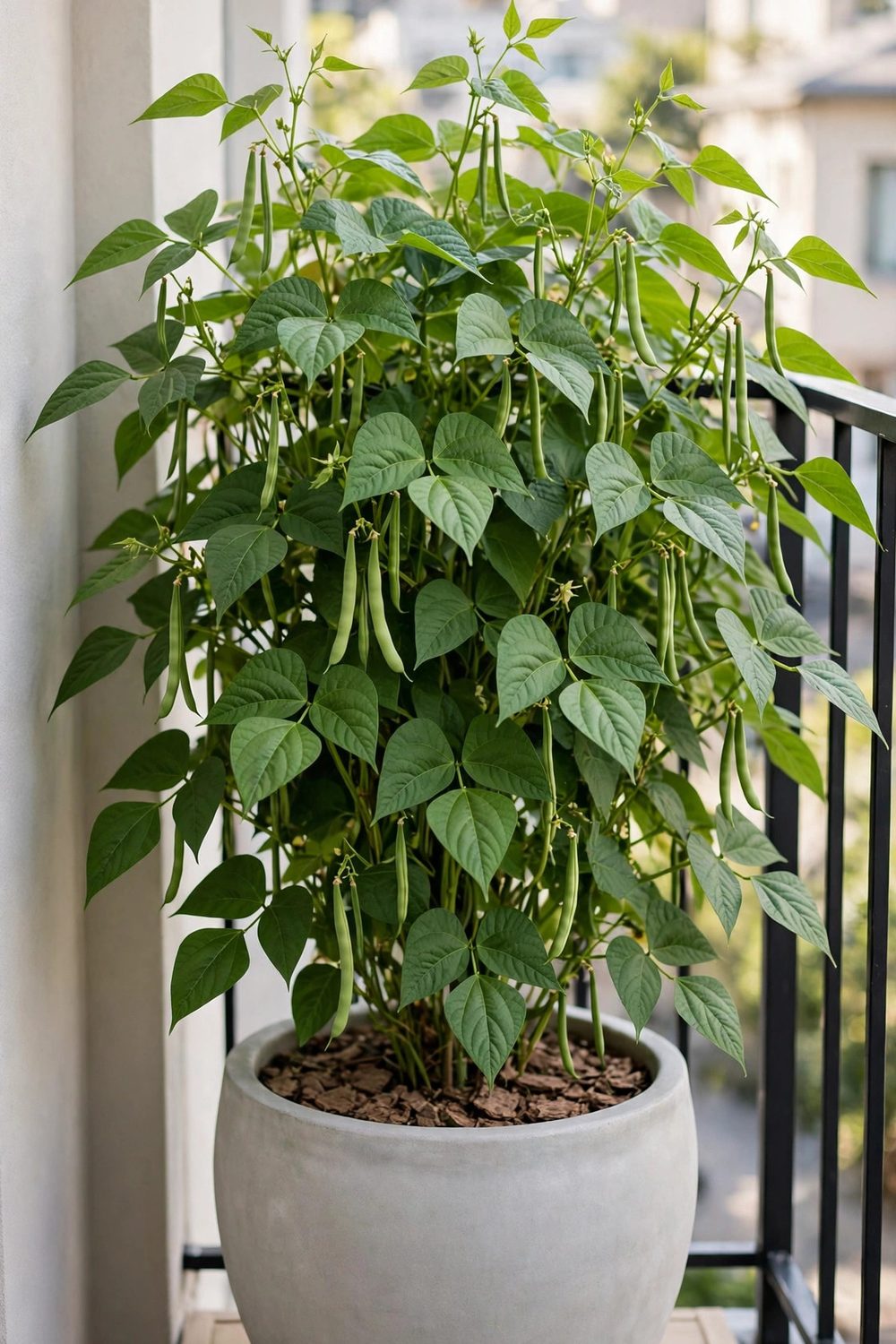
Common green beans are non-toxic to cats and dogs, and bush types stay knee-high with no trellis to climb or knock over. They suit a shared balcony well.
Sow ‘Provider’ or ‘Contender’ seed 1 inch (2.5 cm) deep and 3 inches (8 cm) apart in a 5-gallon (about 19-liter) pot, after your last frost.
Beans want 6 hours of sun and steady water in fresh mix. They need little feeding, which keeps the pot simple and the routine cheap.
Pick pods every two days once they start coming. Regular picking keeps flowers forming, and fallen pods are easy to sweep up before a dog finds them.
3. Give Zucchini a Big Bag in the Sunniest Corner
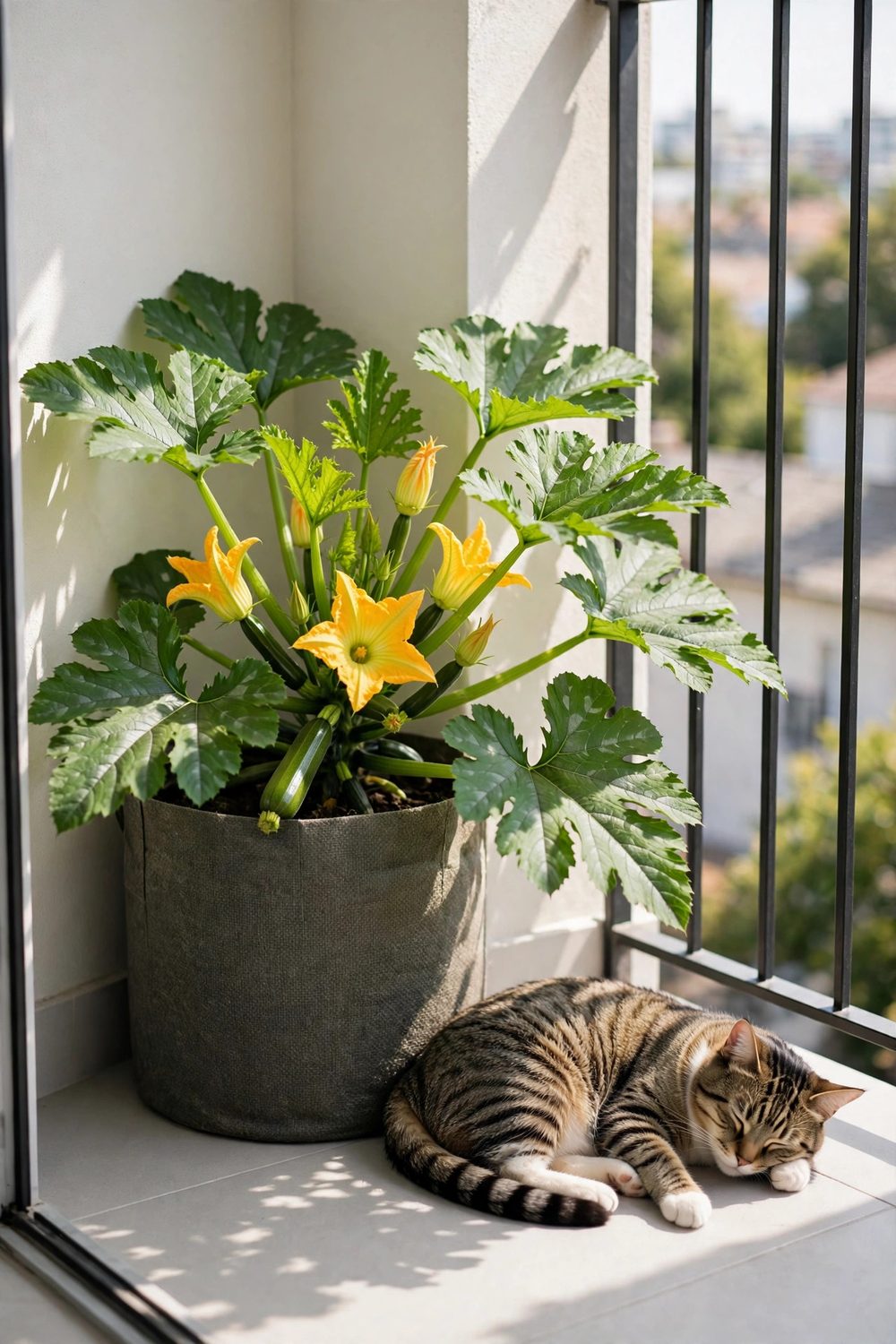
Zucchini (courgette) plants are non-toxic to cats and dogs, and one plant produces enough fruit that sharing the odd slice at dinner feels easy.
Plant one ‘Astia’ zucchini in a 10-gallon (about 38-liter) grow bag. This compact variety was bred for containers and fruits over a long season.
Water daily in hot weather, because fabric bags dry fast. Feed every week once flowers start, and pick fruit at about 6 inches (15 cm) long.
The big leaves give cats shade on a hot afternoon. Keep an eye on chewing anyway, because any plant material eaten in bulk can upset a stomach.
4. Train a Cucumber Up the Rail, Out of Paw Reach
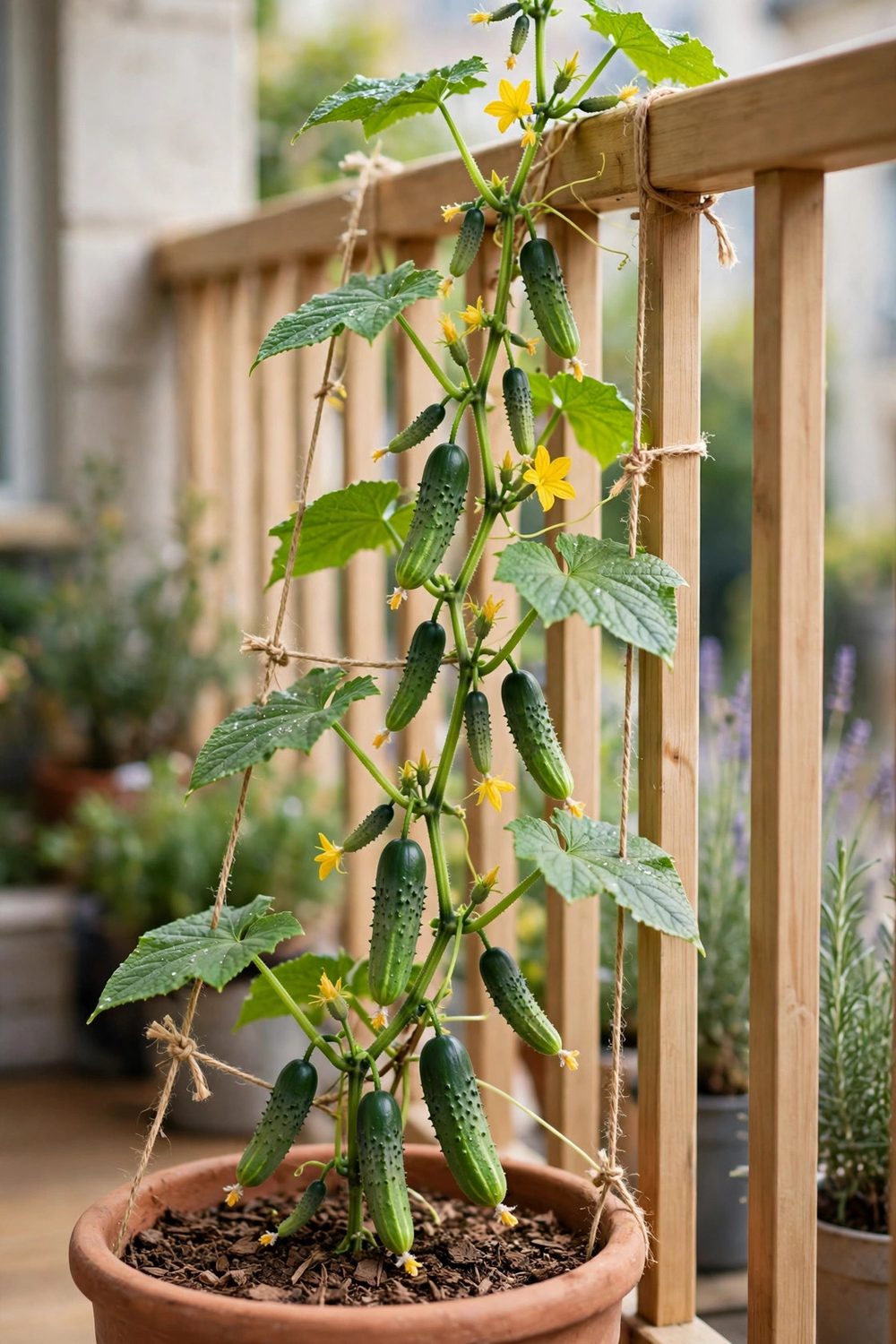
Cucumber plants are non-toxic to cats and dogs, and training the vine upward keeps the fruit off the floor where a dog patrols. Height solves two problems at once.
Plant one ‘Spacemaster’ cucumber in a 5-gallon (about 19-liter) pot at the base of the rail. Tie the stems to the rail with soft ties as they grow.
This bush type has shorter vines bred for small spaces. Raised leaves get better air flow, which cuts mildew on still, humid days.
Water deeply each morning in summer and never let the mix dry out fully. Pick fruit at 6 to 8 inches (15 to 20 cm). More layout help sits in our best vegetables for a balcony garden winners list.
5. Fill a Wide Bowl With Loose-Leaf Lettuce
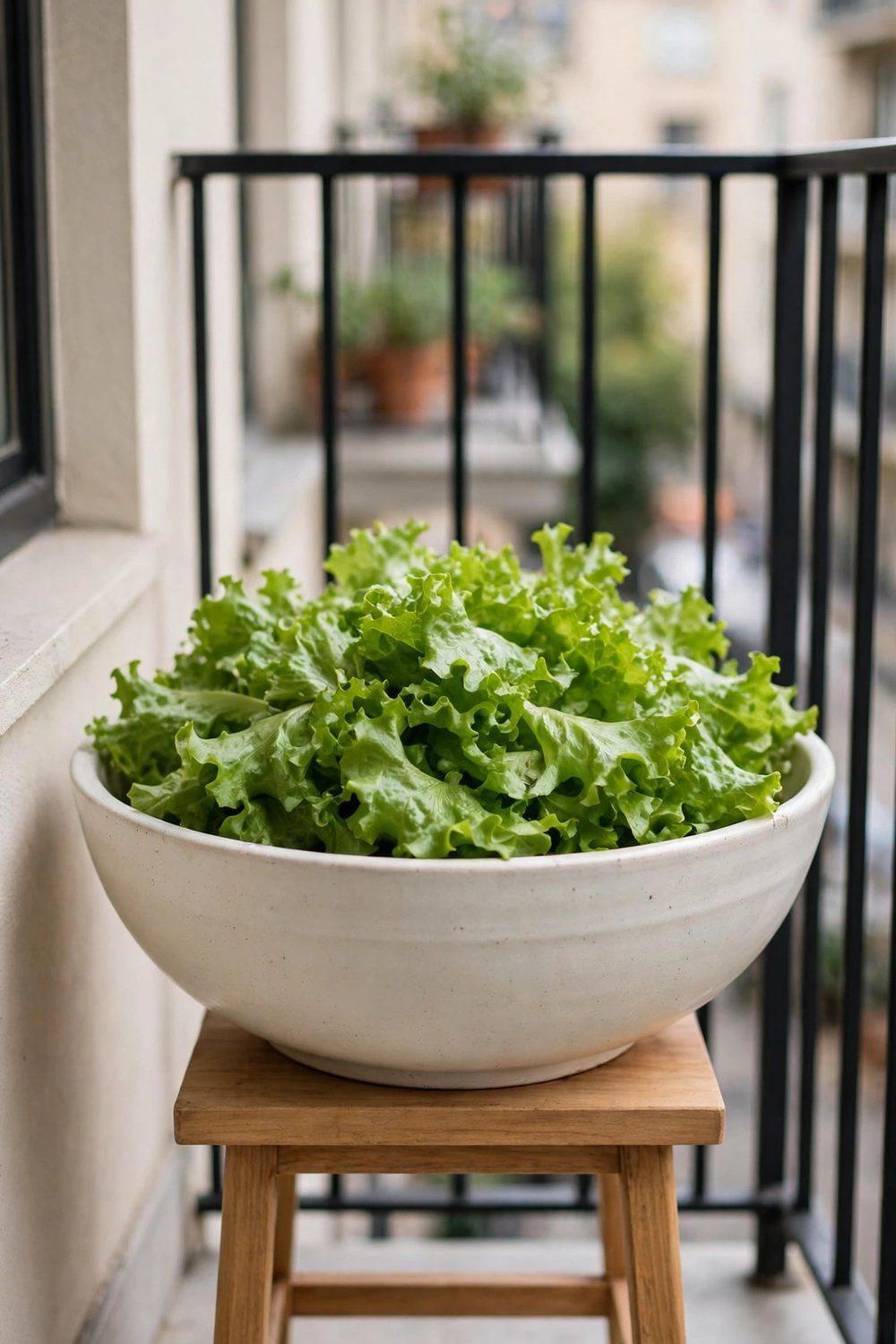
Garden lettuce is non-toxic to cats and dogs, and a wide bowl of it is the easiest crop on this whole list. It also grows fast from cheap seed.
Choose a bowl at least 12 inches (30 cm) wide and 6 to 8 inches (15 to 20 cm) deep. Scatter loose-leaf seed thinly and cover it lightly.
Lettuce grows on 3 to 4 hours of sun, so it suits the shadier end of the rail. Mist daily until sprouts show, then water at the base.
Snip outer leaves and the center keeps growing. Set the bowl on a stand if your cat treats loose mix as a digging tray.
6. Sow Sugar Snap Peas on a Rail Trellis
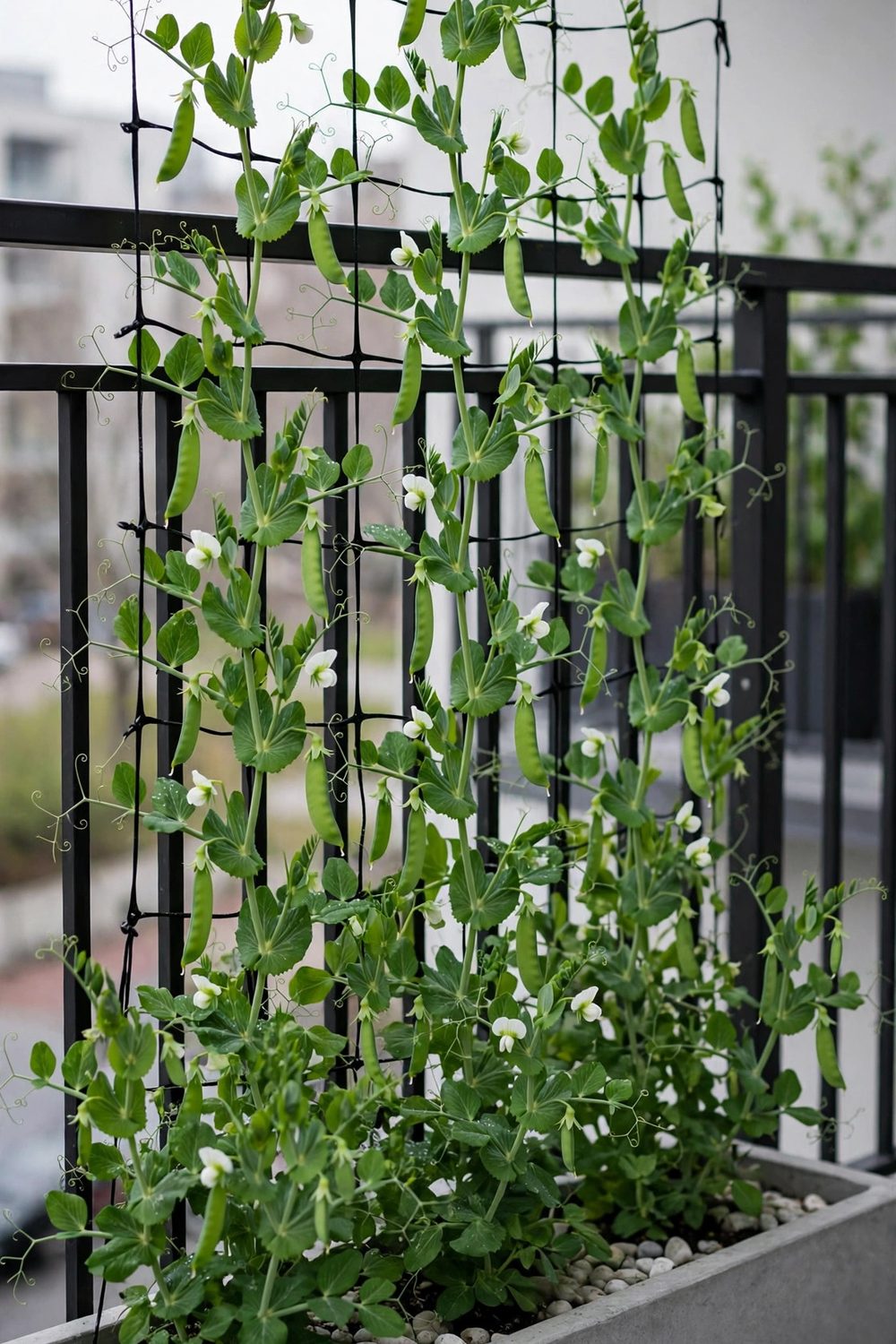
Garden peas are non-toxic to cats and dogs, and the vines climb away from the floor on a simple net. Cool spring weather is their favorite season.
Sow ‘Sugar Snap’ peas 1 inch (2.5 cm) deep and 2 inches (5 cm) apart in a trough at least 8 inches (20 cm) deep, with netting on the rail.
Guide the first tendrils onto the net and the plants climb alone after that. Water at the base, not over the leaves, to keep mildew down.
Pick pods often and the flowers keep coming. Sweep up fallen pods on a shared balcony so nobody crunches them underfoot on the way out.
7. Grow Bell Peppers in a Sturdy Pot a Dog Cannot Tip
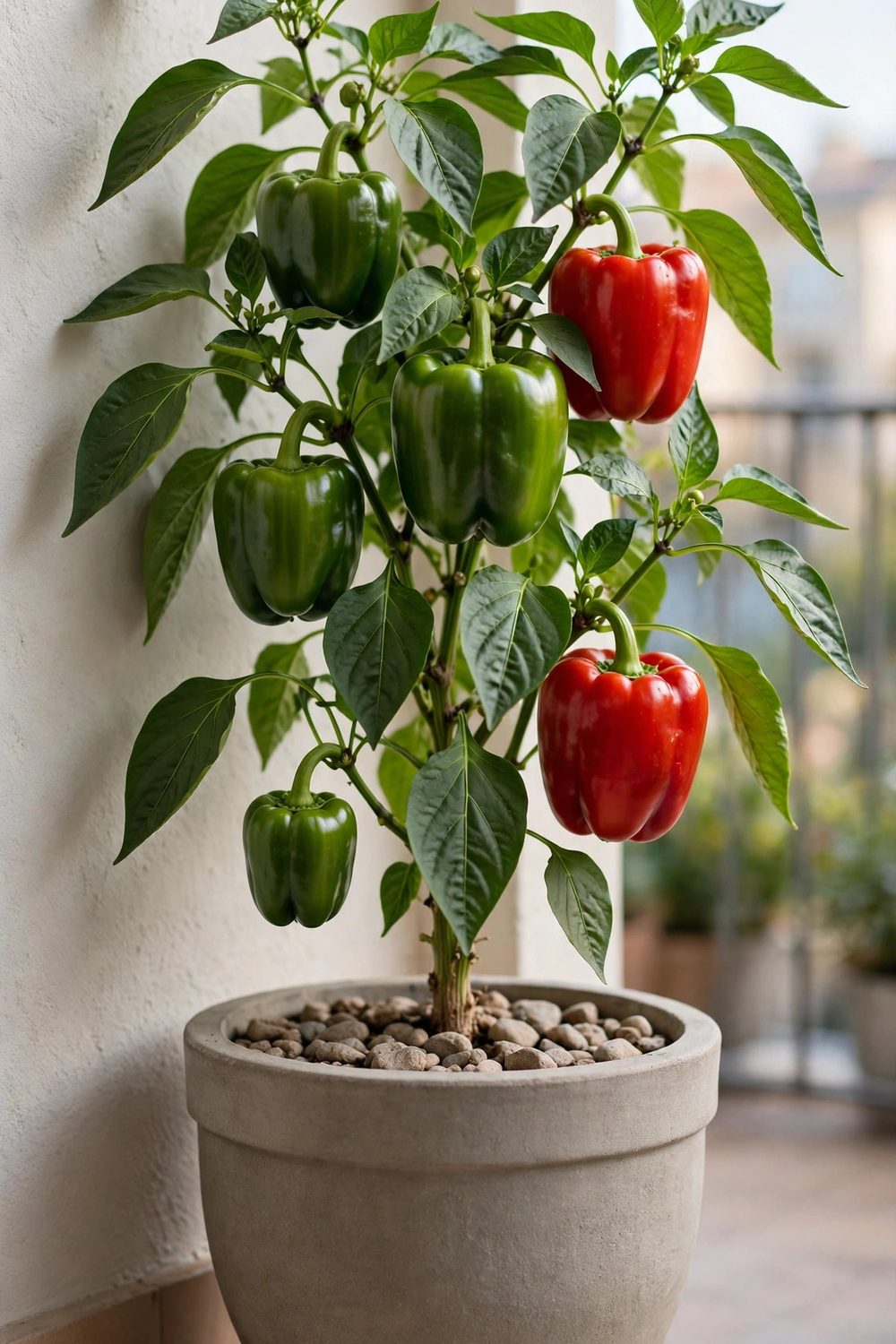
Bell pepper plants are non-toxic to cats and dogs. The real risk on a pet balcony is a knocked-over pot, so weight and placement matter here.
Set one pepper plant in a 5-gallon (about 19-liter) pot in your hottest corner, with 6 to 8 hours of sun. Push a stake in at planting time.
A wide-based pot pushed against the wall resists tails and bumps. Water evenly, because swings between dry and soaked can split fruit and drop flowers.
Feed every two weeks once the first peppers set. Keep fallen fruit picked up, mostly so the balcony stays tidy for everyone using it.
8. Plant Broccoli in a Deep Pot for a Cool-Season Crop
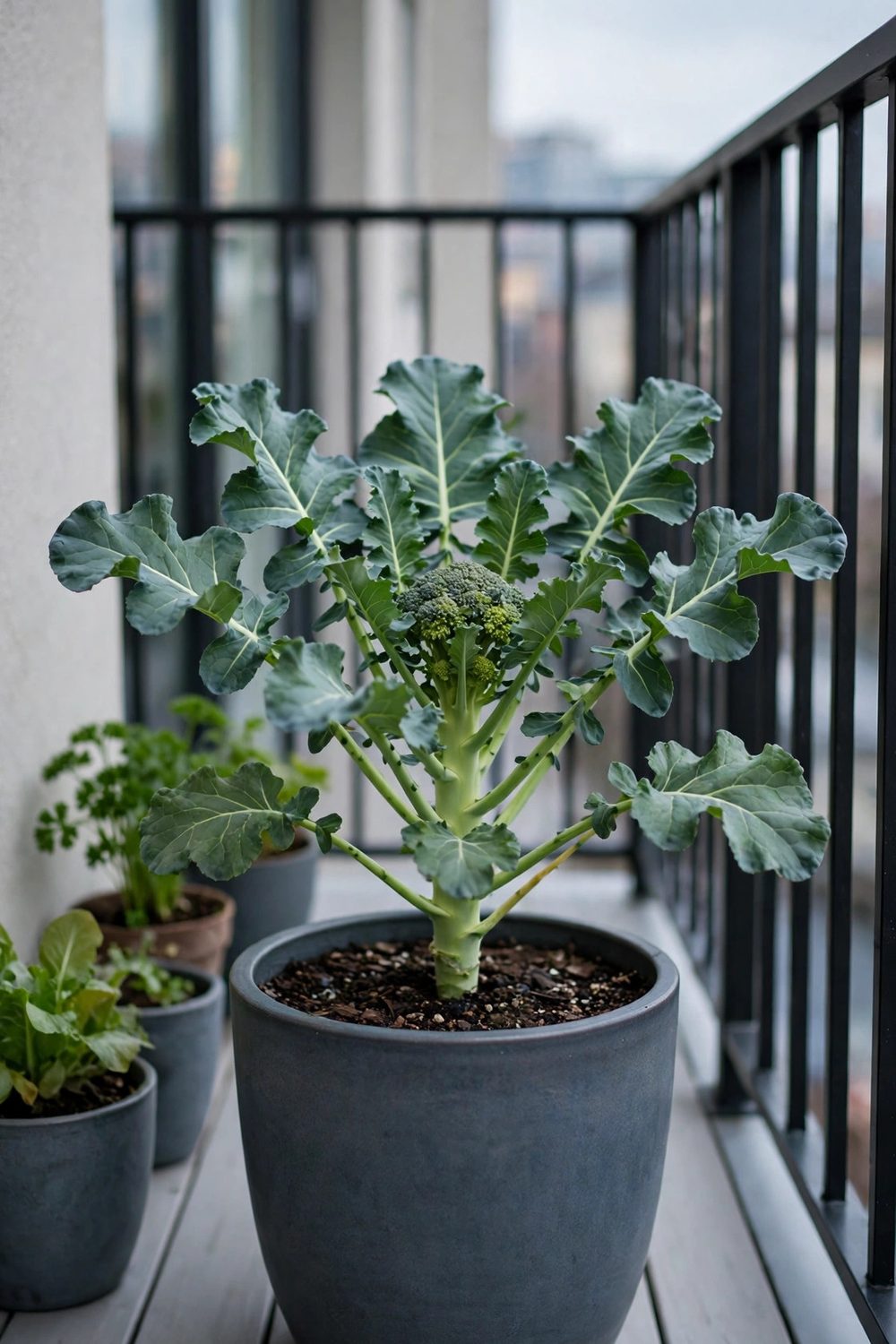
Broccoli is non-toxic to cats and dogs and grows best in cool weather, which makes it a strong spring and autumn pot on a small balcony.
Set one plant in a pot at least 12 inches (30 cm) deep and wide. Broccoli is a hungry crop, so mix in a slow, balanced feed at planting.
Give it 6 hours of sun where you can. Water steadily, because dry spells followed by soaking can split the main head as it forms.
Cut the central head first and smaller side shoots keep coming for weeks. Wash every floret well before it reaches any bowl, yours or the dog’s.
9. Grow Cauliflower Beside the Broccoli Pot
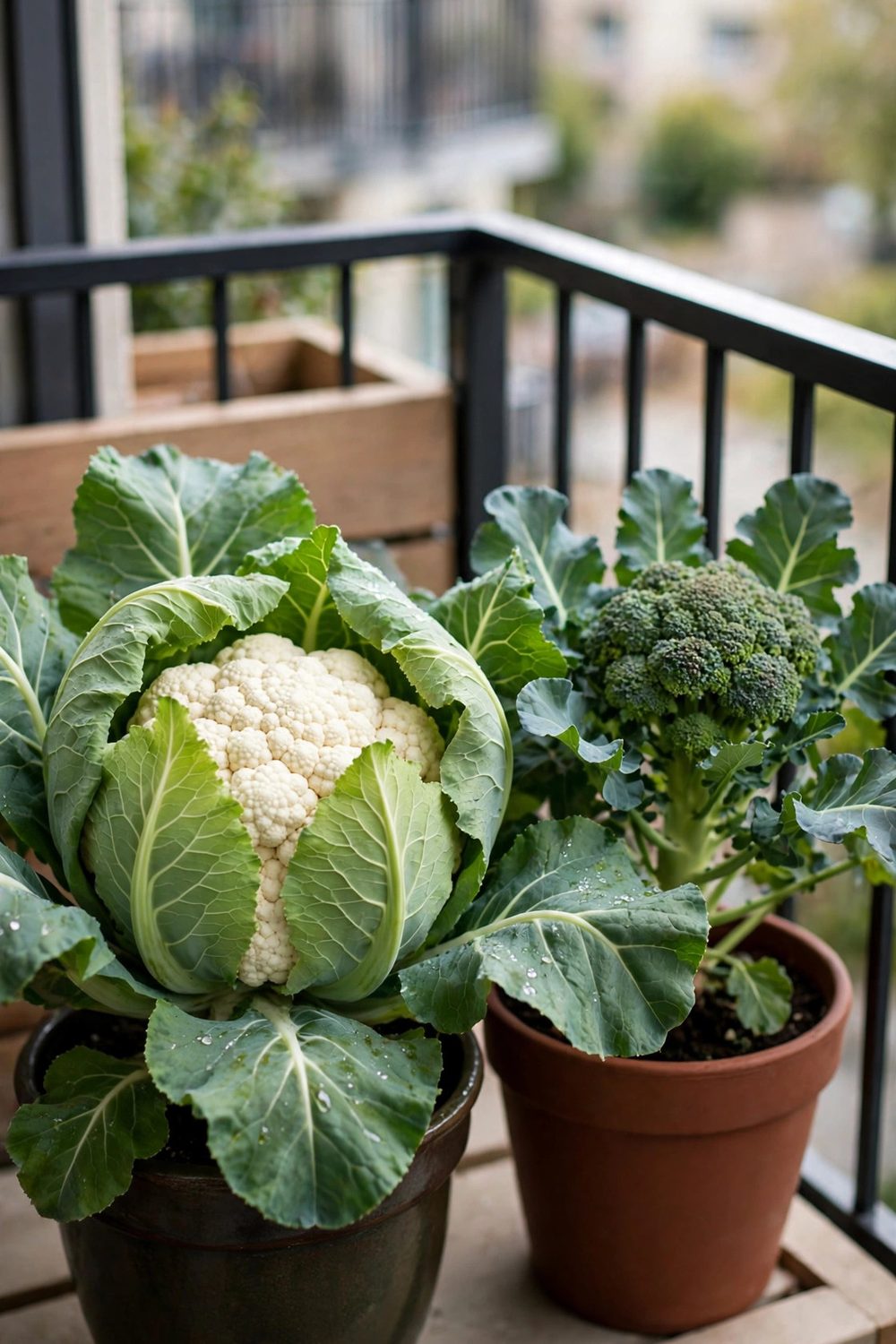
Cauliflower is non-toxic to cats and dogs and shares the broccoli routine, so the two pots can sit side by side and be watered in one round.
Set one plant in a pot at least 12 inches (30 cm) deep. Cool weather suits it best, so plant in spring or late summer for an autumn head.
Keep the mix evenly damp and feed every two weeks. Dry spells make small, loose heads, while steady water gives you one tight curd.
Some growers fold the outer leaves over the forming head to keep it white. A loose tie holds them without any spray or treatment at all.
A tidy routine also helps the whole balcony, and our guide on how to keep a balcony garden tidy covers the weekly sweep.
10. Clip Celery From a Pot Kept Evenly Damp
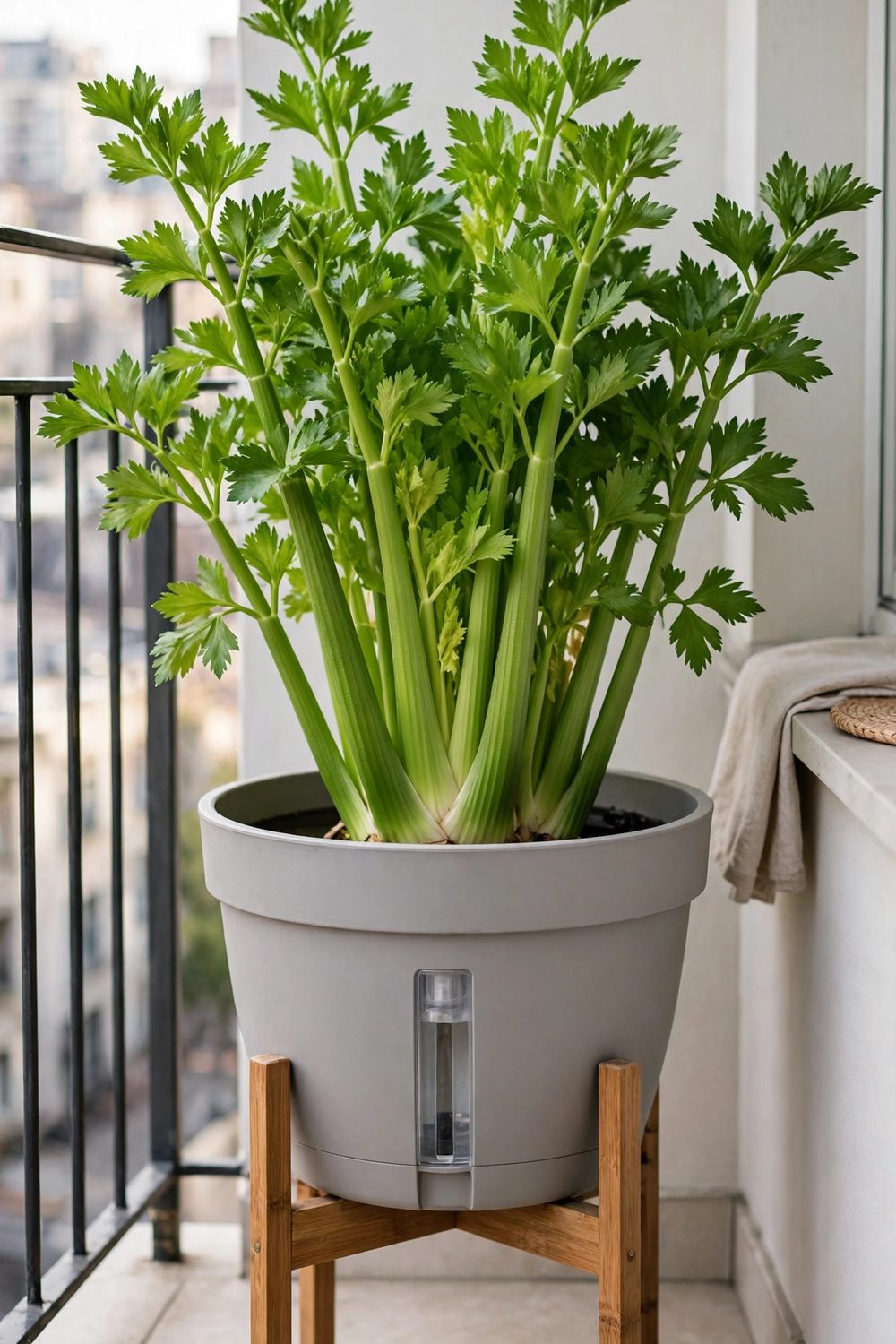
Celery is non-toxic to cats and dogs, and home-grown stems taste far stronger than shop stalks. It asks for one thing above all: steady moisture.
Set two or three plants in a wide pot at least 10 inches (25 cm) deep, spaced 6 inches (15 cm) apart. A self-watering pot suits celery well.
Keep the mix damp at all times and feed every two weeks. Celery grows slowly, so plant it early and pick outer stems as they thicken.
Snip stems at the base and the heart keeps producing. Raised on a stand, the pot stays clear of curious noses during the long growing stretch.
11. Grow Sweet Potatoes for Leaves, Vines, and Tubers
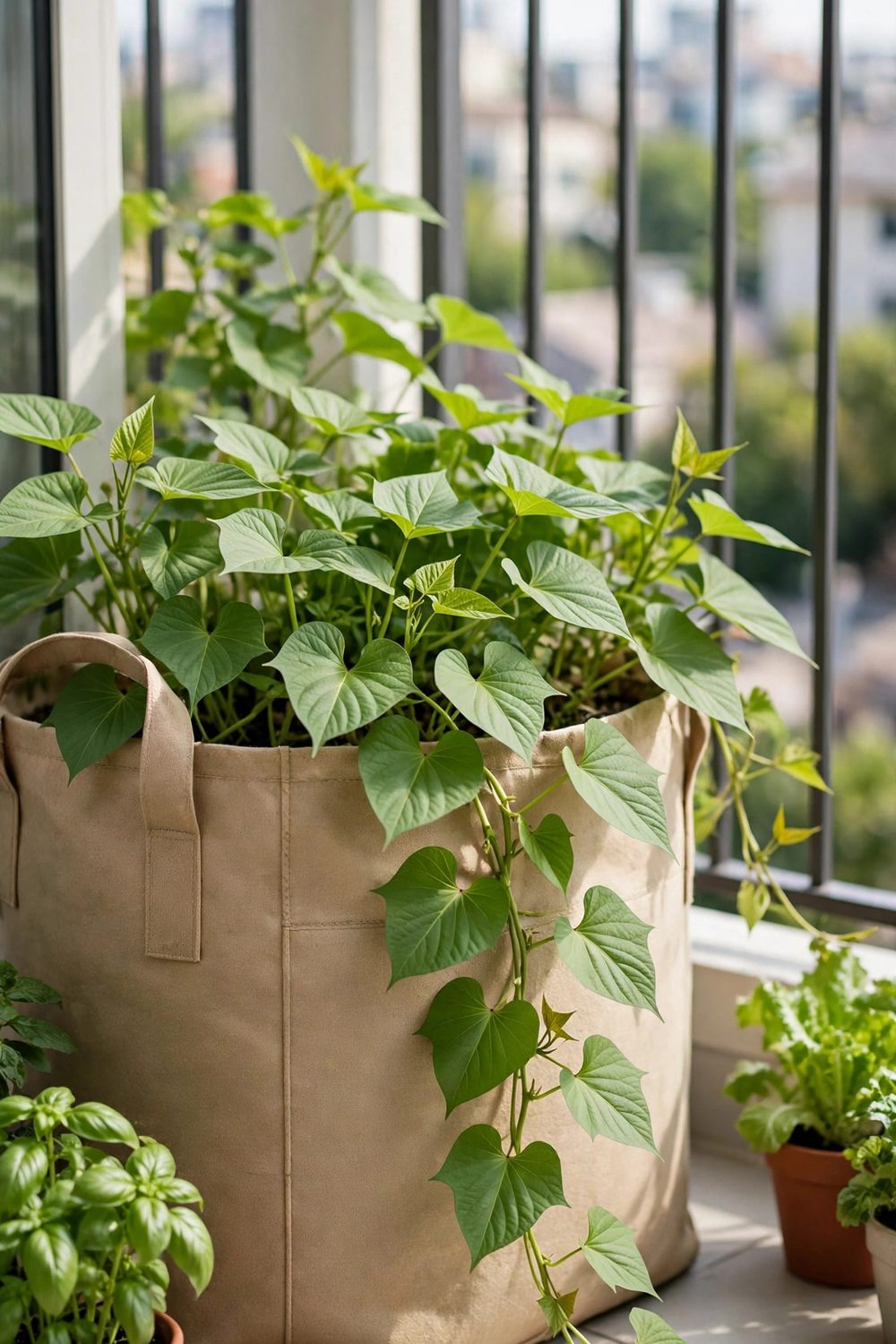
Sweet potato is non-toxic to cats and dogs, unlike the foliage of ordinary white potatoes, which you should keep off a pet balcony entirely. That swap matters.
Plant slips in a 10-gallon (about 38-liter) grow bag in full sun, with 6 to 8 hours of light. The vines trail happily over the bag edge.
Water deeply in hot weather and let the vines run. The young leaves can be picked lightly as greens while the tubers size up below.
Tip the bag out onto a sheet when the leaves yellow in autumn. Cooked sweet potato in small amounts is a common pet treat, but check with your vet first.
12. Set One Pumpkin Vine in Your Largest Bag
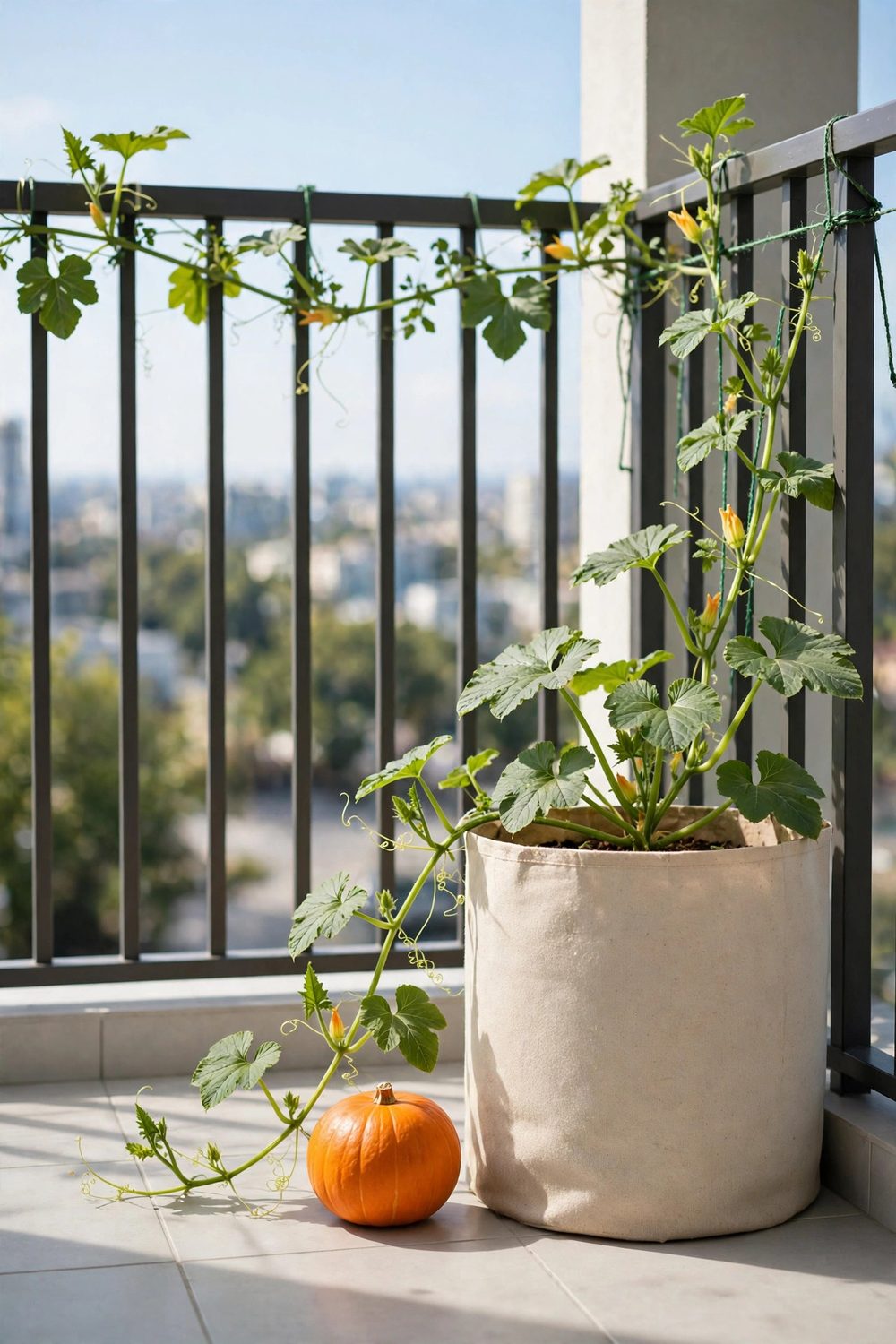
Pumpkin is non-toxic to cats and dogs, and a small variety in a big bag gives you autumn fruit without a garden bed. Pick a compact type.
Plant one small pumpkin in a 10-gallon (about 38-liter) bag or larger, in your sunniest spot. Train the vine along the rail to save floor space.
Water deeply and feed every week once flowers open. Rest each forming fruit on a tile or a small board so it stays clean and dry.
Pumpkins need bees, so flowers left open on a still morning matter. Plain cooked pumpkin is often shared with dogs, in small amounts and only with your vet’s okay.
13. Pick Kale Leaves All Winter From One Pot
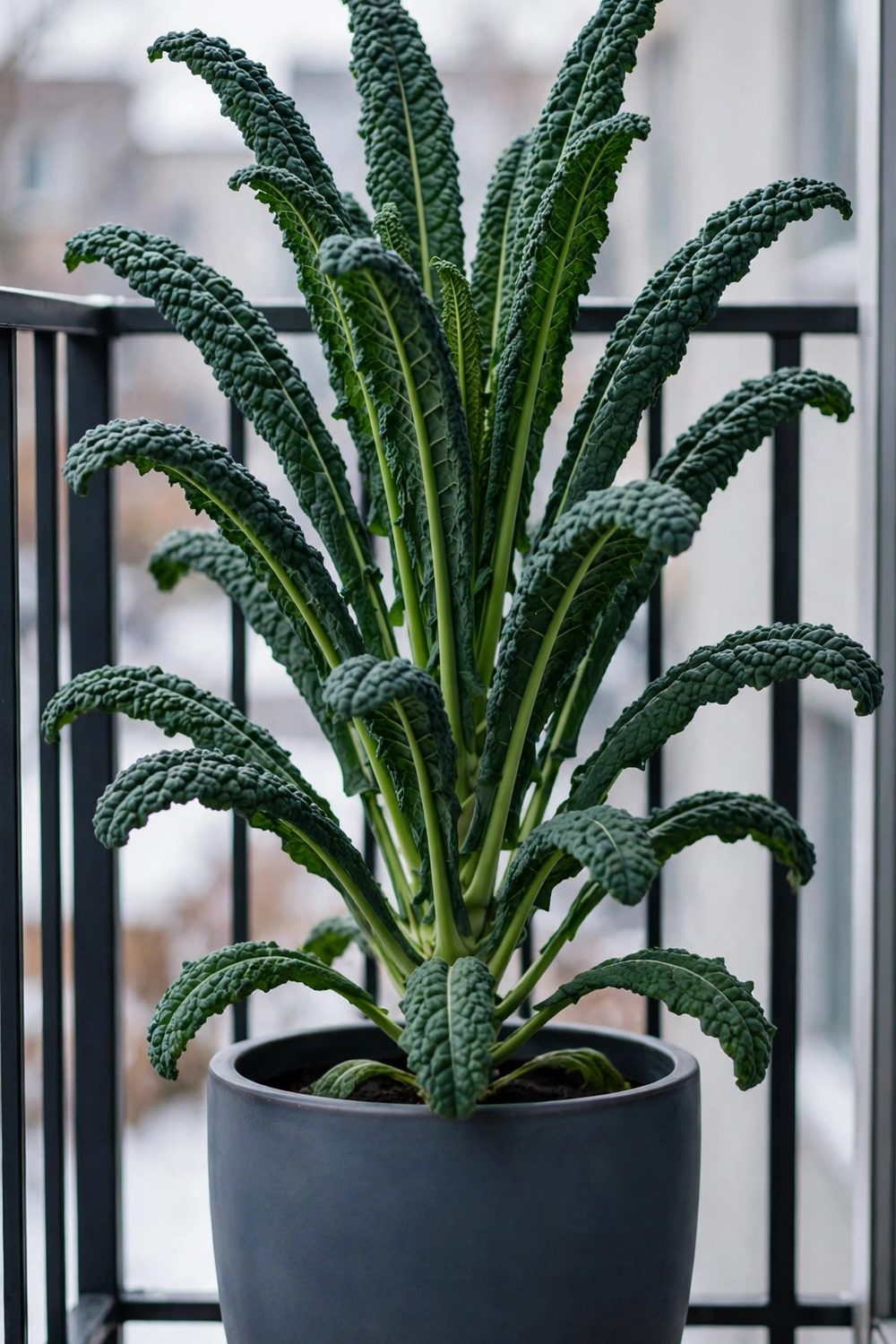
Kale is non-toxic to cats and dogs and one of the longest-cropping pots you can own. It also stands upright, so it takes little floor space.
Set one ‘Lacinato’ kale in a pot at least 12 inches (30 cm) deep. Pick outer leaves, leave the center crown, and the plant crops for months.
Kale settles for about 4 hours of sun and shrugs off cool nights. Water when the top inch (2.5 cm) of mix dries and feed every two weeks.
In mild-winter areas, roughly USDA zones 8 to 10, kale can crop through winter. Share leaves with pets only in small amounts, if at all, and rinse them well.
14. Grow Cabbage in a Wide Pot for a Spring Head
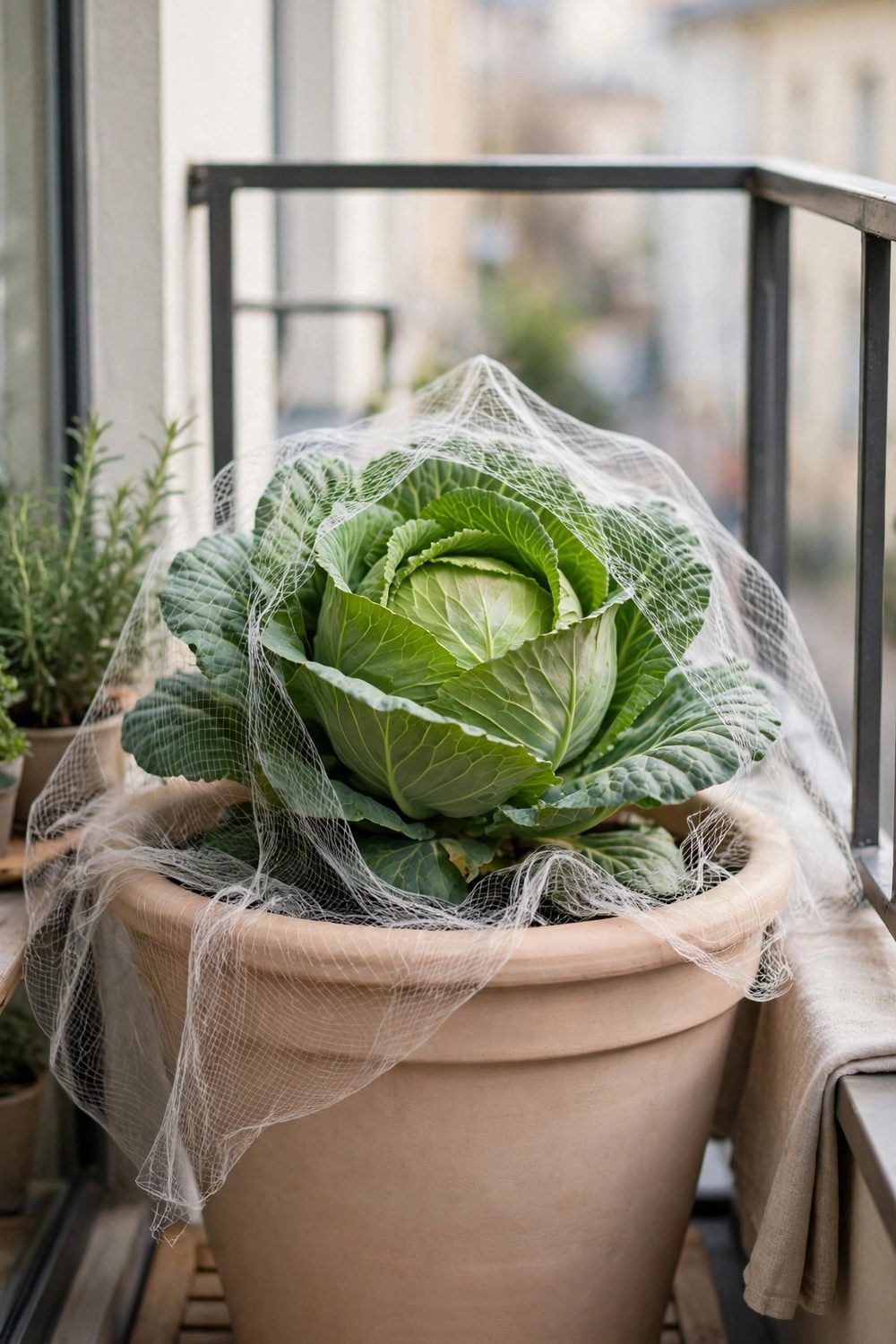
Cabbage is non-toxic to cats and dogs and a small, fast variety fits a wide pot well. One firm head from your own rail feels like a real win.
Set one plant in a pot at least 12 inches (30 cm) wide and deep. Cabbage is hungry, so add a balanced feed at planting and again mid-season.
Give it 6 hours of sun and steady water. Dry spells followed by heavy watering can split a forming head, so keep the routine even.
Cover the pot with fine netting if cabbage white butterflies visit your balcony. Netting needs no spray, which keeps the whole crop pet-safe in practice as well.
Container weights and counts are covered in our guide to the best pots for growing vegetables on a balcony.
15. Finish With Brussels Sprouts on a Tall Stem
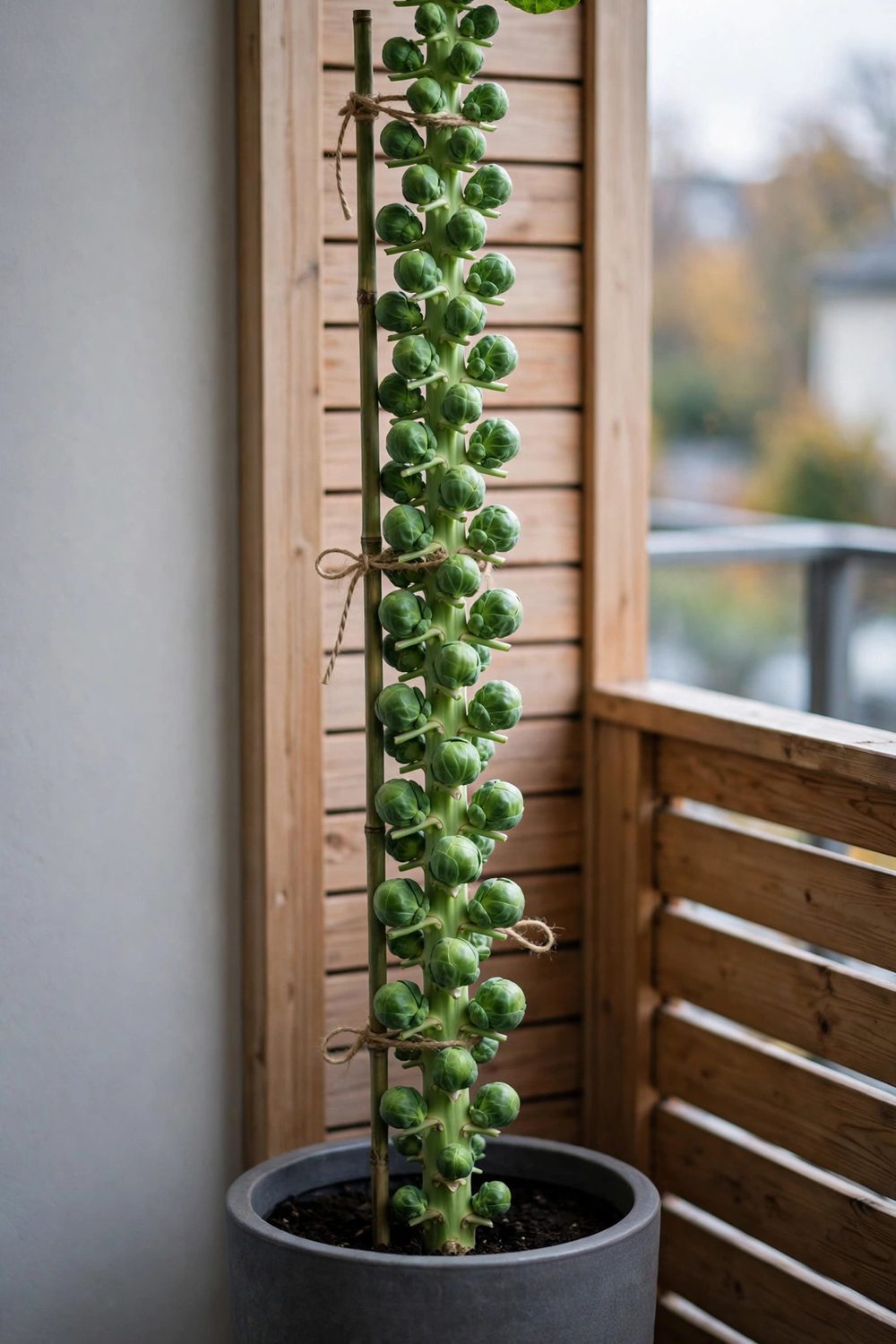
Brussels sprouts are non-toxic to cats and dogs and grow on one tall, sturdy stem, which suits a deep pot in a sheltered corner of the rail.
Set one plant in a pot at least 12 to 14 inches (30 to 36 cm) deep and stake it early. Sprouts are slow, so plant in spring for autumn picking.
Give the pot 6 hours of sun and water steadily. Feed every two weeks, because a tall plant in a pot burns through food fast.
Pick sprouts from the bottom up as they firm, twisting each one off cleanly. Frost sweetens them, so leave late sprouts on the stem into cold weather. Spacing for big brassicas sits in our guide to how many vegetable plants per pot.
Start with the carrots, the lettuce bowl, and the beans. All three are safe, cheap to start under $50 in total for basic pots and seed, and quick to crop.
A balcony garden for cat and dog owners pet safe vegetables asks for one habit: check the crop before the pot, every single time.
Save this list to your container garden board for later. Your pets get a greener balcony, and you get dinner from the same small space.


