

Balcony Vegetable Garden Year Plan, Month by Month
Most balcony gardens run on hope and impulse buys. A pot appears in May, something green goes in, and by August nobody can say what was supposed to happen next.
A balcony vegetable garden year plan month by month fixes that drift in one sitting. You end up knowing what to sow, plant, feed, and clear in each part of the year.
The plan runs about an hour to set up with a notebook and a tape measure. The weekly care it creates takes 20 to 30 minutes in summer and almost none in winter.
Every date here is framed by climate, not the calendar alone. Mild and cold areas shift by a few weeks, and your last frost date is the anchor for the whole year.
It also stays honest about skill. Nothing in the year needs training or special tools, just the right job done in the right few weeks, season after season.
This post contains affiliate links. If you buy through them, we may earn a small commission at no extra cost to you. See our Affiliate Disclosure.
Time: about 1 hour to plan the year, then 20 to 30 minutes a week in summer · Difficulty: easy, no experience needed
What You Need

- A notebook and a pencil. The plan lives here, with sowing dates, pot maps, and notes on what cropped well. Paper survives wet hands better than a phone.
- A tape measure. Balcony length, rail space, and pot widths decide how many crops fit. Guessing wastes a season on pots that crowd each other out.
- Your last frost date. Look it up for your town once and write it on the first page. Every spring step in this plan hangs off that one date.
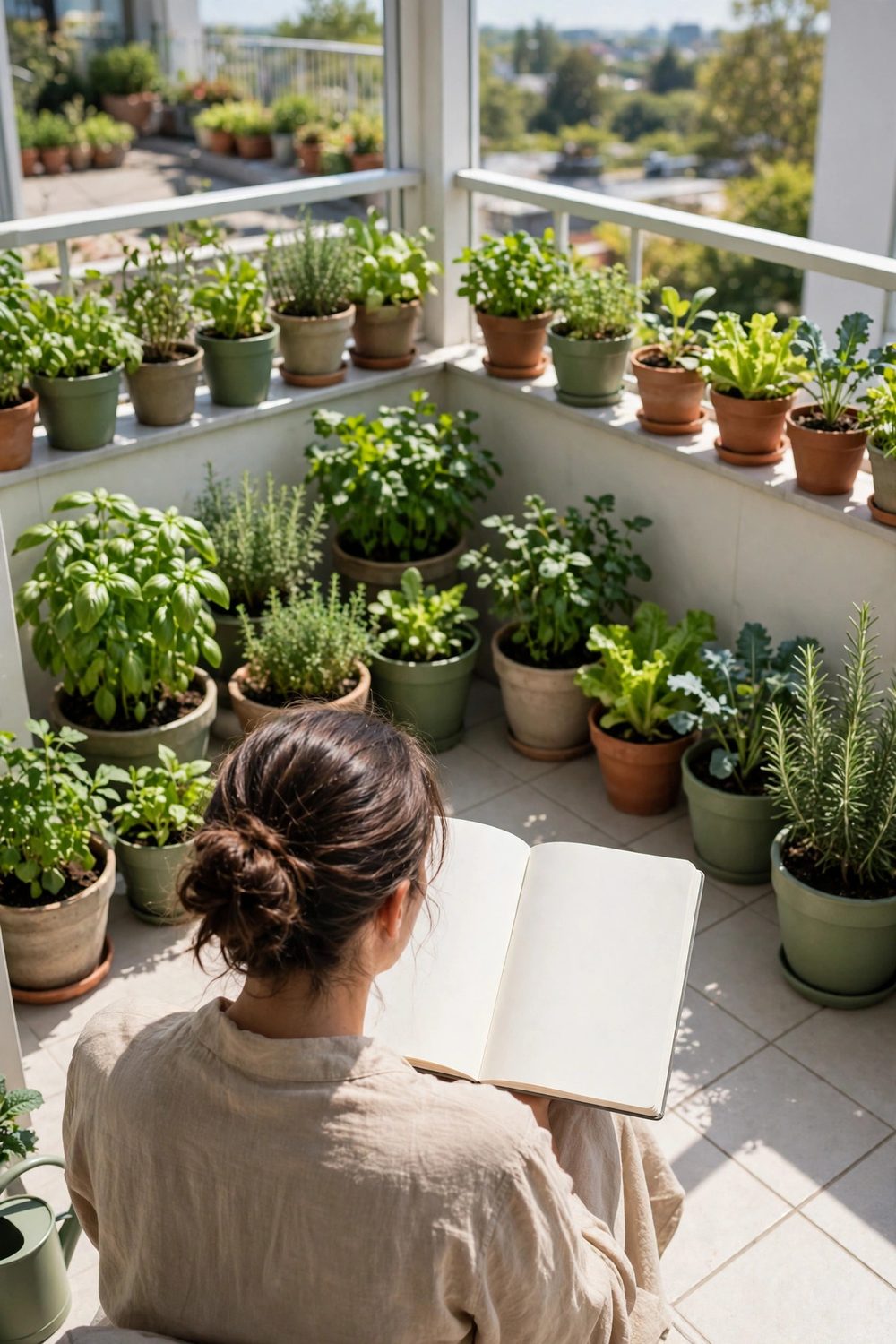
- Pots in three sizes. Small 10 to 12 inch (25 to 30 cm) pots for herbs and radishes, mid pots for leaves, and 5-gallon (about 19 litre) pots for fruiting crops.
- Fresh potting mix and a general liquid feed. Food crops in pots eat bought mix fast. A bag in store before spring stops the first sowing stalling.
- Seed for each season, ordered early. Spring leaves, summer fruiting crops, autumn sowings, and one hardy winter set. Dwarf and patio types sell out first each year.
- Fleece, labels, and a watering can. Fleece covers early and late crops on cold nights. Labels carry dates. A can you can lift full suits a kitchen sink fill.
Measure and Plan in Late Winter

Walk the balcony with the tape and write down its length, depth, and rail run. Note where sun lands in the morning and where the wall throws shade by afternoon.
Check your lease or building rules for rail planters, weight limits, and watering rules before you buy anything. A plan built inside the rules never needs redoing in May.
Sketch the pot map on paper, big pots at the back and low leaves at the front. Order seed and any replacement pots now, while stock is wide and prices sit low.
Sow the First Crops Under Cover in Early Spring
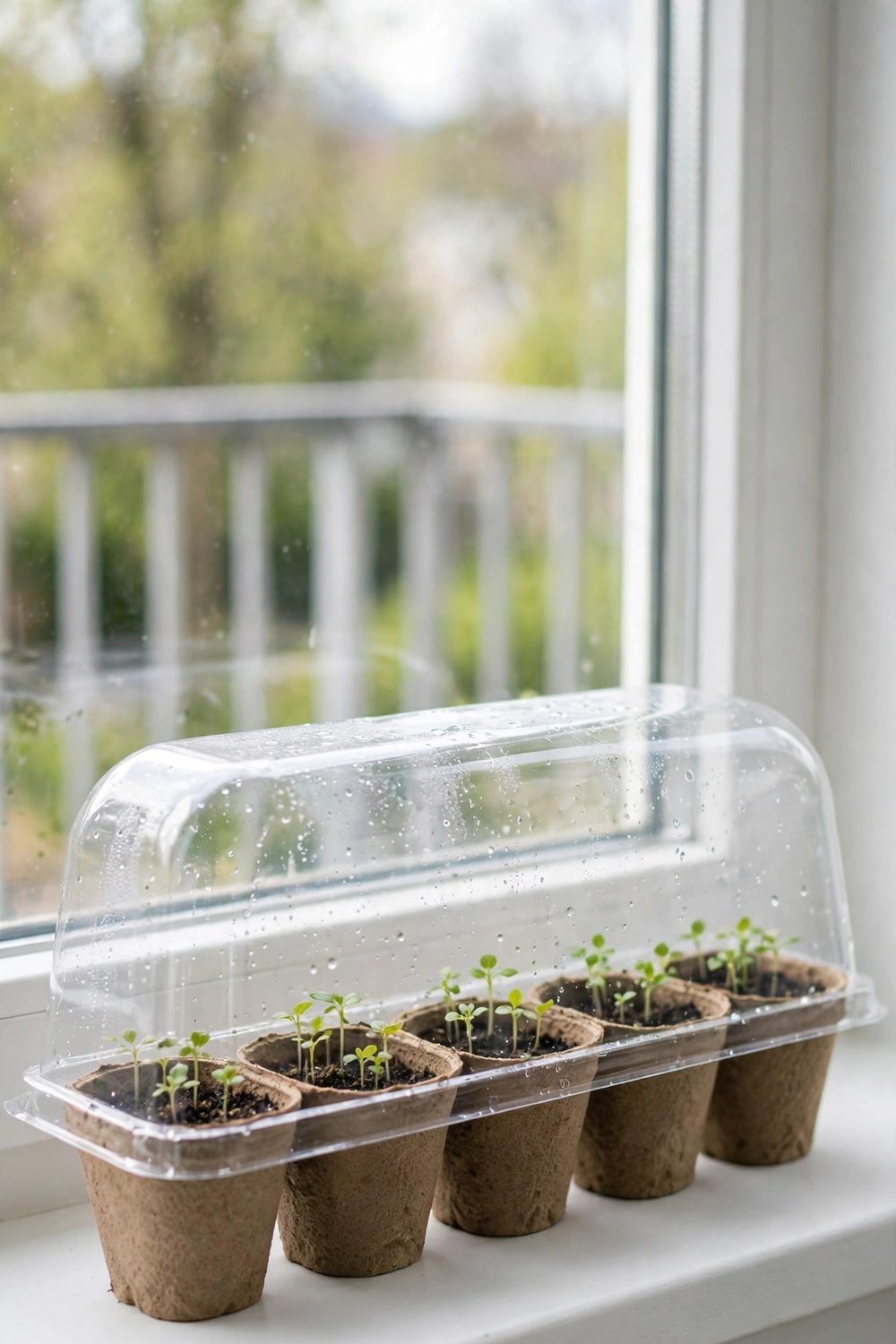
Start with the cold-tolerant sowings that shrug off chilly nights. Peas, broad beans, radishes, and spinach can go into pots outdoors six to eight weeks before your last frost.
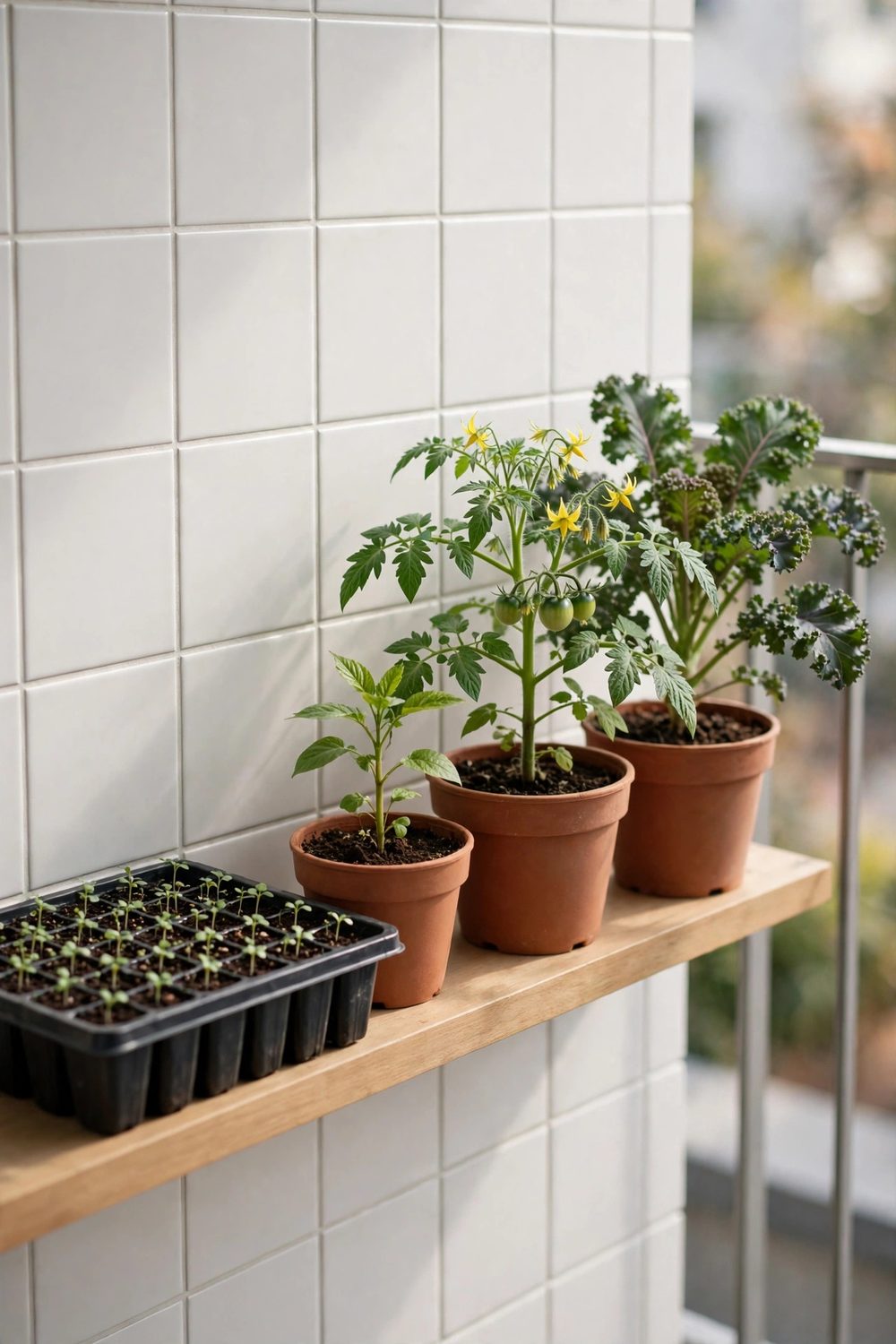
Sow tender crops under cover on a bright sill, in small pots, a few weeks before the frost window closes. Zucchini (courgette), cucumbers, and basil start here, never outdoors in cold mix.
Write the sowing date on a label for every pot. Germination runs from days for radishes to 2 to 3 weeks for carrots, and dates stop you digging up slow seed.
Plant Out Tender Crops After Your Last Frost
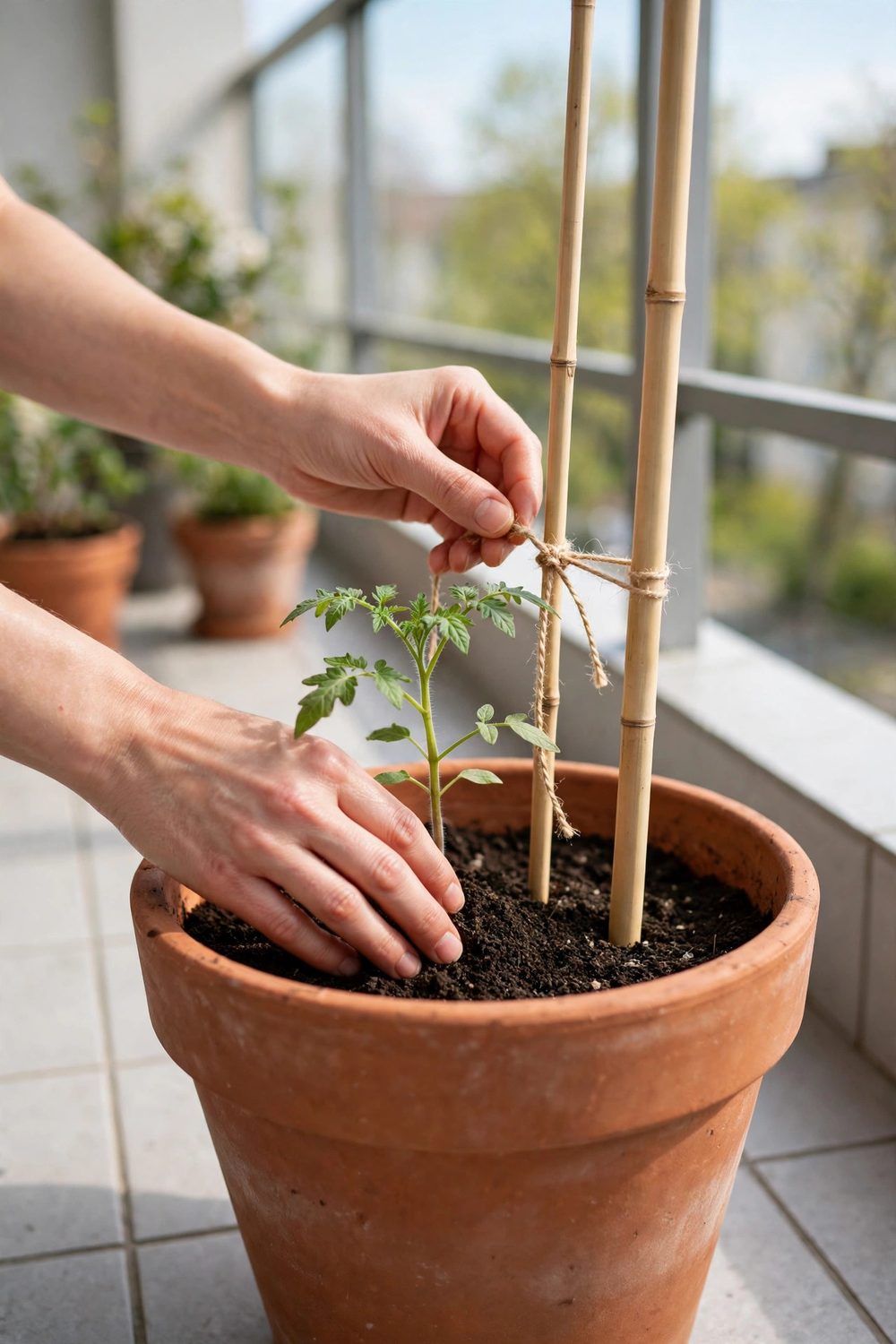
Move tender plants outside only after your last frost has passed and nights stay mild. Harden them off first, out by day and in by night, for about a week.
Set one tomato or pepper per 5-gallon (about 19 litre) pot in the sunniest spot, with 6 to 8 hours of direct sun. Stake each plant on planting day, not later.
Sow beans and sweet corn substitutes like yardlong beans straight into warm mix now. Cold soil rots bean seed, so this sowing waits for warmth on purpose.
The full sowing order for this window is in our list of spring balcony vegetables to sow first.
Run the Summer Rhythm of Water, Feed, and Harvest
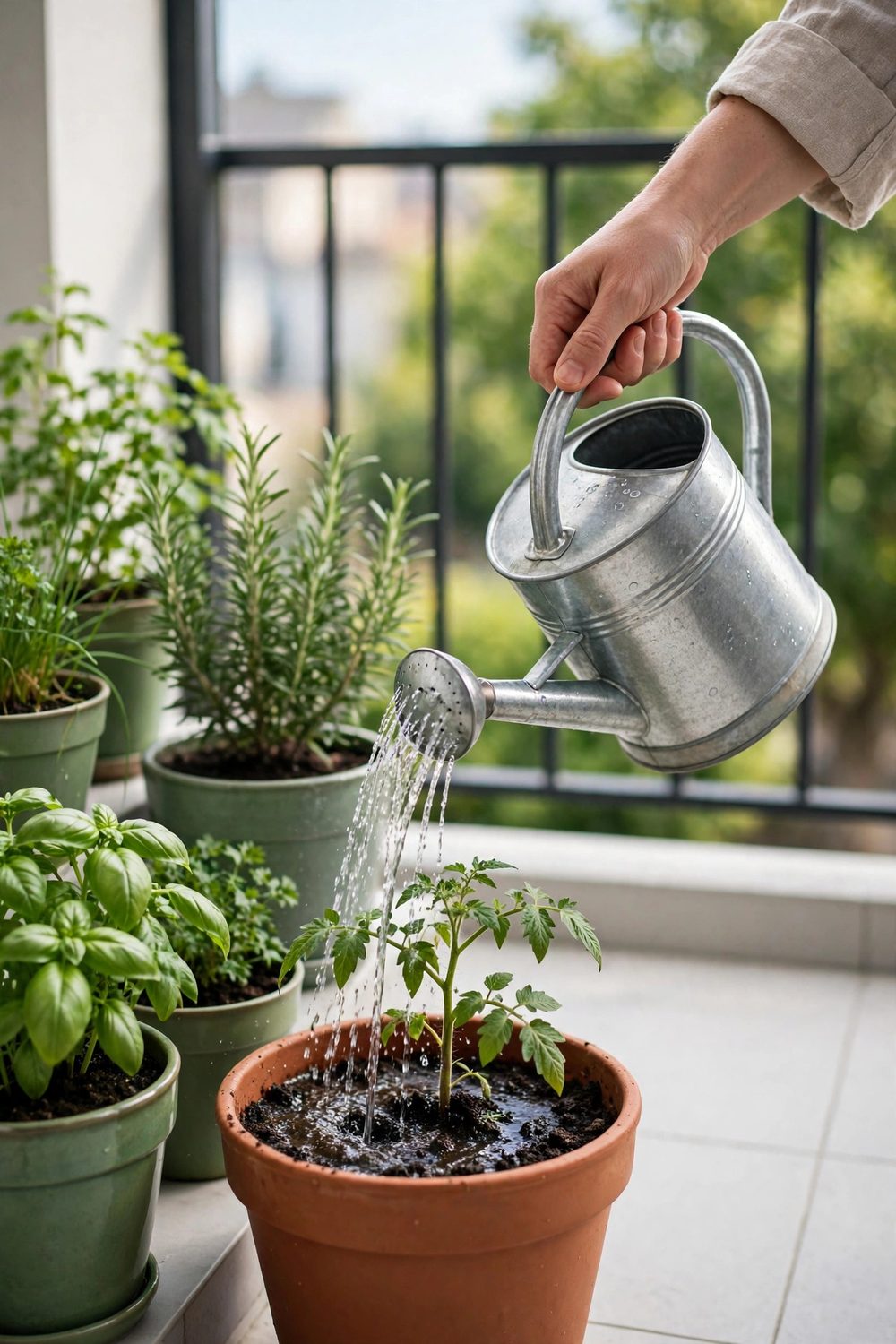
Water early in the day, deeply, until it runs from the drainage holes. In a heat wave, big fruiting pots may need a second drink at dusk to hold fruit steady.
Feed fruiting crops every two weeks once flowers open, and leafy crops every few weeks. Tie climbing stems to the rail weekly, before wind does the arranging for you.
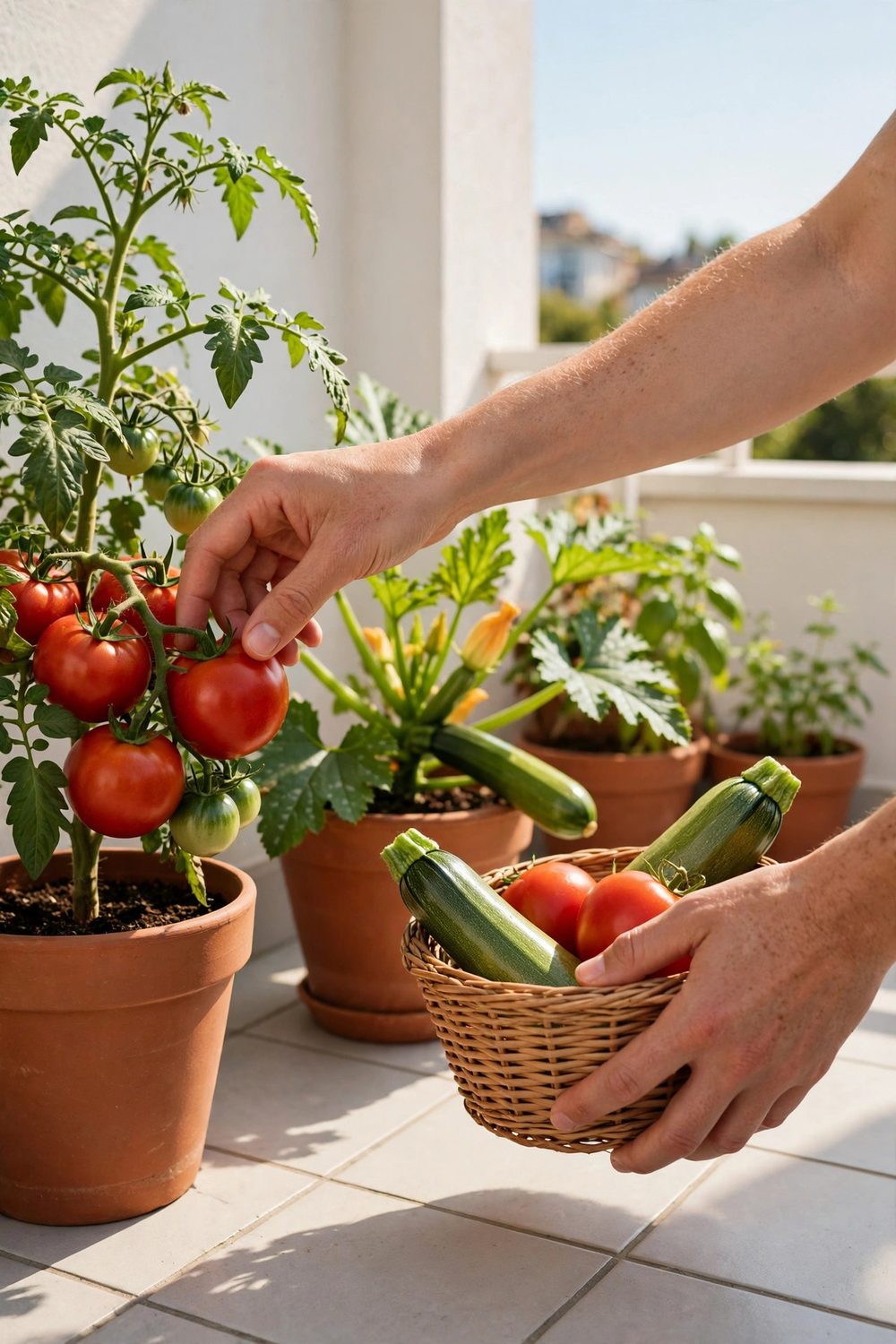
Harvest little and often, because picking drives more flowers. A full summer week comes down to this loop: check moisture by finger, water, feed on feed days, tie, pick.
Pro Tip: Group the thirstiest pots together in summer. One watering round serves them all, and a tray under the group catches runoff instead of spotting the floor below.
Write the week down on the notebook page for summer. A rhythm you can see on paper survives busy weeks, holidays, and heat waves far better than one held in your head.
Sow Again in Late Summer for a Second Round
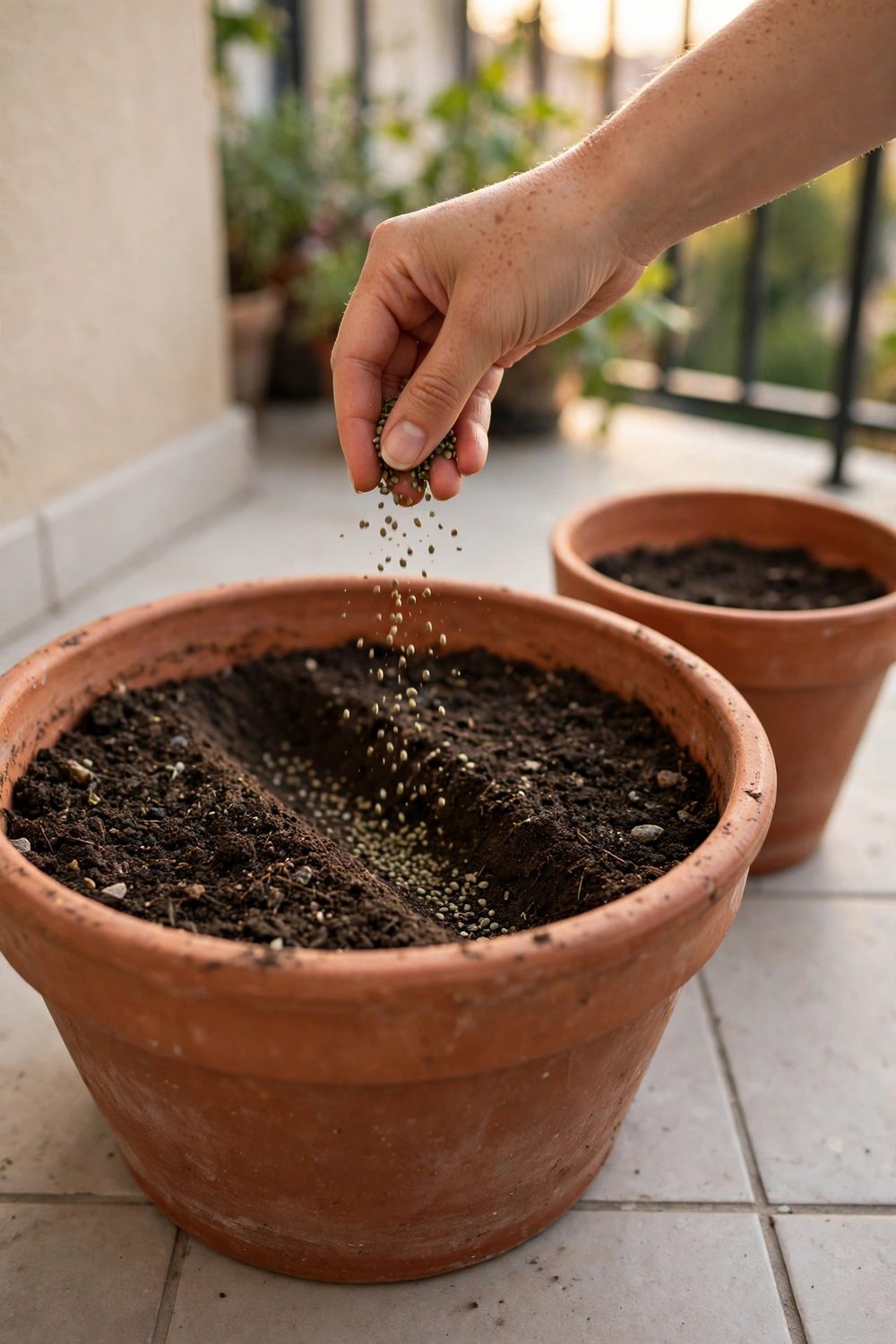
As the first bean and lettuce pots finish, refill them at once. Spinach, radishes, chard, and Asian greens sown in late summer crop through autumn in cooling air.
Transplant kale seedlings into big pots now, while the mix is still warm enough for roots to settle. A plant rooted before winter stands far better than one planted cold.
Keep watering new sowings daily until they sprout. Late summer sun still dries a pot surface fast, even when the air feels cooler at the rail.
Clear Down in Autumn and Take the Second Harvest
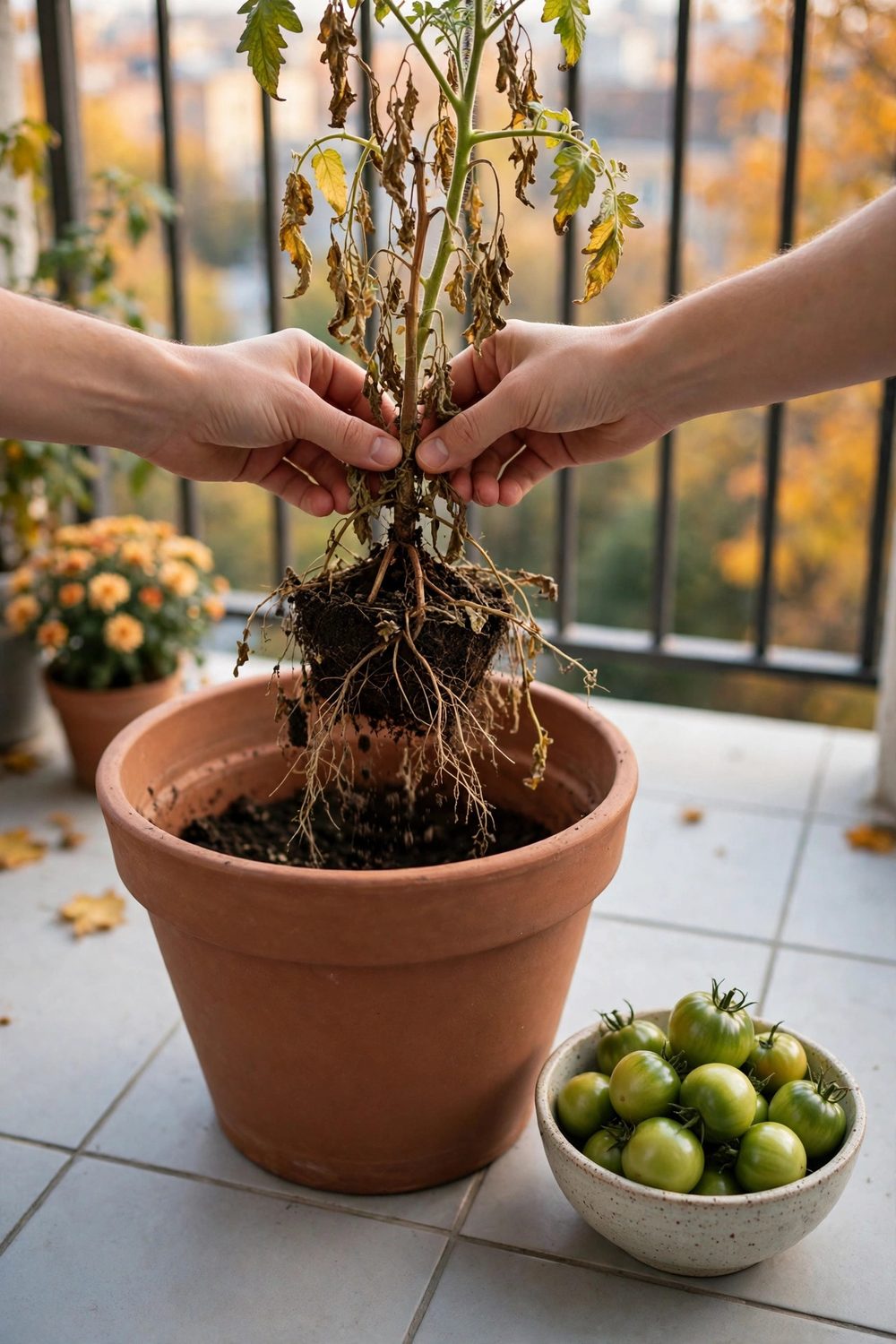
Pull spent summer plants before the first frost blackens them, and pick the last fruit green to ripen indoors. Clear pots feed no disease into the winter set.
Sow garlic and, in mild areas, broad beans for next year. Move hardy pots against the warm wall and cluster them, since a group holds warmth better than single pots.
Wash empty pots, stack them dry, and sow a cover of clover in any pot resting until spring. Bare mix washes out in winter rain, while covered mix keeps its feed.
Protect Pots in Winter and Review the Season
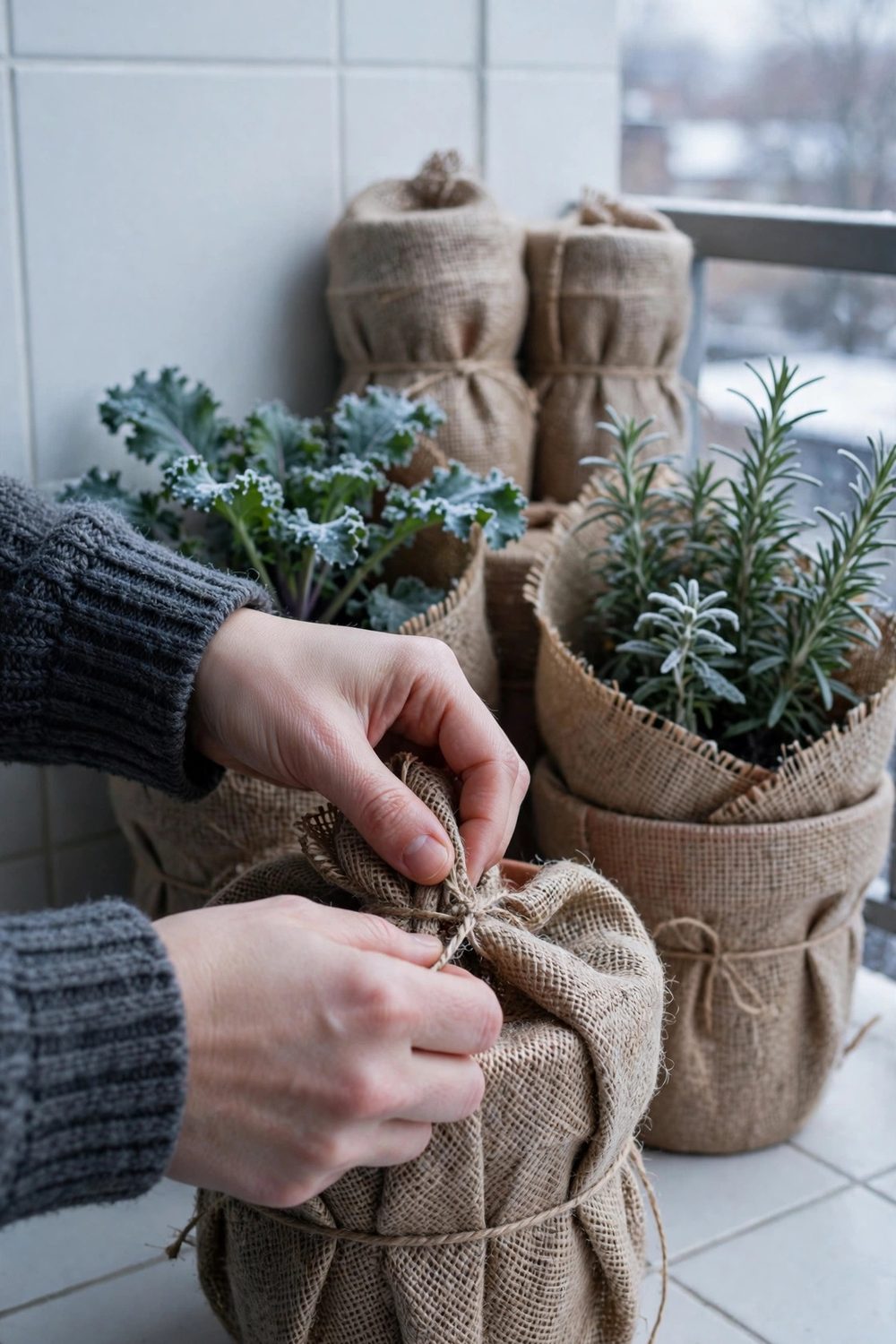
Wrap planted pots before hard frost, sides only, tops open for rain. Raise every pot on feet or planks so cold cannot climb in from frozen tiles below.
Water the winter set only in long dry spells. Hardy greens grow slowly, pick lightly, and ask for almost no care while the light is low.
Read your notebook back on a quiet day and mark the three crops that earned their pots.
That short list becomes next year plan, and the whole cycle restarts here. New growers can pair this plan with our guide on how to start a balcony vegetable garden step by step.
Common Mistakes
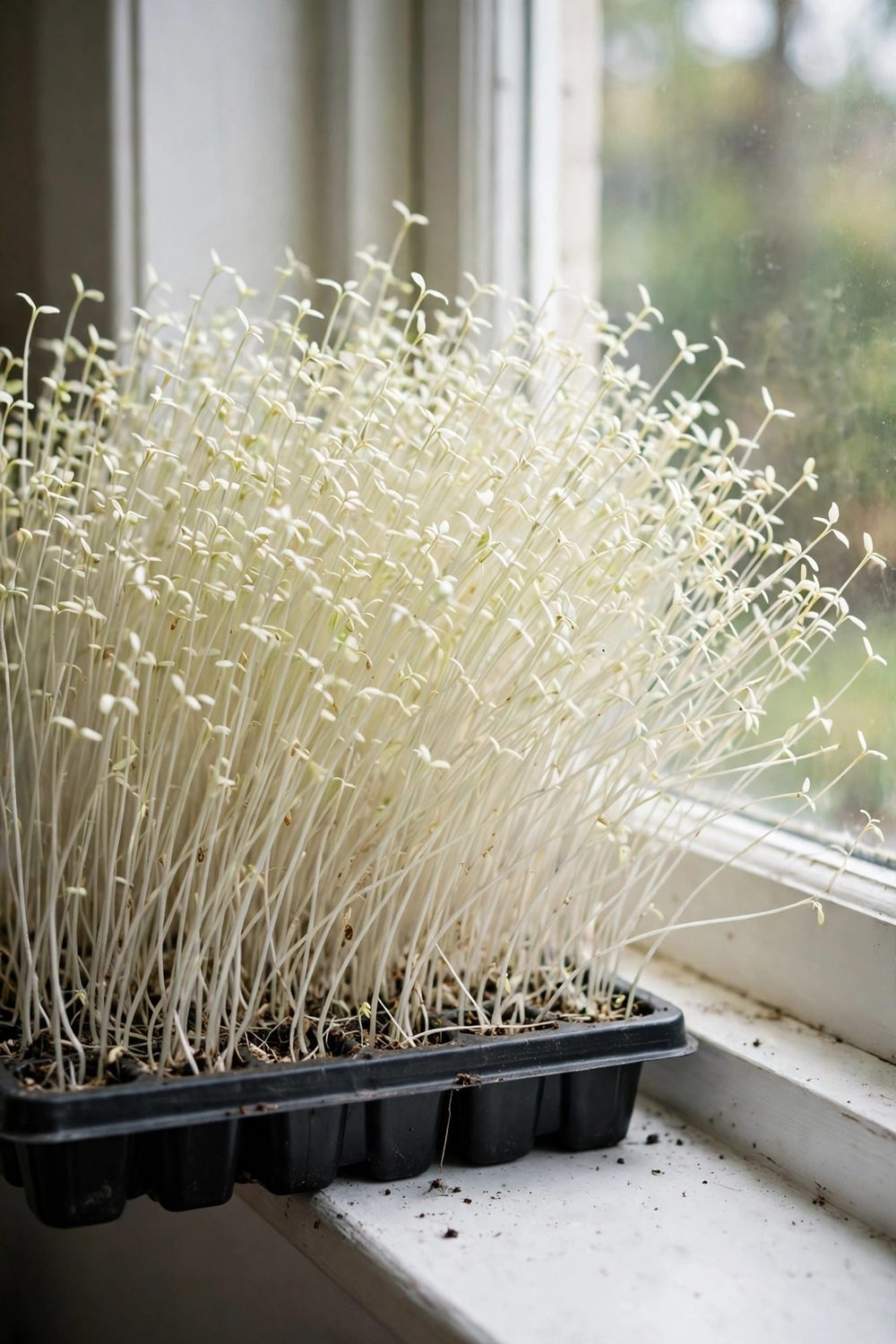
Sowing everything in one weekend. A single big sowing crops all at once, then leaves empty pots for weeks. Spread sowings of fast crops every two to three weeks instead.
Skipping succession sowing. The late summer refill is the step most plans miss. Without it, autumn arrives with tired summer plants and nothing young coming up behind them.
The fix costs one packet of spinach or radish seed and ten minutes. Mark the refill date in the notebook when you write the spring plan, not when you remember it.
Planting out before the last frost. One clear, still night can blacken every tender plant on the rail. The frost date in your notebook is the rule, and a week late beats a night early.
Skipping the autumn clear-down. Spent plants left standing harbour mould and pests through winter. Clearing, washing, and covering pots in autumn is what makes spring planting a one-day job.
Letting the notebook lapse by July. Notes stop exactly when they matter most, because pest flare-ups, watering gaps, and the best harvests all show up in high summer.
Spend two minutes after the weekly pick writing what you harvested and what struggled. Those lines are the raw material of next year plan, captured while you still remember them.
Frequently Asked Questions
When should I start planning a balcony vegetable garden?
Late winter is the best time, about six to eight weeks before your last frost. You have time to measure, check building rules, and order seed while stock is wide. The planning itself takes about an hour with a notebook and a tape measure.
What if I do not know my last frost date?
Search for your town name plus last frost date, and use the average date most local sources agree on. Treat it as a guide, not a promise.
Keep fleece ready for two weeks after it, since a late cold night can still follow a mild spell.
How many pots can a small balcony hold in this plan?
Most small balconies run six to ten pots well: two or three big pots for fruiting crops, plus mid and small pots for leaves and herbs. Crowding more in cuts light and air for every plant. A shorter list, watered well, outcrops a packed rail.
Can I follow this plan in a cold climate?
Yes, with the dates shifted. Start spring sowings under cover a few weeks later, plant out after your later frost date, and pick the hardiest winter crops. The order of the steps stays the same in every climate, only the timing moves.
What should I grow in my first year on this plan?
Pick one crop per season window: radishes and peas in spring, a tomato or pepper in summer, spinach in autumn, and kale for winter. Four reliable crops teach the whole rhythm. Add one new crop per season in year two, once the routine feels easy.
How much time does the plan take each week?
Summer is the busy stretch, at about 20 to 30 minutes a week spread over short daily checks. Spring and autumn need 10 to 15 minutes a week.
Winter asks for a glance after storms and rare watering in dry spells, a few minutes at most.
Quick Reference
- January: Review notes, order seed and pots, keep winter greens picked lightly.
- February: Measure the balcony, check rules, chit early potatoes on a bright sill.
- March: Sow peas, radishes, spinach, and broad beans outdoors in mild areas.
- April: Start tender crops under cover, thin spring seedlings, feed early leaves.
- May: Harden off tender plants and plant out once the last frost has passed.
- June: Settle into the water, feed, tie, and harvest loop, and sow beans outside.
- July: Water deeply in heat, pick daily, and watch for fruit hiding under leaves.
- August: Sow spinach, chard, and Asian greens for autumn, and transplant kale.
- September: Take second harvests, sow garlic late in the month, and move pots to shelter.
- October: Clear spent plants, wash empty pots, and sow cover in resting pots.
- November: Wrap planted pots, cluster them by the wall, and raise them on feet.
- December: Pick hardy greens lightly, water only in dry spells, and review the year.
Cold-climate shift: run March to May steps about three to four weeks later, and bring the September wrap and clear-down steps forward by two weeks. Mild coastal and city gardens can often run two weeks ahead.
One page of planning turns a row of pots into a garden that knows its next step. Each season hands the rail over to the next, and no month starts from zero.
That steady handover is what a balcony vegetable garden year plan month by month gives you. Start with the late-winter hour, and the rest of the year mostly runs itself.
Save this plan to your container garden board, and write your frost date at the top of the notebook today. For the full from-scratch setup behind step one, read our guide to how to start a container vegetable garden from scratch.


