

15 Hanging Basket Vegetables for a Small Balcony
Floor space is the first thing a small balcony runs out of. The space above the rail, though, sits empty on most balconies, and a row of baskets can crop there without touching the floor at all this season.
These hanging basket vegetables for a small balcony are picked for baskets, not adapted as an afterthought. Each one trails, stays compact, or crops fast enough to earn the extra watering that baskets always need in summer heat.
Baskets dry out faster than pots, sometimes twice a day in wind. Hang them where you can reach them from standing, line them to hold moisture, and check the weight of brackets before the first basket goes up.
Start with two baskets near the door, where watering is easy to remember. Once the routine holds, add more along the rail, one at a time, through the warm weeks of the season, and note which spots dry fastest.
This post contains affiliate links. If you buy through them, we may earn a small commission at no extra cost to you. See our Affiliate Disclosure.
1. Grow a Tumbling Cherry Tomato in a 14-Inch Basket
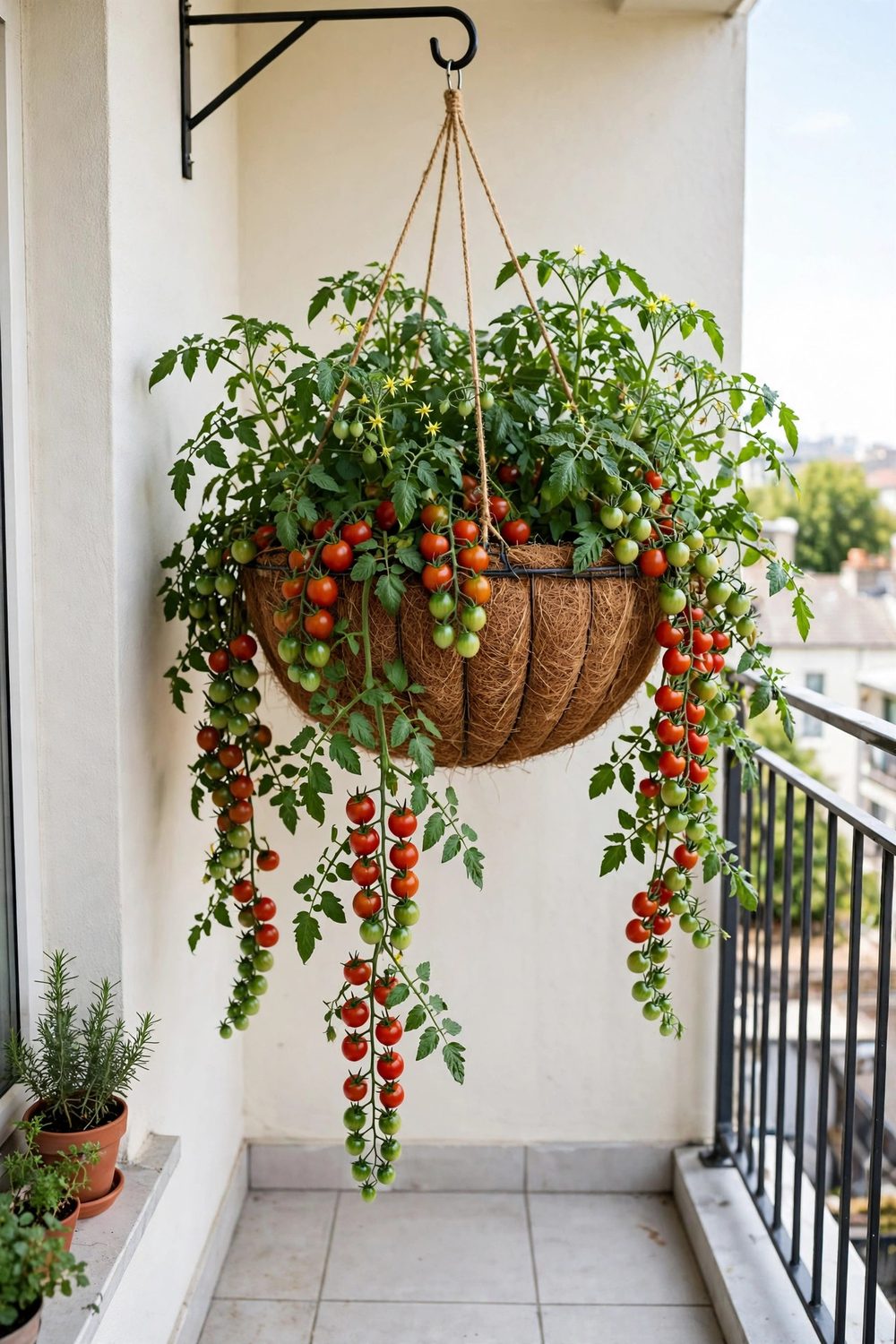
‘Tumbling Tom’ was bred to trail over a basket edge, so it crops without staking or tying. Plant one per 14-inch (35 cm) basket, filled with potting mix and a slow feed mixed in.
Hang it in 6 to 8 hours of sun, where fruit can colour well. A basket this size holds enough mix to keep roots steady between waterings on most days.
Water until it runs from the base, then let the basket drain fully before it drips on the floor below. In heat waves, a morning and evening round may both be needed.
Pick fruit as it colours, a handful at a time, straight from the doorway. Regular picking keeps trusses forming, and the plant trails further over the edge each week.
2. Hang a Dwarf Chilli Where Heat Collects
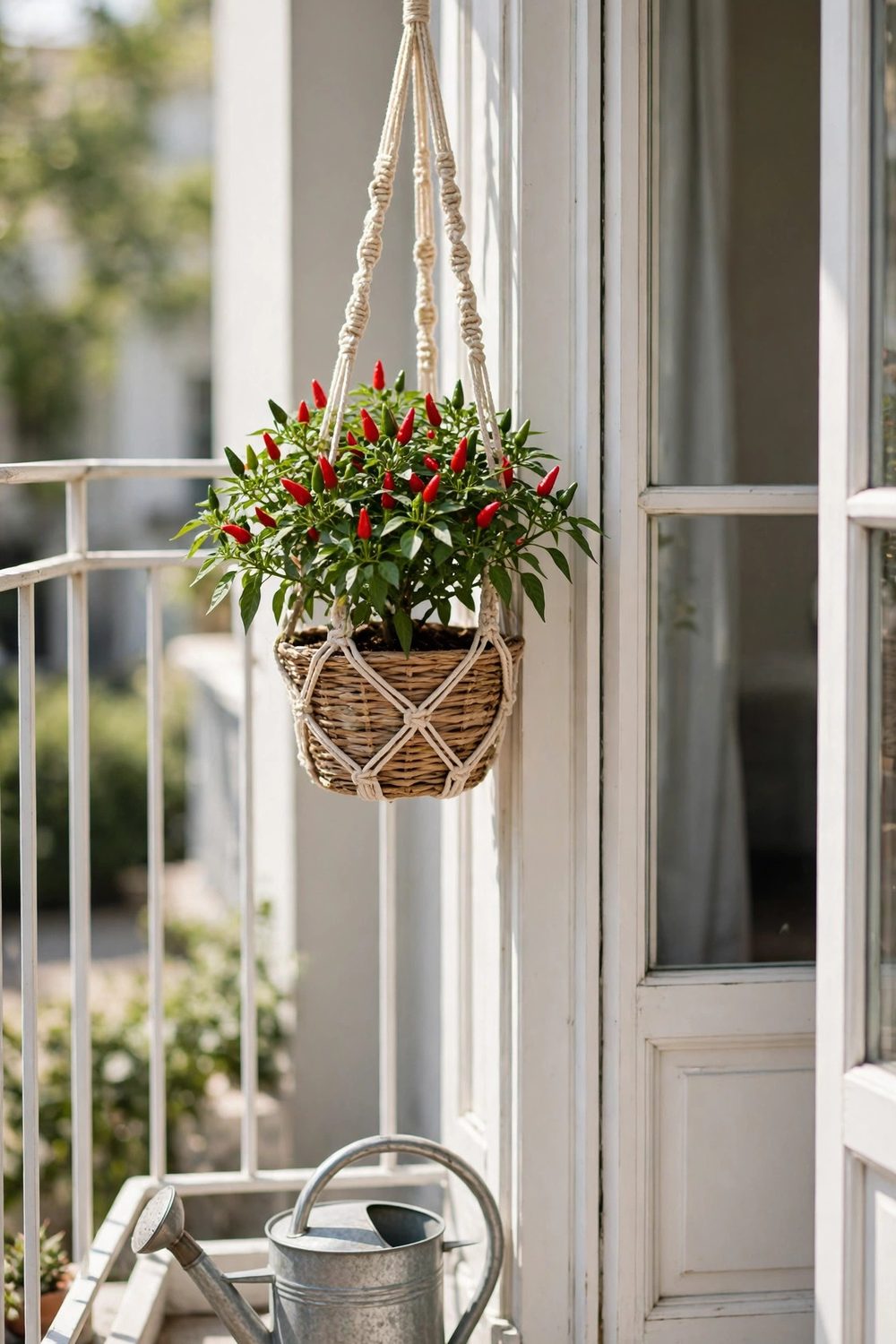
Dwarf chillies stay compact and crop heavily for their size. Plant one in a 12-inch (30 cm) basket and hang it against the warmest wall, where heat collects through the afternoon.
Chillies want 6 or more hours of sun and steady, even watering. A basket that dries out fully between rounds drops flowers, so check it on the morning round daily.
Feed every two weeks once the first fruit sets. Small fruit ripens fast in heat, and picking often keeps the plant setting more until autumn cools the nights down.
Gloves help at harvest if you grow a hot type. A basket at head height is easy to pick, with no bending over pots crowded along the floor below you.
3. Fill a Wide Basket With Cut-and-Come-Again Lettuce
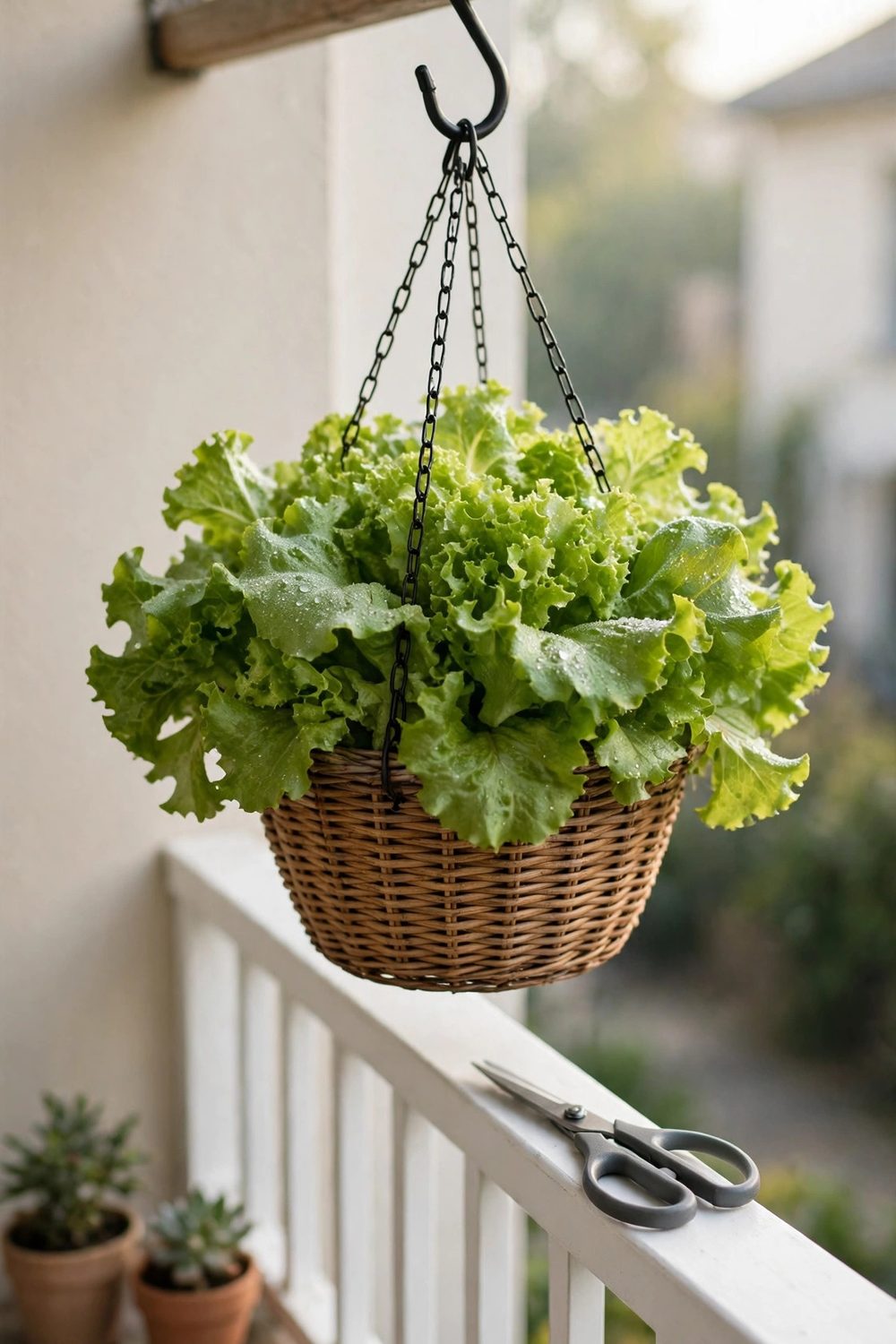
Lettuce is light, shallow rooted, and fast, which suits a basket well. Use a wide 14-inch (35 cm) basket, line it, and scatter loose-leaf seed thinly over the surface of the mix.
Lettuce grows on 3 to 4 hours of sun, so hang this basket where taller baskets shade it at noon. Heat turns leaves bitter, and a little shade buys weeks of picking.
Snip outer leaves with scissors and leave the centre to regrow. Sow a second basket two weeks later, and salad picking never pauses for long in spring.
Mist seedlings daily until they show, then water at the base. Baskets of salad dry at the edges first, so turn the basket a quarter turn each week for even growth.
4. Sow Spinach in a Basket for Spring and Autumn
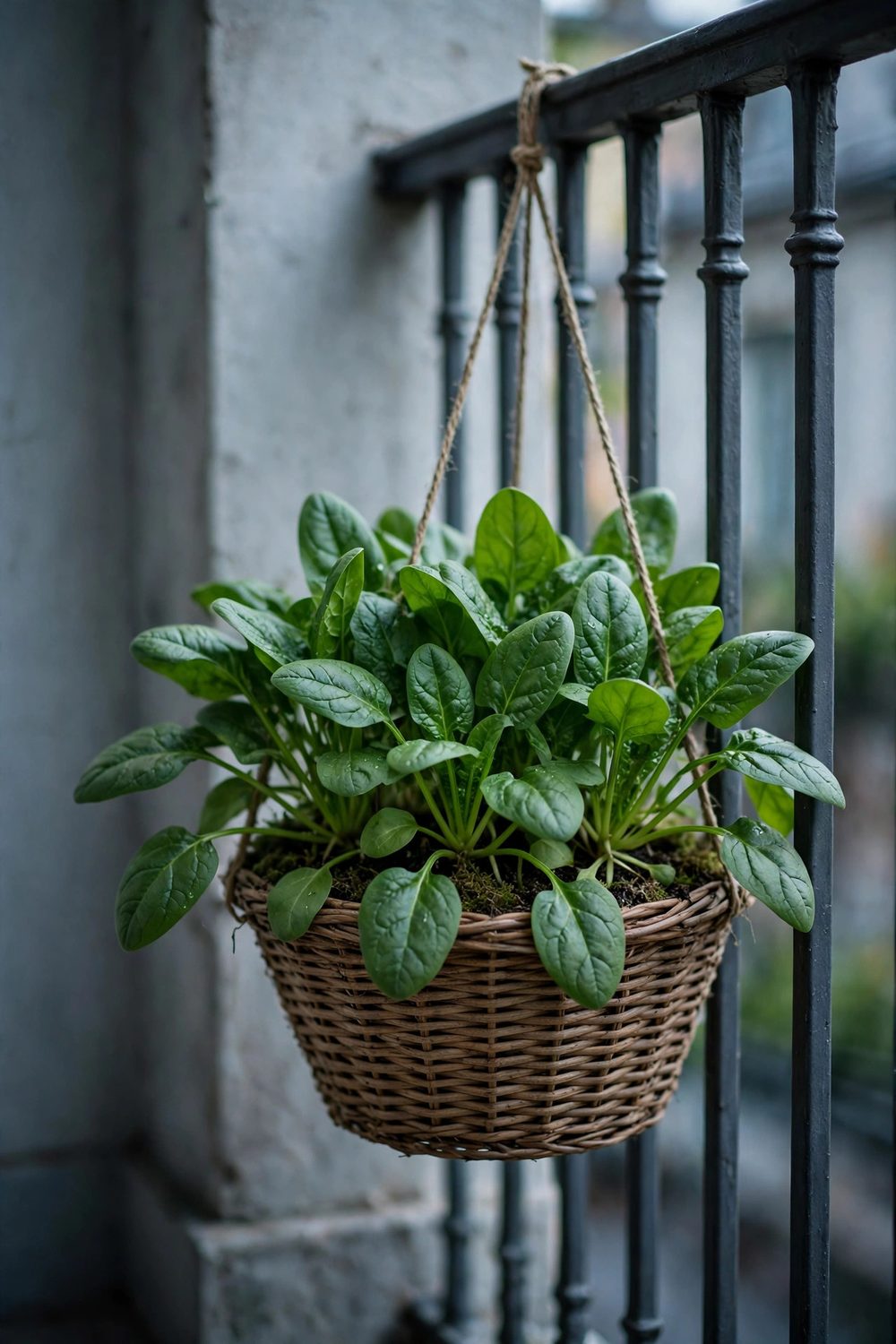
Spinach suits the cool ends of the year, when baskets hold moisture longer. Sow seed 1/2 inch (1 cm) deep in a 12-inch (30 cm) basket in early spring, and again in late summer.
Keep the mix damp until leaves show, and hang the basket in sun or light shade. Spinach dislikes hot roots, so a spring basket crops before the real heat arrives.
Pick outer leaves a few at a time and the centre keeps growing. Once days turn hot the plant bolts to seed, so pull it and reuse the basket for basil.
An autumn sowing often crops best of all, in cool air and steady rain. In mild-winter areas, a sheltered basket can give leaves well into the colder months, alongside other spring container vegetables to plant first in the new season.
5. Trail Basil Over the Edge of a Sunny Basket
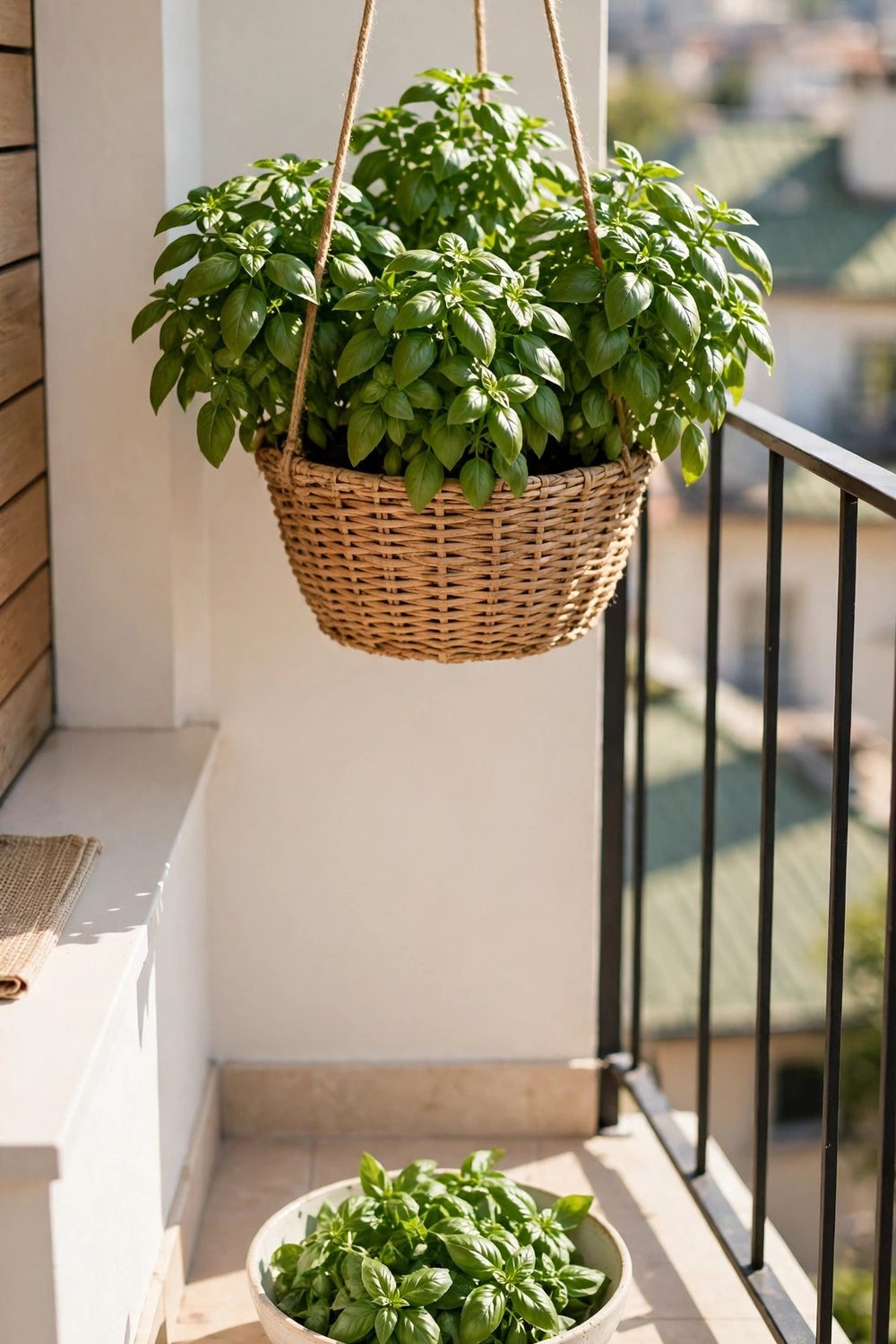
Basil in a basket gets air around its leaves, which it loves. Plant two or three small plants in a 12-inch (30 cm) basket and hang it in full sun by the kitchen door.
Pinch tips weekly so plants branch and spill over the edge. Each pinch is a handful for dinner, and the plant thickens instead of racing up to flower in summer.
Water at the base in the morning, because wet leaves mark in still air. Basil hates cold nights, so plant it only after your last frost has passed for good.
Grow only the amount your cooking uses each week. A basket by the door gets picked daily, and daily picking is the real secret to a bushy, long-lived basil plant.
6. Let Dwarf Peas Trail From a Basket on the Rail
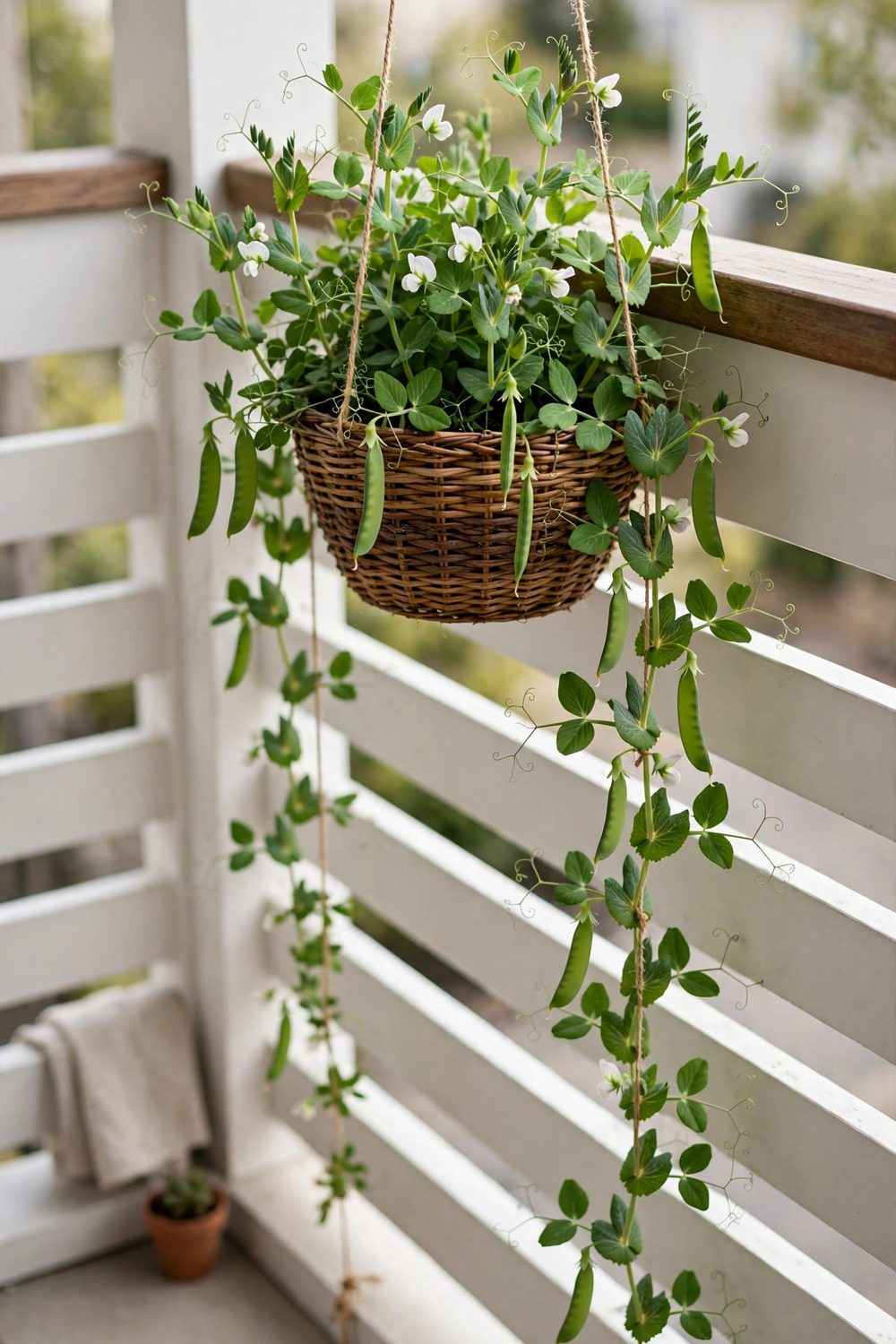
Dwarf pea types trail neatly instead of climbing high, so they suit a strong rail basket. Sow ‘Sugar Snap’ dwarf seed 1 inch (2.5 cm) deep, 2 inches (5 cm) apart, in cool spring weather.
Use a basket at least 10 inches (25 cm) deep, because peas root deeper than salad crops. Line it well, since a dry basket stops flowering within days in spring wind.
Water at the base and pick pods often to keep flowers coming. Eat a few pods at the rail while you water, and the basket feels worth its upkeep fast.
When heat ends the peas, cut stems at the base and sow dwarf beans in the same basket. The swap takes ten minutes and keeps the rail cropping into summer. A climbing vegetable privacy screen below these baskets completes the rail from top to bottom.
7. Grow a Bush Cucumber Trailing From a Big Basket
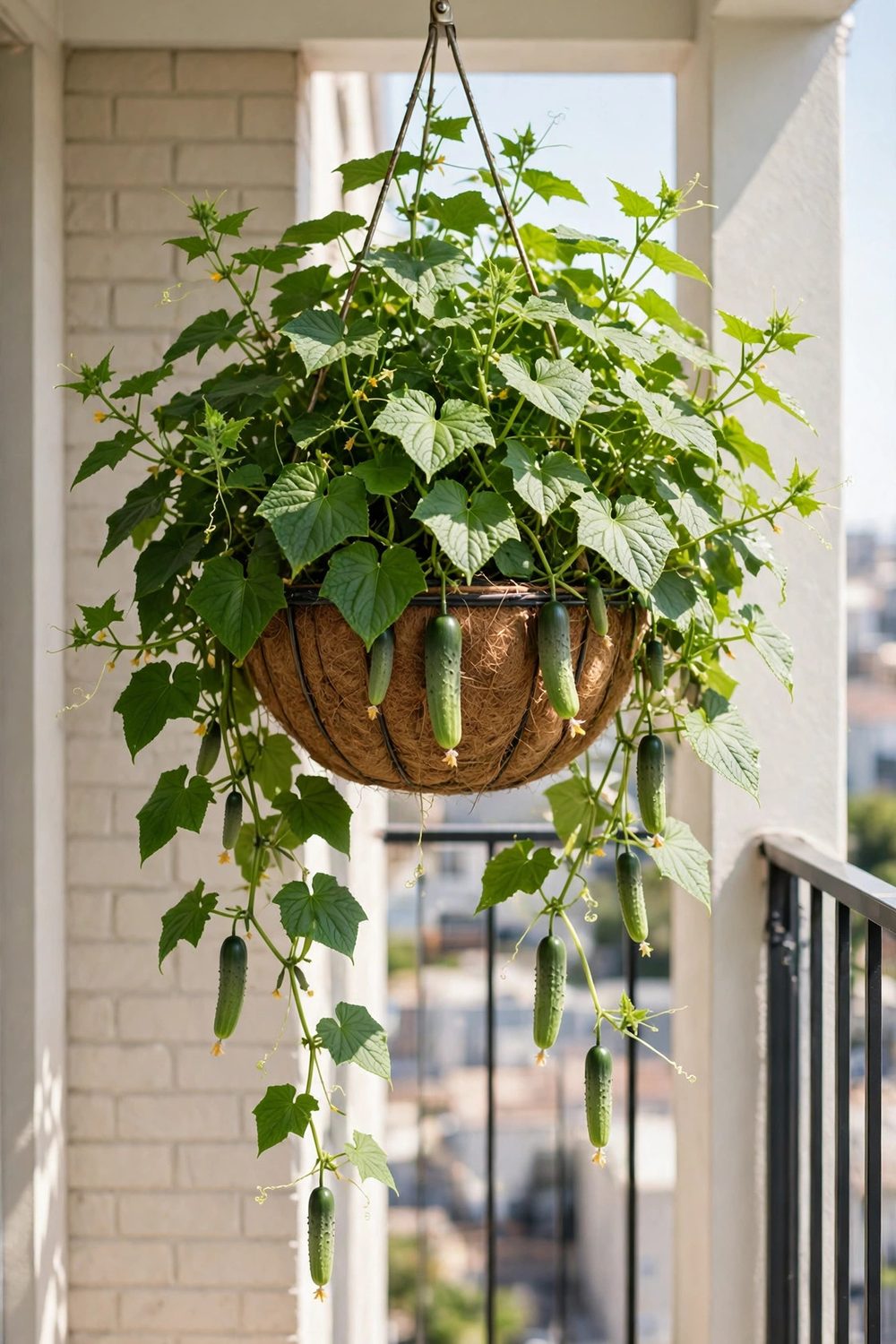
A bush cucumber trails over a basket edge instead of climbing, if you let it. Plant one ‘Spacemaster’ in a 16-inch (40 cm) basket, the biggest size here, with room for thirsty roots.
Cucumbers drink heavily, so line the basket and water deeply every morning in summer. A dry day wilts the whole plant by noon, though it recovers after a good soak.
Hang this basket low enough to reach without a step. Fruit gets heavy, and a full basket of wet mix plus fruit is a real lift at watering time each day.
Pick fruit at 6 to 8 inches (15 to 20 cm), young and often. Fruit hanging clear of the mix stays straight and clean, and is easy to spot at picking time.
8. Plant a Patio Aubergine in a Sturdy Basket
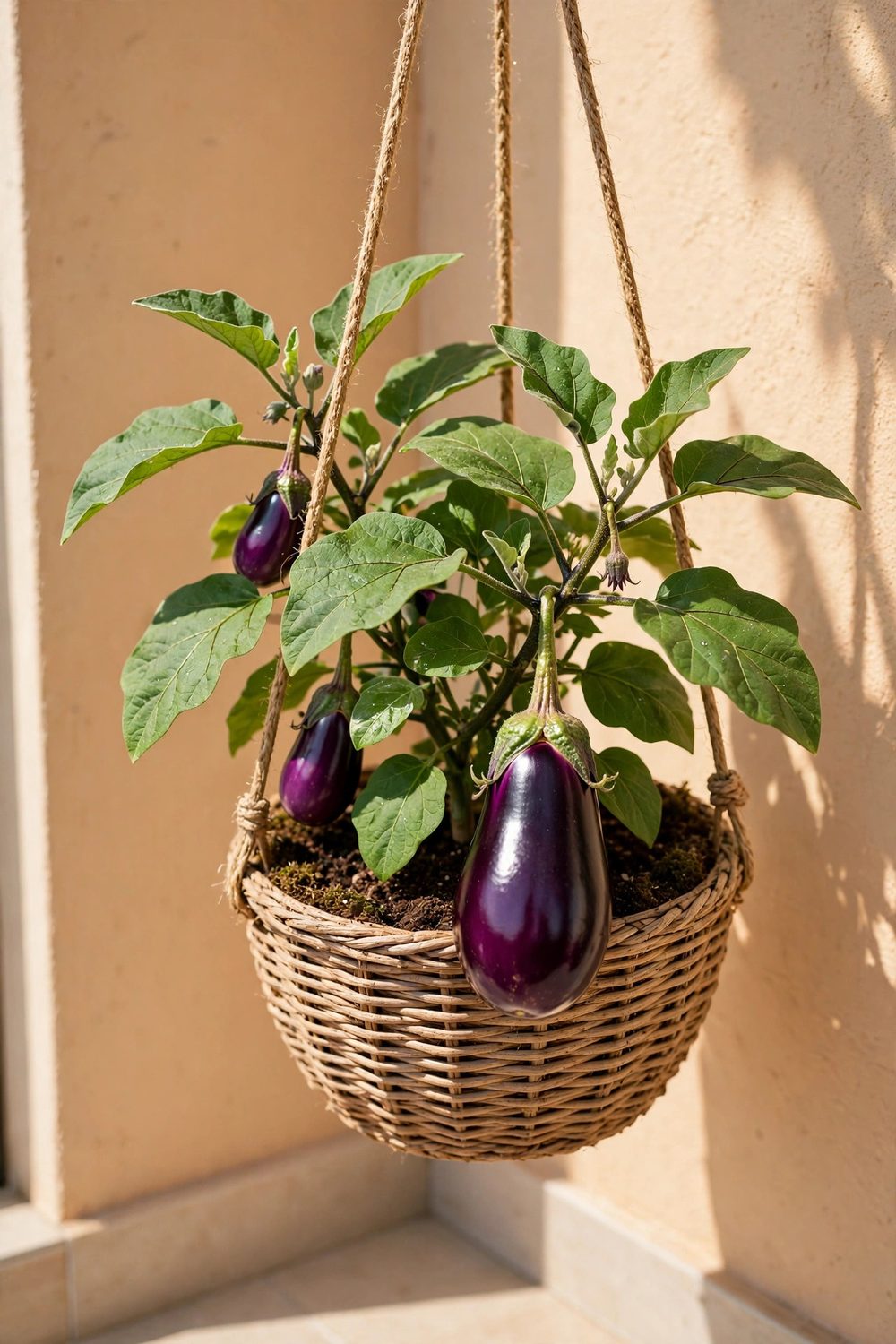
Compact aubergine (eggplant) types bred for patios can crop in a strong basket. Plant one in a 14-inch (35 cm) basket and hang it against a warm, sunny wall for reflected heat.
Give it 6 to 8 hours of sun and even watering, and feed every two weeks once flowers open. Cold nights stall it, so wait until nights stay mild before hanging it out.
Support the basket well, because fruit adds weight fast in late summer. Check brackets monthly, and tighten any fitting that has worked loose in wind over the season.
Pick fruit while the skin shines. Dull skin means hard seeds and bitter flesh, so check twice a week and cut fruit off with scissors rather than pulling stems.
9. Sow Radishes in a Wide, Shallow Basket
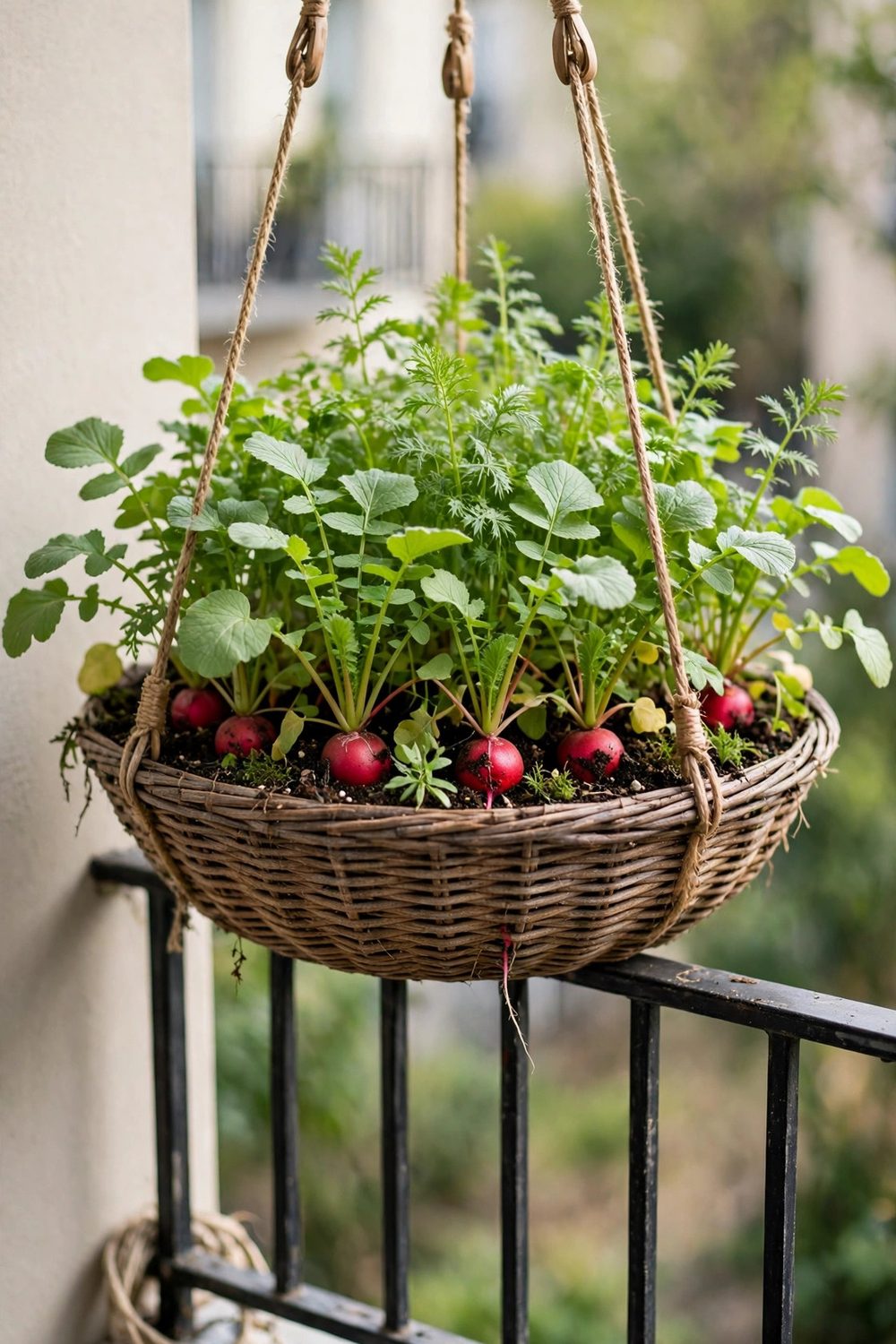
Radishes crop so fast that a basket is never tied up for long. Sow in a wide, shallow basket at least 6 inches (15 cm) deep, filled with loose, stone-free potting mix.
Sow seed 1/2 inch (1 cm) deep and 1 inch (2.5 cm) apart. Thin to 2 inches (5 cm) apart once seedlings sprout, so each root has room to round out fully.
Keep the mix damp, never soggy, and pull roots as they size up. In spring they can be ready roughly a month after sowing, the fastest win on this whole list.
Sow a short row every two weeks. Small sowings beat one big sowing that all comes ready in the same week, then leaves the basket empty for the next month.
10. Tuck Spring Onions Around a Basket Edge
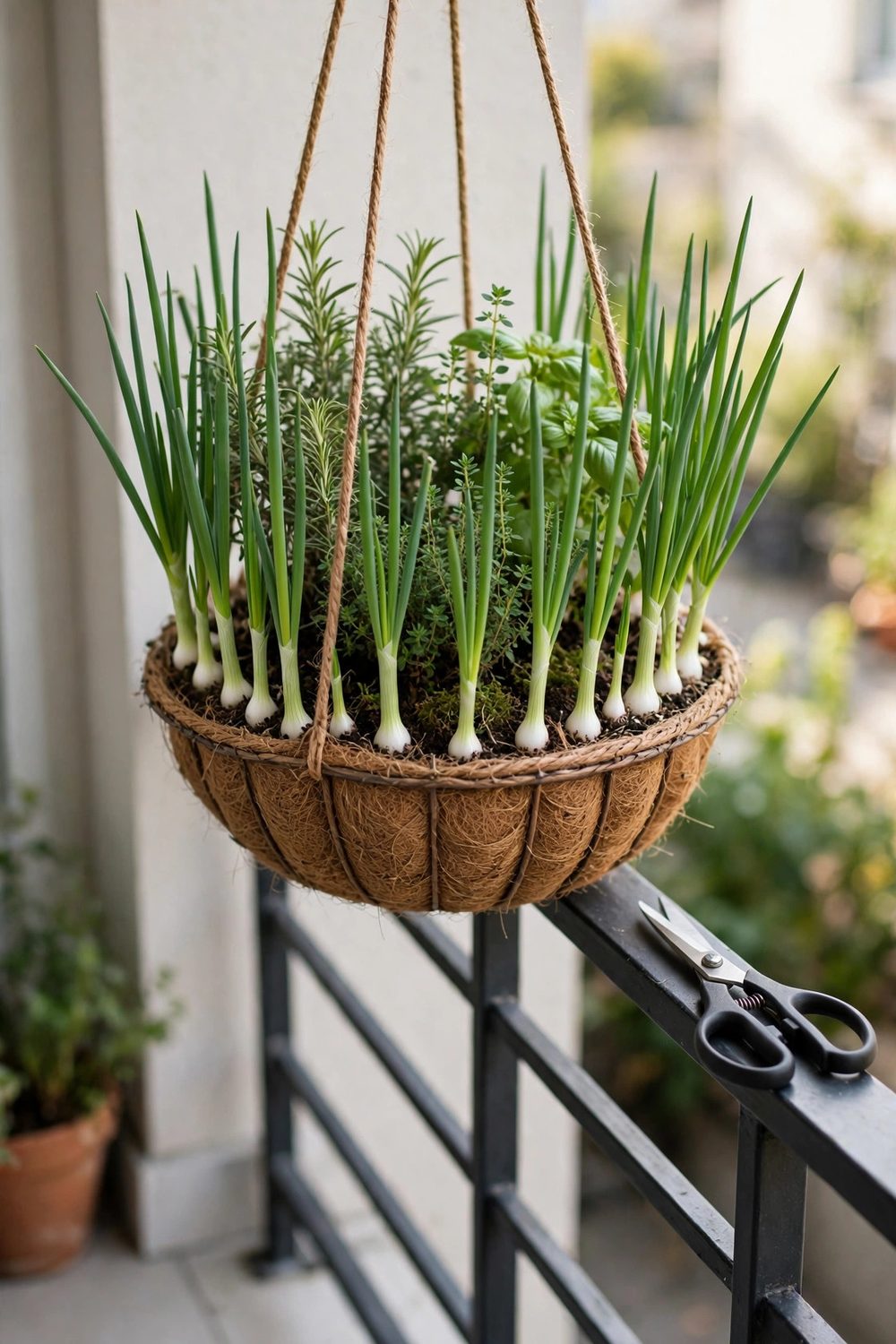
Spring onions fit the spare edge of a bigger basket, around a tomato or pepper. Sow seed 1/4 inch (0.5 cm) deep in a ring near the rim, where light reaches them.
Onions grow on 4 to 6 hours of sun and need little feeding. Pull stems at pencil thickness, and the rest keep sizing up in the gaps between larger plants.
Water gently after sowing, because fine seed washes out under a heavy pour. A small can with a rose head, filled at the kitchen sink, does this job best.
Resow a pinch every three weeks for a steady supply. Edge planting uses space that would otherwise grow nothing, and the green tops show you where the basket dries first.
11. Keep a Dwarf Kale in a Deep Basket
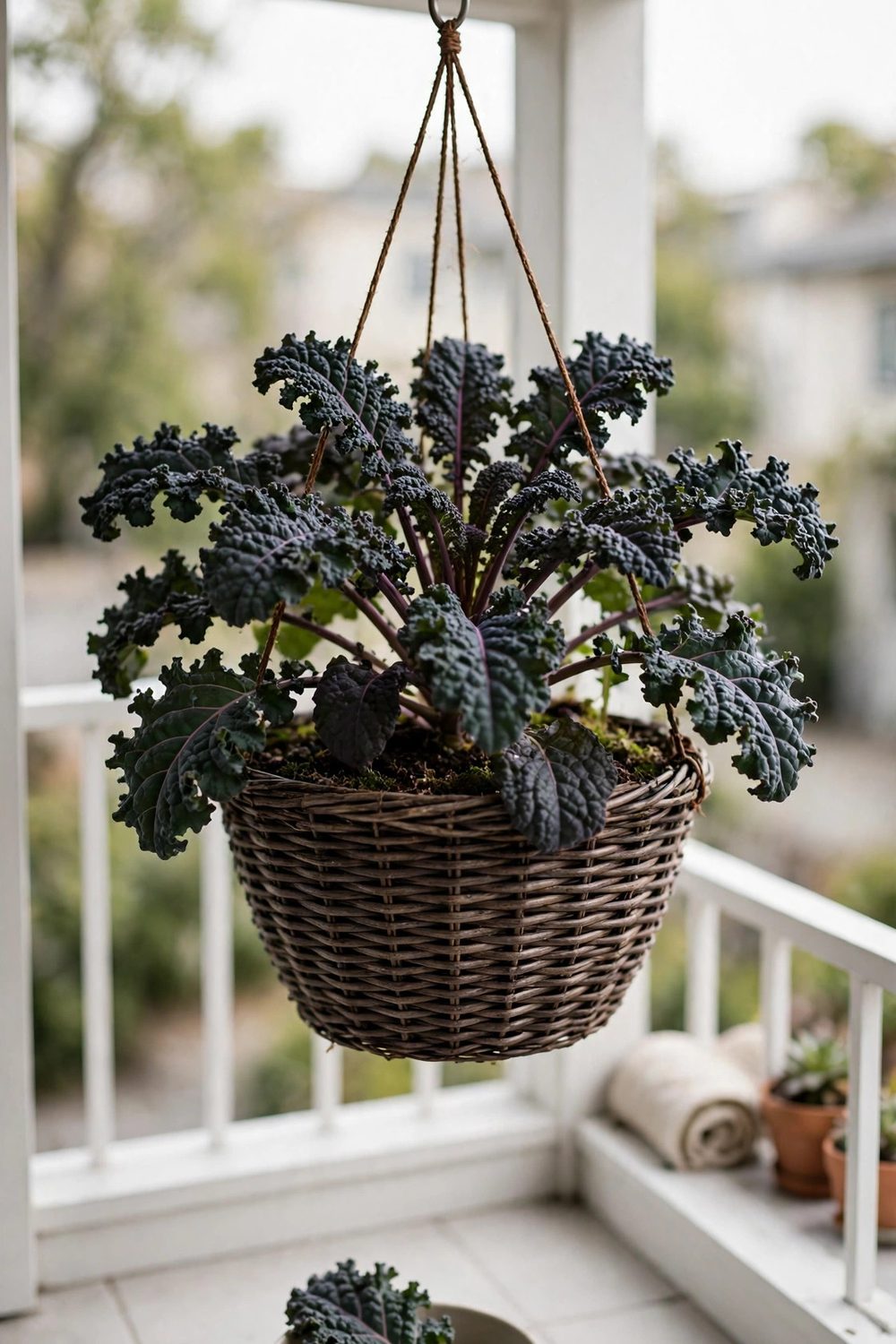
Dwarf kale stays compact enough for a deep 14-inch (35 cm) basket. Plant one in the centre, give it sun or light shade, and it crops from spring well into the cold months.
Kale settles for about 4 hours of sun, so hang this basket on the shadier end of the rail. Water when the top inch (2.5 cm) of mix dries, and feed every two weeks.
Pick outer leaves and leave the centre crown alone, always keeping five or six leaves on the plant. Picked this way, one basket plant feeds salads and soups for months.
Kale shrugs off light frost, which extends the basket season. In mild-winter areas, roughly USDA zones 8 to 10, it can crop through winter with only a sheltered spot.
12. Cut Baby Chard Leaves From a Basket
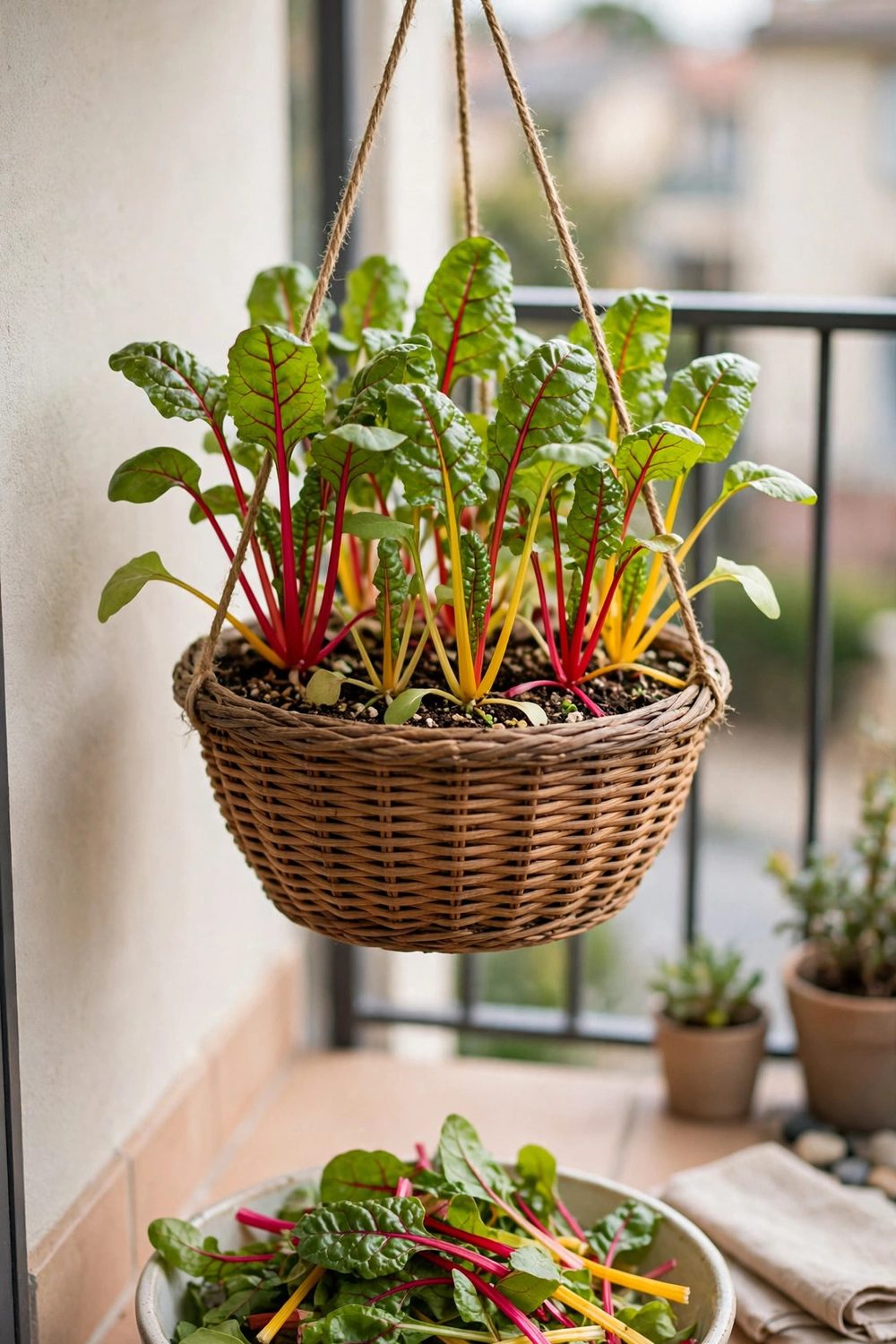
Chard picked young stays tender and small, which suits basket growing well. Sow three or four plants in a 14-inch (35 cm) basket, spaced about 4 inches (10 cm) apart across the surface.
Chard grows on 4 to 6 hours of sun and copes with light shade at midday. Water steadily, because baby leaves wilt fast in a dry basket on a windy afternoon.
Cut outer leaves at the base once they reach hand size. The centre regrows within weeks, and a basket picked this way gives greens from late spring to hard frost.
Bright stems look good hanging at eye level by the door. That daily view helps too, because chard shows thirst early with a droop you can spot from indoors.
13. Grow Beet Leaves in a Basket and Roots Later
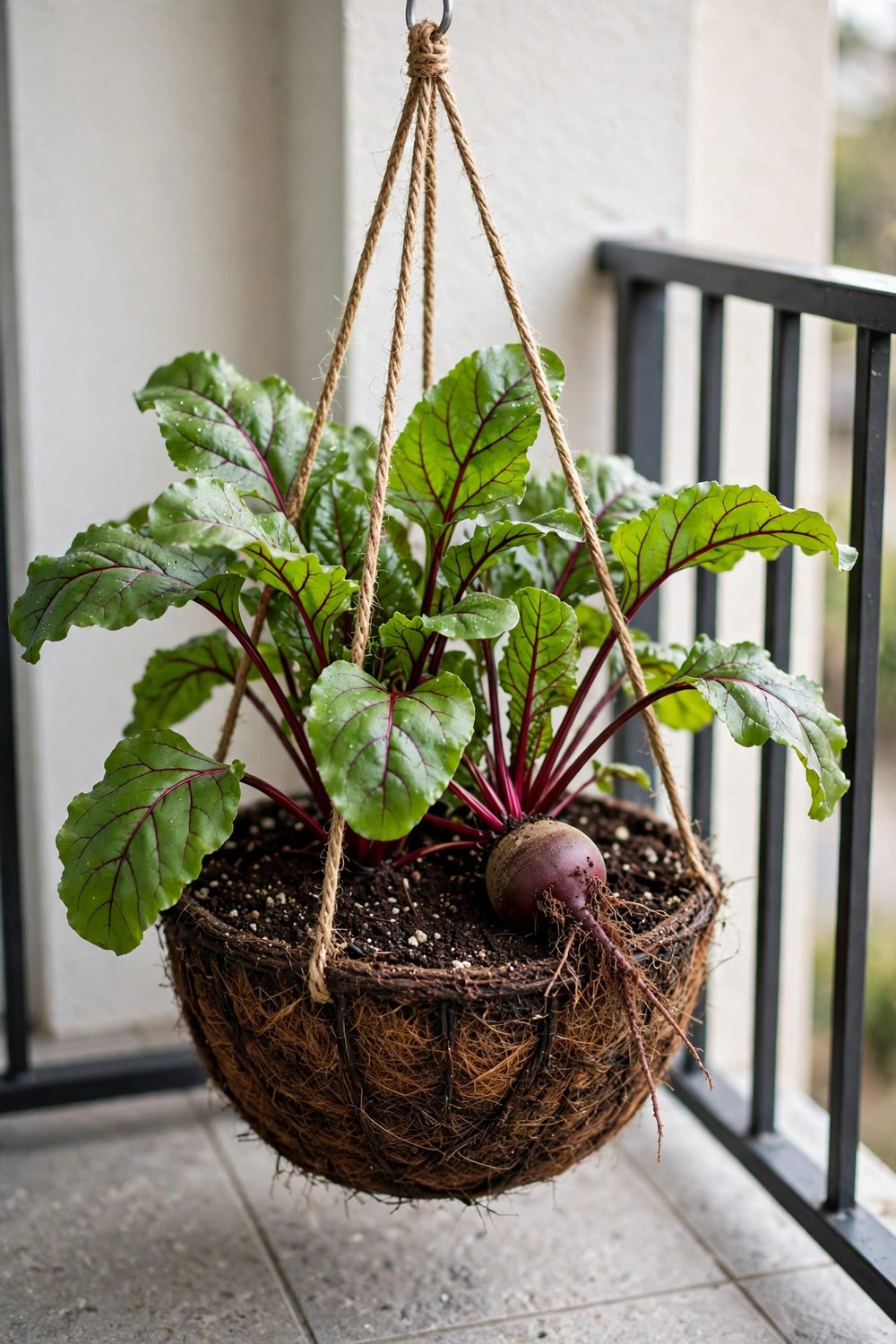
Beetroot in a basket gives leafy tops first and small roots later. Sow in a basket at least 10 inches (25 cm) deep, seed 1/2 inch (1 cm) deep and 2 inches (5 cm) apart.
Thin seedlings to one plant every 3 inches (8 cm), because each seed cluster holds several seeds. Crowded beets give leaves only, with roots that never swell in the tight mix.
Cook young leaves like chard while roots size up below. Even watering matters, since dry spells make roots woody and skins can split after heavy rain follows drought.
Pull roots at golf-ball size for the sweetest flavour. A basket of beets by the door is easy to check, thin, and harvest in small rounds all season.
14. Weave Nasturtiums Through a Basket for Edible Flowers
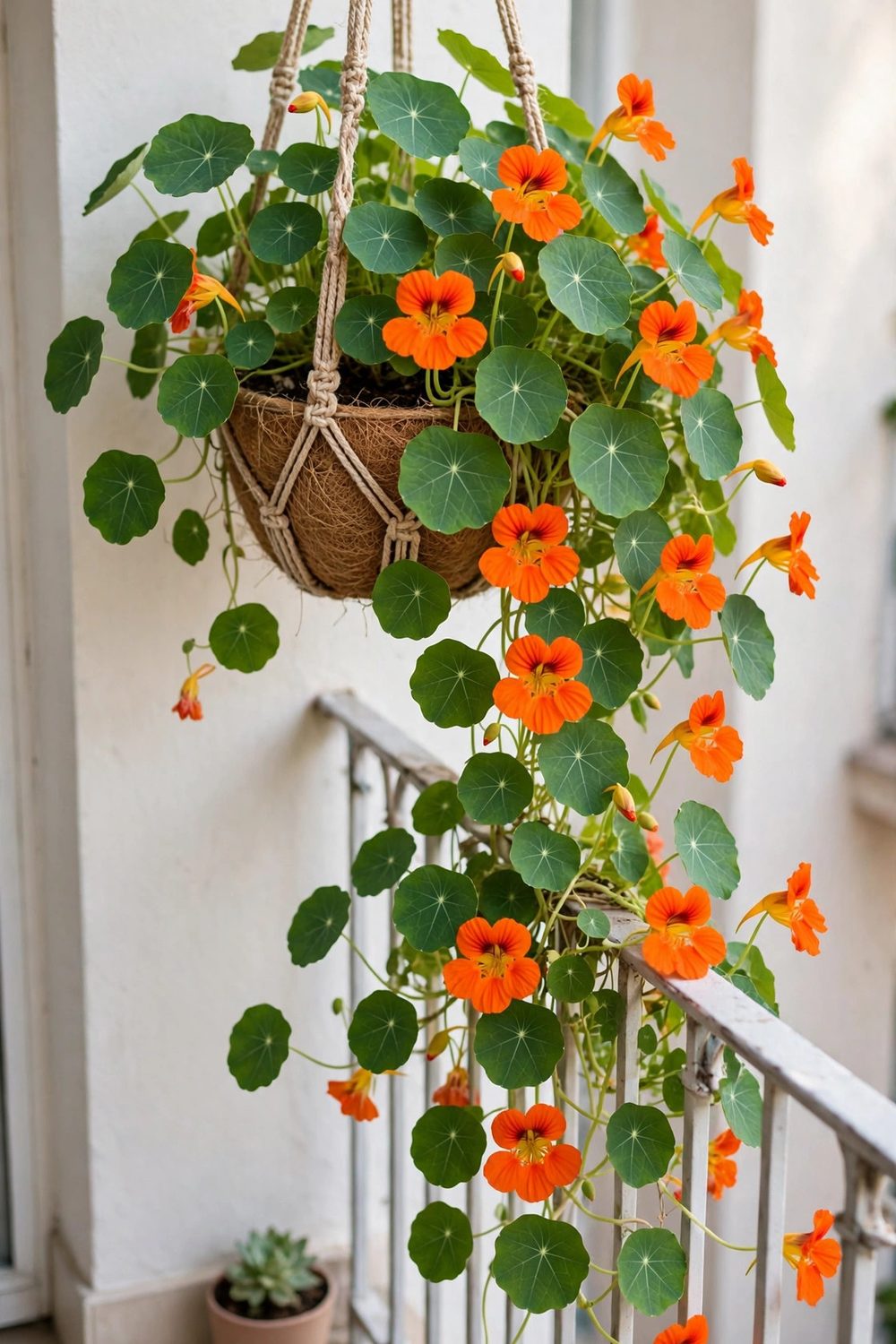
Nasturtiums trail further than any crop here, softening a whole rail of baskets. Sow seed 1/2 inch (1 cm) deep in a 12-inch (30 cm) basket after your last frost has passed.
Leaves and flowers are edible, with a peppery bite for salads. Grow them in mix that is not too rich, because rich feeding gives leaves and very few flowers all summer.
Skip feeding this basket entirely, and water when the mix dries. Nasturtiums cope with a missed watering better than most basket crops, which suits a holiday weekend away.
Tuck trailing stems along the rail to guide the spread. One basket can soften the hard line between two food baskets, and the flowers draw bees to the whole rail.
15. Finish With Dwarf French Beans in a Low Basket
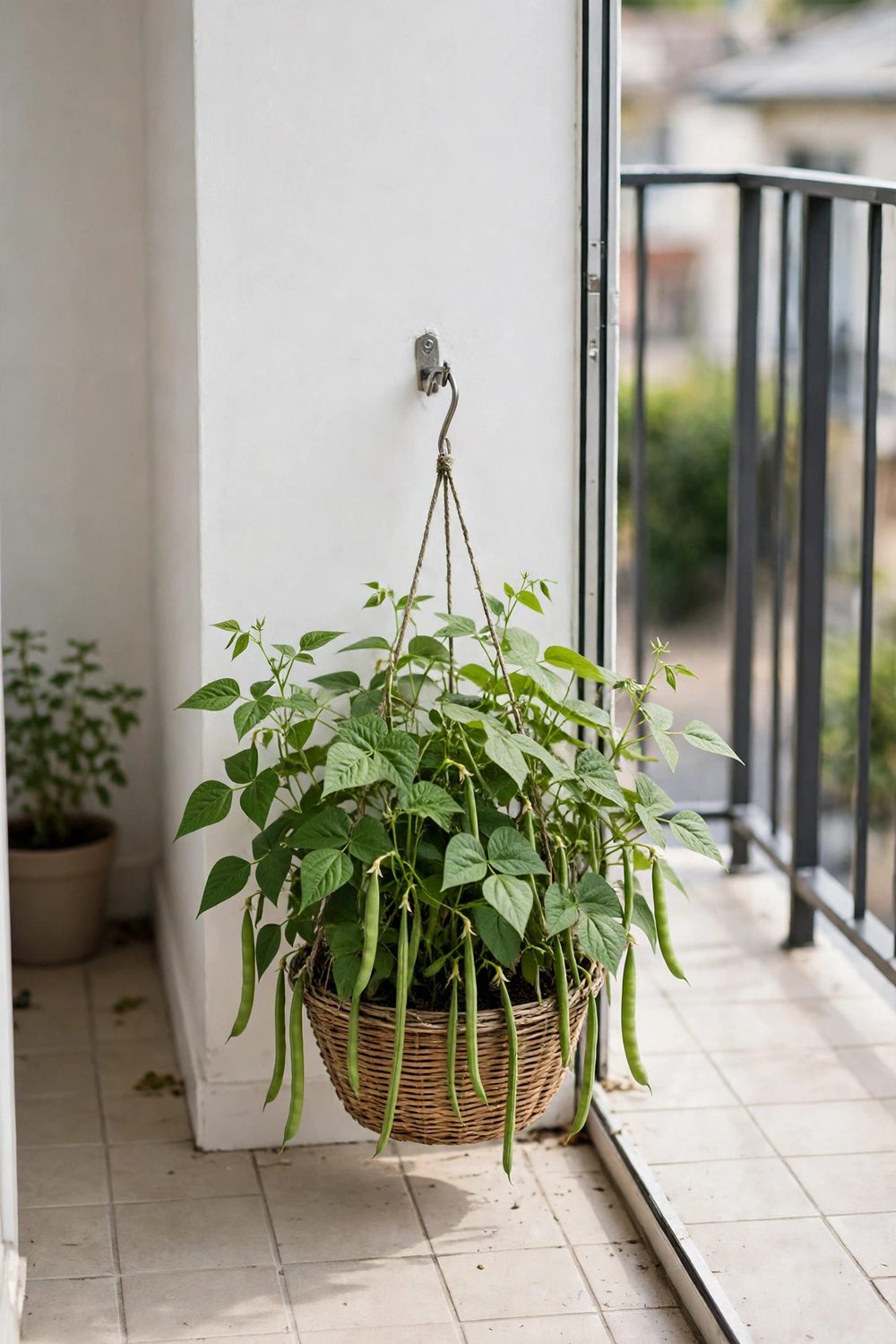
Dwarf French beans crop at knee height in pots, and in a low-hung basket they pick just as well. Sow ‘Provider’ type seed of a dwarf variety 1 inch (2.5 cm) deep after your last frost.
Hang this basket lower than the rest, at about waist height. Beans pick every two days in season, and a low basket makes that quick round easy on your back.
Beans need little feeding in fresh mix, since their roots hold nitrogen. Steady water matters more, above all while flowers and young pods form in early summer heat.
Pick pods while they are slim and snap cleanly. Regular picking keeps flowers coming for weeks. For the planters below the baskets, see what railing planters actually hold, and check how often to water vegetables in pots before your first holiday away.
Baskets ask for more watering than pots, and in return they give you a whole extra growing level above the rail.
That is the honest trade with hanging basket vegetables for a small balcony: more watering rounds, more harvest. Line them, hang them within reach, and check them on the morning round each day.
Start with two baskets, learn how fast they dry on your balcony, then add more over the season.
A small step stool, a light can, and baskets hung at a kind height make the whole system easy to keep.
Save this list to your container garden board for later, and enjoy picking dinner at eye level this summer.


