

15 Railing Planters for Vegetables That Actually Hold
A railing planter full of wet mix and ripe vegetables is far heavier than it looks in the shop. Weak hooks bend, cheap boxes crack, and a falling planter helps nobody.
These railing planters for vegetables what actually holds picks are judged on fixings, load, and drainage first, with the right crop for each box weight. Every pick names its fitting and its limits.
The rule behind the whole list is simple: hang the box on the inside of the rail where your lease allows it, spread the load, and grow light crops up high.
Heavy fruiting crops stay in floor pots at the base of the rail. The rail itself carries leaves, herbs, roots, and climbers trained up from below.
This post contains affiliate links. If you buy through them, we may earn a small commission at no extra cost to you. See our Affiliate Disclosure.
1. Steel Over-Rail Box With Two Wide Hooks for Lettuce
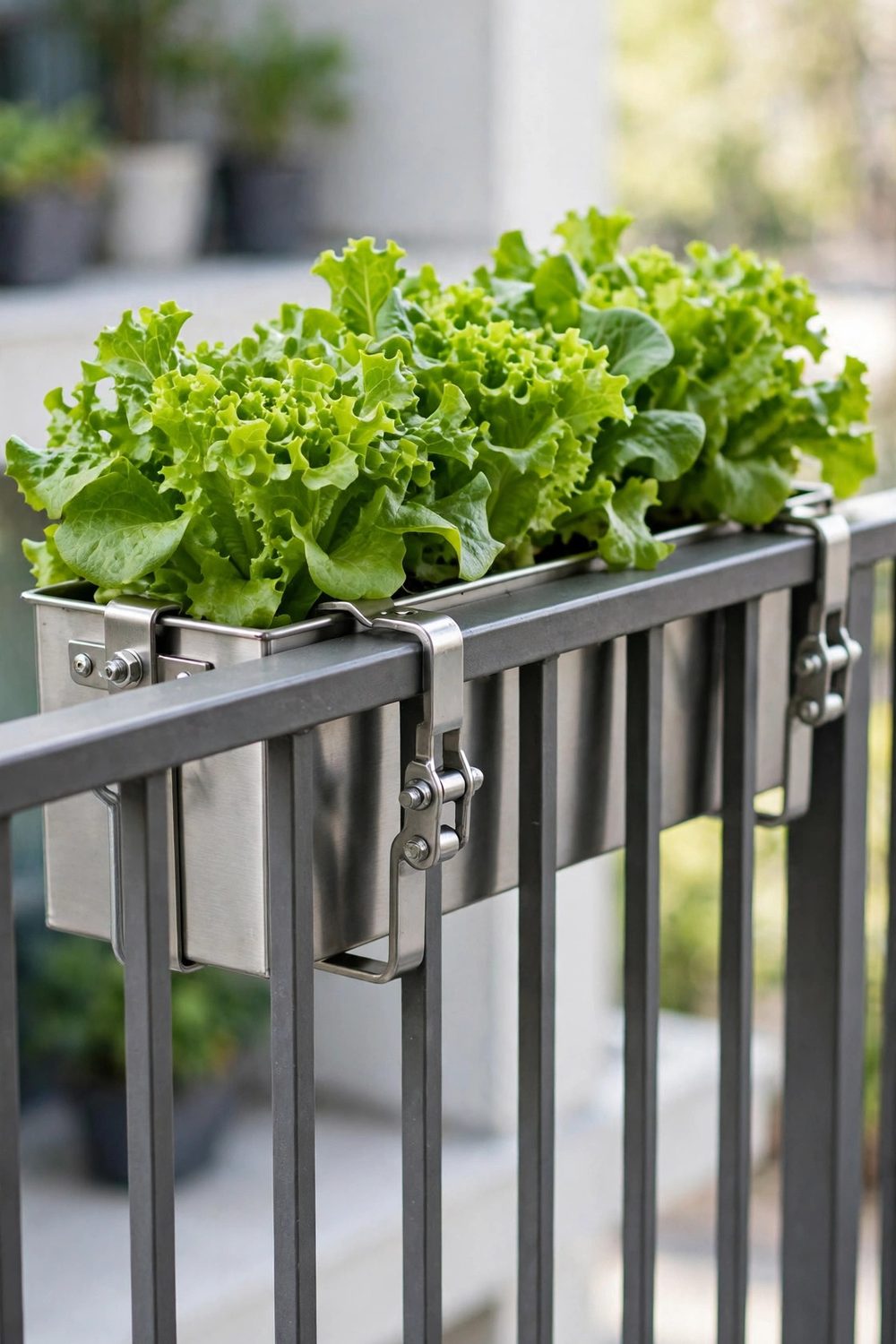
Two wide steel hooks spread the load across the rail instead of hanging it from one thin point. That is why this style holds a full salad box without sagging.
Choose a box at least 8 inches (20 cm) deep and hang it on the inside of the rail. Measure your rail width first, because hooks come in fixed sizes.
Fill it with loose-leaf lettuce, which roots shallowly and stays light. Sow thinly, keep the mix damp, and snip outer leaves as they size up.
Check the hooks monthly and tighten or reseat them after storms. Wet mix after rain is the heaviest load the box will ever carry.
2. Adjustable Bracket Box That Fits Odd Rail Widths
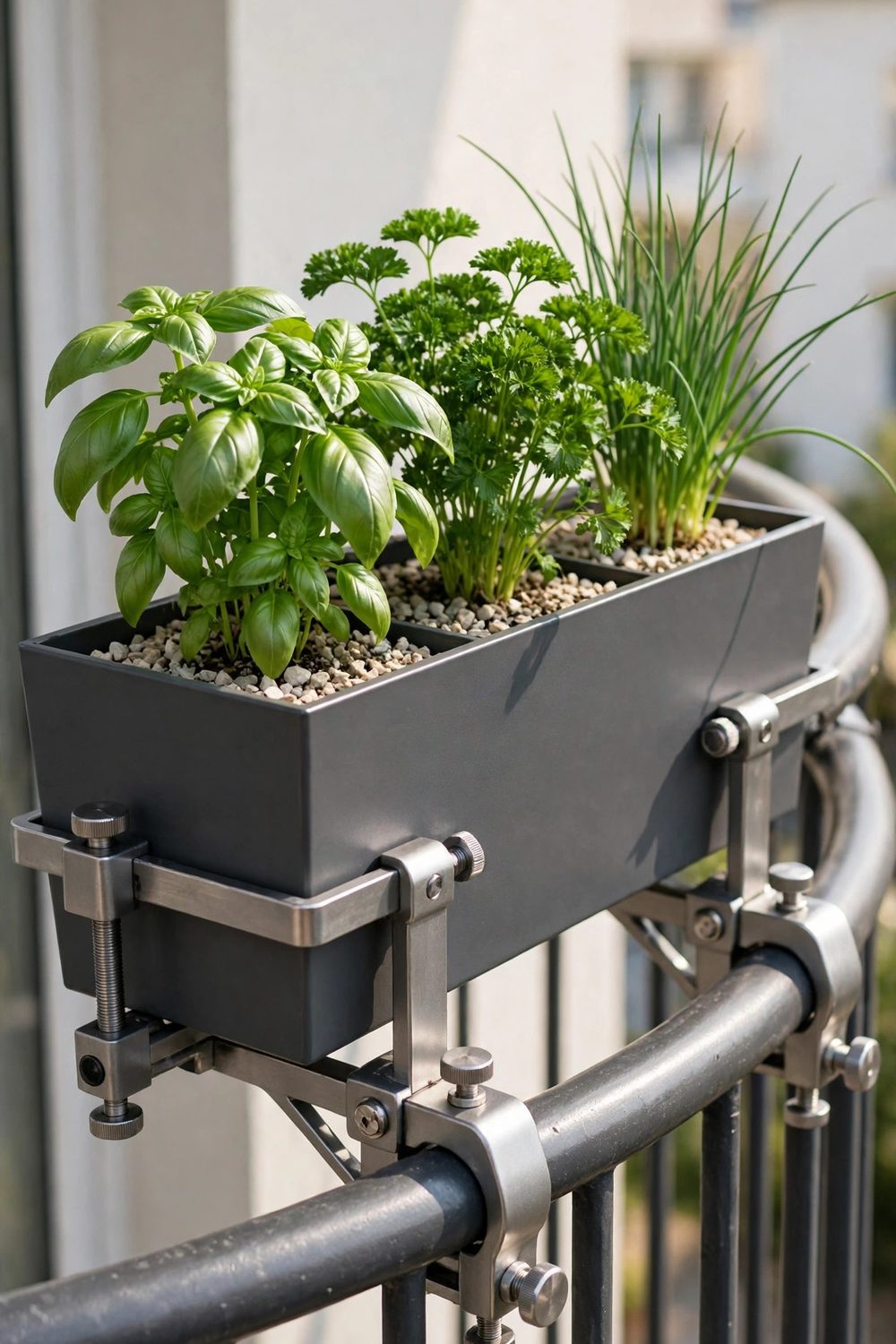
Balcony rails are not a standard size, and a fixed hook on the wrong rail rocks every time you water. Adjustable brackets clamp to the rail you actually have.
Tighten the brackets evenly at both ends, then lift the empty box on and off twice before you fill it. A box that shifts empty will shift worse full.
Plant it with herbs you cook with: basil, chives, and parsley, one plant per 8 inches (20 cm) of length. Herbs stay light and crop for months.
Pinch basil tips weekly and water at the base in the morning. The box lifts off in seconds at season end, with no marks left behind.
3. Double-Hook Trough for a Row of Radishes
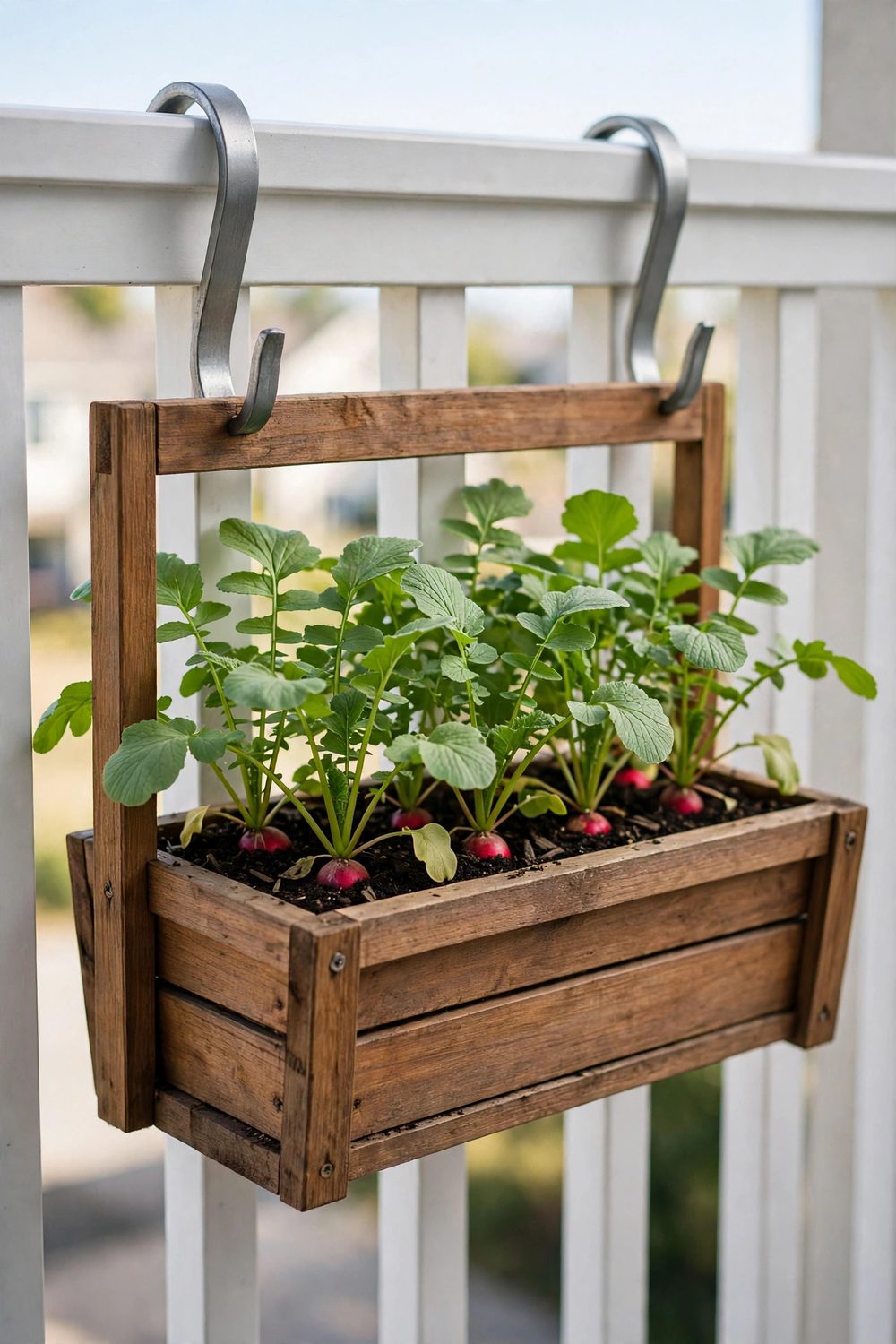
Radishes are the lightest crop you can hang. A double-hook trough spreads their small load across two contact points, and the roots finish in about a month.
Use a trough at least 6 inches (15 cm) deep. Sow seed 1/2 inch (1 cm) deep and 1 inch (2.5 cm) apart, then thin to 2 inches (5 cm).
Keep the mix damp and pull roots young, before warm weather turns them woody. Sow a short row every two weeks for a steady supply.
Because the crop finishes fast, the trough can be emptied, checked, and rehung between sowings. That regular check is what keeps light fittings honest.
4. Strap-Backed Rail Box as a Safety-First Backup
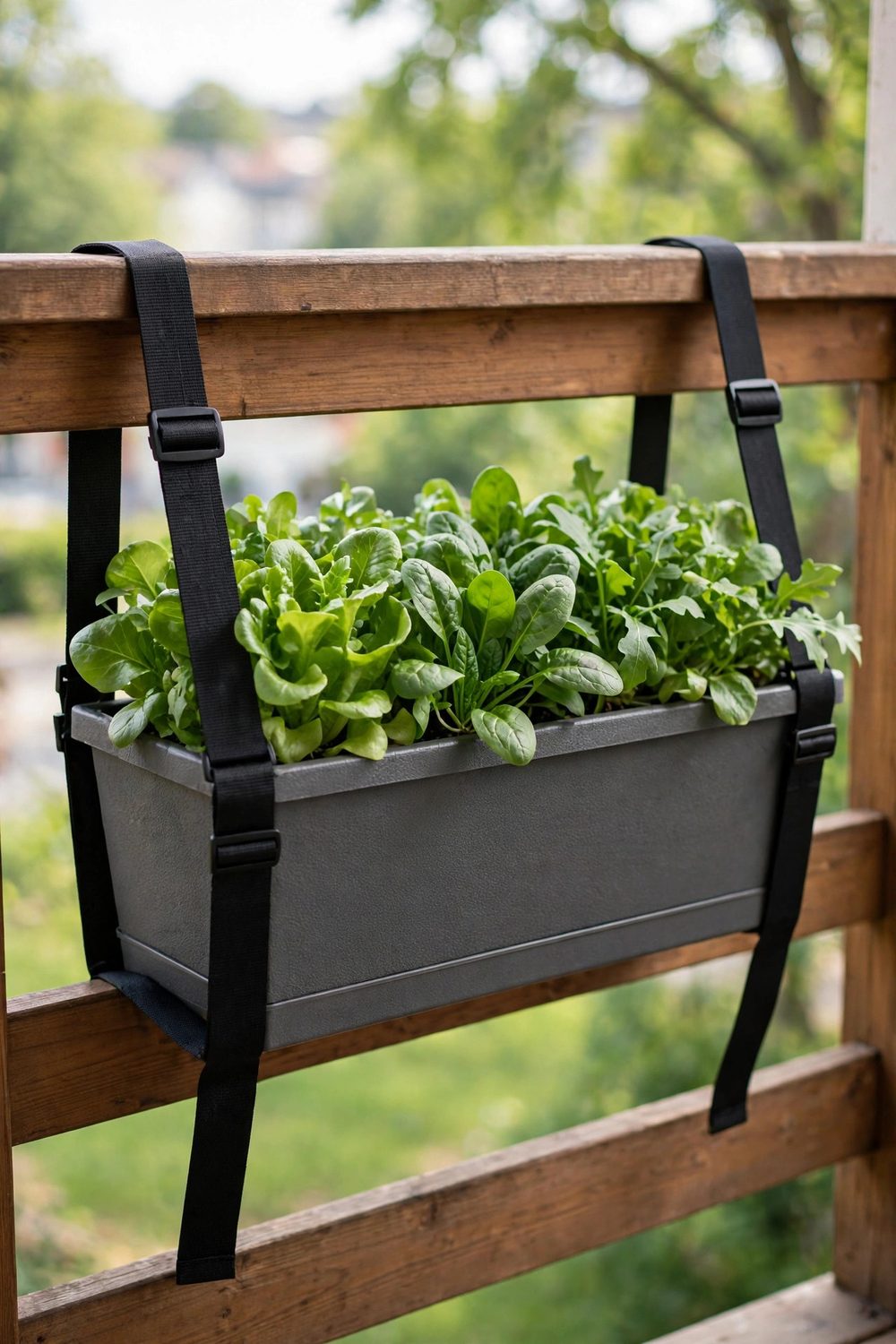
Hooks alone are not the only way to hold a box. A wide strap looped around the rail and the box body acts as a backup if a hook ever slips.
Fit the hooks first, hang the box level, then add the strap snugly without crushing the box sides. The strap is a safety line, not the main support.
Plant dwarf peppers or a short row of spring onions in a strapped box. Both stay compact, and neither loads the rail with heavy fruit.
Check the strap fabric each month for sun wear and fraying. Replace it at the first sign of damage, because sun weakens straps quietly over a season.
5. Lightweight Resin Box for the Top Rail Only
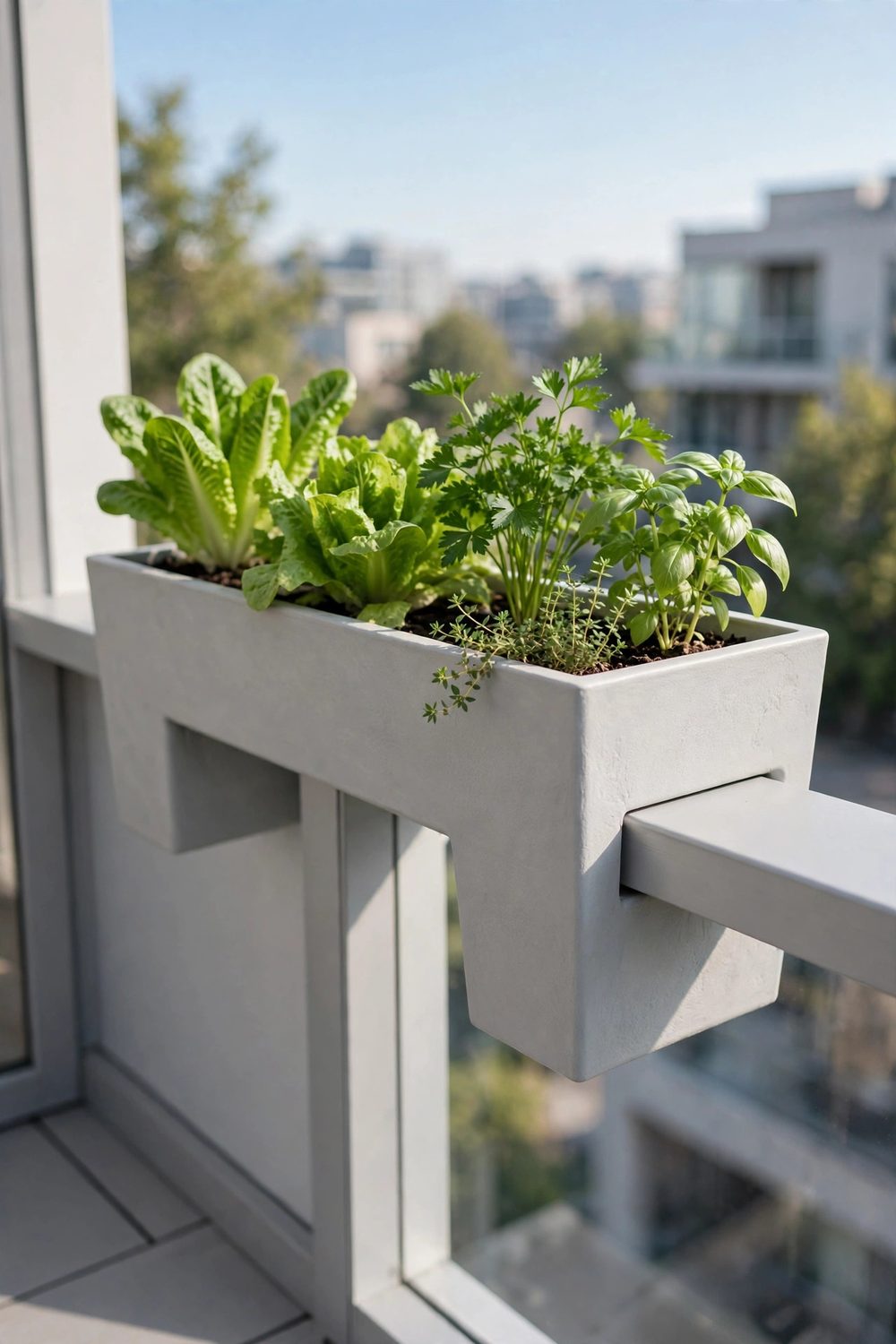
The box itself is part of the load. A resin box weighs a fraction of a terracotta trough of the same size, and that saving goes straight to your crop.
Pick a resin box at least 8 inches (20 cm) deep with thick walls that do not flex when you lift it by one end. Thin walls bow under wet mix.
Grow spinach or chard in it, both happy on 3 to 4 hours of sun at the shadier end of the rail. Sow spinach 1/2 inch (1 cm) deep.
Resin fades in strong sun over years but does not crack in frost like clay can. Our step-by-step for a balcony vegetable garden on a tiny 3-foot balcony shows how little rail this setup needs.
6. Self-Watering Rail Box That Cuts Daily Carrying
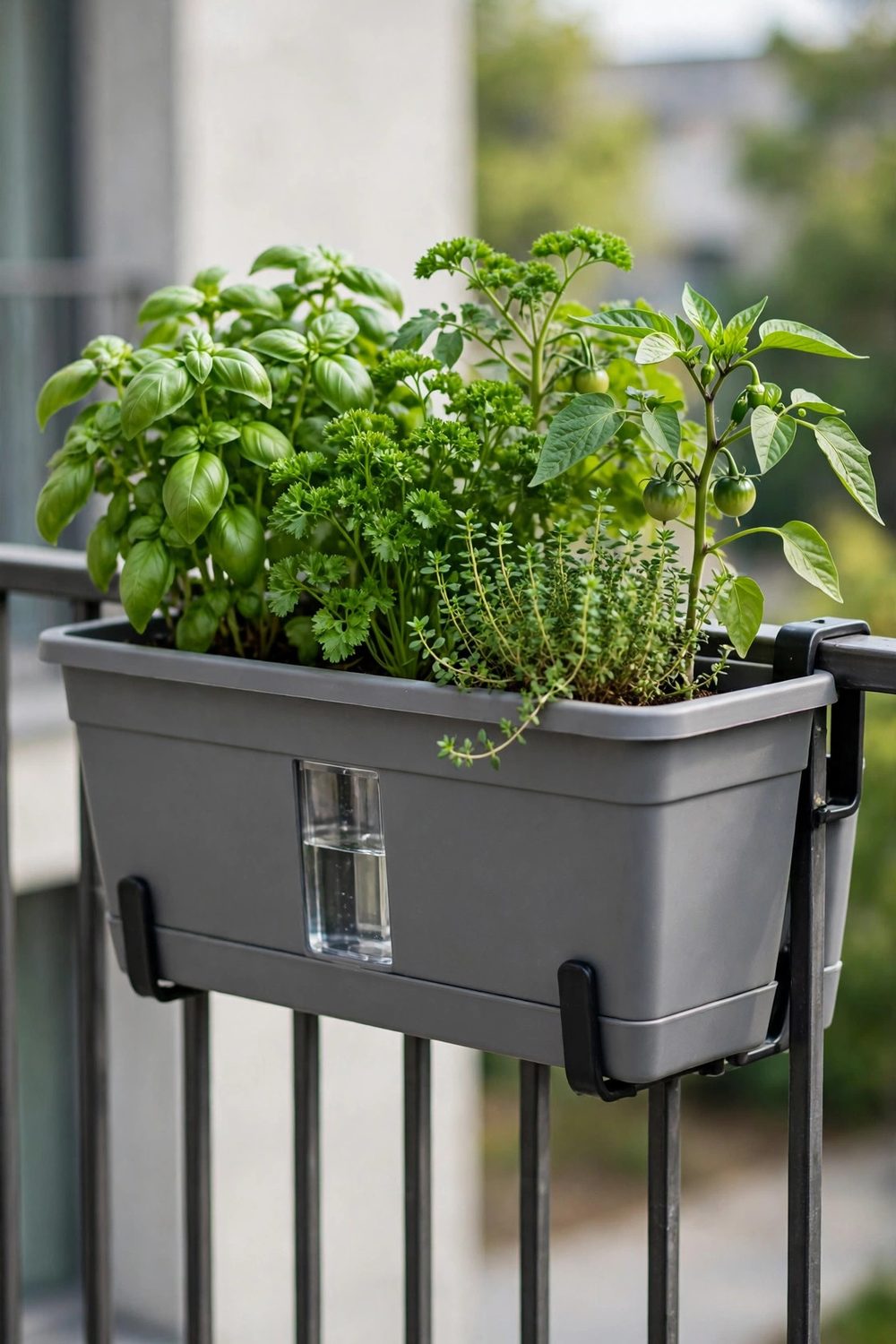
A reservoir box holds water under the soil, so you fill it less often and spill less over the rail. The trade-off is weight: a full reservoir adds real load.
Hang the box, fill the soil section, and only then fill the reservoir, so you feel the true hanging weight before any plants go in.
Grow thirsty, light crops in it: lettuce, spring onions, or parsley. Keep heavy fruit out of reservoir boxes on the rail entirely.
Check the water gauge every second day in a heat wave. A big leafy crop can empty a reservoir faster than you expect in hot wind.
7. Fabric Rail Pockets for Herbs on a Narrow Rail
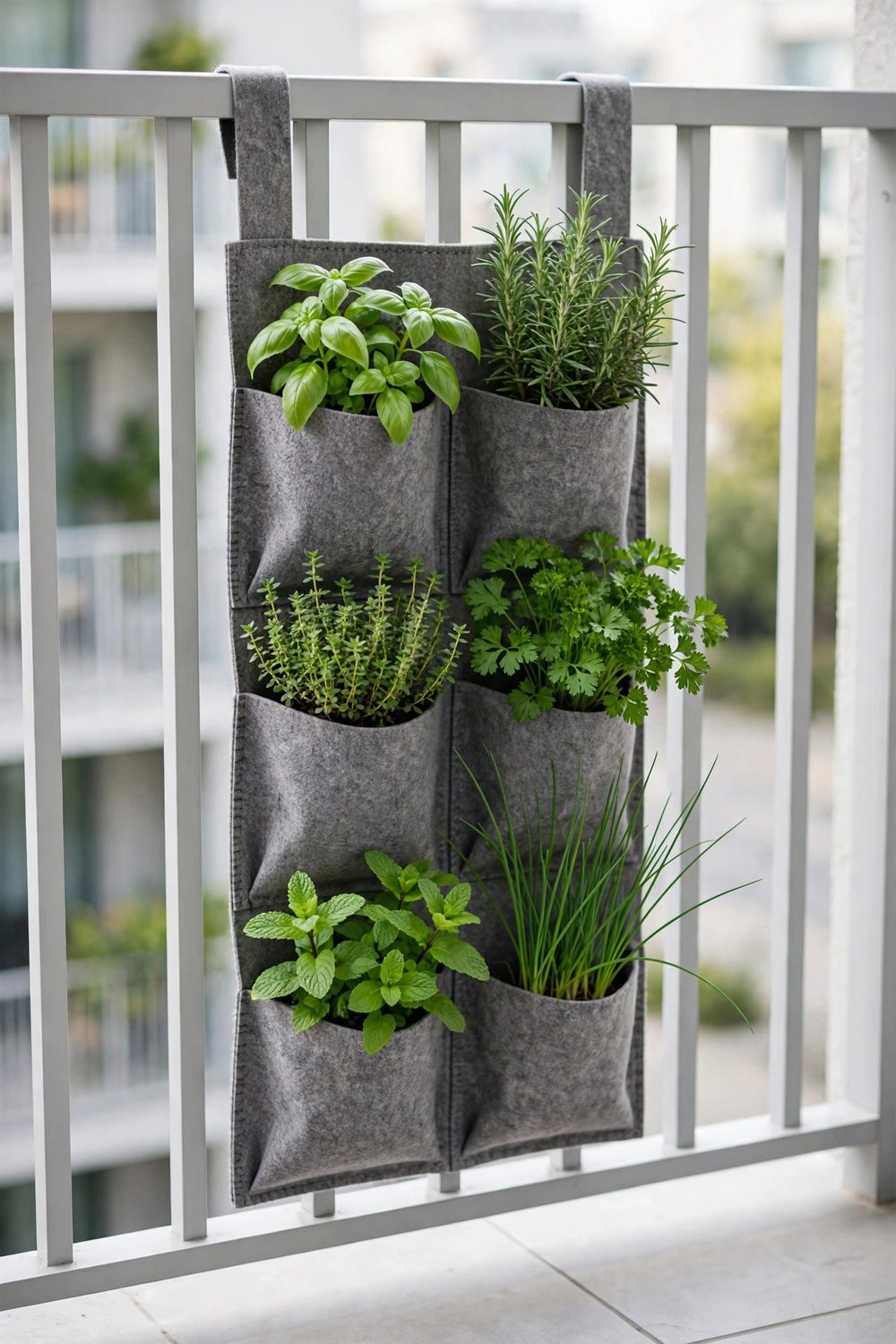
Fabric pockets drape over the rail and tie on, so they fit rails that defeat every hook. Each pocket holds a small, light plant and nothing more.
Grow one herb per pocket: basil, thyme, chives, or a single parsley plant. Herbs forgive the small root space and crop from regular picking.
Fabric dries fast in sun and wind, so water pockets daily in summer. A can with a narrow spout, filled at the kitchen sink, makes the round quick.
Pockets are the lightest fixing on this list and the easiest to take down. Rinse them at season end and store them flat in a drawer.
8. Long Trough With Three Hooks for Peas Trained Up
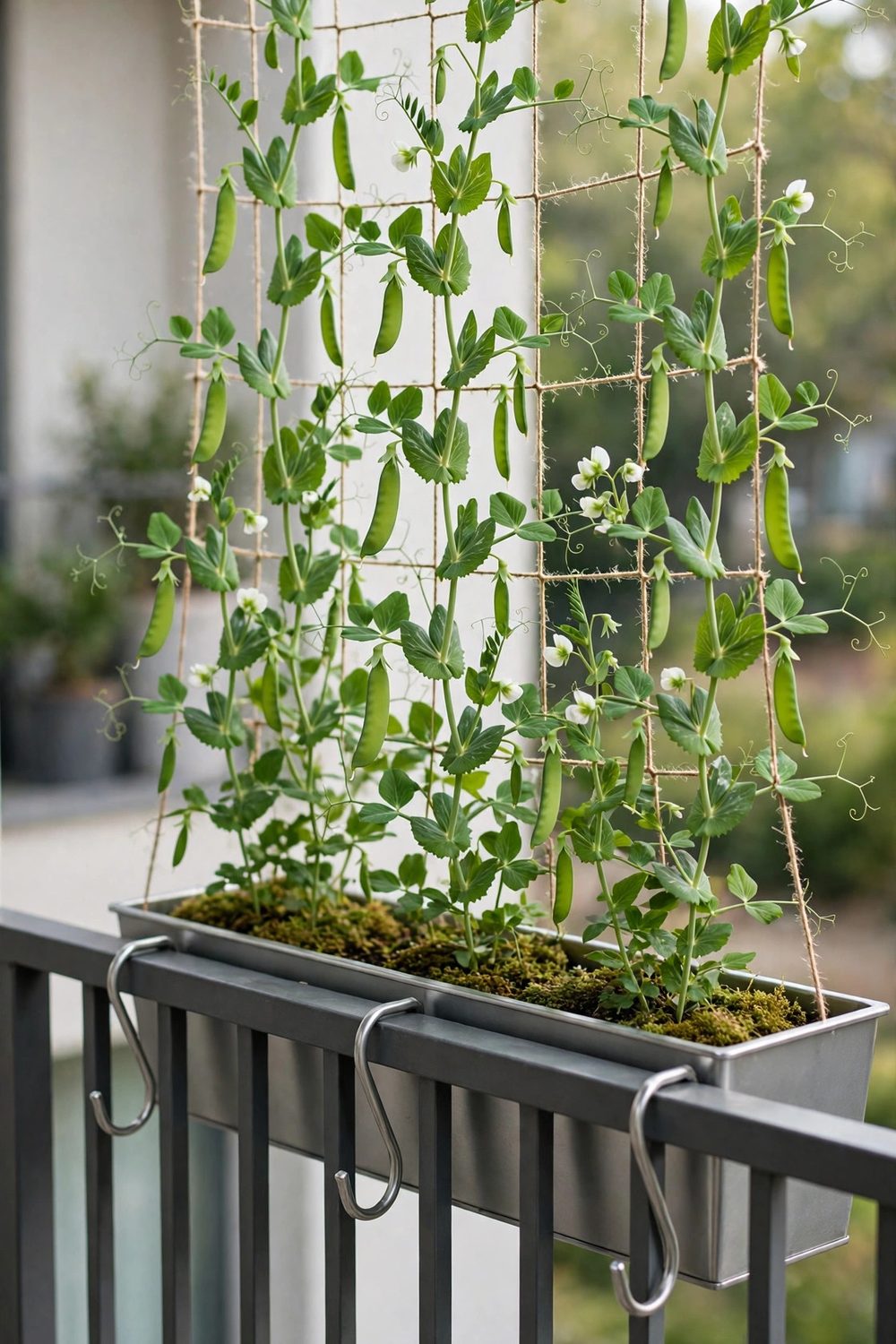
A long trough hangs safer on three hooks than on two, because the middle hook stops the box bowing under wet mix. Peas suit it, growing up, not out.
Use a trough at least 8 inches (20 cm) deep and tie netting to the rail behind it. Sow ‘Sugar Snap’ peas 1 inch (2.5 cm) deep and 2 inches (5 cm) apart.
Guide the first tendrils onto the net and the vines climb alone. Water at the base to keep mildew down in still air beside the rail.
Pick pods often to keep flowers coming. The crop itself stays light, because peas put their weight into vines the rail already carries as a screen. More on screens sits in our guide to a balcony garden privacy screen with climbing vegetables.
9. Corner Rail Box That Uses the Strongest Point
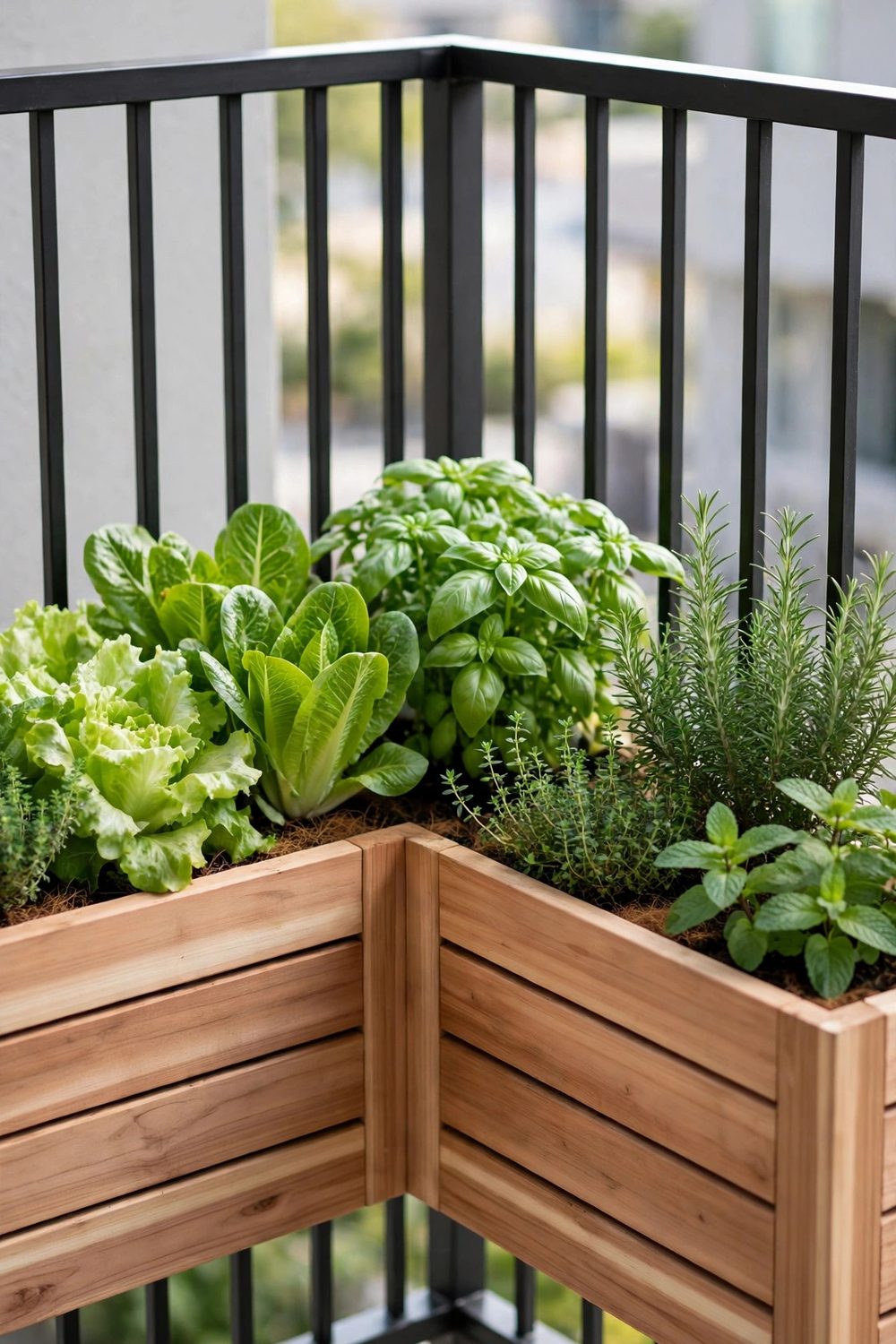
The corner where two rails meet is the stiffest part of most balconies. A corner box hangs from both rails at once and barely moves in wind.
Fit the corner brackets to both rails and check the box sits level before filling. A box tipped to one side waters unevenly and strains one fixing.
Plant it with chard or kale, both upright and steady croppers. Set one ‘Lacinato’ kale or two chard plants and pick outer leaves for months.
Corner boxes catch wind from two sides, so check the fixings after any stormy night. Thirty seconds with a spanner now beats a fallen box later.
10. Shallow Window-Style Box for Spring Onions
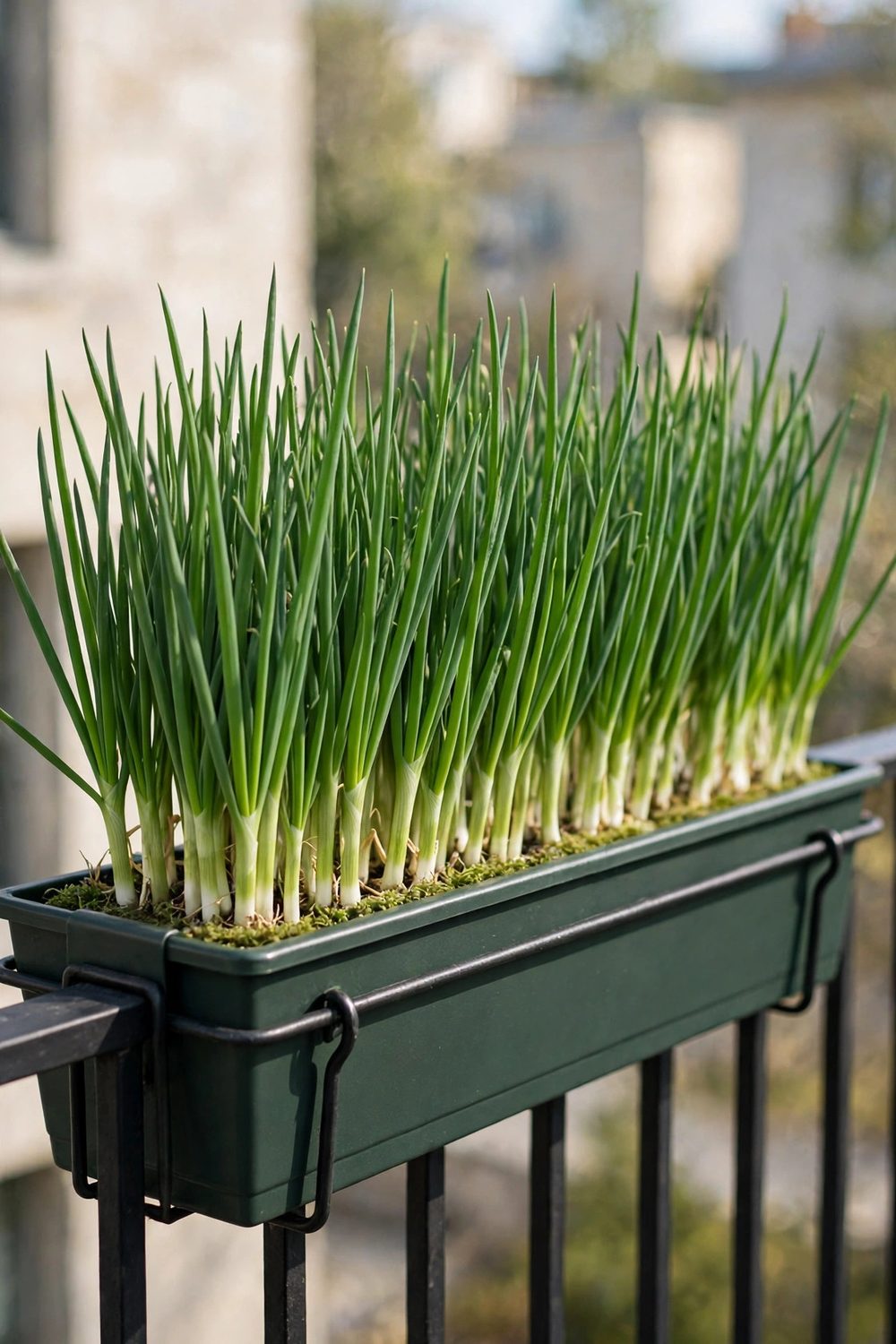
Not every rail box needs depth. Spring onions root shallowly, crop for months, and keep a shallow box light enough for older or thinner rails.
Choose a box at least 6 to 8 inches (15 to 20 cm) deep. Sow seed 1/4 inch (0.5 cm) deep in small clusters along the whole length.
Thin clumps to about 1 inch (2.5 cm) apart so the stems can thicken. Water when the top inch (2.5 cm) of mix dries out.
Harvest the largest stems first and the rest keep growing. A shallow box also lifts off easily for cleaning, which older fittings will thank you for.
11. Deep Rail Box for Short Carrots, With a Load Warning
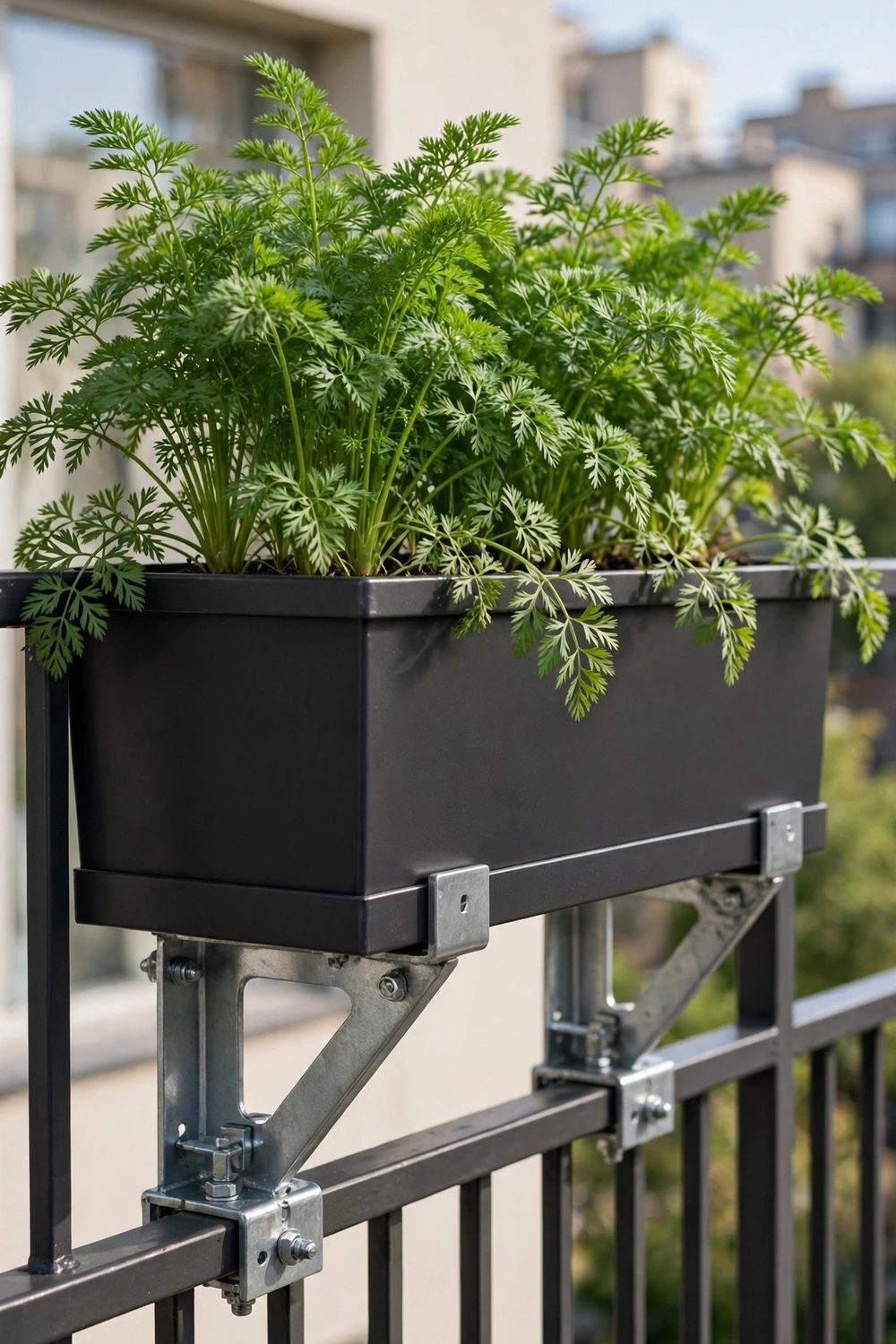
Carrots need 12 inches (30 cm) of depth, and a box that deep holds a lot of wet mix. This is the heaviest box on the list, so fit it with care.
Hang it low on the inside rail, on two wide hooks plus a strap, and fill it only once it is hanging. Never carry a full deep box across the balcony.
Sow short types such as ‘Little Finger’ thinly, 1/4 inch (0.5 cm) deep. Keep the surface damp until sprouts show, which can take 2 to 3 weeks.
Thin to 2 inches (5 cm) apart. If your rail flexes at all under the test load, move this crop to a floor pot instead. Floor-first guidance sits in our container vegetable garden on a railing step by step.
12. Twin Small Boxes Instead of One Long Heavy Box
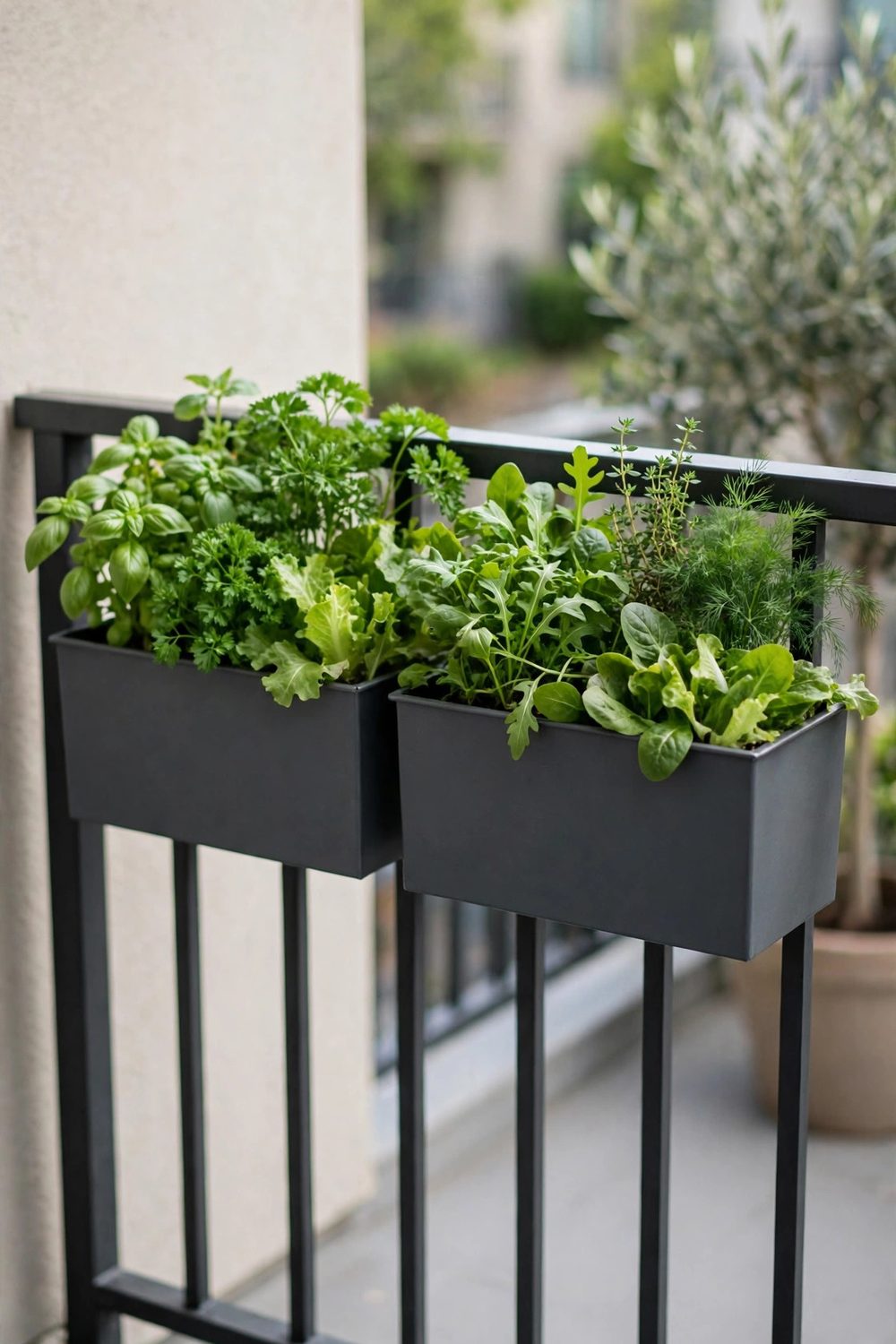
Two short boxes hold safer than one long one. Each carries half the load, each hangs on its own hooks, and one can come down without emptying the other.
Hang the pair with a small gap between them for air flow. Grow radishes in one and cut-and-come-again lettuce in the other for a salad rail.
Short boxes are also easier to lift down for a deep clean or a storm warning. Wet mix in a short box is a one-person lift, not a two-person strain.
Stagger the sowings by two weeks and one box is always cropping while the other restarts. The rail looks full, but no single fixing carries too much.
13. Rail Box With a Drip Tray That Protects the Floor Below
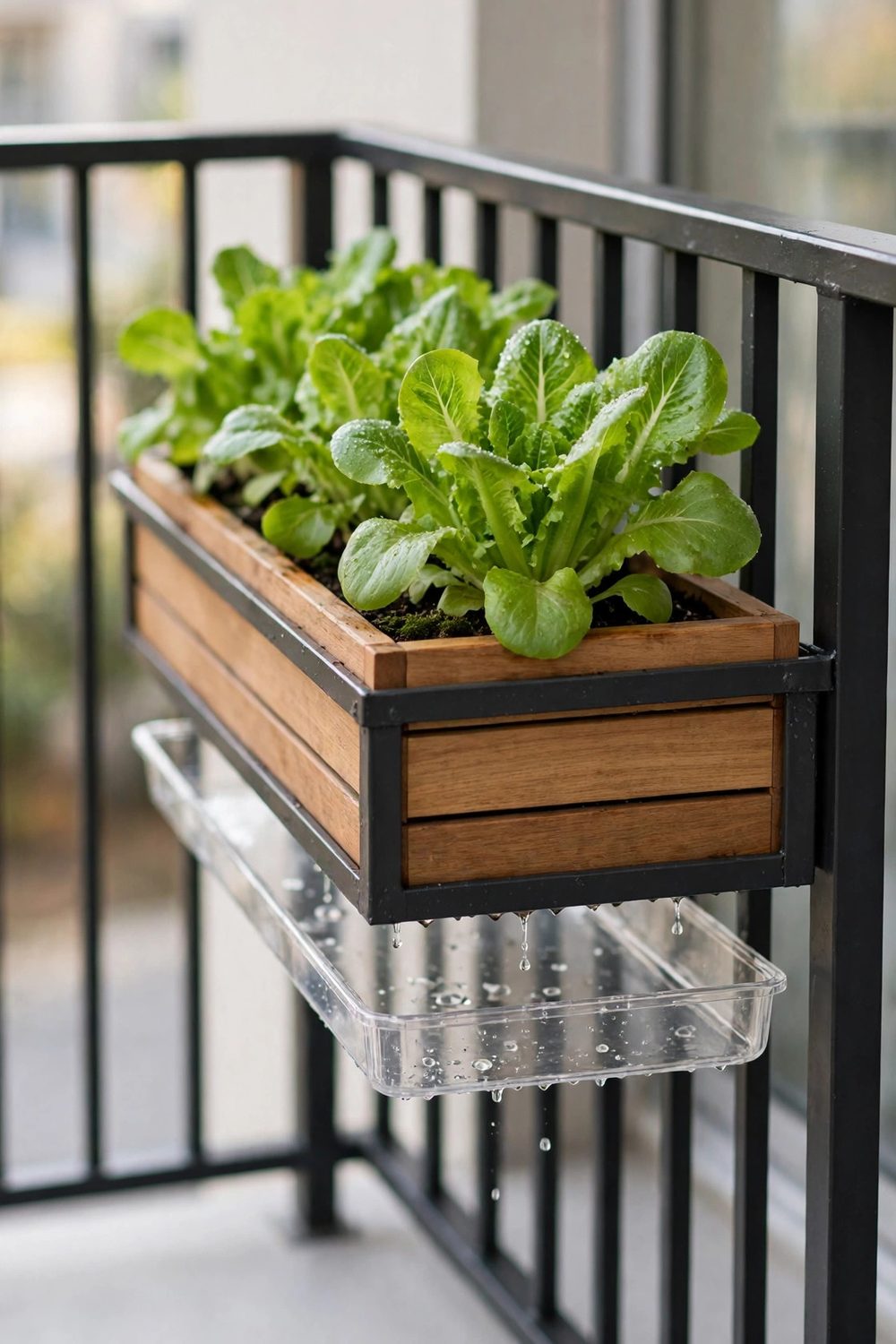
What holds also has to drain politely. A box with a fitted drip tray catches the runoff that would otherwise streak the balcony floor below yours.
Clip the tray on before you hang the box, and empty it after watering once the flow stops. Trays add a little weight, so count them in the load.
Grow basil or parsley in a tray box, both happy with steady moisture at the roots. Pinch basil tips weekly so it branches instead of flowering early.
Keeping runoff off the floor below is part of holding your lease, not just your planter. A dry tray check takes seconds on the morning round.
14. Floor Pot at the Rail Base for the Heavy Crops
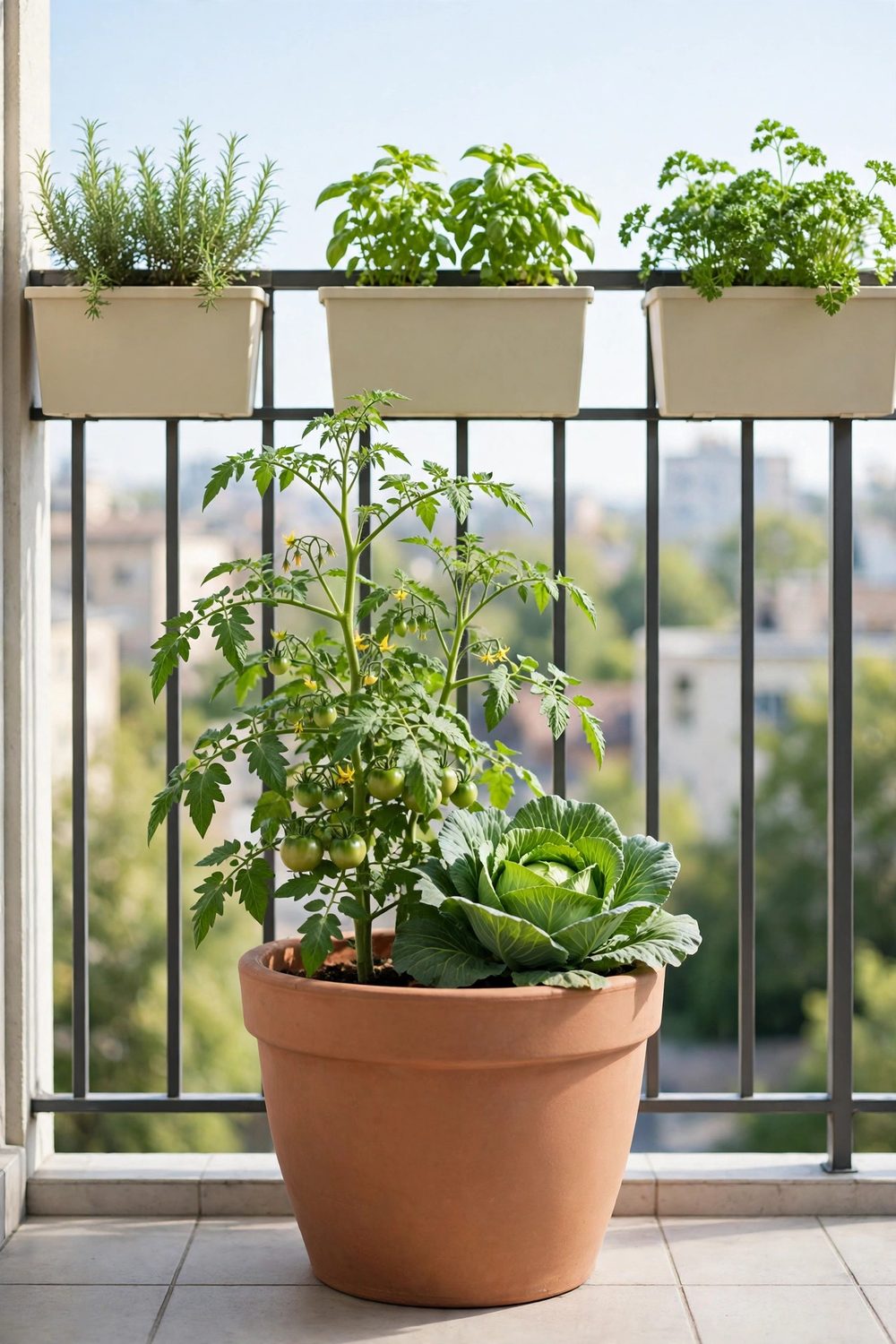
The honest answer for tomatoes and zucchini is that they do not belong on the rail at all. A floor pot at the rail base gives them the rail as a support instead.
Set a 5-gallon (about 19-liter) pot on the floor for one ‘Tiny Tim’ tomato, or a 10-gallon (about 38-liter) bag for one ‘Astia’ zucchini.
Tie the stems to the rail with soft ties as they grow. The rail carries the plant’s lean, while the floor carries the weight of mix, water, and fruit.
This split is the safest pattern on a small balcony: light crops hang, heavy crops stand. Saucers under the floor pots catch their runoff cleanly.
15. The Monthly Fixing Check That Keeps Every Box Safe
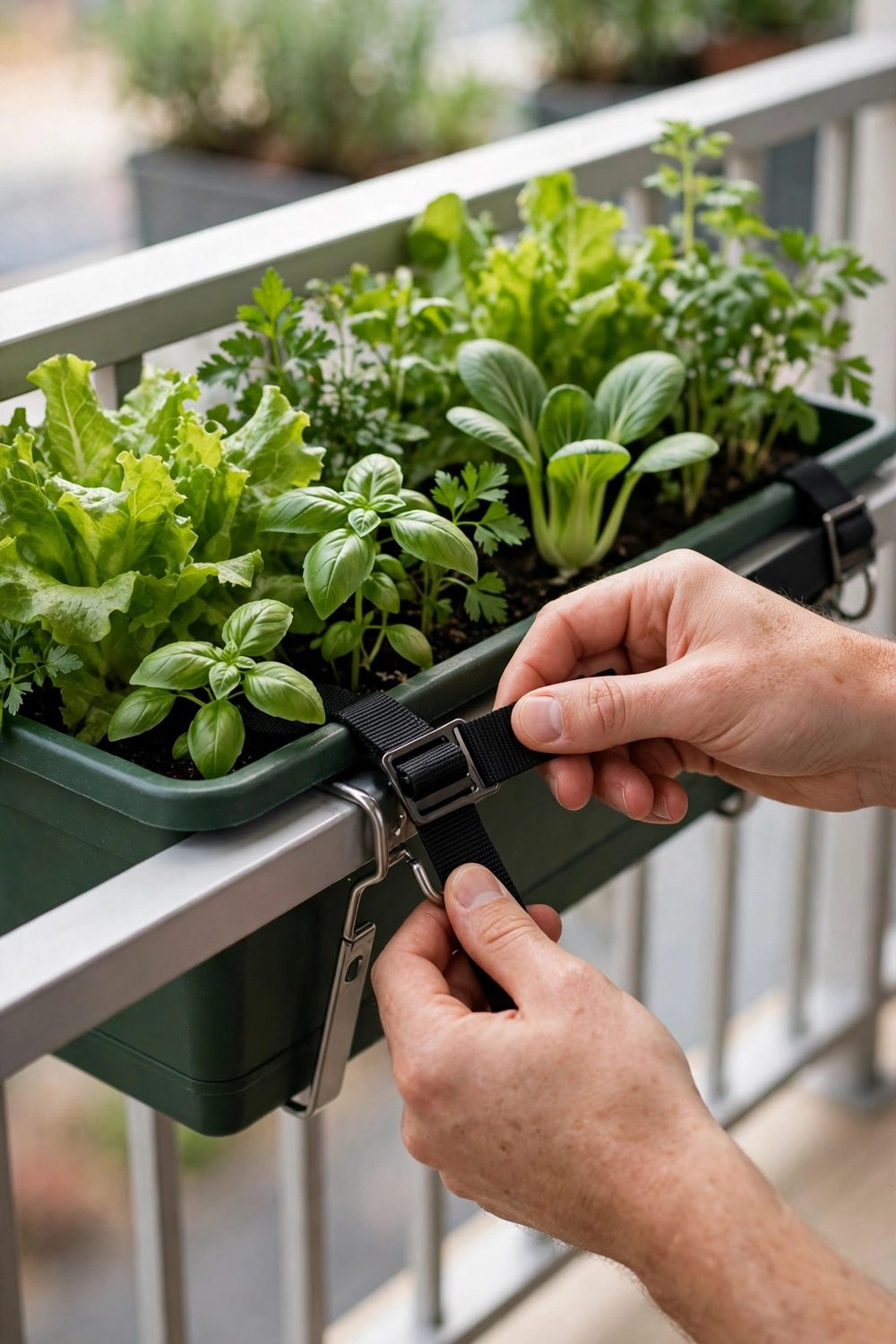
Every fixing on this list holds well on day one. What keeps a box safe in month three is a short monthly check, done before problems start.
Lift each box slightly to feel for hook movement, reseat any hook that has crept, and check straps for fraying and brackets for rust or cracks.
Check again after storms and after any week of heavy rain, because saturated mix is the peak load every fixing was chosen for.
Replace one worn part at a time and the rail never carries a weak link. More pot weight and size guidance sits in our notes on the best pots for growing vegetables on a balcony.
Start with one steel-hook box of lettuce and one floor pot at the rail base. That pairing shows you the whole system for very little risk.
Railing planters for vegetables what actually holds comes down to three habits: spread the load, hang inside the rail, and check the fixings monthly.
Save this list to your container garden board for later. Measure your rail first, and buy the box that fits it, not the other way round.


