

15 Balcony Vegetables to Grow in Grow Bags: Neat and Renter-Safe
Grow bags solve the two worries renters talk about most: weight on the floor and marks left behind. Fabric bags weigh little, fold flat when empty, and never crack or stain a slab the way heavy pots can.
A good balcony vegetable garden in grow bags neat and renter safe starts with the right bag size for each crop. Deep-rooted crops need depth, leafy crops need width, and every bag needs a saucer or tray under it.
Pick three bags from this list to start, matched to your sun and the food you eat most. You can add more bags as the season warms and your routine settles into place each week.
Every idea below names the crop, the bag size in gallons, inches and centimetres, and the sun it needs. Keep a small watering can by the door, check bags with a finger test, and even a tiny balcony stays tidy.
This post contains affiliate links. If you buy through them, we may earn a small commission at no extra cost to you. See our Affiliate Disclosure.
1. Grow a Determinate Tomato in a 10-Gallon Bag
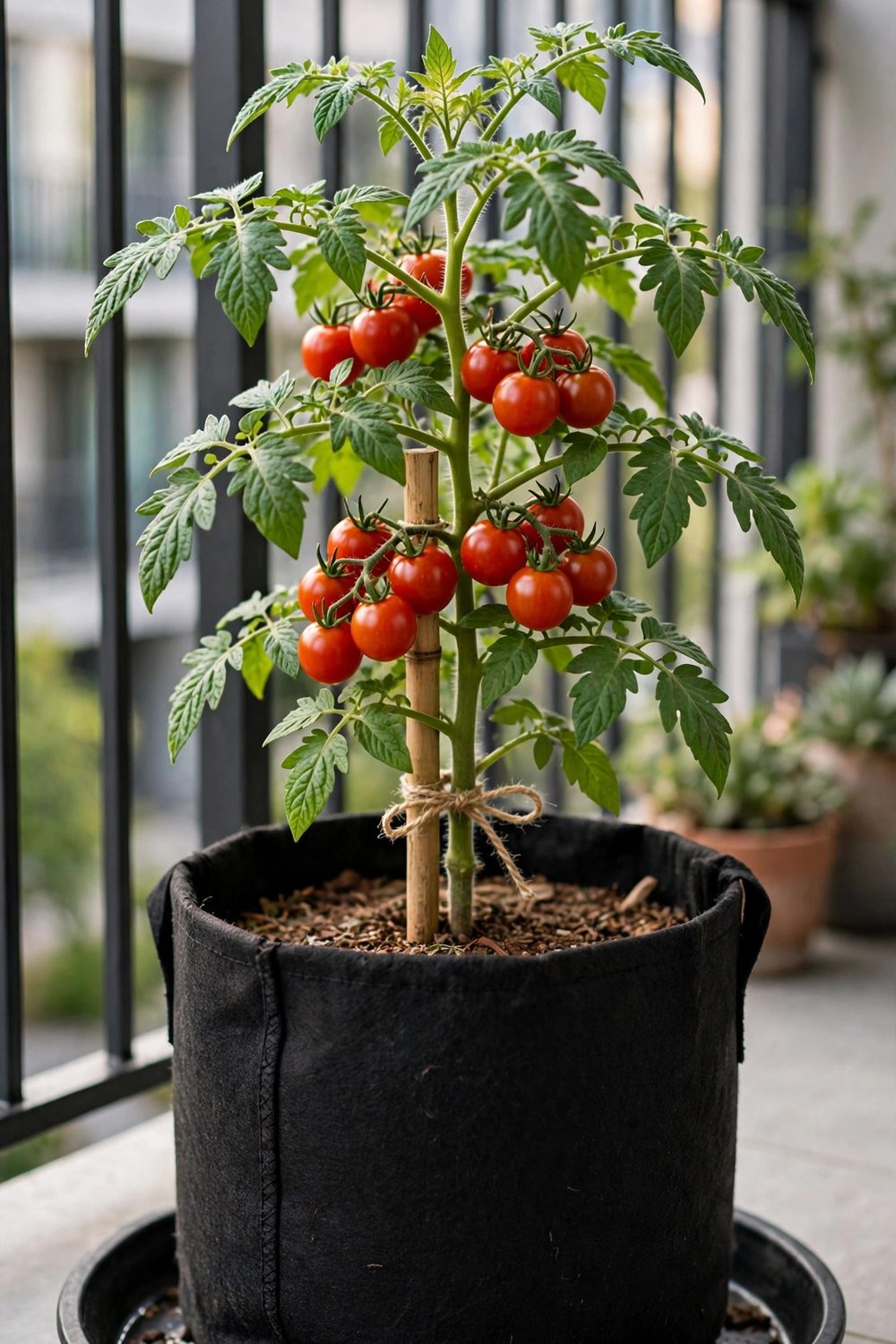
Start with one determinate tomato, because it stays compact and crops in one main flush. A 10-gallon (about 38-litre) bag gives the roots room without crowding a small rail.
Choose a patio type such as ‘Patio Choice’ and set the bag in 6 to 8 hours of sun. Push a short stake in at planting, before roots spread through the mix.
Water deeply when the top inch (2.5 cm) feels dry, and feed every two weeks once flowers open. On windy third-floor balconies, stand the bag in a deep saucer to slow drying.
Fabric sides let extra water drain away, so floors stay clean. Tuck the bag handles under once it is placed, and the whole setup looks neat from the street below.
2. Keep One Pepper Plant Per 7-Gallon Bag
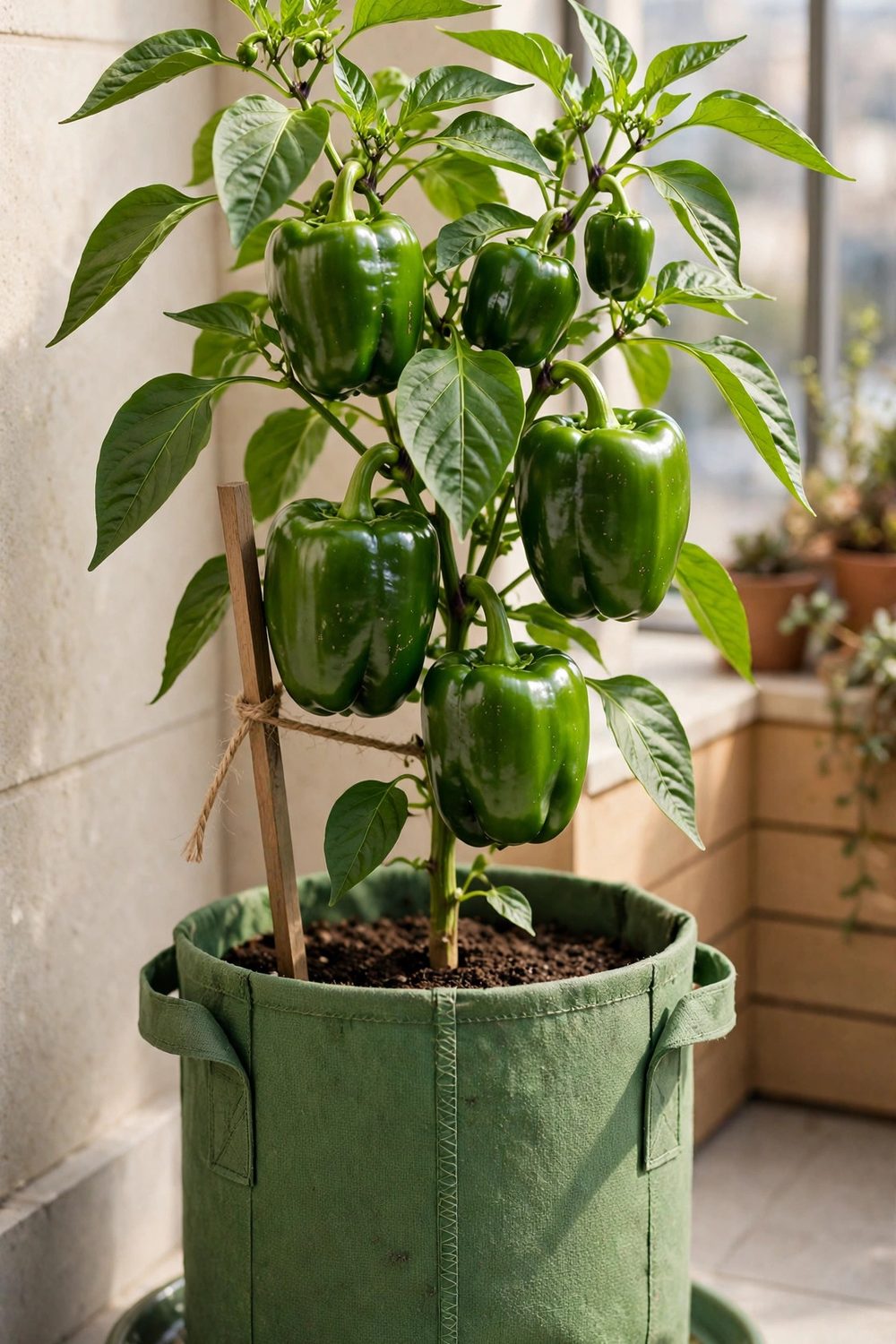
Two pepper plants in one bag compete for water and both sulk. Give a single plant its own 7-gallon (about 26-litre) bag and it fruits far better through summer.
Peppers want the hottest corner you have, with 6 to 8 hours of sun. A compact bell type or a chilli such as ‘Cayenne’ suits a balcony and ripens well in a bag.
Water evenly so the mix never swings from bone dry to soaked. Uneven watering can drop flowers and split fruit, so check the bag each morning in hot spells.
Set the bag on pot feet over a tray, and drips never reach the slab. That small habit keeps a rental floor clean and the deposit safe at move-out time.
3. Give Zucchini Its Own 10-Gallon Bag
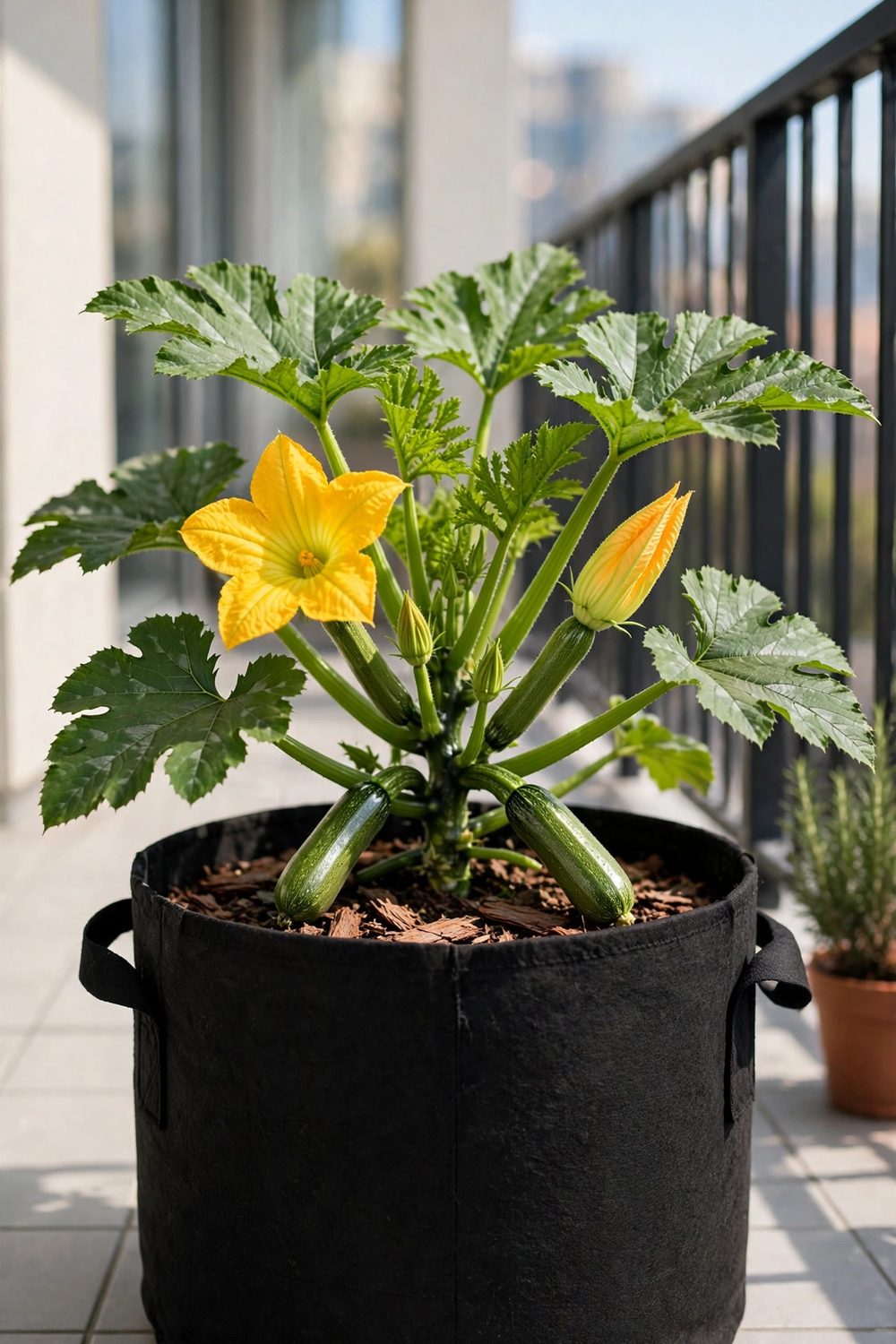
A zucchini plant looks small in spring and then spreads fast. Plant one ‘Astia’ zucchini (courgette) in a 10-gallon (about 38-litre) bag, and give it a sunny corner to itself.
Astia was bred for containers, so it stays more compact than garden types. It still needs 6 or more hours of sun and steady water once flowers start to open.
Feed weekly in midsummer, because a bag holds less food than a garden bed. Pick fruits at about 6 inches (15 cm) long, before they grow thick and seedy.
If few bees visit, move pollen with a soft brush on a calm morning. Male flowers sit on thin stems, while female flowers carry a small fruit behind the petals.
4. Train a Cucumber Up the Rail From a 7-Gallon Bag
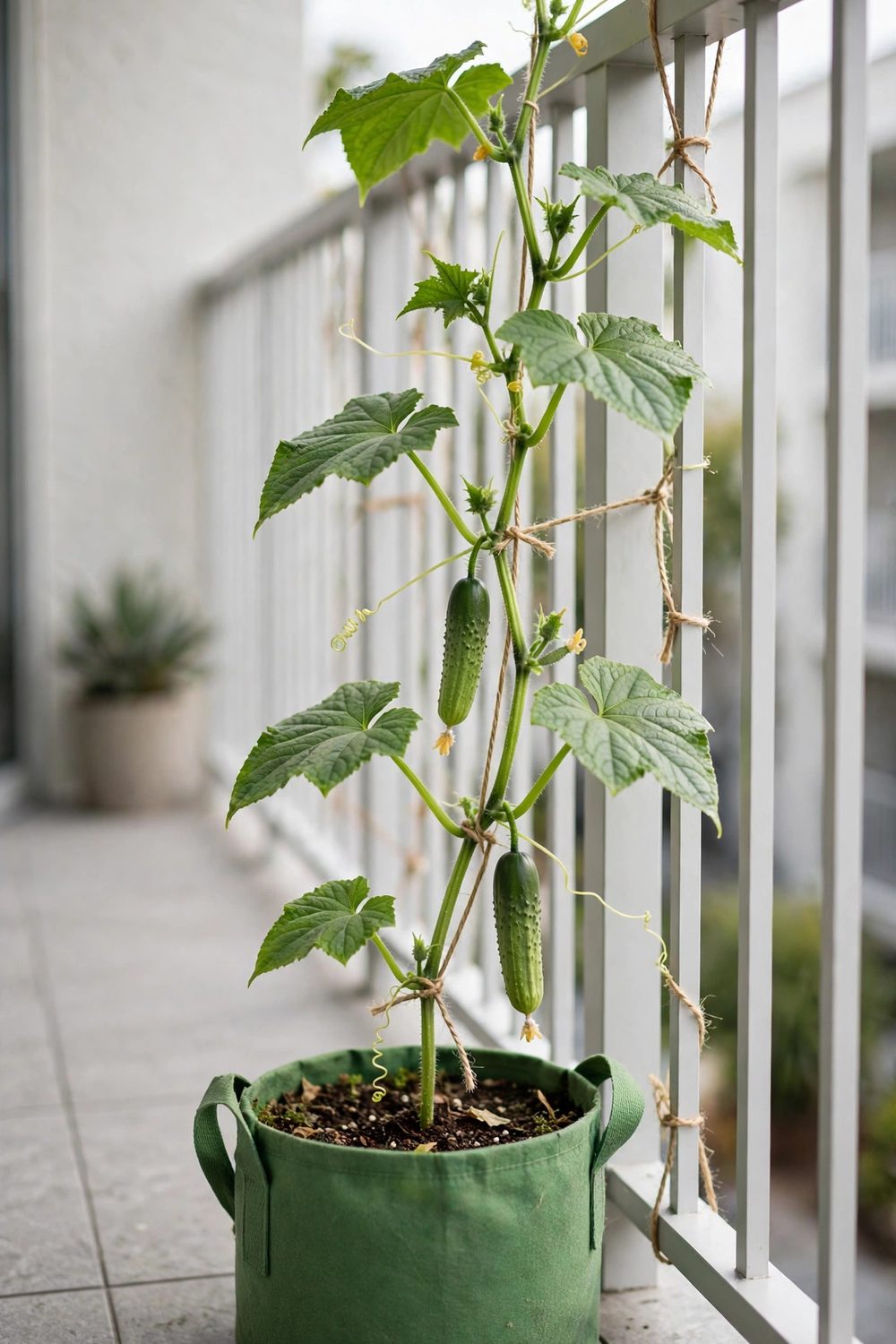
Floor space runs out fast, so let a cucumber climb. Plant one ‘Spacemaster’ cucumber in a 7-gallon (about 26-litre) bag at the base of the rail and tie stems upward.
Spacemaster grows shorter vines than standard types, which suits a balcony well. Tie soft twine loosely around main stems, and check the ties weekly as stems thicken.
Cucumbers are mostly water, so the mix should never dry out fully. Water deeply each morning in summer, and mulch the surface with straw to slow drying at noon.
Pick fruit at 6 to 8 inches (15 to 20 cm), young and often. Fruit left hiding under big leaves grows oversize fast, so look under the foliage twice a week.
5. Grow Potatoes in a Tall 10-Gallon Bag
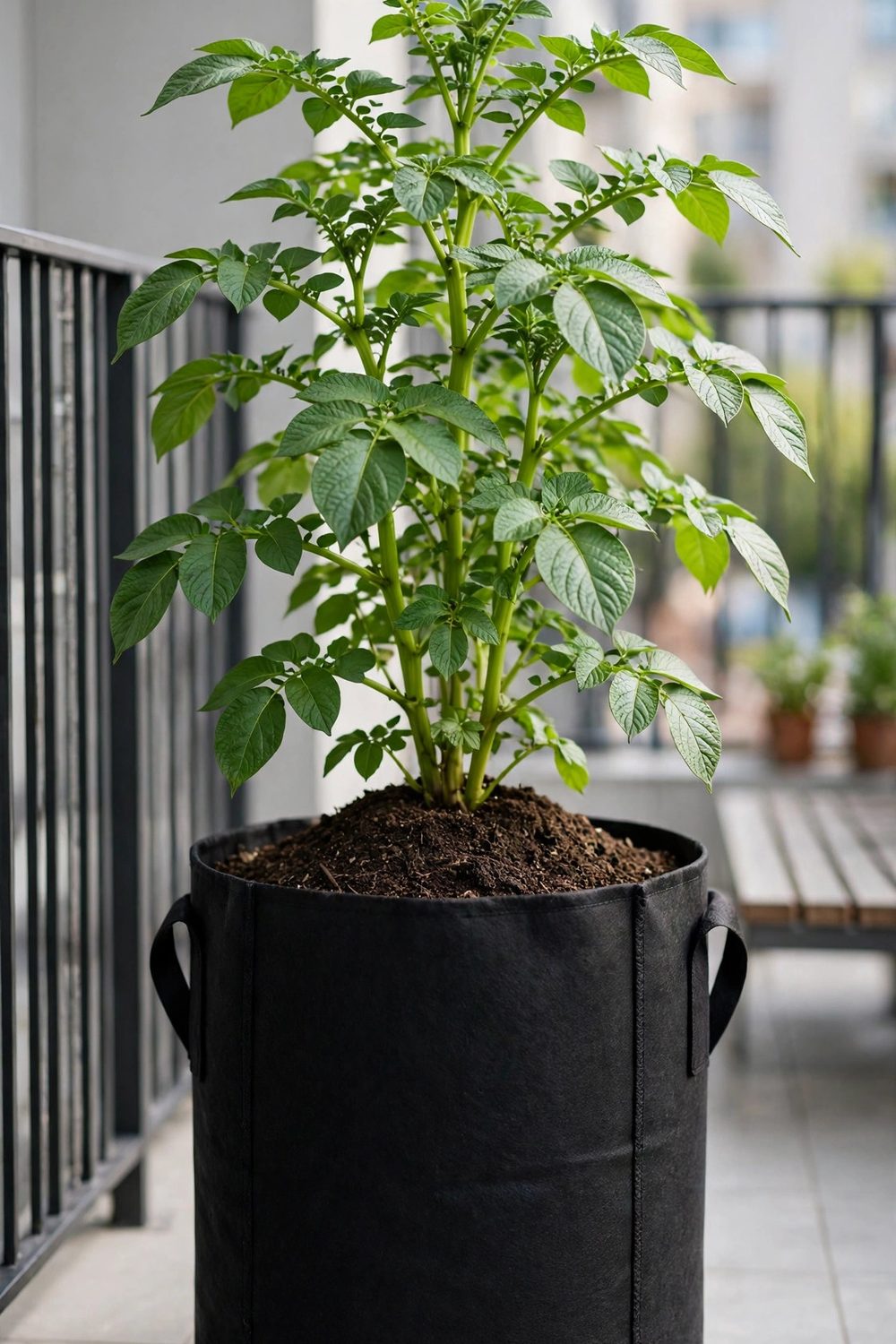
Potatoes suit bags better than pots, because you can earth up as stems grow. Start with a 10-gallon (about 38-litre) tall bag filled one third full of potting mix.
Set three or four seed potatoes on the mix and cover with 4 inches (10 cm) more. As stems reach 8 inches (20 cm) tall, add more mix around them.
Keep the bag in 6 hours of sun and water so the mix stays damp, not soggy. Roots and tubers rot in standing water, so empty any saucer after heavy rain.
Tip the whole bag onto a tray at harvest and sort tubers by hand. No digging, no fork damage, and no soil scattered across the balcony floor at all.
6. Sow Bush Beans in a 5-Gallon Bag
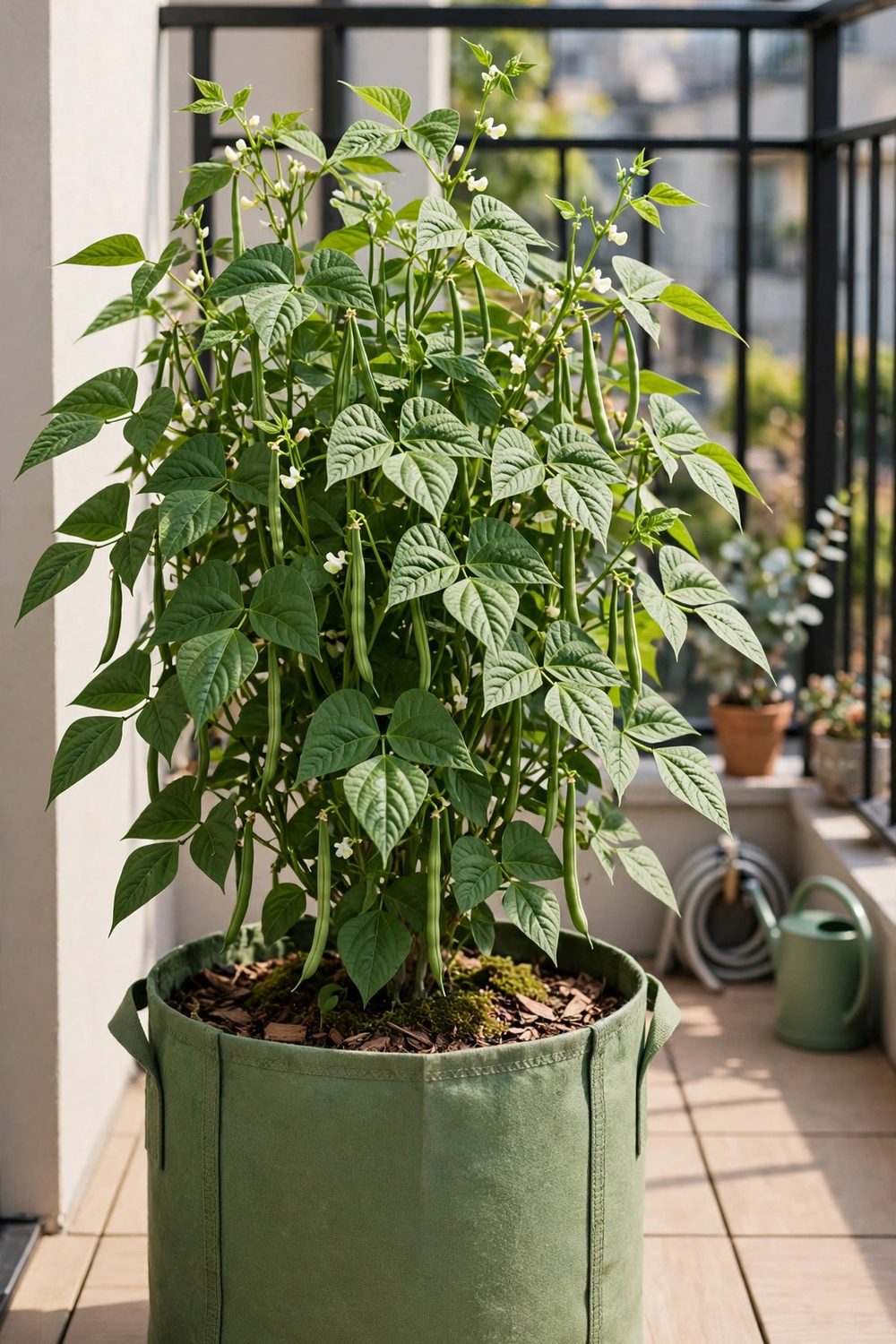
Bush beans stop at knee height and need no frame, which keeps a rental balcony tidy. Sow ‘Provider’ or ‘Contender’ in a 5-gallon (about 19-litre) bag after your last frost.
Sow seed 1 inch (2.5 cm) deep and 3 inches (8 cm) apart. Beans rot in cold mix, so wait for warm nights before sowing outdoors on the balcony.
Beans need little feeding in fresh potting mix, since their roots hold nitrogen. Steady water matters more, above all while flowers and young pods are forming in early summer.
Pick pods every two days once they start. Regular picking tells the plant to flower again, while pods left to fatten slow the whole plant down within a week. For more renter-first layouts, see our guide for renters who move every year.
7. Pick Kale Leaf by Leaf From a 5-Gallon Bag
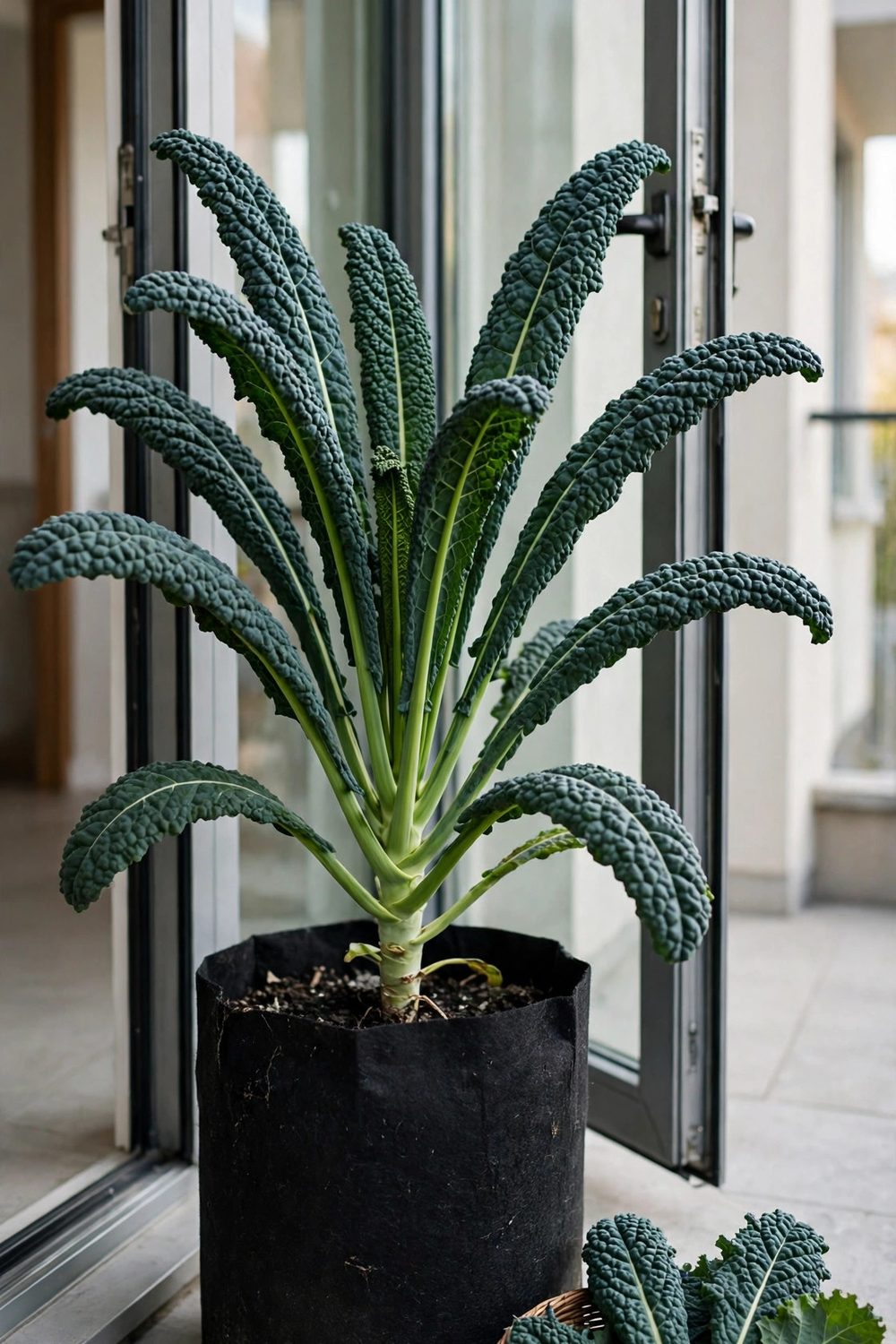
Fill a 5-gallon (about 19-litre) bag with mix and set one ‘Lacinato’ kale plant in the centre. Its upright leaves take little width, so the bag fits beside a door.
Kale accepts about 4 hours of sun, which helps on east-facing balconies. Water when the top inch (2.5 cm) dries, and feed every two weeks to keep new leaves coming.
Pick outer leaves and leave the centre crown alone, and one plant crops for months. Always leave five or six leaves on the plant so it can keep growing well.
Kale shrugs off cool nights and light frost. In mild-winter areas, roughly USDA zones 8 to 10, a healthy bag can crop right through the colder months of the year.
8. Fill a Wide 3-Gallon Bag With Loose-Leaf Lettuce
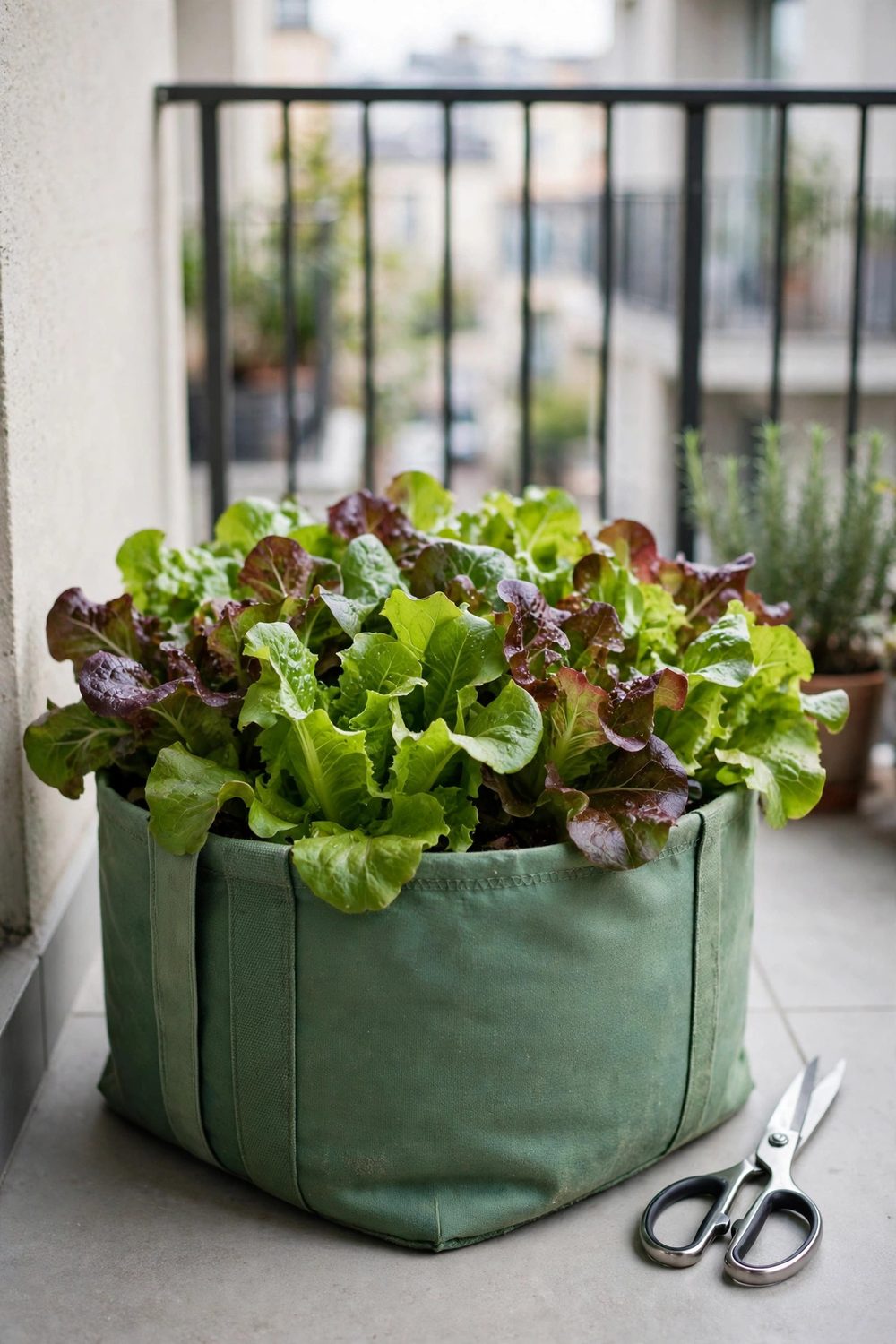
Lettuce roots stay shallow, so width matters more than depth here. Use a wide, low 3-gallon (about 11-litre) bag and scatter loose-leaf seed thinly over the surface.
Cover seed with a dusting of mix and mist daily until sprouts show. Lettuce grows well on 3 to 4 hours of sun, so it suits a balcony that shades early.
Snip outer leaves with scissors and the centre keeps producing new growth. Sow a second small bag two weeks later, and picking never has to pause for long.
Move salad bags to morning sun only in high summer. Heat turns leaves bitter and pushes plants to seed, while a little midday shade buys weeks of extra picking. Our notes on grow bags vs pots for vegetables explain fabric sizes in more detail.
9. Grow Short Carrots in a Deep 7-Gallon Bag
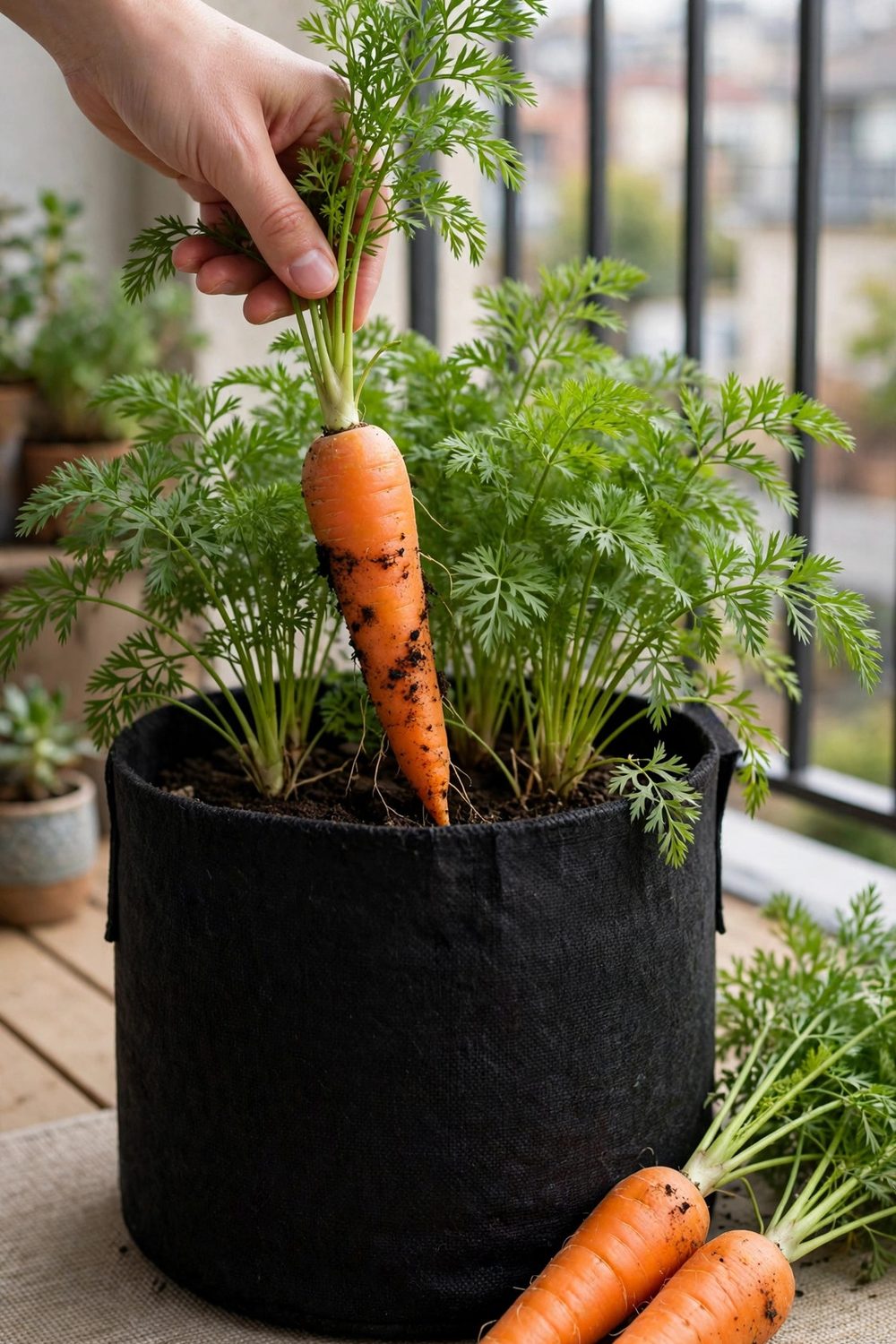
Carrots fork when roots hit stones or hard lumps. A bag of loose, stone-free mix removes that problem, because you control every inch the root grows through from sowing.
Choose short types such as ‘Little Finger’ or ‘Parisian Market’ for a 7-gallon (about 26-litre) deep bag. Sow seed 1/4 inch (0.5 cm) deep and scatter it thinly.
Keep the surface damp until seedlings show, which can take 2 to 3 weeks. A board laid over the bag holds moisture in and stops seed drying between waterings.
Thin seedlings to 2 inches (5 cm) apart so each root can swell. Crowded carrots stay pencil thin, however long you leave them sitting in the bag over summer.
10. Plant an Aubergine in a Warm 7-Gallon Bag
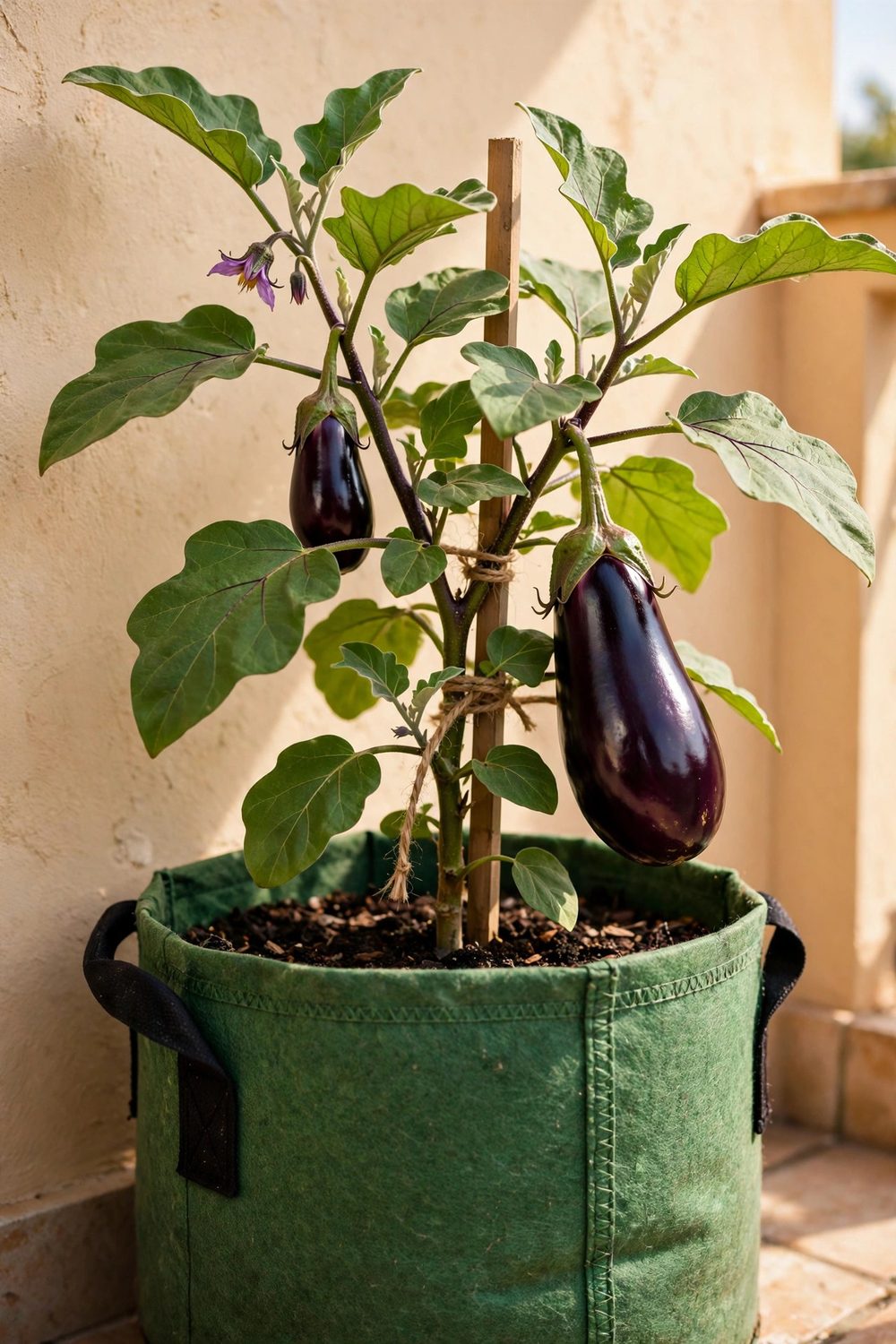
Aubergine (eggplant) loves heat and hates cold nights, so place its bag against a warm wall. One plant in a 7-gallon (about 26-litre) bag is enough for a small balcony.
Pick a compact type and give it 6 to 8 hours of sun. Reflected heat from bricks helps fruit set on cool evenings at the start of the season.
Water steadily and feed every two weeks once flowers open. Push a stake in early, because branches carrying fruit bend and snap in gusts on open upper floors.
Pick fruit while the skin still shines. Dull skin means seeds inside have hardened, and the flesh turns bitter, so check the plant twice a week in warm weather.
11. Cut Swiss Chard From a 5-Gallon Bag All Season
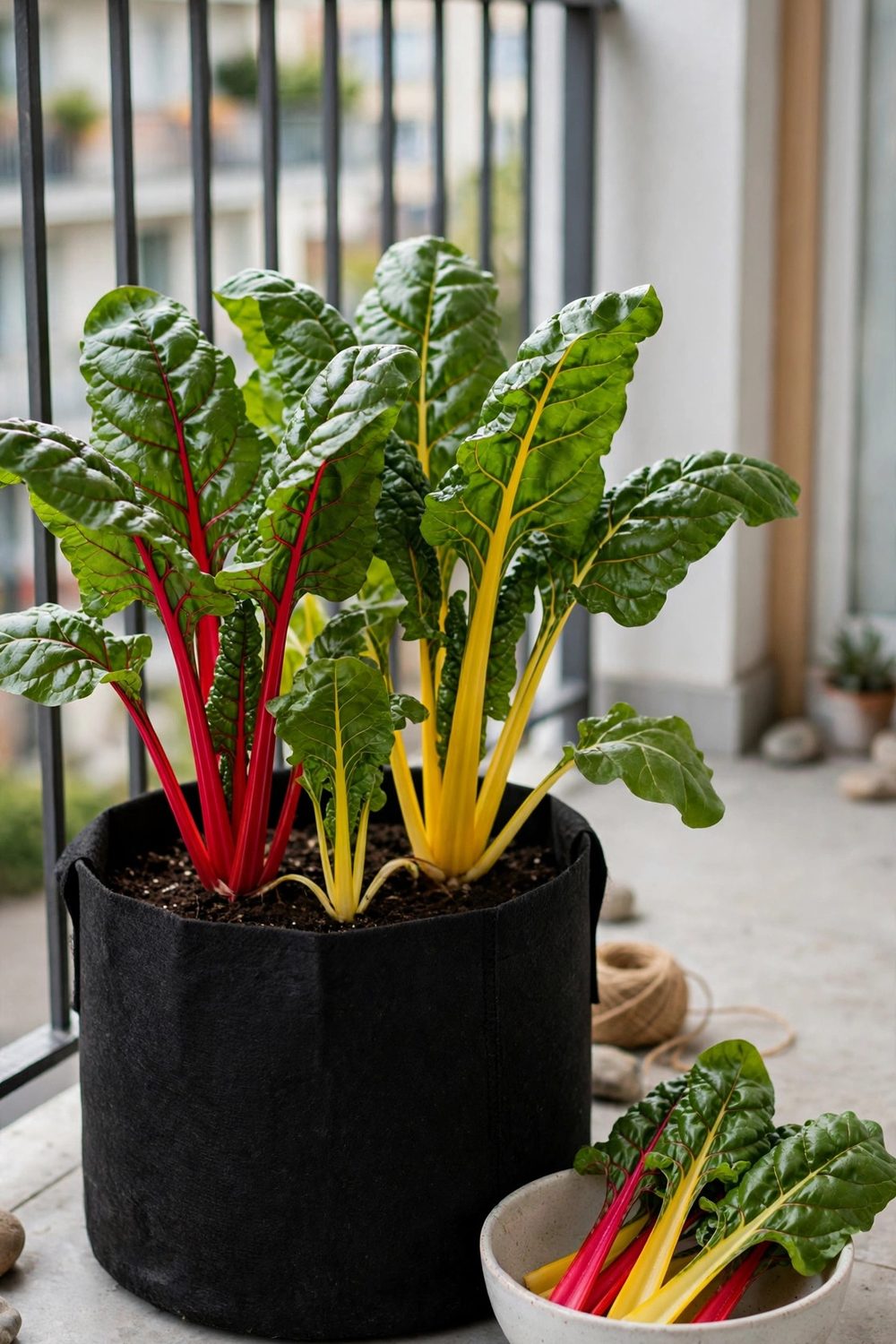
Swiss chard earns its bag because you cut it again and again. Set two or three plants in a 5-gallon (about 19-litre) bag, spaced about 6 inches (15 cm) apart.
Chard grows on 4 to 6 hours of sun and copes with light shade. Water when the top inch (2.5 cm) dries, and feed monthly to keep stems thick and leaves large.
Cut outer stems at the base and leave the centre to regrow. A bag picked this way gives greens from late spring until hard frosts stop growth in autumn.
Bright-stemmed types look good beside the door, where you pass daily. That daily glance helps too, because chard shows thirst early with a slight droop at midday.
12. Pull Radishes From a Shallow 3-Gallon Bag
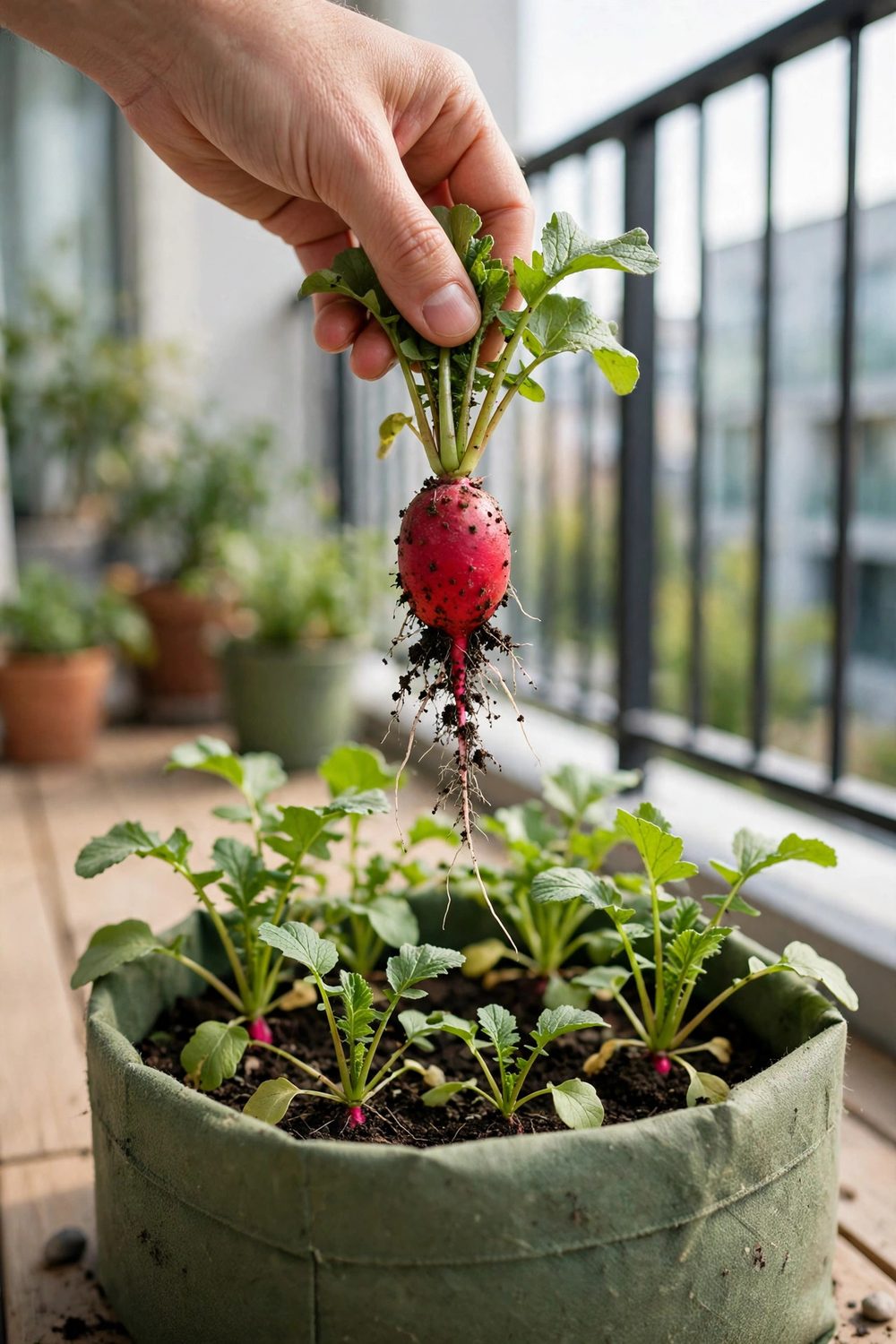
Radishes give the fastest harvest in this whole list. Sow them in a shallow 3-gallon (about 11-litre) bag at least 6 inches (15 cm) deep, filled with loose mix.
Sow seed 1/2 inch (1 cm) deep and 1 inch (2.5 cm) apart. Thin seedlings to 2 inches (5 cm) apart once they sprout, so each root has room to round out.
Keep the mix damp, never soggy, and pull roots as soon as they size up. Radishes left sitting in warm mix turn woody and hot, so pick promptly each time.
Sow a short row every two weeks from spring onward. Small, regular sowings beat one big sowing that all comes ready in the same week and then runs out.
13. Let Sugar Snap Peas Climb From a 5-Gallon Bag
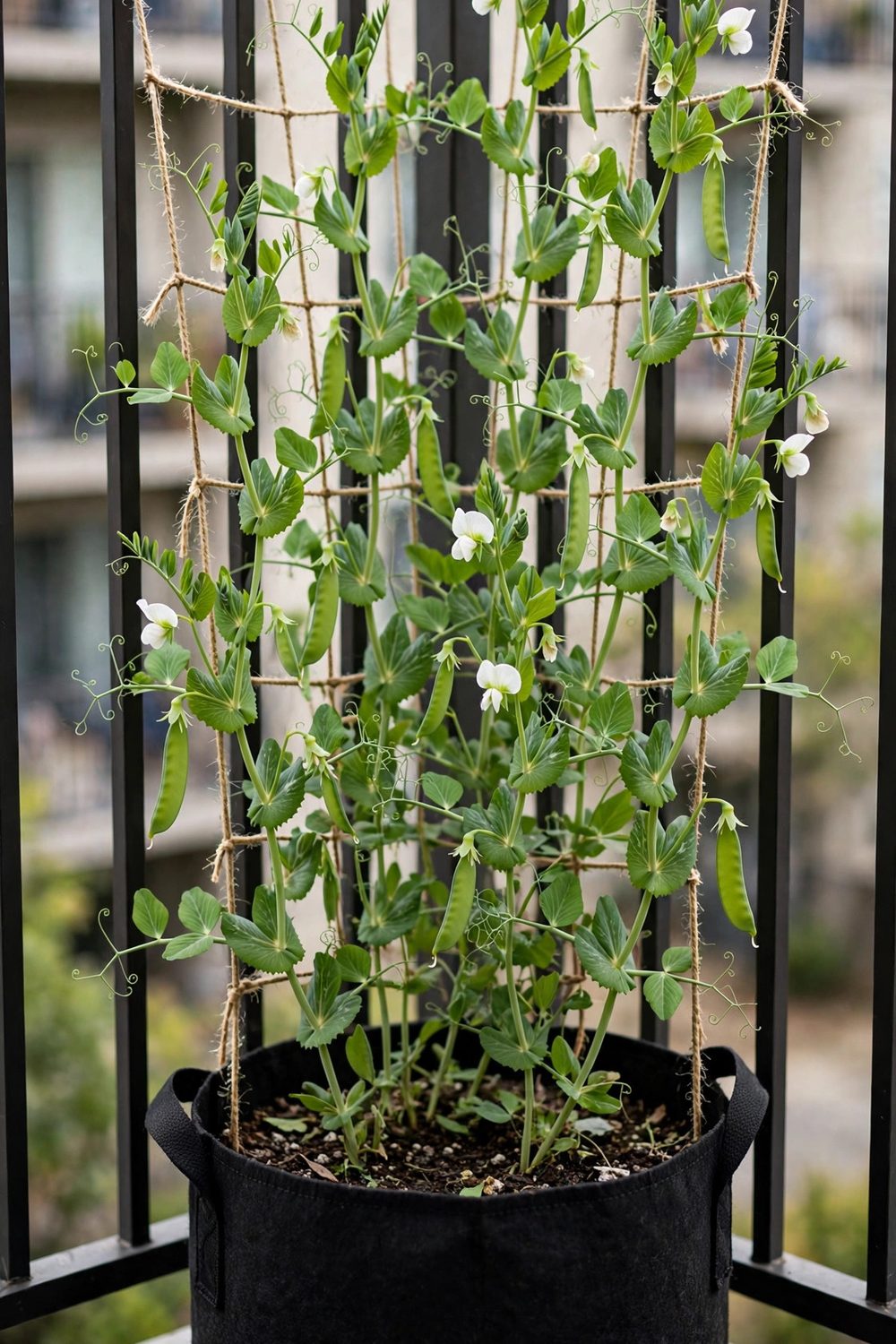
Peas like cool weather, so they start weeks before tomatoes can go out. Sow ‘Sugar Snap’ peas in a 5-gallon (about 19-litre) bag set against the rail in early spring.
Sow seed 1 inch (2.5 cm) deep and 2 inches (5 cm) apart. Tie a square of netting to the rail behind the bag before the first tendrils appear outdoors.
Guide early tendrils onto the net, and plants climb alone after that. Water at the base, not over leaves, to keep mildew down in still balcony air.
Pick pods often to keep flowers coming, and eat a few at the rail. Once heat arrives, clear the bag and reuse it for beans in the same spot.
If you are weighing bags against rigid pots, our guide to the best pots for growing vegetables on a balcony gives a fair comparison.
14. Grow Beetroot in a 5-Gallon Bag for Roots and Leaves
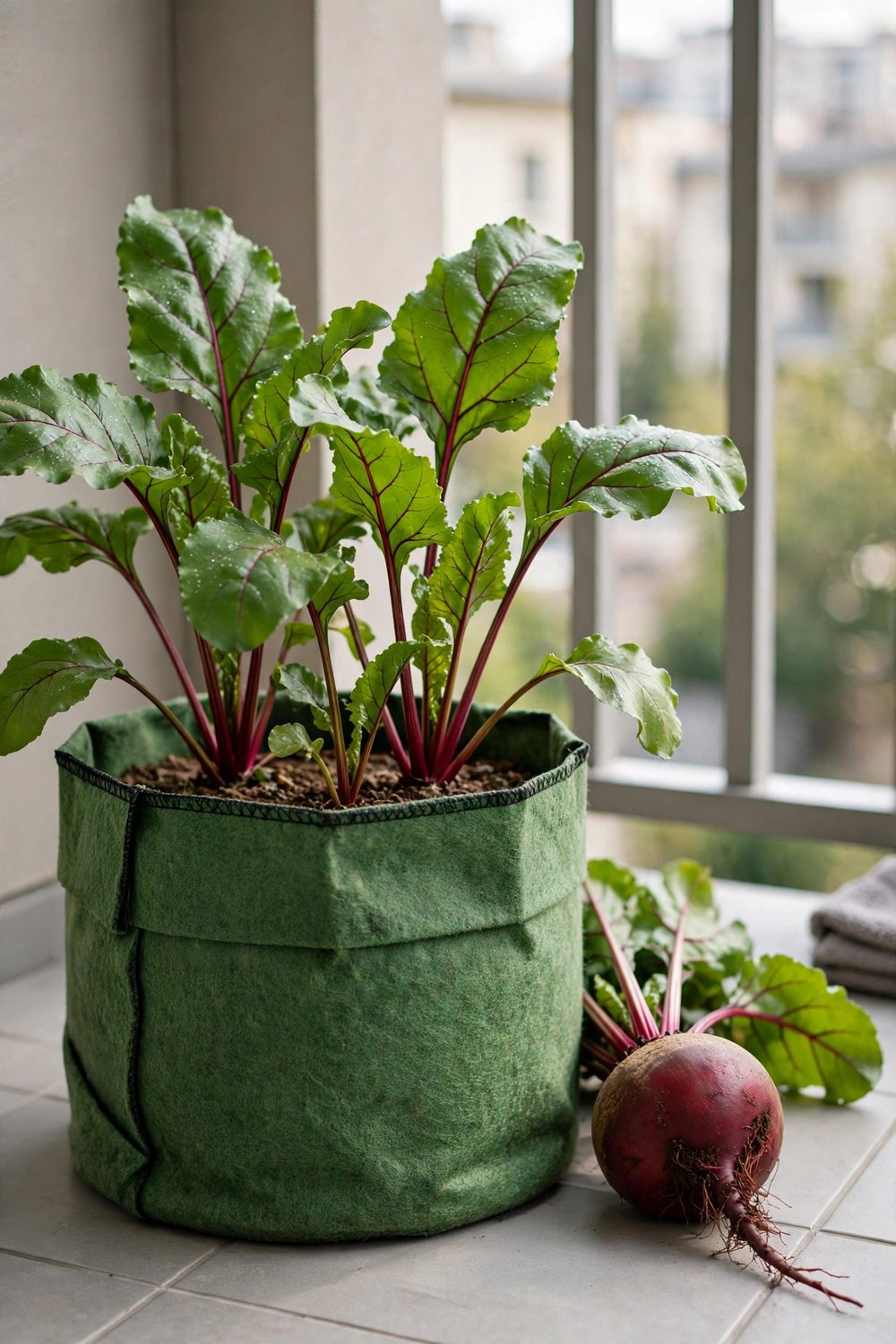
Beetroot gives two harvests from one bag, roots below and leaves above. Sow in a 5-gallon (about 19-litre) bag at least 10 inches (25 cm) deep, in sun or light shade.
Sow seed 1/2 inch (1 cm) deep and 2 inches (5 cm) apart. Each seed cluster holds several seeds, so thin seedlings to one plant every 3 inches (8 cm).
Keep watering even, because dry spells make roots woody and split skins follow heavy rain after drought. A mulch layer over the mix helps hold moisture steady between rounds.
Pull roots at golf-ball size for the sweetest flavour, and cook young leaves like chard. Leave a few plants to grow larger if you prefer bigger roots for roasting.
15. Tuck Spring Onions Into a Narrow 3-Gallon Bag
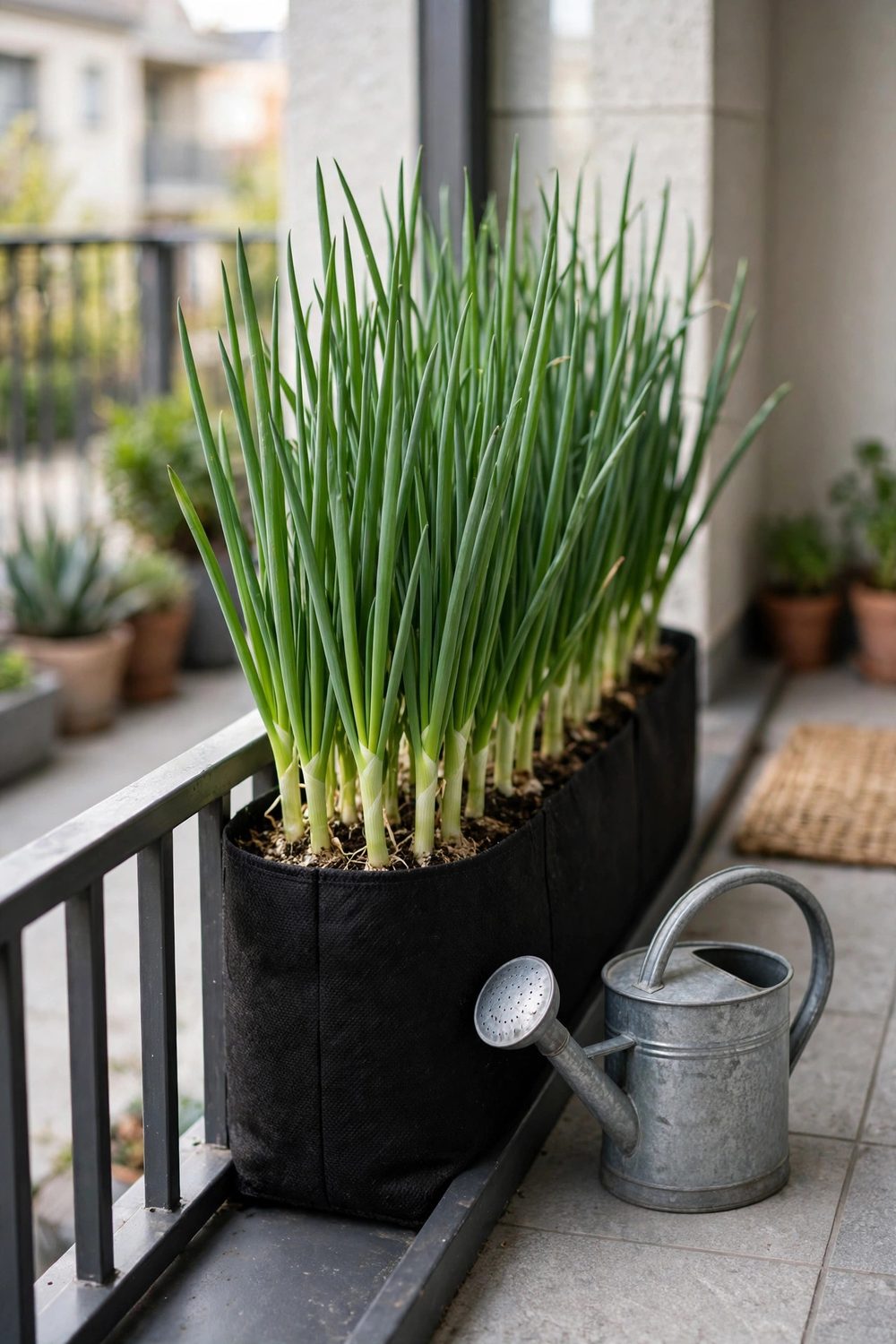
Spring onions ask for almost nothing and fit almost anywhere. Sow them thickly in a narrow 3-gallon (about 11-litre) bag along the rail, even in a gap between larger bags.
Sow seed 1/4 inch (0.5 cm) deep and water gently, because fine seed washes out under a heavy pour. A can with a rose head, filled at the kitchen sink, works best.
Onions grow on 4 to 6 hours of sun and need little feeding. Pull stems once they reach pencil thickness, and the rest keep sizing up in the same bag.
Resow a pinch every three weeks for a steady supply. At moving time, the whole bag lifts into a crate in seconds, which suits a no drill, no damage balcony garden well.
Fifteen crops is plenty, so start with three bags that match your light and your meals. A tomato, a salad bag, and one fast crop such as radishes will teach you the whole watering routine.
That steady routine is what keeps a balcony vegetable garden in grow bags neat and renter safe, productive, and kind to a rental floor.
Empty saucers after rain, fold spare bags flat in a crate, and the balcony stays clear for chairs and morning coffee too.
Save this list to your container garden board for later, and add one bag at a time as space and sun allow.


