

15 Balcony Vegetable Garden Ideas for Renters: No Drill, No Damage
A rental balcony can grow real food without a single screw hole. Every planter in this list hooks, leans, stands, or sits. Nothing bolts to the wall, nothing clamps through the rail, and everything lifts off at move-out.
This is a balcony vegetable garden for renters no drill no damage plan, built for deposit safety first. Each idea names the crop, the pot or holder, and how it stays put with no fixings at all. Wind checks are part of each setup.
Read your lease before you buy. Most leases ban screws and wall fixings, not freestanding pots. Keep total weight in mind, keep drainage off the floor, and keep plants inside the rail line at all times.
Start with two or three holders on the sunniest side. Add more once you know your wind pattern. A third-floor rail in full wind needs heavier, lower pots than a sheltered first-floor corner.
This post contains affiliate links. If you buy through them, we may earn a small commission at no extra cost to you. See our Affiliate Disclosure.
1. Hook Lettuce and Herbs Over the Rail, No Screws
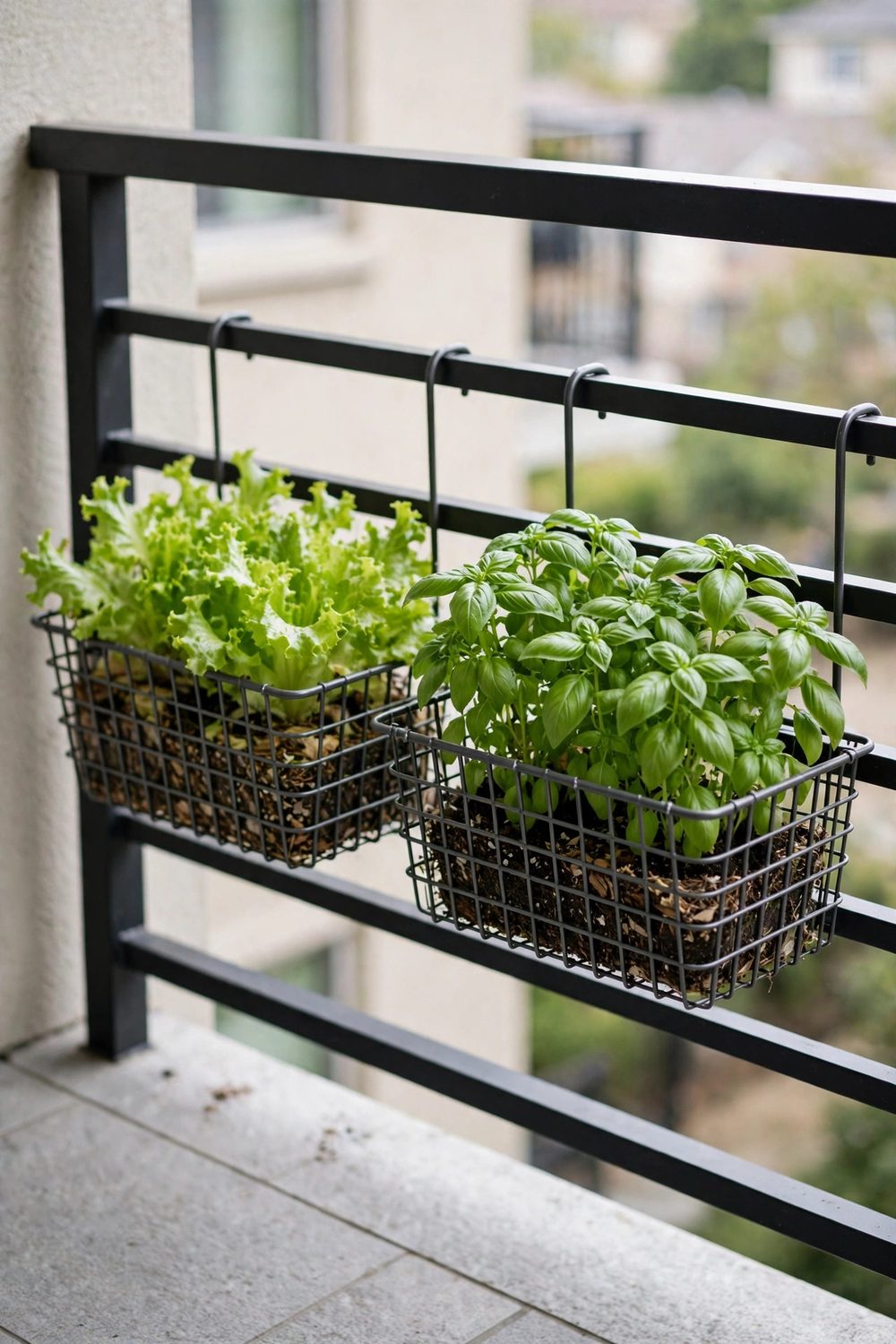
Over-rail baskets hang from their own curved hooks. The hook drops over the rail, the basket rests against it, and gravity does the holding. No screws, no clamps, and no marks when you lift it off.
Choose baskets at least 8 inches, 20 cm, deep. Hang them on the inside of the rail so fruit and leaves stay on your side. Line the basket so mix does not wash out during watering.
Grow loose-leaf lettuce, basil, and chives in this spot. Each plant needs about 8 inches, 20 cm, of length. Three to four hours of sun keeps greens happy here.
Our step guide to a container vegetable garden on a railing shows hook sizes and spacing in detail. Check hooks after every storm in the first month.
2. Set Grow Bags on Trays So the Floor Stays Clean
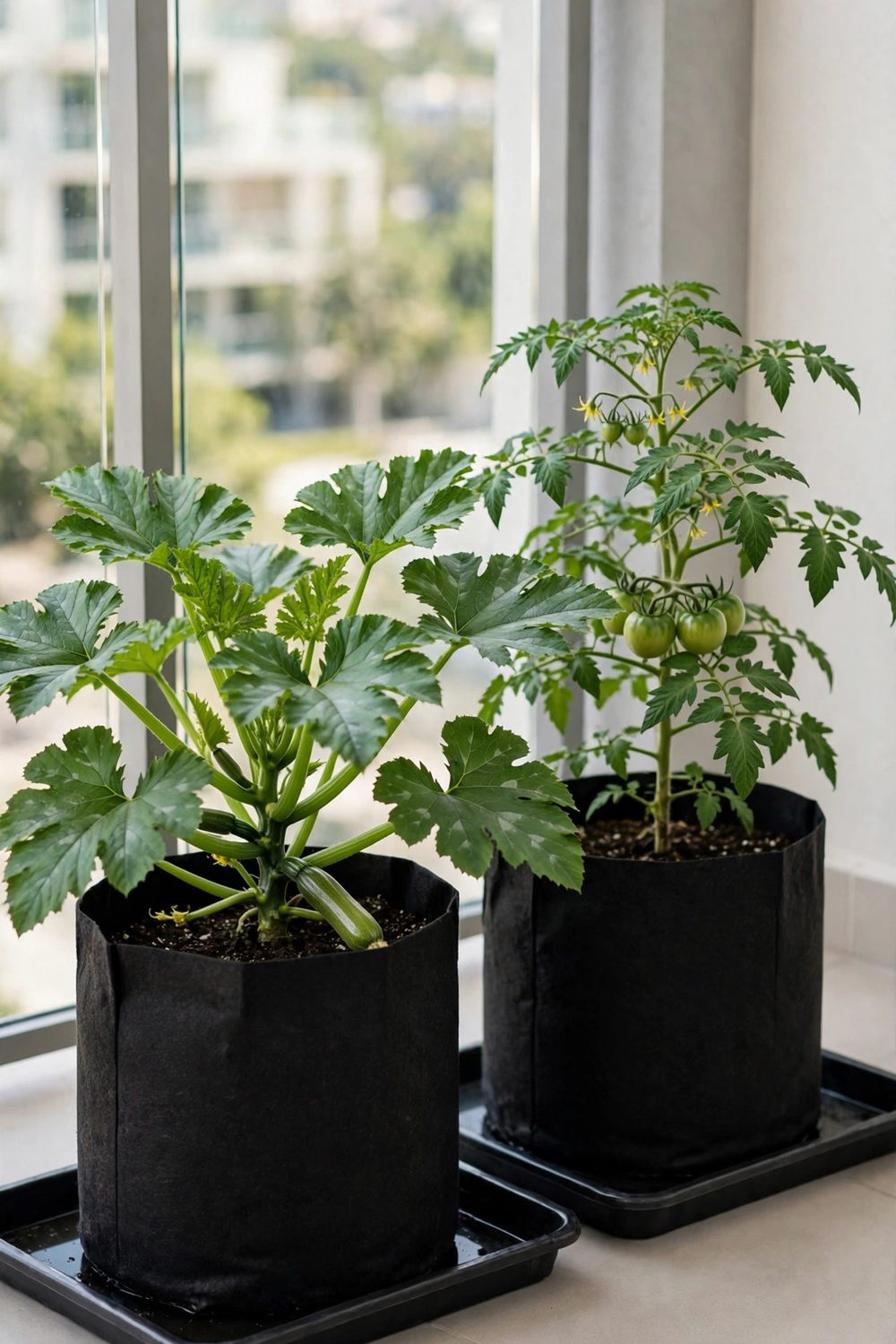
Fabric grow bags need no fixing at all. They sit flat, fold empty at move-out, and weigh far less than clay pots. Set each bag on a deep tray so drainage never touches the balcony floor.
A 10-gallon bag, about 38 liters, holds one zucchini or one cucumber. A 5-gallon bag, about 19 liters, holds one tomato or one pepper. Trays should be wider than the bag base.
Bags dry out faster than rigid pots, so check moisture daily in warm weather. Water slowly in two passes. The first pass wets the mix, the second pass soaks it through.
If you are torn between fabrics and rigid pots, our comparison of grow bags vs pots for vegetables lays out cost, weight, and watering side by side.
3. Lean a Ladder Shelf Against the Wall for Herbs
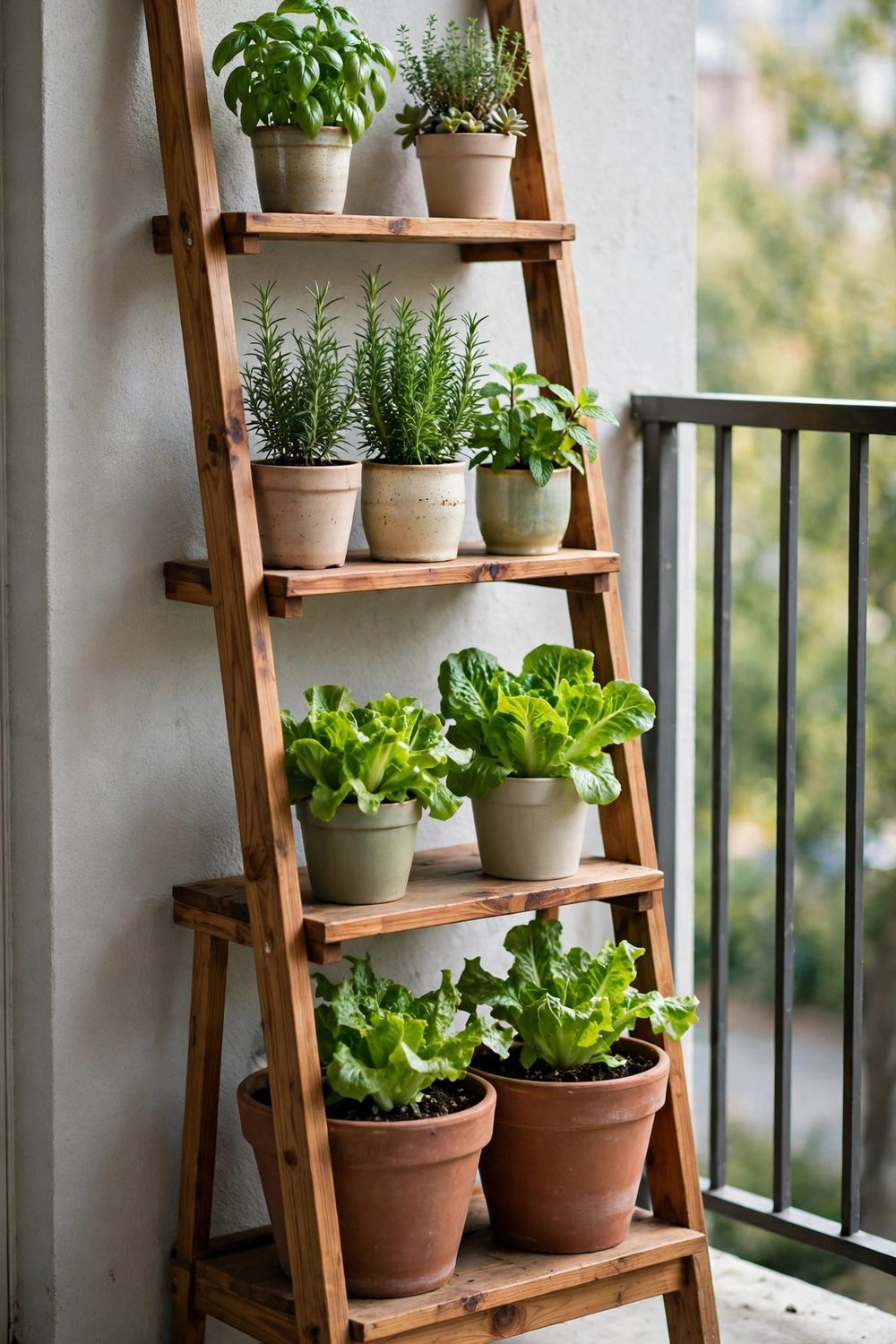
A ladder shelf leans. It does not attach. The top rests on the wall, the feet stand on the floor, and the angle holds it steady. At move-out you carry it inside in one trip.
Put heavy pots on the lowest shelf only. Herbs and lettuce in 10 to 12 inch pots, 25 to 30 cm, suit the upper shelves. Keep the total load well inside the rating on the label.
Stand the shelf where wind cannot catch it side-on. A corner is safest. Add a non-slip mat under the feet if your floor tiles are smooth and the shelf creeps when you water.
Saucers under every pot are non-negotiable here. Drips from the top shelf land on leaves below, then on the floor. A five-minute saucer check each week keeps the whole stack clean.
4. Push a Freestanding Trellis Into a Deep Pot
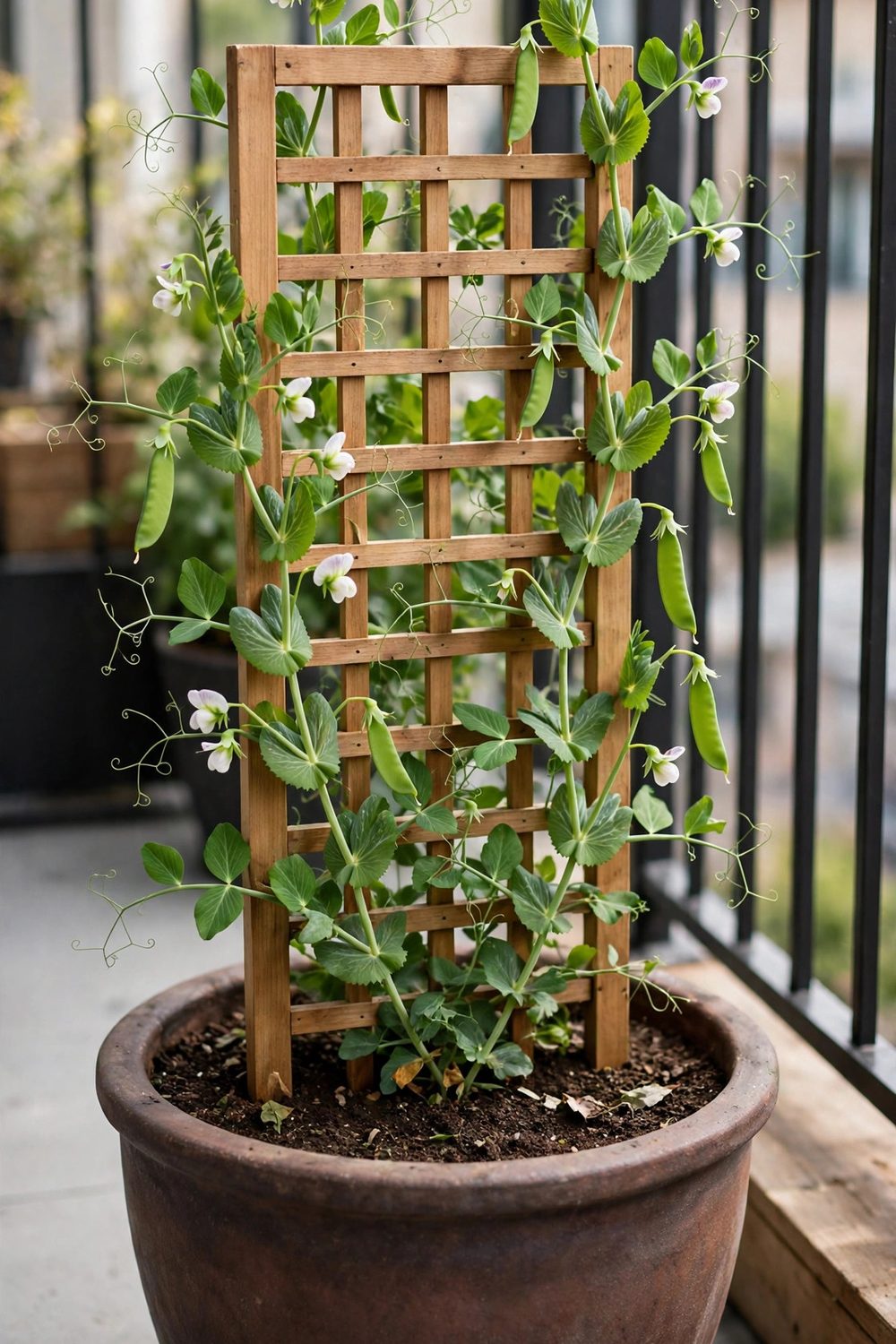
Climbers need support, but the support does not need the wall. Push a short trellis panel deep into a large pot and let the soil hold it. The pot weight anchors the whole frame.
Use a pot at least 12 inches, 30 cm, deep and wide for balance. Grow Sugar Snap peas in spring or a Spacemaster cucumber in summer. Tie stems loosely as they climb.
Keep the trellis under 4 feet, about 1.2 m, tall on an exposed balcony. Tall frames act like sails in a gust. Lower frames in heavy pots ride out most summer storms without moving.
Set the pot against the rail for extra shelter. Our ideas for a balcony vegetable garden in grow bags pair well with this setup when floor space is tight.
5. Roll Peppers on a Low Plant Caddy
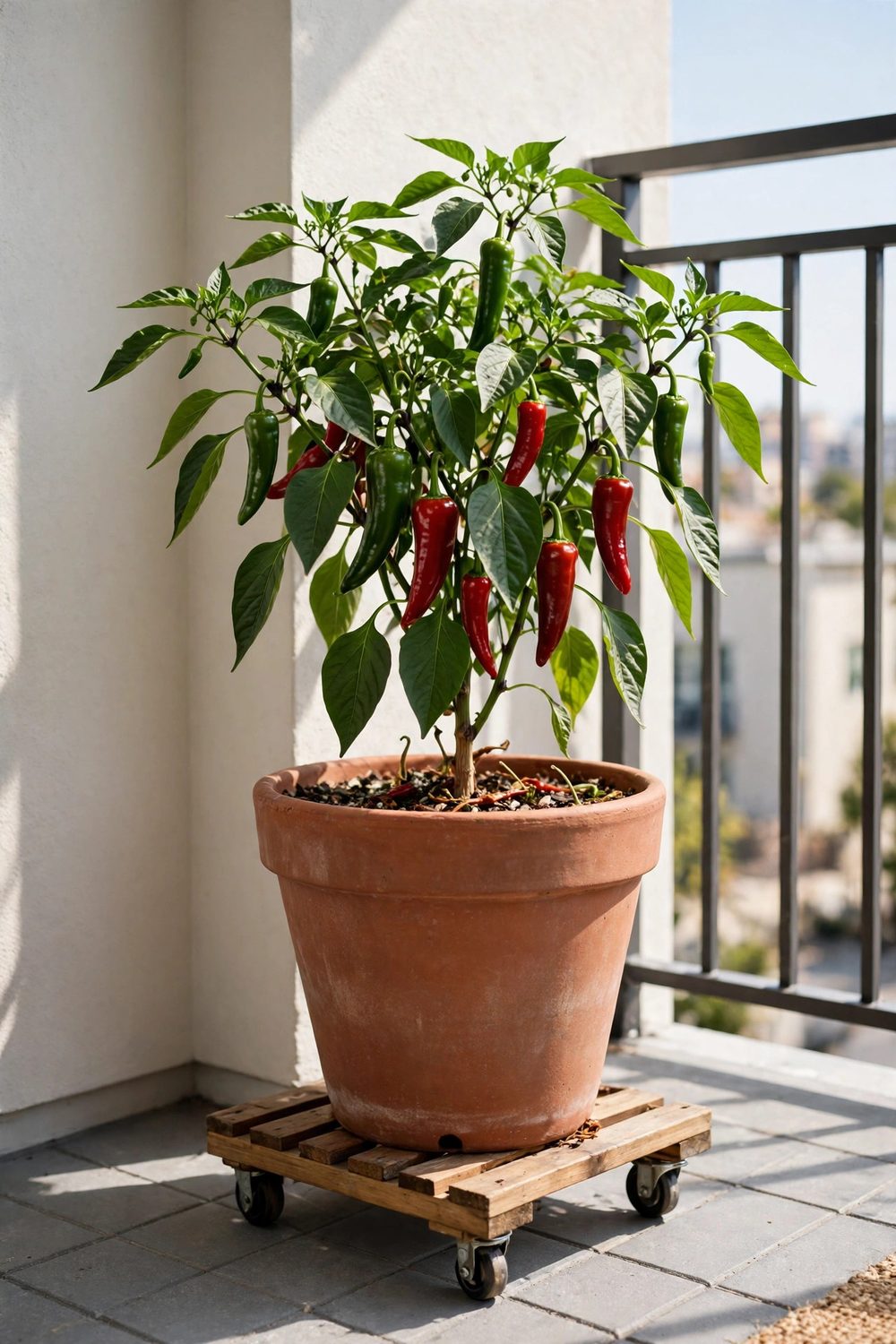
A plant caddy is a low wheeled base that sits under a heavy pot. Nothing fixes to the floor. You roll the pot to chase sun, roll it to shelter before a storm, and roll it aside to sweep.
Choose a caddy rated well above the weight of a soaked 5-gallon pot, about 19 liters. Locking wheels matter on a sloped floor. Set one pepper or one tomato per caddy, never two pots stacked.
Peppers love the hottest corner, with 6 to 8 hours of sun. A caddy lets you move them into that corner for summer and back to shelter when fall winds start.
Sweep under caddies each week. Damp leaves trapped under a pot stain tiles fast. Two minutes with a hand brush protects the floor and your deposit.
6. Hang a Strawberry Planter From an S-Hook
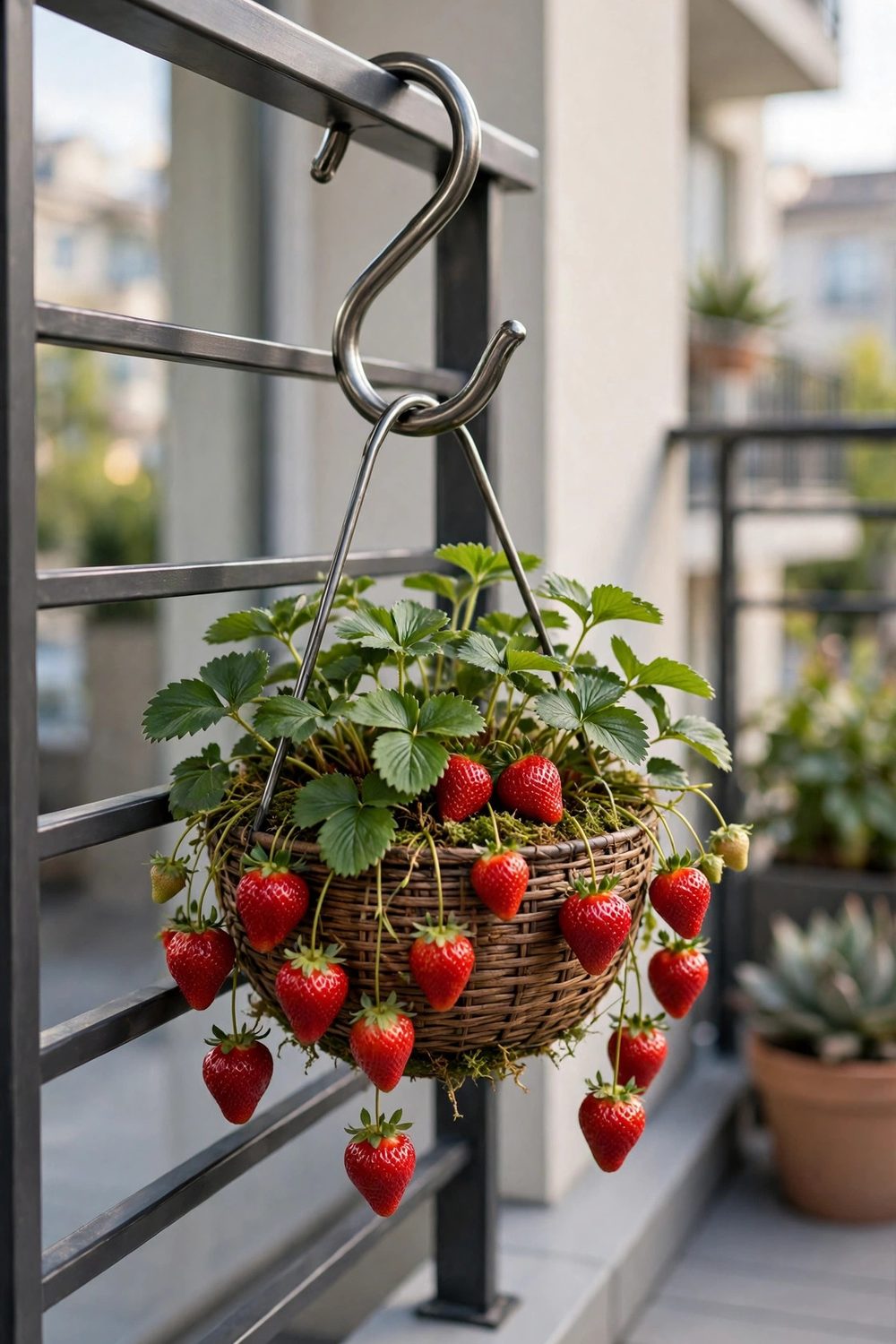
A large S-hook drops over the rail and holds a hanging planter by its chain. No drilling, no bracket, and the planter lifts off in seconds. Hang it inside the rail line, never outside.
Strawberries suit hanging planters best on a balcony. Fruit hangs clear of the soil, stays clean, and is easy to pick. Use a planter at least 12 inches, 30 cm, across for six plants.
Hanging mix dries fast in wind and sun. Check it each morning in summer and water until drips show below. A liquid feed every two weeks keeps fruit coming through the season.
Test the hook with the planter fully watered before you hang it. Wet mix is heavy. If the rail flexes at all, move the planter to a stand instead.
7. Stack Food Crates Into a No-Fix Shelf
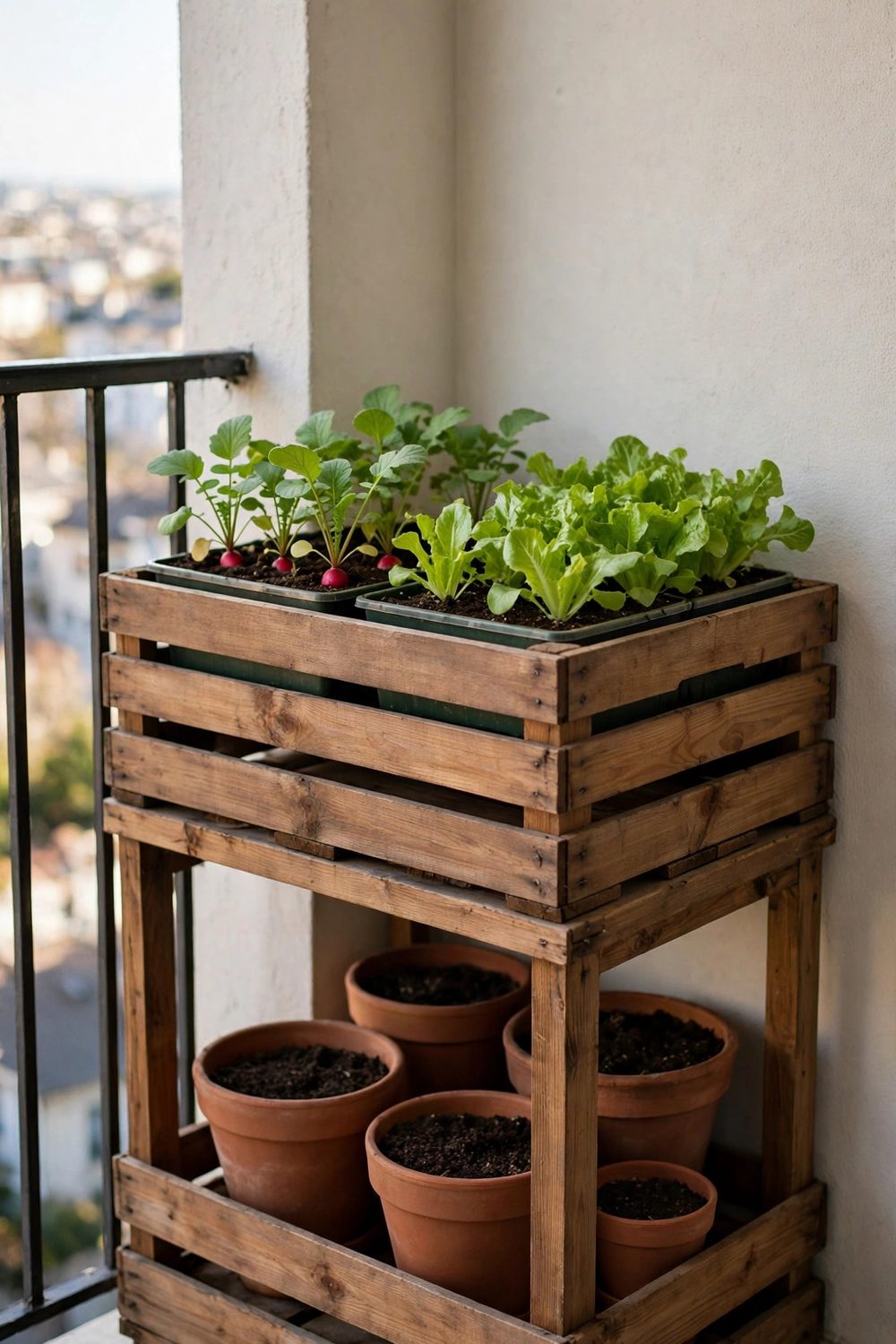
Sturdy crates stack into instant shelves with zero fixings. Two crates high is the safe limit on a balcony. Cable ties between crates stop any wobble, and they snip off clean at move-out.
Grow radishes, spring onions, and cut-and-come-again lettuce in shallow trays on the top crate. Sow radish seed one half inch, 1 cm, deep. Thin seedlings to 2 inches, 5 cm, apart.
Keep the stack in a corner, out of the main wind path. Weight the bottom crate with the heaviest pots you own. A light top and a heavy base is the stable order.
Crates lift off one by one, so cleaning behind them takes minutes. A monthly pull-out and wipe-down keeps the wall spotless.
8. Choose Self-Watering Pots to Cut Drips and Mess
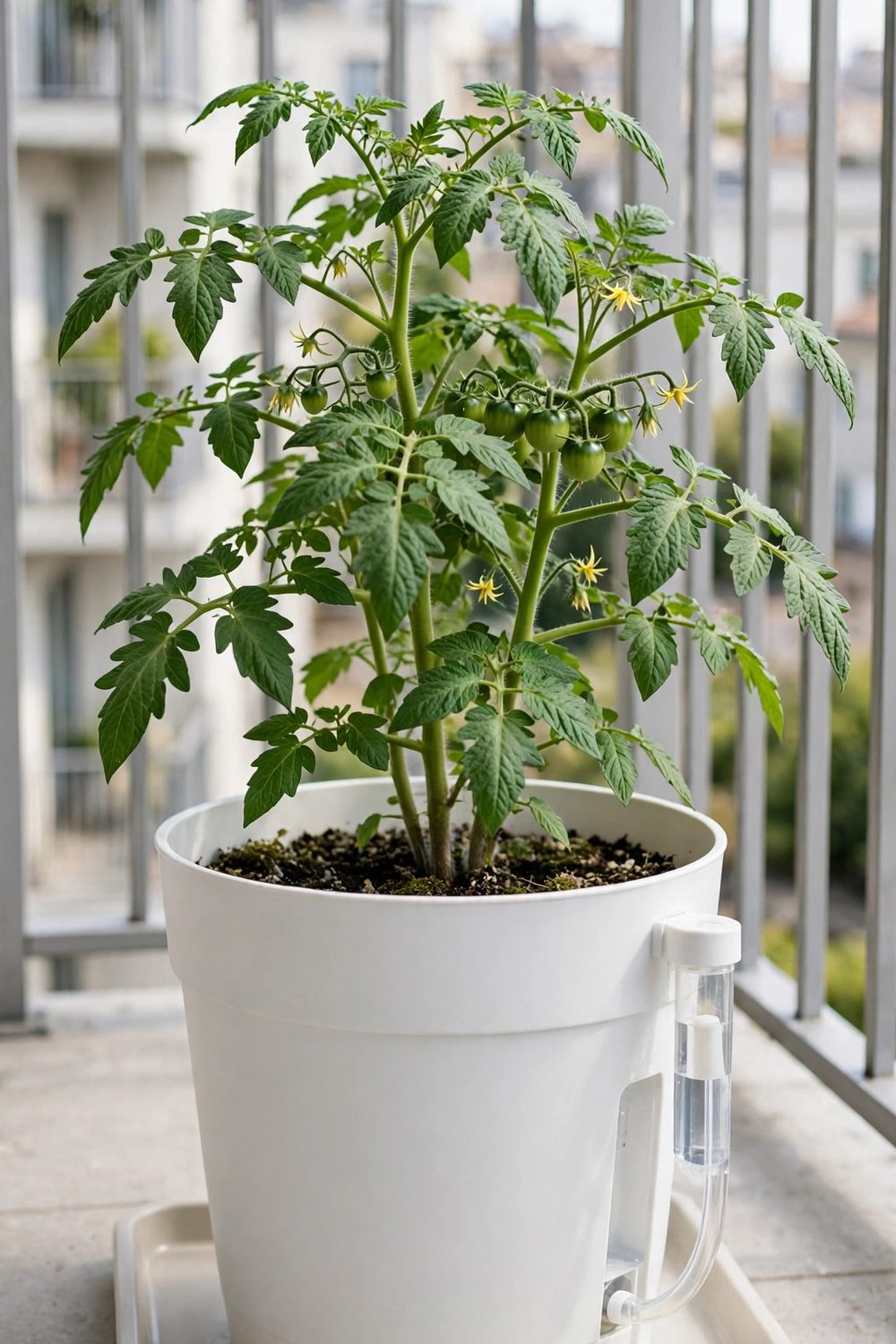
Self-watering pots hold water in a sealed reservoir under the soil. Overflow is rare, floors stay dry, and landlords stay calm. That alone makes them a strong renter choice for thirsty crops.
Use one for a tomato or a cucumber, the two thirstiest balcony crops. Fill the reservoir once or twice a week. Water from the top for the first week while young roots settle in.
Set the pot on a tray anyway during the first month. A cracked reservoir leaks slowly and quietly. The tray catches the fault before the floor does, and you swap the pot in time.
Empty and scrub reservoirs at season end. Algae and old roots sour stored water. A clean pot stored dry lasts for years and moves to the next home with you.
9. Group Pots on One Washable Outdoor Mat
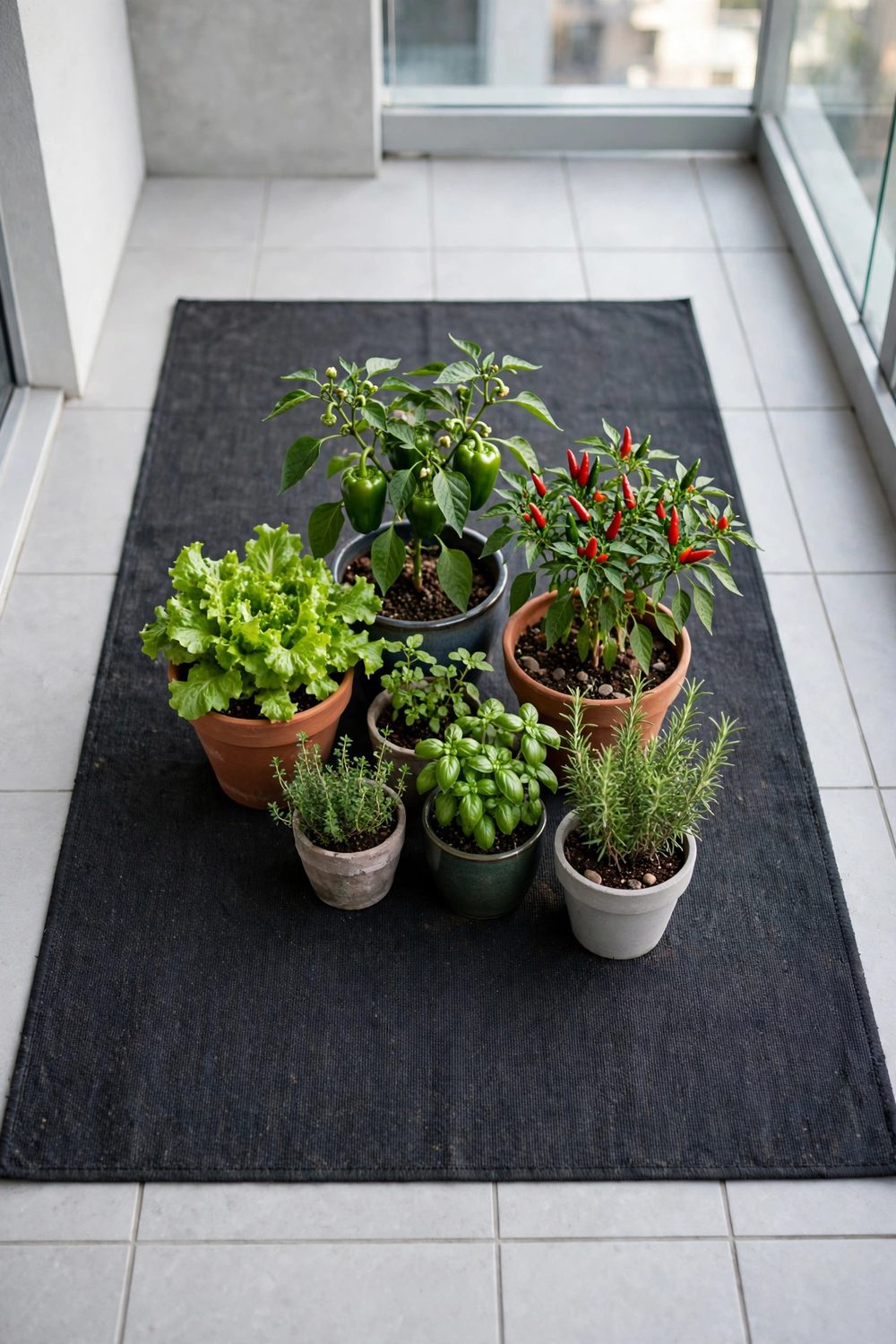
A single washable mat under the whole pot group protects tiles better than saucers alone. Spills land on the mat, not the floor. Shake it out weekly and hose it down monthly, indoors or out.
Size the mat to the group, with 4 inches, 10 cm, of border on each side. Pots at the edge drip outward. That small border is the difference between a clean floor and a stained one.
Group thirsty pots together on the mat and dry-loving herbs at the sunny edge. One watering round covers the thirsty group. Herbs get a lighter pass and never sit in runoff.
Lift the mat fully once a month and let the floor dry. Trapped damp under any cover breeds mildew in shade. Dry floor, dry mat, then pots back in place.
10. Use a Freestanding Tiered Stand in the Corner
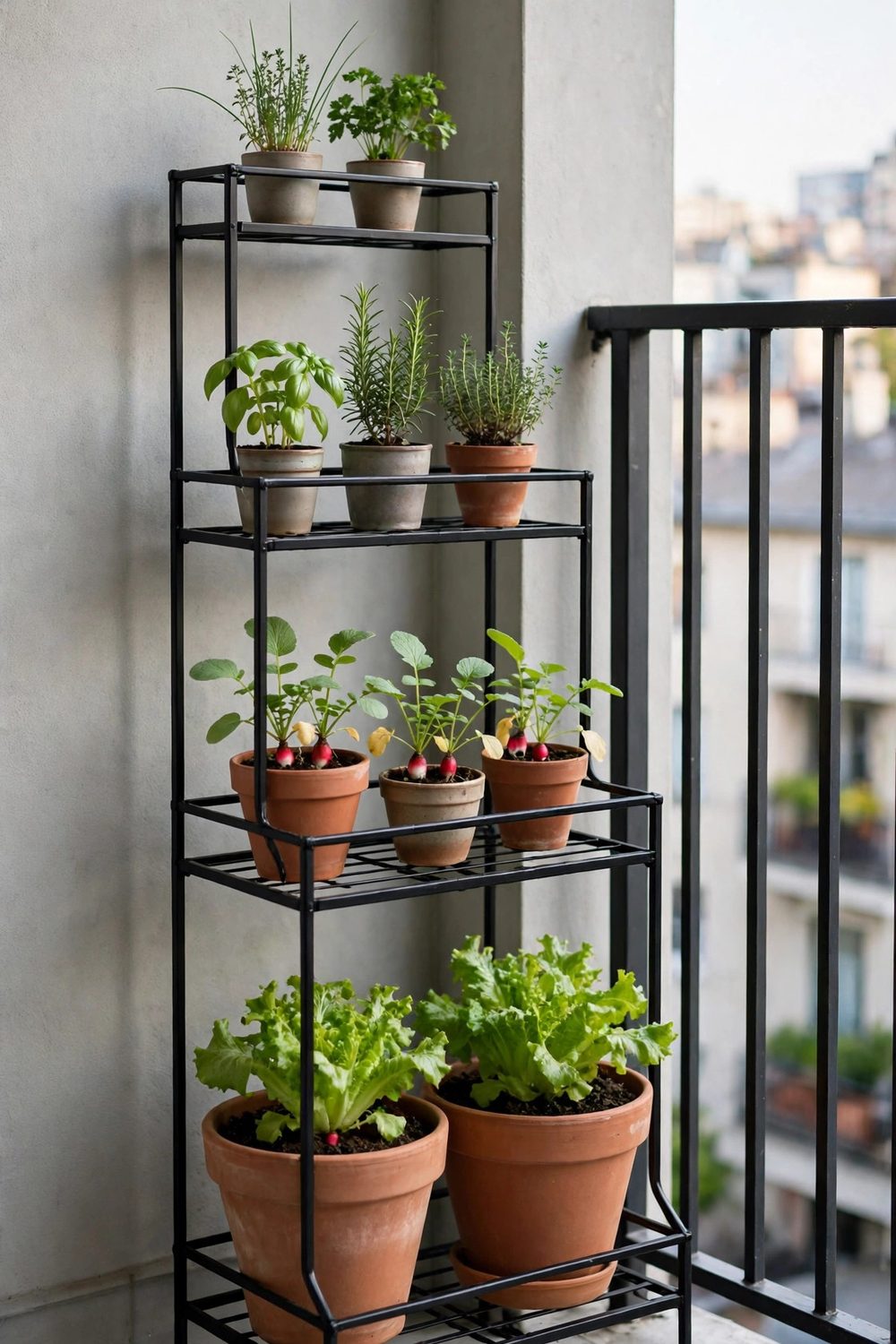
A tiered stand needs no wall and no rail. It stands on its own feet in the corner and holds five or six small pots in the footprint of one large pot. Nothing touches the building at all.
Load it heavy at the bottom, light at the top. Lettuce, radishes, and herbs in 10 to 12 inch pots, 25 to 30 cm, belong on the upper tiers. Keep tomatoes and zucchini on the floor.
Check the stand rating against wet weight, not dry weight. Soaked mix can double the load. If the frame flexes when loaded, take one tier of pots off and floor them instead.
More holder styles that suit renters are in our guide to apartment balcony pots ideas. Measure your corner before you order any stand.
11. Grow Bush Beans in a Trough That Sits, Not Hangs
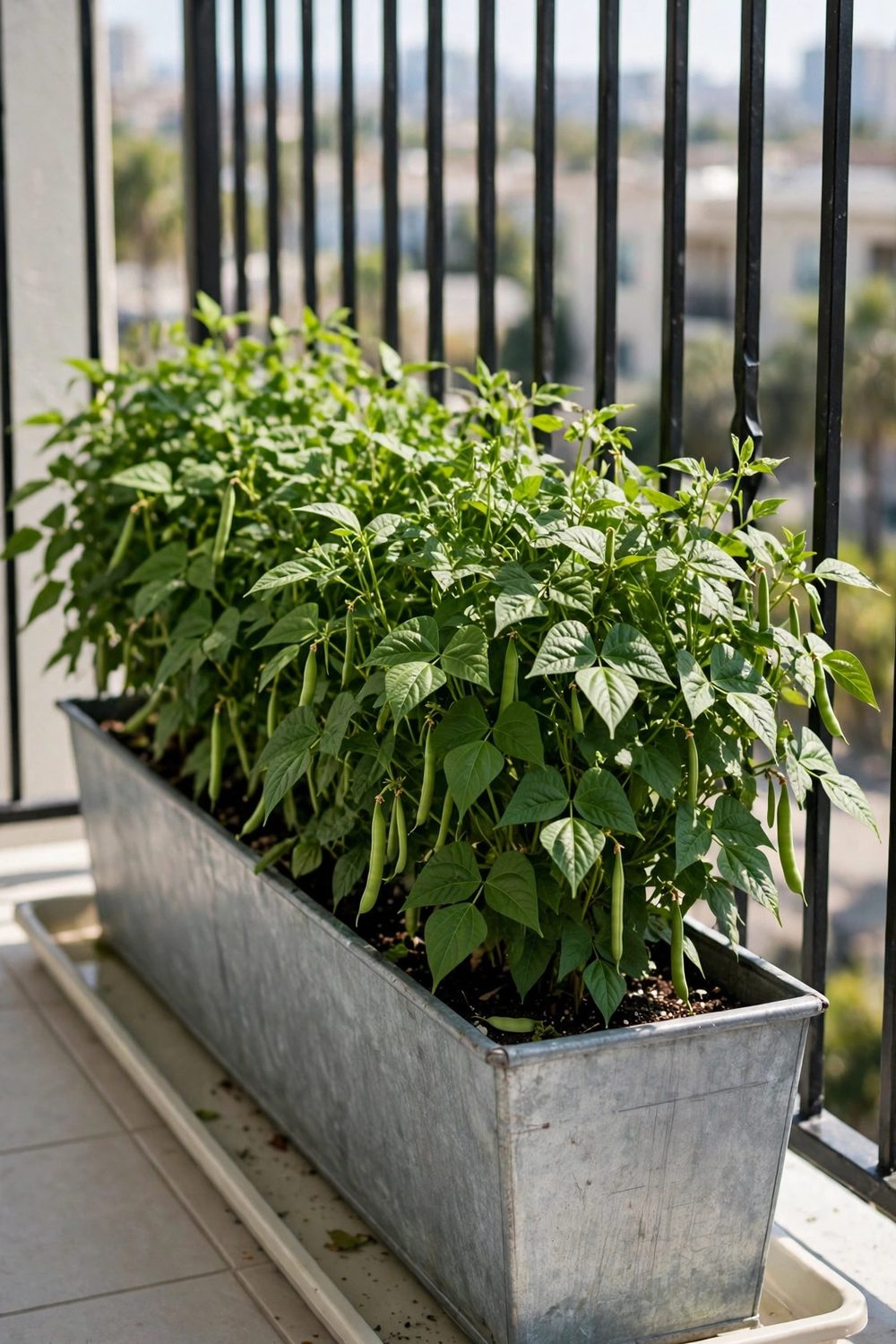
A floor trough avoids rail load questions completely. It sits on its own tray against the rail and grows a full row of bush beans. No hooks, no brackets, and no weight on the rail itself.
Pick a trough at least 8 inches, 20 cm, deep. Sow Provider beans 1 inch, 2.5 cm, deep and 3 inches, 8 cm, apart, after your last frost. Beans need warm mix to sprout well.
Bush beans stop near knee height, so no support frame is needed. Water steadily while pods form. Pick every two days to keep new flowers coming through the harvest weeks.
Slide the trough out monthly to clean behind it. Fallen leaves rot in that hidden strip. A clean gap keeps smells down and keeps the wall free of damp marks.
12. Clip Shade Cloth to the Rail With Removable Clips
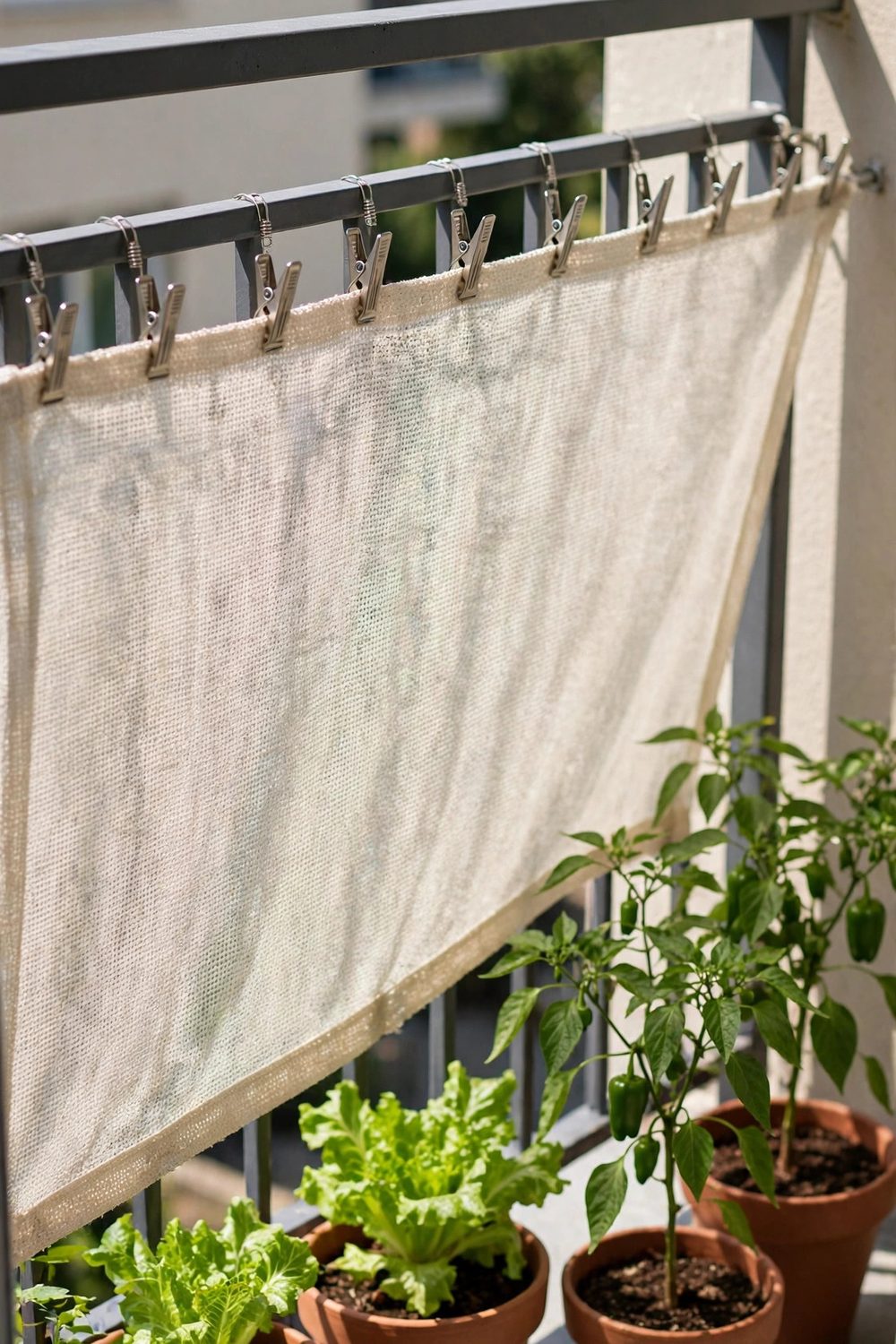
Harsh afternoon sun scorches lettuce and peppers on west facing balconies. A short length of shade cloth clipped to the rail with spring clips solves it. Clips pinch on and off with no marks.
Cover only the hottest hours. Clip the cloth up at noon and drop it by late afternoon. Greens keep their color, and fruit stops splitting from heat stress on the sunniest days.
Use cloth rated near 30 to 40 percent shade for vegetables. Heavier cloth starves fruiting crops of light. Peppers and tomatoes still need 6 hours of sun outside the shaded window.
Take the cloth down in high wind, every time. Loose cloth flaps and tears fast. Store it rolled in your tool box, dry.
13. Keep Tools and Feed in One Lidded Box
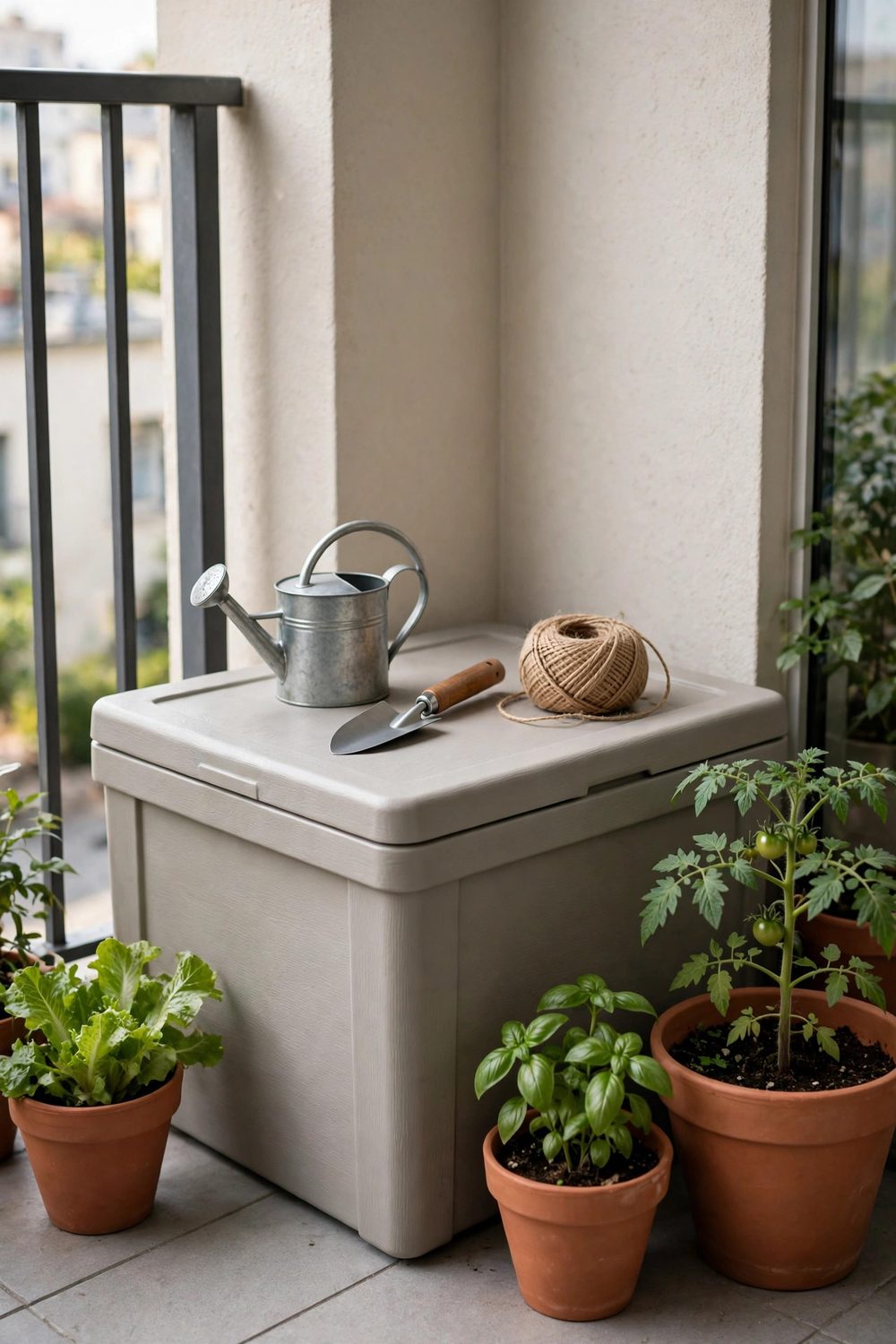
Loose tools, open feed bags, and spare pots are what make a rental balcony look messy. One lidded storage box holds the lot. Nothing mounts, nothing fixes, and the balcony reads tidy at a glance.
Fit the box to your kit: a hand trowel, twine, clips, a small watering can, and one sealed feed tub. Damp feed smells fast, so the lid matters more than the box size.
Sit heavy pots on the box lid only if the maker rates it for weight. Most lids bow under a soaked pot. Keep the box as storage, and keep pots on the floor or stands.
Landlord checks go better with a tidy store box in the corner. Our guide for a balcony garden for renters with strict landlord rules covers visit-day checks in full.
14. Grow Kale and Chard in Tall Pots on Pot Feet
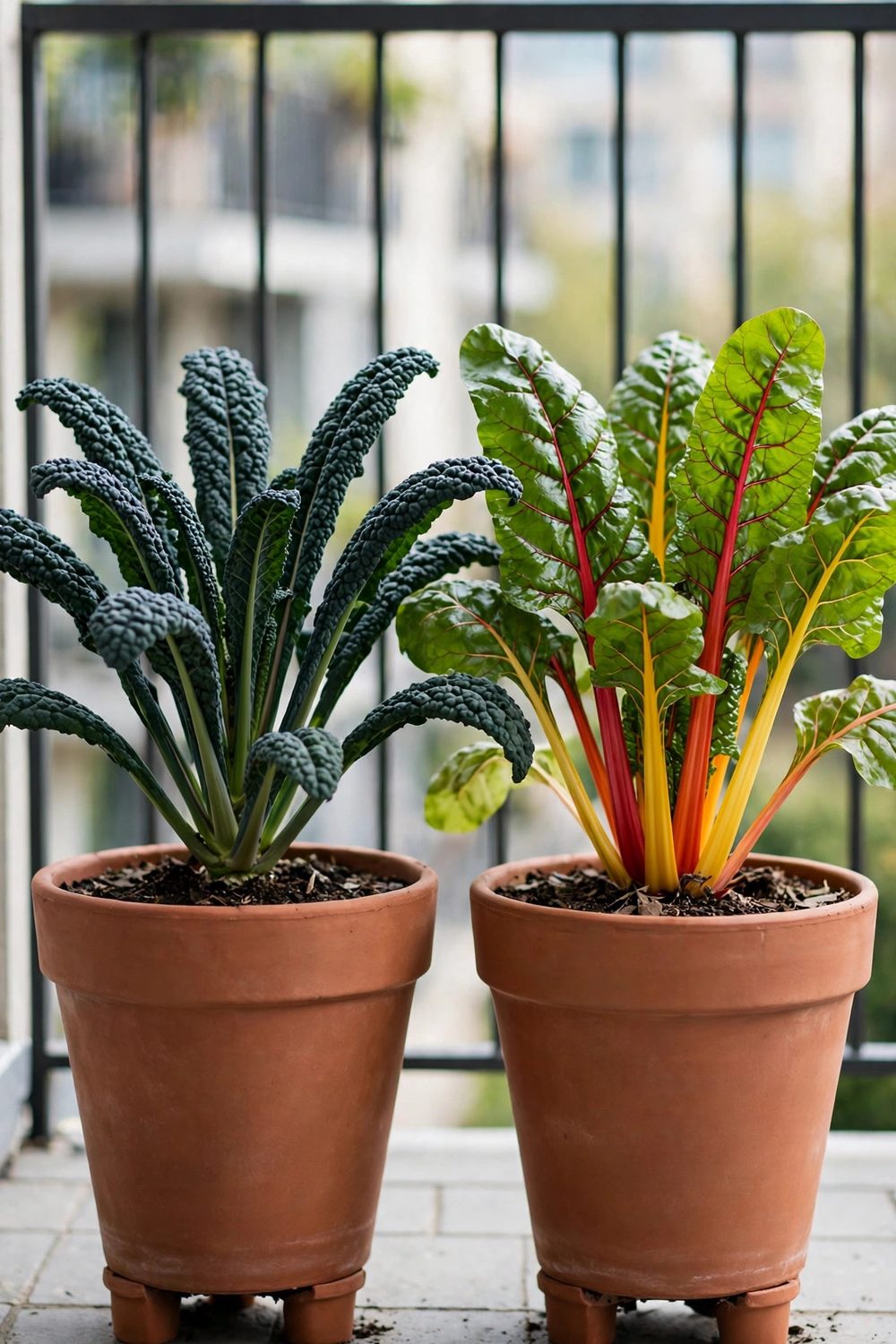
Pot feet lift a pot a half inch off the floor so air flows under it. No damp ring forms, and tiles stay unmarked. Feet just sit under the pot rim. Nothing glues or screws down.
Use tall pots at least 12 inches, 30 cm, deep for Lacinato kale or Swiss chard. One plant per pot. Pick outer leaves and leave the crown, and each pot crops for months.
Leafy crops settle for 3 to 4 hours of sun, so tall pots suit the shadier floor strip behind the rail. Water when the top inch, 2.5 cm, of mix dries out.
Rotate each pot a quarter turn each week. Even growth follows even light. A one-sided plant leans, shades its own crown, and slows down by midsummer if left unturned.
15. Finish With a Move-Out Check You Can Do in Minutes
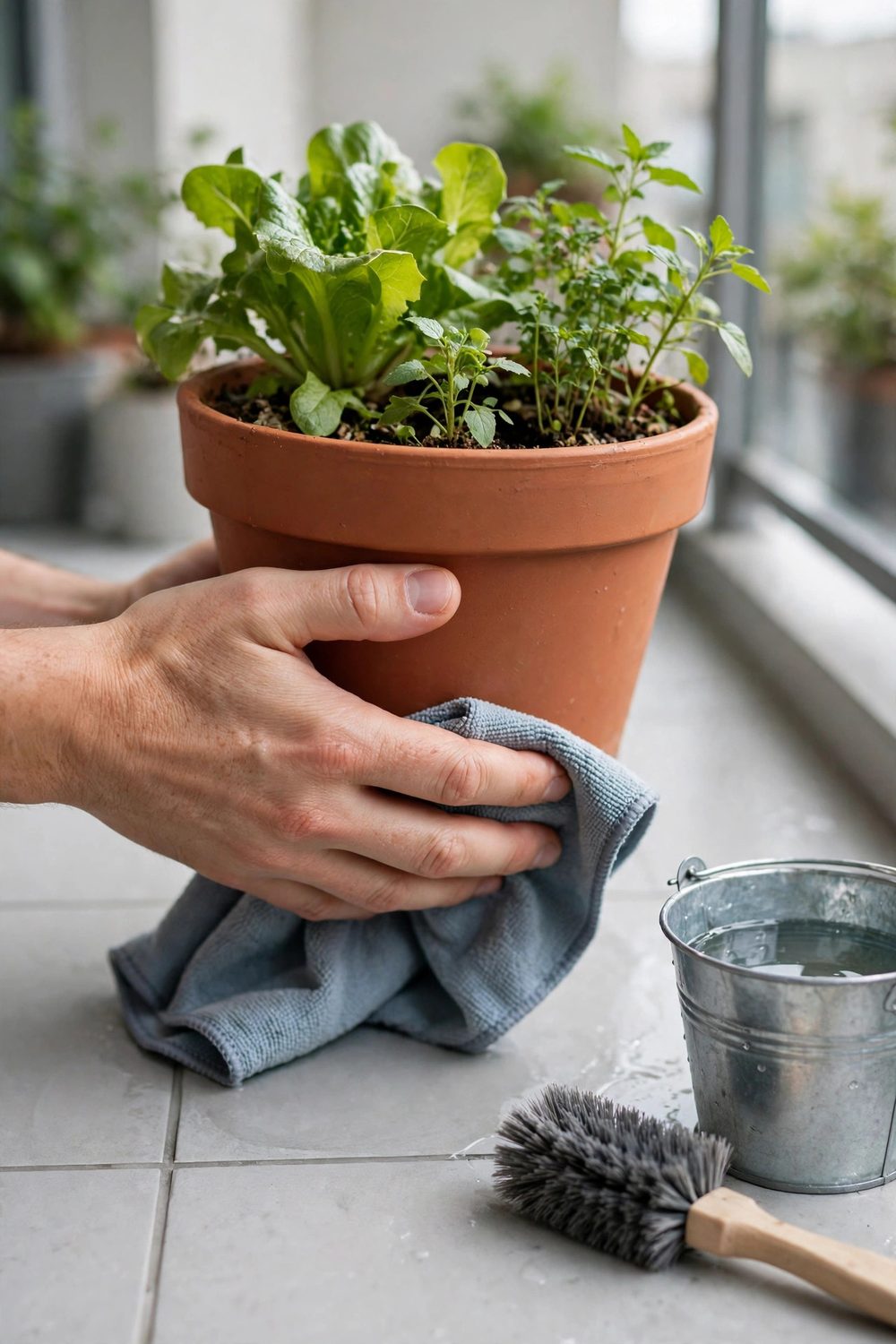
The last idea is a habit, not a holder. Once a month, lift every pot, wipe under it, and check the floor. Five minutes a month means no stain ever has time to set into tile or concrete.
Photograph the clean floor under your pots each season. Dated photos prove the balcony stayed clean under your care. They take seconds and settle any dispute about marks at move-out.
Keep a short kit by the door: a stiff brush, a cloth, and a small bucket. The kitchen sink fills the bucket. No outdoor tap is needed for the whole routine.
End each season by washing trays, mats, and saucers indoors. Store them dry inside the storage box. Next spring starts clean.
Pick two holders from this list and start this week. Hooks and grow bags cover most first balconies. Add a stand or a ladder shelf only when the first crops prove your light and wind.
A balcony vegetable garden for renters no drill no damage works when every piece lifts off clean. Grow boldly, fix nothing to the building, and leave the balcony as you found it.
Save this list to your container garden board for later. Your deposit and your dinner can both come out ahead this season.


