

15 Balcony Garden Ideas for Renters With Strict Landlord Rules
A strict lease does not have to mean an empty balcony. Most landlord rules target damage, drips, weight, and mess. A garden planned around those four points, point by point, passes checks that a careless garden fails.
This balcony garden for renters with strict landlord rules list turns each common rule into a growing habit. Every idea names the rule it answers, the crop it grows, and the small routine that keeps you in good standing all season.
Keep a copy of your lease clauses beside your seed packets. Rules vary by building. What one landlord bans, another allows in writing. Your own lease text always outranks any general guide, this one included.
Start small and spotless. Two tidy pots that never drip earn you room for two more. Landlords relax when the first season ends with a clean floor, a quiet rail, and no complaints from the flat below.
This post contains affiliate links. If you buy through them, we may earn a small commission at no extra cost to you. See our Affiliate Disclosure.
1. Get Written Permission for a Short Pot List
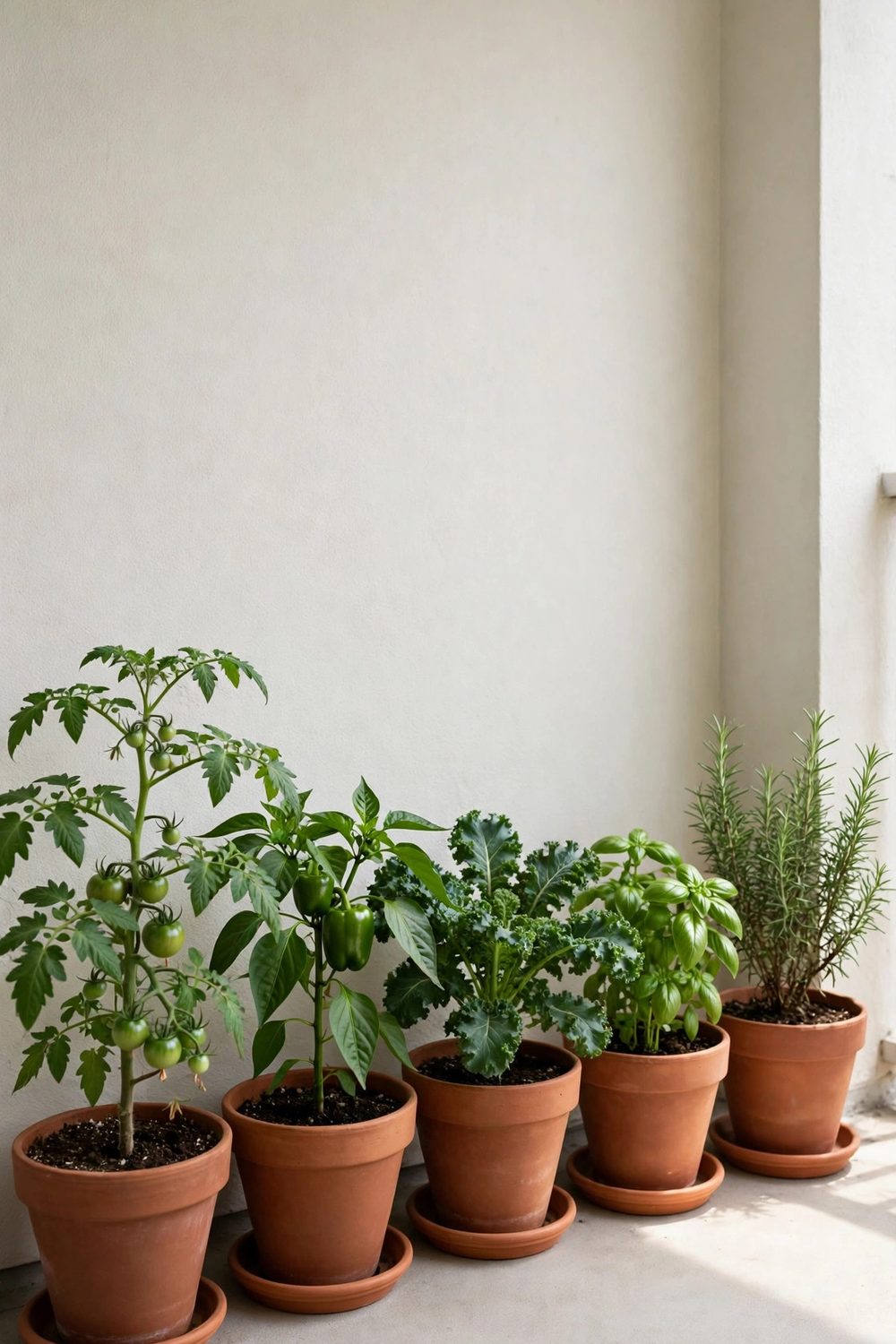
Ask before you plant, and ask in writing. Send a short list: three pots, their sizes, their spots, and the saucers under them. A clear list gets a clear yes far more often than a vague request.
Keep the reply with your lease. Verbal nods fade by inspection day. A dated email that names your pots settles any later question in one forward, with no debate at the door.
Start with forgiving crops that stay tidy: lettuce, herbs, and one pepper. A neat first season is your proof of care. Big vines and tall frames can wait for year two.
If the answer bans one item, accept it and swap the crop, not the tone. Goodwill with a landlord is worth more than any single plant on your list.
2. Put a Deep Saucer or Tray Under Every Pot
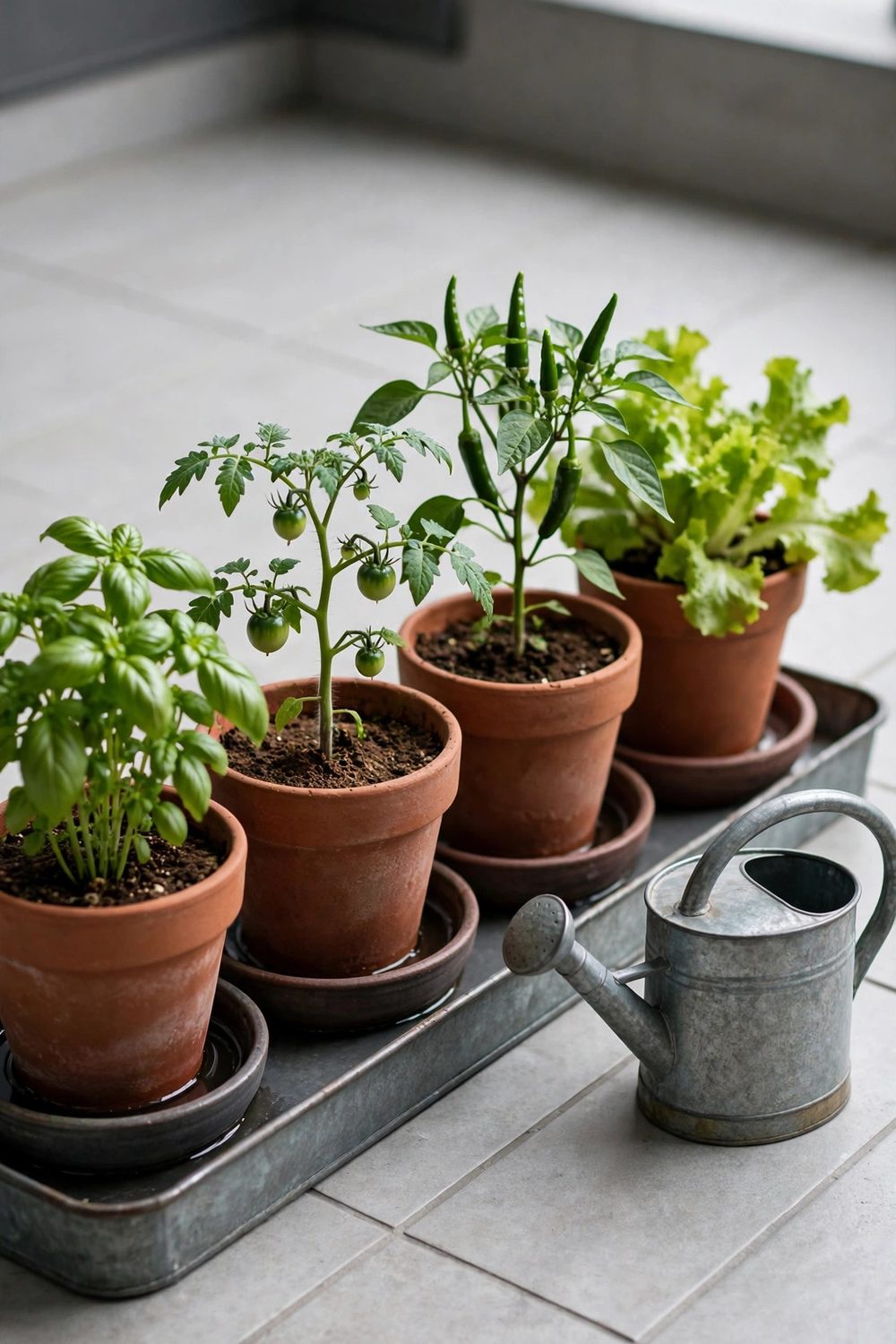
Drips cause more landlord complaints than any other garden habit. Water that runs through a pot lands on the balcony below, on laundry, on furniture, on tempers. A deep saucer under every pot stops the chain at step one.
Choose saucers at least 2 inches, 5 cm, wider than the pot base. Empty them 30 minutes after watering. A full saucer left standing breeds mosquitoes and spills in the next gust of wind.
Group small pots on one long tray instead of many small saucers. Trays are faster to empty and harder to knock. One tray under the herb box covers three plants at once.
After heavy rain, check every saucer the same day. Rain fills pots to the brim. That overflow, not your watering can, is what stains the floor below most often.
3. Keep Every Leaf and Fruit Inside the Rail Line
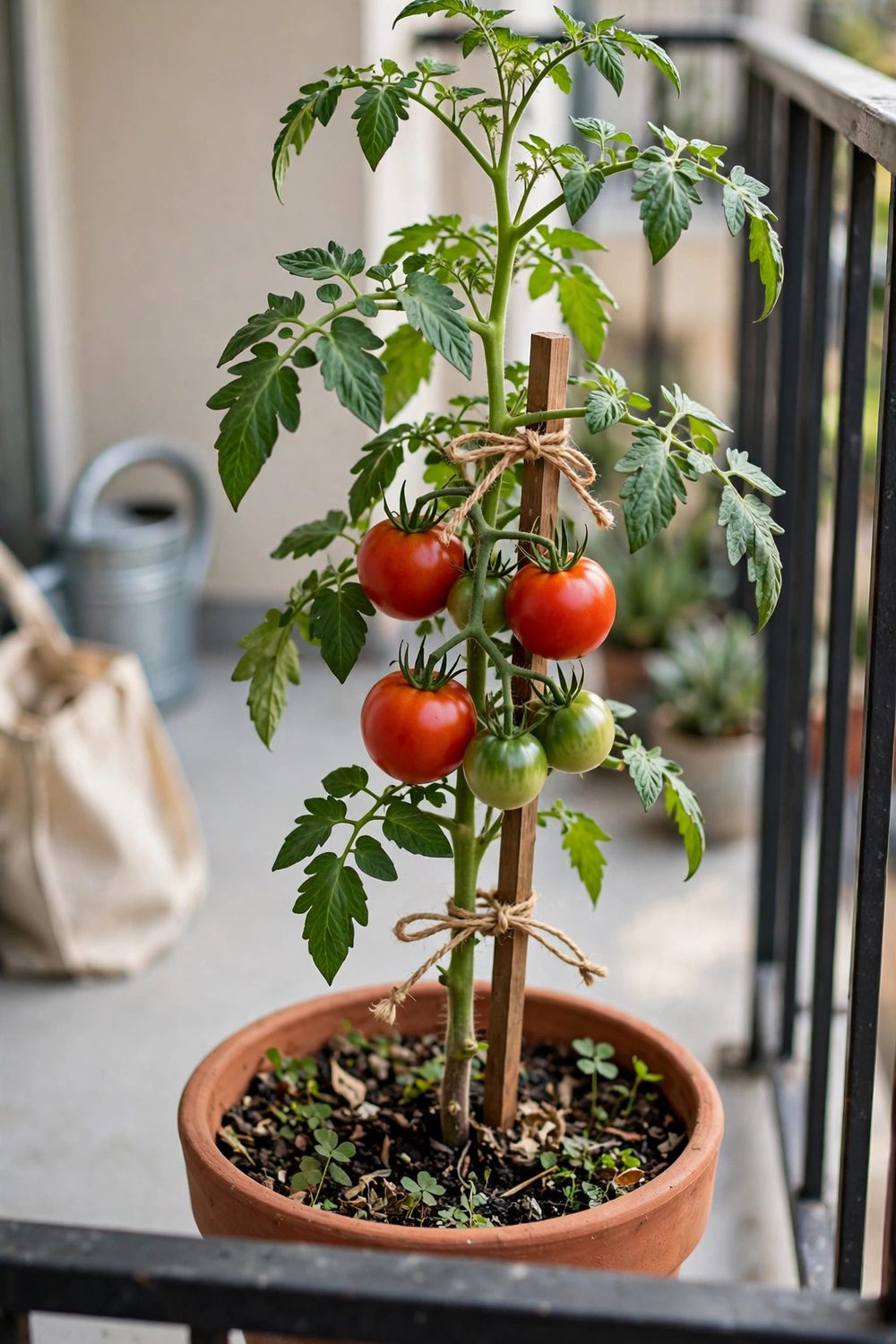
Many leases ban plants hanging outside the rail. Fruit, leaves, and vines on the building face are the usual trigger. Grow everything on the inside face of the rail and the rule never comes up.
Hang rail boxes inside, not outside. Train cucumber and pea vines up the inner side of the rail with soft ties. Trim any shoot that pokes through the bars the week it appears.
Inside growing also protects your harvest. Wind outside the rail strips flowers and fruit. Inside, the rail itself acts as a windbreak, and pots dry out more slowly on hot days.
Walk the corridor or street once a month and look up at your balcony. If green shows outside the line from below, prune that week. What the building sees is what the building judges.
4. Spread Weight Toward the Walls, Never Mid-Floor
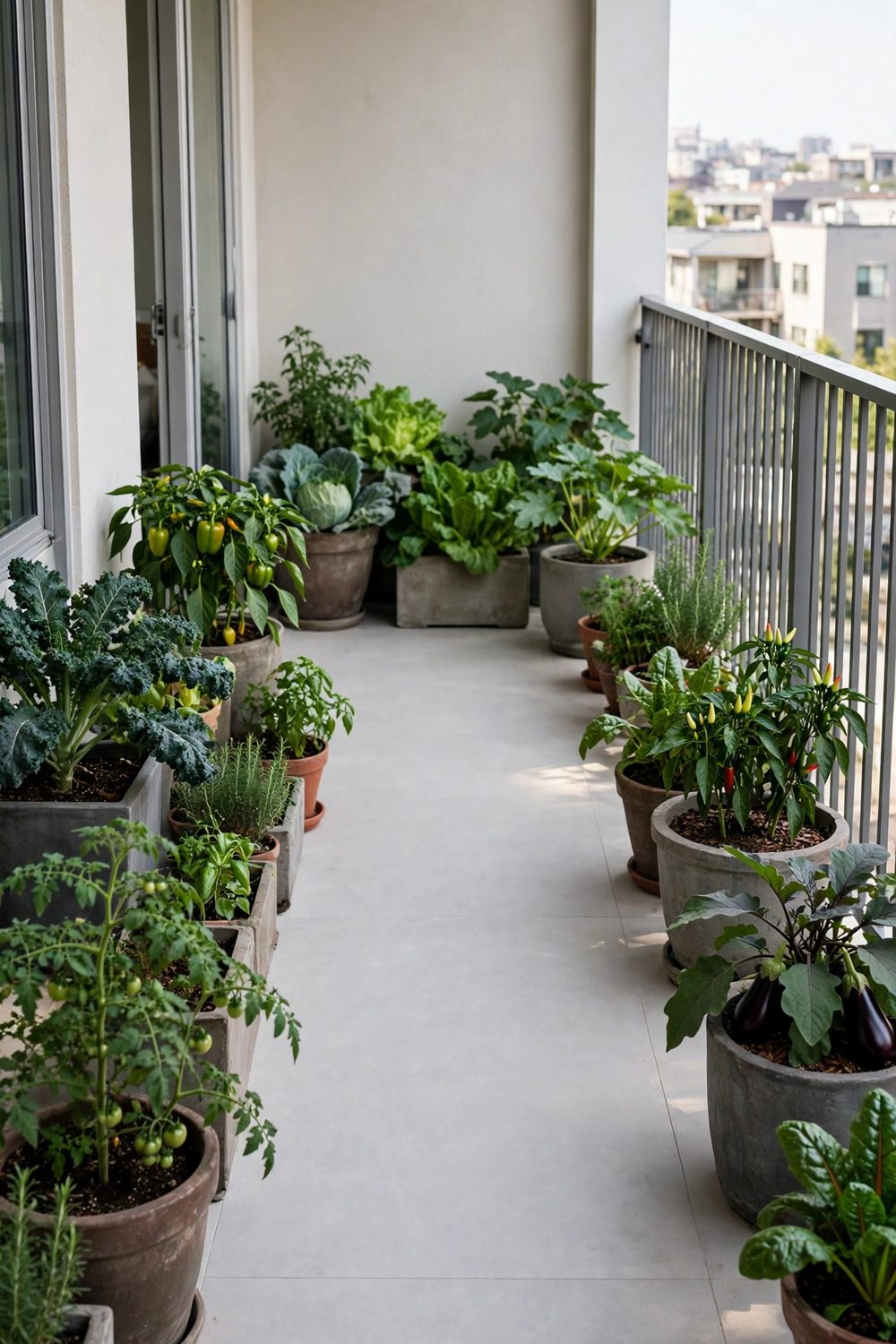
Strict leases often cap balcony load or ban large pots outright. Respect the cap by spreading weight. Heavy pots belong near the walls and corners, where the slab is strongest, never clustered mid-floor.
Weigh one soaked 5-gallon pot, about 19 liters, on a bathroom scale. That honest number, times your pot count, is your true load. Dry soil weights mislead everyone, landlords included.
Swap clay for plastic or fabric where weight is tight. A 10-gallon grow bag, about 38 liters, weighs far less than a clay pot of the same size when both are soaked.
Our no-fixing setups in the balcony vegetable garden for renters, no drill, no damage list keep weight low by design. Light holders ease every load talk.
5. Use Freestanding Holders Only, Nothing Fixed
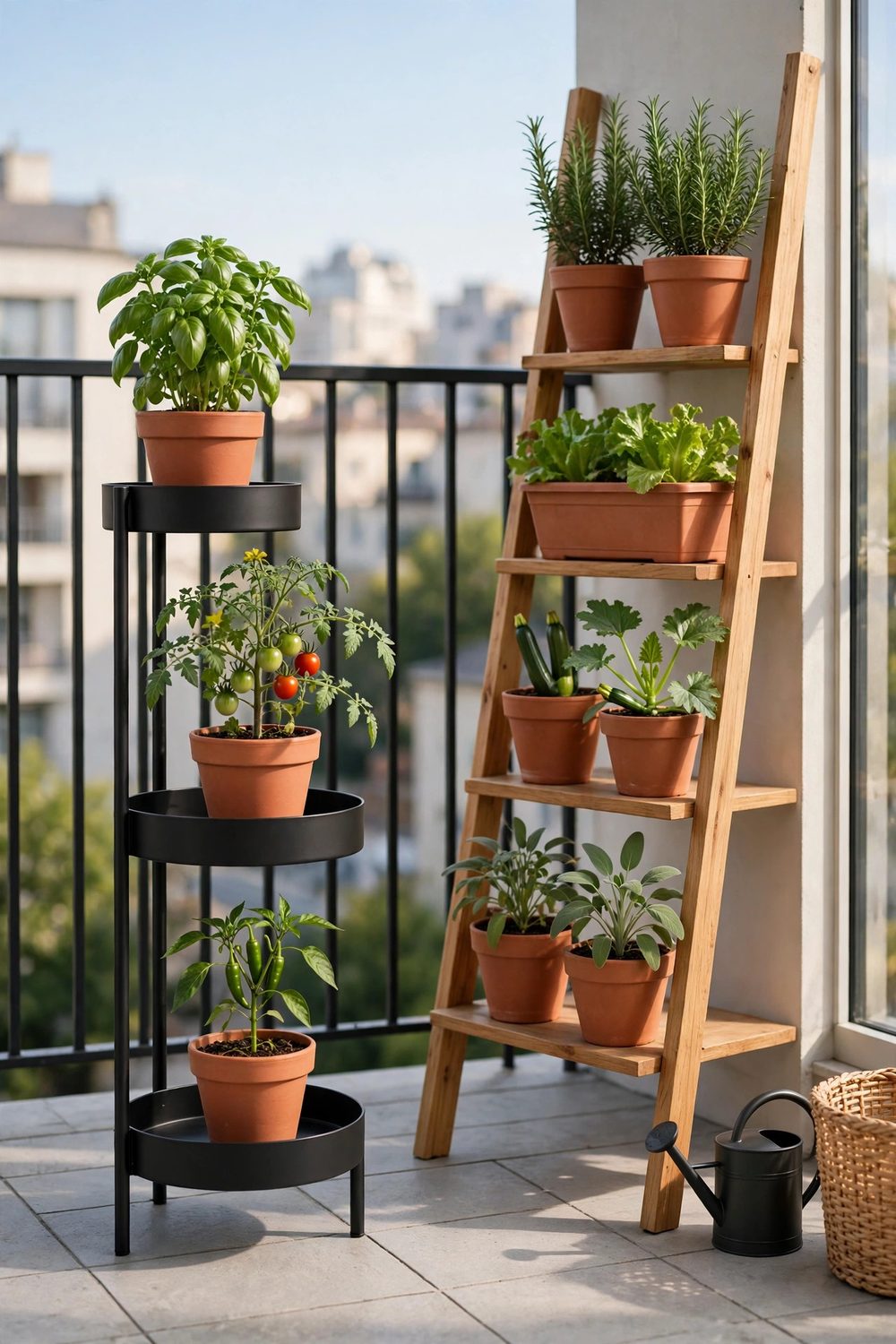
Screws, bolts, and wall brackets are the fastest route to a lost deposit. Freestanding holders grow the same crops with zero fixings. Ladder shelves lean, stands stand, hooks drop over the rail and lift off.
Push trellis panels into deep pots for peas and cucumbers. The soil holds the frame, the pot holds the weight. Nothing touches the wall, the rail fixings, or the floor slab.
Check each holder after storms for the first month. A leaning shelf caught early is a two-minute fix. A fallen shelf with three pots is a damage claim and a rule breach in one.
Photograph your holders in place at season start. Dated photos show the setup was freestanding all along if a mark on the wall is ever blamed on your garden.
6. Run a Ten-Minute Tidy Sweep Every Week
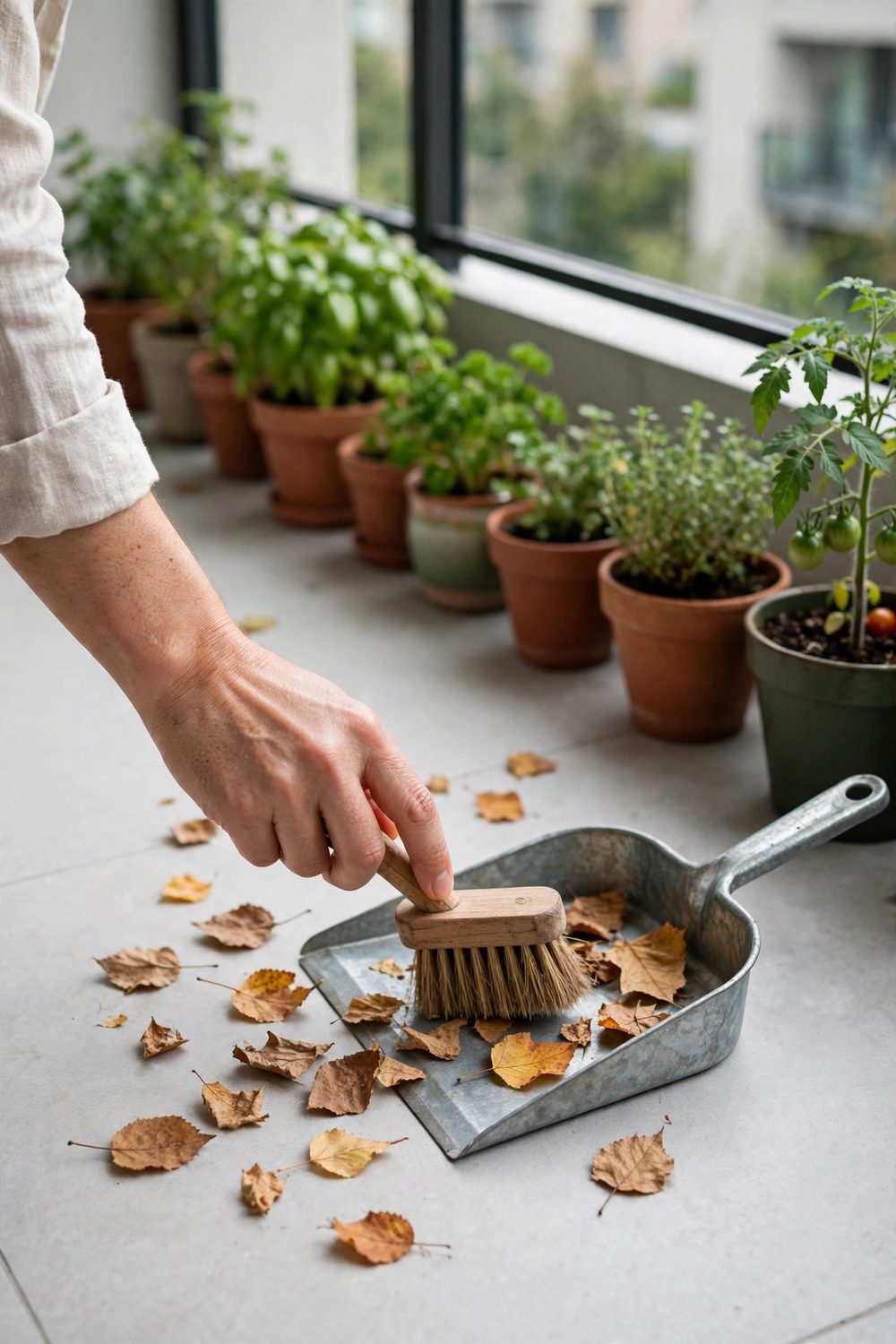
Mess builds slowly, then all at once. A fixed ten-minute sweep each week stops it at the slow stage. Pick dead leaves, wipe saucers, sweep the floor strip, and tie in loose stems in one pass.
Bag sweepings and carry them indoors at once. A pile of wet leaves left in the corner smells within days and draws flies. Small, sealed, and gone the same day is the rule.
Harvest little and often during the sweep. Overripe fruit drops, splits, and stains. A bowl picked each week keeps plants tidy and keeps the floor free of squashed tomatoes.
The full routine is laid out in our guide on how to keep a balcony garden tidy so neighbours do not complain. Ten minutes is the whole cost.
7. Water With a Can in the Morning, Never a Spray
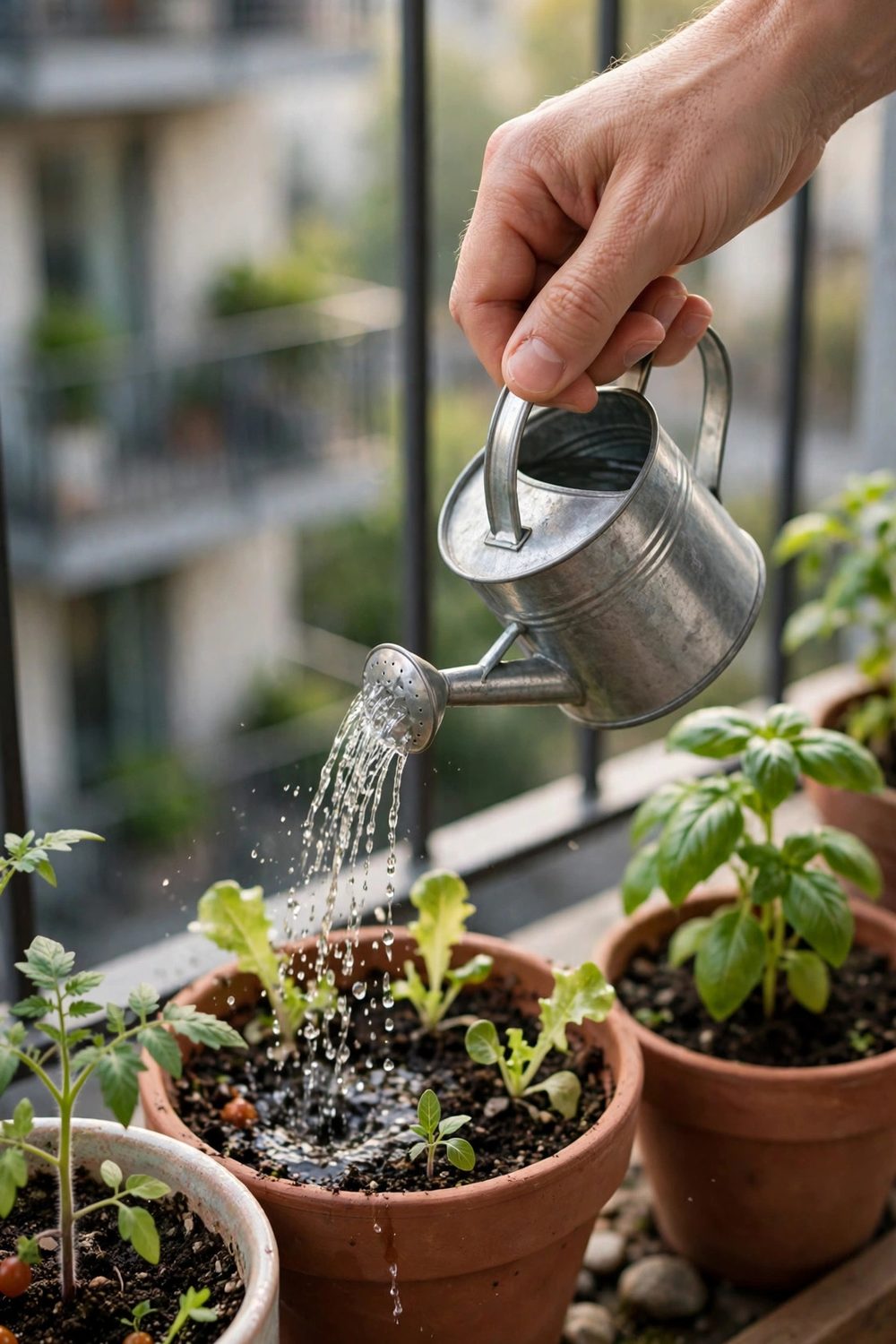
Hose spray and sprinkler arcs wet rails, walls, and the balcony below. A watering can puts water in the pot and nowhere else. Under strict rules, the can is not a style choice. It is the method.
Fill the can at the kitchen sink and water in two slow rounds. The first round wets the surface. The second soaks deep. Fast single pours run off dry mix and straight out the base.
Water in the morning so splashes dry fast. Evening water sits on leaves overnight and invites mildew in still air. Morning rounds also show you which pots truly need water that day.
Test each pot with a finger first. Dry at the first knuckle means water. Damp means skip. Fewer rounds means fewer drips, fewer complaints, and healthier roots all at once.
8. Pot Up on a Tray So Soil Never Scatters
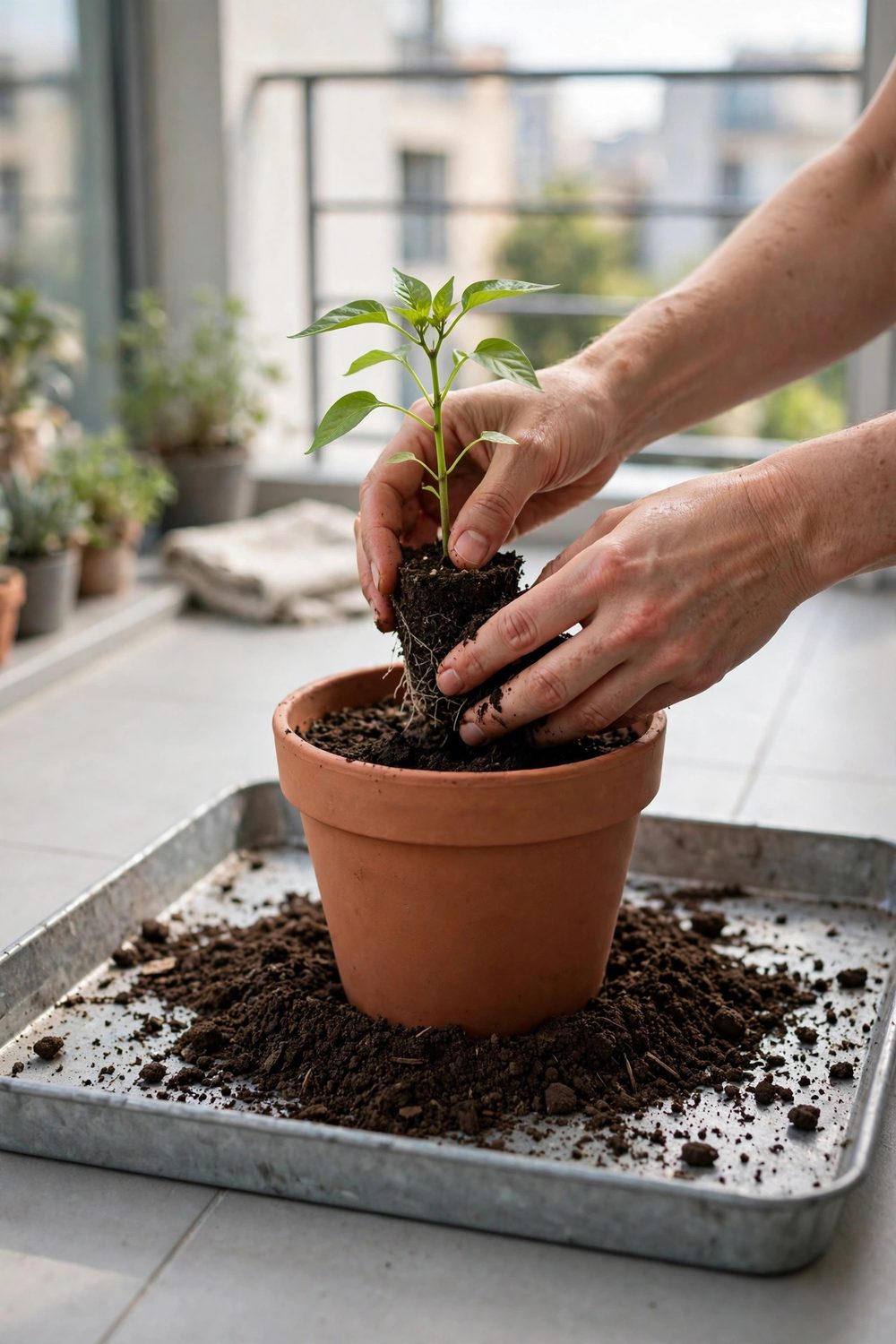
Loose mix on the floor is the mess landlords photograph. Do all potting and repotting over one large lidded tray. Spills land in the tray, the tray empties into the bag, and the floor stays clean.
Work indoors at the kitchen table if your lease is very strict. A tray on the table catches the same spills. Carry finished pots out one by one and set them on their saucers.
Store spare mix in a sealed tub, never an open bag. Open bags spill, smell damp, and draw tiny flies indoors. A tub with a lid keeps mix fresh and the store corner tidy.
Sweep the work spot the same hour, not the same week. Fresh spills lift clean. Old spills grind into grout lines and read as stains at move-out, however innocent they are.
9. Keep Heights Below the Rail Top Line
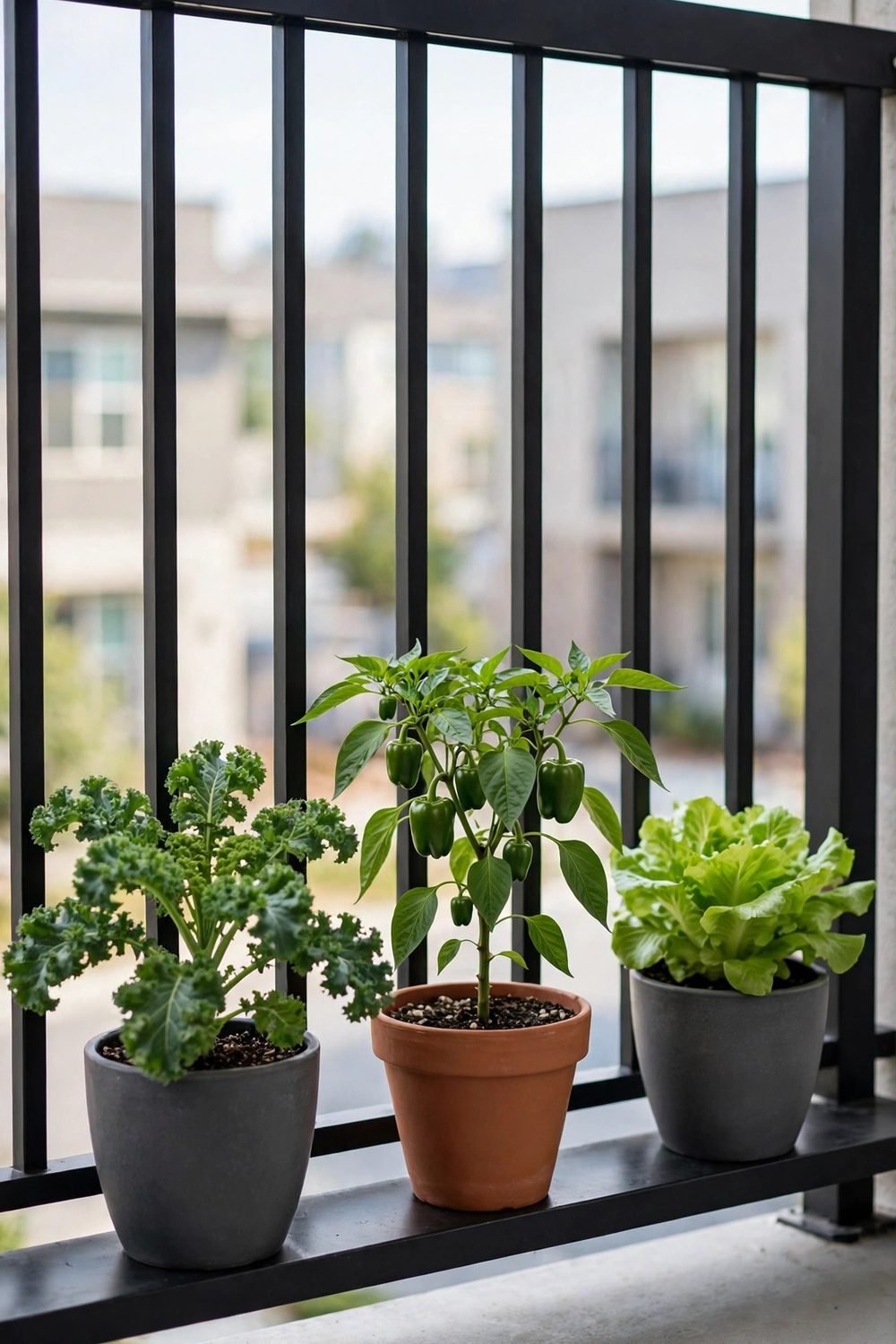
Some buildings ban plants taller than the rail for a clean street face. Grow low and wide instead of tall. Bush beans, peppers, lettuce, kale, and herbs all crop below a standard rail top.
Choose bush and dwarf types by name: Provider bush beans, Tiny Tim tomatoes, Astia zucchini, also called courgette. Seed packets state final height. Read it before you buy, not after you sow.
Pinch and prune on schedule. Basil pinched weekly stays bushy and low. Tomato suckers removed weekly keep a dwarf plant inside its stake instead of spilling over the rail.
If you crave a climber, run it sideways. A cucumber tied along the rail, not up it, fruits at waist height and never breaks the top line in any month.
10. Store the Whole Kit in One Lidded Box
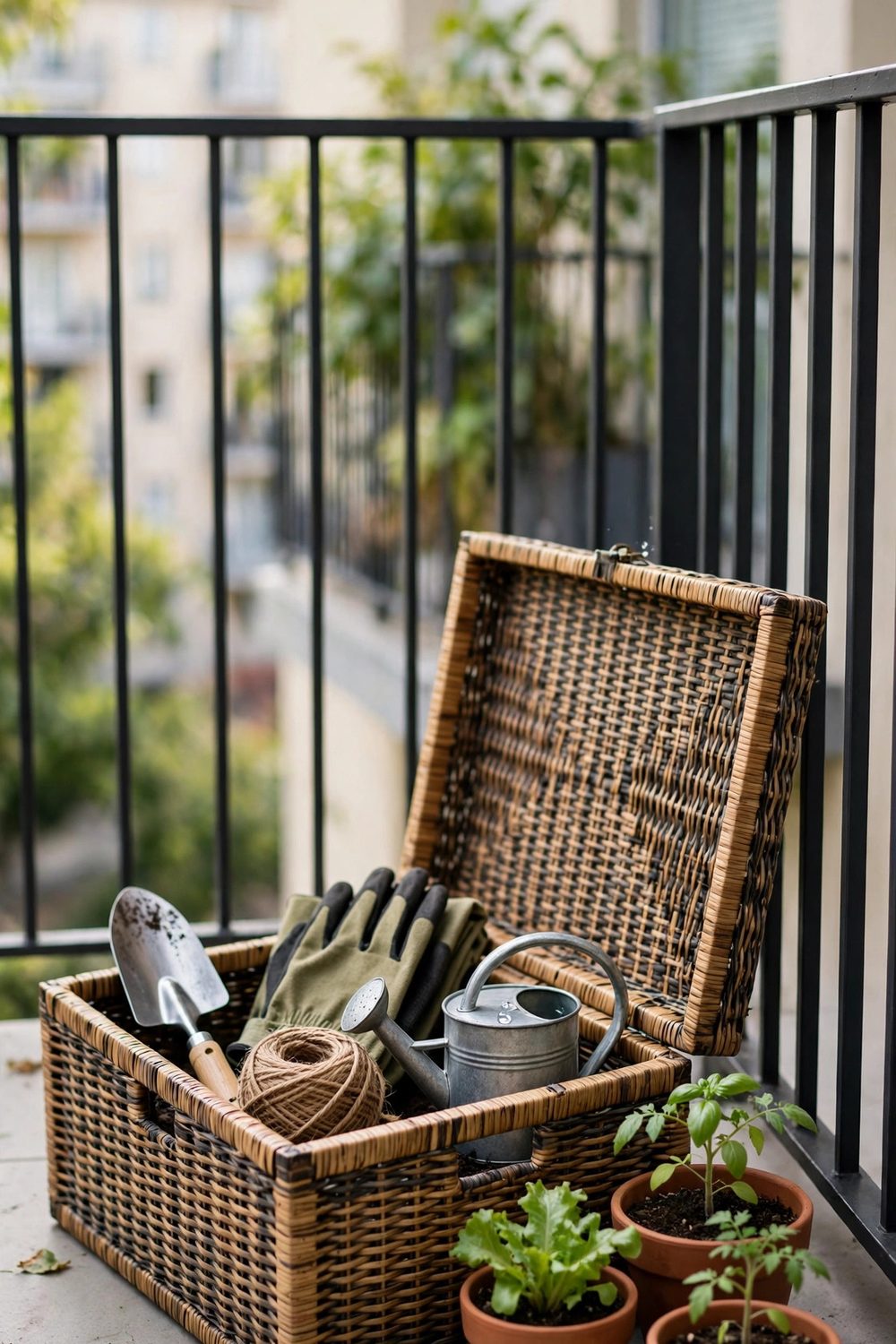
Tools on the floor read as clutter in every inspection photo. One lidded box holds the trowel, twine, clips, feed tub, and spare pots. The balcony then reads as a garden, not a shed.
Keep feed sealed inside the box. Open feed draws ants and mice to a balcony fast. A screw-top tub inside a lidded box is two layers of protection for one small cost.
Size the box to fit one corner, out of the walkway. A box you trip over gets emptied onto the floor within a month. A corner box stays shut, dry, and out of sight lines.
At season end, the same box stores saucers and trays, washed and dry. Nothing garden-related sits loose over winter. The balcony returns to a clean slab in one afternoon.
11. Grow a Herb Box That Always Looks Intentional
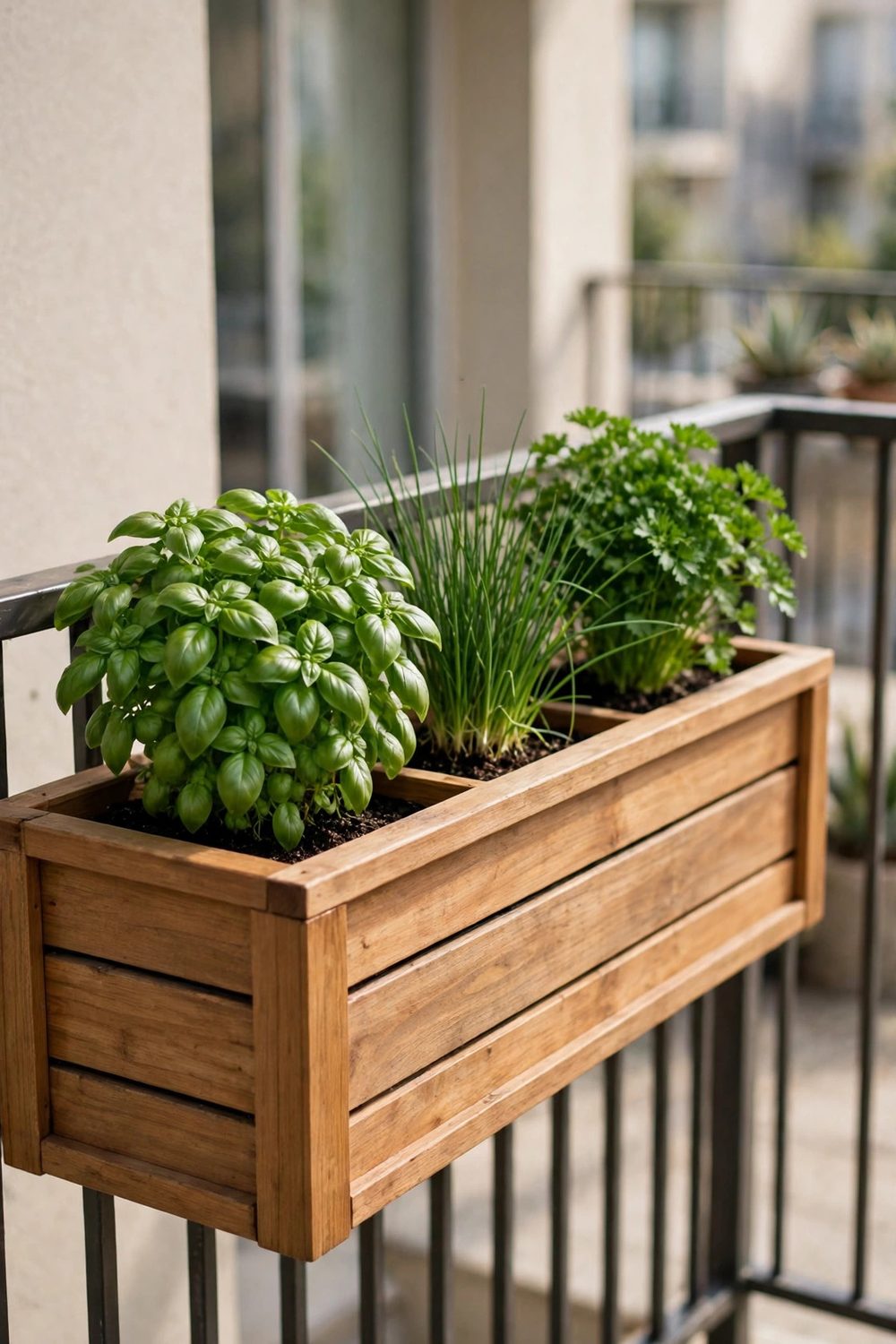
A neat herb box is the easiest yes in any landlord talk. Basil, chives, and parsley in one rail box, one plant every 8 inches, 20 cm, look planned, smell clean, and never sprawl.
Herbs forgive the tidy rules well. They stay low, crop with scissors, and drop almost no litter. Snip weekly, even when you do not cook with them, to keep growth fresh and compact.
Replace tired plants fast instead of nursing them for months. A yellow, leggy basil in July reads as neglect from the street. A fresh plant costs little and resets the whole box.
More layouts sit in these balcony herb garden ideas for apartments. Pick one box style and repeat it. Matching boxes read as design, not clutter.
12. Skip the Habits That Kill Plants and Goodwill
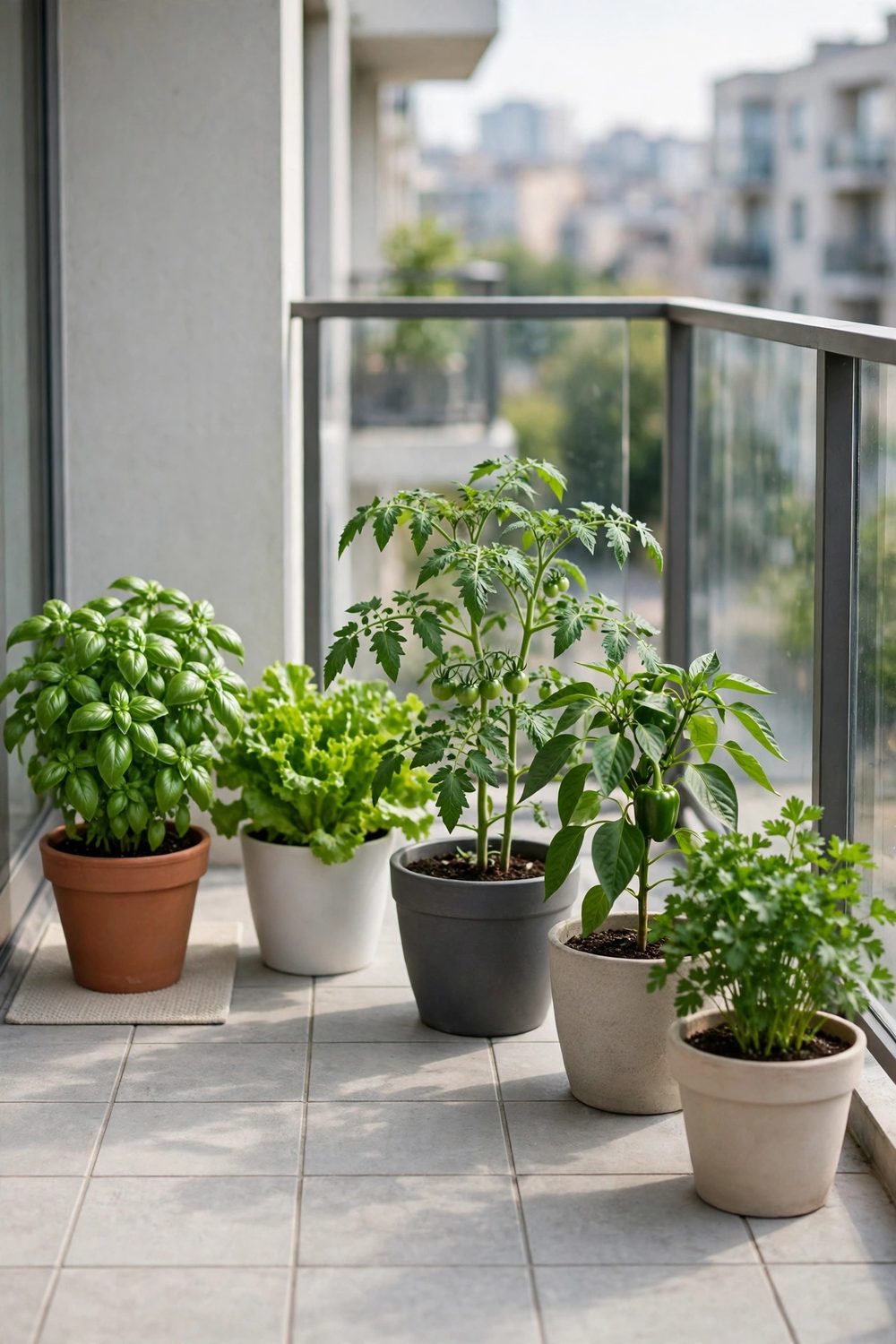
Dead plants break rules by sight alone. The common killers are simple: pots with no drainage, daily watering on a schedule, and seedlings crowded ten to a pot. Each one ends in a sad, smelly balcony.
Use bought potting mix for food crops, never dug garden soil. Mix drains freely, carries no weed seed, and keeps pots lighter. Wash every harvest before it comes to the kitchen.
Thin seedlings without mercy. One strong kale beats six weak ones in the same pot. Crowded plants mildew in still air, and mildew is the look that triggers inspection letters.
The full list is in our notes on container gardening mistakes that kill beginner vegetables. Read it before your first sowing, not after your first loss.
13. Keep Smells Down With Sealed Storage Only
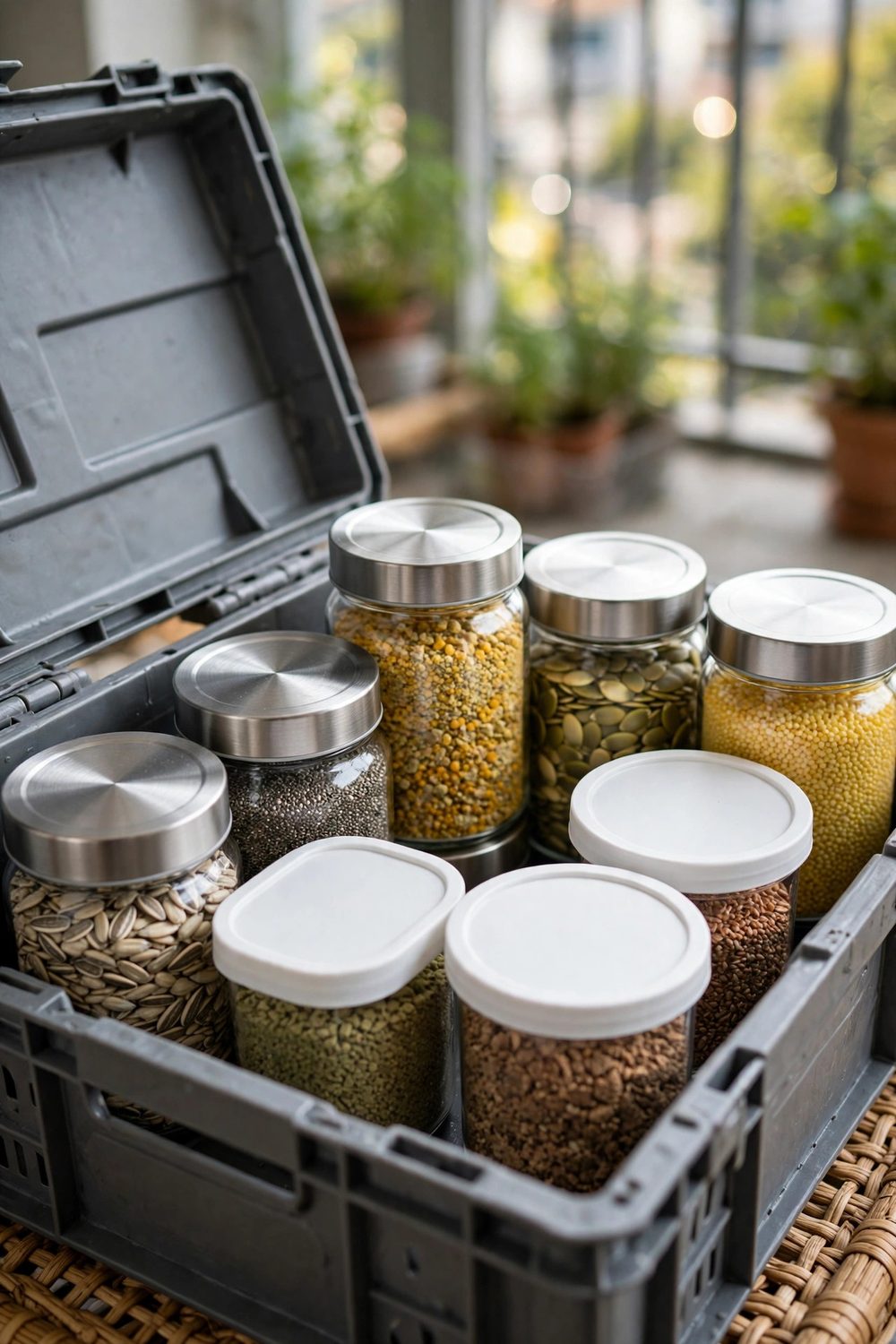
Open compost and liquid feeds are the smell sources in most complaints. Under strict rules, skip open compost on the balcony. Bag green waste and use the building bins the same day.
Choose low-odor feeds and store them sealed. Granular feeds in a screw-top tub smell far less than open liquid bottles. Feed in the morning and water it in well so no residue sits on leaves.
Remove fallen fruit and leaves the day they drop. Rot starts fast in summer heat, and rot is what neighbors smell through an open window two doors down.
If a neighbor mentions a smell, act that day and say so. A fast fix, kindly reported, turns a complaint into proof that you are the careful gardener on the floor.
14. Lay Out Pots in Straight Lines and Even Gaps
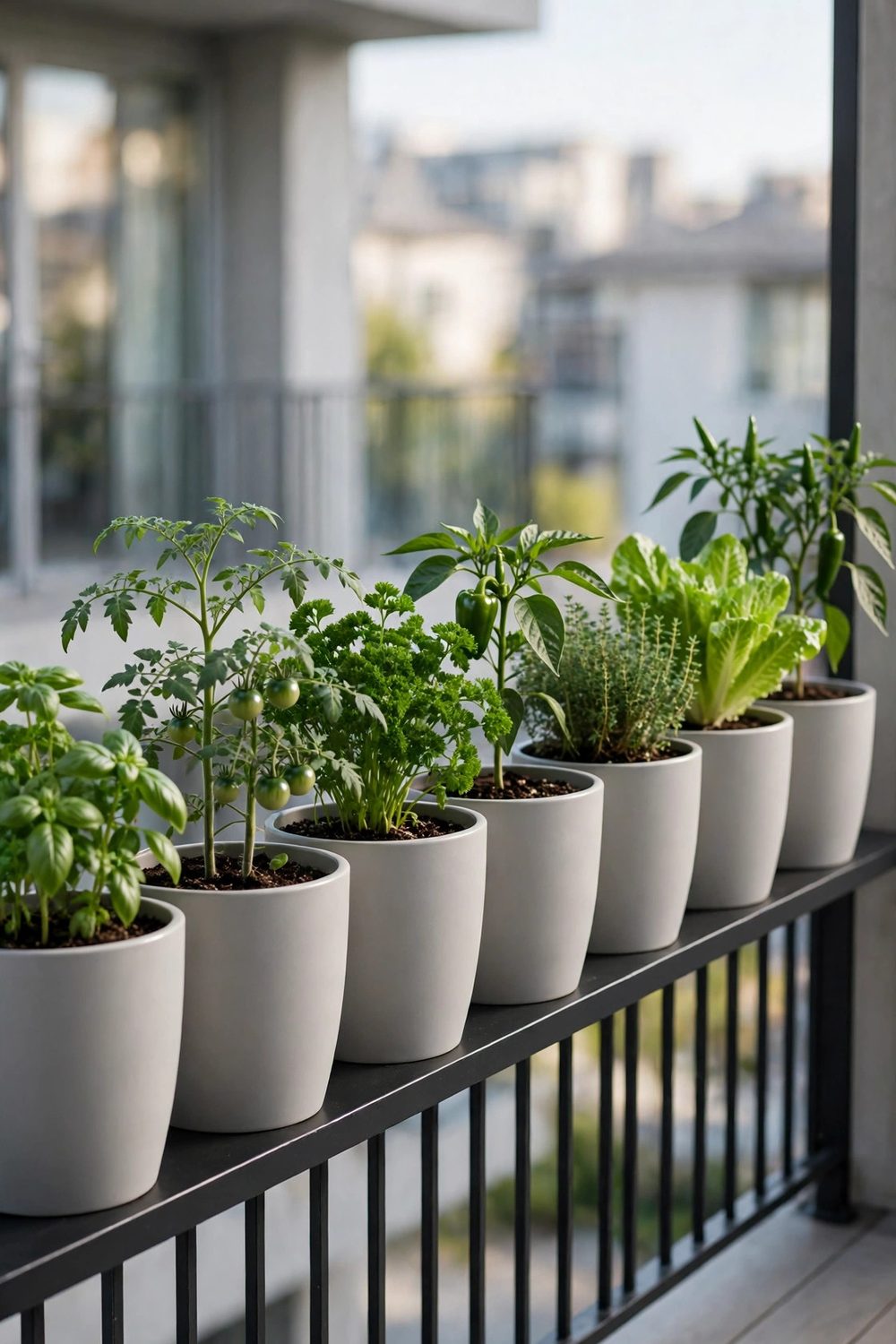
Order reads as care. Pots in one straight row along the rail, with even gaps, look managed from any angle. The same pots scattered at random read as clutter, even when each plant is healthy.
Group by height: tall pots at the ends, low boxes in the middle. Sight lines stay open, air moves through the row, and no plant shades a shorter neighbor out of its sun.
Match pot colors in two tones at most. A row of black and terracotta reads calm. Six clashing colors read loud from the street, and loud is what strict buildings notice first.
These smart balcony garden ideas show ordered layouts on small rails. Copy the spacing habit, then plant your own crops into the grid.
15. Do an Inspection-Day Reset and Keep a Photo Log
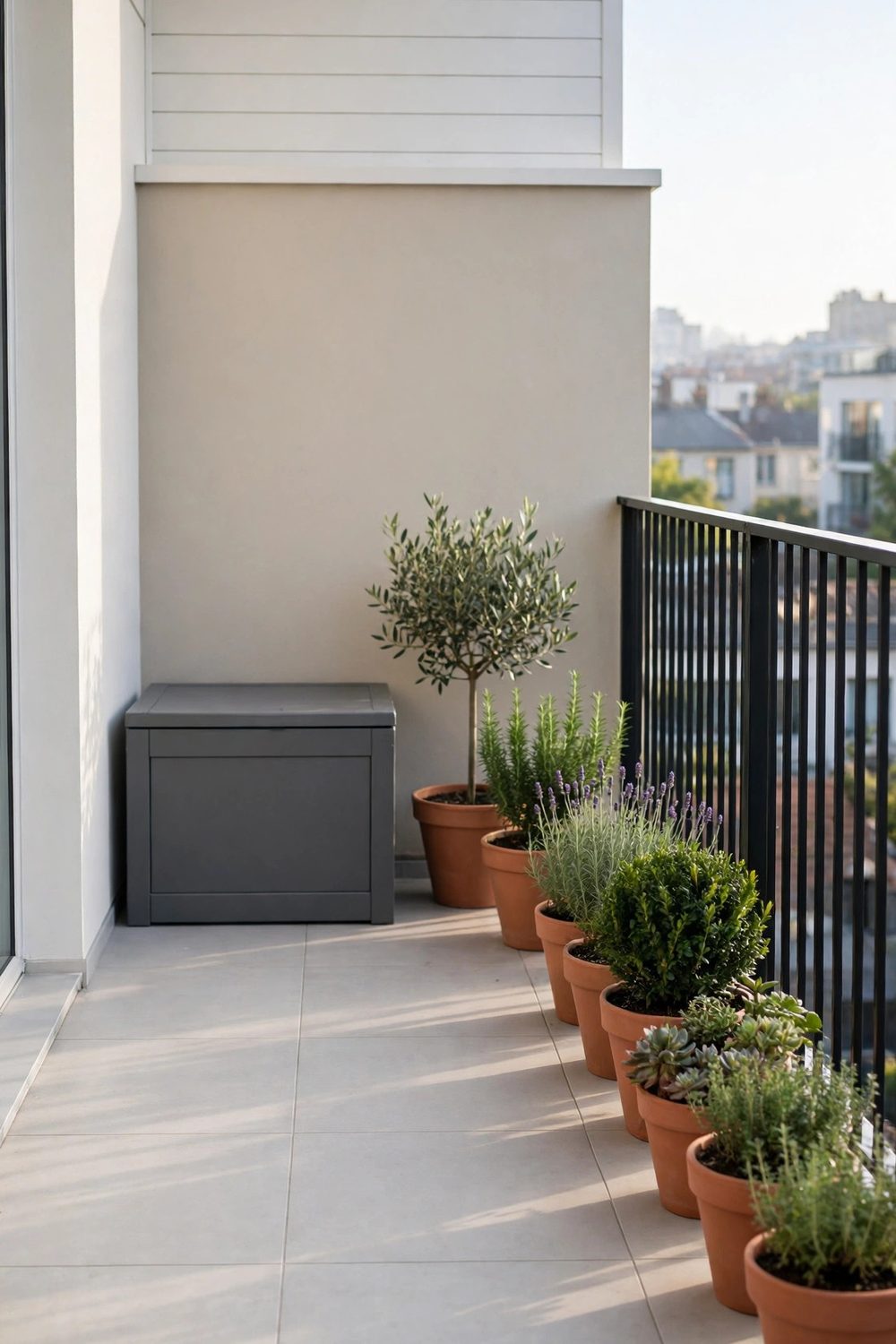
Inspections reward the garden that resets fast. The night before: sweep the floor, empty every saucer, tie loose stems, remove dead leaves, and shut the storage box. Fifteen minutes returns the balcony to its best.
Keep dated photos of the balcony each month, floor included. A photo log proves steady care, clean tiles, and freestanding holders. It answers claims with evidence instead of argument.
Leave the written permission where you can find it in one minute. Permission, photos, and a tidy rail are the three papers and habits that end most garden disputes before they start.
End the season the way you started it: wash trays, store the kit, sweep the slab. A clean handover in fall is the best case for a bigger garden next spring.
Strict rules reward tidy growers. Written permission, saucers under everything, plants inside the rail, and a weekly sweep cover almost every clause in almost every lease you will sign.
A balcony garden for renters with strict landlord rules is not a smaller garden. It is a cleaner one, and clean gardens get renewed permissions year after year.
Save this list to your container garden board for later. Send the pot list email this week, before you buy a single bag of mix.


