

15 Balcony Vegetables for People Who Travel for Work
Work trips kill balcony plants in a plain way: pots dry out by day three. The fix is not luck or a kind neighbor alone. It is reservoirs, mulch, crop choice, and shade, set up before you pack.
This balcony vegetable garden for people who travel for work plan assumes trips of three to ten days. Each idea buys water time in hours or days. Stack two or three ideas per pot and most crops ride out a week well.
Be honest about your light. A shaded north balcony holds moisture far longer than a hot west rail. The same pot that lasts a week in shade may last three days in full summer sun.
Test every system on a weekend at home first. A dripper that empties in one night helps no one at the airport hotel. One trial run shows true rates while you are there to fix them.
This post contains affiliate links. If you buy through them, we may earn a small commission at no extra cost to you. See our Affiliate Disclosure.
1. Put the Tomato in a Self-Watering Pot

Tomatoes drink more than any other balcony crop, so they get the strongest system. A self-watering pot holds water in a reservoir under the soil. Roots draw it up as the mix dries, day after day.
Use a 5-gallon self-watering pot, about 19 liters, for one compact tomato such as Patio Choice. Fill the reservoir to the top on the morning you leave. Top up the surface as well.
Water from the top for the first week after planting. Young roots have not reached the damp zone near the reservoir yet. Once growth is strong, the reservoir does the daily work alone.
Our verdict guide on self-watering containers for vegetables compares reservoir sizes. Bigger reservoirs buy more days. Size is the whole game for travel.
2. Give Peppers Deep Pots With a Water Buffer

Peppers forgive a dry day better than tomatoes, and deep pots stretch that grace. One pepper in a 5-gallon pot, about 19 liters, holds far more moisture than the same plant in a small pot.
Set the pot where it gets 6 to 8 hours of sun while you are home. Before a trip, shift it to morning sun only. Less afternoon heat means slower drying while you are gone.
Soak the pot fully the night before you leave, until water runs from the base. Let it drain on its saucer for an hour, then empty the saucer. Roots travel damp, not drowned.
Feed two weeks before a long trip, not the day before. Fresh feed in dry mix can scorch roots. A settled plant with steady moisture rides out absence best.
3. Run Greens in a Wicking Pot by the Door
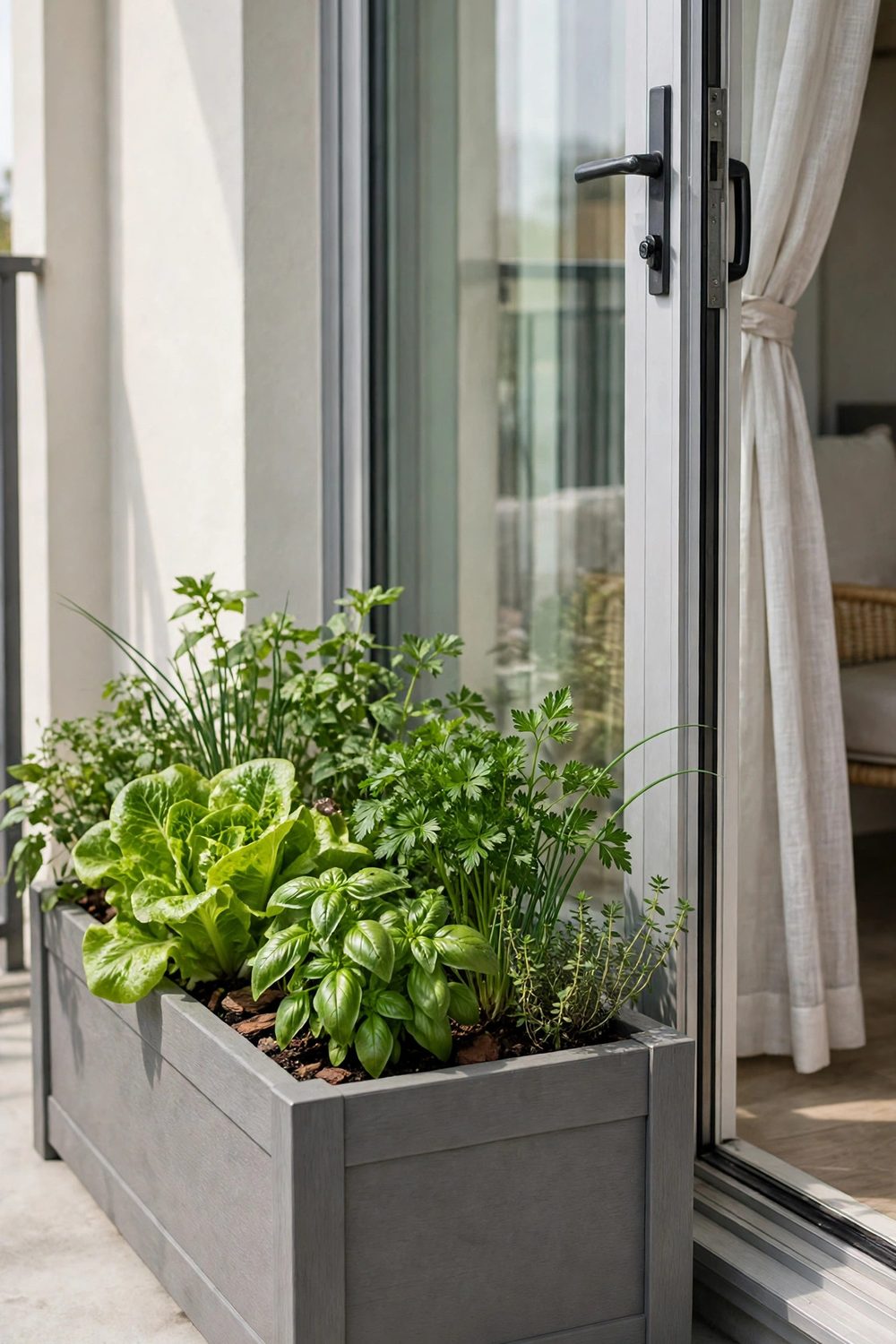
A wicking pot pulls water up through a fabric wick from a sealed base tank. Lettuce and herbs sip steadily without daily pouring. One fill can carry greens through a short trip on its own.
Buy a wicking pot or set a wick strip into a standard pot over a deep tray. Keep the tank full and the wick wet at all times. A dry wick stops working until it soaks again.
Grow cut-and-come-again lettuce, chives, and parsley here. They need 3 to 4 hours of sun and steady moisture, which is the exact service a wick gives while you travel.
Pick hard before you leave. A smaller leaf load drinks less water each day. The crown regrows while you are away, and you return to fresh leaves instead of a wilted bowl.
4. Add Bottle Drippers Before Every Longer Trip
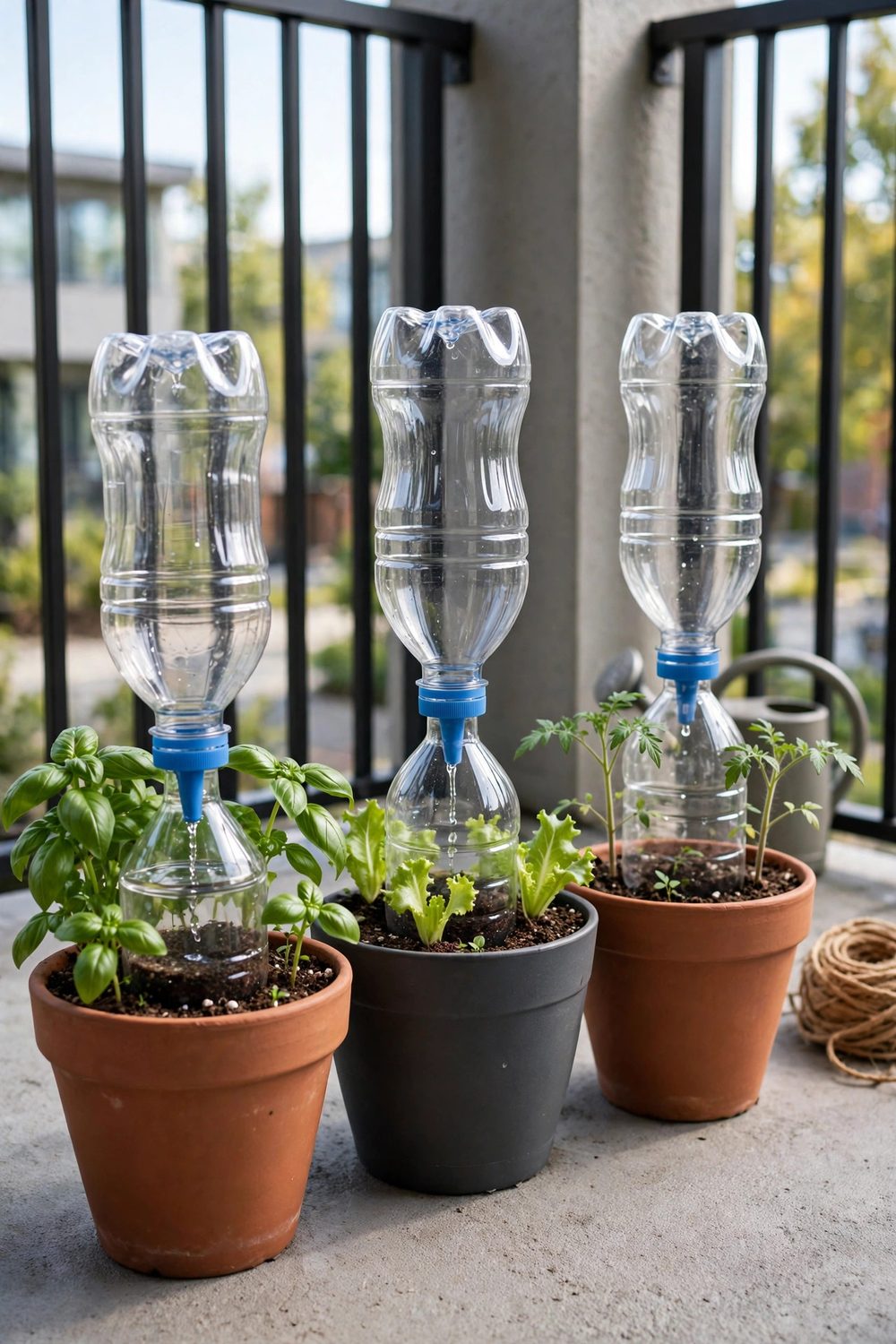
A bottle dripper is a spike or cap that feeds water slowly from an upturned bottle. Push one into each thirsty pot the day you leave. Flow rates vary, so trial yours at home first.
Use the largest bottle the pot can hold upright without tipping. Fill it fully, set the slowest drip that still flows, and bury the spike tip near the roots, not at the pot edge.
Drippers suit tomatoes, cucumbers, and peppers on trips of three to five days. They are a bridge, not a full system. Pair each dripper with mulch and shade for the longest cover.
Check the bottle angle before you close the door. A bottle that leans empties in hours. Set firm and vertical, it drips for days.
5. Hang a Gravity Drip Bag for a Row of Pots
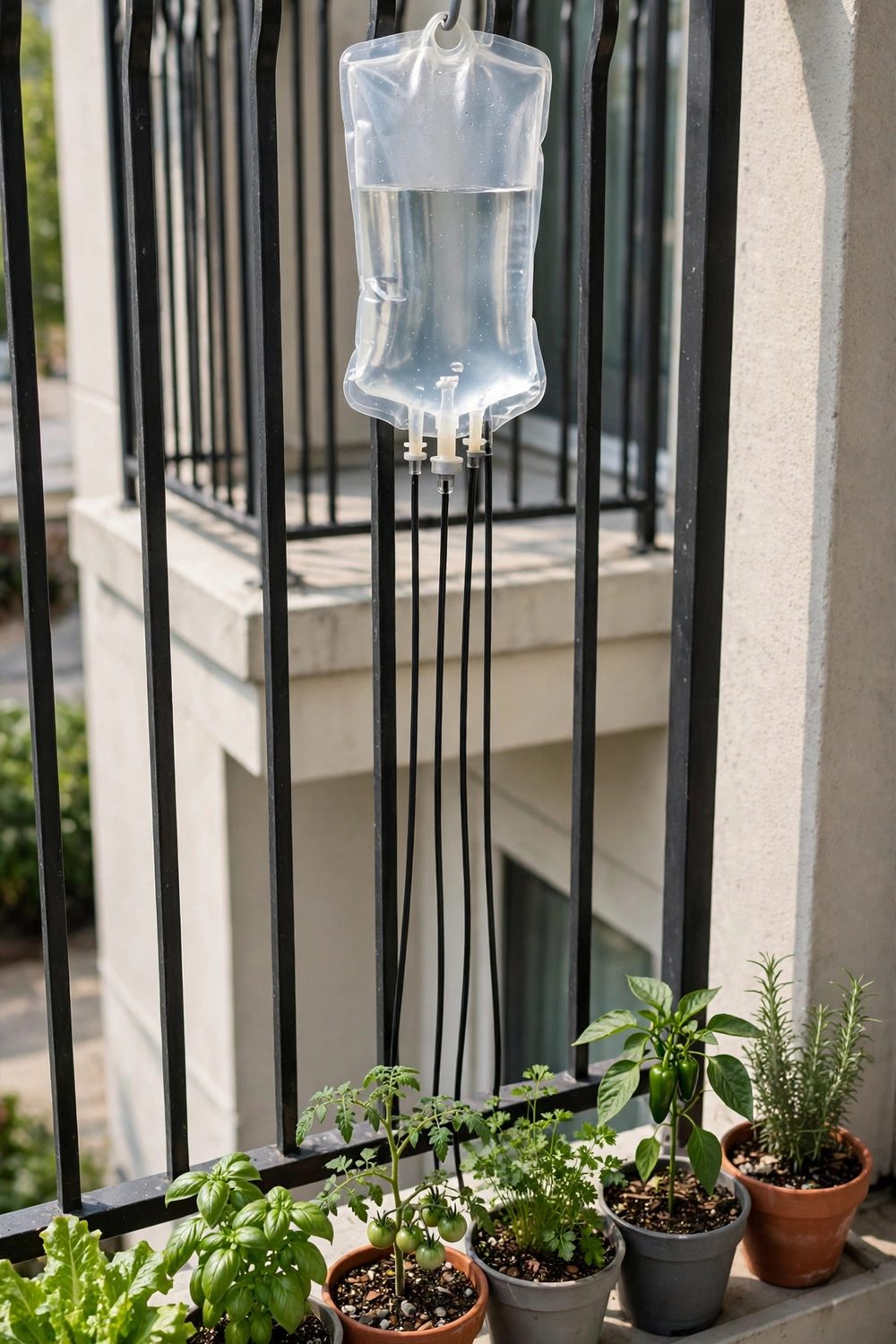
A gravity drip kit hangs a water bag on the rail and feeds thin tubes to each pot. No tap and no power are needed. Height does the work, so hang the bag as high as the rail allows.
Run one drip line per pot and test the full row for a weekend first. Kinks and air locks stop single lines silently. A home trial finds them while the fix takes two minutes.
This row system suits herbs, chilies, and salad pots in a line. Keep tubes shaded where you can. Sun warms stored water, and warm water grows algae inside clear lines over a long trip.
More no-tap methods are in our guide on how to water a balcony garden without a hose or outdoor tap. The can routine there covers your home weeks too.
6. Mulch Every Pot Surface Before You Pack
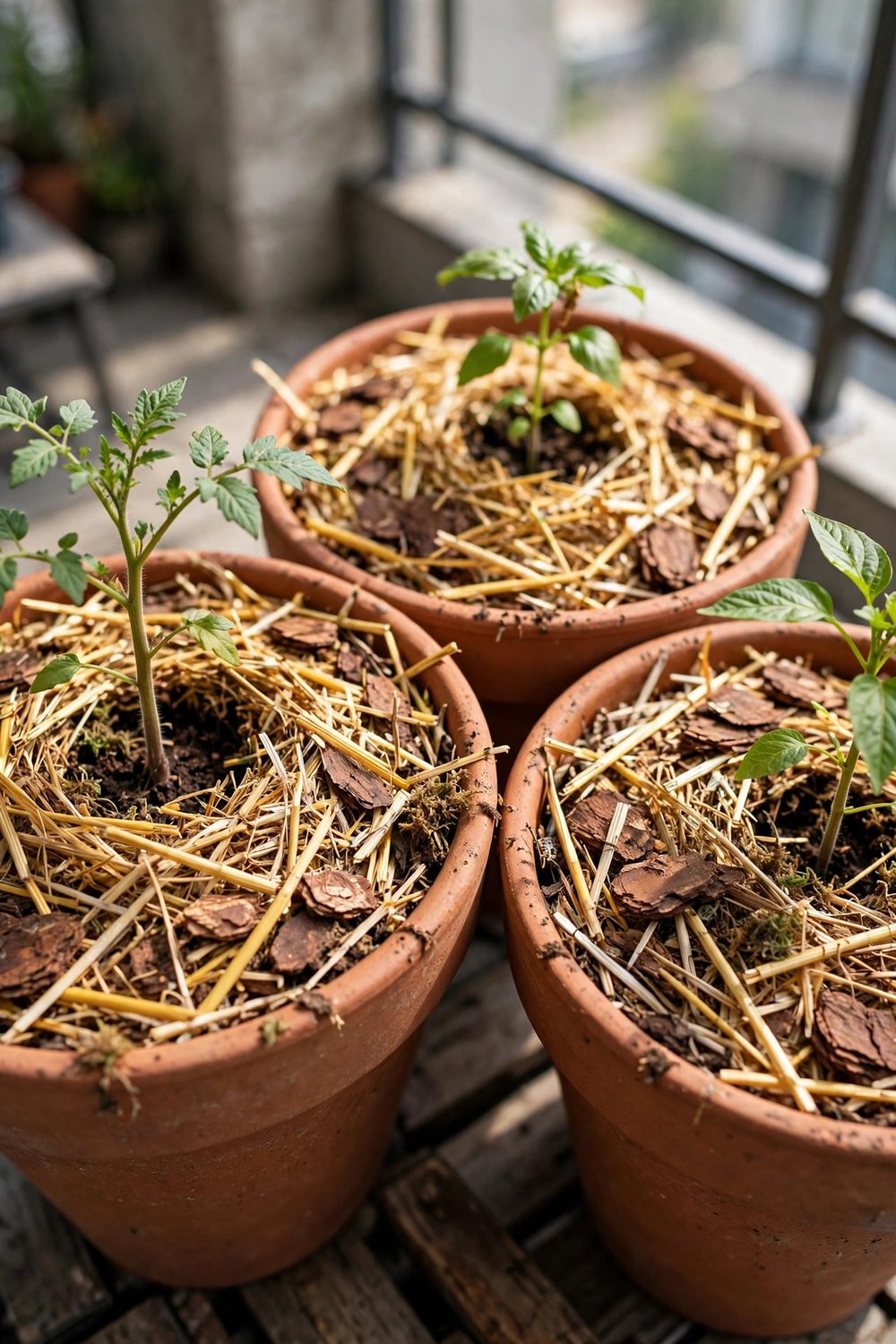
Bare mix loses water to sun and wind all day. A mulch layer of about 2 inches, 5 cm, of straw, bark, or shredded leaves shades the surface and slows drying a great deal.
Leave a small gap around each stem so the base stays dry. Mulch piled against a stem invites rot. Tuck the layer under leaves and up to the pot rim for full cover.
Mulch helps every system in this list work longer. Reservoirs drain slower, drippers last more days, and a plain soaked pot can gain a full extra day in summer heat.
Top up thin spots after heavy rain. Rain compacts mulch and opens patches. A handful per pot restores the blanket.
7. Group Pots Together and Shift Them to Shade
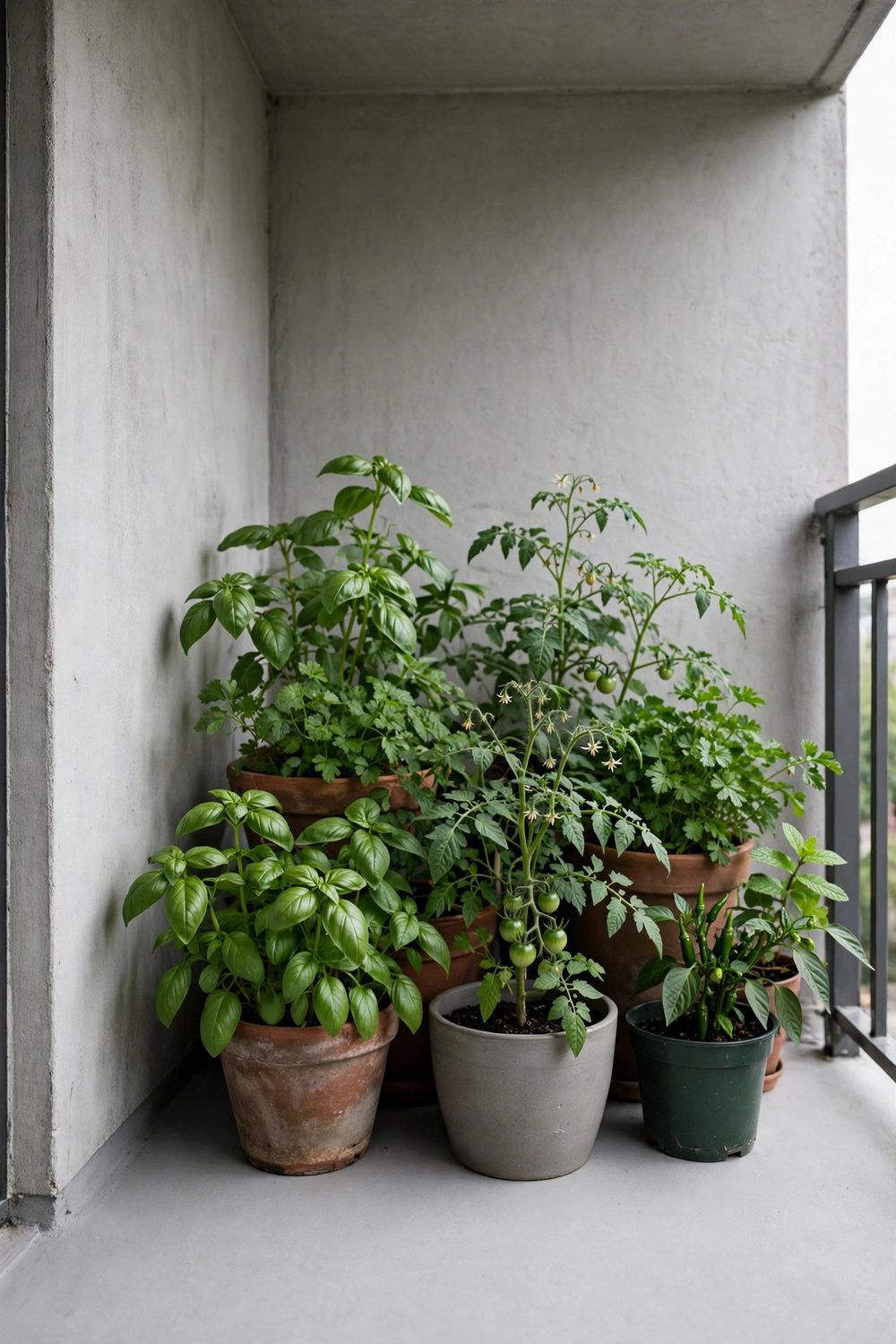
Grouped pots shade each other and hold a pocket of humid air. A lone pot on a hot rail dries fastest of all. Before a trip, pull every pot into one tight group in the shadiest corner.
Fruiting crops still need light on your return, so the shade stay is for trip days only. Morning sun with afternoon shade is the ideal group spot for a week away in summer.
Set the thirstiest pots in the center of the group. Edge pots dry first and shield the middle. This one free move can save the tomato you would have lost at the rail end.
Move pots back to full sun the day you return and water deeply. A week of soft light slows growth a little. Plants recover fast once sun and feeding resume on schedule.
8. Choose Plastic Pots Over Clay and Bare Grow Bags
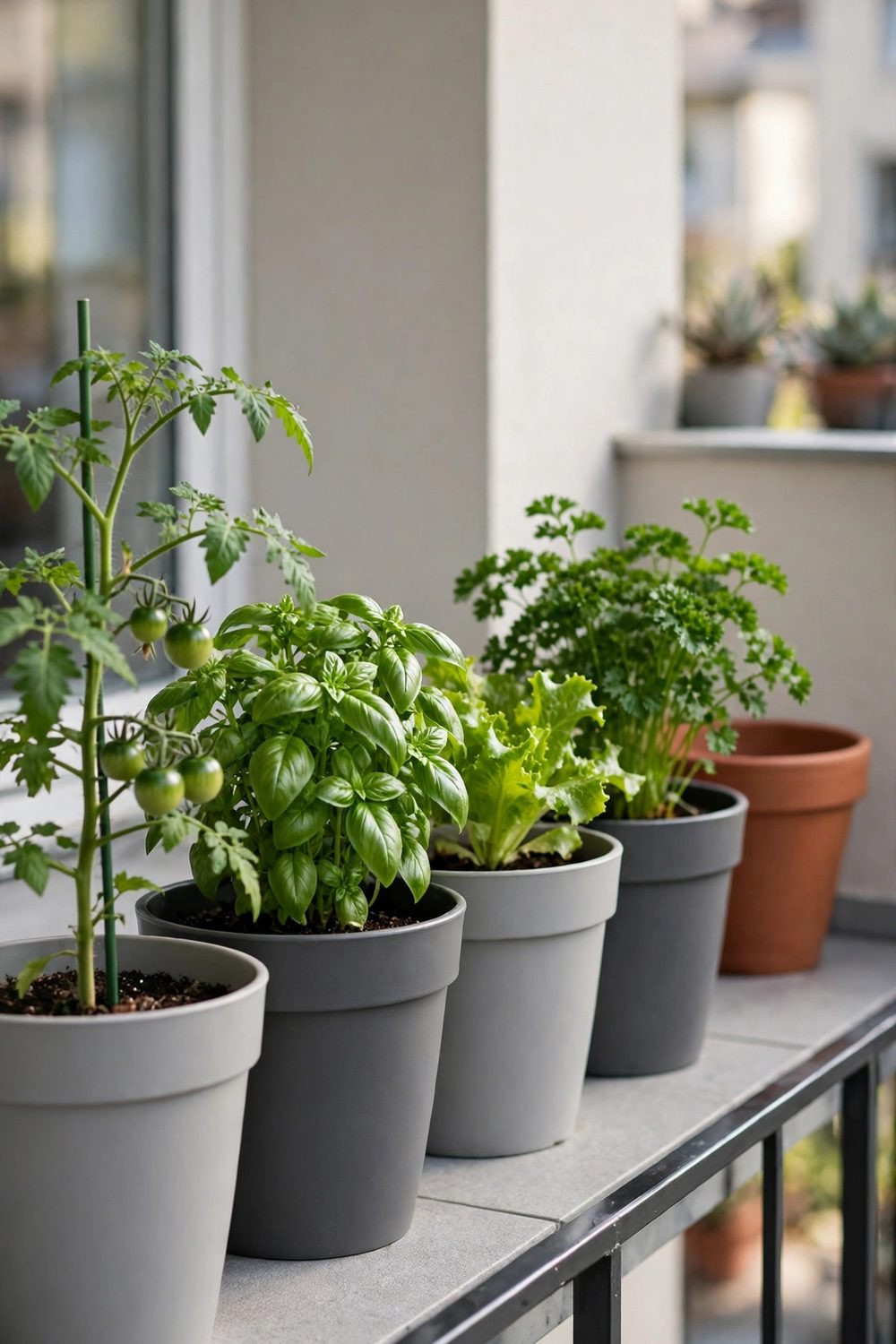
Clay pots breathe water out through their walls, and fabric bags dry from every side. Both are fine while you are home. For travel weeks, plastic pots hold moisture days longer in the same heat.
Keep your best travel crops in plastic from planting day. Moving a plant between pot types mid-season breaks roots. Plan the travel pots in spring and the system is ready by summer.
If you love fabric bags, sit each bag in a deep tray of water for trip days only. Our balcony vegetable garden in grow bags guide shows tray setups that keep bags neat and damp.
Empty those trays the day you return. Bags left standing in water for weeks rot roots. The tray is a trip tool, not a full-season home.
9. Lean on Chilies and Peppers as Travel Crops
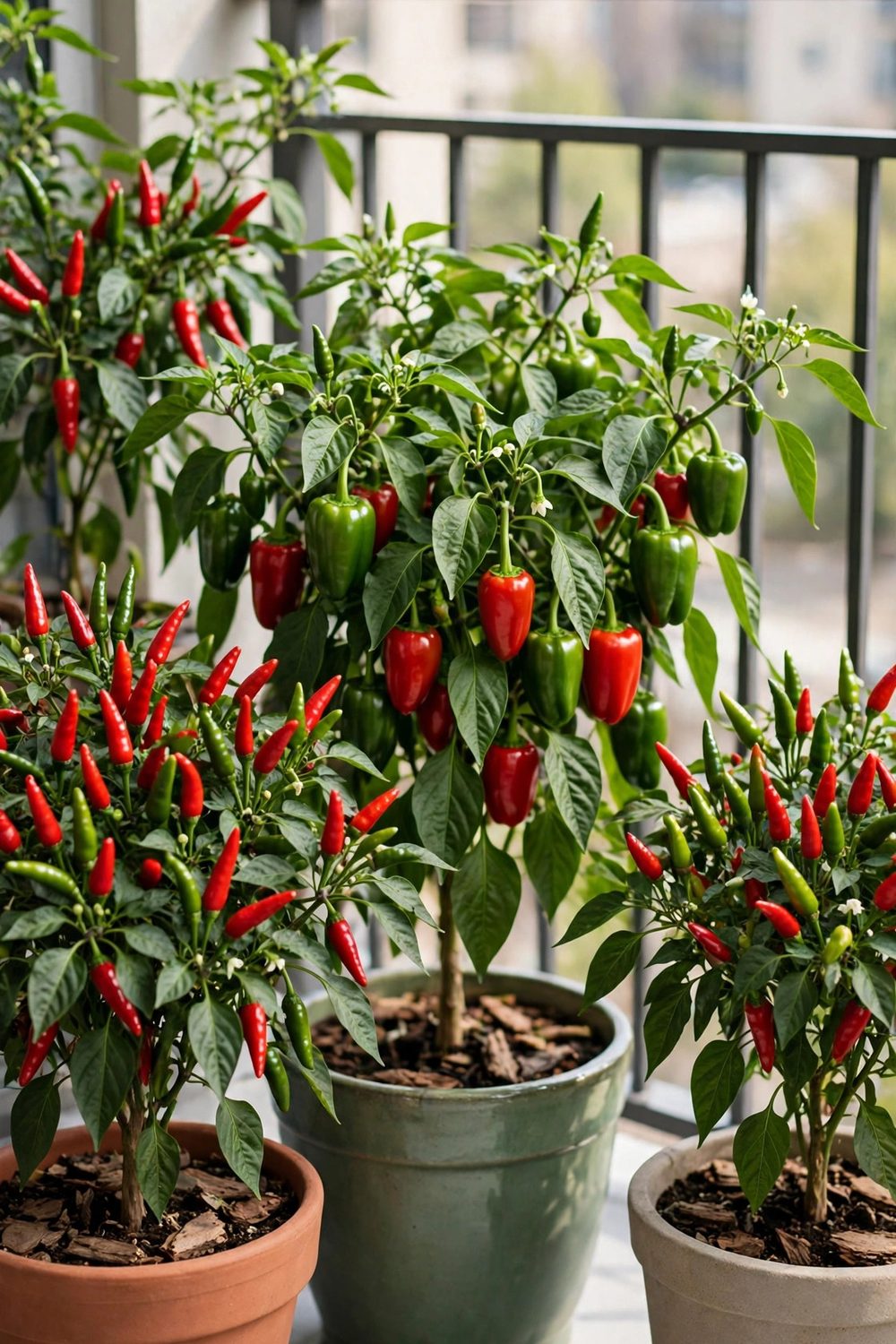
Some crops forgive absence better than others, and chilies sit near the top. A compact chili in a 10 to 12 inch pot, 25 to 30 cm, slows down in dry mix, then recovers when watered.
Peppers share that patience. Their leaves may flag on a hot return day, yet a deep soak that evening lifts most plants by morning. Steady moisture still beats rescue, so pair them with drippers.
Build your travel balcony around forgiving crops first. Add one thirsty tomato in a reservoir pot if you want it, and let the rest of the rail be plants that wait well.
Skip cucumbers in travel-heavy months. They drink daily in heat and sulk after one dry day. Grow them in the months when your calendar stays home, and enjoy them fully then.
10. Keep a Dry Herb Corner That Barely Drinks
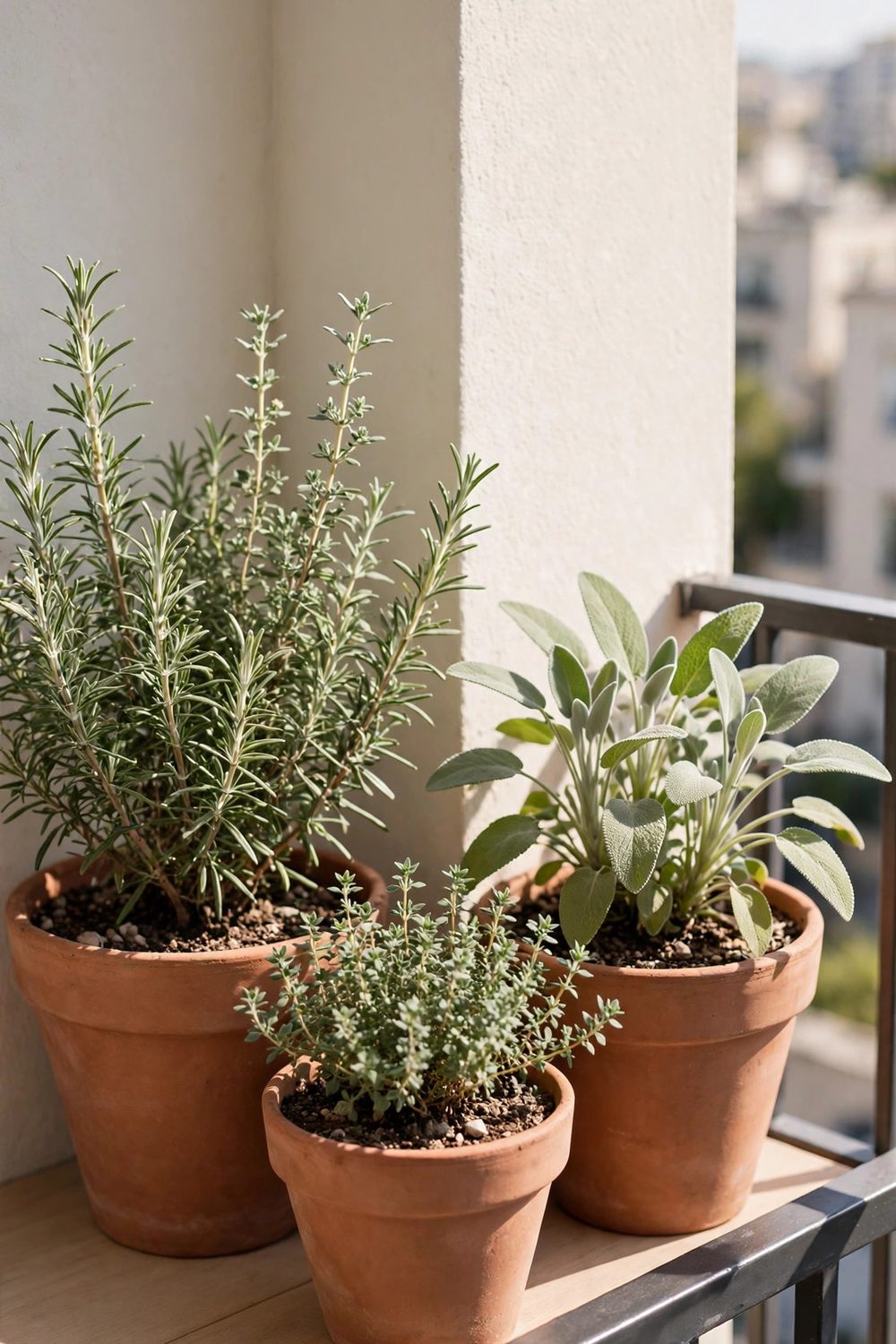
Rosemary, thyme, and sage come from dry hillsides and act like it in pots. A sunny corner of these herbs can wait a week or more between waterings once roots are well settled.
Grow each herb in its own 10 to 12 inch pot, 25 to 30 cm, with sharp drainage. Never put dry herbs in reservoir pots. Constant damp mix rots them faster than drought harms them.
Water this corner deeply before a trip and not again until you return. That rhythm suits the plants and frees your helper, if you have one, to focus on the thirsty pots only.
Harvest dry herbs hard before long trips. Smaller plants drink less, and the cuttings dry on the kitchen counter while you travel.
11. Trust Kale and Chard to Wait for You
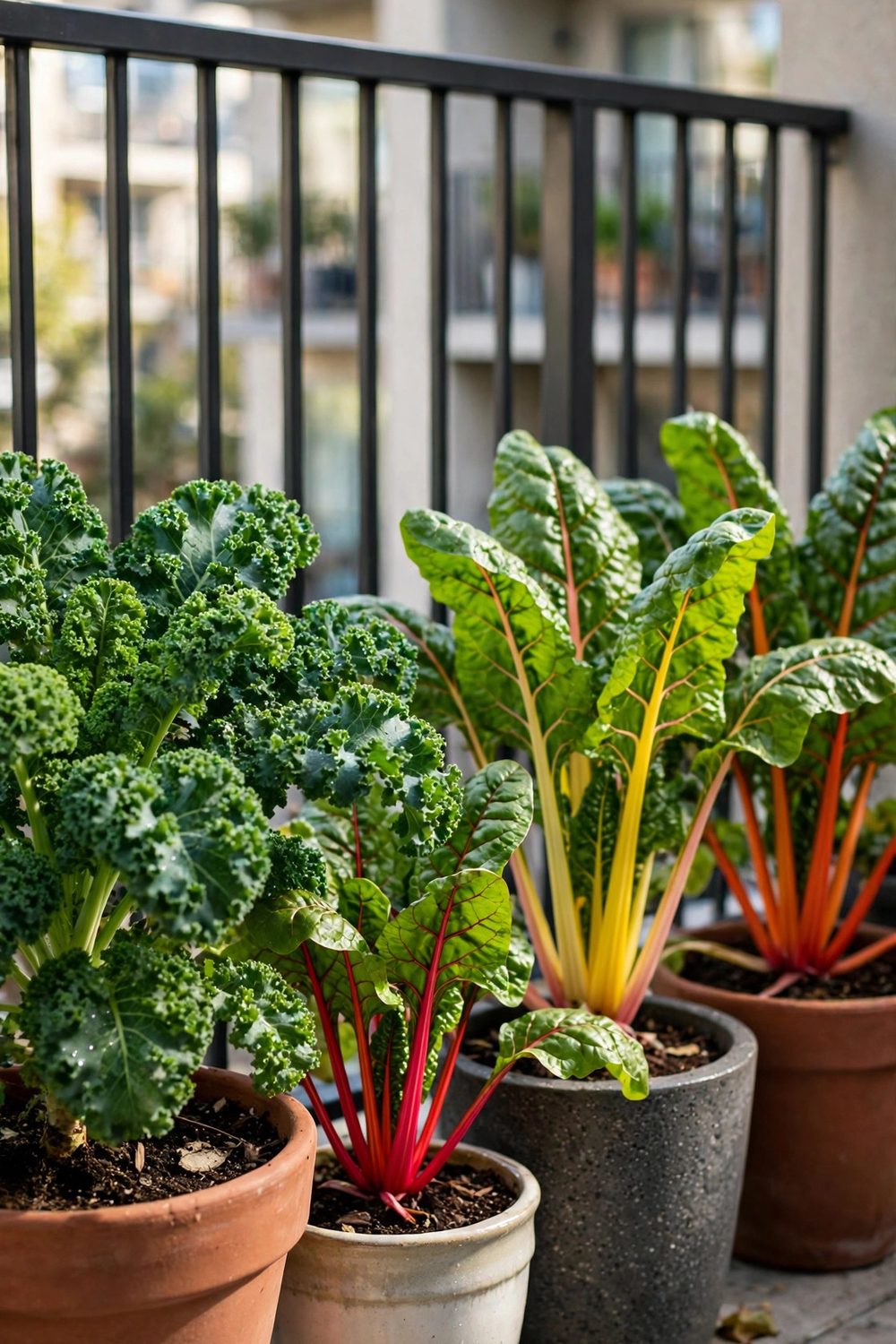
Kale and Swiss chard wilt in heat, then stand back up after a soak more often than most greens. One plant per deep pot, at least 12 inches, 30 cm, gives roots a real moisture store.
Pick outer leaves hard before you leave. A trimmed plant needs less water each day you are gone. The crown holds, new leaves push out, and the pot is productive again within two weeks.
Set leafy pots in the grouped shade corner for trip days. Greens accept 3 to 4 hours of sun, so the shade move costs them nothing in growth over one week away.
Feed on your return, not before you leave. A fed plant pushes soft growth that drinks more. A settled plant, well soaked and mulched, waits in better shape.
12. Use Deep Trays as a Short Buffer, Then Empty Them
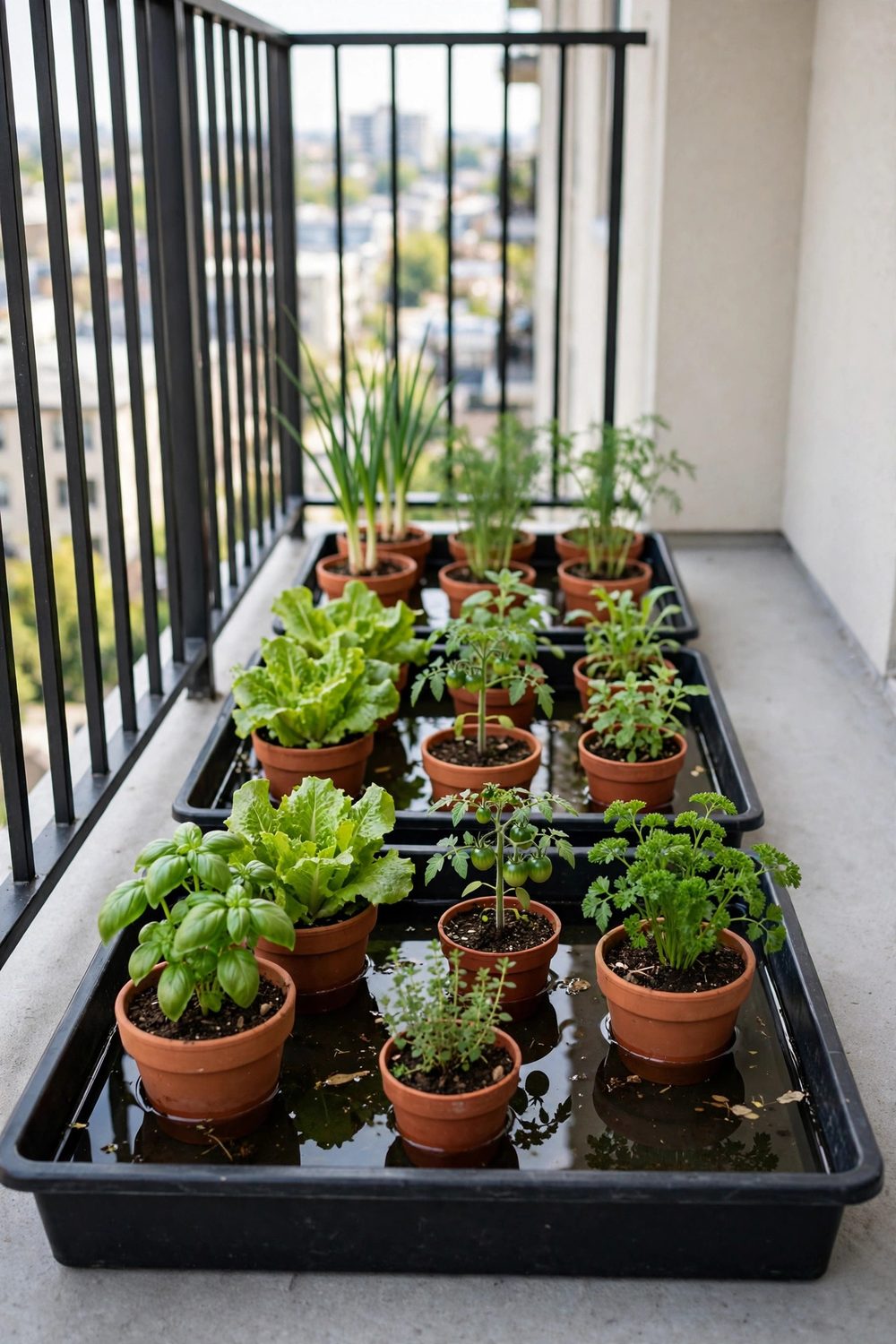
A deep tray under a pot group works as a short water buffer. Fill trays with about an inch, 2.5 cm, of water on departure day. Pots wick it up slowly through their drainage holes.
This buffer suits trips of two to four days in mild weather. In high heat it empties fast and helps less. Treat it as one layer among three, with mulch and shade doing the rest.
Raise pots on feet inside the tray if rain is due. A storm can fill a tray to the brim and drown roots overnight. Feet lift the base above all but the worst fills.
Empty and dry every tray the day you return. Standing water breeds mosquitoes within a week in summer. The buffer is a trip tool with a clear end date.
13. Do a Soak, Harvest, and Prune Routine Before You Leave
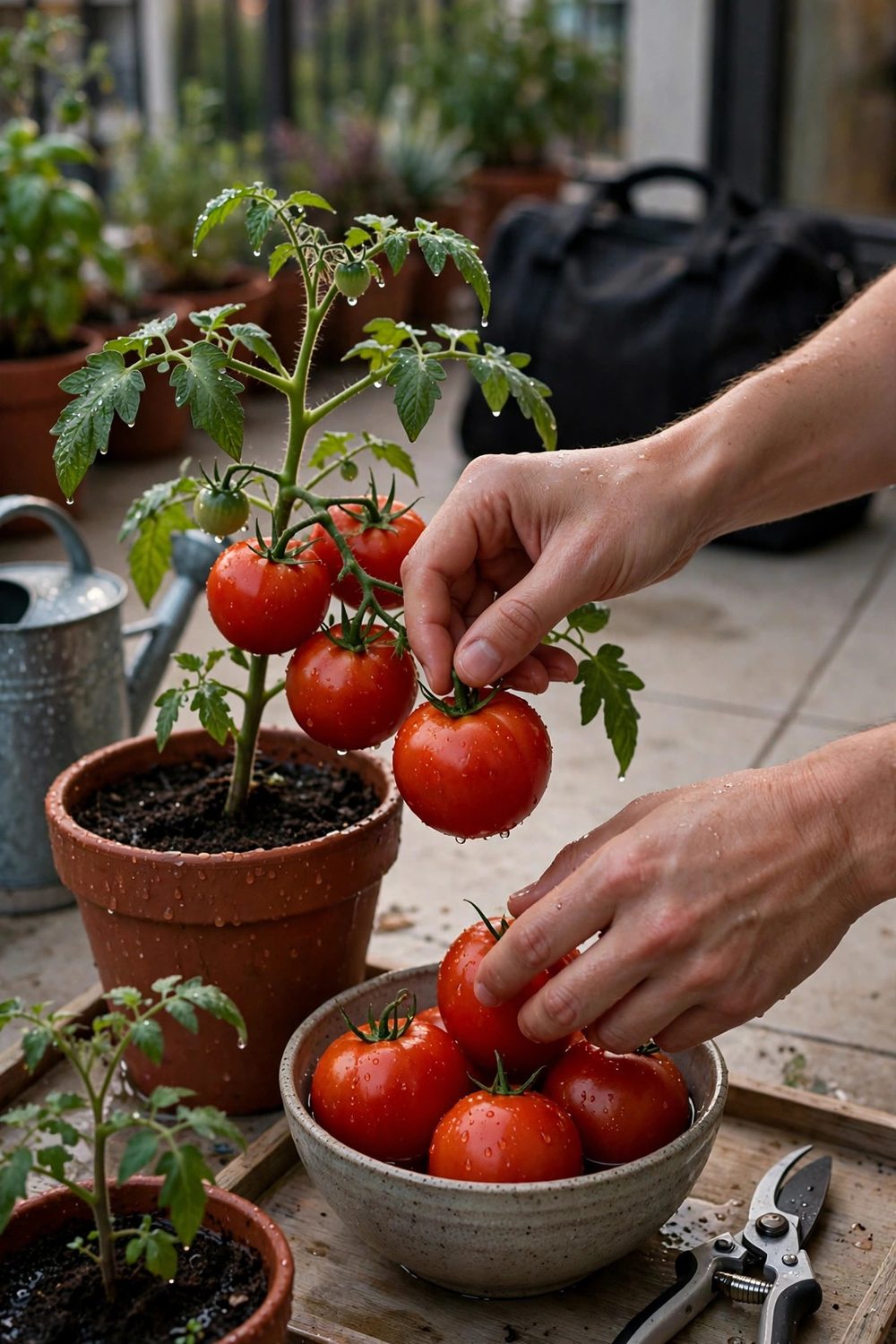
The night before a trip, soak every pot until water runs from the base. Let pots drain for an hour, then empty saucers. Plants leave home damp to the core, not wet at the feet.
Harvest everything ripe and near ripe. Fruit left on the plant drinks water and can drop or split while you are gone. A full kitchen bowl beats a stained balcony floor on return.
Pinch off young flowers on thirsty crops before long trips. Blooms and new fruit raise water demand fast. One week of lost flowers costs less than one dead plant in August.
Our plain rules on how often to water vegetables in pots help you judge each pot the night before. Dry, damp, or soaked decides who gets a dripper.
14. Label Pots and Leave a One-Line Note for a Helper
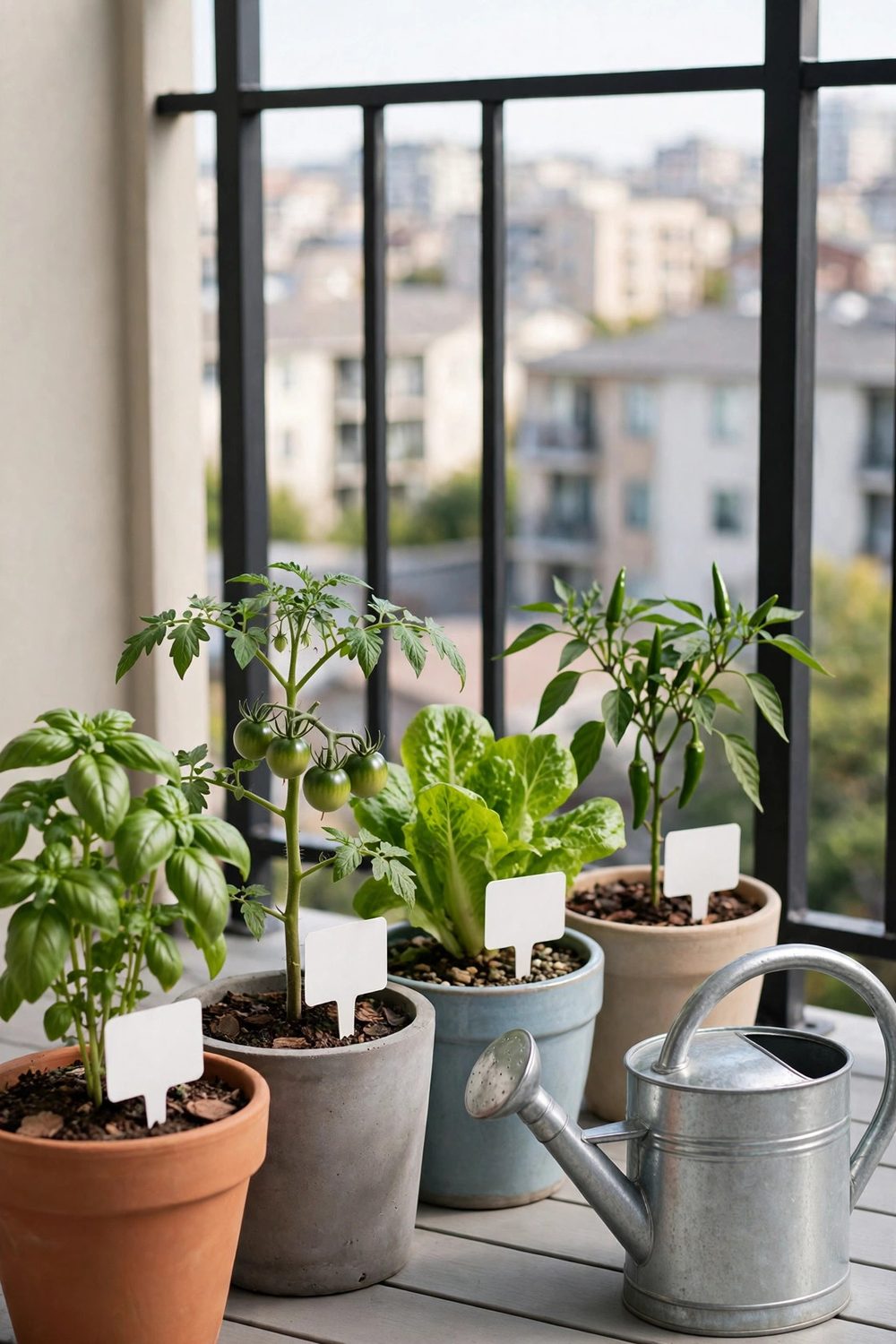
One helper visit mid-trip covers what systems cannot on trips over a week. Make that visit foolproof: tape a number on each pot and leave a note that lists each number with one line of care.
Keep the note to water only. Helpers overfeed, overprune, and move pots to odd spots with the best intent. Water by number, empty no trays, move nothing. Short notes get followed in full.
Leave the watering can full by the sink and the balcony key where the helper expects it. Every small friction you remove raises the odds the visit happens on the right day.
Thank helpers with the harvest. A bag of tomatoes and herbs makes the next trip ask easy.
15. Time Sowings Around Your Travel Calendar
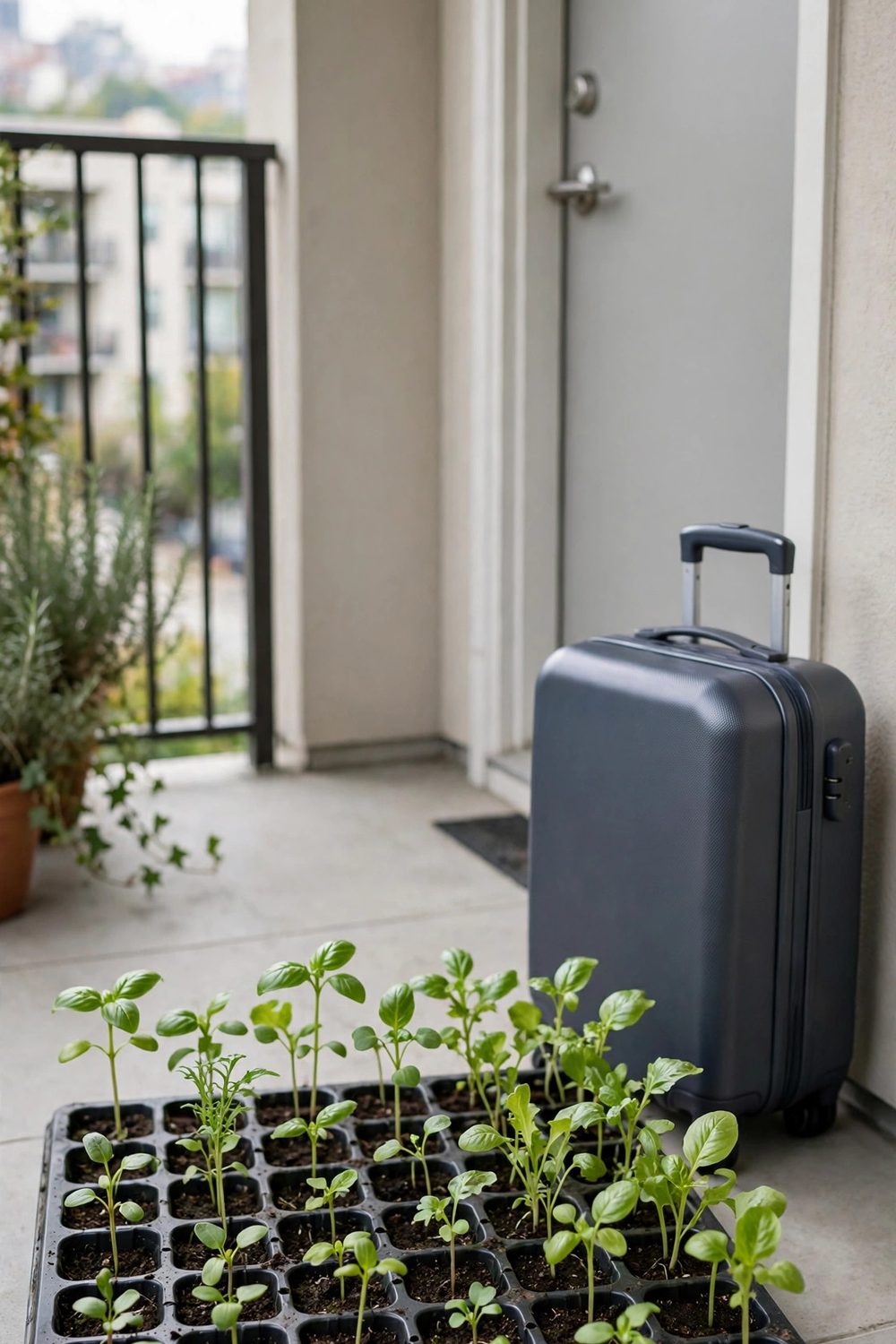
Seedlings are the neediest stage of all. A tray sown the week before a trip dries and dies while older plants sail through. Read your calendar first, then open the seed packet.
Sow fast crops the day you return instead. Radishes, lettuce, and spring onions sown on return day are ready within weeks, and you are home for the damp first days they need.
Plant out young tomatoes and peppers right after a trip, not right before one. Two home weeks settle roots deep enough to use a reservoir well on the next trip away.
New growers with heavy travel can start from our base guide to container vegetable gardening for beginners with no yard at all, then add the travel systems here one by one.
No single trick covers a work trip. Reservoirs, mulch, shade, grouping, and forgiving crops stacked together do. Pick the two systems that fit your pots and test them on one home weekend first.
A balcony vegetable garden for people who travel for work stays alive on preparation, not hope. Set it up once each spring, and every trip gets easier after that.
Save this plan to your container garden board for later. Your next trip can end with a harvest, not a rescue mission.


