

How to Water a Balcony Garden Without a Hose or Outdoor Tap
No outdoor tap and no hose can feel like a hard stop for a balcony garden. Learning how to water a balcony garden without a hose or outdoor tap turns that stop into a simple daily routine.
The system rests on a can you can carry full, a jug rotation at the kitchen sink, and watering in two calm rounds. Mulch, grouping, and reservoirs then stretch every litre further.
By the end of this guide, a dry week holds no fear. You will know how much water each pot needs, how to check before you carry, and how to cover a holiday away.
The whole round for a small balcony takes ten to fifteen minutes. It suits renters in blocks with no outside tap, and it splashes far less than a hose ever would.
This post contains affiliate links. If you buy through them, we may earn a small commission at no extra cost to you. See our Affiliate Disclosure.
Time: 10 to 15 minutes per watering round for a small balcony · Difficulty: Beginner
What You Need
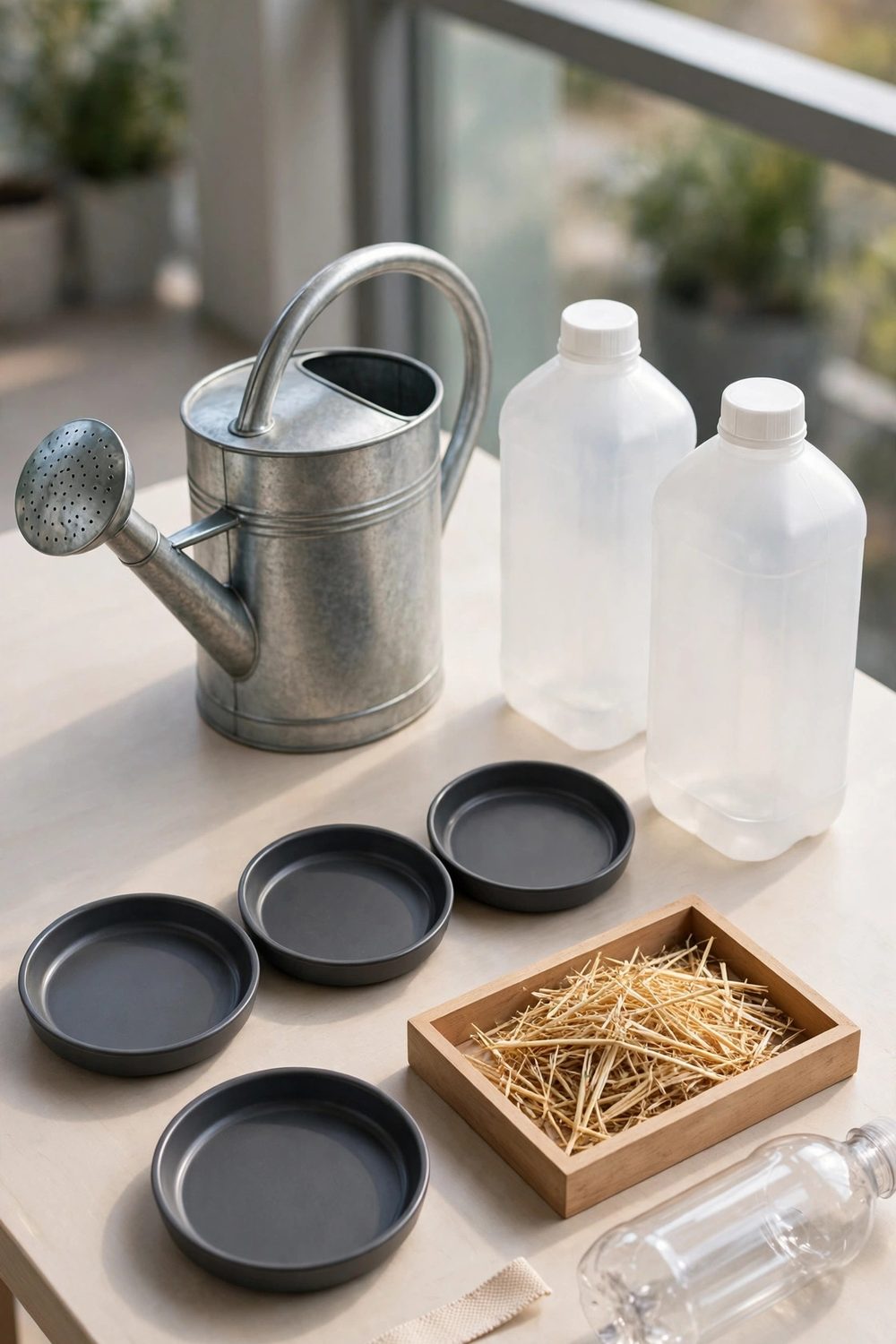
The no hose kit is short, cheap, and mostly household gear. Each item cuts either trips, spills, or the speed at which pots dry out.
- Watering can with a rose head: a can sized to your strength, since water weighs 1 kg per litre, with a rose that softens the flow.
- Two large jugs: a pair of kitchen jugs for a fill and carry rotation at the sink, so one fills while you pour from the other.
- Mulch: straw, bark chips, or gravel mulch for pot surfaces, slowing drying and stopping splash when you water from the can.
- Deep saucers: one under each pot to catch the second round overflow and hold a small reserve for roots on hot days.
- Self-watering inserts or reservoir pots: for the thirstiest crops, holding water under the mix where roots can draw it up over days.
- Plastic bottles and cotton wick cord: for holiday drippers and wicking setups that feed pots slowly while you are away from home.
- A small bucket: a staging bucket by the balcony door for rinse water and for catching drips during the carry from the sink.
Set the whole kit up once, by the sink and the door, and the routine runs itself. Gear that lives where the water is gets used daily, without thought or hunting through cupboards.
Pick a Can Size You Can Carry Full
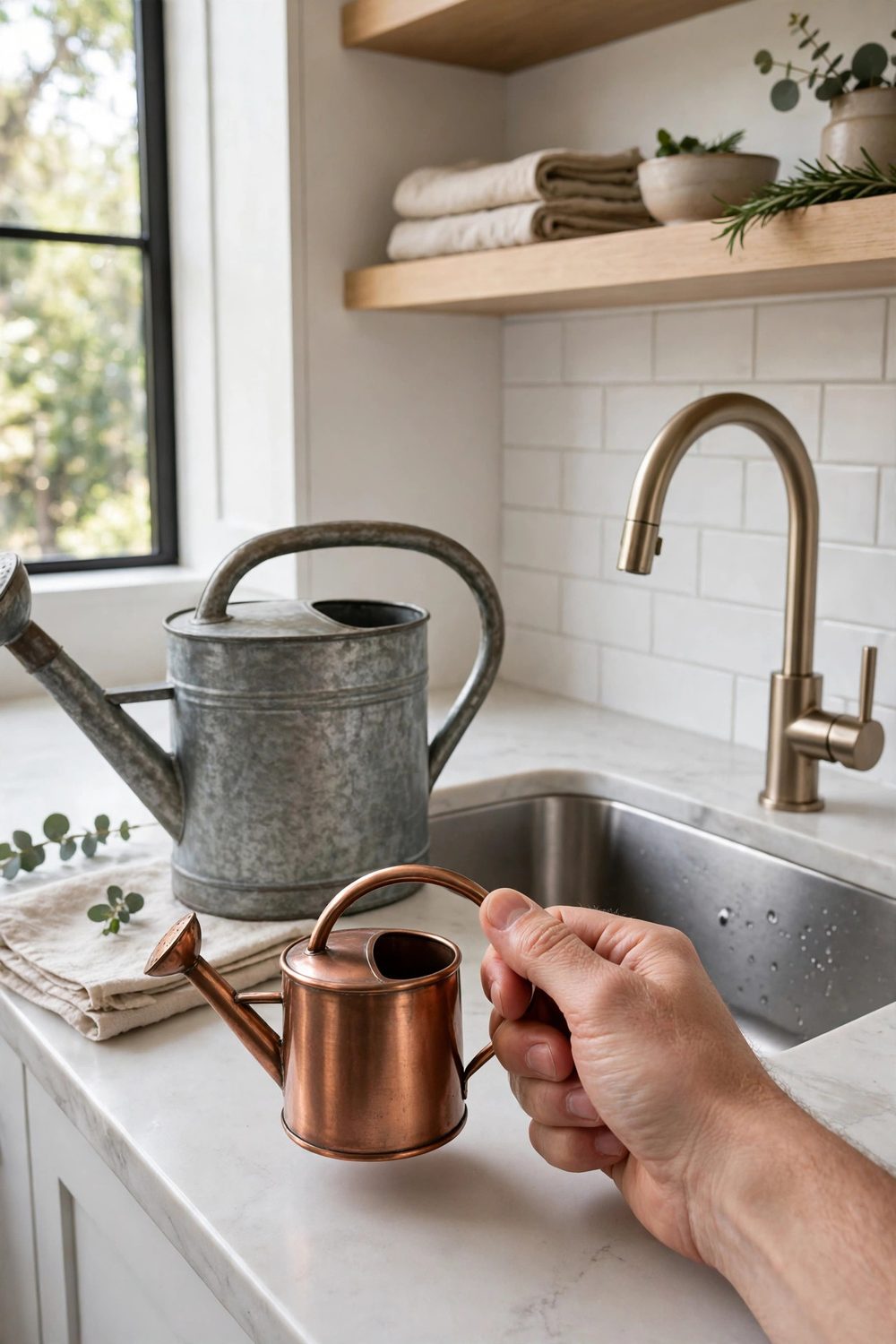
Water weighs 1 kg (about 2.2 pounds) per litre, so a full 10 litre can weighs over 10 kg before the can itself. Test the weight at the sink before you commit to a size.
Many gardeners land on a 5 to 7 litre can for a flat with stairs or a long hall. Two light trips beat one heavy trip that strains wrists and spills on the carpet.
Choose a can with a rose head and a handle that suits a full grip. A long spout reaches pots at the back of a stand without leaning over the rail.
Fill at the Kitchen Sink With a Jug Rotation
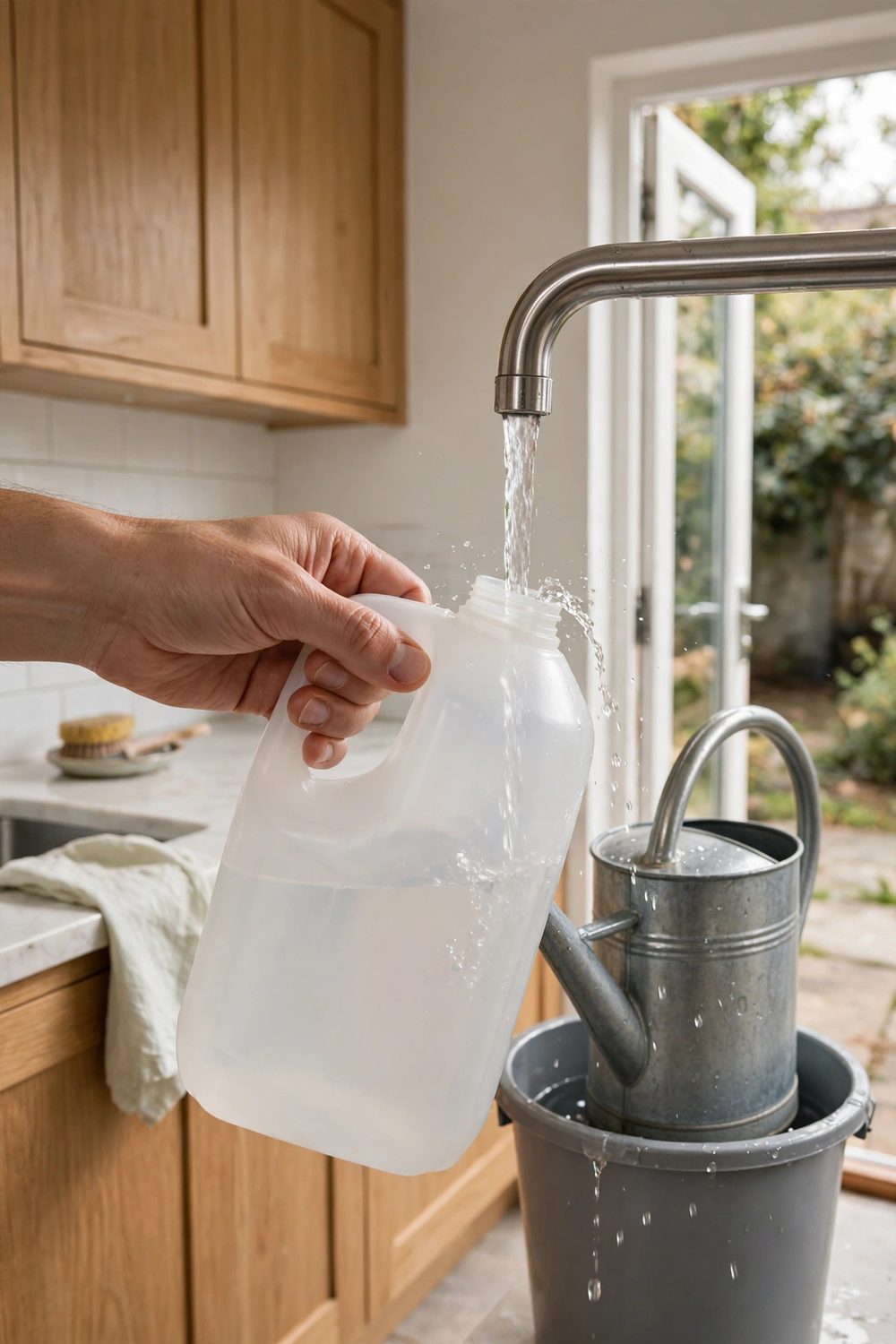
Most kitchen taps fill a can too slowly, and some cans do not fit under the tap at all. Fill a large jug under the tap instead, and pour the jug into the can.
Run two jugs in rotation: one fills at the tap while you carry the other out to the balcony. The tap never runs dry of work, and you never stand waiting mid round.
Set the can in the staging bucket by the door during the swap. Drips from a wet can base land in the bucket, not on the hall floor, in both directions of the trip.
Water Deeply in Two Rounds
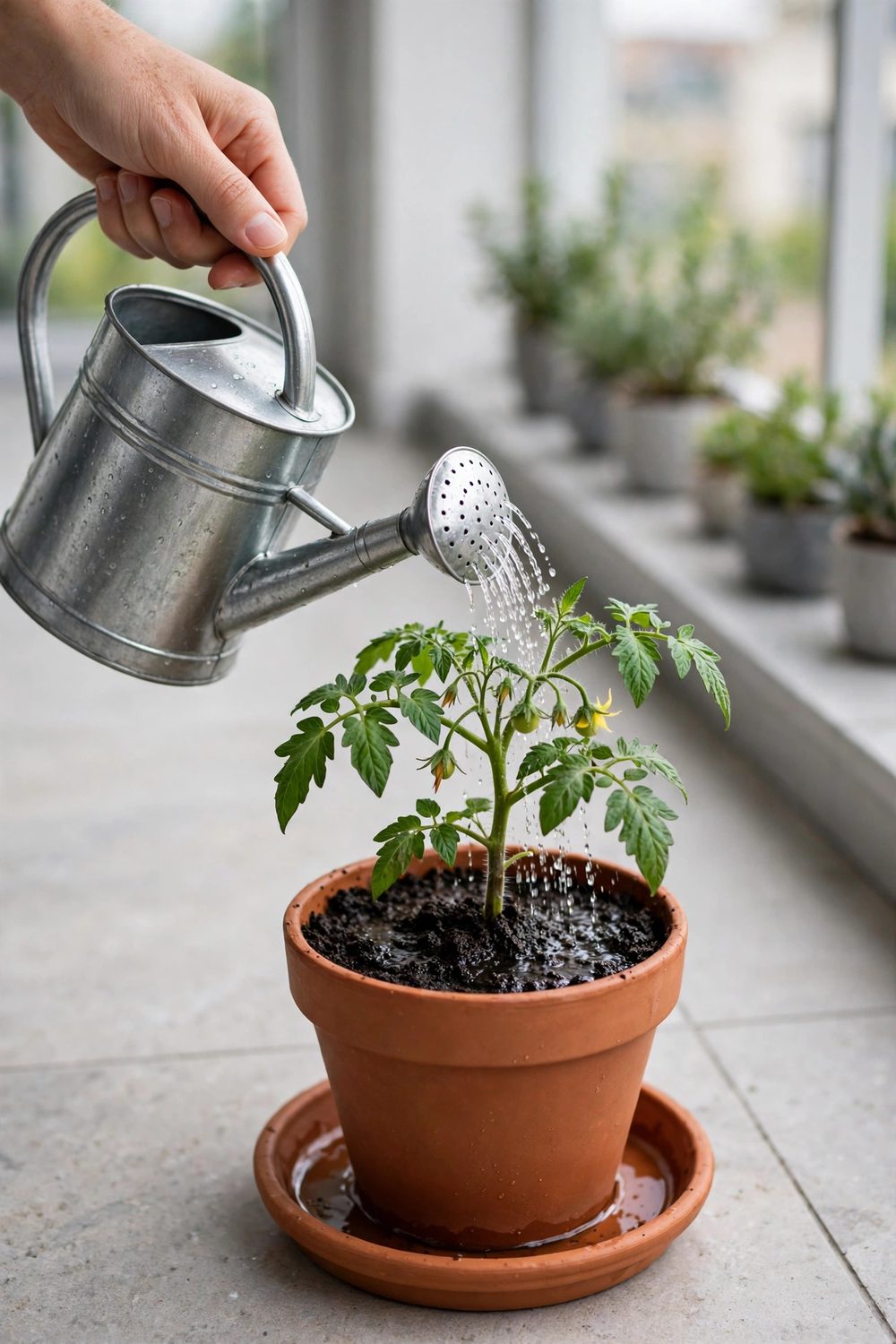
Give every pot a first light round, then work back along the row with a second, deeper round. The pause lets the first water soak in, so the second round reaches the roots.
A single fast round on dry mix runs down the pot sides and out of the holes. The surface looks wet while the root ball stays dry at the core, where it matters most.
Stop each pot when water reaches its saucer. Timing rules for hot and mild weeks sit in our guide on how often to water vegetables in pots.
Mulch the Surface to Slow Drying
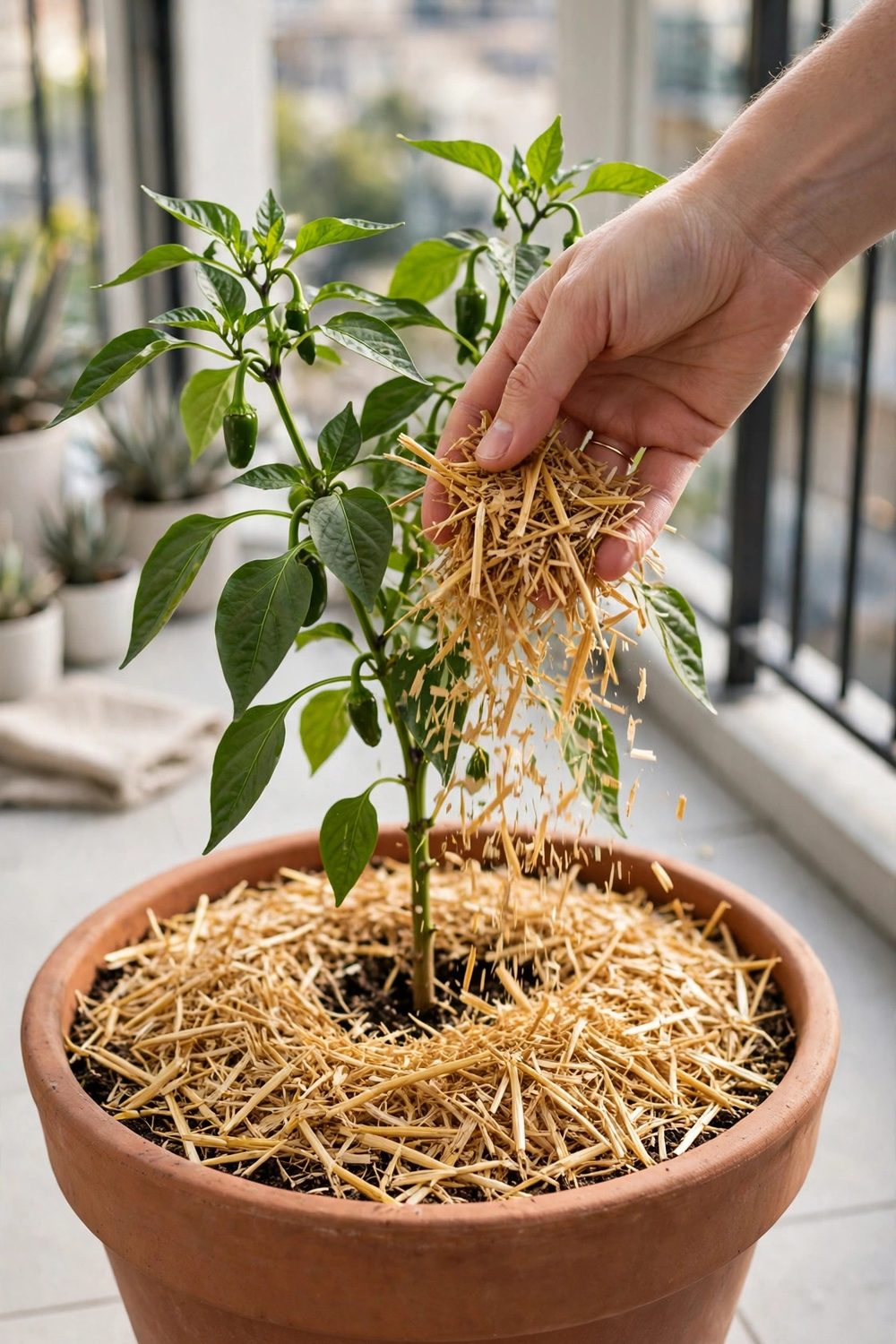
Spread mulch about 1 inch (2.5 cm) deep over the mix surface of each pot, keeping it clear of the stem. Straw, fine bark, or gravel all shade the mix and slow evaporation.
Bare mix in wind and sun can lose its surface water within hours. A mulched pot holds moisture a day longer in the same spot, which can halve your carries in a hot week.
Mulch also stops splash when you pour, keeping muddy spots off leaves and tiles. Top the layer up when it thins, and swap straw that mats down after heavy rain.
Group Thirsty Pots Together
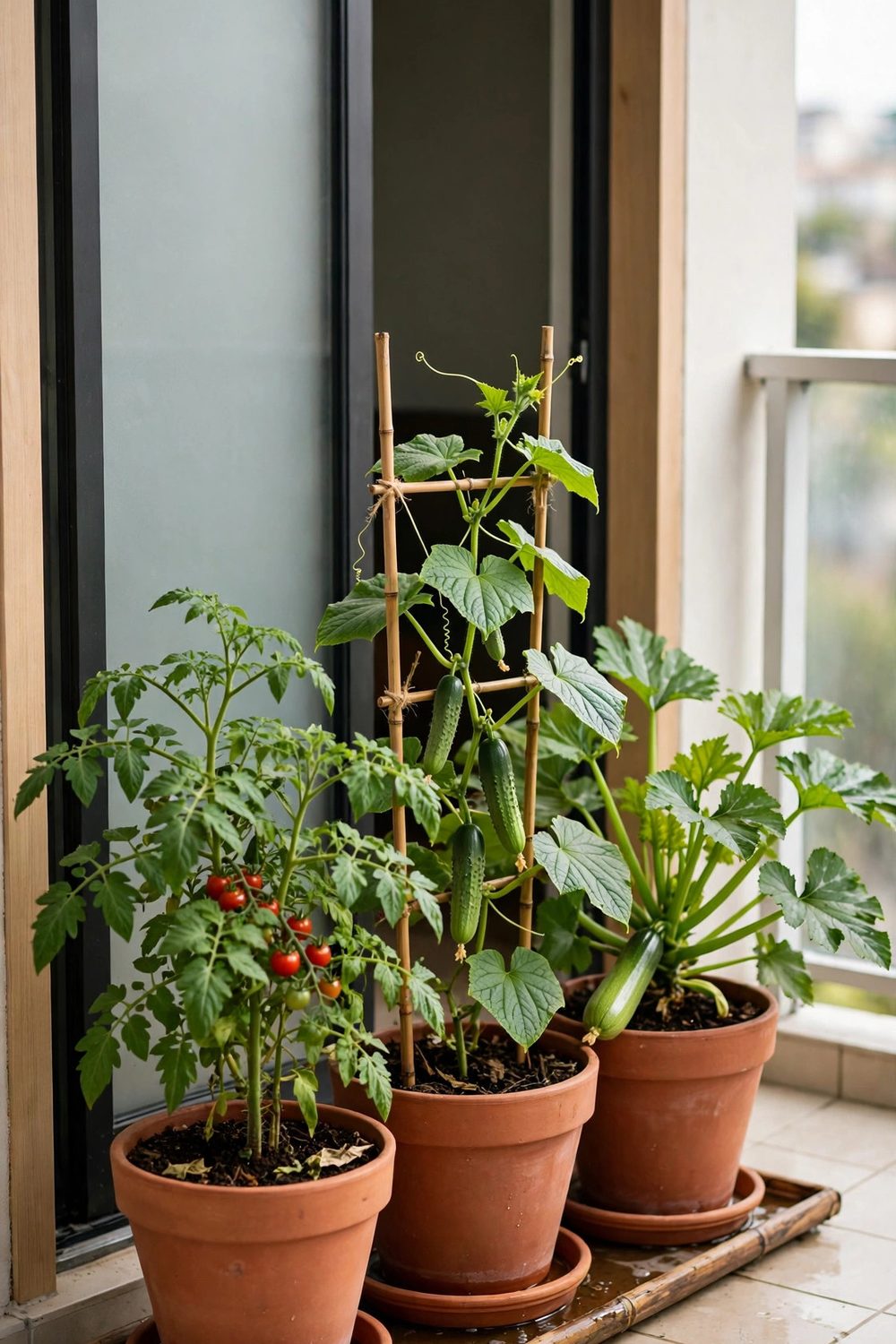
Set the heavy drinkers, tomatoes, cucumbers, and zucchini, in one group near the door. One stop with the can covers the pots that need water on almost every round.
Grouping also shades mix surfaces, since leaves of one plant cover the pot of its neighbor. Clustered pots lose water more slowly than the same pots spread out in open wind.
Keep dry loving herbs such as rosemary and thyme apart from the thirsty group, on the far side. They rot in mix that stays damp, and they need far fewer carries each week.
Add Self-Watering Inserts to the Thirstiest Pots
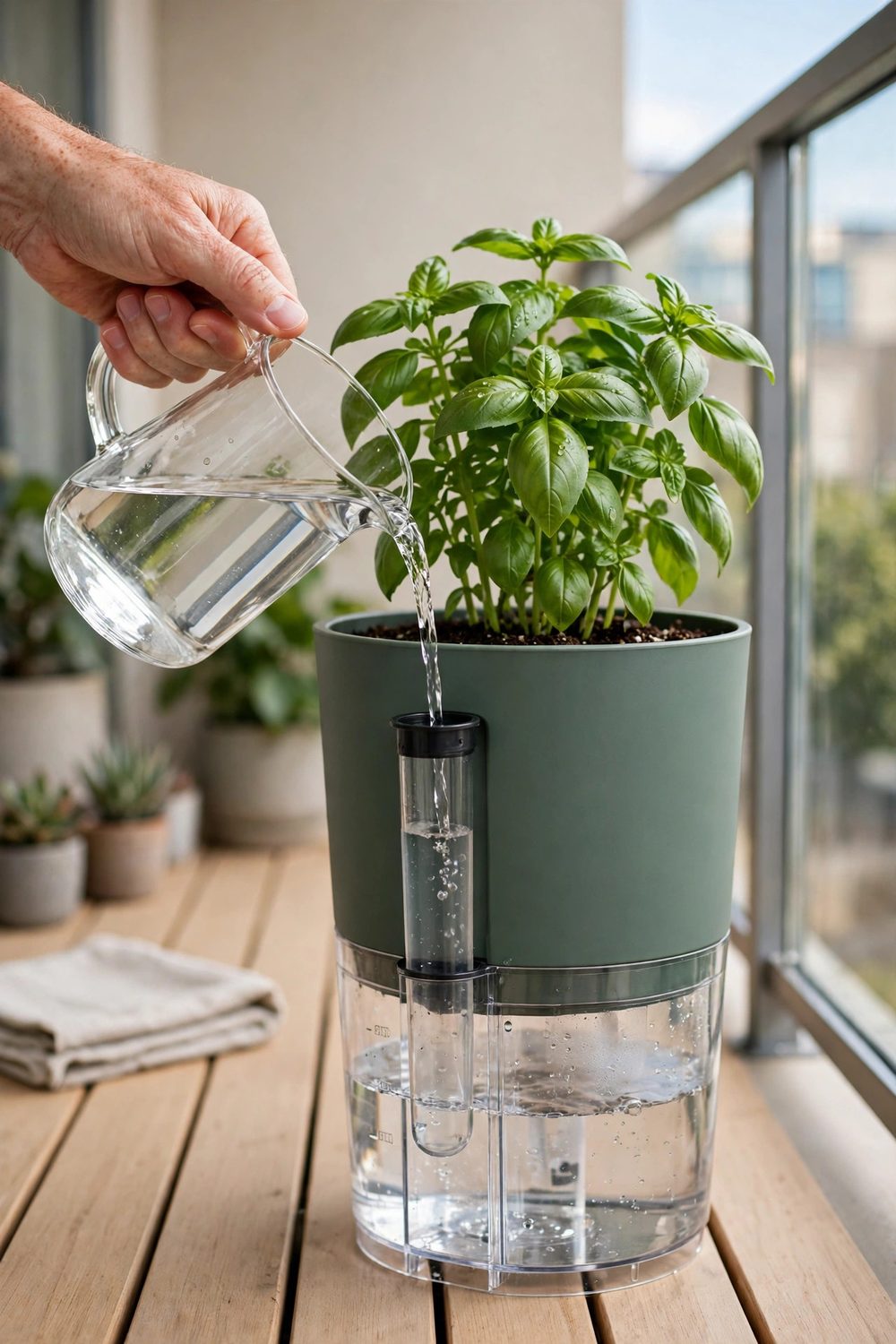
A self-watering insert turns a plain pot into a small reservoir pot. Water sits below the mix, and a wick or soil column draws it up as the roots drink and the mix dries.
Fit inserts to the thirstiest one or two pots first, rather than to every pot at once. Our verdicts on self-watering containers for vegetables show where reservoirs help most.
Still check the mix surface by finger, since a full reservoir can sit under dry top mix in a young plant. Roots need to grow down to the moist zone first.
Set Up Holiday Cover With Wicks and Bottles
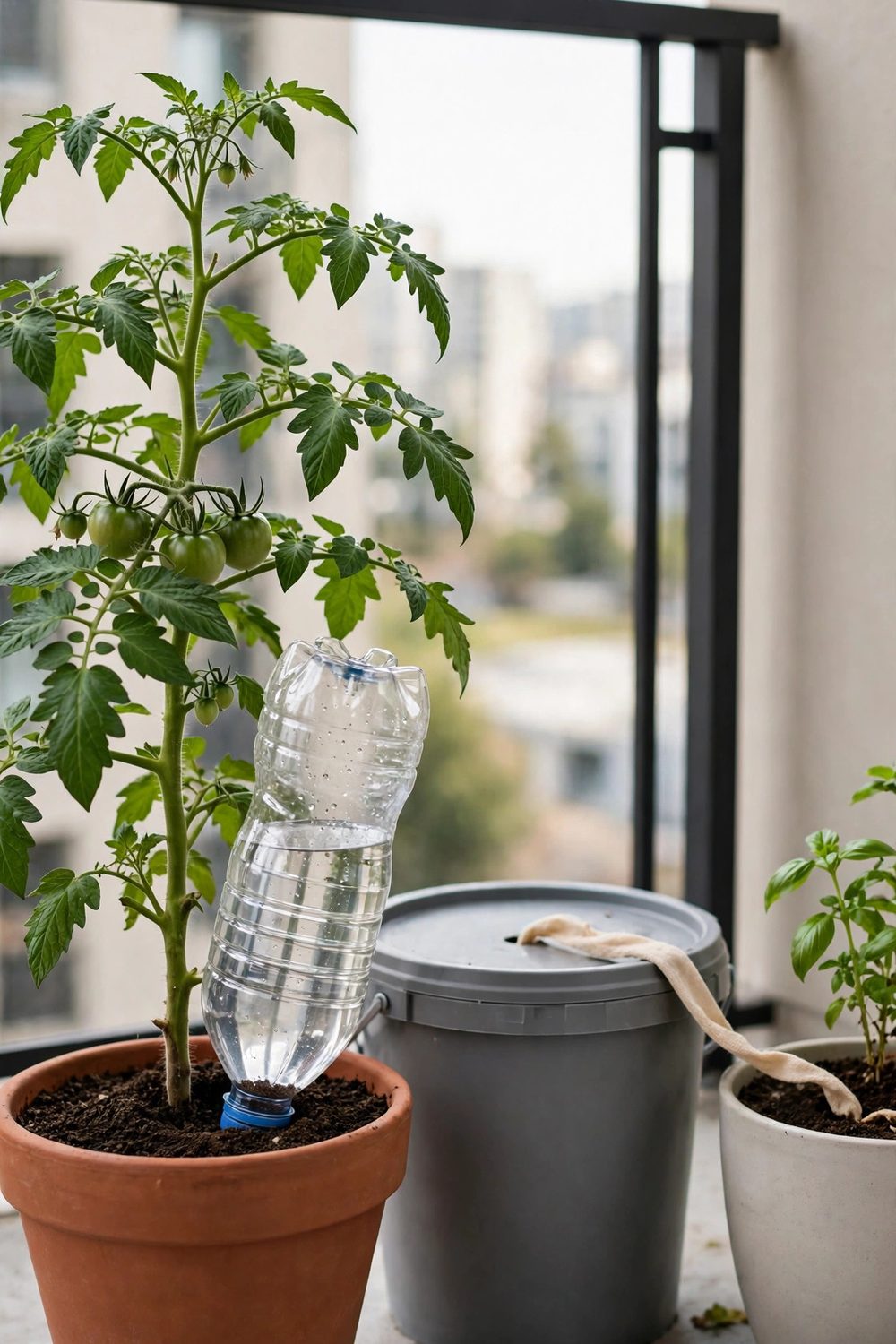
For a weekend away, push a filled bottle with a dripper cap into the mix of each thirsty pot. Water seeps out slowly over days rather than in one fast drink.
For a longer break, run a cotton wick from a large covered bucket into each pot. The wick draws water at the pace the mix dries, with no power and no plumbing.
Test any holiday setup for two days while you are still home. A dripper that empties in a night or a wick that dries out helps no one once the door has closed.
Check Moisture by Finger Before Every Round
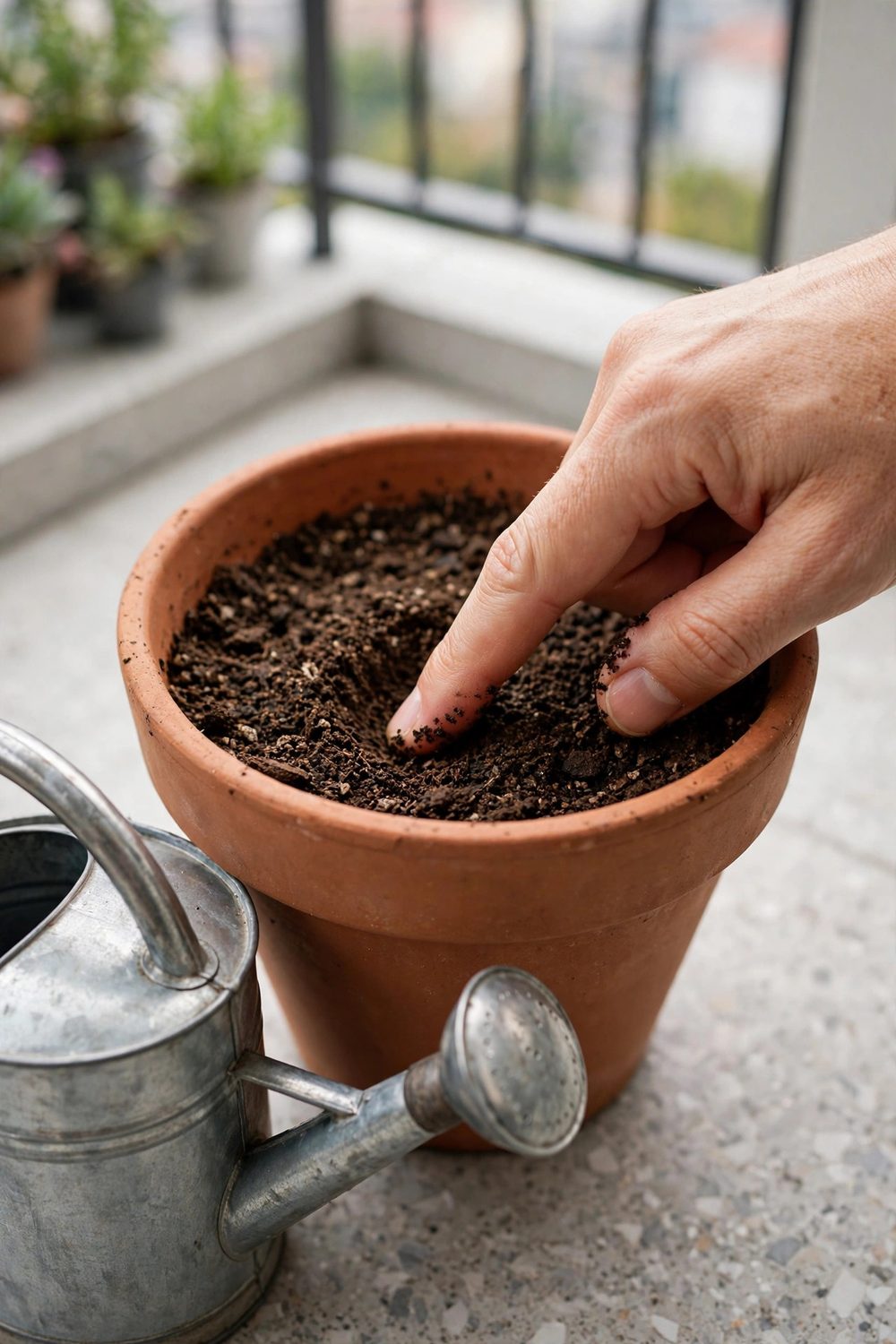
Push a finger into the mix to about 2 inches (5 cm) before you lift the can. Dry at that depth means water now; damp means skip that pot and save the carry.
The finger test stops the two big no hose errors at once. It prevents overwatering pots that still hold moisture, and it catches dry pots a day before leaves start to wilt.
The setup order that puts watering last also sits in our guide on how to start a balcony vegetable garden step by step, where this routine forms the weekly rhythm.
Troubleshooting
Four problems repeat in no hose gardens. Each one has a cause you can fix in a single round.
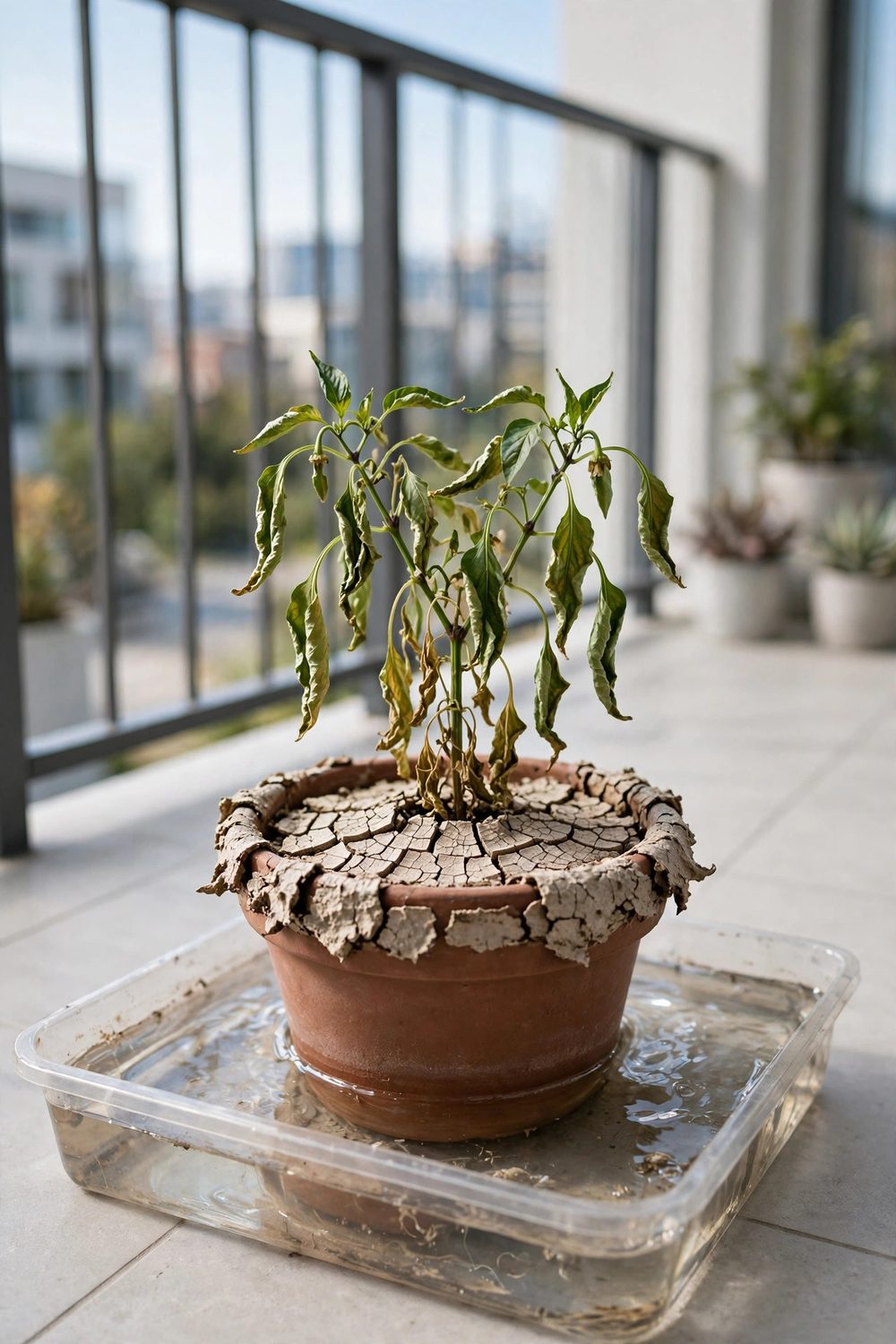
Surface crusting. Mix that dries hard between rounds forms a crust that sheds water. Break the crust gently with a fork, mulch the surface, and water in two rounds so the mix can take water again.
Water runs off dry mix. Very dry mix can turn water repellent and send the whole round out of the drainage holes. Set the pot in a tray of water for twenty minutes, let it soak from below, then resume top watering.
Algae in stored water. Water left standing in light grows green algae and smells stale fast. Store spare water covered and out of sun, use it within a few days, and rinse jugs weekly with hot water.
Carrying strain. Sore wrists and shoulders mean the can is too big or the route is too long. Drop a can size, split the round into two halves, and stage full jugs by the door before you start.
Drips from those carries can stain floors over time. The fixes in our guide to balcony garden drainage mistakes that stain the floor below cover saucers, feet, and mats in full.
Frequently Asked Questions
How much water does a balcony garden need?
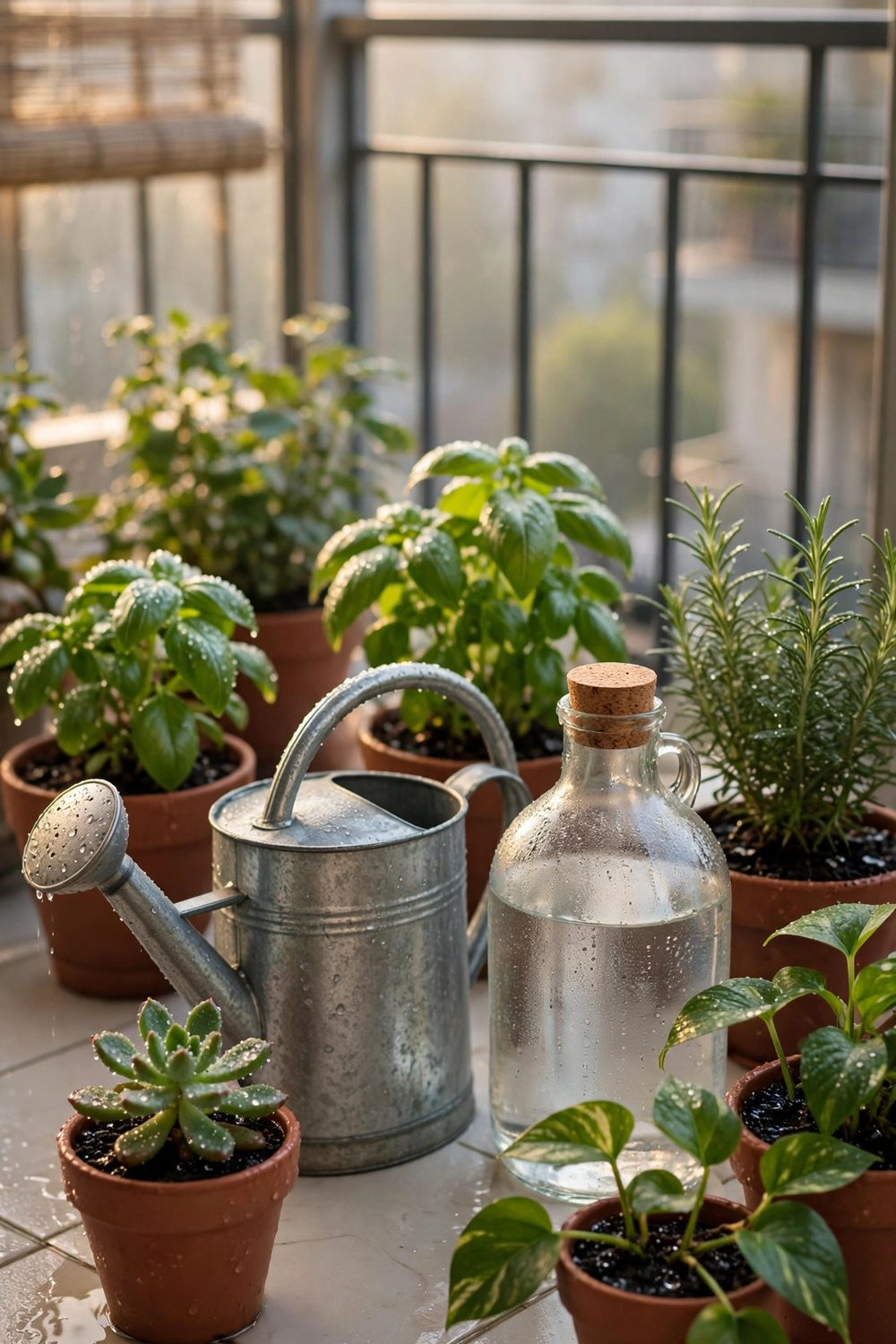
A large fruiting pot in summer may drink a full can round on its own in a heat wave. Small herb pots may need water only twice a week in the same weather.
Let the finger test set the amount rather than a fixed litre count per pot. As a rough guide, water until the saucer shows water, then stop and let the pot drain.
Can I use bath or shower water on vegetables?
Plain saved water from a shower warm up bucket is fine for pots. Skip water that holds soap, shampoo, bath salts, or cleaning products, since residues build up in small pots fast.
Use saved water the same day where you can, and pour it on the mix, not over leaves or fruit. Wash all harvests well before eating, as with any balcony crop.
What is the best time of day to water?
Morning wins on most balconies. Pots drink before the heat of the day, leaves dry fast, and you can see moisture levels clearly in good light while you check each pot.
Evening watering also works where mornings are rushed, but leaves that stay wet overnight can mildew in still air. Midday watering loses the most to evaporation and splashes the most.
How do I water while on holiday for two weeks?
Two weeks is beyond what bottle drippers can cover for thirsty crops in summer. Ask a neighbor or friend to run the two round routine twice a week, with your can and jugs ready.
Before you go, group all pots in shade, mulch every surface, and soak each pot deeply. The no yard basics in container vegetable gardening for beginners with no yard at all also help a stand in helper.
Do I need a different can for seedlings?
One can with a fine rose head covers seedlings and full size pots alike. The rose breaks the flow so seed stays in place and young stems are not flattened by the stream.
For seed trays and tiny pots, a jug with a narrow spout gives finer control. Water trays from below where you can, by standing them in a shallow tray of water.
Quick Reference
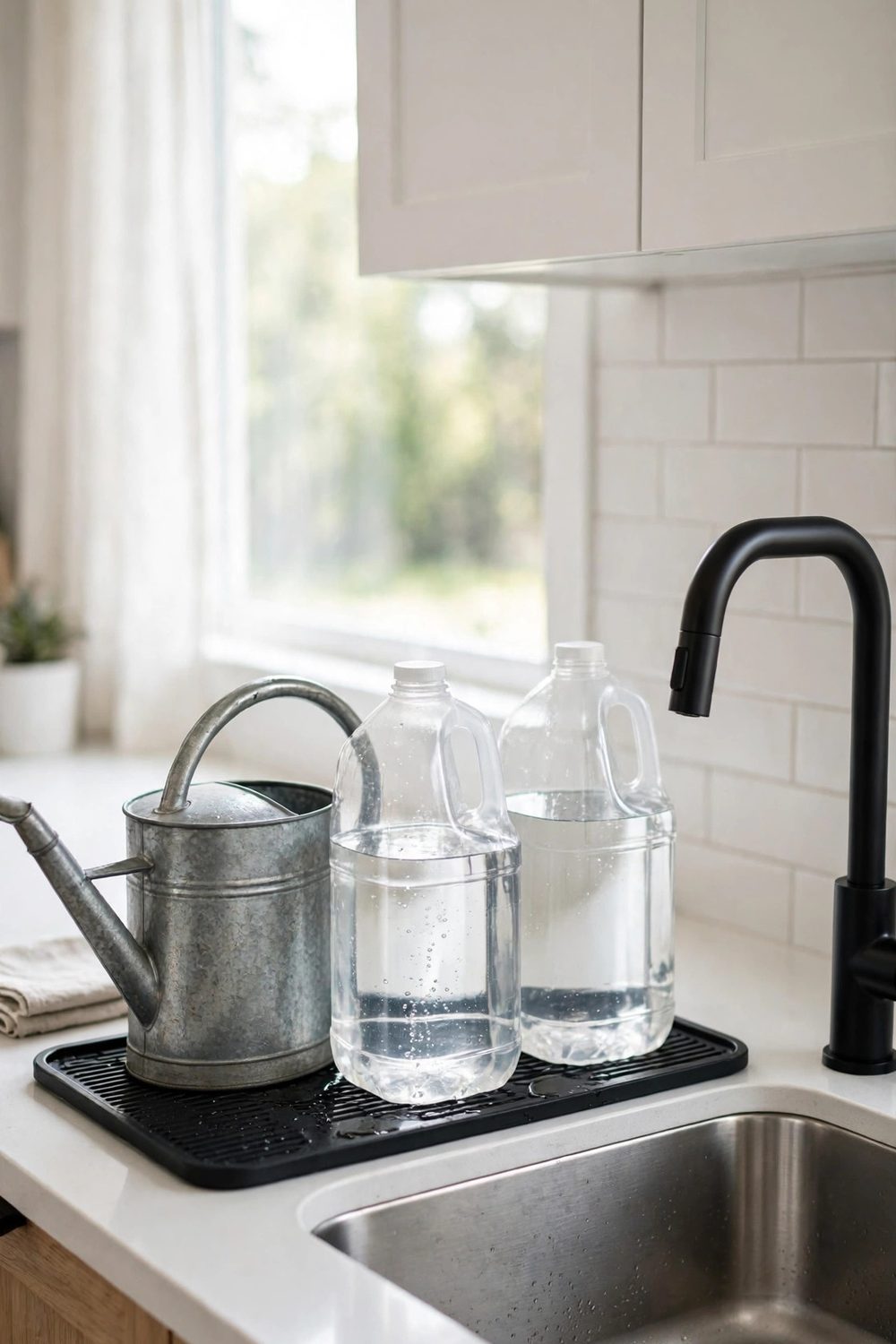
Keep these no hose watering rules by the sink. They cover most days without opening the full guide again.
- Can size: one you can carry full; water weighs 1 kg per litre.
- Fill: two jugs in rotation at the kitchen tap; can staged in a bucket.
- Rounds: two per pot, with a soak pause between them; stop at the saucer.
- Check first: finger test at 2 inches (5 cm) before every round.
- Mulch: about 1 inch (2.5 cm) deep, clear of stems, topped up when thin.
- Group: thirsty pots together near the door; dry herbs apart.
- Holiday: test wicks and bottle drippers for two days before travel.
Watering without a hose rests on carry sized gear, a sink rotation, two calm rounds, and a finger check before each trip. None of it needs a plumber, a tap, or landlord consent.
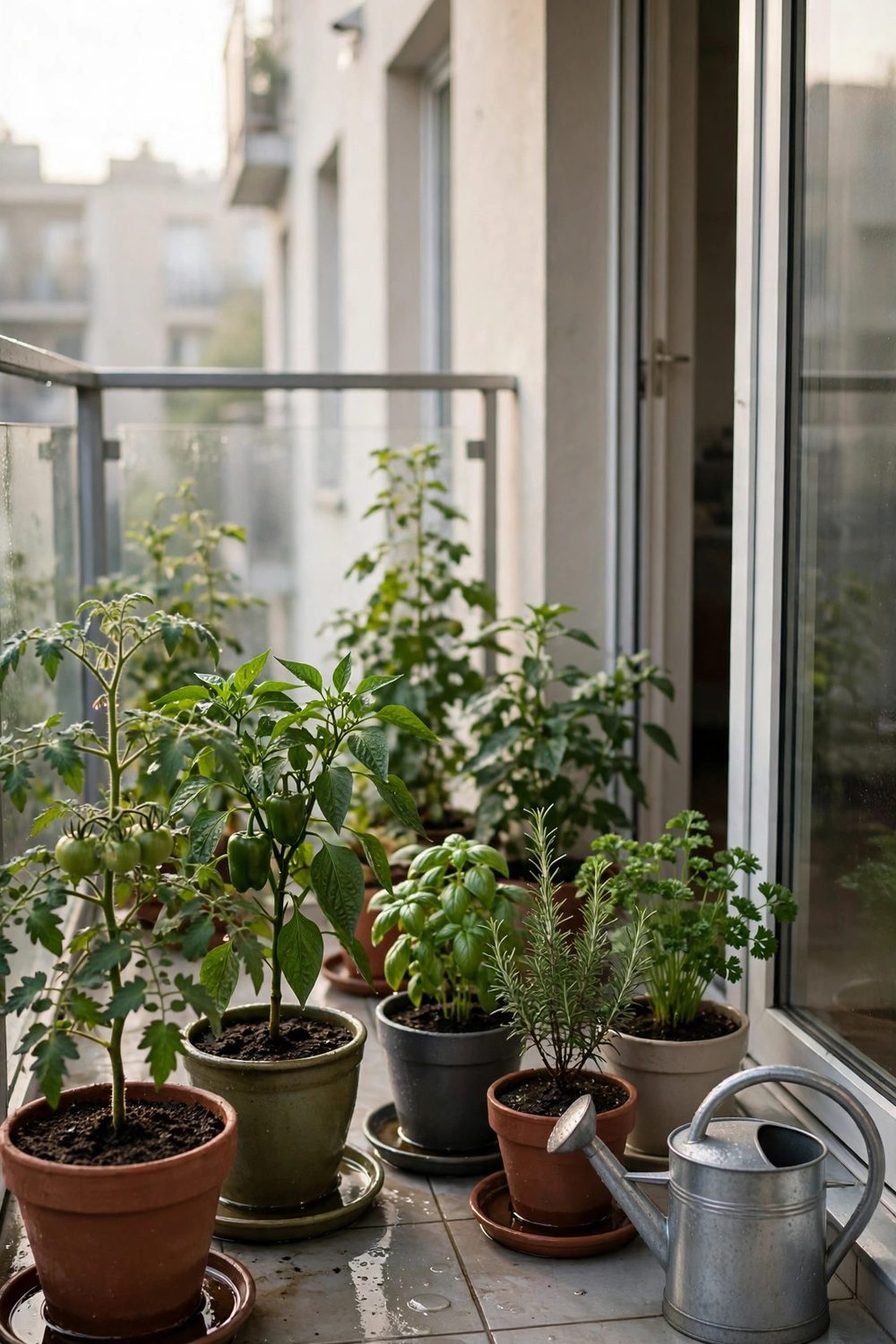
Set the jugs and can by the sink tonight, then run the first two round watering in the morning. Note which pots drink fastest, and group them by the door this weekend.
Save this routine to your container garden board for later. Once the rhythm holds for a fortnight, a missing outdoor tap stops feeling like a limit at all.


