

15 Spring Balcony Vegetables to Sow First
The first warm weekend arrives and every pot on the balcony still holds last year mix and good intentions. Spring rewards the crops that go in early, while the air is cool and the light is climbing.
This list of spring balcony vegetables to sow first puts the sowings in the order the season wants them. Each pick names the pot, the depth, and the spacing it needs.
Start with the first four if your rail is short. Add the rest as space frees up and nights warm. Nothing here needs a garden bed, a cold frame, or special kit.
Cool soil is the theme of the first half of the list. Leaves, roots, and peas all like it, and each one goes in weeks before tomatoes would dare.
The second half holds the warm-season crops back on purpose, starting them under cover so they are ready the week the frost risk ends. Timing, not effort, is the skill here.
This post contains affiliate links. If you buy through them, we may earn a small commission at no extra cost to you. See our Affiliate Disclosure.
1. Sow Radishes First for the Fastest Payoff
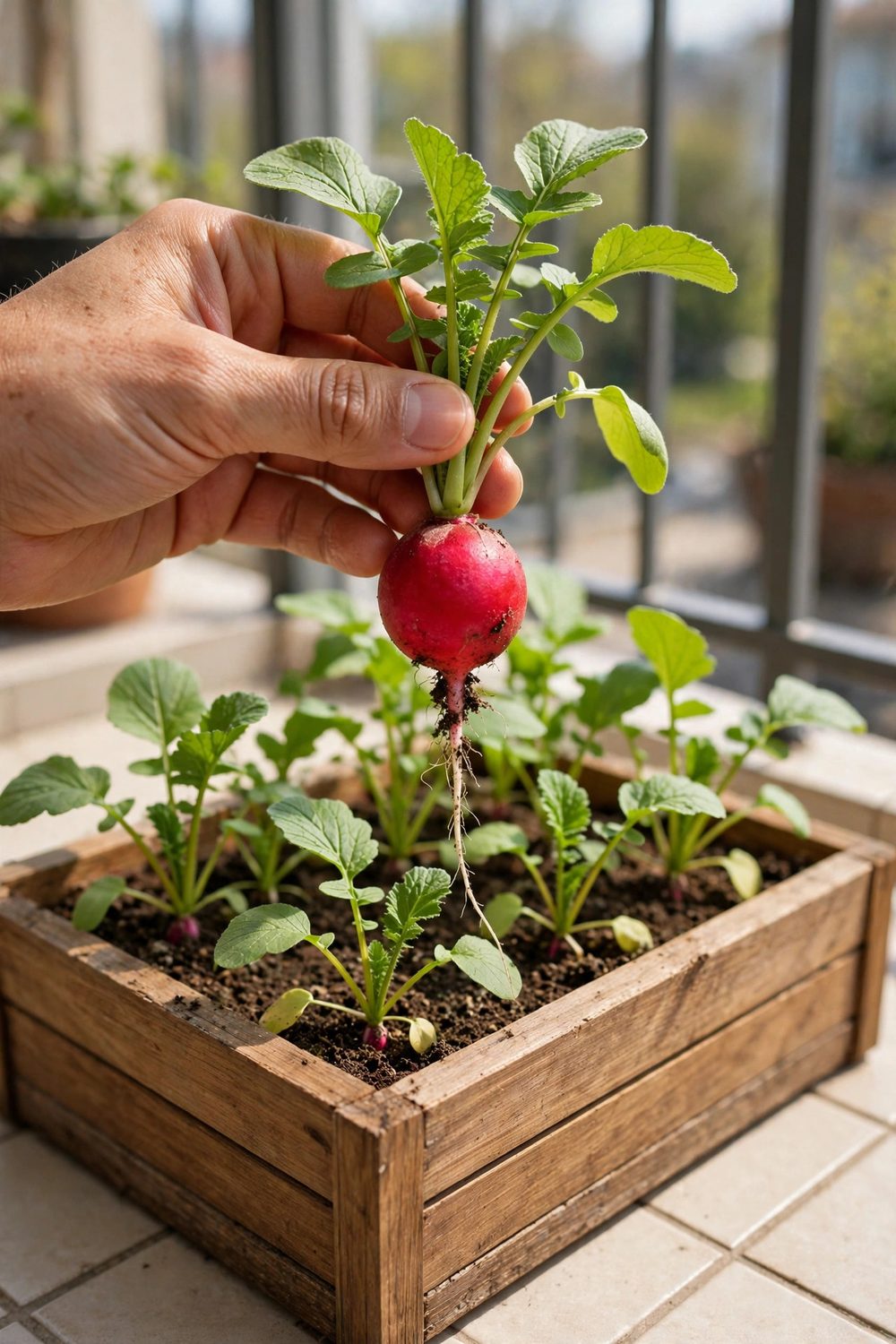
Radishes forgive a beginner almost everything except dry mix. Sow them the week your nights stop dropping below freezing, and you could be pulling roots about a month later.
Use a window box or trough at least 6 inches (15 cm) deep. Sow seed 1/2 inch (1 cm) deep and 1 inch (2.5 cm) apart, then thin seedlings to 2 inches (5 cm).
Keep the surface damp with a fine spray each morning. On a windy third-floor rail, a light cover of mix stops seed washing to one end of the box.
Pull roots as soon as they swell to marble size. Left too long in warming mix, they turn hot, woody, and hollow in the middle.
2. Start Sugar Snap Peas on the Rail Early
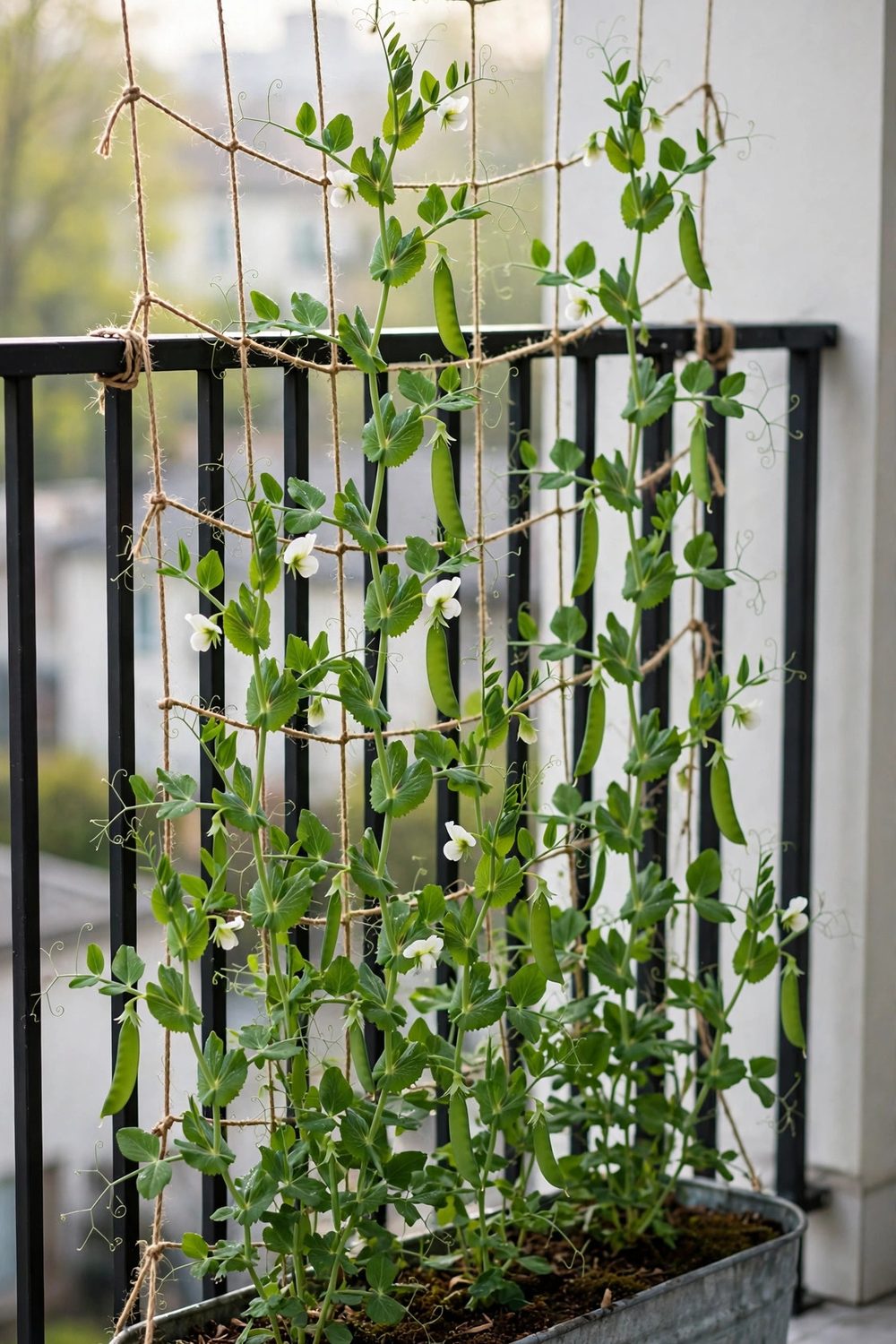
Peas like cool soil and sulk in heat, so they belong near the front of the spring queue. Sow them six to eight weeks before your last frost date in mild areas.
Pick a trough at least 8 inches (20 cm) deep and fix a square of netting or a small trellis to the rail behind it. Sow seed 1 inch (2.5 cm) deep.
Space seeds 2 inches (5 cm) apart and water the base, not the leaves. Guide the first tendrils onto the net, and the plants climb on their own after that.
A cold snap after sprouting rarely harms peas. Cover the trough with an old sheet on a hard frost night and take it off at breakfast. For the full cool-season line-up, see these spring container vegetables to plant first.
3. Scatter Loose-Leaf Lettuce in a Wide Bowl
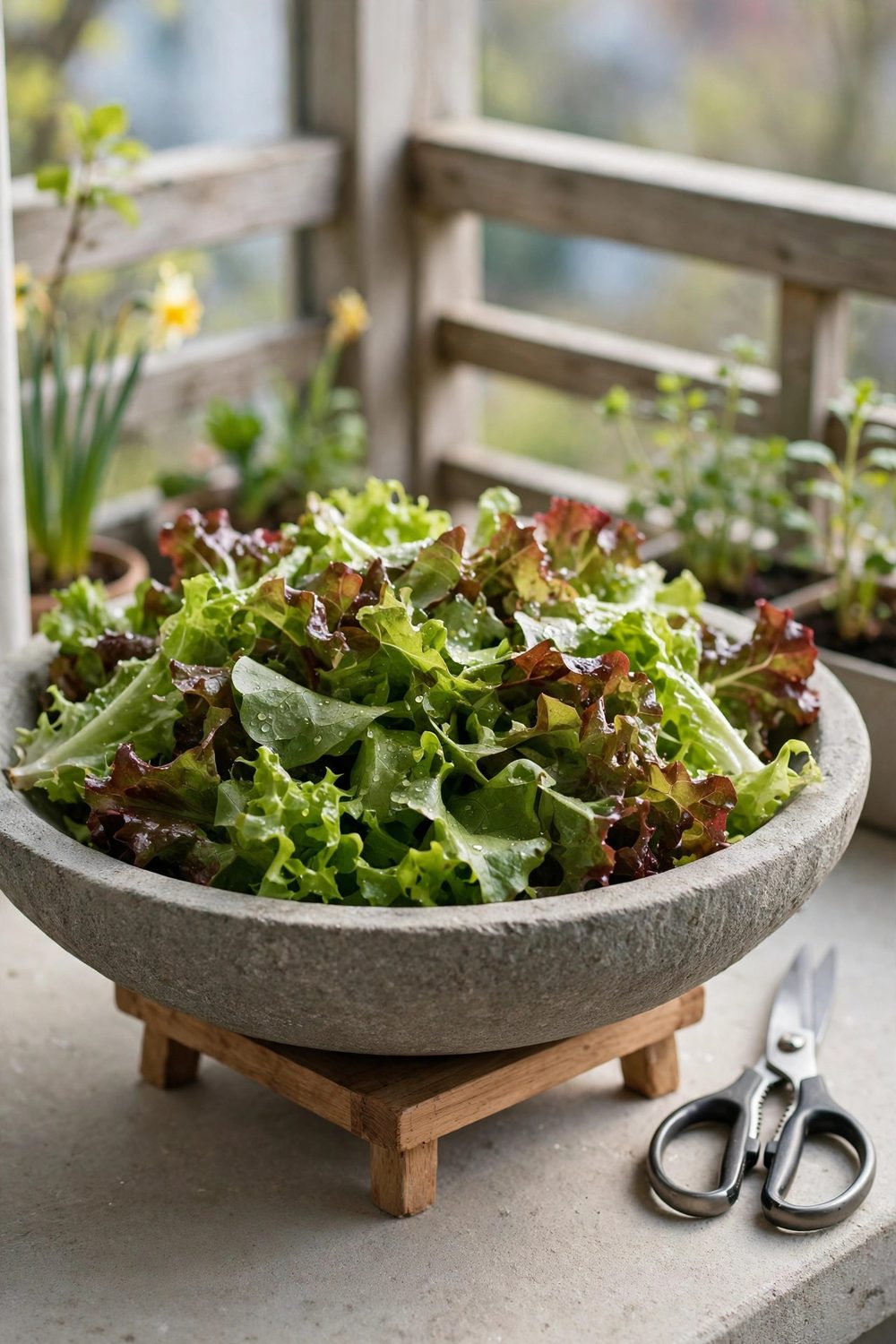
A wide bowl of lettuce is the hardest-working pot of early spring. Roots stay shallow, so width matters more than depth, and one sowing gives weeks of cut-and-come-again picking.
Choose a bowl at least 12 inches (30 cm) wide and 6 inches (15 cm) deep. Scatter loose-leaf seed thinly, cover with a dusting of mix, and mist it daily.
Lettuce grows well on 3 to 4 hours of sun, which suits a balcony that loses light by midday. Snip outer leaves with kitchen scissors and leave the center to keep growing.
Sow a second bowl two weeks later. While the first bowl is picked hard, the second is sizing up on the step below it.
4. Give Spinach the Coolest Corner You Have
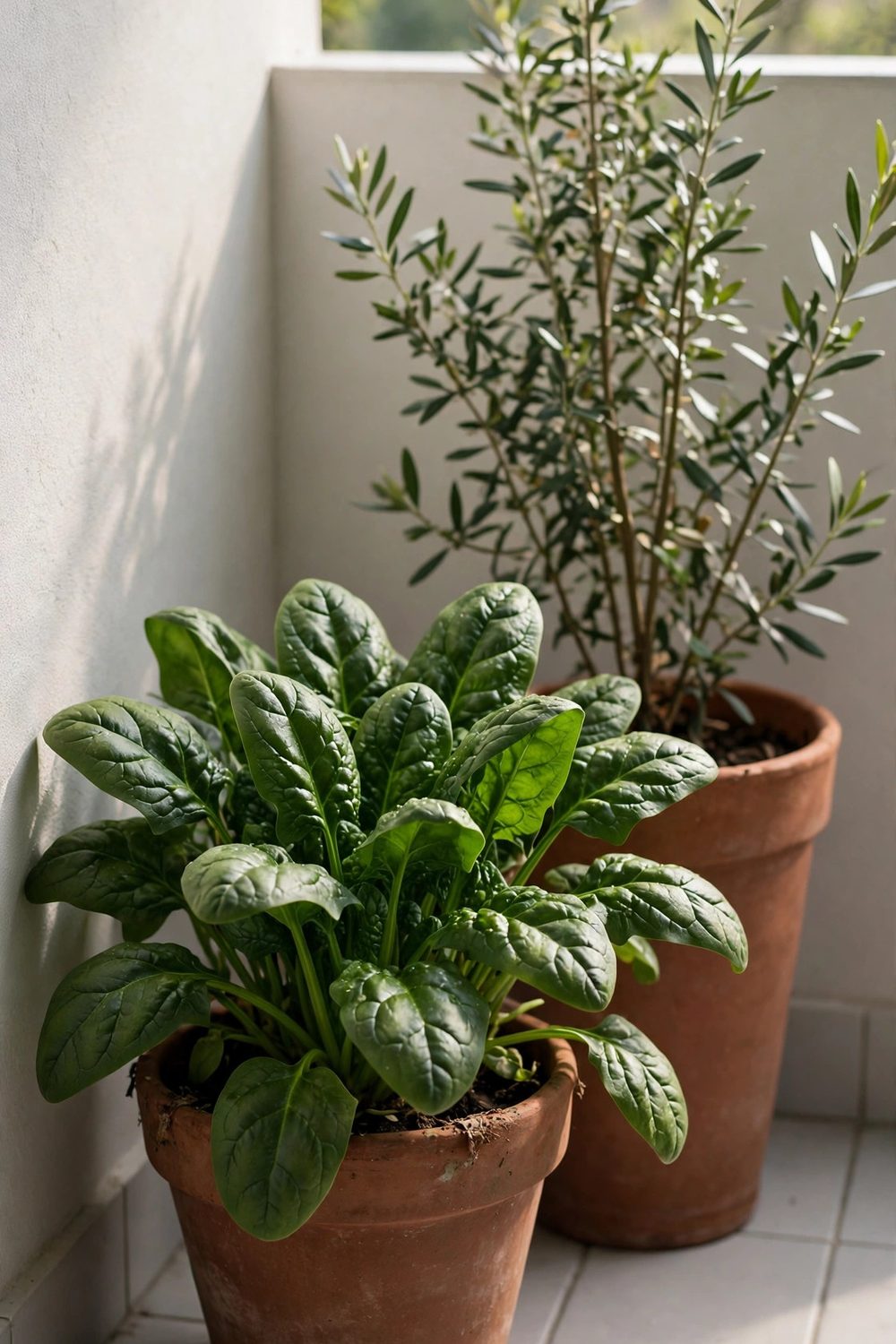
Spinach races to flower the moment days turn warm, so early sowing is the whole trick. Get seed in while nights are still cold and the plant stays leafy for weeks.
Use a pot at least 8 inches (20 cm) deep. Sow seed 1/2 inch (1 cm) deep and 2 inches (5 cm) apart, then thin to 4 inches (10 cm) as plants grow.
Set the pot where it gets morning sun and afternoon shade. On a south-facing rail, slide it behind a taller pot once April warms up and picking lasts longer.
Water at soil level and pick outer leaves often. A plant picked little and often stays in leaf far longer than one left alone.
5. Push Spring Onions Into Any Gap
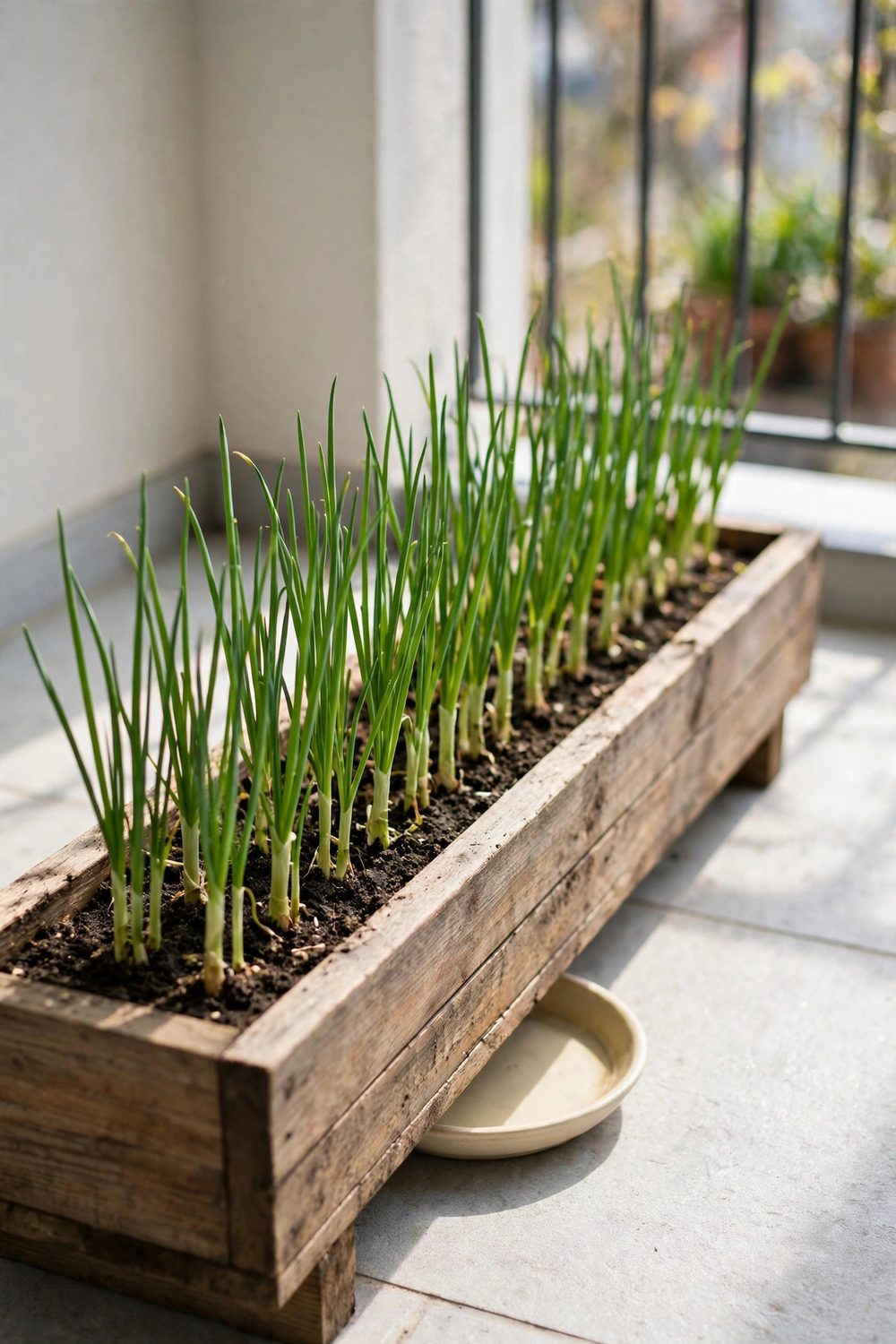
Spring onions ask for almost nothing and fit almost anywhere. A row along the edge of a bigger pot, a spare trough, or a deep window box all work fine.
Sow seed 1/2 inch (1 cm) deep in short rows, or push bought seedlings in at 1 inch (2.5 cm) spacing. They bulk up slowly and mind nobody while they do it.
Keep the mix evenly damp, because shallow roots dry fast on a breezy rail. A saucer under the box stops the runoff that annoys the balcony below yours.
Pull stems once they reach pencil thickness. Sow a fresh pinch every three weeks and the supply runs from spring into early summer.
6. Sow Short Carrots in a Deep, Loose Pot
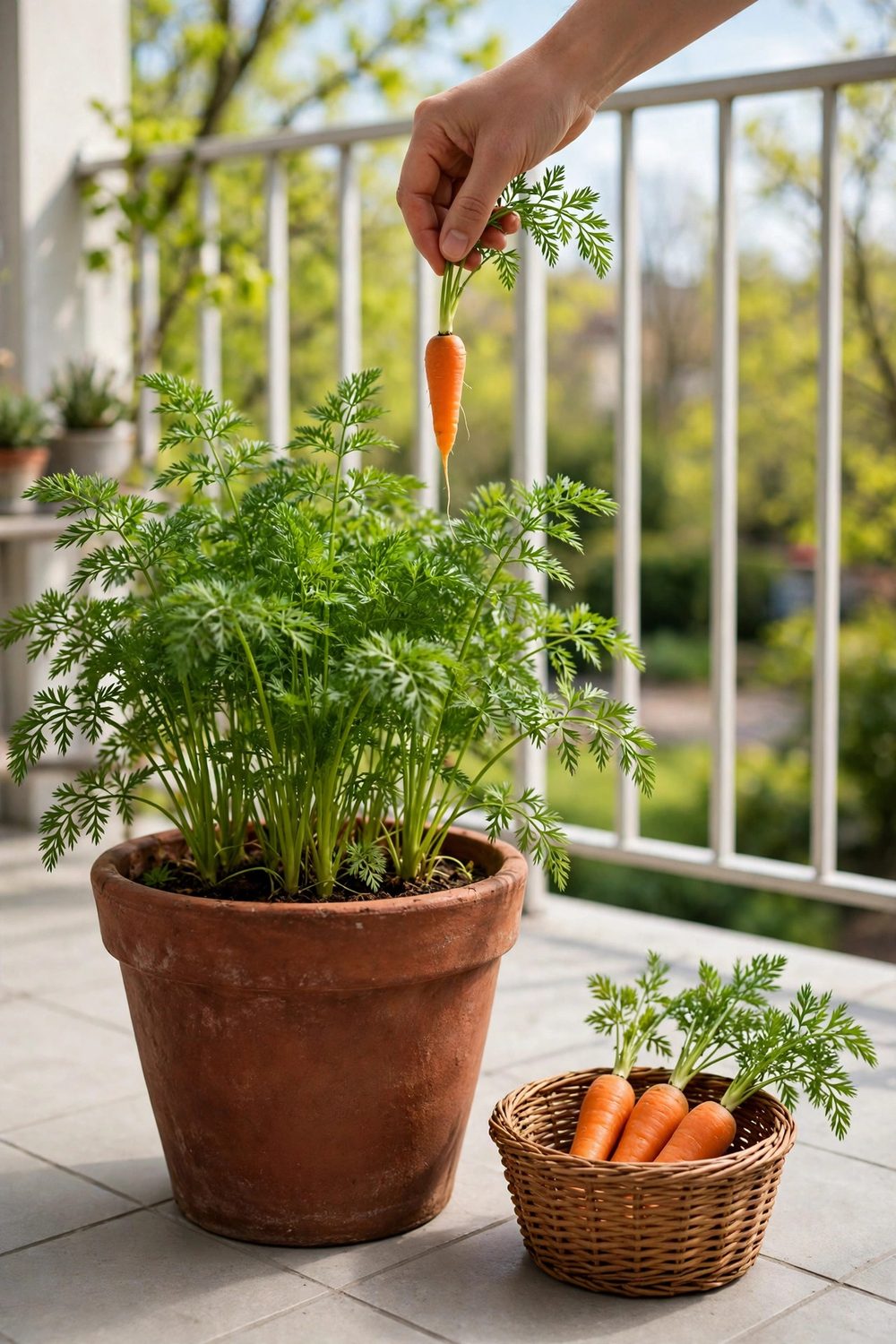
Carrots punish lumpy soil and reward a pot you filled yourself. In loose, stone-free mix, even a small balcony grows straight, sweet roots on the first try.
Pick a pot at least 12 inches (30 cm) deep and sow short types such as ‘Little Finger’ or ‘Parisian Market’. Scatter seed thinly, 1/4 inch (0.5 cm) deep.
Keep the surface damp until seedlings show. Carrot seed is slow, often 2 to 3 weeks, and a board laid over the pot holds moisture in between waterings.
Thin seedlings to 2 inches (5 cm) apart so each root has room to swell. Crowded carrots stay thin no matter how long you wait.
7. Plant Broad Beans While Nights Are Still Cold
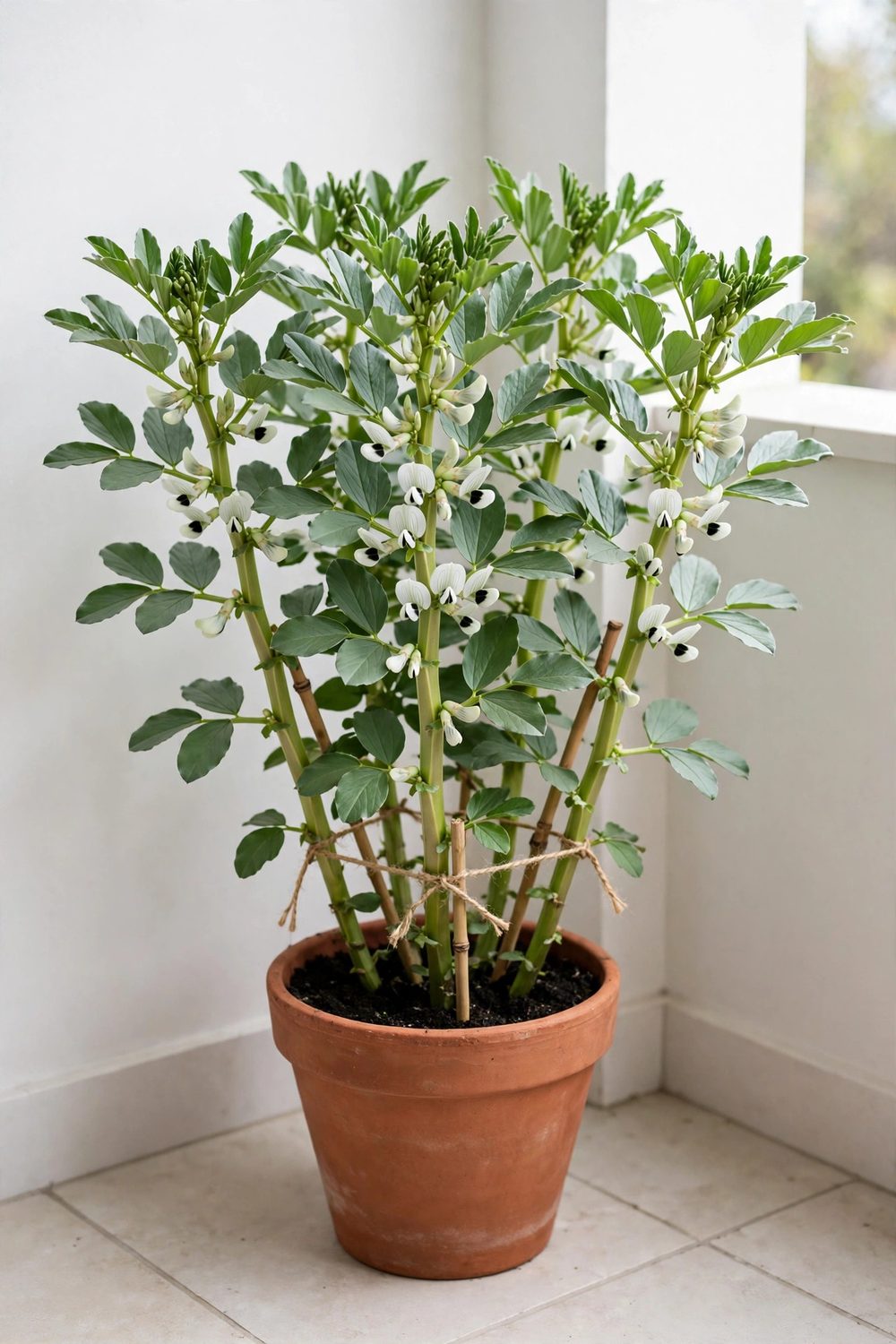
Broad beans, called fava beans in the US, are among the hardiest spring sowings you can make. In mild-winter areas they can even go in during late winter.
Use a deep pot, at least 12 inches (30 cm), or a 5-gallon (about 19 litre) grow bag. Sow one seed per spot, 2 inches (5 cm) deep, 6 inches (15 cm) apart.
Tie the stems loosely to short canes as they grow, because a full plant catches wind like a sail on an exposed rail. A corner spot sheltered by the wall helps.
Pick pods when the beans inside feel plump through the shell. Young pods picked early taste sweet and need very little cooking.
8. Set One Kale Plant in a Deep Pot
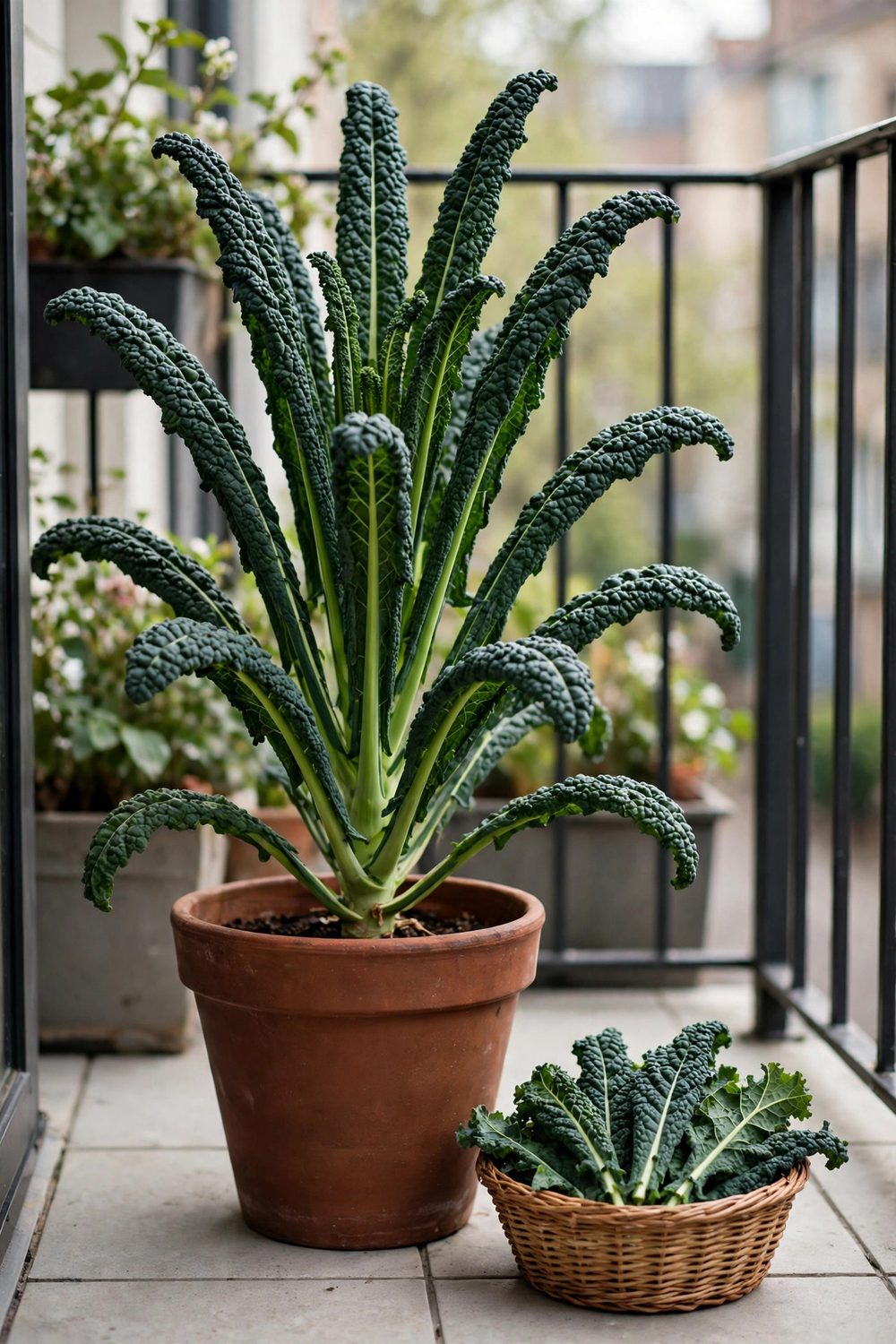
One kale plant sown or planted in early spring can feed you into autumn. ‘Lacinato’ kale grows tall and narrow, so it takes very little floor space for its size.
Fill a pot at least 12 inches (30 cm) deep and set one plant in the center. Kale settles for about 4 hours of sun, which suits east-facing balconies well.
Water when the top inch (2.5 cm) of mix dries, and give a liquid feed every two weeks. Pick outer leaves and leave the crown, and new leaves keep coming.
Aphids gather under spring leaves on still days. A firm jet of water from the can knocks most of them off before they settle in.
9. Sow Chard for Leaves That Keep Coming
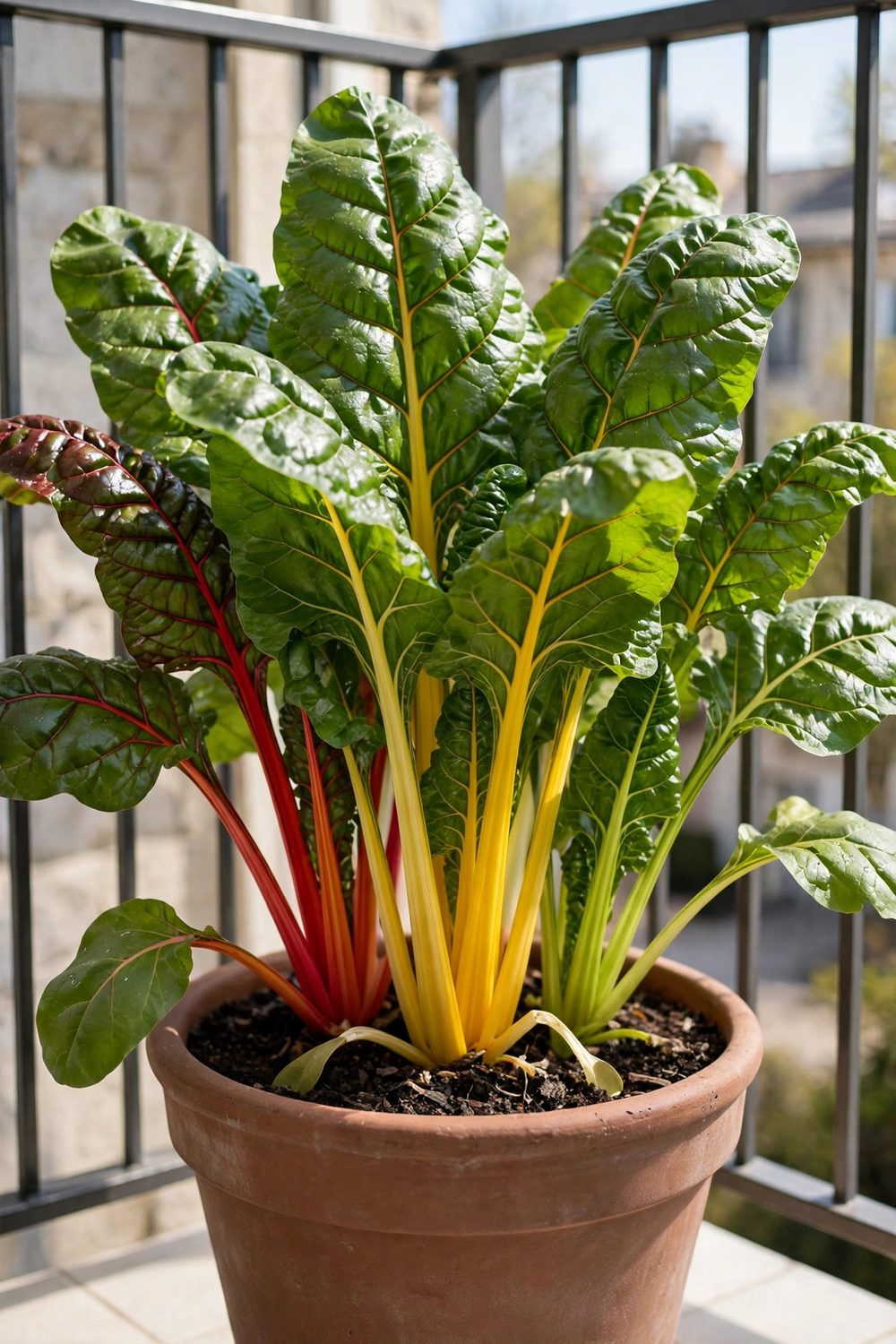
Chard is the leaf that shrugs off spring weather swings. A cold week slows it, a warm week speeds it, and it keeps making leaves through both without complaint.
Sow seed 1/2 inch (1 cm) deep in a pot at least 10 inches (25 cm) deep. Thin seedlings to 6 inches (15 cm) apart, because each plant gets wide and leafy.
Cut outer stems at the base with a knife and leave the heart alone. The plant answers with fresh stems from the center for months.
Rainbow-stem types look good enough to sit by the door. Grow them where you pass daily, and you will pick far more often.
10. Start Arugula for a Peppery Quick Crop
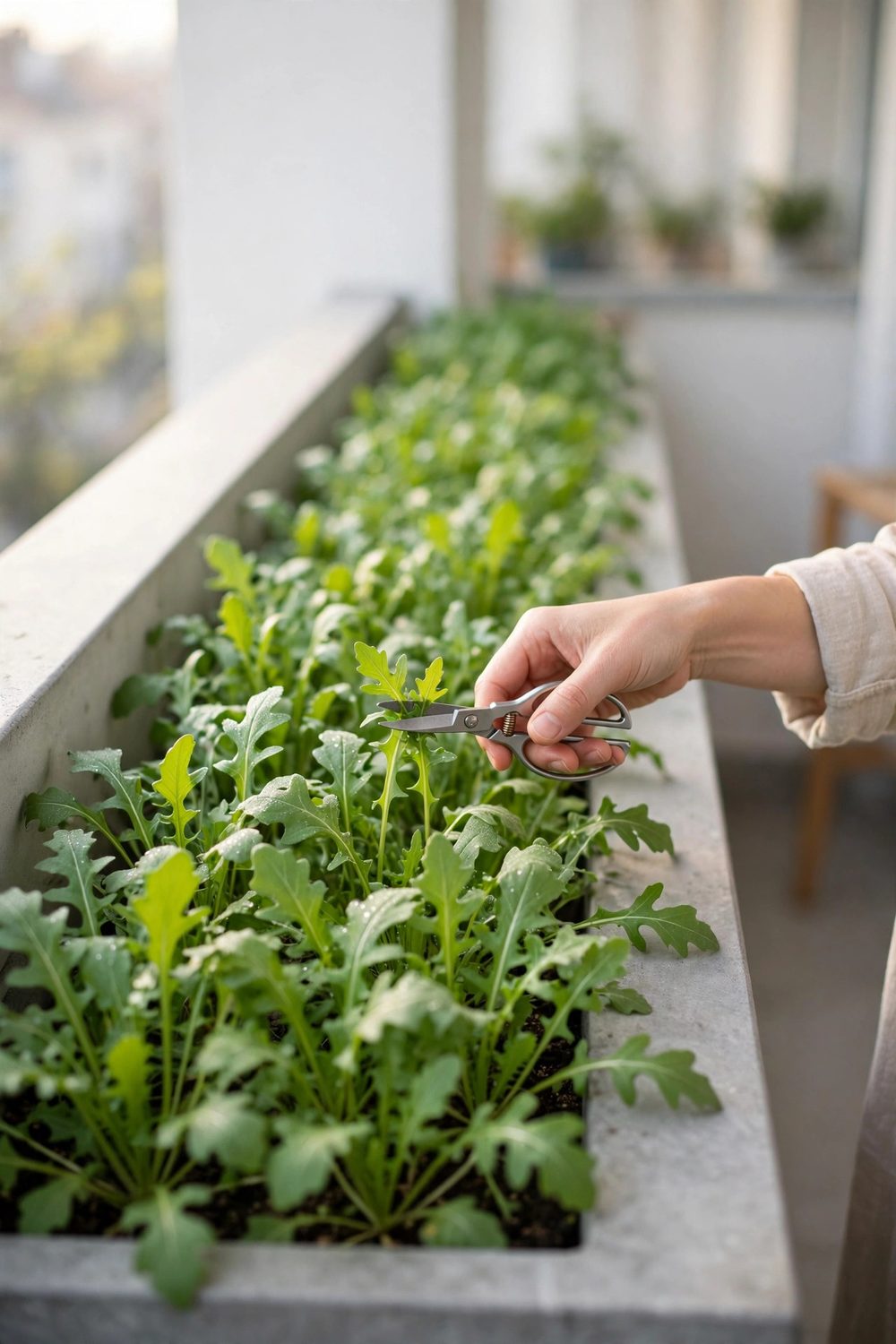
Arugula, also called rocket, grows faster than almost any other leaf. Sow it in early spring and you can be picking small leaves in about three to four weeks.
Scatter seed over a wide pot or trough and cover it lightly. Keep the surface damp, and thin the row only if the seedlings crowd each other hard.
Pick leaves young, because older leaves turn sharp and hot in warm spells. Morning picking, before the sun hits the rail, gives the mildest flavor.
Let one plant flower later in spring if you like. The white flowers are edible, mild, and pretty scattered over a salad.
11. Sow Beetroot in a Pot With Room Below
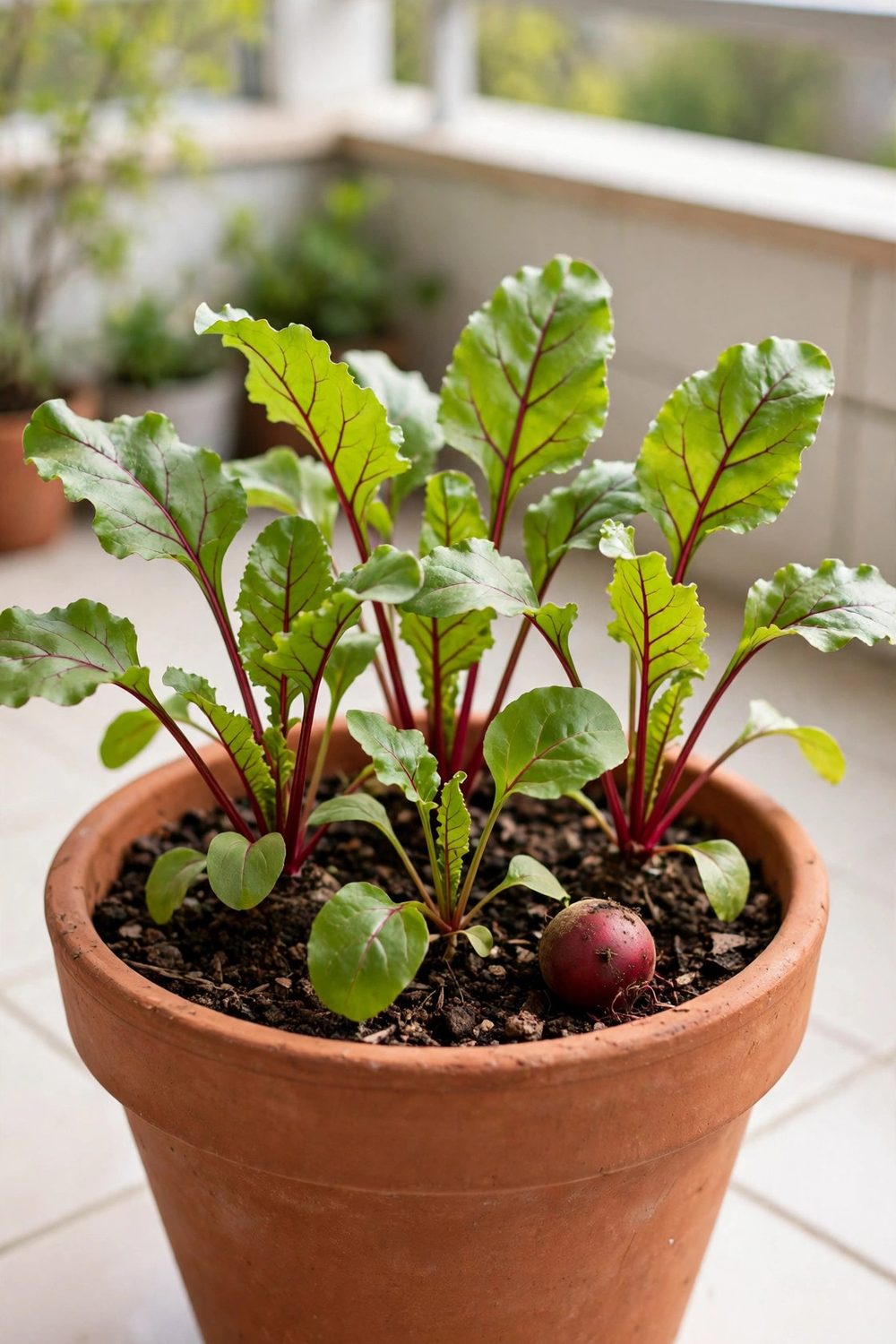
Beetroot gives you two crops from one sowing, leaves first and roots later. That double use earns it a pot even on the smallest spring rail.
Use a pot at least 10 inches (25 cm) deep. Sow seed clusters 1/2 inch (1 cm) deep and 4 inches (10 cm) apart, since each cluster holds several seeds.
Thin each cluster to one strong seedling once they sprout. Snip a few young leaves for salads while the roots swell below the surface.
Pull roots at golf-ball size for the sweetest eating. Bigger roots left through a hot spell can turn woody in the center. Pot size and spacing for mixed plantings are covered in our guide to how many vegetable plants per pot.
12. Chit Early Potatoes for a Grow Bag
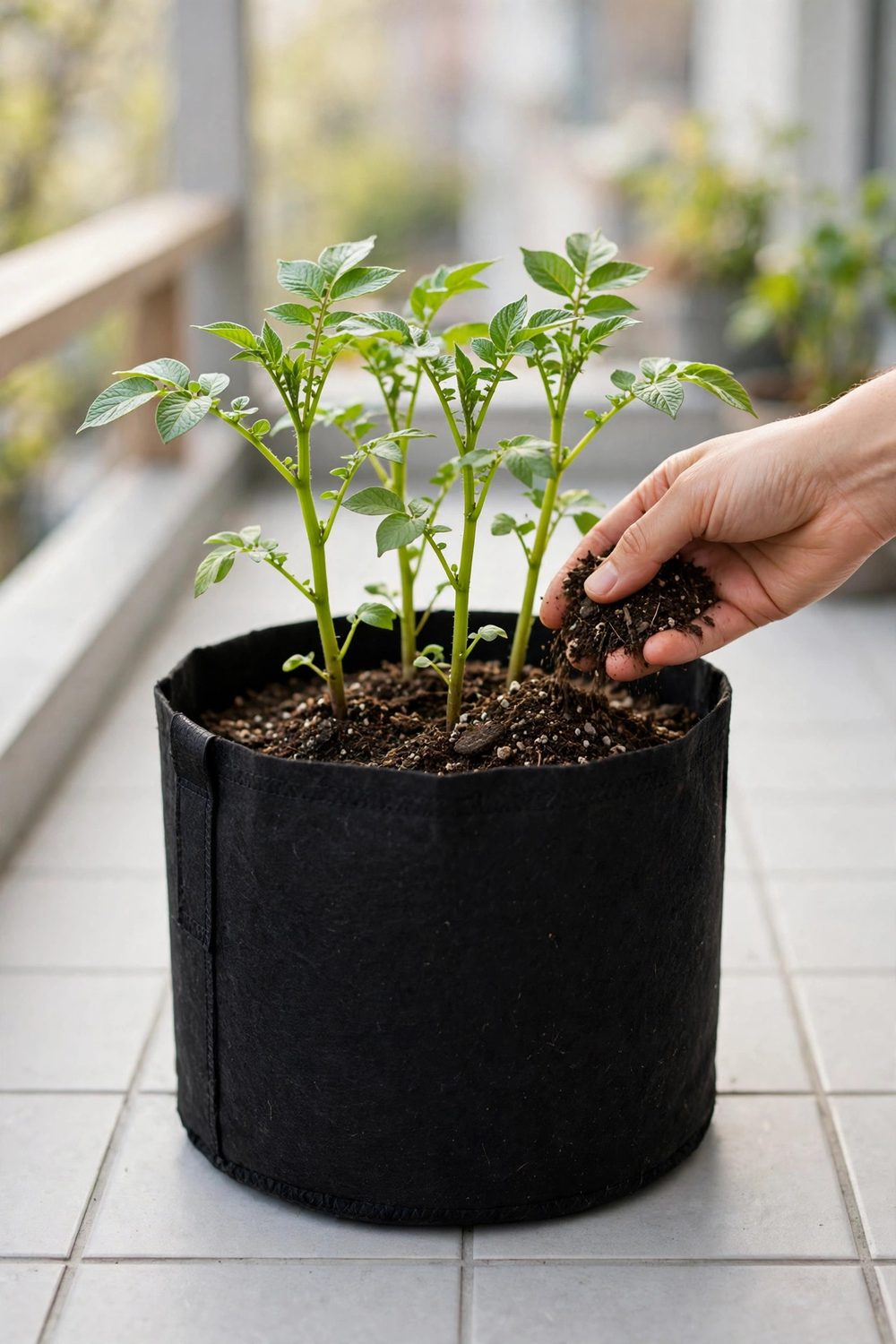
A grow bag of early potatoes is the spring project kids and new growers both love. Set seed potatoes on a bright windowsill in late winter so short green shoots form.
Plant them in a 10-gallon (about 38 litre) bag with 4 inches (10 cm) of mix under each tuber. Cover with 4 inches more and water the bag in well.
As stems grow, add mix up the stems every week or so, leaving the top leaves showing. This earthing up is where the extra tubers form.
Tip the bag onto a tray when the tops yellow and hunt through the mix by hand. Few spring jobs beat that small treasure hunt.
13. Sow Coriander Before the Weather Warms
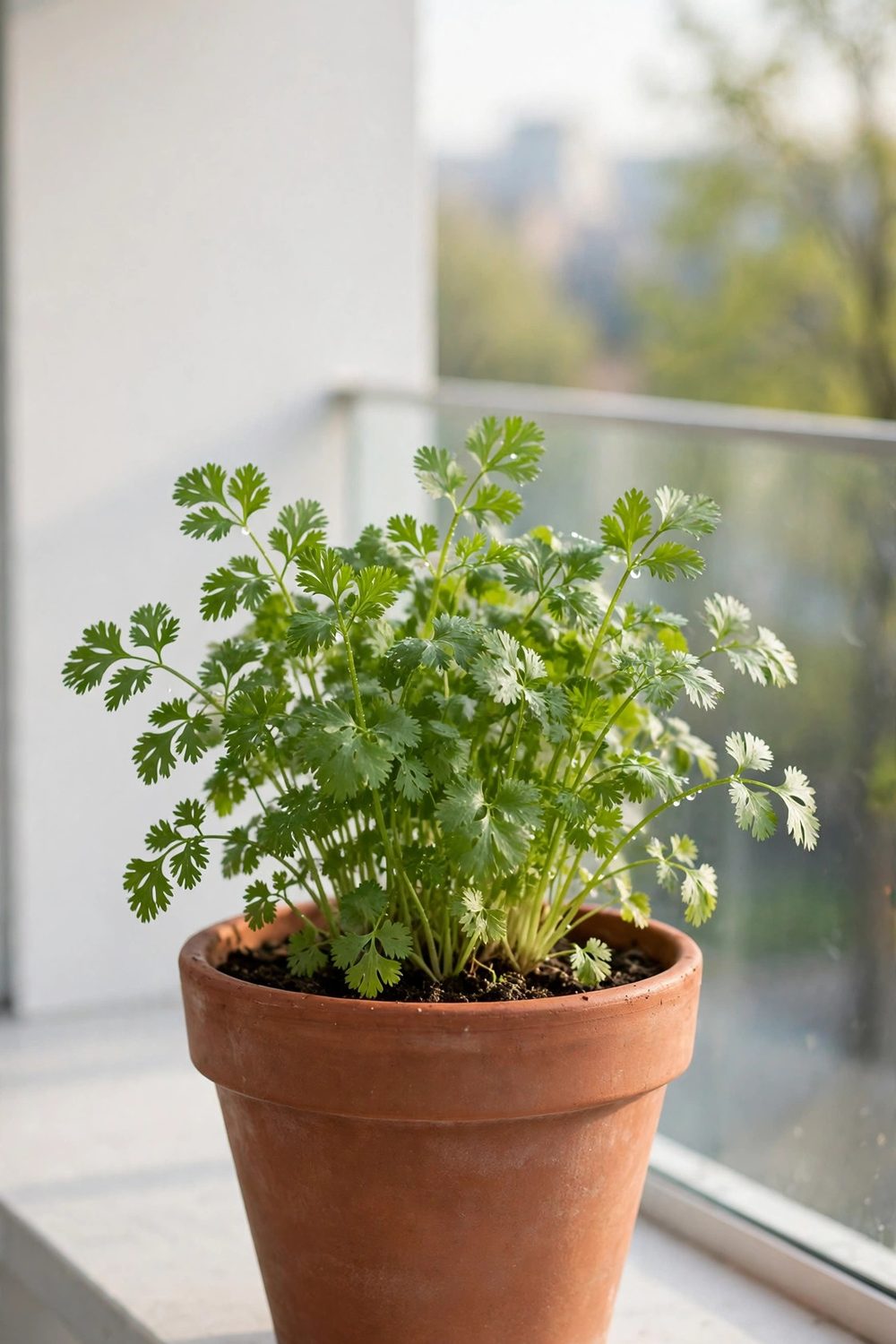
Coriander, called cilantro in the US, bolts to seed fast in heat, so spring is its best season on a balcony. Sow early and pick the leaves while days stay cool.
Use a pot at least 8 inches (20 cm) deep, because coriander grows a taproot and hates being moved. Sow seed 1/2 inch (1 cm) deep where the plant will stay.
Crush the round seed husks lightly between your fingers before sowing. Each husk holds two seeds, and splitting it helps both sprout more evenly.
Sow a small pinch every two weeks through spring. Later sowings go to seed, and that seed is next year supply plus a spice for the kitchen.
14. Try Kohlrabi in a Wide Pot
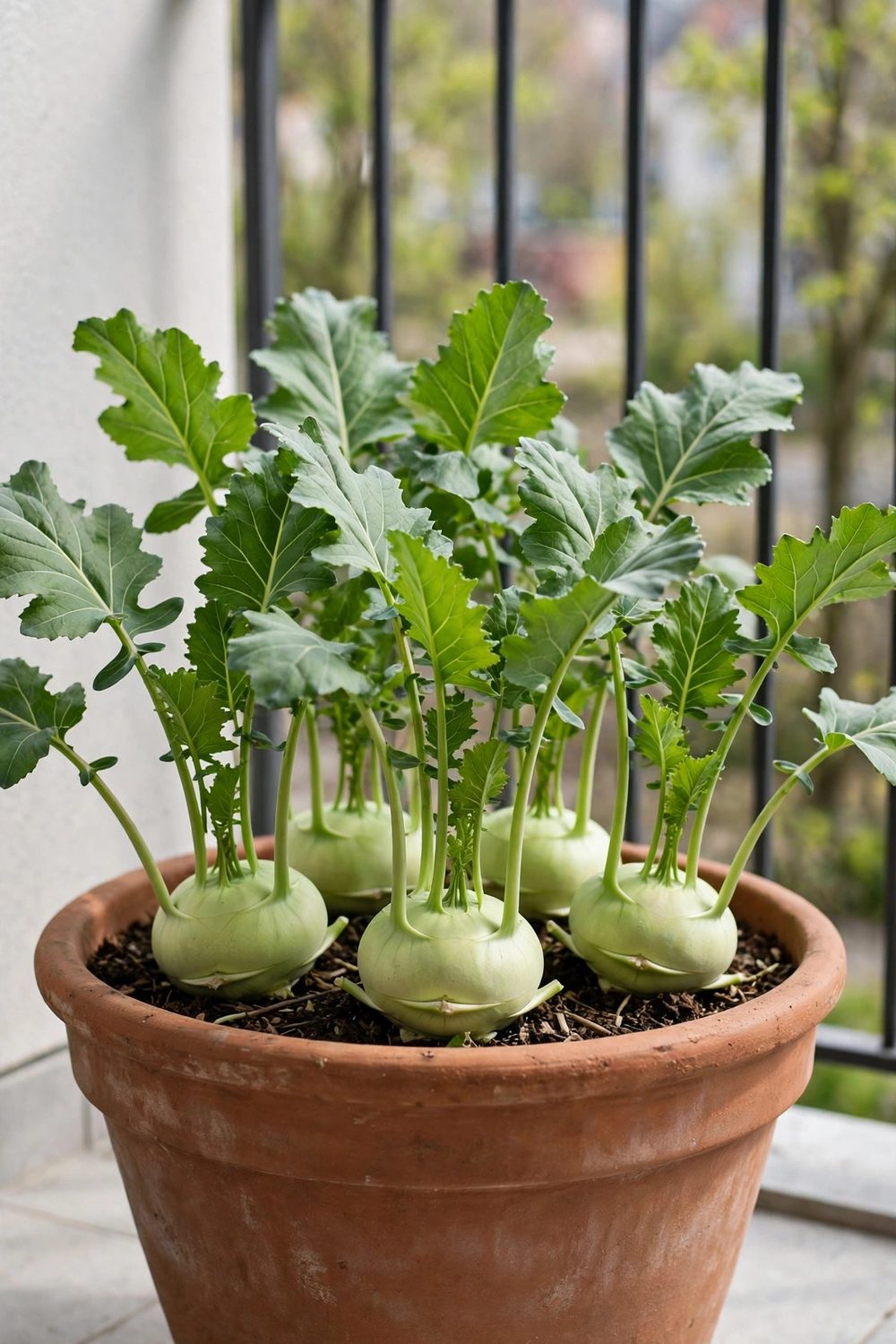
Kohlrabi looks odd and grows fast, which makes it a fun early sowing. The swollen stem forms above ground, so you can watch the crop size up day by day.
Sow seed 1/2 inch (1 cm) deep in a pot at least 10 inches (25 cm) wide. Thin plants to 6 inches (15 cm) apart so each stem has room to swell.
Steady water matters more here than feed. A dry week followed by a soaking can split the stem, while even moisture keeps the skin smooth and tender.
Harvest at tennis-ball size. Peel the skin, slice the flesh thin, and eat it raw with salt, or cook it like a mild turnip. Planning the rest of the year around these first sowings is easier with a balcony vegetable garden year plan at hand.
15. Start Zucchini Under Cover for Later Planting
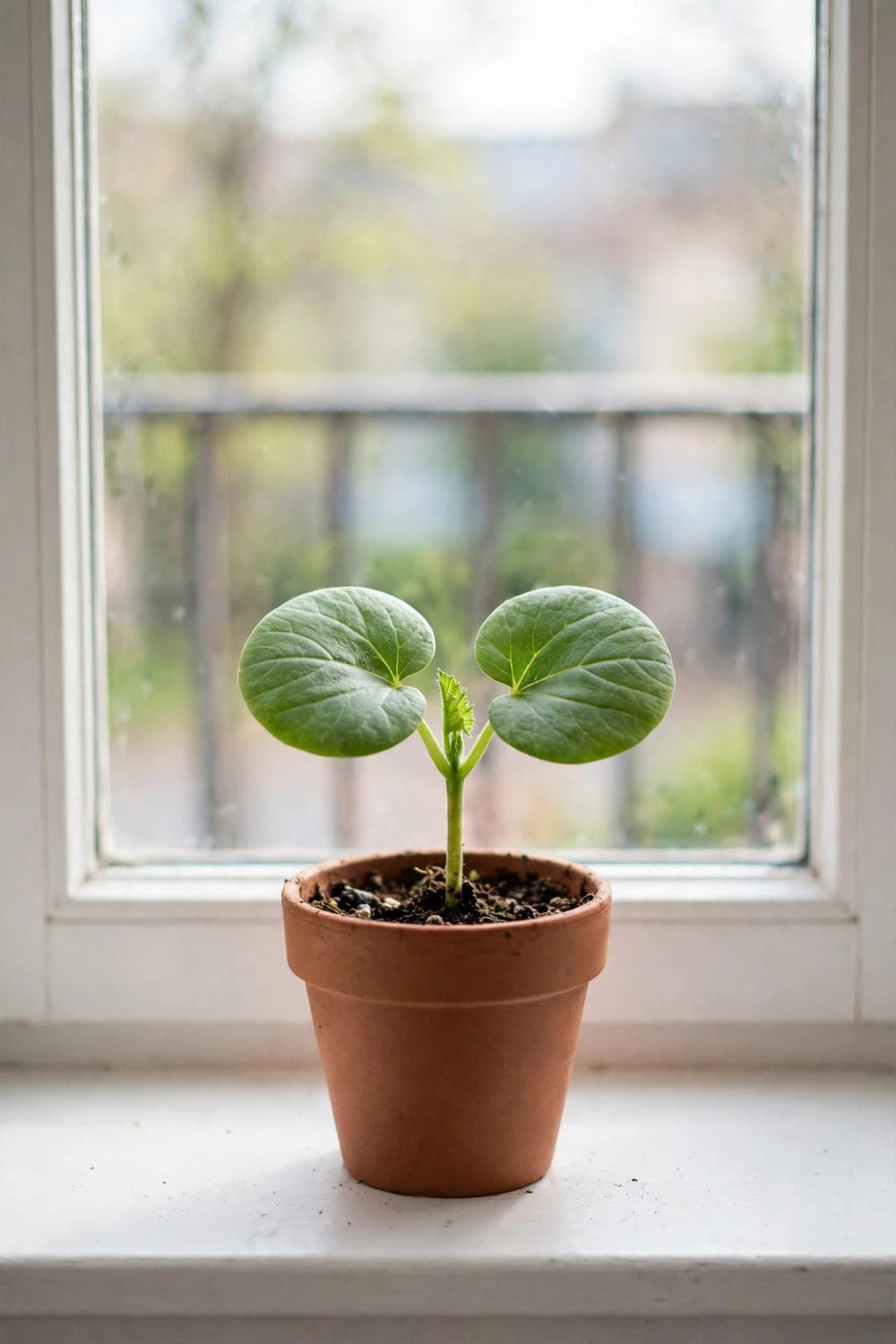
Zucchini (courgette) hates cold soil, so the spring job is a head start indoors, not an outdoor sowing. Sow seed late in spring, a few weeks before your last frost ends.
Push one seed, on its edge, 1 inch (2.5 cm) deep into a 4 inch (10 cm) pot. ‘Astia’ stays compact and suits a 10-gallon (about 38 litre) grow bag later.
Keep the pot on a bright sill and turn it a quarter turn daily. Seedlings lean hard toward the light and grow lopsided in two days flat.
Move the plant out only after your last frost, once nights stay mild. A week of hardening off on the rail first stops the move shocking it.
The summer crops that follow these spring sowings are listed in our guide to summer balcony vegetables for a hot, sun-trap balcony.
Spring sowing is a short season, so order matters more than effort. Peas, leaves, and roots first, heat lovers started under cover, and the rail fills in the right order.
That order is the heart of spring balcony vegetables to sow first. Follow it, and each pot comes into crop just as the one before it finishes.
Save this list to your container garden board for the first warm weekend. Write sowing dates on tape on each pot, and next spring starts even easier.


