

15 Vegetables for a Tiny 3-Foot Balcony Garden
Three feet of balcony sounds like a ledge, not a garden. Measured well, it still holds a rail box, one corner pot, and a slim stand. That is enough for salads, herbs, and one fruiting crop each season.
This balcony vegetable garden on a tiny 3 foot balcony plan counts inches before it counts crops. Each idea fits a named spot: rail, corner, floor strip, or stand tier. Nothing here needs floor space you do not have.
Sun rules still apply at this size. Fruiting crops need 6 or more hours of direct sun. Leafy greens manage on 3 to 4 hours. Put the sun lovers on the rail and the greens behind them.
Measure your rail length and floor depth first, in inches and in centimeters. A 3-foot rail is about 91 cm. Most rail boxes, troughs, and stands in this list fit inside that single measurement. Bring the tape out before you shop.
This post contains affiliate links. If you buy through them, we may earn a small commission at no extra cost to you. See our Affiliate Disclosure.
1. Claim the Corner With One Dwarf Tomato
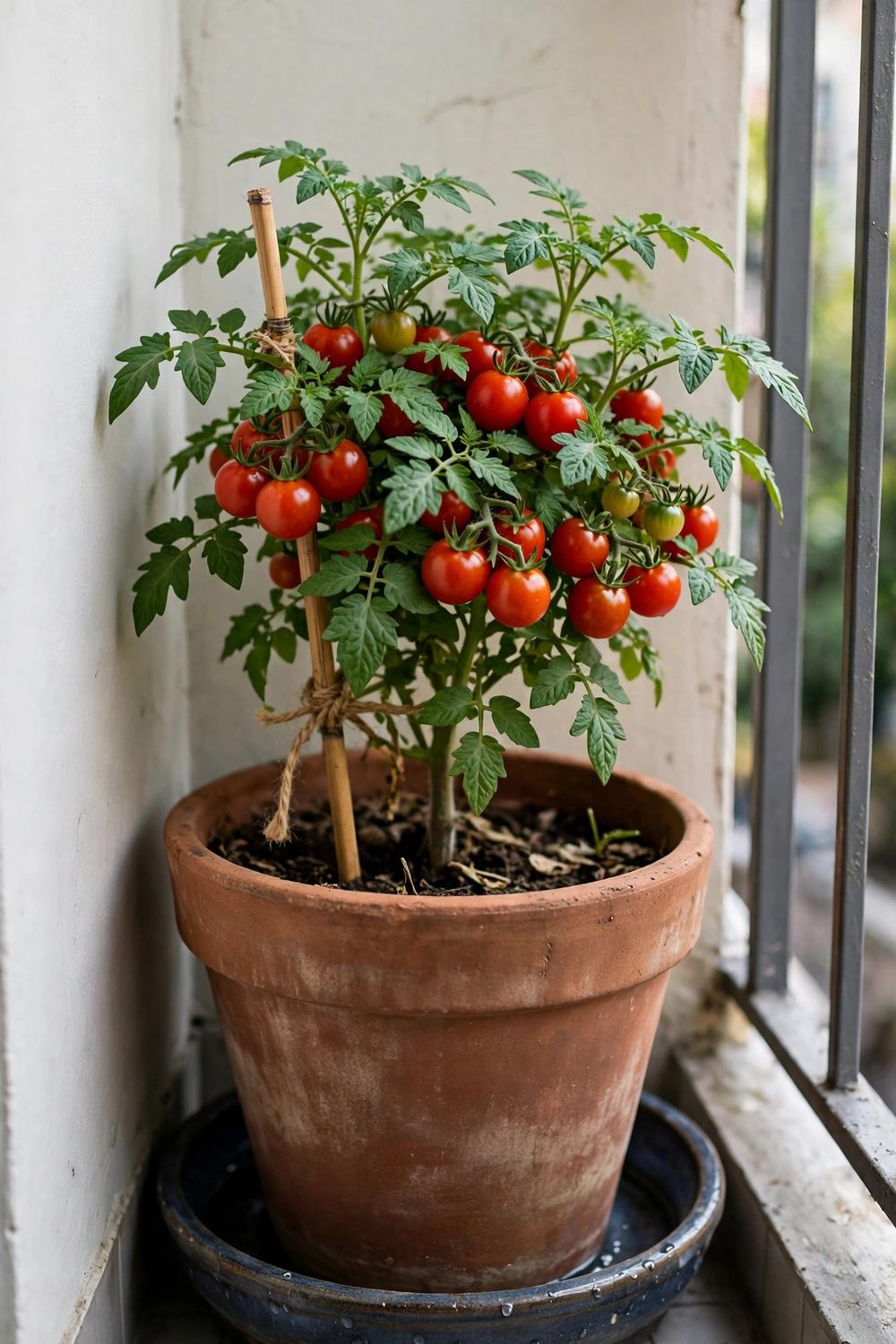
One corner is your big-pot spot, so spend it on one crop only. A dwarf cherry tomato such as Tiny Tim fruits well in a 5-gallon pot, about 19 liters, and stays near 18 inches, 45 cm, tall.
Set the pot where sun lands longest, with 6 to 8 hours a day. Tie the main stem to a short stake. On a tiny balcony, a tall cage wastes width you cannot spare.
Water when the top inch, 2.5 cm, of mix dries. Feed every two weeks after flowers open. A deep saucer under the pot keeps the corner tiles clean through summer storms.
One fruiting crop is the honest limit at this size. Our guide on how many vegetable plants per pot explains why one plant per big pot crops best.
2. Run a Lettuce Rail Box Along the Full Rail
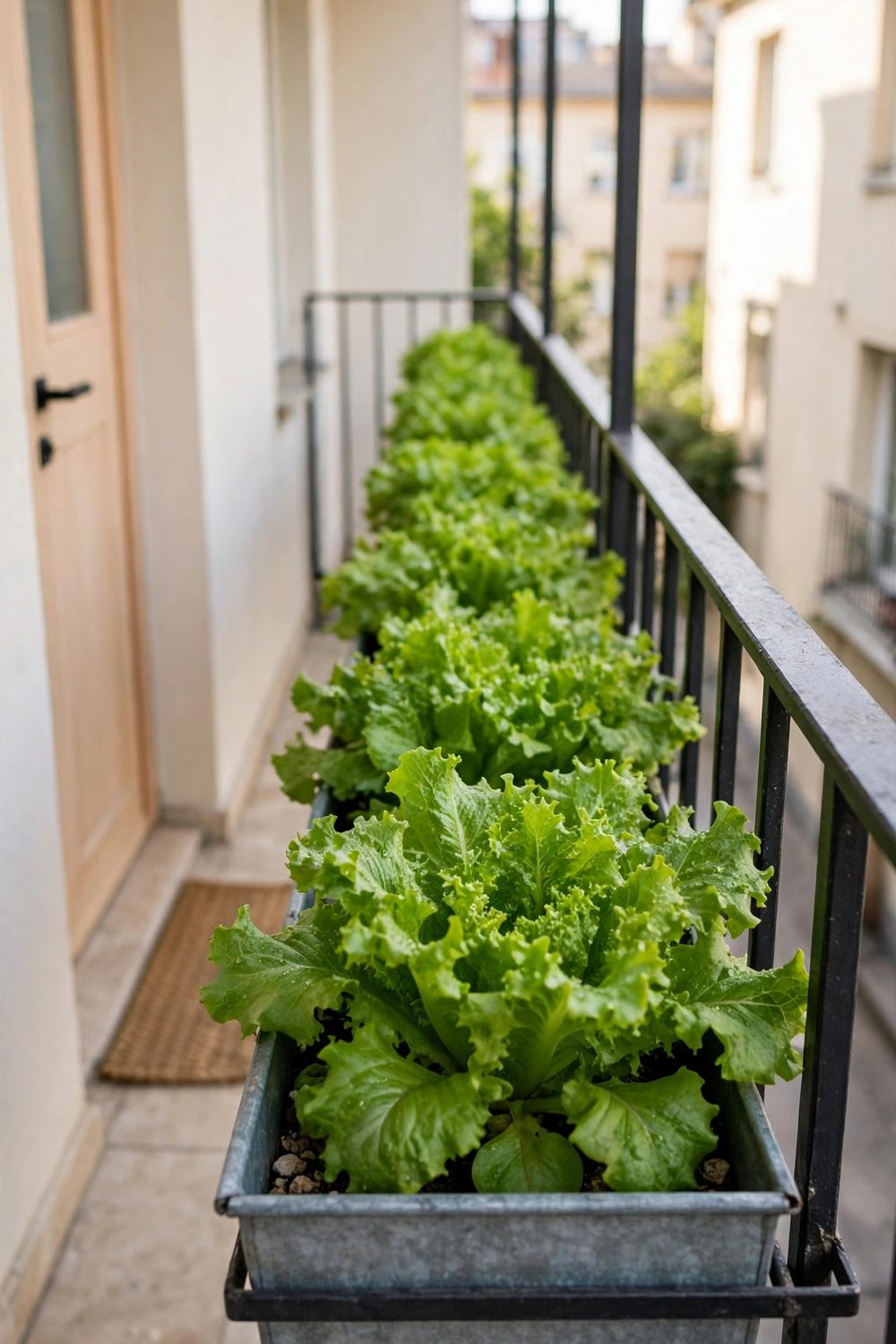
The rail is free growing space because it uses no floor at all. Hang one box the full length of the rail, at least 8 inches, 20 cm, deep, on the inside face.
Sow loose-leaf lettuce thinly and pick outer leaves as they size up. Three to four hours of sun is enough. In hot weeks, the rail box gets air that floor pots never feel.
Sow half the box first, then the other half two weeks later. One side is picked while the other side grows. A full box sown at once gluts, then leaves a gap.
Line the box and water slowly in the morning. Fast watering washes mix out of rail boxes. A small can with a rose head spreads water gently over young seedlings.
3. Stand a Slim Tiered Rack in the Shady End
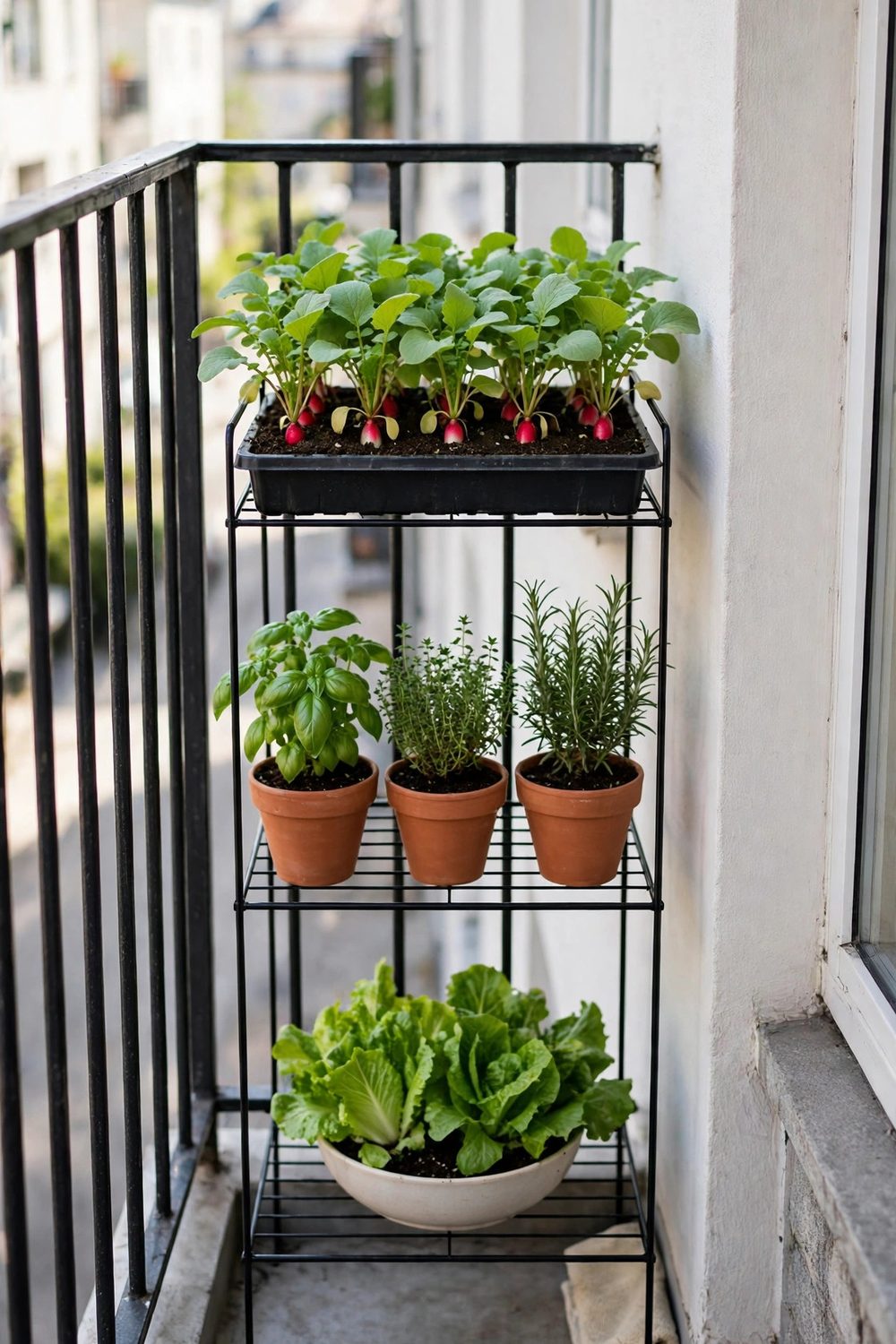
A narrow tiered rack turns one floor spot into three growing levels. Pick a rack no wider than 18 inches, 45 cm. It stands at the shady end, where greens and herbs do best.
Top tier: radishes in a shallow tray. Middle tier: chives and parsley in 10 inch pots, 25 cm. Bottom tier: a spare lettuce bowl. Heavy pots always sit lowest for balance.
Check the rack rating with wet pots in mind. Soaked mix weighs far more than dry mix. If the frame rocks when loaded, move the bottom pots to the floor.
Layouts for this footprint are mapped in our balcony vegetable garden layout ideas by balcony size, including the 3-foot plan step by step.
4. Sow Radishes in a Shallow Trough on the Floor Strip
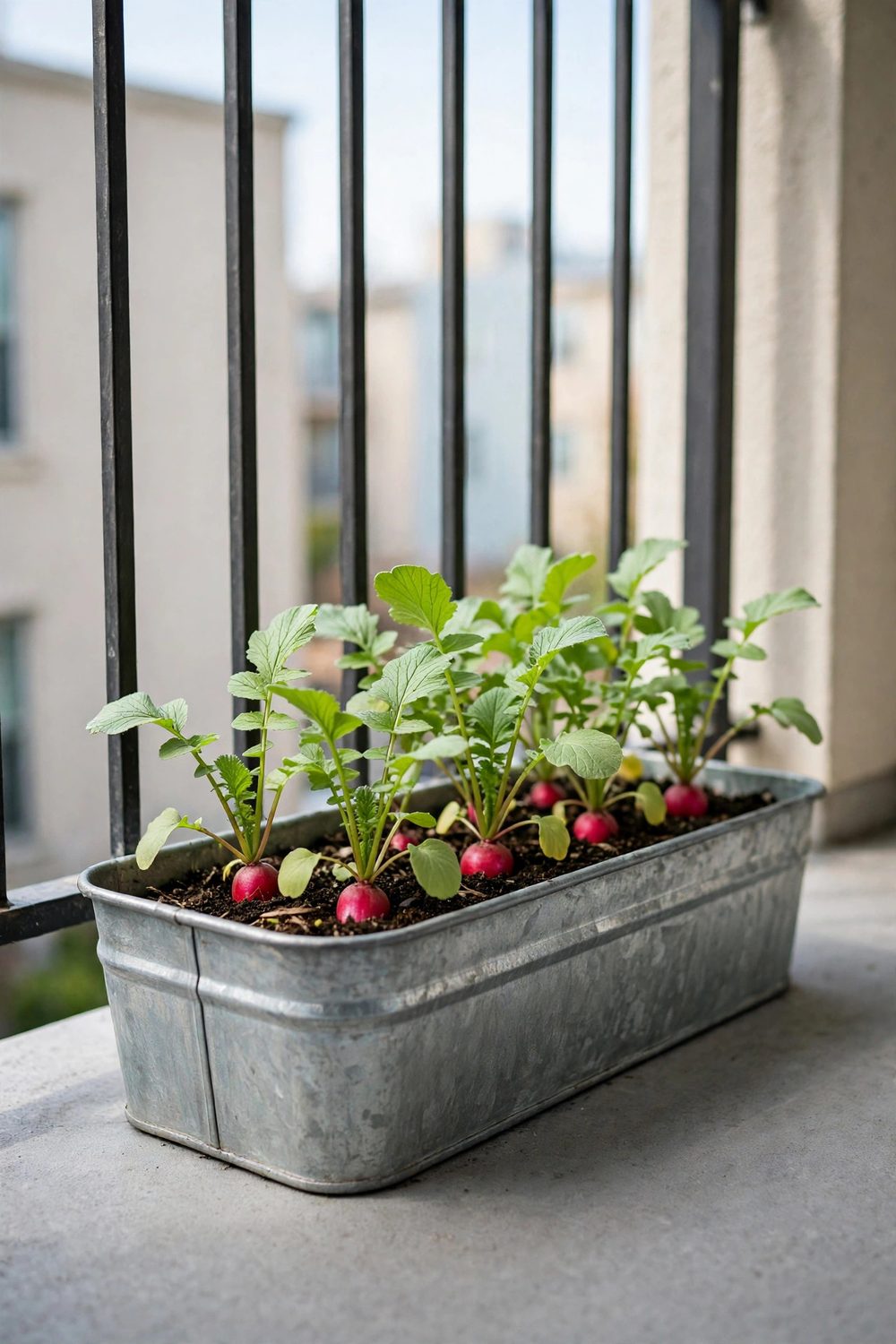
The floor strip in front of the rail still fits a shallow trough. Radishes need only 6 inches, 15 cm, of depth, so a low trough slides into space taller pots cannot use.
Sow seed one half inch, 1 cm, deep and 1 inch, 2.5 cm, apart. Thin to 2 inches, 5 cm, apart. Pull roots as soon as they round out, about a month after sowing in spring.
Keep the mix damp, never soggy. Radishes split in mix that swings from dry to soaked. A light watering each morning in warm weather keeps growth even and mild.
Refill each gap with fresh seed the day you pull. A trough in rolling sowing never sits empty. By fall you will have pulled four or five rounds from one strip.
5. Grow Three Herbs in One Rail Planter
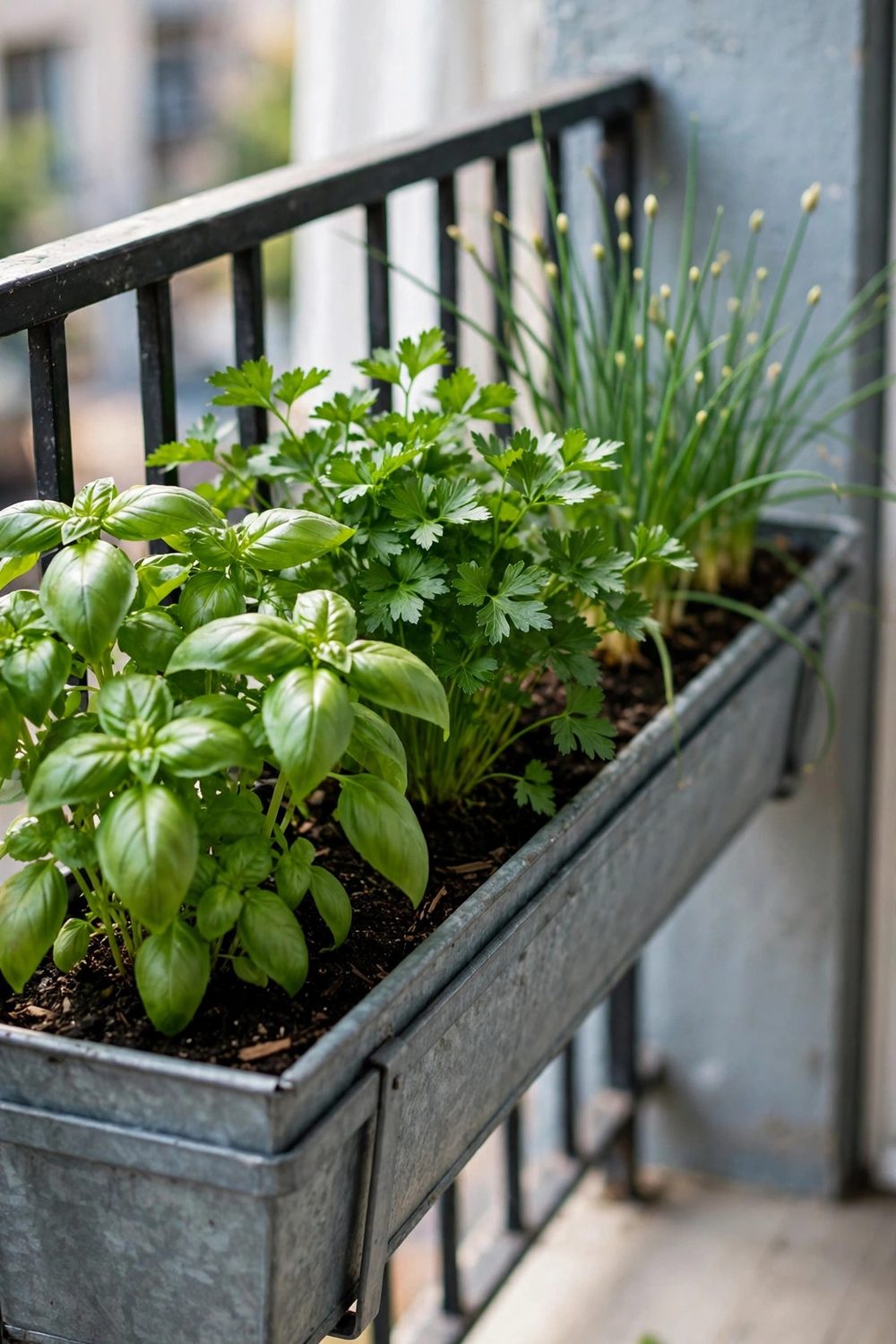
Three single herb pots eat three spots. One rail planter holds the same herbs in one spot. Basil, chives, and parsley share a box well, one plant every 8 inches, 20 cm.
Basil takes the sunny end of the box. Parsley and chives accept the shadier end. Pinch basil tips weekly so it branches. Snip chives low and they regrow within days.
Supermarket herb pots die crowded in thin soil. A planter with real depth fixes that. Each plant gets root room, steady water, and a season of growth instead of two weeks.
Harvest little and often, never more than one third of a plant at once. Small cuts keep herbs bushy. Hard cuts stall them for weeks at this scale.
6. Send Sugar Snap Peas Up the Rail Net
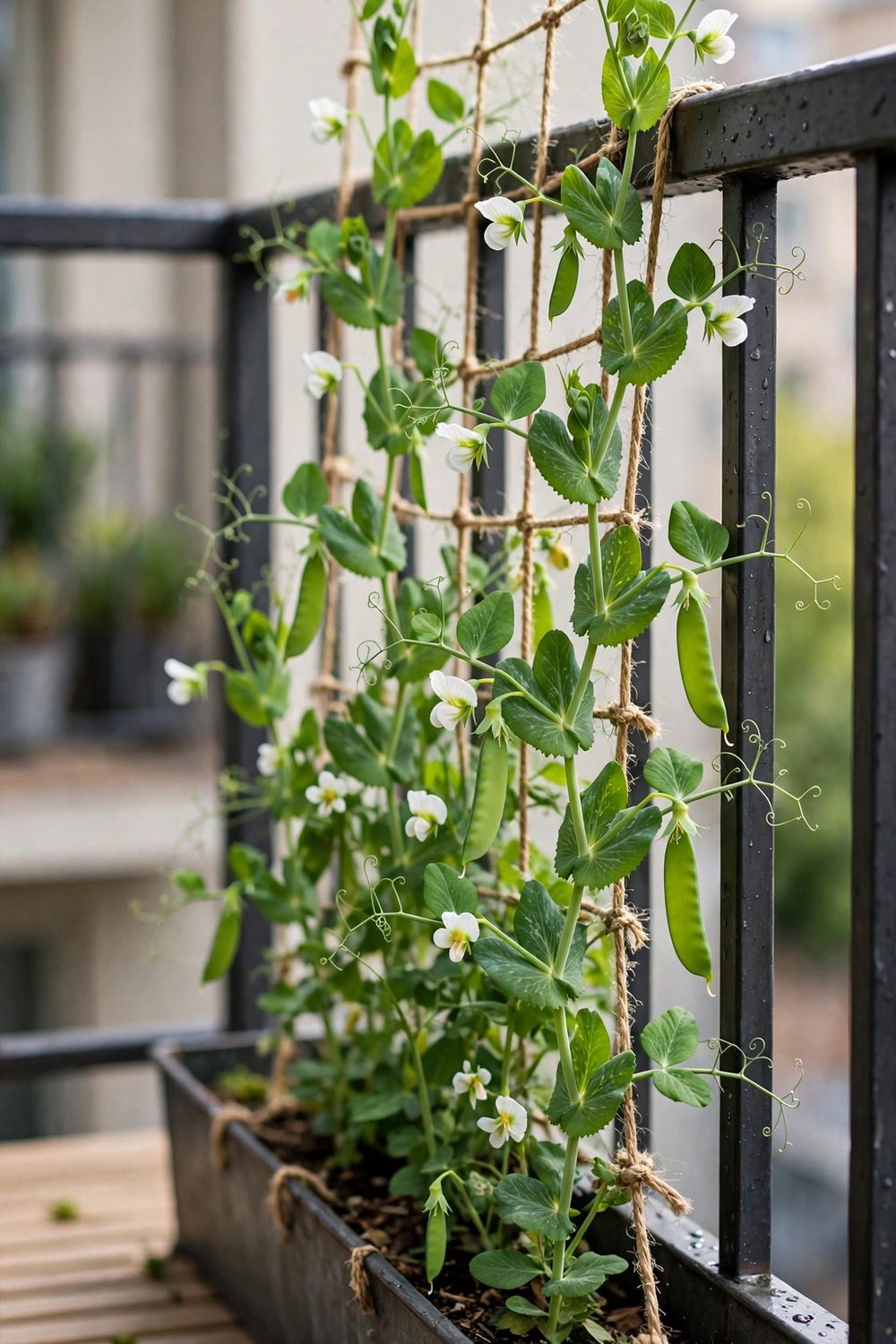
Vertical crops are the tiny balcony cheat code. Peas grow up, not out. Tie a square of netting to the rail and sow Sugar Snap peas in a trough at its base.
Sow seed 1 inch, 2.5 cm, deep and 2 inches, 5 cm, apart in early spring. Peas like cool weather and start weeks before tomatoes. Guide the first tendrils onto the net by hand.
Water at the base, not over the leaves. Mildew spreads fast in still air on a sheltered rail. Morning watering lets leaves dry before night, which cuts the risk a lot.
Pick pods every two days once they fill out. Frequent picking keeps flowers coming. Miss a week and the vine puts its energy into ripe seed instead of new pods.
7. Train a Single Cucumber Up the Corner
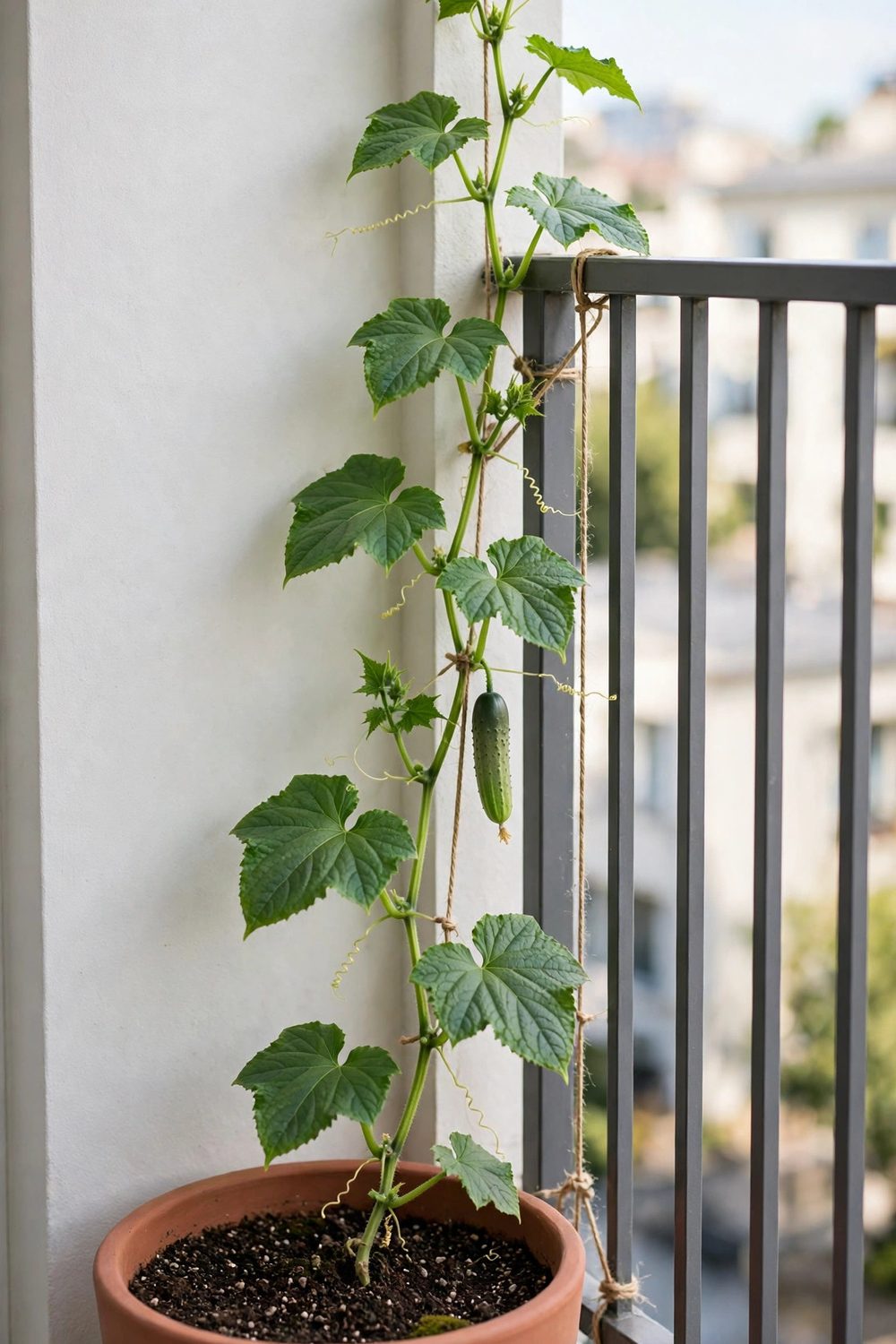
One cucumber vine, trained up, shades nothing and sprawls nowhere. Plant one Spacemaster in a 5-gallon pot, about 19 liters, in the sunny corner opposite the tomato, in its own season slot.
Spacemaster grows short vines bred for small spaces. Tie stems to the rail with soft ties as they climb. Fruit hangs clean and straight instead of curling on the floor.
Never let the mix dry out fully. Cucumbers are mostly water and sulk after one dry day. Water deeply each morning in summer and feed every two weeks.
Check under big leaves twice a week. Fruit hides well and oversizes fast. Pick at 6 to 8 inches, 15 to 20 cm, for firm flesh and small seeds.
8. Keep One Small Chili Pot on the Top Tier
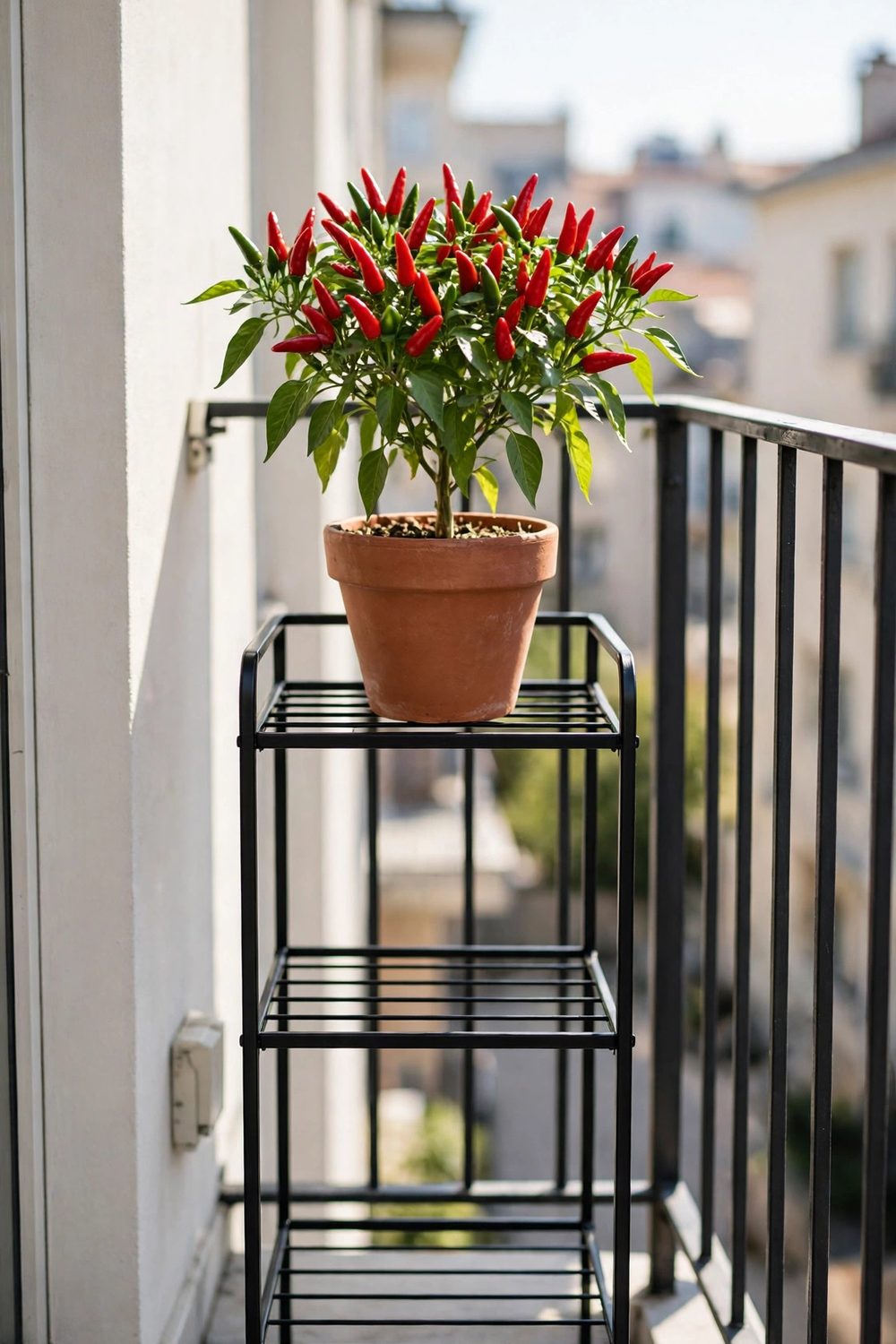
A single chili plant earns a top-tier spot because it stays compact and crops for months. Use a 10 to 12 inch pot, 25 to 30 cm, with one plant only. No sharing at this size.
Chilies want heat and sun, 6 or more hours a day. The top tier catches both. Reflected heat from the wall behind helps fruit ripen in cooler summers.
Water when the top inch, 2.5 cm, dries, then soak fully. Steady moisture stops blossom drop. Wild swings between dry and soaked cause most flower loss in small pots.
Start picking green and let later fruit ripen red on the plant. One plant gives fresh heat all summer without taking a single extra inch of floor.
9. Hang Strawberries Inside the Rail Line
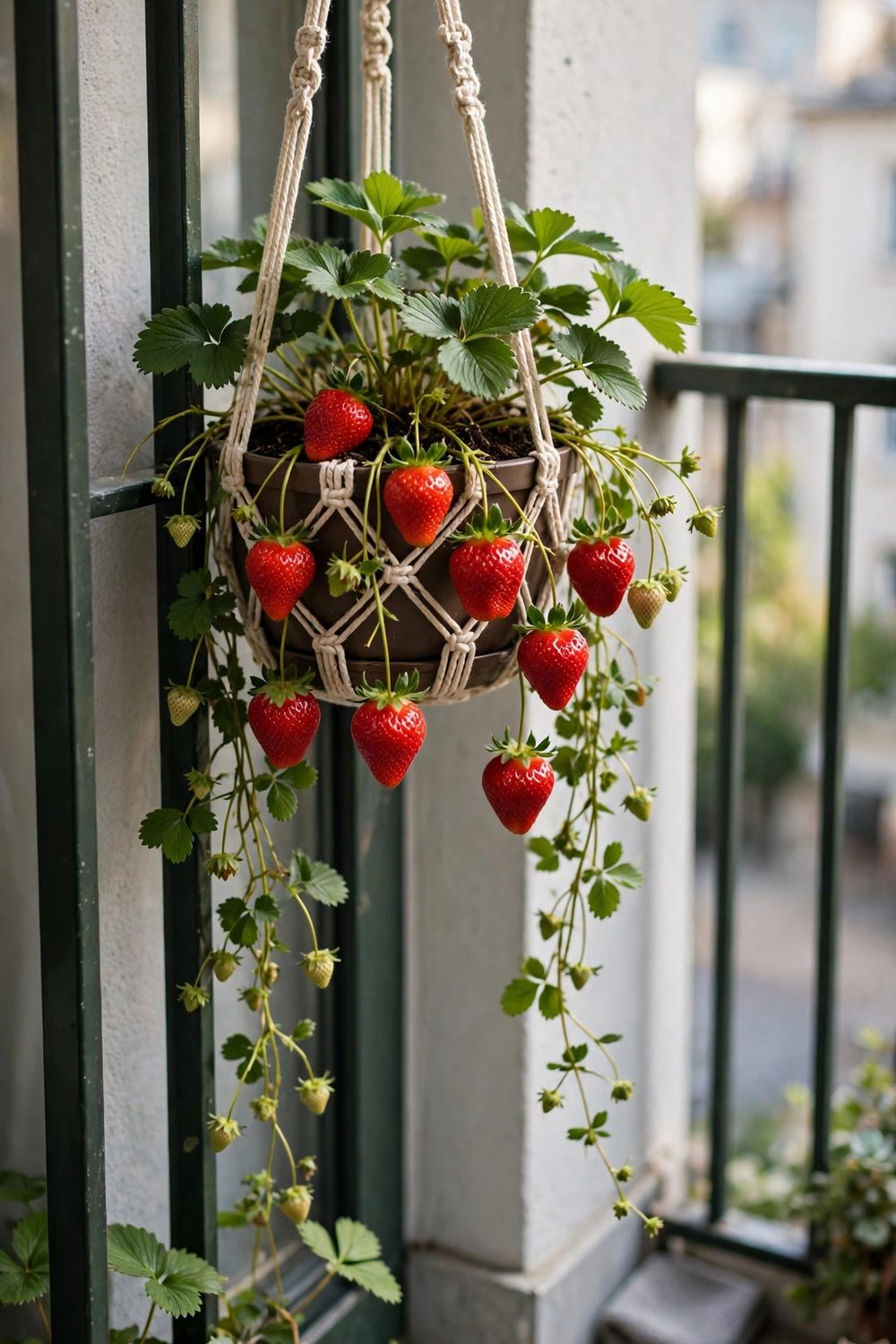
A hanging strawberry planter uses air space over the floor strip. Hang it inside the rail, never outside. Fruit stays on your side, clean, and easy to reach for picking.
Fit six plants in a planter at least 12 inches, 30 cm, across. Crown each plant at soil level. Crowns buried too deep rot, and crowns set too high dry out.
Hanging mix dries faster than any floor pot. Check it each morning in summer. Feed every two weeks once flowers show, and net the fruit if birds find it first.
Trim runners in the first year so energy goes to fruit. A tidy planter also weighs less, which matters when the whole garden hangs on one rail.
10. Fit Bush Beans Into One End of a Trough
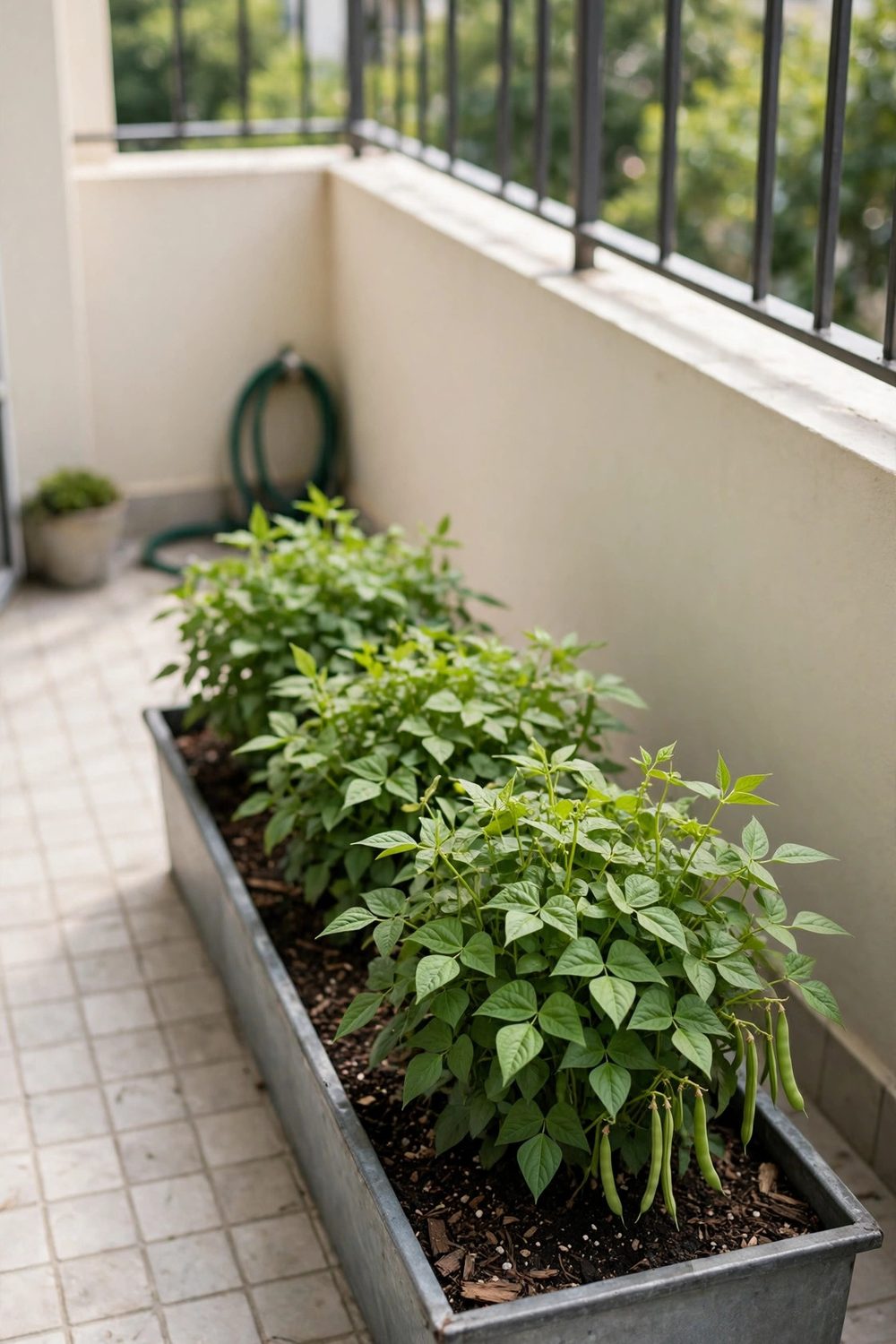
Bush beans need no frame, no net, and no height. One end of a long trough grows a full picking row. Sow after your last frost, because beans rot in cold mix.
Sow Provider seed 1 inch, 2.5 cm, deep and 3 inches, 8 cm, apart. Plants stop near knee height and shade nothing behind them. That restraint is gold on a 3-foot rail.
Water steadily while pods form. Beans in fresh mix need little feed, since their roots hold nitrogen. A mulch layer on the surface slows drying on hot days.
Pick pods every two days. The stand ideas in our tiered plant stand vegetables for a narrow balcony guide show where a bean trough fits beside a rack.
11. Grow Short Carrots in a Deep Narrow Pot
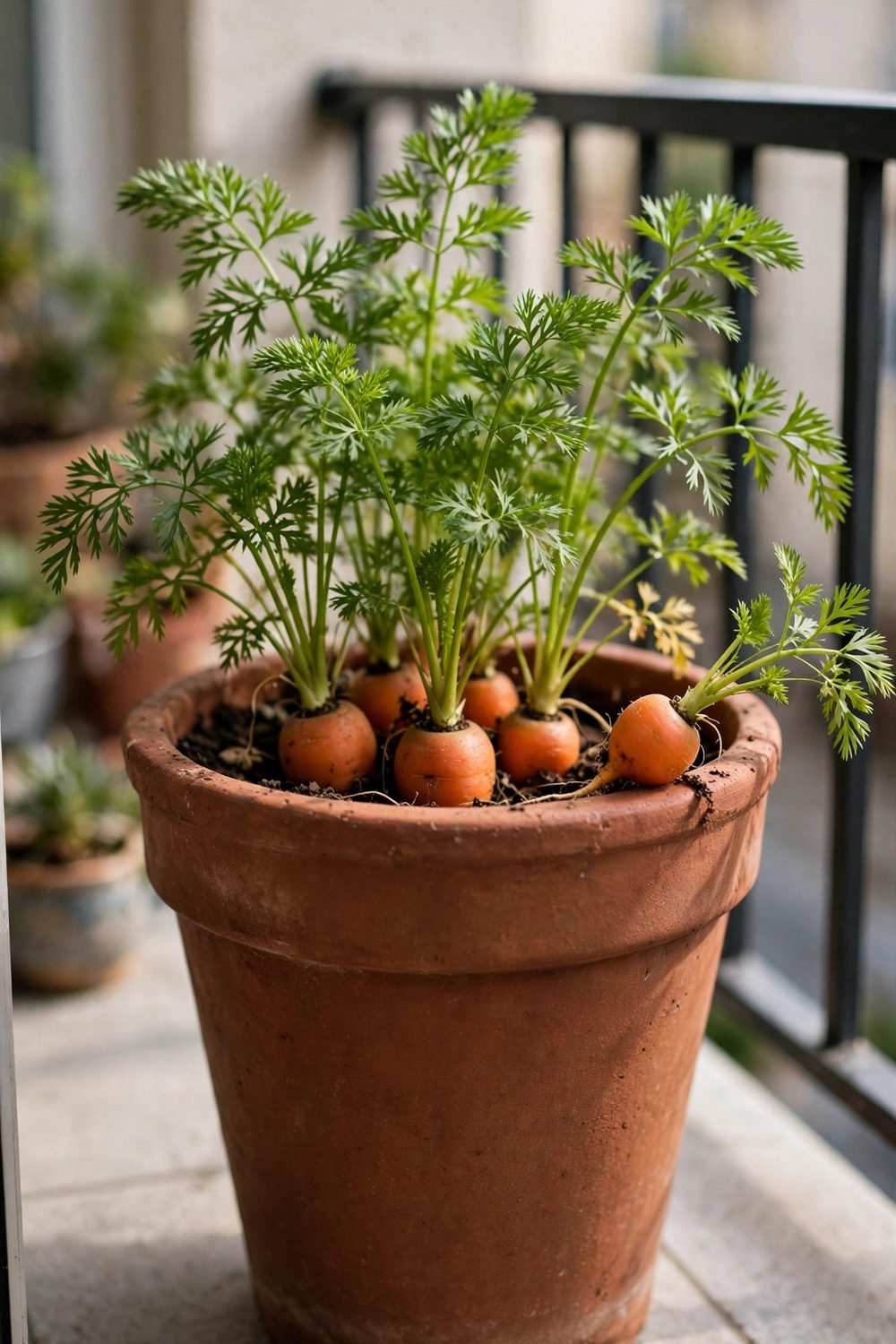
Depth matters more than width for carrots, so a narrow deep pot fits this balcony well. Choose a pot at least 12 inches, 30 cm, deep and fill it with loose, stone-free mix.
Sow short types such as Parisian Market or Little Finger one quarter inch, 0.5 cm, deep. Thin seedlings to 2 inches, 5 cm, apart so each root can swell round.
Keep the surface damp until shoots show. Carrots take 2 to 3 weeks to sprout. A small board over the pot holds moisture in while you wait.
Set the pot beside the stand, in the last floor gap. It asks for sun in the morning and gives you sweet roots by early summer from dead space.
12. Plant One Upright Kale in the Back Corner
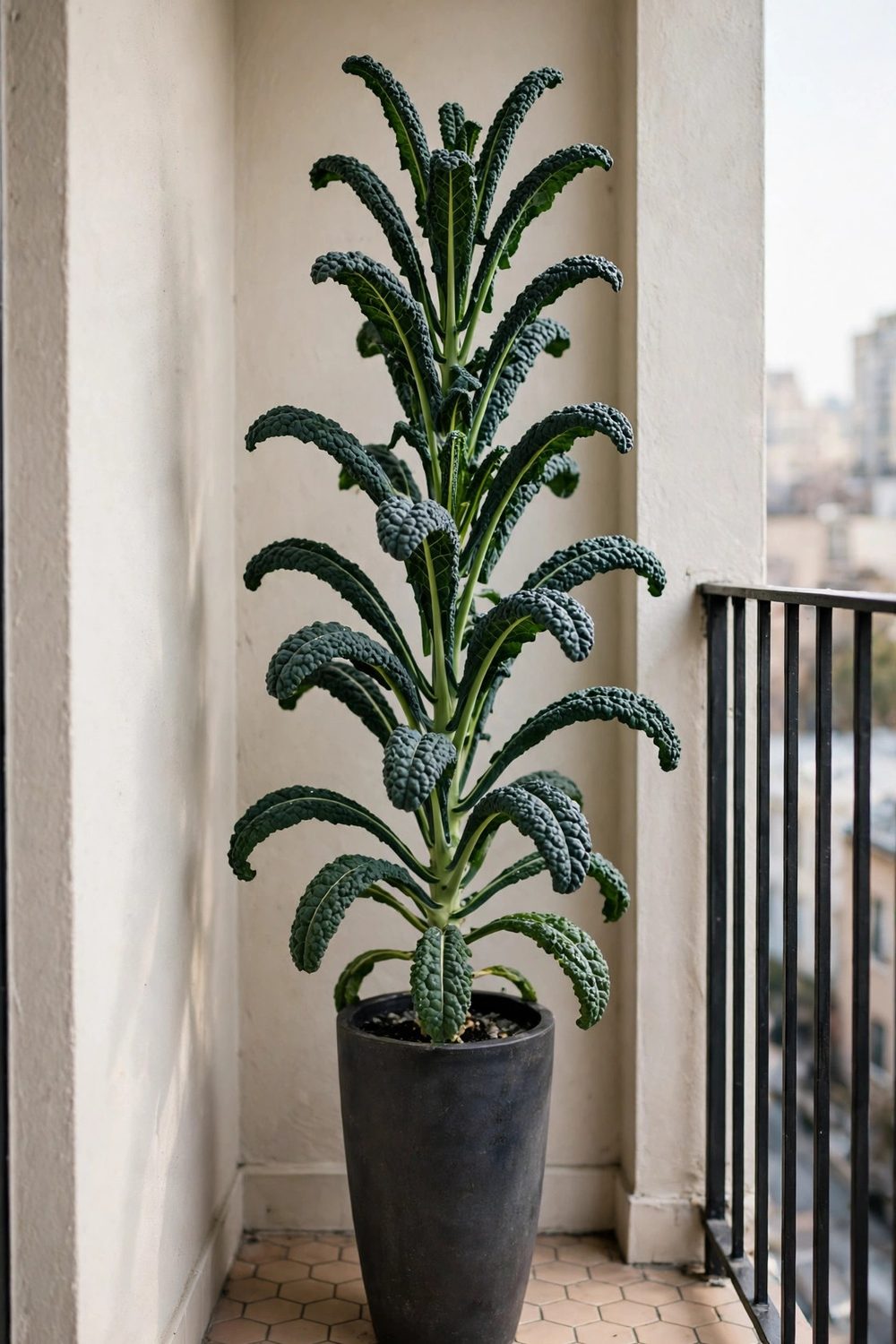
Lacinato kale grows up in a narrow column, so one plant fits the back corner without shading the rail box. Use a pot at least 12 inches, 30 cm, deep, one plant per pot.
Four hours of sun keeps kale productive. Water when the top inch, 2.5 cm, of mix dries. Feed every two weeks and pick outer leaves only, leaving the crown intact.
Always keep five or six leaves on the plant. Strip it bare and growth stalls for weeks. Steady small picks give you greens from spring into fall from one pot.
Cool nights suit kale, and a light frost does no harm. In mild winter areas, about USDA zones 8 to 10, this corner pot can crop through winter.
13. Tuck Spring Onions Into Every Gap
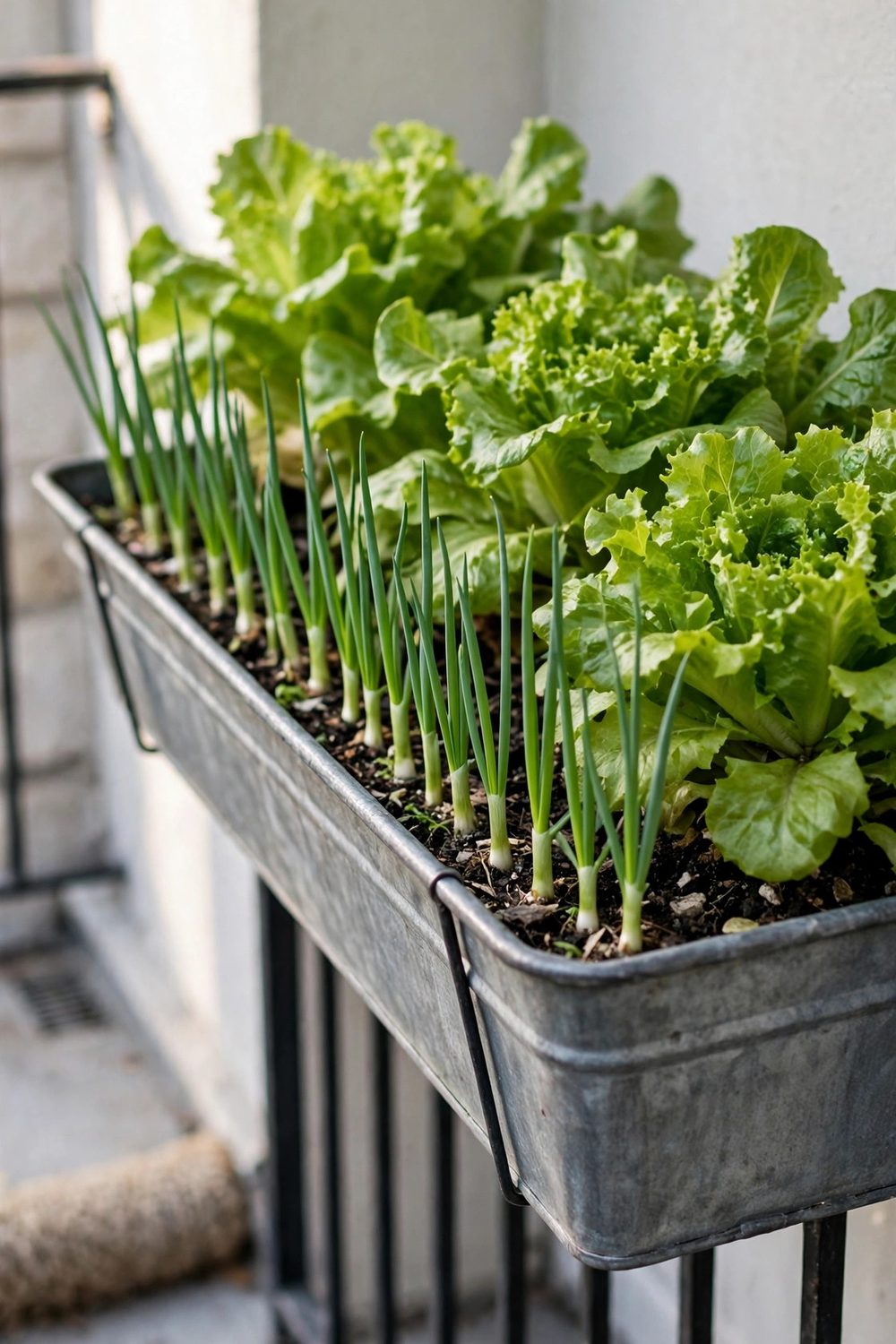
Spring onions ask for almost nothing: a finger width of soil and steady light. Sow them along the edges of the lettuce box and the bean trough, in the gaps other crops leave bare.
Sow seed one half inch, 1 cm, deep in short rows. Thin lightly, since onions grow happily close. Pull stems at pencil thickness for salads and stir-fries.
Keep gaps sown in rotation. Pull three onions, sow three seeds the same day. The edges of your boxes stay productive all season with no extra pots at all.
Spring onions also mark time well. A row sown with each main crop tells you at a glance how old each box is when labels go missing.
14. Rotate One Salad Bowl in Two-Week Sowings
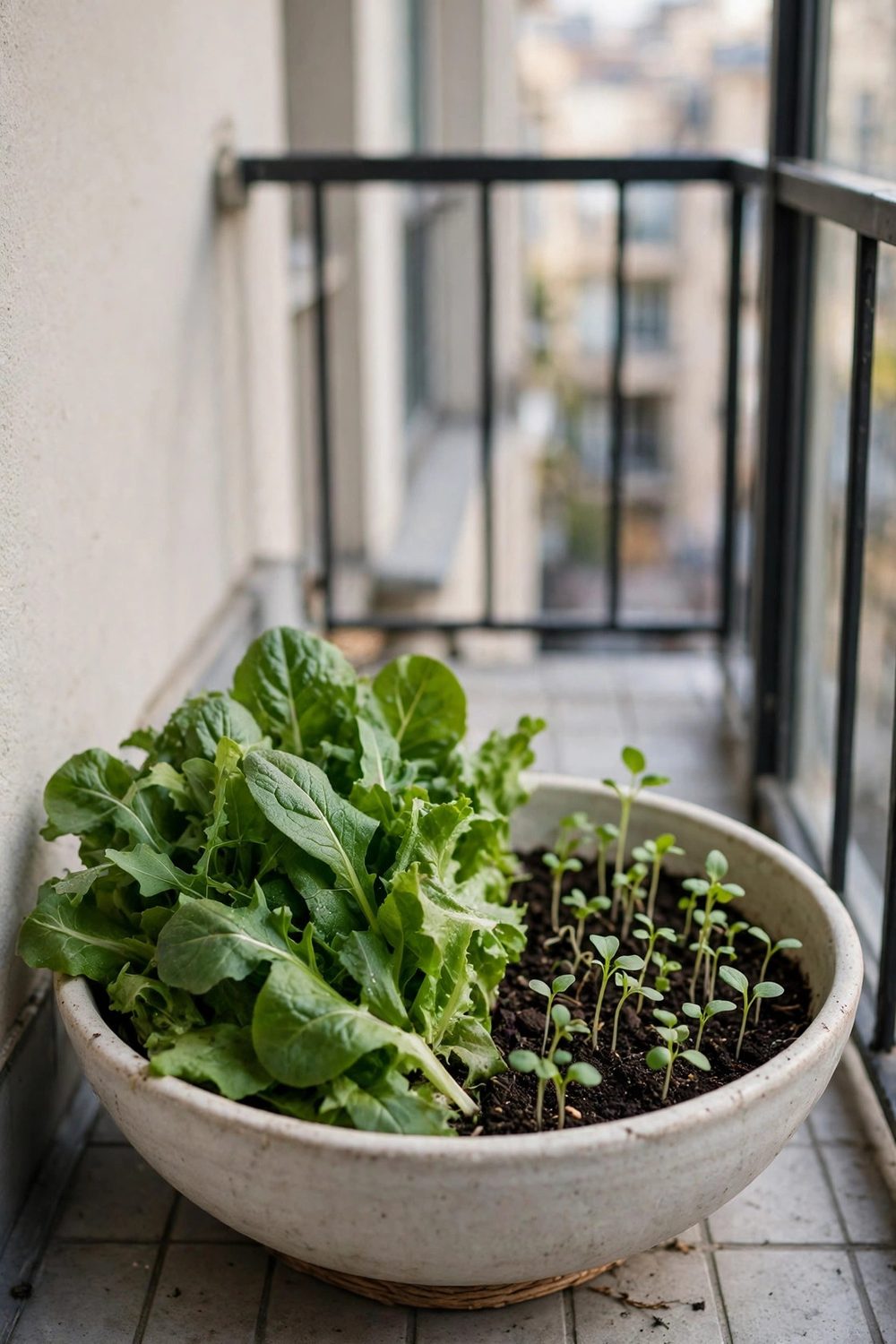
One salad bowl, sown in halves, beats two bowls sown at once on a tiny balcony. Sow half, pick half. The bowl never sits empty and never gluts you with leaves in one week.
Mix loose-leaf lettuce with arugula, also called rocket, for cut-and-come-again picking. Snip outer leaves with scissors. The center keeps growing new leaves for weeks per sowing.
Give the bowl morning sun in high summer. Heat makes leaves bitter and pushes plants to flower. Afternoon shade from the rail adds weeks of good flavor.
More small-footprint plans are in our container vegetable garden layout for a small space. Measure first, then sow. Order matters more than effort at this size.
15. Water With One Small Can and a Fixed Route
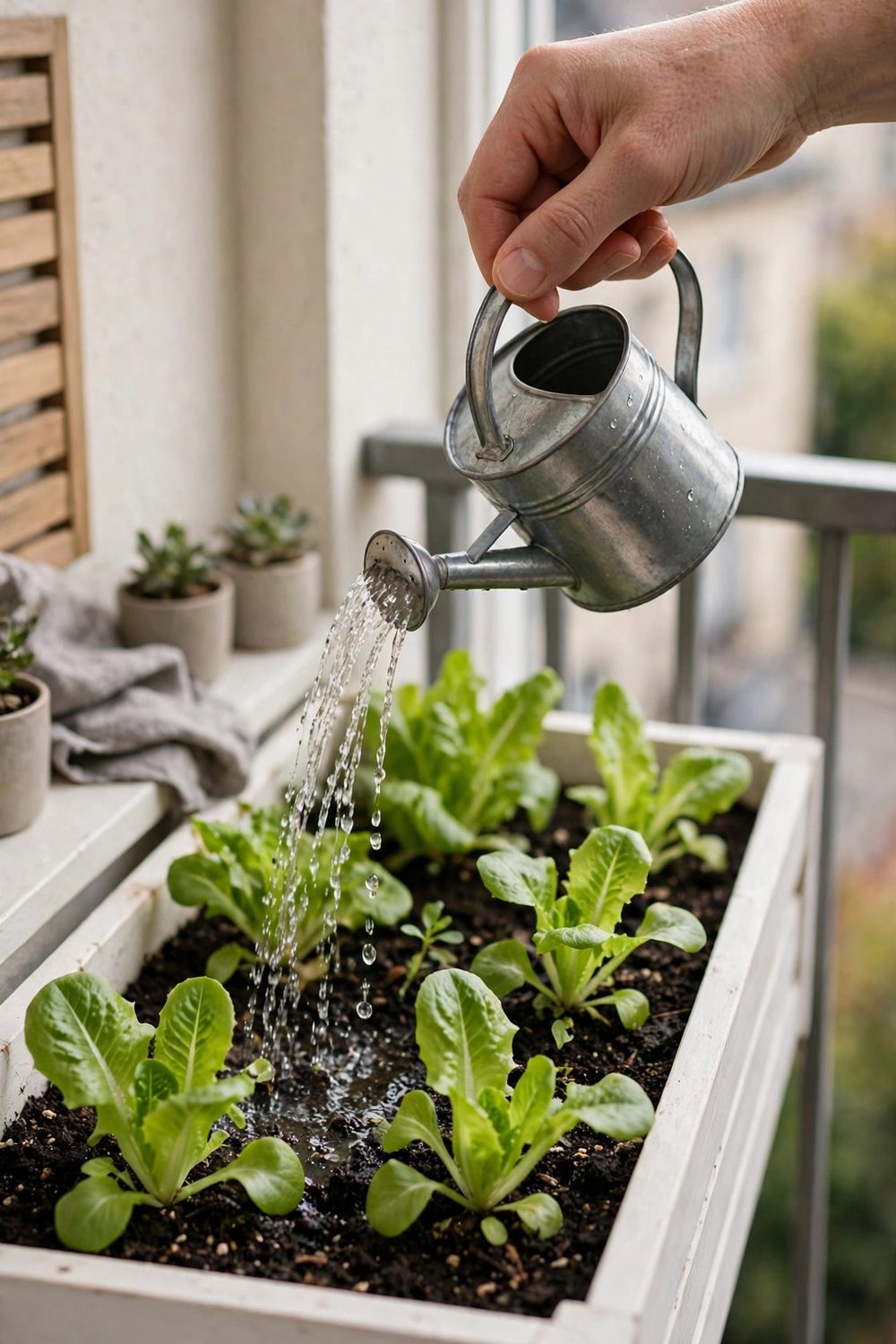
A tiny garden needs a tiny system. One small watering can, filled at the kitchen sink, covers every pot here in two trips. A fixed route, rail first, then stand, then floor, means nothing gets missed.
Test moisture with a finger before you pour. Dry at the first knuckle means water now. Damp means skip that pot today. Small pots dry at very different speeds on the same rail.
Water slowly until drips show in each saucer, then stop. Empty saucers after 30 minutes. On a 3-foot balcony, one overflowing saucer wets the whole floor and the balcony below.
Browse these small balcony plant ideas if you add a flower pot later. Keep food crops first in the sun order, and ornaments last.
Three feet is a constraint, not a verdict. Rail for greens, corner for one fruiting crop, stand for herbs, floor strip for roots. That order grows dinner on almost any small rail.
A balcony vegetable garden on a tiny 3 foot balcony works when each inch has one job. Assign the jobs once, then tend them in minutes a day.
Save this plan to your container garden board for later. Start with the rail box this weekend and add the corner pot next month.


