

15 Climbing Vegetables for a Balcony Privacy Screen
The balcony next door sits close enough for a chat you did not plan. A plain screen blocks the view, but a screen you can eat does the same job and pays you back at dinner time each week.
A living balcony garden privacy screen with climbing vegetables needs three things: a support the landlord accepts, pots heavy enough to hold it, and climbers matched to your sun. Freestanding frames and rail ties do all of this without drilling.
Plant tall, fast climbers at the back of each pot and shorter fillers at the front. In a few weeks the leaves knit together, and gaps close as stems are tied in along the frame.
Start with two pots and one frame panel this season. You can add a second panel next year, once you know which climbers suit your wind, your light, and your watering routine best, and which crops your kitchen uses most.
This post contains affiliate links. If you buy through them, we may earn a small commission at no extra cost to you. See our Affiliate Disclosure.
1. Start the Screen With Runner Beans
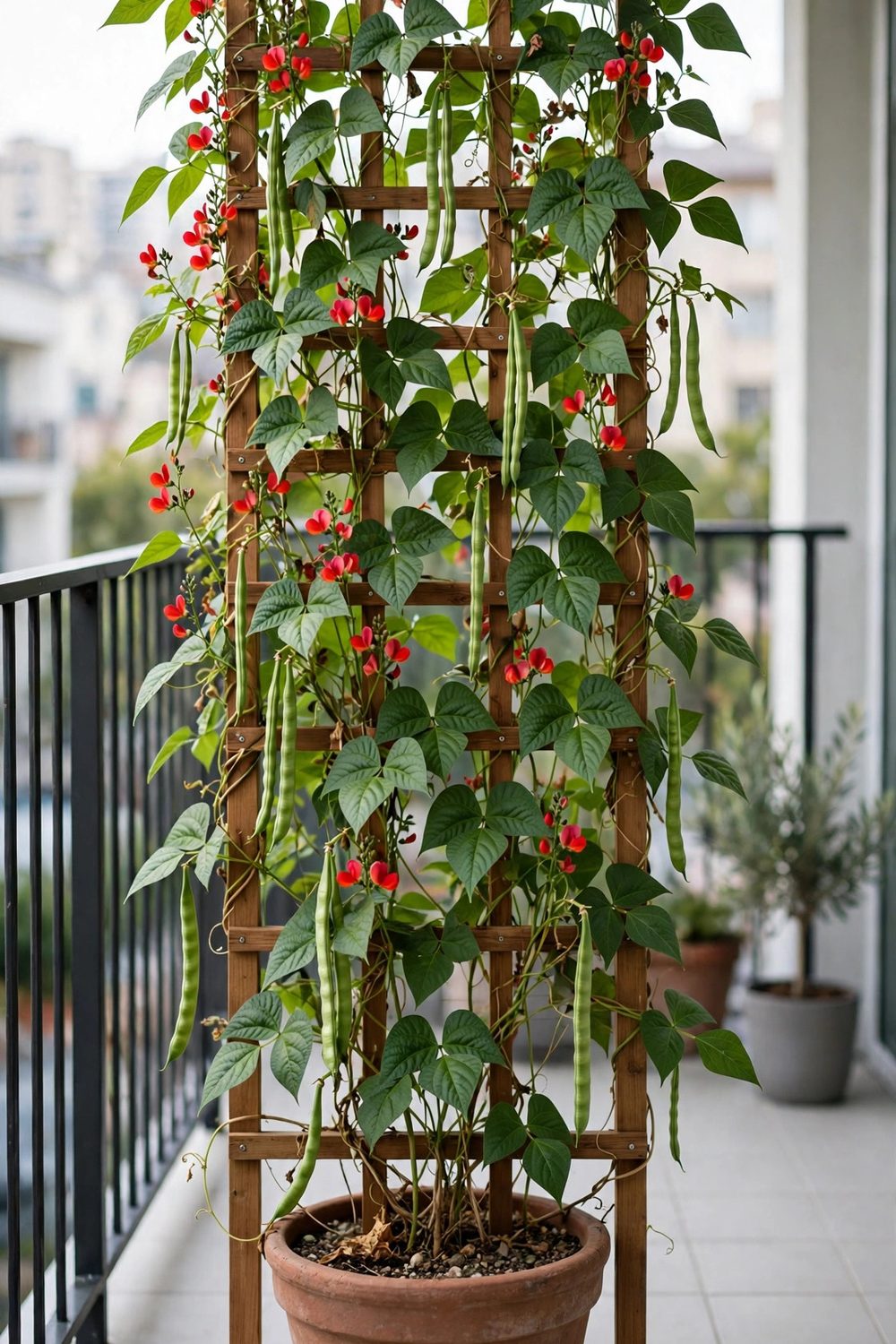
Runner beans are the fastest cover on this list, with thick leaves and red flowers. Sow seed 2 inches (5 cm) deep in a 10-gallon (about 38-litre) pot after your last frost.
Set the pot at the base of a freestanding frame and give plants 6 or more hours of sun. Space seeds about 6 inches (15 cm) apart along the back edge of the pot.
Twine finds the frame alone, but early stems need a guiding tie. Water deeply in heat, because a full screen of leaves drinks fast on still, hot afternoons.
Pick pods young, at about 6 inches (15 cm), before beans swell inside. Pods left to fatten slow flowering, and the screen thins just when you want it thickest.
2. Add Pole Beans for a Second Layer of Leaves
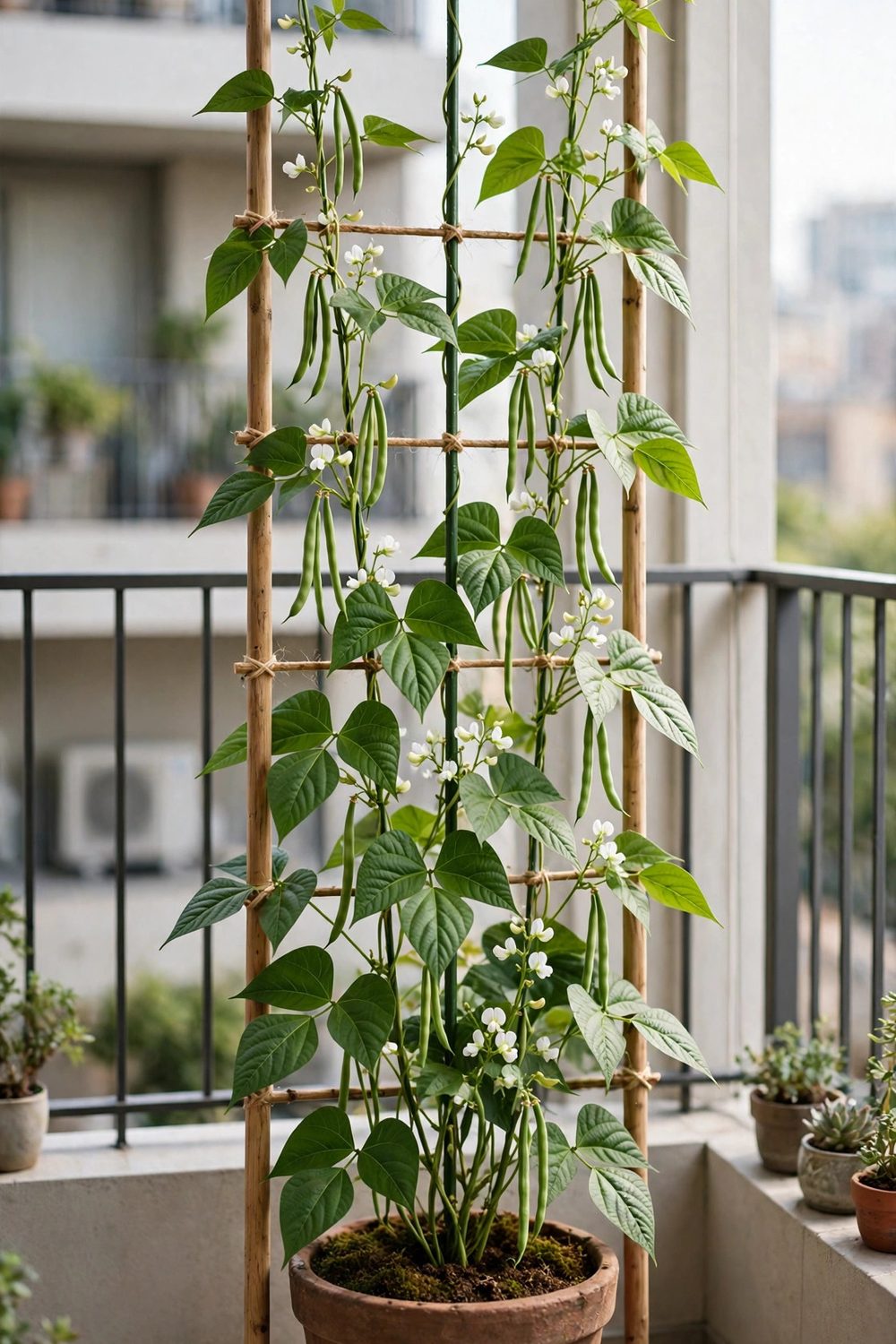
Pole beans climb a little slower than runners, which staggers your cover across the season. Sow ‘Blue Lake’ type seed 1 inch (2.5 cm) deep in a 7-gallon (about 26-litre) pot.
Beans need warm mix, so wait for warm nights before sowing outdoors. Cold, wet mix rots seed before it sprouts, and gaps in the screen start right there.
Tie stems loosely to the frame with soft twine, checking weekly as they thicken. A screen tied at three heights holds its shape in gusts on open upper floors.
Pick pods every two days in high summer. Regular picking keeps flowers coming, and fresh growth keeps filling the small gaps that light finds in the leaf wall.
3. Sow Sugar Snap Peas for Early Spring Cover
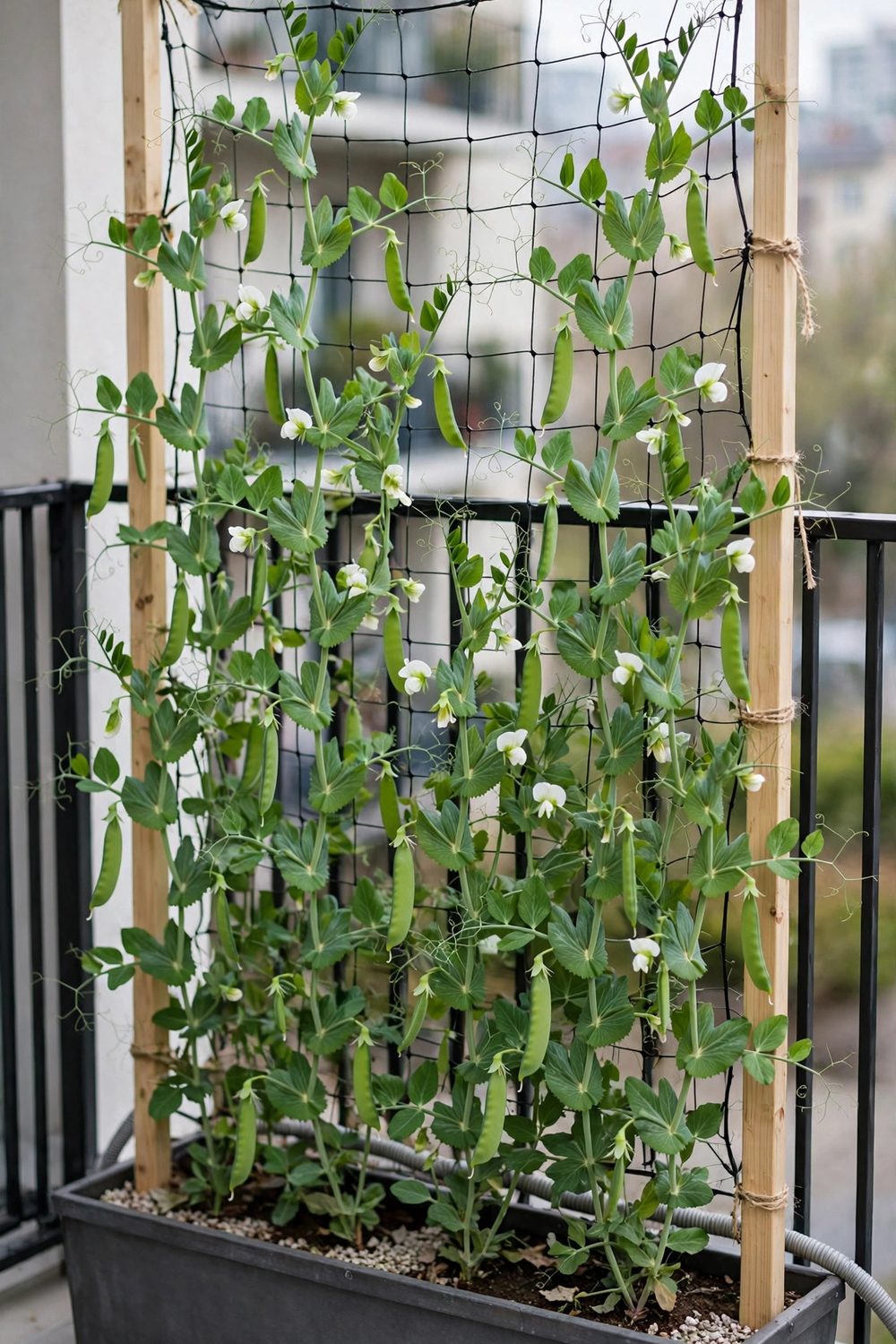
Peas give the screen a head start, because they grow in cool weather weeks before beans can go out. Sow ‘Sugar Snap’ seed 1 inch (2.5 cm) deep in a long trough at the frame base.
Space seed 2 inches (5 cm) apart and tie netting to the frame behind them. Pea tendrils grip net well, and the whole panel greens up while the balcony is still chilly.
Water at the base to keep mildew down in still air. Morning watering, done before work, lets leaves dry fast and keeps the screen healthy through spring.
When summer heat ends the peas, cut stems at the base and leave roots in the mix. Sow beans into the same trough, and cover carries on without a bare month.
For the fixing side, our step guide to a container garden on a railing covers ties and troughs in detail.
4. Grow Cucumbers Up the Sunniest Panel
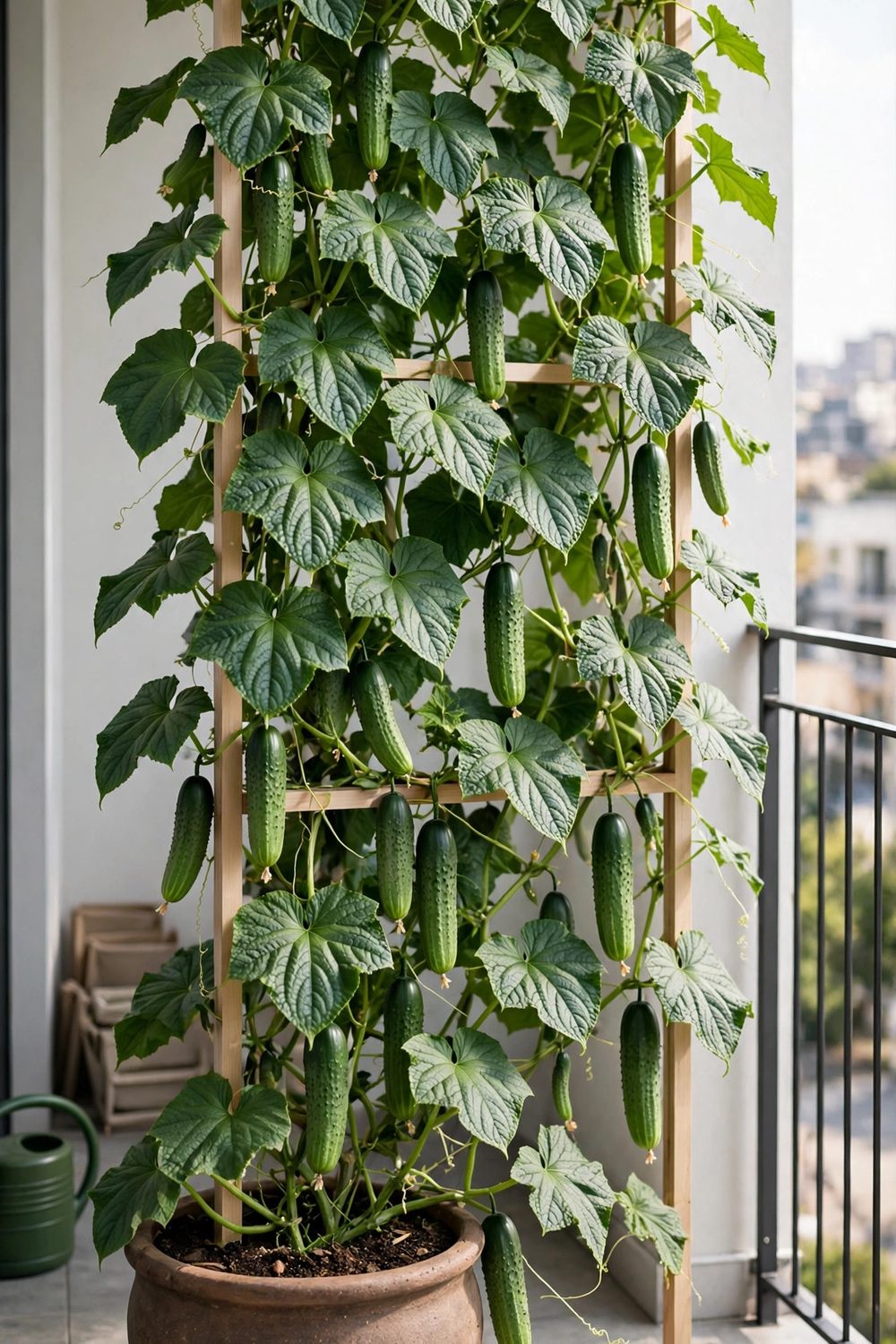
Cucumbers climb fast and their big leaves block sight lines well. Plant one ‘Spacemaster’ or a climbing type in a 7-gallon (about 26-litre) pot at the sunniest end of the frame.
Give cucumbers 6 to 8 hours of sun and water deeply each morning in summer. Fruit is mostly water, so a dry day shows fast in wilted leaves at noon.
Tie main stems to the frame as they grow, and let side shoots fill sideways. Air moving through raised leaves cuts mildew on humid days in midsummer.
Pick fruit at 6 to 8 inches (15 to 20 cm), young and often. Check under leaves twice a week, because a hidden fruit grows oversize and slows the whole vine down.
5. Fill Shady Gaps With Malabar Spinach
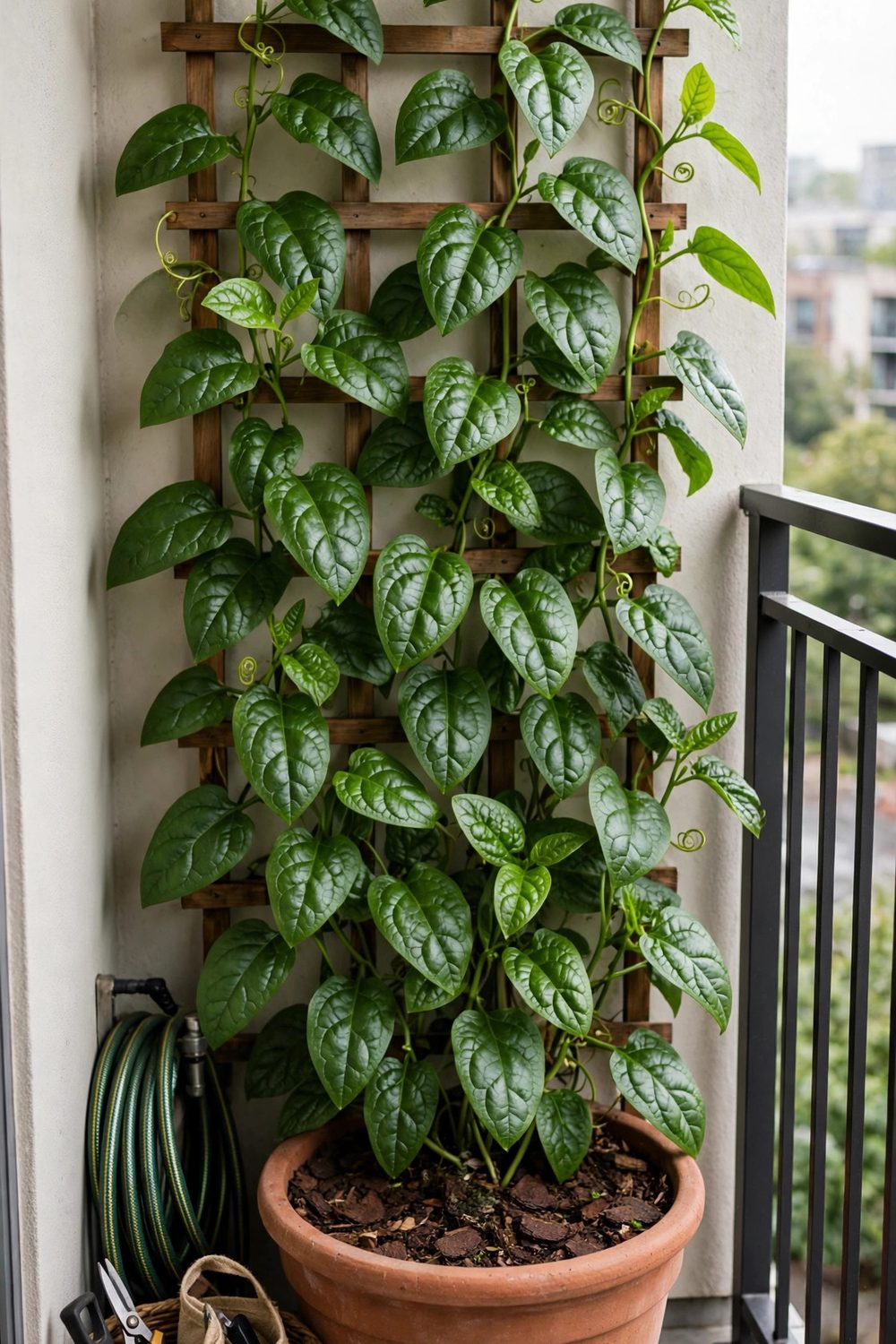
Every screen has one shaded corner where sun lovers sulk. Malabar spinach fills that corner, with thick, glossy leaves on vines that climb in warm weather and light shade.
Sow seed or plant seedlings in a 5-gallon (about 19-litre) pot once nights stay warm. It is a heat lover, so cold spring soil slows it to a standstill at first.
Pinch tips to make side shoots, and the vine thickens instead of running thin. Leaves pick like spinach for cooking, with a mild flavour that suits soups and stir-fries.
Water steadily, because thick leaves lose moisture fast in wind. A mulch layer over the mix helps, and the pot needs checking on the same round as cucumbers.
6. Let Tromboncino Squash Run Along the Top Rail
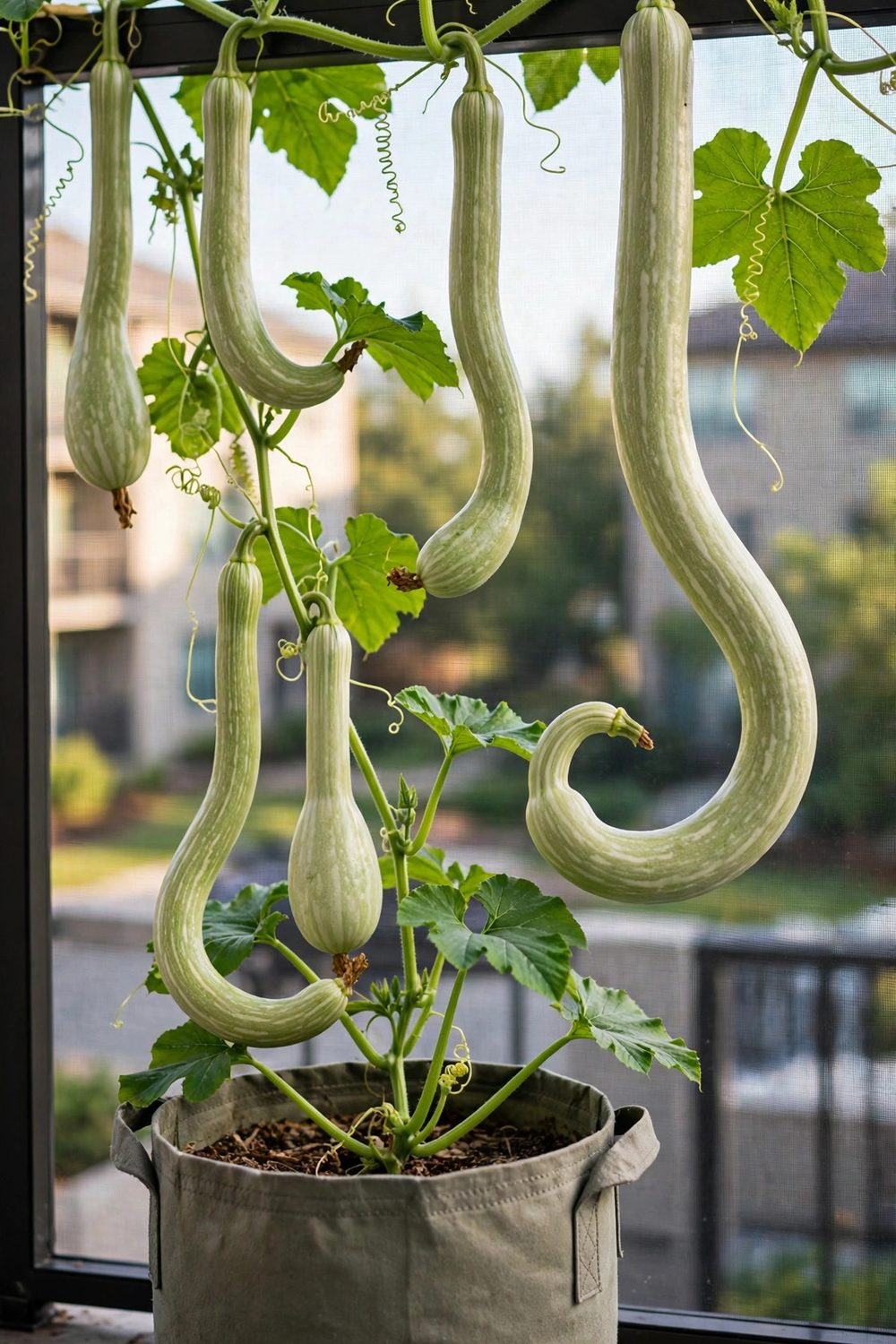
Tromboncino squash climbs with long, curling fruit that hangs down like ornaments. Plant one in a 10-gallon (about 38-litre) bag at the frame base and train the main stem upward.
Once the stem reaches the top, run it sideways along the rail or frame top. That sideways run shades the seats below and closes the high gap most screens leave open.
Give it 6 or more hours of sun and a weekly feed once flowers open. Big leaves drink heavily, so water deeply and check the bag daily in hot spells.
Pick fruit young for cooking like zucchini (courgette), or leave a few to mature. Young picking keeps the vine producing, and the screen stays leafy into late summer.
7. Train an Indeterminate Tomato as a Tall Screen Plant
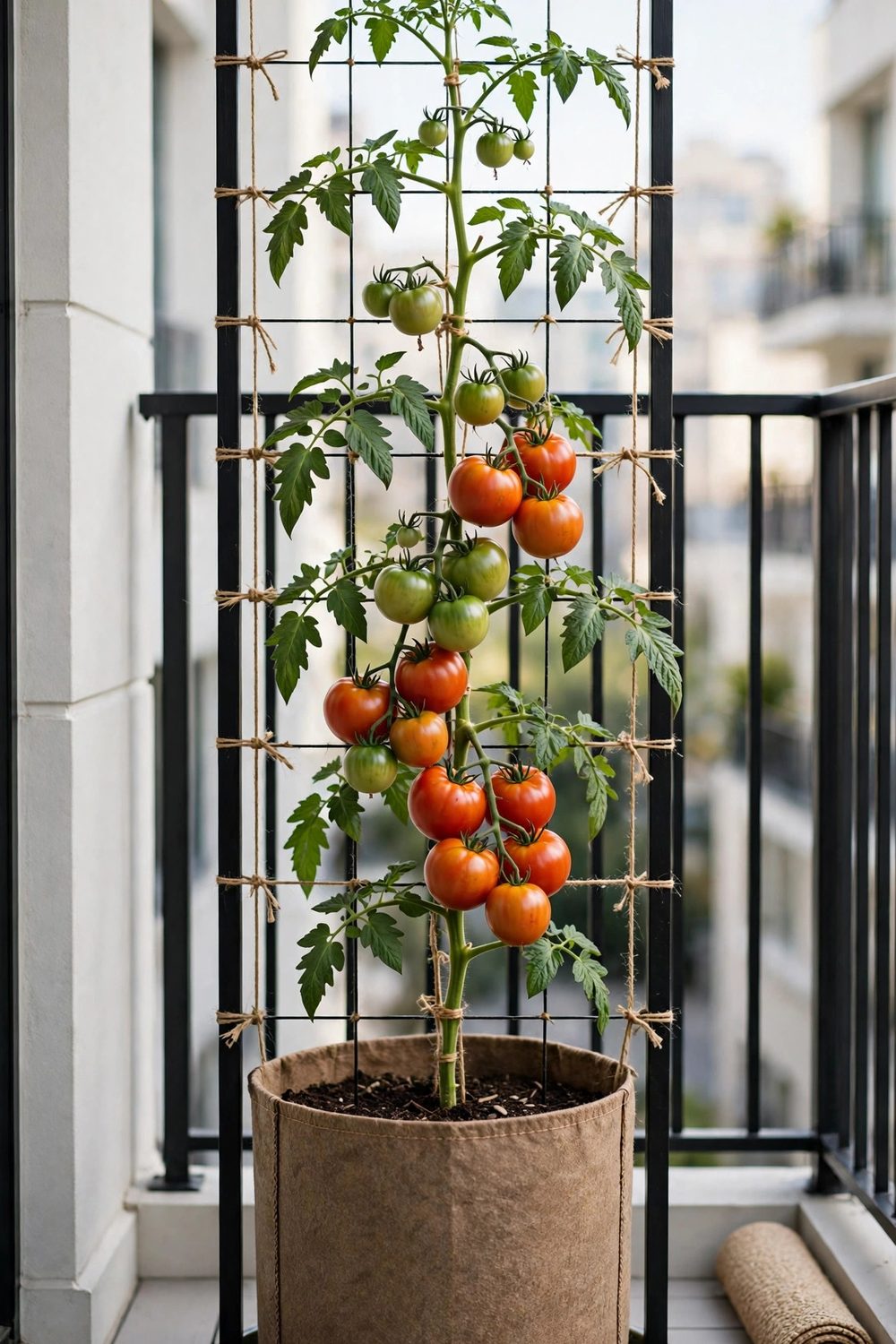
An indeterminate tomato keeps growing all season, which makes it a strong end post for a screen. Plant one in a 10-gallon (about 38-litre) bag and tie the main stem to the frame weekly.
Pinch side shoots in the leaf joints if you want one tall stem, or keep two stems for wider cover. Either way, steady tying stops the plant flopping in wind.
Tomatoes need 6 to 8 hours of sun and even watering. Swings between dry and soaked split fruit, so a deep saucer under the bag helps steady the supply.
Pick fruit as it colours and the plant keeps setting more. By late summer, a well tied tomato gives both privacy and a weekly bowl of fruit from one bag.
8. Grow Luffa for the Densest Late-Summer Cover
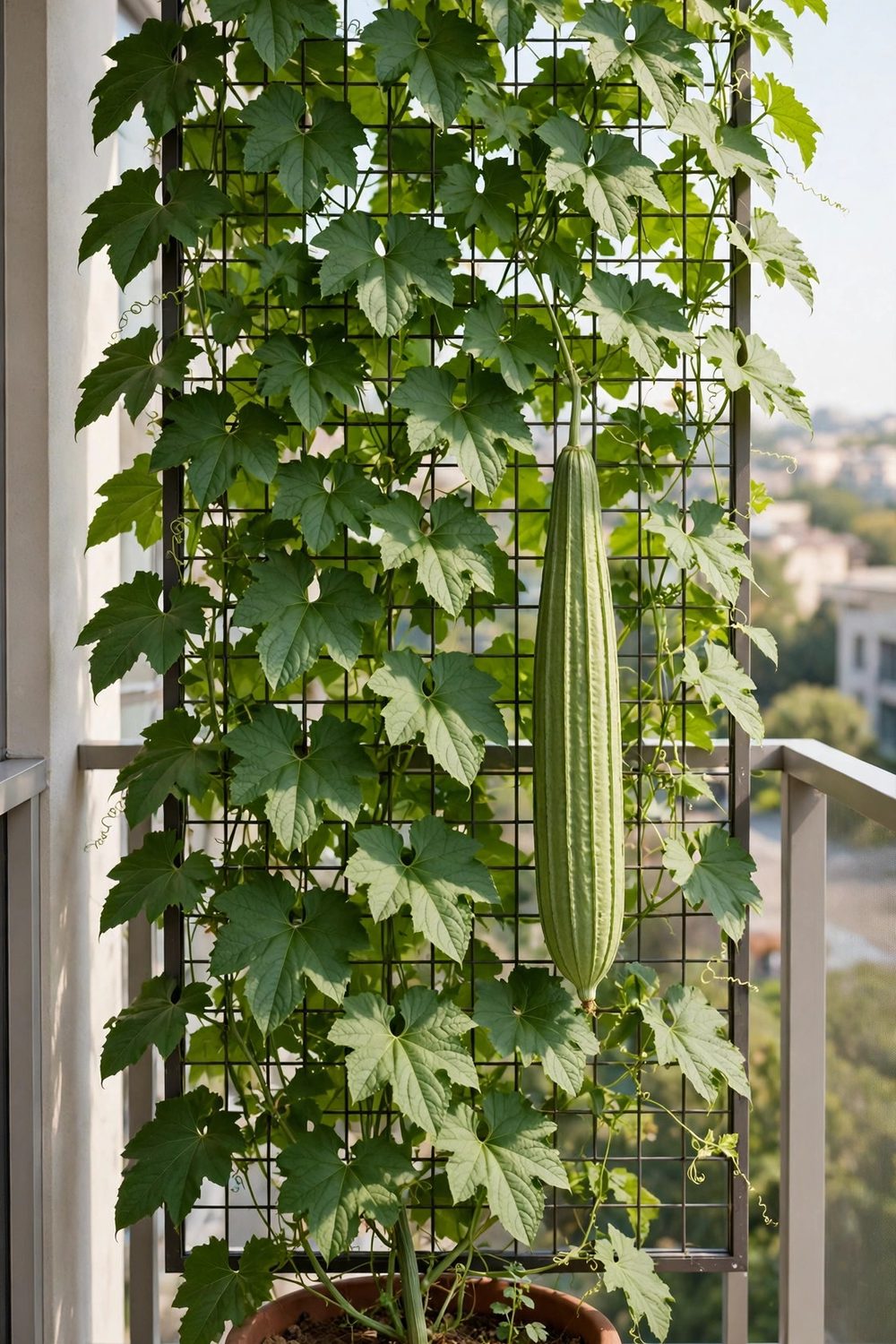
Luffa vines grow long and leafy, giving the thickest cover on this list by late summer. Start seed indoors early, because luffa needs a long, warm season to crop well outdoors.
Plant one seedling in a 10-gallon (about 38-litre) pot in full sun after your last frost. Give it the strongest part of the frame, since a full vine weighs a lot when wet.
Feed every two weeks and water deeply in heat. In mild-winter areas, roughly USDA zones 8 to 10, the season is long enough for fruit to mature on the vine.
Pick young fruit for cooking, or leave fruit to dry for sponges. Either way, the leaf cover lasts until first frost cuts the vine down in autumn.
9. Add Bitter Melon for a Light, Airy Panel
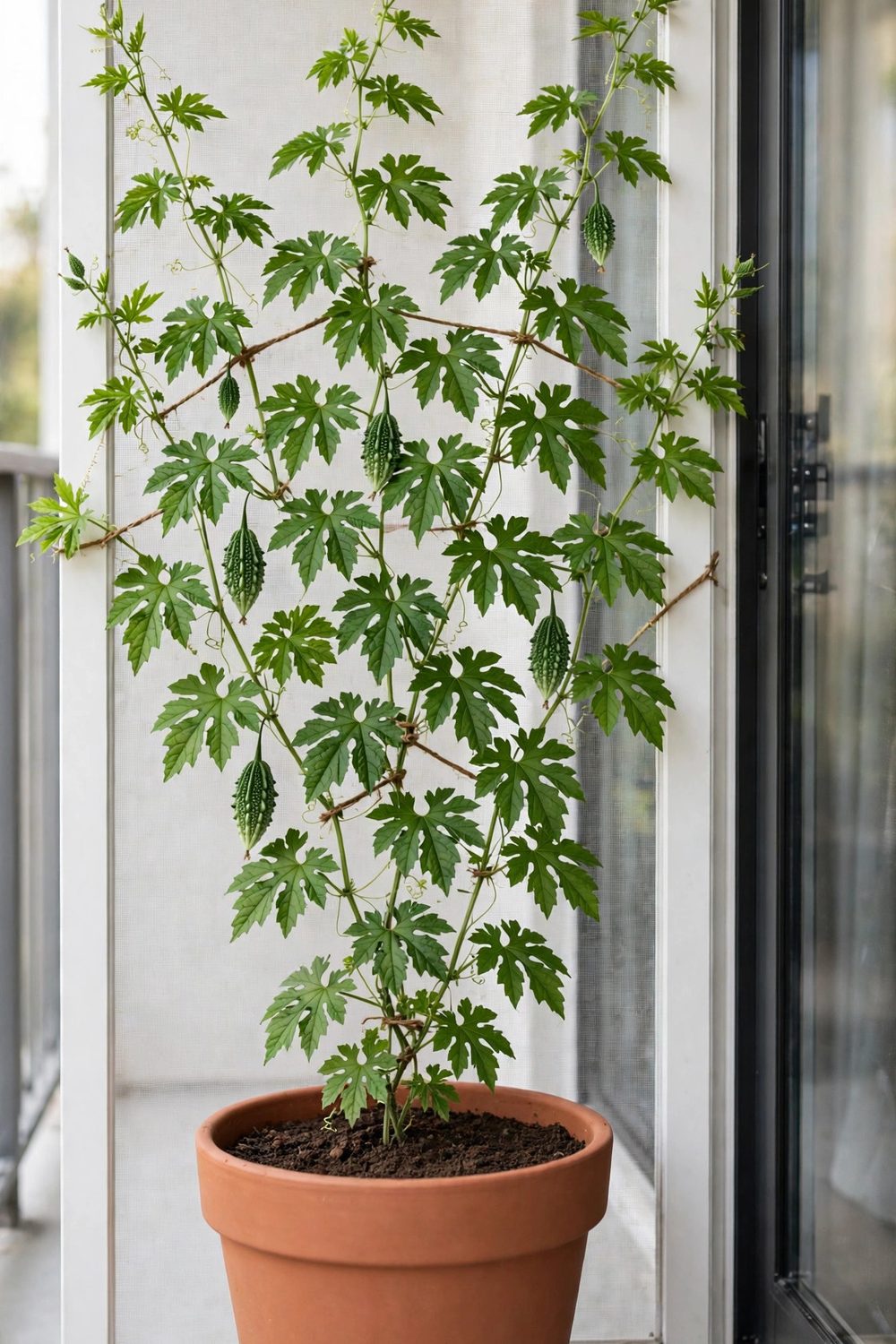
Bitter melon leaves are smaller and more divided, so this panel lets air and some light through. Use it where a full block feels too dark, such as beside the balcony door.
Sow seed in a 7-gallon (about 26-litre) pot after nights warm up, because this is a true heat lover. Soaking seed overnight in water helps it sprout more evenly in the mix.
Train stems across the frame in a fan, tying every 12 inches (30 cm) or so. The open leaf pattern still breaks sight lines while keeping the corner breezy.
Pick fruit young and green for cooking, before it yellows. Regular picking keeps the vine flowering, and new leaves keep the panel fresh through the hottest weeks.
10. Sow Yard-Long Beans Along the Hottest Wall
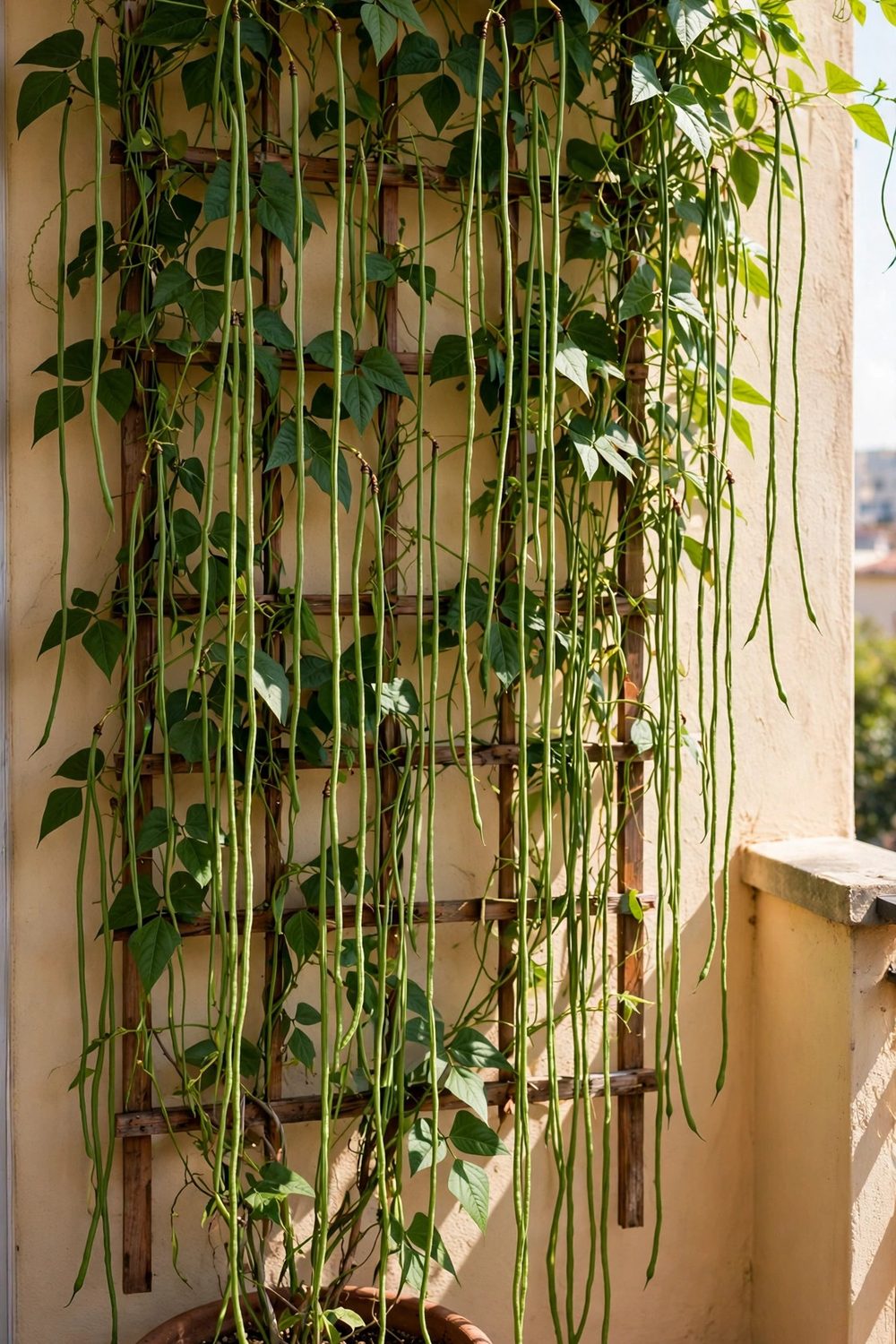
Yard-long beans thrive in heat that makes other beans pause. Sow seed 1 inch (2.5 cm) deep in a 7-gallon (about 26-litre) pot against the warmest wall, after your last frost.
Pods hang down in long strands, so the plant screens and crops at the same time. Give it 6 to 8 hours of sun and a frame it can twine up alone.
Water deeply in hot spells and pick pods at about 12 to 15 inches (30 to 38 cm). Pods left longer turn tough, and picking often keeps new flowers coming weekly.
This crop suits hot, sun-trap balconies where peas failed in spring. Pairing a spring pea panel with a summer bean panel keeps one frame covered for most of the year.
Frames that hold real crop weight are covered in our guide to railing planters that actually hold.
11. Hang the Screen With Mini Pumpkins at the Top
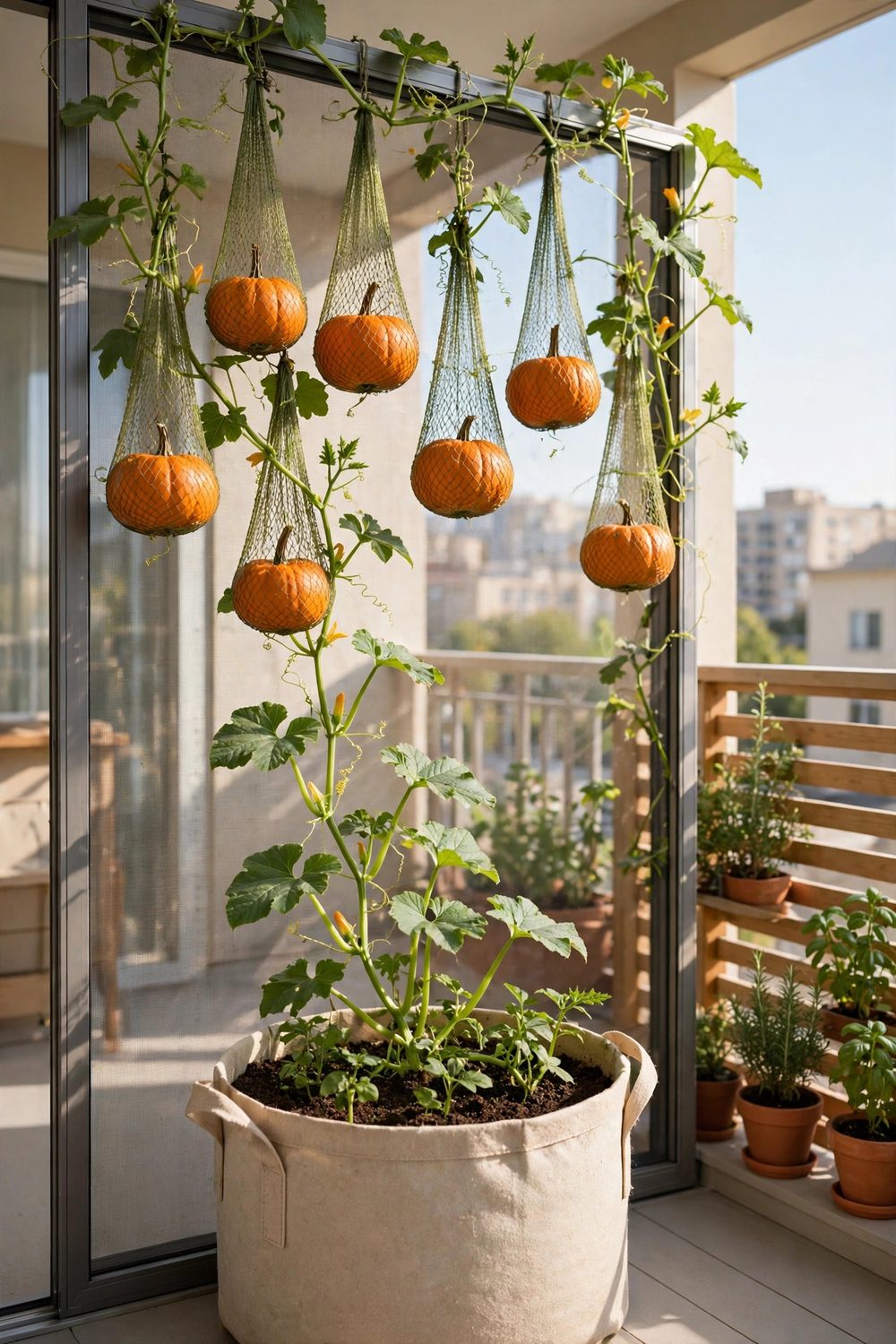
Mini pumpkins climb well and their fruit hangs like lanterns along the top of a frame. Plant one in a 10-gallon (about 38-litre) pot and train stems up, then sideways.
Small types suit a balcony because each fruit weighs little. Support any fruit that forms over a gap with a soft sling of cloth tied to the frame above it.
Give pumpkins 6 or more hours of sun, steady water, and a feed every two weeks. Powdery mildew spreads in still air, so space stems out rather than packing them tight.
Cut fruit when the skin hardens and colour deepens in autumn. The leaves die back after harvest, so plan a winter filler for that panel if privacy matters year round.
12. Plant a Bottle Gourd at the End Post
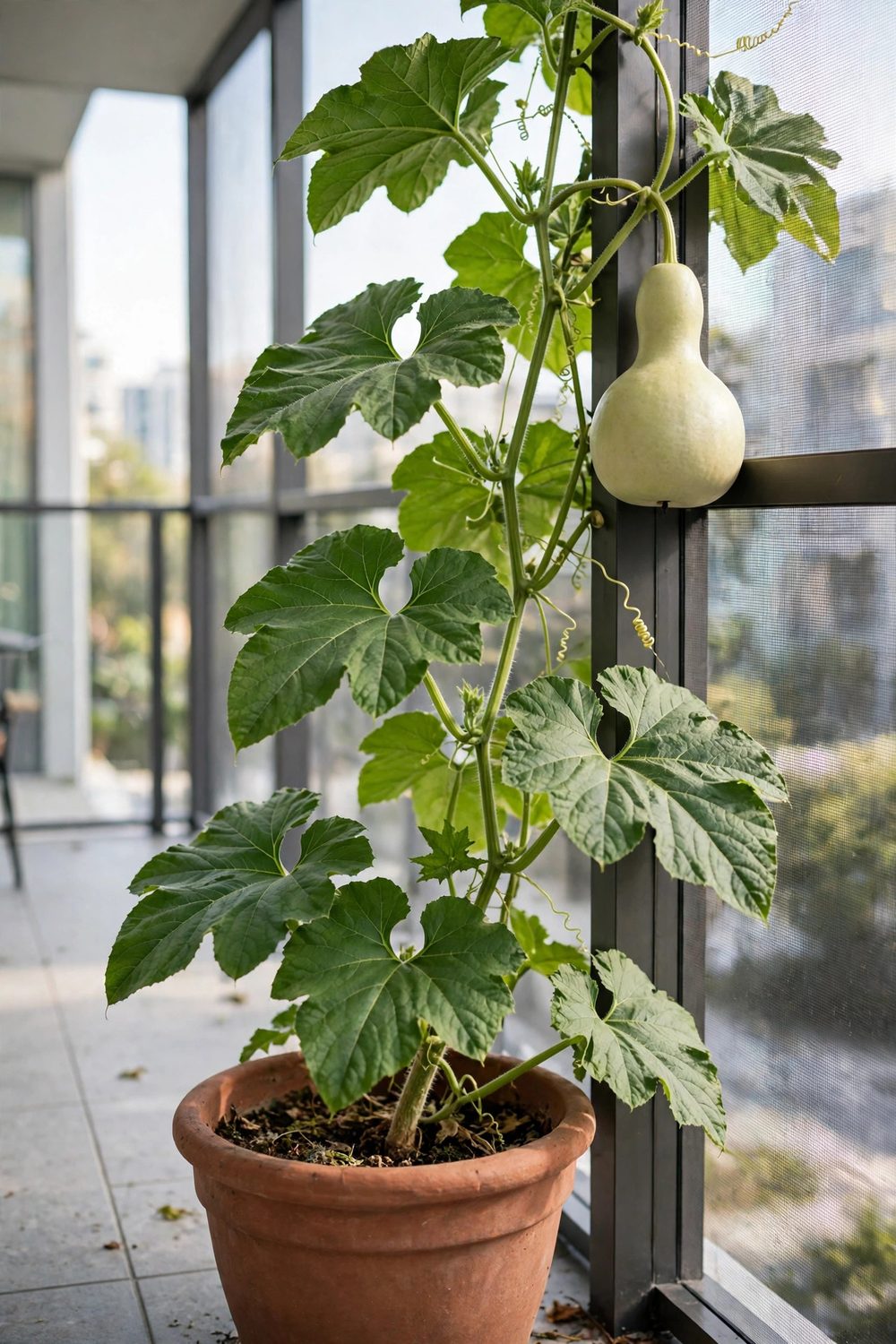
Bottle gourd grows fast with very large leaves, so one plant covers an end panel alone. Plant it in a 10-gallon (about 38-litre) pot at the frame end after your last frost.
Train the main stem up the end post, then along the top. Side shoots can be pinched to keep growth where you need cover, not spilling over the neighbour side of the rail.
Water deeply, because those big leaves lose moisture fast on windy days. A bag or pot this size needs checking daily once the vine covers the whole panel.
Young fruit cooks like squash, and mature fruit dries hard for crafts. Either harvest keeps the plant useful, and the leaf wall holds from midsummer until frost.
13. Edge the Screen With Sweet Peas for Spring Scent
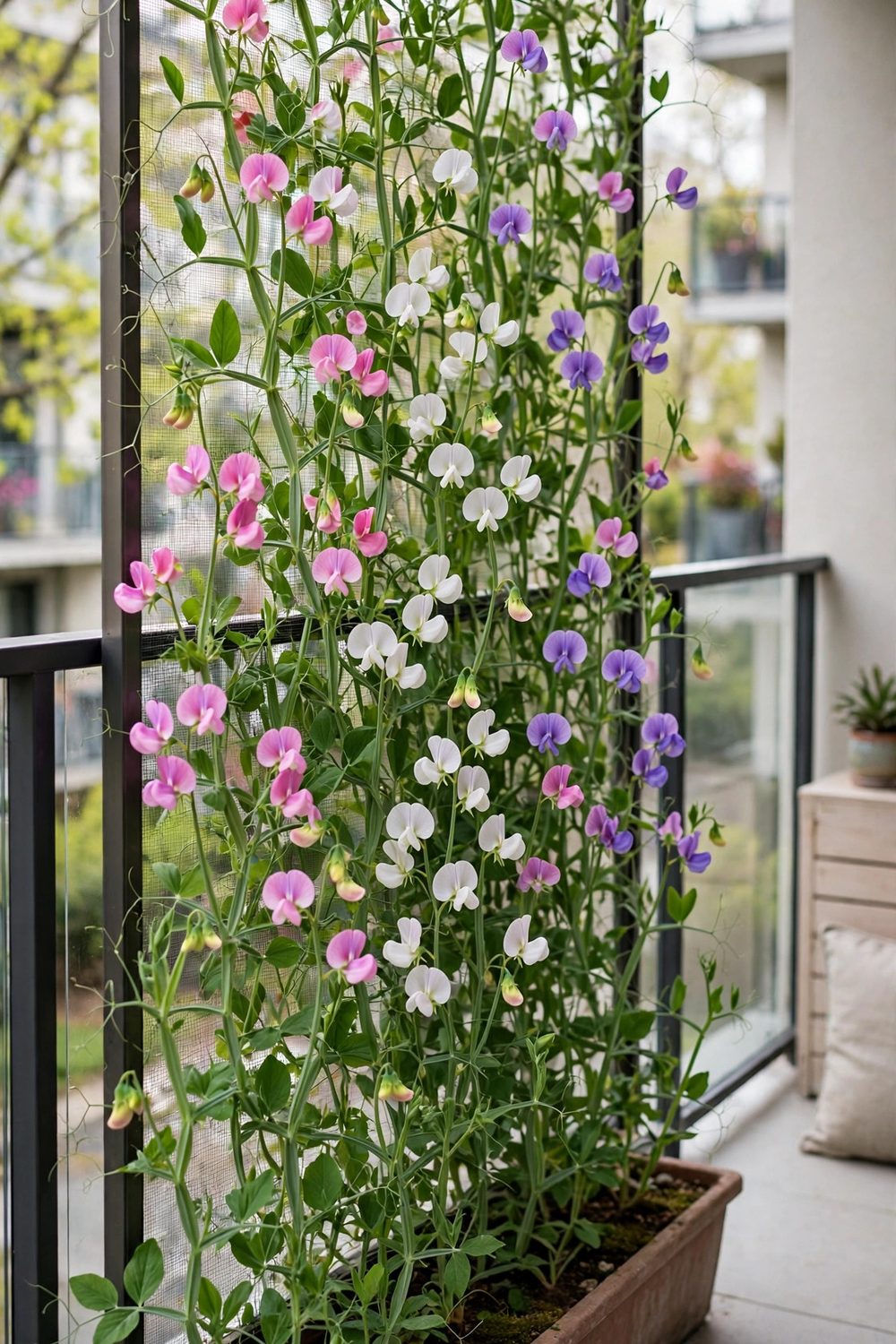
Sweet peas are grown for flowers first, but their pods are edible when picked young and the plants screen well in spring. Sow in a trough at the frame base in early spring.
Sow seed 1 inch (2.5 cm) deep and 2 inches (5 cm) apart, and tie netting behind them. Cool weather suits them, and they flower while bean panels are still small seedlings.
Pick flowers often to keep more coming, and never let pods be eaten by mistake if a variety is sold for flowers only. Check the seed packet wording before tasting any pod.
When heat ends the sweet peas, pull the stems and sow beans in the same trough. The frame stays covered, and the spring scent gives way to summer crops in one swap.
14. Weave Nasturtiums Through the Bottom of the Frame
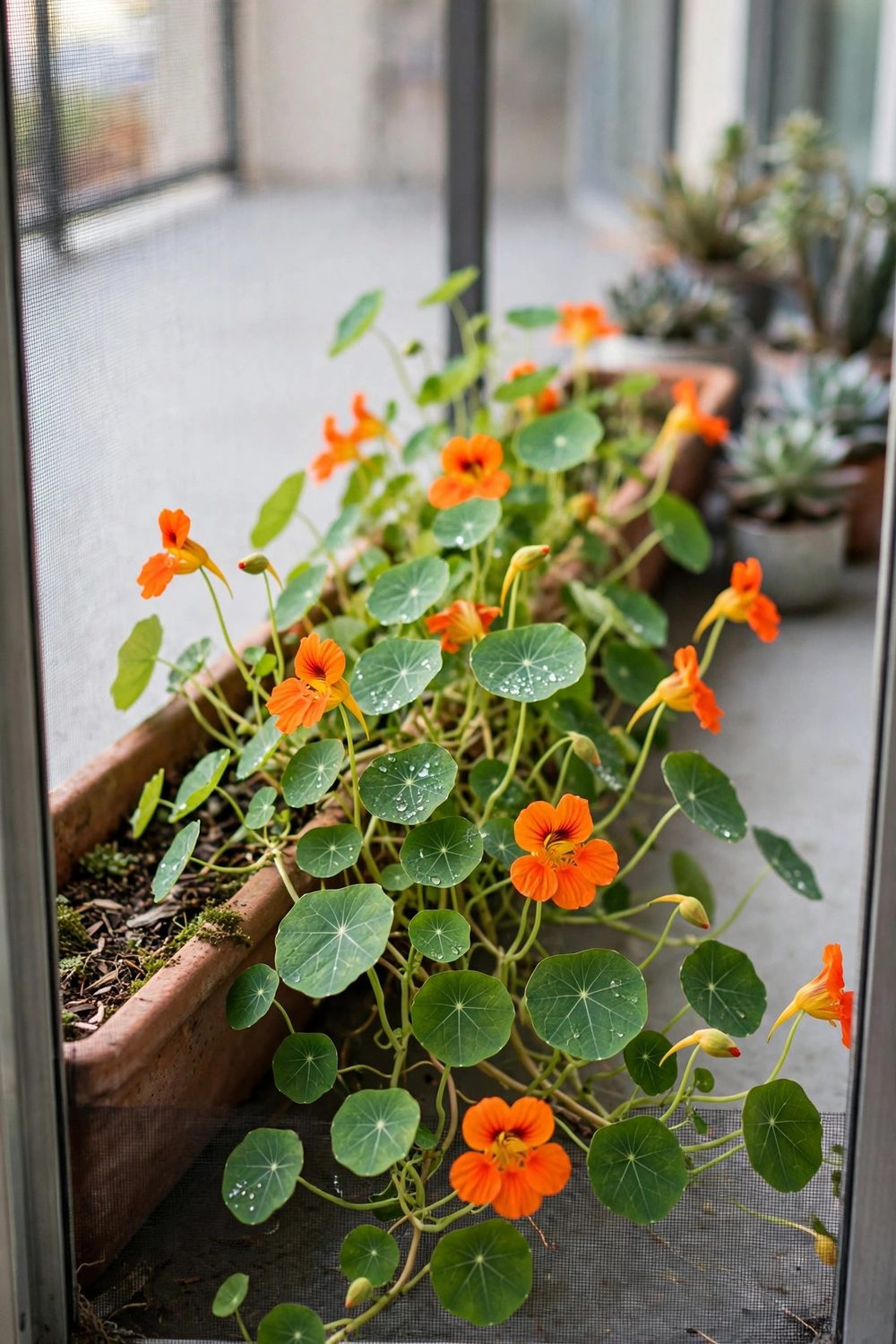
Nasturtiums do not climb with tendrils, but their stems weave through a frame if you tuck them in weekly. Sow them at the front of the screen pots to close the low gap.
Leaves and flowers are edible, with a peppery bite for salads. Sow seed 1/2 inch (1 cm) deep after your last frost, in mix that is not too rich.
Rich mix gives leaves and few flowers, so skip feeding this one. Poor, steady conditions suit nasturtiums, and they cope with a missed watering better than most screen plants.
Tuck stray stems back through the frame on your weekly round. That one habit keeps the bottom of the screen full, where seated neighbours would otherwise see straight through.
15. Finish the Tallest Gap With a Climbing Courgette
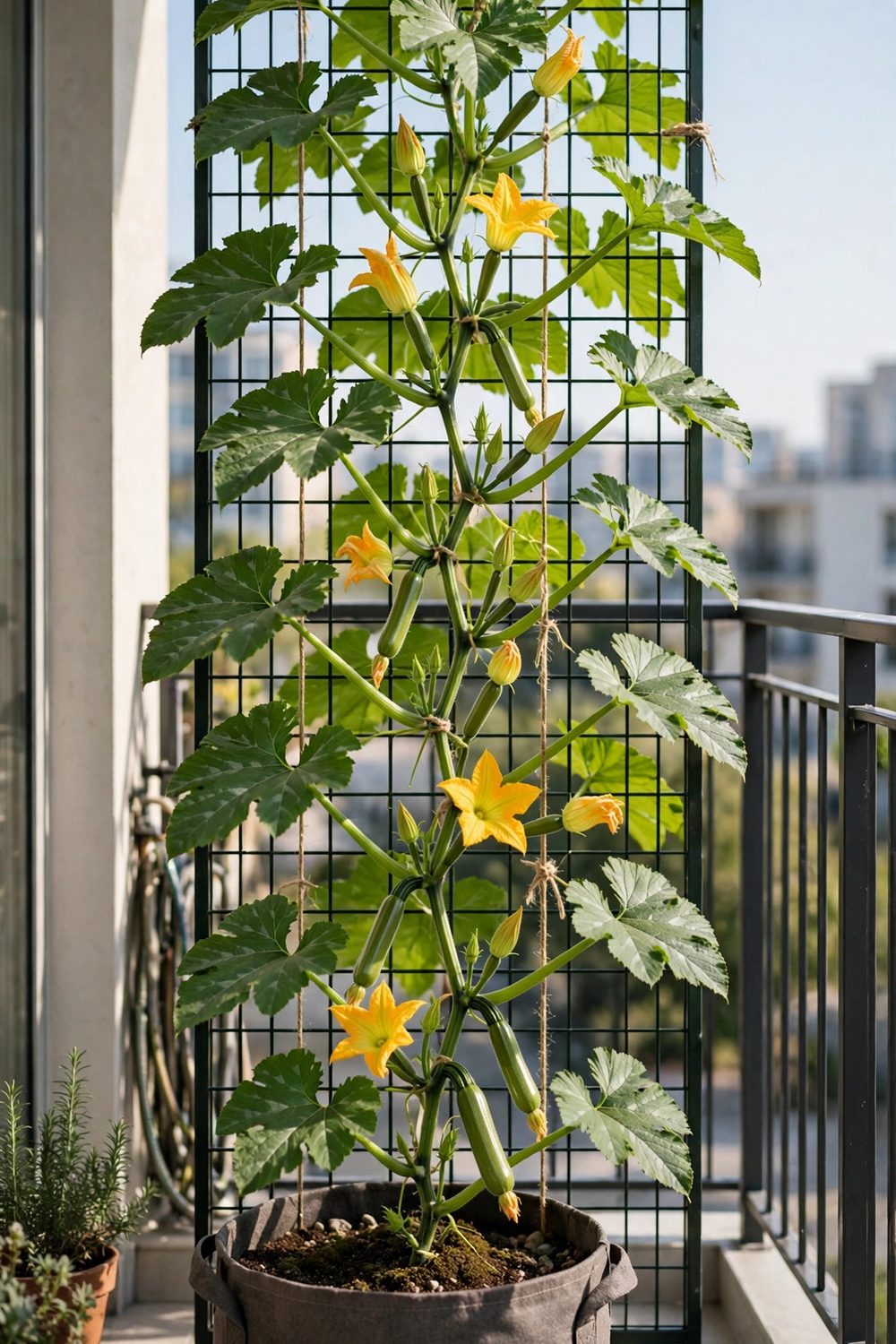
‘Black Forest’ is a courgette (zucchini) bred to climb, with stems that tie in like a vine. Plant one in a 10-gallon (about 38-litre) bag under the tallest gap in your frame.
Tie the main stem upward every week or so as it grows. Growing upward keeps fruit straight and clean, and leaves stack into a thick panel at head height outdoors.
Give it 6 or more hours of sun, deep watering, and a weekly feed once flowers open. Pick fruit at about 6 inches (15 cm) long to keep the plant cropping steadily.
A climbing courgette closes the season well, fruiting until first frost. For a leafy backdrop that is not food, compare these vertical garden wall ideas, and keep food panels where sun is strongest.
Our hanging basket vegetables guide fills the rail space above this screen.
A good screen is built in layers: peas and sweet peas for spring, beans and cucumbers for summer, and squash family plants for the thickest late cover. Tie stems in weekly and gaps never get a chance to open up.
Keep pots heavy, frames freestanding, and drainage on trays, and the screen stays renter safe all season long. Kept tied and watered, a balcony garden privacy screen with climbing vegetables stays useful from spring to first frost.
Two pots, one frame, and a weekly tie-in round are enough to change how the balcony feels by midsummer.
Save this list to your container garden board for later, and start with one panel this season.


