

Balcony Garden Drainage Mistakes That Stain the Floor Below
One muddy streak on the wall below a balcony can start a deposit dispute. Most balcony garden drainage mistakes that stain the floor below come from water taking the wrong path, again and again, all season long.
Each mistake in this guide names what the water does to your floor, to the pots below, and to your deposit. Every one then gives the fix, most of which cost little and take minutes.
Work through the list in order and check your own setup against each point. Most balconies fail on two or three of these, not on all ten, so the repair stays short.
Good drainage also keeps plants healthier. Roots that drain freely between waterings grow stronger, and floors that stay dry keep both landlords and neighbors on your side through the whole season.
This post contains affiliate links. If you buy through them, we may earn a small commission at no extra cost to you. See our Affiliate Disclosure.
Time: About 1 hour to audit and fix a typical balcony · Difficulty: Beginner
What You Need
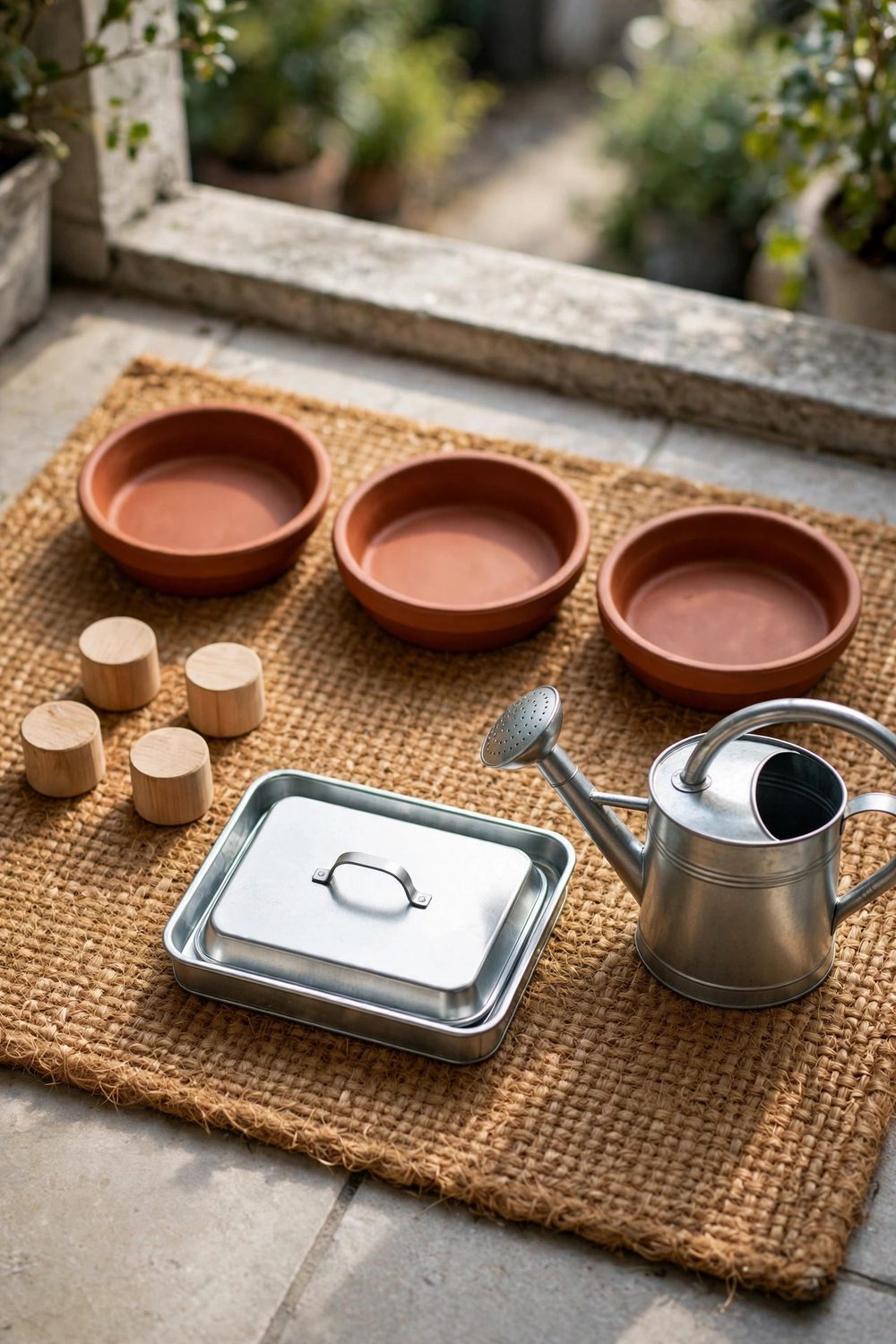
The drainage kit is short and cheap. These five items handle nearly every fix in the ten steps that follow.
- Deep saucers: one per pot, wider than the base and deep enough to hold a full watering plus a rain shower without spilling.
- Pot feet or risers: three or four per large pot, lifting the base clear of the slab so drainage holes stay open and air can pass.
- A lidded tray for potting work: a shallow tray with raised sides that catches loose mix and muddy water during every potting or repotting job.
- A watering can with a rose head: the rose spreads the flow into a soft shower that soaks in gently rather than blasting mix aside.
- An absorbent outdoor mat: a washable mat for the potting corner and under thirsty pots, catching splashes before they reach grout or drains.
Keep the kit together in one spot near the door. A fix you can grab in seconds gets used, while a saucer stored in a cupboard indoors tends to wait for weeks.
Stop Letting Pots Drain Straight Onto the Slab
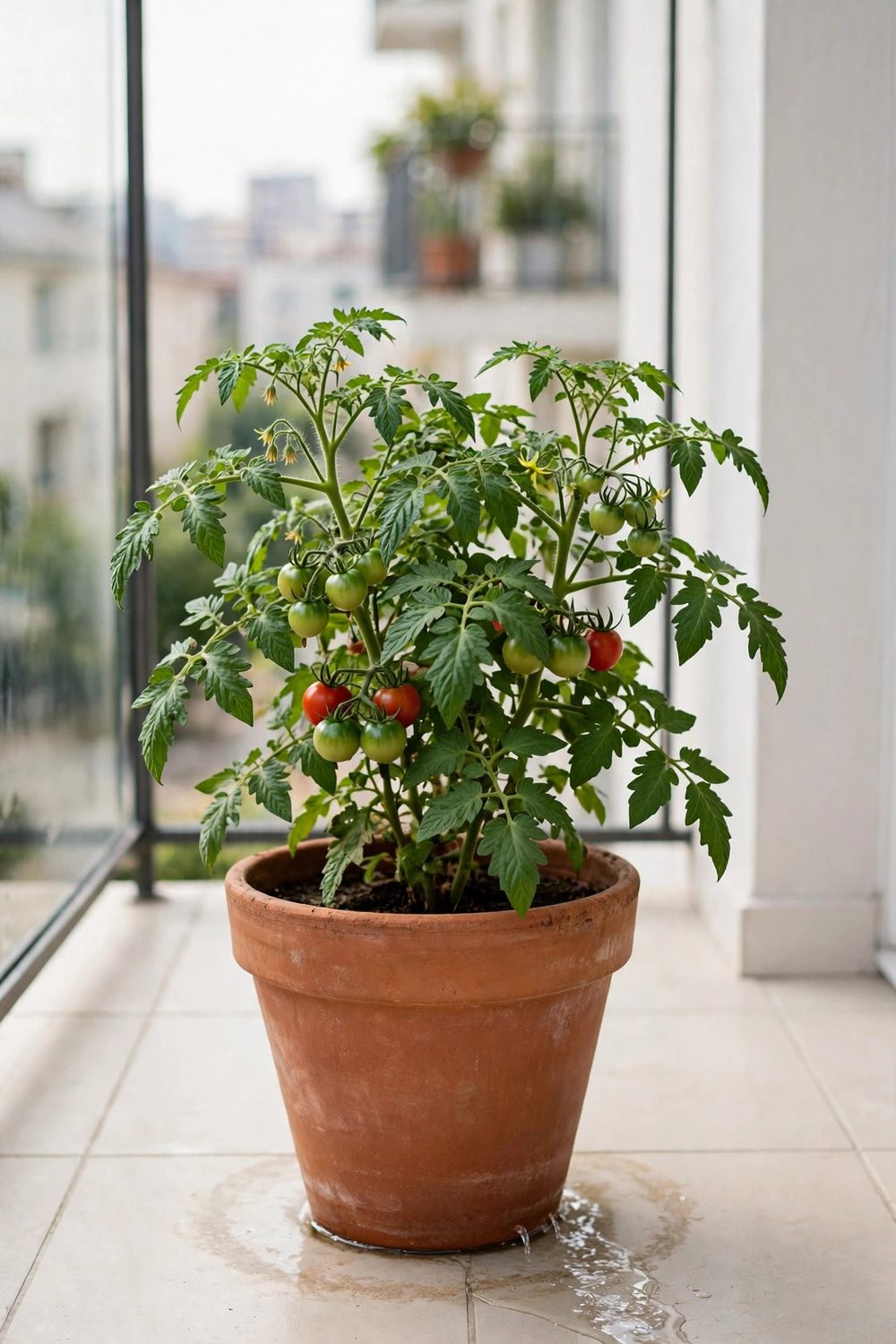
A bare pot drains its dirtiest water straight onto your tiles at every watering. That water carries fine soil, feed salts, and algae, and it dries into rings that scrub off with real effort.
Runoff that reaches the slab edge drips onto the balcony below and streaks the wall under your rail. One season of daily drips can mark paintwork and eat into a deposit at moving out time.
The fix costs one saucer per pot. Set each pot on a deep saucer before the next watering, and check after a week that no new rings form on the tiles beneath.
Stop Using Shallow Saucers That Overflow at Once
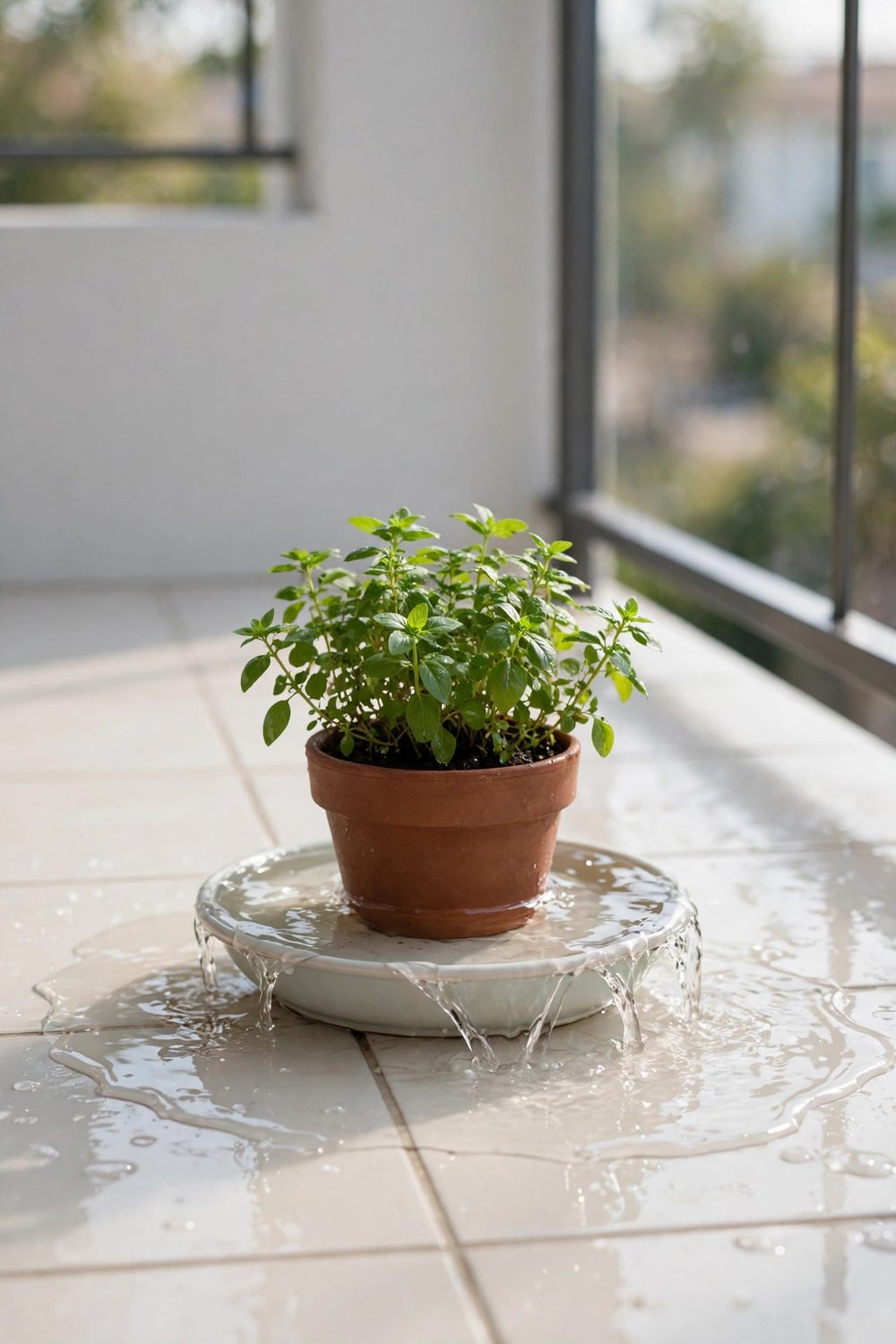
A thin saucer that matches the pot base holds almost nothing. The first full watering fills it, and the rest spills over the rim and runs across the floor toward the edge.
Overflow carries the same soil and feed load as direct drainage, so the stain forms anyway, a little slower. Neighbors below still see drips after every deep watering on a hot week.
Swap each shallow saucer for one at least 2 inches (5 cm) wider than the pot base and with a raised rim. For rows of small pots, a single long tray works better.
Stop Watering With a Hard Jet From a Jug
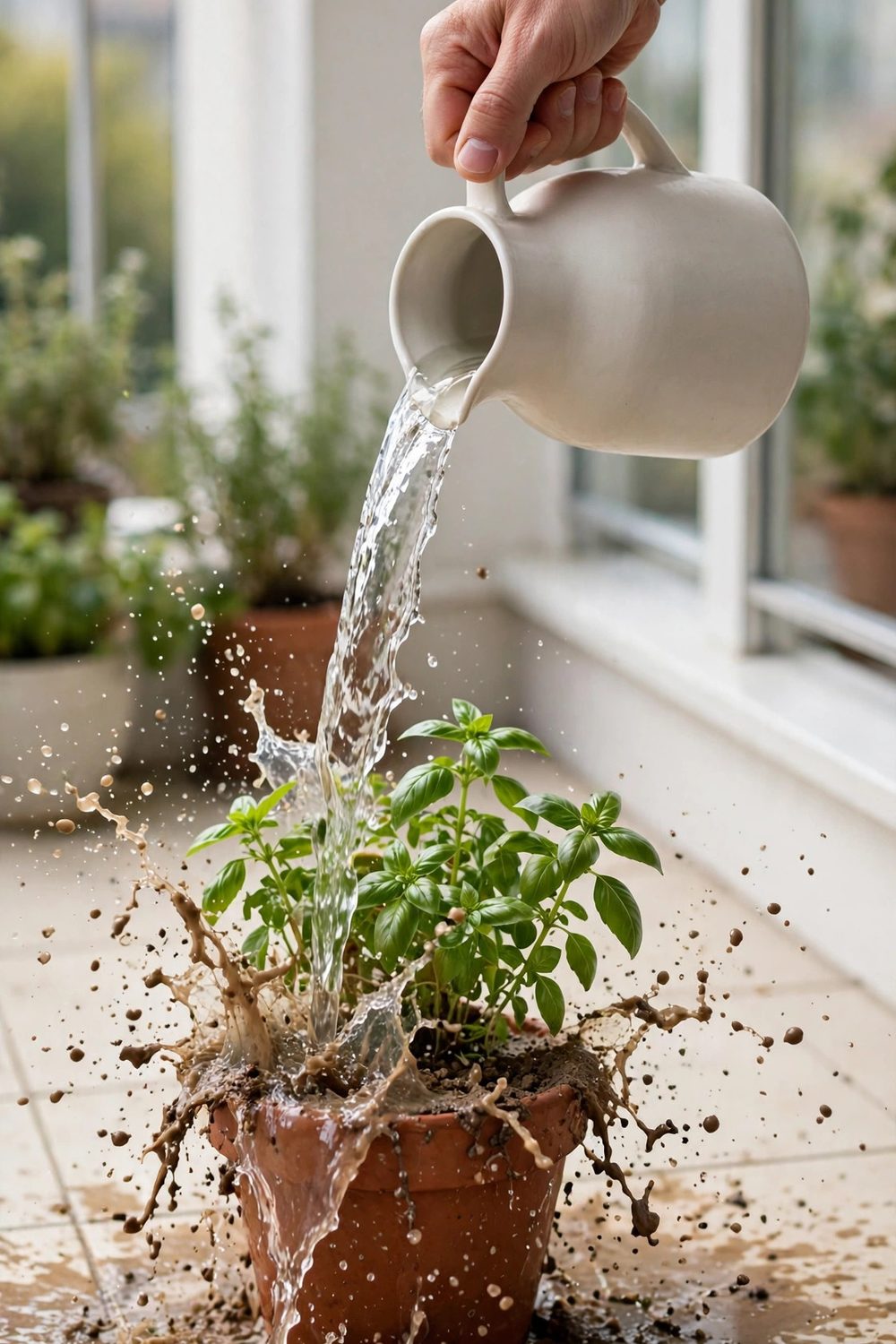
A hard stream poured from a height digs a hole in the mix and splashes muddy water out of the pot. Splashes land on tiles, rail glass, and the wall, and dry into spots.
Fast water also runs down the inside of the pot and out of the holes before roots can drink. The plant stays thirsty while the floor takes the full load of dirty water.
Use a watering can with a rose head, held low over the mix. Water in two short rounds, and read our guide on how often to water vegetables in pots for timing.
Stop Setting Pots Flat So the Base Seals Shut
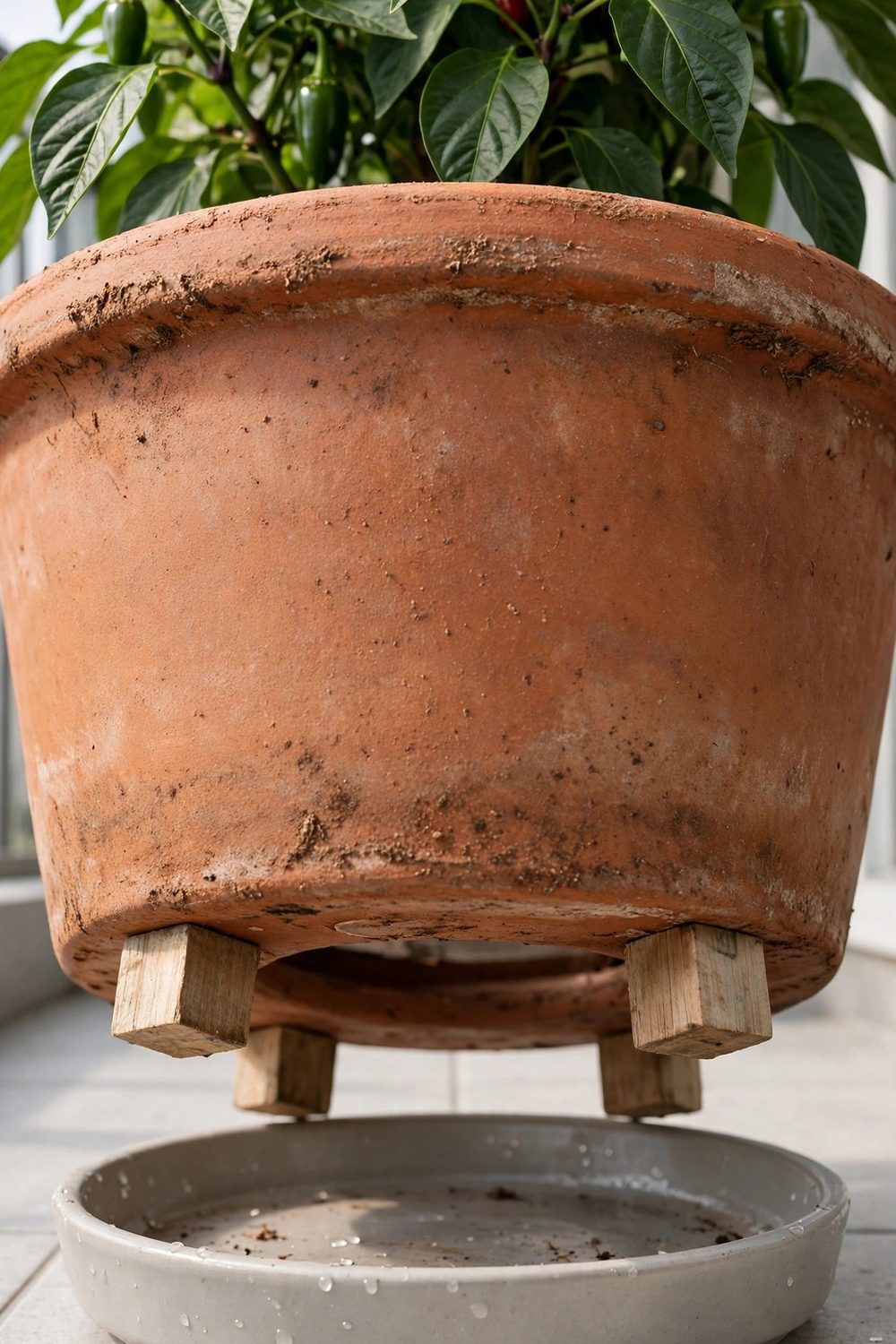
A heavy pot pressed flat on smooth tiles can seal its own drainage holes against the slab. Water then sits in the base of the pot, roots rot in the sour mix, and growth stalls.
Seepage escapes slowly sideways instead, spreading a damp patch under and around the pot. That patch grows algae, turns slippery, and leaves a dark outline that marks the tiles for months.
Lift each pot on three or four pot feet or risers. The gap lets water drain into the saucer, lets air dry the slab, and makes the weekly wipe under pots far easier.
Stop Leaving Saucers Full of Standing Water
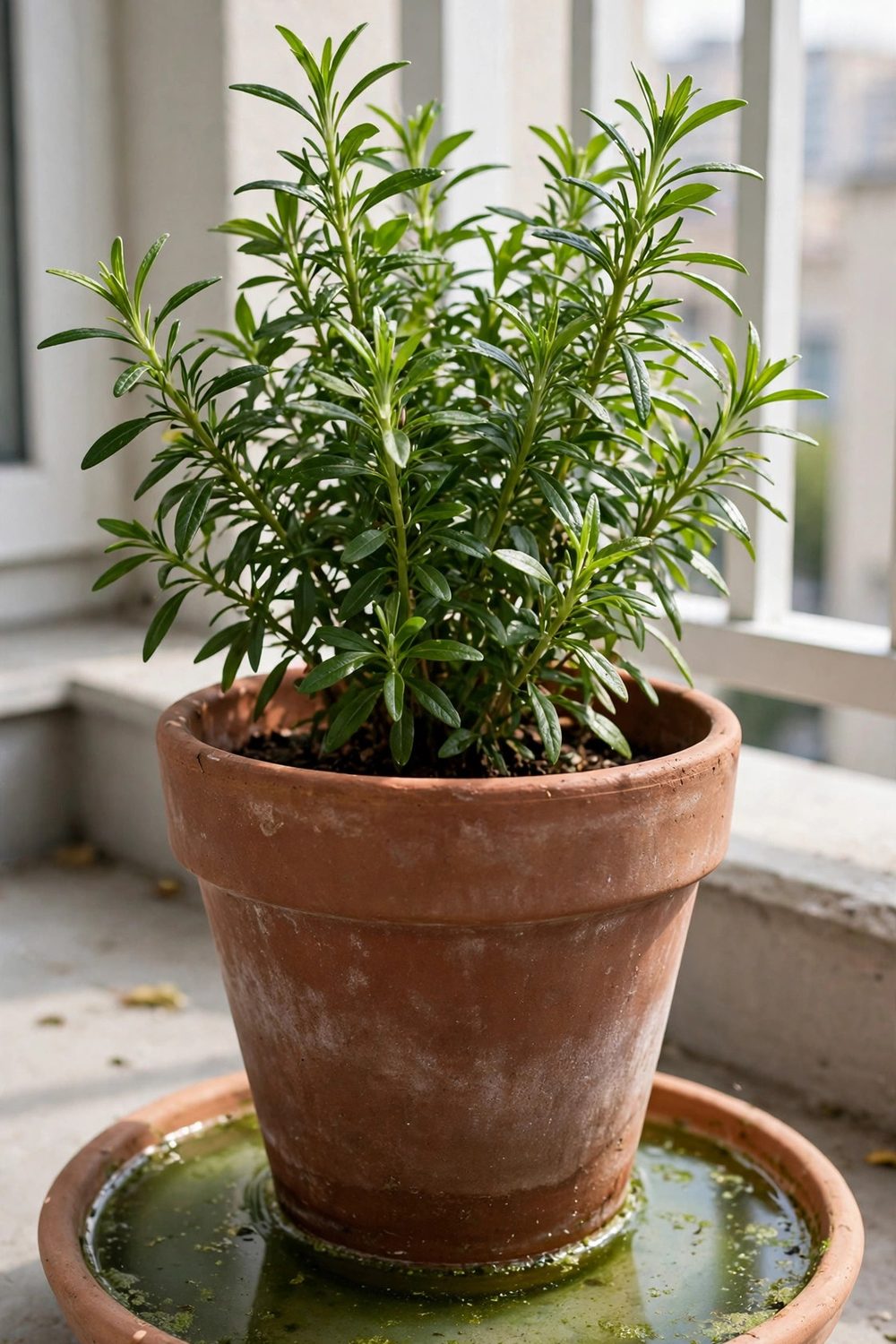
A saucer left brimming after every watering keeps the pot base soaking day and night. Roots sitting in that water rot, and the plant wilts in a way that looks like thirst.
Standing water also breeds mosquitoes in warm weather and grows green algae fast. Each top up then slops stale, smelly water over the rim and across the floor you tried to protect.
Empty each saucer about 30 minutes after watering on dry days. After heavy rain, walk the line of pots and tip every saucer out as part of the same check.
Stop Parking Pots Under Roof and Rail Runoff
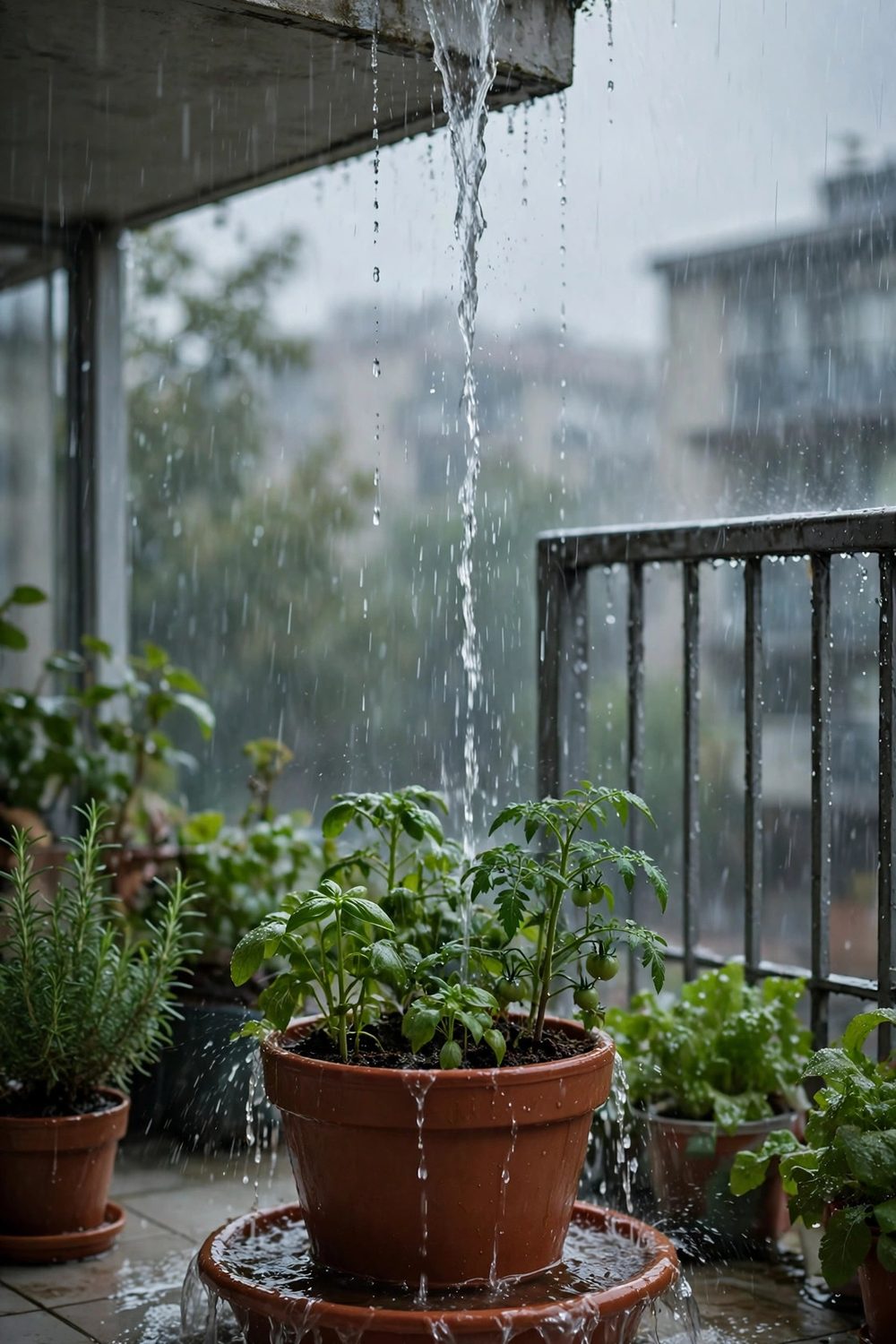
A pot placed under a roof edge, a dripping rail joint, or the balcony drain above takes a second, uncontrolled watering in every storm. The mix floods, and the saucer overflows within minutes.
Flood water lifts fine soil and feed out of the pot and across the floor. One hard storm can undo a month of careful watering and leave the worst stains of the season.
Stand outside during one rain shower and watch where water lands. Move pots out of each drip line, or shift them a foot sideways, since drip lines are often narrow.
Stop Potting Up on Open Tiles
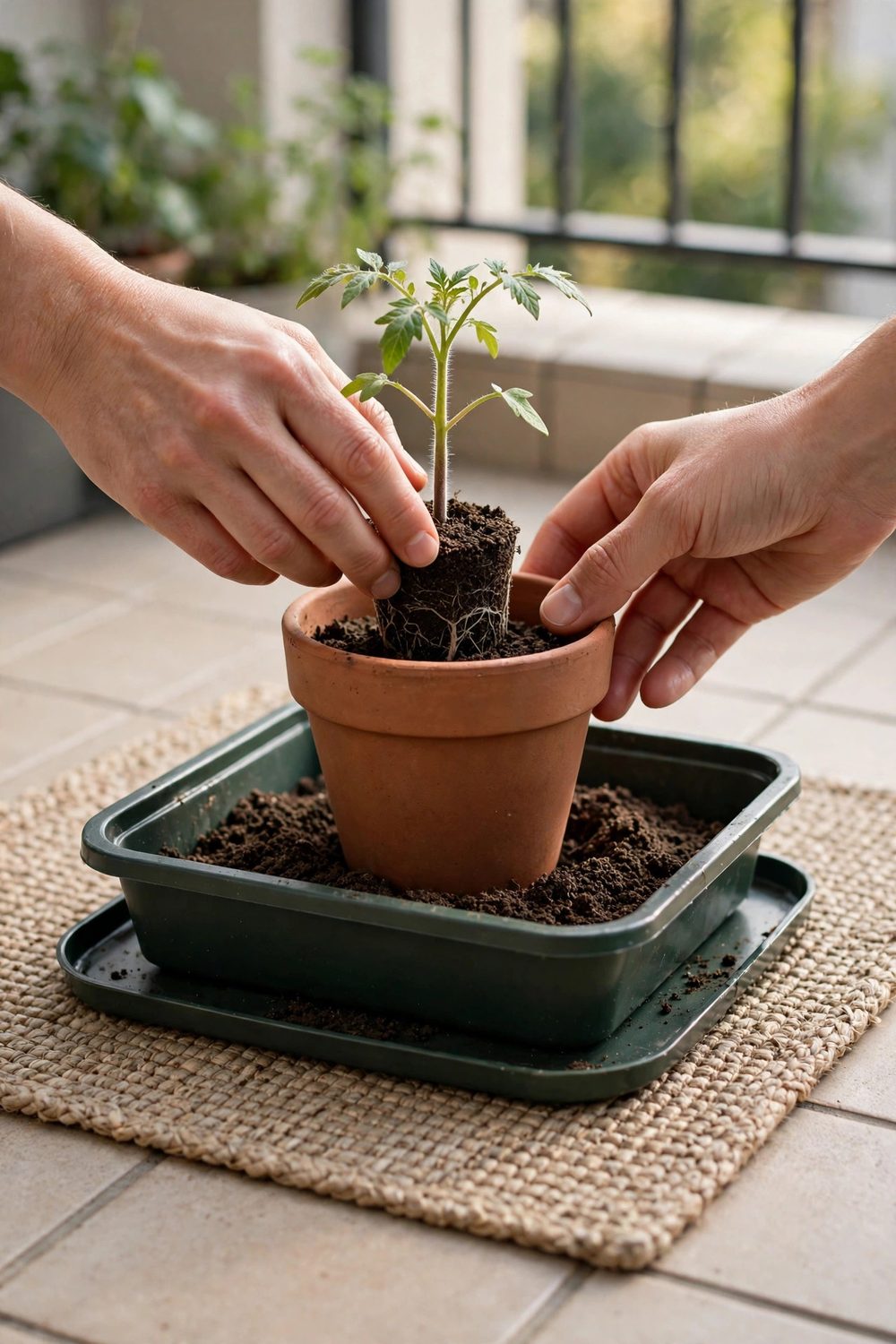
Mix always escapes during potting, and dry mix on tiles turns to mud at the first watering or rain shower. That mud washes toward the drain and the edge, streaking everything in its path.
Grit ground under shoes and pot bases also scratches tile glaze over a season. The worn patch by the potting corner is one of the most common deposit deductions for garden renters.
Do every potting job inside the lidded tray, set on the outdoor mat. Brush the tray into the bag when you finish, and rinse the mat outdoors or over a sink indoors.
Stop Letting Rail Planters Drip Over the Edge
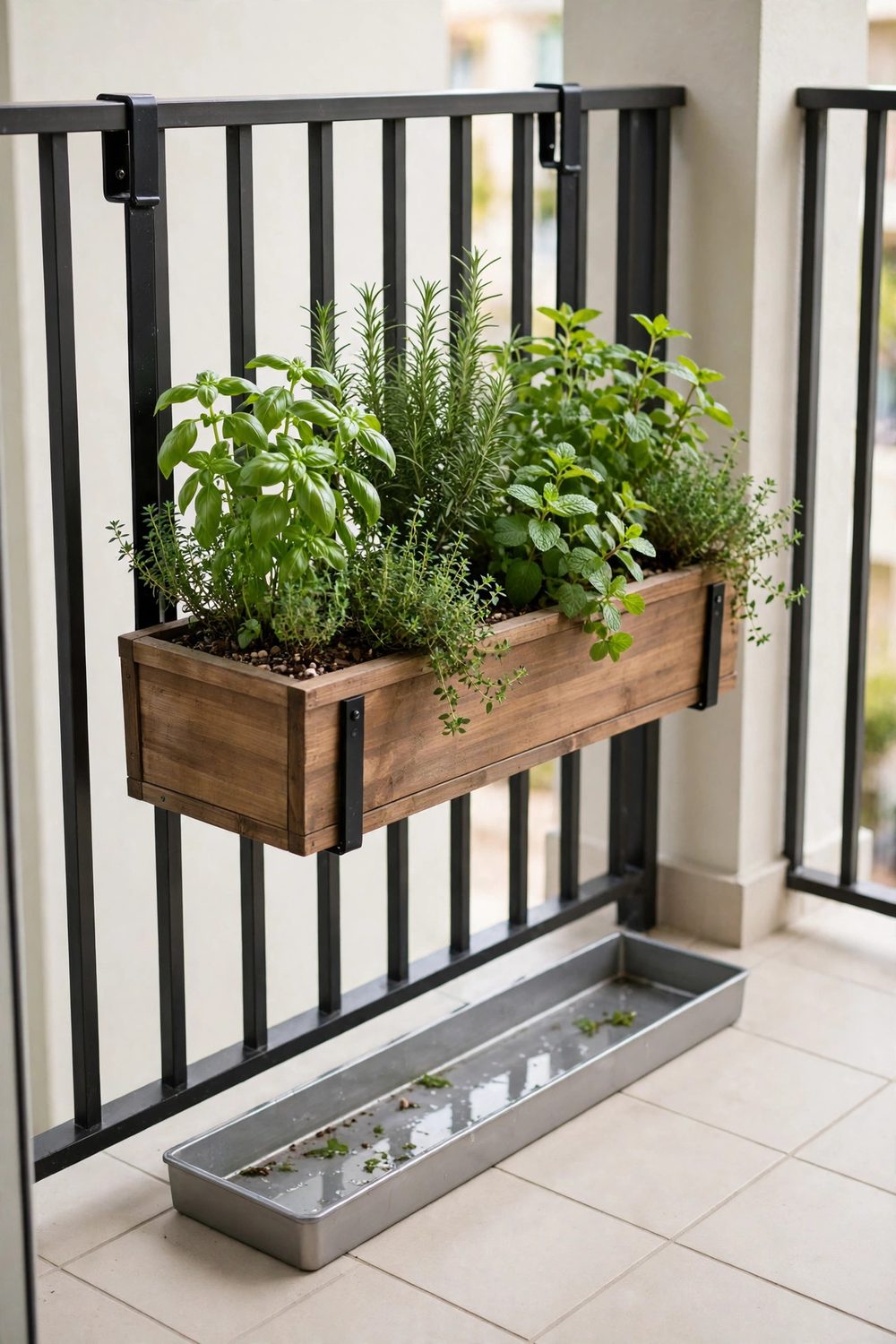
A planter hung on the outer face of the rail drains straight down the building wall. Every watering paints a fresh streak, and the balcony below takes the drip line in full.
Many leases ban outer rail planters for this exact reason. Even where they are allowed, the stain pattern on the wall below makes the source plain to anyone who looks up.
Hang planters on the inside face of the rail instead, over your own floor and saucers. The tidy system in our guide on how to keep a balcony garden tidy so neighbours do not complain covers rail habits in full.
Stop Using Pots With No Drainage Holes
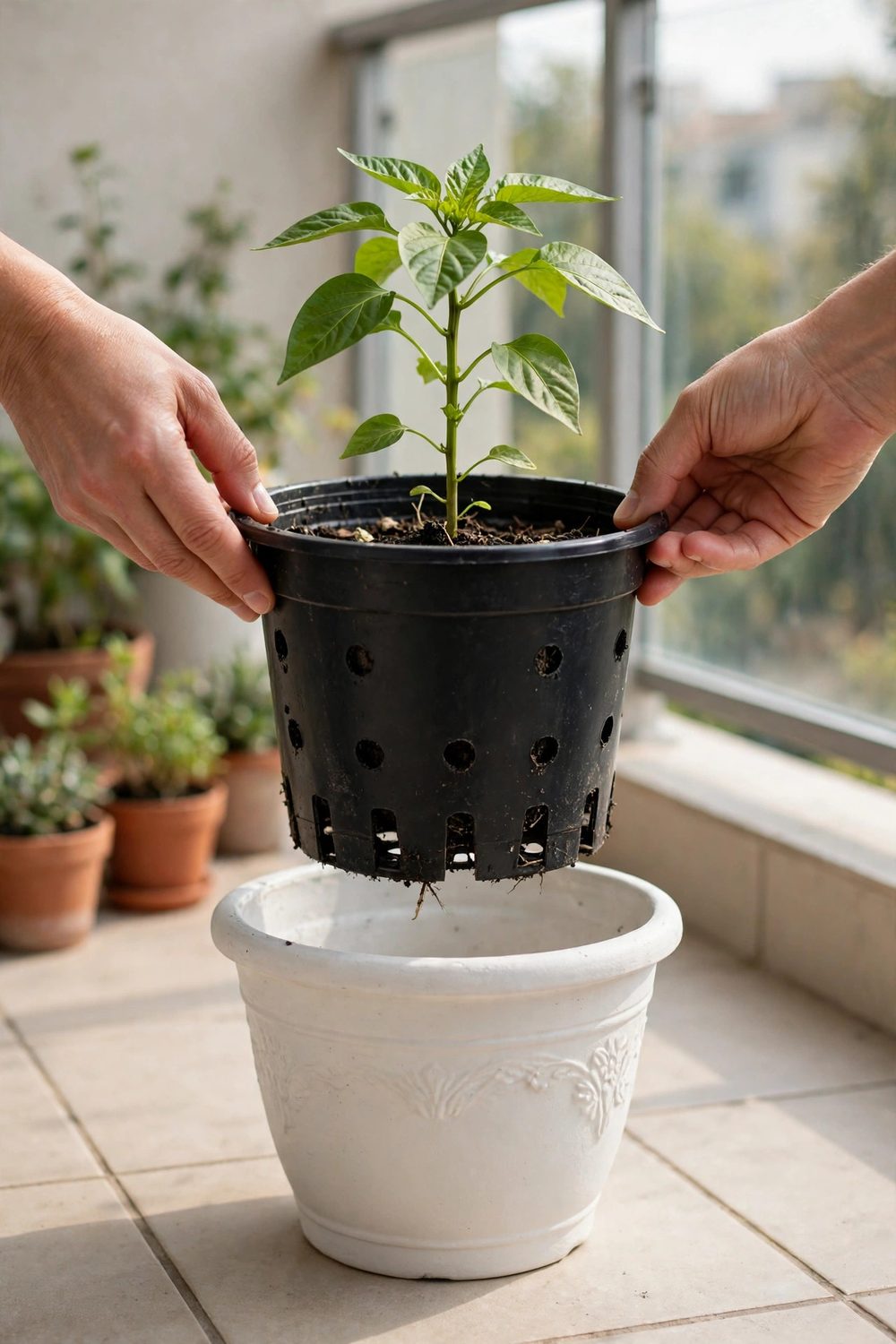
A decorative pot with no holes works as a hidden bucket. Water collects in the base after each watering, roots sit in it unseen, and the plant fades for no clear reason.
When that stored water finally spills during a move or a storm, it arrives as one large, dirty flood. A single spill can stain more floor than a week of small drips.
Plant into a holed inner pot and set that inside the decorative outer pot, lifting it out to drain. Our tests of self-watering containers for vegetables show how a managed reservoir differs from a hidden puddle.
Stop Ignoring the Slope of Your Floor
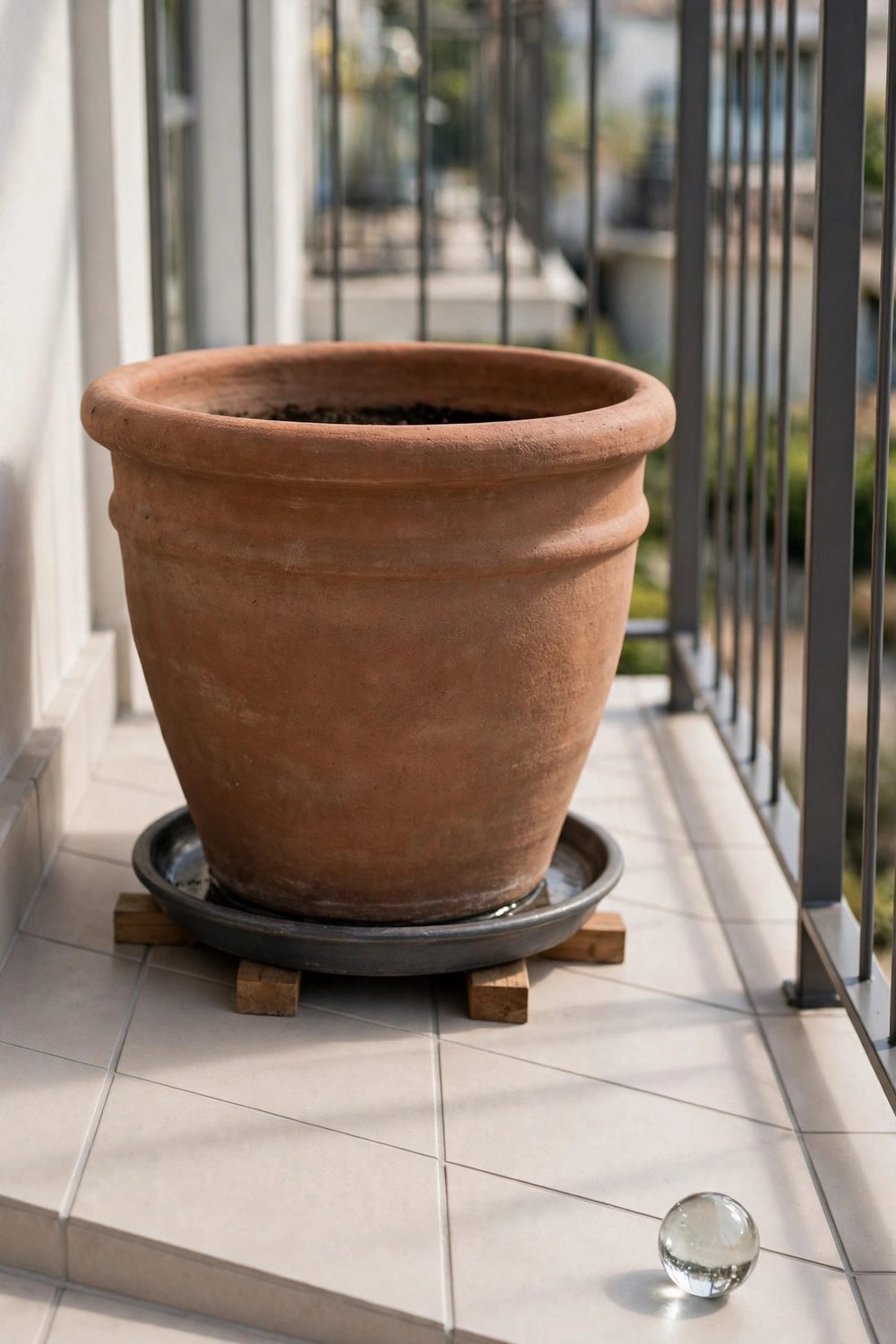
Most balcony floors slope toward a drain or toward the outer edge, on purpose. Pots placed without checking that slope send every overflow in one direction, usually toward the edge and the home below.
A pot that leans with the slope also drains unevenly, drying on the high side and staying sour on the low side. Saucers on a slope spill from the low rim first.
Set a marble or a cup of water on the floor to find the fall, then level each large pot with risers. Our roundup of the best pots for growing vegetables on a balcony notes stable base shapes.
Frequently Asked Questions
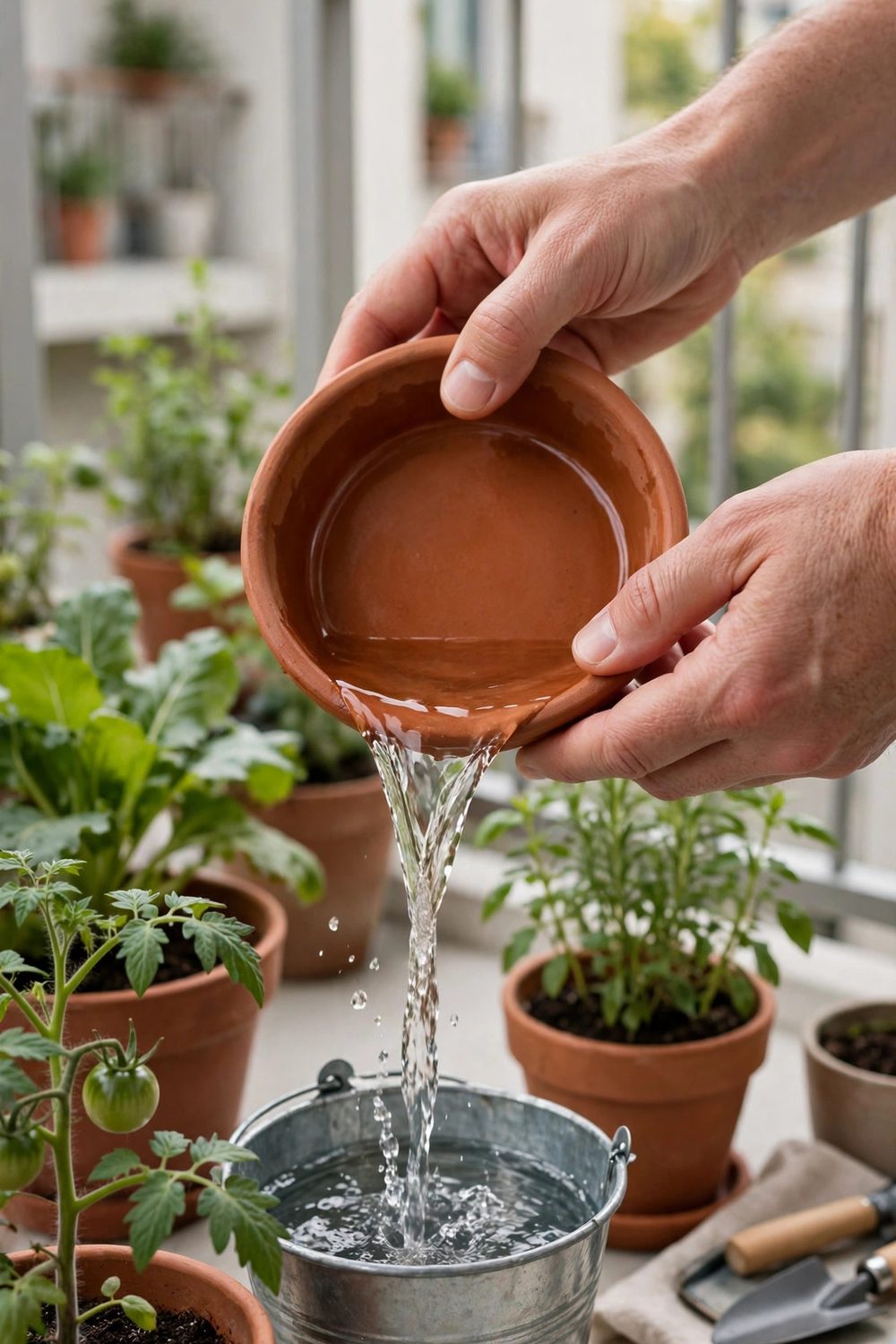
How do I remove old water stains from tiles?
Start with hot water, a stiff brush, and a plain washing soda solution, working one small patch at a time. Most soil and algae rings lift with soaking and brushing alone.
Test any stronger cleaner on a hidden corner first, since some cleaners dull tile glaze or harm grout. Rinse well, and never let wash water run over the edge onto the floor below.
Do pot feet really make a difference?
Yes, on smooth tiles they do. Feet break the seal between pot base and slab, so drainage holes work as made and water reaches the saucer instead of spreading sideways.
They also let air dry the slab under the pot, which cuts algae and damp rings. Three feet suit a round pot, and four suit a large square one.
Should I put gravel in the bottom of pots?
No. A gravel layer in a pot does not improve drainage, and tests show it raises the wet zone closer to the roots. It also steals root room from the crop.
Fill the pot with good potting mix from base to rim instead. Crocks over a single large hole can stop mix washing out, and that is the only piece worth keeping.
What if my balcony has a floor drain?
A drain helps with spills, but it does not excuse muddy runoff. Soil and feed wash into shared pipework, and a blocked balcony drain can flood your own floor in a storm.
Keep saucers under pots and sweep grit up dry rather than hosing it toward the drain. Leave the drain grate clear and check it after any storm that drops leaves.
How do I water when there is no outdoor tap?
A can filled indoors handles a whole balcony in a few trips, and it splashes far less than a hose would. Our guide to how to water a balcony garden without a hose or outdoor tap sets out the full routine.
Water in two rounds and let each saucer show you when to stop. That pause between rounds is what keeps overflow, and the stains that follow it, off your floor.
Quick Reference
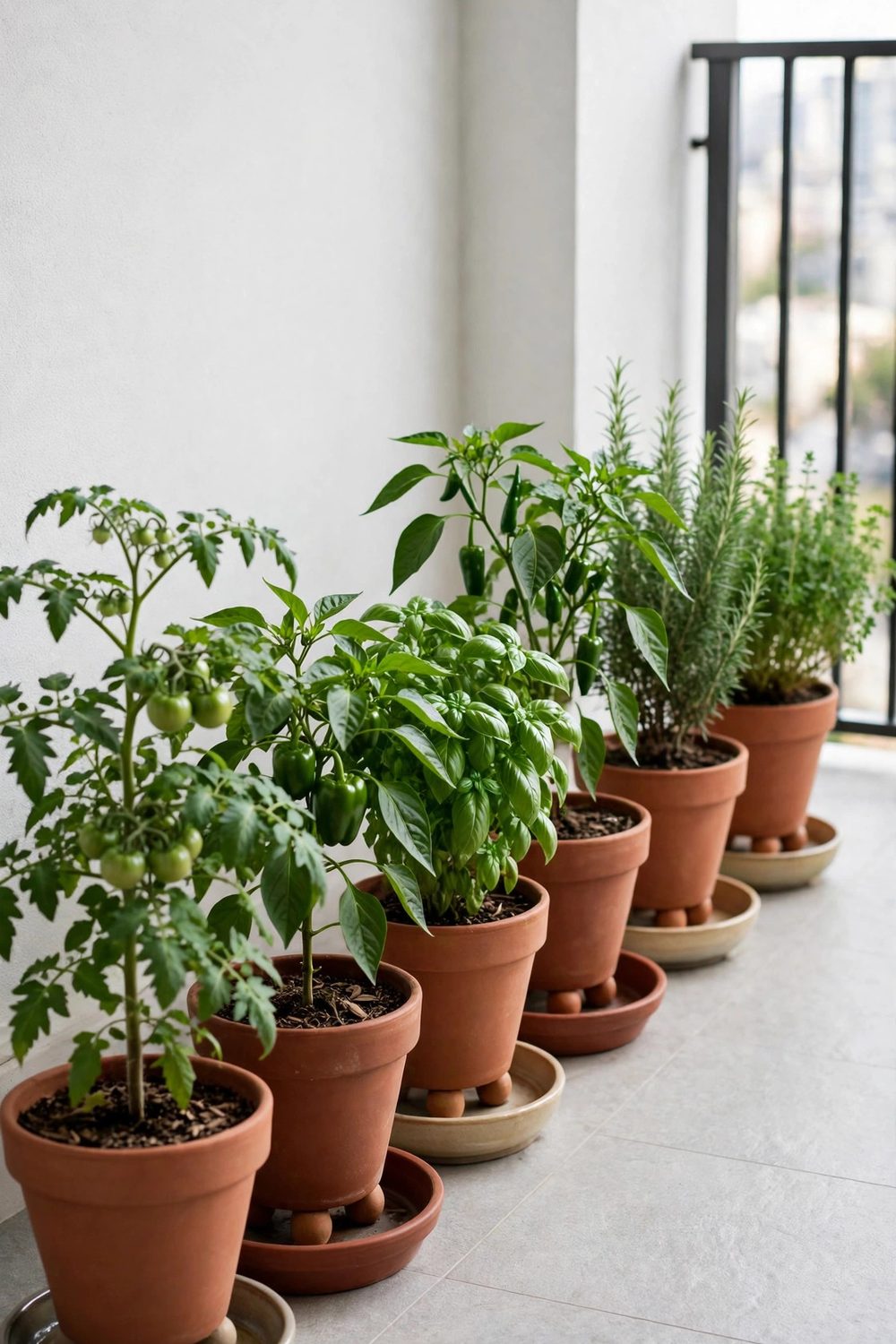
Run this mistake to fix list once a month. Each line takes under a minute to check per pot.
- No saucer: fit a deep saucer under every pot today.
- Shallow saucer: swap for one 2 inches (5 cm) wider than the base.
- Hard jet watering: use a rose head can, low, in two rounds.
- Sealed base: lift the pot on three or four pot feet.
- Full saucers: empty 30 minutes after watering; tip after rain.
- Runoff line: move pots out of roof and rail drip lines.
- Open tile potting: work in a lidded tray on a mat.
- Outer rail planters: move them to the inside face of the rail.
- No drainage holes: use a holed inner pot inside the outer pot.
- Floor slope: find the fall and level large pots with risers.
Every stain in this guide came from water with soil in it taking a path you can block. Saucers, feet, a tray, and a gentler can close nearly all of those paths.
Fix your two worst mistakes this week and watch the floor through the next few waterings. Dry tiles under the pots tell you the system works better than any guess.
Save this list to your container garden board for later. One monthly pass through the quick reference keeps balcony garden drainage mistakes that stain the floor below from creeping back.


