

15 Winter Balcony Vegetables: What Survives in Pots
Most balconies stand bare from November to March, pots stacked and waiting. That empty season is a choice, not a rule. A set of hardy crops treats winter as a slow growing season of its own.
This list of a winter balcony garden, what survives in pots, names the plants that hold through frost, and the care each one needs when growth nearly stops.
Winter growing is slow growing. Nothing rushes, nothing needs daily care, and a leaf picked in January tastes better for the wait. Start with the hardiest names first.
The catch is honesty about your winters. A mild coastal winter and a hard northern one ask for different crops, so each item names where it holds and where it needs help.
Protection here is simple and cheap: a sheltered wall, wrapped pots, and fleece on the hardest nights. No heated greenhouse, no lights, and no special kit to buy.
This post contains affiliate links. If you buy through them, we may earn a small commission at no extra cost to you. See our Affiliate Disclosure.
1. Keep Kale Standing Through Hard Frost
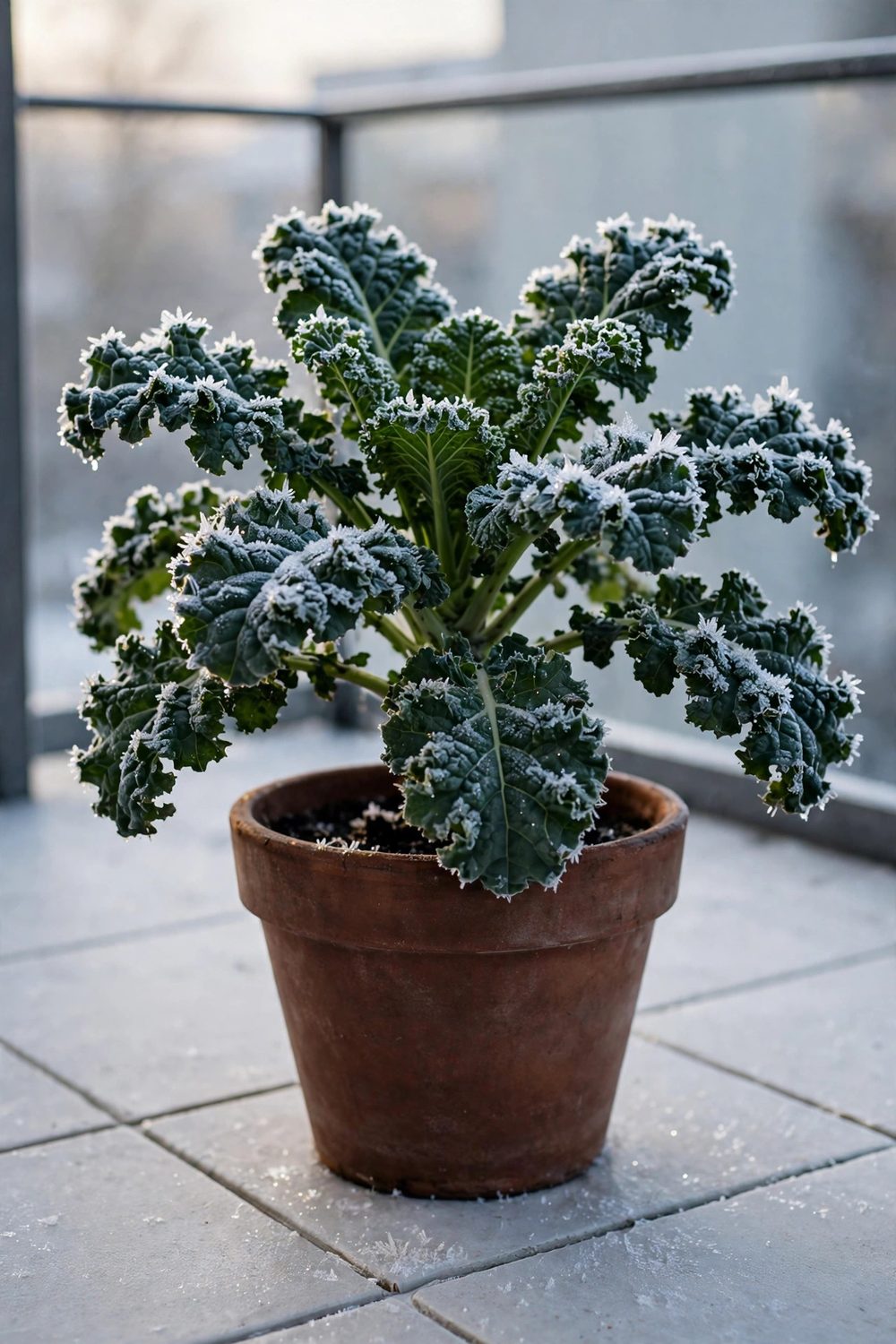
Kale is the winter crop that laughs at frost. Cold nights sweeten the leaves, and a plant in a deep pot keeps giving small pickings all season long.
Grow one ‘Lacinato’ or curly kale per pot at least 12 inches (30 cm) deep. Set the pot against the wall, out of the wind that rocks roots loose.
Pick a few outer leaves each week and leave the crown alone. Growth is slow, so pick lighter than you would in autumn and the plant keeps pace.
Frozen leaves thaw fine on the plant. Pick after midday, once the frost has left them, and they cook as well as any autumn leaf.
2. Let Chard Rest and Crop Lightly
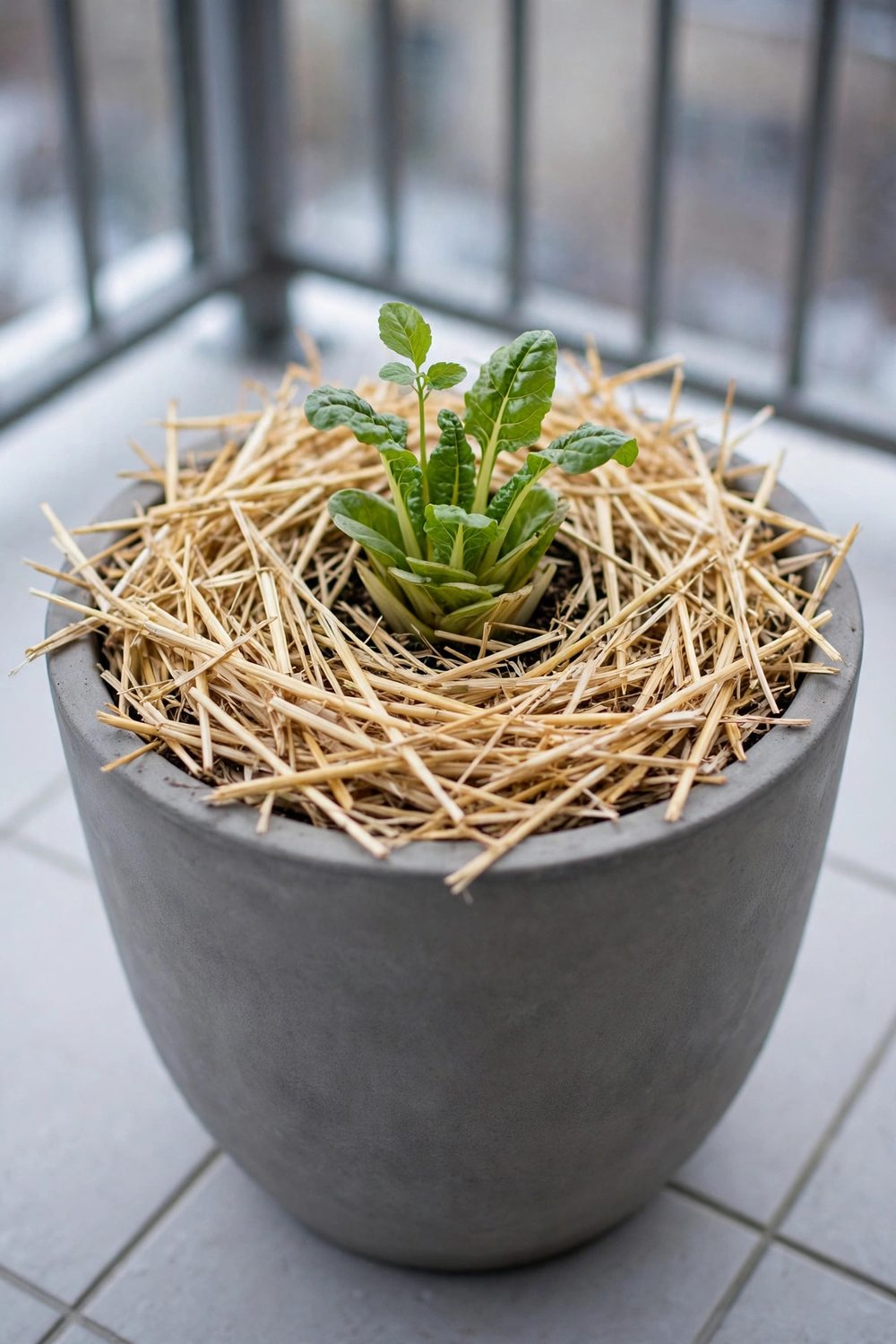
Chard survives winter in a pot in most mild and mid climates. The top growth slows to a standstill, but the crown stays alive under a mulch blanket.
Cut old stems back in late autumn and pile straw or bark 2 inches (5 cm) deep over the crown. That layer shields the growing point from hard frost.
In mild-winter areas, roughly USDA zones 8 to 10, plants keep making a few leaves. In colder areas they rest, then reshoot early in spring.
Water rarely, only when a dry spell lasts weeks. Winter chard in soggy mix rots at the crown, and rot is the one winter loss that never recovers.
3. Grow Winter Lettuce Under Fleece
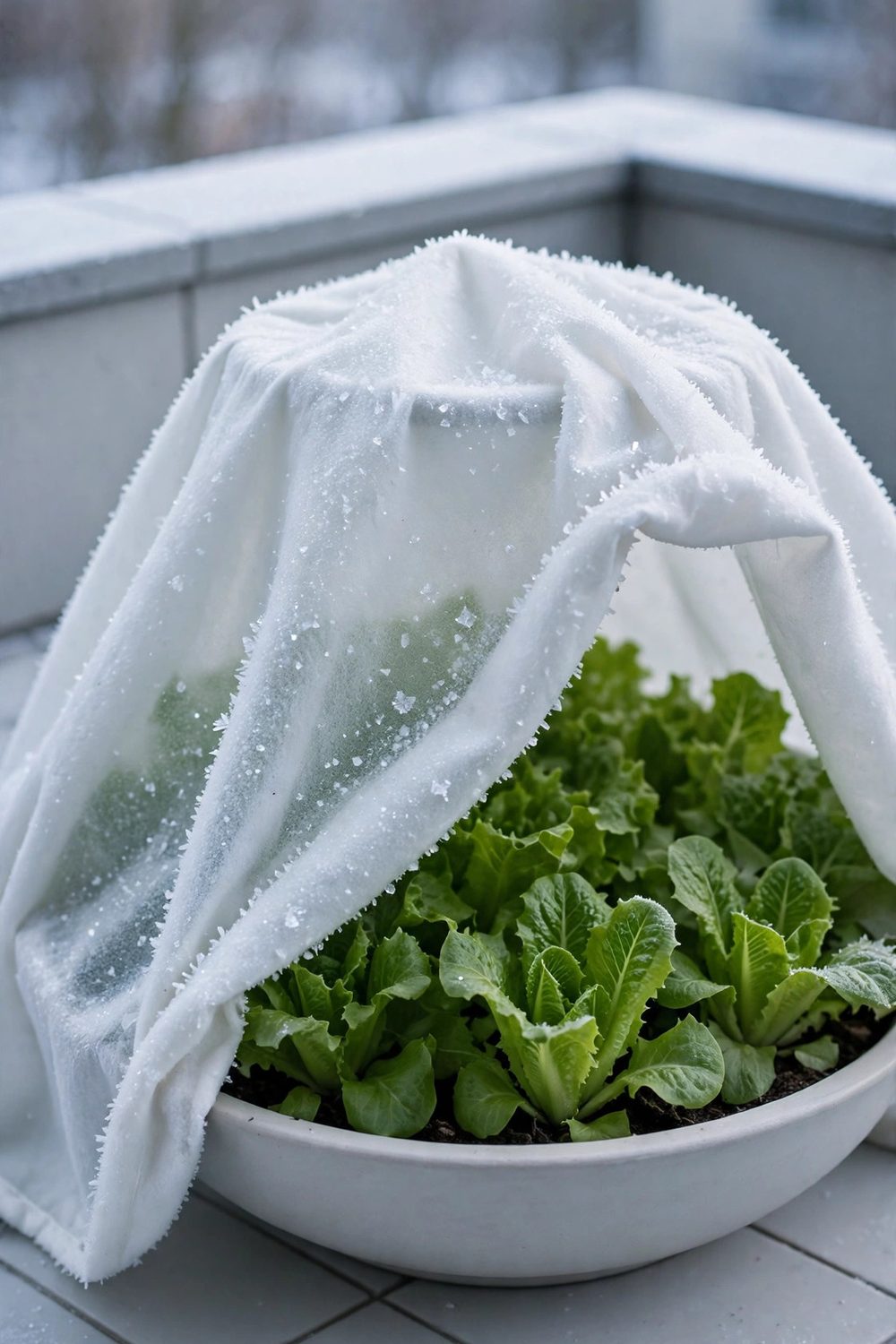
Winter lettuce grows slowly and stays sweet, as long as hard frost stays off the leaves. A fleece cover on cold nights makes the difference between picking and losing.
Choose winter types bred for short days and cold soil. Grow them in a wide bowl at least 6 inches (15 cm) deep, thinned to 4 inches (10 cm) apart.
Drape fleece loosely over the bowl and pin the edges down against wind. Lift it on bright, mild days so the leaves dry and air moves around them.
Pick outer leaves a few at a time from late morning onward. Leaves picked while frozen bruise and blacken within hours of coming indoors.
4. Keep Spinach for Small, Sweet Pickings
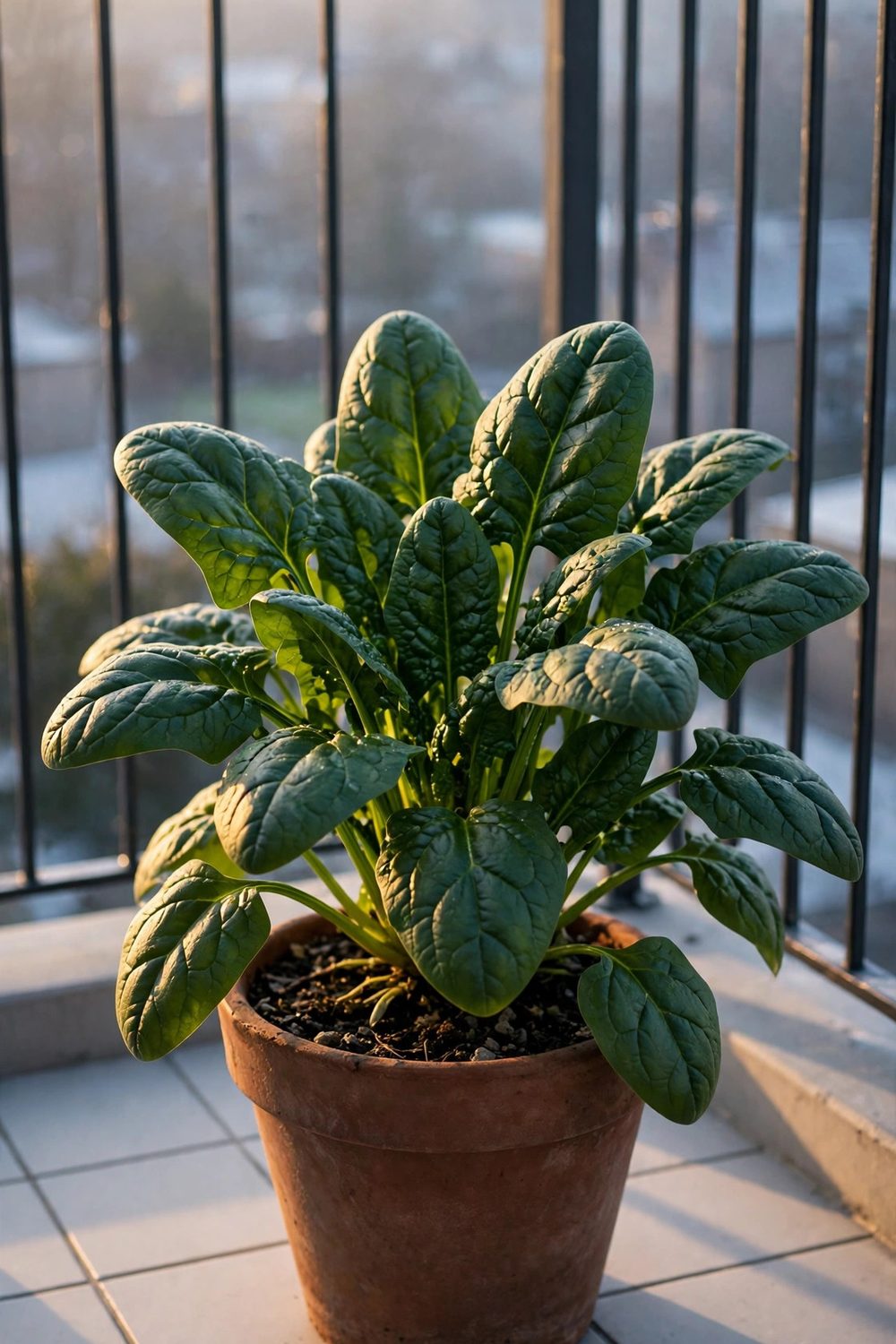
Spinach sown in autumn overwinters well in a sheltered pot. It will not grow fast, but it holds green leaves ready for small pickings through the cold.
Use a pot at least 8 inches (20 cm) deep and set it where morning sun reaches it. Cold soil in full shade stays frozen hours longer each day.
Pick sparingly, a few outer leaves per plant each week. A spinach plant stripped bare in January has no leaves left to power its spring restart.
Cover the pot with fleece during a hard cold snap. In spring the same plants surge, giving an early crop before they finally flower.
5. Leave Leeks Standing in a Deep Pot
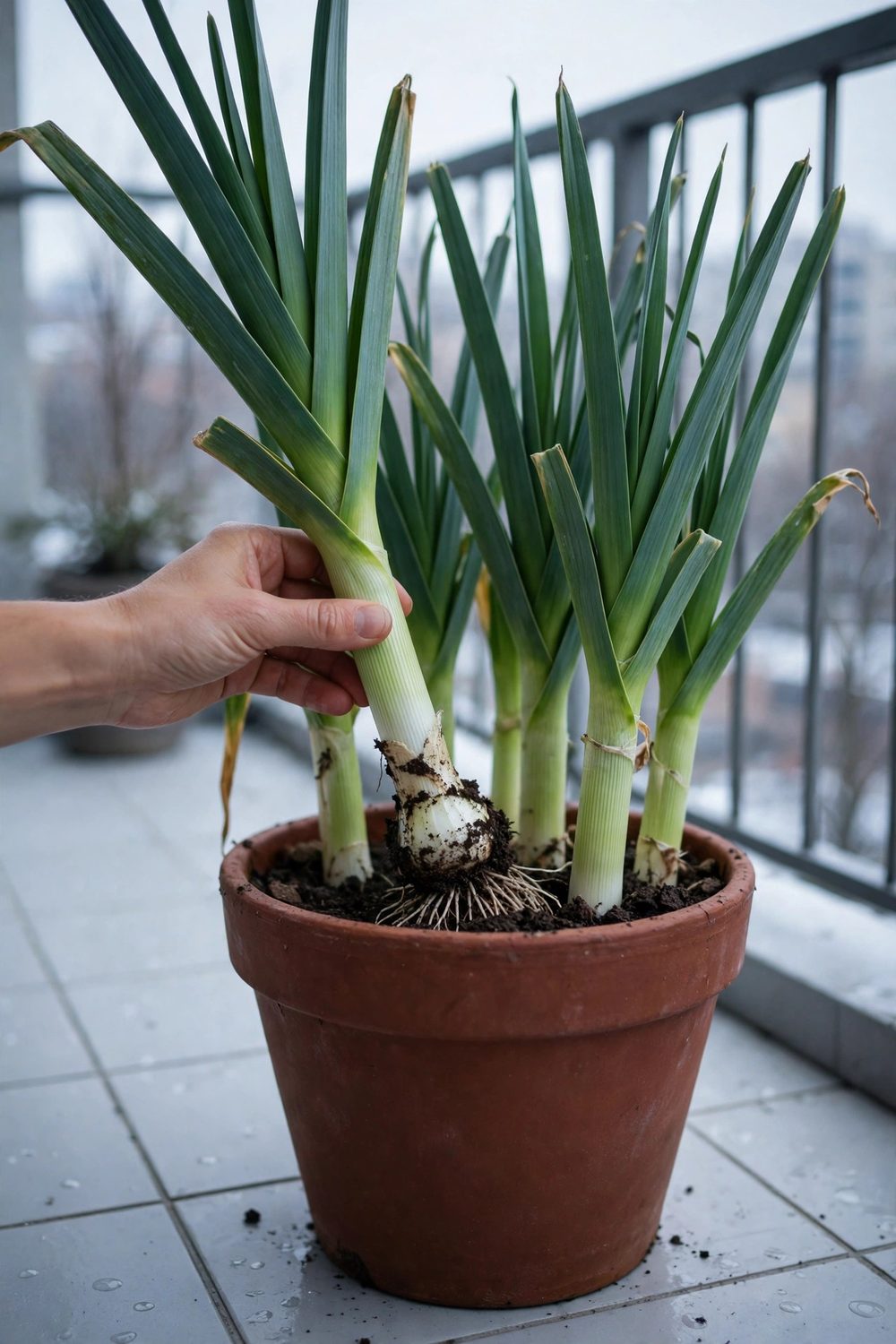
Leeks are built for winter. A deep pot of them stands through frost, snow, and weeks of neglect, and you pull stems as the kitchen needs them.
Grow them in a pot at least 12 inches (30 cm) deep, spaced 6 inches (15 cm) apart. The depth gives the white stem room to blanch below the surface.
Top up the mix around stems in autumn if rain has washed it down. Exposed green stem stays tough, while buried stem stays pale and tender.
Twist and pull the biggest leek first, and the rest gain space. A pot started in summer can feed a kitchen, a few stems at a time, all winter.
More cold-season crops are listed in our guide to what to grow in pots in winter.
6. Keep Garlic Growing Slowly Underground
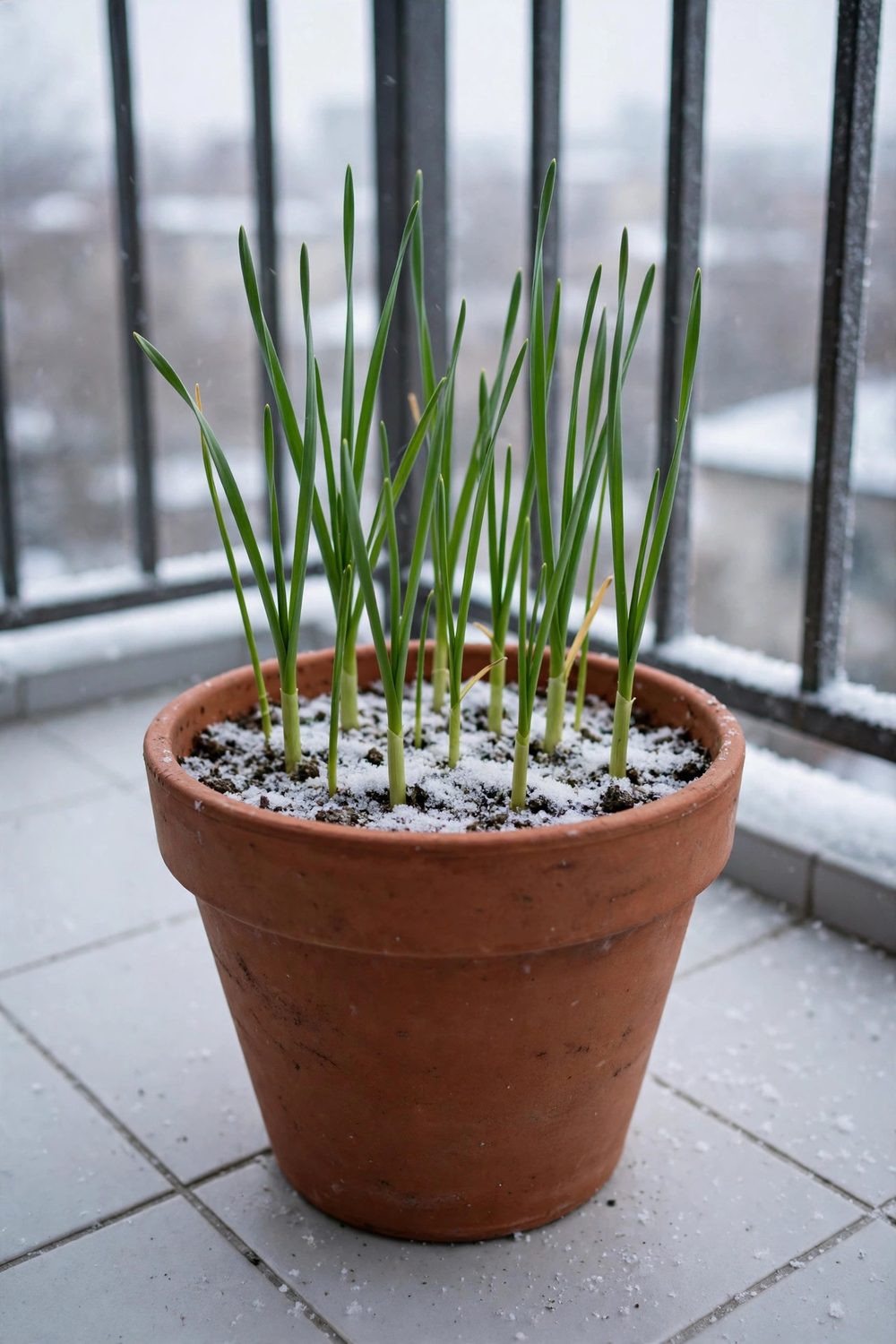
Garlic planted in autumn spends winter doing quiet work underground. The green shoots may sit still for months, but roots grow and the bulb splits into cloves.
Cloves sit 2 inches (5 cm) deep and 4 inches (10 cm) apart in a pot at least 10 inches (25 cm) deep. Set the pot against a sheltered wall.
Water only in long dry spells. Winter rain is usually enough, and cloves sitting in wet, cold mix rot before spring ever arrives.
Mark the pot with a label you can read from the door. Garlic looks like nothing for months, and unlabeled pots get emptied by mistake in spring clean-ups.
7. Hold Broad Beans Through Mild Winters
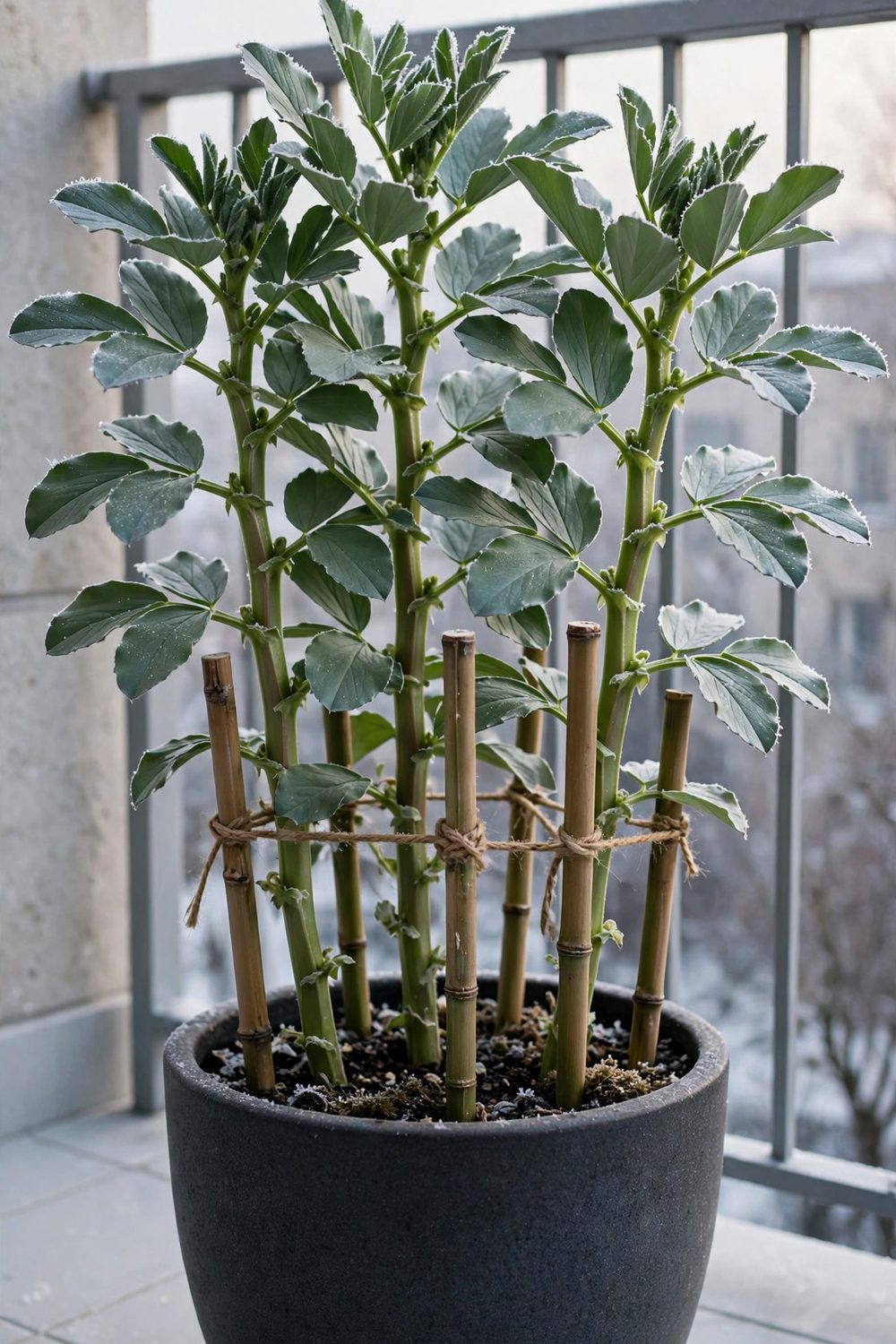
Autumn-sown broad beans stand through a mild winter and crop early. In cold areas with hard, lasting frost, the same sowing is a gamble, so know your winters.
Grow them in a 5-gallon (about 19 litre) bag or a deep pot. Tie stems loosely to short canes before winter storms, not after the first one flattens them.
Roots loosen when plants rock in wind, so firm the mix around each stem after a storm. A mulch layer helps hold both moisture and warmth.
Blackened shoot tips after a hard frost often regrow from lower nodes. Wait two weeks before you judge the plant lost and clear the pot.
8. Keep Hardy Herbs in the Sheltered Corner
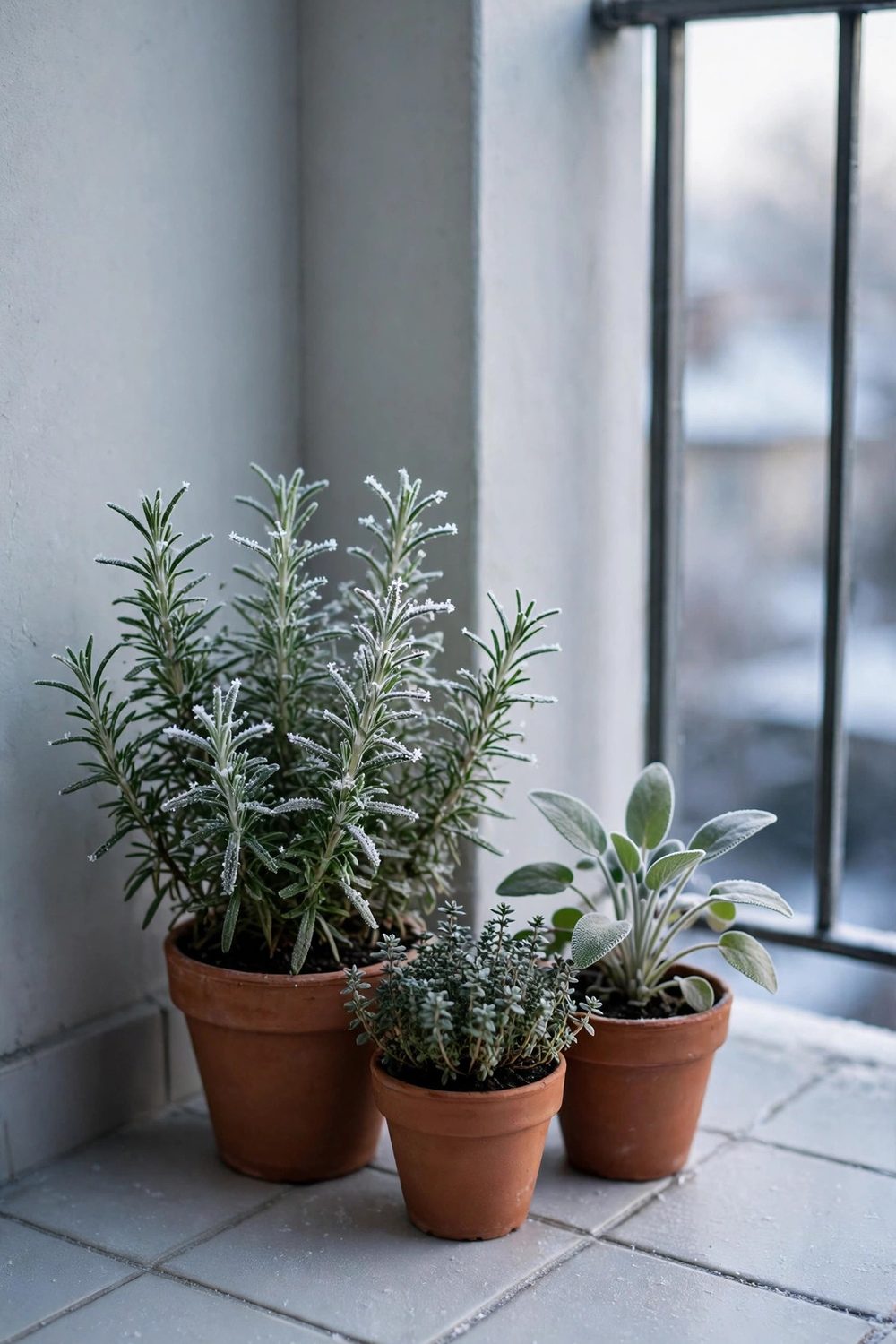
Rosemary, thyme, sage, and winter savory survive cold in pots if their roots stay on the dry side. Wet mix, not cold air, is what kills them in winter.
Raise the pots on feet so drainage holes stay clear, and stand them in the driest corner, under the wall overhang if your balcony has one.
Grow each herb in a pot at least 8 to 10 inches (20 to 25 cm) wide. Terracotta suits them in summer but cracks in hard frost, so wrap it or move it.
Snip lightly through winter and save hard pruning for spring. A herb cut back in January cannot replace growth until the light returns.
9. Grow Asian Greens for Cold-Weather Crunch
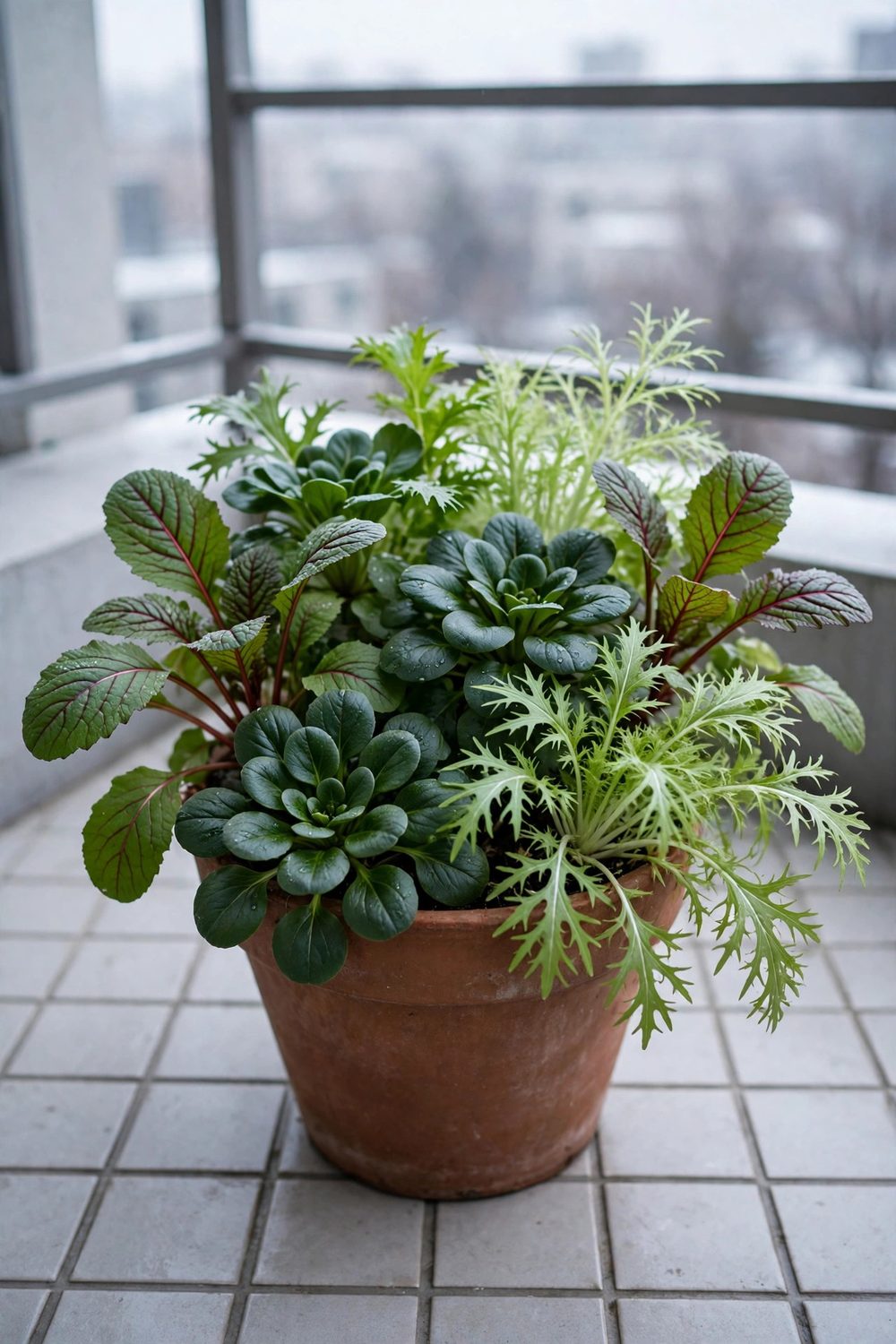
Mizuna, tatsoi, and mustard greens handle cold that stops lettuce cold. Tatsoi sits flat to the pot in a rosette and shrugs off frost under a light cover.
Sow in late summer or early autumn in a wide pot at least 8 inches (20 cm) deep. Thin plants to 6 inches (15 cm) apart so air moves between them.
Mustard leaves grow hotter as plants age, while mizuna stays mild. Mix the three in one pot and you can pick a salad with real range in midwinter.
Cover with fleece on the hardest nights and uncover on mild days. Stale, damp air under a fixed cover rots more winter greens than frost does.
10. Keep Spring Onions Standing All Winter
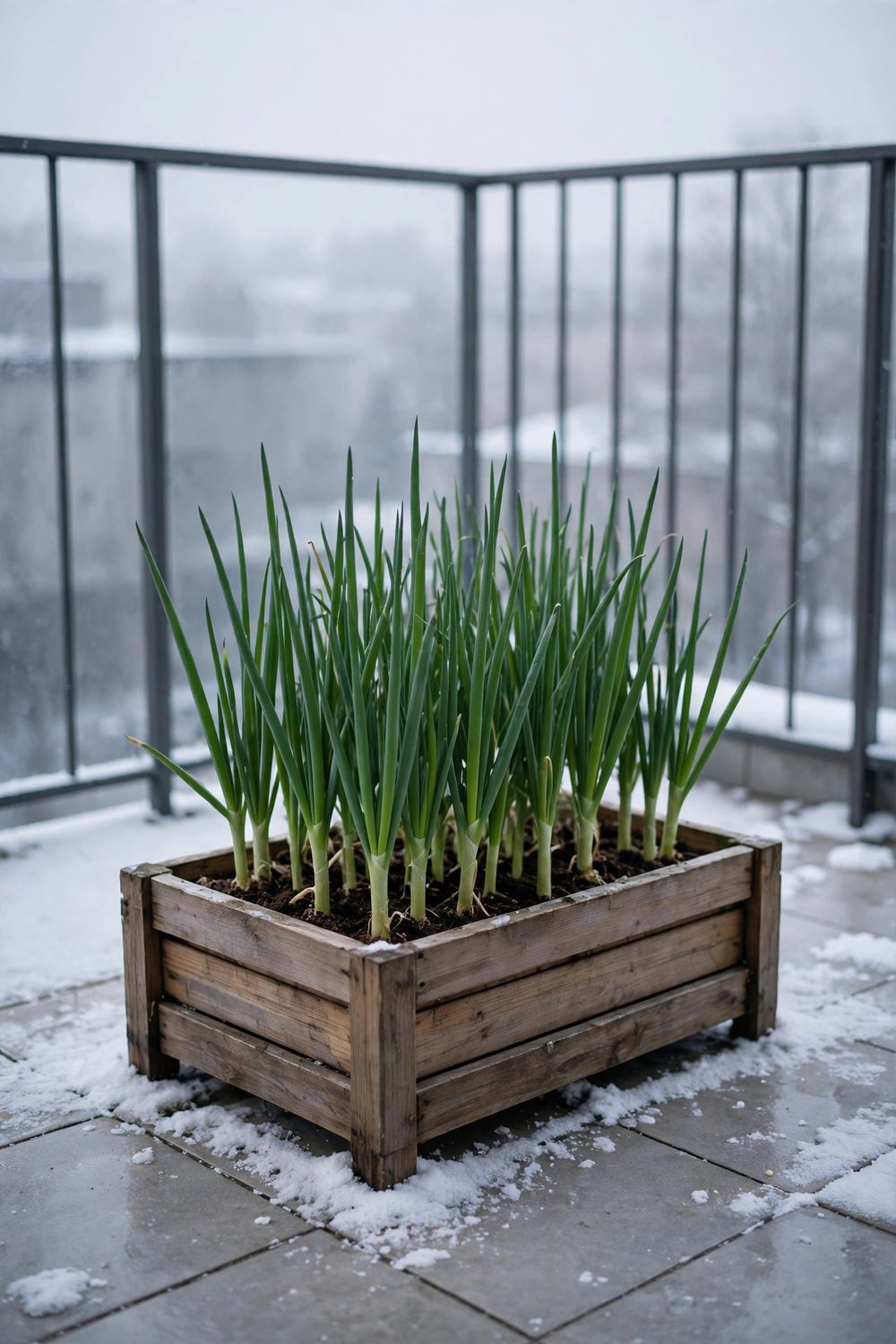
Hardy spring onions are among the toughest pots on a winter balcony. Snow flattens them, frost stiffens them, and they stand back up when the thaw comes.
Grow overwintering types in a deep box or along the edge of a large pot. Their roots take little room, and they mind no crop they share with.
Pull the thickest stems first, as you need them. Steady thinning gives the rest light and space, and the last stems bulk up fast in spring.
After snow, brush the box clear so stems get light. A box left buried under balcony snow for weeks comes out pale and floppy.
11. Protect Carrots in the Pot and Pull as Needed
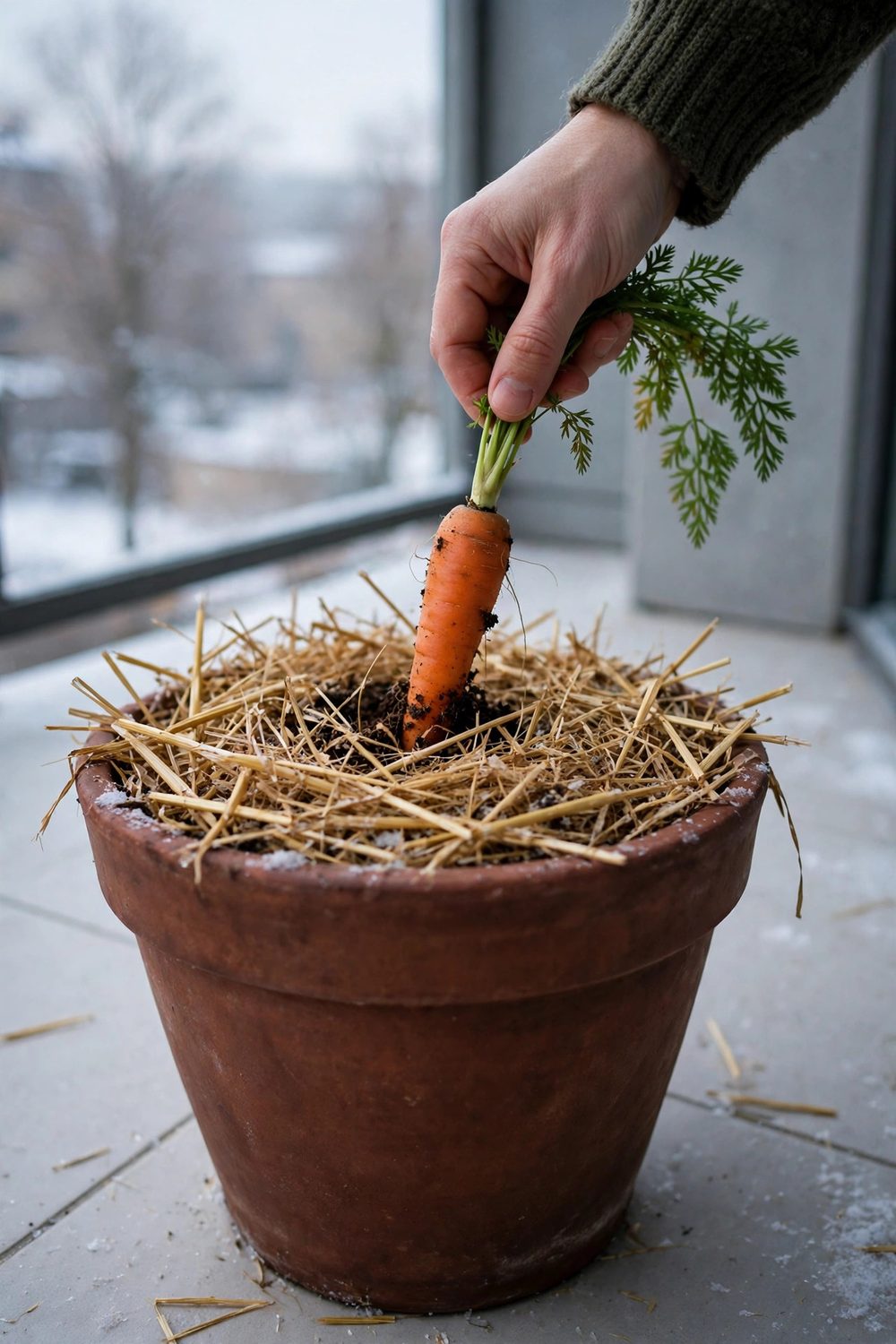
Carrots store well in the pot they grew in. Cold sweetens them, and a pot by the door beats a muddy trip to a shop for a Sunday roast.
Leave late-sown carrots in a deep pot, at least 12 inches (30 cm), and cover the surface with straw once hard frost starts. The layer stops the mix freezing solid.
Pull roots on milder days, loosening the mix with a fork first. Frozen mix grips roots hard, and a snapped carrot top leaves the root stuck below.
In very cold areas, move the pot into an unheated shed during the hardest weeks. The roots rest there safely and come back out in late winter.
12. Keep a Pot of Corn Salad for Delicate Leaves
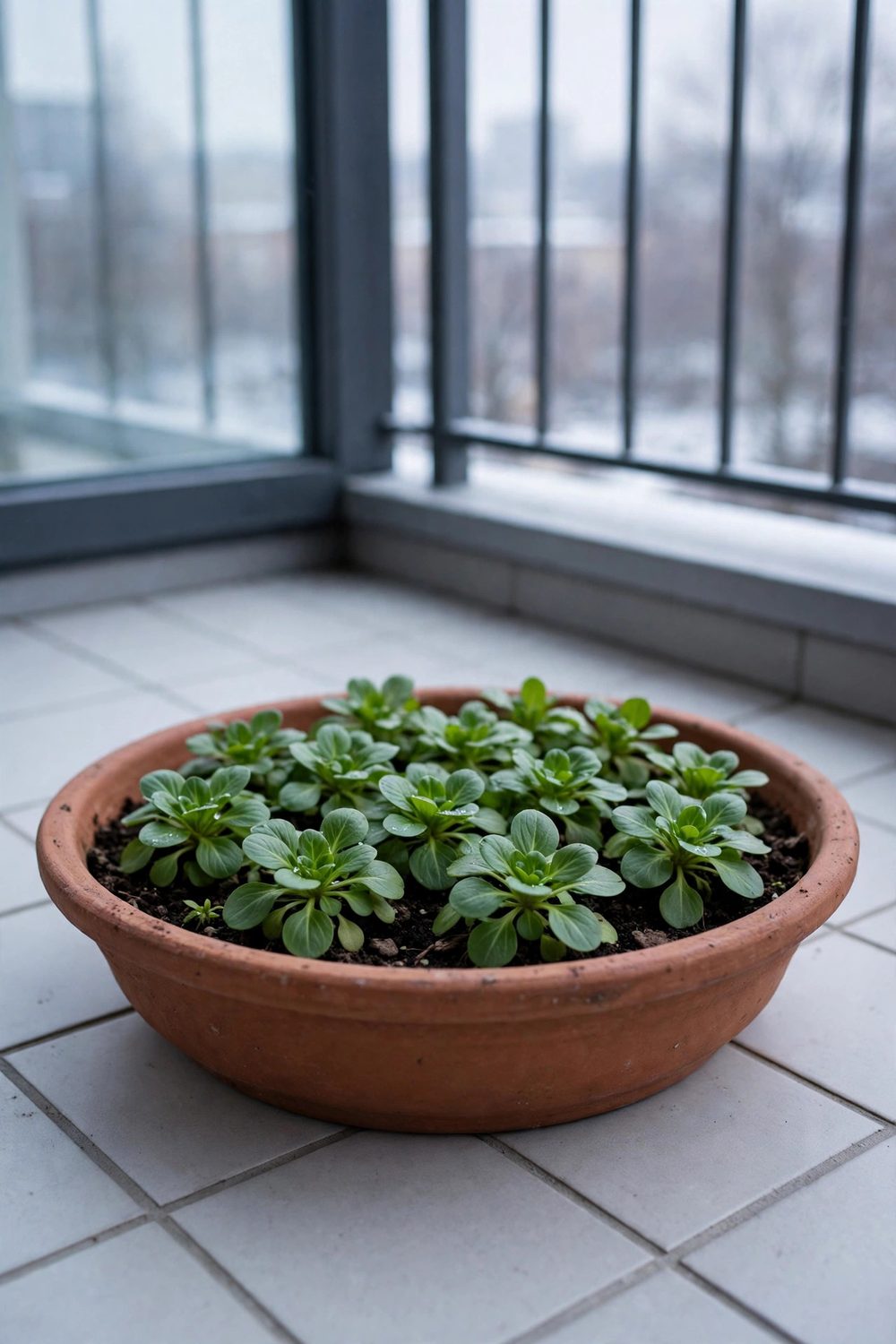
Corn salad, also called lamb lettuce, is a small leaf grown for winter salads in much of Europe. It germinates in cool soil and grows through cold that stops other salads.
Sow it thickly in a shallow, wide pot in late summer or early autumn. It needs little depth, 6 inches (15 cm) is plenty, and steady moisture at the start.
Pick whole small rosettes rather than single leaves. A bowl picked over in January often regrows a second flush by early spring.
It asks for no feed and no fuss. That quiet habit makes it the easiest first winter crop for a new balcony grower to succeed with.
13. Shelter Strawberry Pots for an Early Start
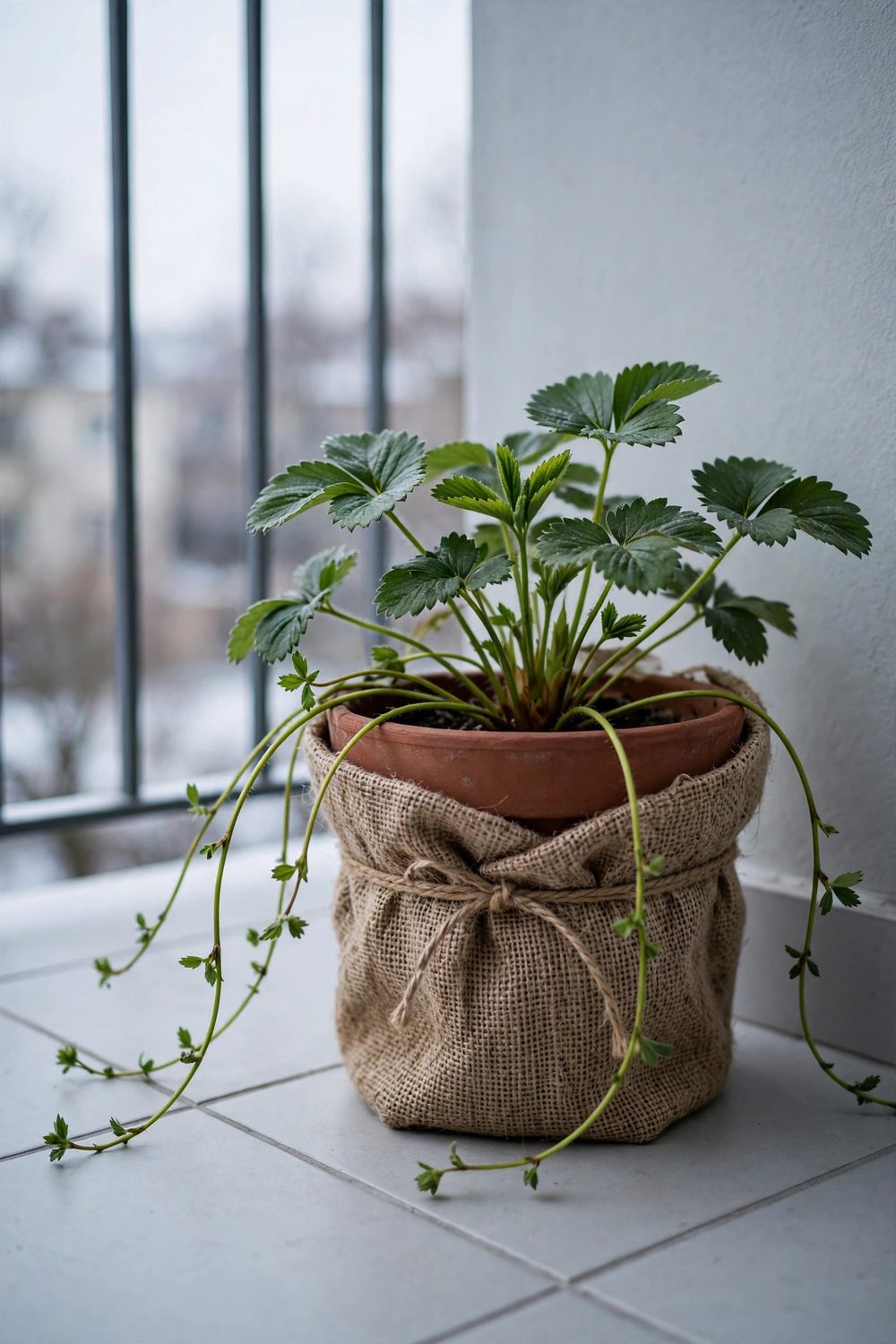
Strawberries rest in winter rather than crop, but a pot that survives well fruits earlier and harder in spring. Winter care is about the crown, not the leaves.
Stand pots against the wall and wrap the sides before hard frost. Old leaves can stay until spring, since they shelter the crown from cold wind.
Water only in dry spells, keeping the mix barely damp. A strawberry crown in wet, frozen mix rots, and the plant is gone by March.
In late winter, trim dead leaves and top up the mix. The tidy-up takes minutes and sets the pot up for the first flowers of the year.
The crops that set this winter up were sown following our guide to a balcony garden in autumn.
14. Wrap and Group Pots to Beat Deep Cold
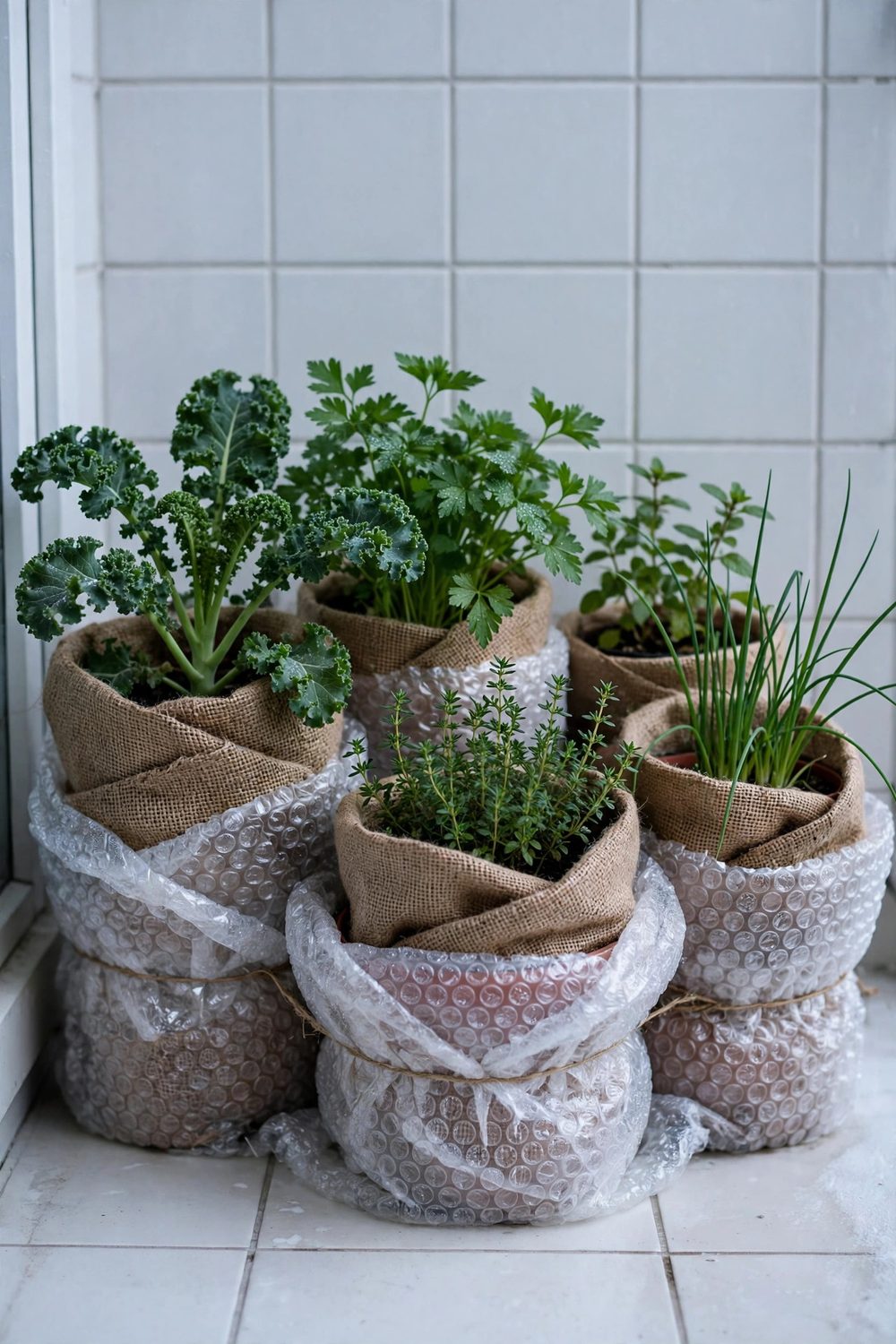
Grouping pots together is free protection. A tight cluster against the wall holds a pocket of still, slightly warmer air that single pots never get.
Wrap the outside of the cluster with bubble wrap or hessian, running it around the group rather than each pot. Leave tops open for rain and air.
Stand the group on feet, planks, or polystyrene board, not bare frozen tiles. Cold climbs from a frozen floor straight into the root ball.
Check ties after storms, because wrap that slips leaves one side bare. Five minutes with cold hands in December saves whole pots in January.
15. Use the Slow Months to Review and Plan
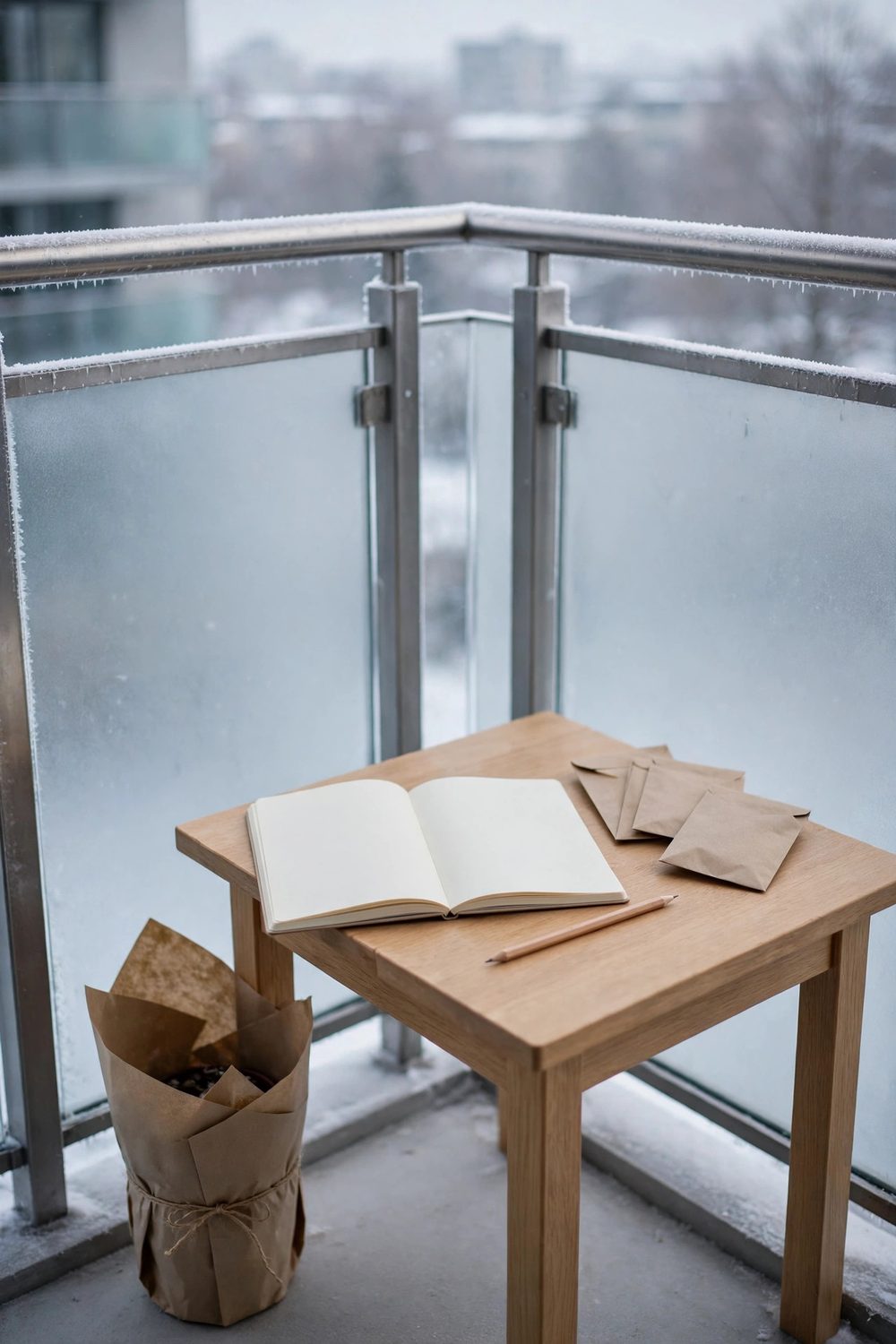
Winter is the planning season, and a working balcony gives you live data. Note which pots froze first, which corner stayed mildest, and which crops you actually picked.
Order seed for dwarf and container types while stock is wide. The best patio varieties sell out by spring, and autumn lessons are still fresh now.
Wash empty pots on a mild day and stack them dry. Pots cleaned in winter go straight into service when the first sowing window opens.
Keep notes short and dated in a notebook by the door. Next winter, that page is worth more than any catalog. Lay the whole year out with the balcony vegetable garden year plan before spring starts.
A winter balcony will never match summer for harvest weight. It wins on other terms: fresh leaves in the dark months, pots that never lost their place, and a head start on spring.
That is the quiet value of a winter balcony garden, what survives in pots. Hardy greens, roots stored in place, and herbs by the wall, all asking almost nothing.
Save this list to your container garden board when you plan the autumn clear-down. Set the hardy pots in their sheltered spots once, and winter takes care of itself.


