

15 Balcony Garden Ideas for Autumn: Extending the Season
The balcony looks tired by late summer. Tomato vines are leggy, the bean pot is done, and most growers clear everything away and wait for spring. That clear-out wastes the best growing weeks of the year.
Autumn on a balcony is a second spring, cooler and calmer. This guide to a balcony garden in autumn, extending the season, covers the crops and small jobs that keep pots earning into the cold months.
Cold nights slow growth but sweeten leaves and roots. Start with the sowings that must go in while the mix is still warm, then work through the protection jobs.
Autumn also asks less of you. Pests fade, watering slows, and the crops that like cool air grow sweet and steady without the daily checks summer demanded.
Work through the list in order and each job lands at the right moment. Sowings first, while the mix is warm, then moving, wrapping, and clearing as the nights turn cold.
This post contains affiliate links. If you buy through them, we may earn a small commission at no extra cost to you. See our Affiliate Disclosure.
1. Sow Spinach as Soon as Nights Cool
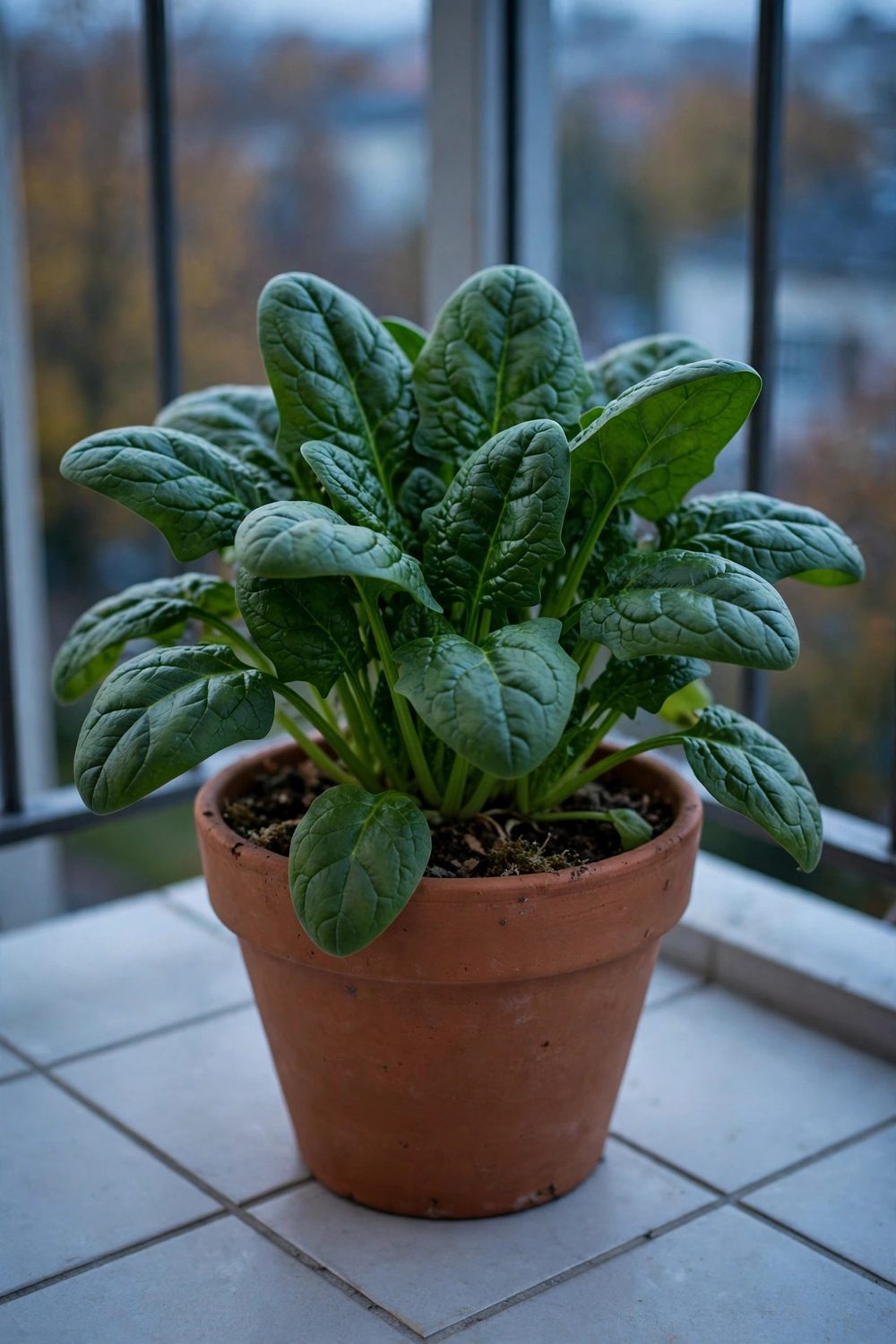
Spinach that bolted in June behaves in autumn. Sow it as nights cool and it stays leafy for months, growing slowly but never racing to flower.
Use a pot at least 8 inches (20 cm) deep. Sow seed 1/2 inch (1 cm) deep and 2 inches (5 cm) apart, then thin to 4 inches (10 cm).
In mild-winter areas, roughly USDA zones 8 to 10, an autumn pot can crop lightly all winter. In cold areas it rests under cover and restarts in spring.
Pick outer leaves a few at a time. A plant picked gently in cool weather holds its quality far longer than a summer plant ever does.
2. Fill Empty Pots With Fast Radishes
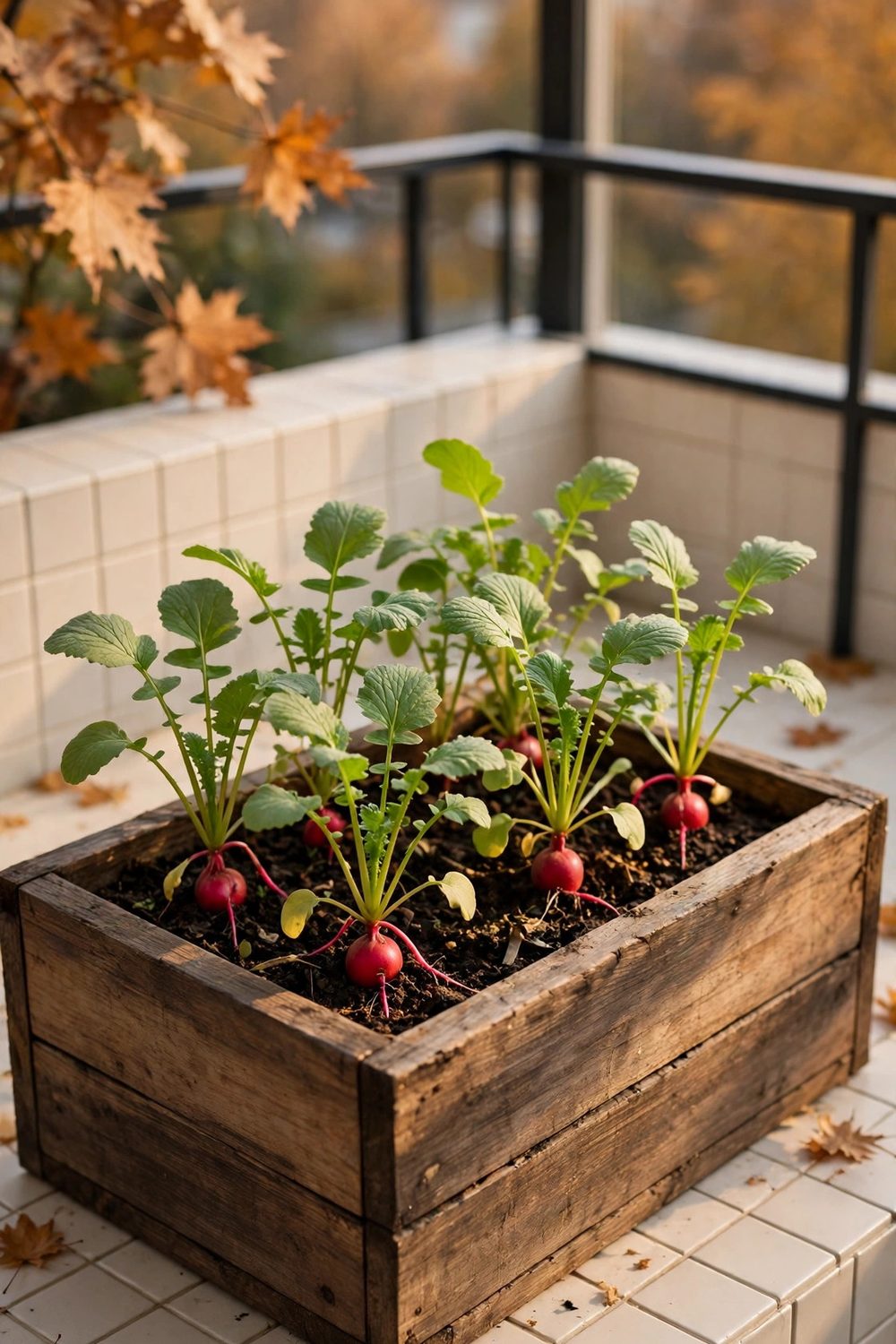
Every pot that frees up in early autumn can hold one more round of radishes. The mix is warm, the air is cool, and roots swell sweet instead of fiery.
Sow seed 1/2 inch (1 cm) deep and 1 inch (2.5 cm) apart in any box at least 6 inches (15 cm) deep. Thin seedlings to 2 inches (5 cm).
Autumn radishes grow a little slower than spring ones, so allow five to six weeks. Winter types sown in late summer grow bigger and store well in the pot.
Keep the surface damp during dry autumn spells. A saucer that overflowed all summer now matters less, since evaporation drops as the days shorten.
3. Plant Garlic in a Deep Pot for Next Summer
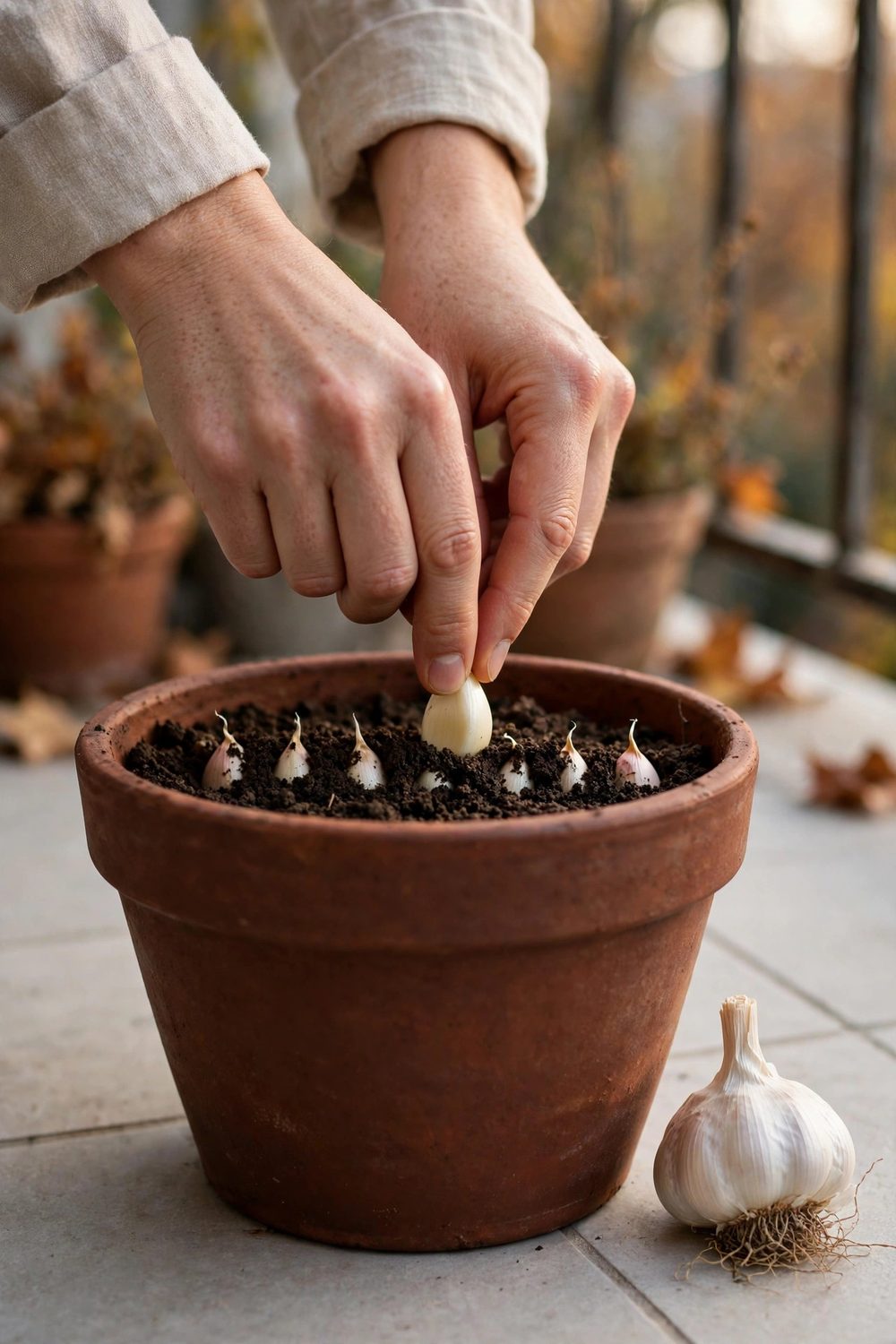
Garlic goes in during autumn and asks for almost nothing until harvest. The cold weeks are part of the crop, because bulbs split into cloves after real chill.
Break a bought bulb into cloves and push each one 2 inches (5 cm) deep, pointed end up. Space cloves 4 inches (10 cm) apart in a deep pot.
Use a pot at least 10 inches (25 cm) deep and set it against the wall, out of the worst wind. Shoots appear in autumn and sit still through winter.
Water only when the mix dries out. Soggy winter mix rots cloves quietly, and you find the damage months later at harvest time.
4. Sow Broad Beans for an Early Spring Crop
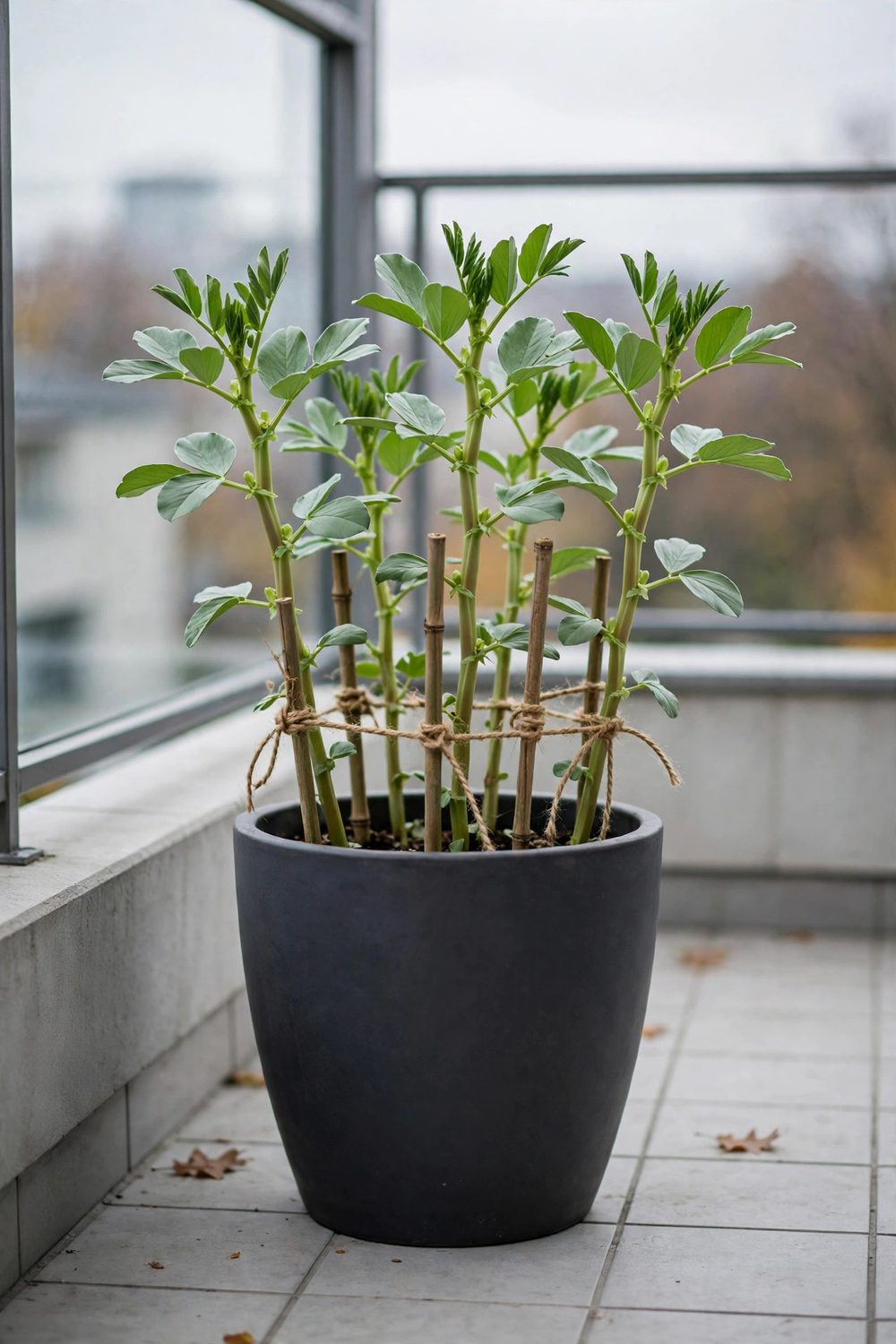
In mild areas, an autumn sowing of broad beans beats a spring one. Plants settle roots in cool mix, sit through winter, and crop weeks earlier next year.
Sow seed 2 inches (5 cm) deep and 6 inches (15 cm) apart in a 5-gallon (about 19 litre) bag or a deep pot. Hardy types suit autumn sowing best.
Young plants bend in winter wind, so tie them loosely to short canes early. A corner by the wall cuts the rocking that loosens roots in the mix.
In cold areas with hard winters, skip the autumn sowing and wait for spring. A frozen pot kills what a mild winter would have carried through. The wider autumn sowing list is in our guide to autumn container vegetables for a second harvest.
5. Transplant Kale Seedlings for Winter Leaves
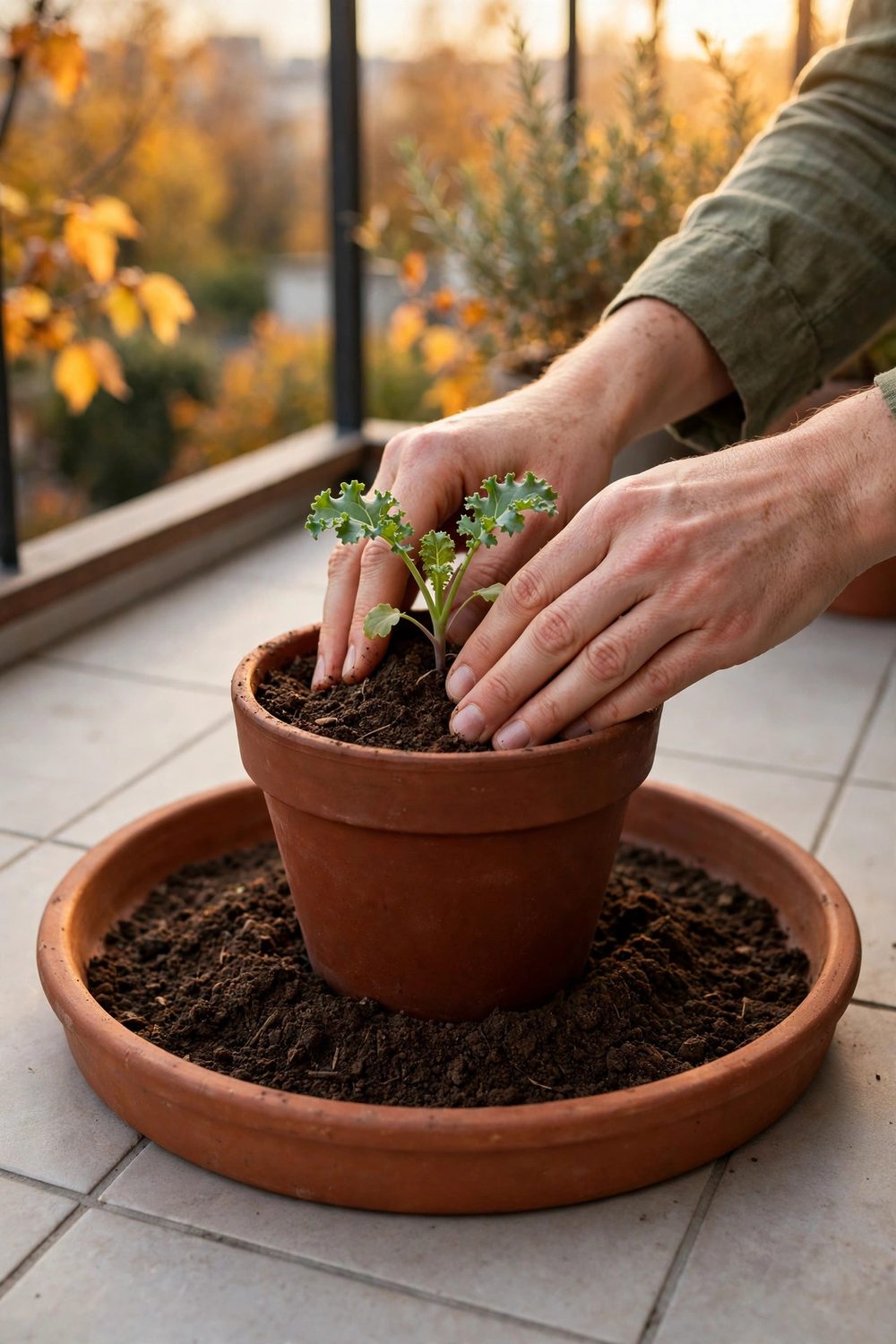
Kale planted in early autumn becomes the backbone of the winter balcony. ‘Lacinato’ kale stands upright, shrugs off frost, and sweetens after cold nights touch it.
Set one seedling per pot at least 12 inches (30 cm) deep. Bury the stem a little deeper than it sat in its tray, which steadies a lanky plant.
Water in well and feed once with a general liquid feed. Growth slows as light fades, so the plant needs less food than a summer crop.
Pick from the bottom up, a few leaves per plant each week. Leave the crown and at least six leaves so the plant can keep growing.
6. Sow Winter Lettuce Under a Simple Cover
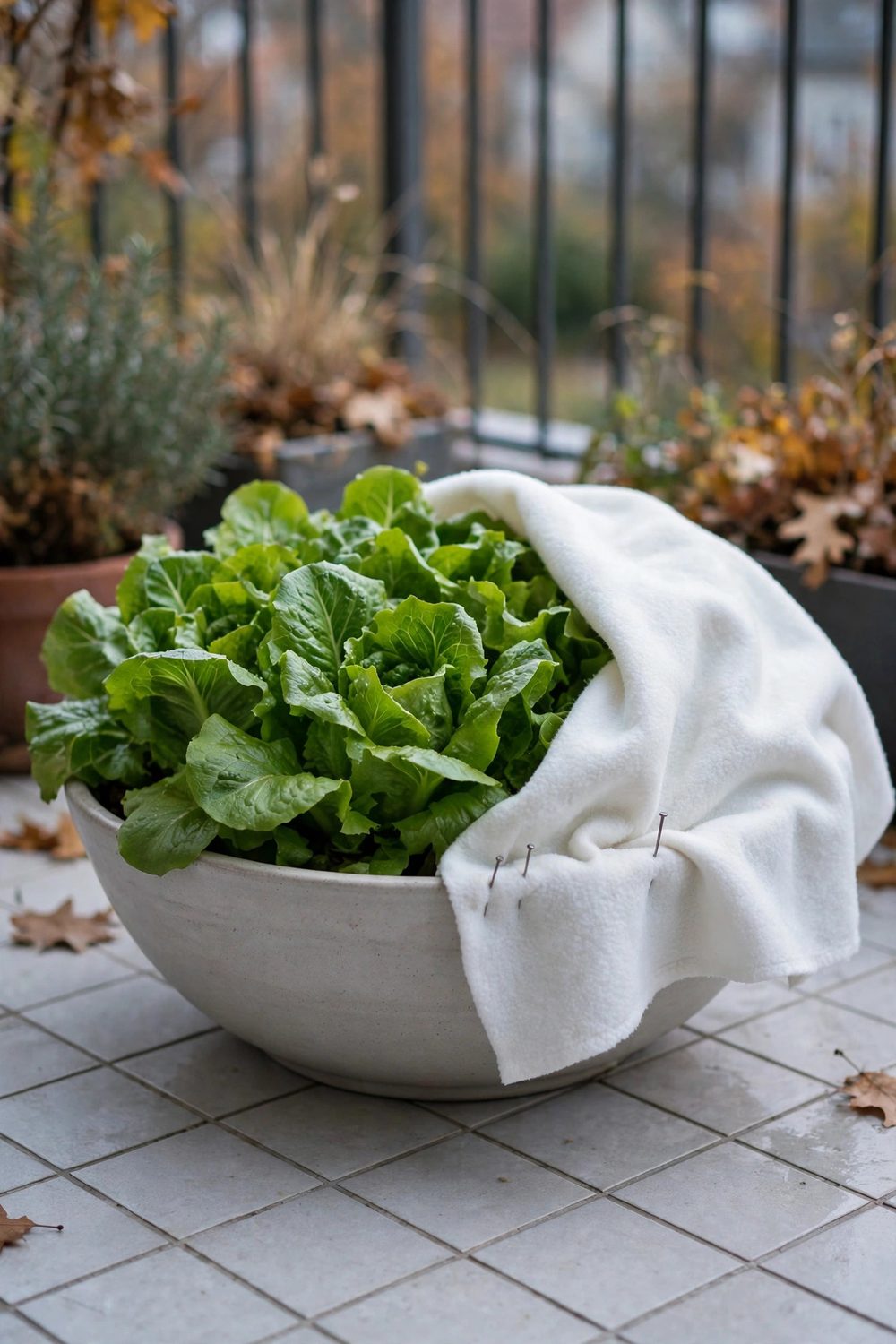
Lettuce sown in early autumn grows slowly and stays sweet. A sheet of horticultural fleece over the pot on frost nights buys it weeks of extra picking.
Pick winter types bred for cold weather and sow in a wide bowl at least 6 inches (15 cm) deep. Thin seedlings to 4 inches (10 cm) apart.
Drape fleece loosely so it rests on the leaves without crushing them, and pin the edges against wind. Take it off on mild, bright days so air moves.
Pick in the afternoon once leaves thaw. Frozen leaves picked at dawn bruise black by lunch, while thawed leaves keep their crunch.
7. Start Spring Cabbage in a Big Pot
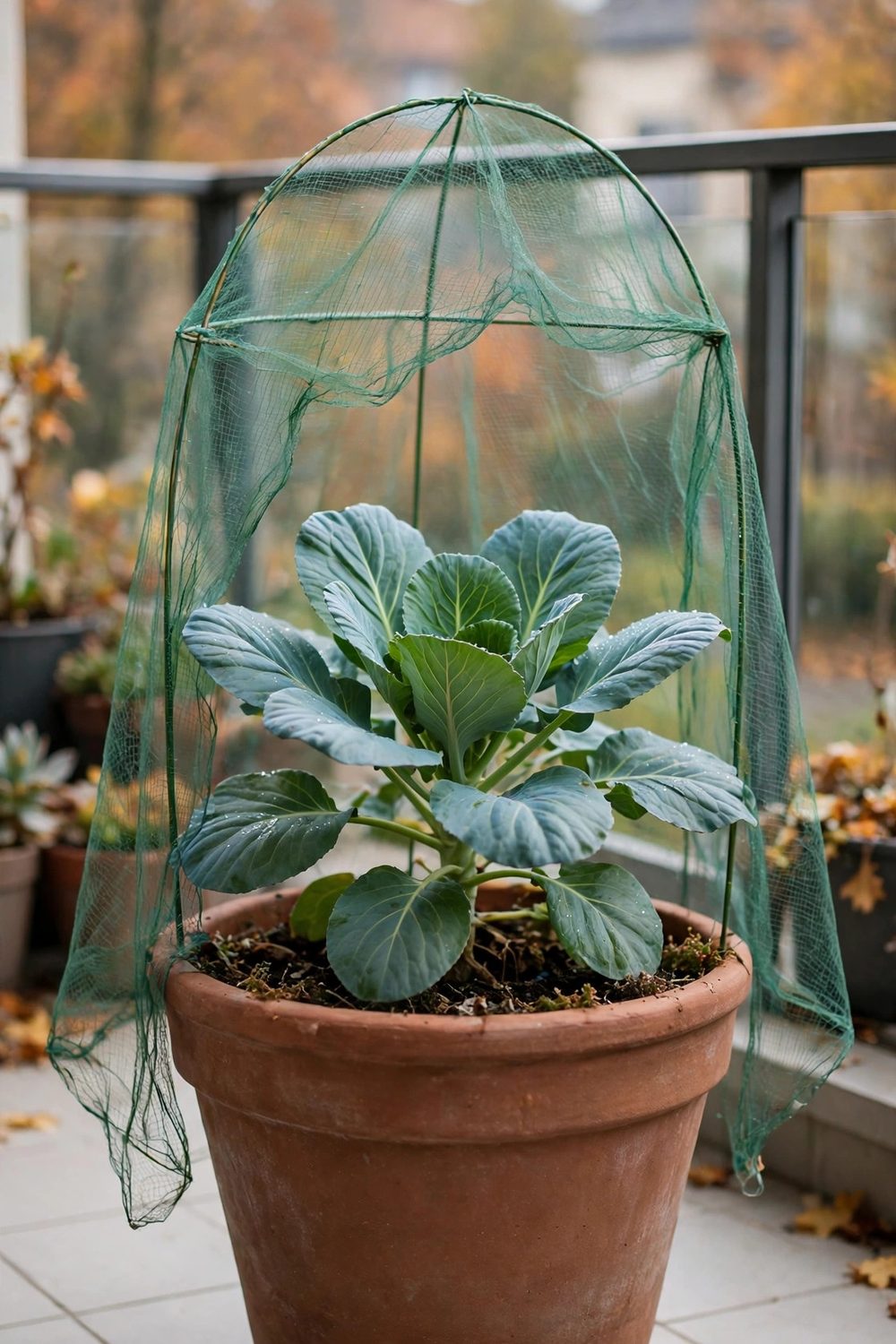
Spring cabbage is sown in late summer and planted out in autumn. It sits small through winter, then heads up fast as days lengthen in spring.
Grow one plant per 5-gallon (about 19 litre) pot. Firm the mix well around the stem, because loose mix and winter rocking loosen roots and stall growth.
Net the pot if pigeons visit your rail. A winter cabbage stripped of leaves in January rarely recovers enough to heart up in spring.
Water lightly through winter, only when the mix dries. The plant is resting, not growing, and wet feet in cold mix invite rot.
8. Keep Chard Going and Cut It Hard Back
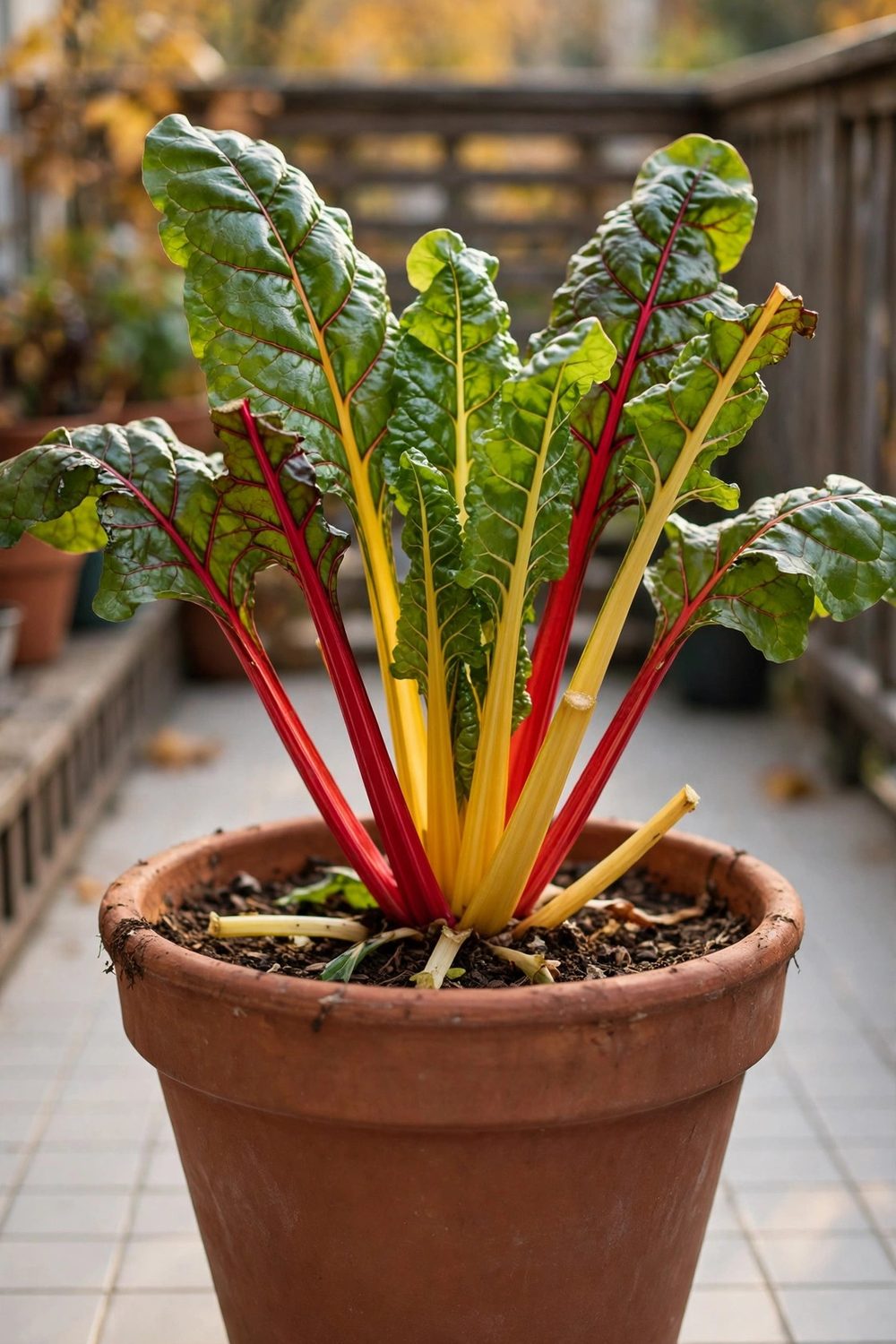
A chard plant that cropped all summer does not need replacing in autumn. Cut it back hard, feed it once, and it answers with fresh, tender leaves.
Trim old stems at the base and remove any spotted leaves to the bin, not the compost. Clean growth matters more now that cool, damp air slows drying.
In mild areas chard crops through winter. In cold areas the crown rests, then reshoots in spring if the pot stands against a sheltered wall.
Cover the crown with a thick mulch layer before hard frost. Straw or bark piled over the base shields the growing point that matters most.
9. Sow Spring Onions for a Winter Supply
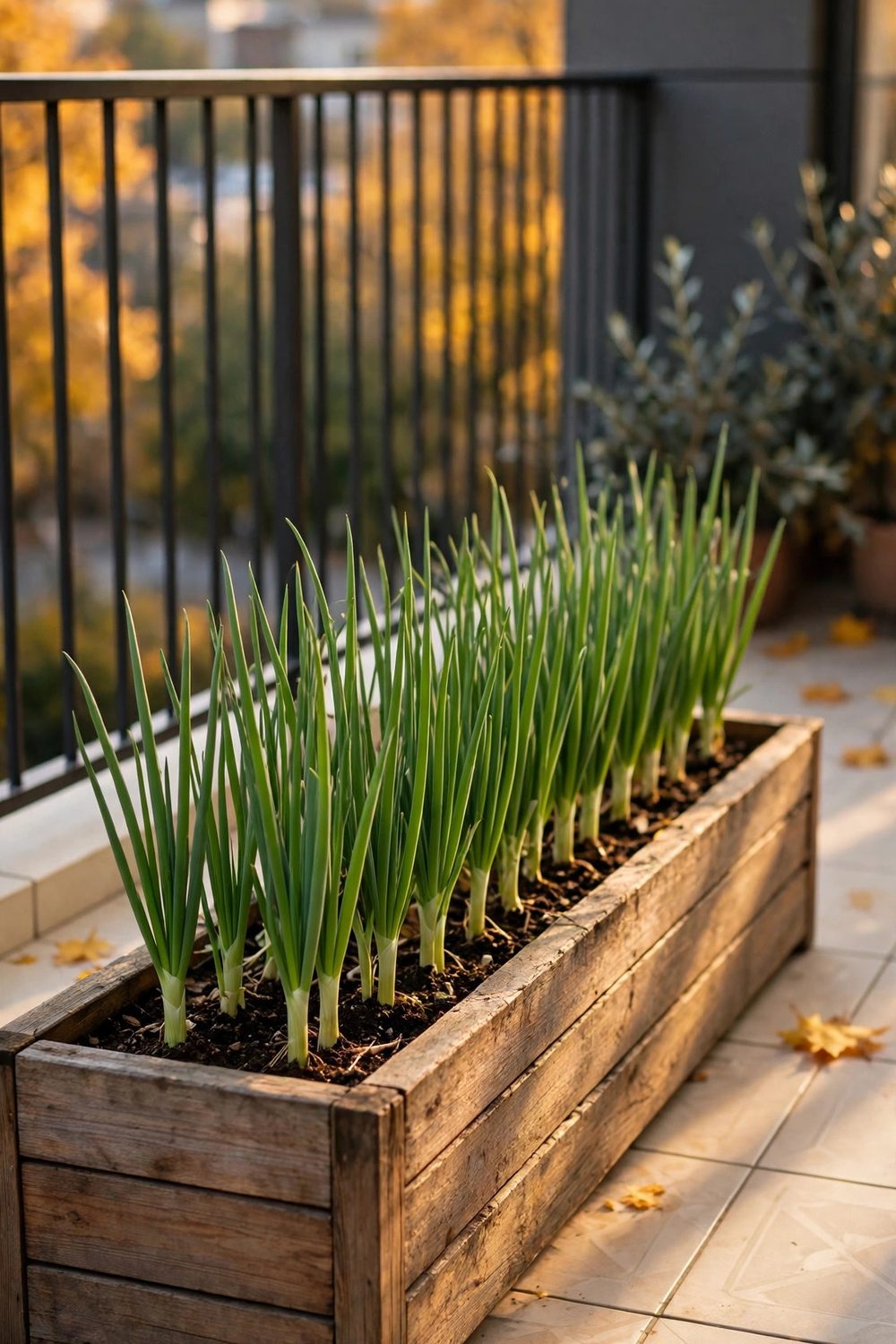
An autumn sowing of hardy spring onions carries a balcony through the dark months. Growth is slow, but a green stem pulled in January feels like a gift.
Sow seed 1/2 inch (1 cm) deep in a deep box or the edge of a big pot. Thin lightly, because winter losses thin the row for you.
Choose hardy types sold for overwintering. Ordinary spring types sown now often rot in cold, wet mix before spring arrives.
Pull stems as you need them, thickest first. The row thins itself into spring, and the last stems bulk up fast in March light.
10. Move Tender Pots Against the Warm Wall
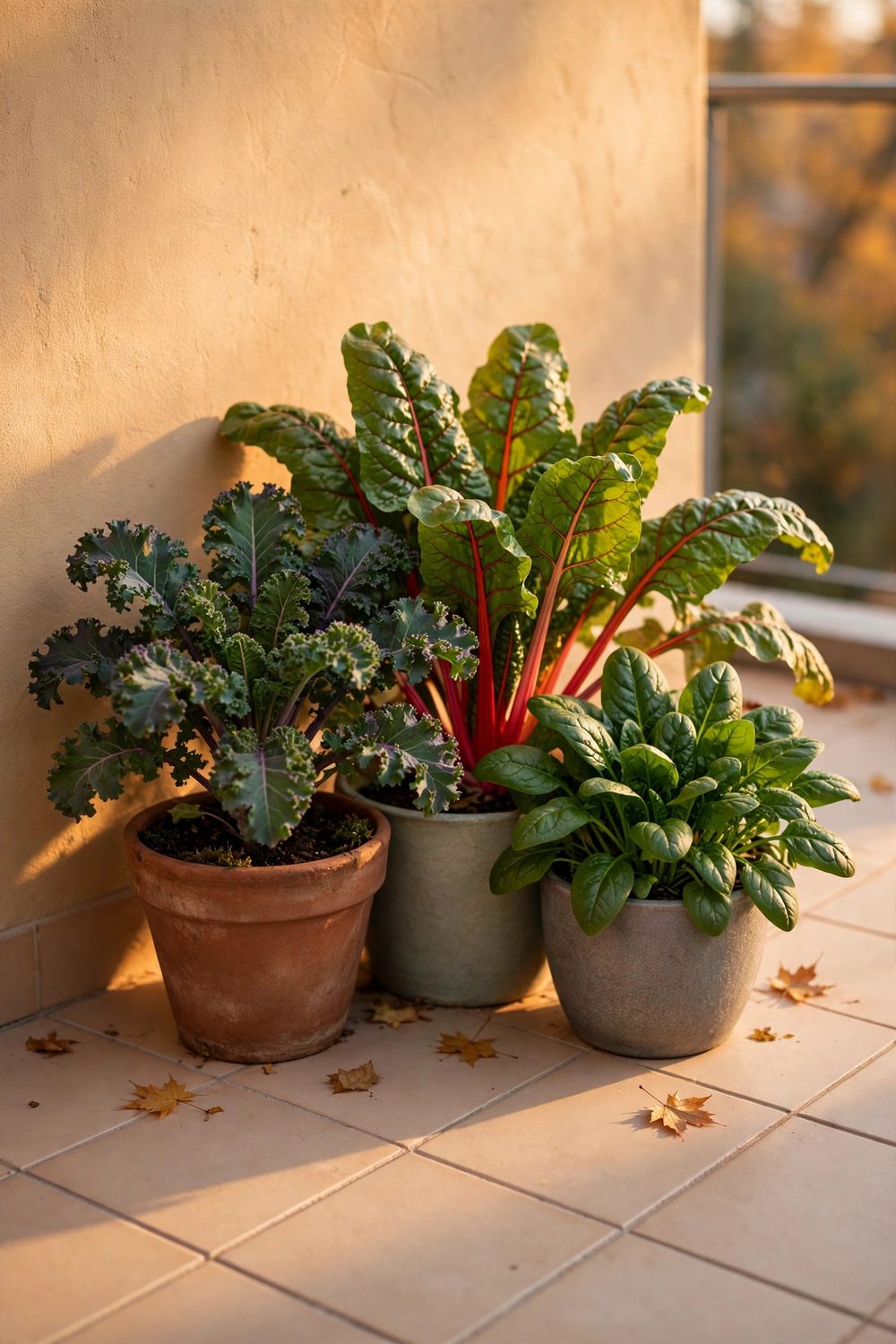
The cheapest frost protection on a balcony is the building itself. A pot against the wall sits several degrees warmer than one out on the open rail.
Move late peppers, basil in its final weeks, and any crop you want to stretch further into autumn. Cluster pots together, since a group holds warmth better than singles.
Raise pots on feet or bricks so cold air and rain drain away below them. A pot sitting in a frozen puddle loses roots from the bottom up.
This wall shuffle takes ten minutes with cold fingers, but it can add a month of picking to a mild autumn. Which crops survive the deep cold after this is covered in our list of winter balcony vegetables that survive in pots.
11. Wrap Pots Before the First Hard Frost
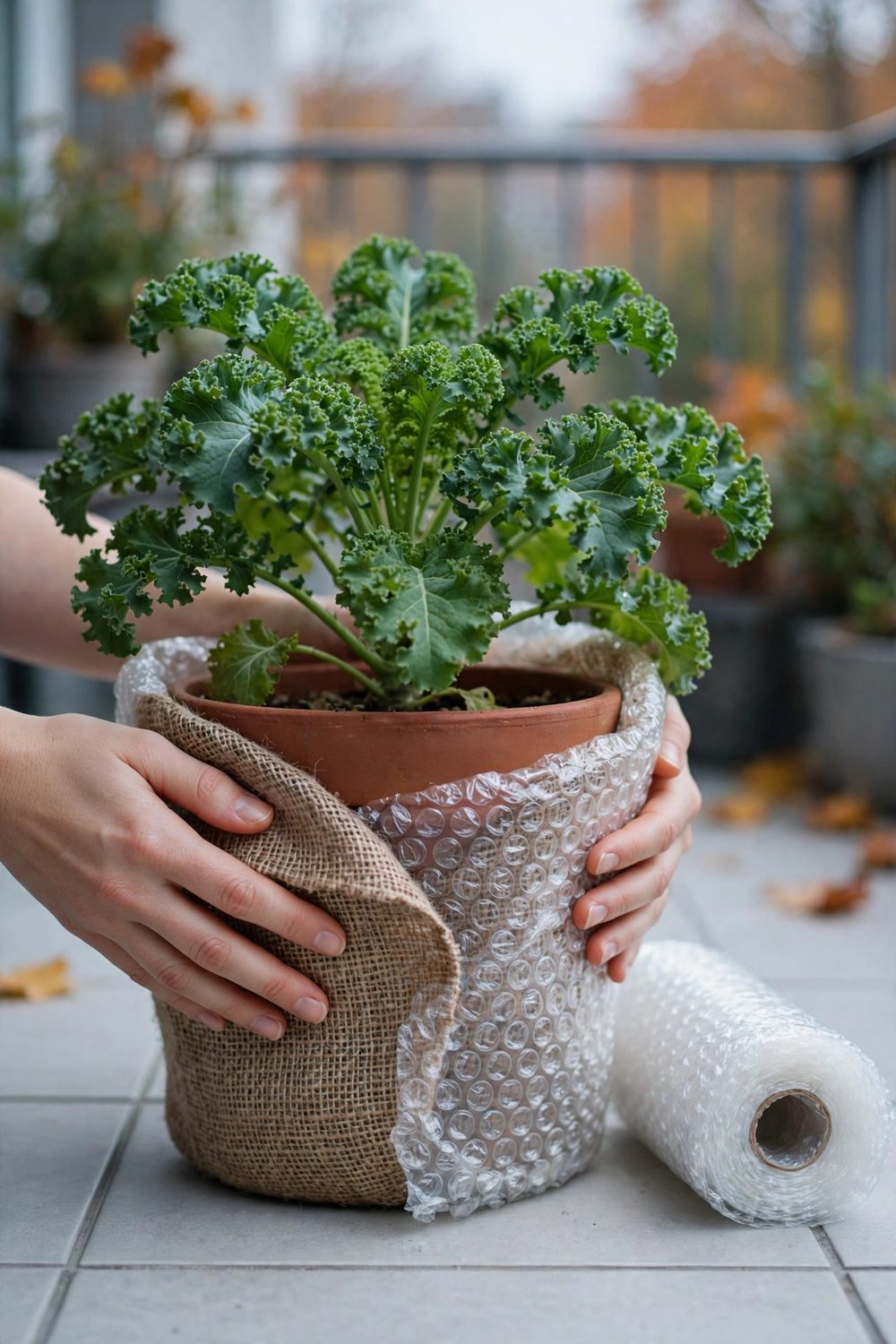
Roots in a pot feel cold that roots in the ground never meet. Wrapping the pot, not the plant, is the fix that carries hardy crops through hard nights.
Wind bubble wrap or hessian sacking around the sides and tie it in place. Leave the top open so rain reaches the mix and air still moves.
Terracotta cracks when wet mix freezes and expands inside it. Move empty terracotta under cover, and wrap any planted terracotta pot before frost arrives.
Plastic and fabric pots flex instead of cracking. If winters are hard where you live, shift your hardiest crops into those before the season turns.
12. Sow Green Manure in Finished Pots
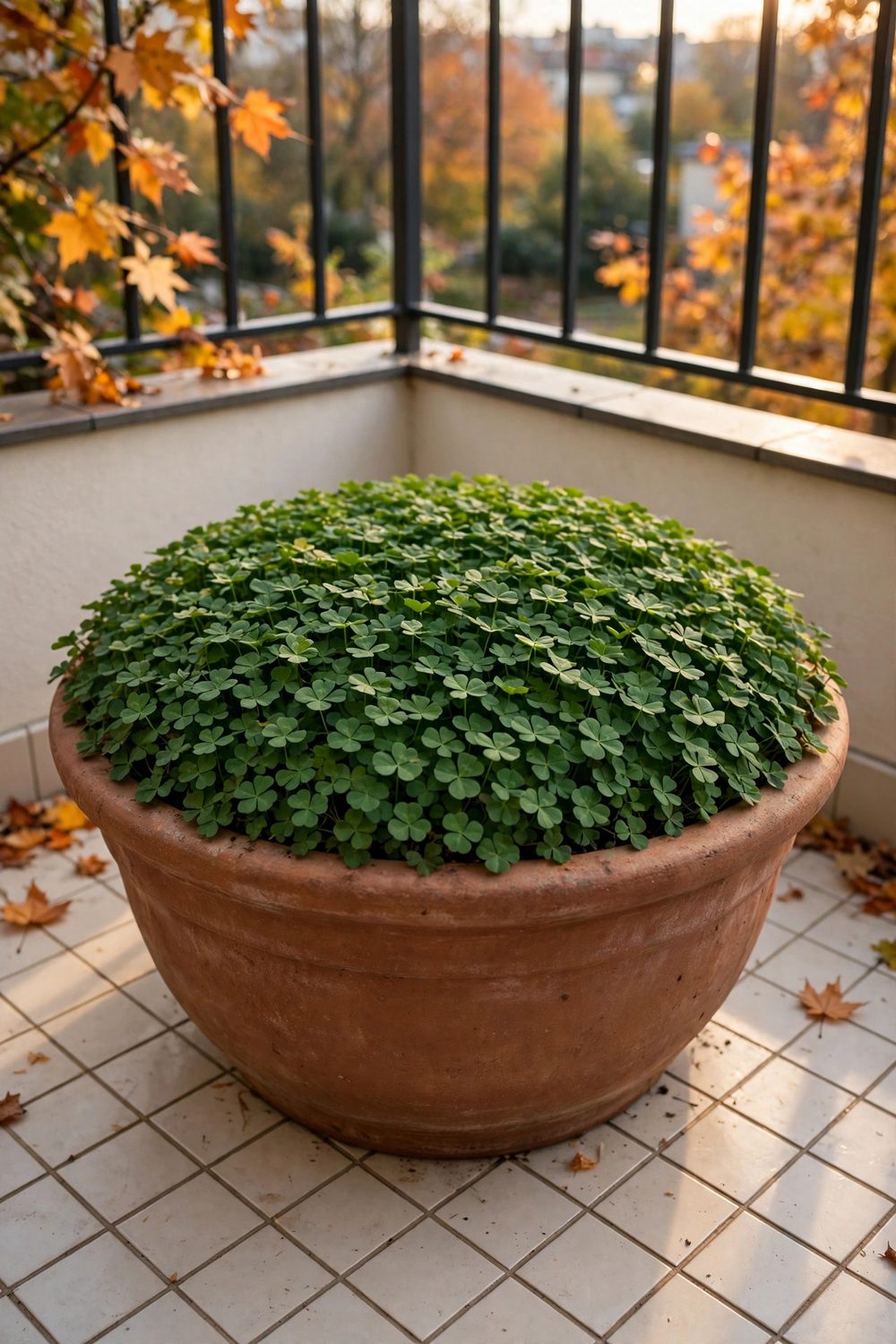
A finished tomato pot does not have to sit bare all winter. Sow crimson clover or winter rye thickly, and the roots hold the mix together through winter rain.
Scatter seed over the surface, rake it in lightly, and water once. The cover stops heavy rain washing feed out of the mix for months.
Cut the growth down in spring and dig it into the top of the pot. It rots fast in a pot and feeds the next crop in place.
Bare mix also invites weeds and algae. A sown cover keeps the surface clean, which helps the whole balcony look cared for all winter.
13. Harvest and Store the Last Summer Crops Well
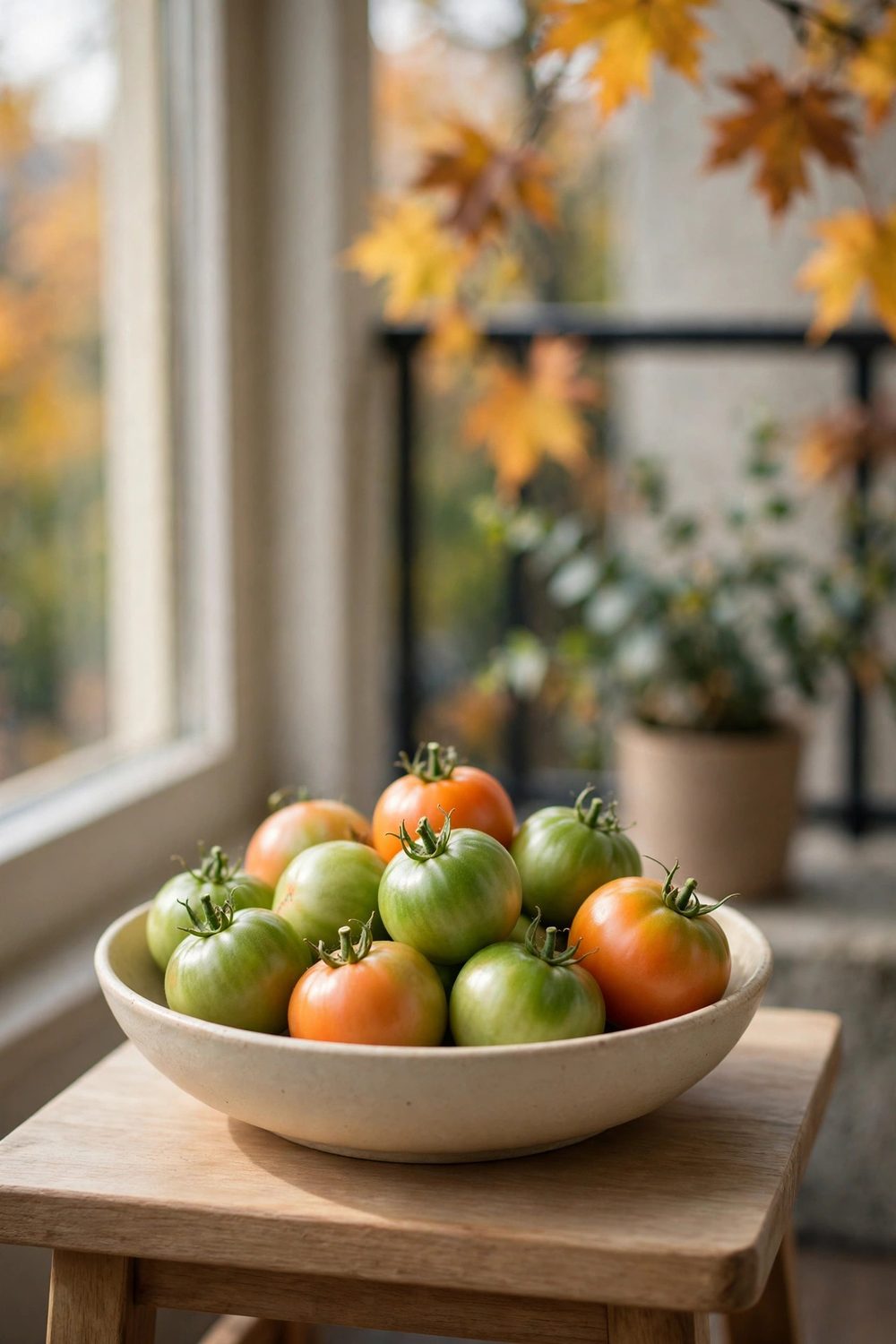
The last tomatoes rarely ripen outdoors in autumn. Pick them green at full size and ripen them indoors in a paper bag with a banana beside them.
Pull the last beans and cucumbers before the first frost blackens the vines. Frozen fruit turns to mush on the plant within a day of a hard night.
Dry chilli strings in a warm room and store dried beans in jars. Clearing the plants the same week stops rot spreading to the pots you keep.
Compost healthy vines, but bin any with grey mould or black spots. Winter damp spreads disease fast in still air between close pots.
14. Clean, Oil, and Store Tools Before Winter
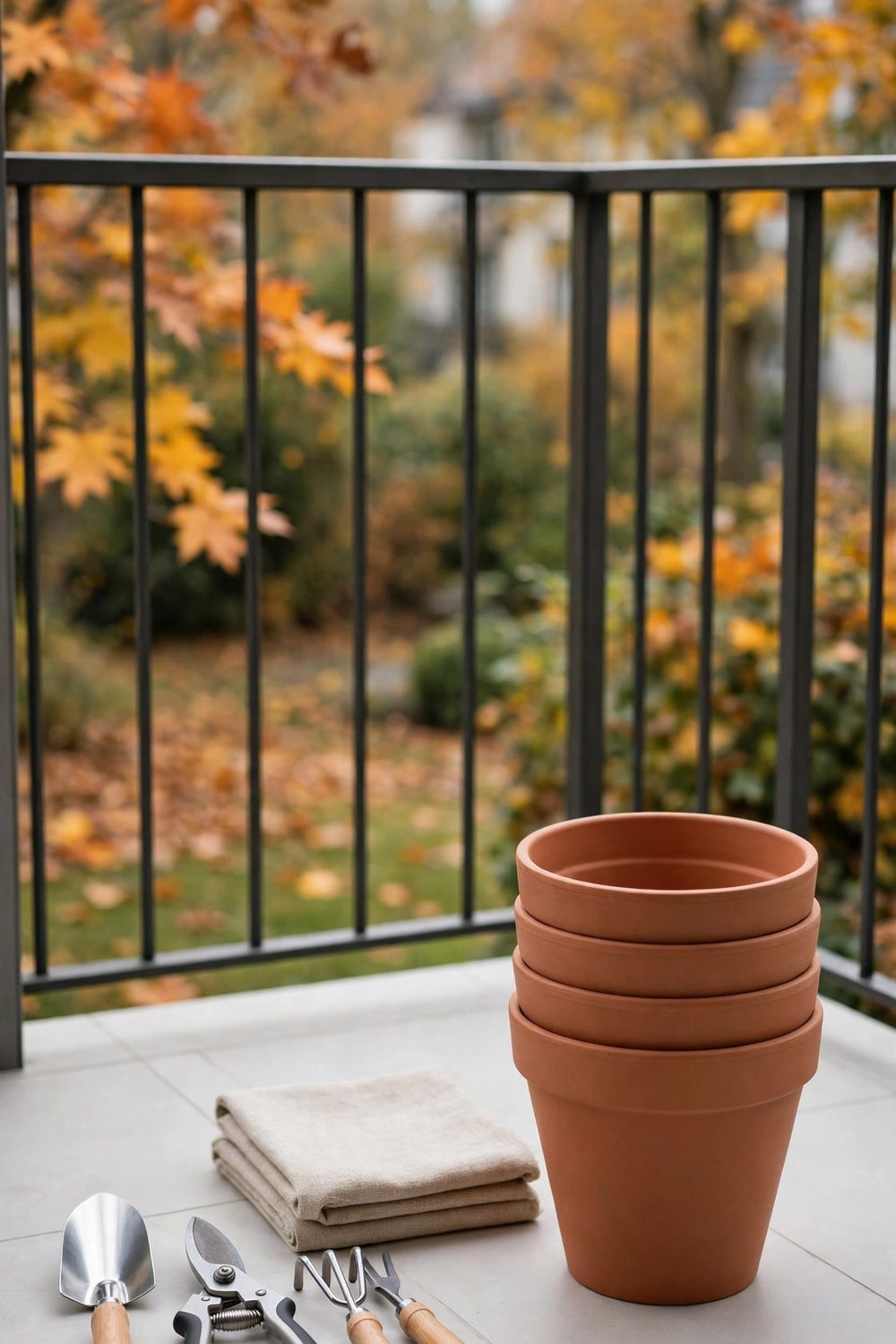
Autumn is the quiet hour for tool care. Wash pots you have emptied, scrub saucers, and let them dry stacked in a corner out of the rain.
Wipe secateur blades clean and rub a drop of oil along them. Tools put away dirty in autumn come out rusty and stiff in spring.
Store opened seed packets in a sealed jar with the year marked on tape. Seed kept dry and cool in a kitchen cupboard stays good far longer.
Empty the watering can and store it upside down. Water left inside freezes, splits seams, and smells sour by spring. A full clear-down routine pairs well with the balcony vegetable garden year plan for the months ahead.
15. Order Seed and Pots While Choices Are Wide

The best spring starts in autumn, at a table with a notebook. List what cropped well, what sulked, and which pots cracked or proved too small.
Order seed for dwarf and patio varieties early, because those sell out first each year. Replace cracked pots in autumn sales, not in spring panic.
Note which corner caught the most winter light. That map tells you where winter leaves will thrive and where spring seedlings should start.
Keep the list short and honest. Three crops grown well beat ten grown thin, and autumn you already knows what spring you tends to forget.
Autumn is not the end of the balcony season. With the right sowings in warm mix and pots moved to shelter, the rail keeps feeding you as the light fades.
That habit of a balcony garden in autumn, extending the season, turns one short summer into two growing seasons a year, and the pots earn their space twice.
Save this list to your container garden board for the late-summer clear-out. Work through it pot by pot, and winter arrives to find everything ready.


