

Best Pot Size for Tomatoes: The Only Chart You Need
Most potted tomatoes fail for one quiet reason. The pot looked big in the shop, then the plant outgrew it by midsummer.
Roots ran out of room, soil dried by noon, and fruit stayed small. The fix starts before you buy anything.
This guide gives you the best pot size for tomatoes the only chart you need, in five clear steps.
You will match your variety to a real volume, in gallons, litres, inches and centimetres. No guessing by eye again.
The whole check takes about ten minutes with a tape measure. It is easy work, and it saves a season.
By the end, you will know the exact pot your plant needs. You will also know which pretty pots to skip.
Time: 10 minutes to size one plant · Difficulty: Easy, no tools beyond a tape measure
What You Need
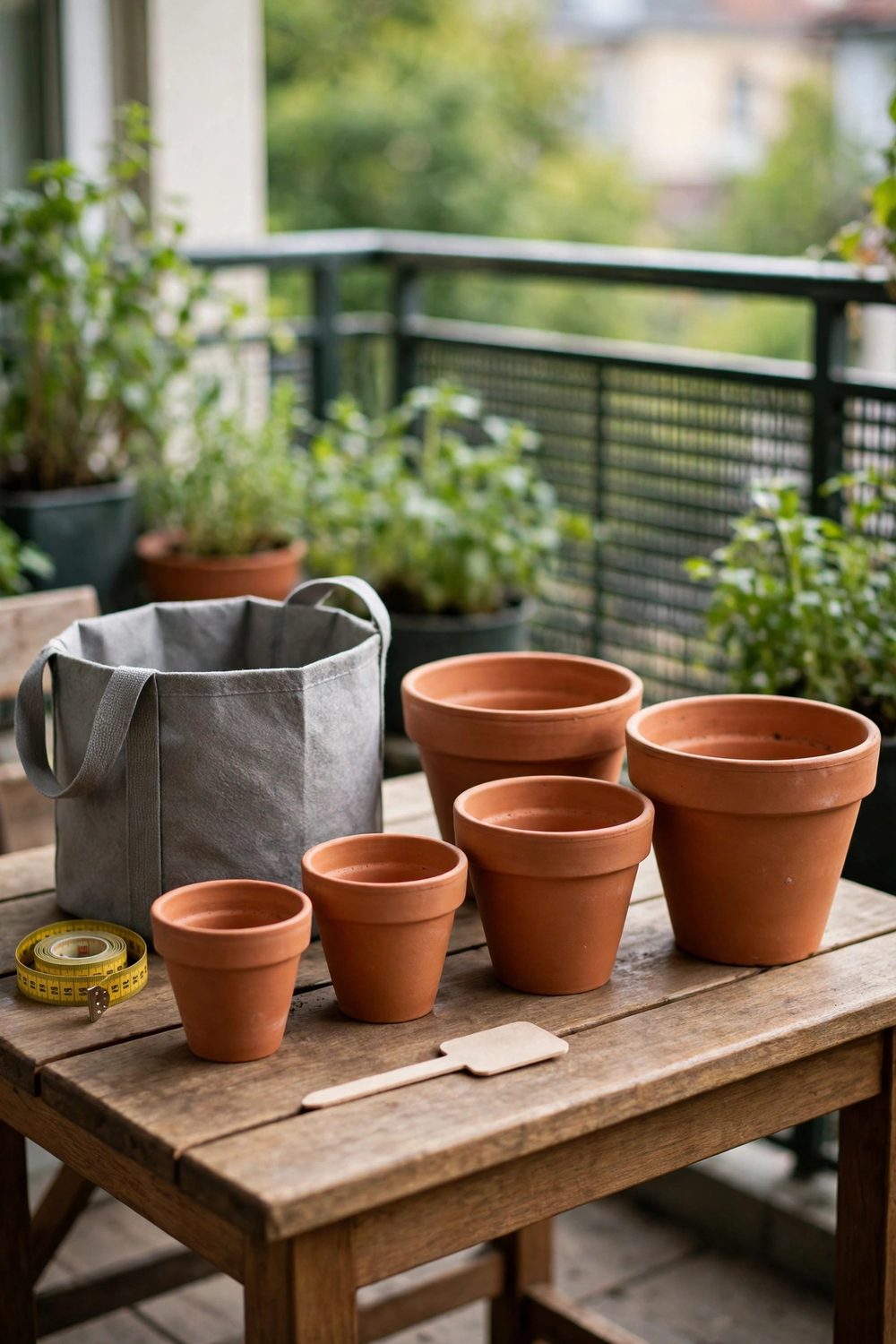
- Your variety name and type: check the seed packet, label or order email. The type drives every size choice below.
- A tape measure: you need width and depth in inches and centimetres, not a guess from across the shop.
- Candidate pots or grow bags: line up what you own first. Many growers already own the right size.
- A 10 gallon (38 litre) grow bag option: the safe home for one tall indeterminate plant on a balcony.
- A 5 gallon (19 litre) pot option: the standard home for determinate and patio types, and the indeterminate minimum.
- Mulch and a support: straw, bark or shredded leaves, plus a cage or tall cane. Both need room planned now.
- A saucer or tray: it catches drainage on a balcony and protects the floor below your pots.
Write your chosen size down before you shop. Shop displays push pretty pots, not correct volumes.
A note with gallons, litres and centimetres keeps the choice honest at the till.
Household swaps work fine here. A ruler and a piece of string can stand in for a tape measure.
A clean bucket with a known volume helps too. It lets you test how much mix a mystery pot holds.
Identify Your Tomato Type First
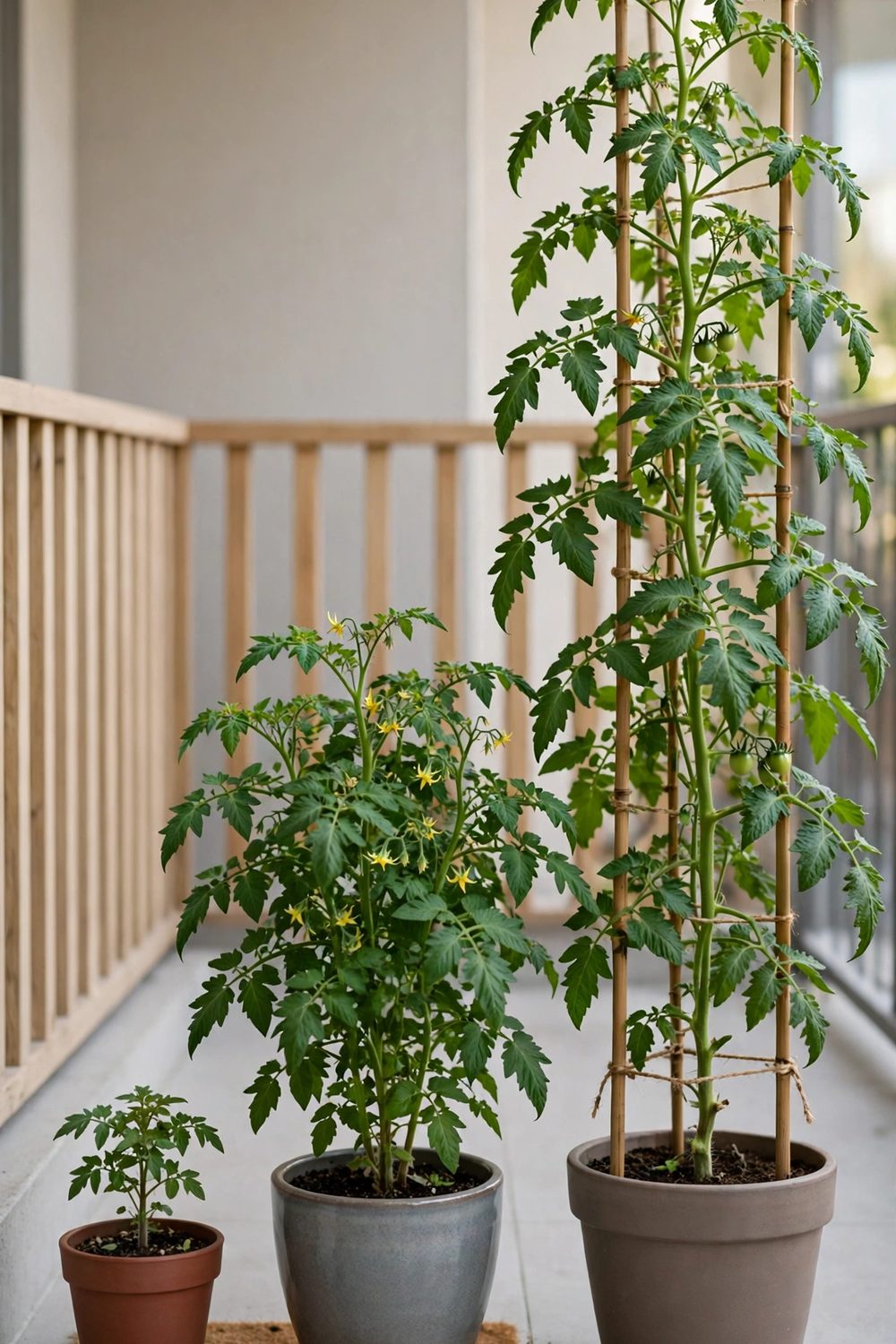
Find the type word first: dwarf, determinate or indeterminate. It sits on the packet, the plant label or the listing.
Dwarf and micro types stay small by breeding. Plants like ‘Tiny Tim’ and ‘Red Robin’ stop at knee height.
Determinate types grow to a set height, then stop. ‘Roma VF’ and ‘Bush Early Girl’ crop over a short window.
Indeterminate types keep climbing all season. They need support, steady pruning and the biggest pots in this guide.
Colour and fruit size do not reveal the type. Two red cherry plants can grow in opposite ways.
One stays in a basket at 12 inches (30 cm). The other climbs past 6 feet (180 cm) by August.
No type word on the label? Search the variety name before you size anything. Guessing here ruins every later step.
Pro Tip: Cherry types are often indeterminate, even when the young plant looks small and tidy in spring.
Read the Mature Height on the Label
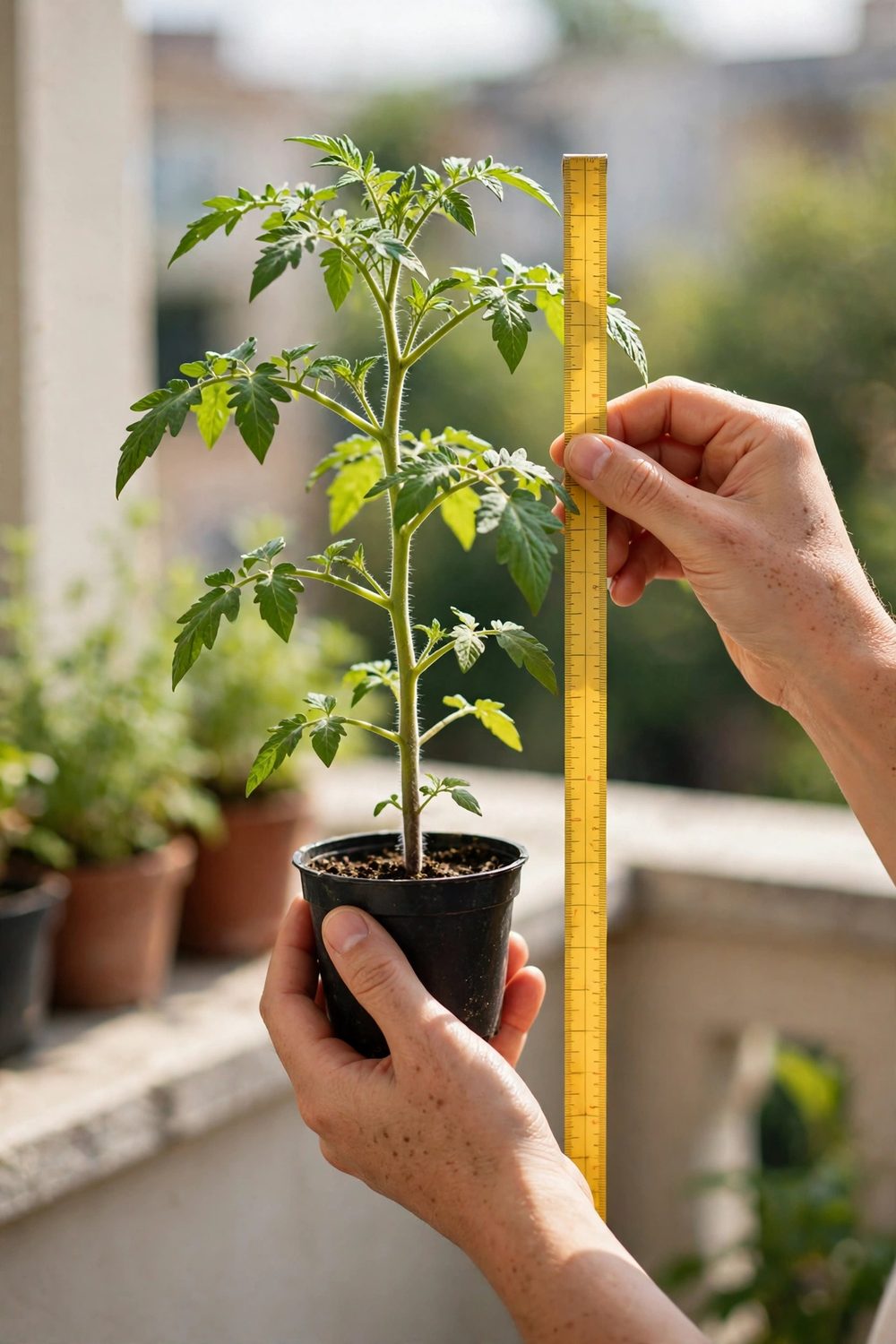
Read the mature height, not the size of the plant in your hand today. Seedlings all look alike in April.
Micro types finish at 6 to 12 inches (15 to 30 cm). Dwarfs finish around 2 to 4 feet (60 to 120 cm).
Determinate plants usually stop at 3 to 4 feet (90 to 120 cm). Their root ball matches that modest top growth.
Indeterminate plants reach 6 feet (180 cm) or more in a good summer. That much leaf needs a lot of root.
Check the height against your space too. A 6 foot (180 cm) plant needs headroom above the pot.
Balcony rails, awnings and upstairs floors all set limits. Count the pot height inside that total space.
Height is a clue, not the whole answer. A tall plant in a wide, shallow pot still struggles.
Use height to pick your chart row next. Then confirm the pot with real volume and depth checks.
If two sources give different heights, trust the seed company listing. Shop labels often copy a generic range.
Match the Pot Volume From the Chart
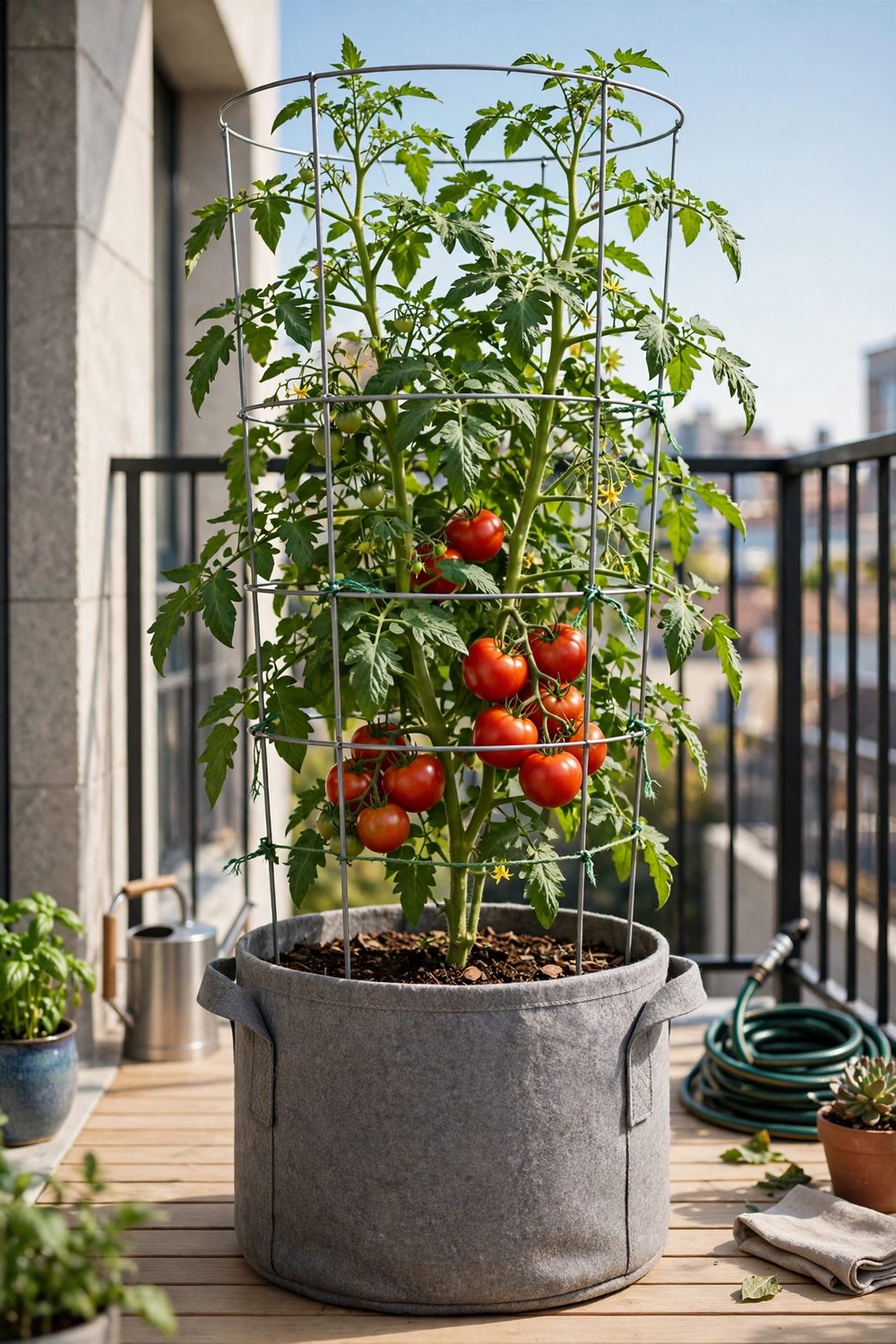
Match your type to a volume, and treat the low end as a floor. Bigger soil volume forgives missed waterings.
One indeterminate plant needs 5 gallons (about 19 litres) at minimum. Give it 10 gallons (about 38 litres) when space allows.
Determinate and patio plants suit 3 to 5 gallons (11 to 19 litres). One plant per pot, even at five gallons.
Dwarf and micro plants suit 1 to 2 gallons (3.8 to 7.6 litres). The smallest micros thrive in 6 to 8 inch (15 to 20 cm) pots.
Tumbling cherry types for baskets, like ‘Tumbling Tom Red’, need a 12 to 14 inch (30 to 36 cm) basket each.
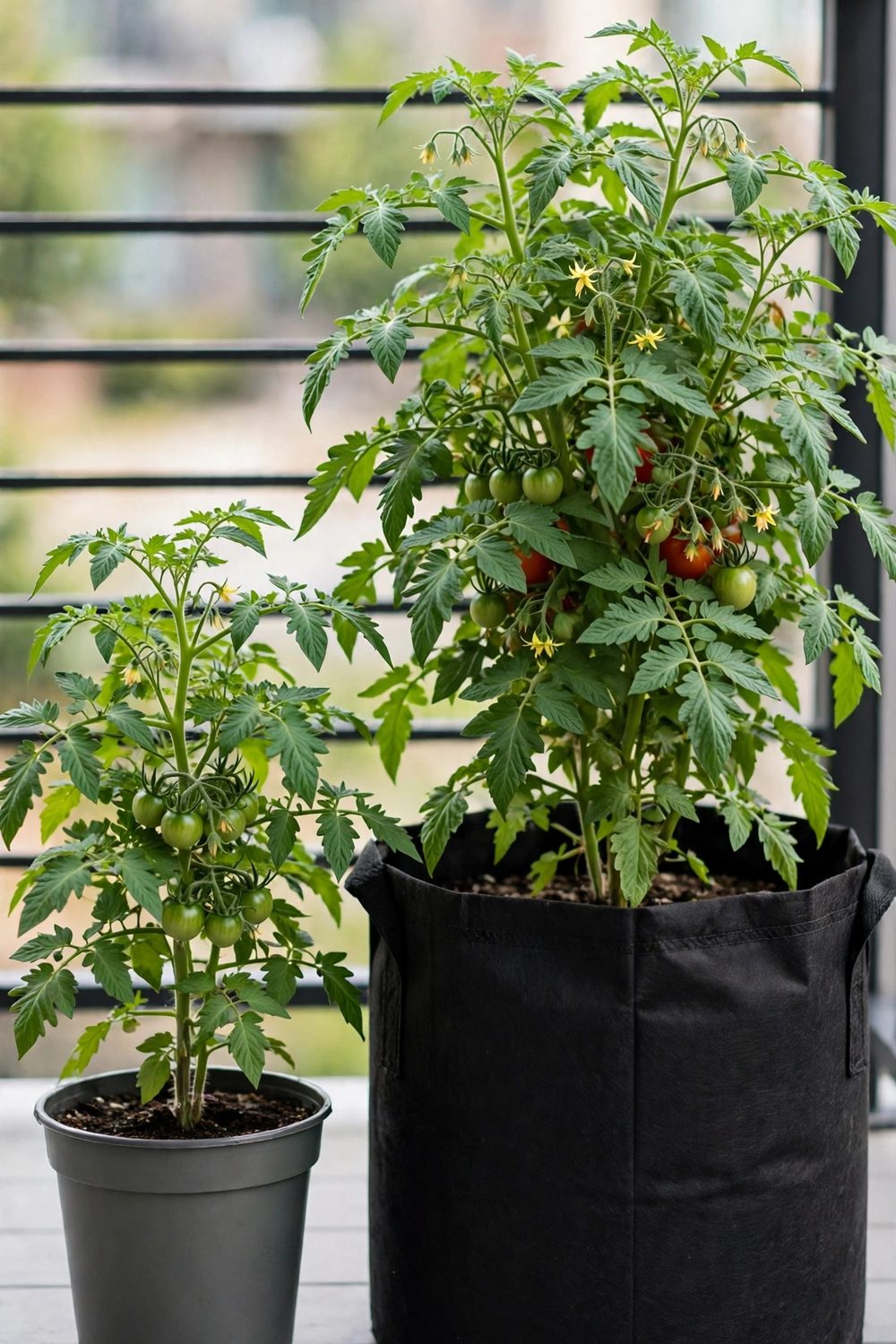
Grow bags follow the same numbers. A 5 to 10 gallon (19 to 38 litre) bag holds one tomato plant well.
For fabric choices and airflow, see grow bags vs pots for vegetables before you commit.
Balcony growers often do best with bags. Our guide to growing tomatoes in grow bags on a balcony shows why.
Soil volume also buffers feeding mistakes. A larger pot dilutes a strong feed dose across more mix.
Roots stay cooler in a larger volume too. Hot pot walls heat a small root ball fast.
When two sizes both fit the chart, pick the larger one. Hot balconies dry small pots out fast.
Check the Pot Depth and Drainage
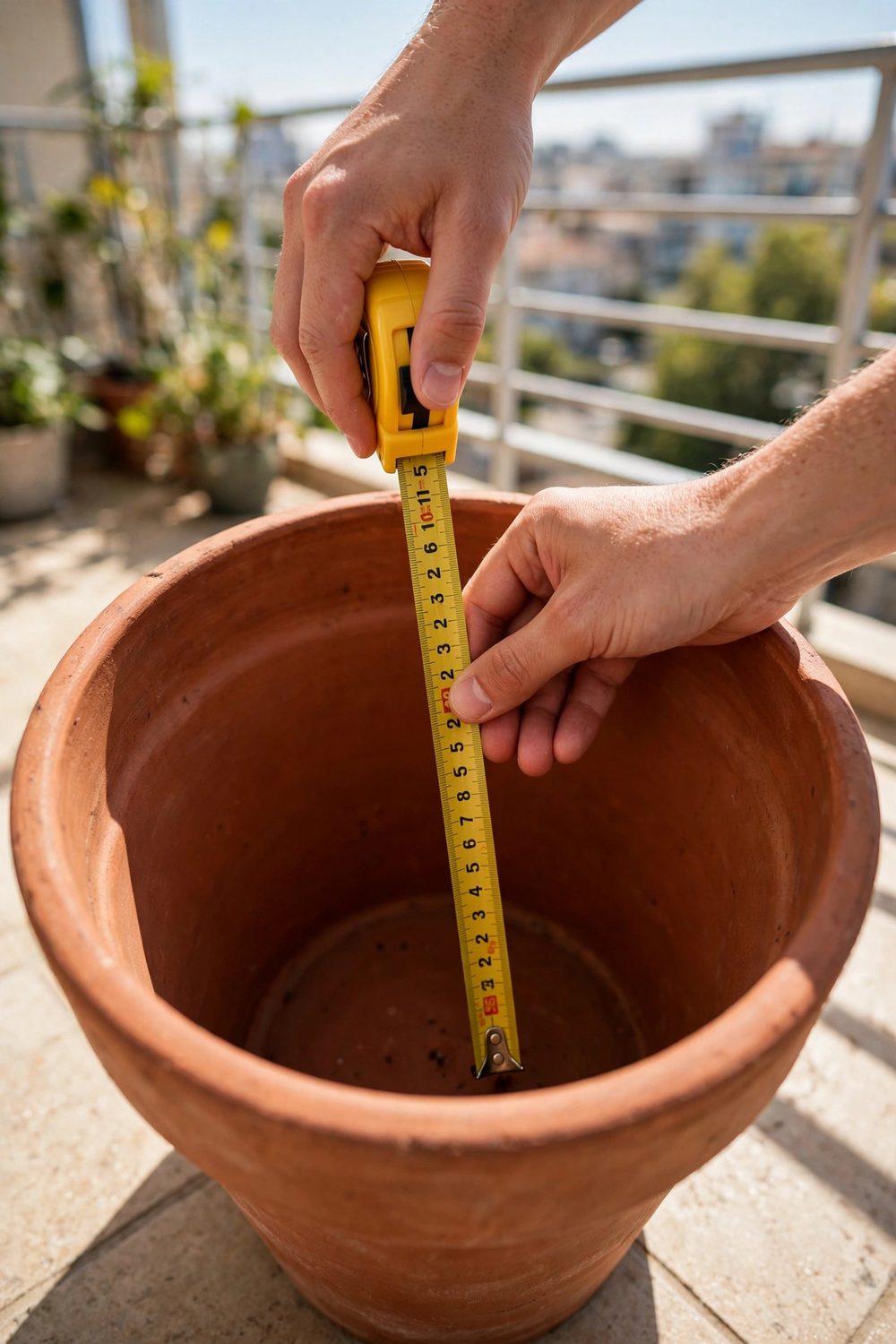
Measure inside the pot, from base to rim. Outside measurements flatter thick walls and rolled rims.
Aim for at least 12 inches (30 cm) of depth for determinate plants. Indeterminate plants do better with 14 to 18 inches (36 to 46 cm).
Width matters too. Most 5 gallon pots run 12 to 14 inches (30 to 36 cm) across the top.
Most 10 gallon bags and pots run 16 to 20 inches (40 to 51 cm) across. Check yours, since brands vary.
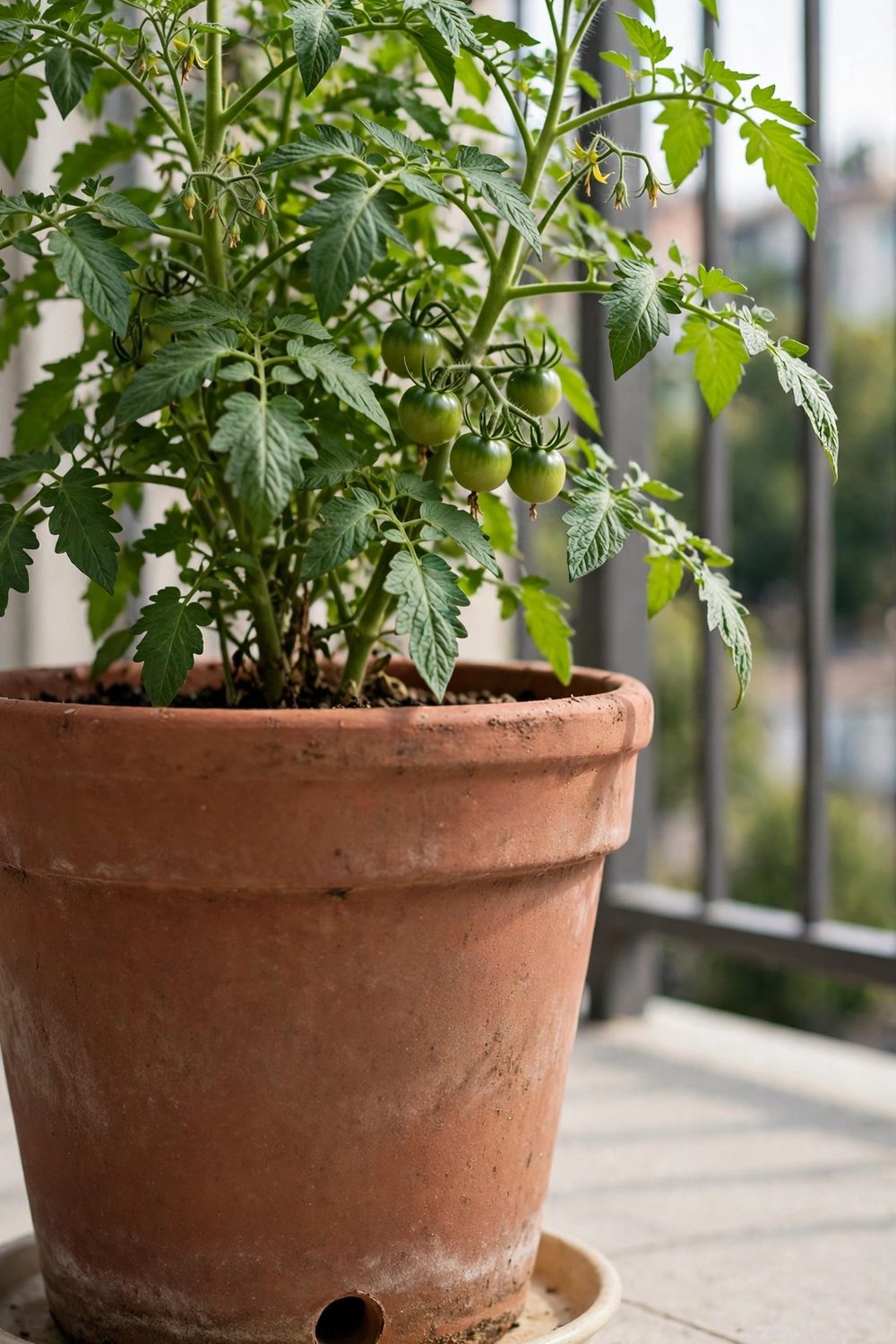
Turn the pot over and count drainage holes. A large pot needs several holes, not one small slot.
Fabric bags drain through the cloth itself. Hard pots with no holes are cachepots, not homes for tomatoes.
Test drainage before planting day. Pour water through the empty, filled pot and watch it leave freely.
Slow drainage now means soggy roots later. Add holes, or pick a different pot from your lineup.
For more balcony pot shapes that drain well, browse best pots for growing vegetables on a balcony.
Heads Up: A volume claim based on diameter alone can hide a shallow pot. Depth plus width gives the true picture.
Leave Headroom for Mulch and Support
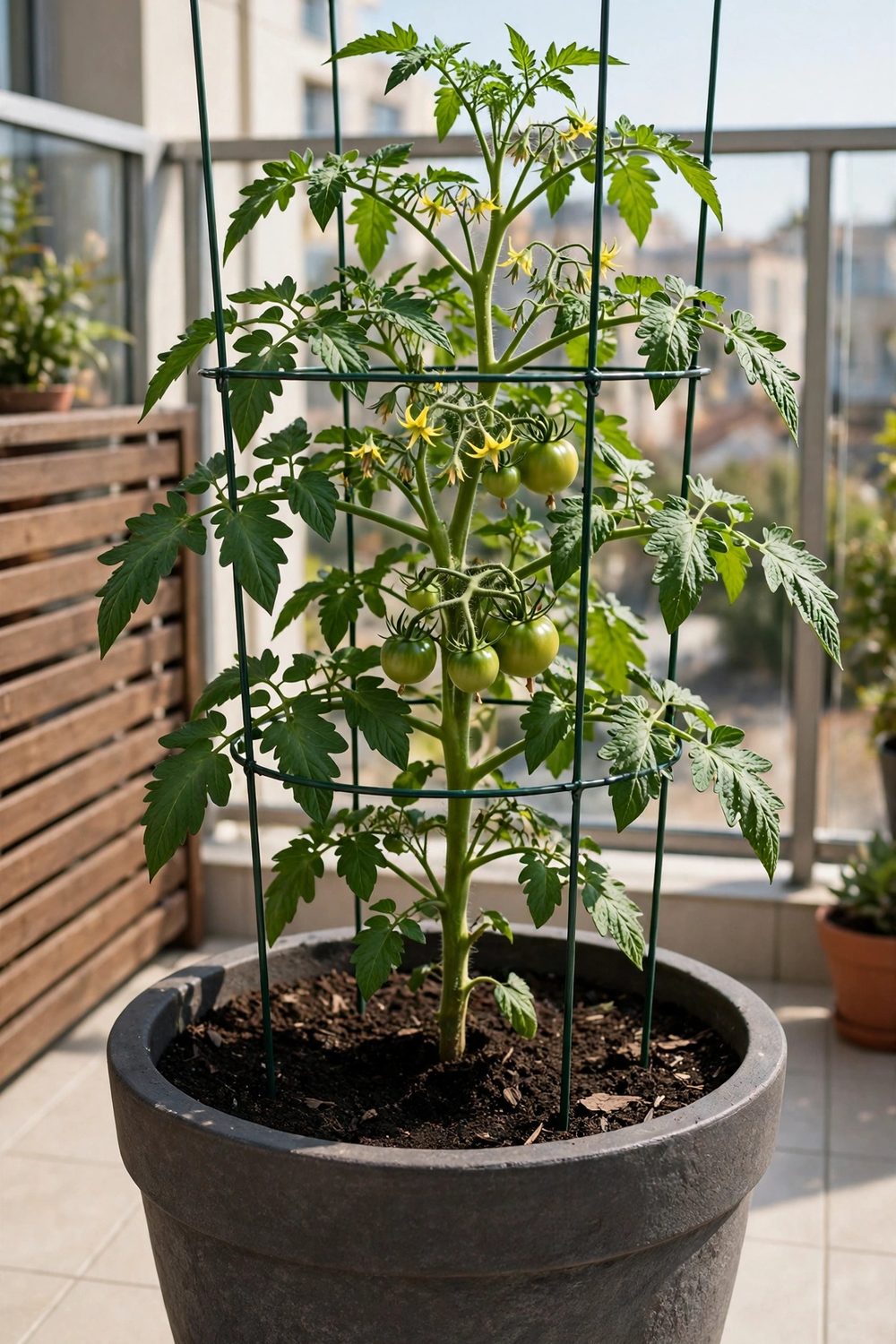
Fill the pot so the soil sits 2 to 3 inches (5 to 8 cm) below the rim. That gap is working space.
It holds water during a deep soak, so water sinks in instead of running off the sides.
Add a mulch layer of 2 to 3 inches (5 to 8 cm) once the plant settles. Mulch slows drying on hot days.
Steady moisture also helps prevent blossom end rot. That problem tracks uneven watering more than missing calcium.
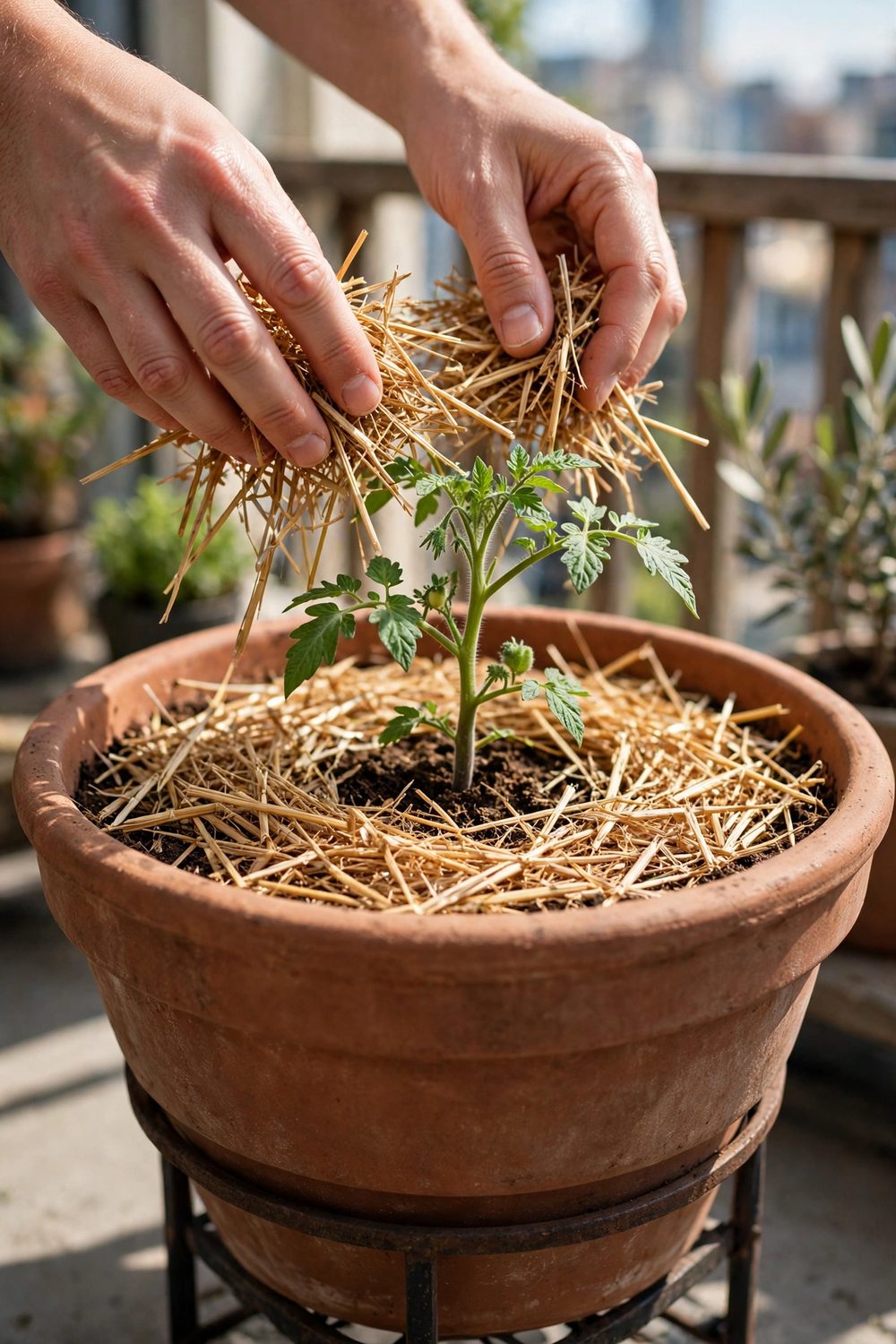
Push the cage or cane in at planting time. Late supports tear roots that have already filled the pot.
A support needs soil depth to stand firm. Shallow pots let tall cages lean in the first strong wind.
Weight belongs in this check as well. A wet 10 gallon (38 litre) pot is heavy to shift.
Set the pot in its final sunny spot before filling. Tomatoes need 6 to 8 hours of direct sun.
Count the headroom before you plant, not after. Moving a planted tomato into a bigger pot sets it back.
Ready to plant once the size is right? Follow how to grow tomatoes in a pot for the full planting order.
Troubleshooting: Sizing Traps That Catch Beginners
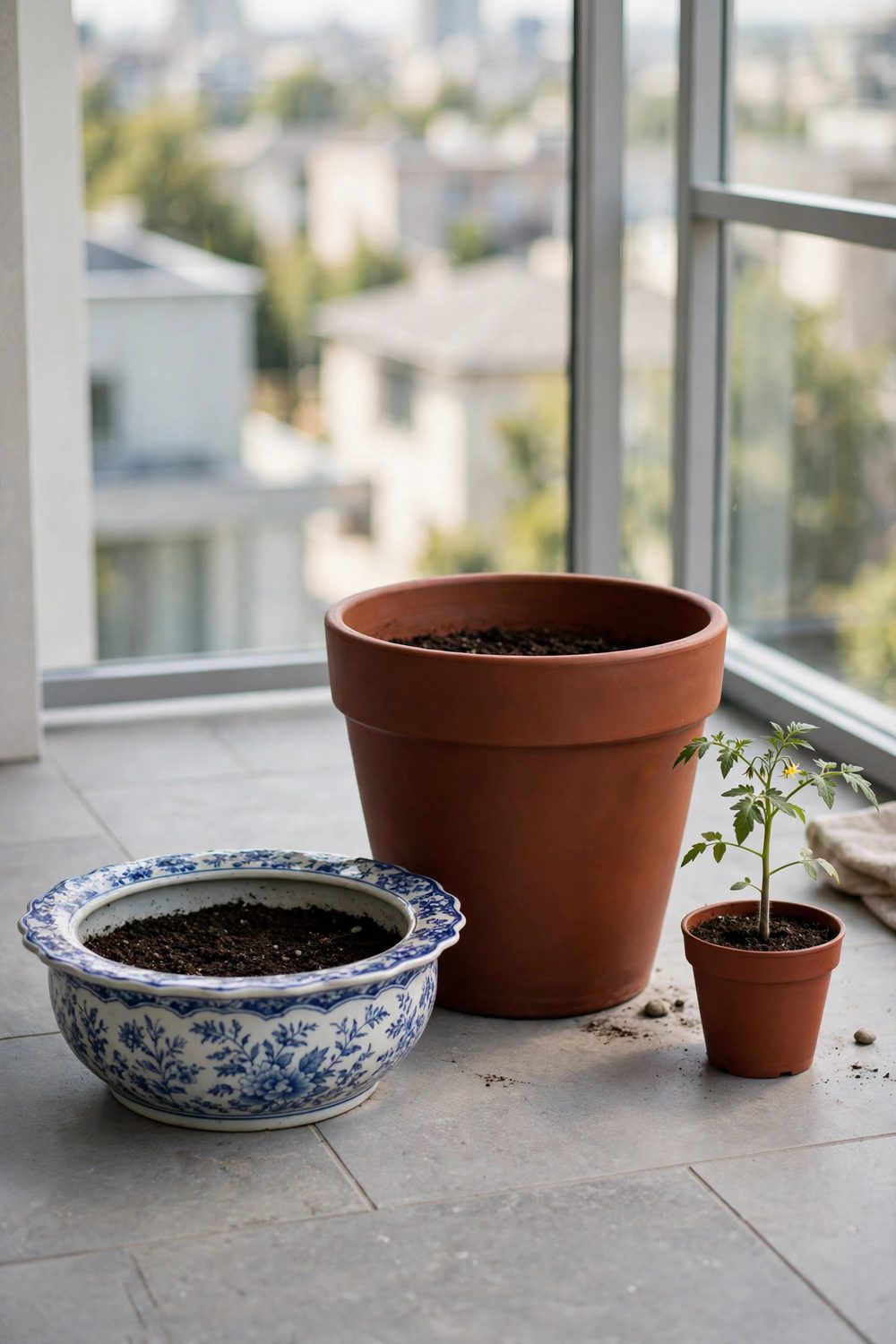
The pretty pot is too shallow. Wide, low bowls look generous but hold little depth. Tomatoes root deep, so choose depth first.
The label lists diameter only. A 14 inch (36 cm) label says nothing about volume. Measure depth and check the litre claim too.
Two plants share one pot. Two indeterminates in 5 gallons (19 litres) fight for water all summer. One plant per pot wins.
For the wider maths, read how many vegetable plants per pot before doubling up.
The pot dries out in one hot day. Small volumes hold little water in reserve during a heatwave.
Mulch helps, and shade on the pot walls helps. Neither replaces the missing gallons for long.
The plant wilts by noon daily. That pattern usually means the pot is too small, not a feeding fault. Size up next season.
Roots poke out within weeks. White roots circling the drainage holes mean the plant has filled its home.
Move it up one chart row, not one tiny size. Small jumps mean repeating the job soon.
The nursery pot became the final pot. A young plant in a 4 inch (10 cm) pot needs moving on. Roots circle fast in spring.
Frequently Asked Questions
Can a tomato grow well in a 3 gallon pot?
Yes, if the type is small. Determinate and patio plants manage in 3 gallons (11 litres) with careful watering.
Watering decides the result at this size. Check the mix daily in warm weather and water deeply.
Dwarf types also cope well at that size. An indeterminate plant in 3 gallons dries out and stalls.
Is a 10 gallon pot too big for one tomato?
No. For an indeterminate plant, 10 gallons (38 litres) is the comfortable choice, not an excess.
The extra soil holds moisture between waterings. It also steadies a tall cage on a windy balcony.
What size pot suits a cherry tomato?
Most cherry types are indeterminate, so use the same rule. Give one plant 5 gallons (19 litres) minimum.
Choose 10 gallons (38 litres) for a long season. Tumbling basket cherries are the exception, at 12 to 14 inches (30 to 36 cm).
Do grow bags and hard pots size the same way?
Yes, volume is volume. A 7 gallon bag and a 7 gallon pot hold similar amounts of mix.
Shape matters a little here. A tall, narrow bag suits a deep cage better than a wide, low one.
Bags drain faster and dry faster in heat. Hard pots hold moisture longer but need clear drainage holes.
Can I move a tomato into a bigger pot mid-season?
You can, early in the season, if you keep the root ball whole. Water first, then slide it out gently.
By midsummer the move hurts more than it helps. Better to water carefully and size up next year.
How deep should the pot be, in plain terms?
Think depth before width. At least 12 inches (30 cm) for bush types, and more for tall types.
A deep 5 gallon pot beats a shallow 7 gallon bowl. Roots, water storage and cage grip all improve.
Quick Reference
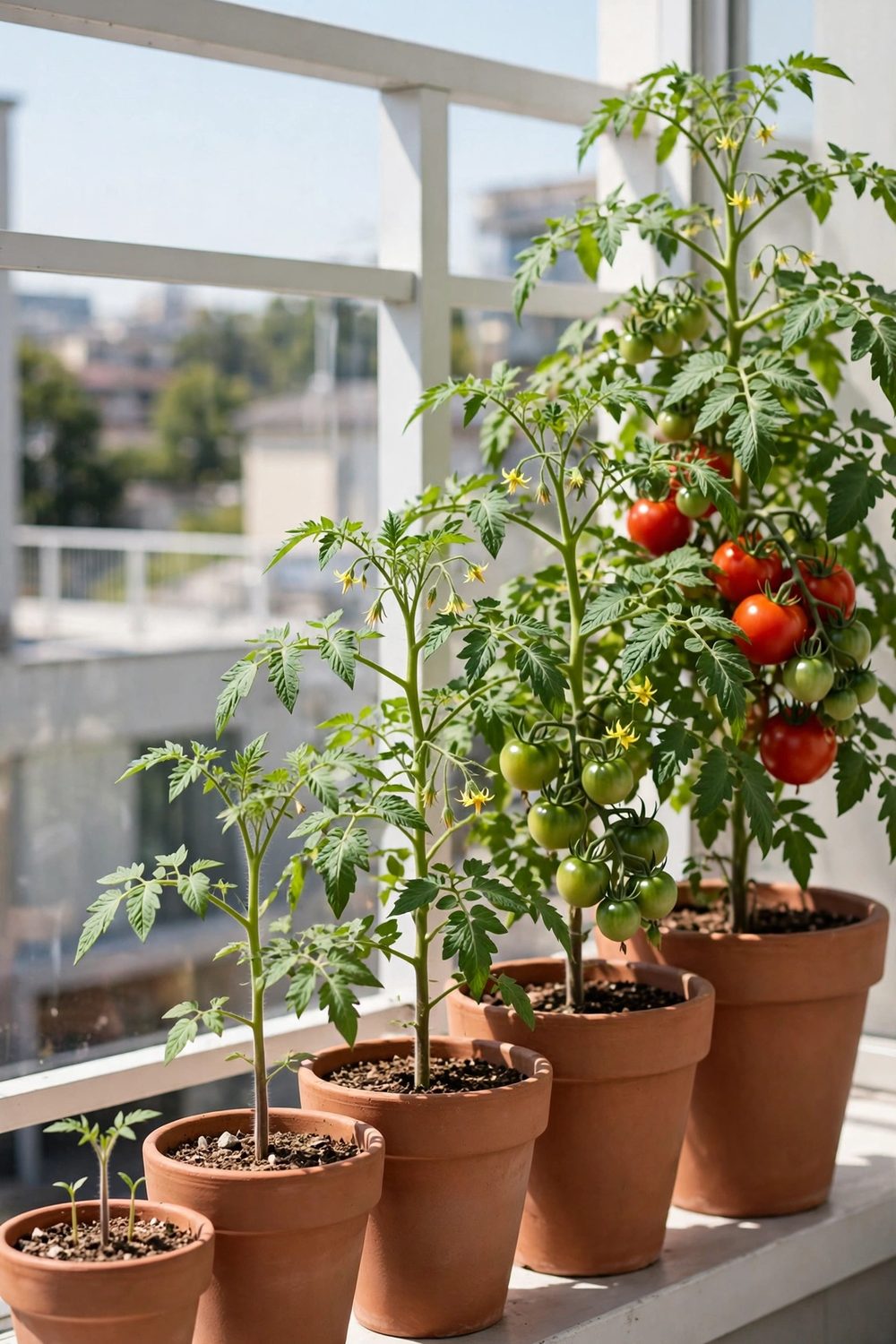
- Micro types: 1 gallon (3.8 litres), pot 6 to 8 inches (15 to 20 cm) across.
- Dwarf types: 1 to 2 gallons (3.8 to 7.6 litres), pot 8 to 12 inches (20 to 30 cm) across.
- Determinate and patio types: 3 to 5 gallons (11 to 19 litres), pot 12 to 16 inches (30 to 40 cm) across.
- Indeterminate minimum: 5 gallons (19 litres), pot 14 to 16 inches (36 to 40 cm) across.
- Indeterminate better: 10 gallons (38 litres), pot 16 to 20 inches (40 to 51 cm) across.
- Hanging baskets: tumbling cherries only, 12 to 14 inches (30 to 36 cm) across.
- Depth rule: at least 12 inches (30 cm), with 2 to 3 inches (5 to 8 cm) of headroom left.
- One tomato plant per pot, at every size in this chart.
Size the pot to the plant it becomes, not the seedling you bought. That one habit fixes most balcony tomato troubles.
Pick your type, read its height, then match the chart. Measure depth, check drainage, and leave room for mulch.
Keep the tape measure with your pots this season. Every new variety gets the same five step check.
Your best pot size for tomatoes is now a number, not a guess. Save this chart to your tomato board for spring.


