

15 Heat-Tolerant Tomatoes for Pots on a Hot Balcony
A south or west facing balcony can feel like an oven by noon, and standard tomato plants often drop their flowers before any fruit sets.
Choosing tomatoes in pots for hot balconies heat tolerant types changes that result, because heat set varieties keep setting fruit when nights stay warm.
Heat alone is not the whole problem on a balcony. Pots heat up faster than garden soil, tiles bounce heat back at the leaves, and wind dries the mix by evening.
The fifteen ideas below pair four proven heat set varieties with simple pot cooling habits. Each one covers pot size, watering depth, and shade for the pot itself.
None of this needs special gear or a bigger balcony. Most fixes use a pale pot, a layer of mulch, a piece of shade cloth, and a steady morning watering habit.
Start with the variety that fits your space, then add the cooling habits one at a time. A plant that sets fruit in a heatwave is usually a plant with cool, evenly moist roots.
1. ‘Florida 91’ in a 10-Gallon Light Colored Pot
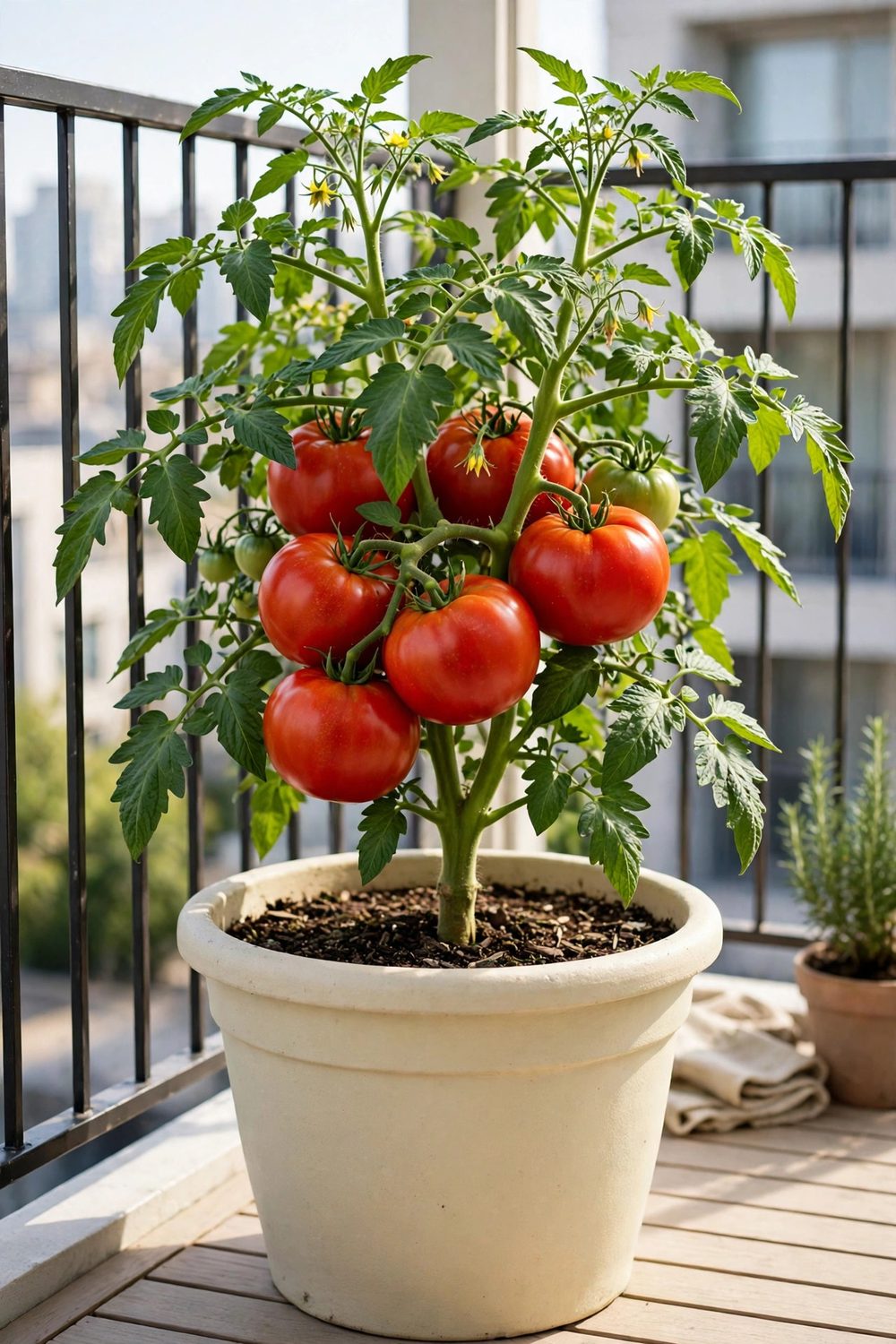
‘Florida 91’ is a determinate tomato bred in Florida for hot, humid summers. It sets medium to large red slicing fruit, around 75 days from transplant, even when nights stay warm.
Give it a 10 gallon pot, about 38 litres, at least 16 inches (41 cm) wide. Pale plastic or light fabric holds far less heat than a black pot on hot tiles.
Water deeply in the morning until a little drains from the base. Then leave the plant alone until the top inch (2.5 cm) of mix feels dry at finger depth.
Check the pot weight after watering by lifting one corner. A well watered 10 gallon pot feels heavy, and that heft becomes your daily guide on hot mornings.
2. ‘Solar Fire’ With a Shaded Pot Wall
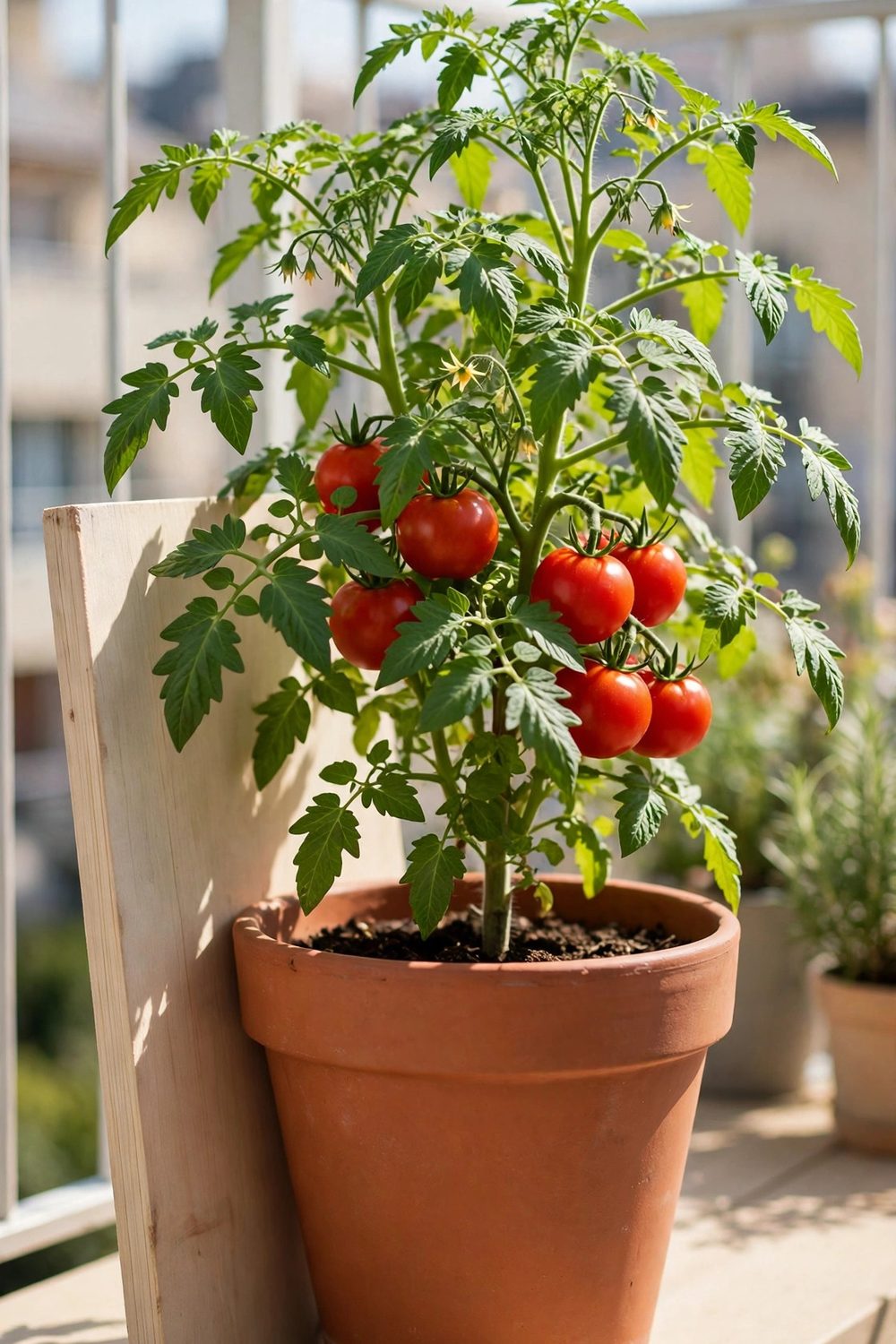
The plant wants full sun, but the pot wall does not. ‘Solar Fire’ is a determinate heat set type with medium red fruit, ready around 67 days from transplant.
Stand a pale board, a spare light pot, or a folded shade panel against the sunny side of its 5 to 10 gallon pot. Roots stay cooler while leaves keep full light.
On a third floor rail, tie the shade panel so wind cannot lift it. A cooler root zone means the plant drinks steadily instead of wilting every afternoon.
Move the panel as the season shifts, because the sun angle changes by August. Ten minutes of adjustment keeps the root zone shaded through the hottest weeks.
3. ‘Everglades Wild Cherry’ for the Hottest Rail Spot
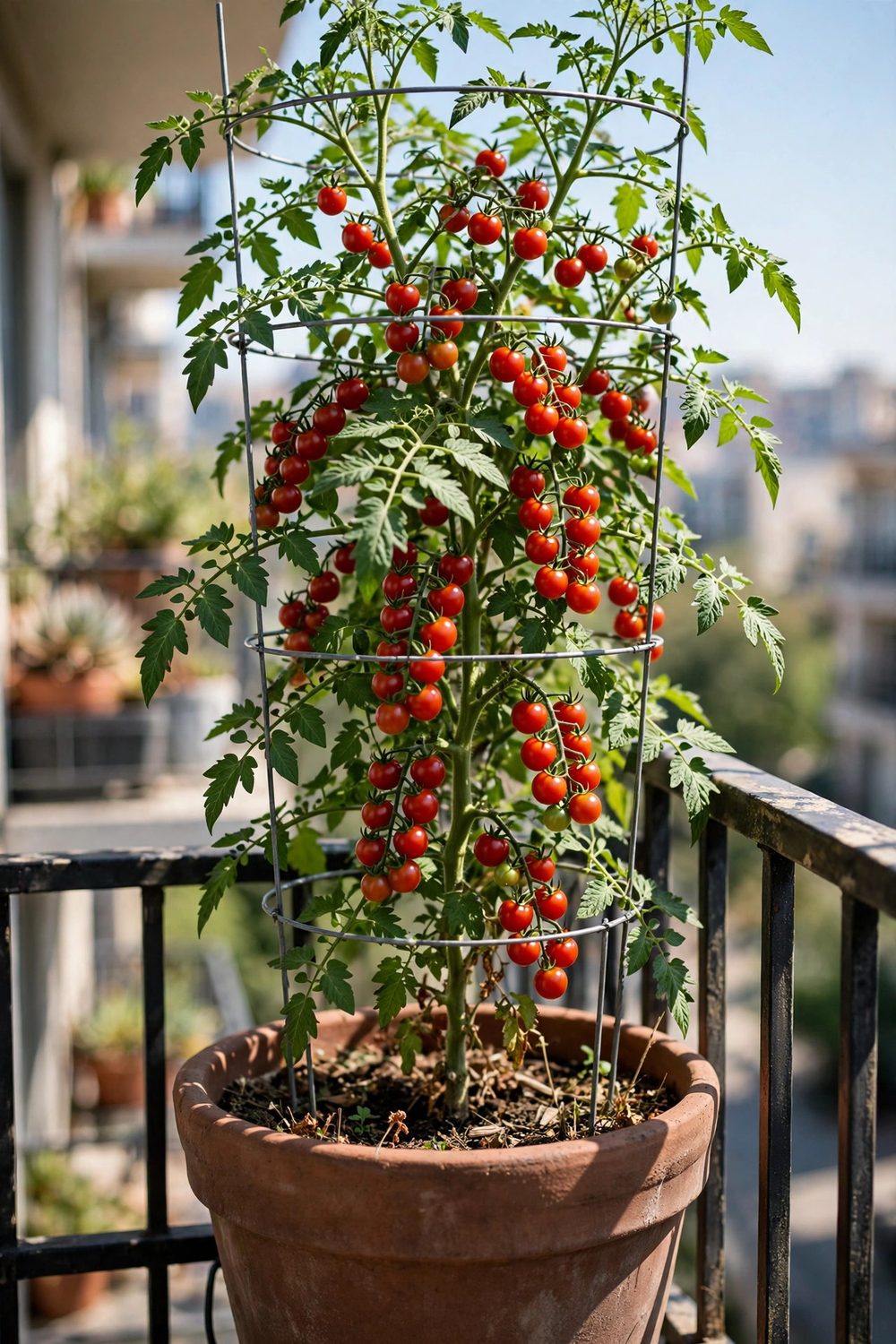
Some corners of a balcony are too hot for slicers, and that is where this cherry earns its place. ‘Everglades Wild Cherry’ is an indeterminate plant with tiny red fruit.
It fruits around 65 days from transplant and keeps going through long hot spells. Give it a 10 gallon pot, about 38 litres, plus a tall cage from day one.
Clusters set even when other plants pause in heat. Pick often, because ripe cherries left on the vine in strong sun can split after a heavy watering.
Train the long stems up and out so air moves through the plant. Crowded cherry growth in still, hot air is where leaf disease usually starts on balconies.
4. ‘Dixie Red’ With One Deep Morning Soak
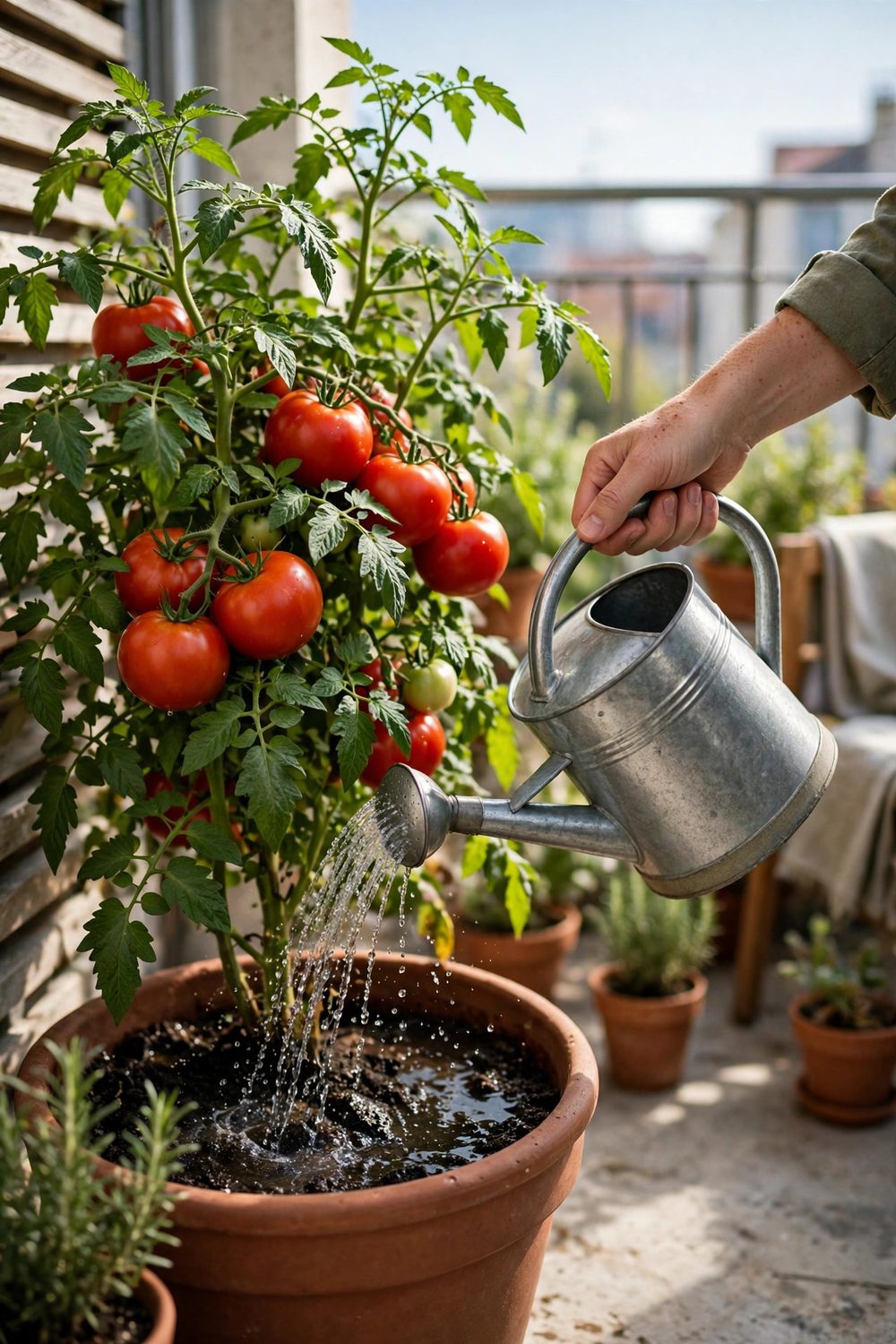
Shallow sips are the fastest way to stress a plant in a heatwave. ‘Dixie Red’ is a determinate heat set tomato with large, firm red fruit, around 70 days from transplant.
Grow it in a 10 gallon pot, about 38 litres, and water once each morning in a slow, deep soak. Aim to wet the full root ball, not just the surface.
Steady moisture also lowers the risk of blossom end rot, which follows uneven watering in pots. Our guide to how often to water tomatoes in pots in summer covers the daily check in detail.
If the mix pulls away from the pot edge, water in two rounds. The first round wets the surface, and the second round, ten minutes later, soaks the centre.
5. ‘Florida 91’ Under Shade Cloth That Covers the Pot Only
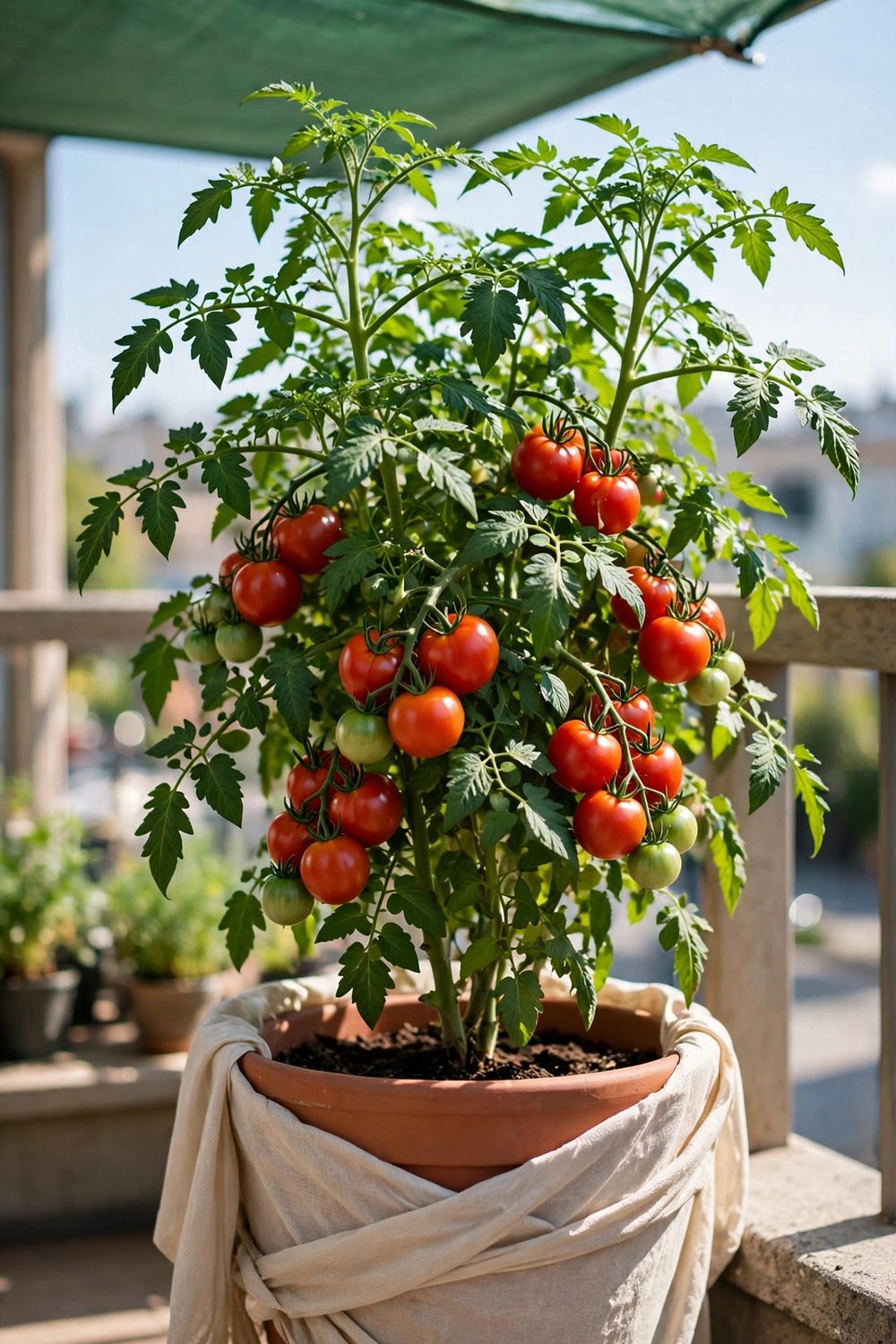
A common mistake is shading the whole plant, then wondering why fruit slows down. Tomatoes still need 6 to 8 hours of direct sun, so shade the pot, not the leaves.
Drape shade cloth over the pot wall and the soil surface edge, leaving the ‘Florida 91’ canopy in full light. The cloth also slows drying on windy afternoons.
Use cloth rated around 40 to 55 percent for the pot wrap. On a small balcony, one cut piece can serve two pots placed side by side.
Secure the cloth with clips at the rim so it cannot slip into the canopy. Cloth touching wet leaves after watering can hold moisture in the wrong place. Check the wrap after rain as well, and loosen it if the mix stays wet for days.
6. ‘Solar Fire’ With a Thick Mulch Blanket
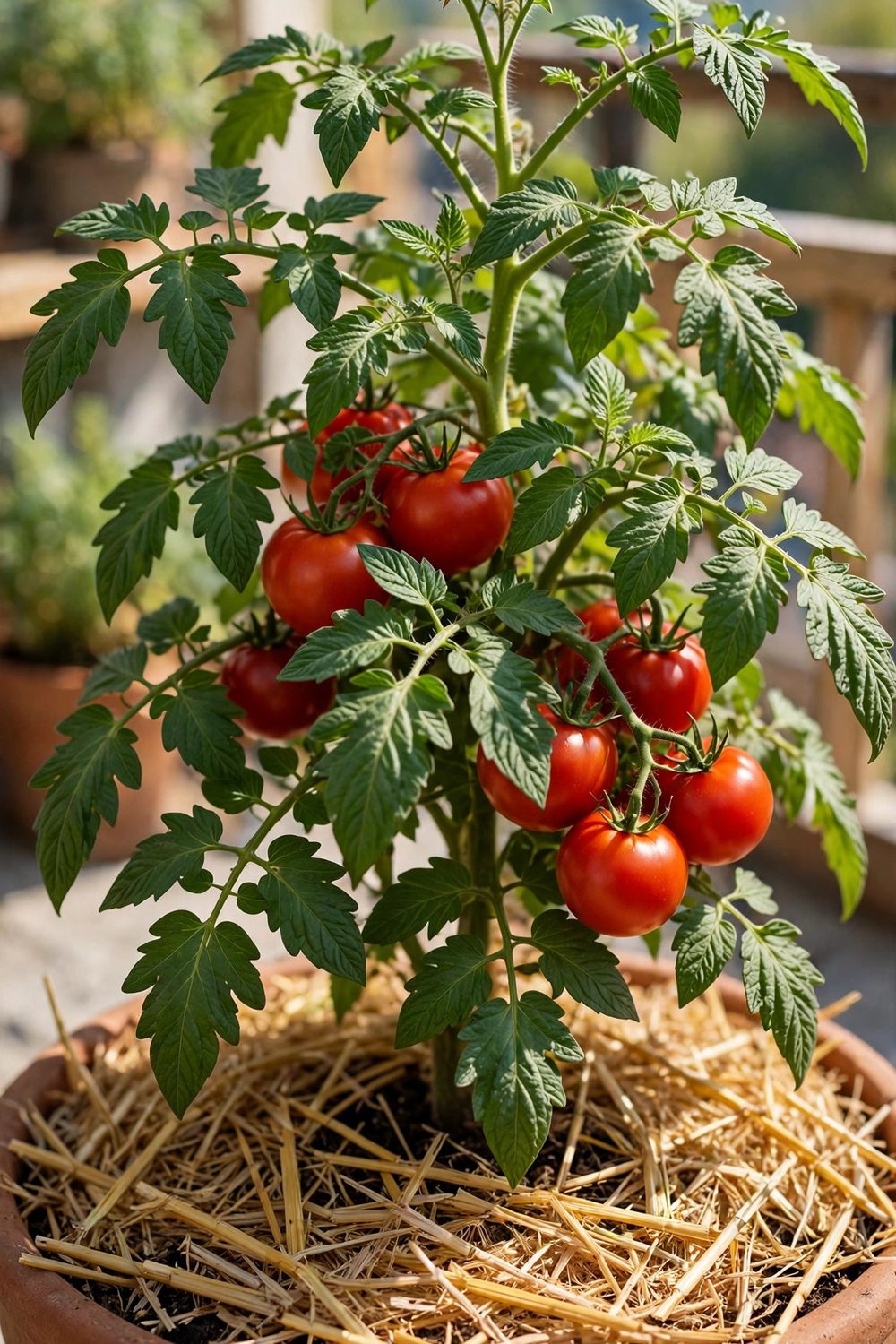
Bare mix in a hot pot can dry and crust in a single afternoon. Cover it with 2 to 3 inches (5 to 8 cm) of clean straw or shredded bark mulch.
‘Solar Fire’ roots sit under that blanket, so moisture leaves the pot far more slowly. Keep the mulch a finger width away from the stem to keep the base dry and healthy.
Top the mulch up mid season, because it settles after repeated watering. The kitchen sink watering can run will still be daily in a heatwave, just shorter each time.
Straw mulch also stops soil splashing onto lower leaves during watering. Cleaner lower leaves mean fewer spots and a plant that keeps its energy for fruit.
7. ‘Everglades Wild Cherry’ in a Pot Inside a Pot
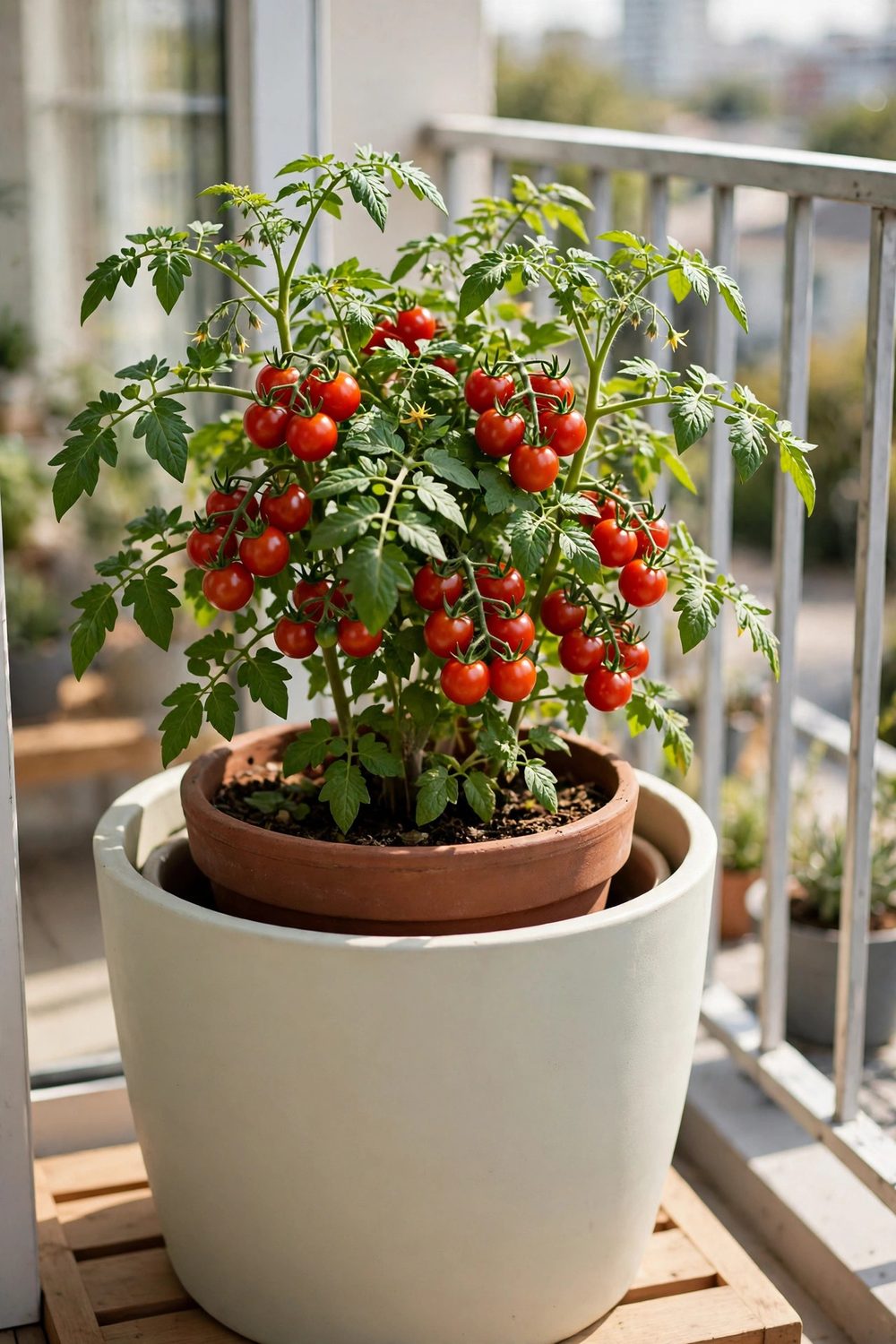
A double pot is a simple heat trick that costs almost nothing. Sit the growing pot inside a larger, pale outer pot with a small air gap between the two walls.
That air gap insulates the roots of ‘Everglades Wild Cherry’ from sun hitting the outer wall. The plant still gets full sun on its leaves and steady warmth at night.
Choose a 10 gallon inner pot so the cherry has room to sprawl. Check the gap weekly, because fallen leaves trapped between pots can hold moisture against the wall.
Lift the inner pot once a month and tip out any water sitting in the outer pot. The gap should stay airy and dry, never a hidden puddle.
8. ‘Dixie Red’ in a White 10-Gallon Planter
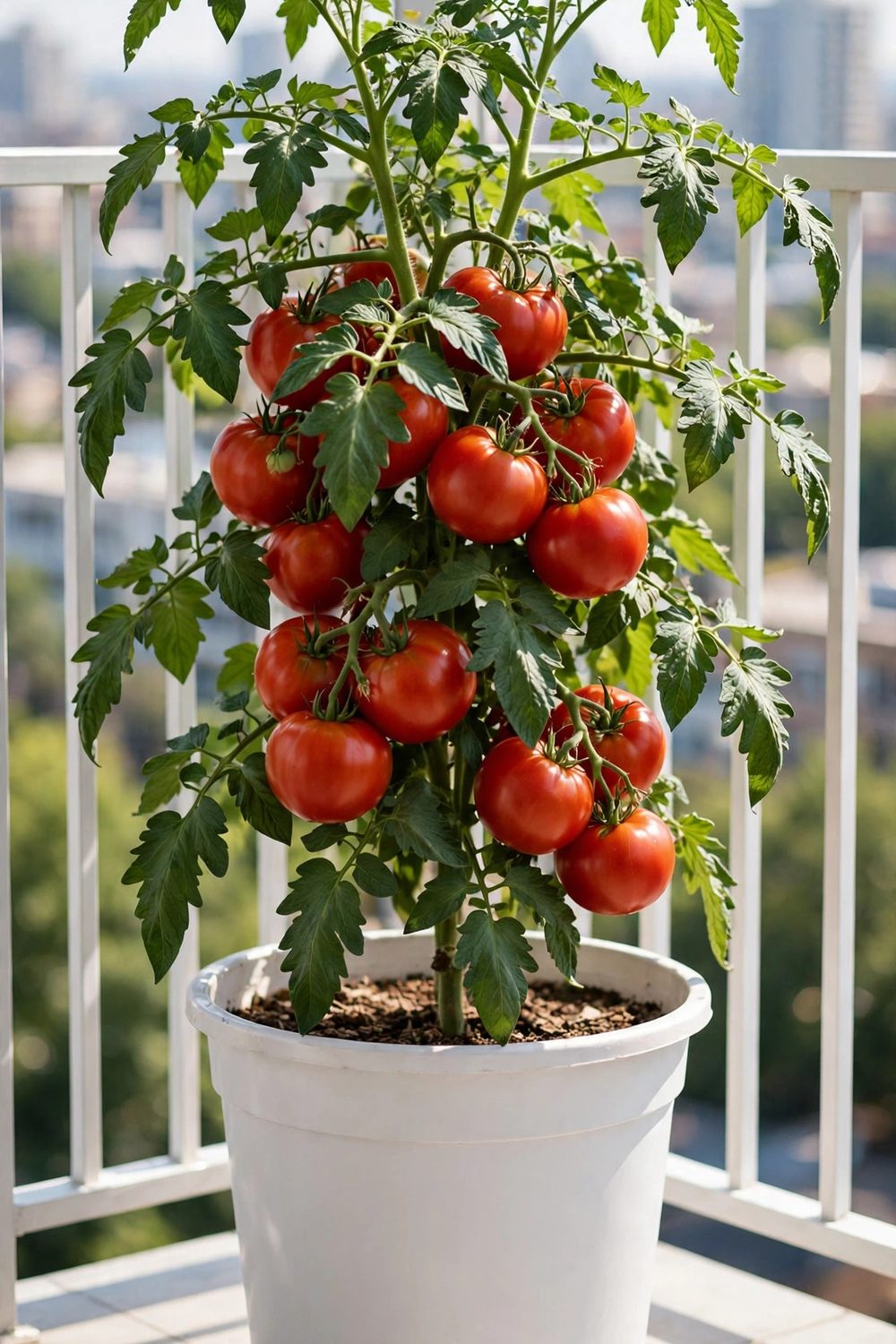
Pot color sounds minor until you touch a black pot at 3 p.m. in July. A white or cream planter reflects heat, and the root zone can stay noticeably cooler.
‘Dixie Red’ suits this setup well, since it is determinate and stays near 4 feet (122 cm) tall. One plant per 10 gallon planter gives its roots the full water store.
Set the planter where it still receives morning and midday sun. The pale wall handles the afternoon heat load, so the plant does not need a shadier, weaker spot.
Wipe dust off the pale walls every few weeks. A clean white surface reflects far more heat than a dusty one, especially on west facing rails.
9. ‘Florida 91’ Grouped So Pots Shade Each Other
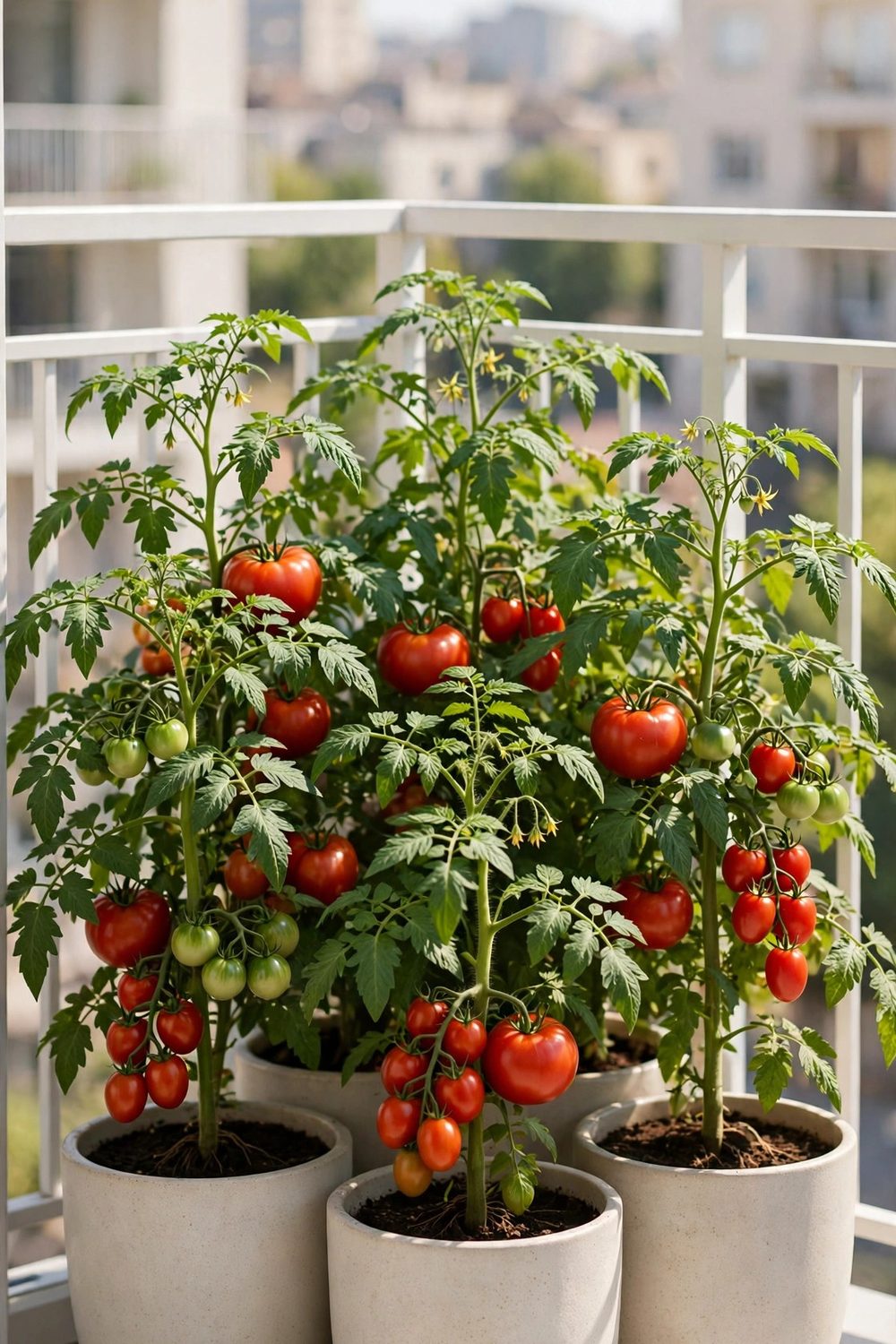
A lone pot on open tiles takes sun on every side. Group three or four pots close together, and each pot wall shades the next one for part of the day.
Place ‘Florida 91’ in the middle of the group, where its pot gets the most borrowed shade. Leave small gaps between canopies so air still moves through the leaves.
Grouping also makes watering faster on a busy morning. The shared shade slows drying, a trick that pairs well with the rules in how often to water vegetables in pots.
Rotate the group a quarter turn each week if one side gets far more sun. Even light keeps growth balanced and stops one plant shading out its neighbour.
10. ‘Solar Fire’ Raised Off Hot Tiles on a Stand
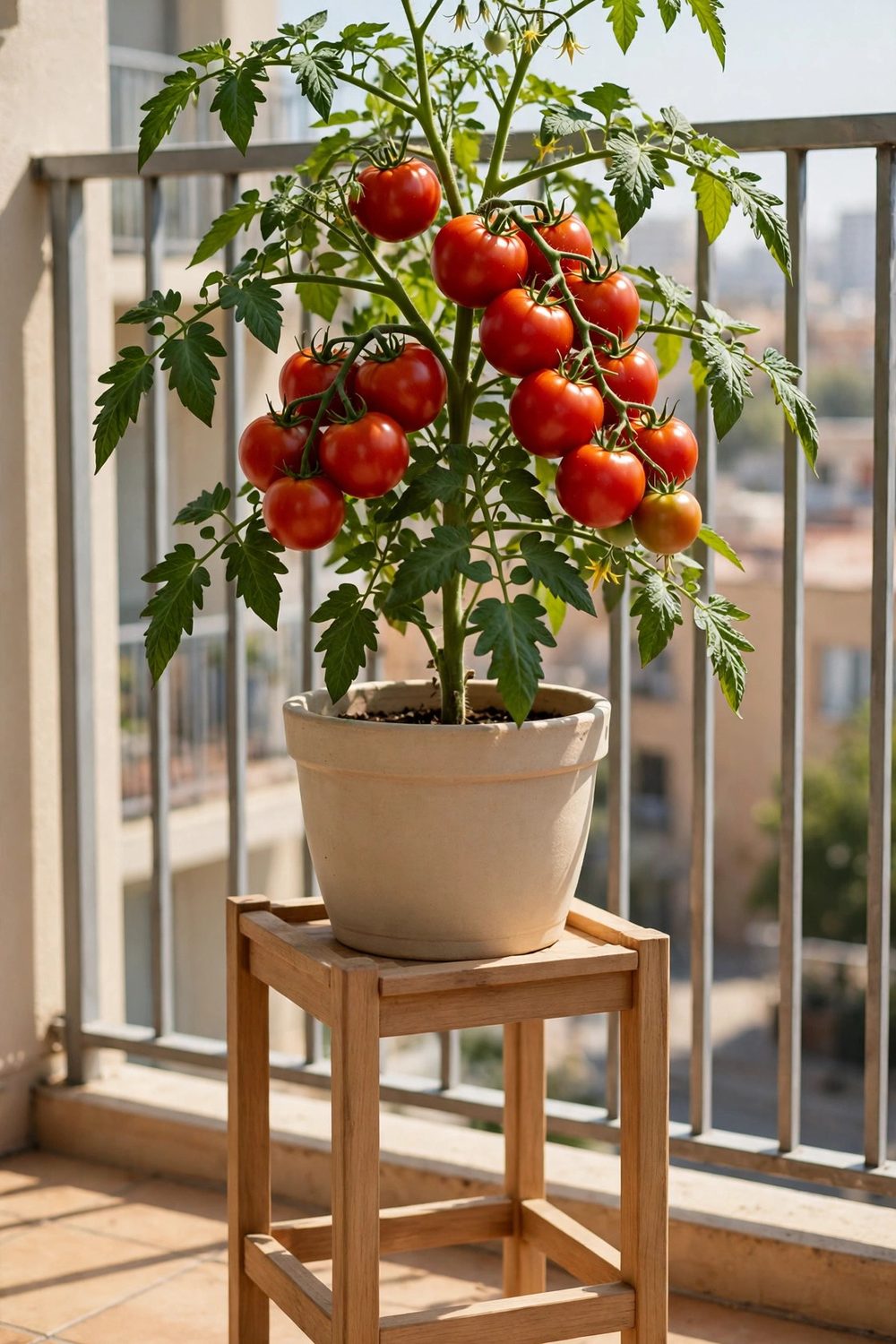
Balcony tiles store heat all day and release it into the pot base all evening. Raising the pot on a stand, bricks, or a wooden slat breaks that contact.
‘Solar Fire’ in a 5 to 10 gallon pot benefits fast, because air flows under the base and drainage stays free. Keep the stand level so the pot cannot rock in wind.
Check the saucer rule here too: no standing water under the pot. A raised pot drains cleanly, and the roots avoid the hot, wet base that invites rot.
On very hot floors like dark stone or metal, add a second slat layer. Each extra inch (2.5 cm) of air gap cuts the heat reaching the pot base.
11. ‘Everglades Wild Cherry’ With a Drip Line at the Base
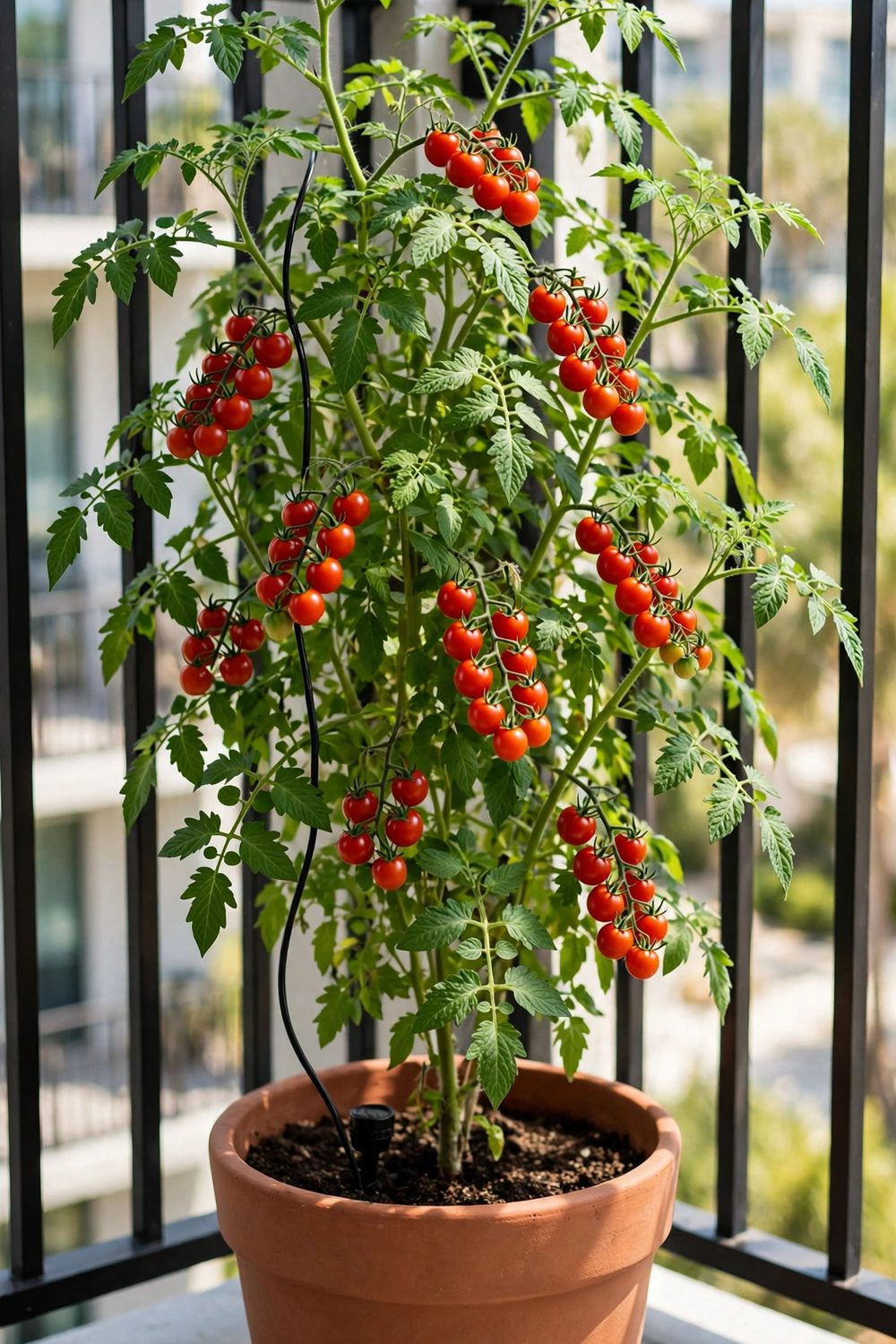
Hand watering a sprawling cherry plant often wets leaves and misses the far side of the pot. A simple drip line delivers water slowly at the base, where roots need it.
Run the line in the morning for a deep, even soak. ‘Everglades Wild Cherry’ responds with steady fruit set instead of the feast and famine swing of missed days.
A timer helps during holidays or long work days. The self watering containers guide compares backup options for trips away from home.
Place two drip stakes per large pot, one on each side of the stem. Even coverage stops the dry pocket that forms opposite a single stake. Run the line once a week without the timer to confirm every stake still drips freely.
12. ‘Dixie Red’ Behind a Light Windbreak
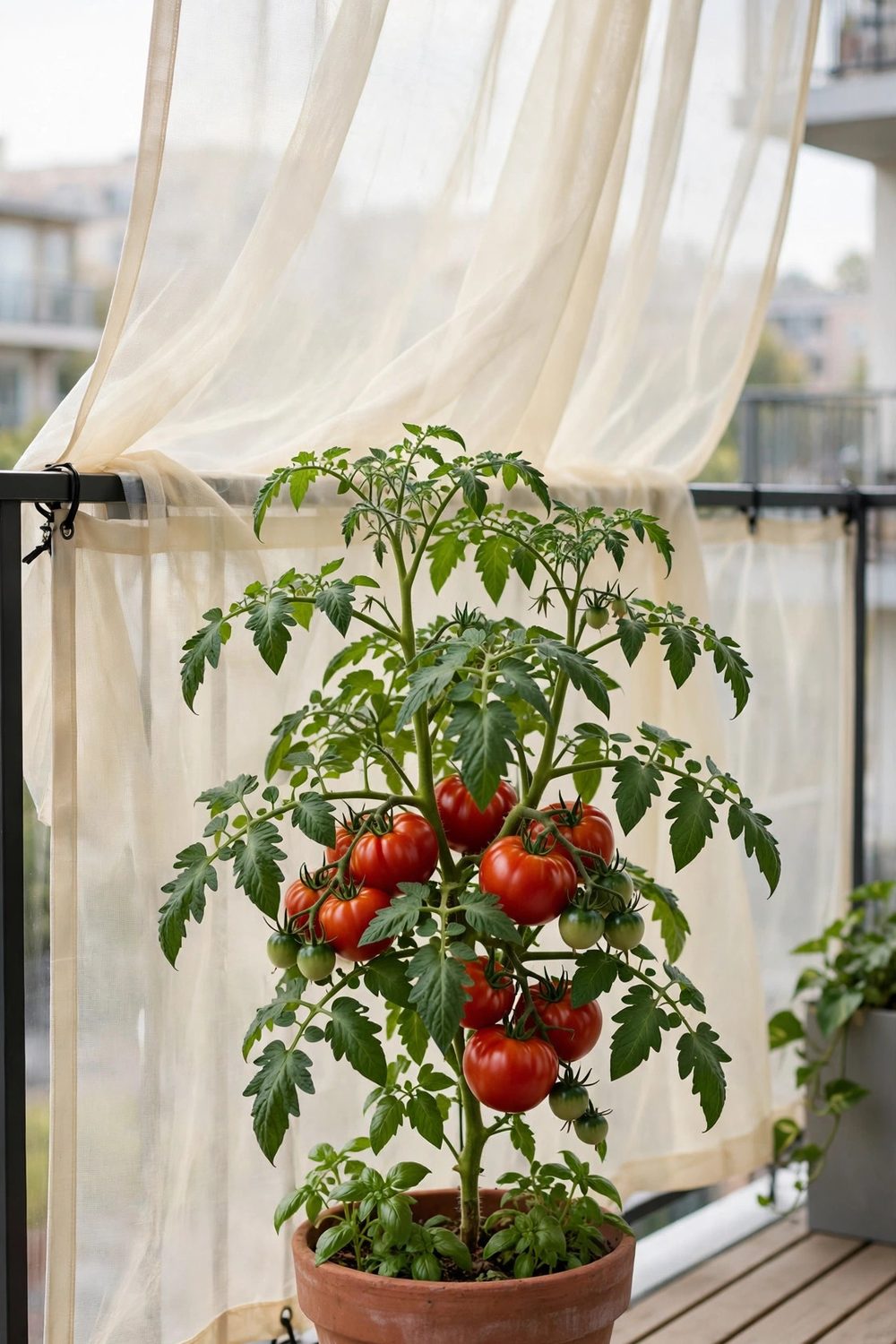
Hot wind dries pots as fast as hot sun, and exposed rails get both. A light mesh windbreak on the rail slows the wind without blocking the sun the plant needs.
‘Dixie Red’ keeps its leaves and flowers in calmer air, so it loses less water through the day. Tie the mesh firmly, because a loose sheet flapping against fruit causes damage.
Leave the top open so heat rises away from the canopy. On still, scorching days, the deep morning soak from item 4 carries the plant through.
Check ties after storms, because a windbreak adds sail area to the rail. Strong clips at the corners keep the mesh, the pot, and the plant secure.
13. ‘Florida 91’ With a Pale Pot Cover in Peak Heat
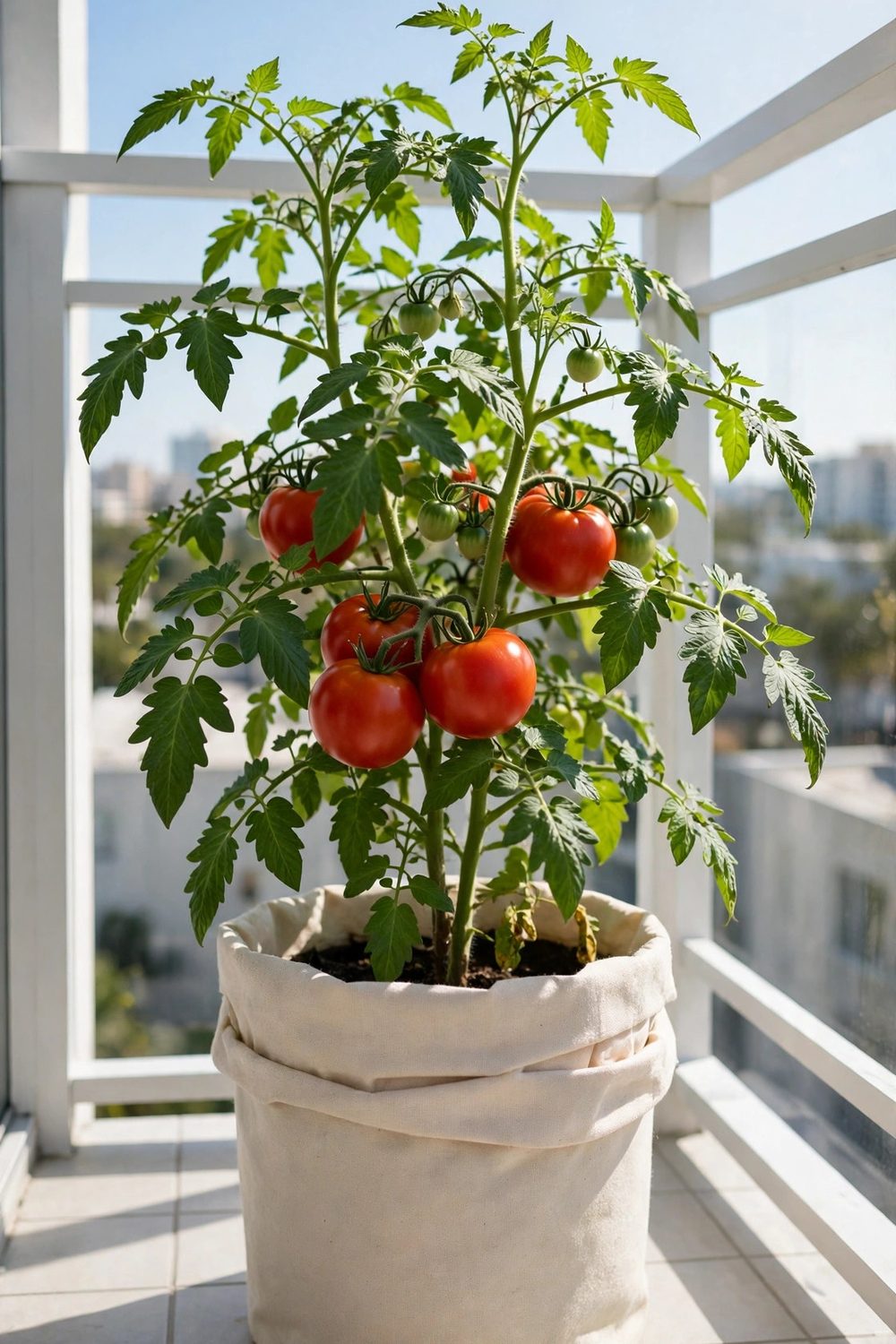
For the two hottest weeks of summer, wrap each pot in a pale cover, an old light towel, or a white fabric sleeve. It looks plain, and it works within a day.
The cover shades the pot wall during the worst afternoon sun, while ‘Florida 91’ keeps fruiting above it. Remove the wrap once nights cool, so the pot can warm again.
Dampen the cover lightly on extreme days for a small cooling effect. Never wrap the plant itself, because trapped humid air around leaves invites disease.
Keep a spare pale towel near the door for heatwave days. Putting covers on at noon, before the worst heat builds, protects roots far better than reacting at dusk.
14. ‘Solar Fire’ Fed Lightly and Watered Before Feeding
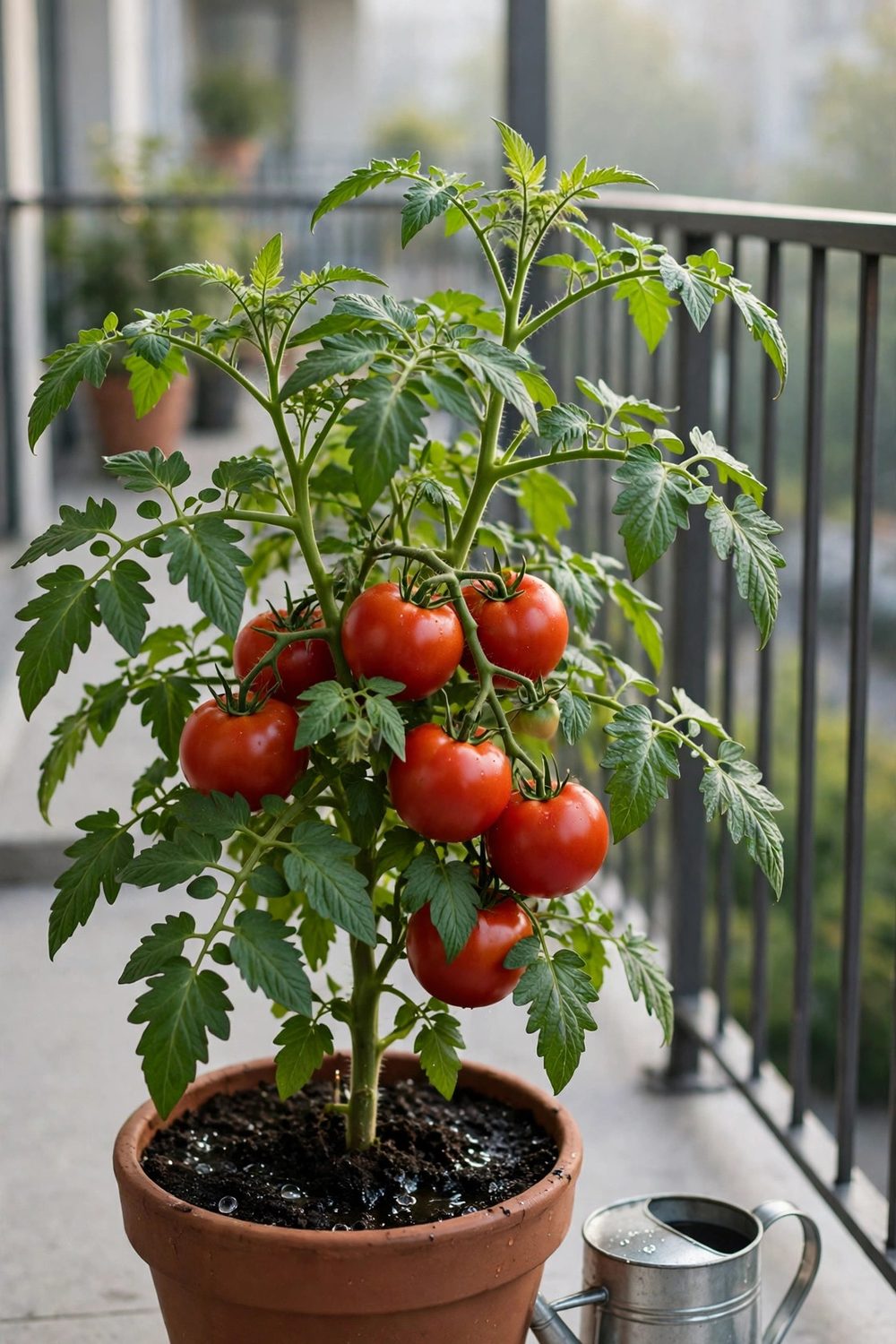
Heat stressed plants take up feed poorly, and strong feed on dry roots can scorch them. Water first, then feed at label strength with a tomato formula, never stronger.
‘Solar Fire’ needs a steady weekly liquid feed once flowers open. Skip a feed during the worst heatwave days and resume when nights drop a little.
Watch the leaves for the real story: dark, lush growth with few flowers means too much nitrogen. Pale, slow growth with flowers means the weekly rhythm is about right.
Feed in the cool of the morning, right after watering, never at midday. Roots take up feed best when the plant is hydrated and the mix is cool. A small watering can filled at the kitchen sink makes this morning routine easy to keep.
15. ‘Everglades Wild Cherry’ as the Season Closer
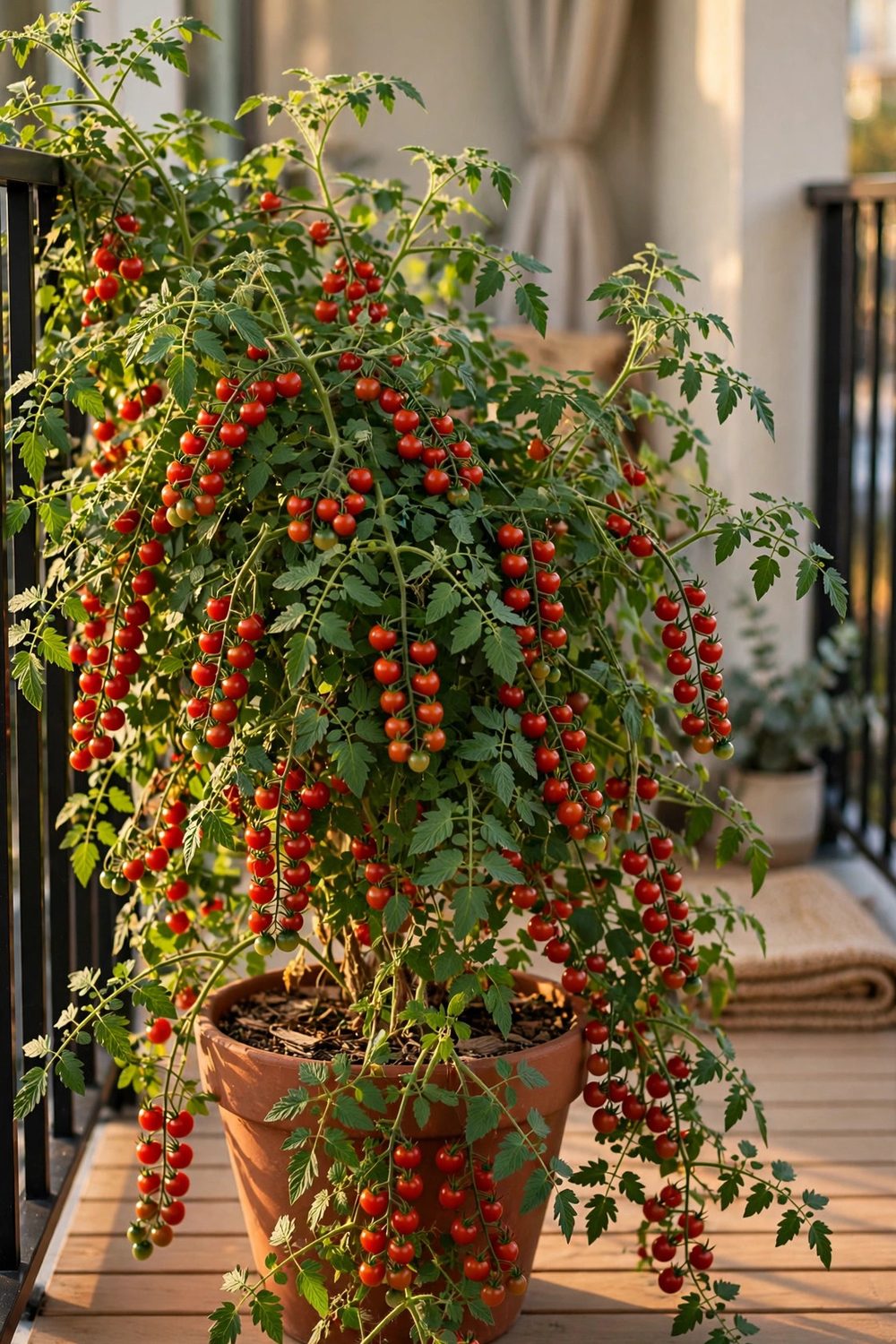
When other tomatoes tire in late summer heat, this cherry often keeps setting small fruit. It is the plant that still gives you a handful for salads in September.
Keep its 10 gallon pot mulched, watered deeply, and picked every two days. Compare its long season with the early tomato varieties for short summers in pots if your season runs short at both ends.
For pot choices across crops, the guide to the best pots for growing vegetables on a balcony helps plan next season. Save seed only from open pollinated plants, since named heat set hybrids vary.
Cut back any dead stems as they appear so the plant feeds live growth. A tidy cherry plant in September often out yields a bigger, tired slicer plant.
A hot balcony does not rule out a real tomato harvest. It asks for the right varieties first, then cooler roots, deep morning water, and mulch on every pot.
Start with one or two plants from this list and learn your balcony heat pattern for a season. Save this to your tomato board for later, before the next heatwave arrives.
Keep notes on which pot dried fastest and which plant set fruit first. Those two notes make next summer’s tomatoes in pots for hot balconies heat tolerant types far easier to plan.


