

How Often to Water Tomatoes in Pots in Summer
By mid summer, a potted tomato can drink fast and wilt by lunch, then look fine again by evening.
Learning how often to water tomatoes in pots in summer stops that daily swing and keeps fruit sound.
The answer is not a fixed calendar. It is a short check, a deep morning soak, and a few habits that slow drying.
This system takes about ten minutes a day for a small group of pots. The difficulty is low, and most tools are already at home.
Our wider guide to how often to water vegetables in pots covers the same check-first habit for other crops.
Time: 10 minutes a day in hot weather, plus 20 minutes once to mulch and group pots · Difficulty: Easy
What You Need
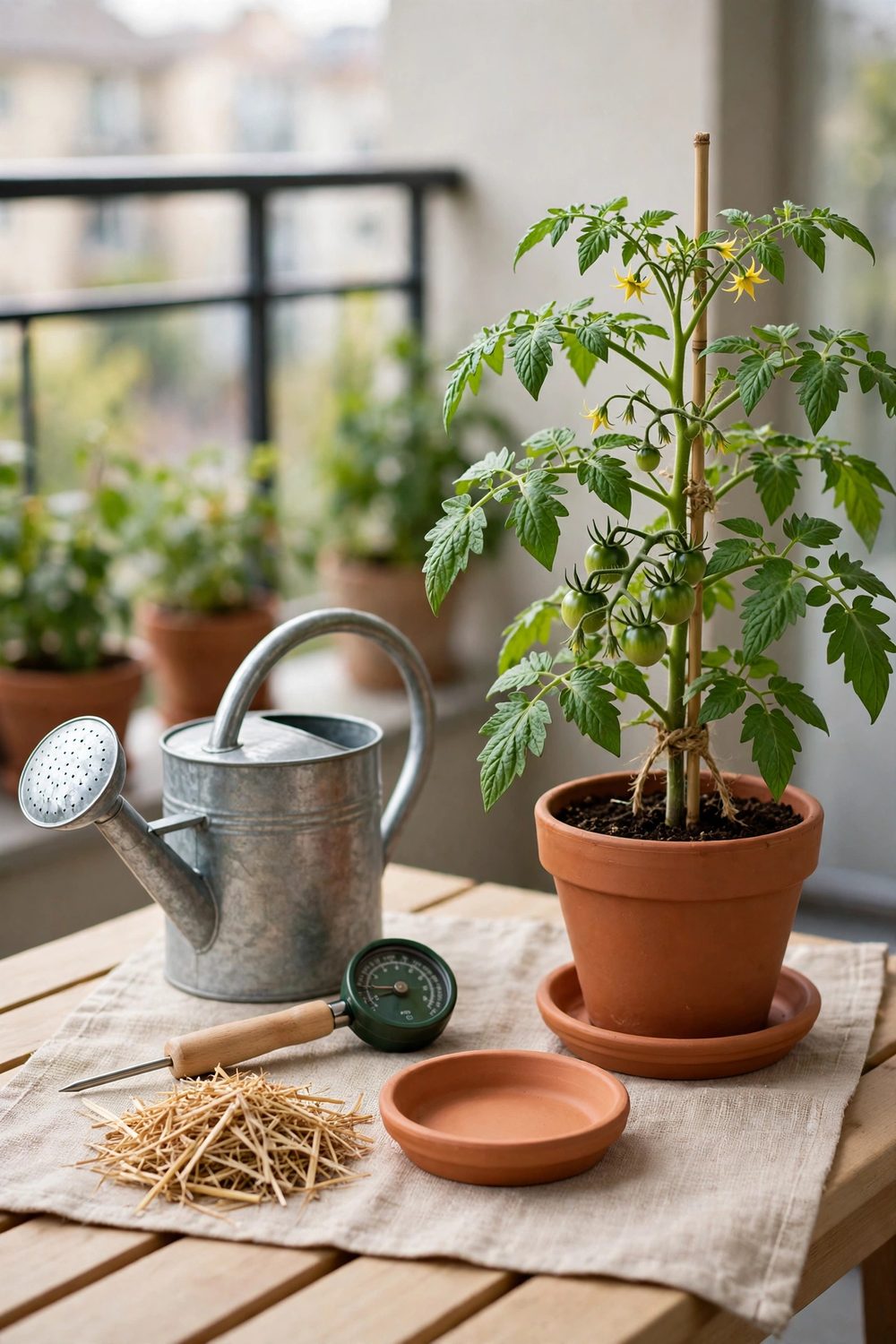
- A finger or a moisture meter: your finger reads the top 2 inches (5 cm). A meter probe reads deeper, near the roots.
- A watering can with a rose head: the rose breaks the flow into a soft shower. It soaks the mix without blasting it aside.
- Mulch: clean straw, shredded bark, or coco chips. You need enough for a layer 1 to 2 inches (2.5 to 5 cm) deep.
- Saucers or a shallow tray: useful for very dry pots during a rescue soak. Empty standing water after 30 minutes.
- Light shade material for pot walls: a pale cloth, hessian, or an outer cache pot. It shades the pot, never the plant.
- Self-watering inserts or spikes: optional, for the pots that dry first and for holiday cover.
- A notebook or phone note: a short record of which pots dry fastest helps you group them well.
Household swaps work fine here. A chopstick pushed into the mix shows damp mix clinging to the wood when roots are still moist.
A kitchen jug works in place of a can for one or two pots. Pour slowly, close to the stem base, in small rounds.
Check the Moisture Before You Water
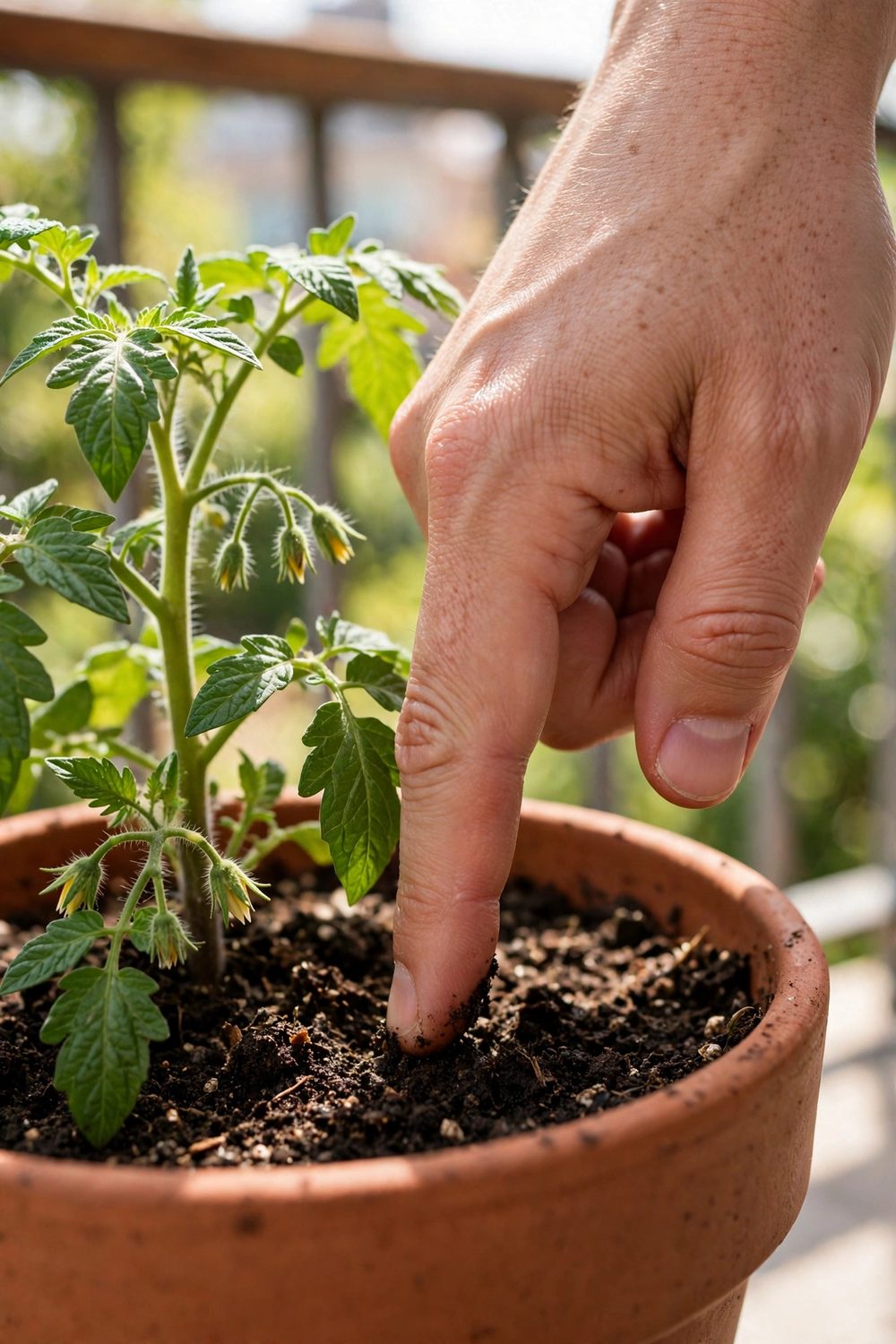
Push a finger into the mix up to the second knuckle, about 2 inches (5 cm) down. Water only when that depth feels dry.
Mix can look pale and dry on top while roots below stay damp. The finger check reads the layer that matters more.
Lift the pot as a second check. A dry pot feels far lighter than the same pot straight after a deep watering.
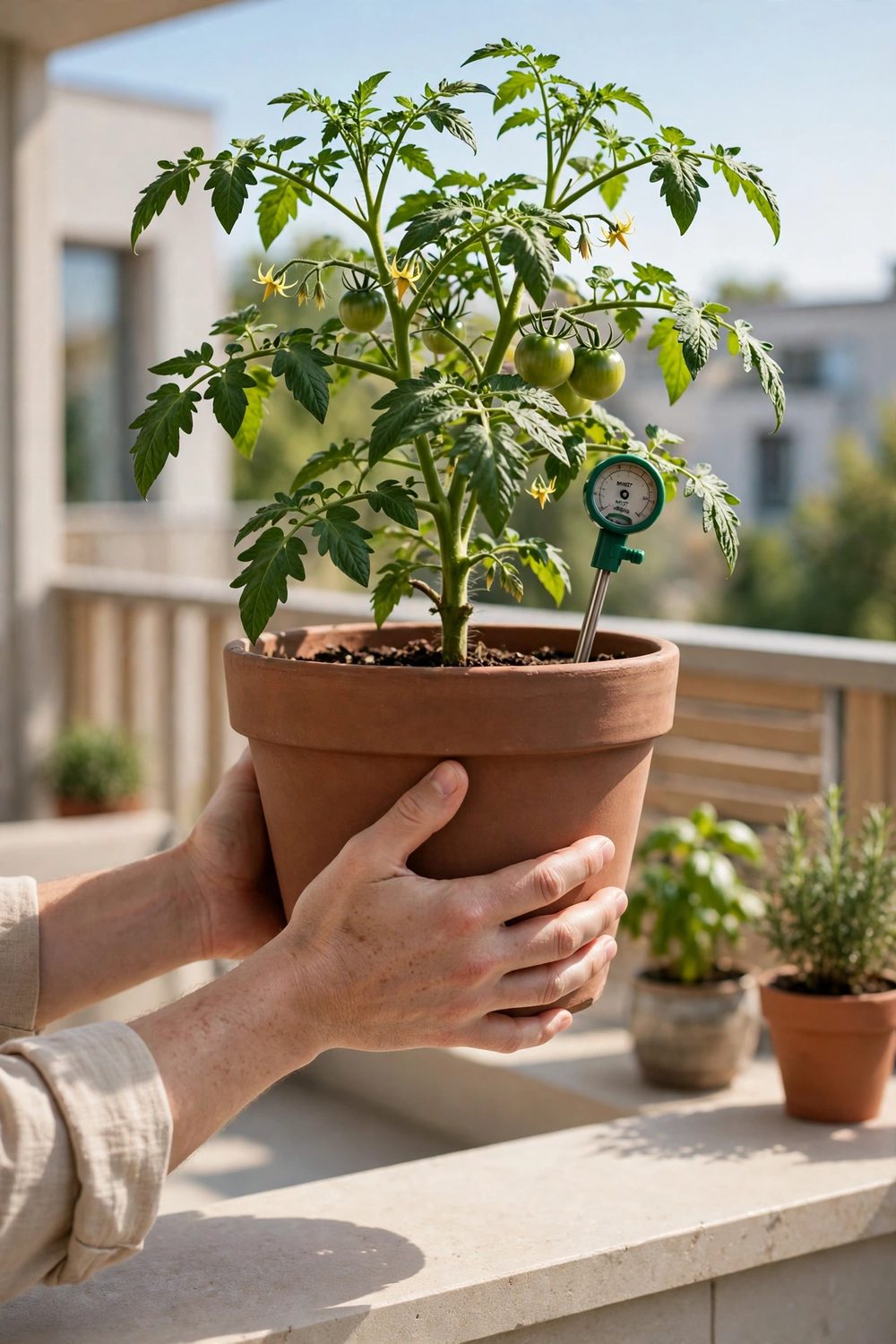
Learn the weight of each large pot once, right after watering. Your arms remember it, and the lift test takes two seconds.
Check at the same time each morning. A pot dry at breakfast needs water that day, not a wait until evening.
Small pots and grow bags dry first. Check a 3 gallon (11 litre) pot daily in heat, even when larger pots can wait.
Water Deeply at the Base in the Morning
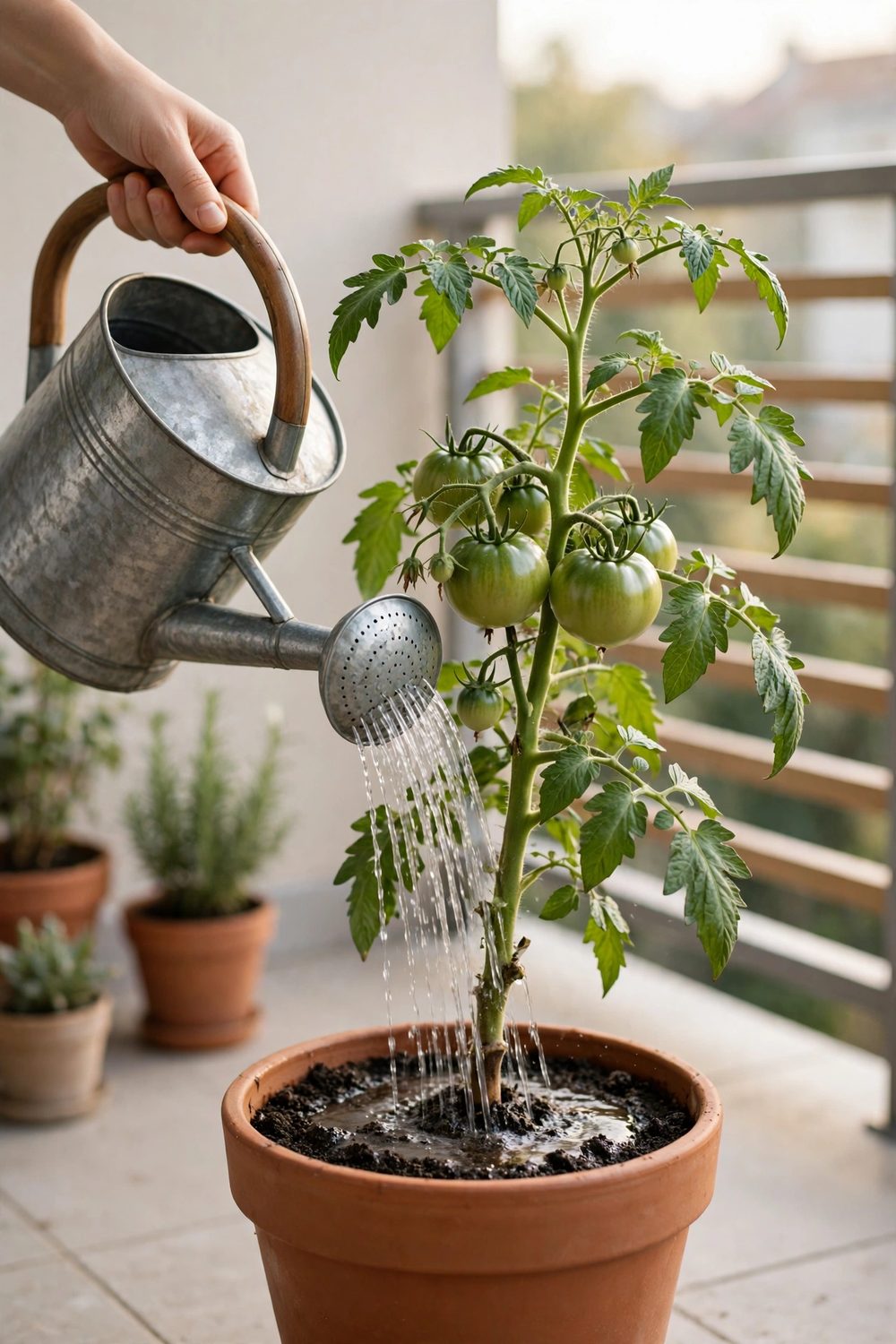
Water early, before the sun climbs and the balcony heats up. Morning water reaches roots before the day pulls moisture from leaves.
Aim the can at the base of the stem. Keep water off the leaves, since wet leaves in still air invite leaf disease.
Pour until water runs from the drainage holes. That flow tells you the full root ball took water, not the top layer alone.
A deep soak for a 5 gallon (19 litre) pot often takes a full large can. Shallow sips wet the crust and leave roots dry.
Empty the saucer after the pot drains. Roots sitting in standing water lose air, and growth slows within days.
If your balcony has no outdoor tap, our guide to watering a balcony garden without a hose shows workable carrying and storage setups.
Give Hot Days a Two-Round Soak
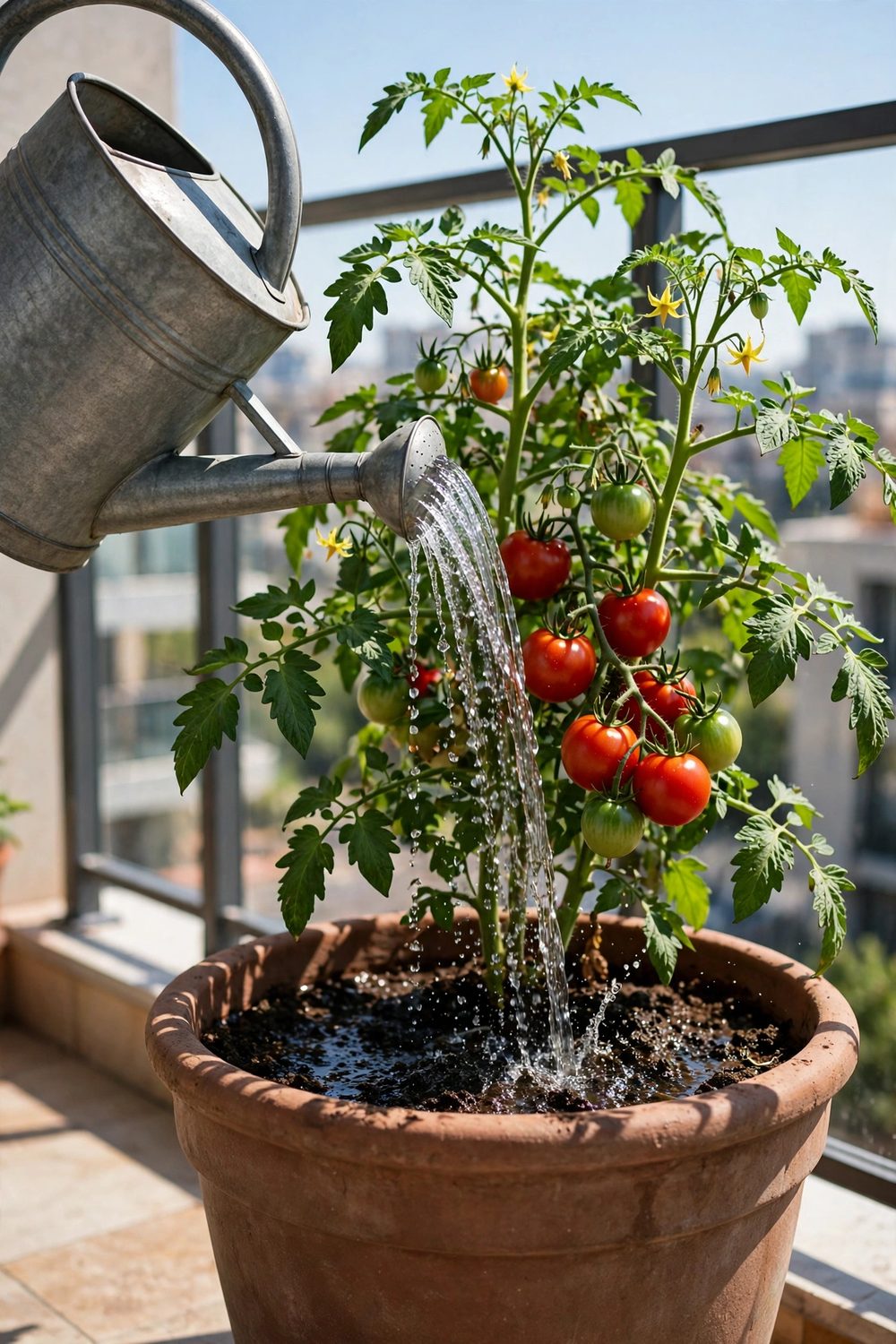
On very hot days, split the watering into two rounds. Give the pot half its water, then return after 10 to 15 minutes.
Dry mix shrinks from the pot wall and sheds the first pour. The pause lets the mix swell and take the second round in.
The second round should move slowly through the pot. Water running straight down the side gap means the mix still needs soaking time.
Heatwave days may need this routine morning and late afternoon. Use the finger check before the second session, since some pots hold enough.
Fruiting plants drink the most. A large plant carrying green fruit can empty a 10 gallon (38 litre) pot faster than a young plant nearby.
Pro Tip: set the can down between rounds and check the next pot. The pause costs no extra time across a row of pots.
Mulch the Surface to Slow Drying
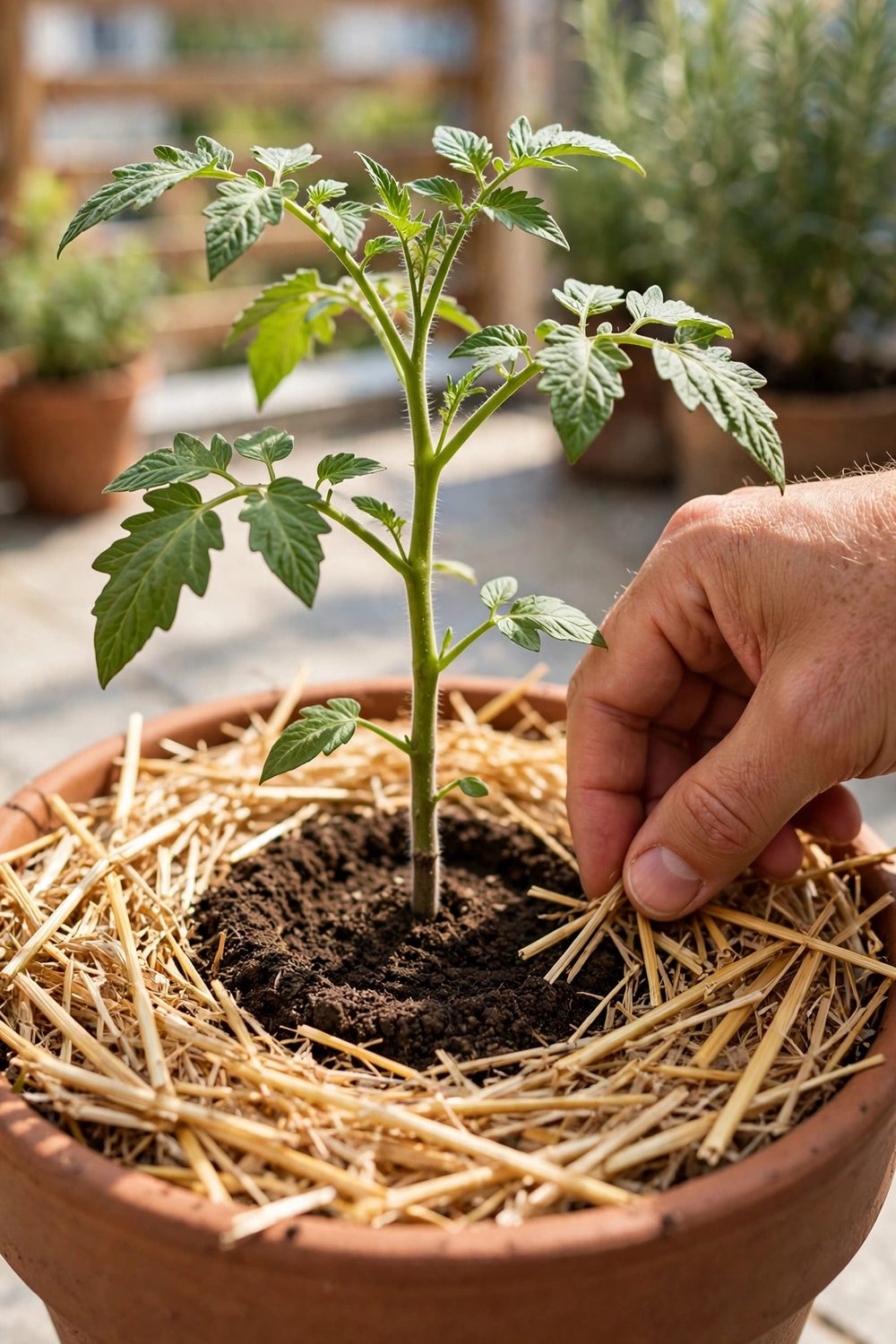
Spread mulch over the bare mix once plants stand sturdy. Keep a small clear ring around the stem so the base stays dry.
Aim for 1 to 2 inches (2.5 to 5 cm) of straw, shredded bark, or coco chips. Thin patches still let sun bake the surface.
Mulch shades the mix, cuts evaporation, and stops watering from splashing mix onto lower leaves. All three help in a hot spell.
Water the pot well before mulching. Mulch laid over dry mix can slow the next pour and hide how dry roots are.
Top up the layer when it thins or packs down. Balcony wind lifts light straw, so water the mulch once to settle it.
Group Pots and Shade the Pot Walls
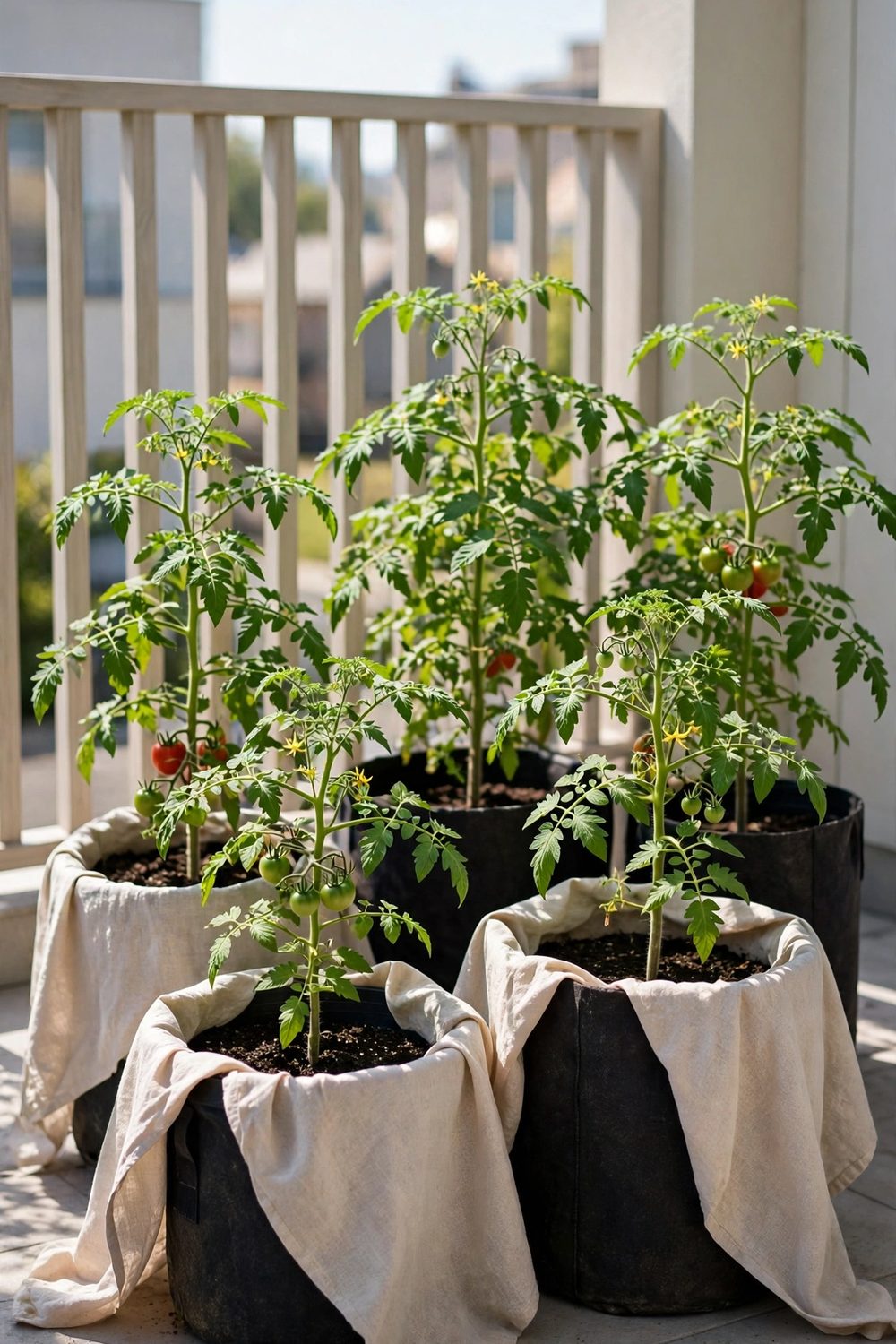
Move pots into a loose group during a hot spell. Leaves shade each other a little, and the air between pots stays less dry.
Leave gaps for air to move through the group. Packed plants with touching leaves hold damp air and raise disease risk.
Dark pot walls bake in direct sun and heat the roots at the edge. Stand a pale board or cloth on the sunny side.
Shade the wall, not the plant. Tomatoes need 6 to 8 hours of direct sun on their leaves for steady fruiting.
Grow bags lose water through their sides as well. Grouping bags close cuts that loss and keeps their outer mix cooler.
Keep the group off hot paving where you can. A wooden slat or mat under pots breaks the heat rising from tiles.
Fit Self-Watering Inserts to the Thirstiest Pots
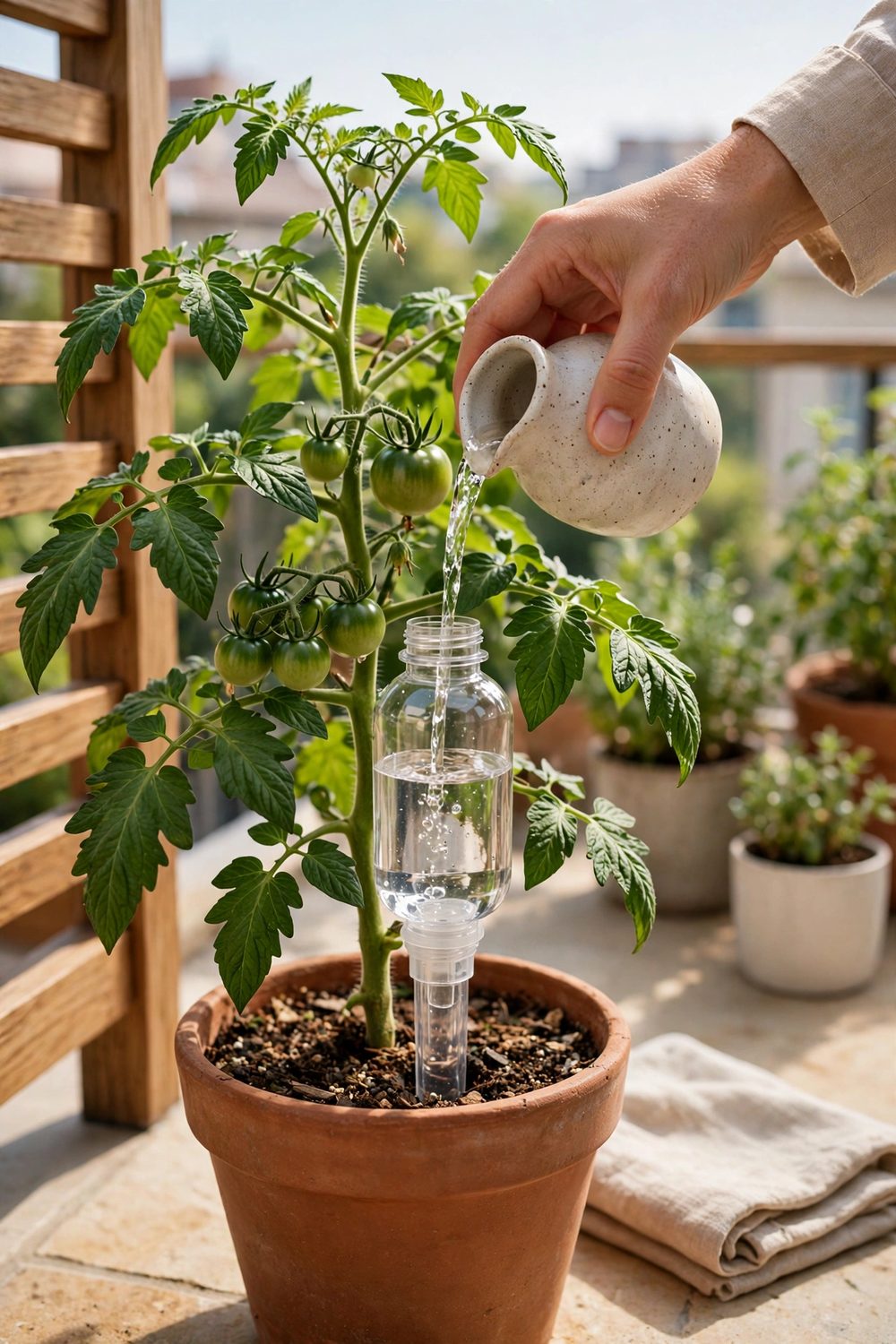
Note which pots dry a full day ahead of the rest. Those pots gain most from a reservoir insert or watering spike.
Fit the insert while the mix is moist, and fill its reservoir right away. A wick draws poorly from bone dry mix.
Keep checking with a finger during the first week. Inserts slow drying, but a fruiting plant can still empty a reservoir fast.
Our roundup of self-watering pot setups for tomatoes compares the main styles and their reservoir sizes.
We also weighed the pros and cons in our piece on self-watering containers for vegetables before adding them here.
Top up reservoirs in the morning round. That habit keeps the system part of your check, not a separate chore to forget.
Set Up Holiday Cover Before You Leave
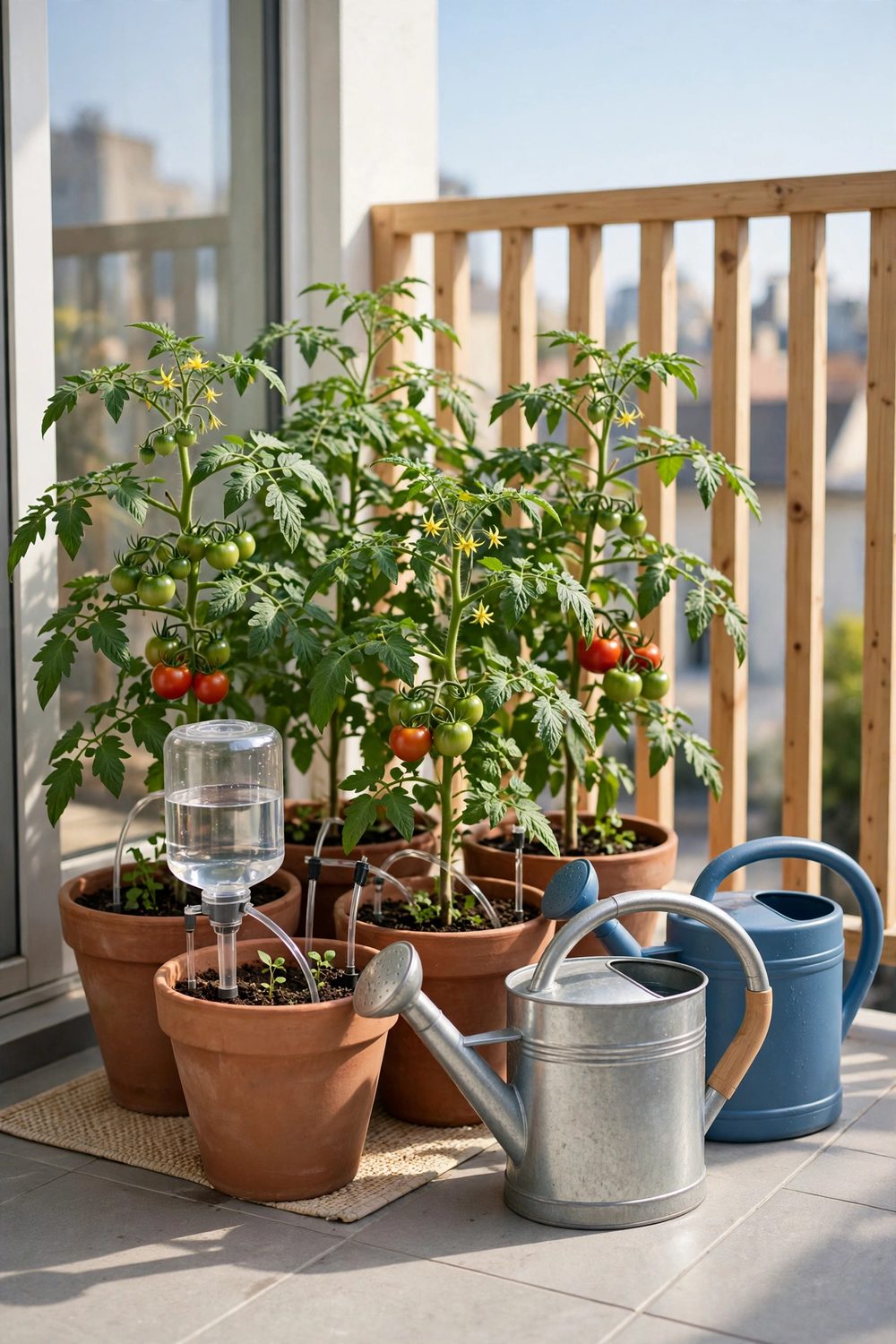
Water every pot deeply the morning you leave. Start the break with full reservoirs, full saucer soaks drained, and fresh mulch.
Move pots into their group and shade the walls. Shift the smallest pots out of the fiercest afternoon sun for the break.
Ask a neighbour to run the finger check every two to three days. Leave the can filled and a short written note beside it.
The note should name the thirstiest pots by position. A helper waters well when the order of pots is clear at a glance.
For a break over a week, reservoirs plus a helper visit work best together. Neither one alone covers a heatwave well.
Heads Up: test any drip or spike setup for two days before you travel. A blocked spike shows up fast in summer heat.
Troubleshooting
Surface crusting
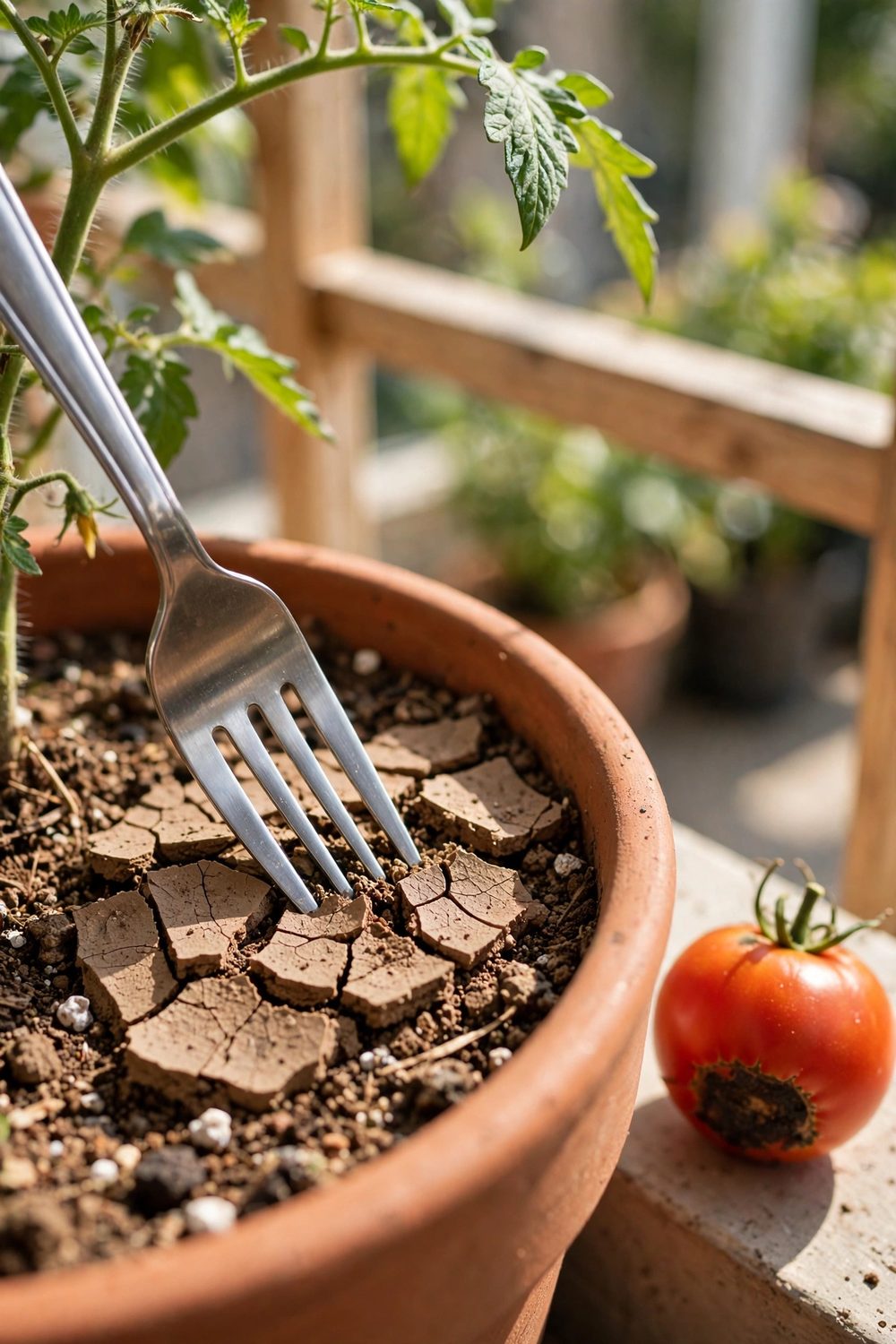
A hard crust forms when the top layer dries and bakes between waterings. Water then beads on top instead of soaking in.
Break the crust gently with a fork, keeping clear of surface roots. Mulch the pot after the next deep watering to stop a repeat.
Runoff from dry mix
Very dry mix can repel water at first. The pour runs down the gap at the pot wall and out of the base.
Stand the pot in a tray of water for 20 to 30 minutes so it drinks from below. Drain it well, then return to morning watering.
Blossom end rot from swing watering
Dark, sunken patches on the fruit base point to blossom end rot. The cause is poor calcium uptake driven by uneven moisture.
The roots may sit in mix with enough calcium present. Dry and soaked swings stop the plant moving that calcium into fruit.
The fix is steady moisture, not a calcium dose. Hold the check and soak routine, keep mulch in place, and leave roots undisturbed.
Feeding works best on that steady base, as our simple feeding schedule for potted tomatoes sets out week by week.
Algae on the mix
A green film on the surface means the top stays wet and shaded for long stretches. It looks poor but harms plants little.
Let the top layer dry between waterings and improve air flow around the pot. A mulch layer blocks the light algae needs.
Frequently Asked Questions
How many times a day should I water in a heatwave?
Most pots need one deep morning watering, even in strong heat. Small pots, grow bags, and fruiting plants may need a second check late in the day.
Water again only when the finger check reads dry at depth. A fixed twice daily habit soaks pots that never dried out.
Is it bad to water tomato leaves?
Water at the base and keep leaves dry where you can. Wet leaves in warm, still air give leaf diseases an easier start.
Rain wets leaves anyway, so one splash is no disaster. The habit matters across a season, not a single watering.
Do grow bags need more water than plastic pots?
Yes, in most summer weather. Fabric sides lose moisture to the air, and wind speeds that loss on an open balcony.
Check bags daily and group them close in hot spells. A larger bag, 10 gallons (38 litres), holds a safer reserve than a small one.
Should I water before feeding my tomatoes?
Yes. Feed liquid tomato food into moist mix, never into a dry pot, since dry roots take feed poorly and can scorch.
Water in the morning, then feed at the next watering or later that day. Keep the strength at the label rate each time.
Why does my plant wilt at noon and recover by evening?
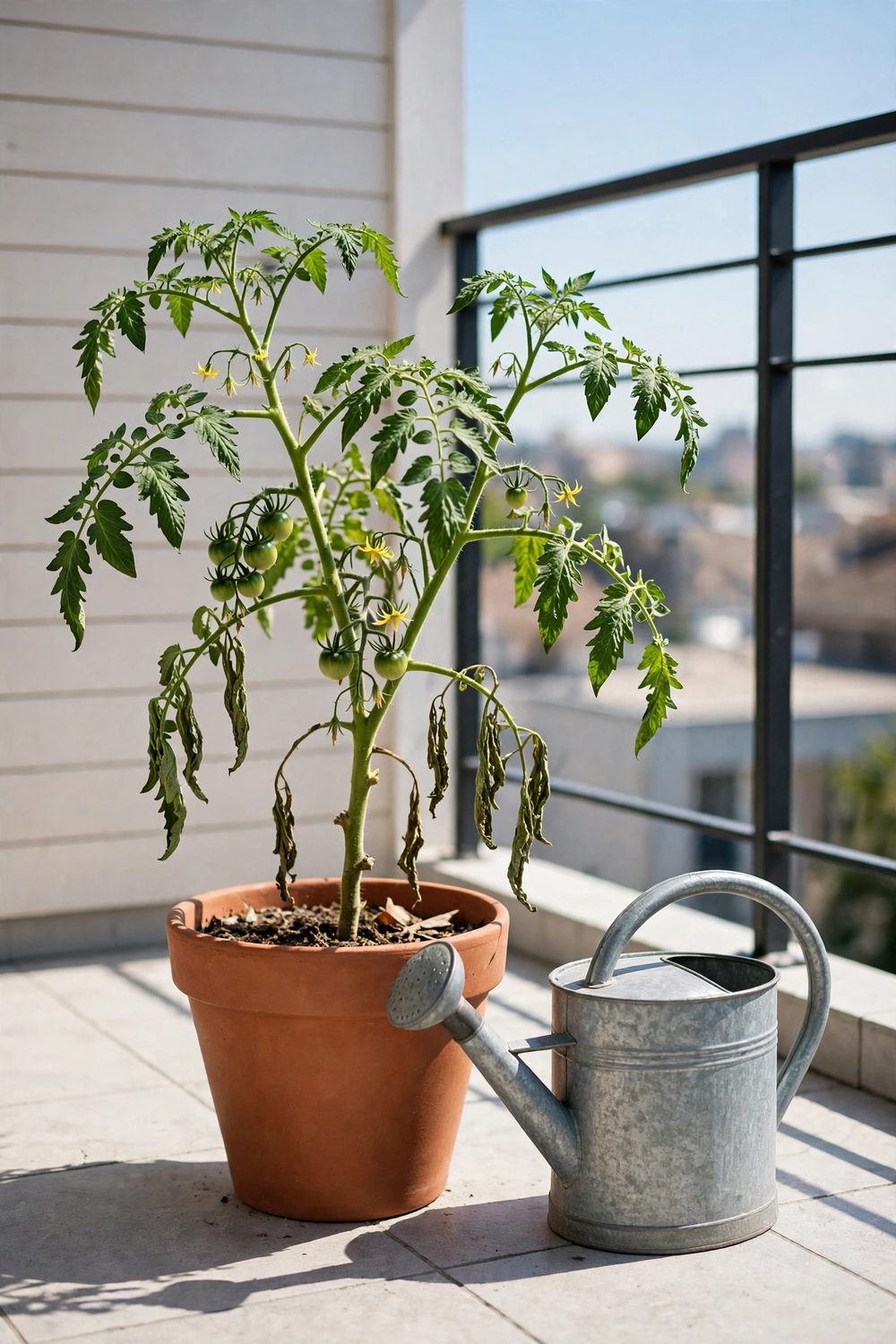
Leaves can lose water faster than roots replace it at peak heat. The plant folds its leaves to cope, then recovers as air cools.
Check the mix before watering a wilted plant. If the mix reads moist at depth, shade the pot wall and wait for evening.
Can I leave water in the saucer in summer?
A short soak helps a very dry pot recover. Standing water left all day keeps roots too wet and draws fungus gnats.
Tip saucers out after 30 minutes. In a heatwave, a morning saucer soak plus an evening tip-out is a fair compromise.
Quick Reference
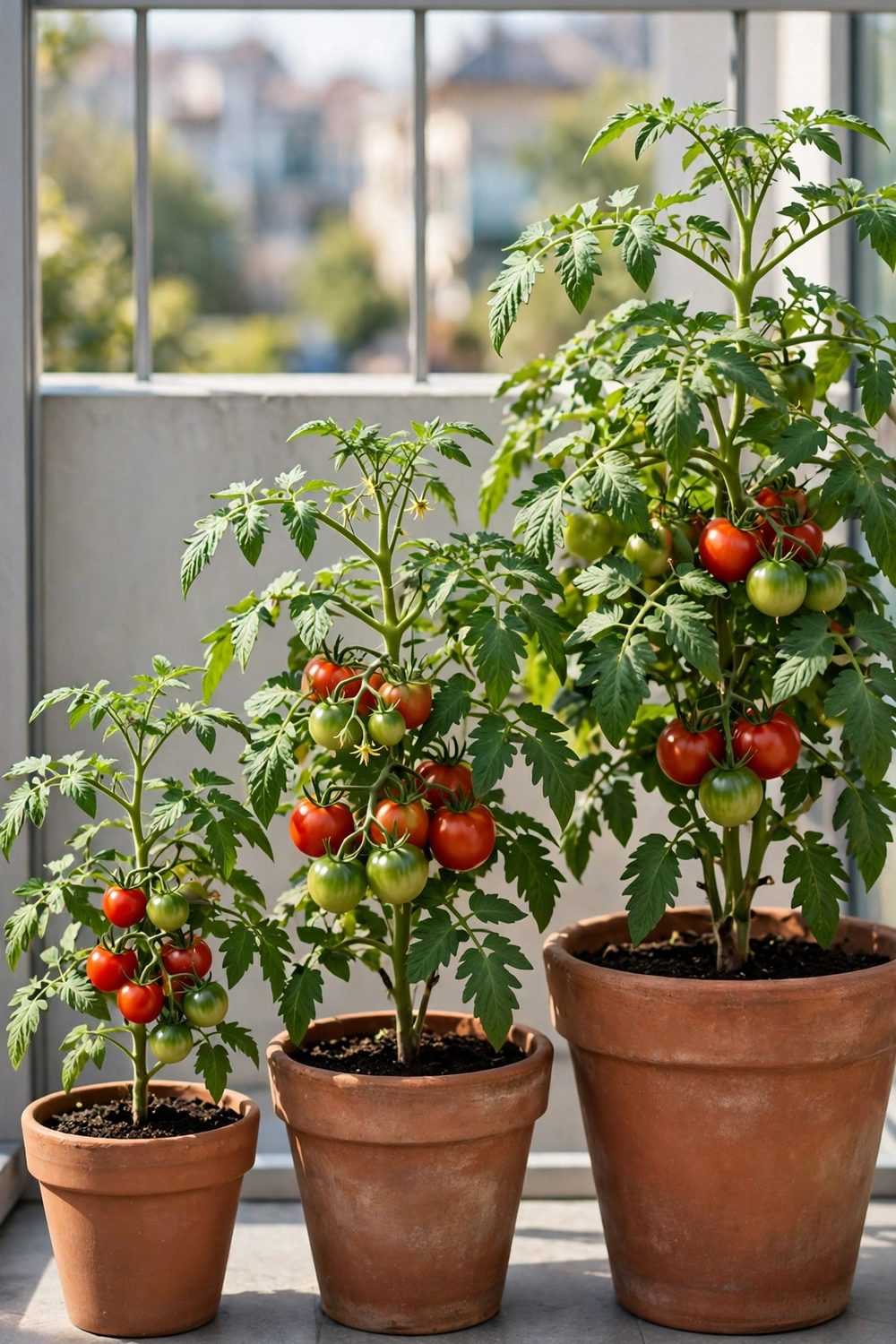
- 1 to 2 gallon (4 to 7.5 litre) dwarf pots: check twice a day in heat; water most mornings.
- 3 gallon (11 litre) patio pots: check daily; deep water whenever the top 2 inches (5 cm) read dry.
- 5 gallon (19 litre) standard pots: check daily; deep morning soak every one to two days in hot weather.
- 10 gallon (38 litre) pots and bags: check daily; deep soak every two days or so, sooner for fruiting plants.
- All pots: water at the base, in the morning, until drainage flows. Mulch 1 to 2 inches (2.5 to 5 cm) deep.
- Heatwave rule: two-round soak, pot walls shaded, leaves in full sun, second finger check before any evening water.
Steady moisture is the whole secret here. Check first, soak deeply at the base, and let mulch and grouping slow the drying between rounds.
Within a week, the routine reads your pots for you. You will know which one dries first and which can wait a day.
Keep the note on your thirstiest pots updated as fruit loads grow. Save this guide to your tomato board for the next hot spell.


