

Pruning Tomato Suckers in Containers: When to Bother
Pruning tomato suckers in containers when to bother is the question that decides a tidy plant or a tangle.
A potted tomato can turn crowded in two warm weeks. Leaves shade fruit, air stops moving, and small shoots appear at every joint.
That problem matters more in a pot than in open ground, where roots have room to spread.
Space is tight, soil dries fast, and one extra stem can shade the whole plant.
This guide gives a clear rule by plant type, a safe size for removal, and a simple stem choice.
You will finish with a plant that is easier to water, tie, and check for ripe fruit.
The work takes 10 to 15 minutes per plant once a week in peak growth. It is easy work with clean hands and dry leaves.
Time: 10 to 15 minutes per plant, weekly in peak growth · Difficulty: Easy
What You Need
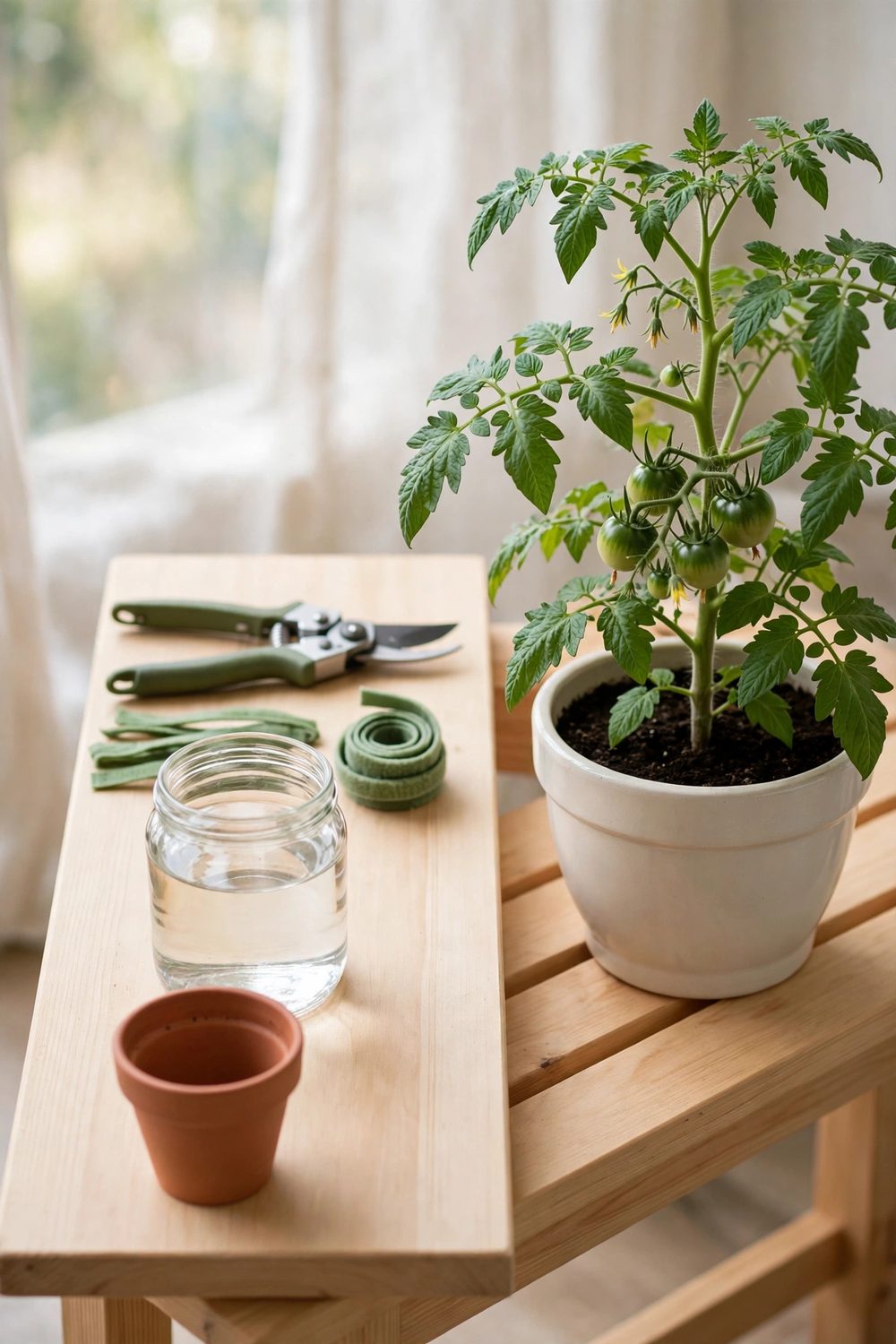
- Your hands: Clean, dry hands do most of the work on small suckers. Fingers give the cleanest snap and cause less tearing than dull tools.
- Small pruning snips: Use sharp snips for suckers thicker than a pencil. Clean blades make a neat cut and lower the risk of torn bark.
- Rubbing alcohol or diluted bleach wipes: Wipe blades between plants. This short step helps stop disease moving from one pot to the next.
- Soft plant ties: Loose ties hold the stems you keep to a cage or stake. Soft material protects green stems as they thicken through summer.
- A clear glass of water: A plain jam jar works for rooting a healthy sucker. Clear glass lets you watch roots form without lifting the cutting.
- A small pot and fresh potting mix: Keep a 3 to 4 inch (8 to 10 cm) pot ready for a rooted sucker. Fresh mix gives the new plant a clean start.
- The seed packet or plant label: The label tells you if the plant is determinate or indeterminate. That one fact decides whether you prune at all.
Most homes already have a jar, ties, and a small pot in a cupboard or shed.
If your plant is still young, also read how to grow tomatoes in a pot for the basic setup.
Good light, steady water, and the right pot size matter before pruning enters the picture.
Find the Sucker in the Leaf Axil
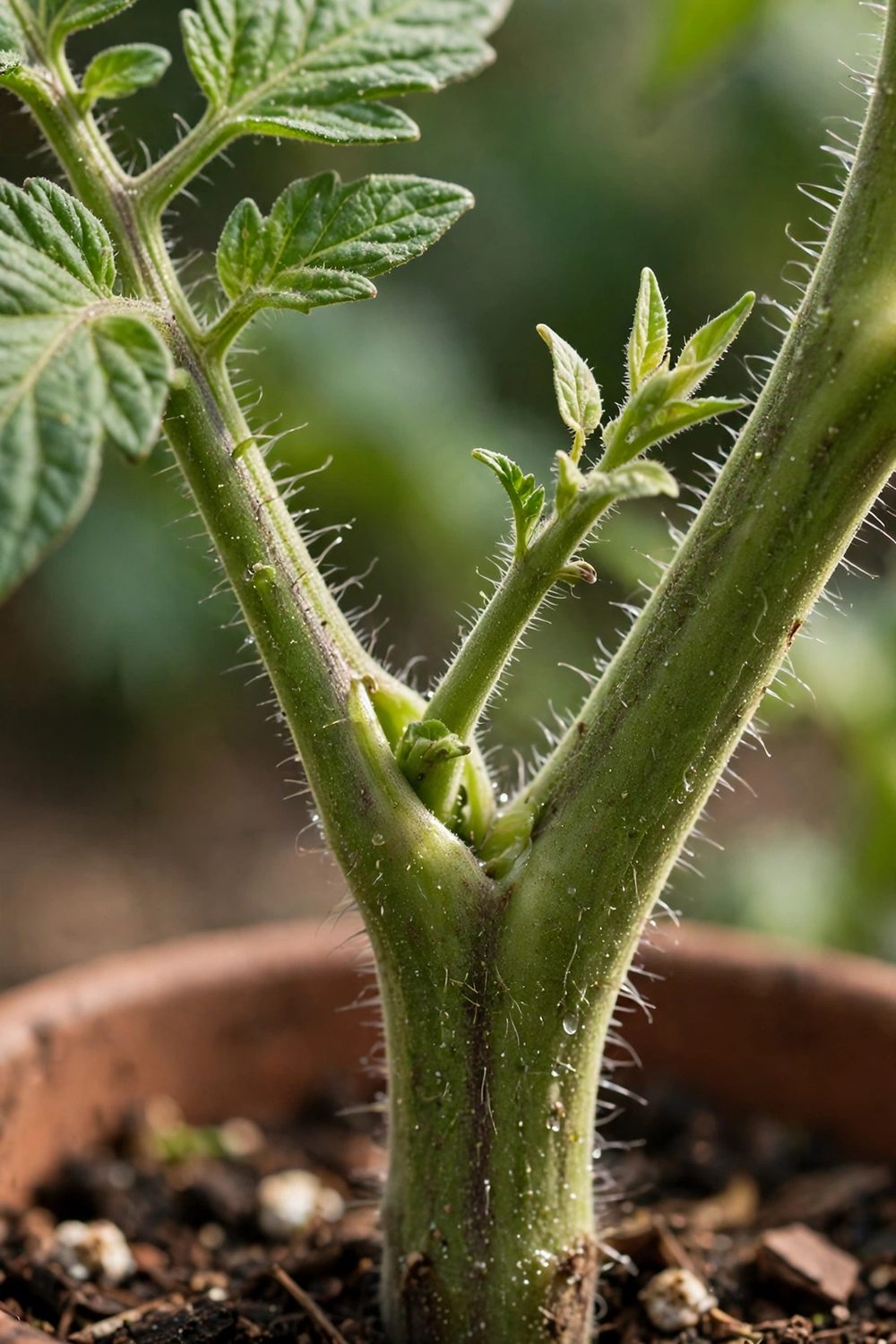
Look where a leaf branch meets the main stem. That V-shaped joint is called the leaf axil.
A sucker grows right in that joint, at about a 45-degree angle from the stem.
It looks like a small copy of the main plant, with its own leaves already forming.
Do not confuse it with a flower truss. A truss grows from the stem itself and carries small yellow buds.
A normal leaf branch grows out flat from the stem and does not sit in the joint.
Check the joint first, then follow the shoot for two leaves to confirm what it is.
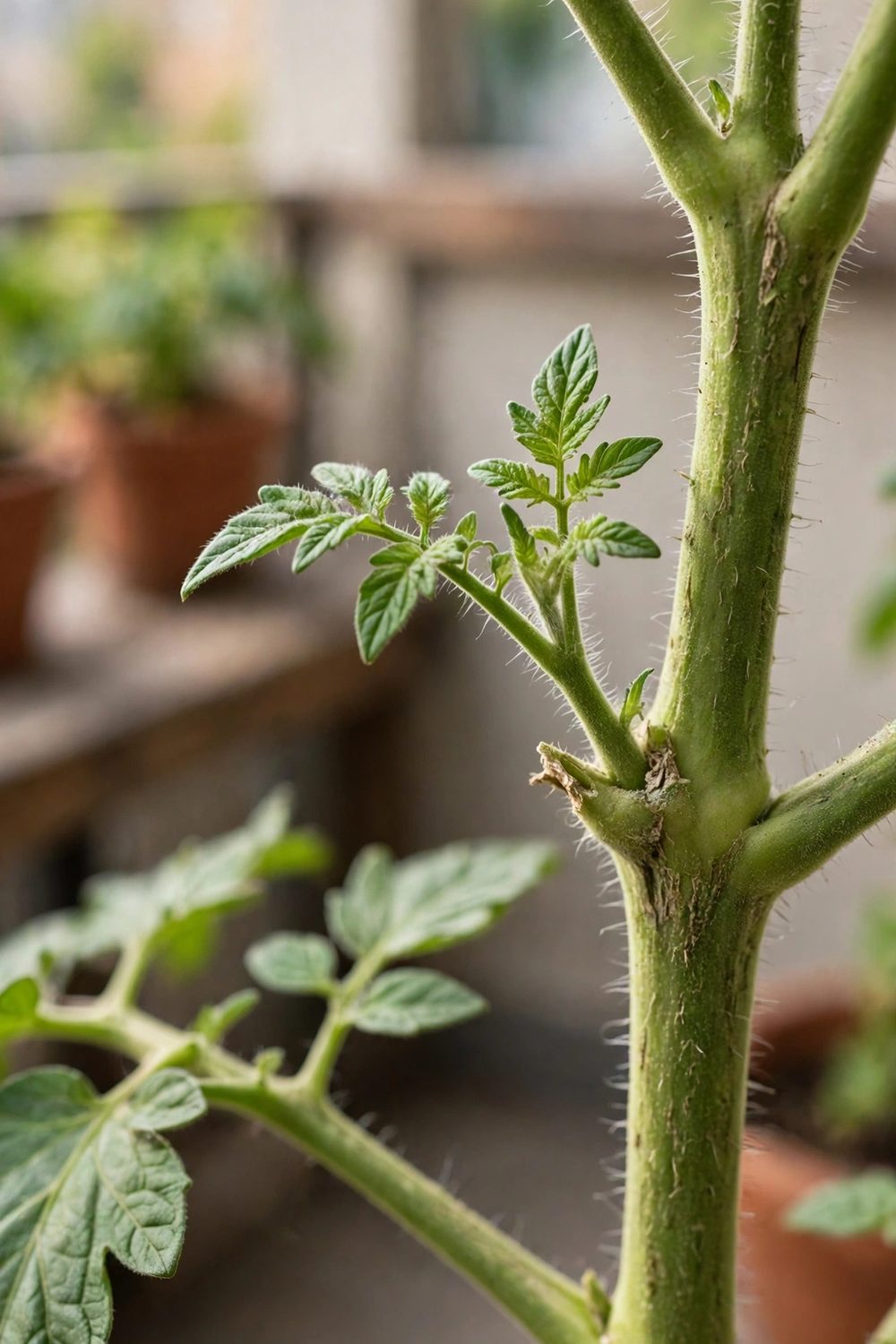
Young suckers feel soft and snap cleanly. Older suckers turn woody at the base and need snips.
Walk around the pot and check from two sides. Suckers on the shaded side are easy to miss.
On a busy plant, work from the bottom joint up to the top, one joint at a time.
This slow check takes two minutes and stops you cutting the wrong growth in a rush.
Decide by Plant Type Before You Prune
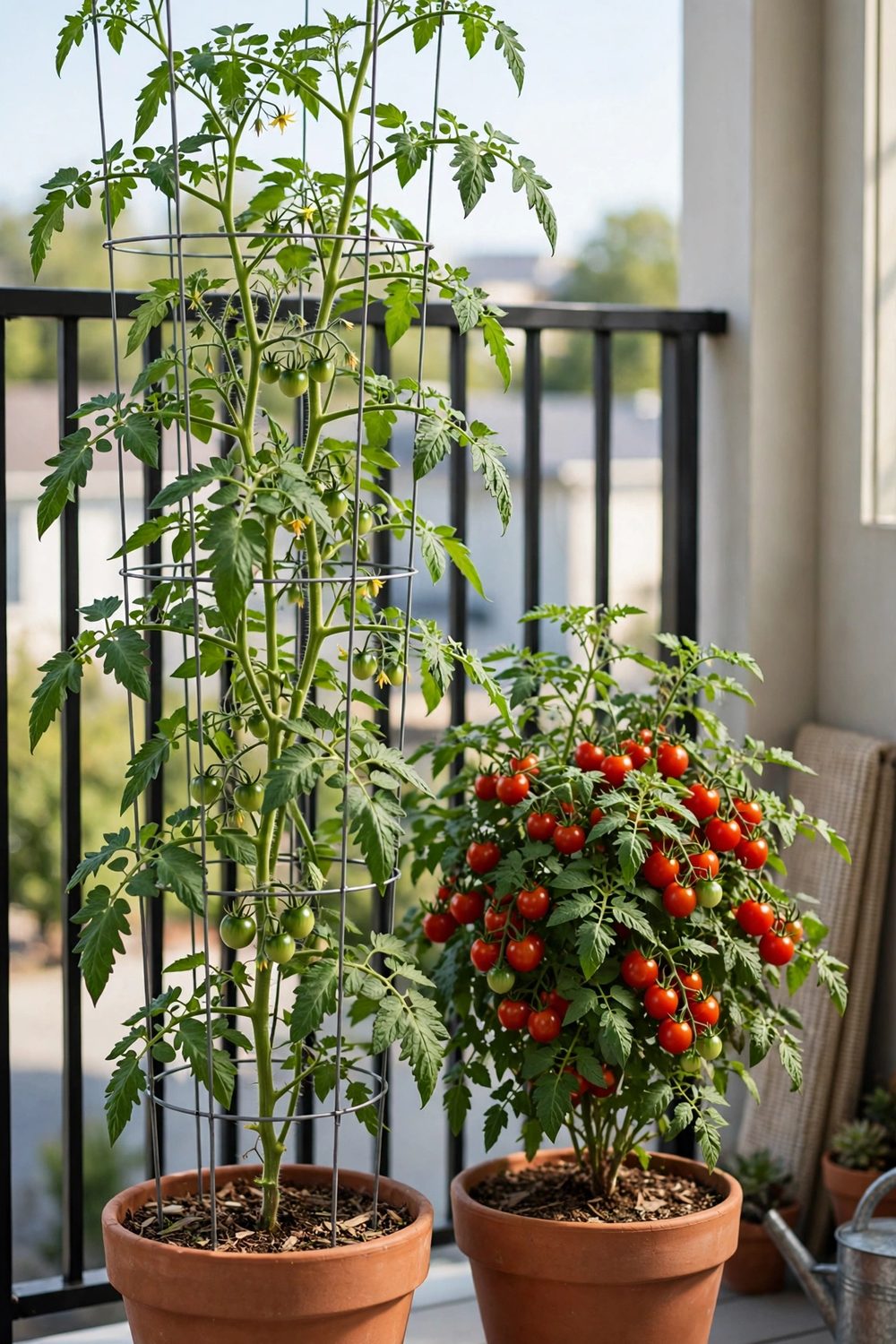
Read the label before you remove a single shoot. Plant type is the whole decision here.
Indeterminate plants keep growing, flowering, and fruiting until frost stops them.
Types such as ‘Sun Gold’ and ‘Sweet Million’ fall in this group and benefit from regular sucker removal.
Determinate plants grow to a set size, flower in a flush, and ripen most fruit at once.
Types such as ‘Roma VF’ and ‘Patio Choice Yellow’ should be left alone.
Pruning a determinate plant removes fruiting wood and cuts the harvest in a direct way.
Semi-determinate types such as ‘Celebrity’ sit in the middle. Remove only suckers below the first flower truss.
Dwarf types such as ‘Tiny Tim’ and ‘Red Robin’ also need no sucker pruning at all.
If the label is lost, check the packet, order note, or variety name online before you start.
When you cannot confirm the type, leave the plant alone for another week and check again.
Snap Small Suckers by Hand at 2 to 4 Inches
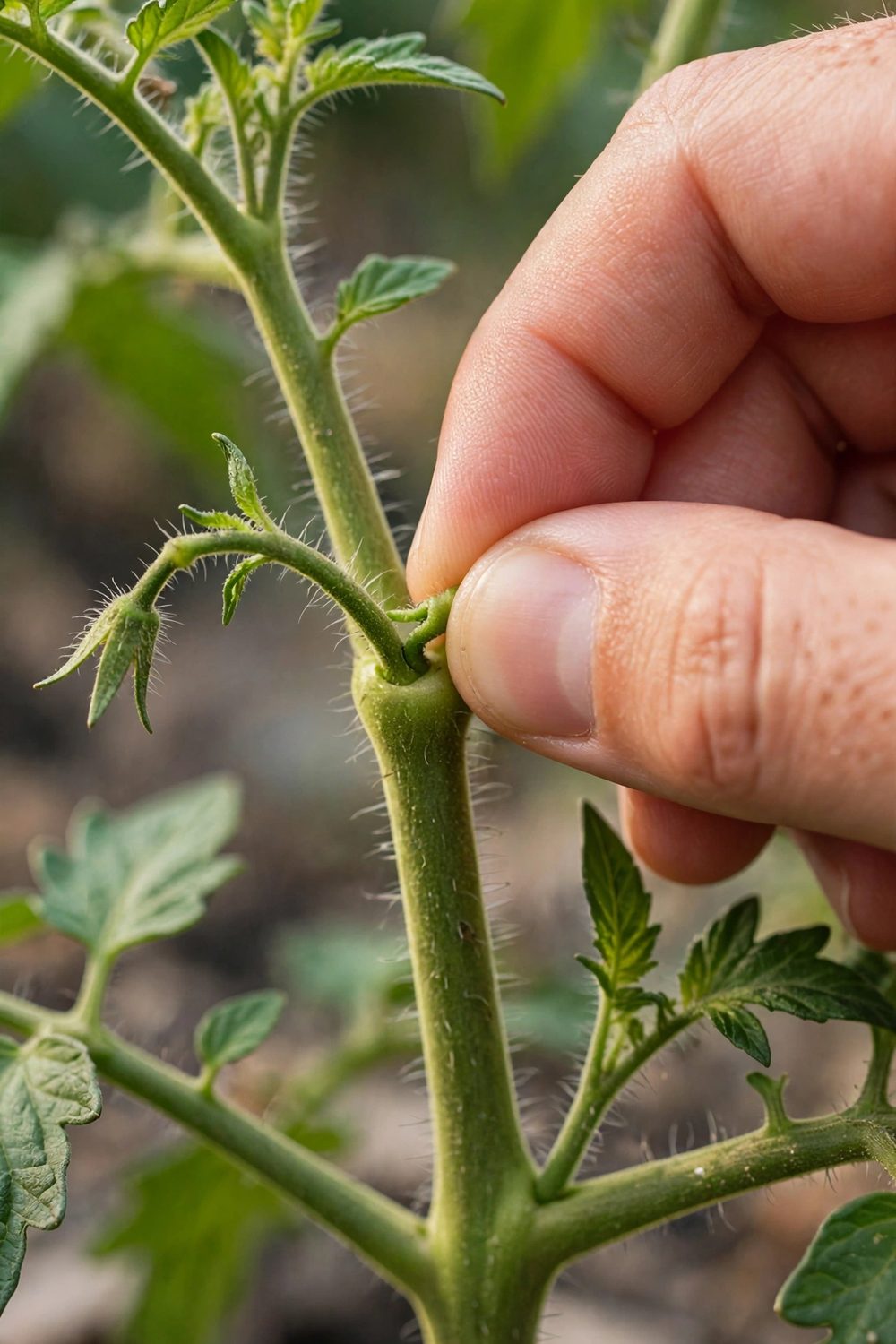
Work on a dry morning, after dew has lifted and before heat builds in the leaves.
Hold the main stem steady with one hand so the plant does not rock in the pot.
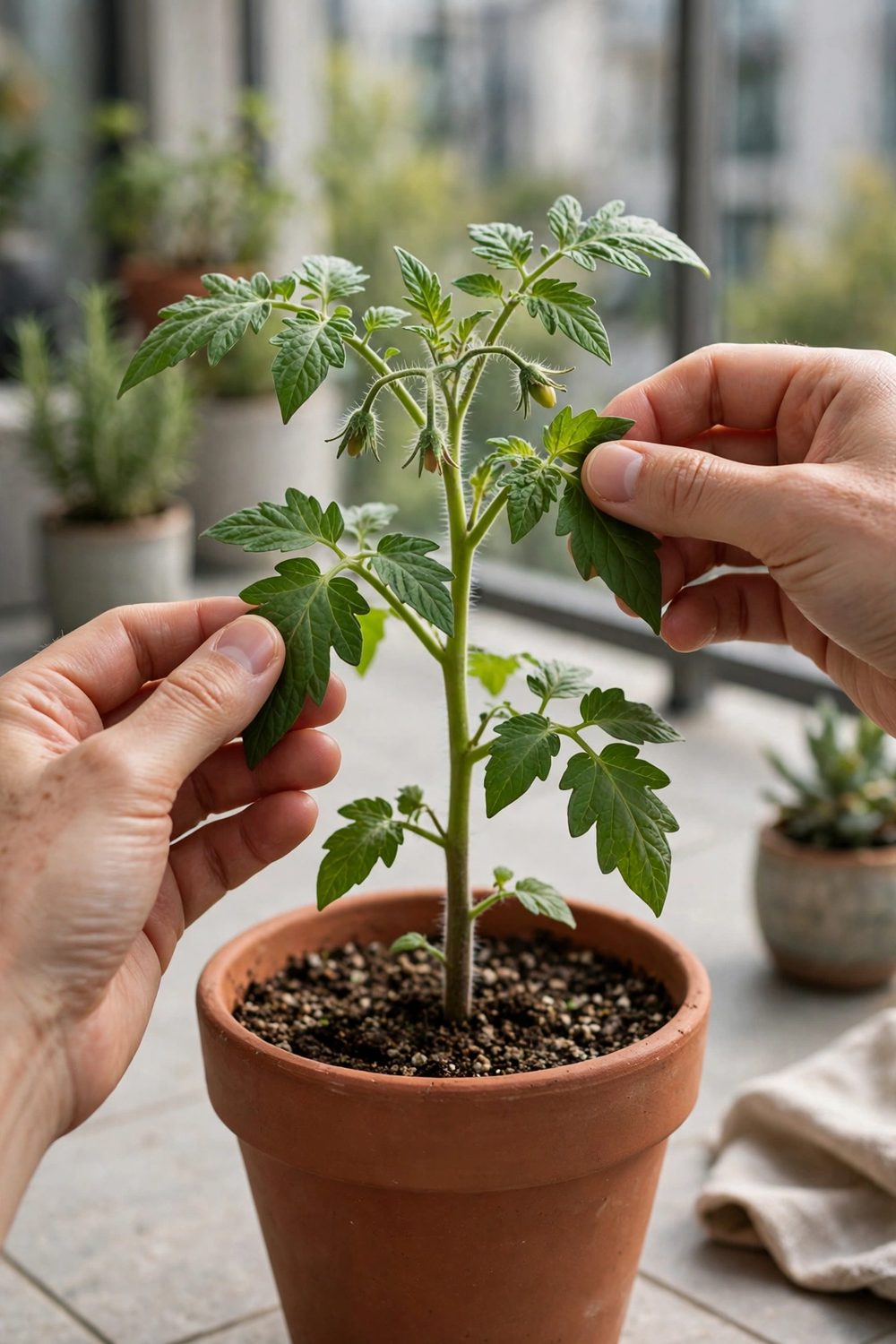
Grip a small sucker between thumb and finger when it is 2 to 4 inches (5 to 10 cm) long.
Bend it sharply to one side, then to the other if it does not give at once.
It should snap at the base with a clean break and leave a small wound.
Small wounds heal fast, often within a day in warm, dry air.
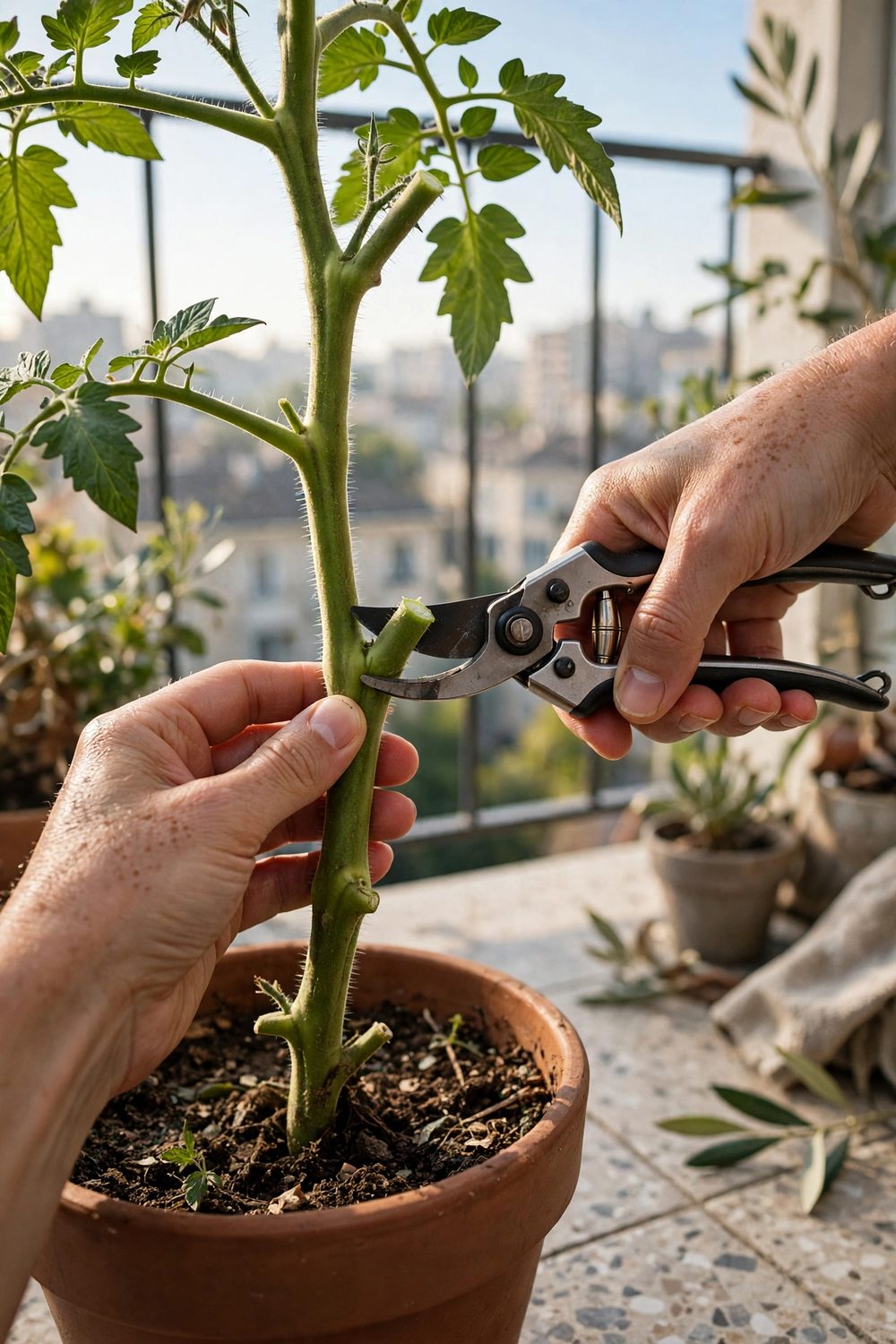
For a sucker thicker than a pencil, use clean snips and cut close to the stem.
Leave no long stub, because stubs can die back and invite rot in damp weather.
Pro Tip: Prune little and often. A weekly two-minute check beats one hard cut that removes half the plant.
Drop removed suckers in a bucket, not on the soil surface in the pot.
Healthy green pieces can go to compost. Any spotted or yellow piece goes in household waste.
Choose One Stem or Two Stems for Your Pot
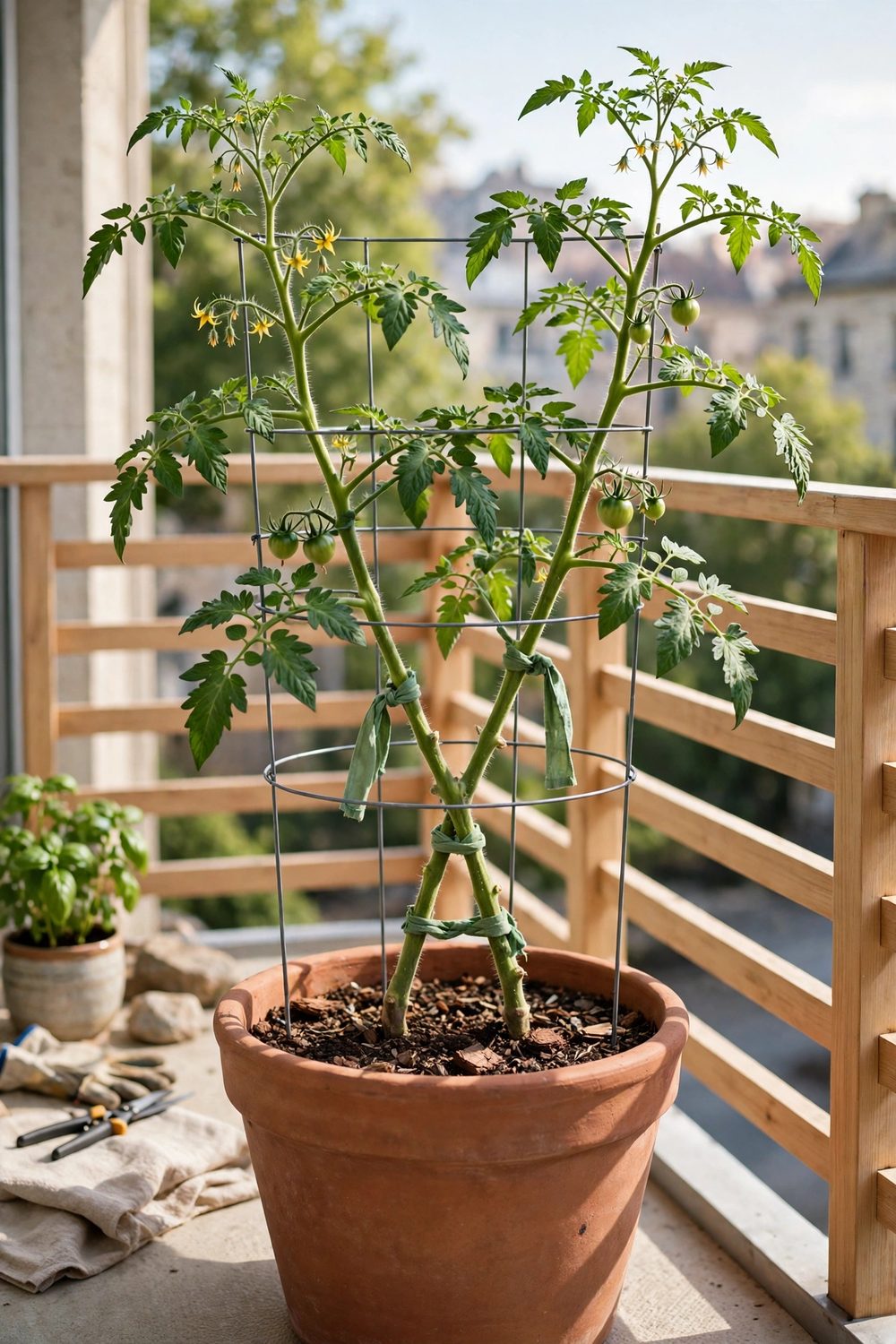
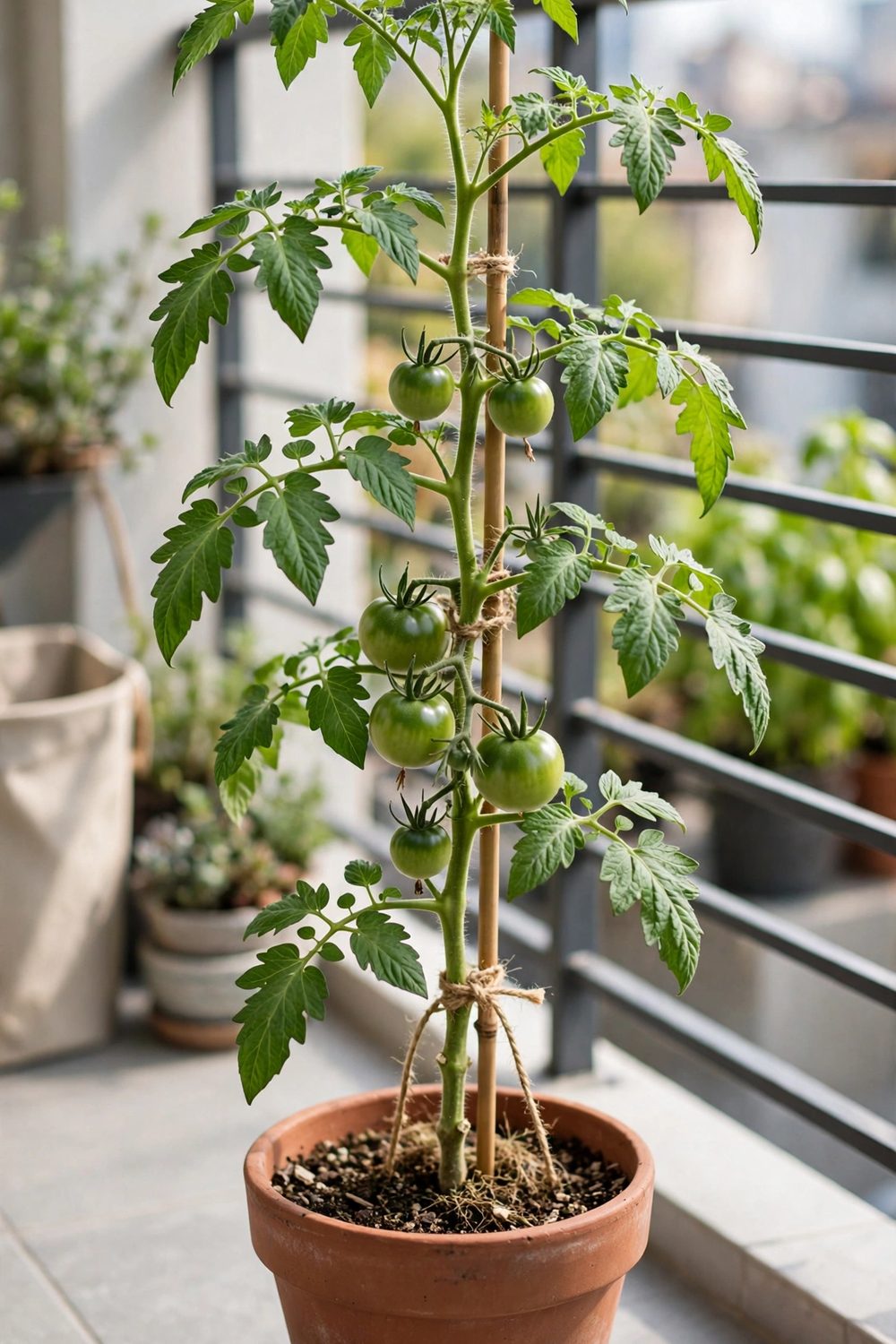
For an indeterminate plant in a 5-gallon (about 19 litre) pot, one main stem is the safe choice.
One stem keeps airflow open, makes tying simple, and lets the roots support fruit well.
In a 10-gallon (about 38 litre) pot, you can keep two stems if light is strong.
To make a second stem, keep the strong sucker just below the first flower truss.
That low sucker is vigorous and forms a balanced Y shape with the main stem.
Remove every other sucker above and below that point as the plant grows.
Tie each kept stem to its own section of cage or its own stake.
Use a loose figure-eight tie so the stem can thicken without the tie cutting in.
Check ties every week, because a tight tie can scar a stem in hot growth.
This choice also links to spacing. See how many vegetable plants per pot before crowding more plants in.
Two stems on one plant is not the same as two plants sharing one small pot.
Leave Shade Leaves Over Fruit in Heat
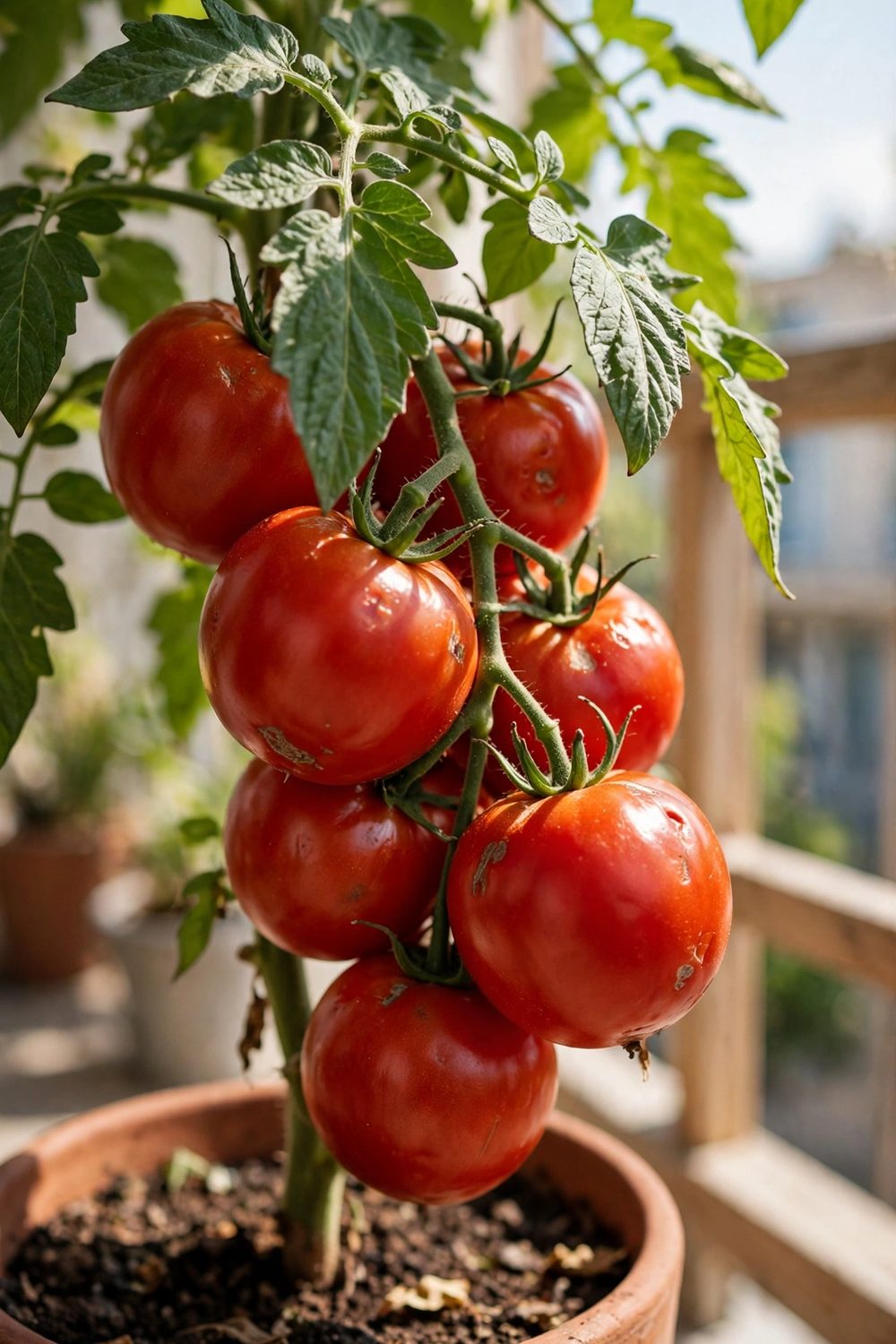
Sucker removal is not leaf stripping. Leaves feed the plant and shade the fruit.
Keep healthy leaves that sit directly above a truss of ripening tomatoes.
In strong sun, exposed fruit can scald, with pale, papery patches on the sun side.
That risk rises in a heatwave, on a south-facing balcony, and on light-colored walls.
Remove only leaves that are yellow, spotted, dead, or touching the soil in the pot.
Also remove a leaf only when it blocks air in the center and stays wet after watering.
Never take more than about one fifth of the leaves in a single session.
If you need more airflow, spread the stems on the support before you cut leaves.
Steady watering matters here too. The rules in how often to water vegetables in pots help fruit ripen evenly.
A shaded truss, open air at the base, and dry leaves at night is the right balance.
Root a Removed Sucker in Water for a Free Plant
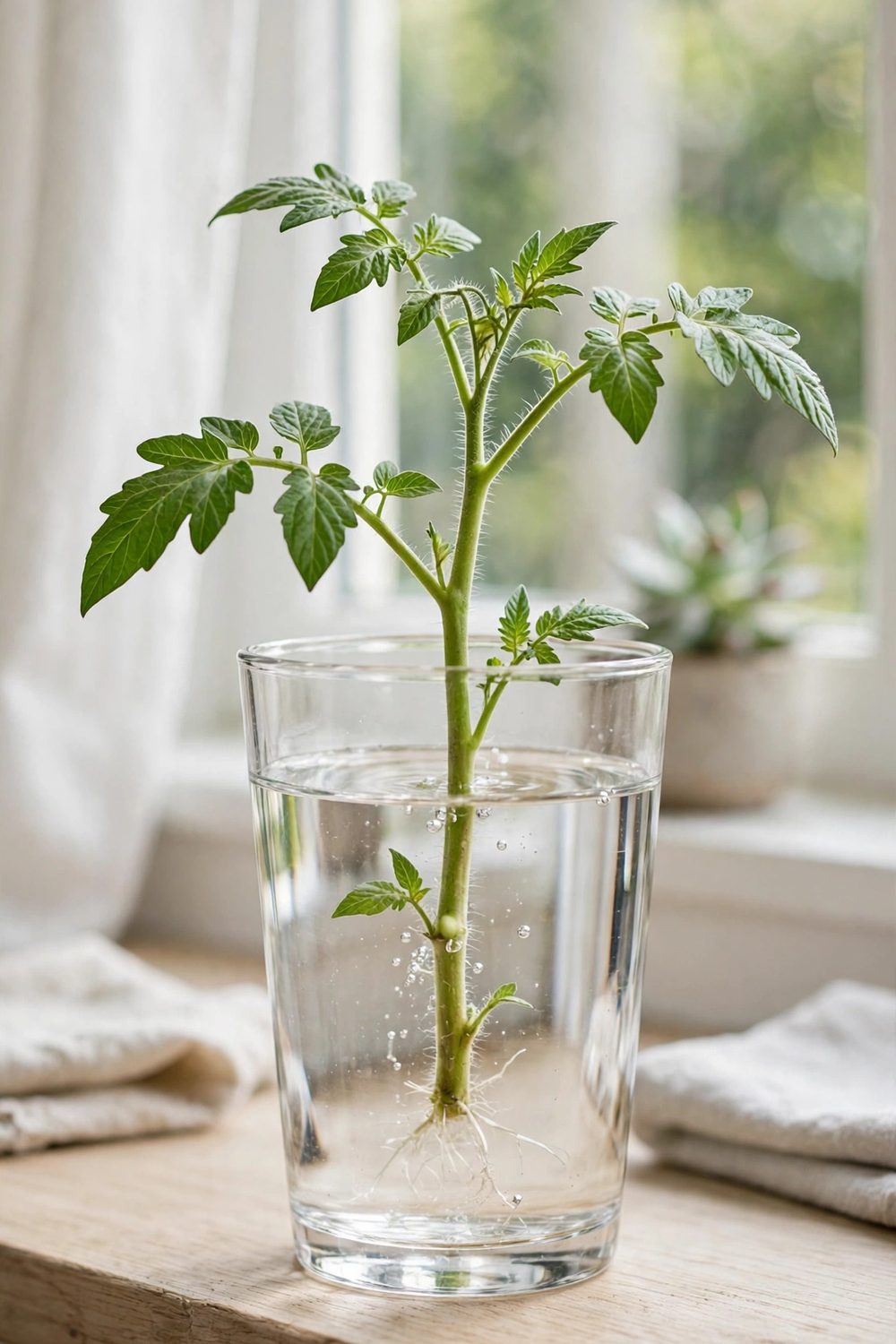
A healthy sucker 4 to 6 inches (10 to 15 cm) long can become a new plant.
Pick a sucker from an indeterminate plant that is green, sturdy, and free of spots.
Strip the lower leaves so no leaf sits under water and rots in the glass.
Place the stem in a clear glass with the cut end about 2 inches (5 cm) under water.
Set the glass on a bright windowsill, out of harsh midday sun for the first days.
Change the water every two to three days so it stays clear and fresh.
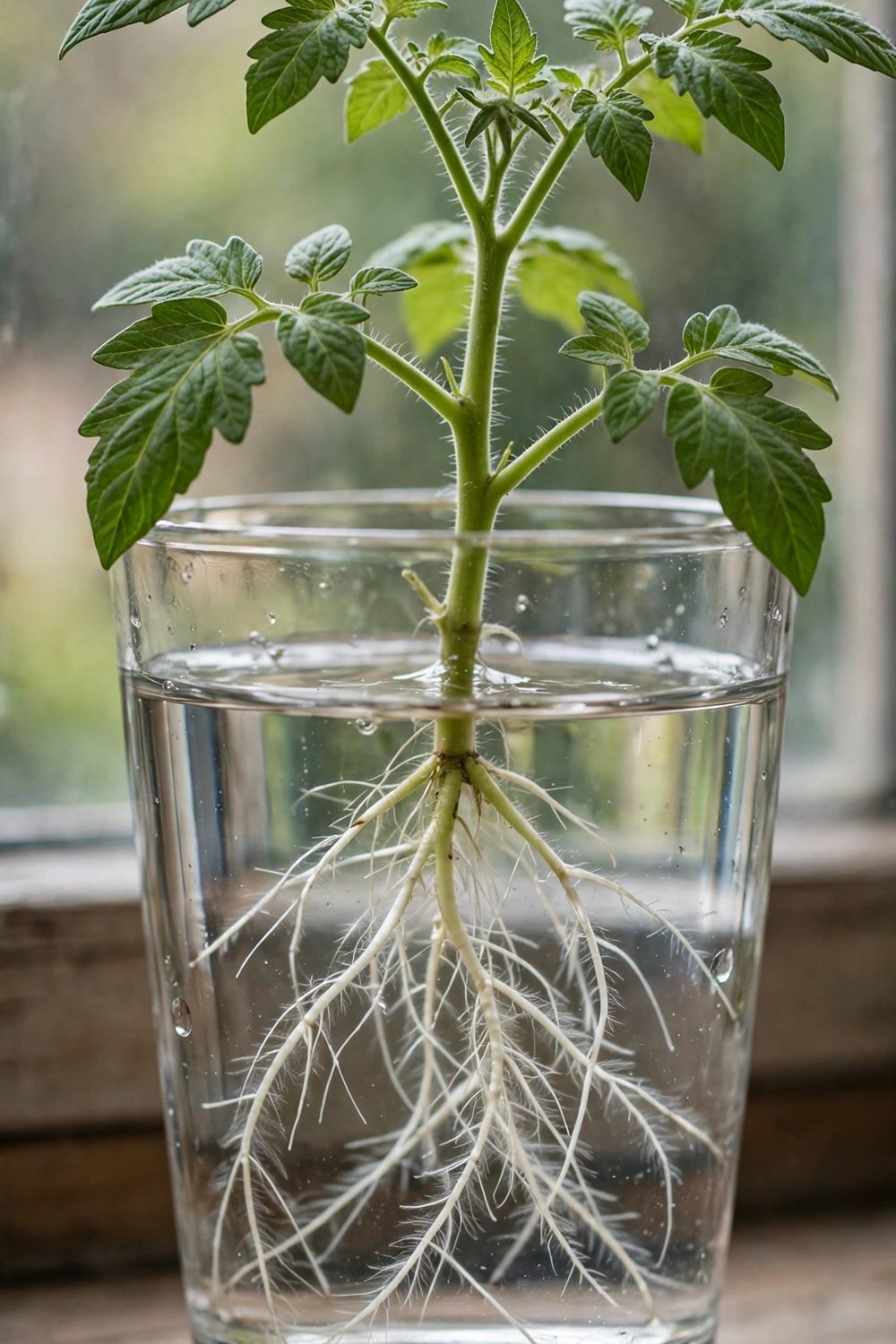
White roots often show in seven to ten days in warm room conditions.
Wait until roots are about 2 inches (5 cm) long before you pot the cutting up.
Plant it in fresh mix, water it well, and keep it shaded for three days.
After that, move it into sun in stages and treat it like any young tomato.
Late in the season, count back from your first frost before you start a new plant.
A rooted sucker needs warm weeks ahead to flower and ripen any fruit it sets.
Common Mistakes
Pruning determinate plants. This is the costliest error in pots, and it cannot be undone.
Each sucker on a determinate plant carries flowers. Removing them removes part of the crop.
Stripping leaves in a heatwave. Bare fruit scalds fast, and the plant loses the leaves that feed it.
Prune suckers if you must, but keep the shade leaves over every exposed truss.
Pruning wet plants. Wet leaves and wet hands spread disease from plant to plant with ease.
Wait for a dry morning, and clean snips between plants if one plant looks sick.
Letting suckers grow huge, then cutting hard. A thick sucker leaves a large wound and shocks the plant.
Weekly checks at 2 to 4 inches keep wounds small and the plant steady.
Tearing suckers off. A tear down the main stem heals slowly and opens a path for infection.
Snap with a sharp sideways bend, or use snips when the stem feels woody.
Many of these errors appear in container gardening mistakes that kill beginner vegetables as well.
If leaves yellow or fruit shows dark sunken ends, check tomato problems in pots for the likely cause first.
Frequently Asked Questions
Do cherry tomatoes in pots need sucker pruning?
Most cherry types are indeterminate, so yes, regular pruning helps in a pot.
Keep one or two stems, remove other suckers weekly, and tie each stem well.
Dwarf cherry types are the exception. Leave dwarf plants alone and let them bush out.
What happens if I never prune suckers at all?
An indeterminate plant will still fruit, but it turns dense and hard to manage.
Airflow drops, leaves stay wet longer, and ripe fruit hides inside the tangle.
In a small pot, roots also struggle to support so many growing stems.
Can I prune a sucker that already has flowers?
You can, but check the plant type and the stem plan before you cut.
On a one-stem plant, remove it with clean snips if it is thick or flowering.
On a two-stem plant, that flowering sucker may be the second stem you meant to keep.
How often should I check for suckers in summer?
Check once a week in early summer and twice a week in hot, fast growth.
Suckers can move from one inch to six inches in a single warm week.
A quick check while you water in the morning is the easiest habit to keep.
Should I remove suckers below the first flower truss?
On indeterminate plants, yes. Low suckers crowd the base and sit close to wet soil.
The one exception is the strong sucker kept on purpose as a second stem.
Mark a kept stem with a soft tie so you do not remove it by habit.
Is it too late to prune a large sucker?
No, but use clean snips, work on a dry day, and expect a larger wound.
Cut close to the main stem, leave no stub, and avoid heavy leaf removal that day.
If the sucker is healthy and long, root it in water instead of binning it.
Quick Reference
- Indeterminate: Prune suckers weekly. Keep one stem in 5 gallons, or two stems in 10 gallons.
- Determinate: Do not prune suckers. Pruning cuts flowers and reduces the harvest.
- Semi-determinate: Remove only suckers below the first flower truss.
- Dwarf and micro: Do not prune suckers. Let the compact plant grow as bred.
- Best size to snap: 2 to 4 inches (5 to 10 cm), by hand, on a dry morning.
- Thick suckers: Cut with clean snips, close to the stem, with no stub left.
- Leaves: Keep shade leaves over fruit. Remove only yellow, spotted, dead, or soil-touching leaves.
- Rooting: Place a 4 to 6 inch sucker in water. Pot it up at 2 inch roots.
Start with the label, then check each leaf axil from the bottom of the plant up.
Snap the small suckers, keep your chosen stems tied, and leave shade over the fruit.
That weekly habit keeps a potted tomato open, healthy, and far easier to harvest.
Save this guide on pruning tomato suckers in containers when to bother to your tomato board for later.


