

Feeding Tomatoes in Pots: A Simple Schedule
Potted tomatoes often stall for one plain reason: the feed ran out weeks ago and nobody noticed.
A pot holds a small amount of mix, and every watering washes a little food out of the drainage holes.
Leaves pale, flowers drop, and fruit stays small, even on a plant that gets full sun.
This guide to feeding tomatoes in pots simple schedule style gives you five clear stages to follow.
You feed once at planting, change the feed when flowers open, then settle into one weekly rhythm.
The whole routine takes about ten minutes a week once the habit is set.
By the end, you will know what to give, when to give it, and when to ease off.
You will also learn the leaf signs that tell you the plant wants more food or less.
No charts cover the fridge door here, and no daily mixing is needed at all.
One fixed feed day each week carries a potted tomato from planting day to the last ripe fruit.
Time: About 10 minutes per feed, once a week in season · Difficulty: Easy, fine for a first tomato plant
What You Need
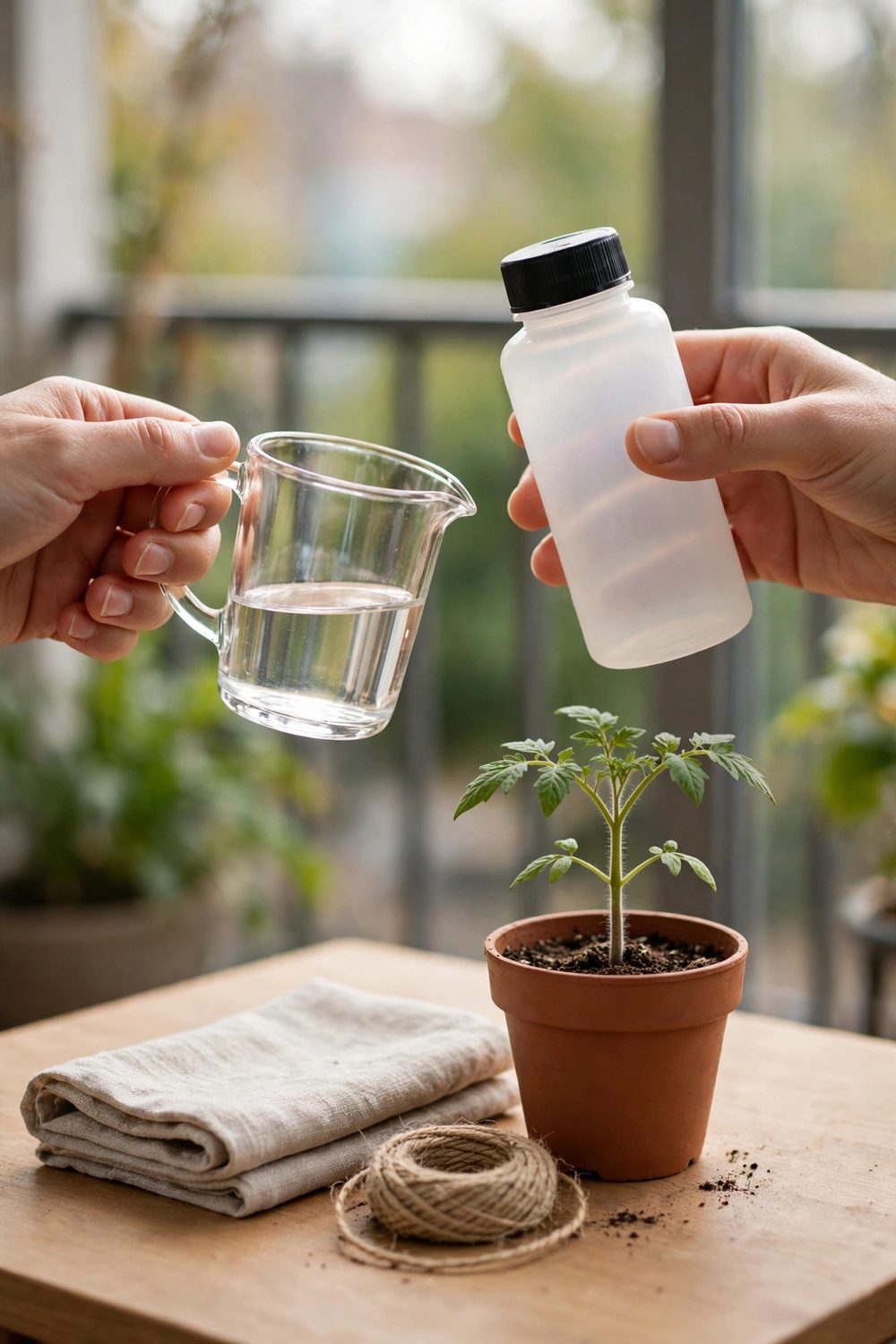
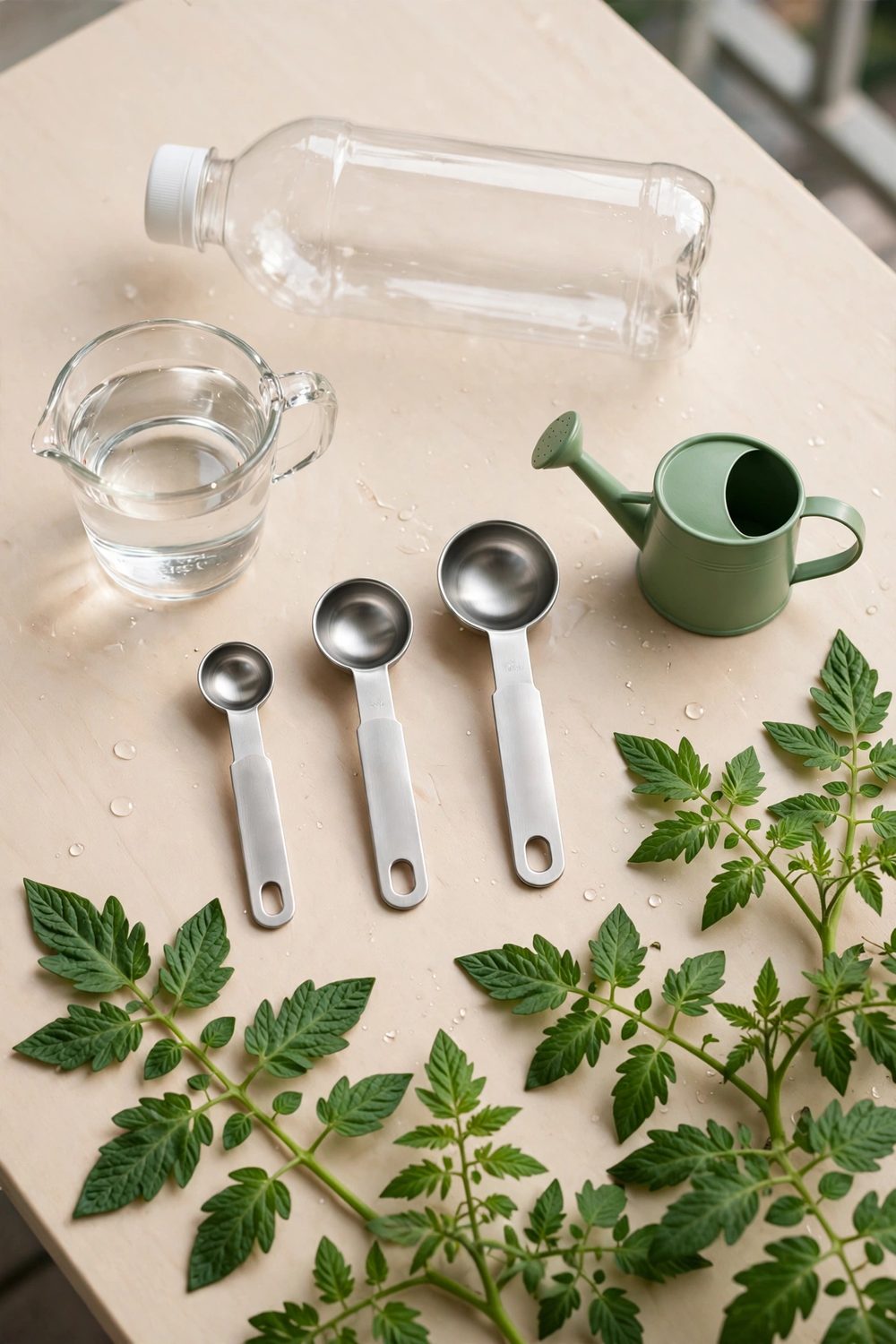
Gather the short list below before planting day, and the season runs without last minute shop trips.
A small kit on the balcony shelf beats a cupboard full of half used bottles and guesswork.
- A balanced starter feed: a general feed with even numbers on the label. It supports roots and leaves in the first weeks after planting.
- A tomato-formula liquid feed: higher in potassium than nitrogen. Potassium backs flowers and fruit once the plant starts to bloom.
- A granular tomato feed (optional backup): slow grains worked into the surface. They help during holidays when the weekly liquid feed gets missed.
- A watering can: a can with a rose head spreads feed evenly. Aim for one that holds about 2 gallons (about 7.5 litres).
- A measuring jug and spoon set: label doses are small, often a capful or a spoonful. Guessing by eye is how most over-feeding starts.
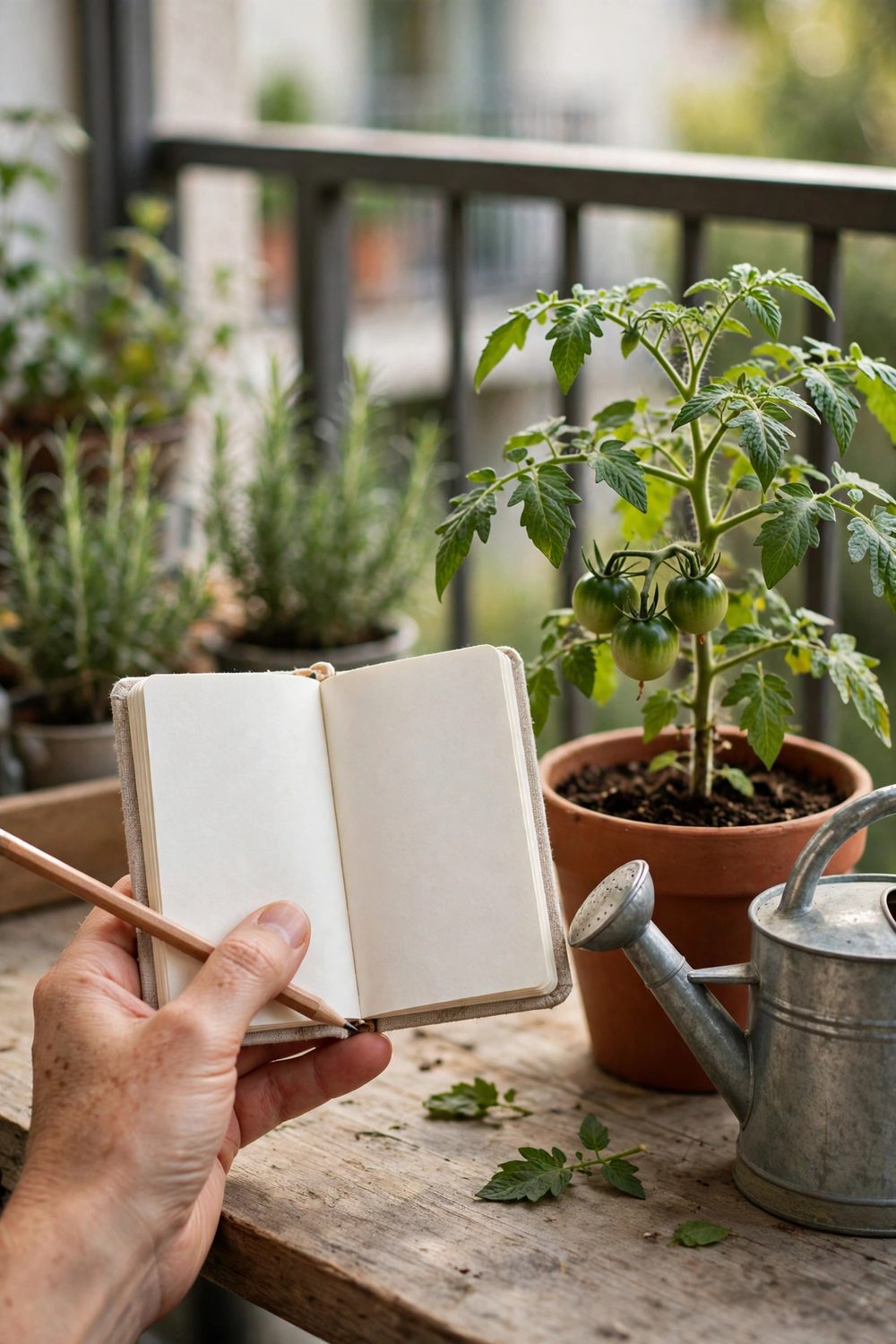
- A plain notebook or phone note: write the feed day and the product used. Memory fades fast by week six of a long season.
- Mulch for the pot surface: straw, bark, or shredded leaves. Mulch slows drying, so feed stays in the root zone longer.
Start with the right base under the plant as well, because feed cannot fix a poor mix.
Our guide to soil mix for tomatoes in pots shows what to fill the pot with.
Good mix holds moisture evenly, drains freely, and gives the first feed something to work with.
Feed at Planting With a Balanced Starter
Water the transplant well in its nursery pot about one hour before planting, so roots slide out intact.
Fill the new pot with pre-moistened mix, leaving room for the root ball and a mulch layer.
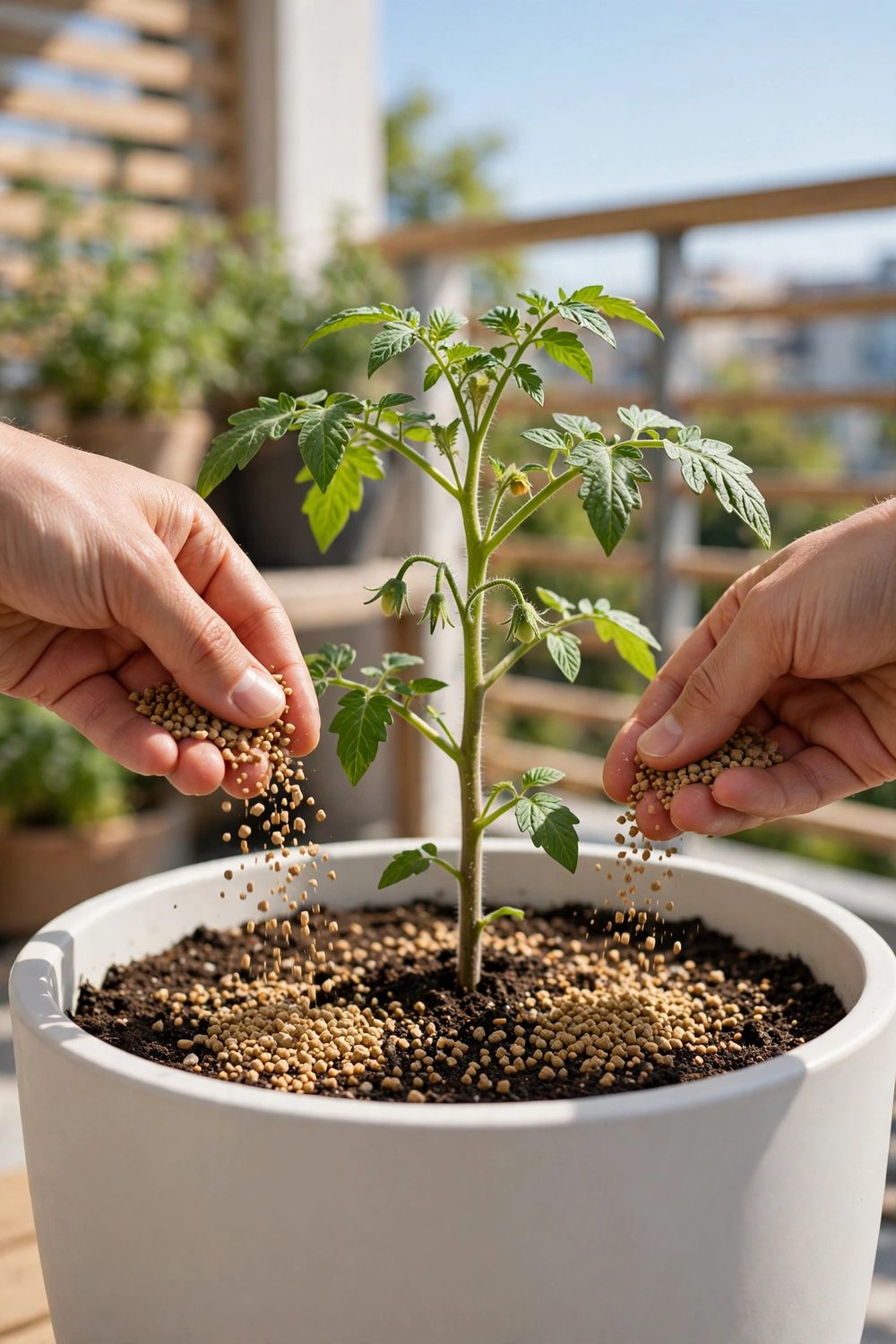
Mix the starter feed into the top layer of mix at the label rate for containers.
Granular starter goes in as a measured handful scattered through the fill, never in one heap.
Set the plant deep, burying the stem up to the first true leaves for extra roots.
Water the pot slowly until a little runs from the drainage holes, settling mix around roots.
That first drink also moves the starter feed down into the root zone where it counts.
Hold off on any extra feed for the next two weeks while roots settle and spread.
A fresh pot of good mix already carries some food, and young roots burn easily.
Mark planting day in your notebook, because every later stage counts forward from this date.
Small pots dry and drain faster than big ones, so a 3-gallon pot may need its feed a day early in a heatwave. The stage order stays the same at every pot size.
Switch to a Tomato-Formula Feed at First Flowers
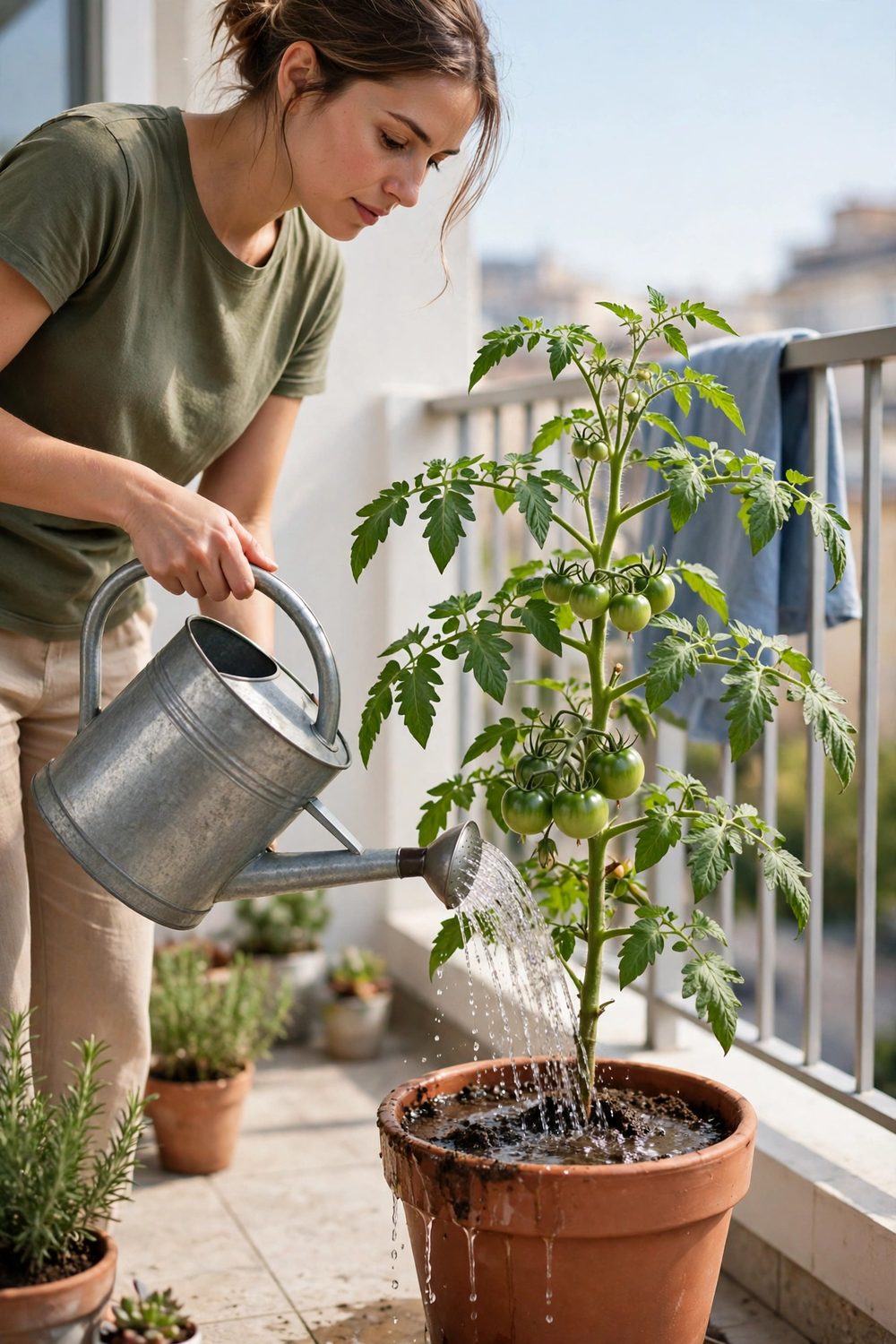
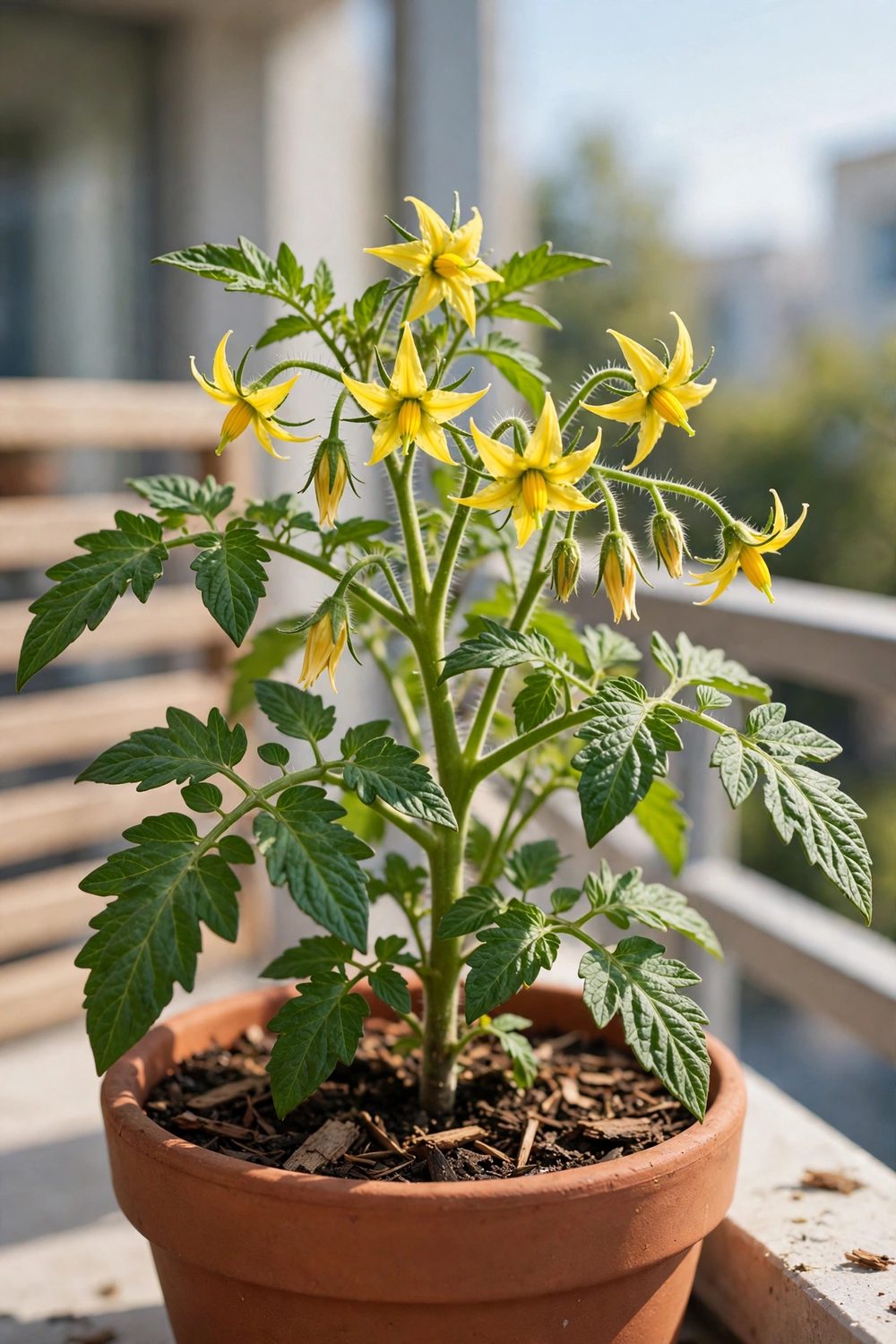
Watch for the first cluster of small yellow flowers, often four to six weeks after planting.
Flowers mark the turn from leaf growth to fruit work, and the feed should turn too.
Stop the balanced starter and move to the tomato-formula feed from this point on.
Tomato formulas carry more potassium and less nitrogen than general feeds, on purpose.
Nitrogen pushes soft leaf growth, while potassium supports flowers, fruit set, and ripe flavor.
Keep giving the young plant steady water alongside the new feed, since dry roots take up food poorly.
Our rules for how often to water vegetables in pots pair well with this stage.
Give the first tomato-formula feed at label strength on your chosen weekly feed day.
Pick a fixed day, such as Saturday morning, and keep that day for the whole season.
A fixed day turns feeding into a habit, and habits beat good intentions in August.
Pro Tip: Tie the feed day to a task you never skip, like the Saturday market run. The plant gets fed because the routine around it never slips.
Keep a Weekly Liquid Rhythm at Label Strength
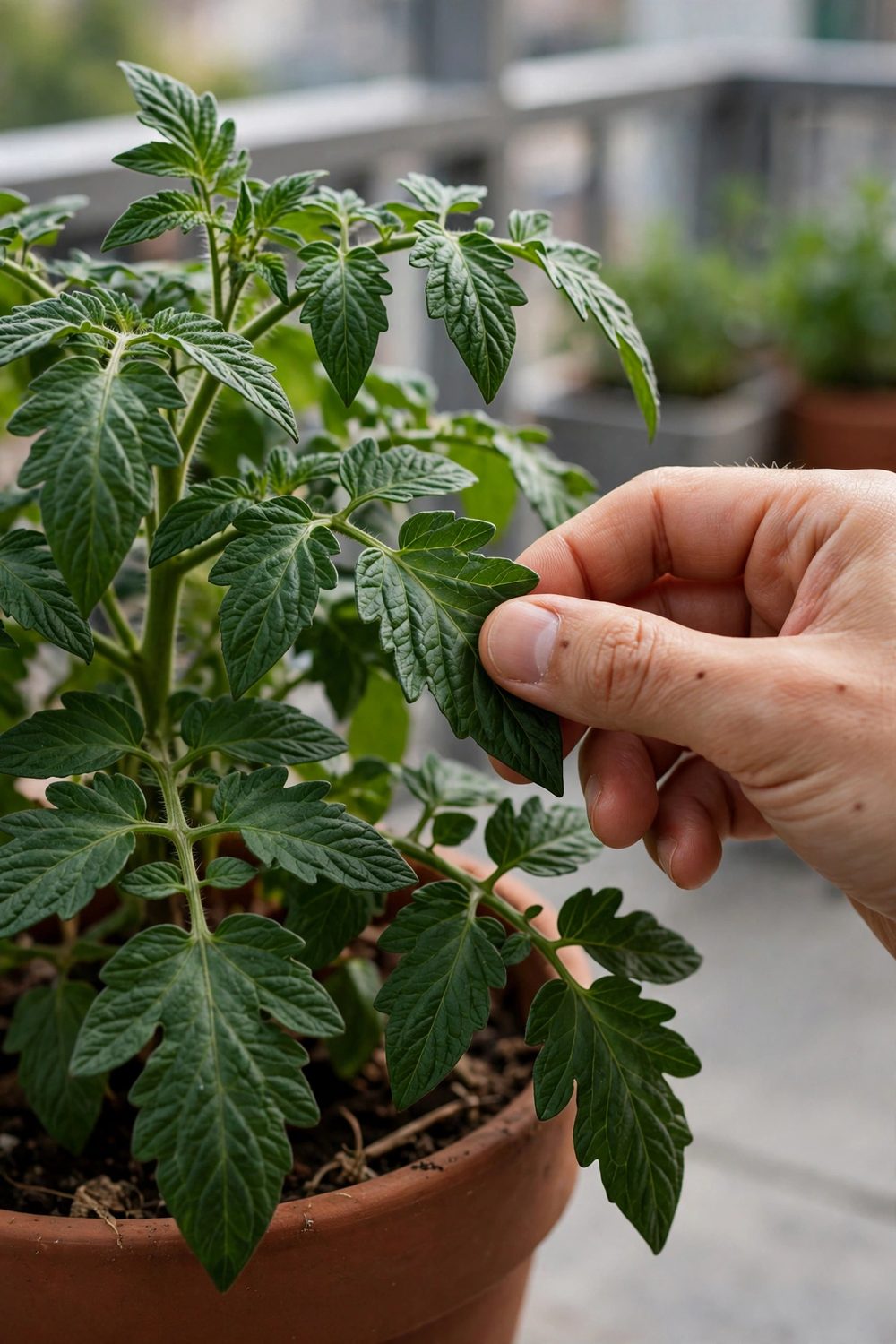
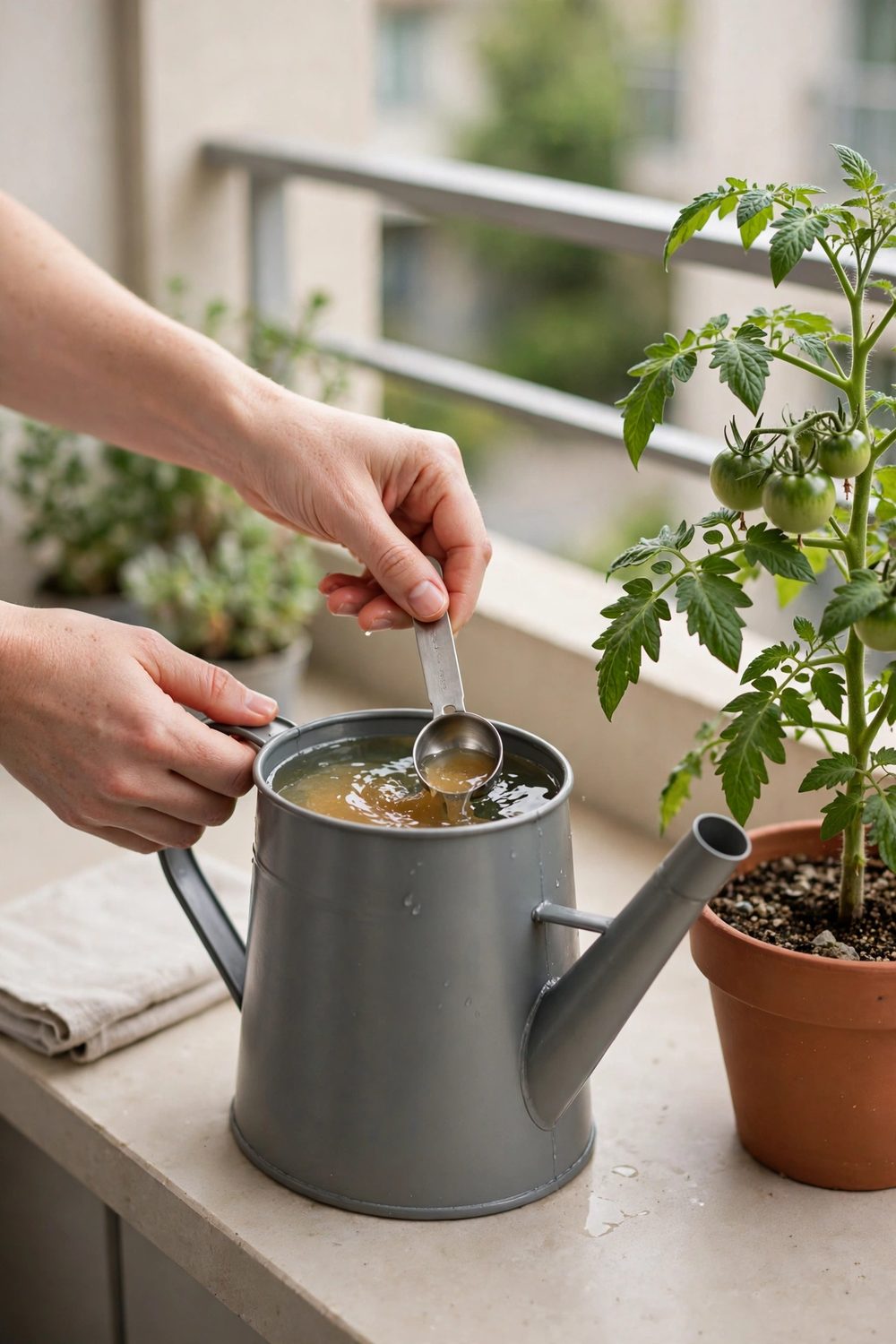
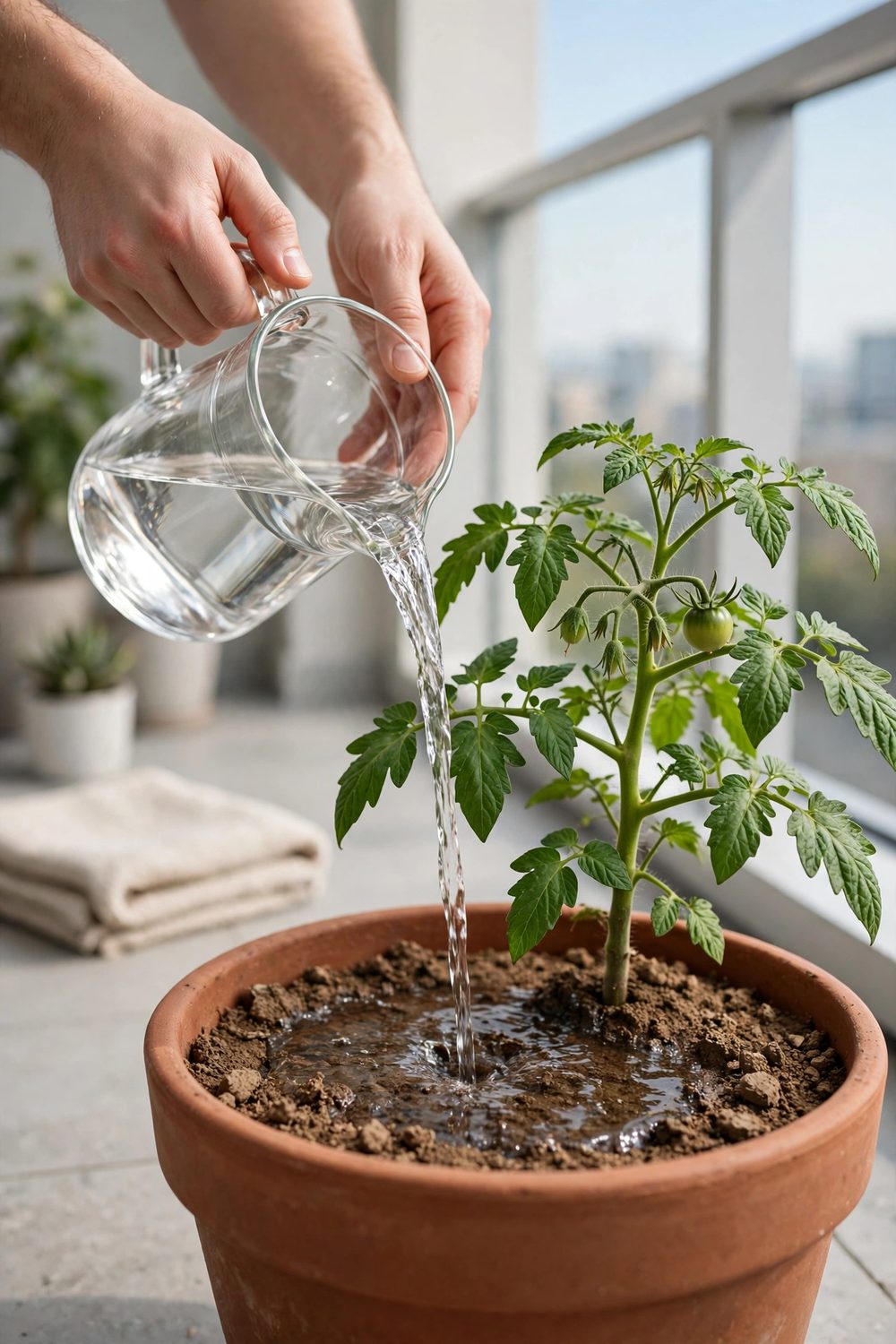
Mix the liquid feed into a full can of water at the exact dose on the label.
Measure with the jug and spoon set every time, even when the dose feels familiar.
Water the pot with plain water first if the mix feels dry to your fingertip.
Feed goes onto moist mix, so roots drink it in instead of letting it run through.
Pour the feed slowly around the base, keeping it off the leaves and the stem.
Use enough feed solution to wet the full root ball, about half the pot volume.
A 5-gallon (about 19 litre) pot often takes near a gallon of feed solution.
Feed in the morning, so the plant uses the drink through the warm part of the day.
Keep the same day and dose each week, even when growth looks fast and tempting.
Fruiting pots in hot weather may need plain water between feeds, and that is fine.
Plain water days handle thirst, while the weekly feed day handles food, and the two stay separate.
If a feed day gets missed, feed on the next day at the normal dose.
Write each feed in the notebook with the date, product, and dose you used.
That short record ends most guesswork when leaves change color later in the season.
Rain changes nothing in the plan, since pots under a balcony rail often stay dry anyway. Check the mix with a fingertip on feed day and water first if the top feels dusty.
Read the Signs of Over-Feeding and Under-Feeding
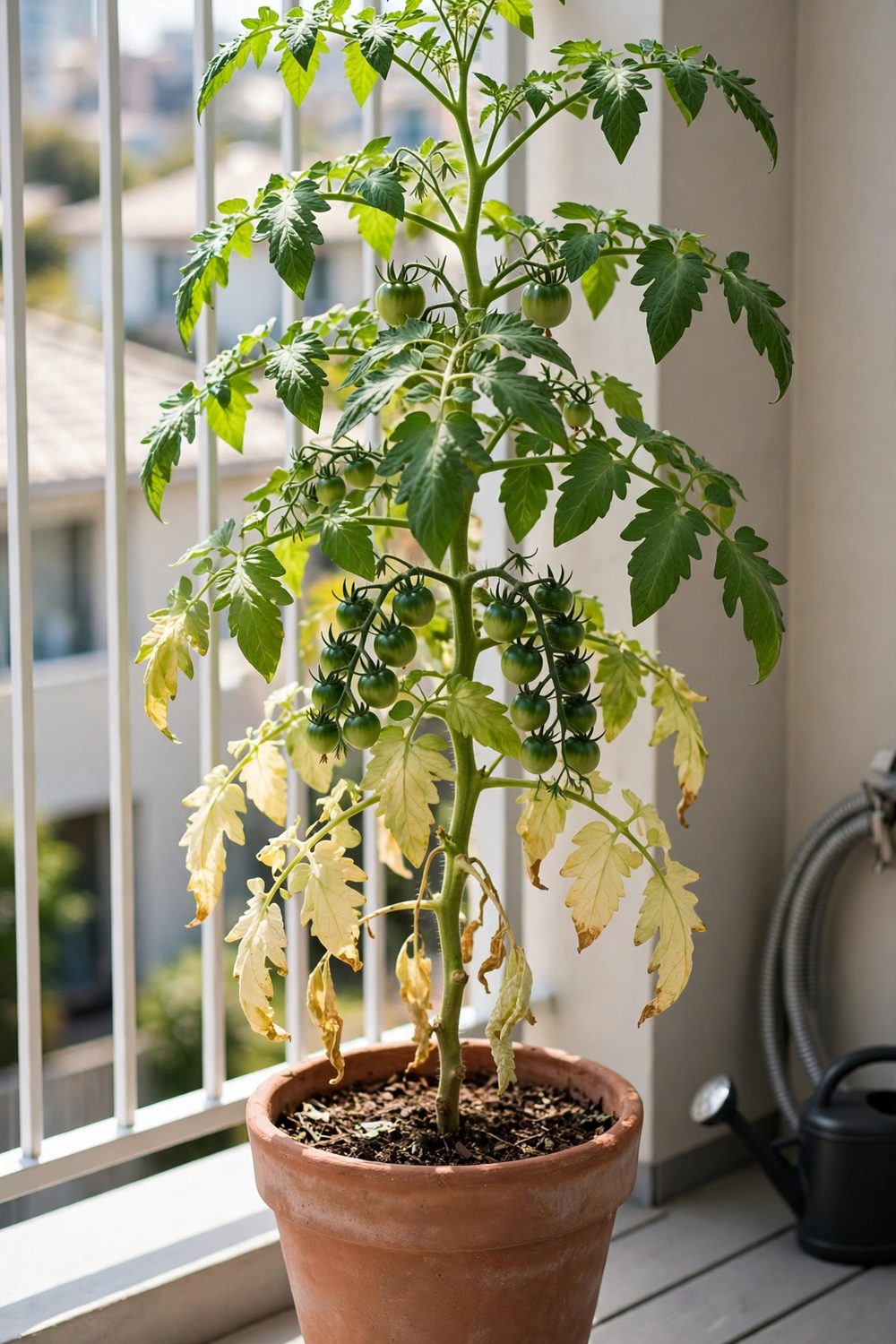
Leaves report the feed balance about one to two weeks before growth slows or surges.
Under-fed plants turn pale from the bottom up, starting with the oldest lower leaves.
Growth slows, stems stay thin, and flower clusters come small with few fruit setting.
Over-fed plants show the opposite look: very dark green leaves that curl at the edges.
Too much nitrogen gives a leafy bush with lots of foliage and very few flowers.
White crust on the mix surface or leaf tips turning brown can signal salts building up.
Answer an under-fed plant by returning to the weekly feed at label strength, on schedule.
Answer an over-fed plant by pausing feed for two weeks and watering with plain water.
One deep plain watering that drains freely helps wash extra salts out of the pot.
Some leaf trouble comes from water swings rather than feed, so check moisture before changing doses.
Our guide to tomato problems in pots covers yellow leaves and blossom end rot in full.
Change one thing at a time, then watch the new leaves for a week before judging.
New growth tells the truth first, since old damaged leaves rarely green up again.
Taper the Feed Late in the Season
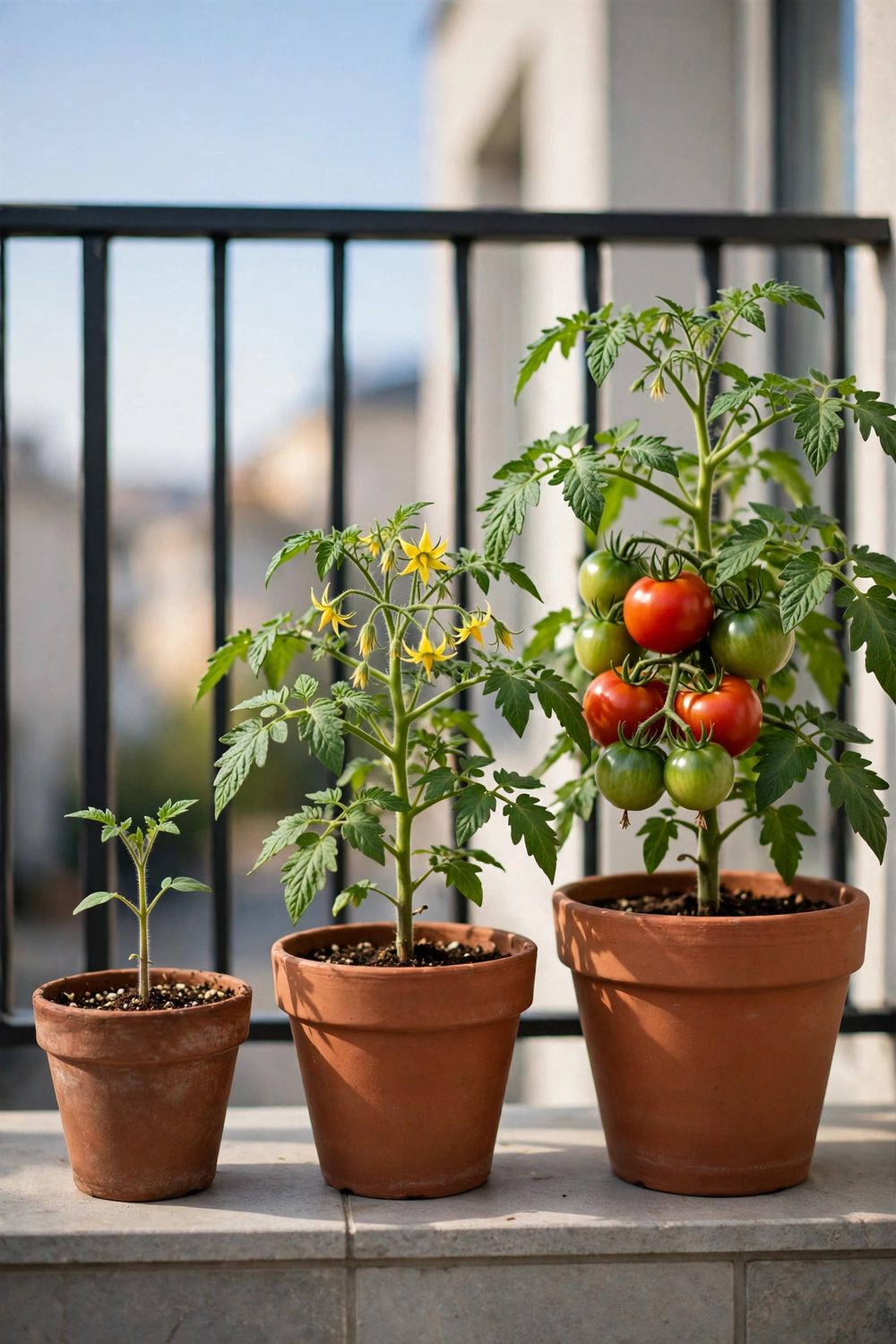
Late season fruit needs ripening energy more than fresh growth, so the feed eases down.
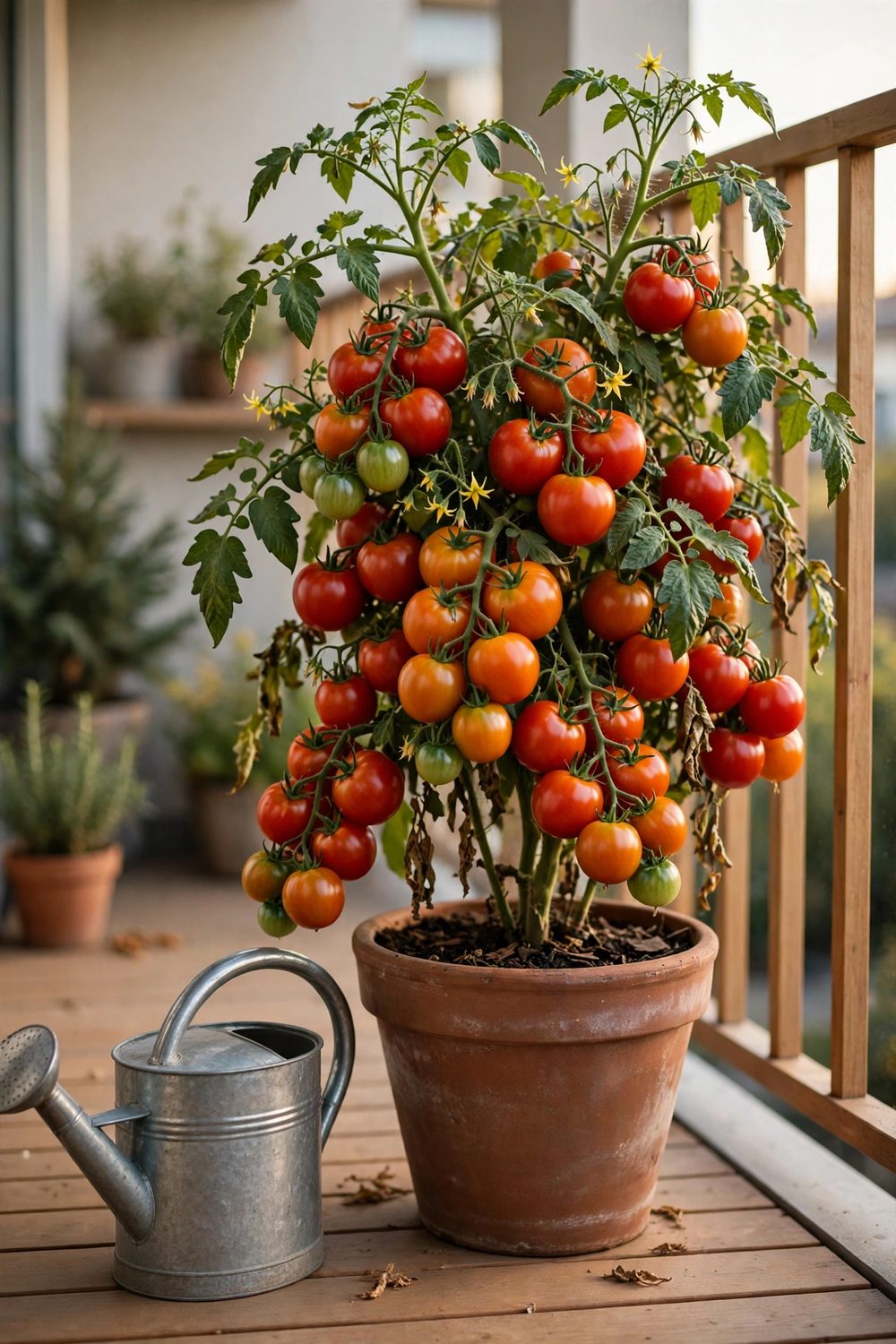
When nights cool and most fruit has set, drop to feeding every two weeks.
Use half the label dose at each late feed, mixed in the same full can of water.
Stop feeding fully about two weeks before your first expected frost date.
Late nitrogen pushes soft new growth that frost kills and fruit that never ripens.
Keep watering steady during the taper, because ripening fruit still drinks every warm day.
Uneven watering at this stage splits ripe fruit and can bring back blossom end rot.
Determinate plants finish in one flush, so stop feeding once the last cluster colors.
Indeterminate plants keep going until frost, and the taper follows the weather, not the calendar.
Note the final feed date in the notebook, ready for a cleaner start next spring.
Heads Up: Ripening fruit on the plant still needs steady water during the taper. Cut the feed down, never the water, or skins split after the next drink.
Common Mistakes
Reaching for high-nitrogen lawn feed. Lawn products push leaf growth hard and hold back flowers for weeks.
A tomato fed like a lawn turns into a green bush with a poor harvest.
Feeding dry roots. Feed poured onto dry mix runs down the pot sides and scorches thirsty roots.
Water first, wait a short while, then feed the moist root ball at the base.
Doubling the strength to catch up. A missed week tempts many growers to mix a double dose.
Roots cannot use the extra food, and salts build up in the small pot fast.
Feed once at label strength and return to the normal day the following week.
Changing products every week. Swapping brands often means the plant gets uneven food all season.
Pick one tomato formula, finish the bottle, and judge the plant over a full month.
Feeding the leaves. Feed solution splashed on foliage in hot sun can mark and scorch leaves.
Pour at the base, under the leaf canopy, and keep the can rose low.
More of these traps appear in our roundup of container gardening mistakes that kill beginner vegetables.
Most feeding trouble comes from dose and timing slips, not from the product itself.
Frequently Asked Questions
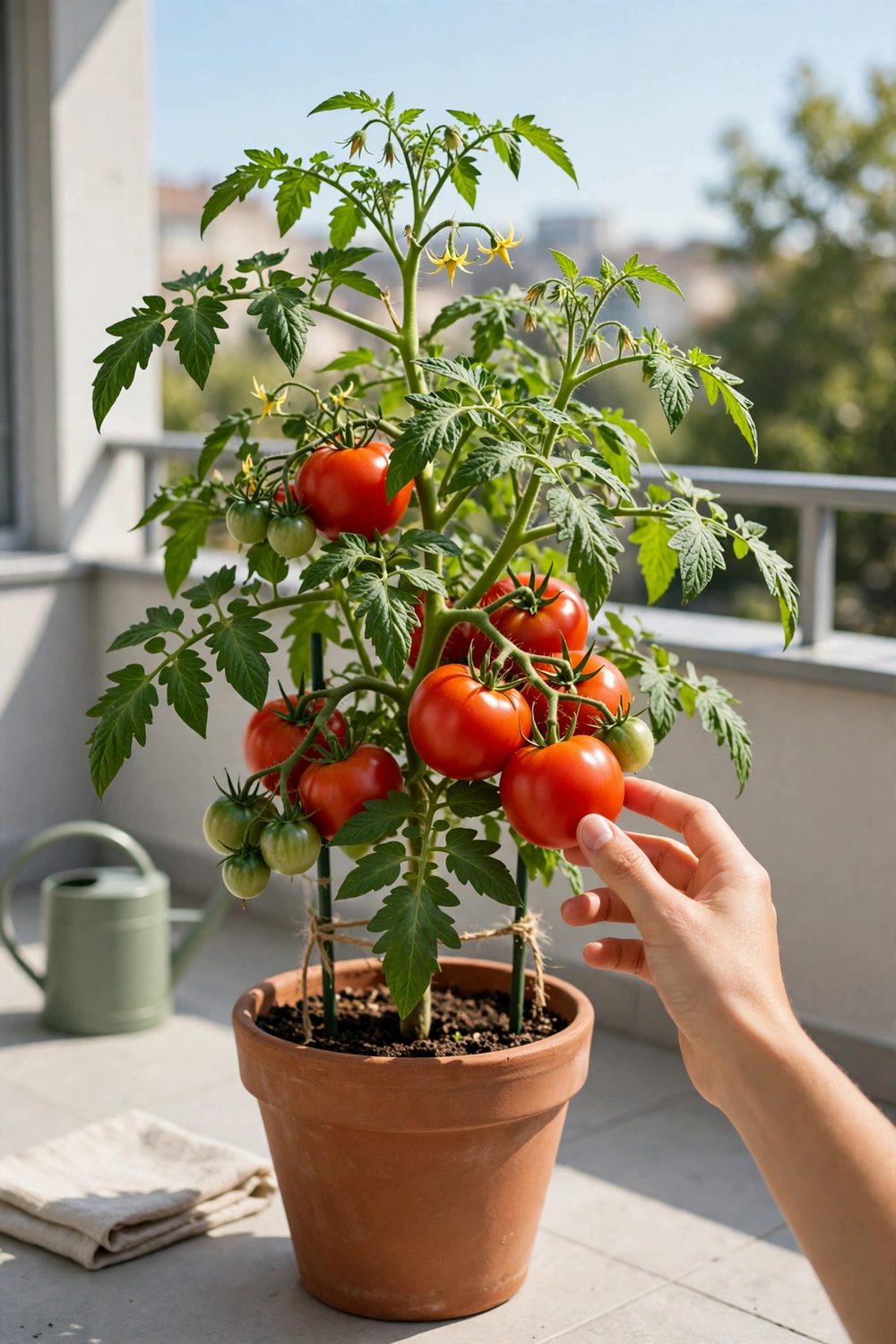
How often should I feed tomatoes in pots?
Feed once a week with a liquid tomato feed at label strength, from first flowers to late season. Before flowers, one starter feed at planting carries the plant. Late in the season, drop to every two weeks at half strength.
Can I feed tomatoes in pots every time I water?
A very weak dose at every watering works for some growers, but it is easy to get wrong. The weekly rhythm at label strength is easier to repeat and harder to overdo. Keep plain water for thirst days between feeds.
What do the numbers on a tomato feed label mean?
The three numbers list nitrogen, phosphorus, and potassium, in that order, by weight. Tomato feeds show a higher third number, since potassium supports flowers and fruit. Balanced starters show even numbers for steady early growth.
Should I feed a tomato plant that looks sick?
Check water first, because most pot trouble starts with dry or soaked roots. Hold feed while a plant wilts or shows spots, and fix the water pattern. Resume the weekly feed once new growth looks healthy and steady.
Do grow bags need a different feeding schedule?
The same five stages work in grow bags, since the root space is similar. Bags dry faster in wind, so check moisture before each feed day. Feed onto moist mix, at the same label strength and weekly rhythm.
How many tomato plants can share one pot and one feed plan?
One standard plant per 5-gallon (about 19 litre) pot keeps feeding simple and even. Two plants in one pot compete, and the stronger one takes most of the food. Our guide to how many vegetable plants per pot helps with the call.
Quick Reference
- At planting: one balanced starter feed at label rate, mixed into the fill.
- First two weeks: no extra feed, water only, while roots settle in.
- At first flowers: switch to a tomato-formula feed, higher in potassium.
- Flowering and fruiting: liquid feed once a week, label strength, onto moist mix.
- Pale lower leaves: under-feeding sign, return to the weekly feed on schedule.
- Dark curled leaves, few flowers: over-feeding sign, pause feed for two weeks.
- Late season: feed every two weeks at half strength as fruit ripens.
- Before frost: stop feeding about two weeks ahead, keep watering steady.
Feeding tomatoes in pots simple schedule habits work because each stage asks for one clear action.
Feed at planting, switch at first flowers, hold the weekly rhythm, read the leaves, then taper.
Keep the dose at label strength, the mix moist before feeding, and the notebook up to date.
Save this schedule to your tomato board, and pick your feed day before planting weekend arrives.


