

Soil Mix for Tomatoes in Pots: What to Fill With
A bag of garden soil looks like an easy fill for a tomato pot. A week later the surface is hard, water runs off, and the plant stalls.
The fix is a loose mix built for pots. This guide covers soil mix for tomatoes in pots what to fill with, in plain ratios you can repeat.
You will mix one batch, check it by hand, and fill the pot the same day. The work takes about thirty minutes for a single large pot.
No special tools are needed. A trug, a trowel, and a watering can cover the whole job from start to finish.
Time: 30 to 45 minutes per batch · Difficulty: Easy
What You Need
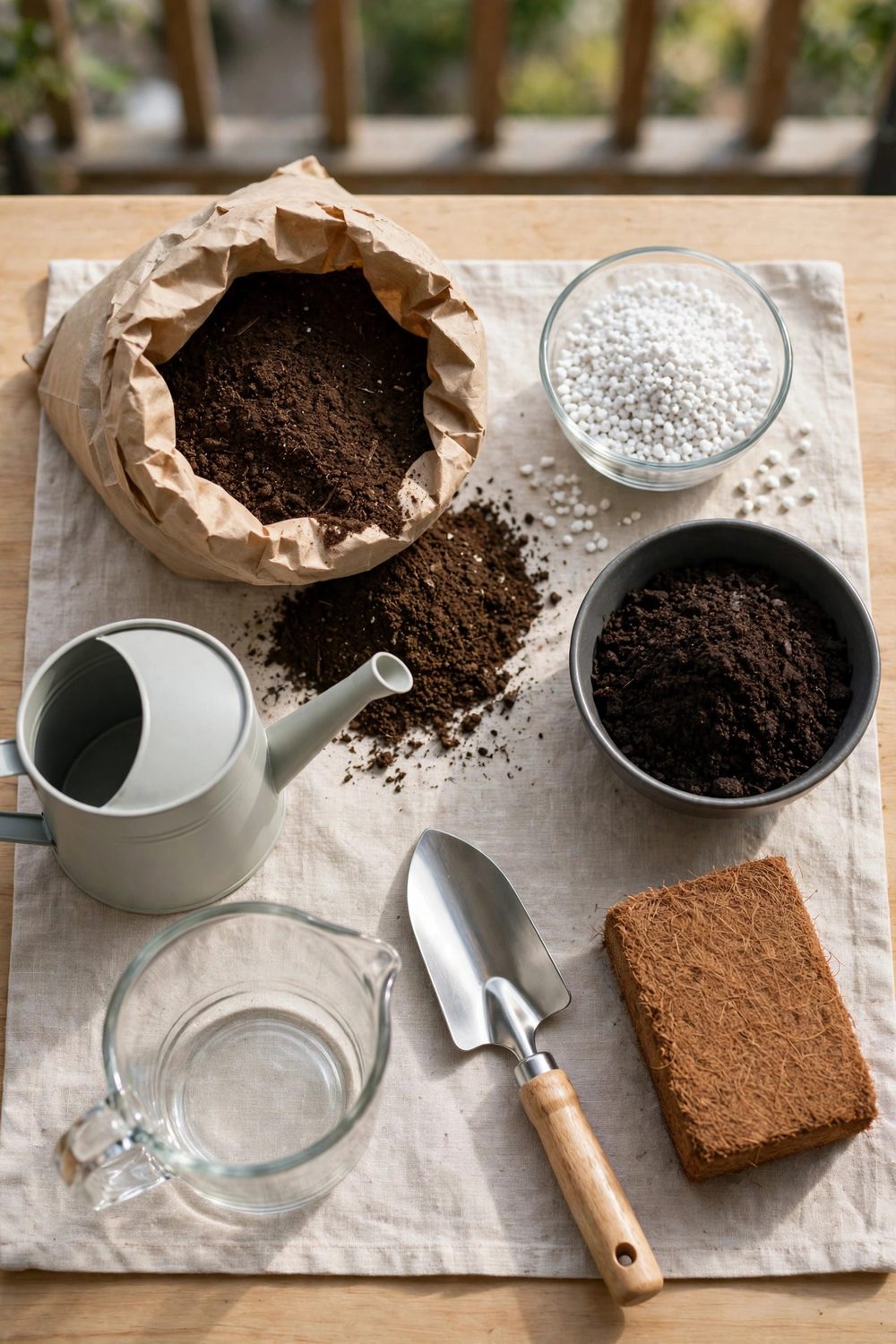
- Potting mix, peat based or peat free: the base of the batch. One large bag fills one 10 gallon (38 litre) pot with room to spare.
- Perlite: white, light grains that hold air in the mix. A coarse grade works best for large tomato pots.
- Compost or worm castings: the slow food share. Use mature compost that smells earthy, with no fresh scraps left in it.
- Coconut coir: a compressed brick or loose bag. Coir holds water on hot balconies where pots dry by midday.
- A large trug or mixing tub: wide enough to turn the mix with both hands without spilling over the sides.
- A trowel and a measuring jug: for steady ratios. A 1 litre jug makes part measures easy to repeat.
- A watering can: for pre-moistening. Warm water soaks into dry coir and peat faster than cold water.
- Mulch for the surface: straw, bark, or shredded leaves. A 2 inch (5 cm) layer slows drying after planting.
A spare bucket helps on a small balcony. It holds the extra mix while you settle and top up the pot.
Start With a Good Potting Mix Base
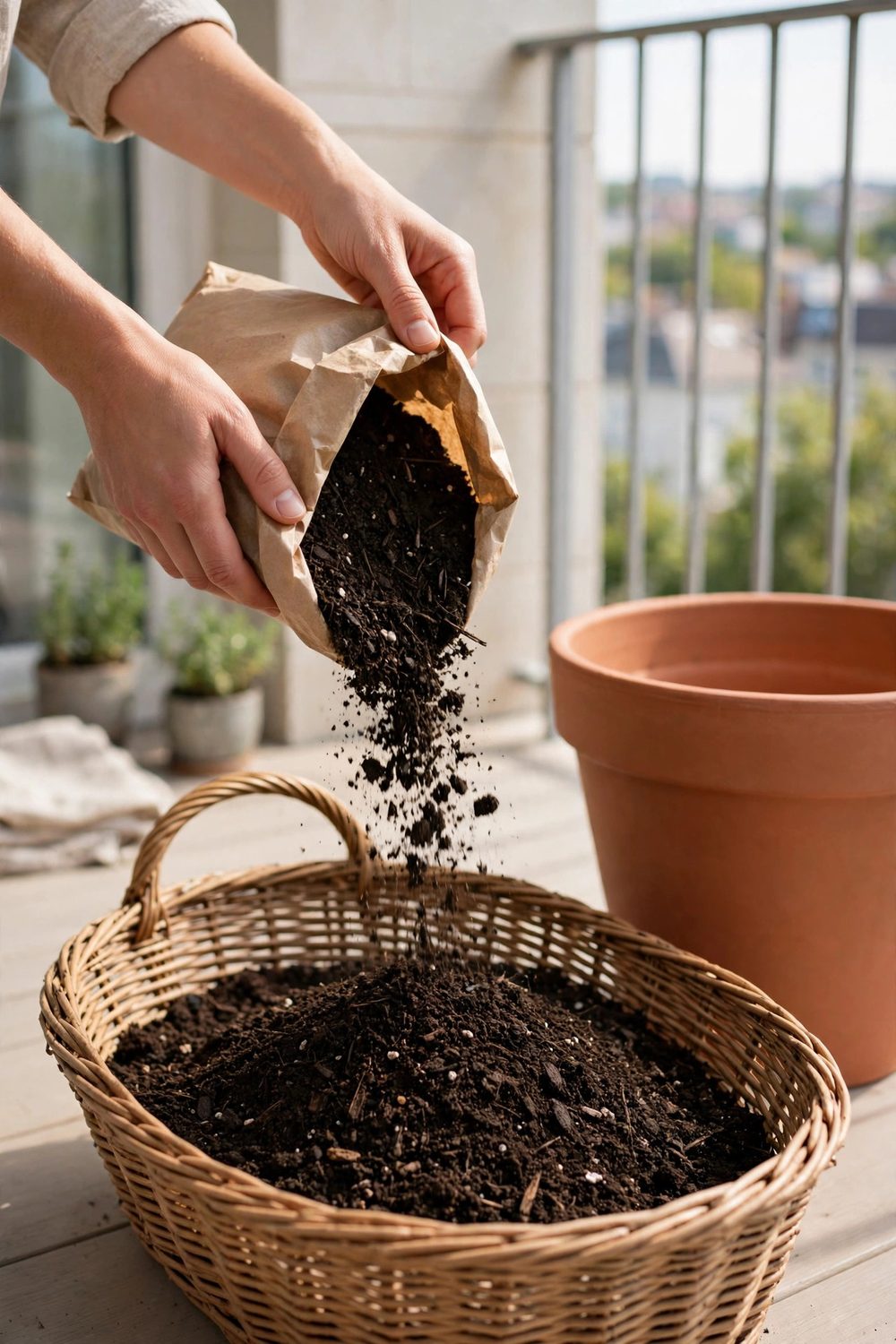
Tip the potting mix into the trug first. Break up any firm lumps with your hands until the texture feels loose and even.
Choose a mix made for pots, not for beds. Bagged potting mix has no heavy soil in it, so roots can push through it with ease.
Peat based mixes hold water well and feel light. Peat free mixes use coir and bark, and they work just as well with the additions below.
For one 10 gallon (38 litre) pot, start with 6 parts of base mix. Smaller pots keep the same share, only the total changes.
Check the bag for added feed. A base with starter feed is fine, and the compost share later still earns its place.
Add Perlite for Drainage in the Right Proportion
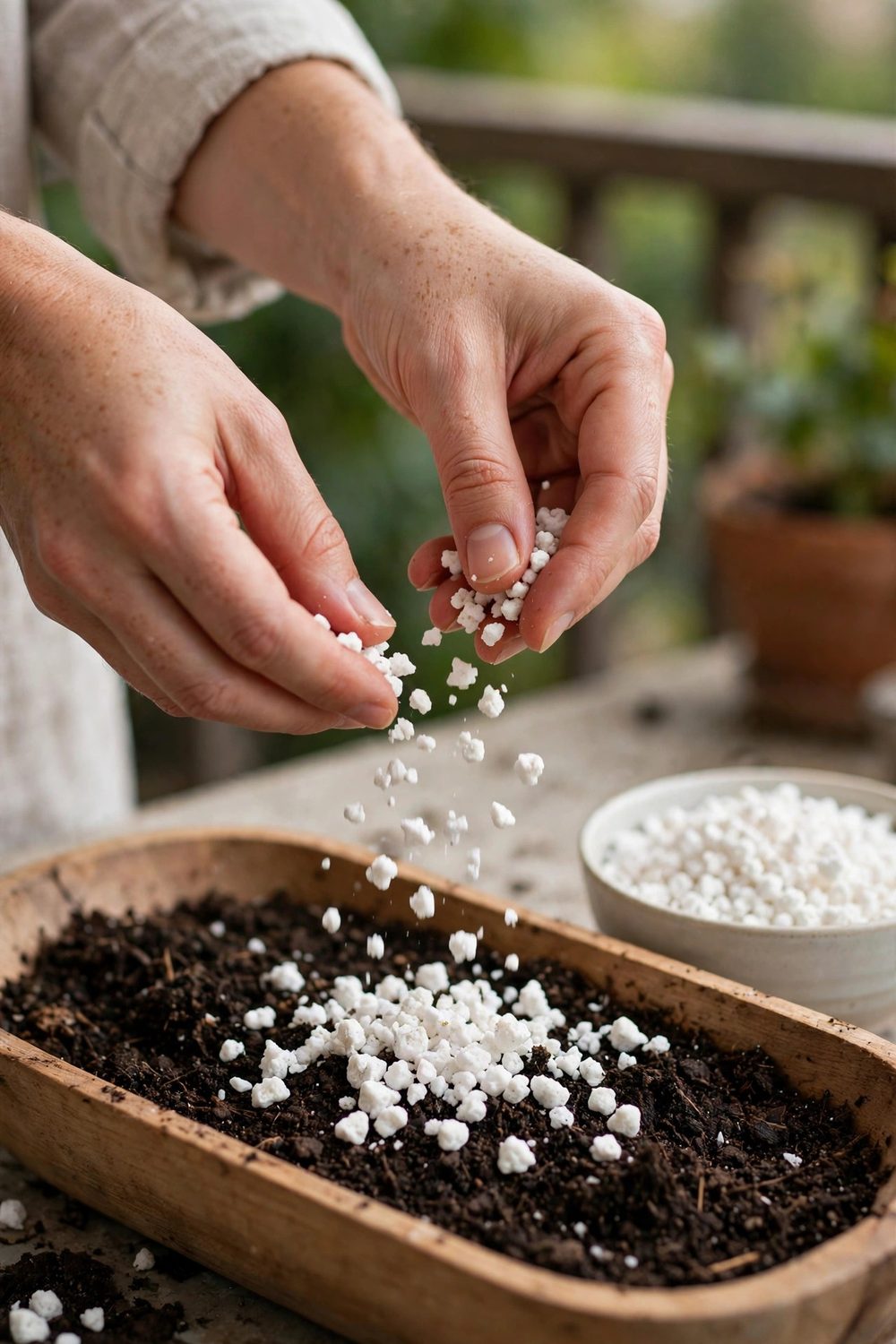
Add 1 part perlite to the 6 parts of base mix. That share keeps air around the roots after each watering.
Perlite looks like small white stones. It does not rot, and it stops the mix from packing down over the season.
Pour it over the top in a thin layer. Dampen it first with a splash of water, since dry perlite dust can catch your throat.
Fold it in with your hands, lifting from the bottom of the trug. Stop when the white grains show evenly through the whole batch.
Heavy rain areas can use a little more. Raise the share to 1.5 parts if your balcony pots stay wet for days.
Pro Tip: Rinse perlite in a colander before mixing on a windy balcony. Wet grains stay in the trug instead of blowing across the rail.
Blend In Compost for Slow, Steady Food
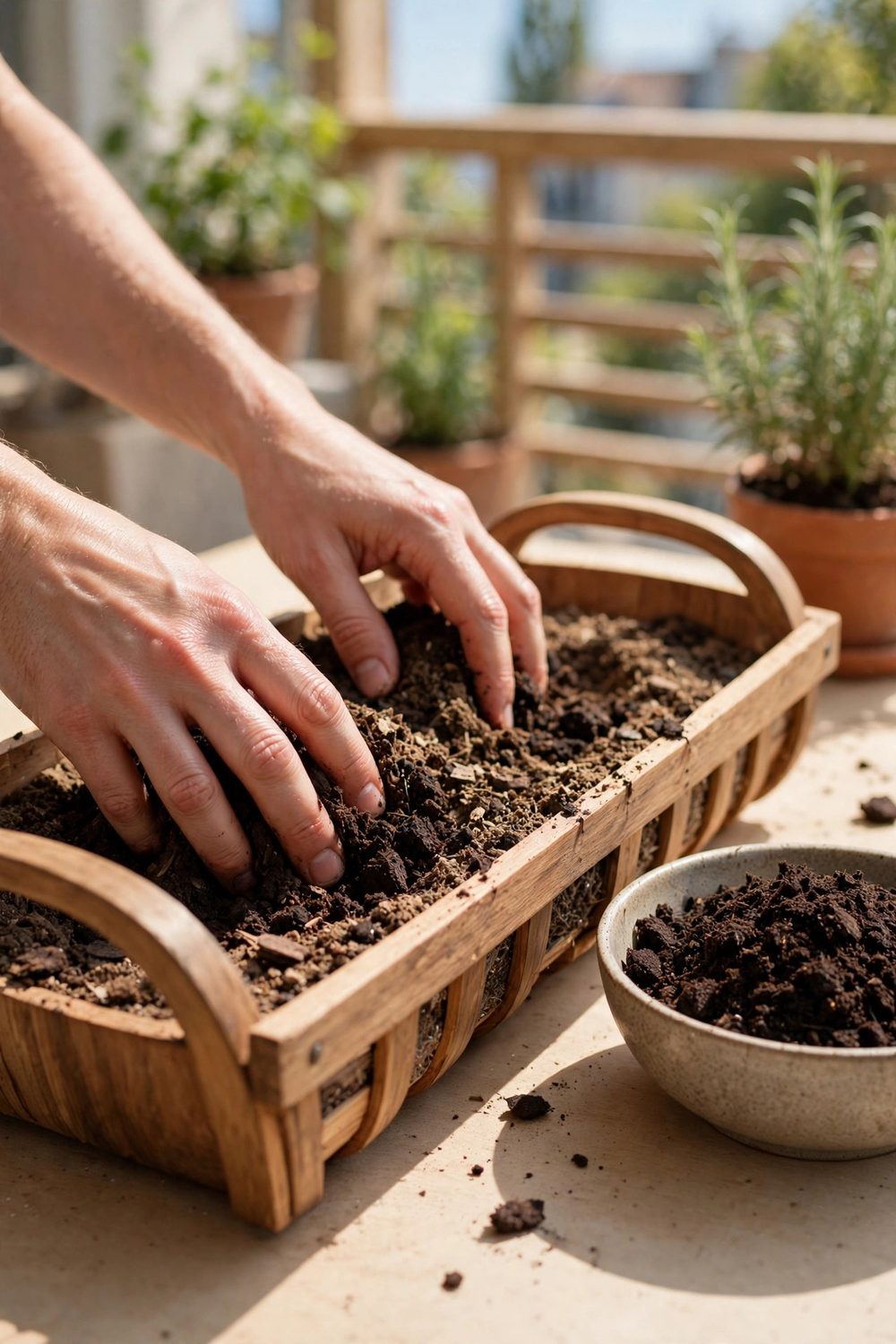
Add 2 parts compost or worm castings to the batch. This share feeds the plant slowly as the roots grow through the pot.
Compost also holds helpful life in the mix. It buffers water and feed, so the plant copes better between watering days.
Sift out sticks and stones with your fingers. Finished compost should feel crumbly and dark, with no sour smell at all.
Keep the compost share near 20 to 25 percent of the total. More than that makes the mix heavy and slow to drain.
Tomatoes feed heavily once fruit sets. The compost share covers the early weeks, then a liquid feed takes over later in the season.
Our guide to feeding tomatoes in pots on a simple schedule sets out that later rhythm week by week.
Add Coir for Moisture on Hot Balconies
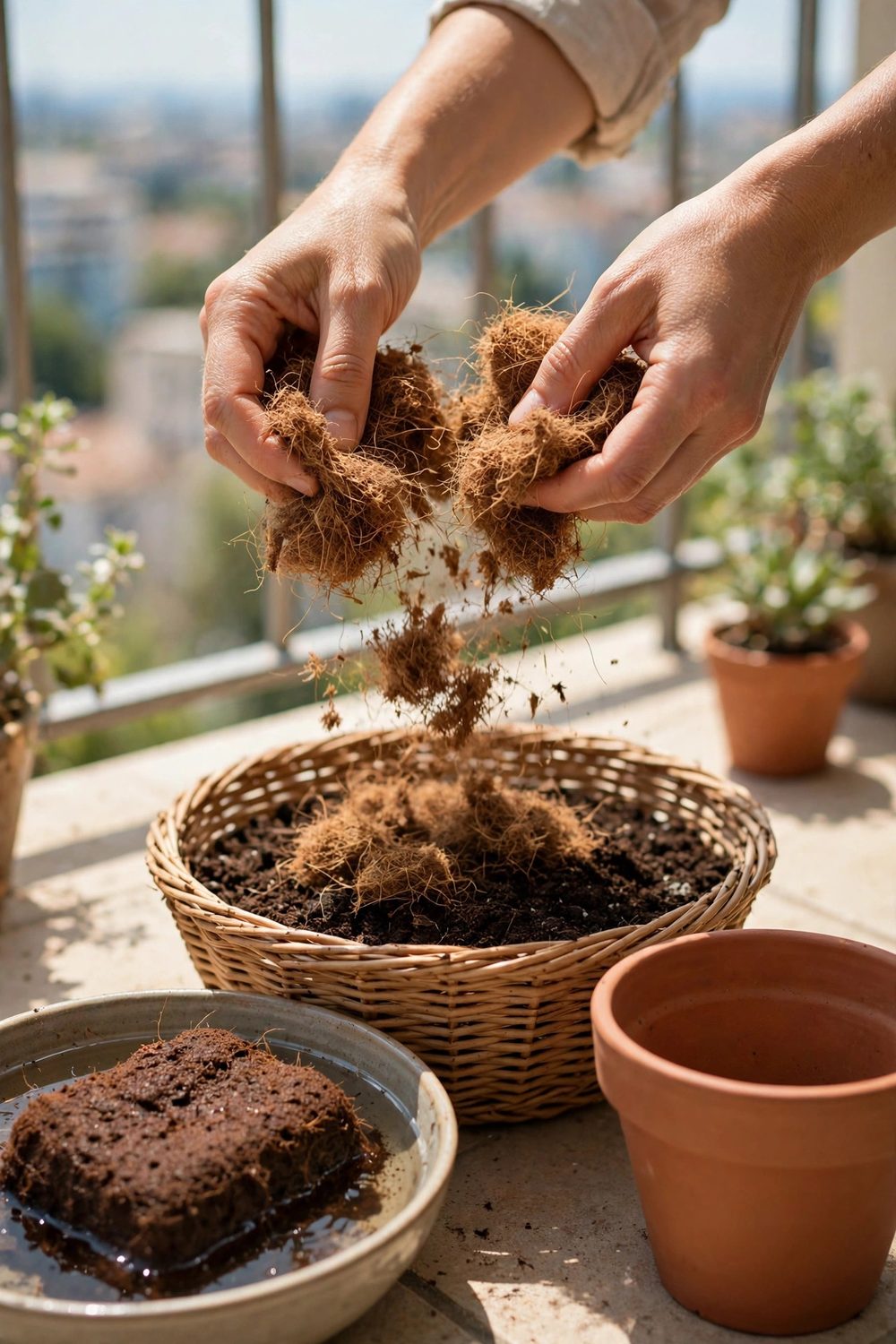
Soak the coir brick in warm water until it breaks apart. Squeeze out the extra water until it feels like a wrung sponge.
Add 1 part coir if your balcony bakes in afternoon sun. South and west facing rails dry pots faster than any other spot.
Coir holds water inside its fibres and lets it go slowly. Roots get a steady supply instead of a wet and dry swing.
Skip the extra coir in cool, shaded spots. There, the base mix and compost already hold enough water for the plant.
Fluff the coir well before you add it. Lumps of coir stay wet in one place and dry in another, which roots dislike.
Mix Everything and Pre-Moisten the Batch
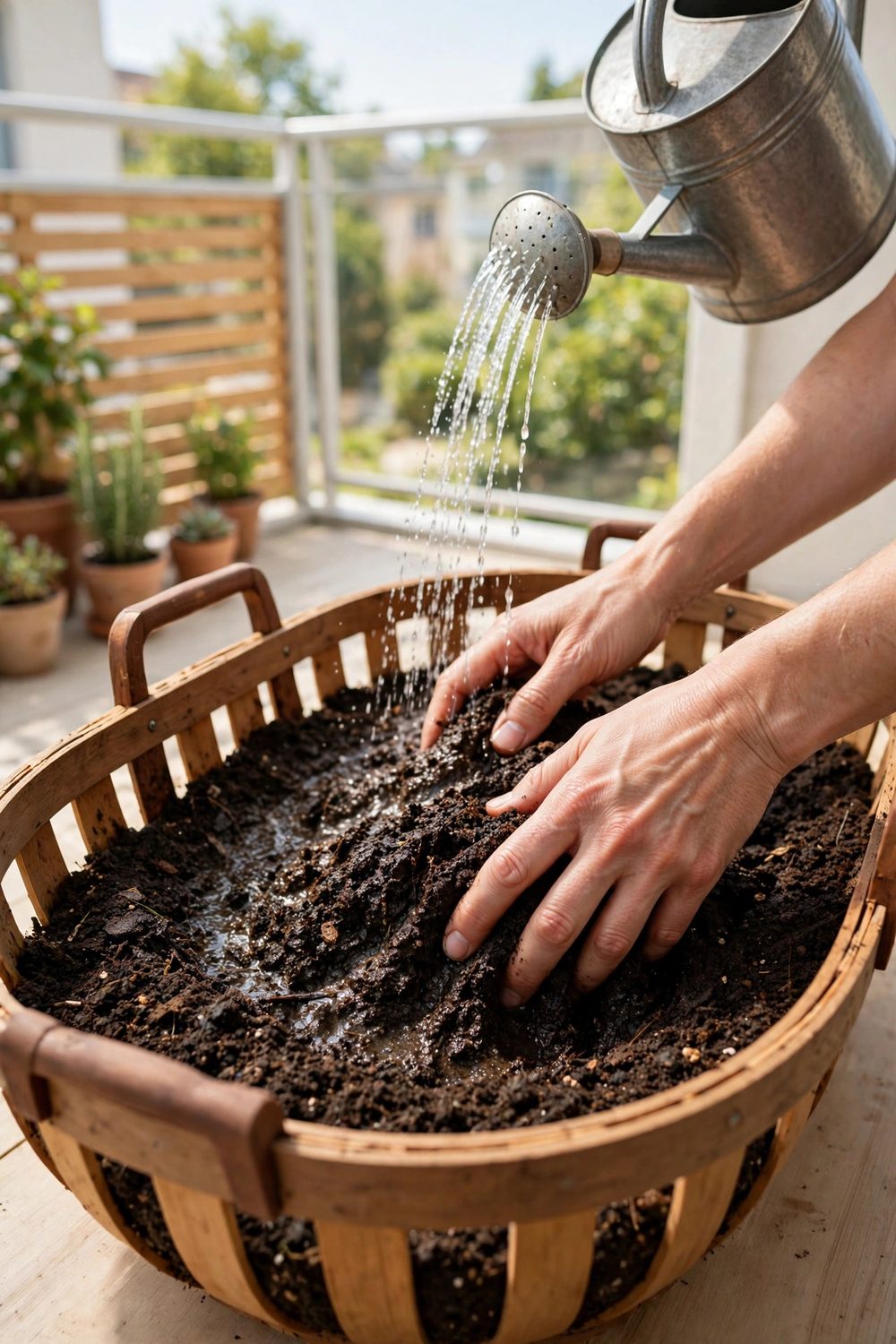
Turn the whole batch over at least ten times. Work from the edges to the centre until the colour looks even throughout.
Add water a little at a time as you mix. The goal is damp throughout, like a sponge that has been wrung out well.
Pre-moistening matters more than most steps here. Dry peat and coir repel water at first, and a dry fill soaks unevenly for days.
Let the damp batch rest for 15 minutes. The fibres take up water in that time, and the texture settles to its true feel.
Mix once more after the rest. Add a splash more water if the top layer already looks pale and dry.
Fill the Pot and Let the Mix Settle
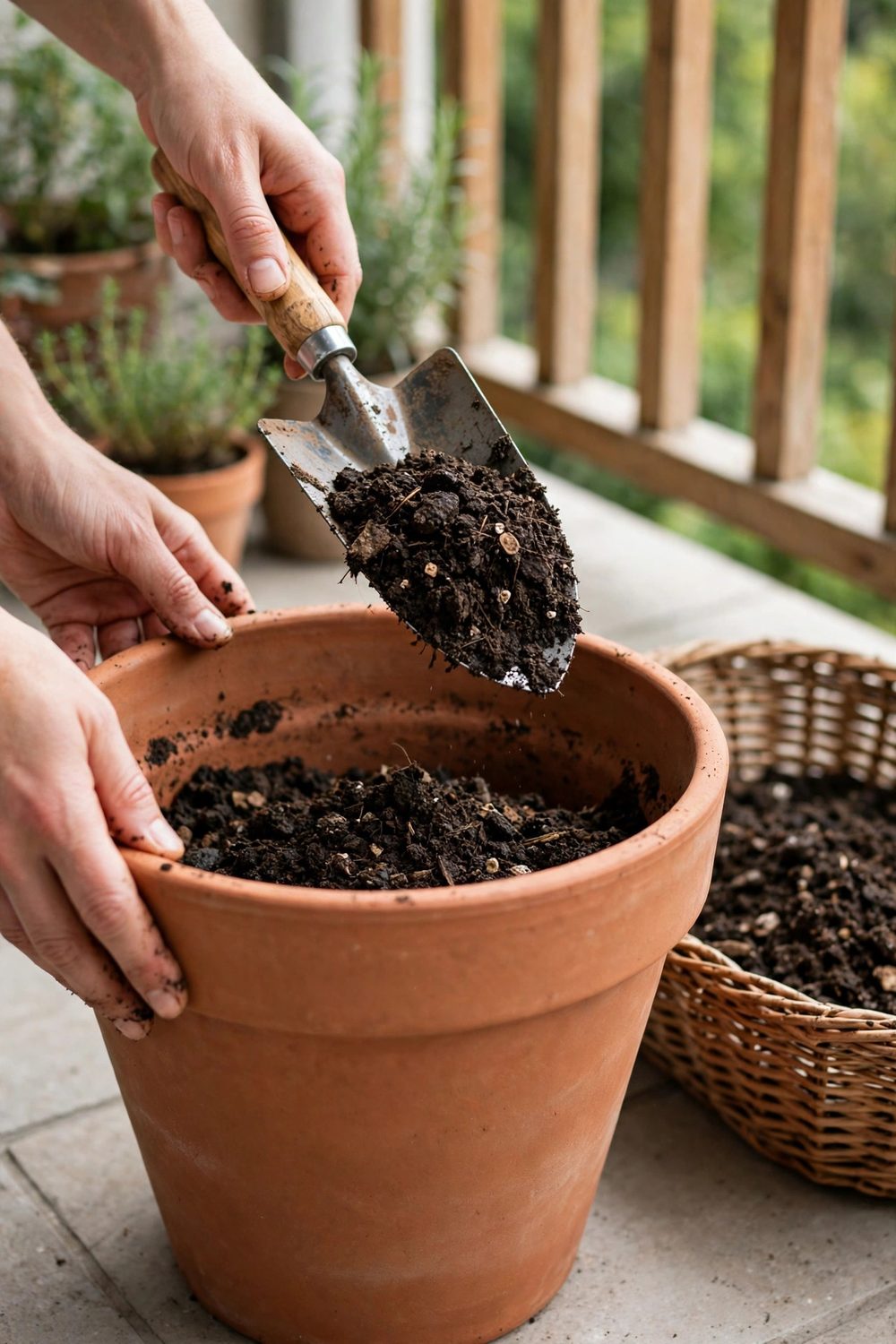
Check that the pot has drainage holes first. Cover large holes with a piece of mesh, not a layer of stones.
Fill the pot to about 2 inches (5 cm) below the rim. That gap holds water at each watering instead of spilling it over.
Press the mix down gently with your palms. Firm contact helps roots settle, but hard packing pushes the air back out.
Water the filled pot slowly and let it drain. The surface will drop by about 1 inch (2.5 cm) as the mix settles.
Top up with fresh mix to the same fill line. Your pot size choice matters here, so check the best pot size for tomatoes before you fill.
Test the Mix With a Squeeze Check
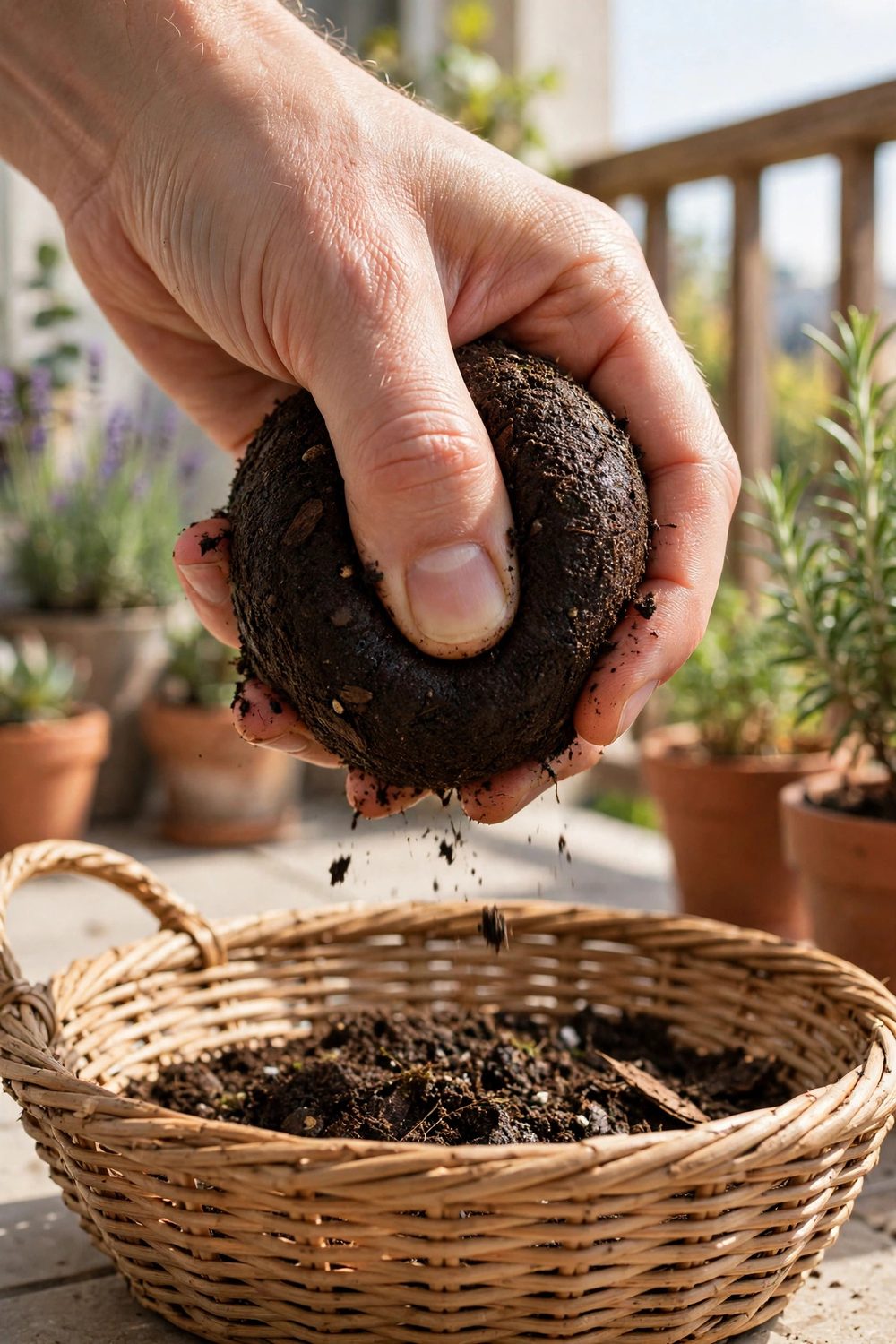
Take a handful of the damp mix and squeeze it hard. It should hold a loose ball shape for a few seconds.
Open your hand and poke the ball. A good batch crumbles apart at once, with no water dripping from your fingers.
If water runs out, the mix is too wet or too rich. Fold in more base mix and a handful of perlite.
If the ball will not form at all, it is too dry. Mist it with water, mix again, and repeat the check.
This ten second test catches most problems early. It is far easier to fix a batch in the trug than in a planted pot.
Heads Up: Test the mix damp, never dry. Dry mix always feels loose, and the check tells you nothing until water goes in.
Top Up After Watering and Add Mulch
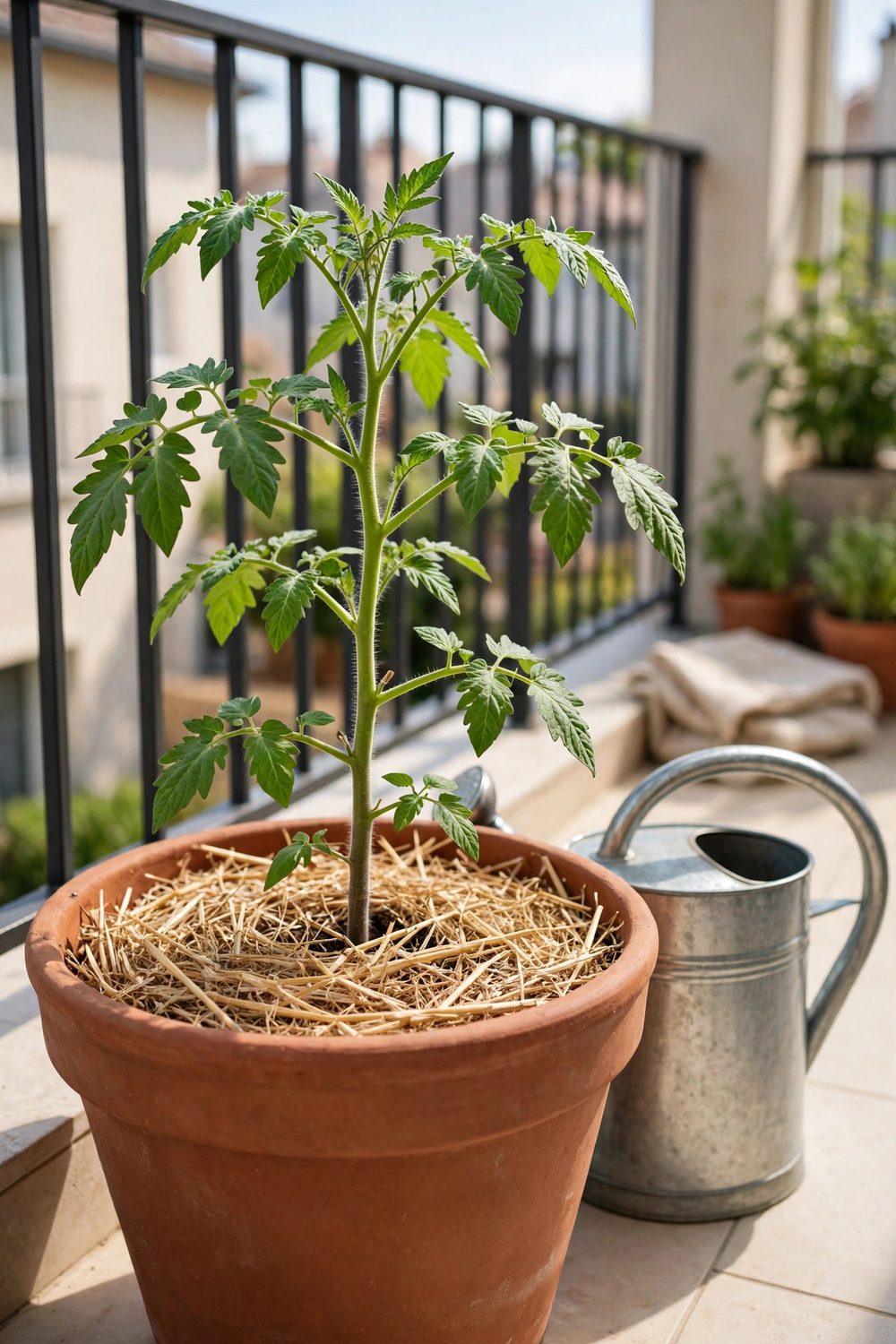
Plant your tomato at the same depth it grew in its nursery pot. For leggy plants, bury the stem up to the first true leaves.
Water the plant in well at the base. Keep water off the leaves where you can, and water in the morning on hot days.
Add mulch once the surface has settled. Spread 2 inches (5 cm) of straw or bark, keeping it clear of the stem.
Mulch slows the wet and dry swing in the pot. Steady moisture also lowers the risk of blossom end rot later in summer.
For watering rhythm through a hot spell, see simple rules for watering vegetables in pots and adapt them to your largest pots.
Check the fill level again after a week. Top up any dips with fresh mix so roots near the surface stay covered.
Common Mistakes
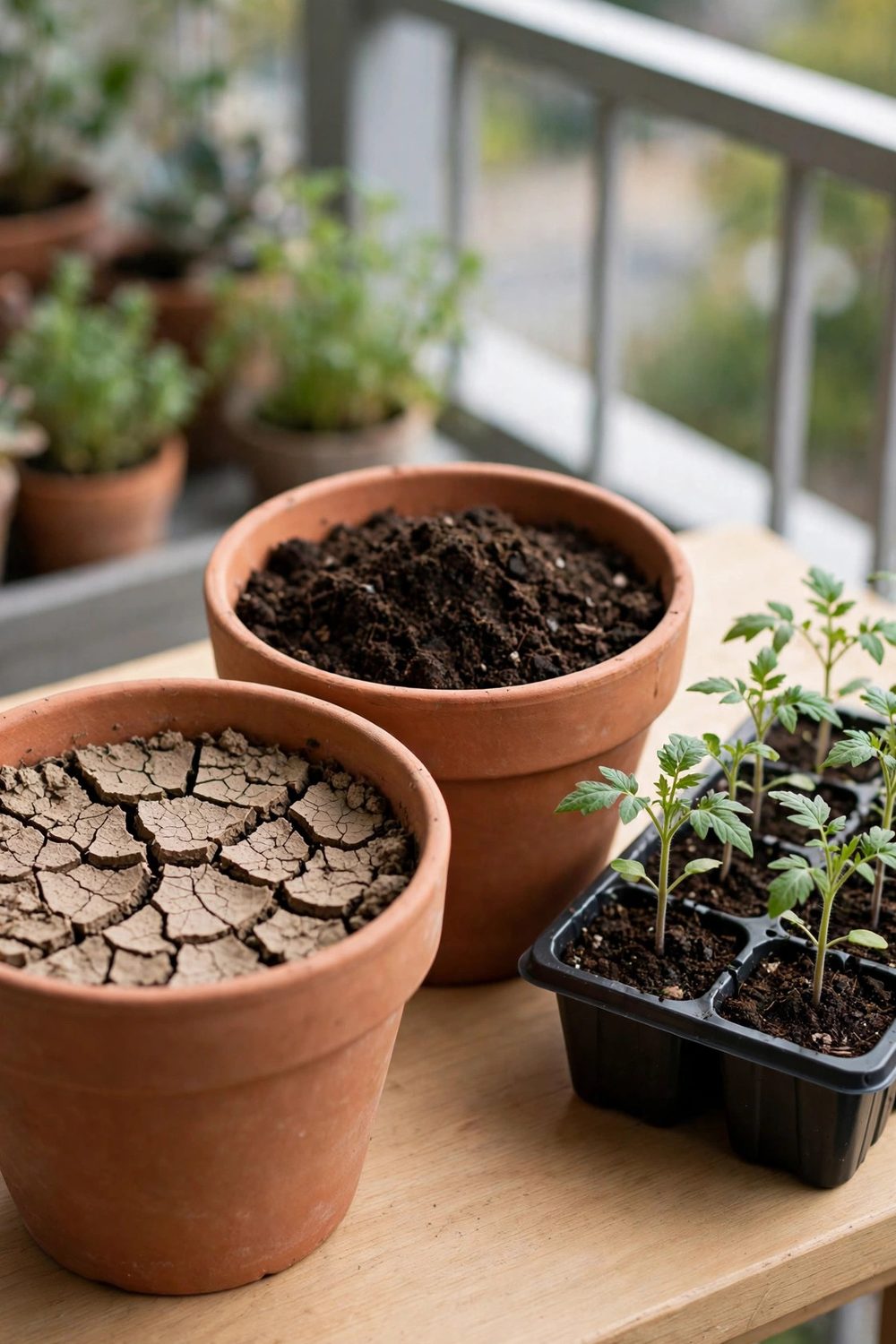
Garden soil in pots. Soil dug from a bed packs down hard in a pot. Roots run short of air, and water sits on the surface.
Garden soil can also carry weed seeds and disease. Bagged potting mix starts clean, which is the whole point of using it.
Pure compost as the fill. Compost alone holds too much water and too much feed at once. Young roots can scorch, and the fill sinks fast.
Compost works as a share of the mix, near one quarter. On its own it fails, as our list of container gardening mistakes that kill beginner vegetables also warns.
Dry mix straight from the bag. A dry fill sheds the first waterings down the pot sides. The root ball can stay dry while the surface looks wet.
Pre-moisten every batch before it goes in the pot. That one habit prevents more early losses than any feed product.
Stones in the bottom of the pot. A gravel layer does not improve drainage. It lifts the wet zone higher, closer to the roots.
One mix for every pot size. Small pots dry faster than large ones. Tiny pots need more coir, while large pots need drainage first.
Grow bags drain faster than plastic pots too. Our comparison of grow bags versus pots for vegetables helps you adjust the recipe to the container.
Frequently Asked Questions
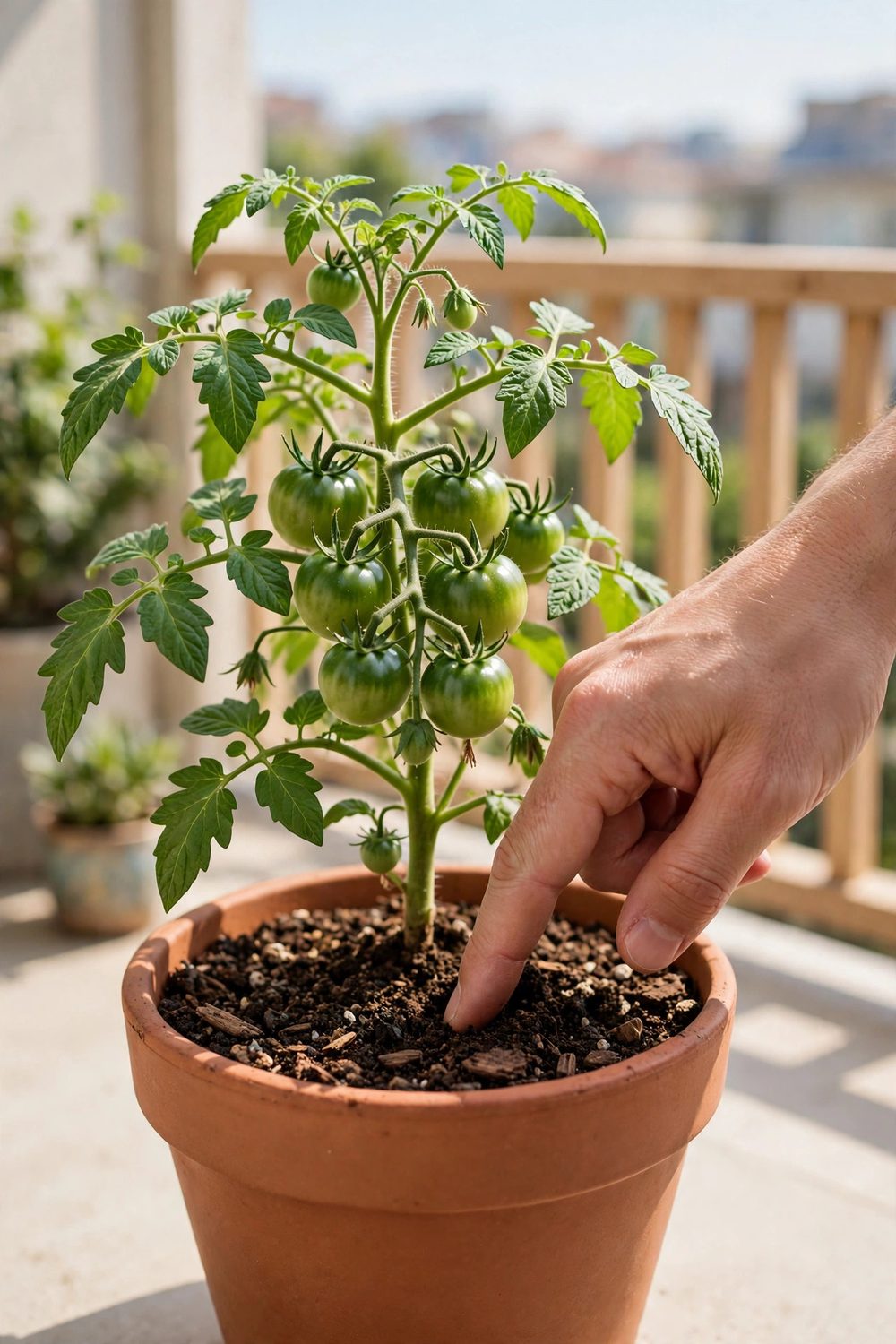
Can I reuse last year tomato mix in a pot?
Yes, with a refresh. Tip it out, pick out old roots, and replace about one third with fresh base mix and compost.
Do not reuse mix from a plant that had blight or wilt. Bag that batch and bin it, and scrub the pot before refilling.
Is peat free mix as good as peat based mix for tomatoes?
Yes, once the ratios are adjusted. Peat free mixes drain faster, so the coir share matters more on a hot balcony.
Both bases grow strong plants with perlite and compost added. Pick the base you can buy locally in a large, fresh bag.
How much mix fills a 10 gallon pot?
A 10 gallon (38 litre) pot takes about 38 litres of finished mix. That is roughly one large bag of base plus the additions.
Mix a little extra in the trug. Settling and top ups in the first week use more than most new growers expect.
Can I mix in garden soil if I run short?
Better not to. A small amount still compacts and can bring in weed seeds, so the whole pot suffers for one saved handful.
Mix a smaller batch of proper recipe instead. Plant one pot well rather than two pots with a poor fill.
Should I add fertilizer to the mix at planting?
A base mix with starter feed needs nothing more at planting. The compost share carries the plant through its first few weeks.
Start a liquid tomato feed once the first flowers open. Feed at label strength, and never feed a dry root ball.
Why does my mix shrink down the pot over summer?
Organic matter breaks down as roots and microbes work. The fill level drops slowly, and watering presses it down further.
Top up with fresh mix and mulch at mid season. Keep the surface near the same line, about 2 inches (5 cm) below the rim.
Quick Reference
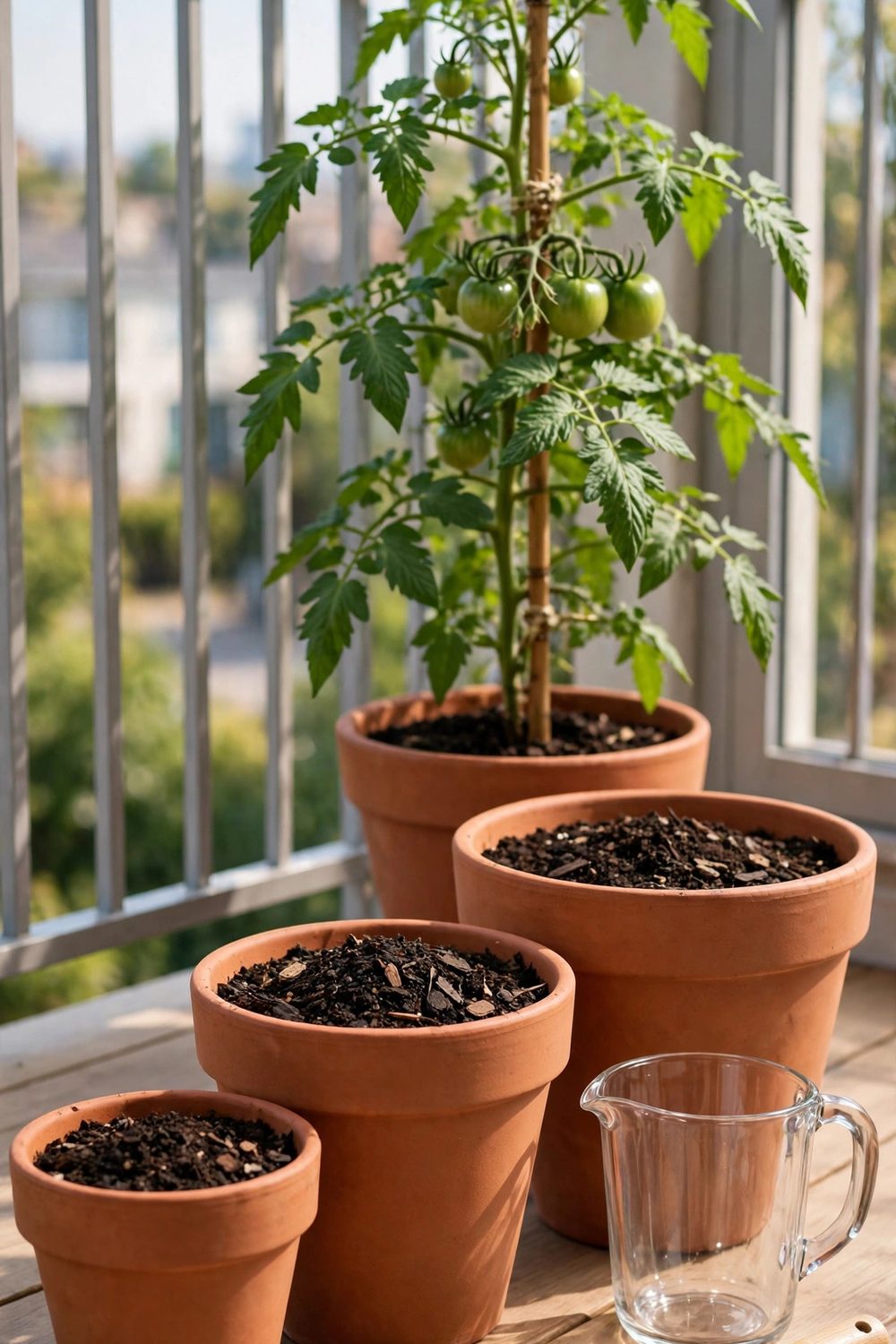
- Base recipe: 6 parts potting mix, 2 parts compost, 1 part perlite, 1 part coir on hot balconies.
- 3 gallon (11 litre) pot: about 7 litres base, 2.5 litres compost, 1 litre perlite, 1 litre coir.
- 5 gallon (19 litre) pot: about 11 litres base, 4 litres compost, 2 litres perlite, 2 litres coir.
- 10 gallon (38 litre) pot: about 23 litres base, 8 litres compost, 3.5 litres perlite, 3.5 litres coir.
- Compost share: keep it near 20 to 25 percent of the total batch.
- Fill line: 2 inches (5 cm) below the rim, topped up after the first watering.
- Moisture test: a squeezed handful holds a ball, then crumbles when poked.
- Mulch: 2 inches (5 cm) of straw or bark, kept clear of the stem.
A good fill is loose, damp, and mixed in steady parts. Base, drainage, compost, and coir each do one clear job in the pot.
Mix your first batch by the ratios above, run the squeeze check, and plant with confidence. Save this recipe to your tomato board for the next pot you fill.
Once your soil mix for tomatoes in pots what to fill with is sorted, the plant needs only sun, steady water, and time.


