

Upside-Down Tomato Planter on a Balcony Rail: An Honest Guide
An upside down tomato planter on a balcony rail honest guide has to start with the awkward truth. This method works, but it works within narrow limits.
The plants dry out fast, the roots run hot, and a big beefsteak variety will disappoint you. A small tumbling cherry type, hung with care, is a different story.
This guide builds one planter properly, step by step, with real sizes and a real safety check. It takes about 45 minutes of hands-on work.
The skill level is beginner friendly, as long as you read the verdict at the end before you buy anything. That verdict decides if this suits your balcony at all.
The appeal is easy to see. Fruit hangs in clean air, slugs and soil splash stay away, and a rail that grows nothing starts earning its space.
The costs are just as real, and most product boxes skip them. Daily watering is not optional, and the harvest from one small hanging planter stays modest.
Time: About 45 minutes to build and hang, plus 5 minutes of watering most days · Difficulty: Easy to moderate, mostly due to the weight check
What You Need
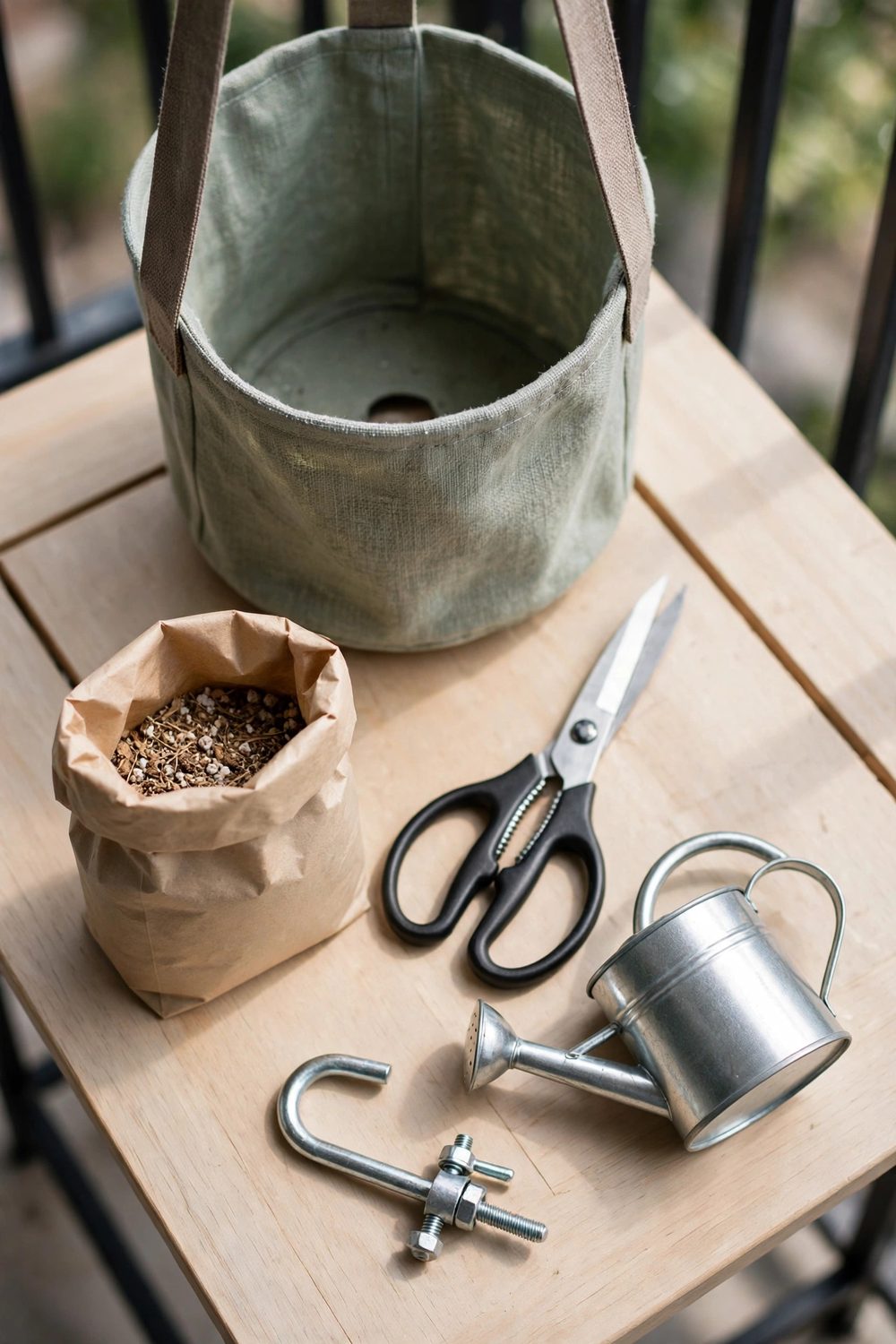
Most of this list is probably already in your home. The two items that matter most are the planter size and the hook rating.
- One upside-down planter or a sturdy 5-gallon (19 litre) bucket: fabric hanging planters around 3 gallons (11 litres) suit one tumbling plant each.
- One tumbling tomato plant: a young plant in a small pot, with a stem thin enough to pass through the bottom hole.
- Light potting mix: a peat-based or peat-free bagged mix, plus a few handfuls of perlite to keep the hanging weight down.
- A rated rail hook or clamp bracket: check the printed weight limit, and keep the loaded planter well under it.
- A short safety strap or cord: a backup tie from the planter handle to the rail, in case the hook shifts.
- Scissors or a craft knife: for widening the bottom hole and cutting a foam or sponge collar.
- A piece of foam, sponge, or coffee filter: sits around the stem at the hole and holds mix in place.
- A watering can with a narrow spout: top watering needs a slow, aimed pour, not a splash from a jug.
- Liquid tomato feed: for the weekly feed once flowers open, used at label strength only.
- A bathroom scale: the honest way to weigh the filled, watered planter before it goes on the rail.
Check the rail itself before you shop. Measure its width and depth, confirm it feels solid, and note which side gets the longest stretch of direct sun.
Renters should check balcony rules before hanging anything over the outside of a rail. Our guide to how much weight a balcony can hold for pots explains safe loading in plain terms.
Choose a Tumbling Variety That Stays Manageable
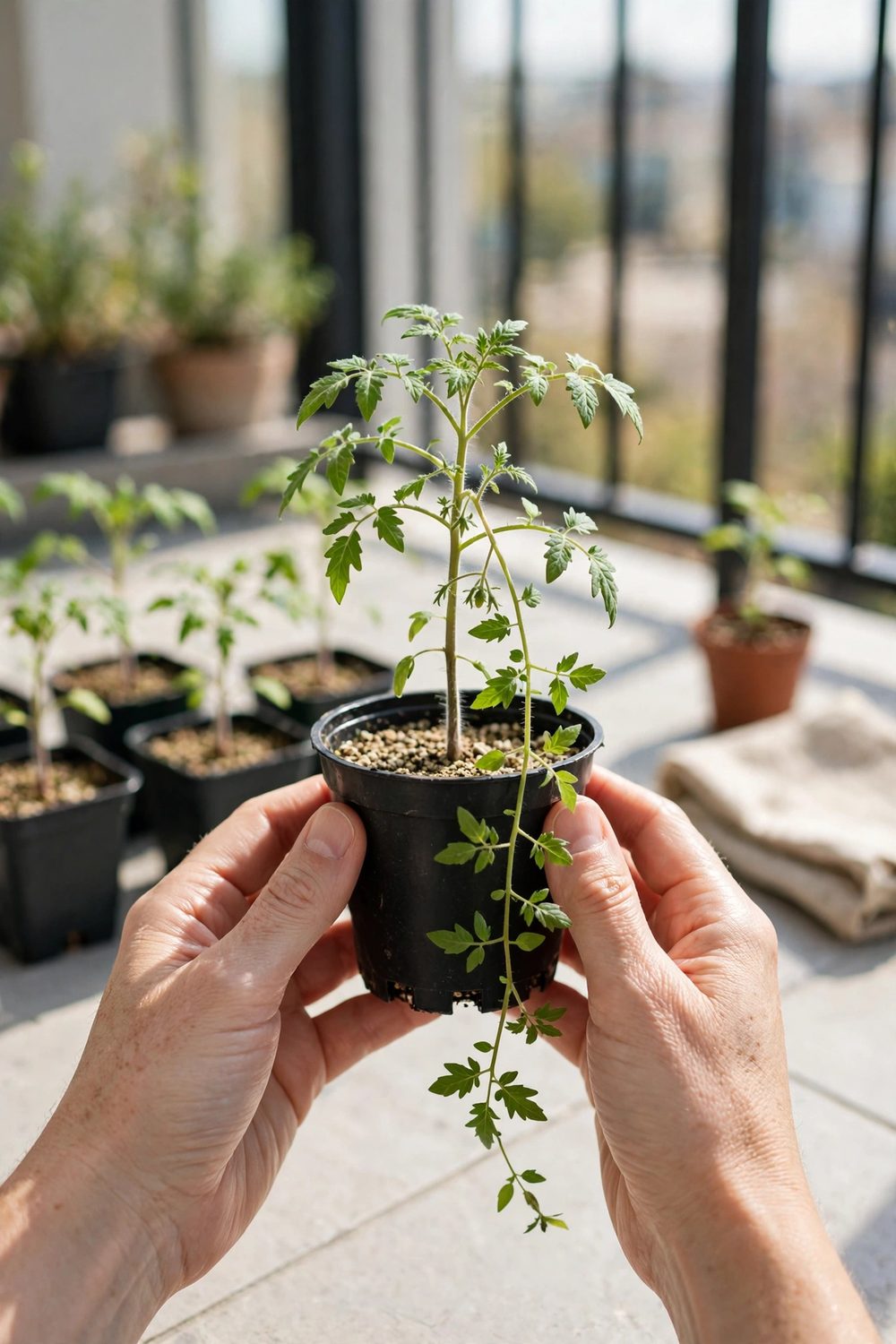
Pick a tumbling cherry type bred to trail, such as ‘Tumbling Tom Red’ or ‘Tumbling Tom Yellow’. ‘Hundreds and Thousands’ also trails well from a hanging planter.
These types stay compact, fruit small, and keep producing along trailing stems. Their root balls match a 3 to 5 gallon (11 to 19 litre) planter.
Skip standard indeterminate varieties here. A tall cordon type fights to grow upward, bends sharply at the hole, and needs more root room than a hanging bag holds.
Start the plant after your last frost, once nights stay mild. A hanging planter offers roots no shelter from cold air, so a chilly week hits it harder than a floor pot.
Buy a young plant with a stem about as thick as a pencil or thinner. Thick, woody stems snap or crush when passed through the bottom hole.
Prepare the Planter and Cut the Right Hole Size
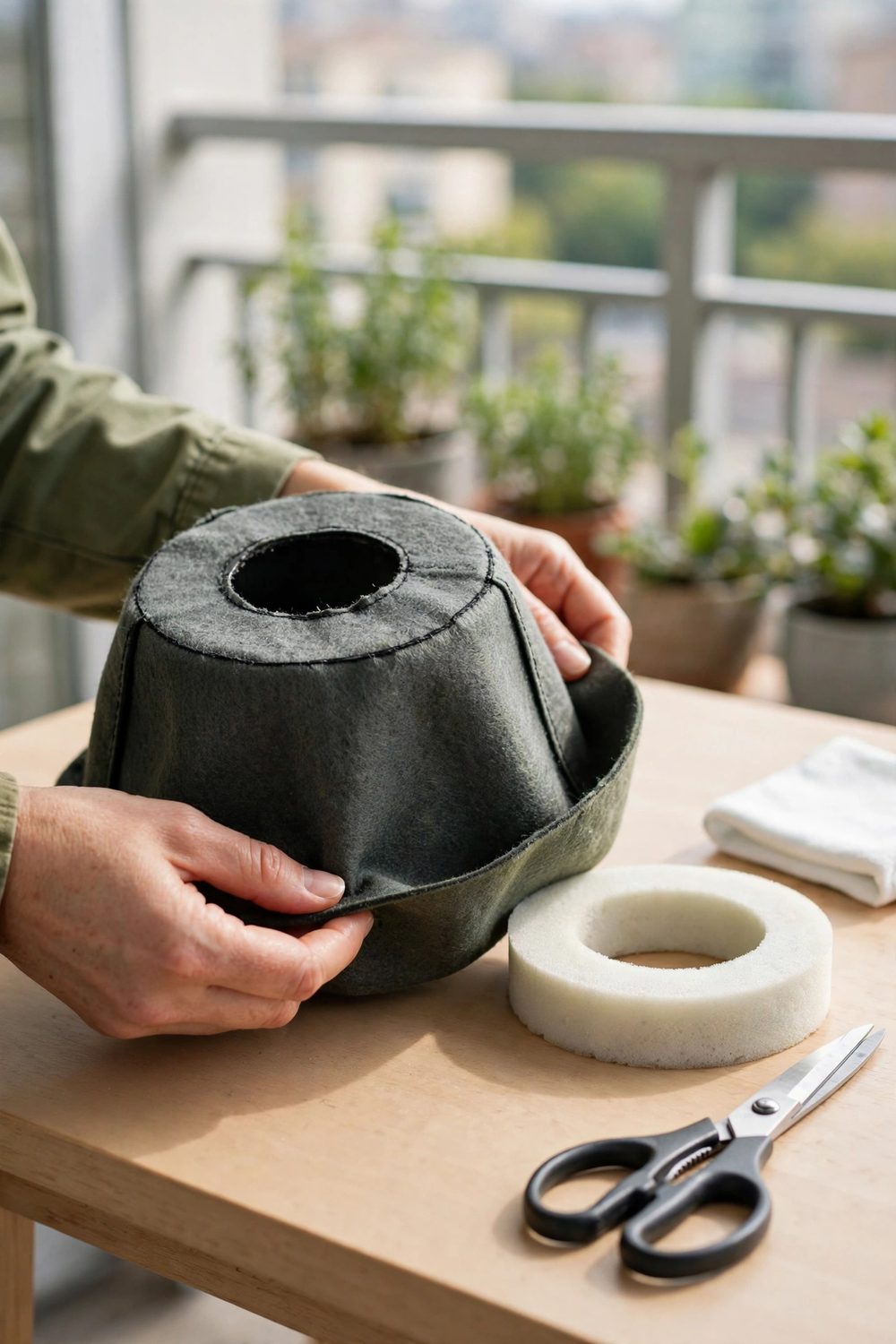
The bottom hole needs to measure about 2 inches (5 cm) across. That is wide enough for the stem and root ball plug, and narrow enough to hold mix.
Fabric planters often come with the hole ready cut. For a bucket, mark a 2 inch (5 cm) circle in the centre of the base and cut it cleanly.
Cut a slit in a foam disc or sponge so it can wrap around the stem later. This collar stops mix washing out during the first waterings.
Rinse the planter, check every seam and strap, and tug each one hard. A strap that frays now will fail in August, under a much heavier plant.
Plant Through the Bottom Without Crushing the Stem
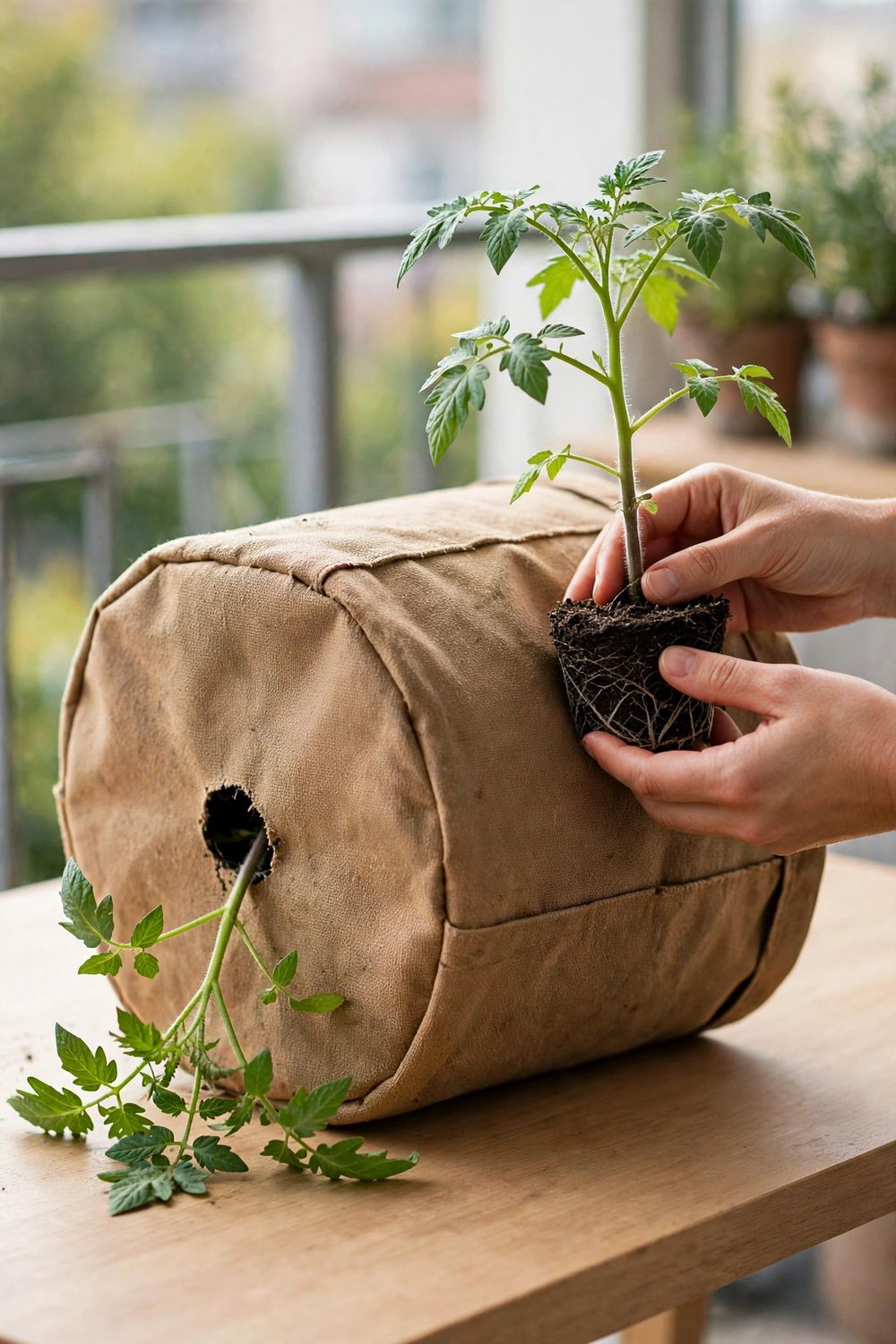
Lay the empty planter on its side on a table. Working indoors over a tray keeps this tidy and stops mix spilling across the balcony floor.
Ease the plant out of its pot and guide the leaves and stem down through the hole from inside. Pull gently by the root ball, never by the stem tip.
The root ball should sit just inside the planter, with all growth hanging below the base. Keep the stem centred so it does not rub the hole edge.
Wrap the foam collar around the stem at the hole and press it into place. It should feel snug, not tight enough to pinch or cut the stem.
Heads Up: If the root ball will not pass without force, widen the hole by a small trim. A crushed stem rarely recovers, and the plant sulks for weeks.
Fill With Light Mix From the Top
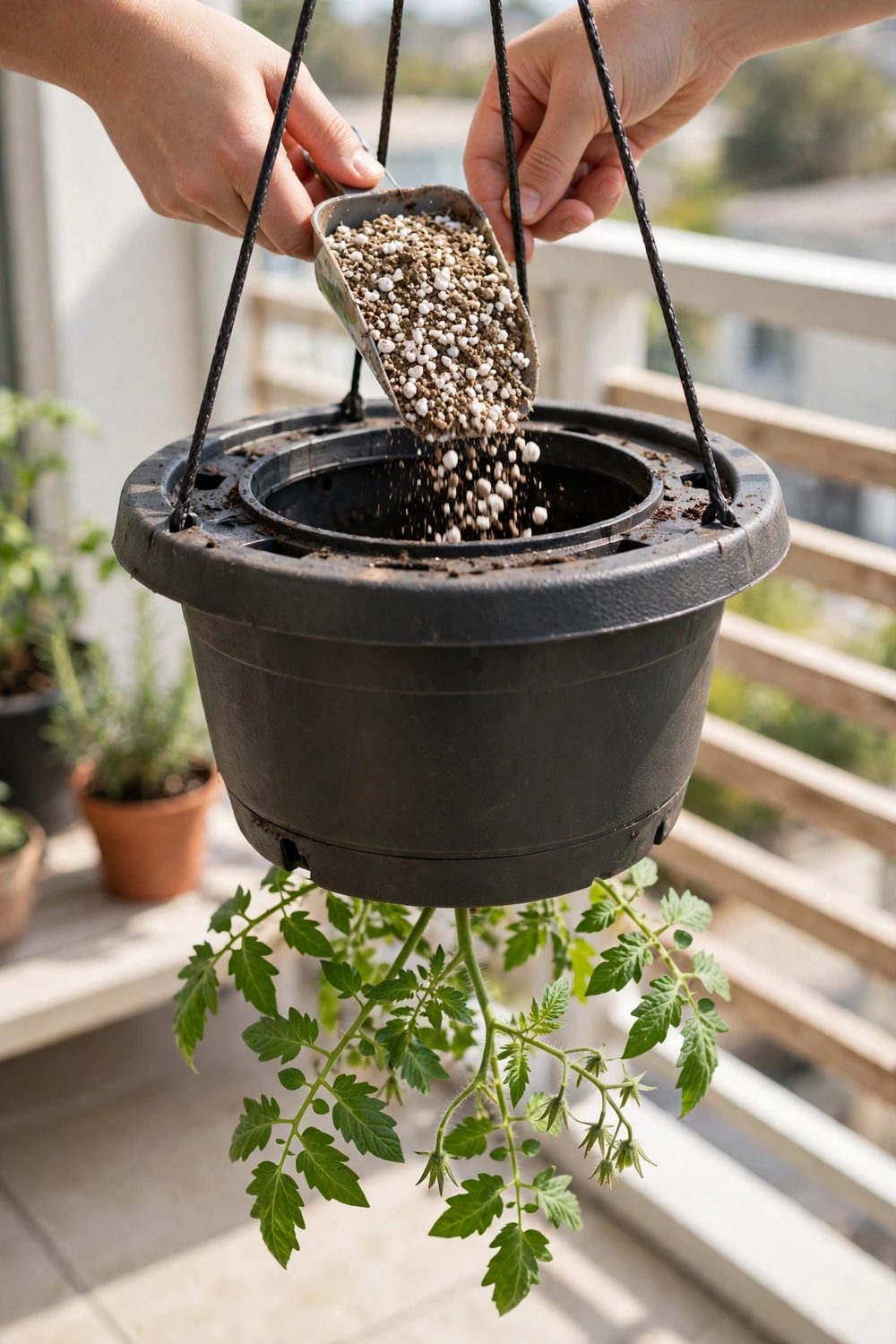
Hold the planter upright with the plant hanging below, and ask for a second pair of hands if you have them. Filling one-handed leads to a tilted root ball.
Add mix a few handfuls at a time around the root ball. A light bagged mix with perlite keeps the finished weight lower than garden soil ever will.
Fill to about 2 inches (5 cm) below the rim. That gap acts as a watering reservoir and stops the first pour running straight over the edge.
Firm the mix lightly with your fingers, then water it once while the planter still sits low. Wet mix settles, so top it up before hanging.
Hang It on the Rail With a Rated Hook and Safety Check
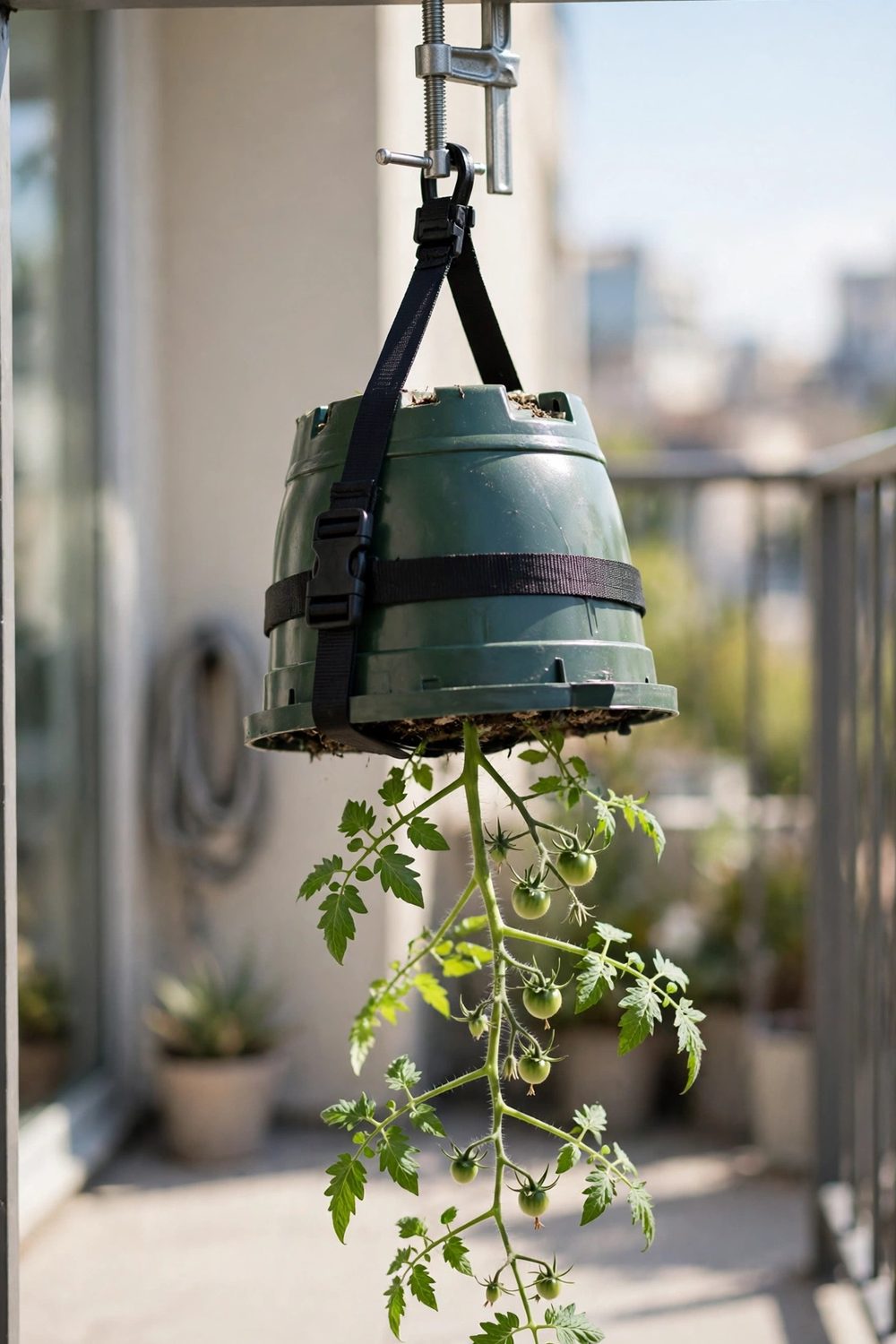
Weigh the filled and watered planter on a bathroom scale first. A wet 3 gallon (11 litre) planter can weigh far more than the dry bag suggests.
Compare that weight with the hook rating and stay well under it. The Kingsyard style rail hook used by many balcony growers is rated at 25 pounds (11 kg).
Clamp or hook the bracket onto the rail and tighten it fully. Hang the planter inside the rail where rules allow, so a failure drops it onto your balcony.
Add the safety strap from the planter handle to the rail as a backup. Then push the planter gently sideways and watch for any slip or tilt.
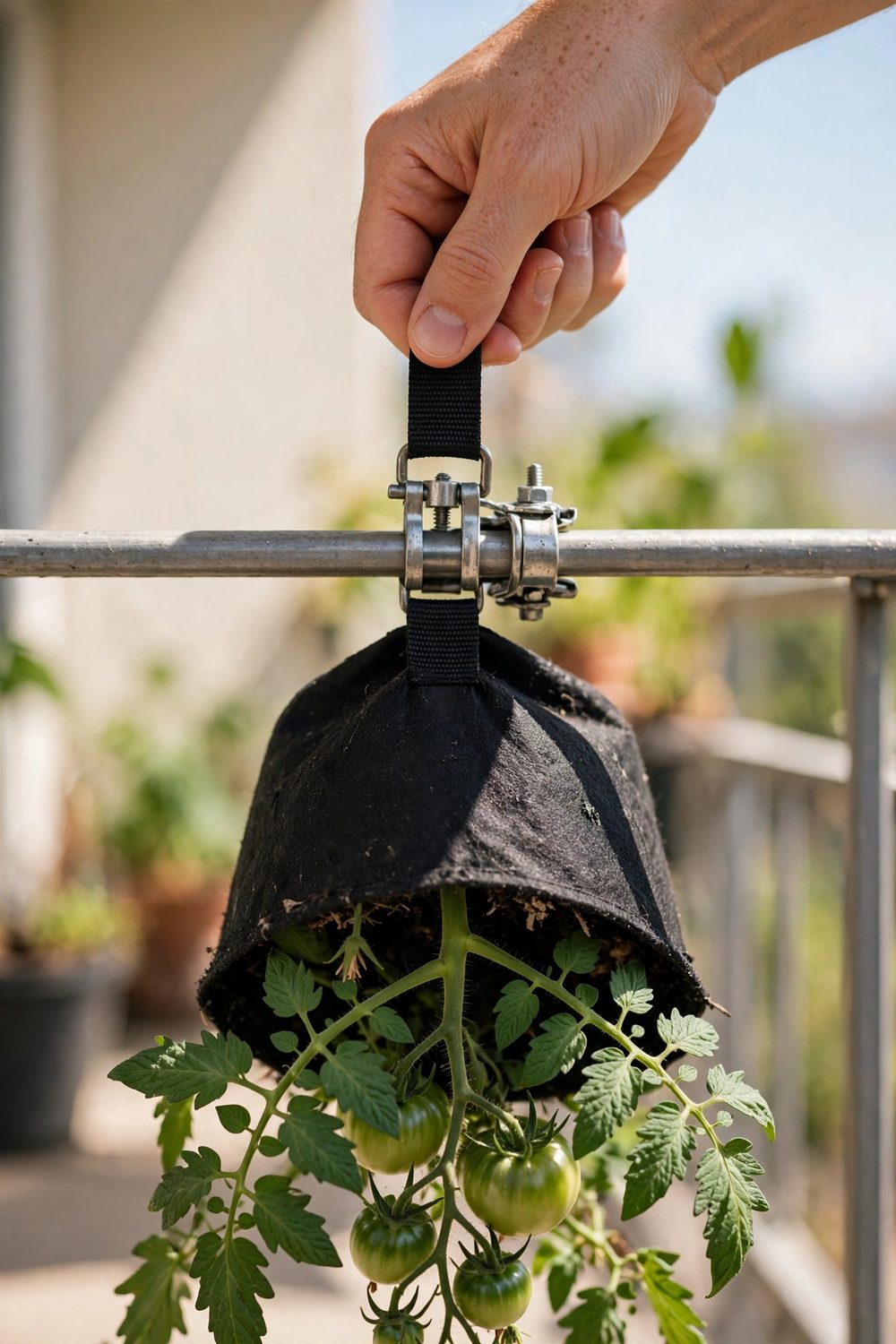
Leave the planter for 10 minutes and check the hook again before you walk away. For wider support options, see these tomato cages and supports that work in pots.
Water From the Top, Slowly and Often
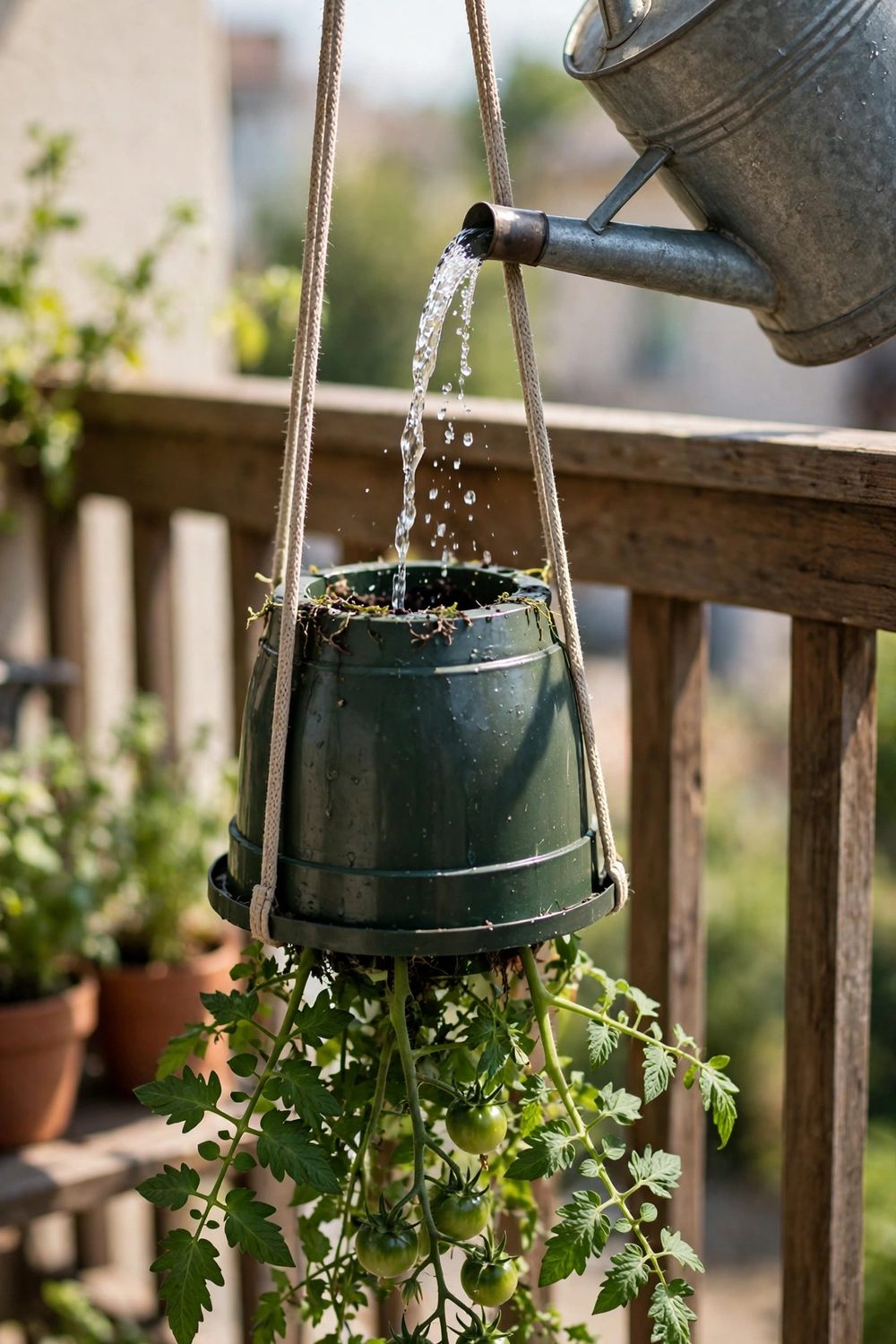
Pour water slowly into the top reservoir and let it soak down before adding more. A fast pour channels through dry mix and leaves the root ball dry.
Expect to water once a day in mild weather and twice a day in a heatwave. Hanging mix has air on every side, so it dries far faster than a floor pot.
Check moisture with a finger pushed 1 inch (2.5 cm) into the mix each morning. Dry at that depth means water now, not this evening.
A thin mulch layer over the top of the mix slows surface drying between waterings. Keep it clear of the planter rim so it does not spill over the rail.
Feed once a week at label strength once flowers open. Steady moisture matters more than feed, and it is the main guard against blossom end rot.
Our plain rules on how often to water vegetables in pots cover the same finger test for floor pots. Renters growing the standard way can also read about tomatoes in pots for renters with no staking into walls.
Troubleshooting
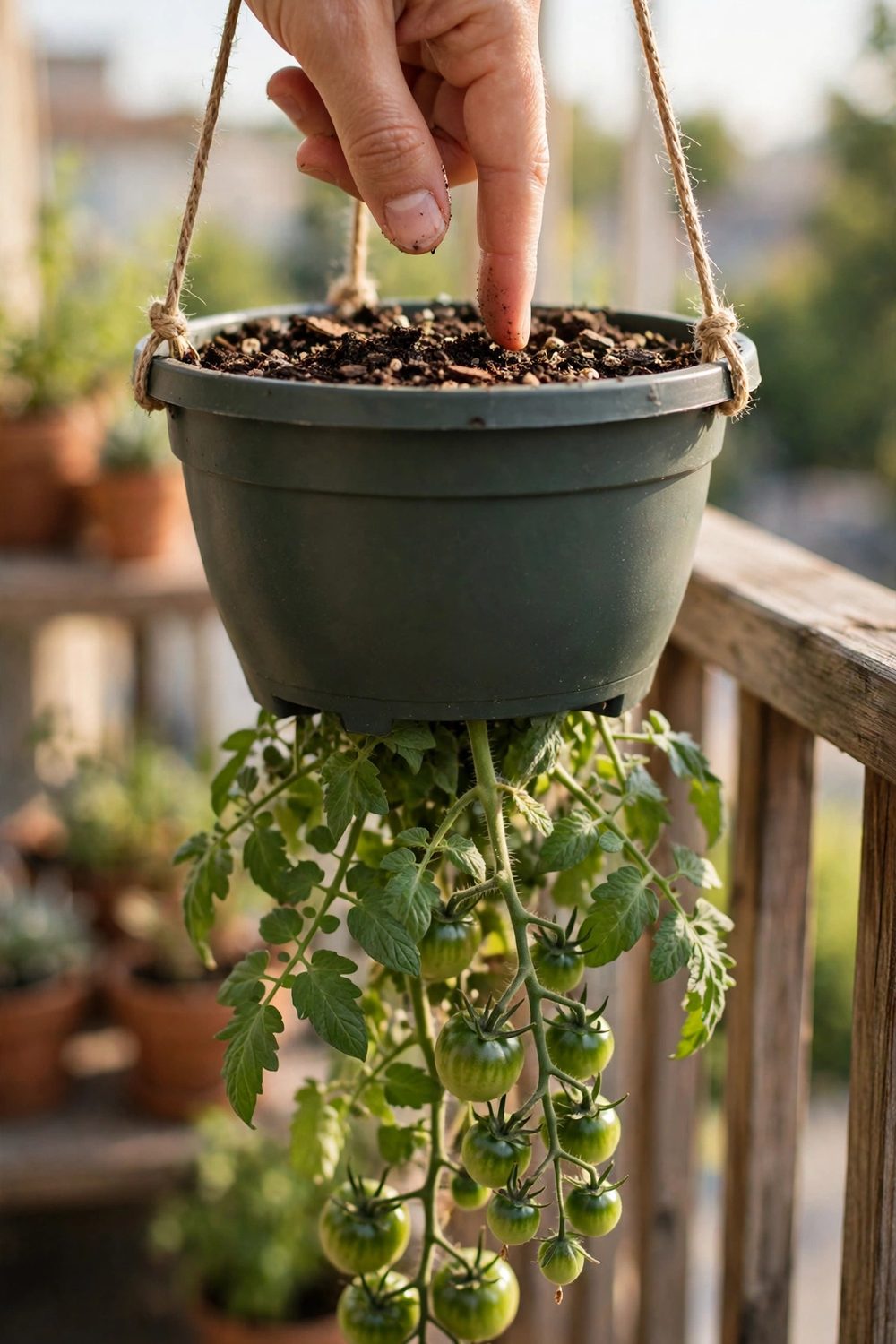
The plant wilts every afternoon. This is the drying problem, and it is built into the method. The small mix volume and moving air strip moisture fast.
Water twice daily in hot spells, and add a mulch layer on top of the mix. A self-watering reservoir helps, as our test of self-watering containers for vegetables explains.
Mix washes out of the bottom hole. The foam collar has slipped or the hole was cut too wide. Lower the planter, refit the collar snugly around the stem, and water more gently for a week.
The stem bends sharply upward. Tomato stems grow toward light, so a hanging plant curls up in a tight hook shape. Tumbling types cope, but growth still slows at the bend.
Fruit stays small and yields feel light. That is the honest limit of 3 to 5 gallons (11 to 19 litres) of mix. Roots run out of water and food between waterings, and the plant rations its fruit.
Roots cook on a south-facing rail. Dark fabric in full sun heats the root zone hard by mid afternoon. A pale outer cover or a second fabric layer shades the roots without shading the leaves.
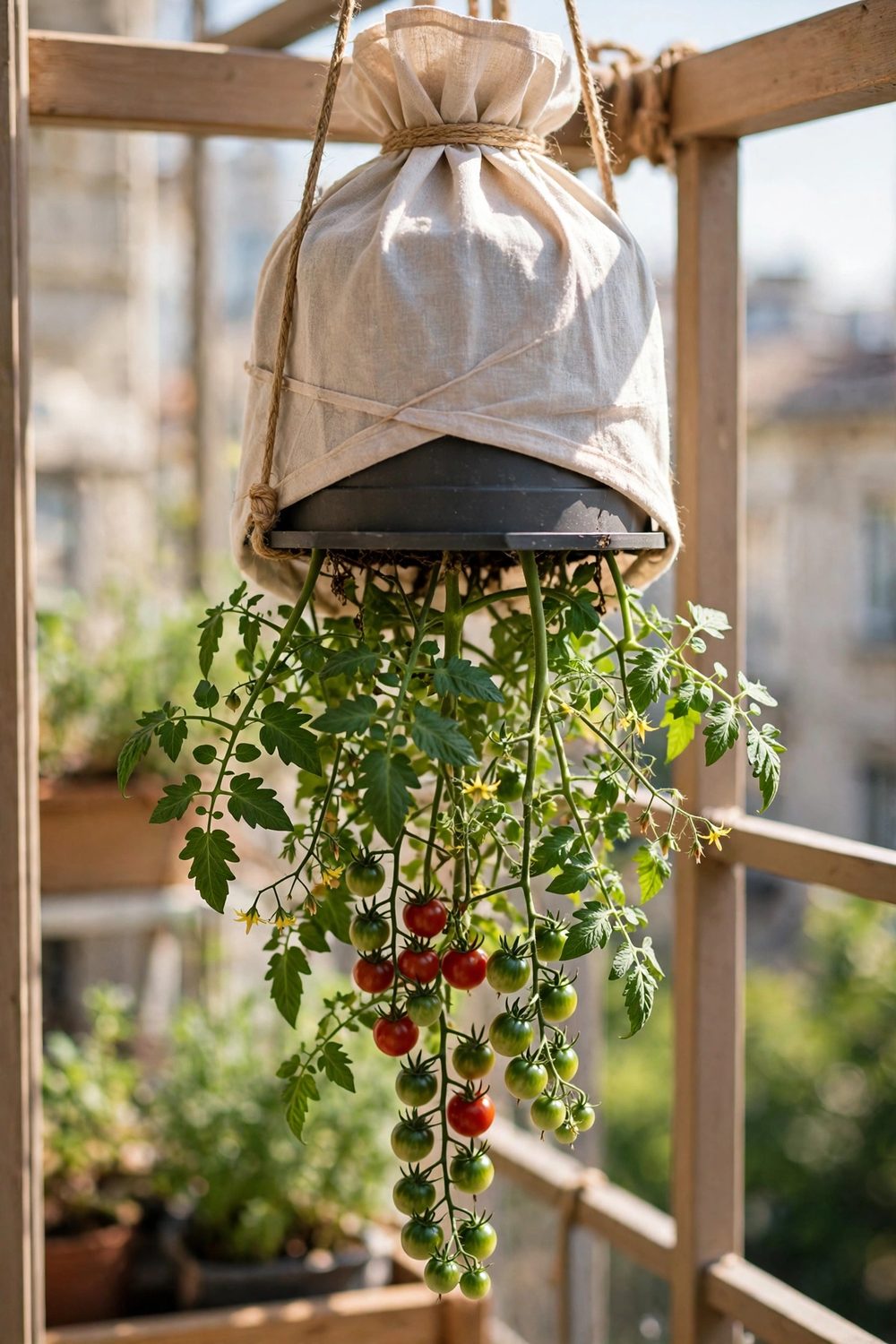
The hook slips or a strap frays. Take the planter down the same day. Rehang only on a rated hook, with the backup strap fitted, and recheck the weight after watering.
The honest verdict. This setup genuinely works on a sunny rail with no floor space, for one tumbling cherry plant, watered daily. Fruit hangs clean, air flow is good, and picking is easy.
It fails as a main crop method. Drying speed, root heat, and small volume cap the harvest well below the same variety in a 10 gallon (38 litre) floor pot.
Treat it as a fun second plant, not your only tomato. Growers who need a real harvest should put the main plant in a big pot and hang this one for extra cherries.
Frequently Asked Questions
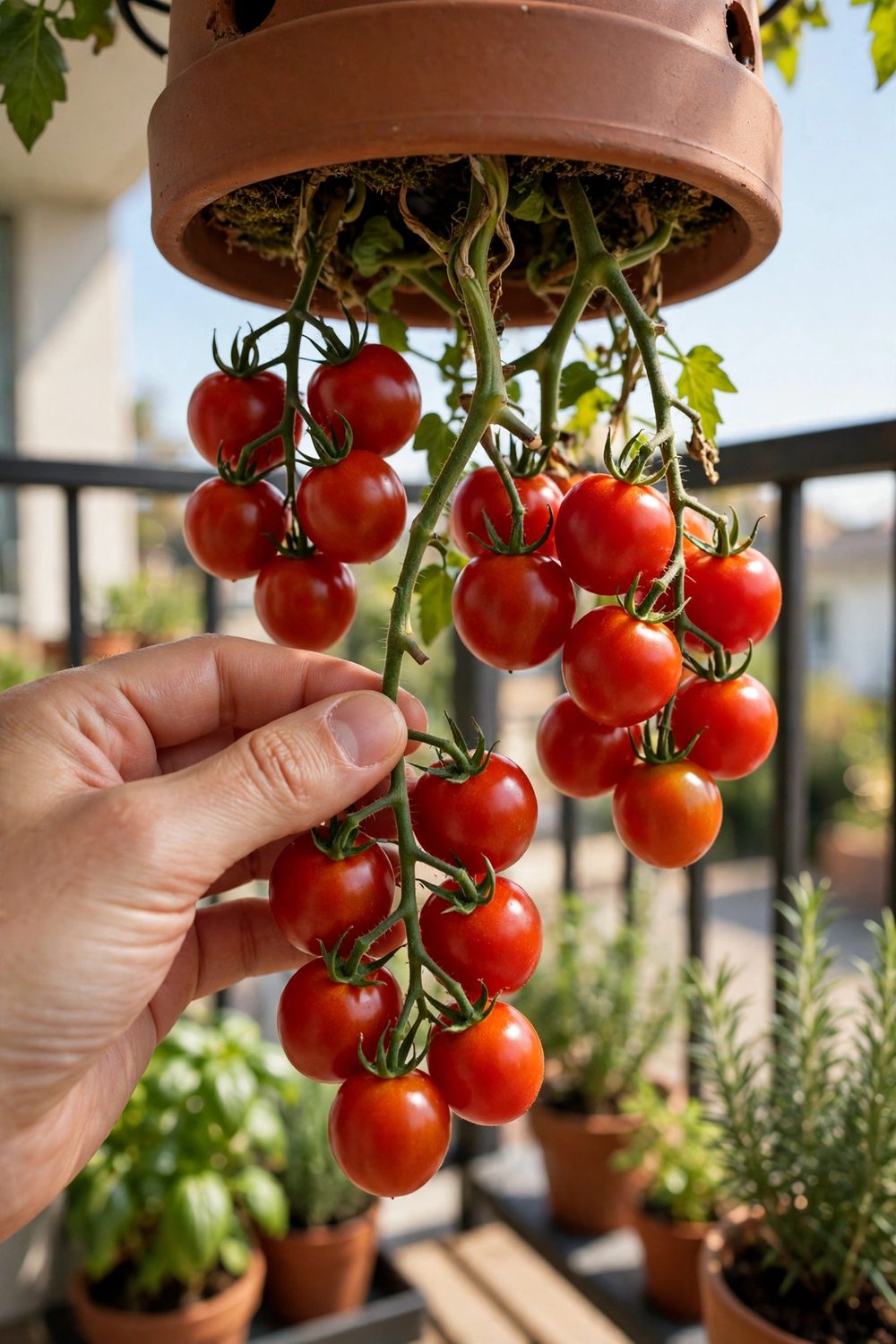
Do upside-down tomatoes actually grow well?
Tumbling cherry types grow reasonably well and fruit cleanly off the ground. Yields stay smaller than the same plant in a large floor pot, because the root volume is small and drying is fast.
How much sun does a hanging tomato need?
Aim for 6 to 8 hours of direct sun a day, the same as any tomato. Less sun means fewer flowers and slower ripening, and no hanging trick changes that basic need.
Can I use a big beefsteak variety upside down?
It is a poor match. Heavy fruit strains the stem at the hole, and the plant needs more root room than a hanging planter holds. Choose small tumbling fruit instead.
How heavy is a filled upside-down planter?
A watered 3 gallon (11 litre) fabric planter often lands near the limit of small hooks. Weigh yours on a scale and compare it with the printed hook rating before hanging.
Why does my plant keep drying out?
Air moves around every side of a hanging planter, and the mix volume is small. Daily watering is normal, and twice daily is common during hot, windy spells on high balconies.
Can renters hang a planter on a balcony rail?
Many leases limit items hung outside the rail or over a walkway below. Check your building rules first, hang inside the rail where possible, and always fit a backup strap.
Quick Reference
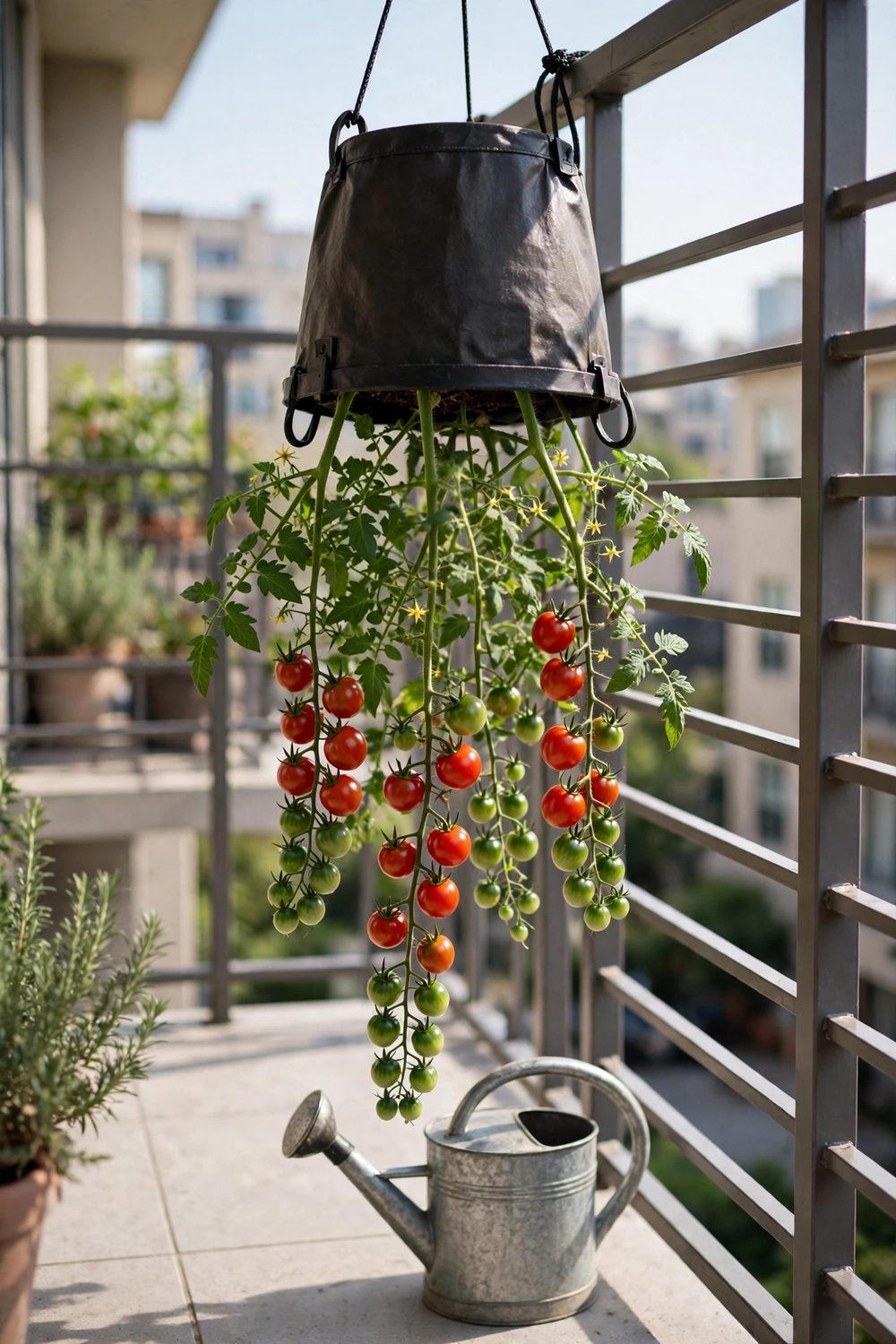
- Variety: tumbling cherry types only, such as ‘Tumbling Tom Red’ or ‘Hundreds and Thousands’.
- Planter size: 3 to 5 gallons (11 to 19 litres) for one plant.
- Bottom hole: about 2 inches (5 cm) across, with a foam collar around the stem.
- Mix: light bagged potting mix with perlite, filled to 2 inches (5 cm) below the rim.
- Hook: rated well above the weighed, watered planter weight, plus a backup safety strap.
- Sun: 6 to 8 hours of direct sun daily.
- Water: daily as standard, twice daily in heat, poured slowly from the top.
- Verdict: good for extra cherries on a sunny rail, not a main crop method.
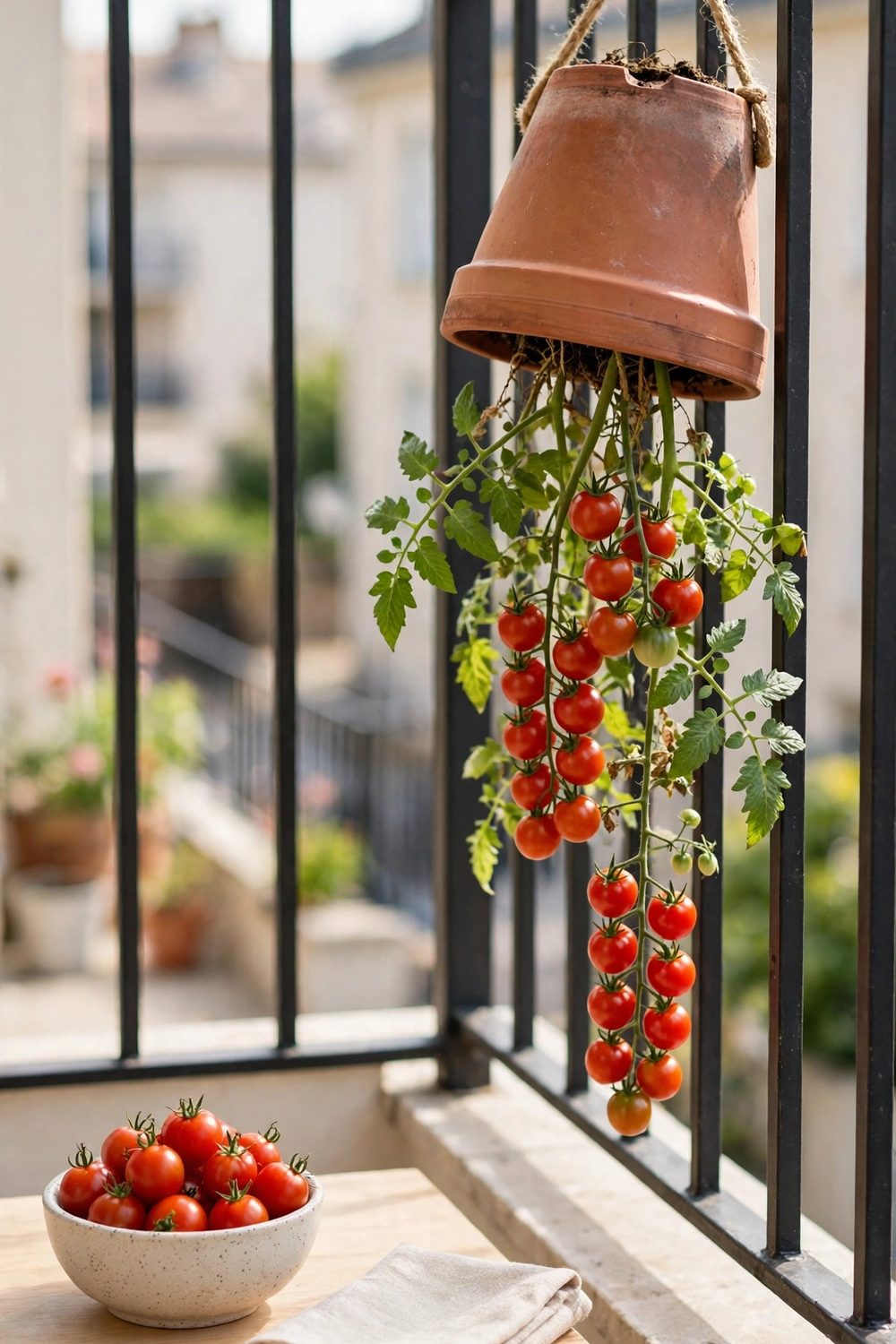
Built honestly, an upside down tomato planter on a balcony rail gives clean, easy-pick cherries from space that would otherwise grow nothing at all. That is a real, if modest, win for a small balcony with a sunny rail and a grower who waters daily.
Keep the main harvest in a big floor pot, water the hanging plant daily, and check the hook weekly.
Pick ripe fruit little and often so trailing stems carry less weight. Save this guide to your tomato board before your next plant shop trip.


