

15 Potted Tomato Ideas for Renters: No Staking Into Walls
Your lease says no screws in the walls, and your tomato plant still wants to climb six feet tall.
That clash stops a lot of renters before they start. It does not need to. Tomatoes in pots for renters no staking into walls works when the support stands in the pot, sits on the floor, or clamps to the rail.
Every idea below leaves the walls, the rail fixings, and your deposit alone. Each one also keeps the plant fed, watered, and steady in wind.
Pick the setups that match your balcony size and your lease, then plant with confidence this spring.
Most of these setups cost little and come apart in minutes. When you move, the plants travel with you and the balcony looks just as it did.
You also get real choice on plant size. Grow a dwarf on the rail, a patio type in a corner, and one tall cherry in a cage by the wall.
Start With a Freestanding Cage Inside the Pot
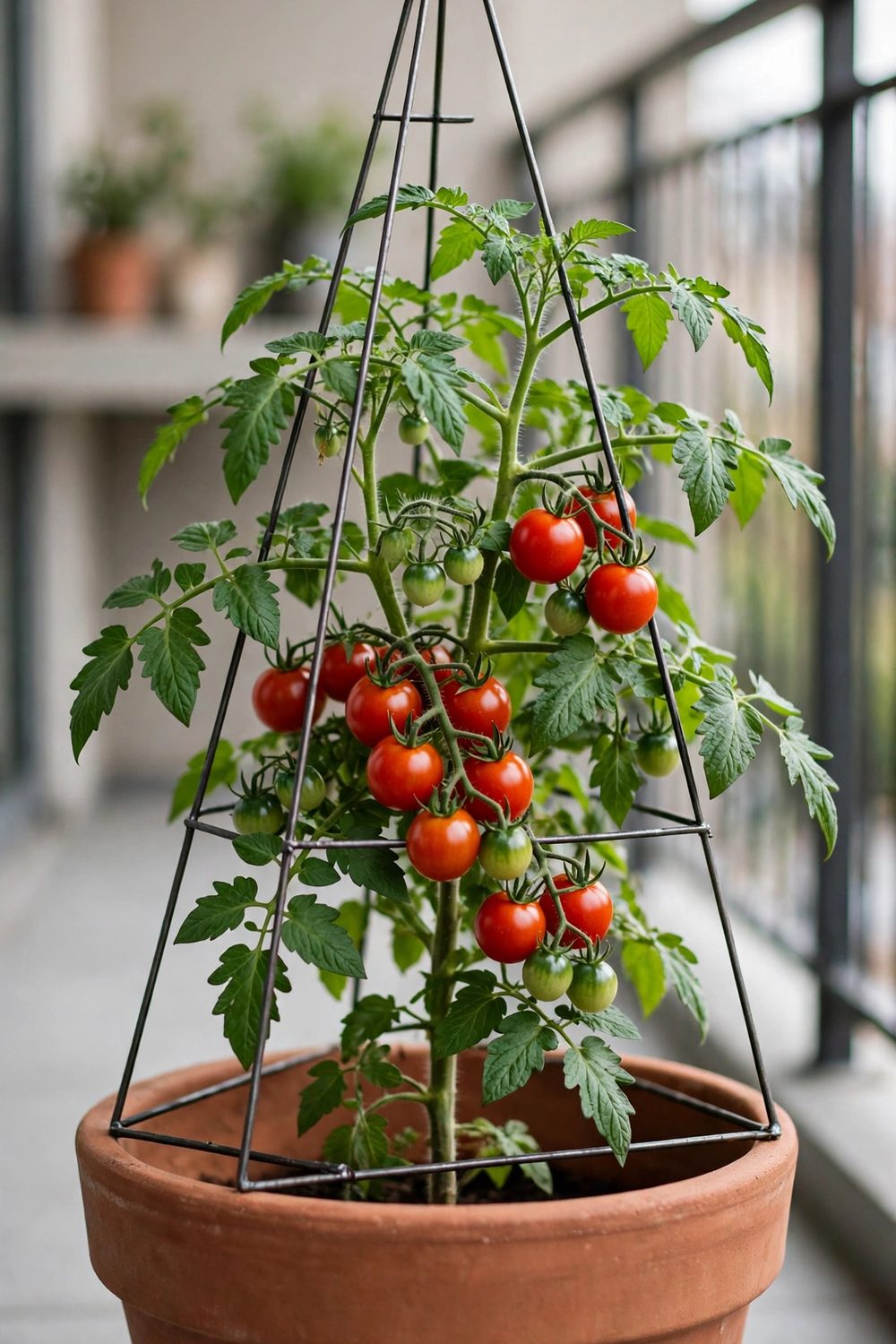
A round or triangle cage that pushes into the soil is the simplest renter answer. The pot holds the cage, and the cage holds the plant. Nothing touches a wall.
Set the cage in place on planting day, while the roots are still small. Pushing legs in later can tear roots and slow the plant down.
Choose a cage at least 48 inches (122 cm) tall for most cherry types. Shorter cages suit patio types that stop near 3 feet.
On a windy third-floor balcony, a triangle cage sits steadier than a round one. Its flat side can face the rail for extra balance.
Feed with a tomato formula once flowers open, at label strength. A caged plant in full fruit drinks fast on warm days, so check the mix each morning.
Choose Dwarf Varieties That Barely Need Support
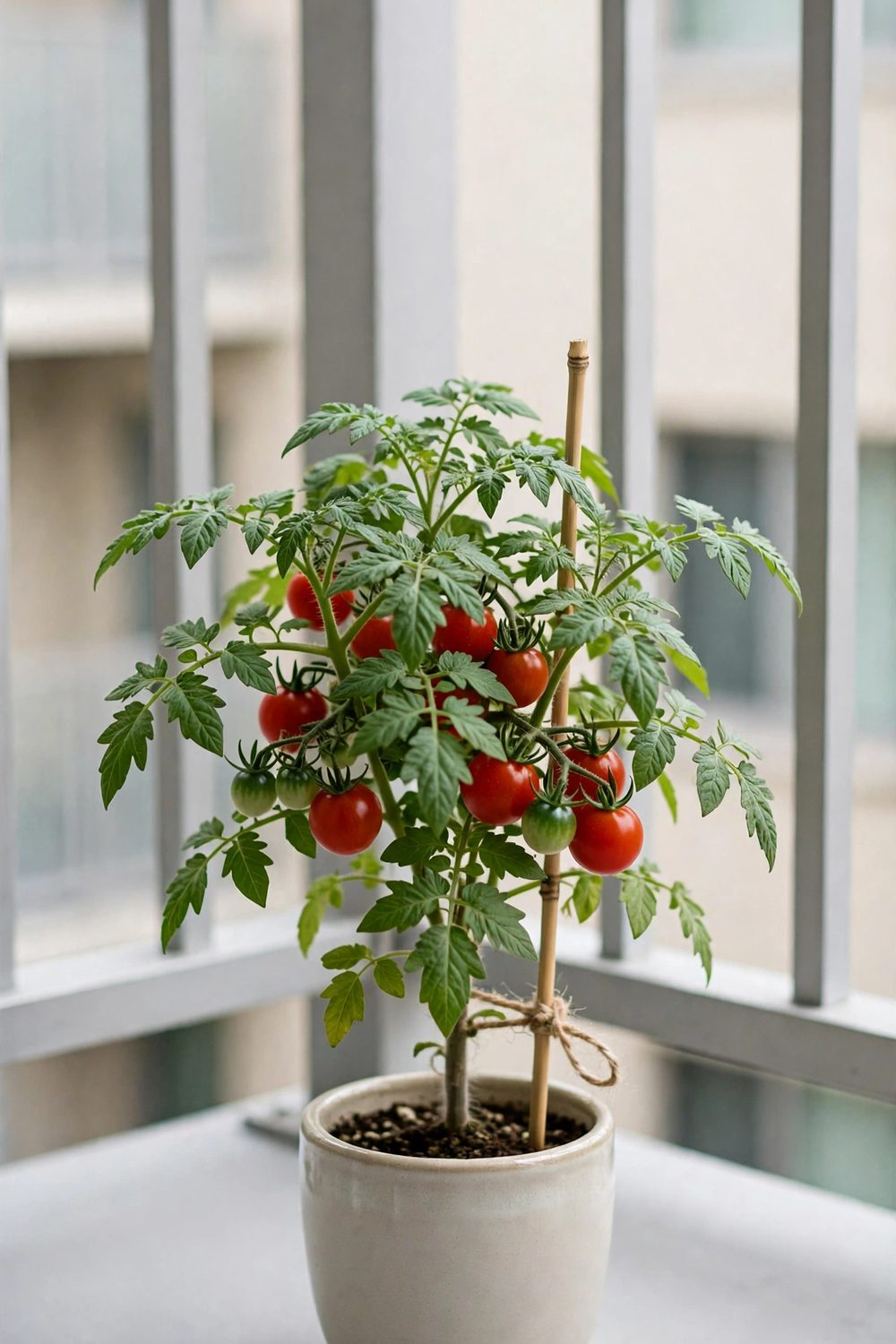
The easiest support problem is the one you never create. Dwarf and micro varieties stay short, so a small stake or tiny cage does the whole job.
Try ‘Tiny Tim’, ‘Red Robin’, or ‘Vilma’ in 1 to 2 gallon (4 to 8 litre) pots. These plants top out near 12 to 18 inches (30 to 45 cm).
‘Patio Baby’ grows a bit taller and still stays neat in a 3 gallon (11 litre) pot. It gives larger fruit without a tall frame.
Short plants also catch less wind. That matters when a storm rolls in and your pots sit three floors up.
Micro types fruit fast, often around 50 to 60 days from transplant. Sow a second pot a month later for a steady run of small harvests.
Use a Weighted Stand on the Balcony Floor
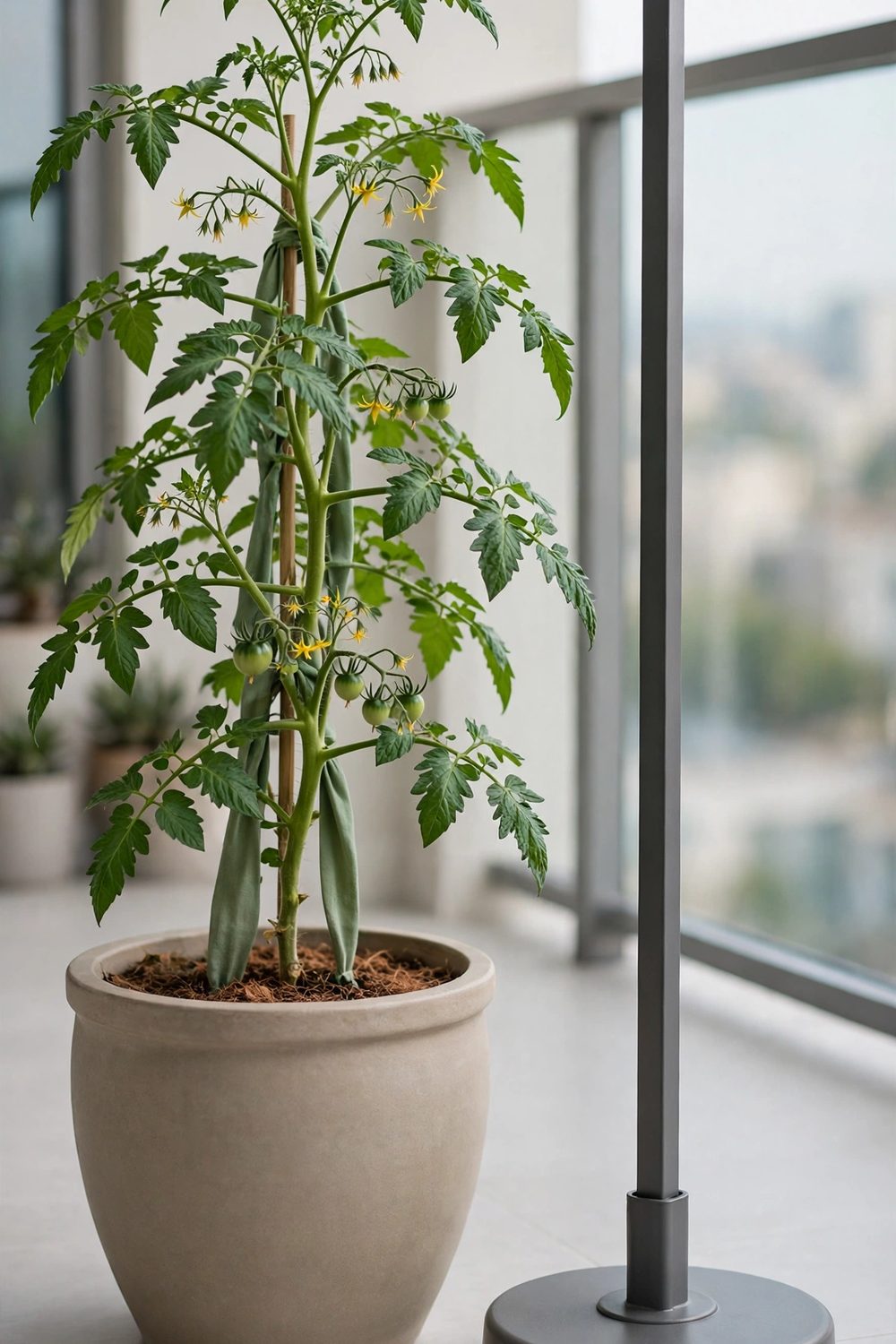
A weighted stand holds a single upright stake in a heavy base. The base sits on the floorboards, so no fixing goes into any surface.
Place the pot right beside the stand, then tie the main stem to the stake with soft ties. Keep the base flat and clear of pooled water.
This setup suits one strong indeterminate plant, such as ‘Sun Gold’, in a 10 gallon (38 litre) pot. One stem, tied in weekly, stays tidy.
Check the base after heavy rain. A stand that rocks on wet boards needs a flat mat under it, not more weight on top.
Look for a base rated well above the weight of stake, plant, and wet soil. Cheap light bases tip in the first strong gust they meet.
Build a Trellis That Lives Inside the Pot
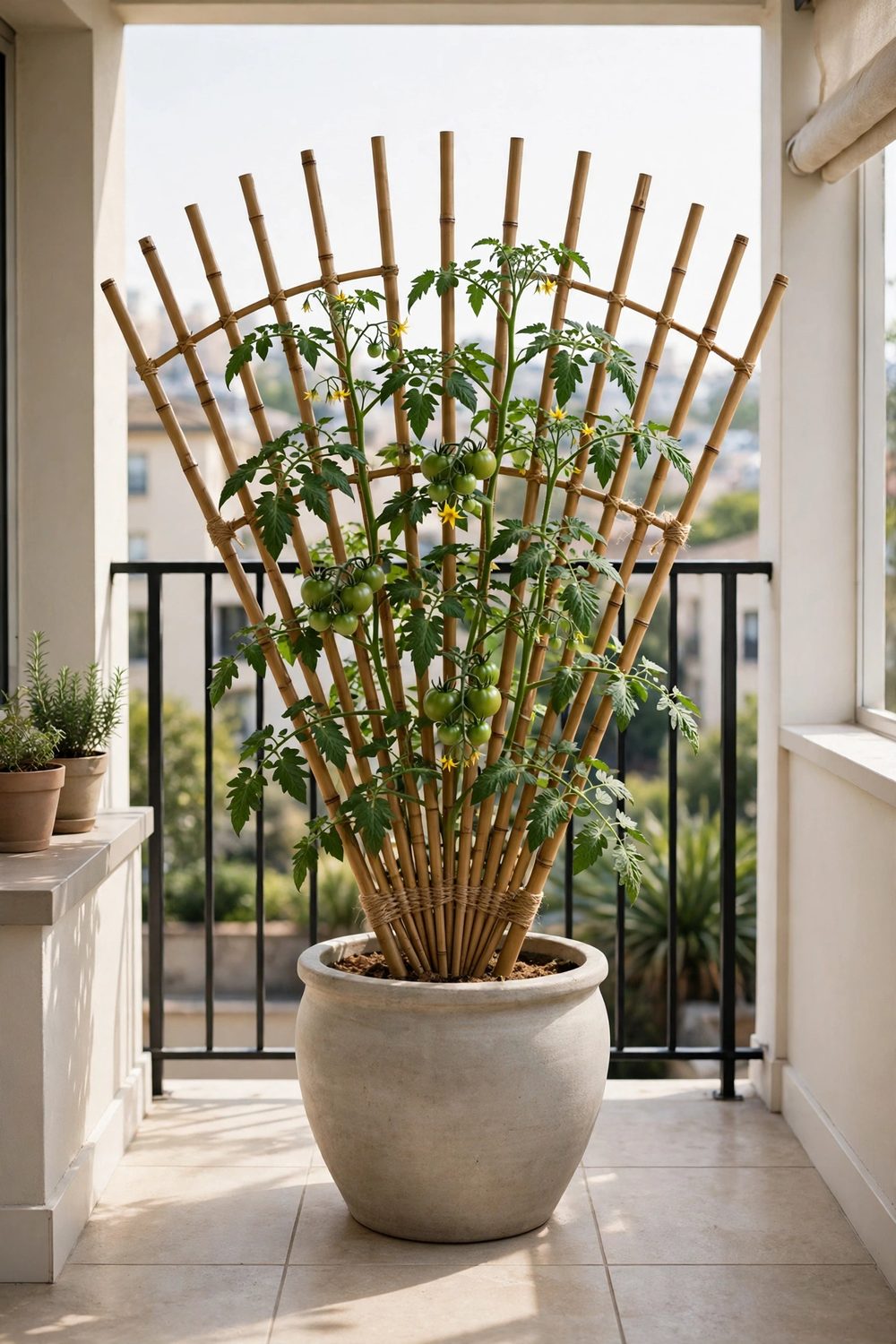
A small trellis panel can stand in the pot itself. Push its feet deep into the mix, near the back edge, away from the main root ball.
Bamboo canes lashed into a flat fan shape work well and cost very little. Tie the cross pieces with garden twine at each joint.
Train the stems across the fan as they grow. Spread them out, and air can move through the leaves, which helps keep disease down.
For more frame styles that stand in soil, see these tomato cages and supports that work in pots. Each one suits rented spaces.
Willow or bamboo panels flex a little in wind, which helps them last. Rigid plastic panels can snap at the tie points on exposed balconies.
Clamp a Small Planter to the Rail, Not the Wall
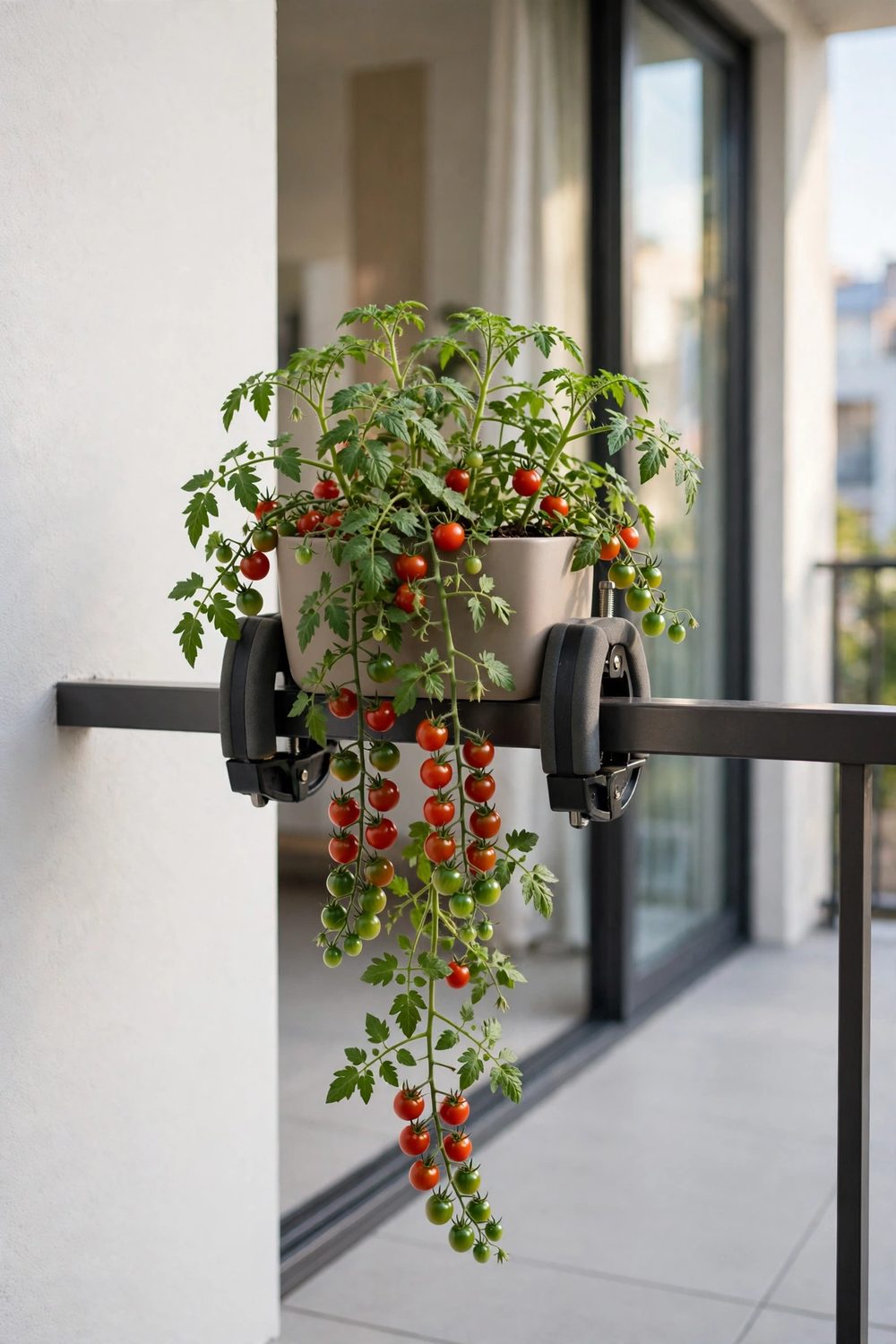
Rail clamps grip the balcony rail and hold a small pot out in the sun. They need no screws, and they leave no marks when padded well.
Keep rail pots small and light. A tumbling cherry type, such as ‘Tumbling Tom Red’, fits a rail planter far better than a tall beefsteak plant.
Check your lease and building rules first. Some buildings ban rail planters, and a full tomato pot can pass 15 pounds (7 kg) when watered.
Pad the clamp points with rubber or felt. Bare metal on a painted rail can scratch, and scratches can cost deposit money.
A clamp planter in full sun dries out daily in summer. Water it first on your morning round, before the big floor pots get their drink.
Pick Grow Bags That Hold Their Own Shape
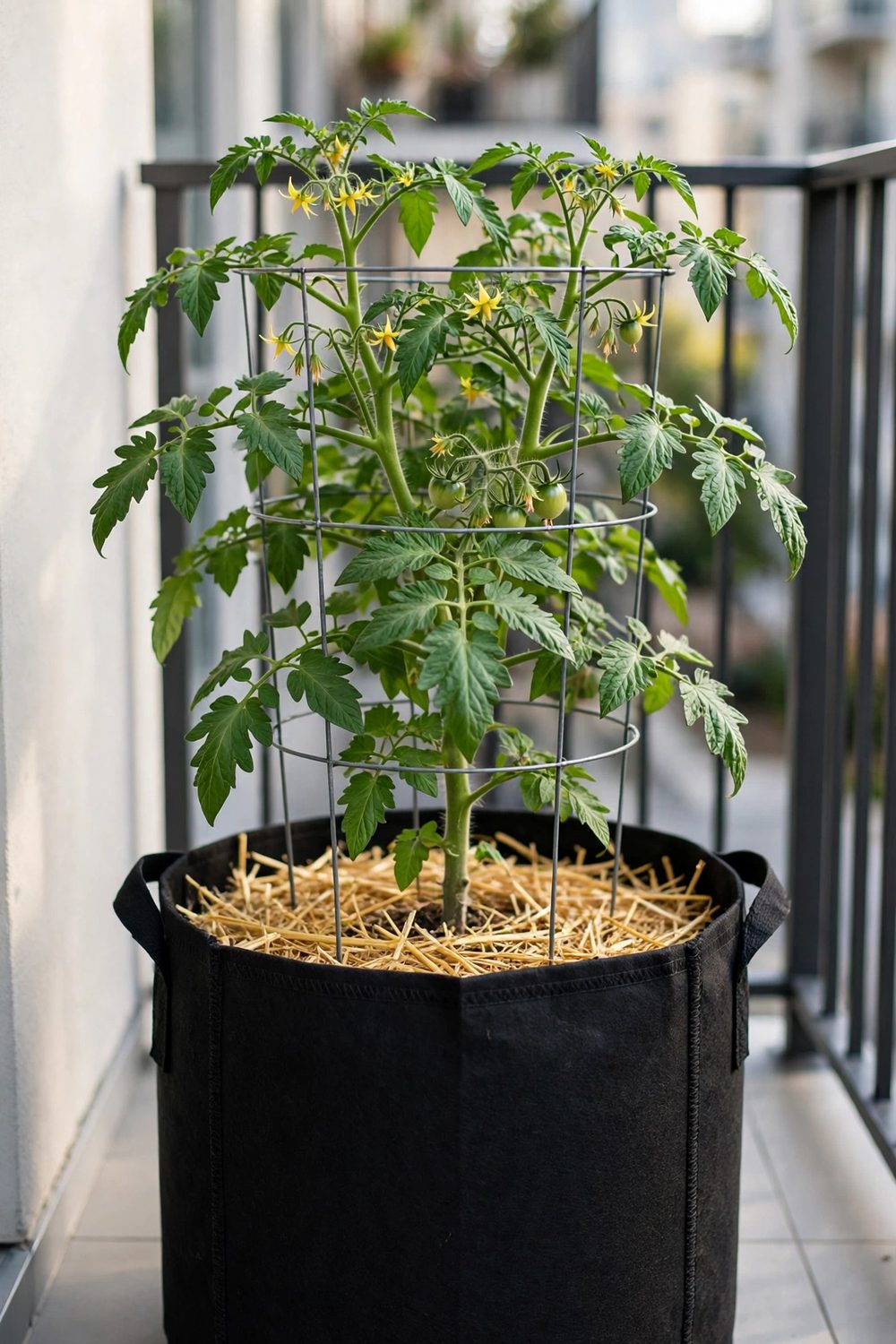
Fabric grow bags stand firm once filled, and a cage pushes into them just as it does into a rigid pot. The bag flexes instead of cracking.
Use a 5 to 10 gallon (19 to 38 litre) bag per plant. Fill it where it will sit, since a watered bag is heavy to carry.
Bags dry out faster than plastic pots on hot days. Water in the morning, and mulch the top with straw or bark to slow the loss.
This grow bag balcony guide for renters covers neat setups that keep landlords happy and floors clean.
At season end, empty the bag, shake out the mix, and fold it flat. Grow bags store in a drawer, a real plus in a small flat.
Set Pots in a Row and Tie Them to Each Other
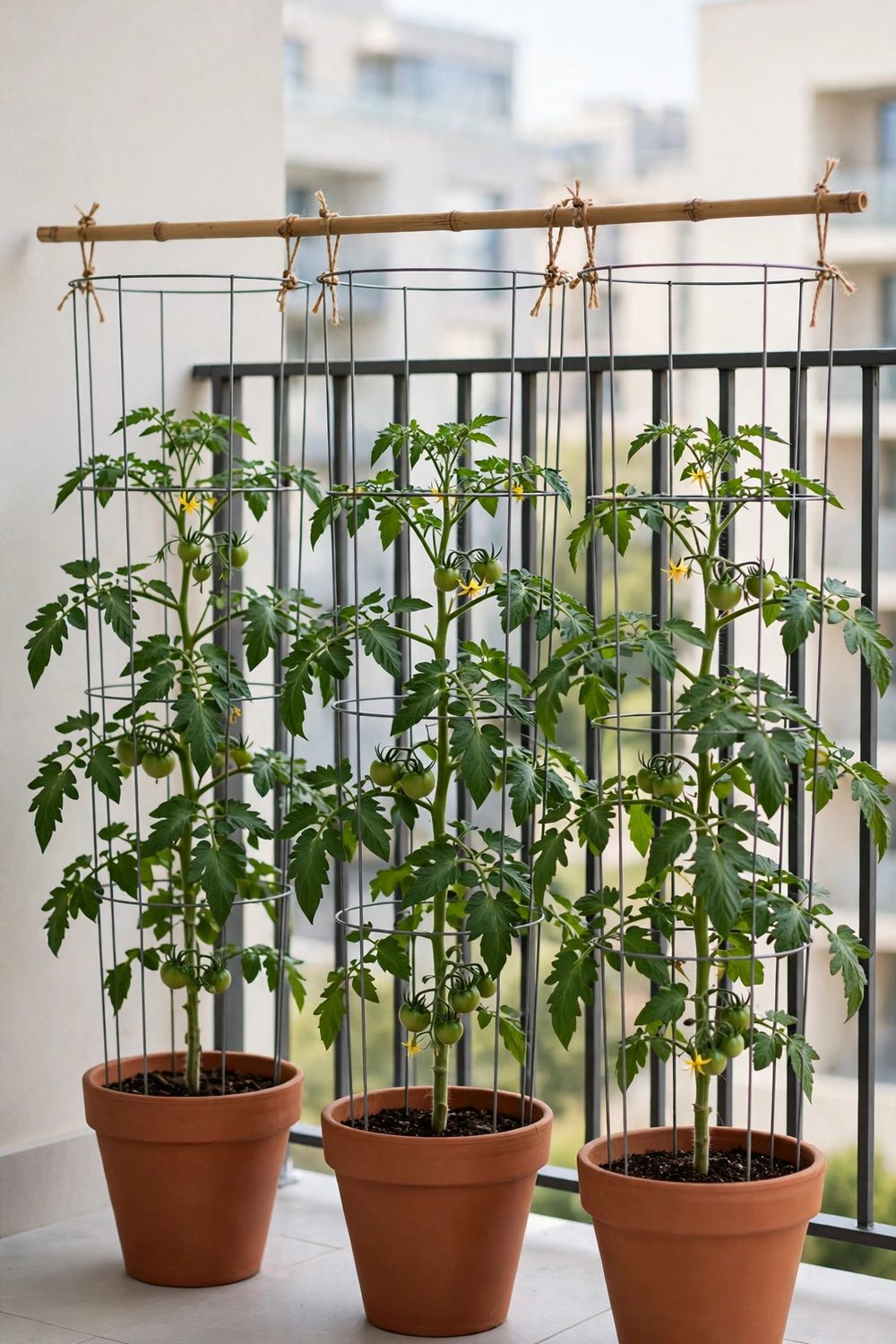
Three pots in a row can brace each other. Run a cane across the tops of their cages and tie each cage to that shared cane.
The row acts like one wide base. A gust that would rock a lone pot has to move all three at once, and it rarely can.
Keep spacing honest, with at least 18 inches (45 cm) between plant centers. Crowded leaves hold damp air and invite spots and mildew.
Face the row so each plant gets 6 to 8 hours of direct sun. Turn the end pots each week if one side shades the other.
Tie with soft ties, never wire, where cages meet the shared cane. Metal on metal can squeak and wear through the cage coating over time.
Try a Tripod of Stakes Tied at the Top
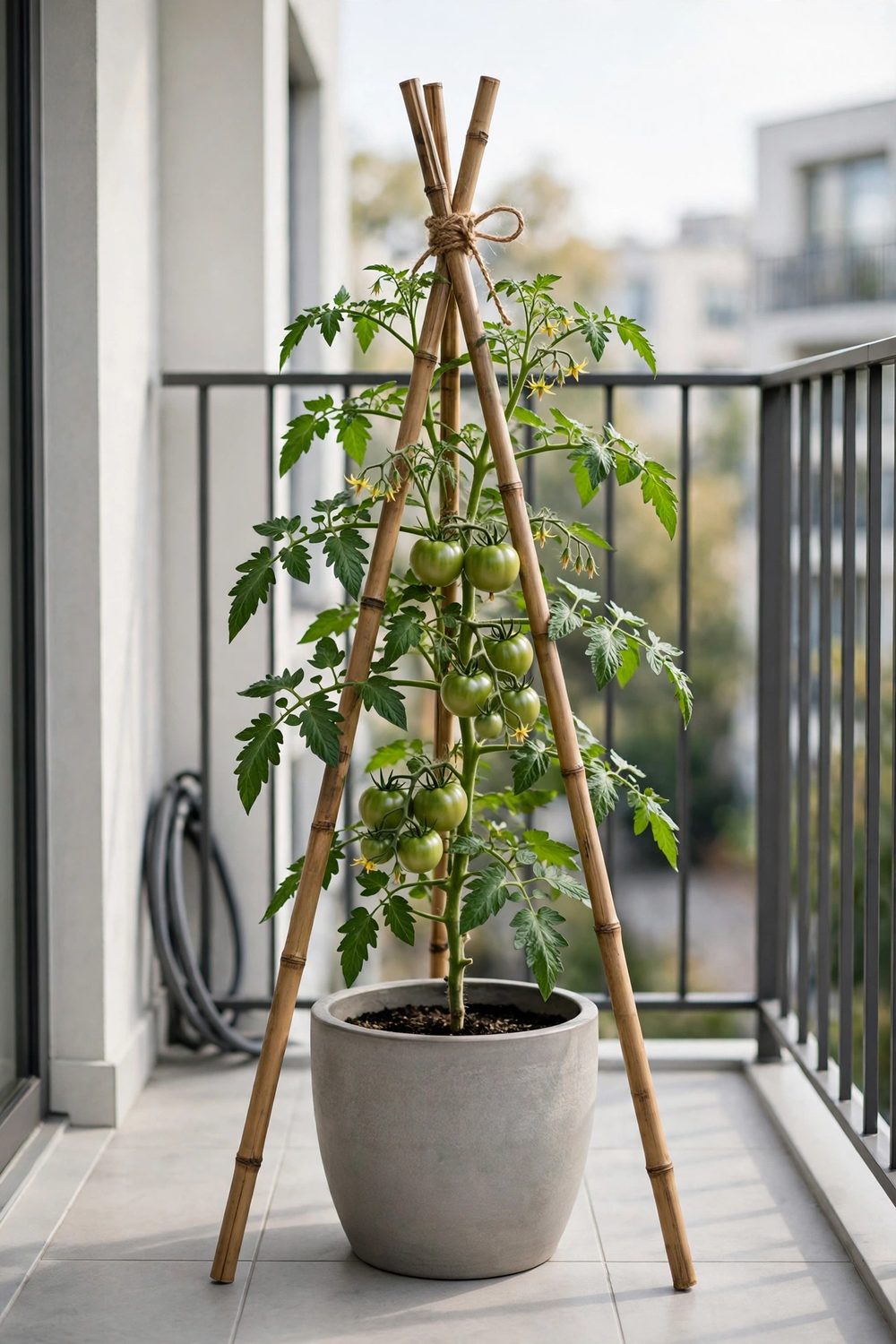
Three canes pushed into one pot and tied at the top form a tripod. The shape is strong, cheap, and fully freestanding.
Use canes at least 5 feet (150 cm) long for an indeterminate plant. Push each cane 8 to 10 inches (20 to 25 cm) into the mix.
Wind the main stem in a loose spiral as it climbs. Add a soft tie at each foot of new growth to keep it close.
A tripod also comes apart in minutes at move-out time. Pull the canes, wash them, and they are ready for the next home.
Two shorter tripods can beat one tall one on very windy sites. Keep each plant to one or two stems so the frame stays balanced.
Keep Indeterminate Plants to One Main Stem
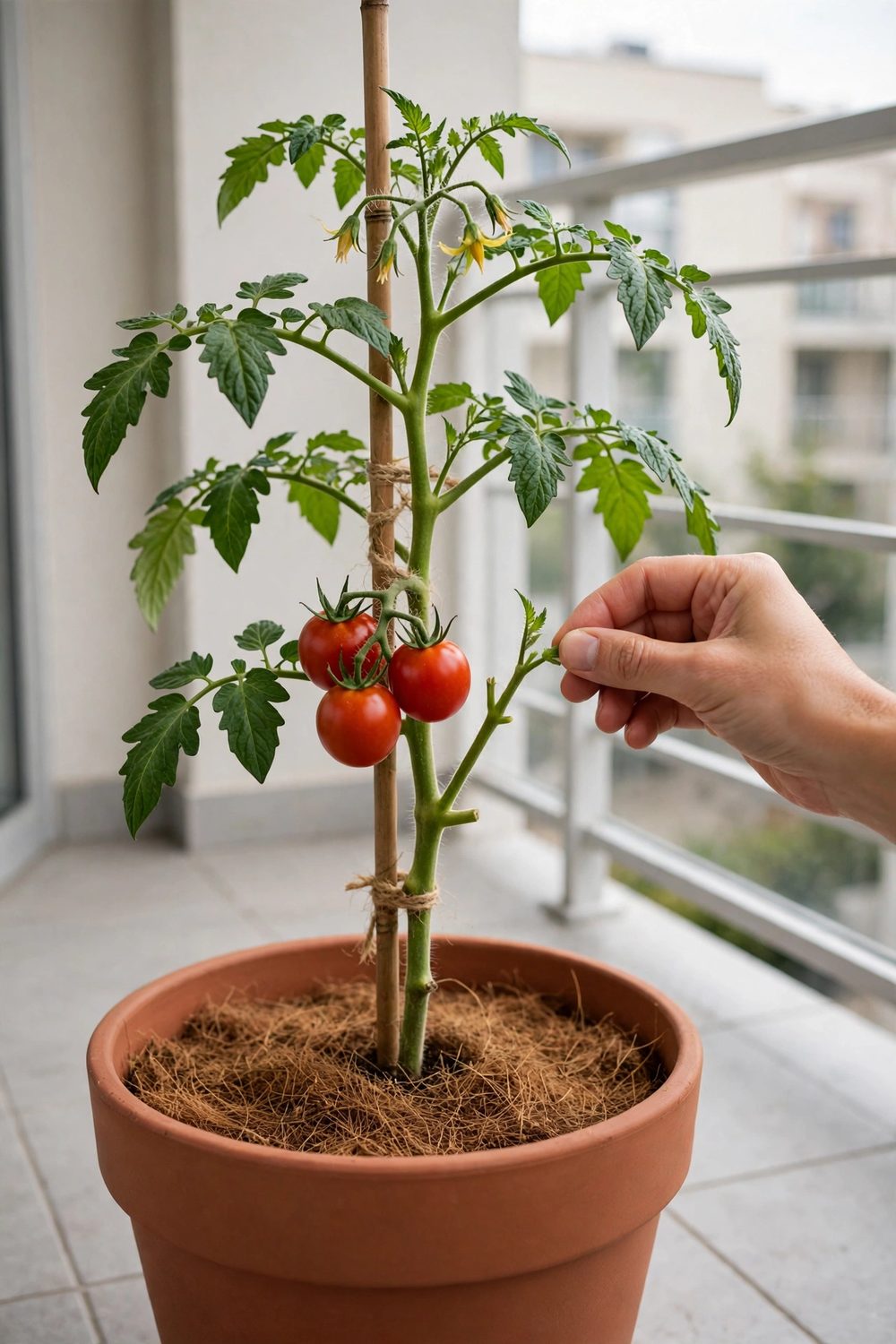
A tall tomato with five wild side stems needs a huge frame. The same plant kept to one main stem needs one stake and a few ties.
Pinch out the small shoots that grow where a leaf meets the stem. Do this weekly, while the shoots are under 4 inches (10 cm) long.
One stem means less weight high up, where wind does the most harm. It also means fruit ripens faster on a short season balcony.
Determinate types are the exception. Leave their side shoots alone, since pruning them cuts the harvest the plant has already set.
Use clean fingers for the job, and work when the plant is dry. Small shoots snap off cleanly and leave almost no wound behind.
Use Soft Ties and Check Them Every Week
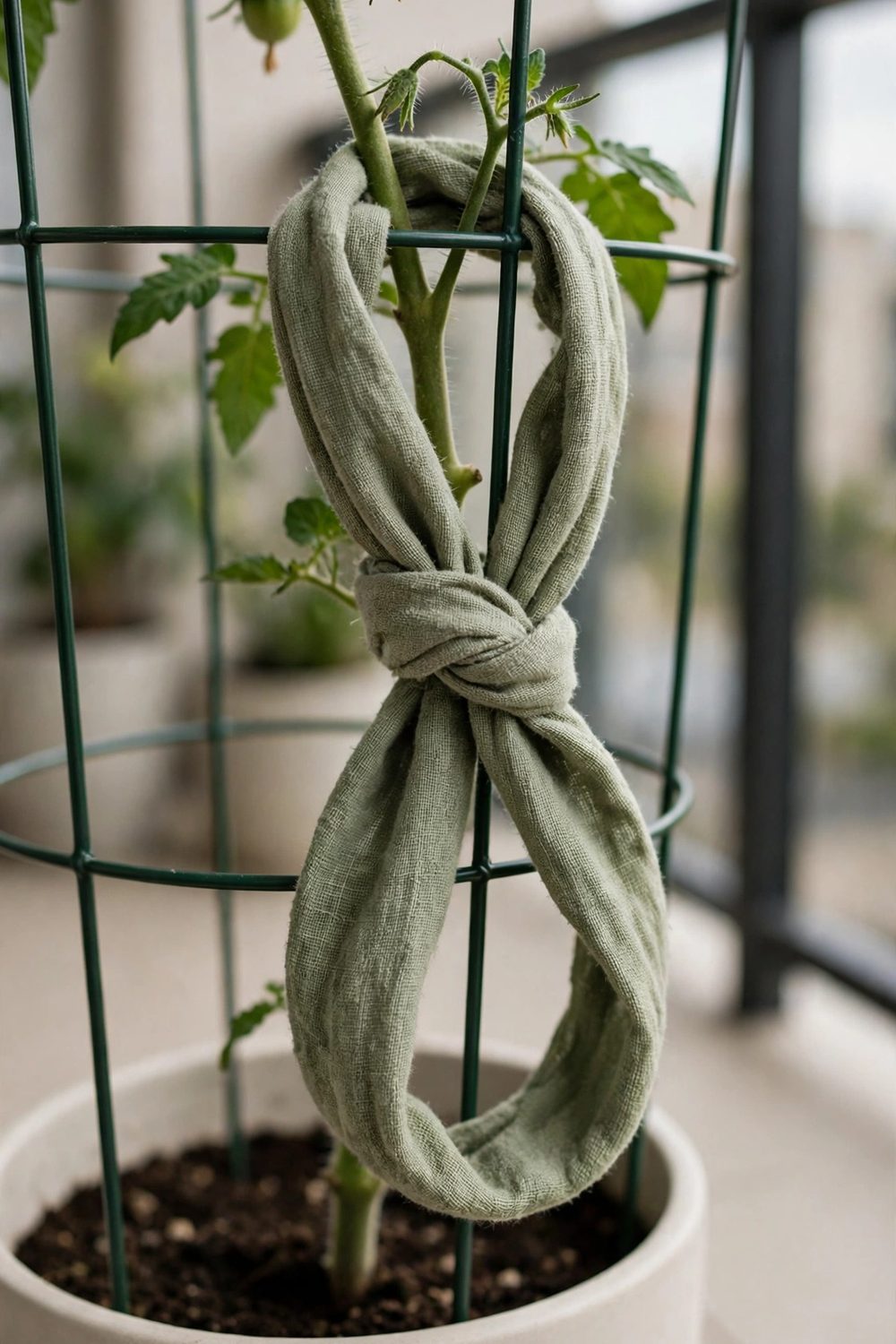
Wire and thin string cut into stems as plants swell. Soft fabric ties, old T-shirt strips, or hook-and-loop plant tape spread the load instead.
Tie in a figure-eight loop, with one loop around the support and one around the stem. Leave slack so the stem can thicken.
Walk the balcony once a week with ties in your pocket. Plants can grow 6 inches (15 cm) in a warm week, and loose tops flap hard.
Flapping snaps stems and bruises fruit. Two minutes of tying after watering saves the plant you fed all season.
Keep a small roll of tape on the rail in a zip bag. Having ties at hand means the weekly check actually happens, even on busy days.
Put Heavy Pots Low and Close to the Building
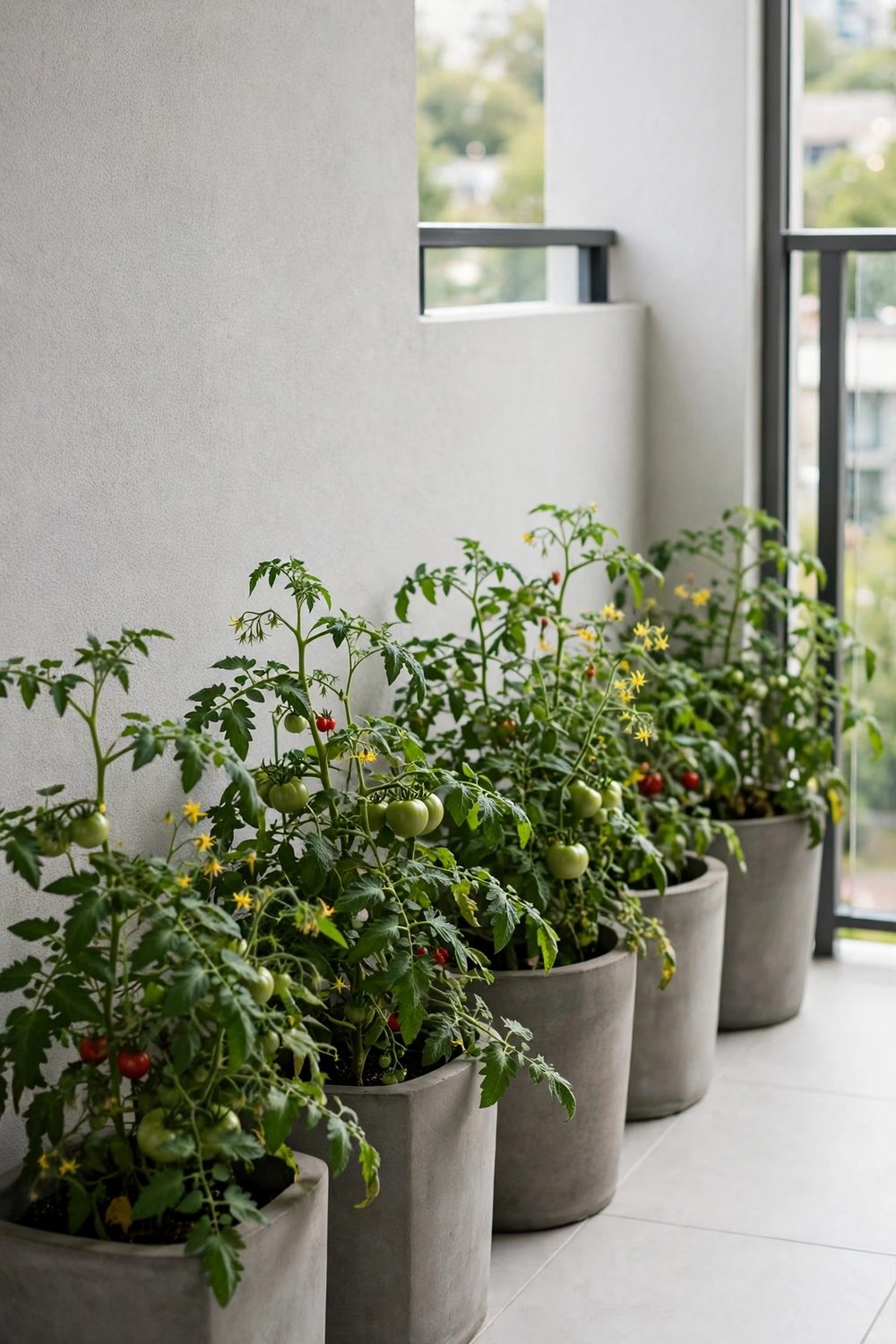
Weight placement matters as much as total weight. A heavy pot near the building wall loads the strongest part of the balcony floor.
Keep big pots off the outer edge, and spread them along the wall line. Avoid lining every heavy pot along the rail.
A watered 10 gallon (38 litre) pot can weigh 60 pounds (27 kg) or more. That number grows fast across a row of plants.
Read this balcony weight guide for pots before your first big shop. It shows safe loading in plain terms.
If your balcony slopes for drainage, set pots on flat pads, not wedges. A level pot waters evenly and stands far steadier in wind.
Add a Saucer and Caddy to Protect the Floor Below
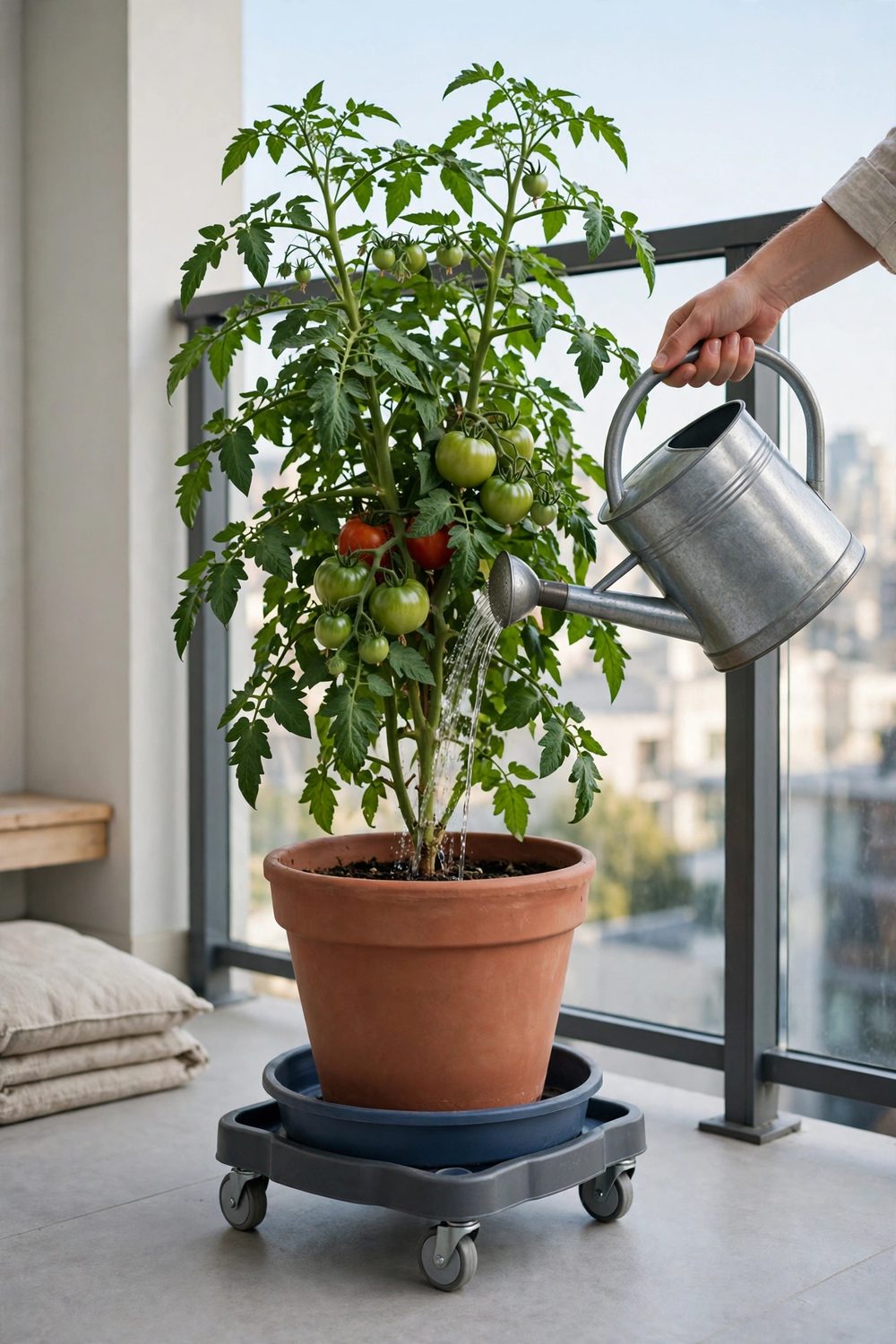
Runoff is the renter problem nobody sees coming. Brown water over the edge can stain the balcony below and start a hard talk with neighbors.
Set every pot on a deep saucer, and empty the saucer after watering. A caddy with a tray catches drips and lets you roll heavy pots.
Water slowly, in two rounds, so the mix can soak it up. Fast pouring runs straight through dry mix and out of the base.
Steady moisture also guards against blossom end rot. That dark patch on fruit comes from uneven watering, not just low calcium in the mix.
A wheeled caddy also helps at move-out time. Roll the heaviest pot to the door instead of dragging it and scuffing the floor boards.
Prune for Airflow So Plants Stay Lighter
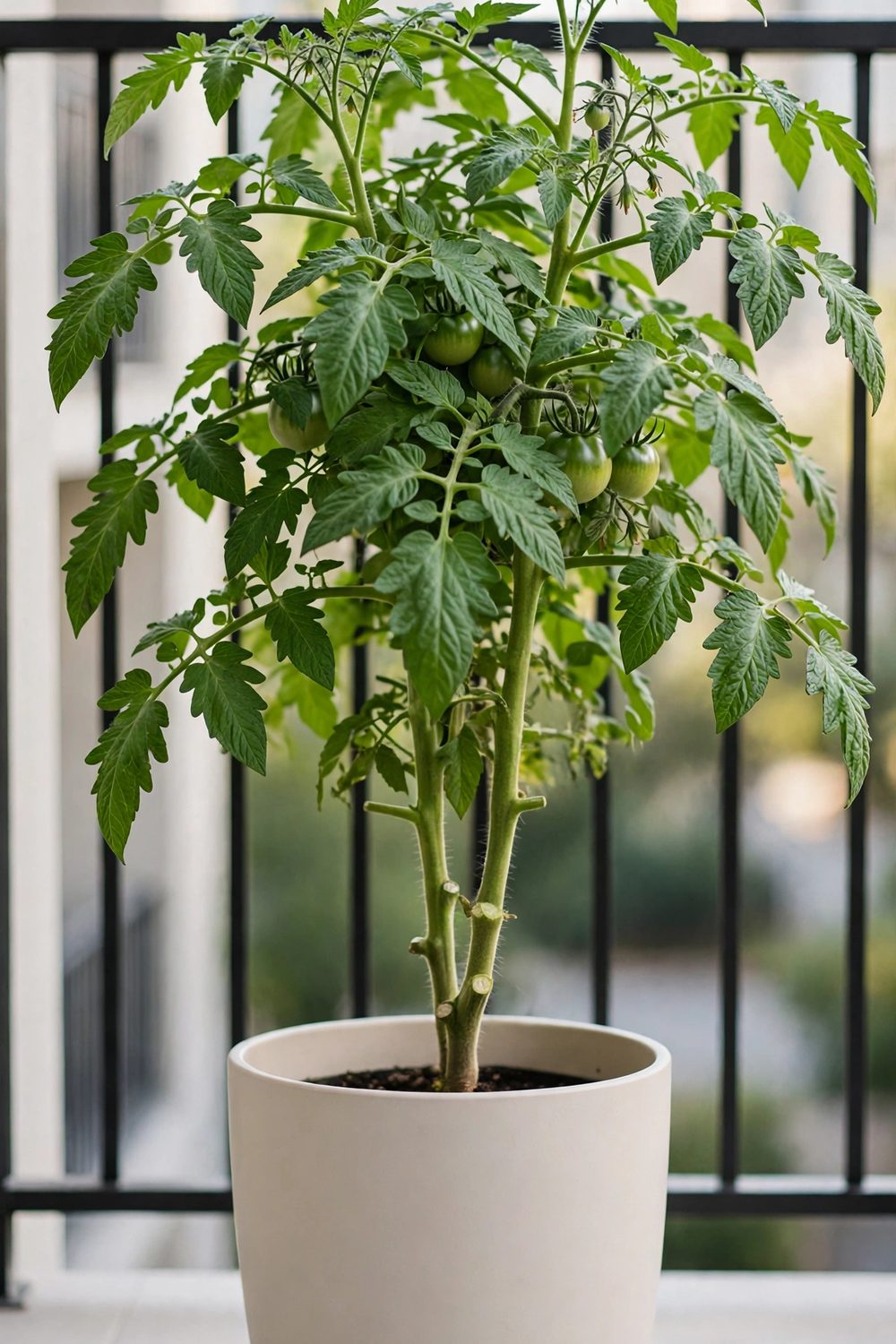
A dense plant is a heavy, sail-like plant. Light pruning cuts the wind load and helps your freestanding support hold firm in a storm.
Remove yellow lower leaves and any leaf that touches the soil. Take off crowded growth in the center so air can pass through.
Keep some leaves shading the fruit in hot spells. Bare fruit can scald in strong afternoon sun, so prune with a light hand.
Prune on a dry morning with clean hands or clean snips. Wet leaves spread disease from plant to plant on a close balcony.
Never strip more than a third of the leaves at once. The plant needs its leaves to feed the fruit that is already sizing up.
Group Pots in a Corner for Wind Shelter
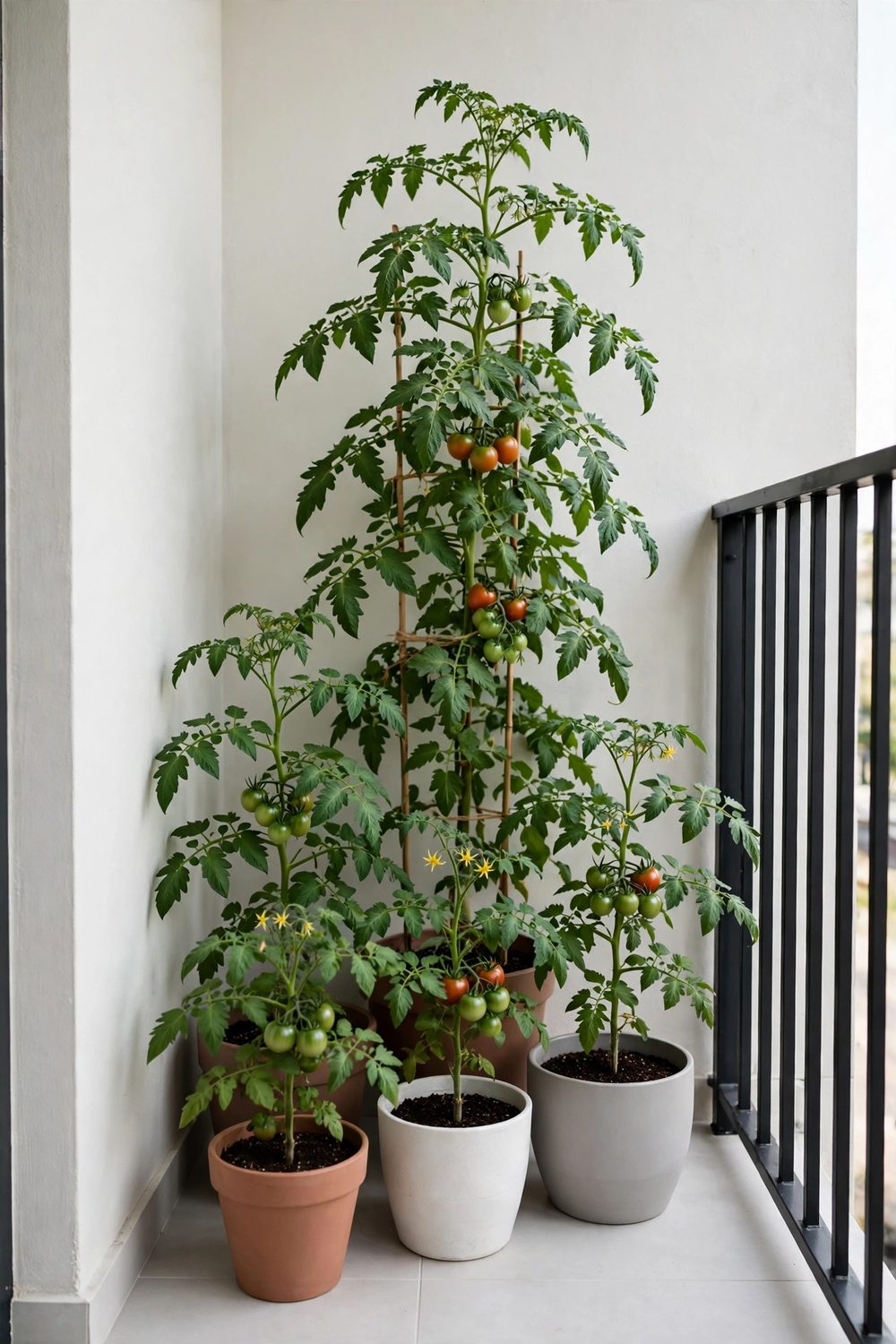
The corner where the wall meets the rail is the calmest spot on most balconies. Pots grouped there lose less water and sway far less.
Place the tallest plant at the back of the group. Shorter pots in front shield its base and lower its center of pull.
Leave a hand-width gap between pots so you can reach in to water and pick. Tight groups hide ripe fruit and ripening pests.
On storm days, slide the group tighter and lower any tall cages you can. Ten minutes of prep beats a snapped stem at midnight.
Check the corner still gets full sun before you commit to it. A sheltered corner in shade grows leaves, not ripe fruit, all summer long.
Read Your Lease Before the Plants Go Out
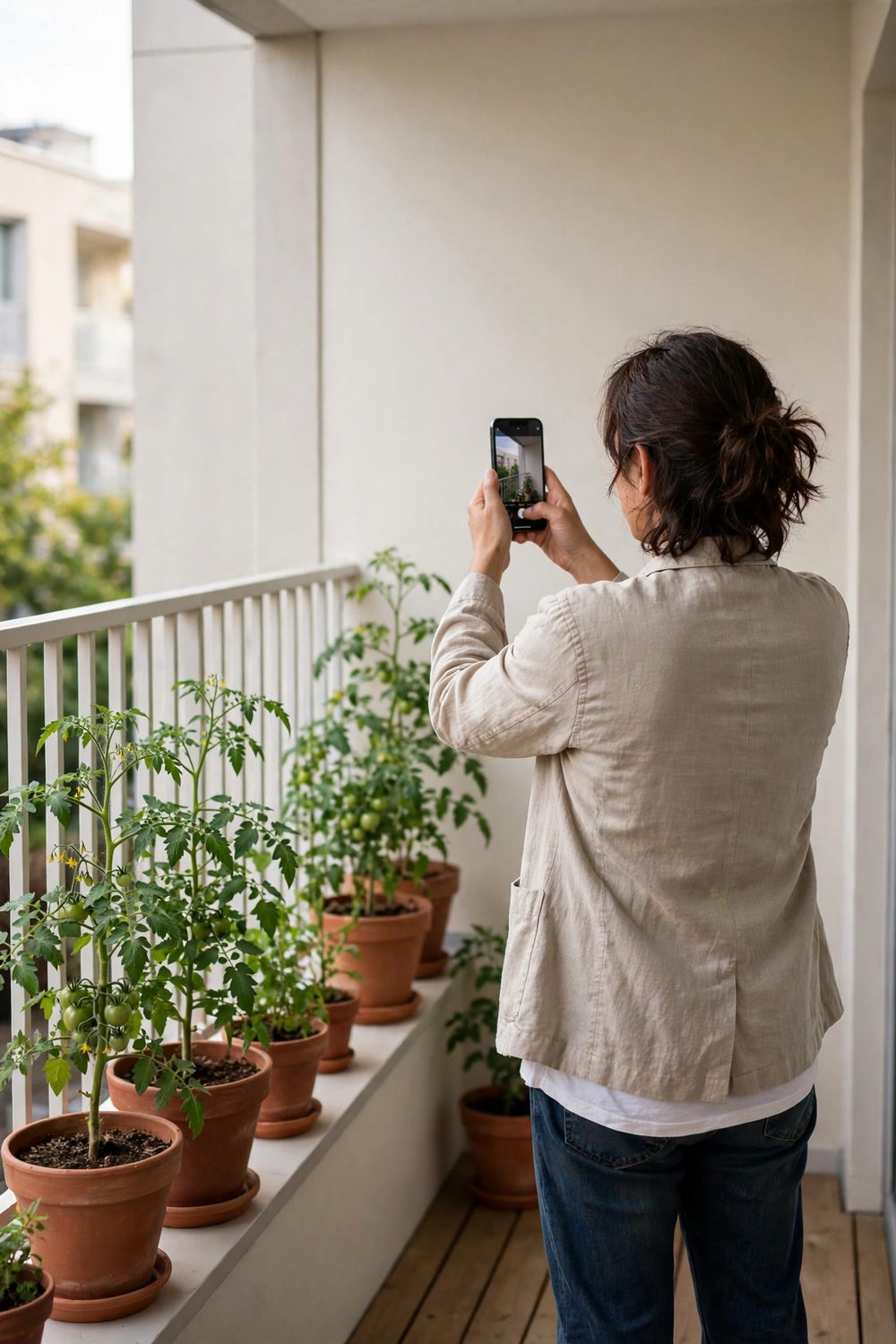
The last check is paper, not soil. Read the balcony, weight, and fixing clauses in your lease before a single pot goes outside.
Some leases ban rail planters or set a pot count. Others allow floor pots but ban any fixing at all, which this whole list respects.
Take dated photos of the walls and rail on day one. Clear photos prove the marks you did not make when you move out.
New to potted tomatoes overall? This full guide to growing tomatoes in a pot walks through planting day to harvest.
If a clause is unclear, ask the landlord in writing and keep the reply. A short email now can save a long dispute in autumn (fall).
Renter rules do not block a real tomato harvest. They just move the support into the pot, onto the floor, or onto the rail.
Start with one cage, one sturdy pot, and one plant that suits your sun. Add a second setup once the first one proves itself.
Save this to your tomato board for later, and check your lease tonight before the seed catalogs call your name. One pot, well supported, beats four pots fighting the wind.
Start small this season, learn your sun and wind, then add pots next spring with a plan that already works.


