

15 Tomato Cages and Supports That Work in Pots
A tomato in a pot has nowhere to lean when fruit gets heavy.
The stem bends, the pot tips, and ripe fruit ends up on the balcony floor.
This guide covers tomato cages and supports that work in pots, with real sizes for small spaces.
Every option here anchors inside the pot or stands free beside it.
No wall fixings, no ground stakes, and no guesswork about height.
Match the support to your plant type first, then check the fit before you buy.
1. Short Cone Cage for a Determinate Plant in a 5-Gallon Pot
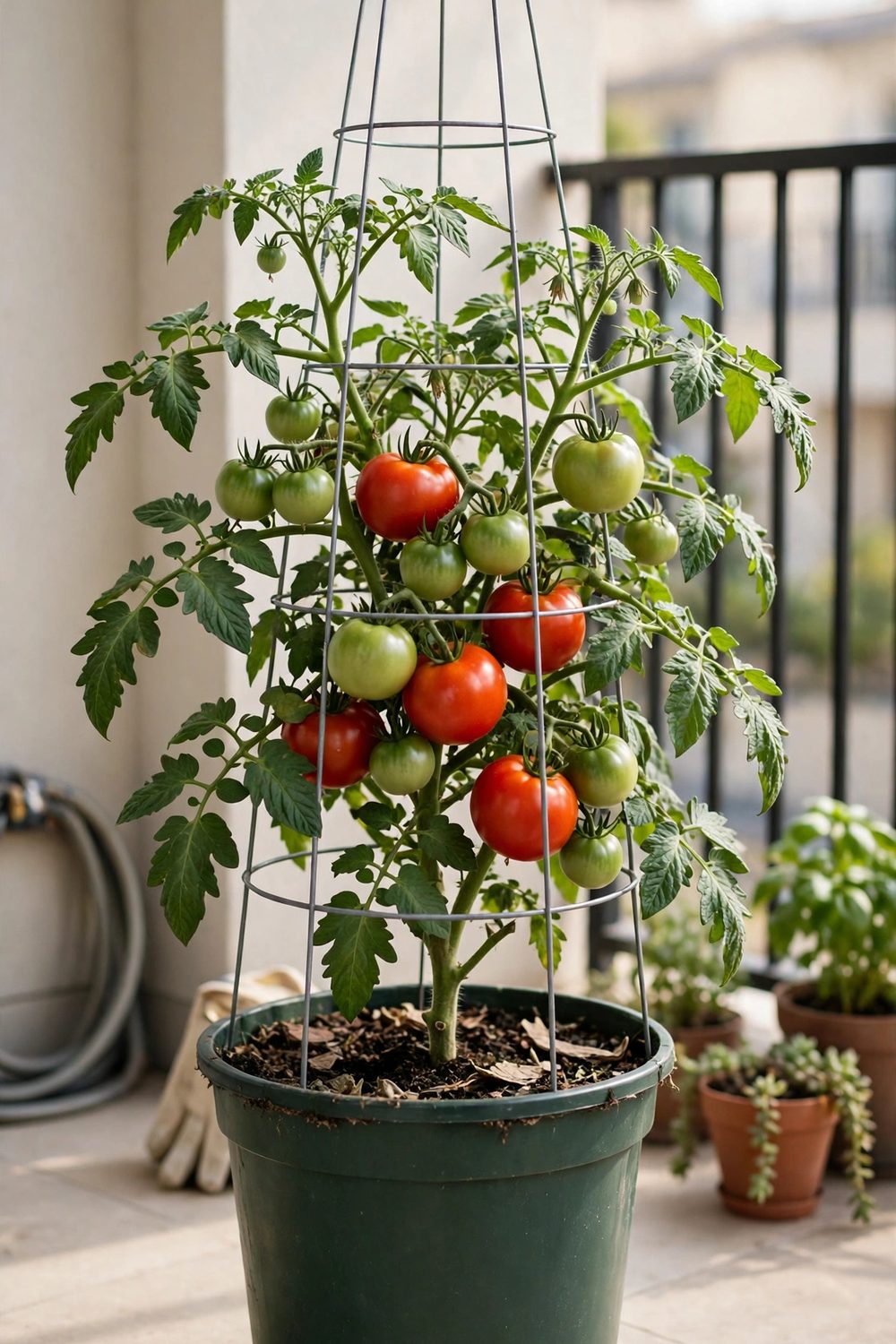
A short cone cage suits a determinate plant that stops growing at a set height. Look for a cage 33 to 42 inches tall, or 84 to 107 cm. The top ring should sit wider than the pot rim.
Push the legs 6 to 8 inches into the mix at planting time. That depth stops the cage rocking when the plant fills out. A variety like ‘Roma VF’ or ‘Bush Early Girl’ fits this size well.
Add the cage early, while the plant is still small. Forcing stems through rings later snaps side shoots. On a windy balcony, set the pot inside a heavier outer pot for extra base weight.
2. Three-Ring Cage With Adjustable Rings for Cherry Tomatoes
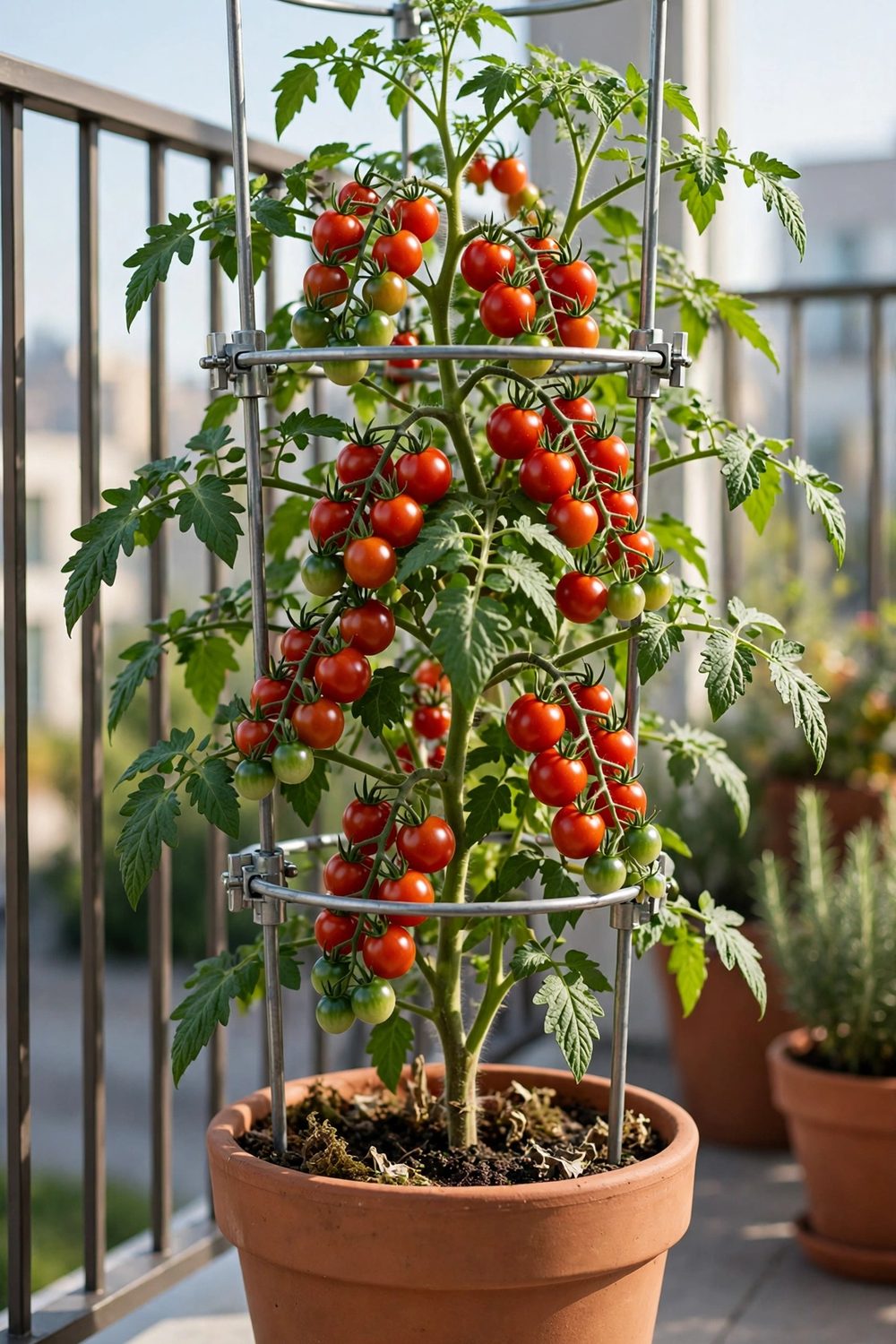
A three-ring cage lets you move each ring as the plant grows. Start with the lowest ring near the first side shoots. Slide the next ring up when the main stem passes it.
Cherry types like ‘Sun Gold’ and ‘Sweet Million’ grow fast and branch wide. Adjustable rings follow that growth without new ties every week. Choose rings at least 12 inches across, or 30 cm, for a 5-gallon pot.
Tight rings pinch stems and trap damp air around leaves. Leave a finger of space between stem and ring at each level. Check the clips weekly, since plastic clips can slip under a heavy truss.
3. Square Folding Cage That Stores Flat Over Winter
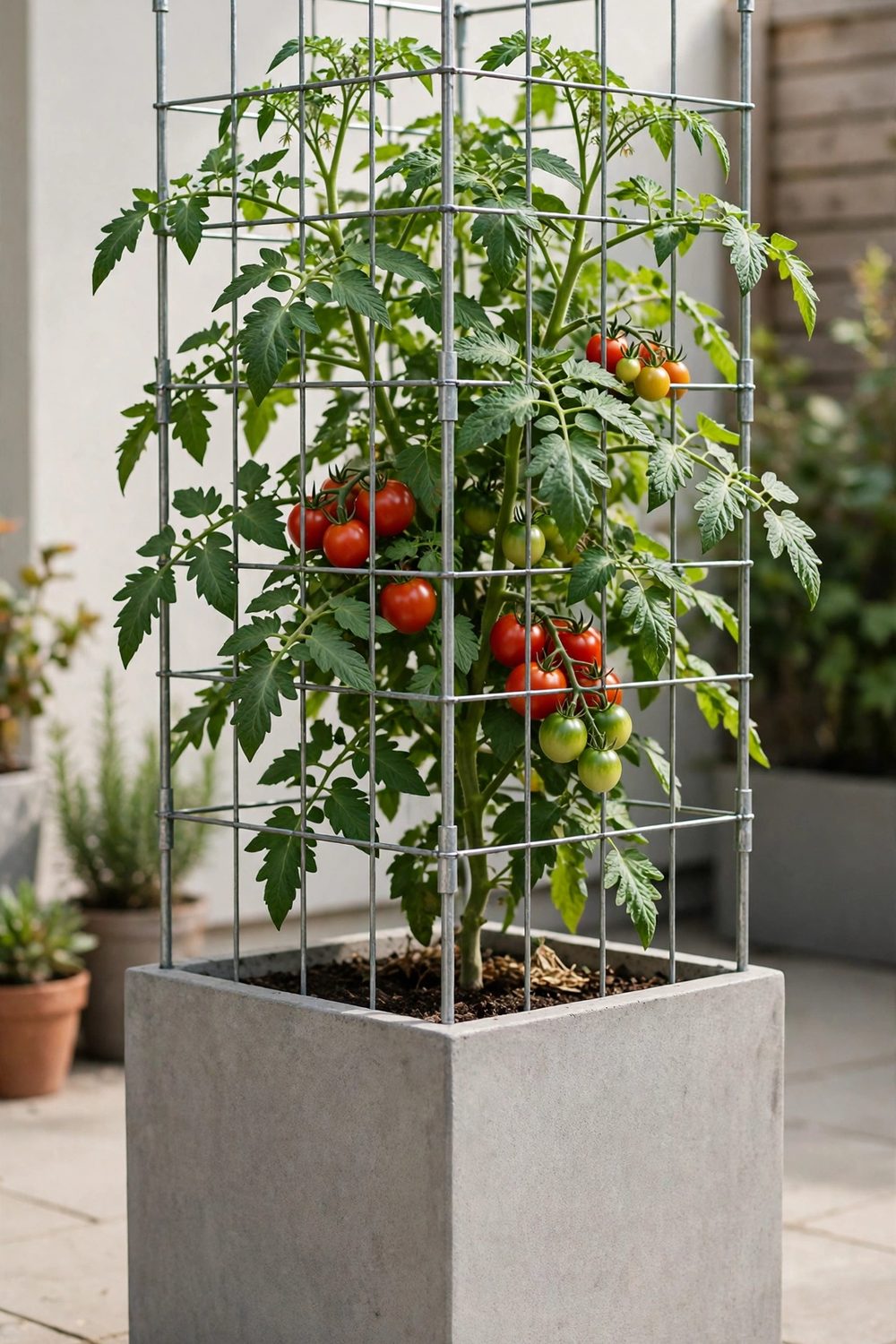
A square folding cage opens into a box shape around the plant. The flat sides give straight stems a clear line to tie against. It also packs flat, which matters in a small flat with one storage cupboard.
Pick a model 42 to 48 inches tall for most patio types. The feet should reach near the pot base for a firm hold. In a 10-gallon pot, about 38 litres, the square shape uses the corners well.
Round cages waste that corner space in a square planter. Fold the cage dry at season end and wipe the joints clean. Rust at the hinges is the usual failure point after two seasons.
Renters can compare freestanding options in tomatoes in pots for renters with no staking into walls for more detail.
4. In-Pot Trellis Panel for a Grow Bag on a Balcony
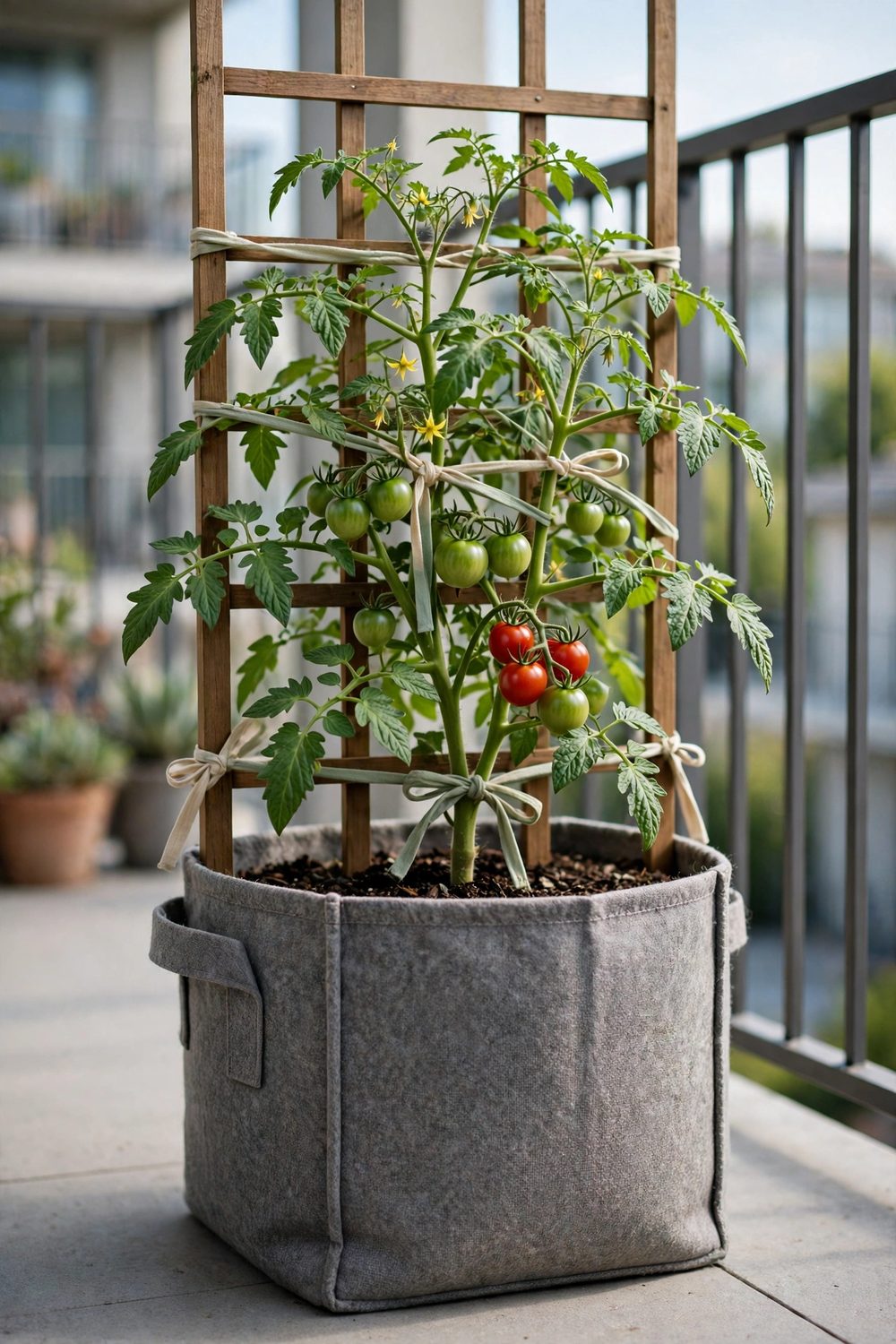
An in-pot trellis panel pushes into the mix along one side of the pot. It gives one flat face for tying in the main stem and side shoots.
This works well in a grow bag, where a round cage can distort the bag shape. Choose a panel 48 to 60 inches tall, or 122 to 152 cm. Push the legs down the full depth of the bag for hold.
Tie the stem in a loose figure of eight with soft ties. The loop around the panel stays firm, the loop around the stem stays slack. Face the panel away from the main wind direction.
A plant tied flat acts less like a sail in a gust.
5. Single Sturdy Stake With Soft Clips for One Main Stem
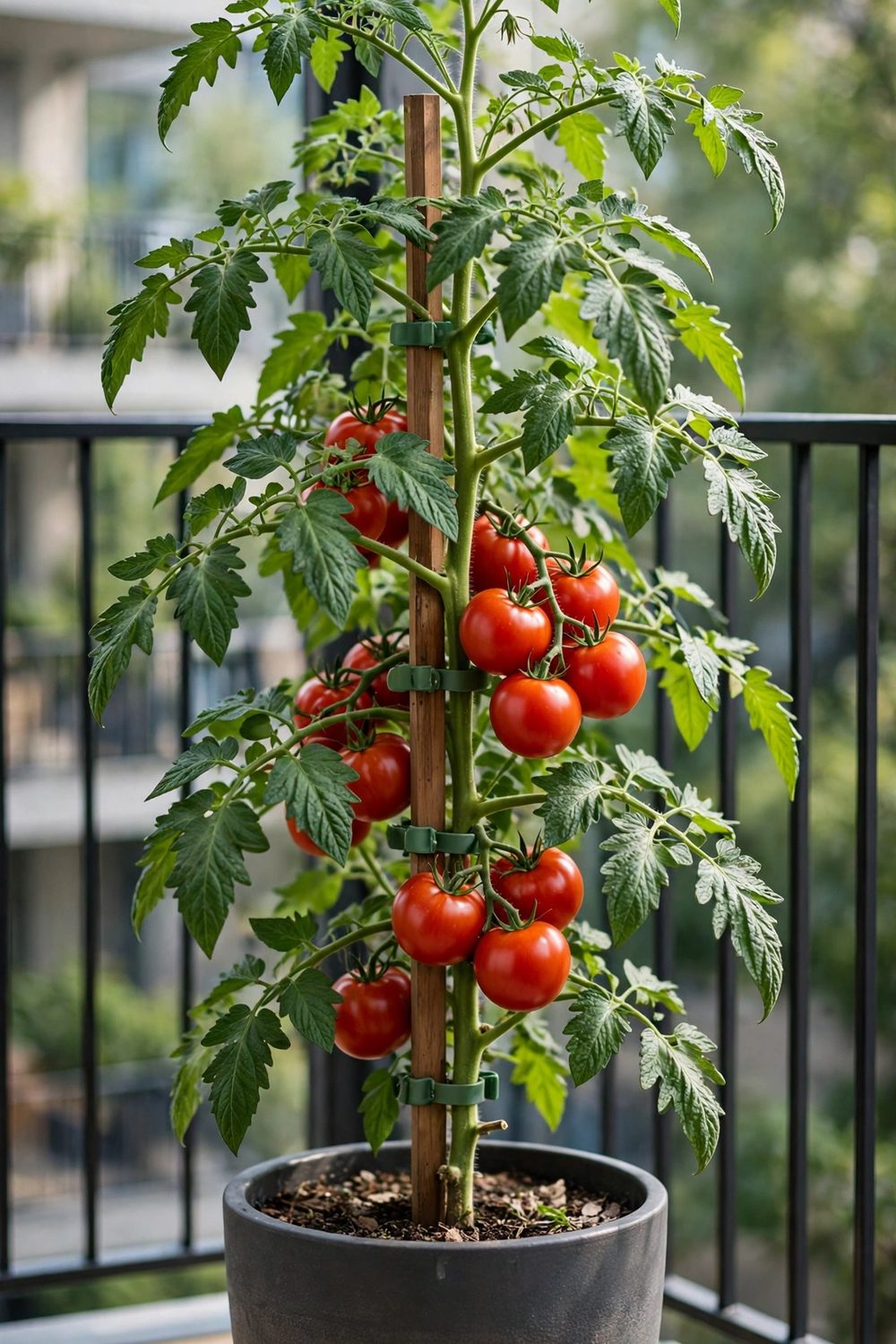
A single stake suits a plant pruned to one main stem. Use a coated steel or thick bamboo stake 5 to 6 feet tall for indeterminate types. Push it 10 to 12 inches into a deep pot before planting.
Place the plant 2 inches from the stake so roots are not torn. Clip the stem to the stake every 10 to 12 inches as it grows. Soft clips beat string here, since they open and move in seconds.
Keep one hand on the stem while you clip with the other. A heavy truss can pull the whole stem down if a clip pops. Check clips after strong wind.
For a rail setup, see the upside-down tomato planter guide before you hang anything heavy.
6. Spiral Support for a Compact Plant on a Windowsill Patio
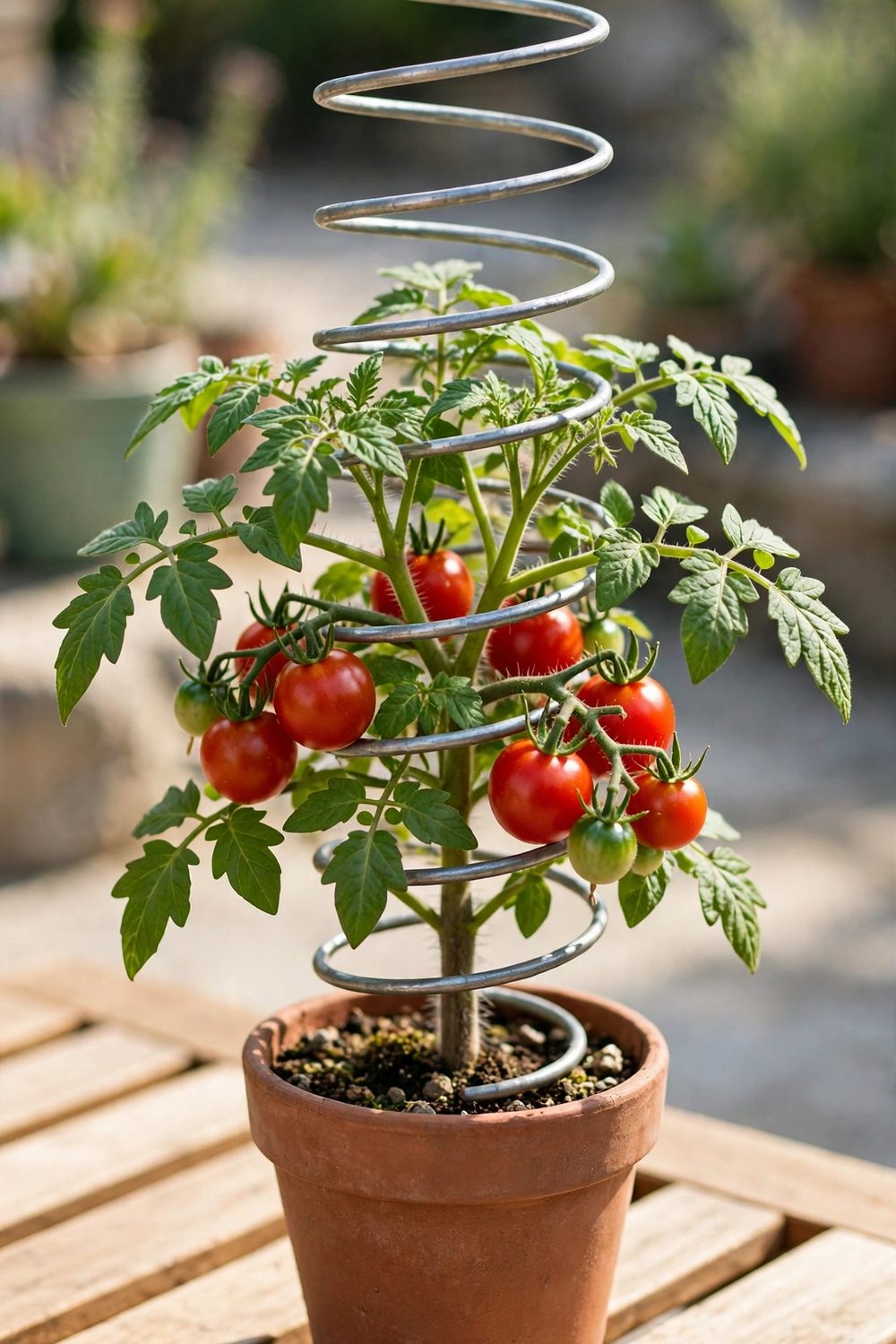
A spiral support screws into the mix and the stem winds up the coil. No ties are needed, since the spiral holds the stem at each turn. It suits compact and dwarf plants under 3 feet tall.
‘Tiny Tim’ and ‘Red Robin’ in a 1 to 2 gallon pot fit this support well. Turn the plant a quarter turn each week as you guide new growth. That small habit keeps the stem inside the coil instead of outside it.
Spirals struggle with thick, heavy main stems late in the season. Switch to a stake and clips if the stem outgrows the coil width. Remove the spiral slowly at season end to avoid bark damage.
7. Tomato Ring Support on a Short Stake for Patio Types

A ring support is one open ring on a short stake, made for bushy patio plants. The ring holds the outer stems up and keeps fruit off the mix.
Choose a ring 10 to 14 inches across for a 3 to 5 gallon pot. Set the ring about 12 inches above the mix at planting. Raise it once, mid-season, if the plant pushes through strongly.
‘Patio Choice Yellow’ and similar compact types rarely need more than this. The open top lets you pick fruit without lifting wires. It also lets air move through the plant on still, hot days.
That airflow helps leaves dry fast after morning watering.
The guide to grow bags vs pots for vegetables helps you pick the right base.
8. String Support From a Freestanding Frame Over the Pot
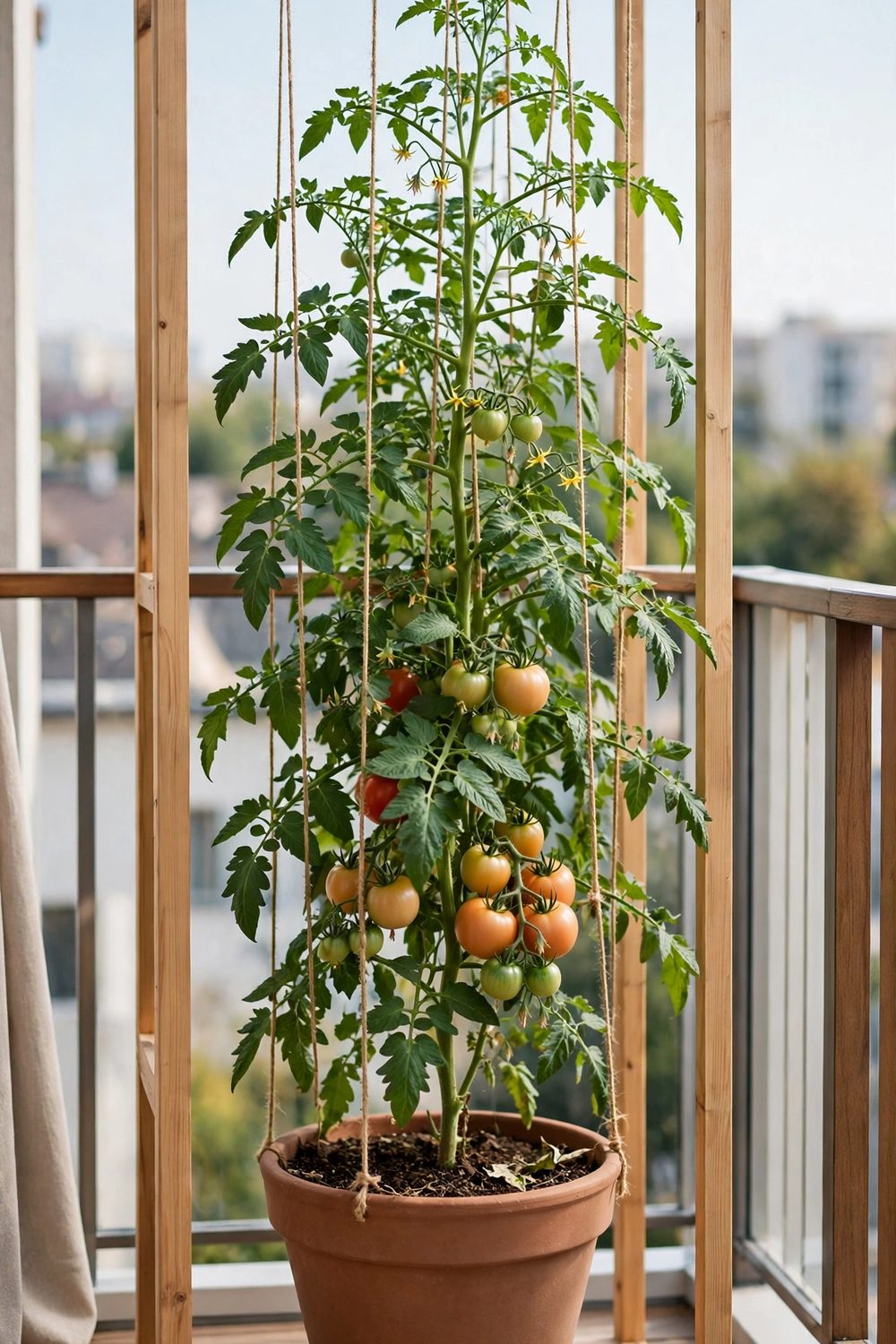
String support runs from a freestanding frame down to a clip at the plant base. The frame stands on the floor or clamps to the pot rim, never to a wall. Wind the stem gently around the string once a week.
Keep slight slack in the line so the stem can thicken. This method suits tall indeterminate plants in a 10-gallon pot. One strong stem per string gives the cleanest result. Add a second string if you keep a second stem.
The frame must be wider at the base than the pot. A narrow frame tips forward once the plant is top heavy with fruit.
9. Stackable Cage Sections That Grow With the Plant
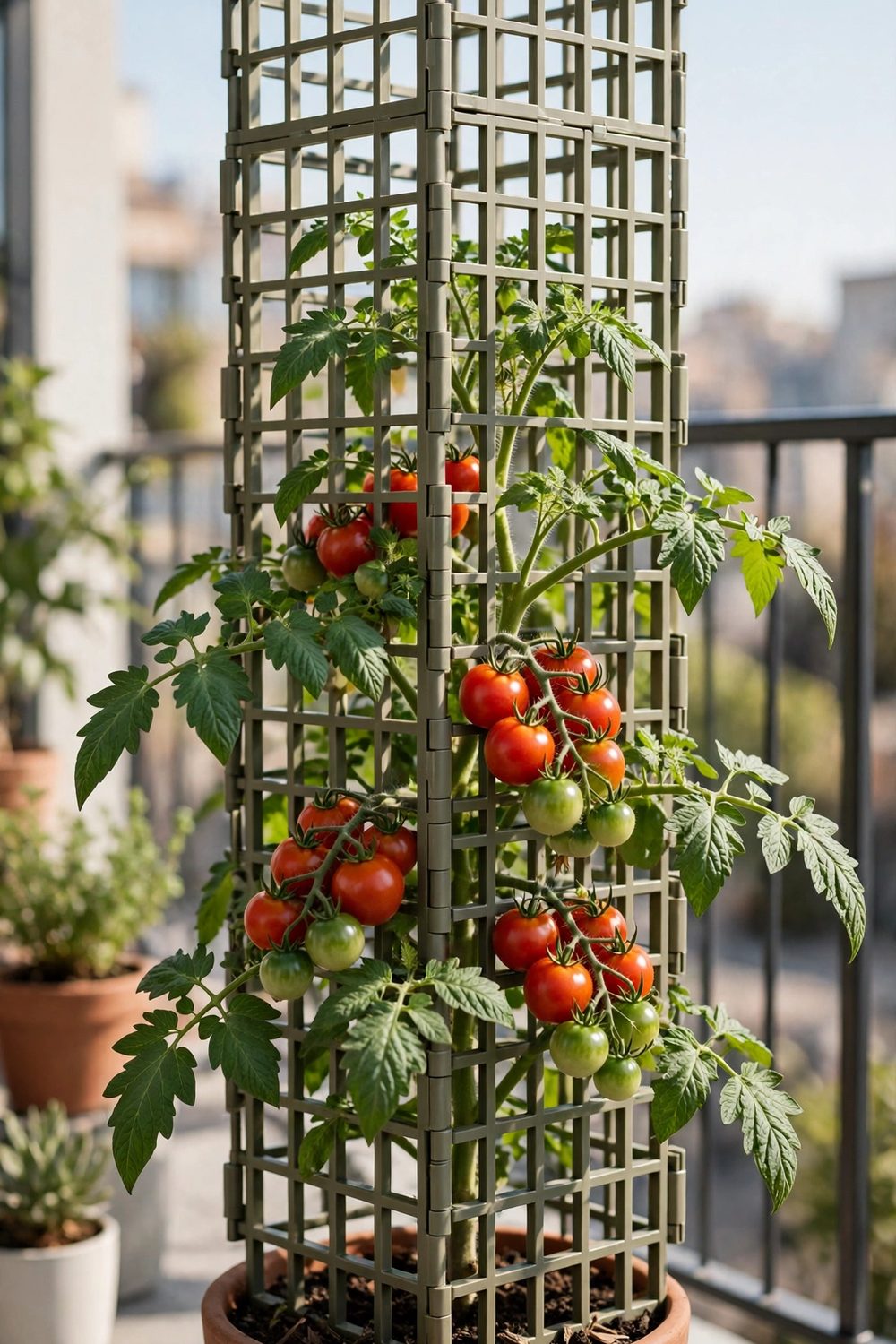
Stackable sections let you start low and add height in stages. Begin with one section when the plant is 12 inches tall. Add the next section when the tip clears the top ring.
Each added section should lock firmly, with no wobble at the joint. This staged approach avoids a tall empty cage shading a small plant. It also makes storage easier in a flat with limited space.
Count the total height before you buy, including the buried part. A cage listed at 48 inches gives about 40 inches above the mix. That above-mix height is the number your plant actually uses.
10. Wide-Base Cage for a Windy Third-Floor Balcony
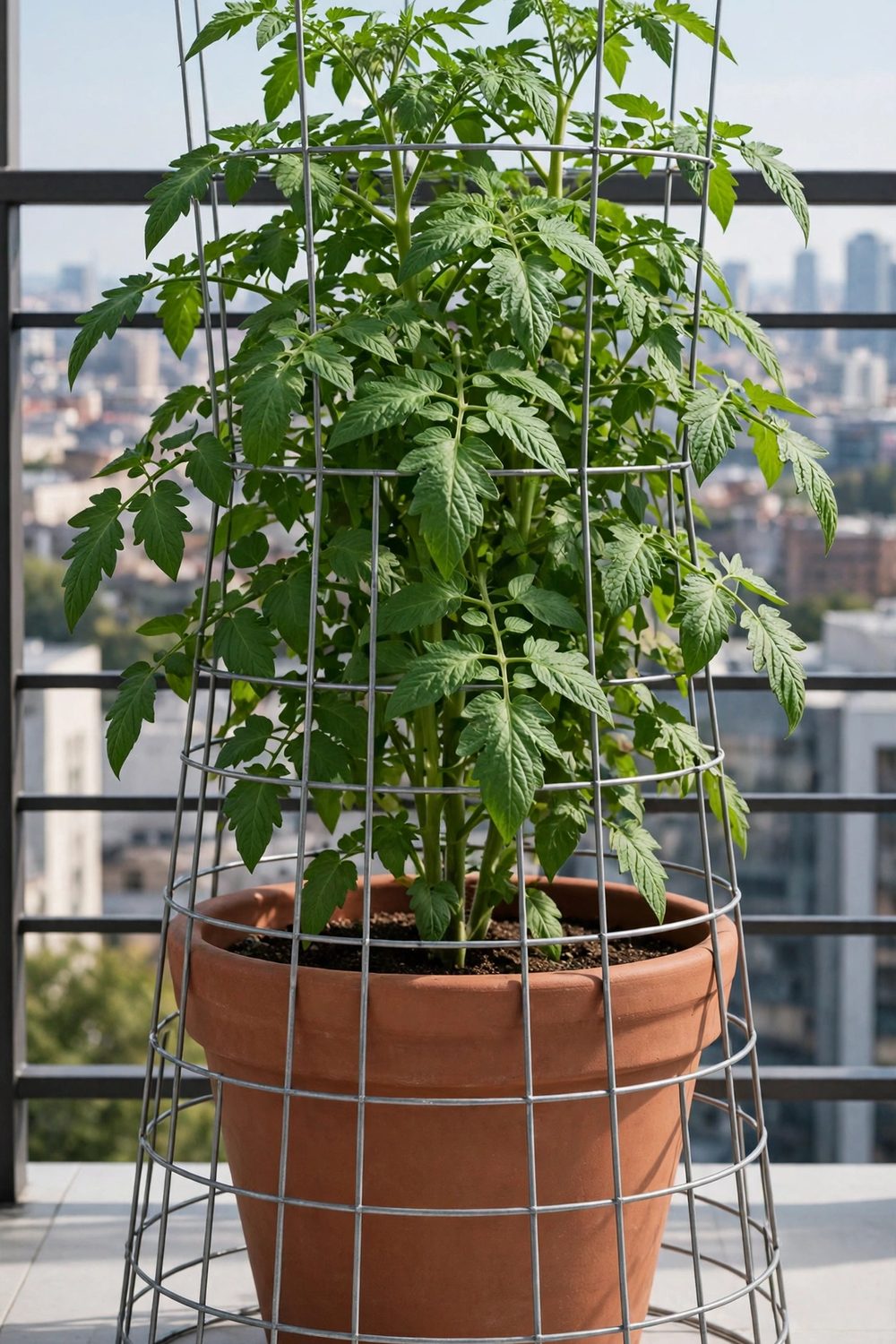
Wind is the main test for any cage on an upper floor balcony. A wide-base cage spreads its legs to the edge of a large pot. That wide stance resists rocking far better than legs clustered at the centre.
Pair it with a 10-gallon pot, about 38 litres, for base weight. Fill the pot fully, since a half-filled pot tips more easily. Group the pot with other pots to break the wind.
On the third floor, gusts funnel between buildings and hit one side hard. Turn the plant weekly so growth stays even on all sides. Check leg depth after heavy rain softens the mix.
Check the balcony weight guide for pots before adding a large filled pot.
11. Bamboo Teepee of Three Canes Inside One Large Pot
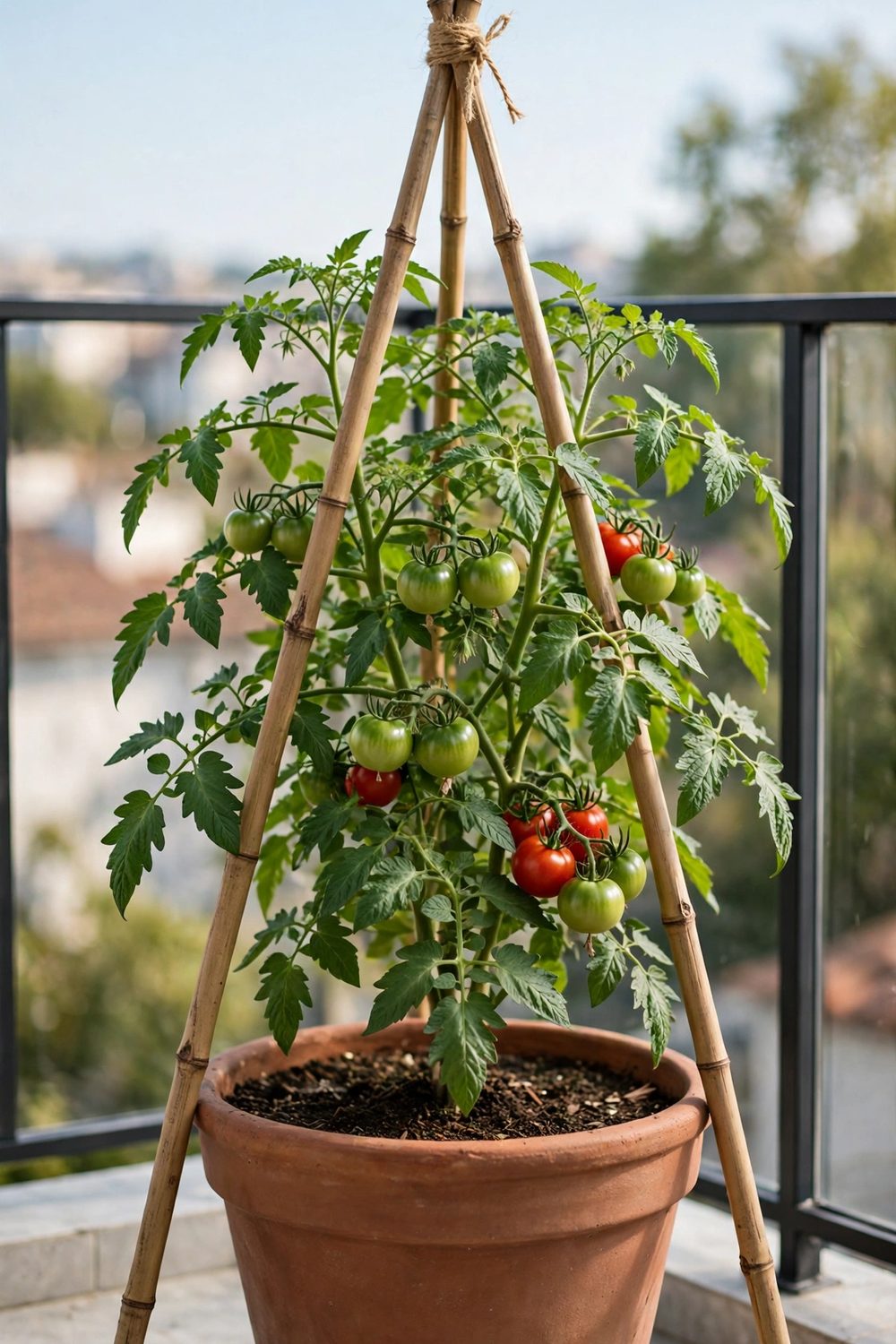
Three bamboo canes tied at the top form a teepee inside the pot. Push each cane to the pot base, spaced evenly around the rim. Tie the tops firmly with garden twine where they cross.
Train one stem up each cane, or one main stem up the middle. This low-cost option suits renters who want no metal cage to store. Canes should be at least 5 feet long for an indeterminate plant.
Replace canes each season, since bamboo weakens in damp mix. The teepee also gives side shoots natural points to rest against. Keep the centre open so you can reach fruit inside the frame.
12. Heavy-Duty Steel Cage for a 10-Gallon Indeterminate Plant
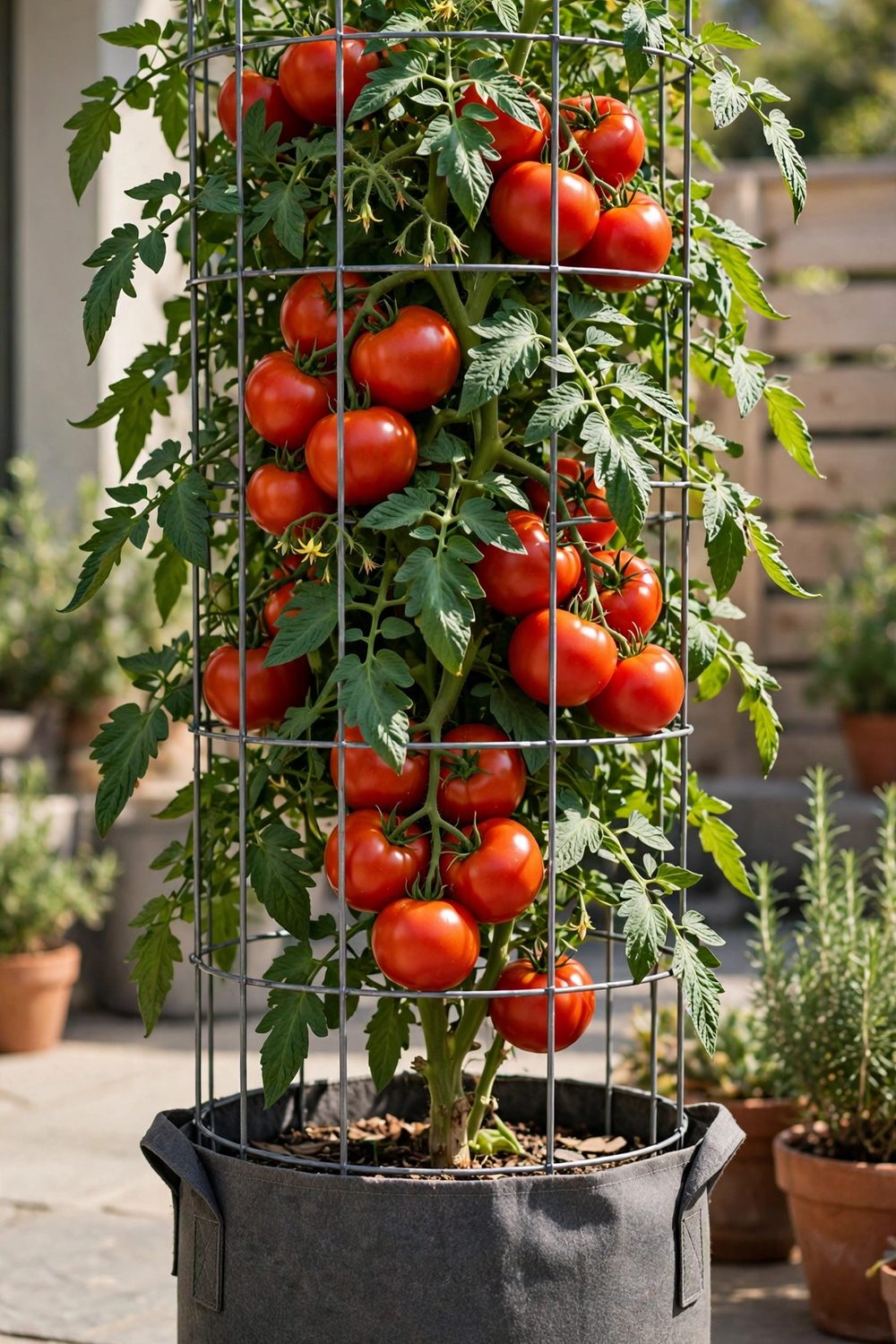
A heavy-duty steel cage is the safe pick for a tall, heavy plant. Thick wire and welded rings hold trusses that bend thin cages. Choose a cage 54 to 68 inches tall for indeterminate types.
The pot must be wide enough for the cage legs to sit flat. A 10-gallon grow bag or pot, about 38 litres, gives that room. Set the cage at planting and guide shoots inside the rings weekly.
Fruit that grows outside the cage can still be tied back gently. Do not force a thick stem through a ring opening. Lift the ring section instead, or tie the stem to the outside.
13. Clip-On Support Arms That Extend a Basic Cage
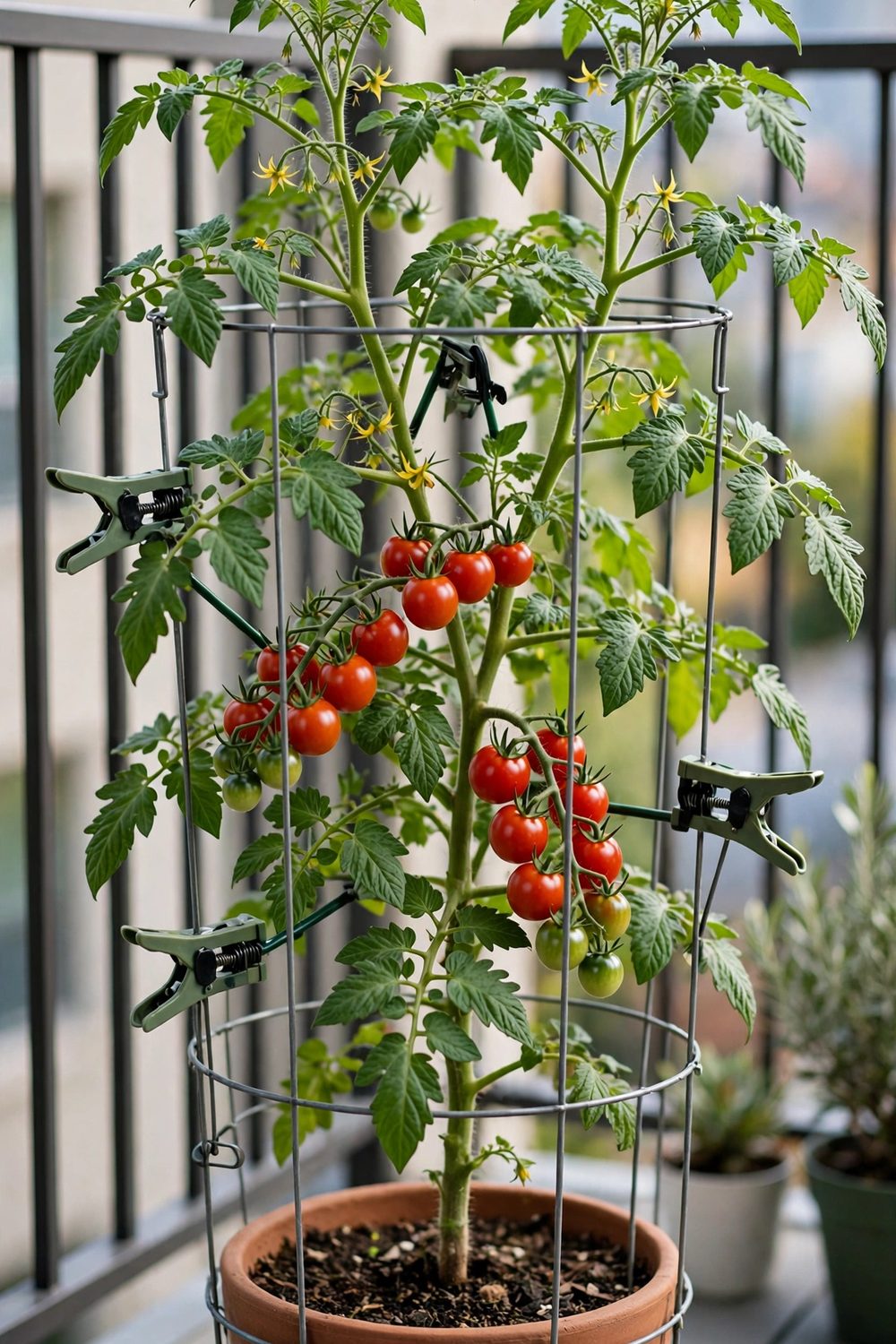
Clip-on arms extend outward from a basic cage as side shoots spread. Each arm snaps onto a ring and holds one shoot at a wider angle. This stops the common problem of shoots flopping over the cage top.
Add arms only where a shoot needs support, not all around. Too many arms crowd the plant and block your picking hand. Arms work best on cherry types with long, flexible side shoots.
Remove and reuse the arms next season on a fresh cage. Wipe them clean before storage to remove sap and soil. Store arms clipped together so small parts are not lost over winter.
Our roundup of the best pots for growing vegetables on a balcony covers wide bases in detail.
14. Low Hoop Support for Determinate Plants in a Shallow Planter
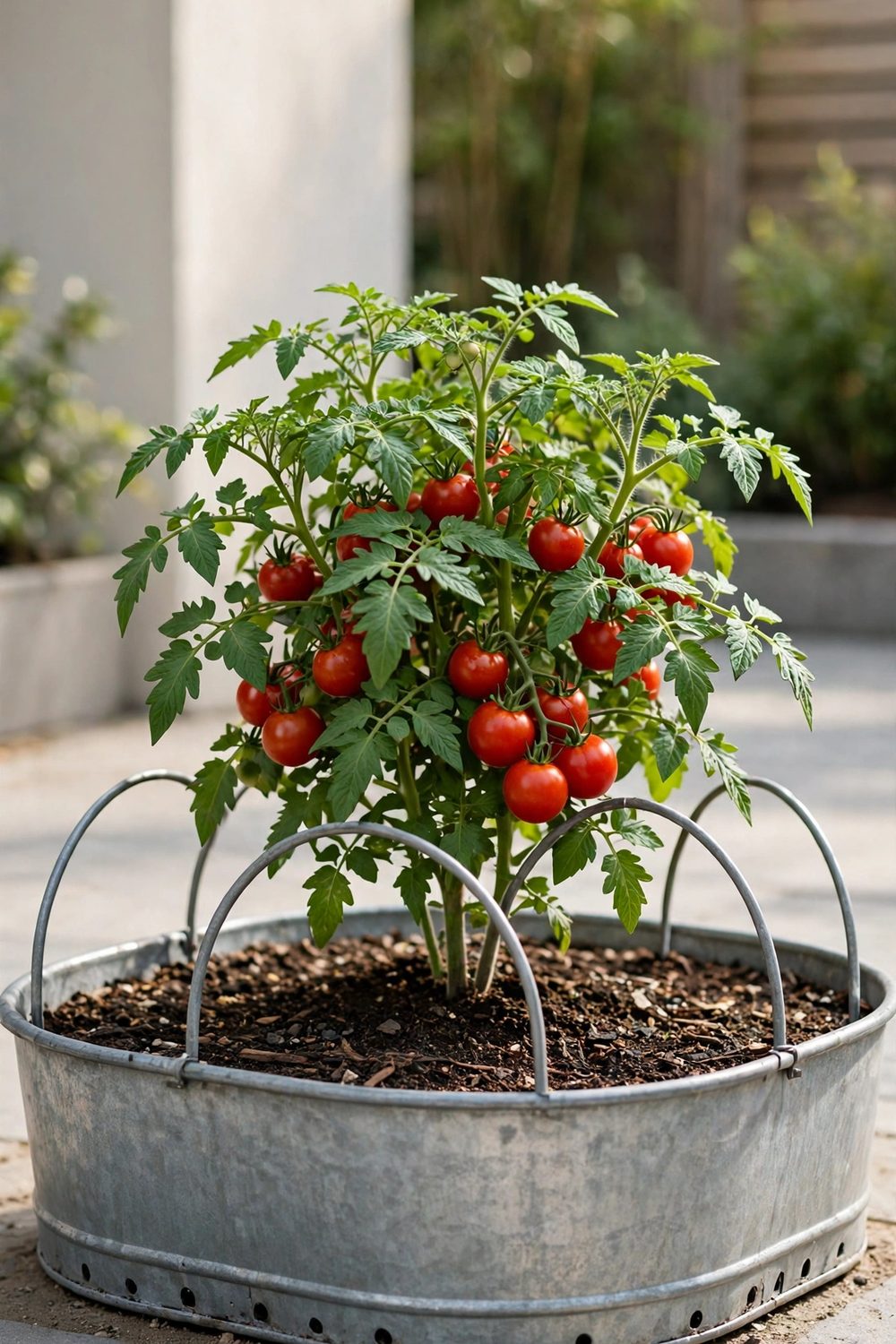
A low hoop support arcs over a compact plant in a wide, shallow planter. Two hoops crossed at the top hold outer stems off the mix. This suits determinate plants that stay under 30 inches tall.
The hoop legs push 4 to 6 inches into the mix on each side. Keep the hoop top clear of the main flower trusses. Fruit resting on wire can mark and ripen unevenly in strong sun.
Hoops also lift leaves after watering, so they dry faster. That small lift matters in a shaded corner with slow air movement. Remove hoops at harvest and store them flat against a wall.
15. The Sizing Check That Stops a Cage Tipping Over
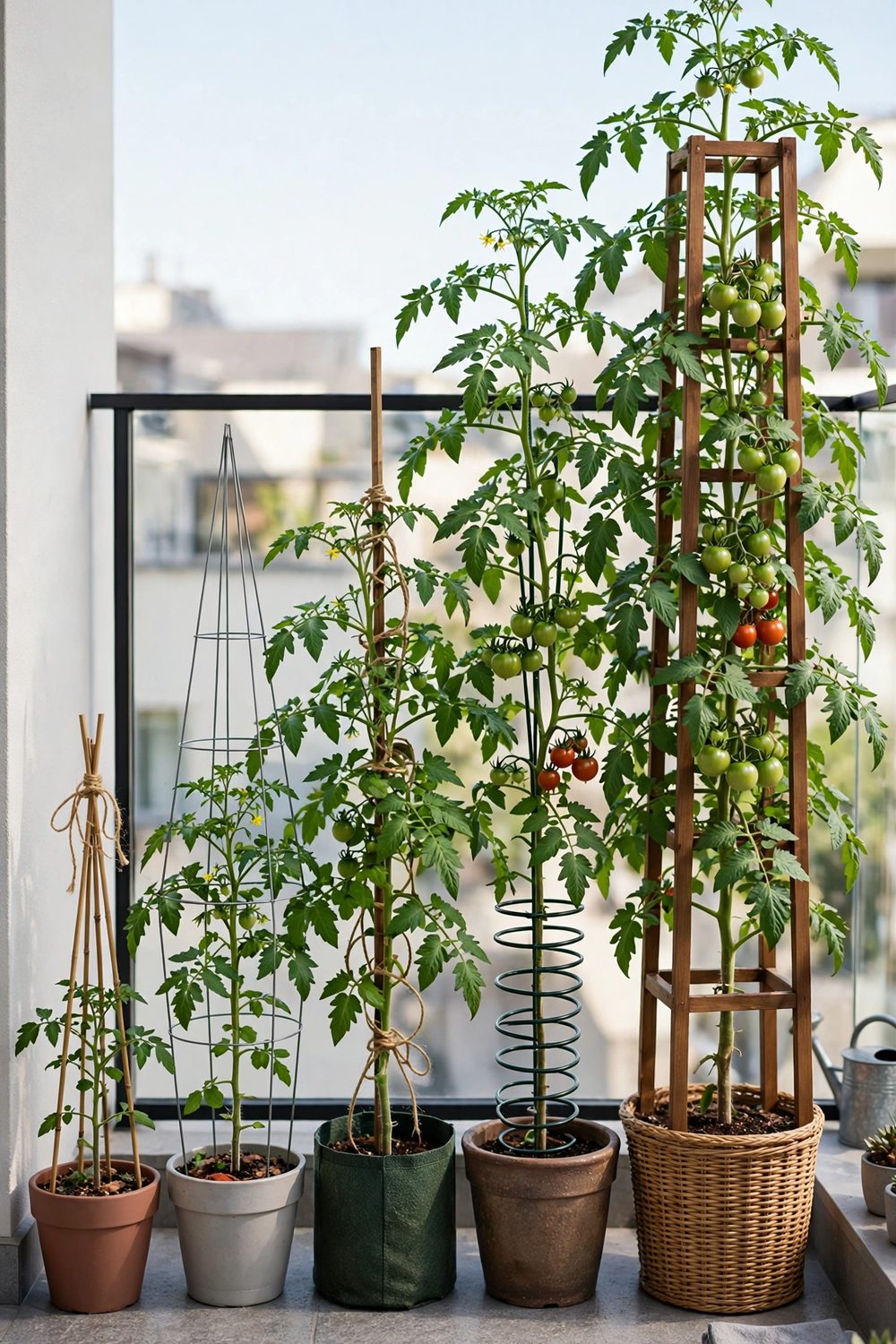
Most tipping failures come from a size mismatch, not a weak cage. Measure your pot top width before you order any support. The cage base should be at least 2 inches narrower than that width.
Next, check buried depth: legs need 6 inches or more in the mix. Then match support height to the plant type, not the seed packet photo. Determinate plants need far less height than indeterminate plants.
Finally, weigh the base: a full, watered 10-gallon pot resists wind best. If your balcony is very exposed, start with the wider pot. A stable base makes every support in this list work better.
Start with your plant type, then match pot size, support height, and base width in that order.
That simple order prevents most leaning stems and tipped pots on a small balcony.
Save this list to your tomato board for later, and check your pot width before you order.
With the right fit, tomato cages and supports that work in pots hold quietly all season.


