

15 Shady-Balcony Tomato Ideas: What Actually Works in Pots
A shady balcony does not end your tomato plans, but it does change them. Tall vines stay leafy, flowers open, and then very little fruit sets.
This guide covers growing tomatoes in pots on a shady balcony what works in real life, with honest limits stated up front.
Tomatoes need six to eight hours of direct sun for real harvests. Under four hours, fruiting drops hard, and leaf growth without fruit is the usual result.
Small cherry types cope best in low light. The fifteen ideas below help you use every bright hour you have, without false promises.
Shade is not all the same, either. Bright shade beside an open rail is very different from the deep gloom under a solid roof or a large tree.
The ideas below sort the useful moves from the wasted ones. Each one is cheap, renter safe, and tested against one test: does it add light or cut waste?
1. Find the Brightest Corner and Claim It First
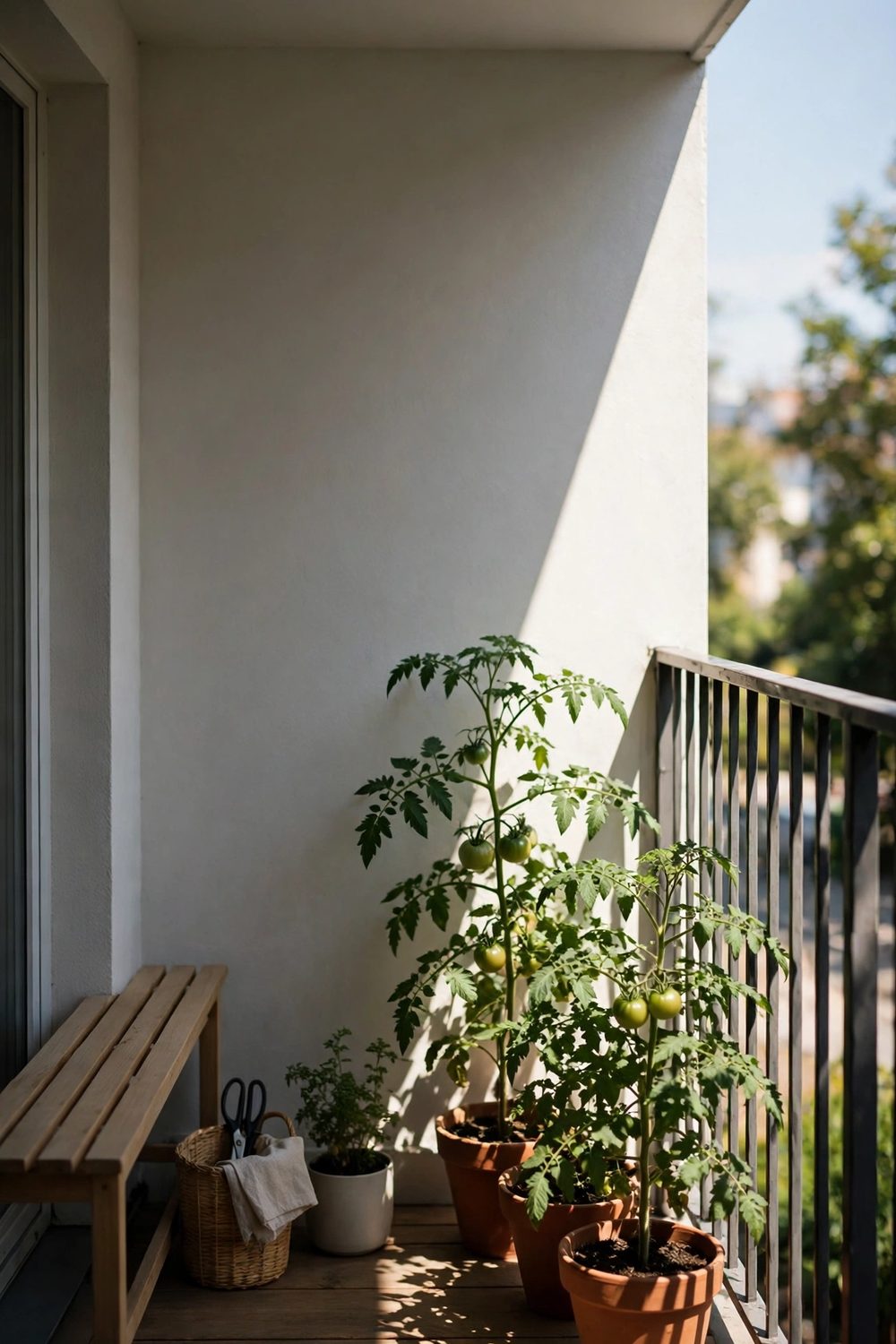
Walk your balcony at three times of day and note where direct sun actually lands. The brightest corner is often beside the rail, not against the wall.
Put every tomato pot in that one corner, even if the group looks crowded at first. A simple container vegetable garden layout for a small space helps you plan the spot.
Keep taller plants at the back of the bright patch, so they do not shade the shorter pots in front. One good corner beats pots spread thin.
Mark the corner with a small chair or crate for one day first. If that spot feels bright on your skin at midday, it is the right home for pots. Small moves like this add up over a whole season.
2. Count Your Sun Hours Before You Plant
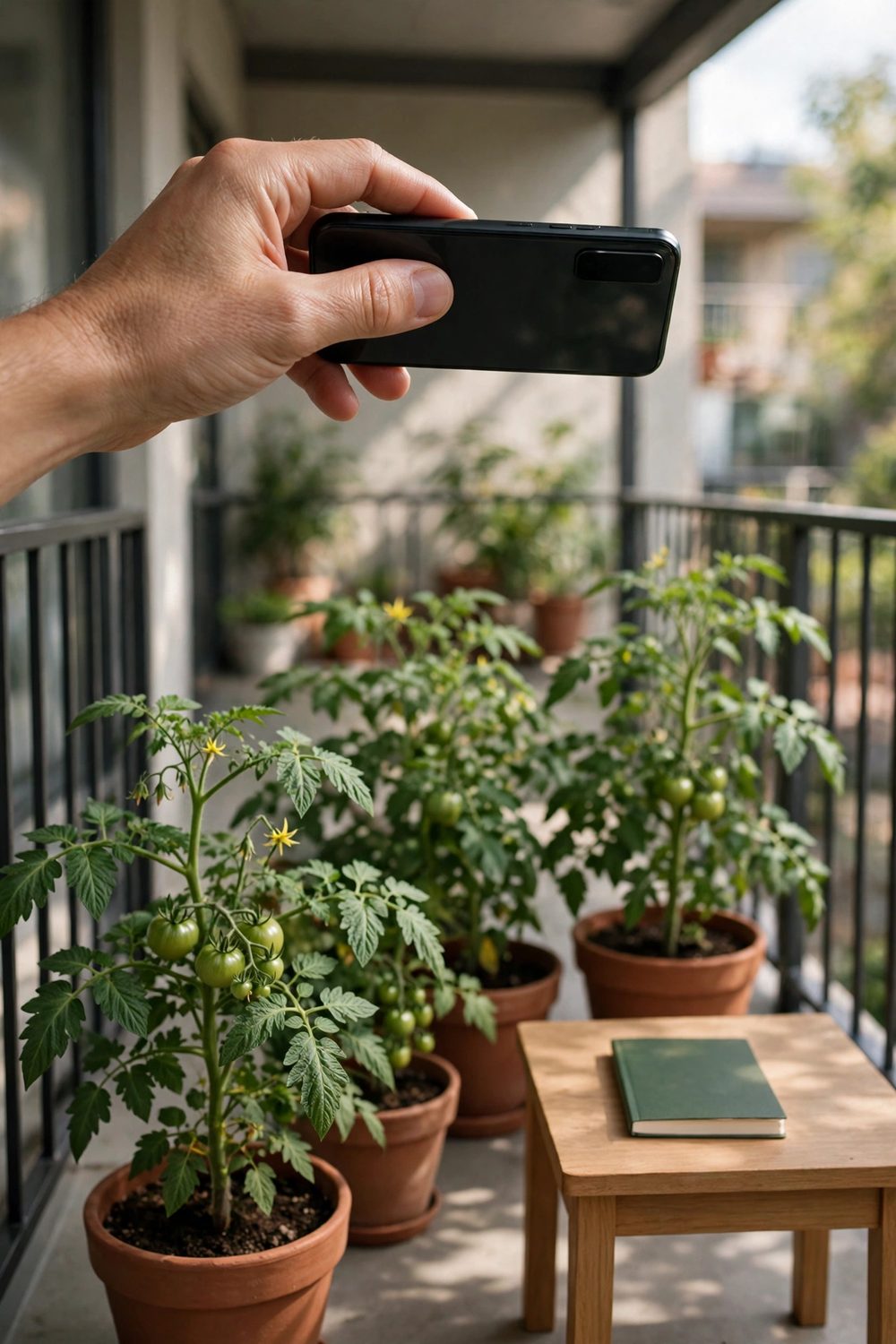
For one week, write down when sun hits your pots and when it leaves. Phone photos each hour make the pattern easy to see later.
Six hours or more means most cherry types can fruit fairly well. Four to five hours means small fruit only, picked a little at a time.
Under four hours, expect healthy leaves and very few tomatoes. That honest count saves money, because you plant two pots well instead of six pots badly.
Cloudy days do not count in your tally. Note only hours when a clear shadow forms on the floor, since that sharp light is what fruiting plants use best. Keep the note on your phone where you will see it.
3. Take Morning Sun Over Afternoon Shade
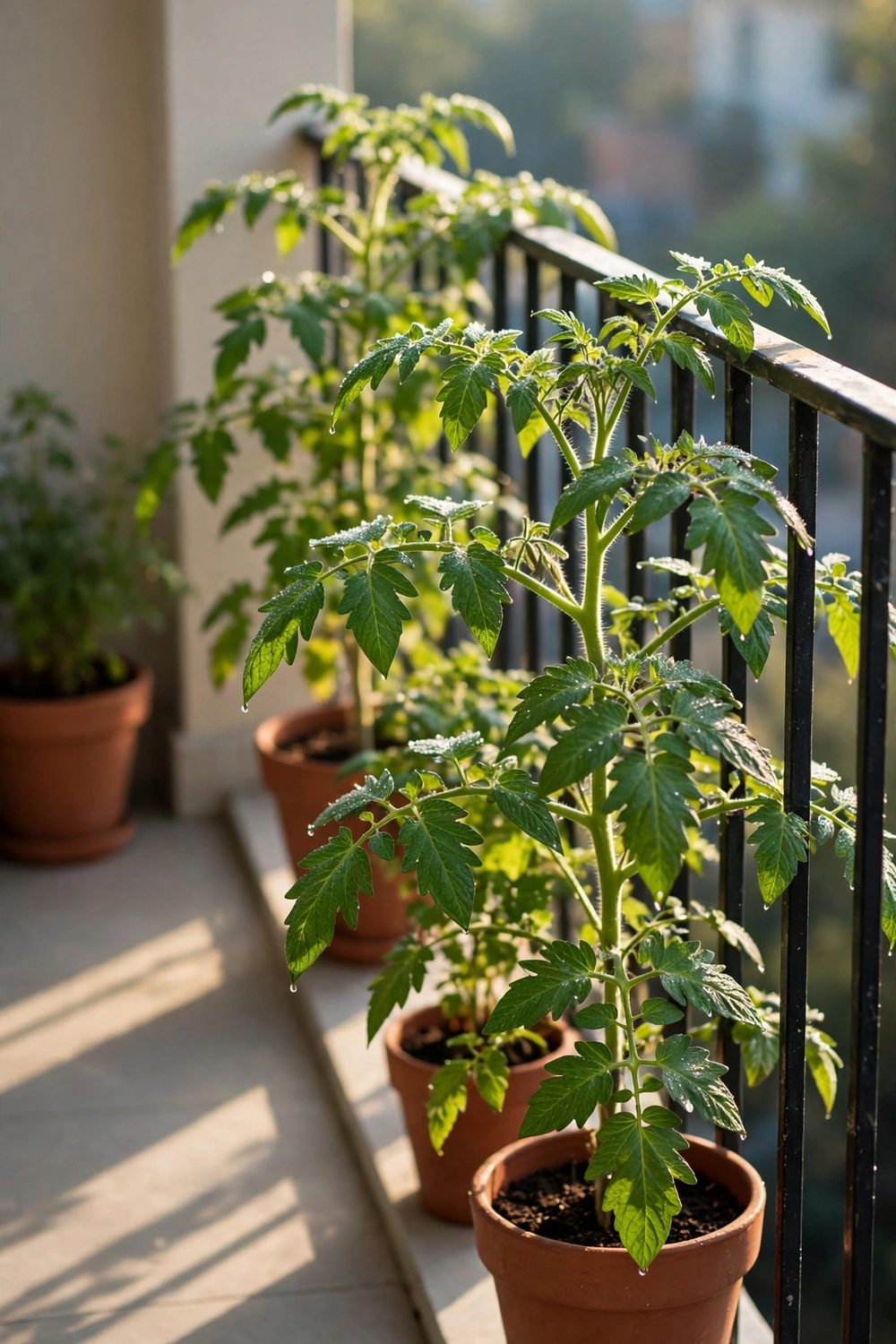
Morning sun dries dew off the leaves early, and that lowers the risk of leaf spots on a still, shaded balcony. It also warms pots gently.
If your building gives you sun before noon, place pots on the east side of the rail. West-facing pots that sit dark until midday start each day cold.
On a third-floor balcony, the rail edge often gains an extra hour of morning light. That single hour can be the gap between flowers and fruit.
A net curtain or tall building can cut that morning light in half. Slide the pot a few inches along the rail and watch the shadow line move. Check the spot again after a week of settled weather.
4. Choose ‘Sun Gold’ Cherry Tomatoes First
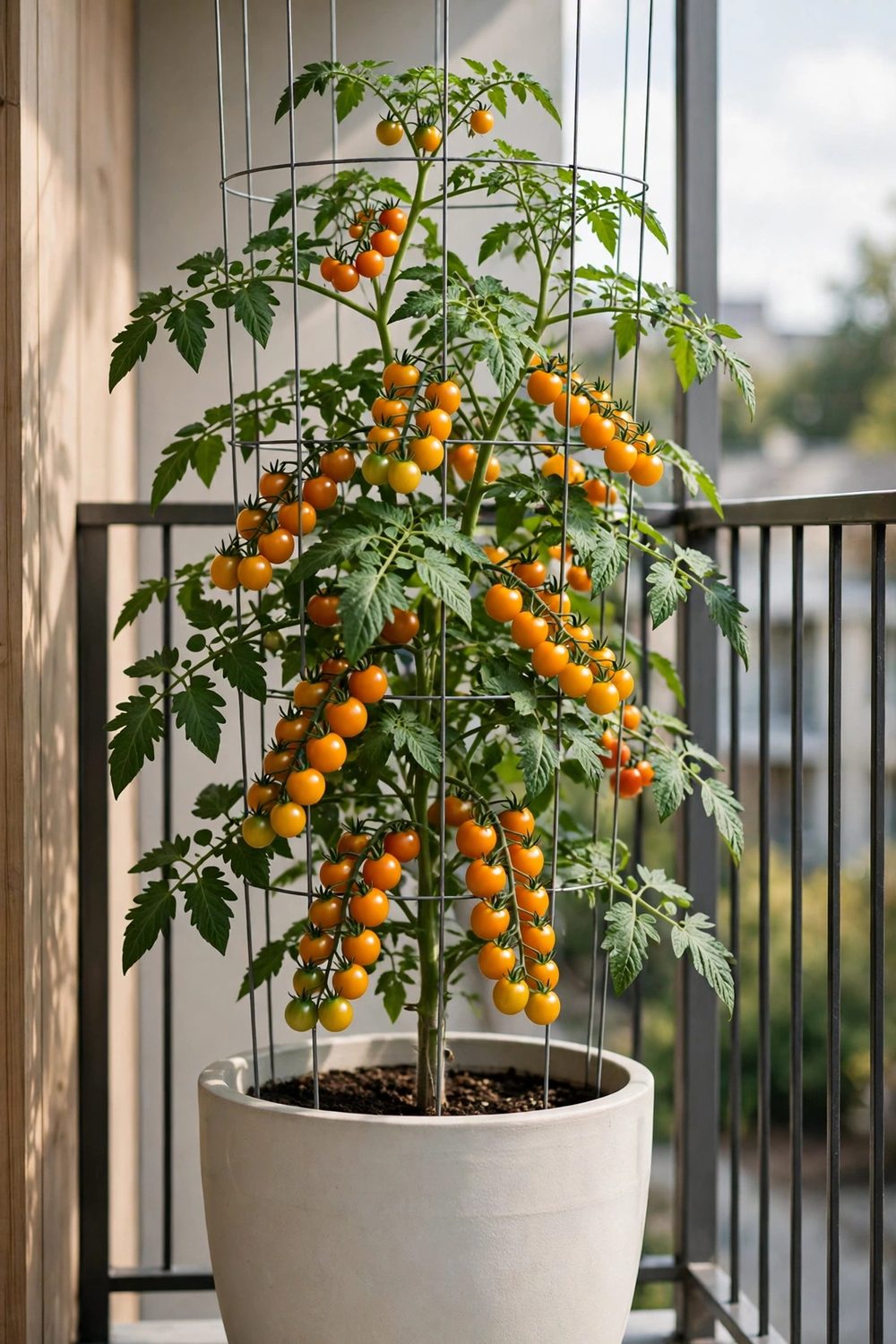
‘Sun Gold’ is an indeterminate cherry type with small orange fruit and a very sweet taste. Small fruit sets and ripens with less sun than big slicers need.
Grow one plant in a 5-gallon pot, about 19 litres, with a tall cage. The vine grows long, so tie it in as it climbs the rail.
Fruit comes in clusters over a long season, around 57 to 65 days from transplant in good light. In shade, add time and pick fruit as it colors.
Keep one main stem tied loosely to the cage, and pinch side shoots while they are small. A tidy vine puts its limited light into fruit, not extra stems. A short cane at the pot edge helps on windy days.
5. Grow ‘Sweet Million’ for Small, Steady Fruit
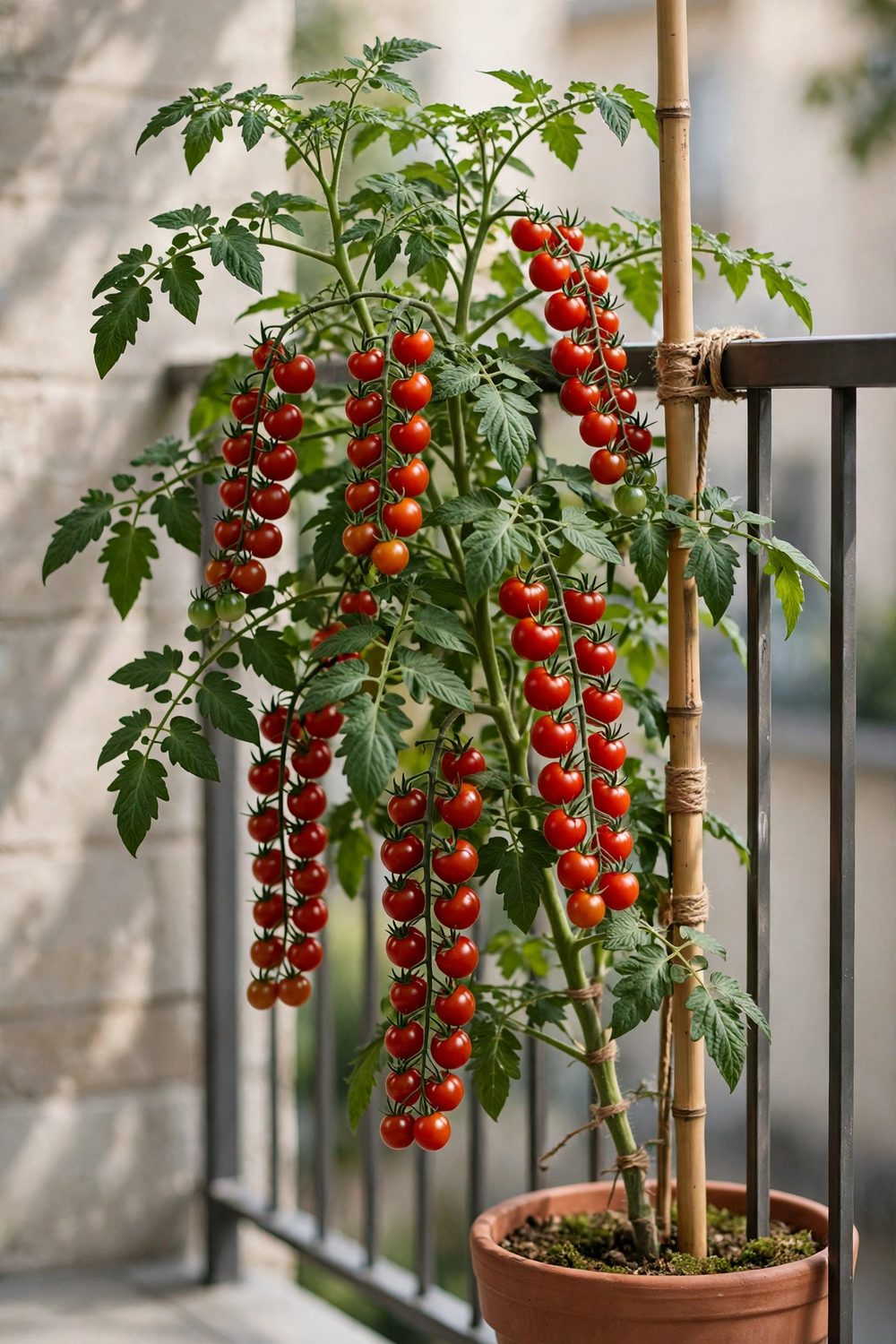
‘Sweet Million’ is an indeterminate cherry type that sets red fruit in long clusters. Each tomato is small, so the plant needs less energy per fruit.
That matters on a shady balcony, where the plant runs on a tight light budget. Many small fruits finish, while one large fruit often stalls half ripe.
Use a 5-gallon pot, about 19 litres, and water at the base each morning. Pick clusters often, since ripe fruit left hanging slows the next set.
Train the main stem up a cane at the rail edge, where air moves freely. Good airflow helps leaves dry fast after rain on a sheltered, shaded balcony. Pick in the morning, when fruit is cool and firm.
6. Try ‘Tiny Tim’ in a Small Pot
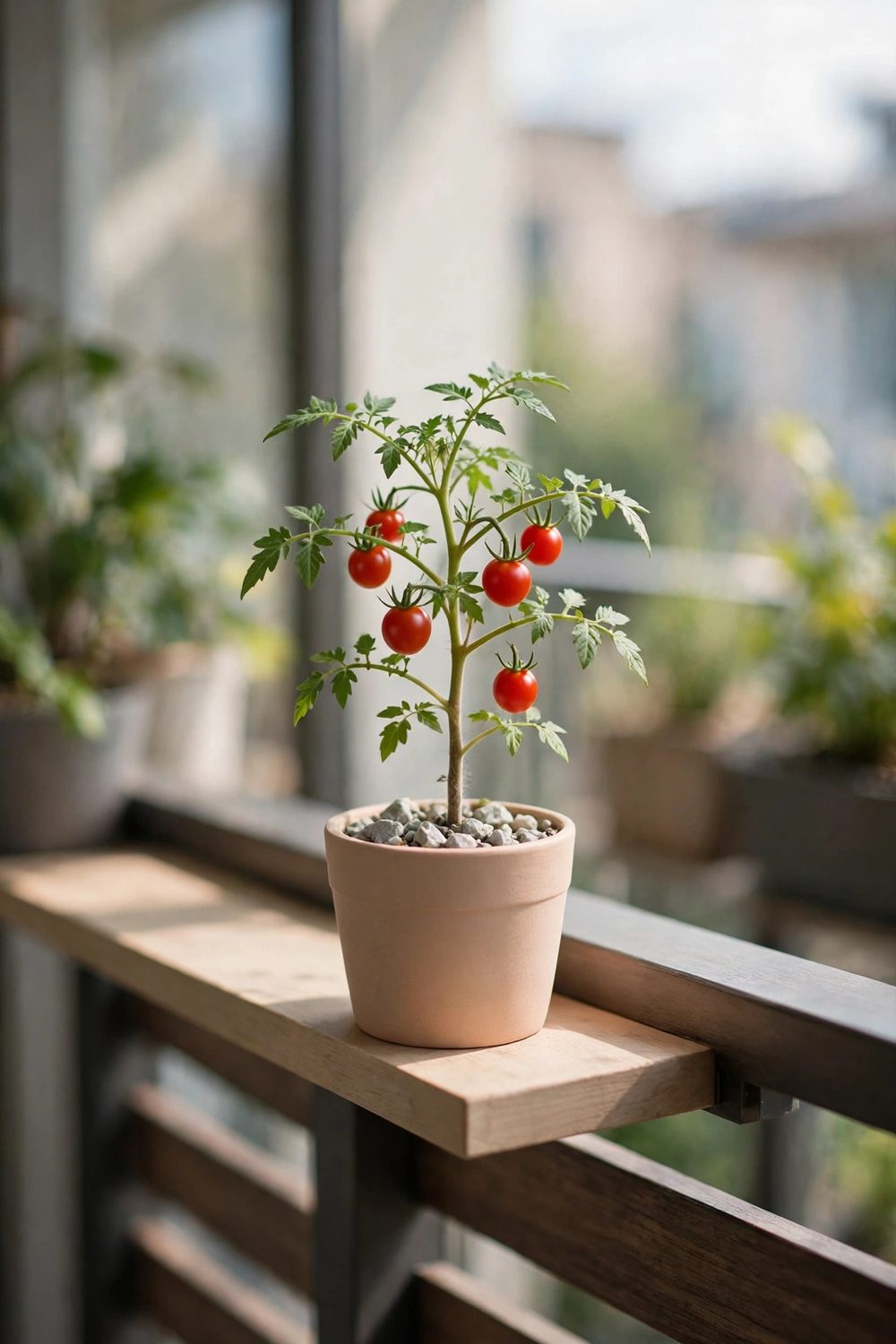
‘Tiny Tim’ is a dwarf cherry type that stays short and neat, often under 18 inches tall. It suits a rail shelf or a sunny step.
A 1 to 2 gallon pot is enough for one plant, and the small frame catches light that a tall vine would waste on stems. Fruit is small and red.
For more compact choices, see these dwarf tomato varieties for small balconies and pots before you buy seed. Small plants fit bright corners best.
The fruit may look pale for longer than packet photos show. Wait for full red color and a slight softness before picking, even if that takes extra days. A saucer under the pot keeps the shelf below dry.
7. Keep Plants Compact With ‘Red Robin’
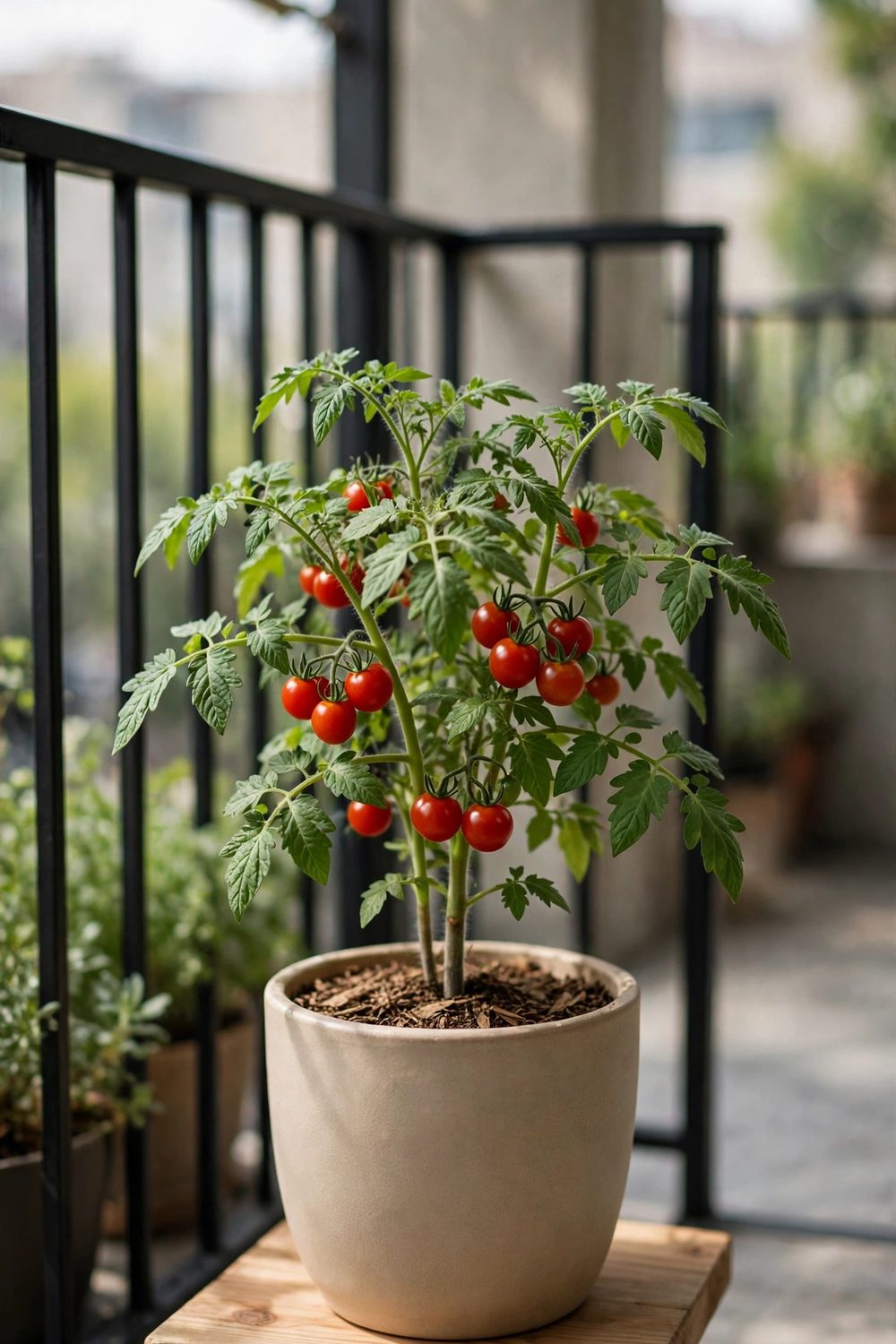
‘Red Robin’ is a dwarf type bred for pots, with small red cherry fruit on a short, sturdy plant. It needs no tall cage or long ties.
A 1-gallon pot, about 4 litres, on a raised stand puts the leaves level with the rail light. Down on the floor, the same plant sits in shadow.
Compact plants also move easily when the sun patch shifts with the season. One person can lift this pot with one hand, even after watering.
Set the pot where you can see it from the door each morning. A plant you see daily gets watered on time, and small problems show up early. No cage is needed, which keeps the corner looking tidy.
8. Pick Light-Colored Pots That Bounce Light
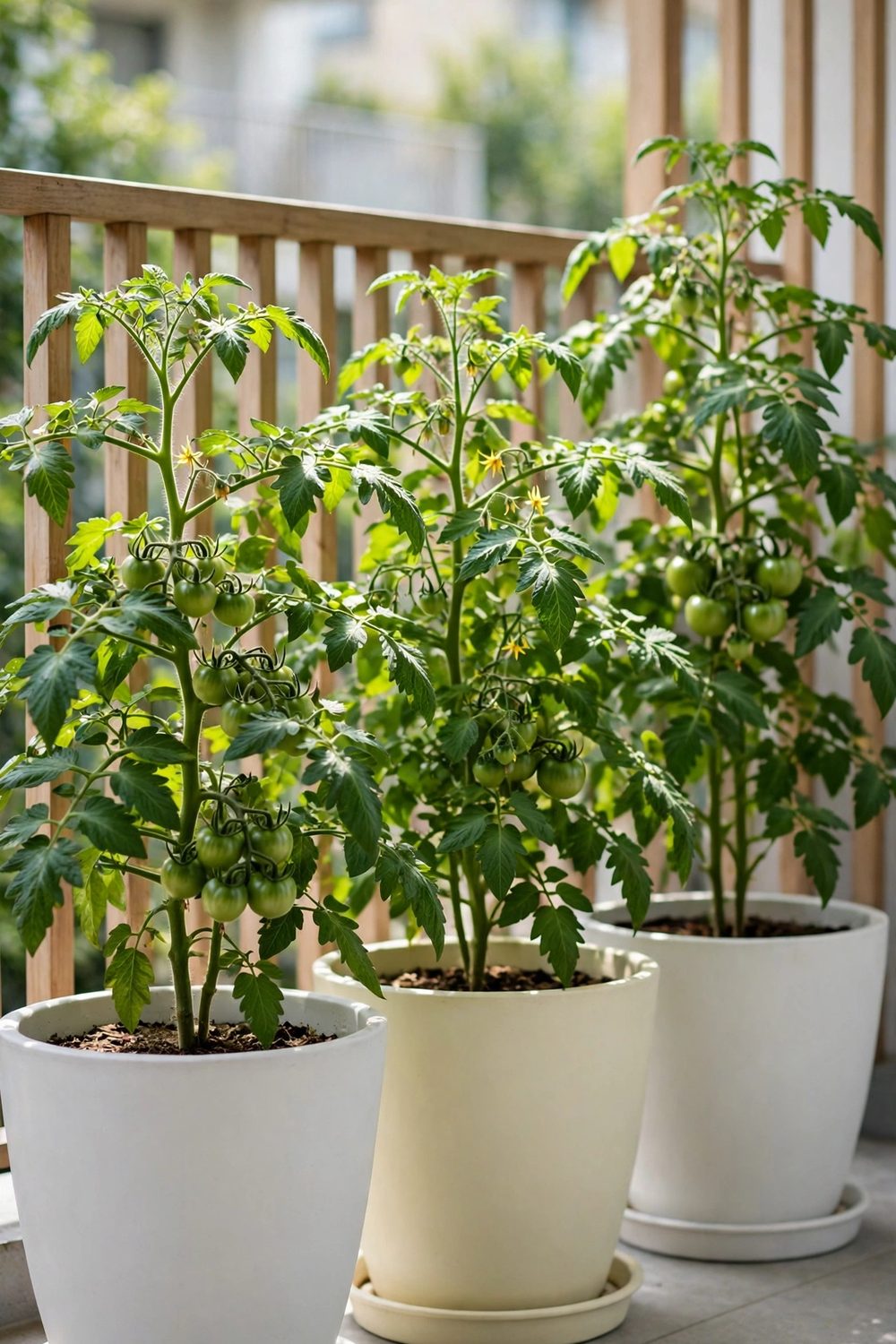
White and pale pots reflect light back onto the lower leaves, and they keep roots cooler than black pots on a warm day. Every bit of bounce helps.
Choose a pale pot with drainage holes and a deep saucer. Our guide to the best pots for growing vegetables on a balcony covers sizes and materials in detail.
For a cherry vine, stay at 5 gallons, about 19 litres, even in low light. A small pot dries too fast and adds stress the plant cannot spare.
Terracotta in a pale glaze works well here, and plain white plastic is the light, low-cost pick. Move the pot before you fill it, since wet soil adds weight. Pale pots also show salt marks less than dark ones do.
9. Set a Pale Board Behind the Pots
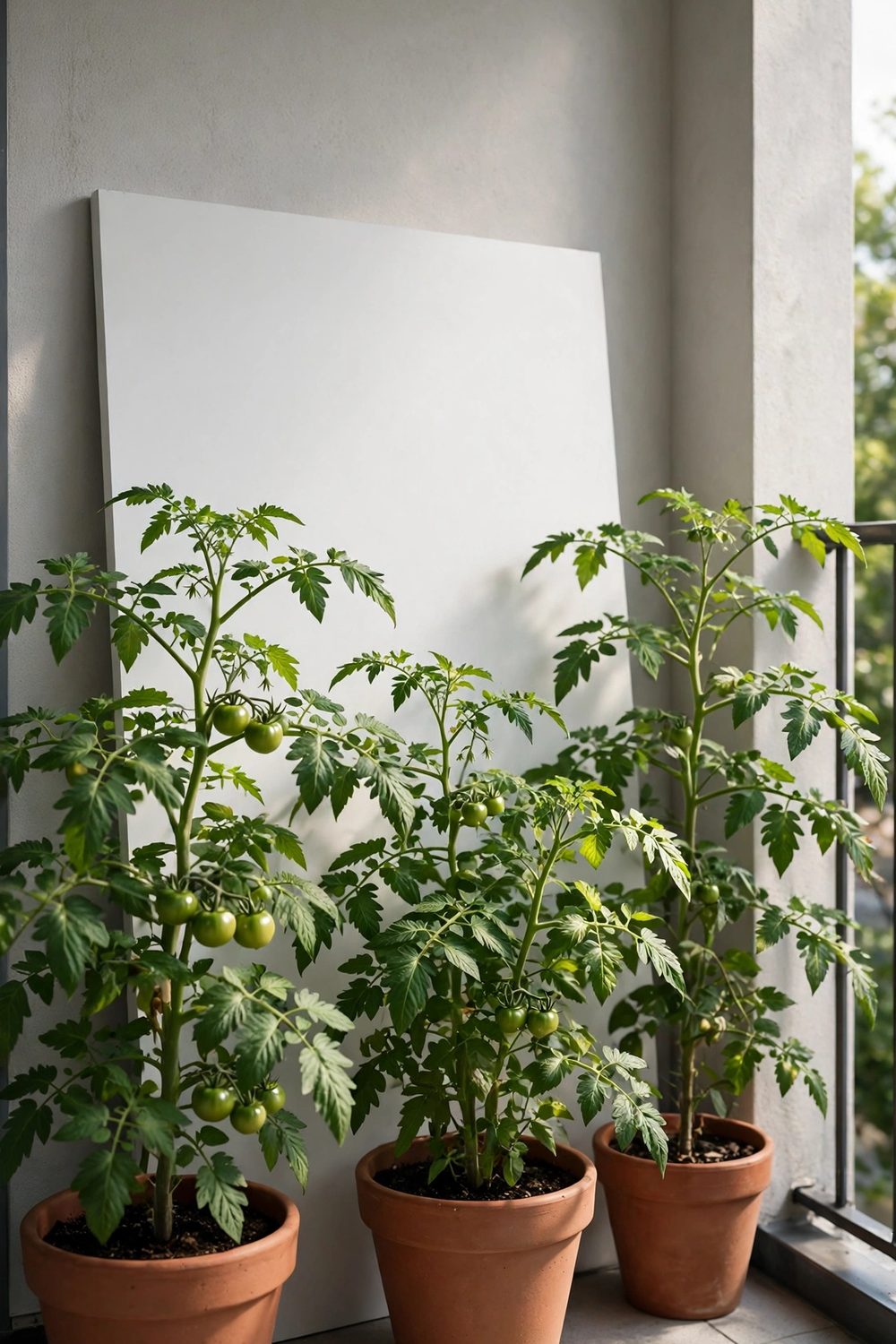
A plain white board leaned against the wall behind your pots bounces soft light into the back of the leaves. It costs little and needs no fixing.
Renters can rest the board on the pot rims, with no screws in the wall. Wipe it clean each week, since dust dulls the bounce fast.
Keep the board flat and matte, not shiny metal. Soft reflected light helps the whole plant, while harsh glare can scorch one patch of leaves.
In autumn (fall), the lower sun angle can make the board work even better. Angle it slightly, so light lands on the plant and not on the floor. Take the board down in storms, so it cannot fall.
10. Raise Pots Toward the Rail Light
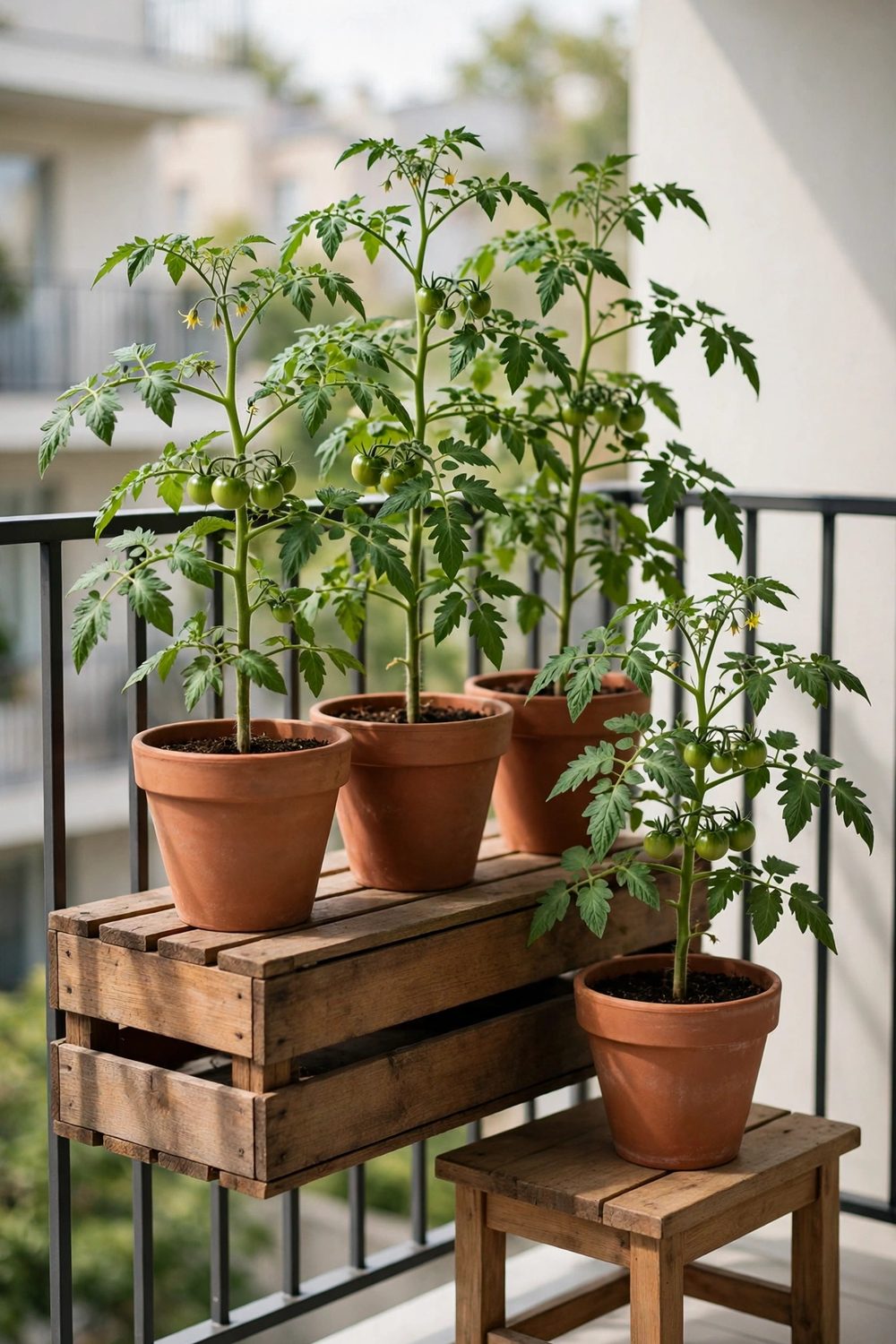
Balcony floors sit in the shadow of the rail and the wall for much of the day. A sturdy crate or low stand lifts pots into better light.
Raising a pot by 12 inches, about 30 cm, can add real sun time near a solid rail. Check the stand holds the full weight of wet soil.
Keep the saucer level on the stand, so water does not run off one side. A tilted pot dries unevenly and leans toward the light.
Use bricks or a strong wooden box if a stand feels dear. Test the base with your own weight first, and keep tall plants low in strong wind. Keep a clear path, so you never trip carrying water.
11. Put Pots on Wheels and Follow the Sun
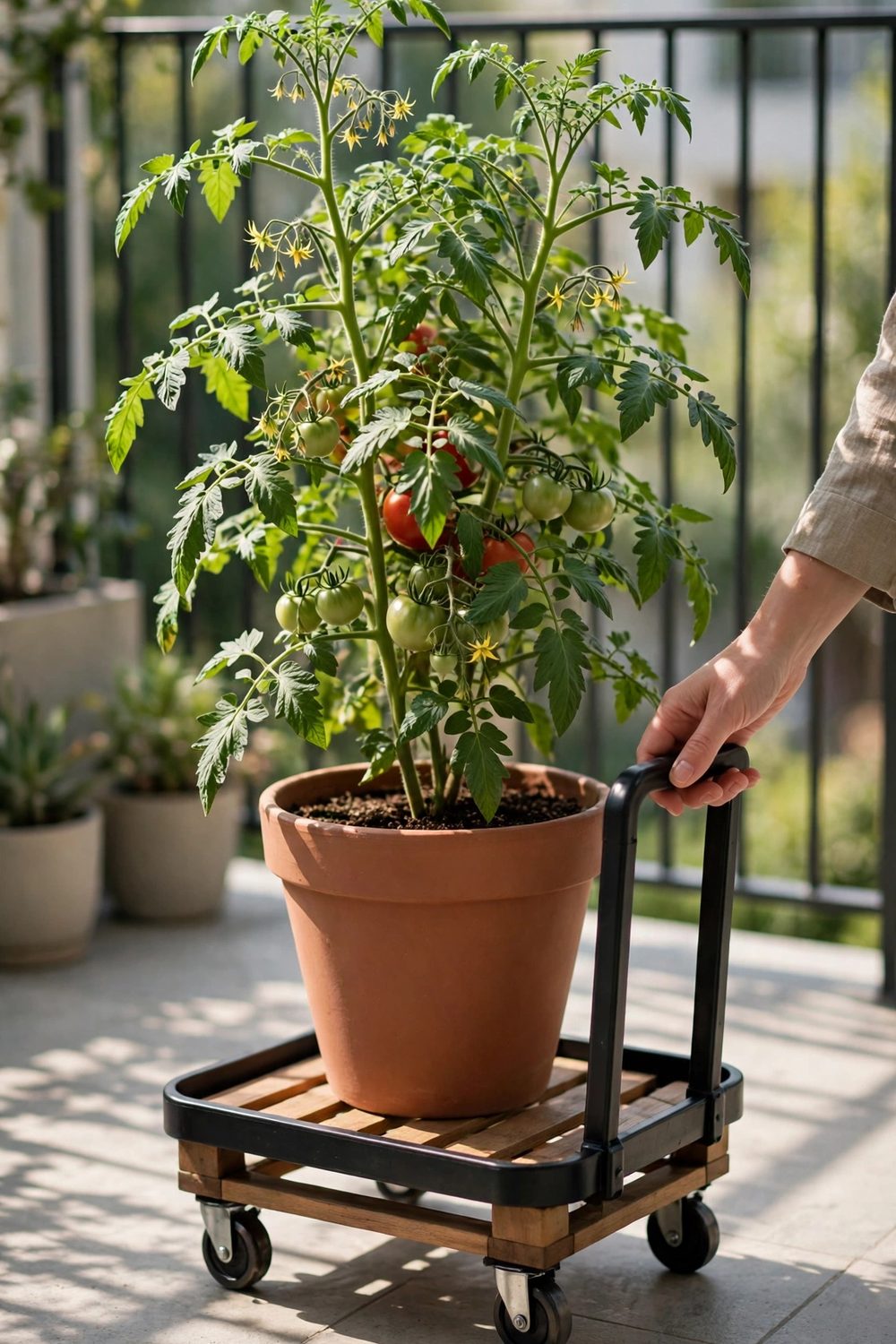
On many shady balconies, the sun patch moves across the floor during the day. A wheeled caddy under each big pot lets you follow that patch.
Roll the pots a short way at midday, then back before evening wind picks up. Lock the wheels once the pot sits in its new spot.
A wet 5-gallon pot is heavy, and dragging it cracks saucers and strains your back. Wheels turn a two-person job into a one-minute habit.
Mark the floor with two small chalk dots, one for the morning spot and one for the afternoon spot. The dots make the daily move fast and simple. Two minutes of moving beats a season of weak growth.
12. Choose Small Fruit Over Big Slicers
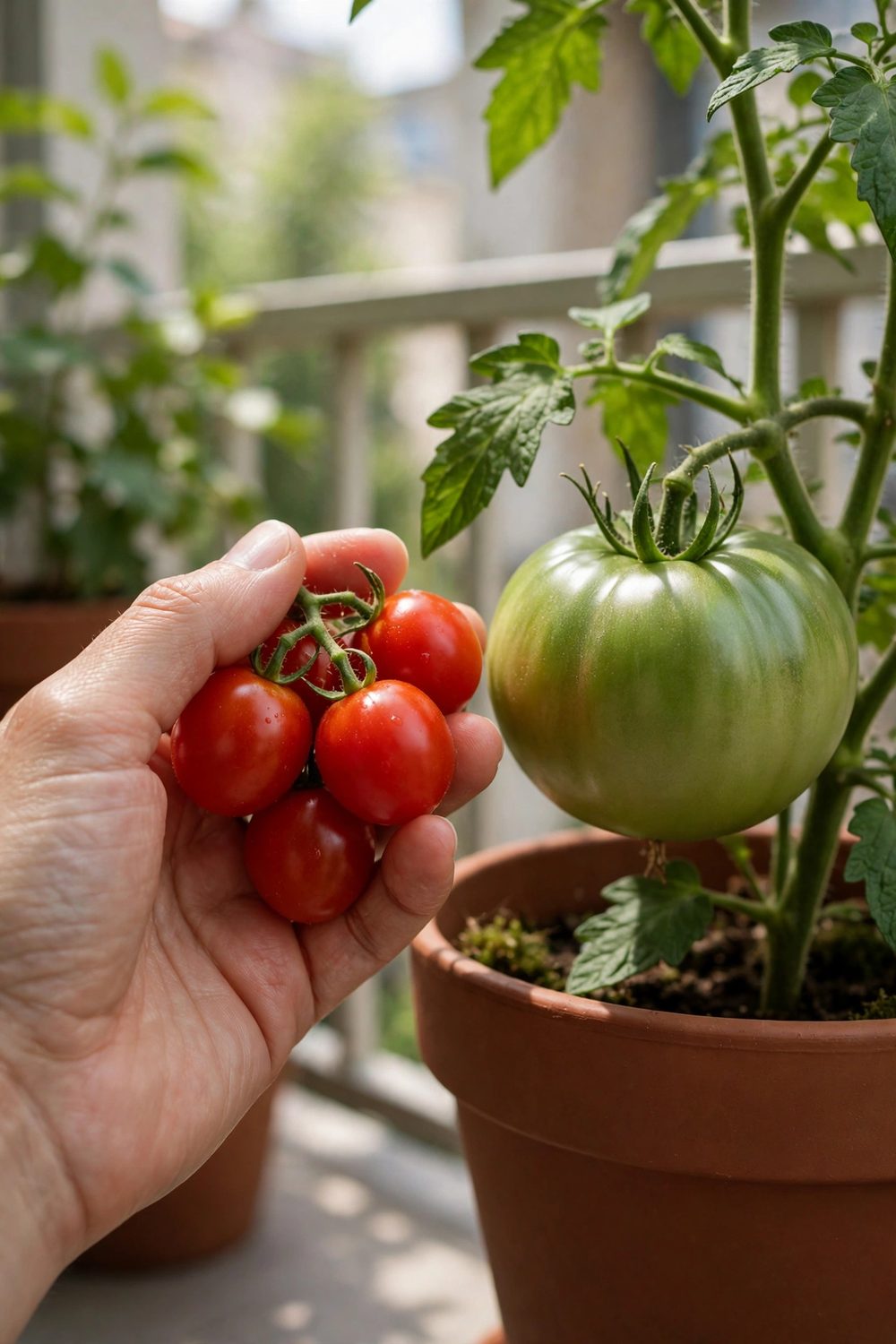
Big beefsteak types need long, bright days to size up and ripen. On a shady balcony they often stay green, then split or rot.
Cherry and grape types ask far less of the plant. Their fruit ripens in stages, so a dull week slows the crop but rarely ends it.
Sow cherry seed indoors roughly 6 to 8 weeks before your last frost, or buy one sturdy plant. One healthy start beats three weak seedlings in poor light.
Plants started indoors need a week of hardening off before they face outdoor air. Give them longer in bright shade each day, then move them to the corner. Label the pot with the variety name and sowing date.
13. Water Steady So Shade Stress Stays Low
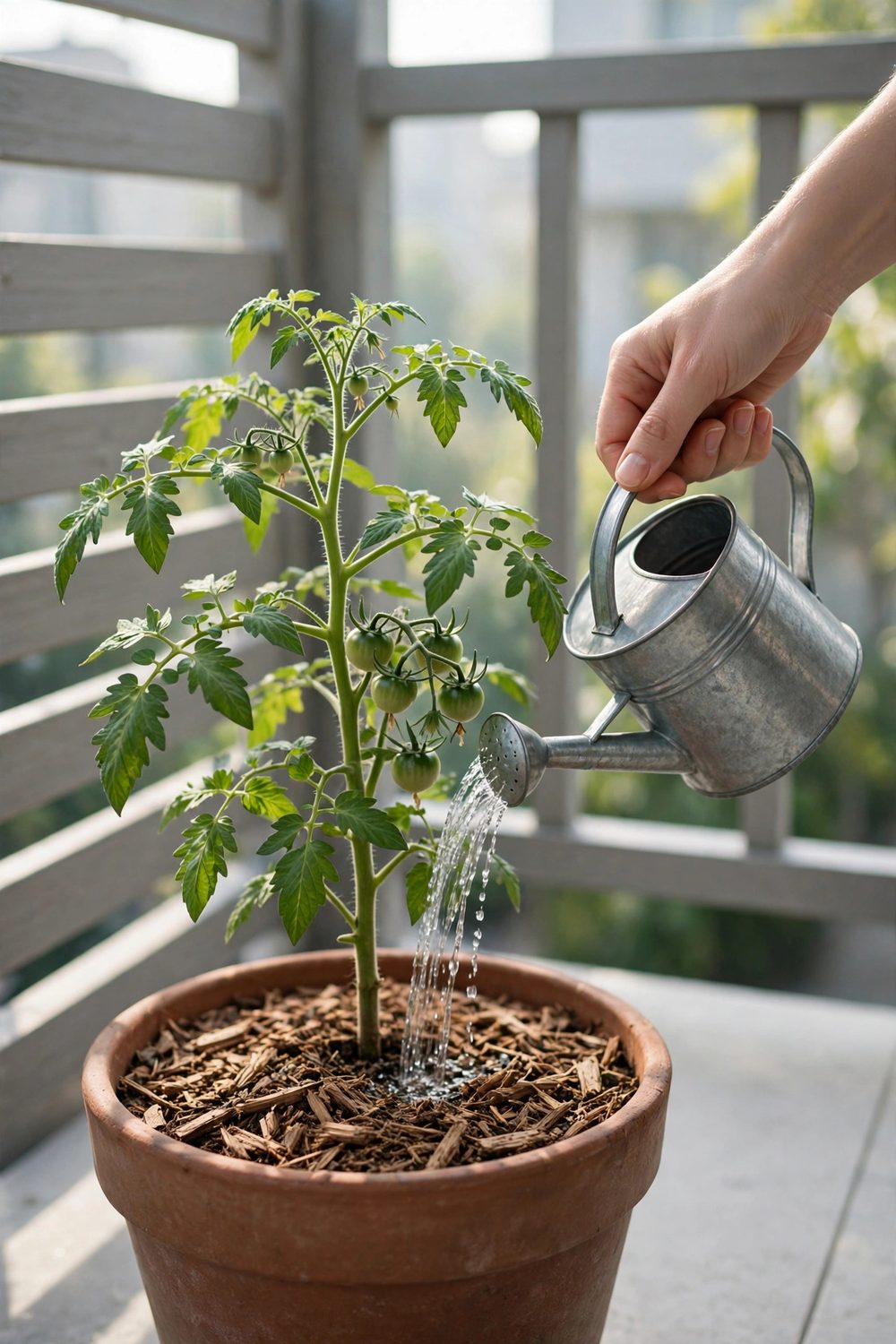
Shaded pots dry more slowly than sunny pots, so check the soil with a finger before you water. Water only when the top inch feels dry.
Steady moisture matters more than volume. Swings between dry and soaked soil can cause blossom end rot, since the plant cannot take up calcium evenly.
For a full routine, read how often to water tomatoes in pots in summer and the wider rules for watering vegetables in pots before the hot weeks arrive.
Mulch the soil surface with a thin layer of straw or bark. Mulch keeps moisture steady between waterings and stops soil splashing onto the lower leaves. Morning watering gives leaves the day to dry fully.
14. Feed Lightly and Skip Extra Nitrogen
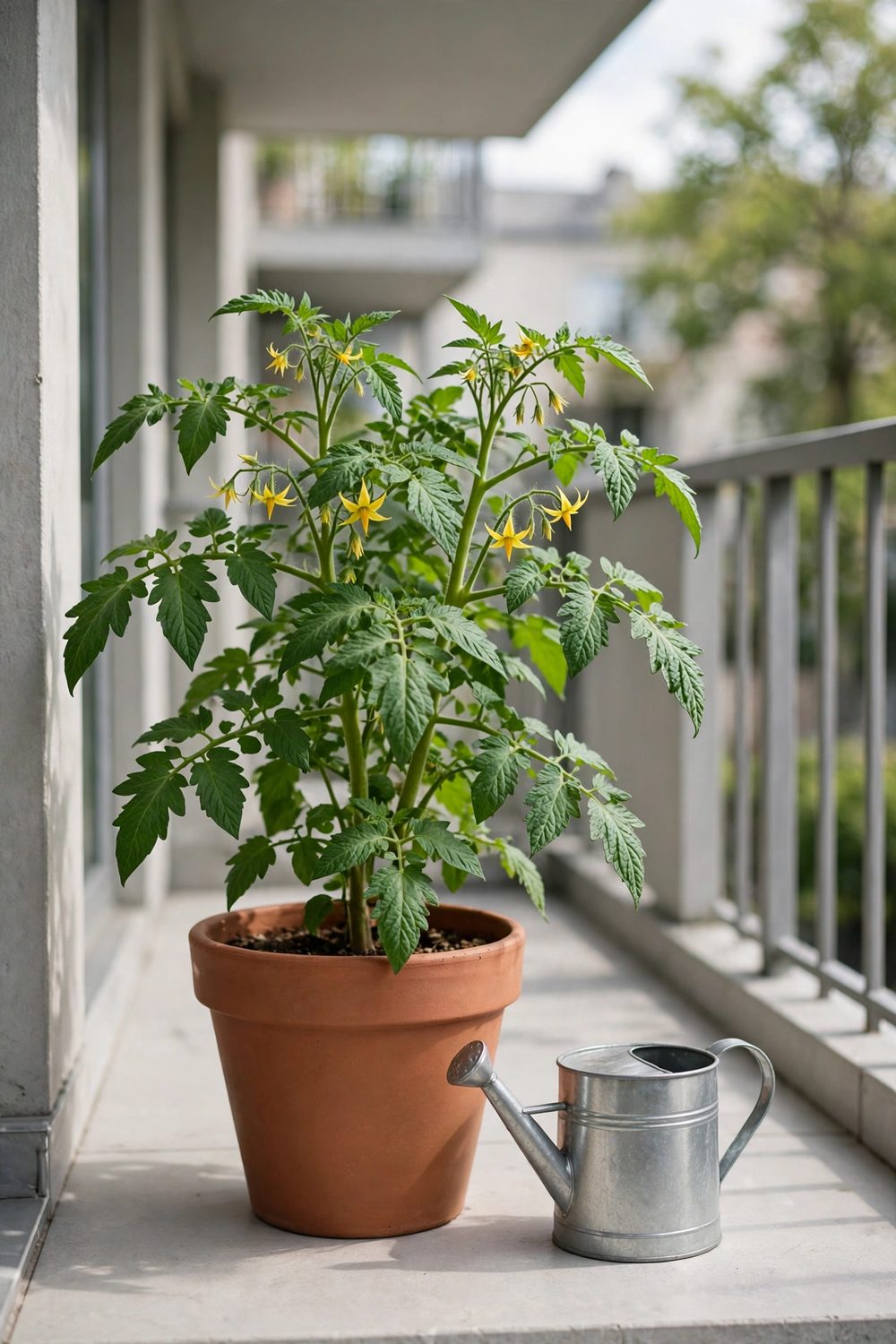
A plant in low light grows slowly, so it uses feed slowly too. A tomato feed at label strength, every two weeks, is plenty for most pots.
High-nitrogen feed pushes soft green leaves, and leaves are not the goal here. Too much feed in shade gives you a lush plant with almost no fruit.
Feed after watering, never onto dry soil, and stop if leaf tips brown. A watering can filled at the kitchen sink makes the routine easy to keep.
If leaves grow large, dark, and soft, cut the feed in half for a month. Firmer, smaller leaves and more flowers show the balance is right again. Write the feed date on a small tag in the pot.
15. Set a Fair Goal: Leaves, Flowers, Then Fruit
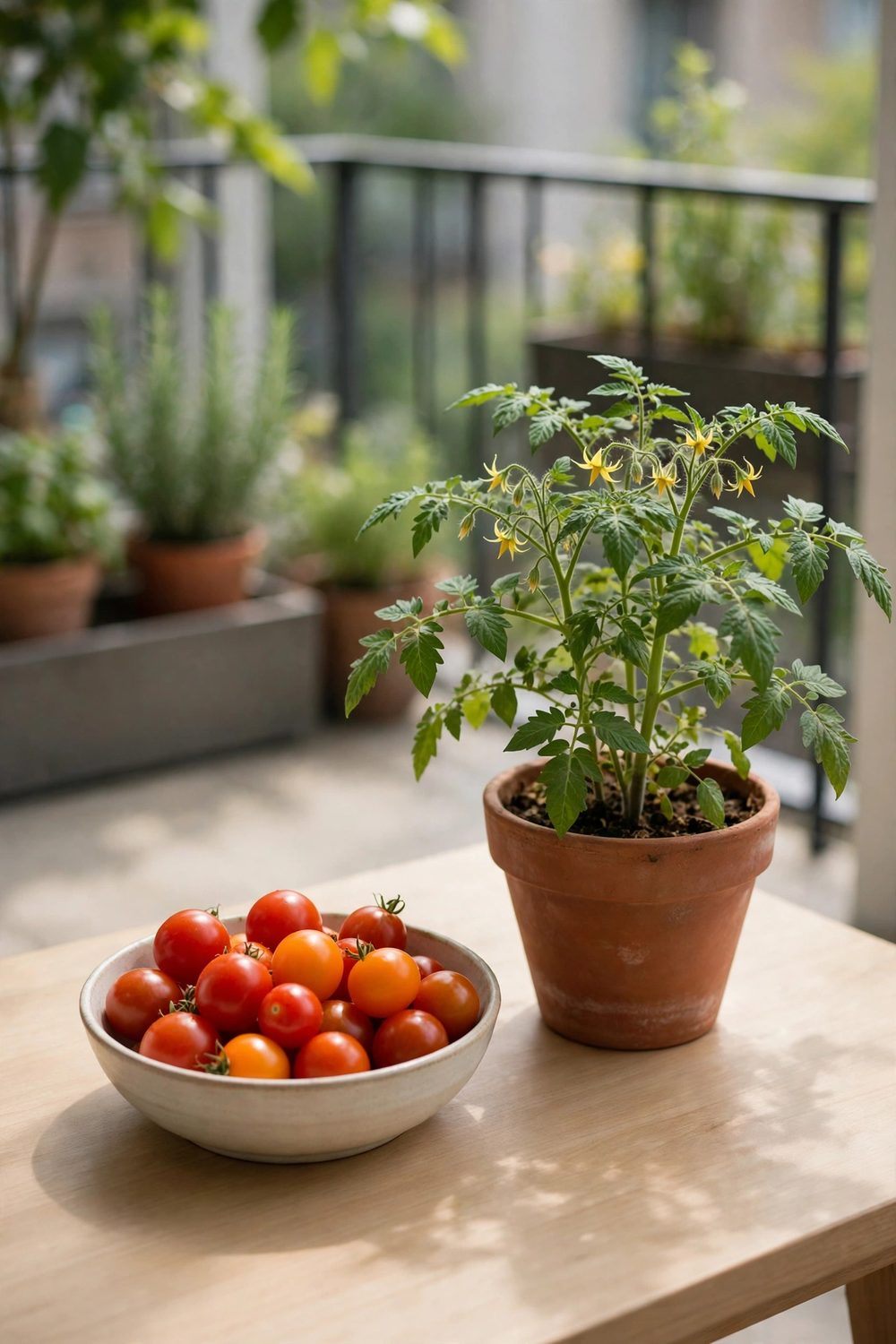
A fair goal in shade is a healthy plant, steady flowers, and a modest bowl of cherry tomatoes across the season. That is a real win.
If a plant gives only leaves after two months, move it to the brightest spot you have, or accept it as a green plant and start earlier next year.
Note what worked in a small notebook: variety, pot size, and sun hours. Next season starts with your own facts, not guesswork or hope.
Photograph the plant on the same day each week. The pictures show slow change clearly, and they prove which corner gave you fruit when next spring comes. Next year, start with the corner that proved itself.
A shady balcony rewards small fruit, bright corners, and pots that can move. Keep your growing tomatoes in pots on a shady balcony what works list short, and repeat those few things weekly.
Two pots grown well will teach you more than six pots grown in hope. Use those lessons, keep the corner clear, and let each season start a little smarter.
Start with one cherry plant in your best corner this season. Save this to your tomato board for later, and add your sun count before you sow.


