

15 Potted Tomato Ideas for Beginners on a Balcony
Your first tomato plant does not need a yard, a raised bed, or a big plan. A sunny balcony corner and one good pot can give you ripe fruit all summer.
This guide covers growing tomatoes in pots for beginners balcony friendly, with small steps that fit a real rail, a chair, and a watering can from the kitchen sink.
Keep the plan small and close to your door. A pot you pass each day gets watered, checked, and picked on time, and that steady care is what turns a first plant into a real harvest.
You do not need special tools to begin. One pot, fresh mix, a healthy young plant, and a support are enough for your first season on the balcony.
If you are new to pots, start with the basics in container vegetable gardening for beginners with no yard at all. Then pick one idea below and set it up today.
Start With One Plant in a 5-Gallon Pot
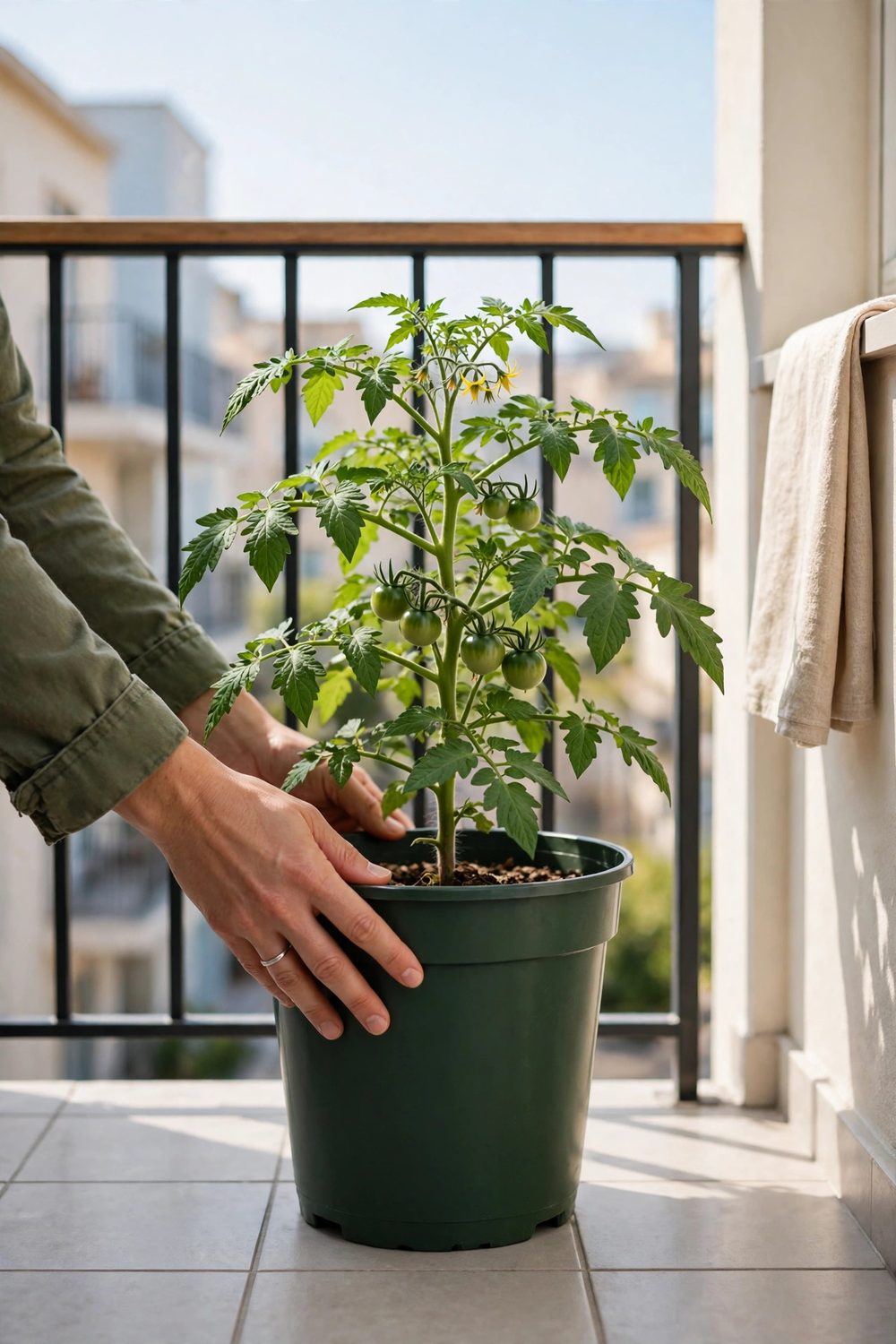
One plant in one pot is the calm way to learn. A standard tomato needs a 5-gallon pot, about 19 litres, at least 12 inches or 30 cm wide.
Fill it, plant it, and watch how fast it drinks on a hot day. That one pot teaches you more than five pots you cannot keep up with.
For the full method, follow how to grow tomatoes in a pot from planting day to harvest. Keep the pot where you see it each morning.
Place a saucer under the pot to protect the floor and catch extra water. Lift the pot once when it is full, so you know its true weight before you commit to the spot.
Pick ‘Tiny Tim’ for the Smallest Balcony Corner
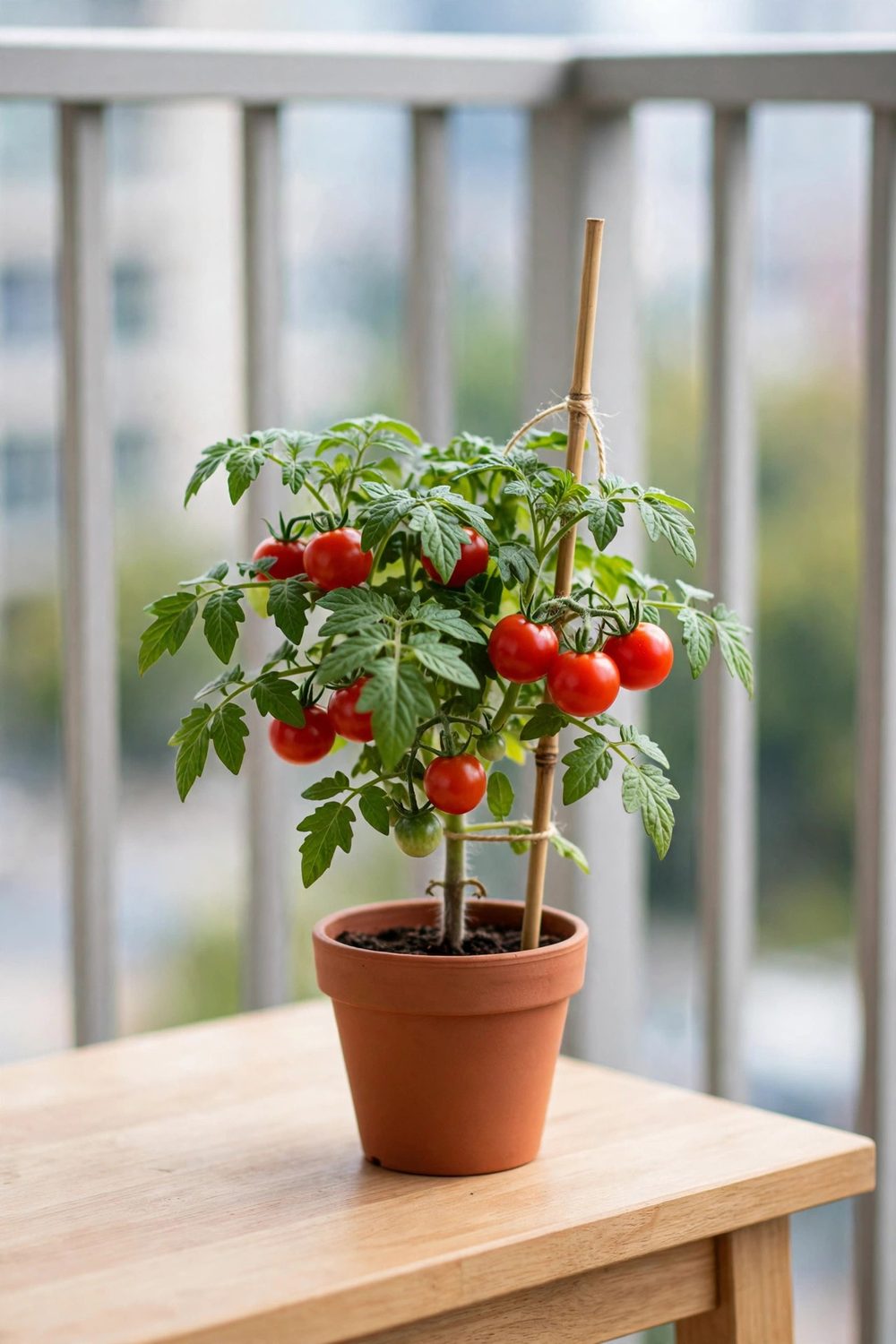
‘Tiny Tim’ is a dwarf cherry tomato that stays short and neat. It grows well in a 1 to 2 gallon pot, about 4 to 8 litres, on a small table.
The plant stays under 18 inches or 45 cm tall in most pots. It still needs sun, water, and a small stake to hold its fruit up.
On a third-floor rail, this size is easy to move when wind picks up. It is a kind first plant for a tight space.
Fruit comes in small clusters and ripens over a long stretch, so you pick a few each day. That steady pace suits a first season and keeps waste low on a tiny balcony.
Choose a Sunny Rail Spot With 6 to 8 Hours of Light
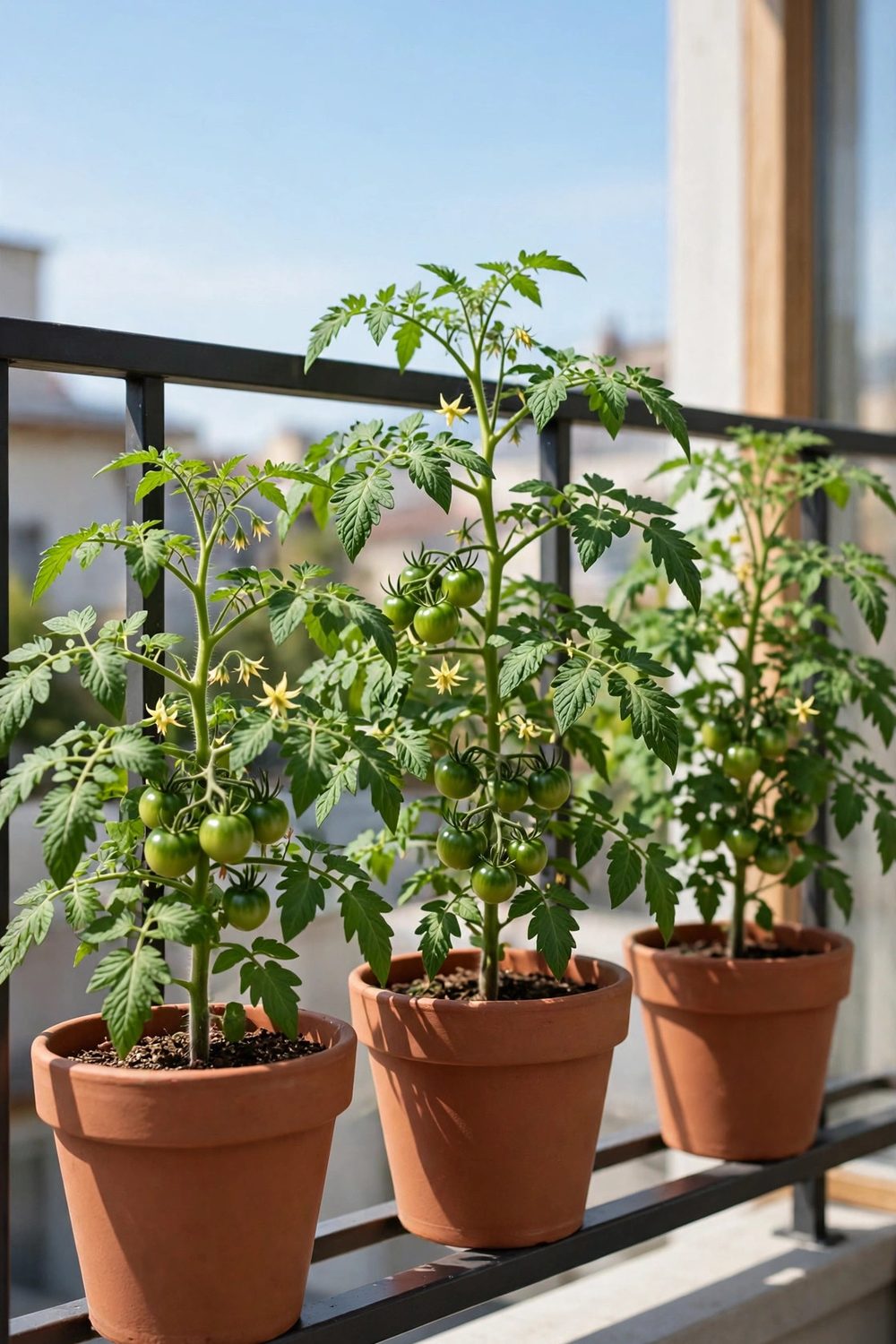
Tomatoes need full sun for real harvests. Aim for 6 to 8 hours of direct sun each day, more if your balcony allows it.
Watch the light for one day before you plant. Note where the sun hits at noon and again at four in the afternoon.
A south or west rail often works best in a small flat. If shade covers the spot by midday, move the pot before you fill it. Soil is heavy once wet.
Leaves tell you the truth within a week. Pale, stretched growth means the spot is too dim, while short joints and dark green leaves mean the light is right for fruit.
Use Potting Mix, Not Garden Soil, in Every Pot
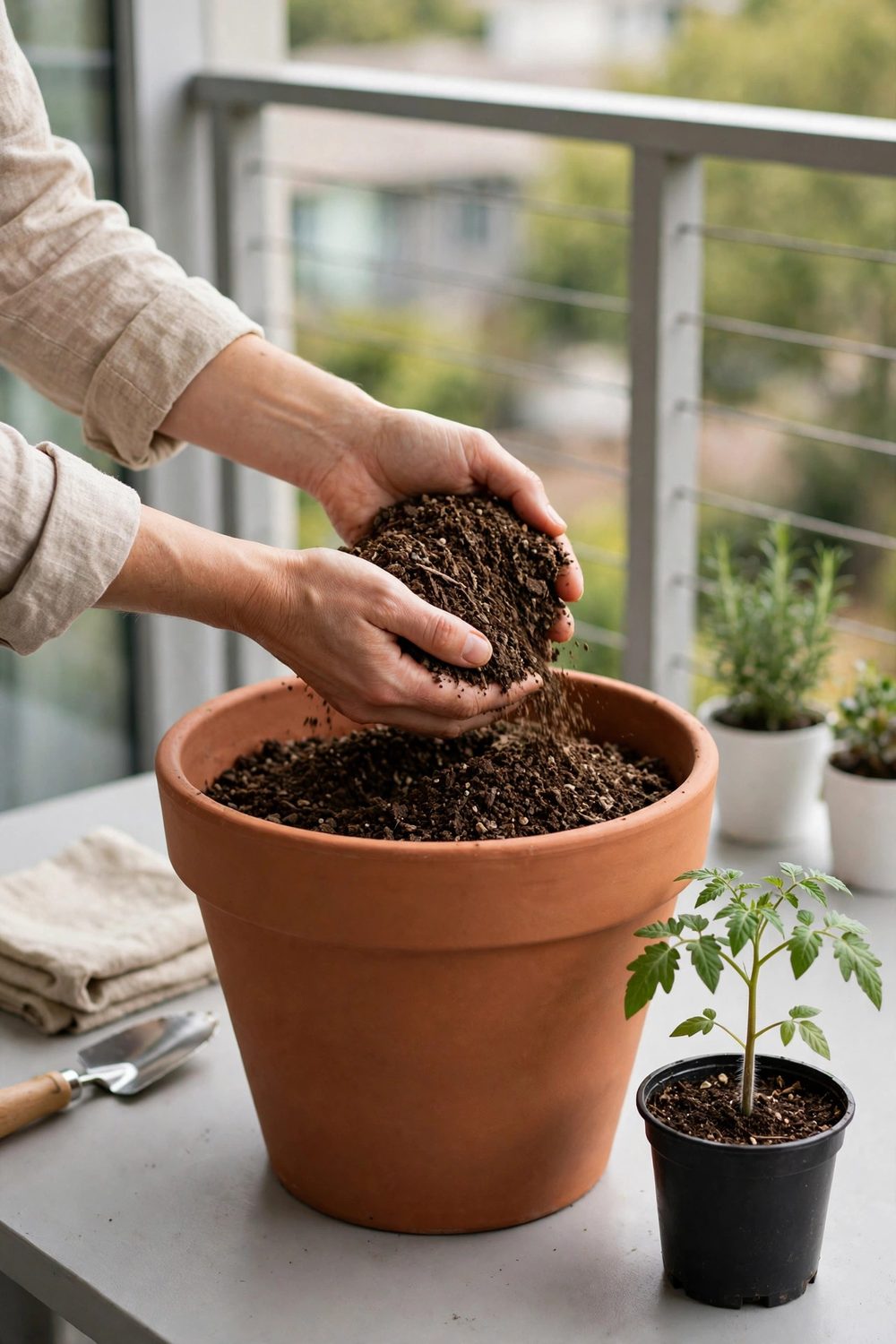
Garden soil packs down in a pot and drains poorly. Roots sit wet, then dry hard, and the plant stalls.
Use a fresh potting mix made for containers. It holds water but lets extra water drain from the holes at the base.
Mix it in a tub and dampen it before you fill the pot. Dry mix from the bag sheds water at first. Wet mix settles around roots and helps the plant settle in fast.
Check that the pot has clear drainage holes before you fill it. Cover the holes with a small piece of mesh if mix washes out, but never block them with stones or gravel.
Plant Deep So the Stem Grows Extra Roots
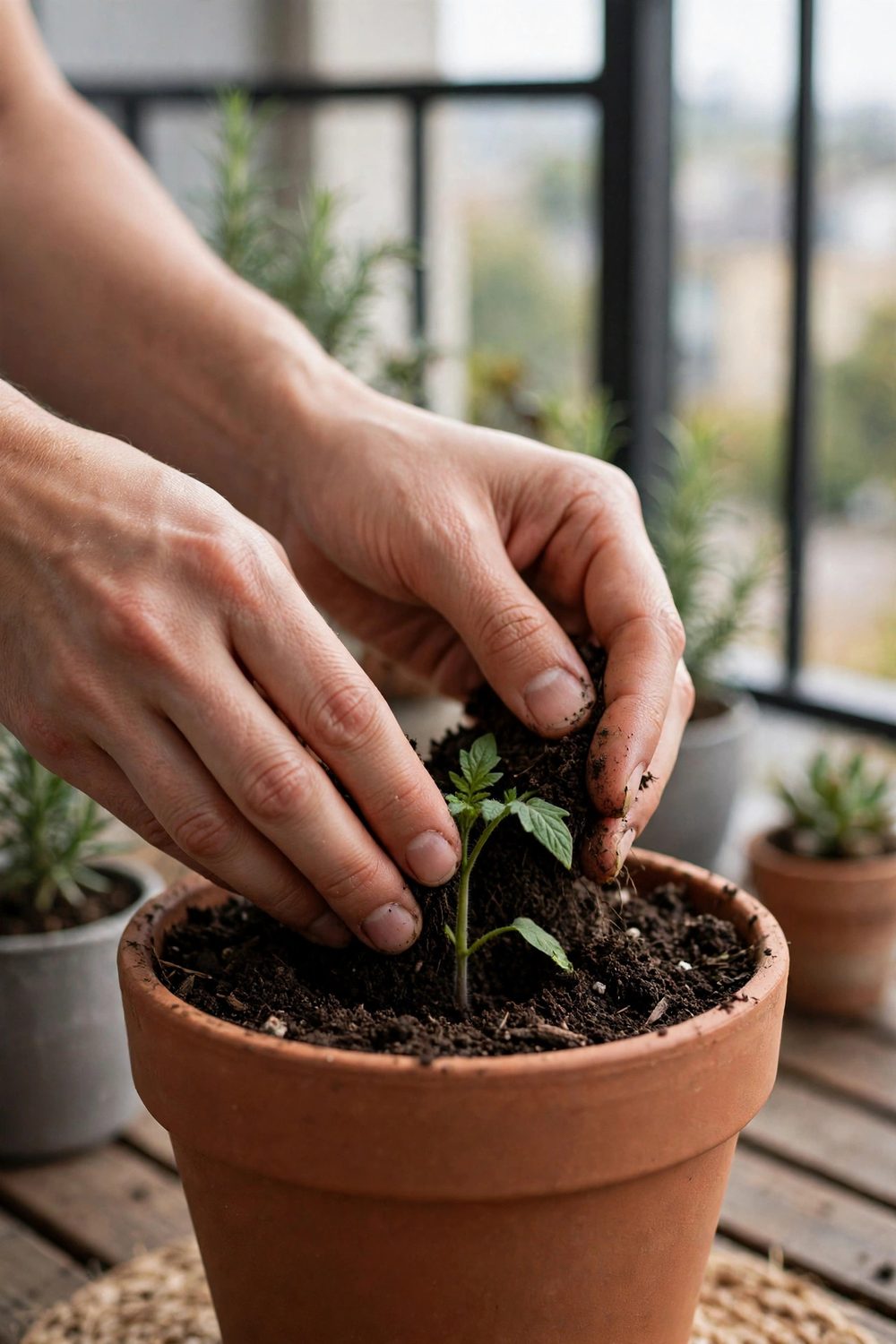
Tomatoes can grow roots along a buried stem. Pinch off the lower leaves, set the plant deep, and bury the stem up to the first true leaves.
This deep planting helps on a windy balcony. The plant stands firm and can take up more water from the pot.
Water the hole well after planting. Keep the leaves above the soil line, and firm the mix gently with your hands. Do not pack it hard.
Plant on a calm, cloudy afternoon if you can, or in the early evening. The plant rests overnight, drinks well, and faces its first full sun day with roots already settled in.
Water at the Base in the Morning
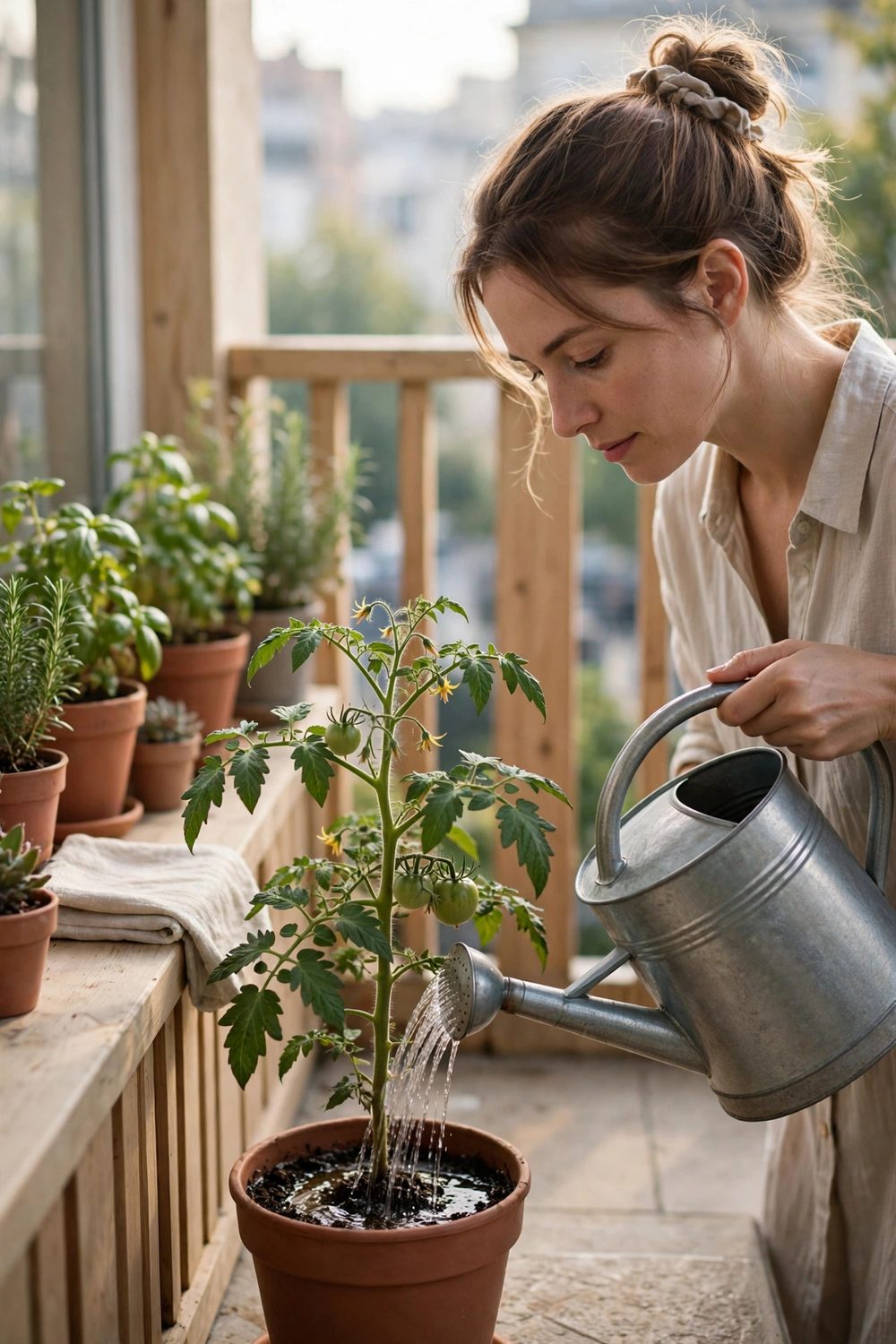
Water the soil, not the leaves, and water in the morning when you can. Wet leaves that stay wet at night invite leaf spots.
Check the top inch or 2.5 cm of mix with a finger. If it feels dry, water slowly until a little runs from the base.
On a small balcony, a watering can filled at the kitchen sink works fine. Slow water soaks in. Fast water runs off and leaves dry pockets.
In a heat wave, a large pot may need water each day, while a small pot can need it twice. The finger test beats a set schedule, since wind and sun change daily.
Add Mulch to Hold Moisture on Hot Days
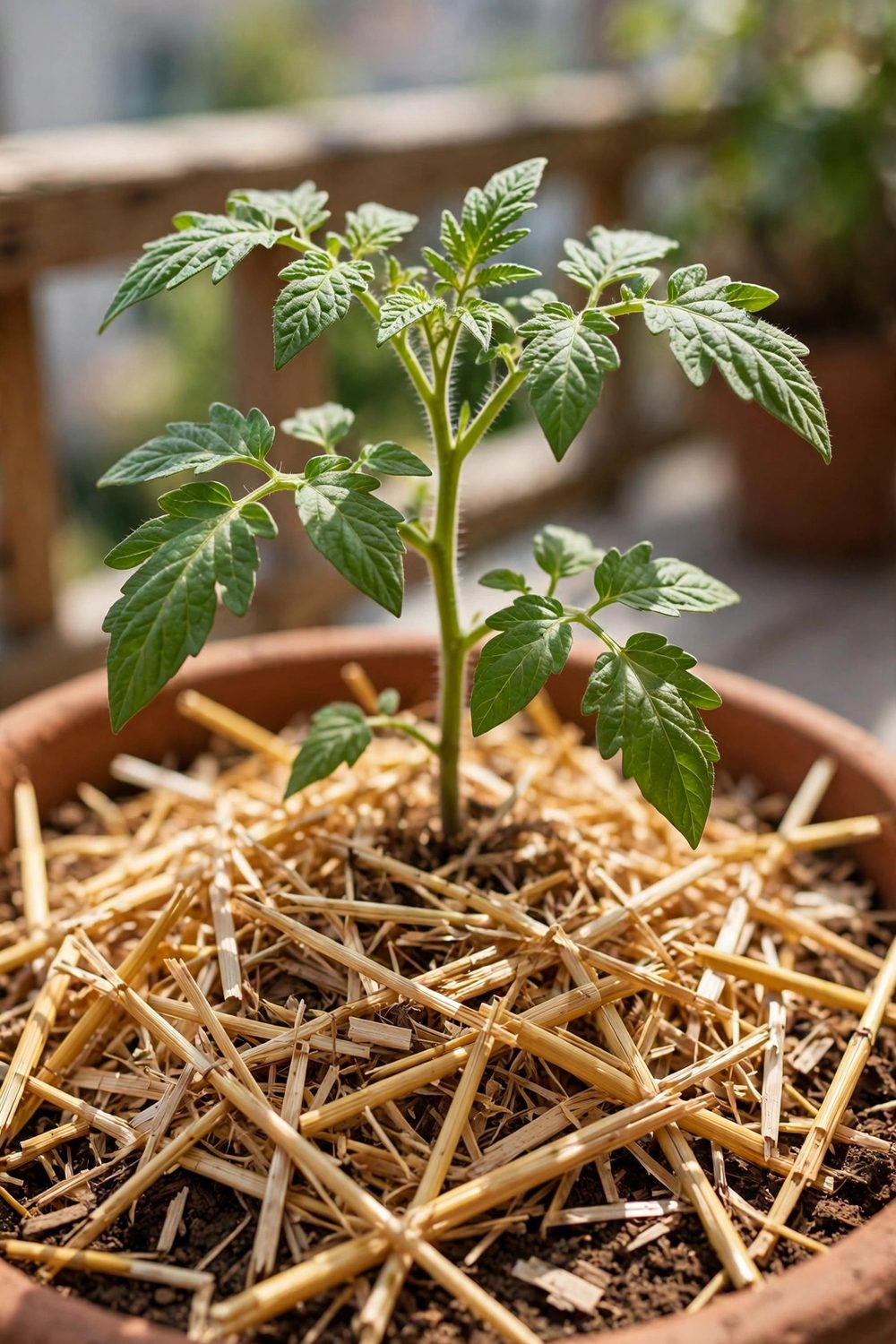
A thin layer of mulch on top of the mix slows drying. Use clean straw, shredded bark, or plain wood chips, about 1 inch or 2.5 cm deep.
Keep mulch a small gap away from the stem. It shades the soil, cuts splash onto leaves, and helps water stay even between drinks.
This step matters most in July heat. Pots on a dark rail dry by noon, and mulch buys you hours before the next watering.
Top up the mulch once mid-season, since it settles as you water. Keep an eye on the saucer below, and empty it after heavy watering so roots never sit in standing water.
Set a Cage in the Pot on Planting Day
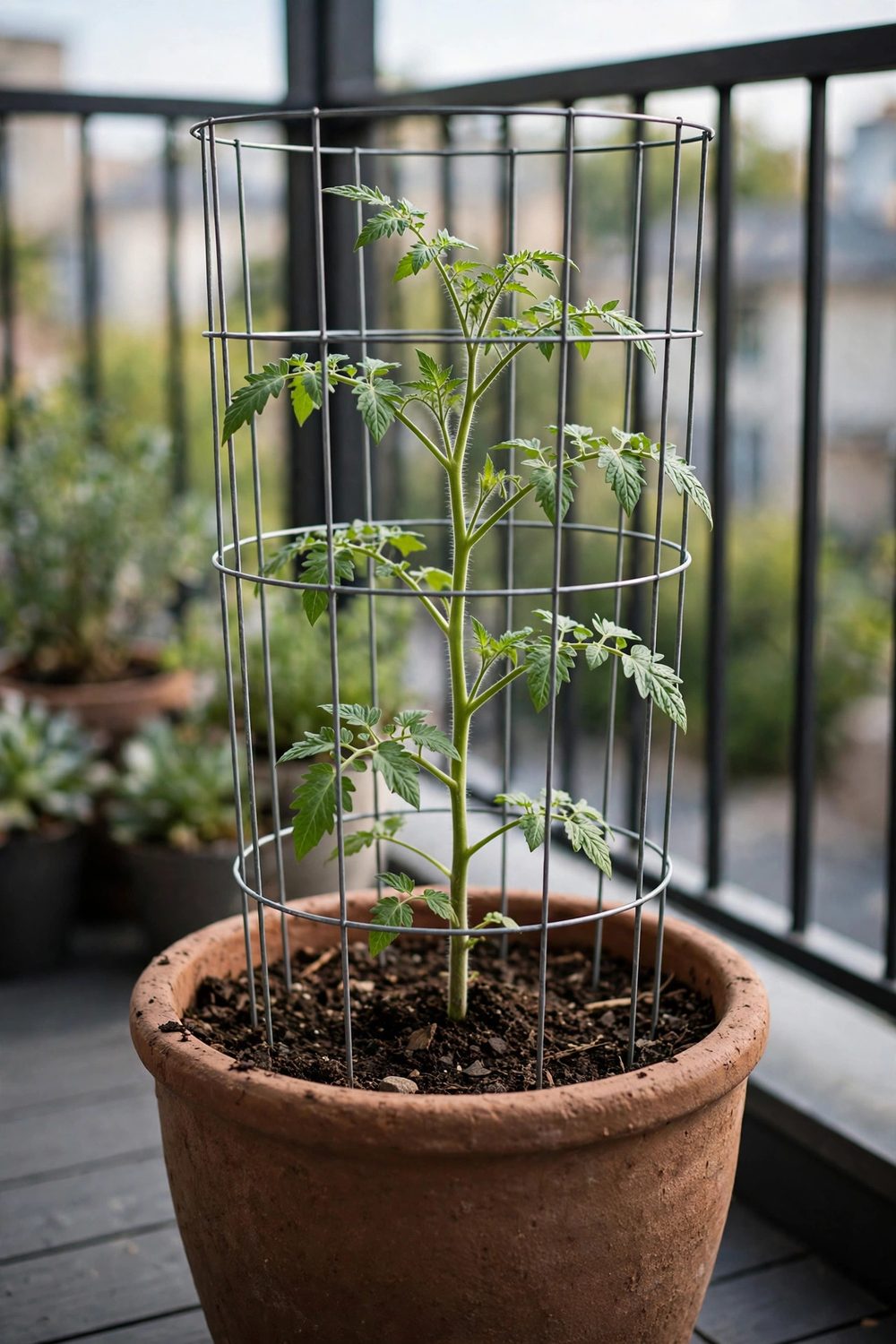
Put the support in on planting day, not weeks later. Pushing a cage into a full pot later can tear roots and snap stems.
A cage that fits inside the pot rim works best on a balcony. It keeps fruit off the soil and leaves room to walk past.
Check the sizing advice in best pot size for tomatoes before you buy. A wide pot holds a cage steady when wind hits the rail.
As the plant grows, guide stems inside the cage rings instead of forcing them. A soft tie at the main stem keeps the plant centered and stops it leaning over the rail.
Feed With a Tomato Formula at First Flowers
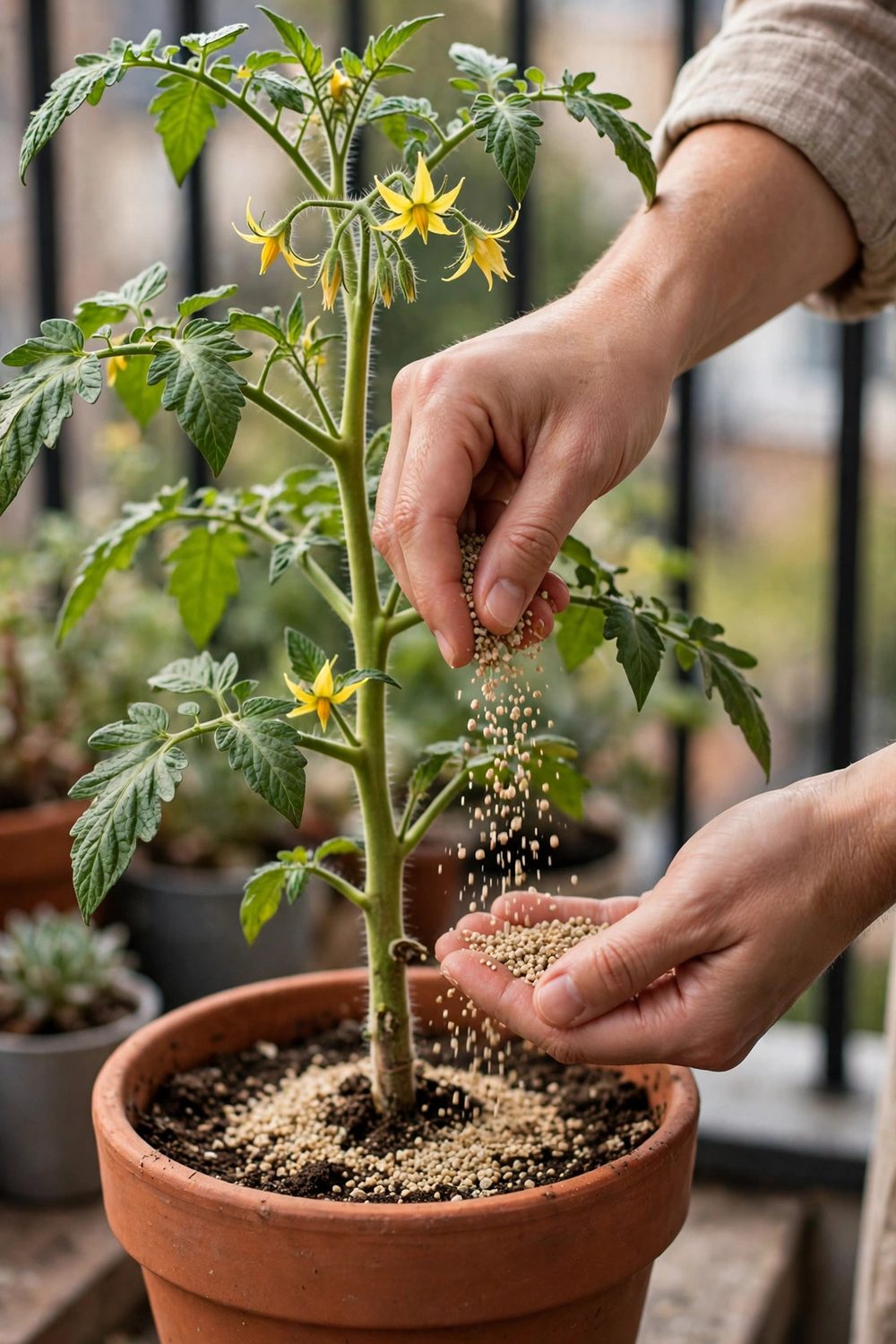
Pots hold a small amount of soil, so food runs out fast. Start feeding when the first yellow flowers open.
Use a tomato formula feed at label strength, never stronger. Feed on damp soil, not dry soil, so roots do not burn.
A weekly liquid feed suits most balcony pots. Pale leaves and slow growth often mean the plant is hungry. Dark, lush leaves with no fruit can mean too much nitrogen feed.
Keep a simple note on your phone with the feed date and amount. That small record stops double feeding and helps you spot the pattern when fruit sets well or stalls.
Try ‘Patio Choice Yellow’ for a Neat Bush Plant
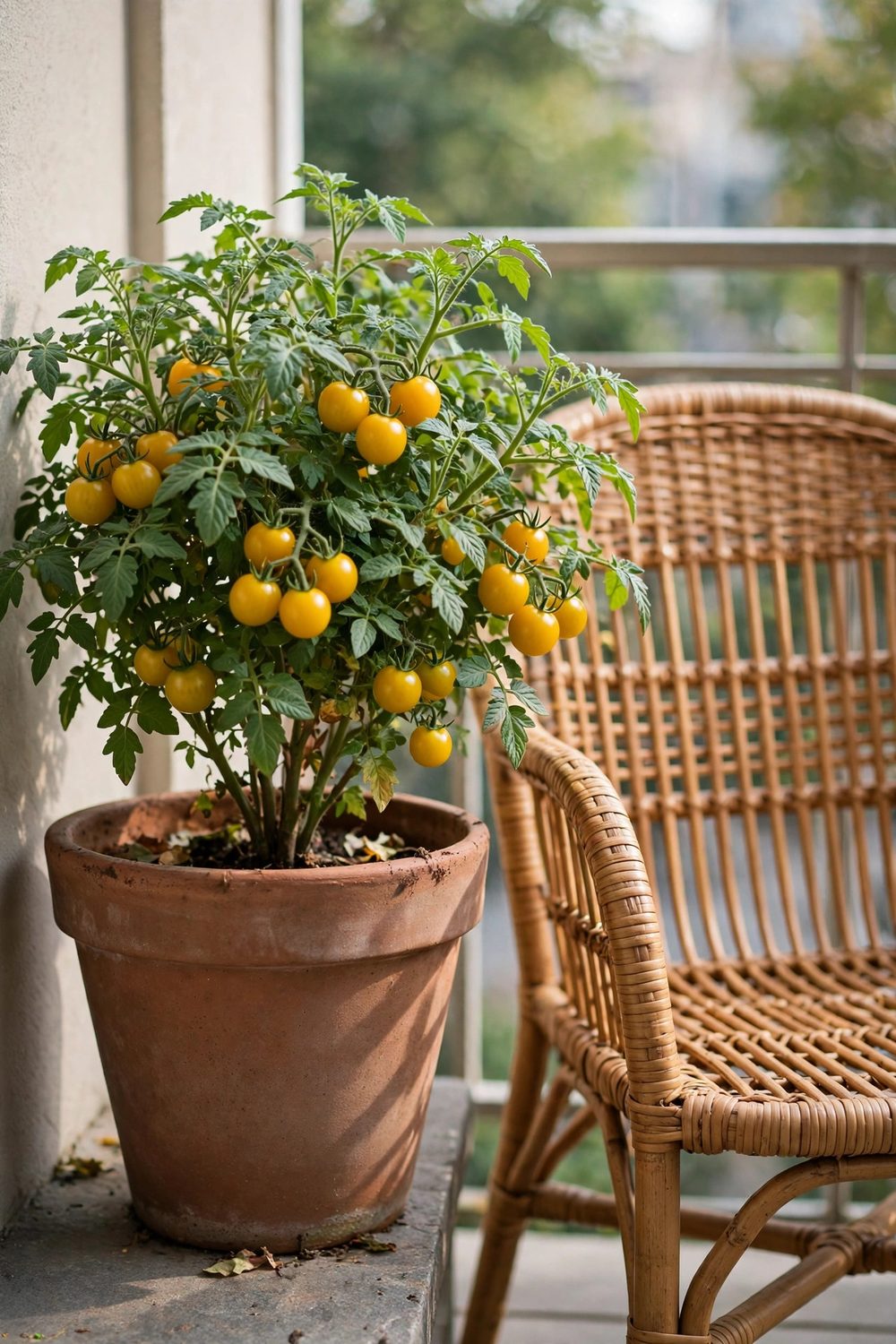
‘Patio Choice Yellow’ is a compact determinate type bred for pots. It stays bushy, fruits early, and gives sweet yellow cherry tomatoes.
Give it a 3 to 5 gallon pot, about 11 to 19 litres. It needs less tying than a tall vine and fits a chair-side spot well.
This type suits renters who want fruit without a tall cage. For more small-space layouts, see apartment balcony vegetable garden for beginners for pot group ideas.
Fruit ripens in a fairly short window on determinate types, so plan for salads and snacks in those weeks. Pick often, and the plant keeps its energy on the fruit that remains.
Grow ‘Sun Gold’ Cherry Tomatoes for Fast Fruit
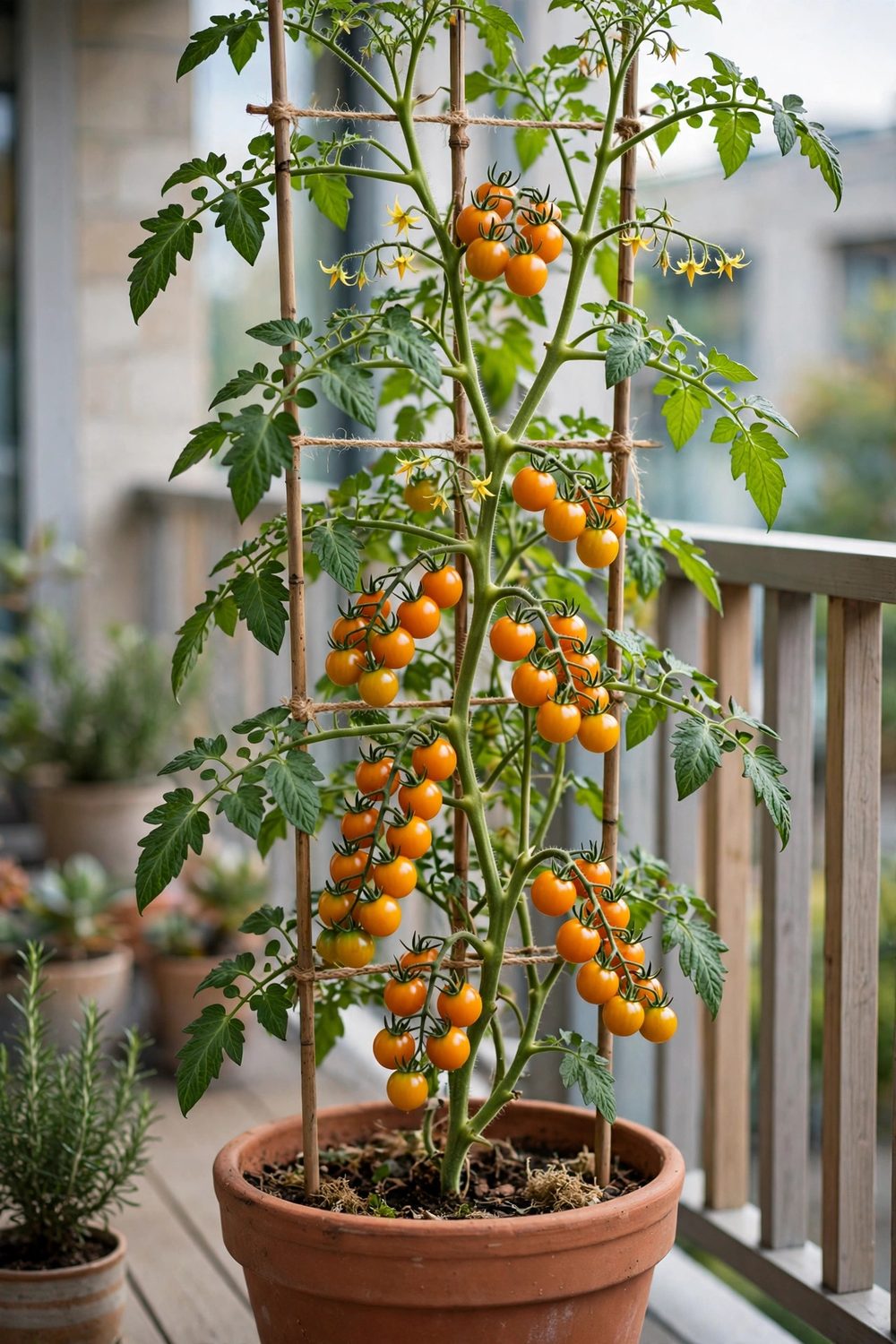
‘Sun Gold’ is a tall cherry tomato with orange fruit and a sweet taste. It is a strong plant, so give it room to climb.
Use a 10-gallon pot, about 38 litres, for the best result. A 5-gallon pot can work, but you will water it far more often in heat.
Tie the main stem to its support each week. Pick fruit when it turns deep orange. Warm fruit picked at noon tastes best eaten on the spot.
This variety can outgrow a short cage by midsummer, so choose the tallest support your rail allows. Prune lightly, keep water steady, and pick ripe fruit every two or three days.
Use a Grow Bag When Pots Feel Too Heavy
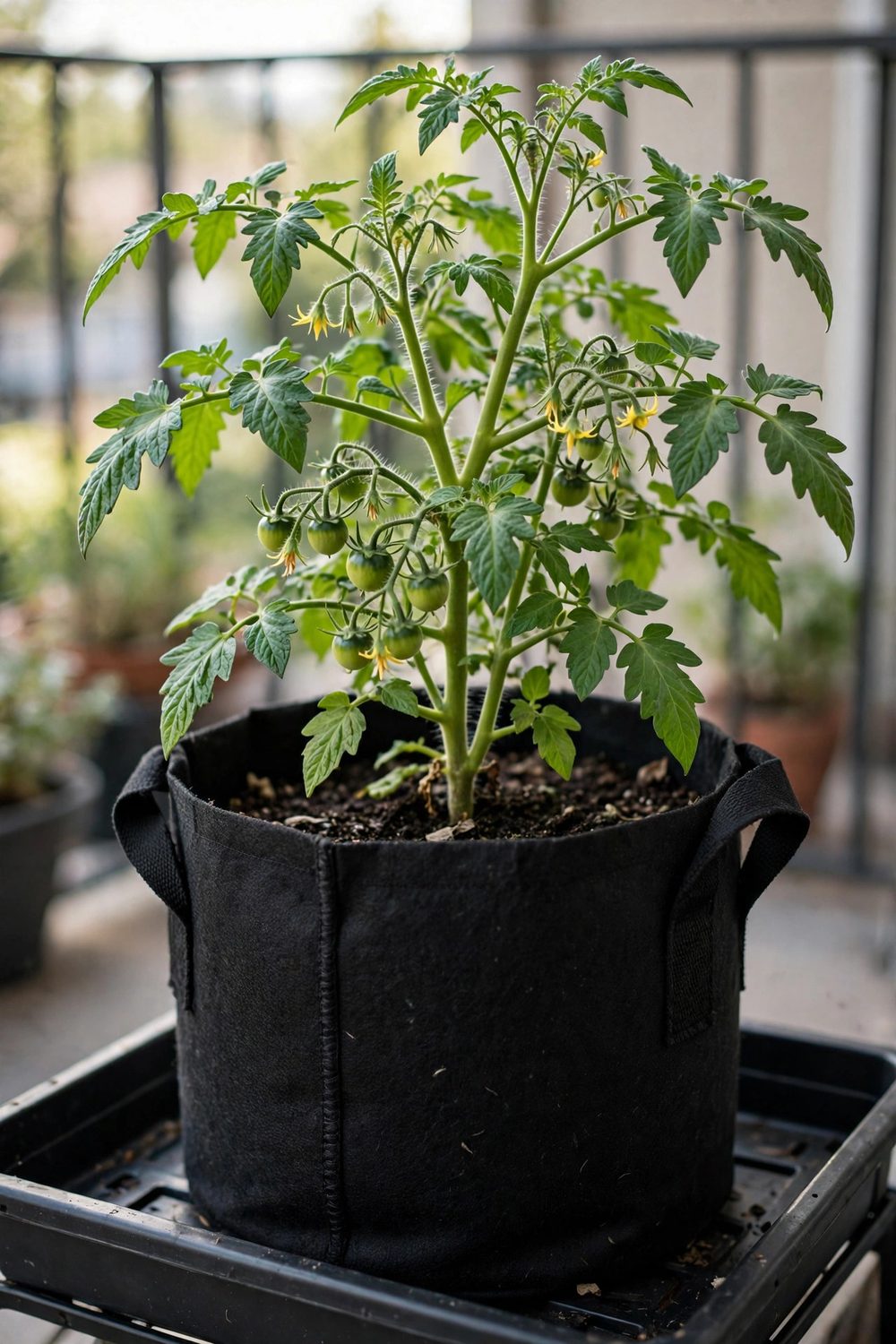
A fabric grow bag is light to carry up stairs and easy to store in winter. A 5 to 10 gallon bag suits one tomato plant well.
Set the bag on a saucer or tray to catch drips. On an upper balcony, that tray stops water from spilling onto the balcony below.
Compare options in best pots for growing vegetables on a balcony before you choose. Bags dry faster than plastic pots, so check them daily in heat.
Set the bag where it will stay for the season, since a wet bag is still heavy to drag. Handles help for small shifts, but lifting a full wet bag strains the fabric.
Tie Stems Loosely and Check Suckers Weekly
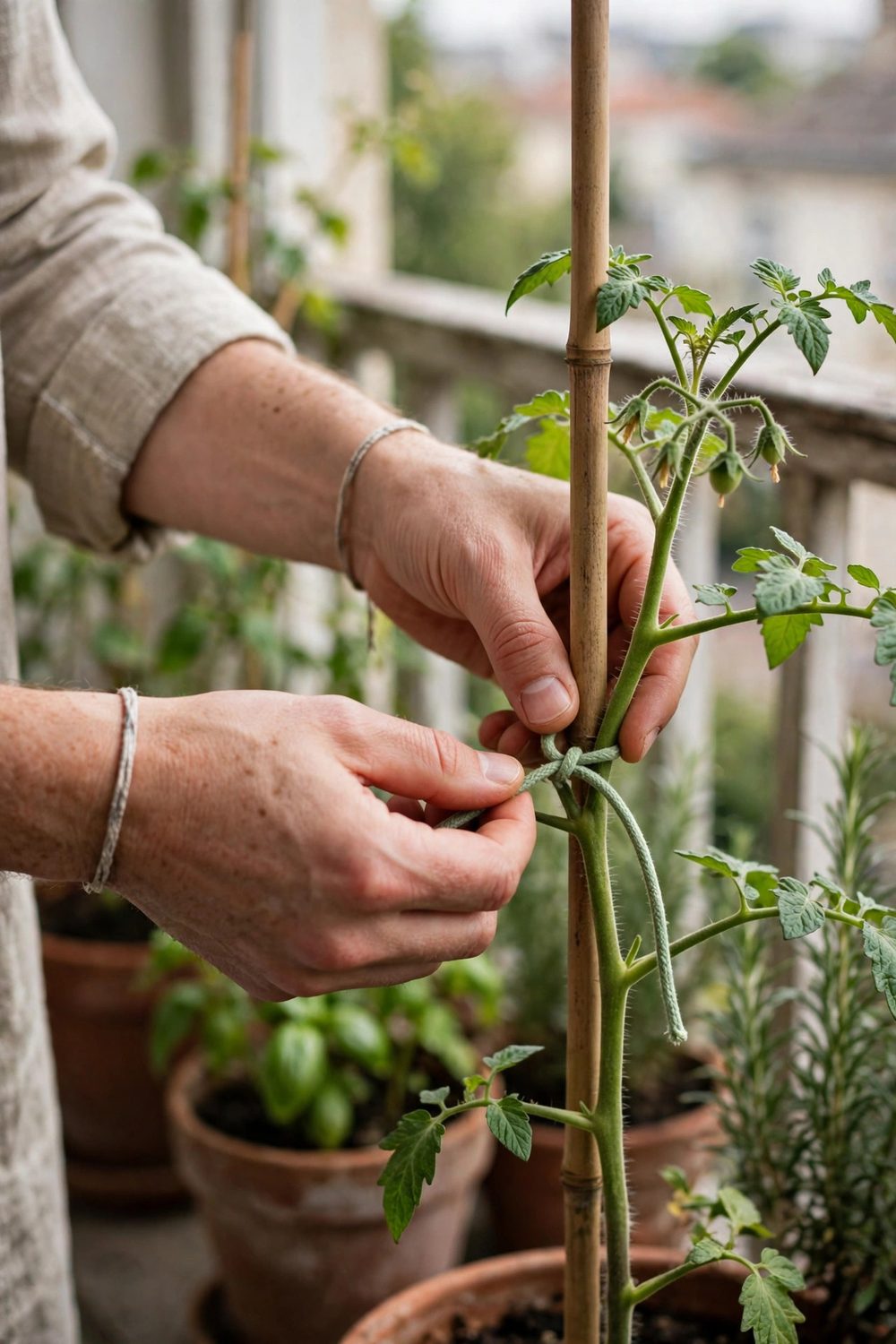
Use soft ties and leave a small loop around each stem. Stems thicken fast, and a tight tie can cut into the plant.
Suckers grow in the joint between a leaf and the main stem. On tall types, pinch out most suckers when they are 2 to 4 inches long.
Leave bush types alone, since pruning them cuts your harvest. A five-minute check each Sunday keeps a balcony plant tidy and easy to water.
Work on dry leaves when you can, since wet plants spread disease more easily on hands and tools. Wash your hands after handling any plant with spots or yellowing lower leaves.
Watch for Blossom End Rot and Water Evenly
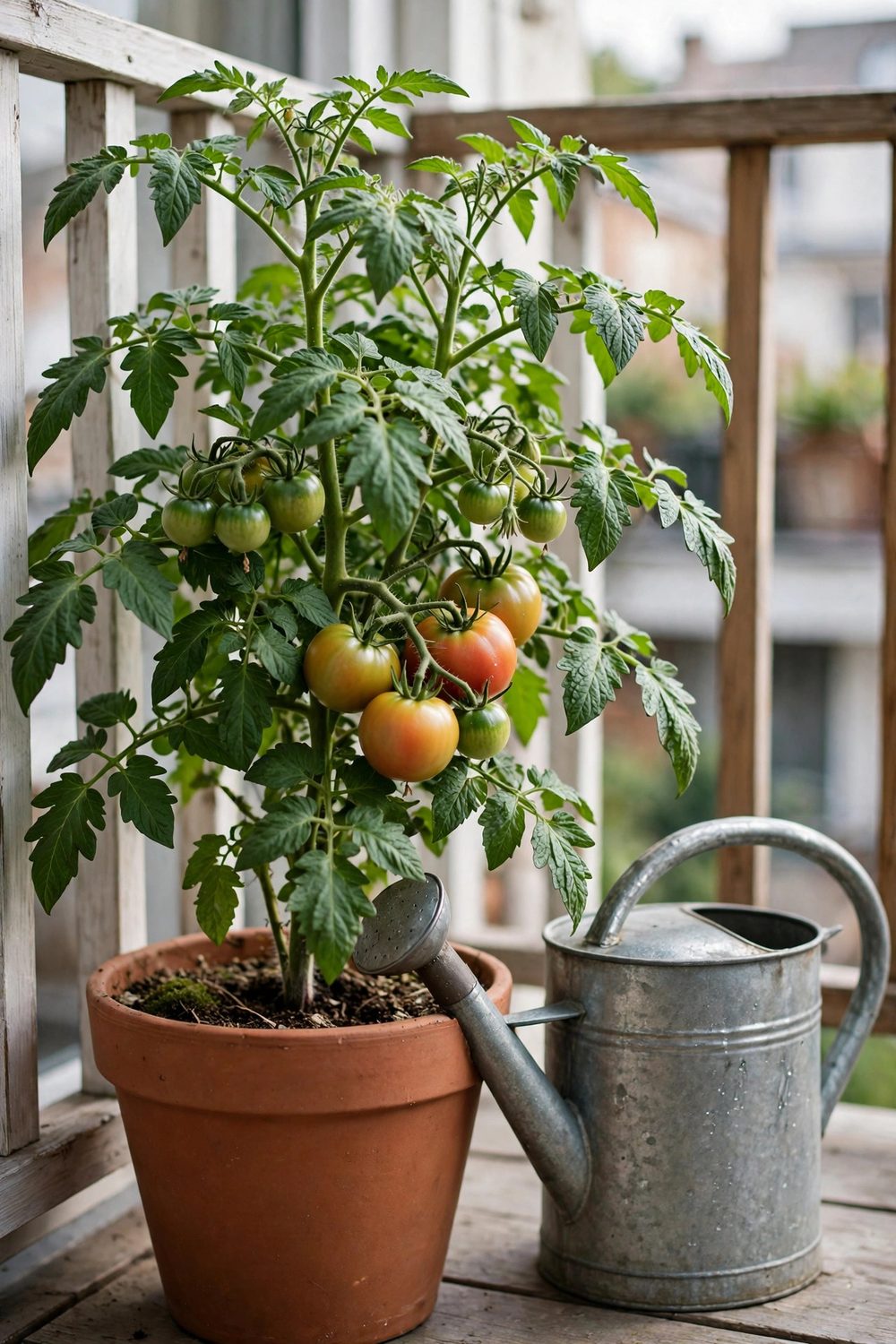
Blossom end rot shows as a dark, flat patch on the bottom of the fruit. It is most often a water problem, not a lack of calcium in the soil.
Uneven watering stops the plant from moving calcium to the fruit. The fix is steady moisture, mulch on top, and no digging around the roots.
Water deeply, then let the top inch dry before you water again. That steady rhythm prevents most new fruit from showing the same patch.
Fruit that already has the patch will not heal, but you can leave it or remove it. New fruit formed after watering steadies will most often grow clean and ripen normally.
Harvest Warm and Ripen Green Fruit Indoors
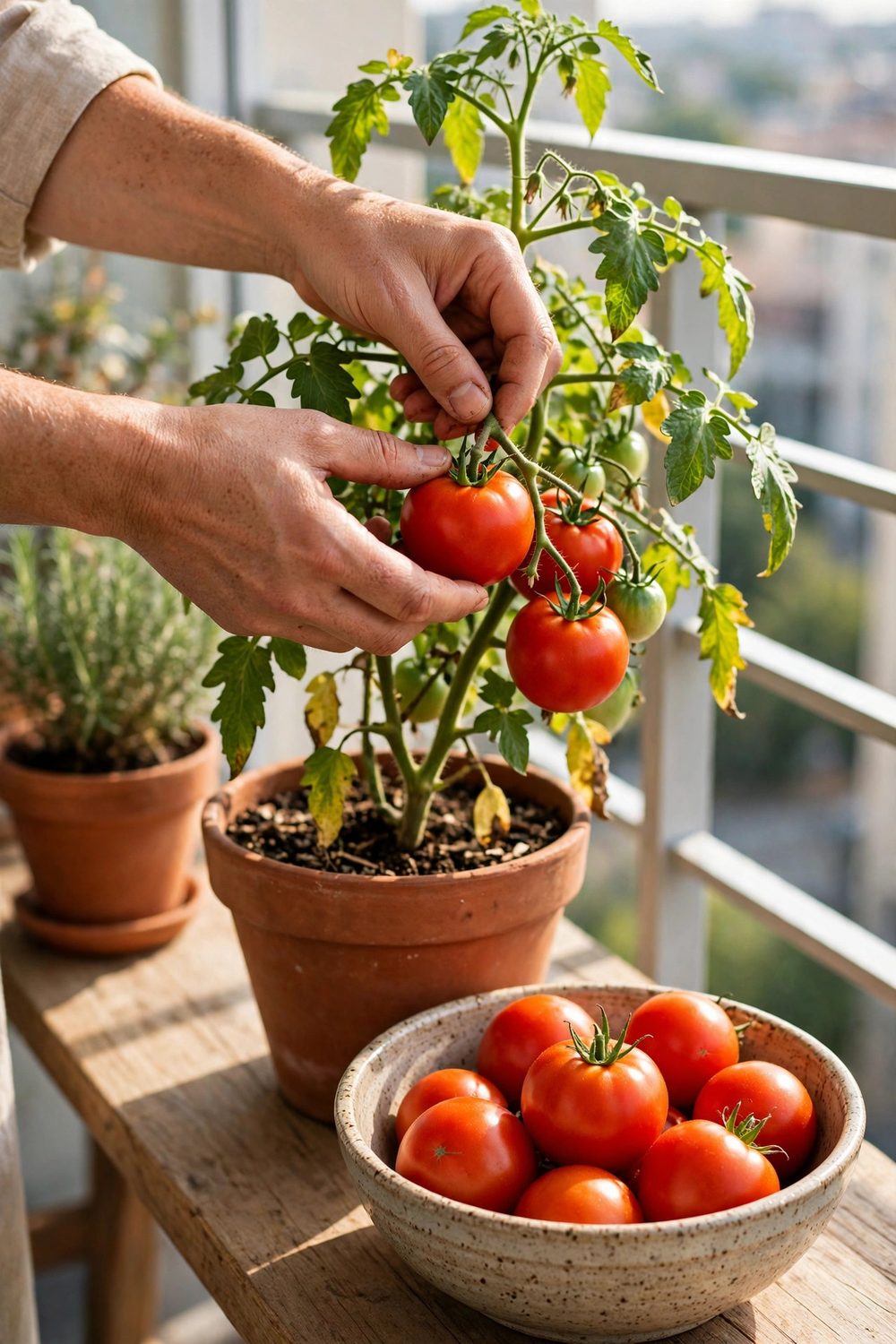
Pick ripe fruit in the warm part of the day for the best flavor. Twist gently, or snip the stem if the fruit holds tight.
At the end of the season, pick full-size green fruit that has turned pale and shiny. Ripen it indoors at room temperature in a paper bag or box.
Never put unripe tomatoes in the fridge, since cold stops ripening. Check the bag every few days and remove any fruit that softens or spots.
A ripe banana or apple in the bag gives off gas that helps green fruit turn. Keep the bag out of direct sun, in a warm room, and open it daily for air.
Start with one pot, one plant, and the sunniest spot you have. Water it well, feed it when flowers come, and tie it in as it grows.
Check the plant each morning for the first two weeks. That short habit catches dry soil, loose ties, and new growth before small issues grow into big ones.
You will learn your balcony in one season and pick fruit you grew yourself. Save this to your tomato board for later, and start with the pot you already own.


