

Late-Summer Tomato Rescue: Leggy Plants in Pots
By late summer, a potted tomato can look tired, tall, and thin, with long bare stems and leaves clustered at the top. That is the moment a late summer tomato rescue for leggy plants in pots still works, if you act with care.
The goal is not a perfect plant. The goal is a shorter, steadier plant that puts its energy into fruit already forming and into one or two strong new sideshoots.
A full rescue takes about 45 minutes per plant, plus short checks over the next two weeks. The work is pruning, feeding, watering, and tying, all with tools you likely own.
Work through the steps in order. Read the plant first, cut once with a clear plan, then reset food, water, and support so the new growth stays compact.
Time: 45 minutes per plant, plus 10 minutes of checks every few days for two weeks · Difficulty: Easy to moderate, mainly careful pruning
What You Need
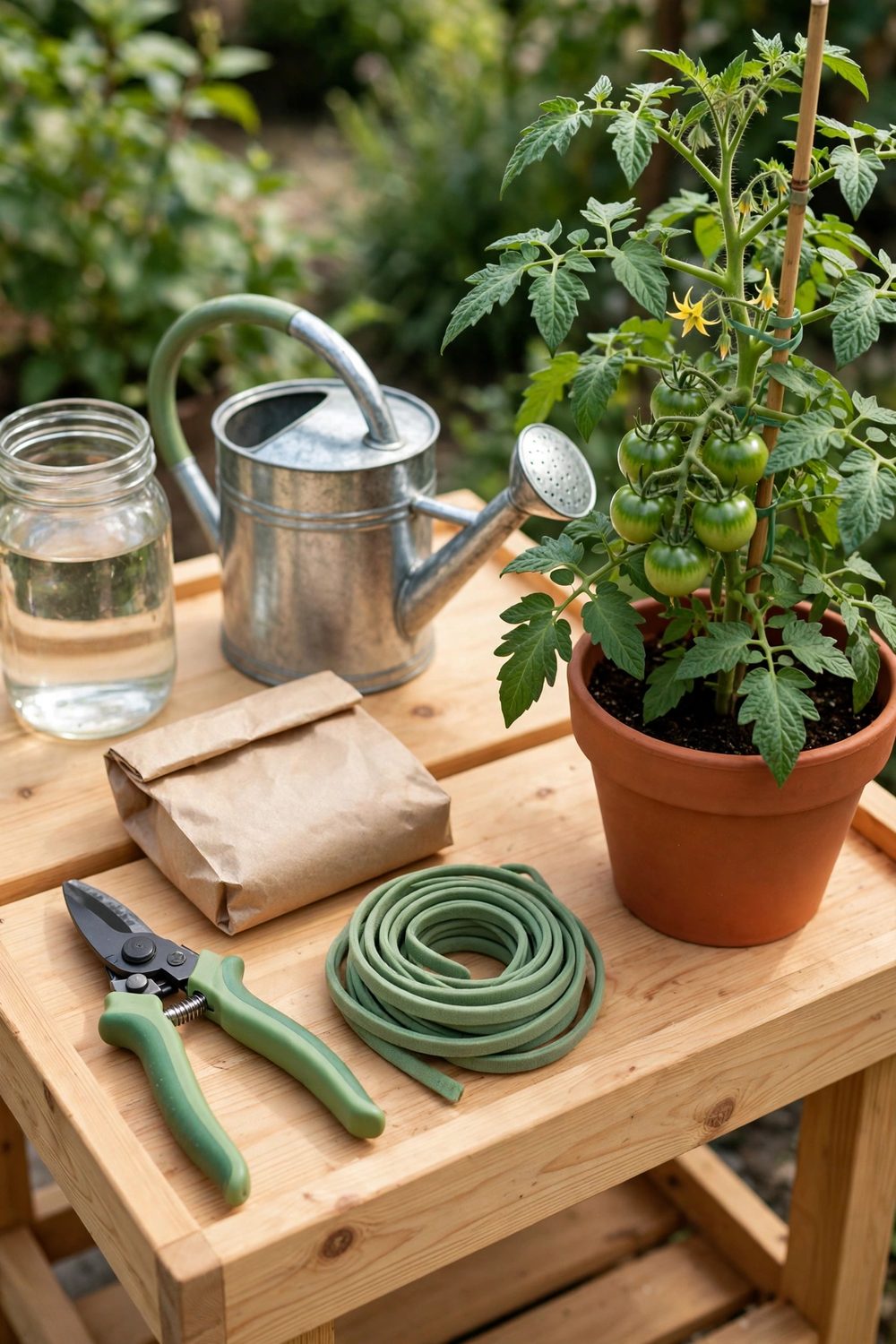
Gather everything before you start, so the plant is cut, fed, watered, and tied in one calm session. Working in one pass means fewer open cuts left untied and less stress on the plant.
- Clean bypass pruners or sharp snips: for clean cuts on stems up to about 5/8 inch (1.6 cm) thick. Wipe blades with soap and water, then dry them before you start.
- Tomato feed: a water soluble tomato food used at label strength. It supports fruit and new sideshoots after pruning.
- Soft plant ties: wide, gentle ties that hold stems to a cage or stake without cutting into them.
- A sturdy support: the cage, stake, or trellis already in the pot, checked for wobble before you retrain growth.
- Watering can: for a deep, slow soak at the base after pruning and feeding.
- Mulch: a 2 inch (5 cm) layer of straw, shredded bark, or clean compost to hold moisture steady.
- A clean jar of water: for rooting one vigorous sucker as a fresh plant.
- A small pot with fresh potting mix: about 4 inches (10 cm) wide, ready for the rooted sucker later.
Check the pot while everything is out. A standard indeterminate tomato needs at least a 5 gallon (19 litre) pot, and 10 gallons (38 litres) is kinder in late summer heat.
Lay the ties and feed out in the order you will use them. Pruners first, then water and feed, then ties, then the jar for the sucker. Order on the table saves handling the plant twice.
Skip any tool that crushes stems. Anvil pruners and dull scissors tear tomato stems, and torn cuts heal slowly and invite rot in warm, humid air.
Read the Plant Honestly Before You Cut
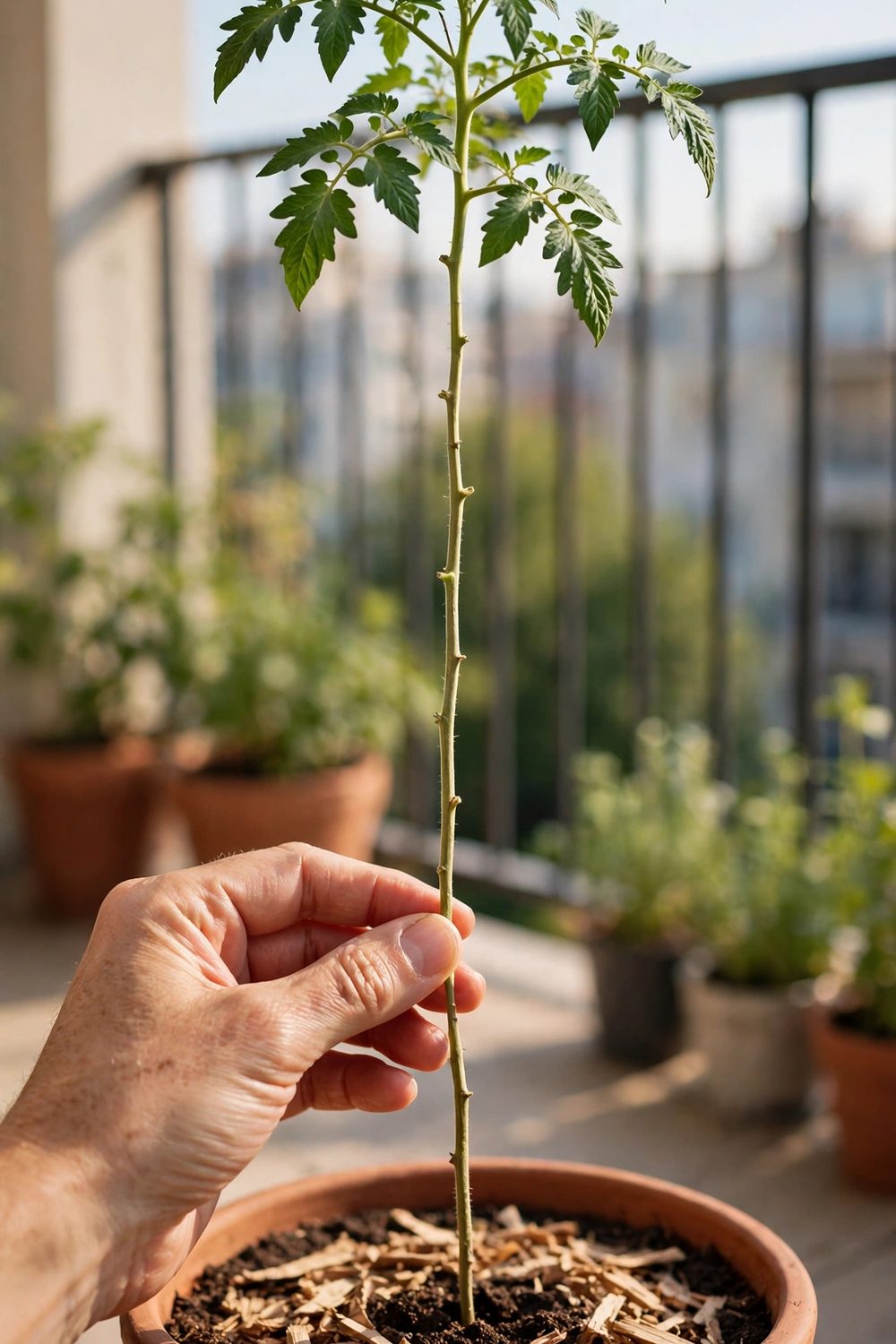
Stand back and look at the whole plant. Legginess in late summer means long gaps between leaf joints, thin stems, and most leaves held high, often after weeks of heat, crowding, or low light.
Check the base and main stem. A firm green stem, healthy leaves, and small fruit mean the plant is stretched, not finished. That plant is worth rescuing today.
Look for warning signs that change the plan. Black stem patches, spotted leaves that spread fast, or a sour smell at the base point to disease, not legginess.
Prune Back to a Strong Sideshoot
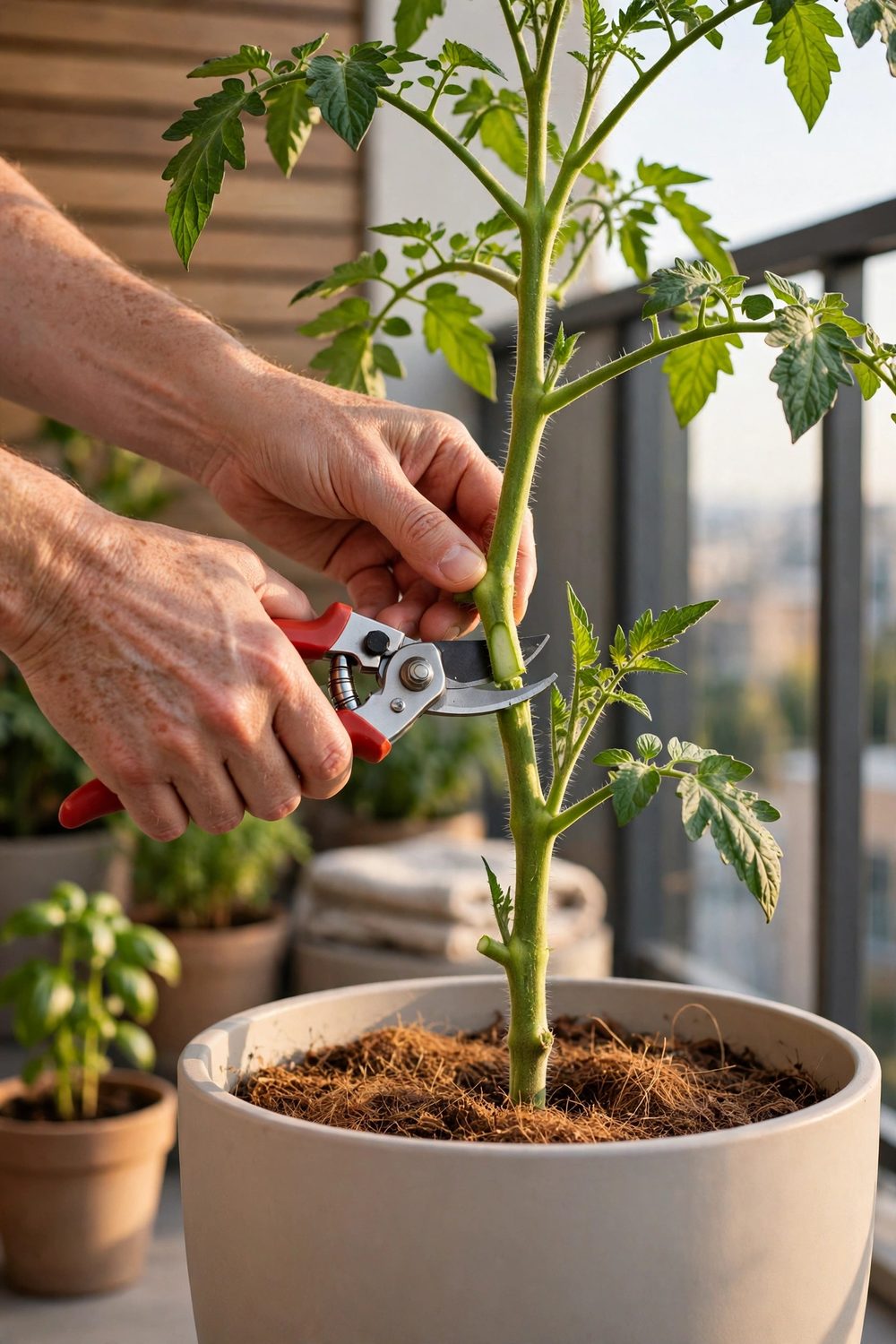
Find a strong sideshoot low on the plant, one with thick stem, deep green leaves, and, ideally, a flower truss. That shoot becomes the new leading growth after the cut.
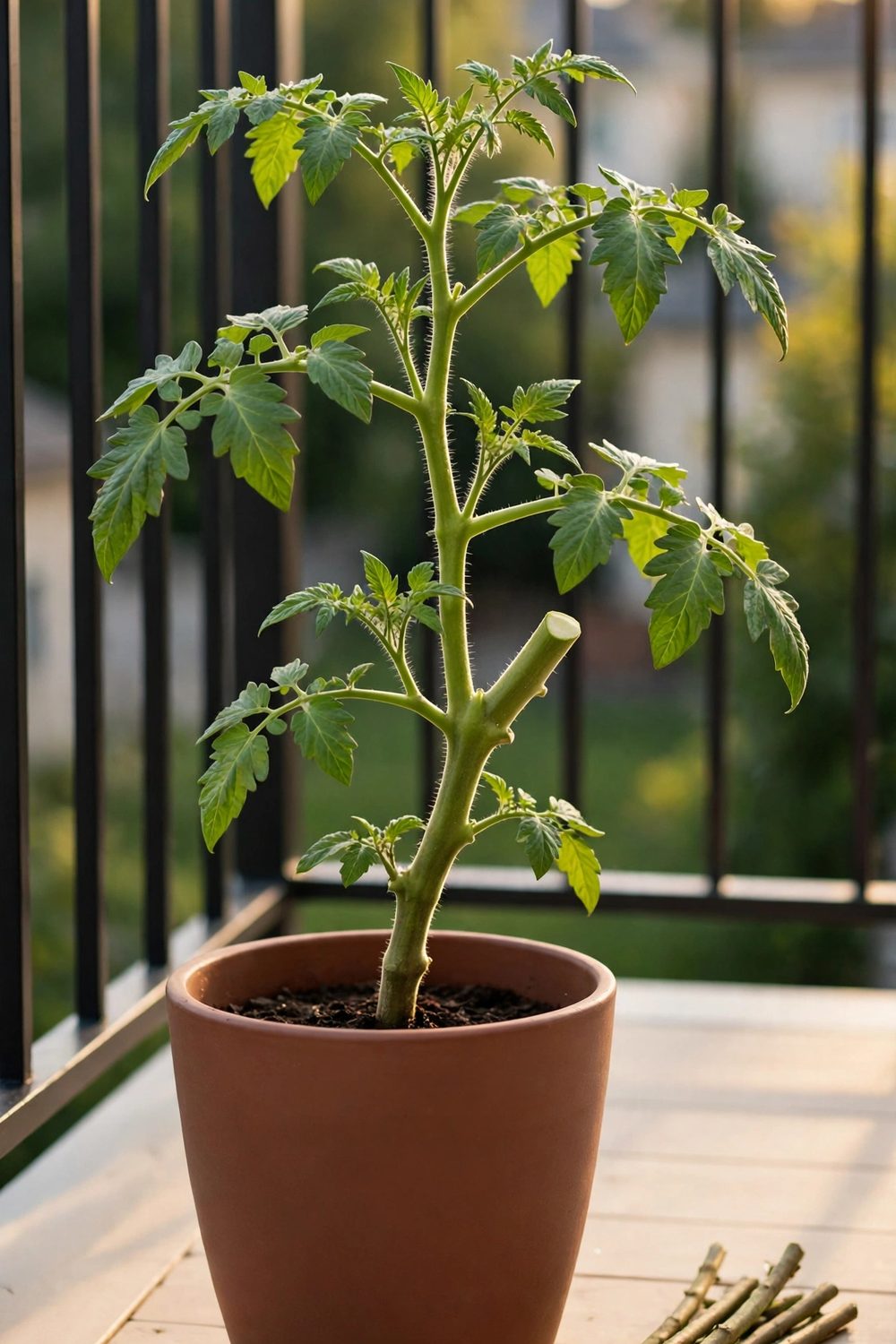
Cut the tall main stem just above that sideshoot, leaving a short stub of about 1/4 inch (6 mm). Cut at a slight angle so water runs off the stub.
Remove long, bare side stems that carry no fruit and little leaf. Keep leafy growth that shades fruit, since exposed tomatoes can scald in strong late summer sun.
Work on a dry morning where you can. Wet foliage spreads disease from blade to plant, a point covered in the guide to pruning tomato suckers in containers.
Reset Feed and Water From Today
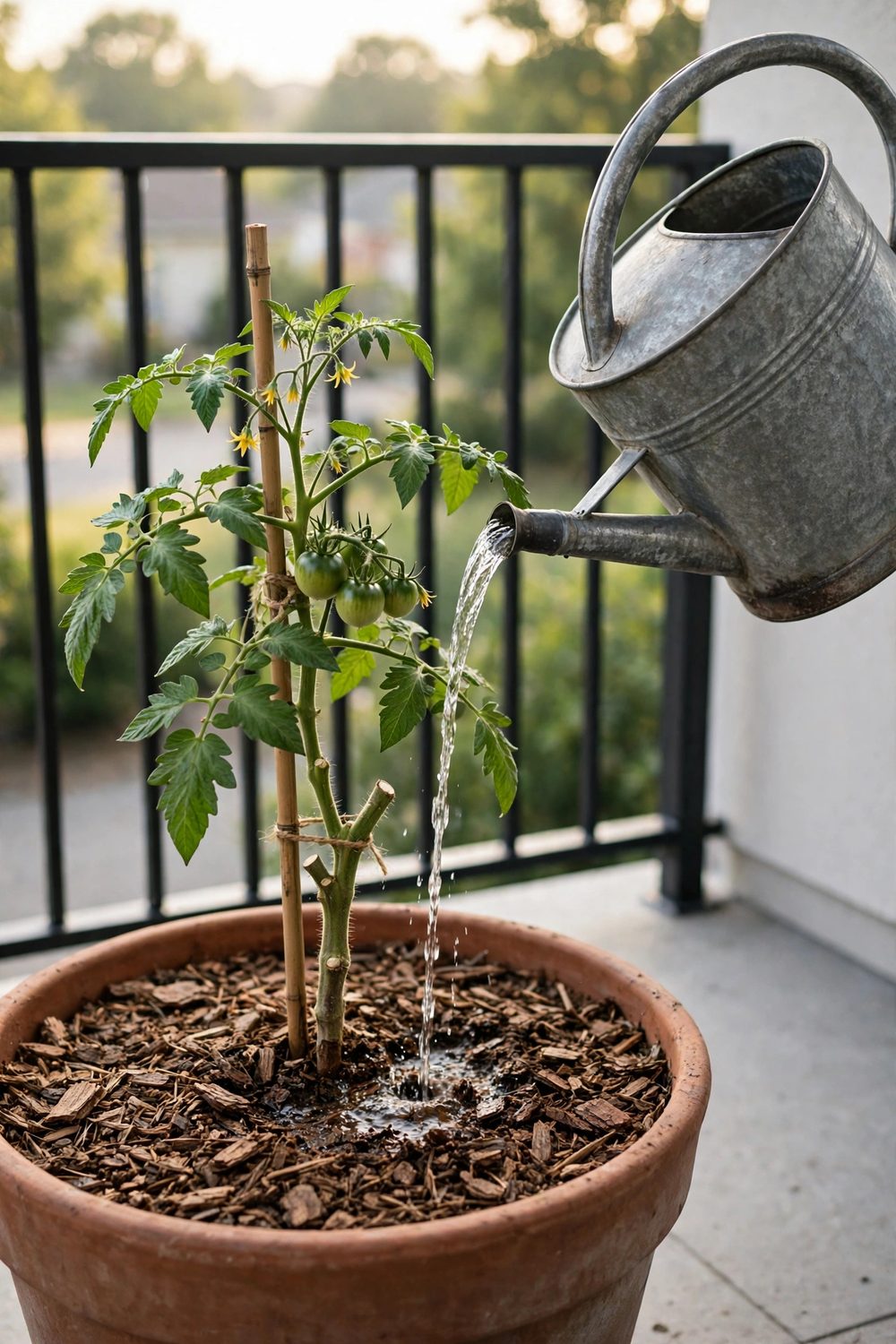
Water the pot deeply at the base until it drains from the bottom. A pruned plant in a dry pot cannot push new growth, and late summer pots dry fast.
Feed with tomato food at label strength, never stronger, once the mix is moist. Feeding dry roots can scorch them, so water first, feed second, every time.
Set a steady rhythm from today. Check moisture daily, water when the top 1 inch (2.5 cm) feels dry, and repeat feed every 7 to 14 days.
Steady moisture matters more than extra feed. The simple rules for how often to water vegetables in pots apply well to a rescued tomato.
Retrain the Plant Onto Its Support
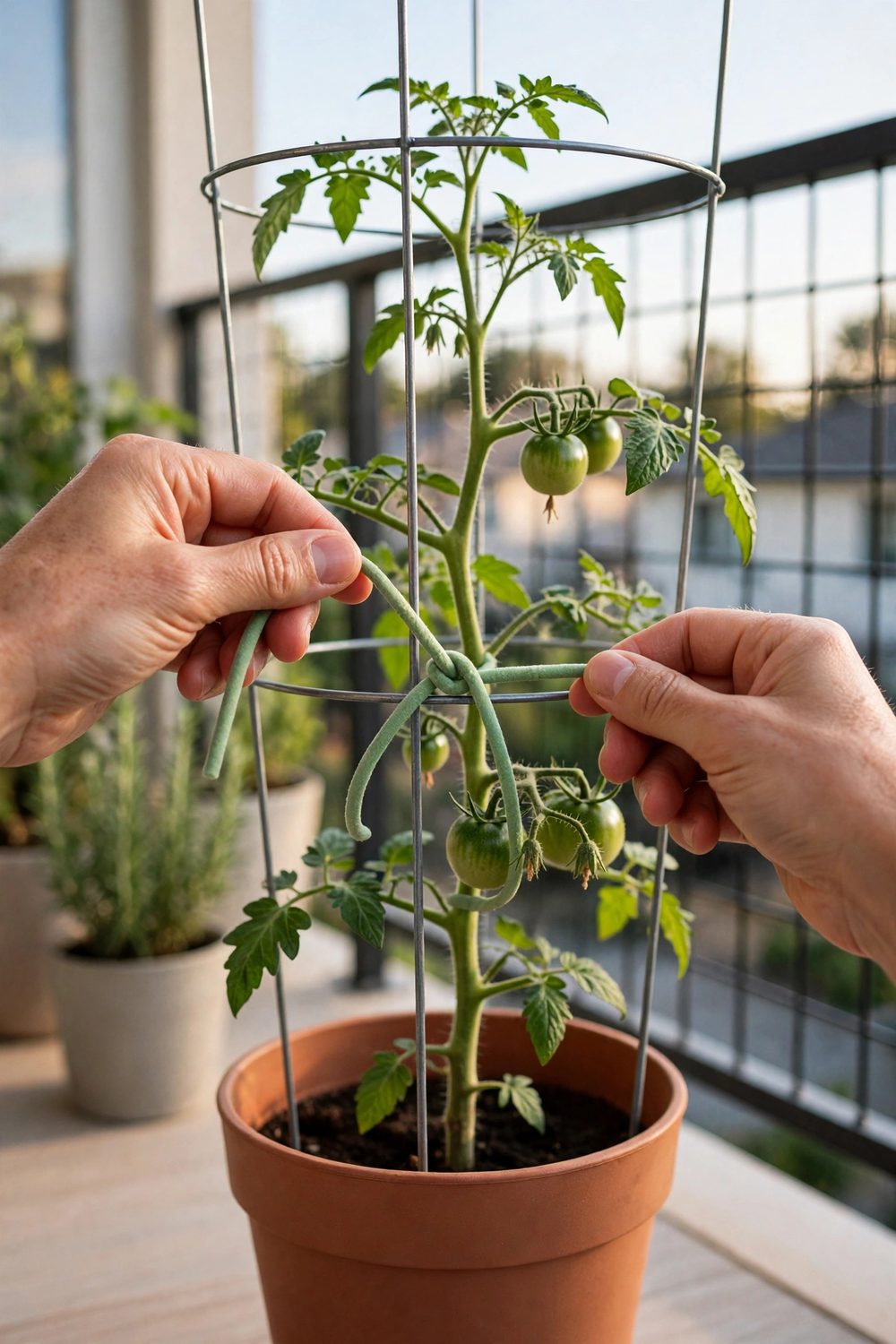
Push the cage or stake firm before you tie anything. A support that leans under a fruit laden stem will pull the whole plant over in wind.
Tie the kept sideshoot and the main fruiting stems to the support with soft ties. Loop each tie in a loose figure of eight, with room for the stem to thicken.
Space ties about every 8 to 12 inches (20 to 30 cm) up the stem. Tuck stray stems inside the cage rather than bending them hard against the wire.
Pro Tip: Tie after watering, not before. A watered plant is heavier and sits at its true angle, so ties set then hold the real weight.
Root a Vigorous Sucker for a Fresh Plant
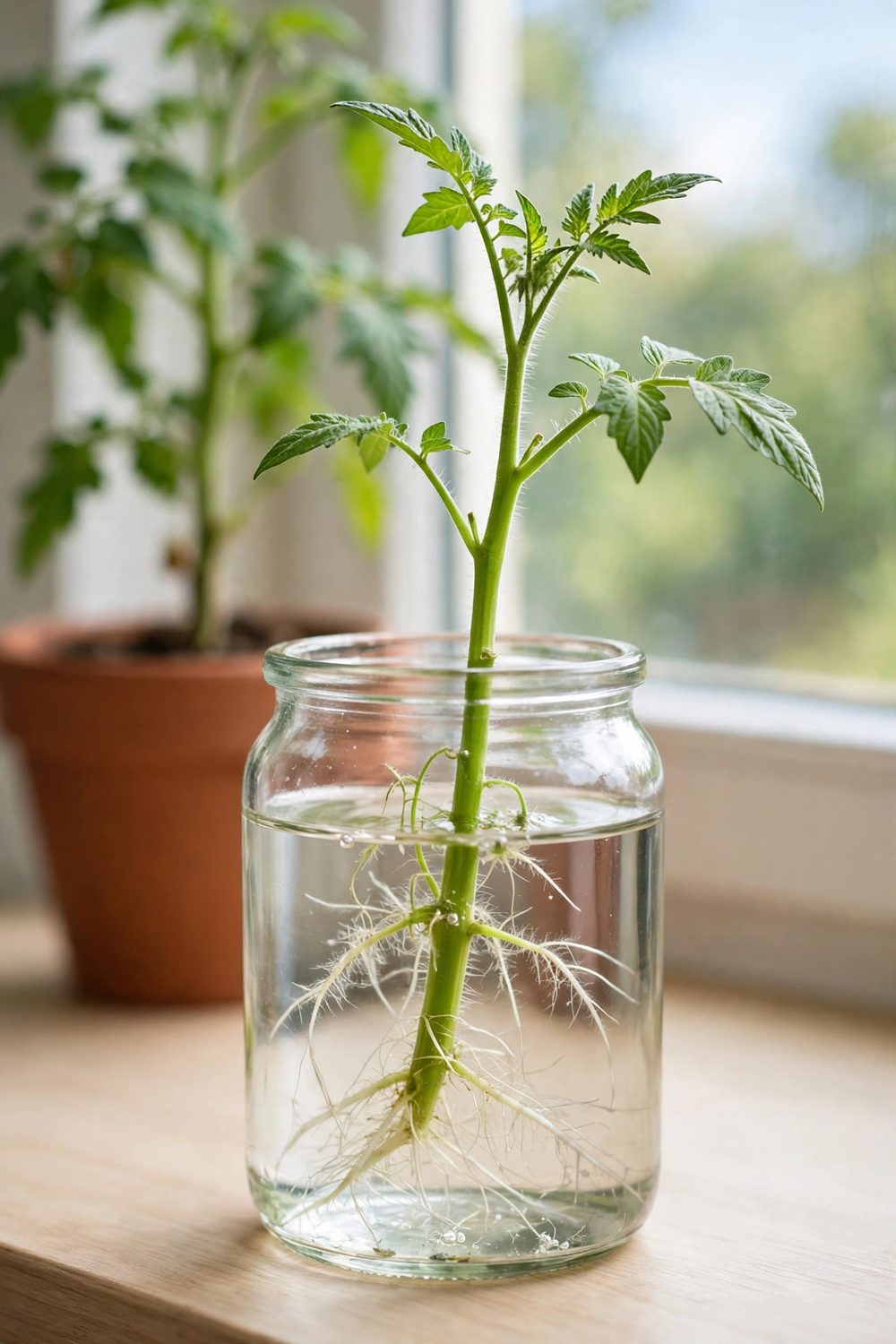
Choose one vigorous sucker about 4 to 6 inches (10 to 15 cm) long, thick, and deep green. A strong sucker roots fast and gives you a fresh plant for free.
Snap or cut it cleanly, strip the lower leaves, and set it in a clean jar of water on a bright sill out of direct sun. Change the water every two days.
Roots often show within 7 to 10 days. Pot it up at about 2 inches (5 cm) of root, water it in, and keep it shaded for three days.
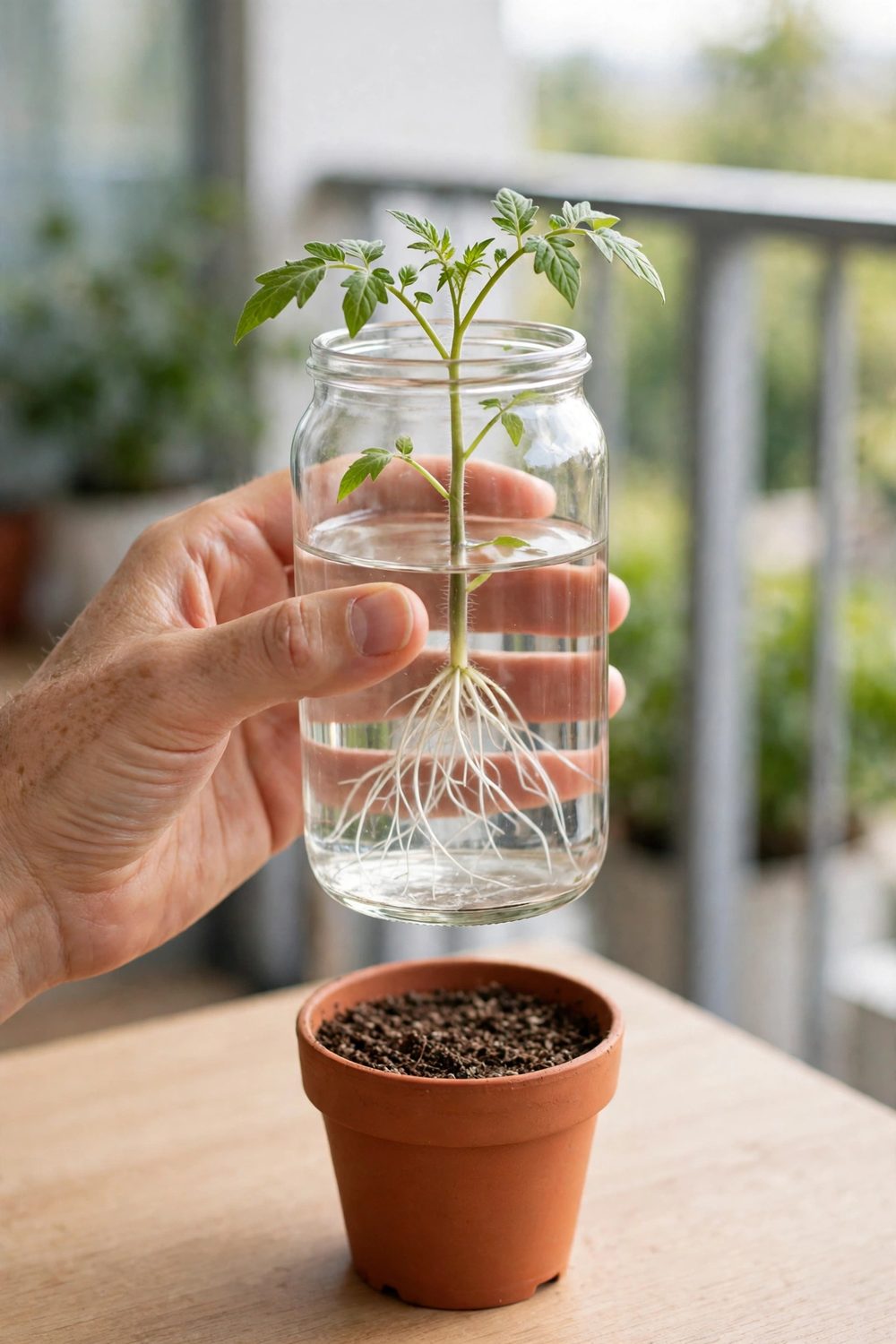
This young plant will not match a spring sowing for size. In a warm spot it can still give cherry fruit, and it costs nothing but a jar and patience.
Decide Your Cut-Off Date by First Frost
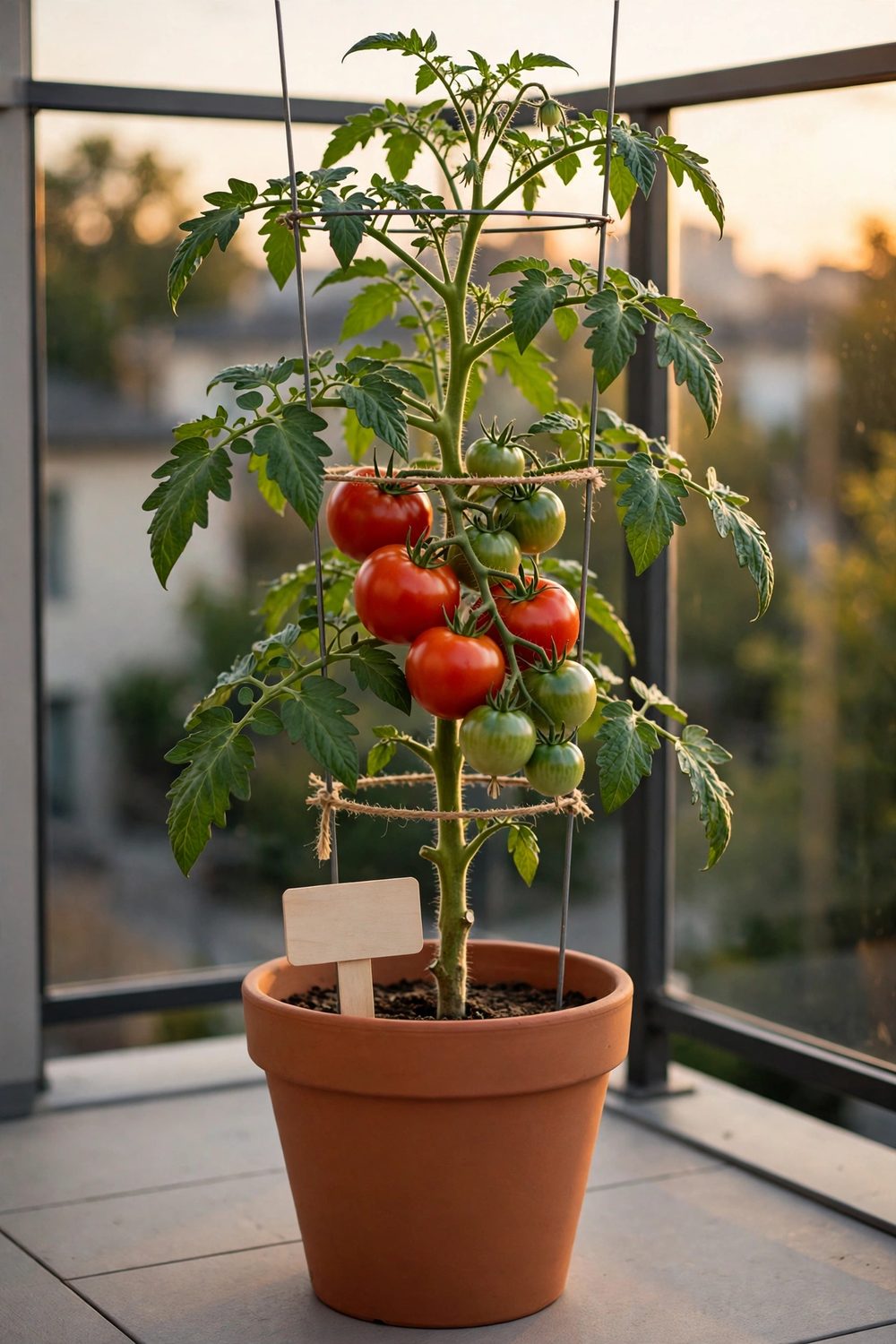
Count back from your usual first frost date. Fruit that is full size and showing a blush by then can ripen, while tiny new fruit in the last few weeks rarely will.
Set a cut-off about 4 weeks before first frost. After that date, pinch out new flower trusses so the plant feeds the fruit it already holds.
Near the end, pick mature green fruit and ripen it indoors at room temperature. The guide to green tomatoes at season end covers that stage in full.
Write the cut-off date on a plant label and stick it in the pot. A date you can see stops hopeful extra feeding of flowers that will never carry ripe fruit.
Troubleshooting
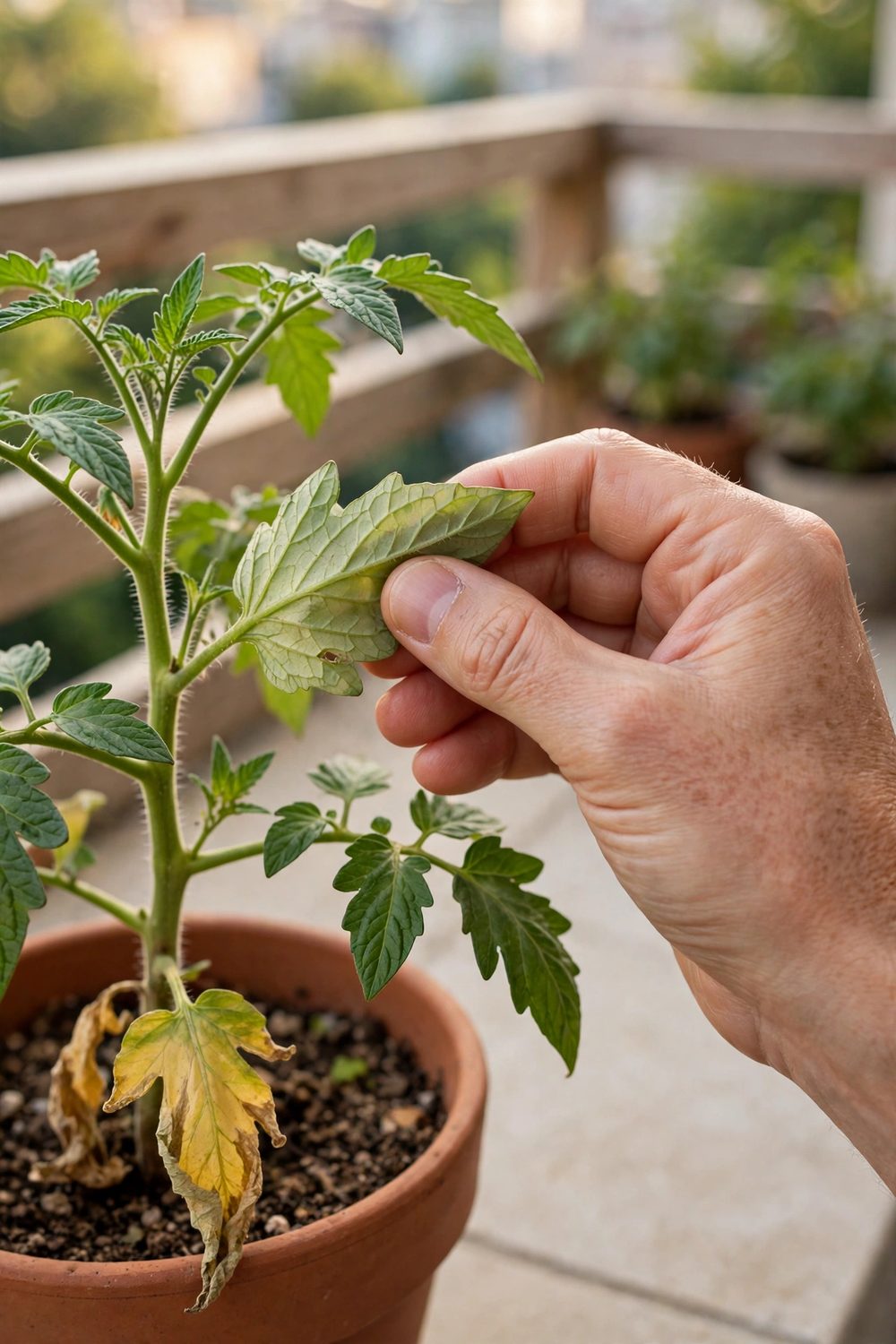
The rescue fails and the plant fades. Sometimes the roots are spent, the pot is too small, or heat has worn the plant out. If stems soften and leaves drop daily, accept the loss.
Compost healthy material only, wash the pot, and start fresh next season with a bigger pot. Many late failures trace back to the container gardening mistakes that kill beginner vegetables, above all small pots.
The plant is diseased, not leggy. Leggy plants have clean, green, thin growth. Diseased plants show black or brown patches, yellow halos around spots, mould, or stems that weep and smell.
Do not prune a diseased plant back and hope. Remove badly affected growth, bin it rather than composting it, clean your blades, and keep water off the leaves from then on.
A rescued plant in a very small pot may also stall. Roots packed tight against hot pot walls drink fast and feed poorly, so water swings widen and growth stops.
No new growth appears. Give a healthy rescued plant 10 to 14 days before you judge it. New sideshoots start small, often in a leaf joint you overlooked at pruning time.
Shade can also stall a rescue. A plant tucked behind a taller neighbour may get light on paper but miss the strong midday hours tomatoes need to rebuild leaf and flower.
If nothing stirs, check the basics in order. Is the pot draining, is the plant in 6 to 8 hours of sun, and has it been fed since the cut? Fix one gap, then wait again.
Heads Up: Never prune a wet, diseased plant and then cut a healthy one with the same blades. Clean blades between plants, every time, without exception.
Frequently Asked Questions
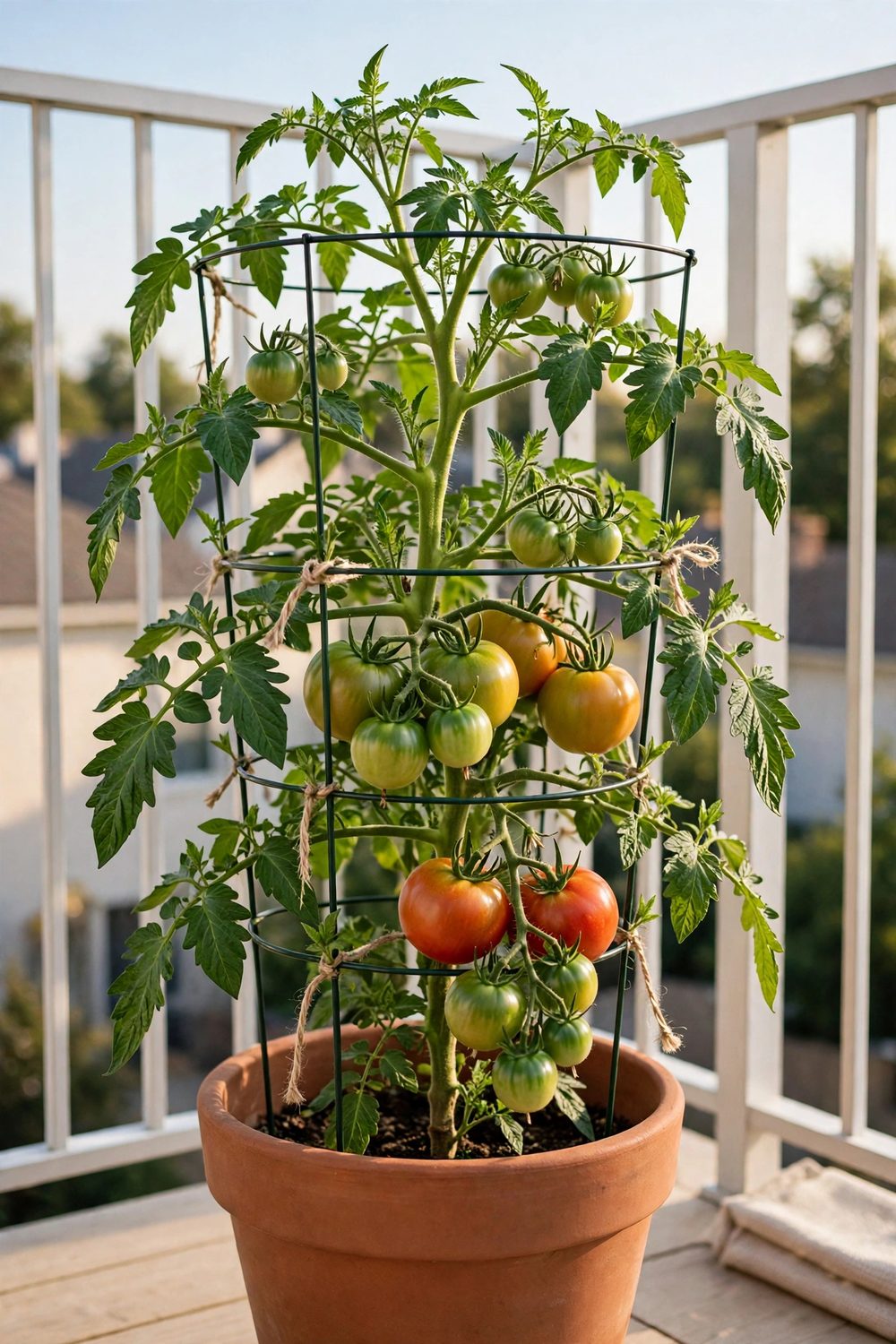
How much can I cut off a leggy tomato plant at once?
Cut back to one strong sideshoot and remove bare, fruitless stems, but keep enough leaf to feed the plant.
As a guide, avoid removing more than about one third of the leafy growth in one session.
If the plant needs more work, stage the rest over the following week, a little at a time.
Will a rescued leggy tomato still produce fruit?
Yes, if the stem is healthy and enough season remains. Fruit already set keeps ripening, and the kept sideshoot can flower again in warm weather.
Expect a smaller, later crop than a compact plant gave in midsummer, not a full second season. Cherry types usually respond fastest, since their fruit needs less time to size up and ripen.
Why did my potted tomato get leggy in late summer?
Heat, crowding, and fading light are the usual mix. Plants stretch toward light, drop lower leaves in heat, and grow thin when feed runs out in a small pot.
Crowded pots on a balcony rail are a common case by August. A plant that leaned over a neighbour all summer often shows the longest bare stem of the group.
Can I rescue a leggy determinate tomato the same way?
Use a lighter hand. Determinate plants fruit on a set frame, and hard pruning cuts the harvest. Remove only bare, dead, or diseased stems, tidy the support, reset feed and water, and let the plant finish its natural crop.
Should I remove all the suckers after the rescue?
No. Keep the strong sideshoot you pruned back to, plus one more at most on an indeterminate plant. Remove small new suckers weekly so energy goes to fruit. The aim is a plant with one or two clear leaders, not a bare pole.
What if first frost is only two weeks away?
Skip the hard prune. Tie the plant up, keep watering steady, and protect the fruit it holds.
Pick mature green fruit before the frost and ripen it indoors at room temperature, never in the fridge while it is still unripe. A rooted sucker is also a poor bet this late, unless you can keep it warm and bright indoors.
Quick Reference
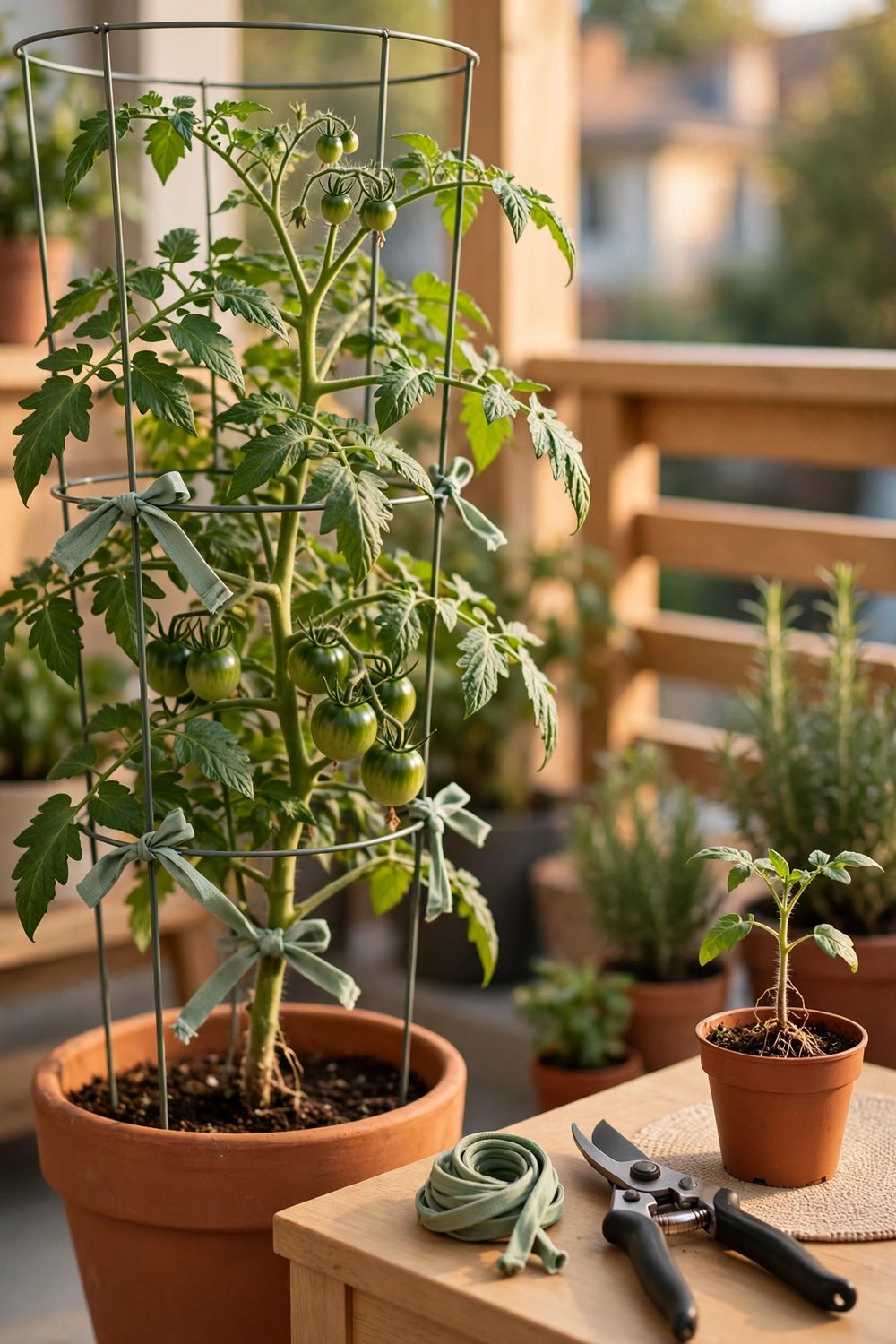
Keep this checklist on your phone or taped inside the shed door. Work it in order each time a potted tomato outgrows its shape late in the season.
- Read first: firm green stem and healthy leaves mean leggy. Black patches and spreading spots mean disease.
- Cut: prune back to a strong sideshoot, leaving a 1/4 inch (6 mm) stub, on a dry morning.
- Keep: leaf that shades fruit, plus one or two clear leading stems only.
- Water: deep soak at the base, then check daily and water when the top 1 inch (2.5 cm) is dry.
- Feed: tomato food at label strength every 7 to 14 days, always onto moist mix.
- Mulch: 2 inches (5 cm) over the surface once the plant is tied in.
- Tie: soft ties every 8 to 12 inches (20 to 30 cm), loose figure of eight loops.
- Root a sucker: 4 to 6 inches (10 to 15 cm) long, in water, potted at 2 inches (5 cm) of root.
- Cut-off: pinch new flowers from about 4 weeks before first frost.
- Judge the rescue: allow 10 to 14 days for new sideshoots to show before calling the whole rescue attempt a failure.
A leggy potted tomato in late summer is not finished. Read it honestly, cut back to strength, and reset feed, water, and support on the same day.
That one calm session gives the plant a clear shape and a fair run at ripening the fruit it holds. Rooting one good sucker adds a fresh plant at no cost.
Save this late summer tomato rescue for leggy plants in pots guide to your tomato board, and work the checklist the next time a plant outgrows its cage.


