

Green Tomatoes at Season End: A Ripening-Indoors Guide
The vines look tired, the nights feel cool, and the pots still hold a load of green fruit. That is the moment this green tomatoes at season end ripening indoors guide is built for.
Most of those tomatoes can still turn red on your kitchen counter. They need the right pick stage, steady warmth, and a few calm checks each week.
The work takes about ten minutes to set up, then a few minutes every few days. No skill is needed beyond sorting fruit by color and feel.
This guide also covers the honest end of the job. Some fruit never ripens, and that fruit still has a good use in the kitchen.
Time: 10 minutes to pick and sort, then 2 to 5 minutes per check · Difficulty: Easy
What You Need
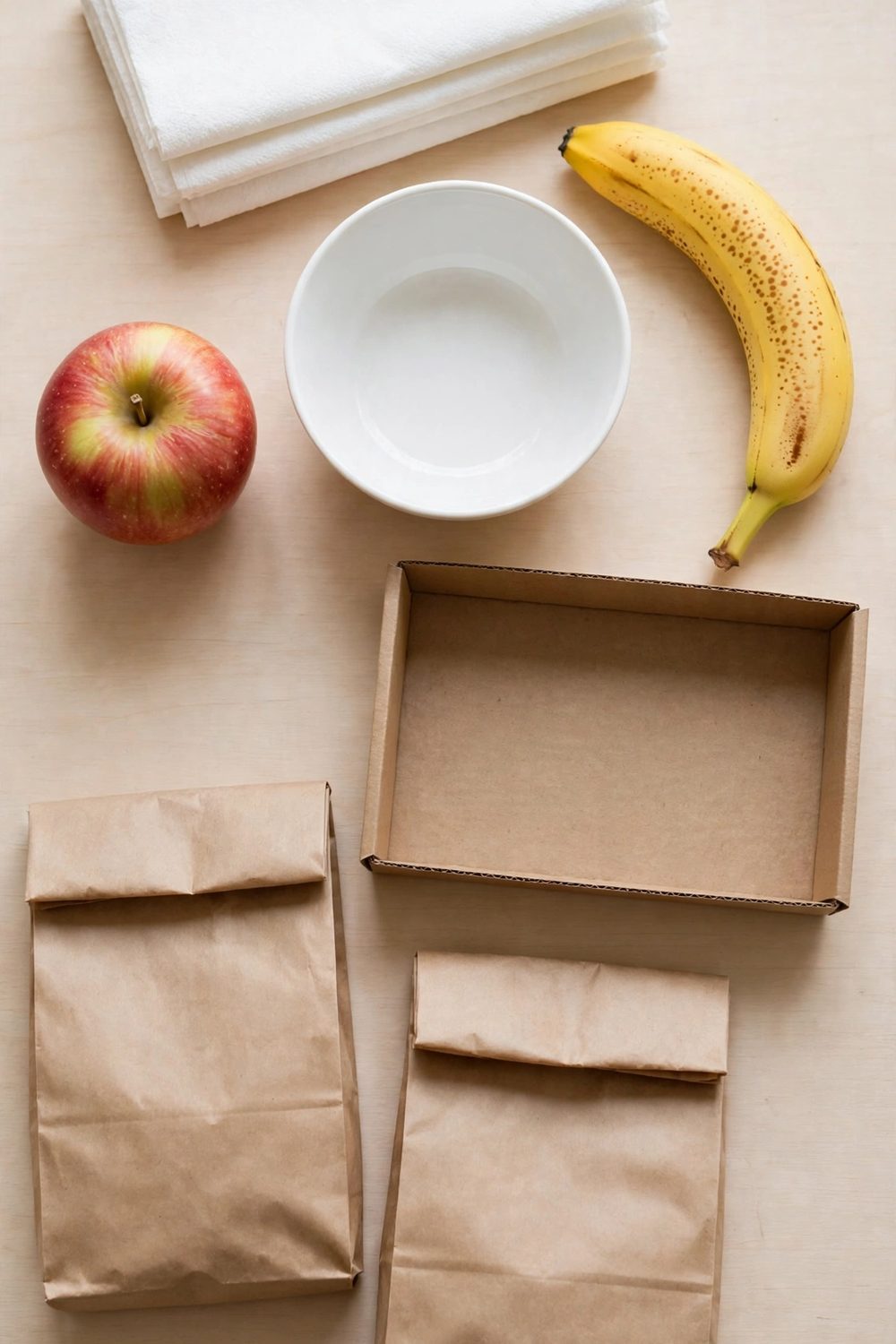
- Paper lunch bags: plain brown bags hold the ripening gas around the fruit while paper still breathes. One bag holds two or three tomatoes well.
- A shallow cardboard box: a low box suits a big harvest. Fruit sits in one layer, so nothing gets crushed at the bottom.
- A ripe banana or apple: ripe fruit gives off ethylene gas. That gas is the signal that tells a mature tomato to start ripening.
- A clean bowl or tray: a wide, shallow bowl keeps sorted groups apart on the counter and catches any drip early.
- Soft cloth or paper towels: a thin layer under the fruit stops bruising and soaks up small spots of moisture.
- A marker and small notes: a date on each bag or box tells you which group went in first at a glance.
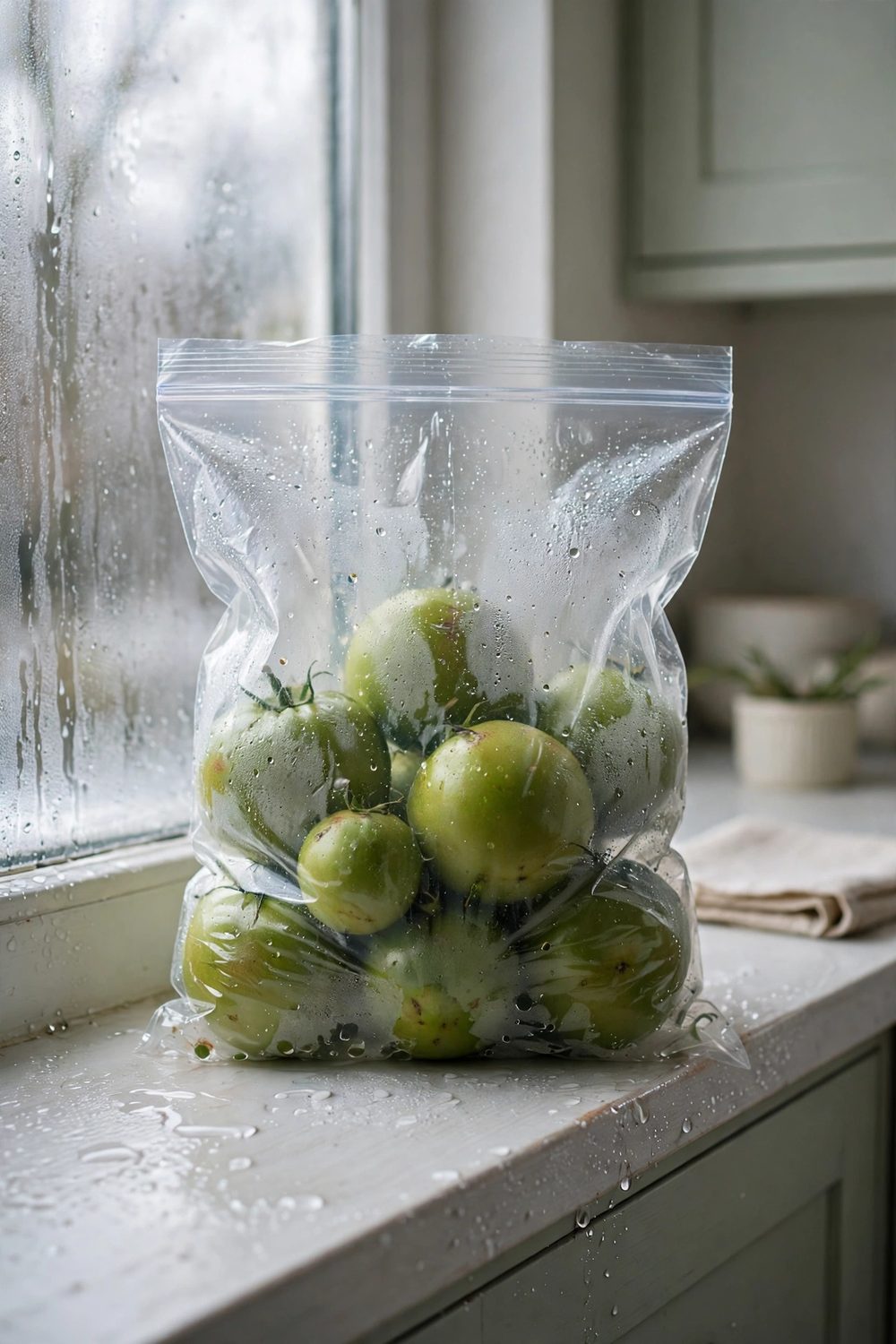
Skip plastic tubs with tight lids for this job. Sealed plastic traps damp air around the fruit, and damp air is where soft spots start.
Keep a small plate nearby for finished fruit. Ripe tomatoes move off the counter fast once color turns, and a ready plate saves a scramble.
Pick Tomatoes at the Blush or Mature-Green Stage
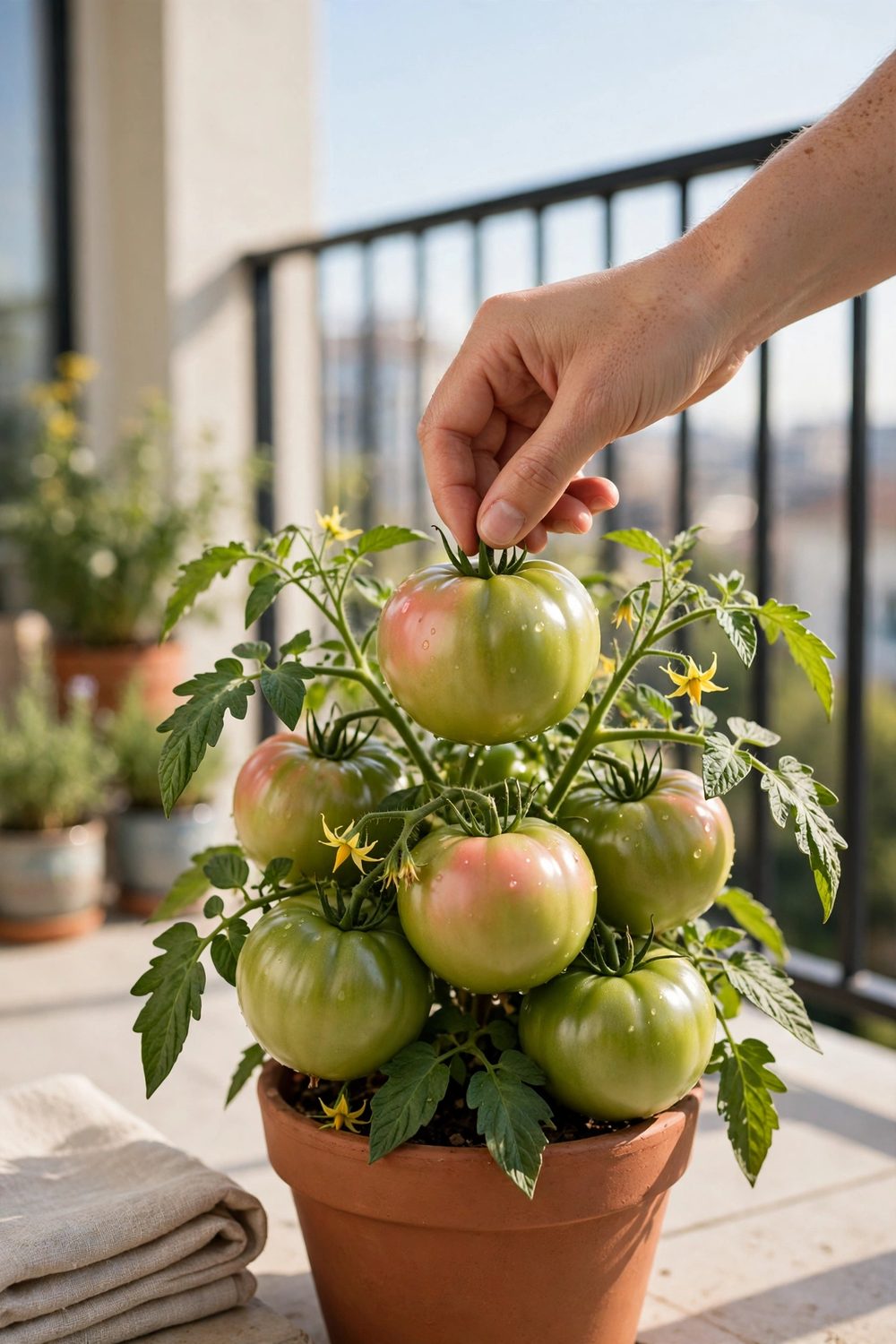
Start with fruit that has reached full size for its type. A tomato picked too small and pale will sit green for weeks and then shrivel.
Look for a shiny skin and a light green or white-green color. The blossom end often shows the first blush of pink, yellow, or orange.
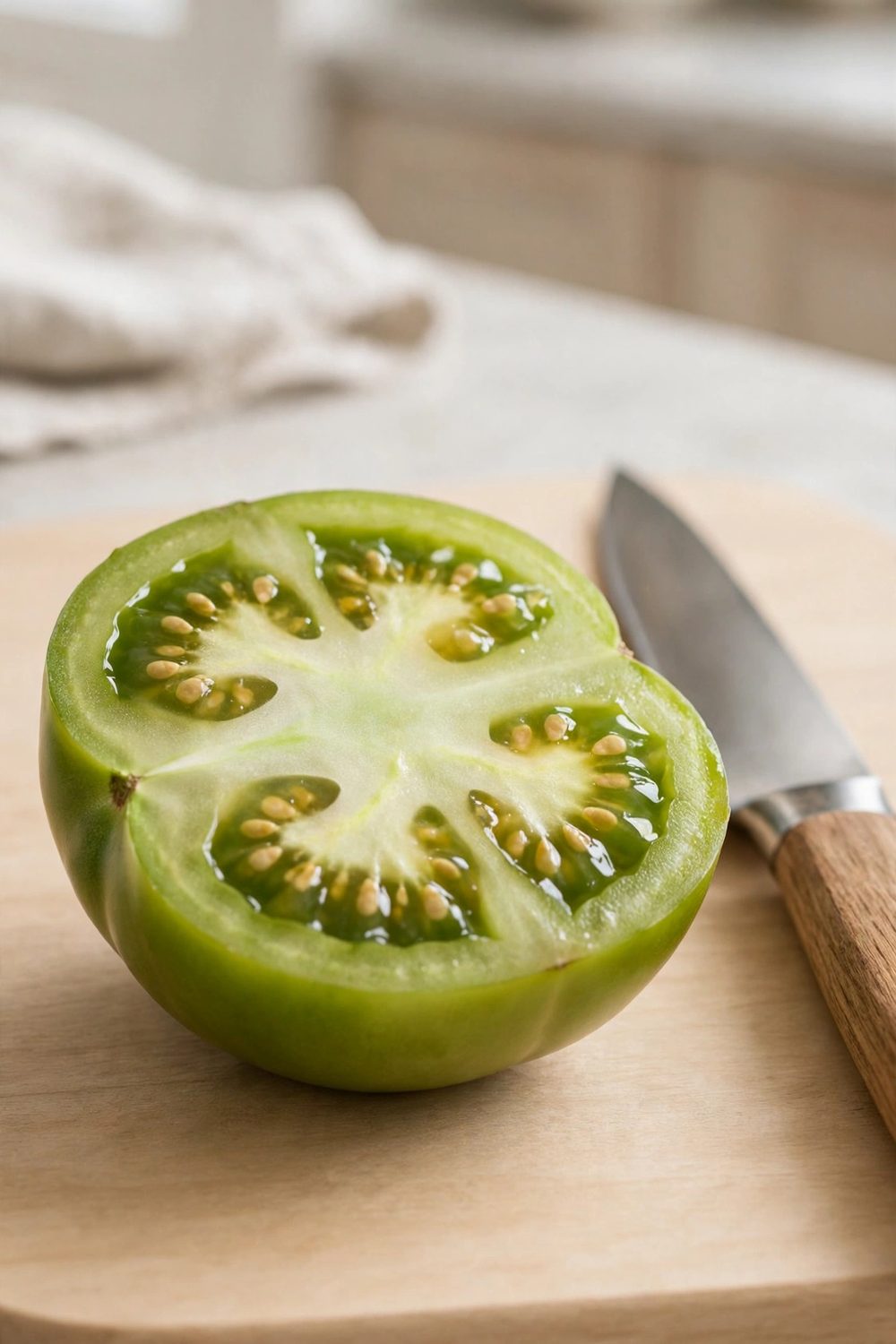
Cut one test fruit open if you are unsure. Inside, the seeds should sit in soft, gel-filled pockets, not in firm, pale flesh.
That gel is the clearest sign the fruit is mature. Mature-green fruit can ripen off the vine because the seeds inside are fully formed.
Pick on a dry part of the day when you can. Wet fruit goes into bags damp, and damp fruit spots faster indoors.
Twist each tomato gently, or snip the stem with clean scissors. A short stem stub is fine, but pull off any long stem that could poke a neighbor.
Bring everything in before a hard frost hits the pots. A light cool night is fine, but frozen fruit will not ripen well afterward.
If your plants still carry tiny, dark green fruit, leave it out of this batch. It belongs with the never-ripen group covered in the last step.
Sort Tomatoes by Ripeness Stage
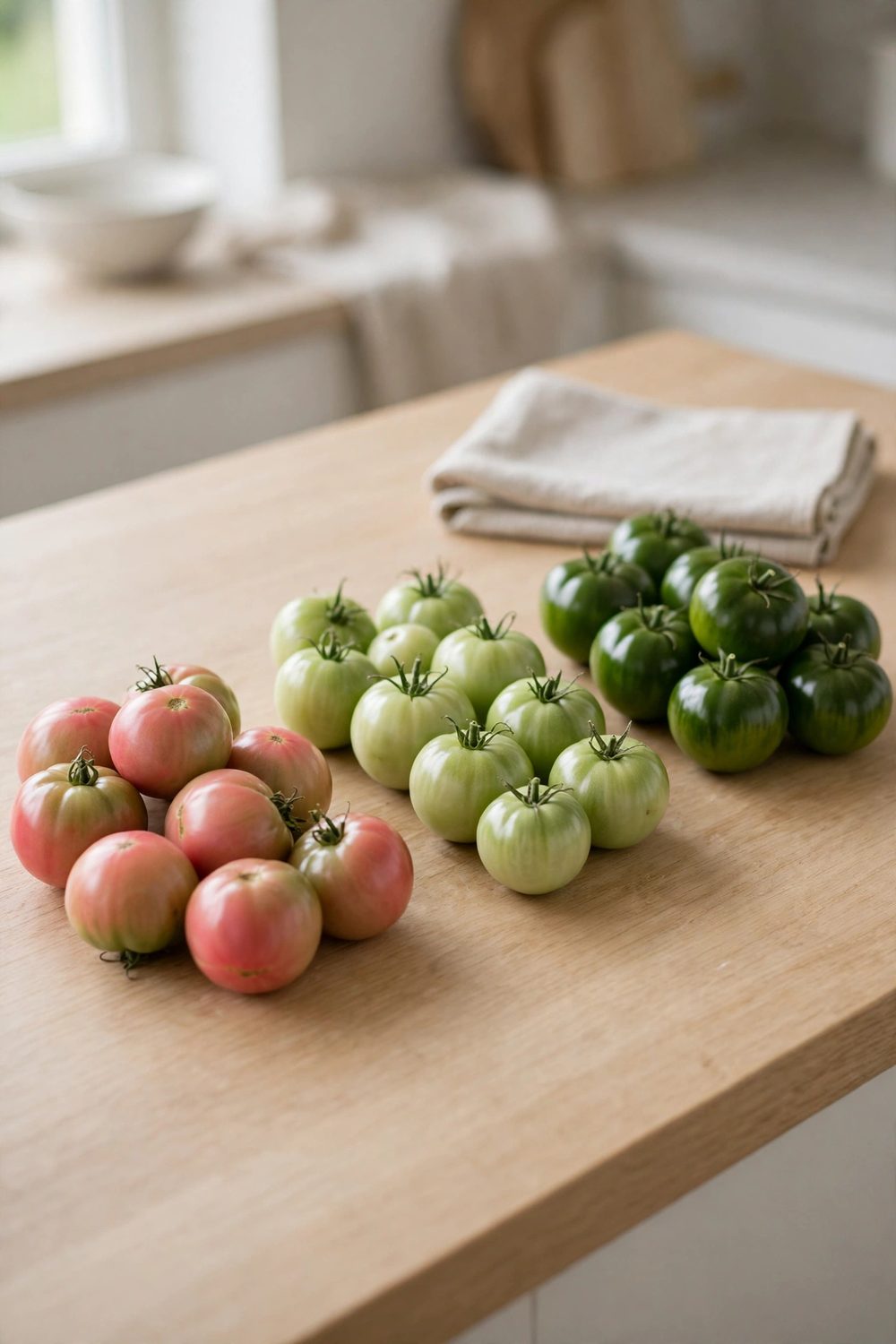
Spread the harvest on a clean counter or table. Work in good light so small color changes are easy to spot.
Make three groups: blush fruit with clear color, mature-green fruit with a pale shine, and deep green fruit with no shine at all.
Blush fruit ripens first, often within three to seven days indoors. Keep it in its own bag so ripe fruit is easy to find.
Mature-green fruit takes longer, often one to three weeks. It still ripens well, it just needs more patience and more checks.
Set deep green, dull fruit aside for cooking. It rarely colors up, and mixing it in slows down your checks on the good fruit.
Remove any tomato with a crack, a soft patch, or a dark spot. One bad fruit in a closed bag can spoil the rest fast.
Wipe each keeper dry with a soft cloth. Do not wash the fruit at this stage, since extra water raises the risk of spots.
Sorting feels slow for ten minutes and saves days later. Each bag then holds fruit that ripens at roughly the same pace.
For more end-of-season plant care, see this guide to late-summer tomato rescue for leggy plants in pots before you clear the vines.
Set Up the Paper Bag or Box Method
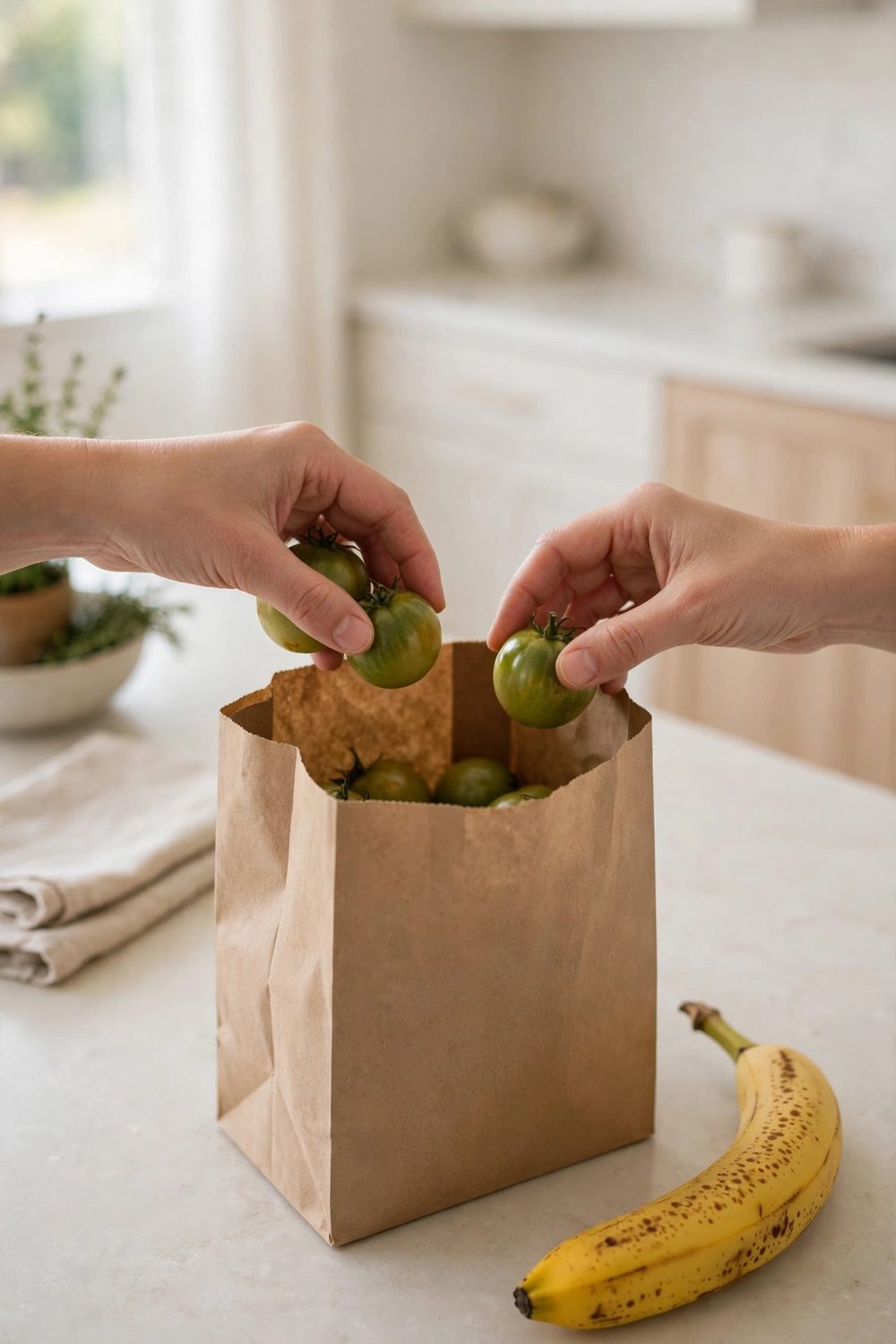
For a small harvest, place two or three tomatoes in one paper lunch bag. Add one ripe banana or one ripe apple to the bag.
Fold the top of the bag over loosely, two folds is enough. The fold holds the gas in while the paper still lets air move.
For a large harvest, line a shallow cardboard box with a soft cloth. Set the fruit in one single layer, stems up, with small gaps.
Tuck the banana or apple in the middle of the box. Cover the box with a loose lid or a clean tea towel, not a tight seal.
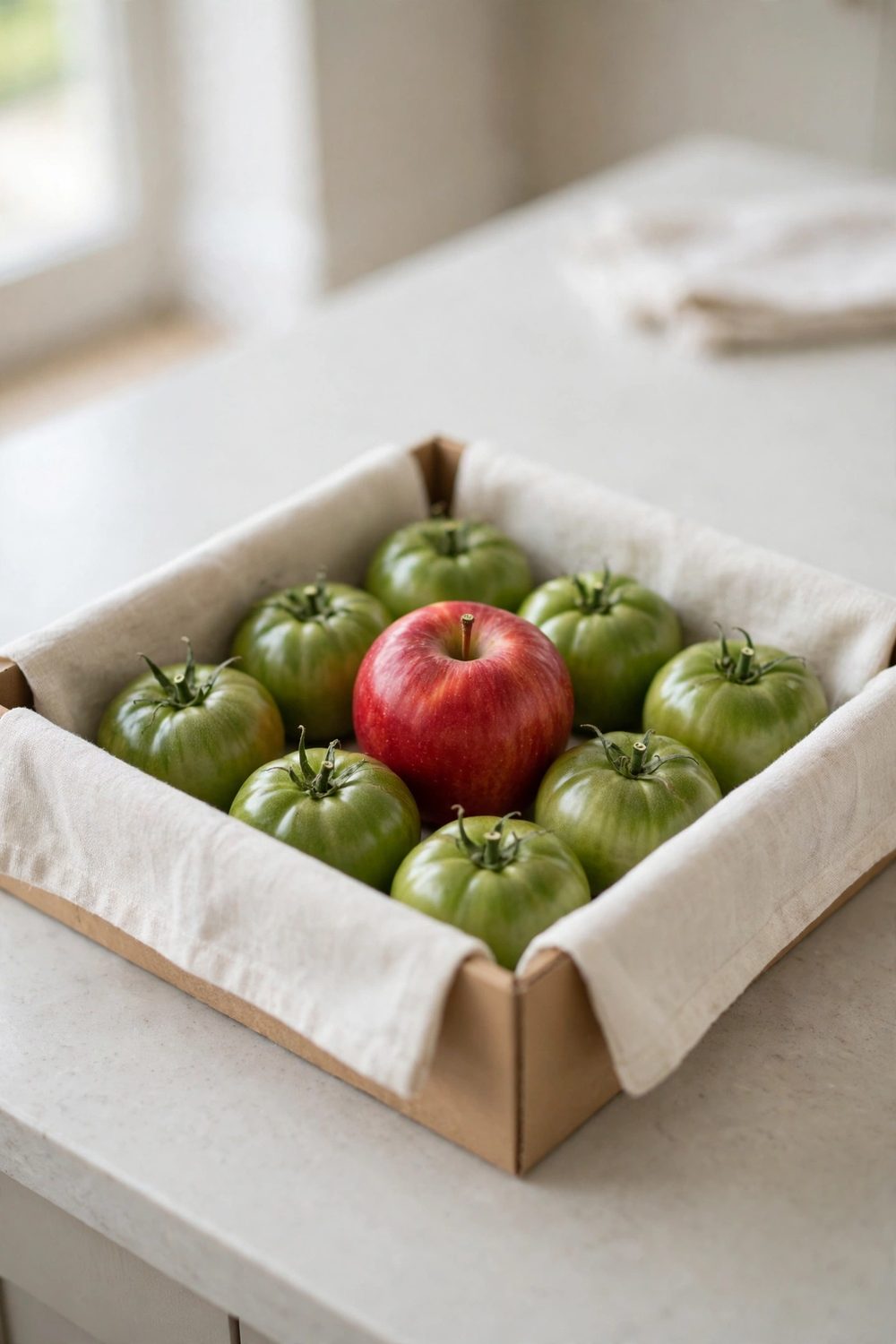
The ripe fruit does the quiet work here. It gives off ethylene, and the closed space keeps that gas close to the green tomatoes.
Write the start date on each bag or box. Groups set up days apart ripen days apart, and the date keeps the order clear.
Keep each ripeness group in its own bag or box. Blush fruit in a shared bag can push green fruit unevenly and hide ready fruit.
Pro Tip: Swap in a fresh banana after about five days if the first one turns very soft. A fresh ripe banana keeps the gas supply steady.
Keep the Fruit Warm and Out of Direct Sun
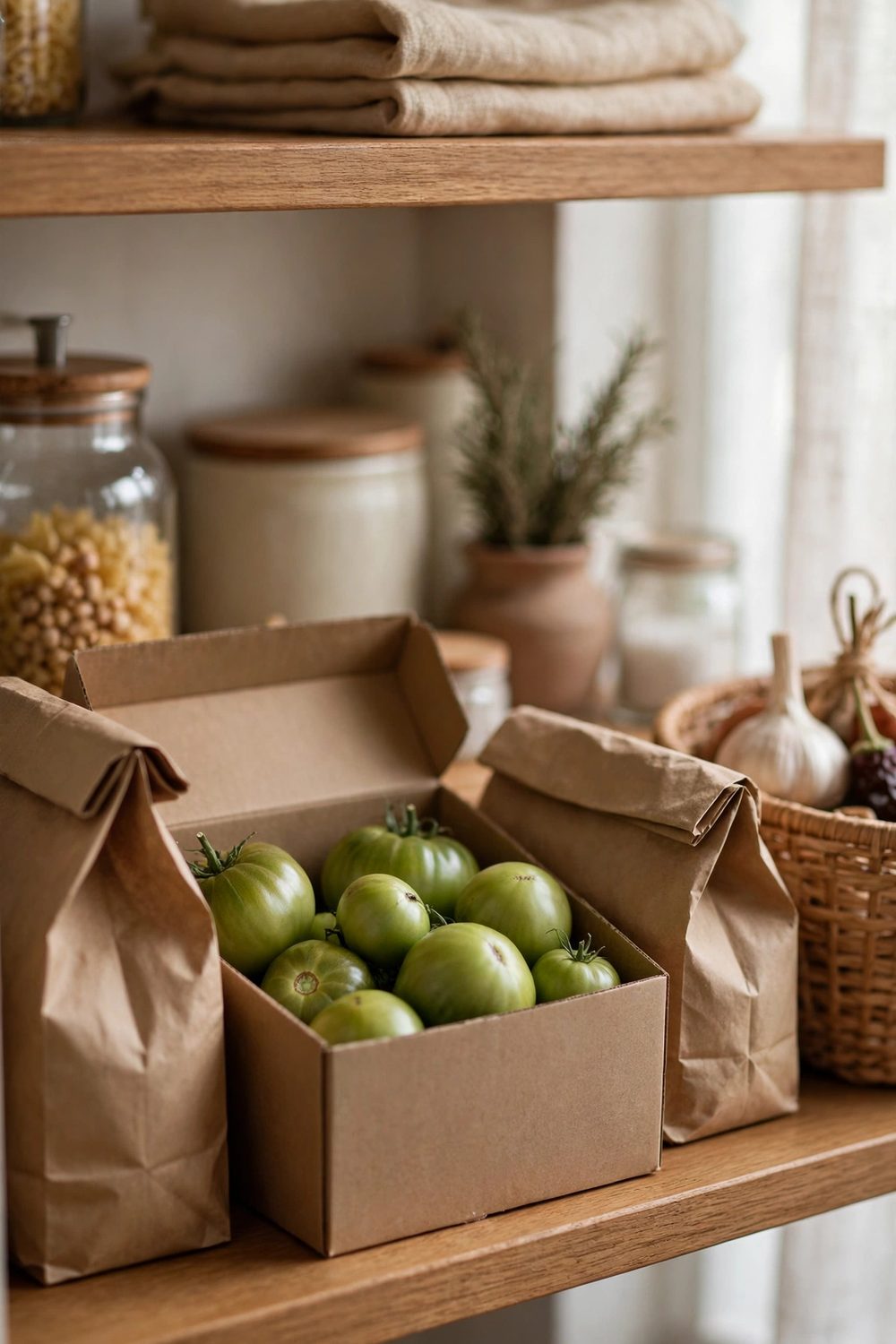
Set the bags and boxes in a warm room, out of direct sun. A kitchen counter away from the window or a pantry shelf works well.
The best range is normal room warmth, about 65 to 75°F (18 to 24°C). Steady warmth matters more than extra heat.
Direct sun on a windowsill heats the fruit by day and chills it at night. That swing slows ripening and can leave pale, uneven patches.
Never put unripe tomatoes in the fridge. Cold below about 55°F (13°C) harms the ripening process, and chilled green fruit often never colors well.
Keep the bags away from radiators and oven vents too. Hot, dry air shrivels skin before the inside has time to soften and sweeten.
A dark cupboard shelf is fine for the box method. Light is not needed for ripening, warmth and gas do the work.
If one room in your home stays warm all day, use that room for every group. Moving bags between rooms slows the whole batch down.
General harvest timing links back to plant care. These simple rules for watering vegetables in pots help fruit size up well before pick day.
Check Every Few Days and Remove Problem Fruit
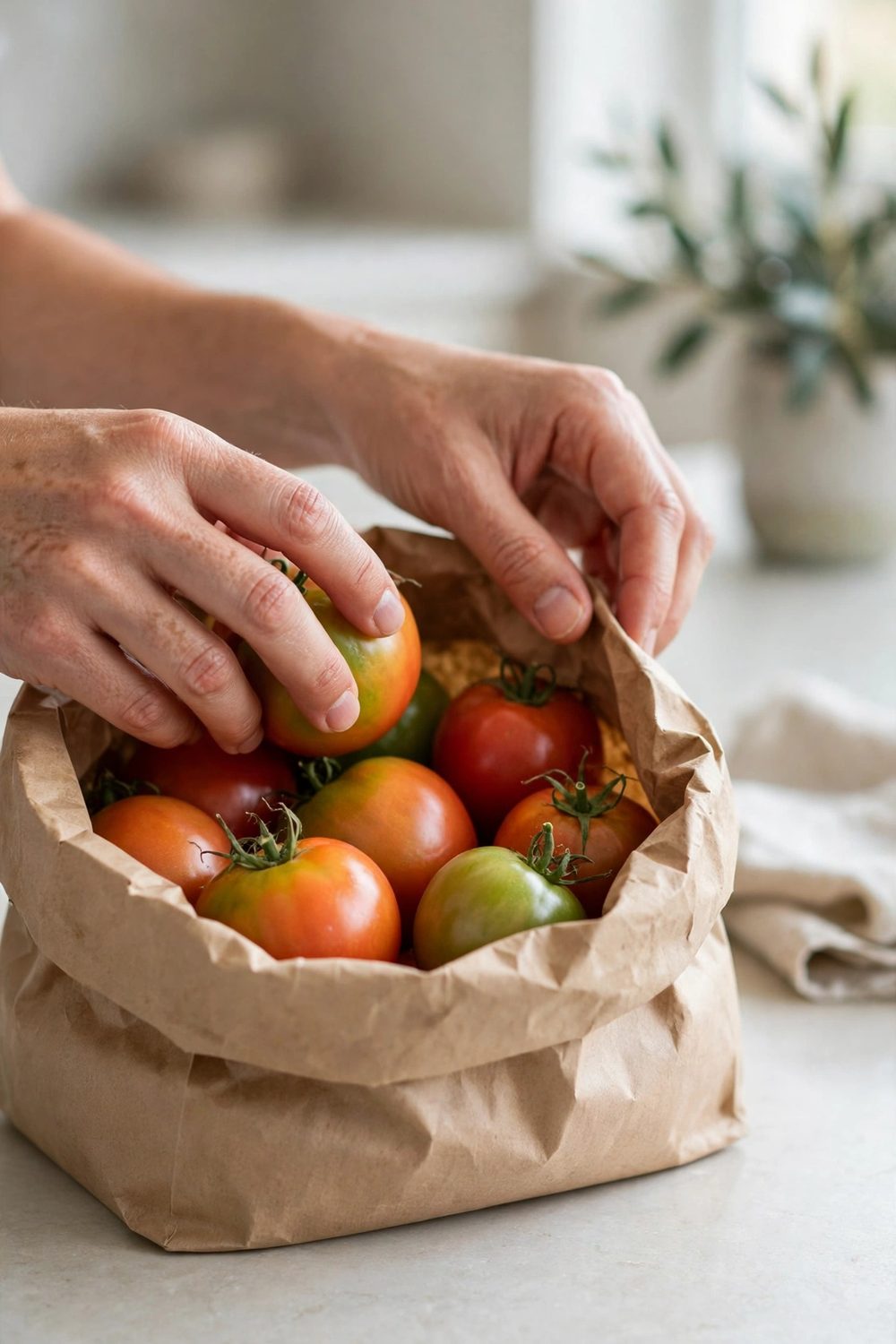
Open each bag or box every two to three days. Look at color, give each tomato a gentle press, and smell for anything sour.
Ripe fruit feels soft with a slight give and shows full color for its type. Move ripe tomatoes to the counter bowl the same day.
Use ripe fruit within a few days for the best flavor. Once a tomato is fully ripe, the fridge is fine for short storage.
Take out any fruit that turns soft in one spot, leaks, or grows a dark patch. Remove it at once, even if the rest looks fine.
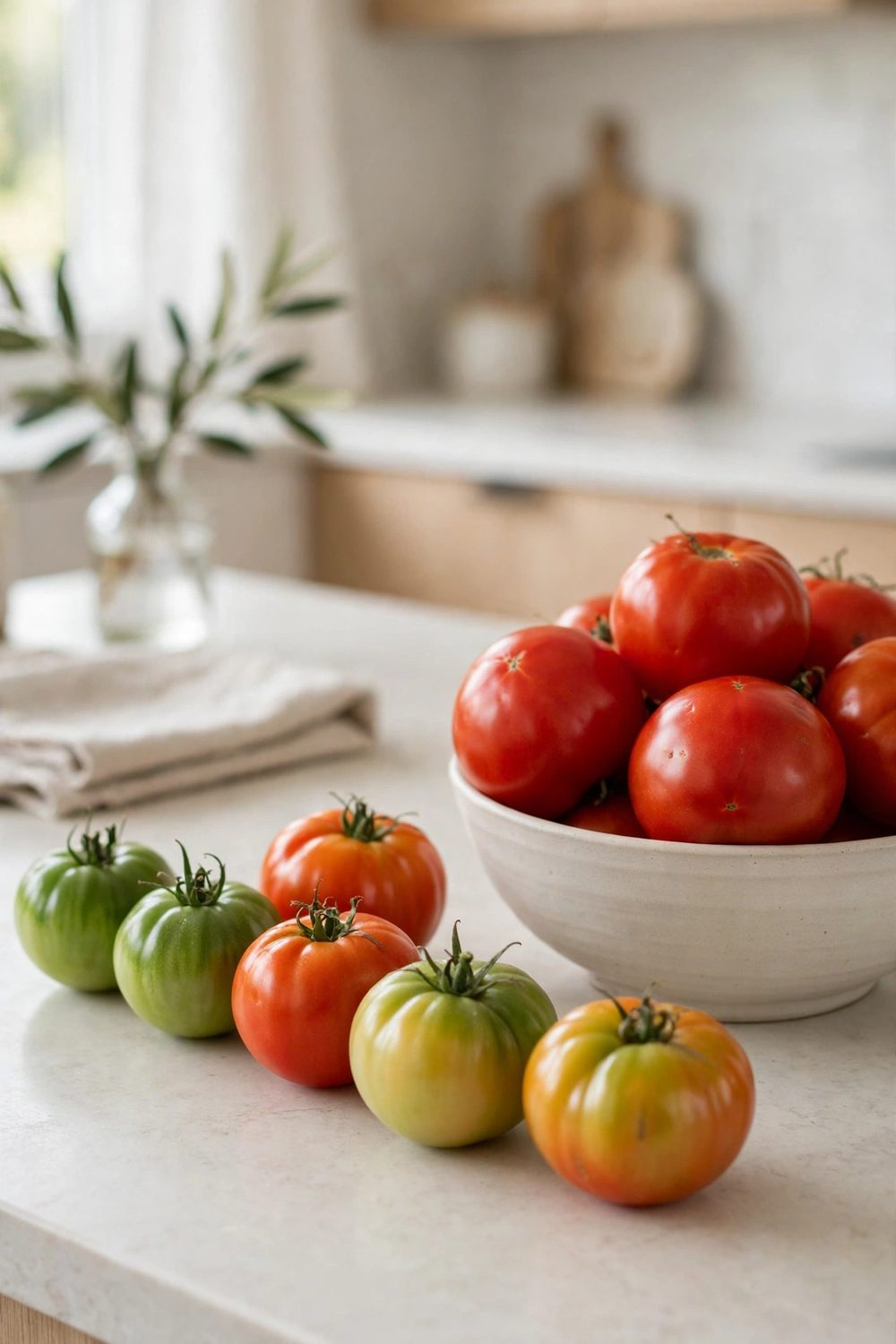
Check the banana or apple at the same time. A fruit that has gone mushy or moldy comes out and gets replaced or left out.
Turn the remaining tomatoes over as you check. A quick turn shows the hidden side, where spots most often start unseen.
If a bag feels damp inside, leave it open for an hour to air, then fold it closed again. Dry paper protects the next round.
Heads Up: Color can change fast near the end. A blush tomato checked on Monday can be fully ripe by Wednesday in a warm room.
Cook the Tomatoes That Never Ripen
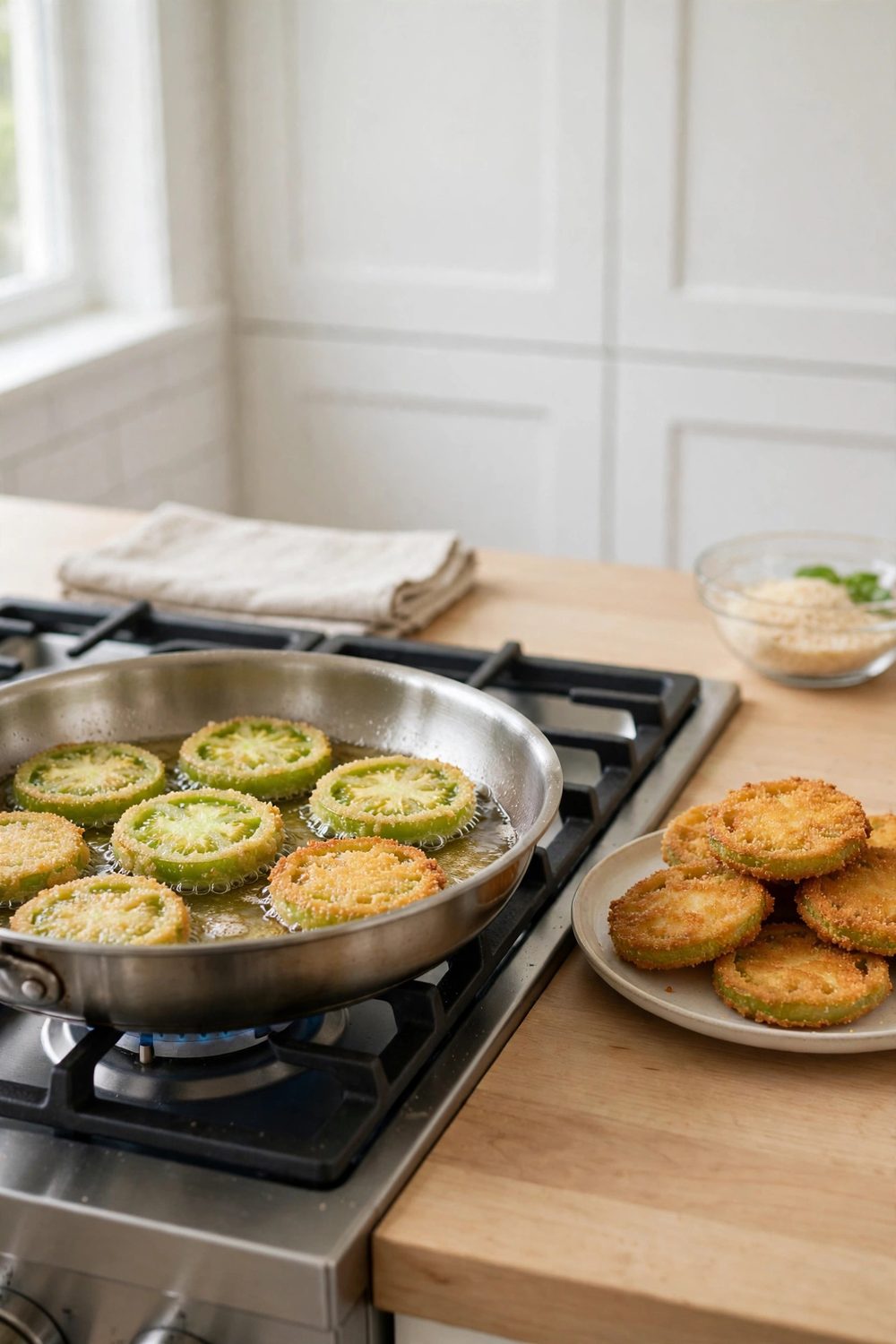
After about three weeks, a few tomatoes may still sit hard and green. That is normal, and those fruit are not a loss.
Firm green tomatoes hold up well to heat. Slice them thick, coat the slices in seasoned cornmeal or flour, and fry them in a hot pan.
Cook the slices until the coating turns crisp and golden. Serve them warm with a simple dip or on top of a grain bowl.
Green tomatoes also suit a chunky relish or chutney. Chop them with onion, vinegar, sugar, and warm spices, then simmer until thick and glossy.
A green tomato salsa works the same way. Chop the fruit fine with onion, chili, lime juice, and salt, and let it rest before serving.
Pick firm fruit for cooking and skip any that feel soft or smell off. Cooking suits sound green fruit, not spoiled fruit.
Small cherry tomatoes that stay green can go into the relish whole or halved. Their sharp bite softens as the mix simmers down.
Once the vines are clear, think ahead to next season. This guide to saving tomato seeds from your balcony plants shows how to keep your best types going.
Common Mistakes
Using a sunny windowsill in a cold room. The glass chills fruit at night, and the sun warms it unevenly by day. Ripening stalls in that swing.
Sealing tomatoes in plastic. A tight plastic bag or tub traps moisture against the skin. That damp layer is where mold and soft spots begin.
Refrigerating unripe fruit. Cold stops the ripening process in green tomatoes. Fruit chilled too early often stays pale, firm, and bland for good.
Picking fruit that is too young. Small, dark green tomatoes with no shine have not formed mature seeds. They shrivel indoors instead of turning red.
Packing fruit in deep layers. Tomatoes at the bottom of a deep pile bruise under the weight. Bruised spots rot before the fruit can ripen.
Forgetting to check the bags. One soft tomato left for a week can spoil a whole bag. Short, regular checks protect the full batch.
Most of these errors come from good intent and cold or damp storage. Warm, dry, and checked often is the whole fix. For wider pitfalls, read these container gardening mistakes that kill beginner vegetables before next season.
Frequently Asked Questions
How long do green tomatoes take to ripen indoors?
Blush fruit often ripens in three to seven days in a warm room. Mature-green fruit takes longer, usually one to three weeks.
Cool rooms slow the pace a lot. Move the bags to the warmest steady room if color has not changed after a week.
Can I ripen tomatoes without a banana or apple?
Yes, mature tomatoes ripen on their own in a bag or box. The ripe fruit speeds things up by adding more ethylene gas.
Without the extra fruit, add a few days to the timeline. Keep the checks on the same two to three day rhythm.
Why did my tomatoes turn soft but stay pale?
That pattern often points to cold storage before or during ripening. Fruit chilled below about 55°F (13°C) can soften without building good color.
Heat swings can cause the same result. Keep the next batch in one warm room, away from windows, for a steadier finish.
Should I wash tomatoes before putting them in bags?
No, dry fruit stores better for ripening. Wipe each tomato with a dry or barely damp cloth, then let it air dry fully.
Wash the fruit right before you eat or cook it instead. That order keeps bags dry through the whole ripening period.
What if only half the tomato turns red?
Uneven color often means one side sat in a cool spot. Turn the fruit at each check so all sides share the same warmth.
A tomato that is red on top and green at the base can still be used. Cut away the hard green part and cook the rest.
Can cherry tomatoes ripen indoors the same way?
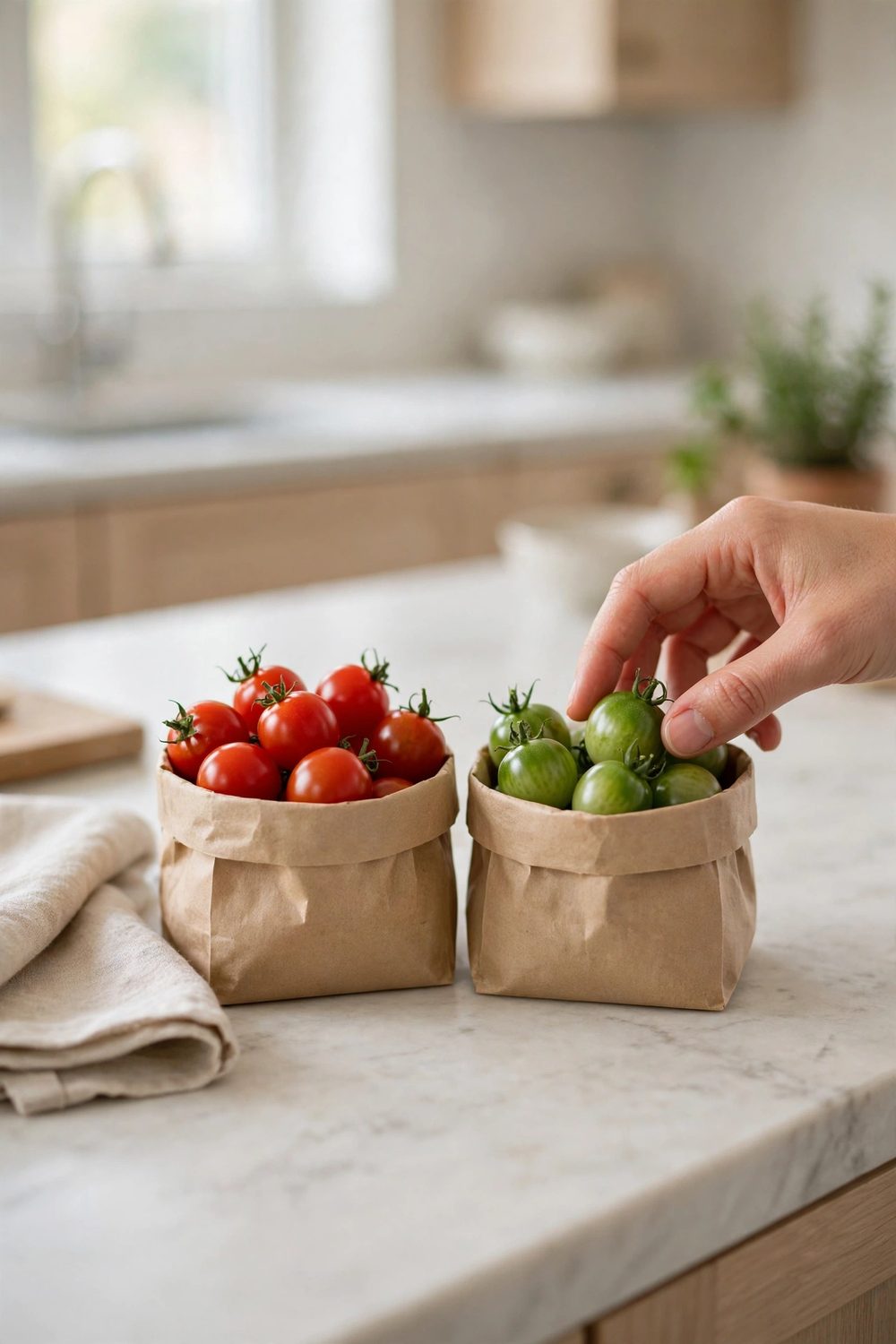
Yes, cherry types follow the same rules. Pick them at full size with a shine or a first blush, then bag them in small groups.
Small fruit ripens faster than large fruit, so check cherry bags every two days. They can pass from blush to soft very quickly.
Quick Reference
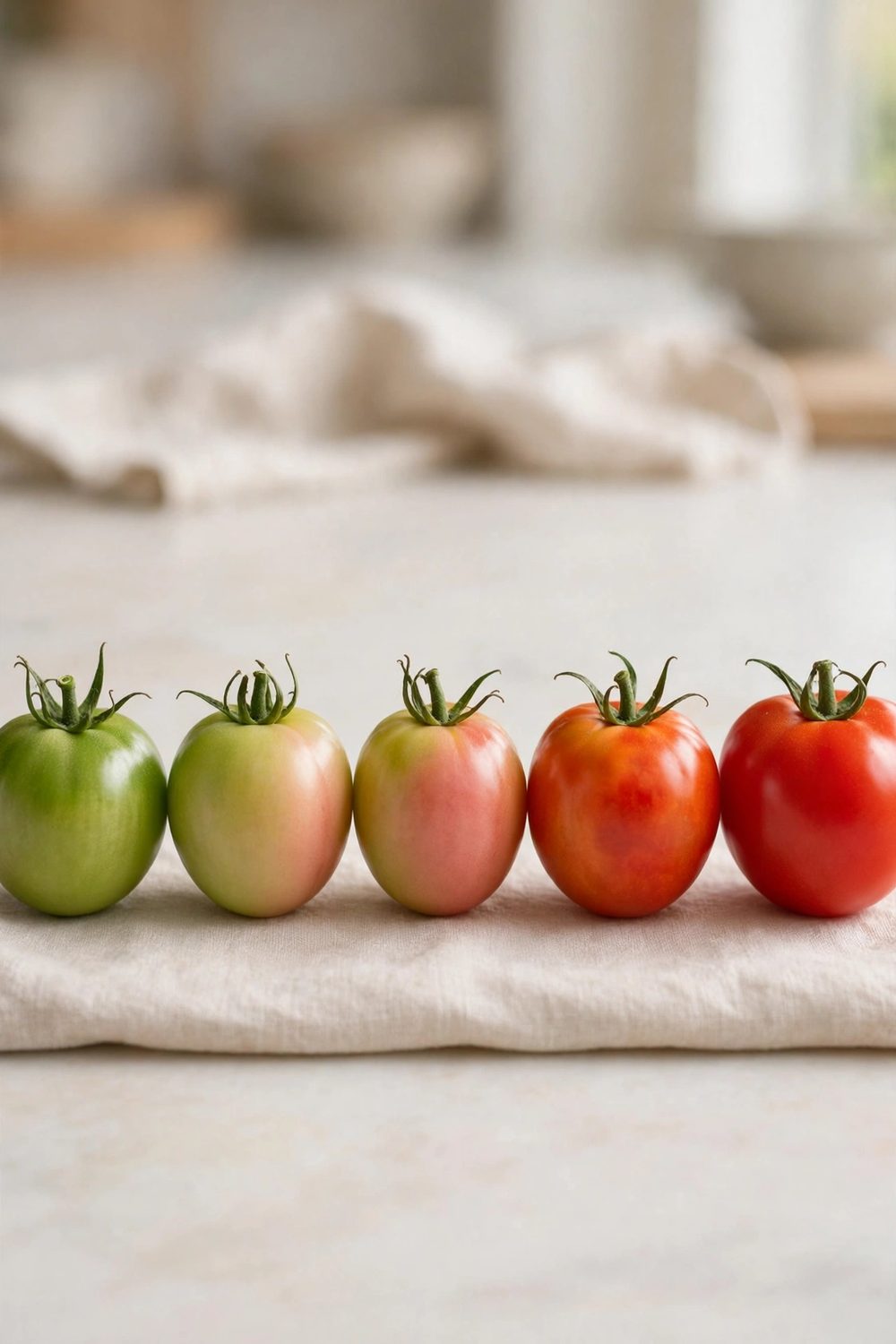
- Blush stage: bag with a ripe banana, warm room, ready in about 3 to 7 days.
- Mature-green stage: bag or single-layer box with ripe fruit, ready in about 1 to 3 weeks.
- Deep green, dull stage: skip ripening and cook the fruit while it is firm and sound.
- Best warmth: about 65 to 75°F (18 to 24°C), steady, out of direct sun.
- Never for unripe fruit: the fridge, a sealed plastic bag, or a cold windowsill.
- Check rhythm: every 2 to 3 days, remove ripe and spoiled fruit at once.
Green fruit at the end of the season is not a failed harvest. With this green tomatoes at season end ripening indoors guide, most of it turns into ripe fruit indoors.
Pick at the right stage, sort with care, and keep the bags warm. Then check often and cook the few that stay green.
Save this to your tomato board for the last pick of the season. Next year, the same routine will feel like second nature.


