

15 Small Kitchen Under-Sink Storage Ideas That Fit Around the Pipes
The cabinet under the sink is the one spot most small kitchens waste, mostly because the pipes scare people off measuring it.
Bottles get shoved in front of the drain, bags pile up behind them, and the back half of the cabinet turns into a dark corner nobody wants to reach into.
Good small kitchen under sink storage ideas start with the plumbing, not against it. Once you know where the pipes sit, that awkward cabinet can hold cleaning supplies, trash, and dish gear in a layout you can actually reach.
If the rest of the kitchen is short on storage too, our guide to kitchen storage for apartments with no pantry covers the cabinets and counters beyond the sink base.
This post contains affiliate links. If you buy through them, we may earn a small commission at no extra cost to you. See our Affiliate Disclosure.
1. Measure the Pipe Layout Before You Buy Anything
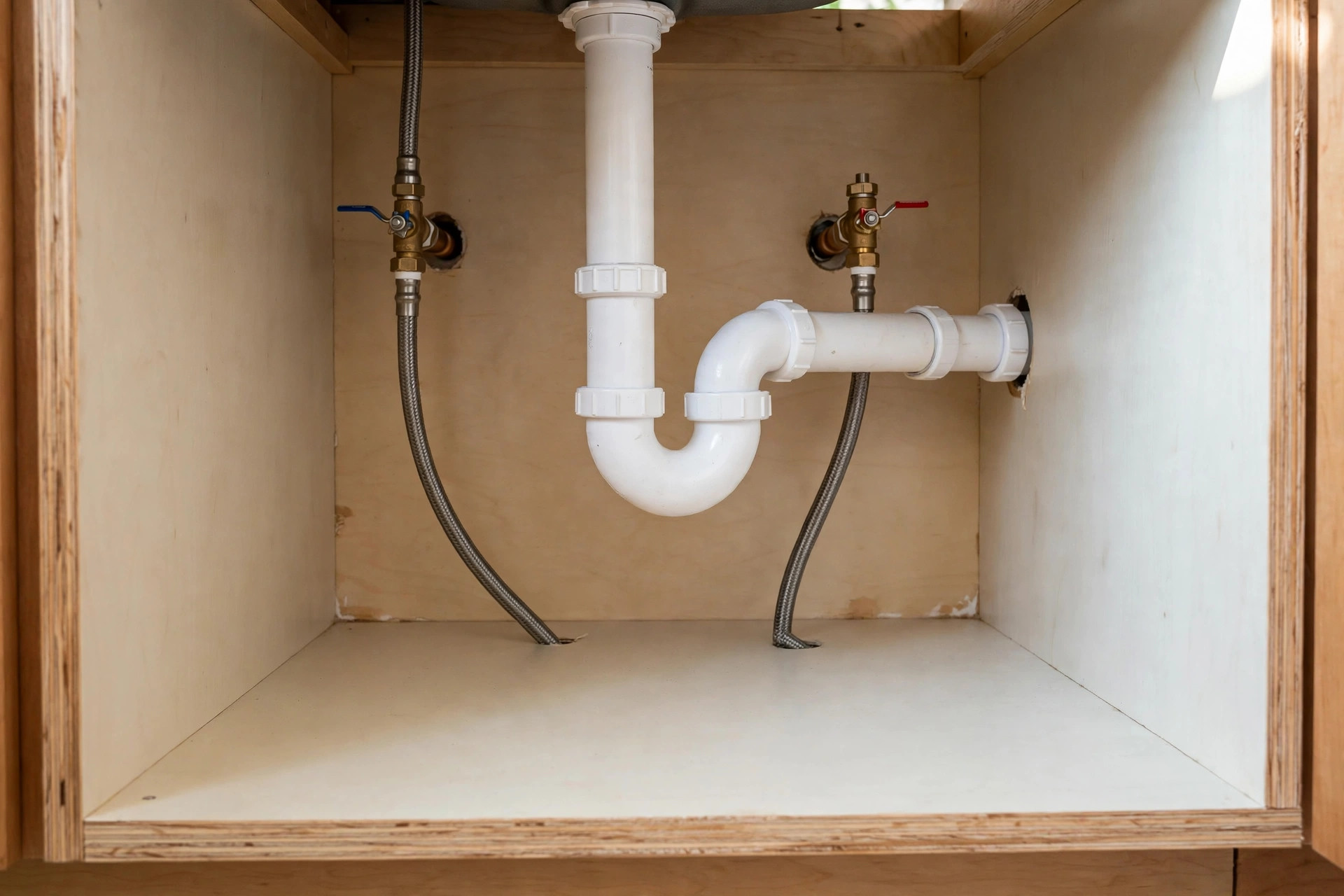
Start with a tape measure and your phone flashlight. Note the full width and depth of the cabinet, then mark where the drain pipe drops down and where the water lines run across the back.
Most sink cabinets lose space to guessing. A two-minute sketch of the pipe positions tells you exactly which organizers will fit and which will collide with the trap.
Keep the sketch on your phone. Every idea below works better when you shop with real numbers instead of a rough memory of the space.
Write the valve locations on the sketch too. If a line ever drips at midnight, you will want that map.
2. Set a Two-Tier Riser Shelf Beside the Drain
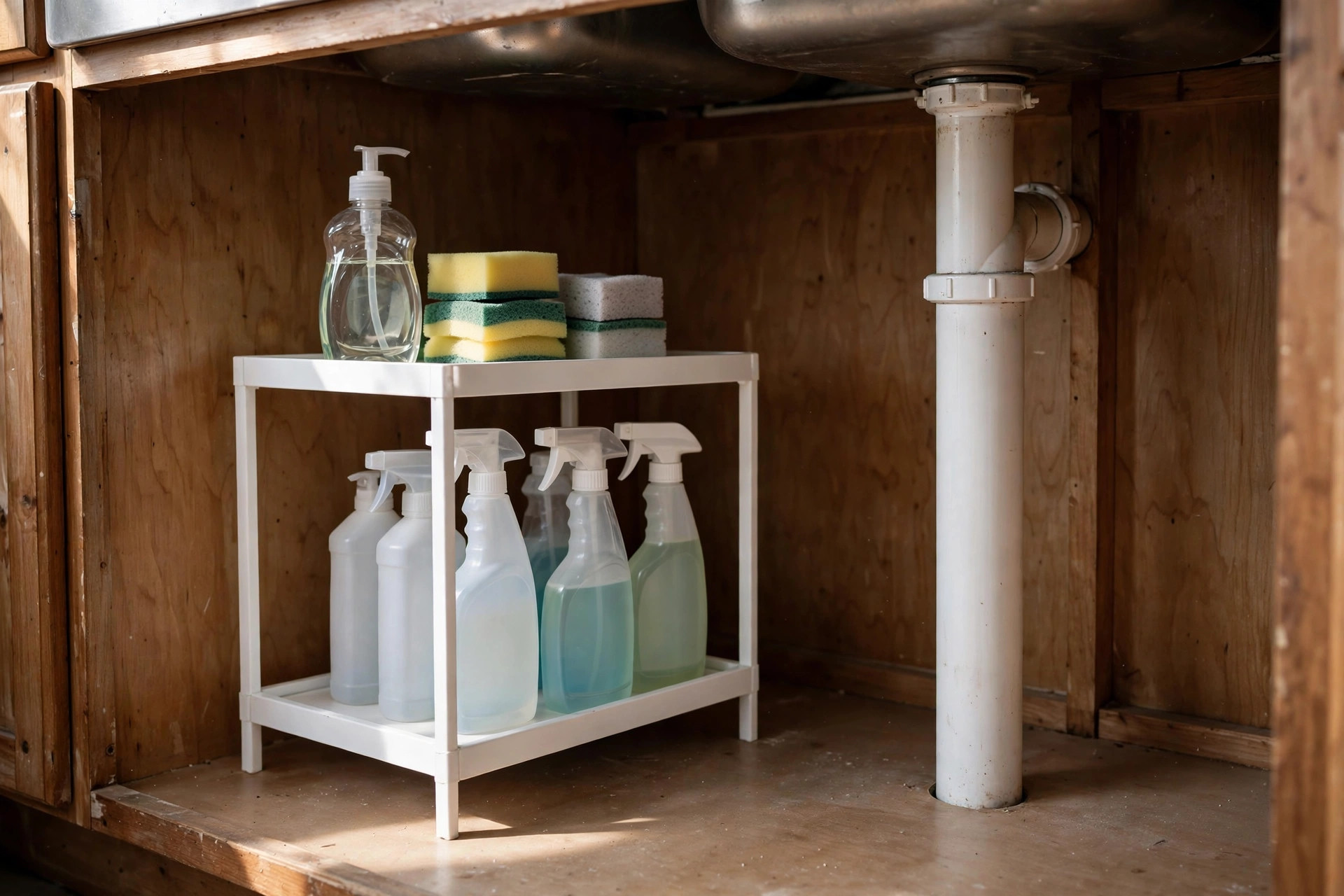
A two-tier riser turns the tall, empty air beside the drain pipe into two working shelves. Dish soap, sponges, and scrub brushes live on top, and heavier bottles sit below where they cannot topple.
Look for a riser with open sides rather than solid panels. Open sides let you slide it tight against the pipes and still reach the shutoff valves behind it.
Measure the height from the cabinet floor to the underside of the sink basin before ordering. Most risers adjust, but the tallest setting still needs a few inches of clearance.
A small label on the top shelf edge keeps guests and partners putting bottles back where they belong.
3. Choose Bins With a Notch or U-Shape Cutout
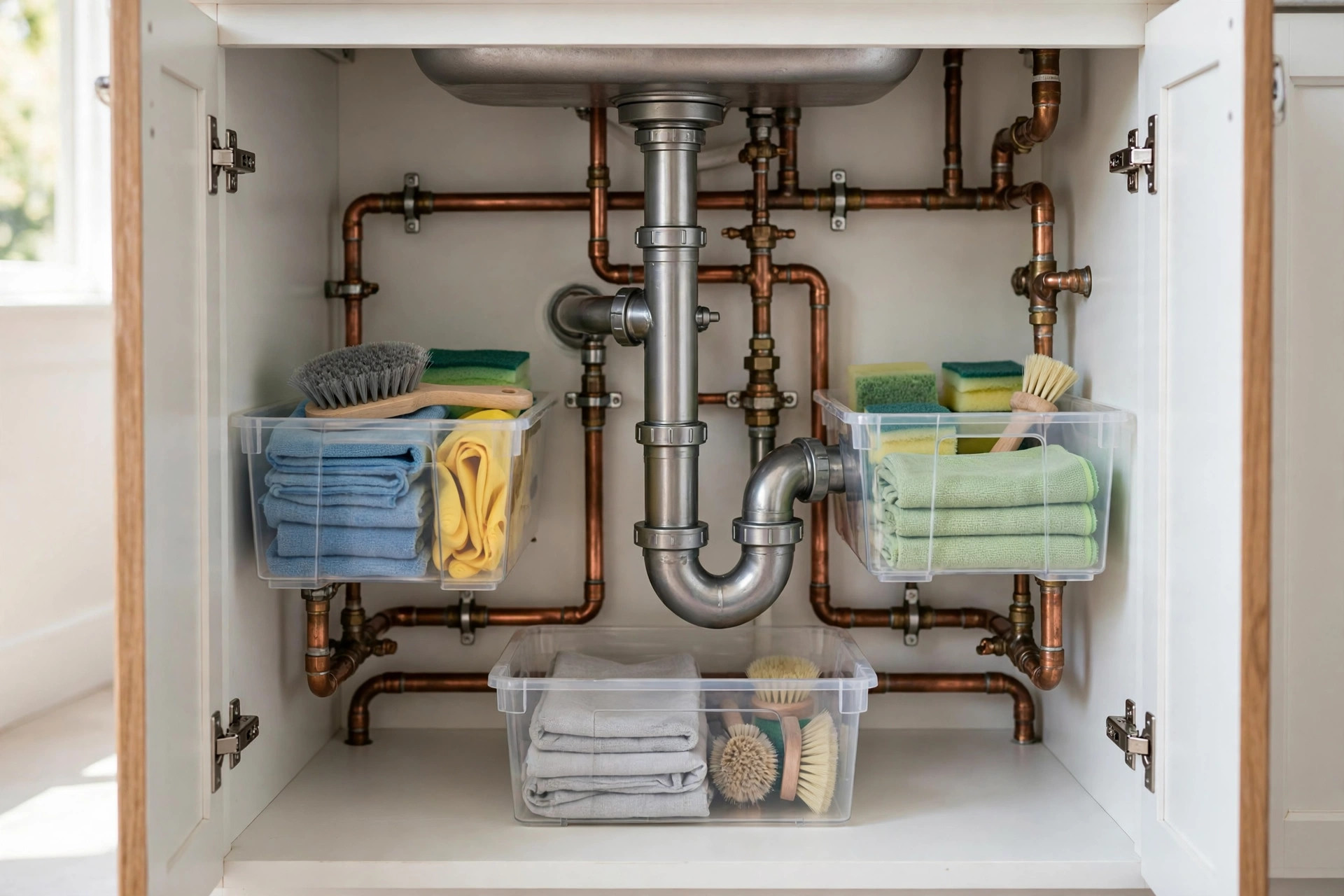
Some under-sink bins are molded with a wide U-shaped notch in the middle. That notch slides around the drain pipe, so the bin uses the full depth of the cabinet instead of stopping short of the plumbing.
Two notched bins side by side create a tidy front row for daily supplies. Refill bottles go in the back row, where you reach them less often.
Clear plastic helps here more than anywhere else in the kitchen. You can read labels through the side and spot a low bottle before you run out mid-clean.
If your trap sits off-center, slide one bin deeper than the other instead of forcing a matched pair.
4. Park a Pull-Out Caddy at the Front Edge
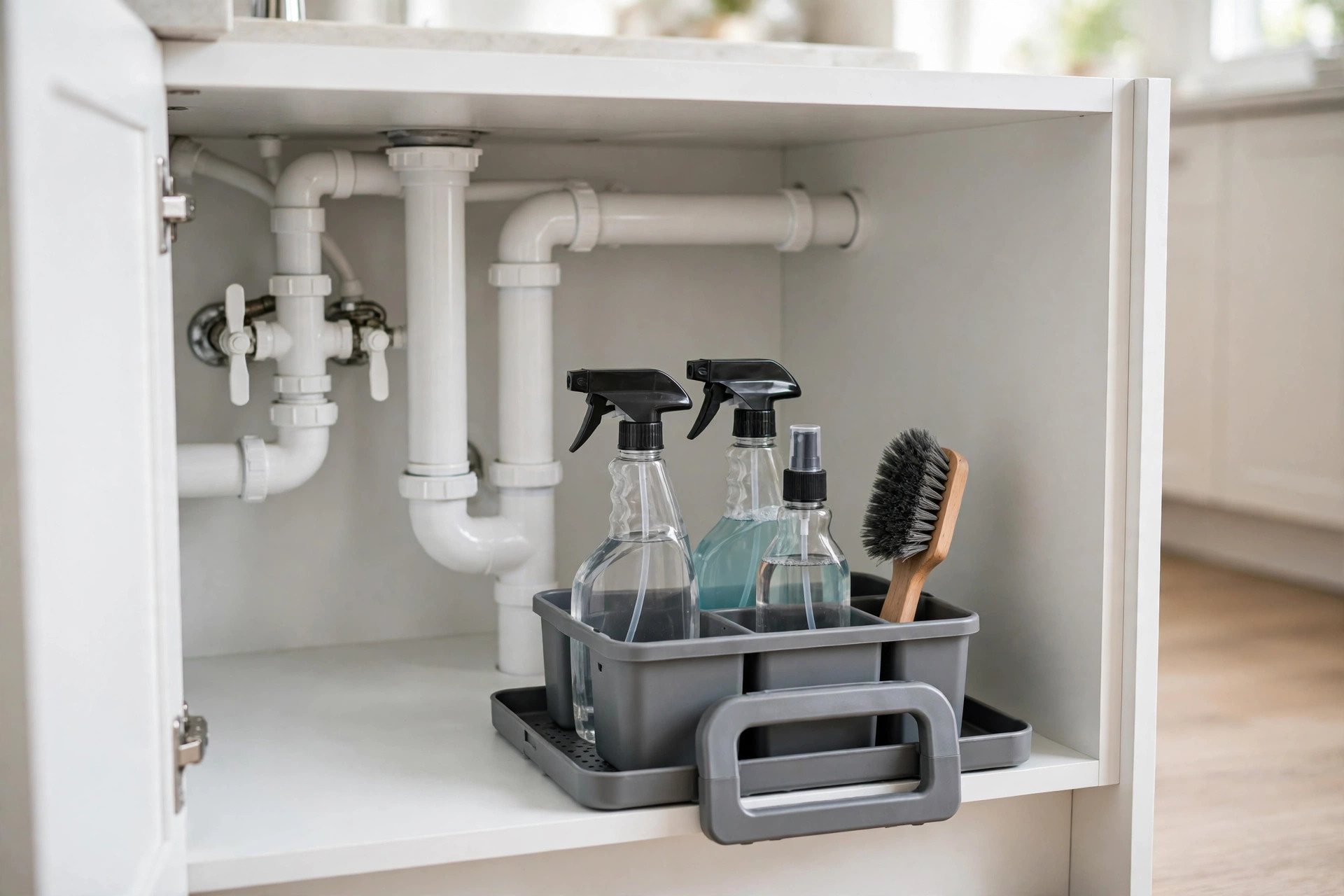
Saturday cleaning in a small kitchen usually means kneeling on the floor and fishing behind the pipes for the right spray bottle. A handled pull-out caddy ends that routine in one move.
Load the caddy with the five or six products you use weekly, and carry it from room to room. When you finish, it slides back to the front edge of the cabinet.
Because the caddy lifts out completely, the space under it stays reachable too. Store flat items below it, like a folded stack of trash bags or spare sponges.
A caddy with divided sections stops tall bottles from tipping into the short ones during the carry.
5. Hang Spray Bottles From a Tension Rod
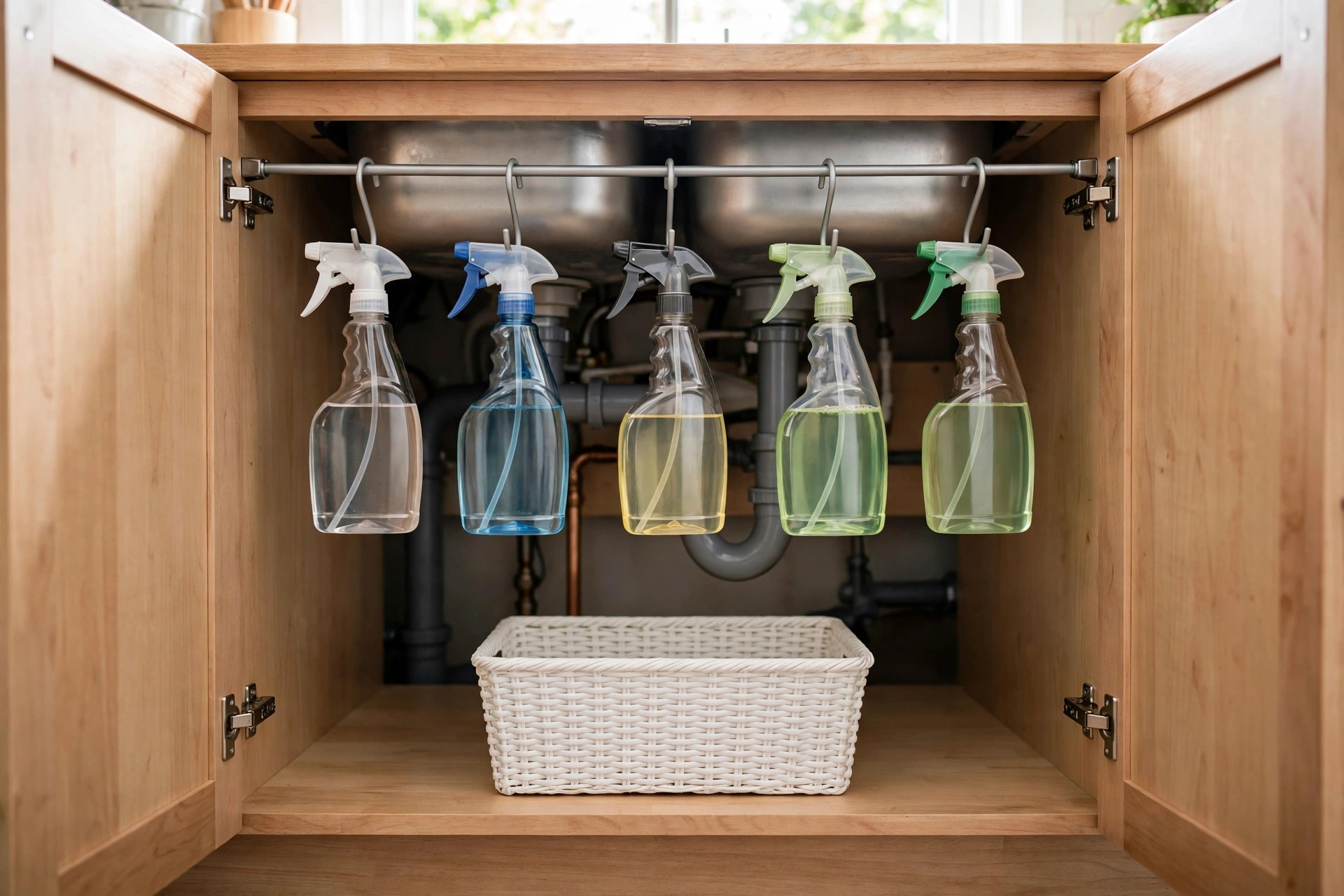
The trigger handles on spray bottles are a built-in hook most people never use. A short tension rod stretched across the top of the cabinet lets every bottle hang by its trigger, off the floor entirely.
Hanging bottles free up the cabinet floor for bins and the trash can. They also dry faster after use, since air moves around them instead of pooling moisture underneath.
Fit the rod as high as the bottles allow while still clearing the sink basin above. If a disposal unit crowds one side, run the rod across the open half only.
Test the rod’s grip with one full bottle first. A snug fit matters more than a low price here.
6. Use the Inside of the Doors for Slim Storage
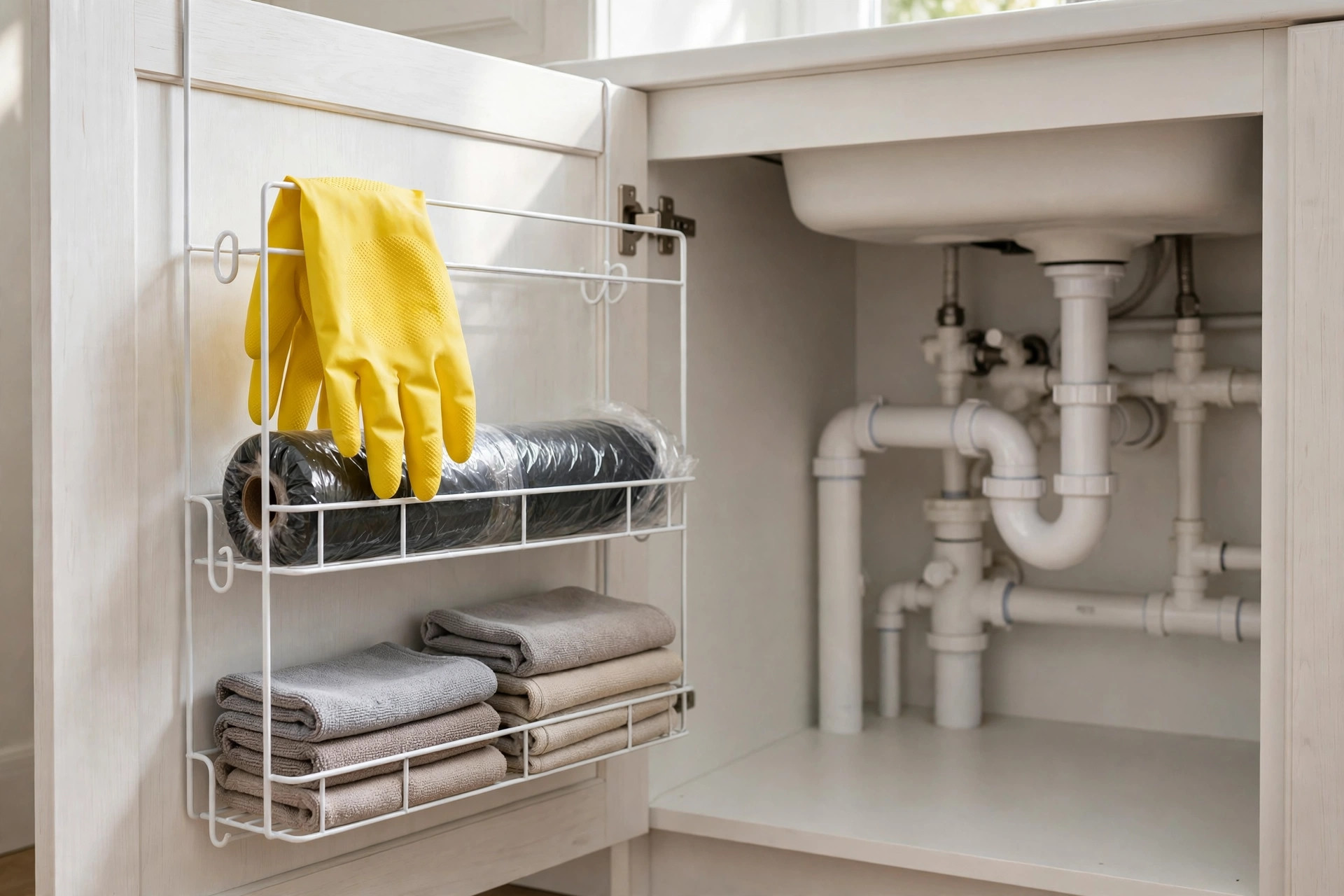
Cabinet doors are flat, empty, and close to your hands, which makes them prime storage in a small sink base. Slim over-door racks hold rubber gloves, a dustpan, or a roll of trash bags without touching the pipes.
Check the closing clearance before you commit. A rack that is too deep will knock against the drain or the disposal every time the door swings shut.
Renters can pick racks that hook over the door top instead of screwing in. They hold lighter loads, so save them for gloves, bags, and folded cleaning cloths.
Put the most-used item, usually the trash bags, on the door you open with your free hand.
7. Put a Low Turntable in the Deep Back Corner
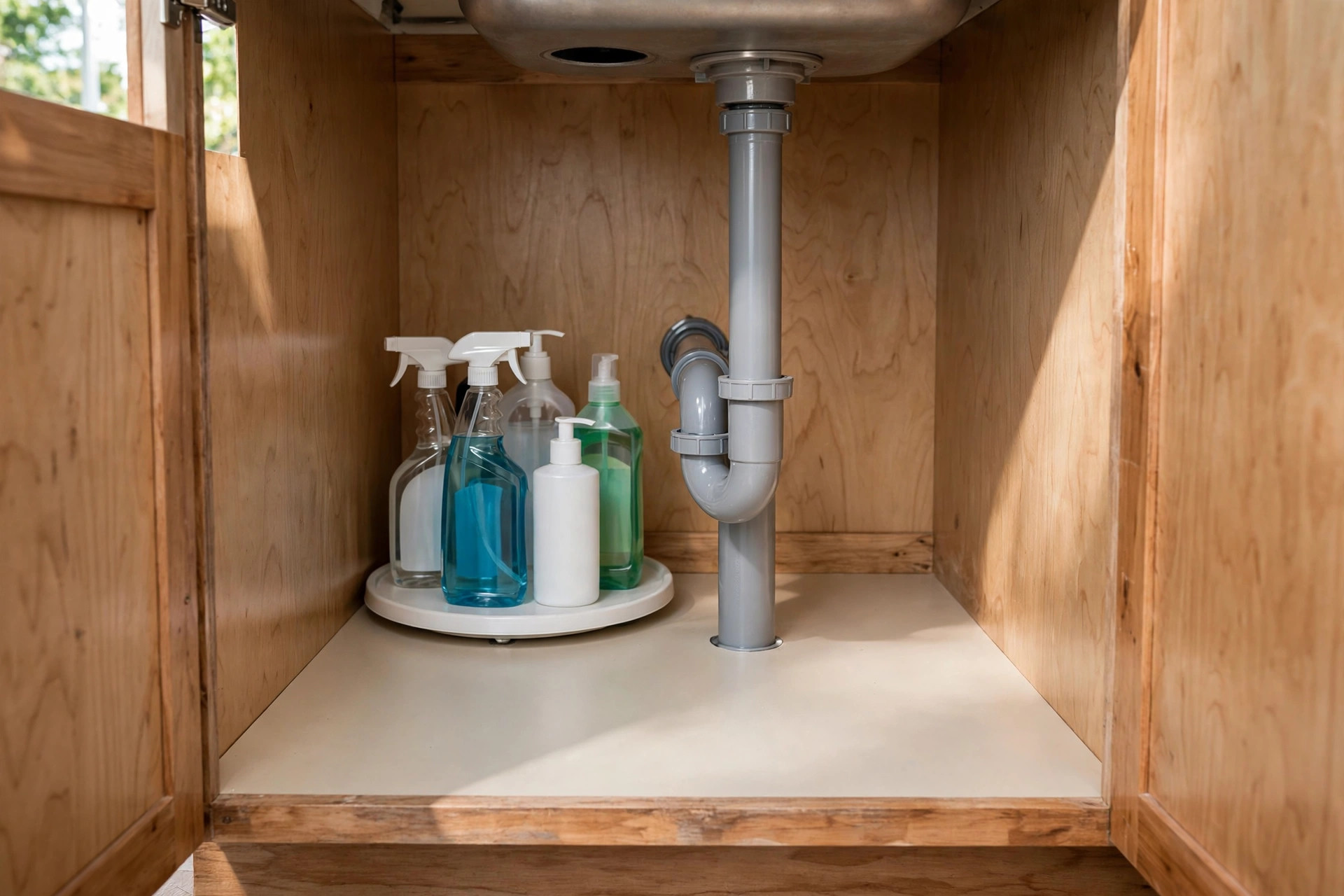
Every sink cabinet has one corner that hands cannot reach without a full kneel and stretch. A low turntable turns that dead corner into storage you can spin toward you.
A turntable beats a plain bin in this spot for one reason. A bin hides whatever sits behind it, while a spin brings each bottle to the front in turn.
Keep the turntable load to things you use monthly, like specialty cleaners or a backup dish soap. Daily items belong at the front where no spinning is needed.
A turntable with a low rim keeps bottles from sliding off when you give it a quick spin.
8. Line the Floor With a Waterproof Drip Tray
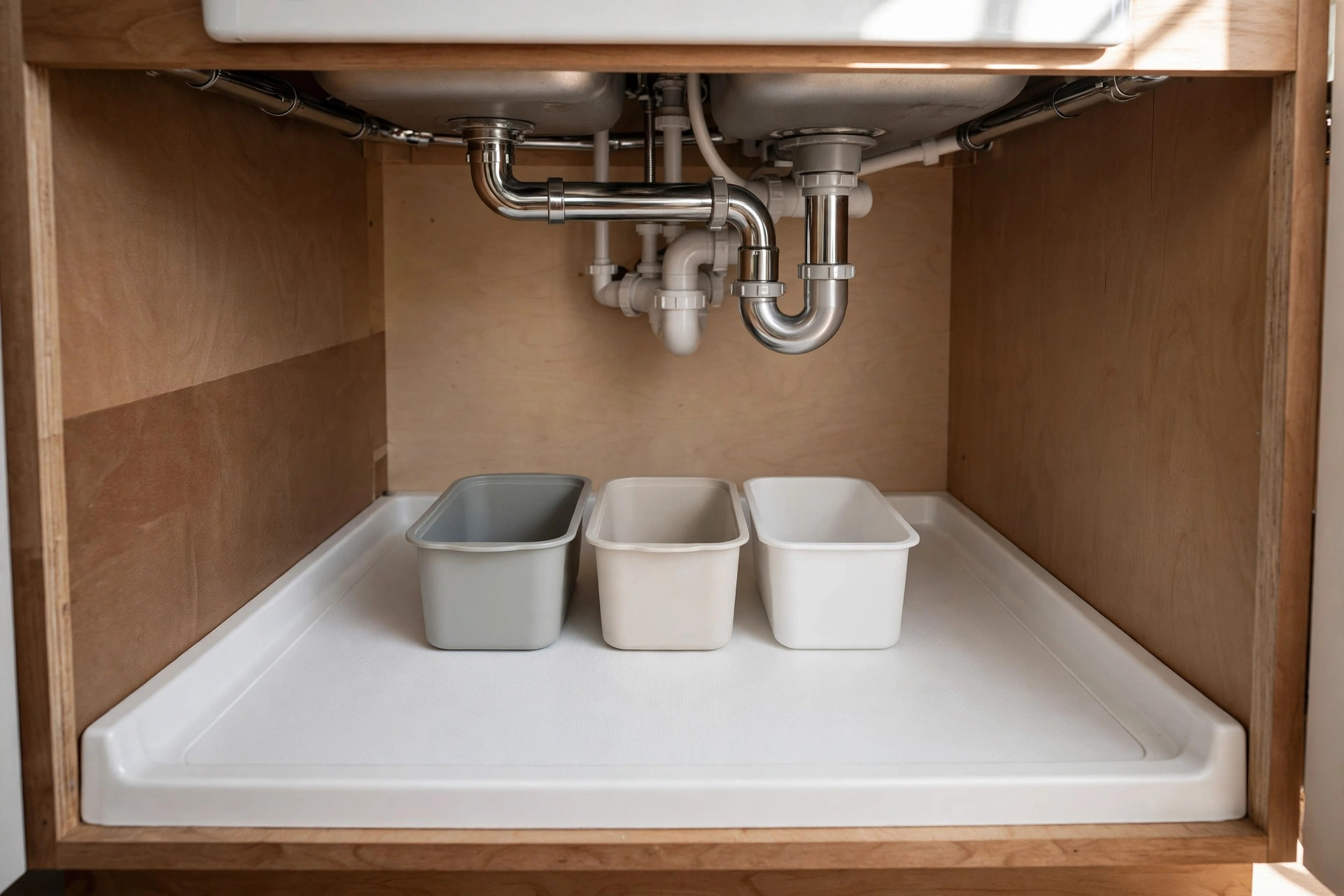
Skipping a floor liner is the quiet mistake that ruins sink cabinets. Slow drips from a fitting or a damp sponge soak into bare cabinet board, and the damage spreads before anyone smells it.
A rigid waterproof tray with a raised lip catches those drips and lifts out for a rinse. Cut-to-fit mats work too, as long as the edges curl up slightly at the walls.
The liner also makes every other organizer slide more smoothly. Bins glide over a flat tray instead of catching on swollen, uneven board.
Check the tray during your monthly leak check. Standing water on it is an early warning, not a failure.
9. Fit Trash and Recycling Side by Side
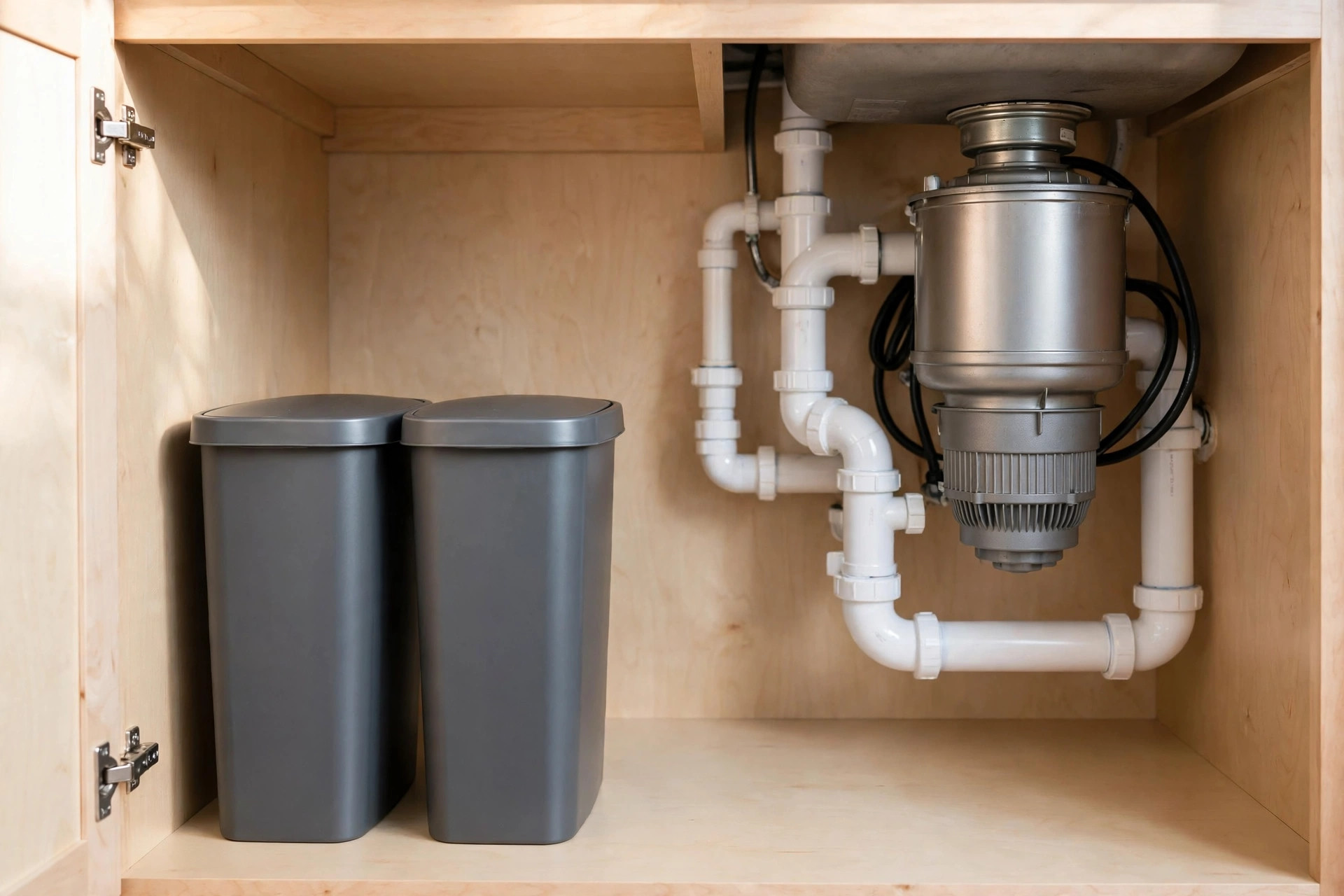
A full-size trash can rarely fits next to a garbage disposal, but two slim cans usually do. Give one to trash and one to recycling, and the pair fills the open side of the cabinet neatly.
Measure the disposal’s lowest point before shopping, since can height is the usual deal-breaker. Short cans with lids that open sideways suit this spot better than pedal cans.
Keeping trash under the sink also keeps food scraps steps from the prep zone. Our pantry organization ideas help the dry goods live elsewhere, so this cabinet stays a cleaning and trash zone only.
One bag size for both cans simplifies restocking. Buy the taller roll and fold the top edge down.
10. Stack Narrow Drawers on the Tall Side
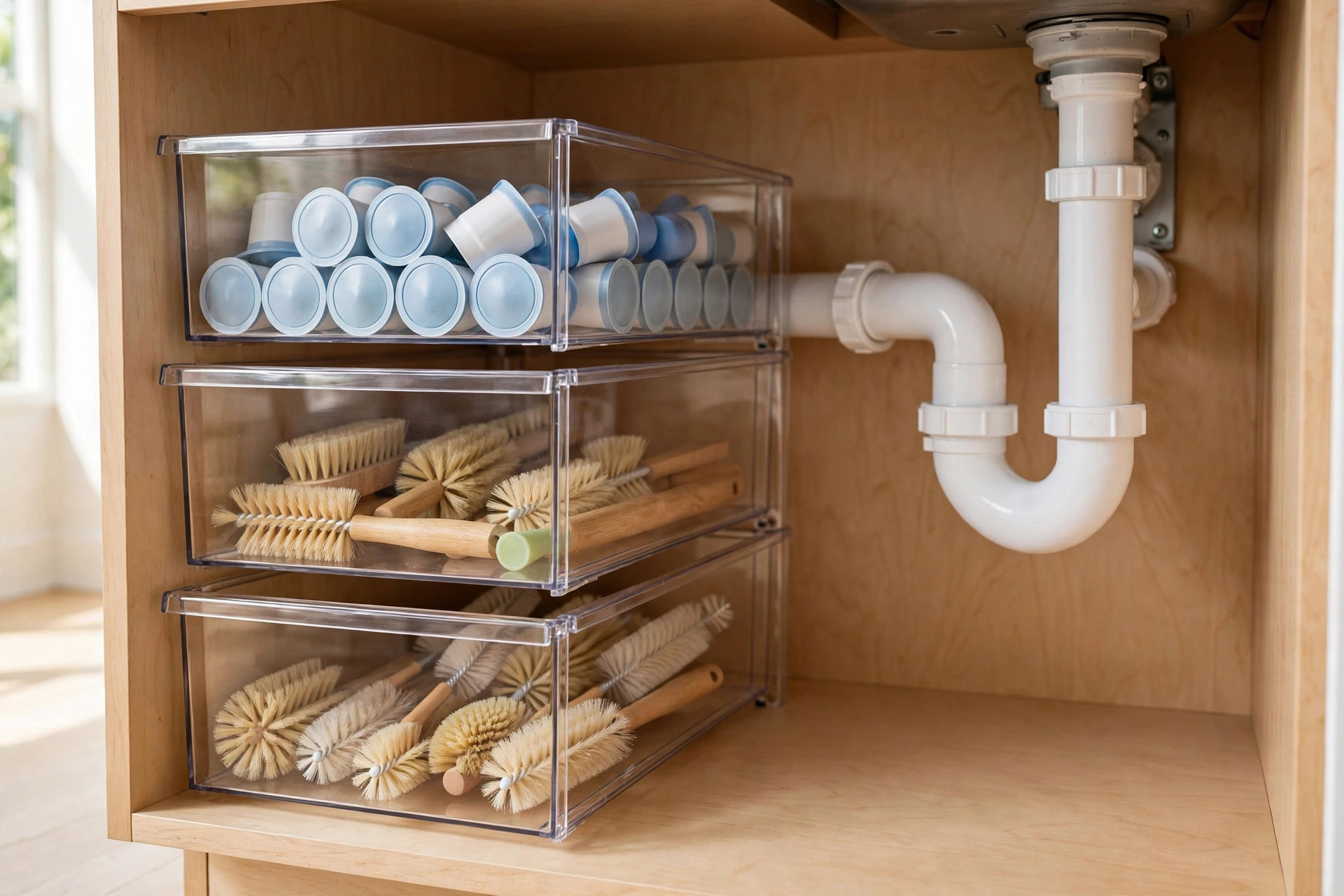
On the side of the cabinet away from the disposal, the space often runs tall and narrow. A stack of two or three shallow drawers fits that column and keeps small tools sorted.
Dishwasher pods, sink stoppers, bottle brushes, and spare faucet parts all disappear into loose piles without drawers. Separate drawers give each group a home you can open with one finger.
Leave a hand’s width between the drawer stack and the nearest pipe. You want room to reach the shutoff valve fast if a line ever starts leaking.
Clear drawer fronts save the open-and-guess routine. Frosted fronts hide the clutter but slow you down.
11. Split the Cabinet Into Two Clear Zones
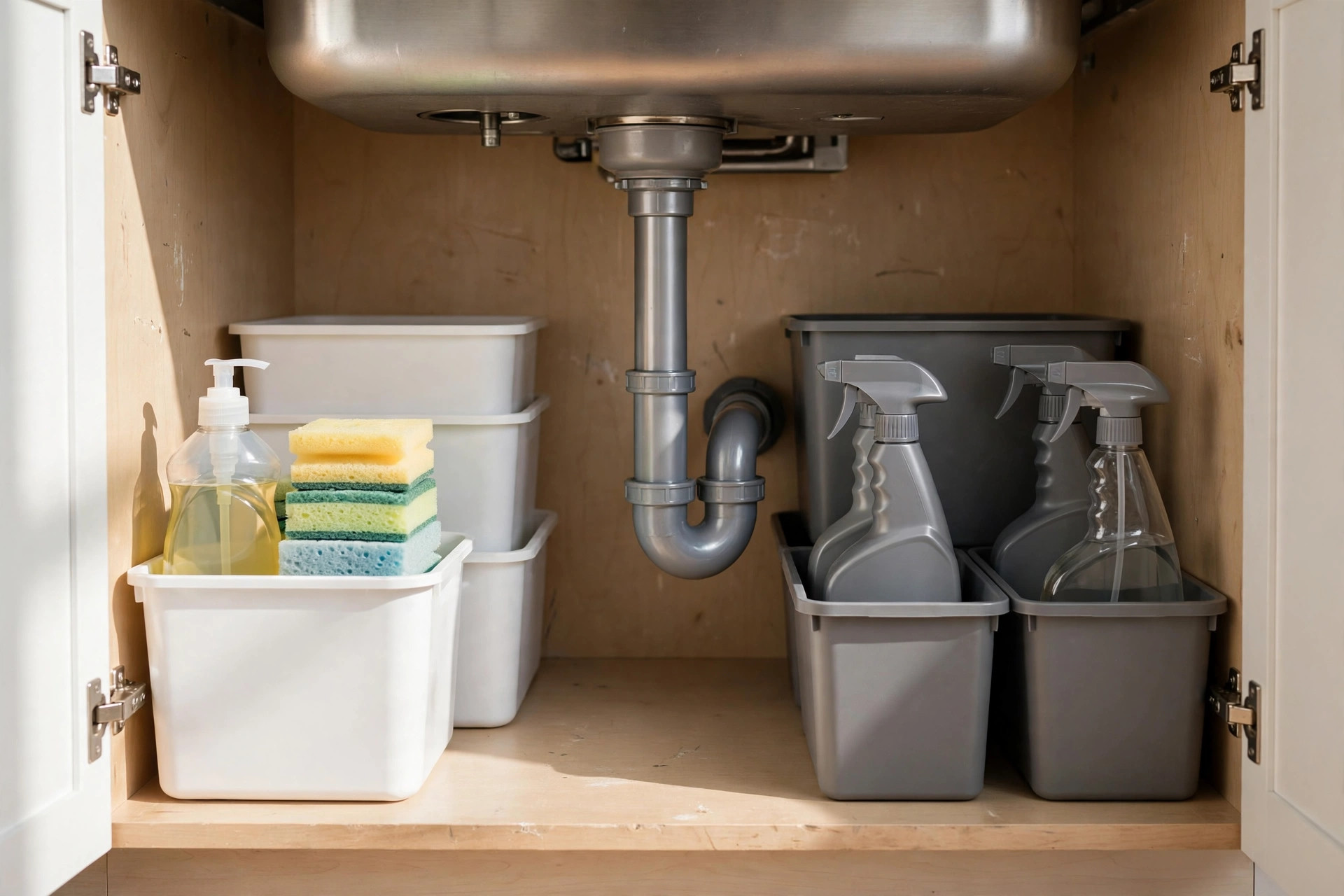
One simple rule keeps this cabinet sane: dish and sink supplies on one side, household chemicals on the other. Mixing the two is how a rinse aid bottle ends up next to the glass cleaner.
Use two bin colors or two labeled trays to hold the line. The visual split means anyone in the house can put things back in the right zone without thinking.
This zoning is also one of the easiest habits to keep, unlike the habits covered in our roundup of small kitchen storage mistakes, where mixed-up cabinets cause most of the daily friction.
When a product could fit either zone, file it by where you use it, not what it is called.
12. Add a Sliding Frame for the Trash Can
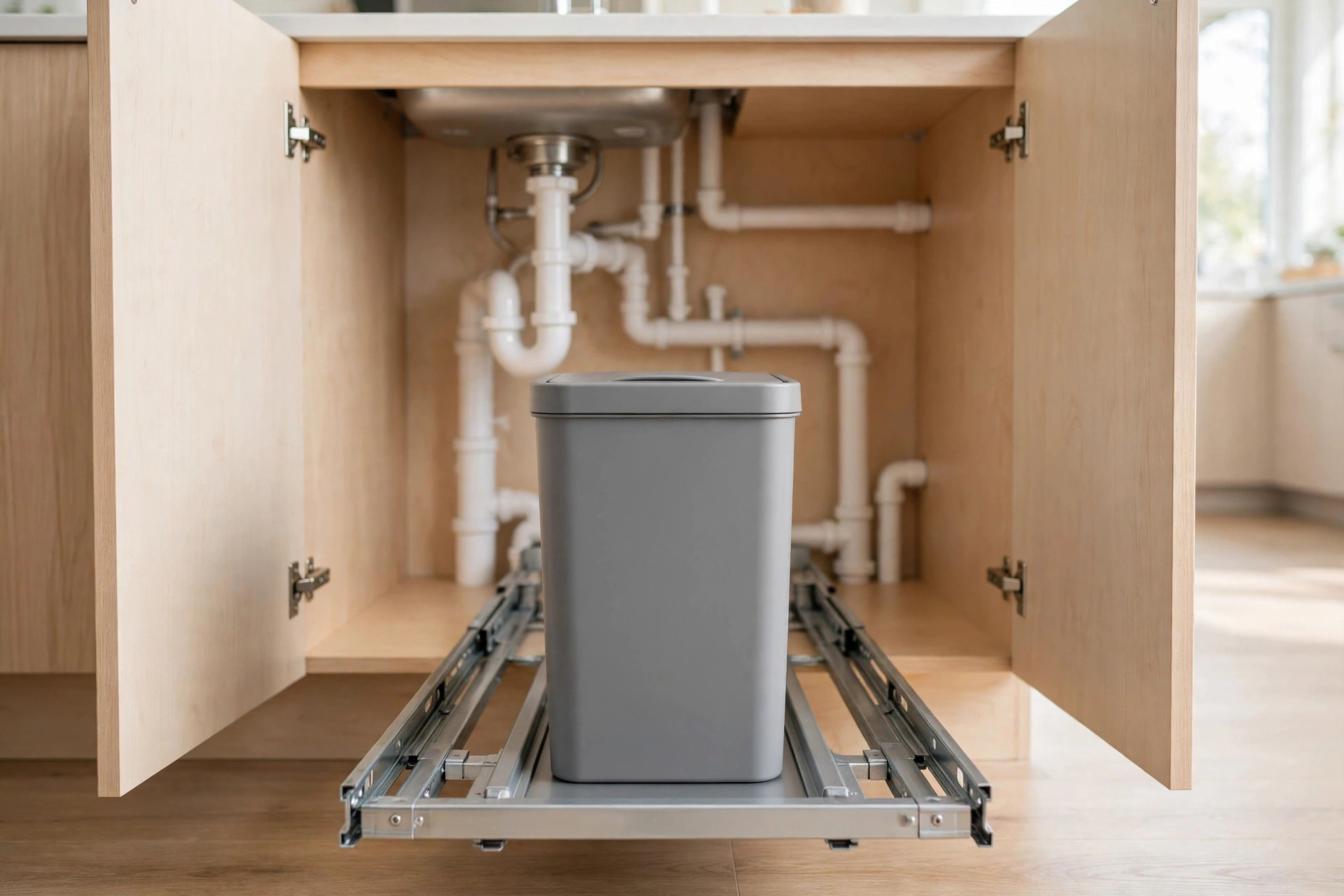
Dragging a trash can out from behind a drain pipe gets old fast, and the scraping wears the cabinet floor. A sliding under-sink frame mounts to the floor and rolls the can out to you.
Most frames fit one slim can and install with four screws. Renters should check the lease first, or look for heavy adhesive-mount versions that leave no holes.
The slide also protects your back during bag changes. The can comes to counter height’s edge instead of you lifting a full bag up out of a dark cabinet.
Measure the can with its lid open before ordering the frame. Lid swing is the clearance most people miss.
13. Store Refills Flat in a Door-Side File
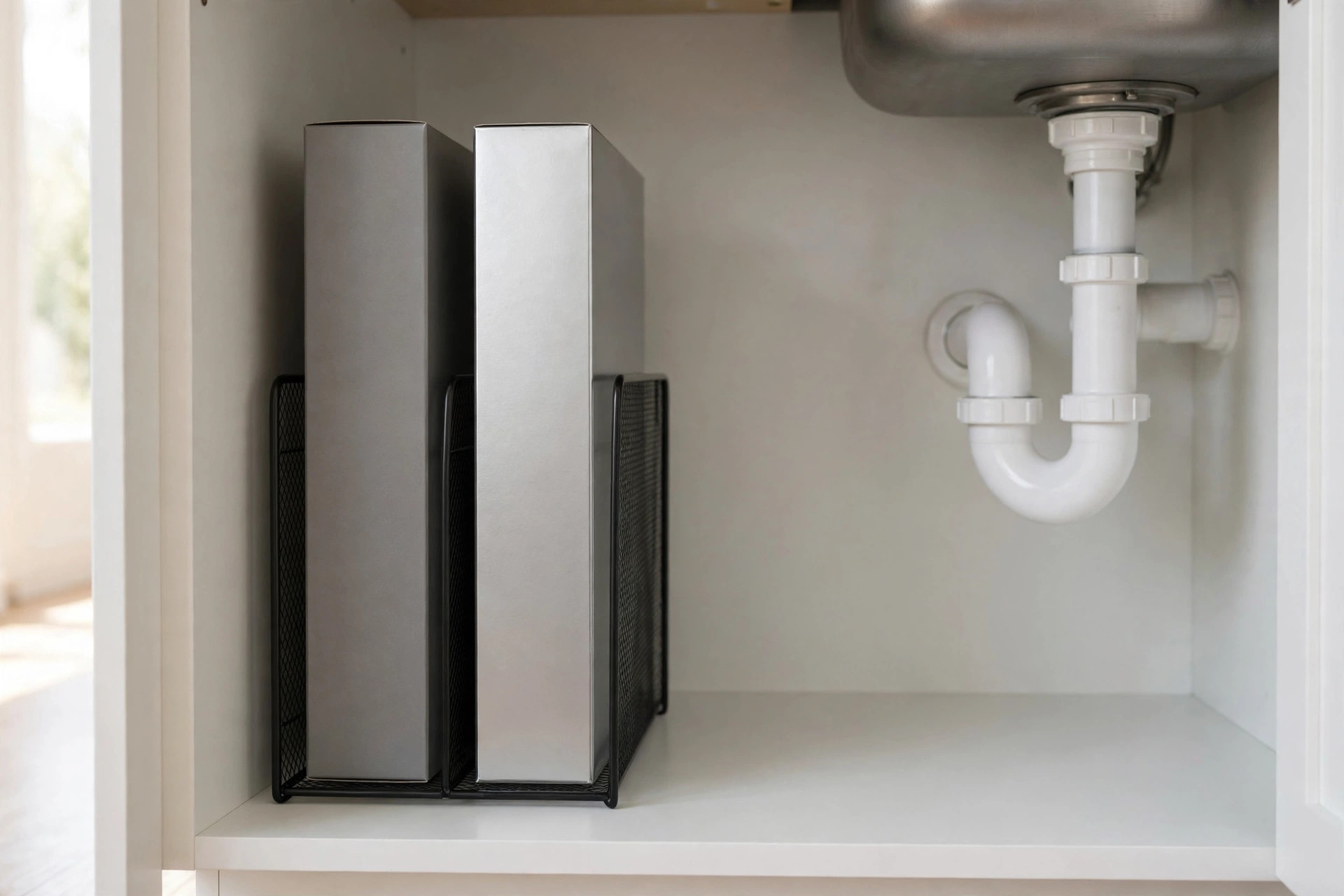
Trash bags, foil, and parchment refills arrive in flat boxes that waste space standing loose. A vertical file holder, the kind made for magazines, corrals them upright against the cabinet wall.
Standing boxes upright uses the cabinet’s height instead of its floor. It also keeps each box readable at a glance, so you stop buying a second roll of foil you already own.
Tuck the file on the door side, not the pipe side. You will open it weekly, and it should never require moving anything else first.
A second file on the other wall holds cutting boards just as well, stood upright like the boxes.
14. Give the Sponge and Brush a Drying Spot
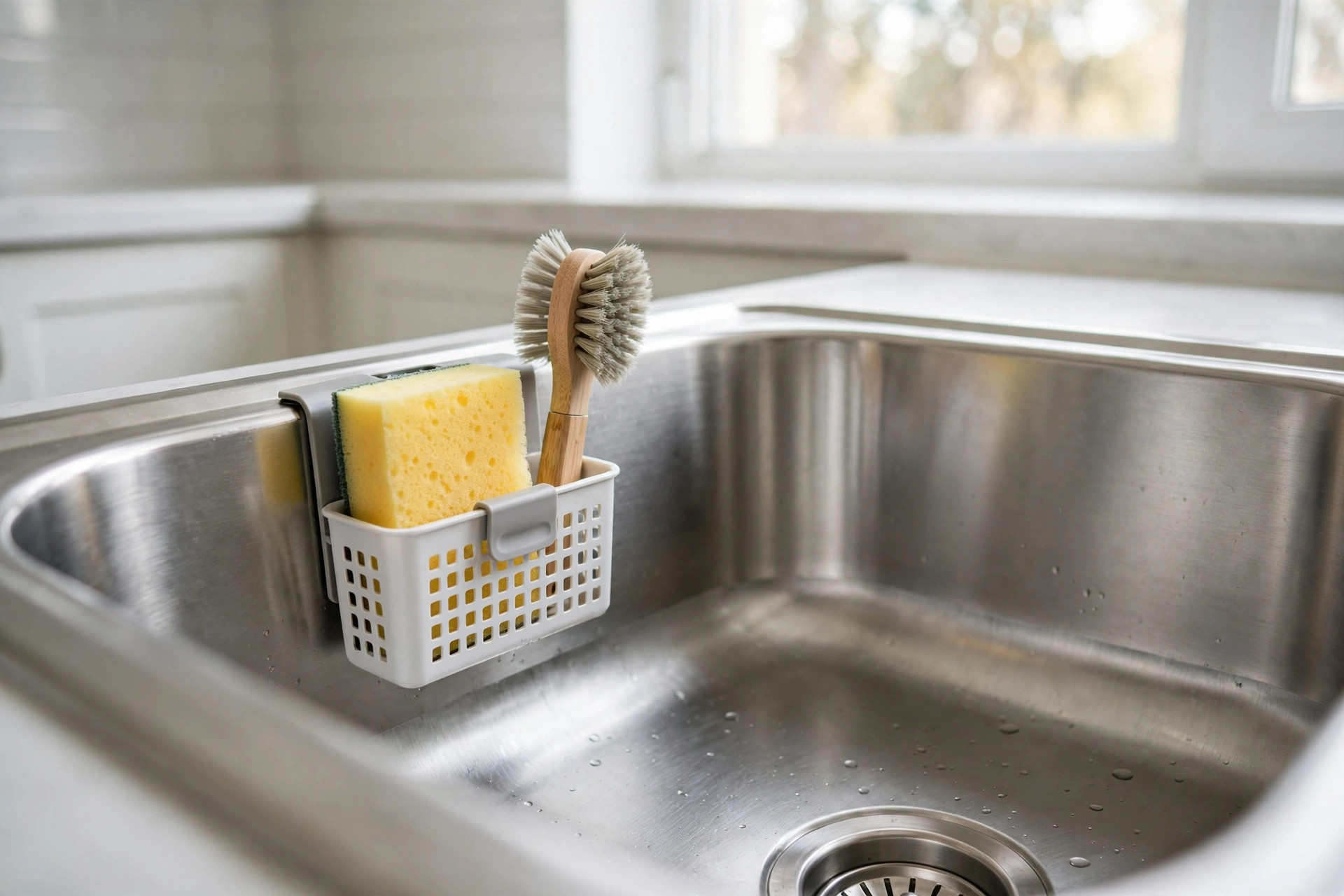
In my own kitchen, the sponge used to live in a puddle on the cabinet floor, and it smelled like it. A small ventilated holder clipped inside the sink or on the cabinet door fixed that in a day.
Airflow is the whole point. A holder with open slats lets sponges and brushes dry between uses, which keeps the whole cabinet from picking up a sour smell.
Clearing these daily tools off the counter helps the room feel bigger too, the same goal behind our tips on how to add counter space in a small kitchen.
Replace the sponge on the same monthly rhythm as the leak check, and the holder stays fresh too.
15. Check for Leaks on a Monthly Schedule
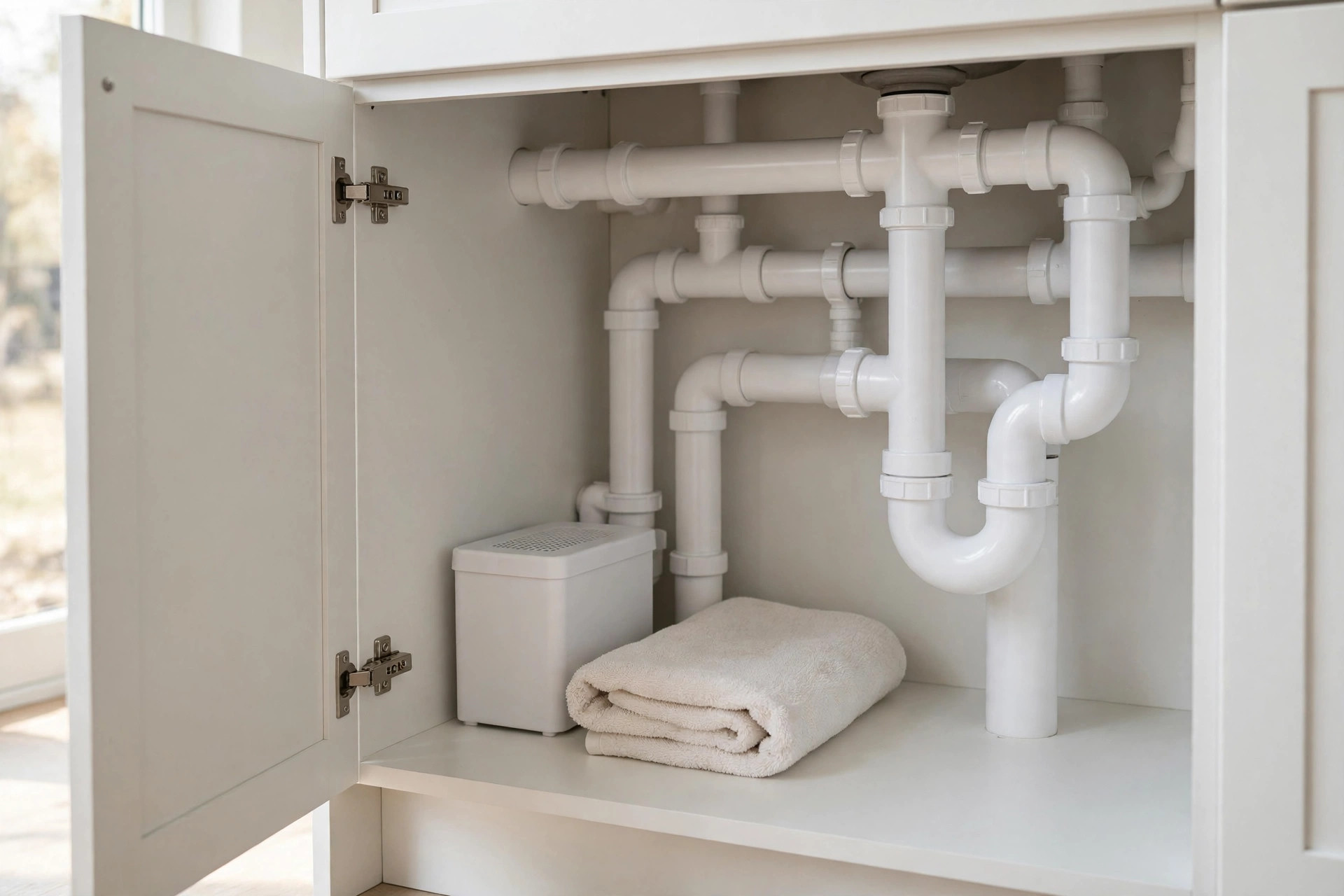
The best-organized cabinet still fails if a slow leak soaks it from above. Once a month, clear one shelf, run the tap, and feel along each pipe joint with a dry paper towel.
A damp towel means a fitting needs tightening now, while the fix is cheap. Add a small moisture absorber box at the back to handle everyday humidity between checks.
Put the check on the same day you restock trash bags. Tying it to an existing habit means it actually happens, pipes and all.
Keep one old towel folded in the cabinet for the day a check finds a real drip.
None of these ideas asks you to move a single pipe. They work because they accept the plumbing as the floor plan and build small, reachable zones around it.
Start with the drip tray and the pipe sketch, then add the two or three organizers your cabinet shape calls for. Small kitchen under sink storage ideas pay off fastest when they are added in that order.
Save this list to your small kitchen board for later, and measure your cabinet before your next organizing shop.


