

15 Small Kitchen Storage Mistakes That Waste Your Cabinets
Your cabinets are probably not too small. They are badly packed, and there is a real difference between the two. Most small kitchens have enough boxes on the wall; the space inside them is simply being spent in the wrong places.
Most small kitchen storage mistakes wasting your cabinets are quiet habits, not bad luck. A lid here, a stacked pan there, a box of cereal mostly full of air, and soon a whole shelf holds half of what it should.
The good news is that none of the fixes below need new cabinets, a remodel or a big budget. Most take under an hour, cost nothing but a short sorting session, and work in rentals as well as owned homes.
If your kitchen has no pantry either, our guide to kitchen storage ideas for apartments with no pantry covers the overflow side. This list stays inside the cabinets you already own, starting with the shelf most people pack worst.
This post contains affiliate links. If you buy through them, we may earn a small commission at no extra cost to you. See our Affiliate Disclosure.
1. Stacking Every Pot and Pan Into One Wobbly Tower
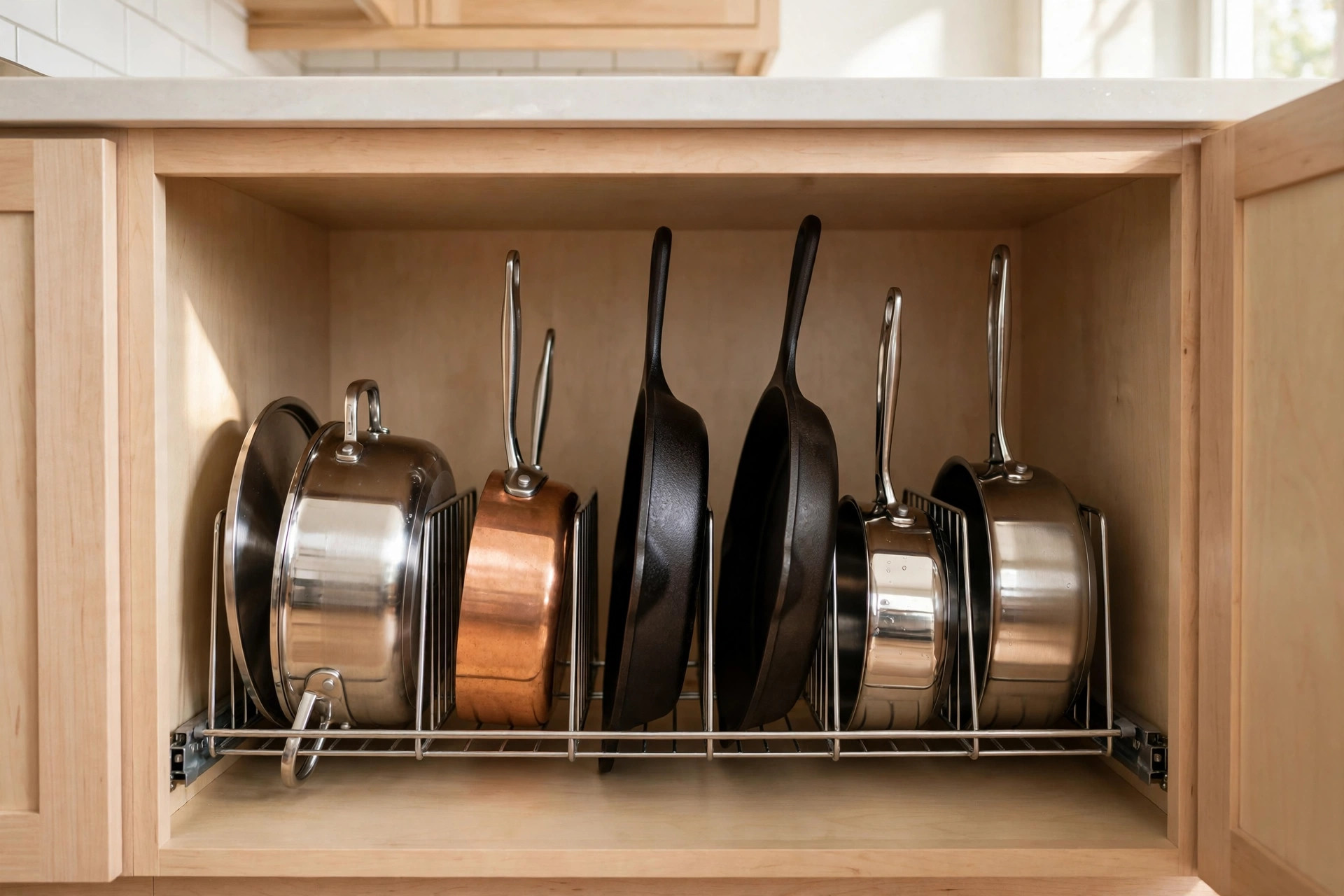
A tower of pans looks tidy for exactly one day. Then the pan you need is at the bottom, so you lift three heavy pieces with one hand and chip the coating on all of them.
The real waste is vertical. A nested tower uses only the floor of the cabinet and leaves the air above it empty, while the pans at the bottom carry weight they were never meant to hold.
Stand pans on edge instead, the way files sit in a drawer. A simple divider rack holds skillets and saucepans upright, so each one lifts out on its own and the whole row takes half the footprint.
2. Burying Spices at the Back of a Deep Cabinet
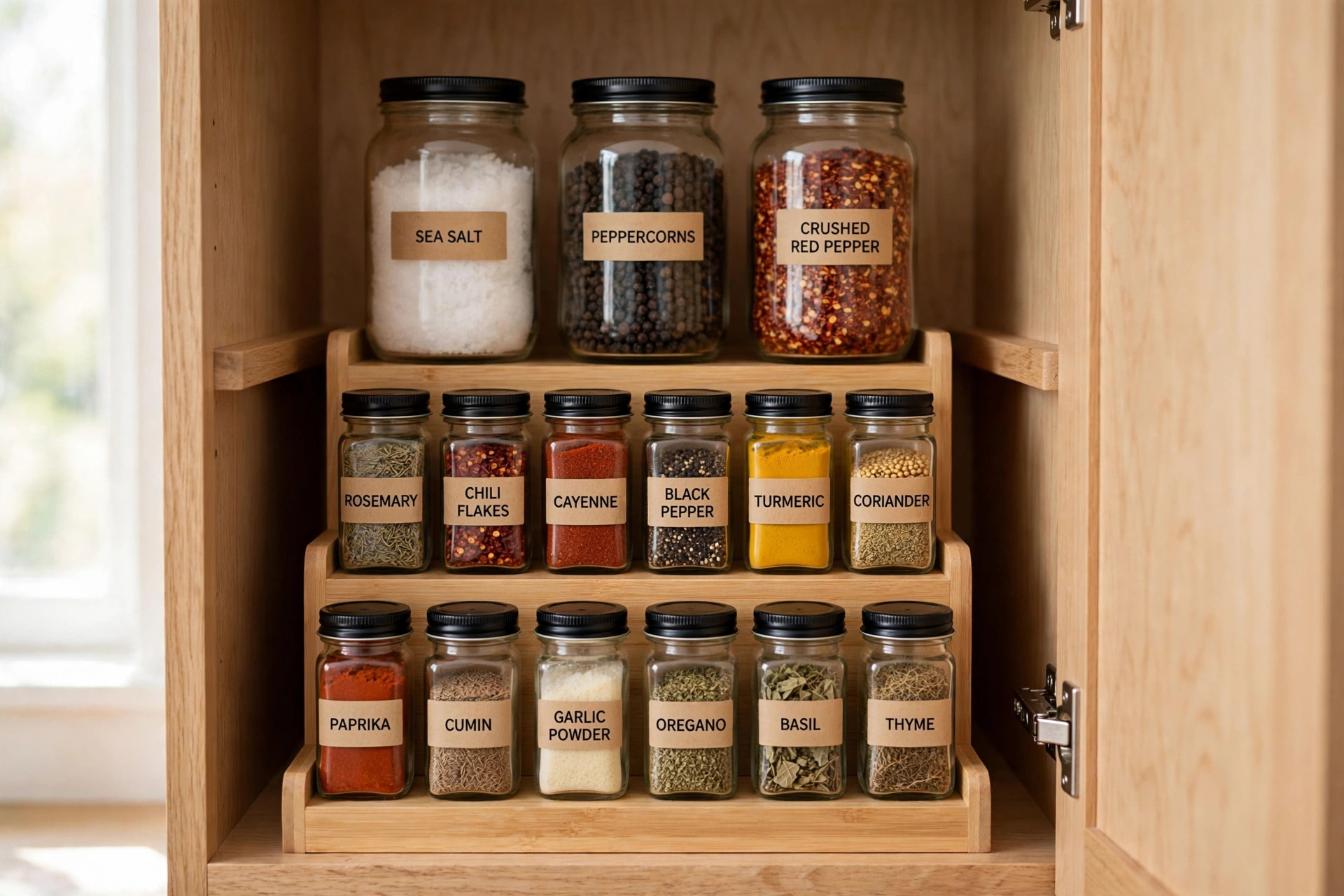
It is 6 p.m., dinner is on, and the cumin is hiding behind fifteen other jars in the dark. So you buy another jar next week, and the cabinet gets fuller and less useful at the same time.
Spices are small, but a deep cabinet swallows them whole. Anything you cannot see, you cannot use, and duplicates creep in quietly, one shopping trip at a time, until the shelf is all jars and no order.
Move spices onto a tiered riser or into a shallow drawer insert where every label faces up. Keep the five you use weekly at the front and the rest in one small basket behind them.
3. Using Only the Front Half of Your Deep Cabinets

Deep base cabinets have a back half that most people never touch. Things pushed there in spring are still there at Christmas, quietly taking the space that daily items needed all year long.
Treat the back as storage you must be able to reach, not as a cupboard-shaped drawer for forgotten gadgets. If an item cannot come out without emptying half the cabinet first, it is in the wrong spot.
Slide in two pull-out bins or a low tray for the back row and store refills and backups there. The same fix rescues the cabinet under the sink, which gets its own guide in our small kitchen under-sink storage ideas.
4. Believing Original Boxes Keep Food Fresher and Neater
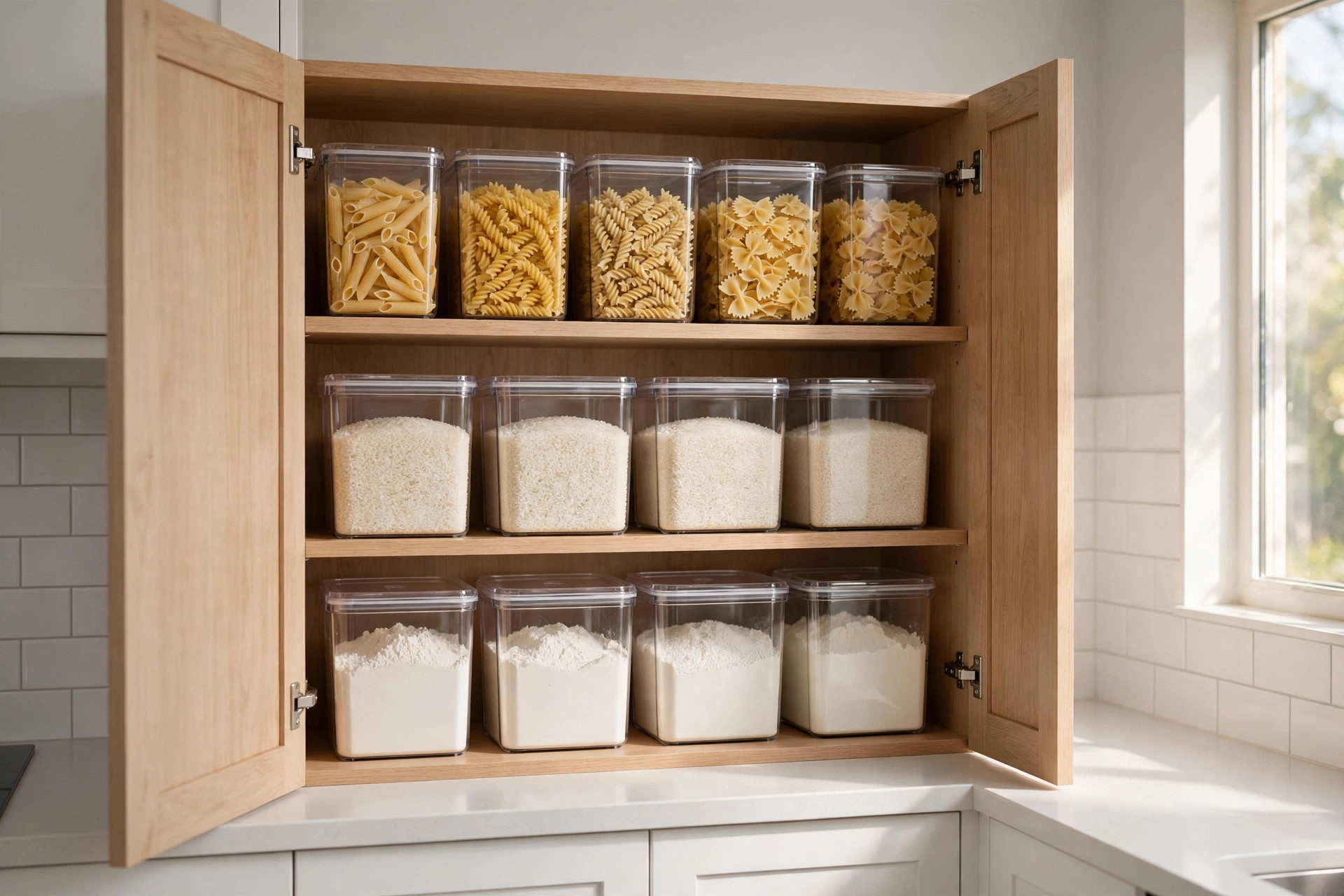
The myth sounds sensible: food belongs in the box it came in. In a small cabinet, though, half-empty boxes of pasta, rice and cereal are mostly air, and cardboard never stacks straight for long.
Boxes also hide what you own. Three opened packs of crackers at the back go stale quietly while the fresh box sits in front, and the shelf fills up with packaging instead of food.
Decant dry goods into square, clear containers that stack edge to edge with no gaps between them. If you buy in bulk, our pantry organization ideas for bulk shoppers shows how to store the overflow without raiding cabinet space.
5. Leaving Tall Gaps of Empty Air Above Every Shelf
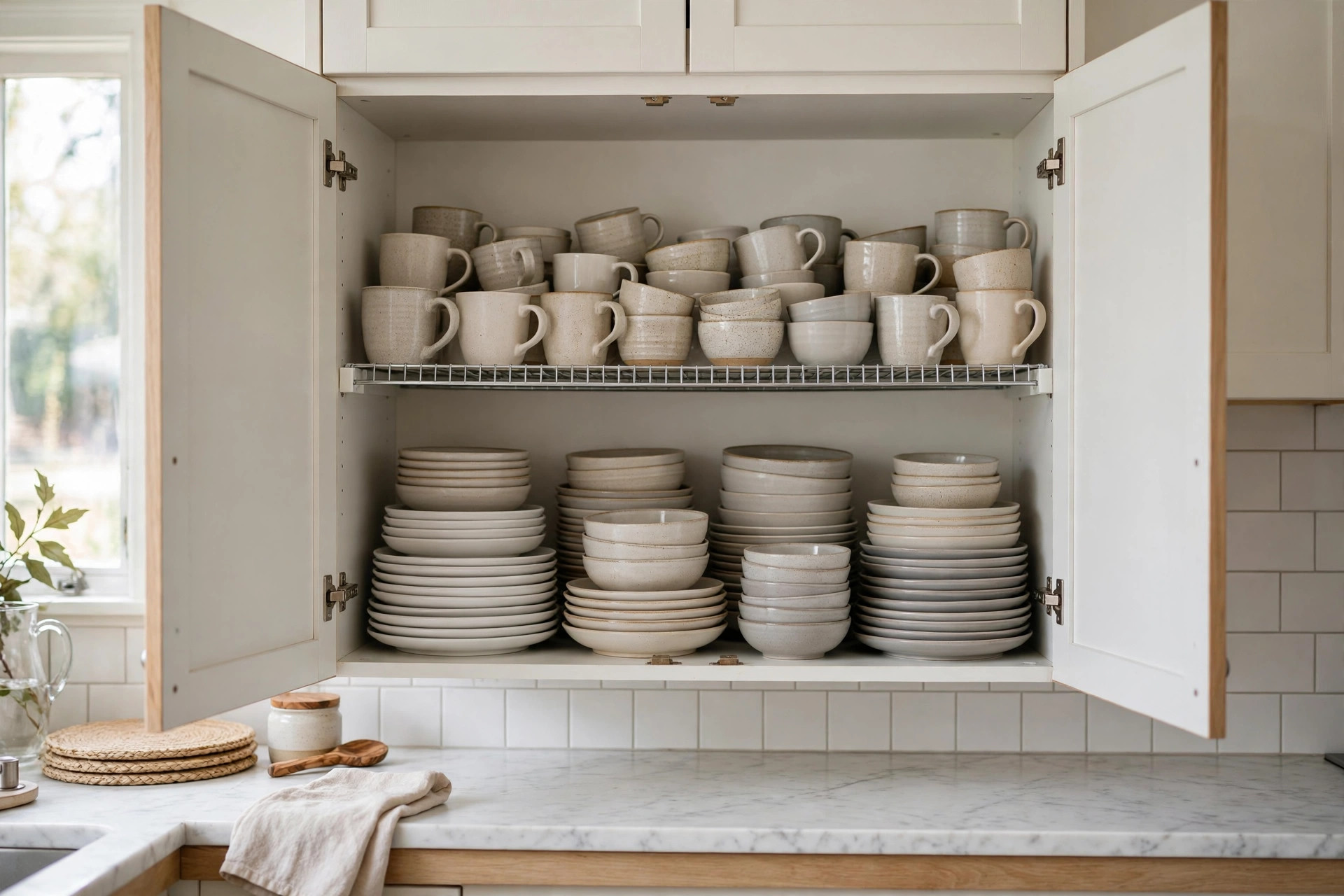
Open a cabinet and look up. Above most shelves there is a hand’s height of nothing, sometimes two, while the shelf below is crowded shoulder to shoulder with bowls, plates and tins.
That empty band is storage you already paid for. Cabinets are sold by the box, and every unused inch inside them is space your rent or mortgage bought for no reason at all.
Slide the shelf pegs up or down so each shelf fits its contents with an inch to spare. Add a wire riser on the tallest shelf and you gain a whole second layer for cups or bowls.
6. Giving Prime Cabinet Space to Appliances You Rarely Use

The waffle maker, the bread machine and the fondue set are not daily tools, but in many small kitchens they sit at eye level in the easiest cabinet to reach in the whole room.
Meanwhile the skillet, cutting board and mixing bowls you use every night fight for whatever space is left. Prime cabinet space should be earned by how often an item actually leaves the cabinet.
Move the occasionals to a top shelf, a hall closet or a lidded bin above the cabinets. Twice-a-year tools can live twice as far away, and daily cooking suddenly feels much roomier. The everyday tools get the front row, every time.
7. Stacking Baking Sheets Flat Instead of Filing Them Upright

A flat stack of baking sheets, trays and cutting boards hides the one you want at the bottom. Every use means lifting the whole pile, and the stack slowly grows sideways across the shelf.
Filed upright, the same pieces take a slot the width of one tray. Nothing hides, nothing leans, and a chopping board slides out without the clatter that wakes the whole house on a Sunday morning.
Use a simple divider rack, a tension rod or even a spare dish rack inside the cabinet. Tall, thin items were made to stand, and standing is how they stop eating entire shelves.
8. Keeping Three of Everything, Just in Case
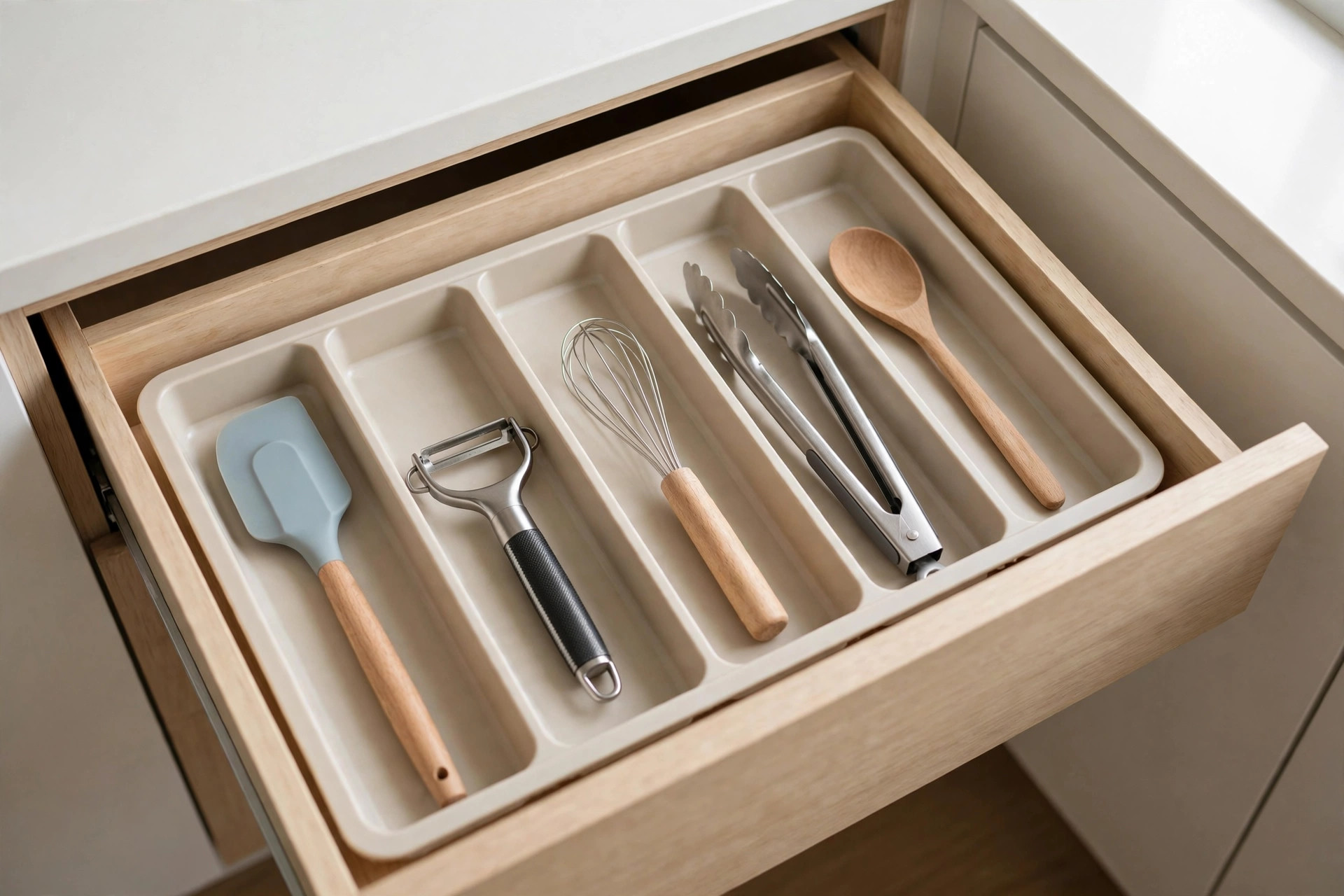
One small rule sorts most tool clutter: one home, one of each. Three spatulas, two peelers and a drawer of single-use gadgets crowd out the tools that actually earn their keep every day.
Duplicates feel safe, but in a small kitchen they charge rent. Every extra tool takes the spot where a mixing bowl, a serving spoon or tomorrow’s groceries needed to go instead.
Keep the best of each tool in a divided tray and pass the spares to a friend or a donation box. A drawer where everything has one clear spot closes properly, every single time.
9. Letting Pot Lids Roam Loose Across the Shelf
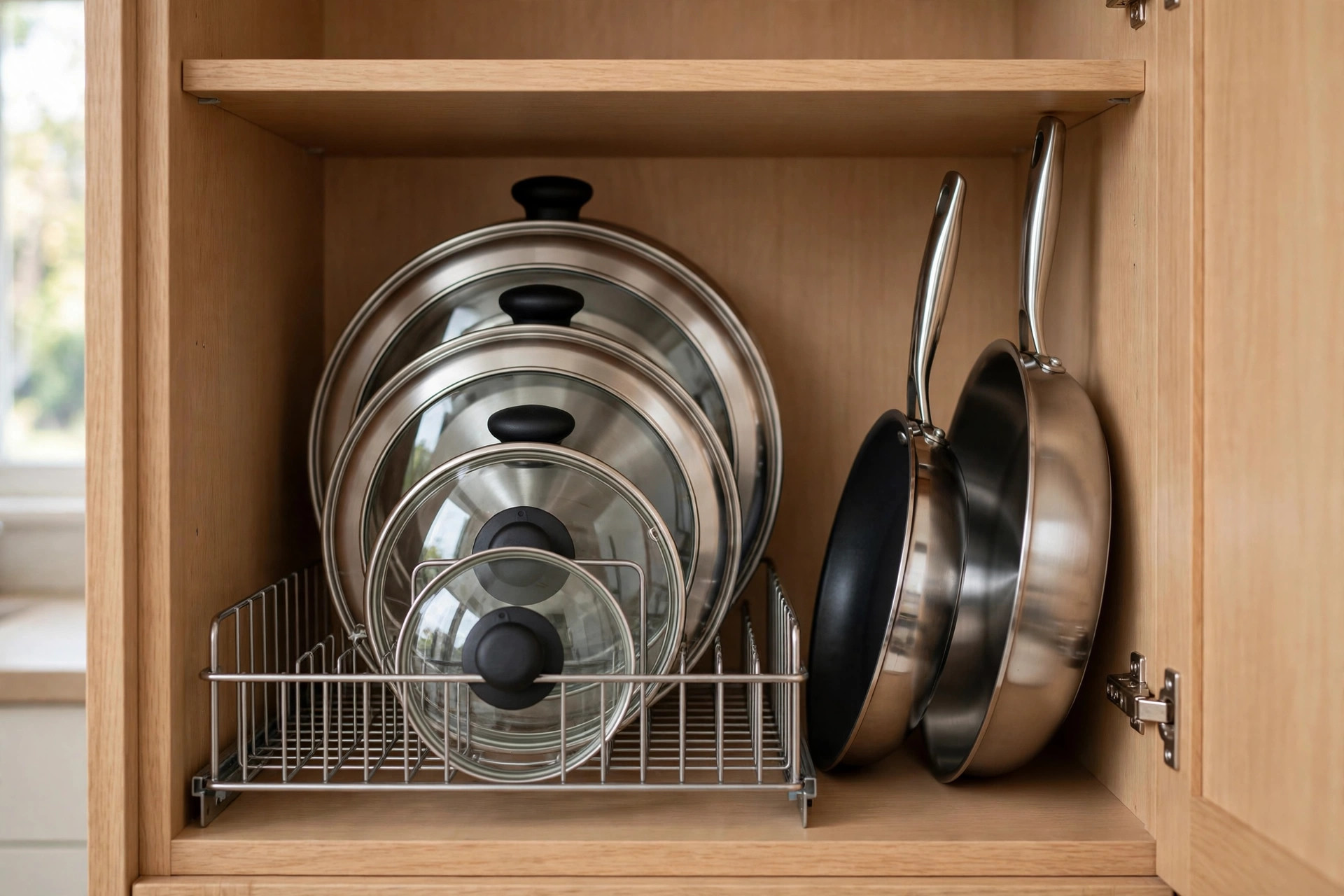
In my own kitchen, the lids were the worst offenders. They slid off pans, wedged behind bowls and turned one whole shelf into a metal jigsaw puzzle that nobody in the house could win.
A loose lid is only two inches thick, but ten loose lids spread across a shelf eat the room of a stockpot. They also rattle, chip enamel and vanish at the exact moment a pot boils over.
Corral them in a lid organizer or a simple rack on the shelf, biggest at the back. Lids stored in one neat line take almost no room and stay with the pans they belong to.
10. Storing the Heaviest Items in the Highest Cabinets

Put the heavy things low and everything gets easier: no lifting a cast iron pot over your head, no mixer teetering on a top shelf, and no accidents waiting above the stove.
Weight is also a space problem. Upper cabinets hold less safely, so heavy pieces force you to spread light items everywhere else, and the whole kitchen slowly loses its logic and its order.
Restack by weight. Cast iron, the mixer and stacks of stoneware go in base cabinets near the floor, while the uppers hold glasses, bowls and dry goods that weigh almost nothing at all.
11. Spreading Mugs and Glasses One Layer Deep Across a Whole Shelf
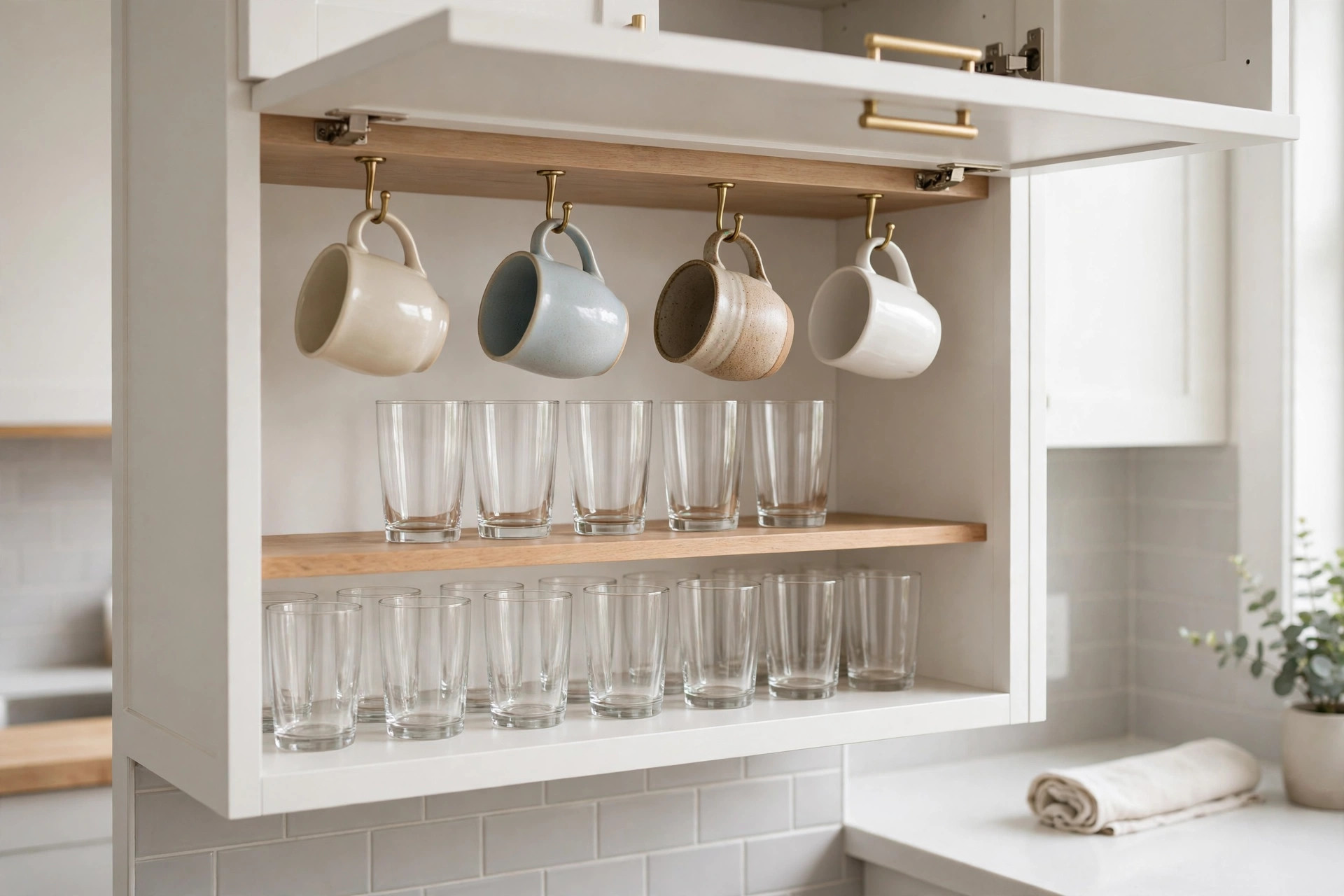
Mugs and glasses are light, round and hollow, yet one row of them can claim an entire shelf. The space above them stays empty and the space between them is wasted on air.
A shelf of single-file mugs is a shelf that could hold twice as much. In a small kitchen, that is the difference between a clear counter and a counter that never quite clears.
Add hooks under the shelf for mugs, or a riser that gives glasses a second floor. If mugs truly take over, gather them into one spot with our small kitchen coffee station ideas for apartments and give the shelf back.
12. Parking Foil, Wrap and Bag Boxes Loose on a Shelf
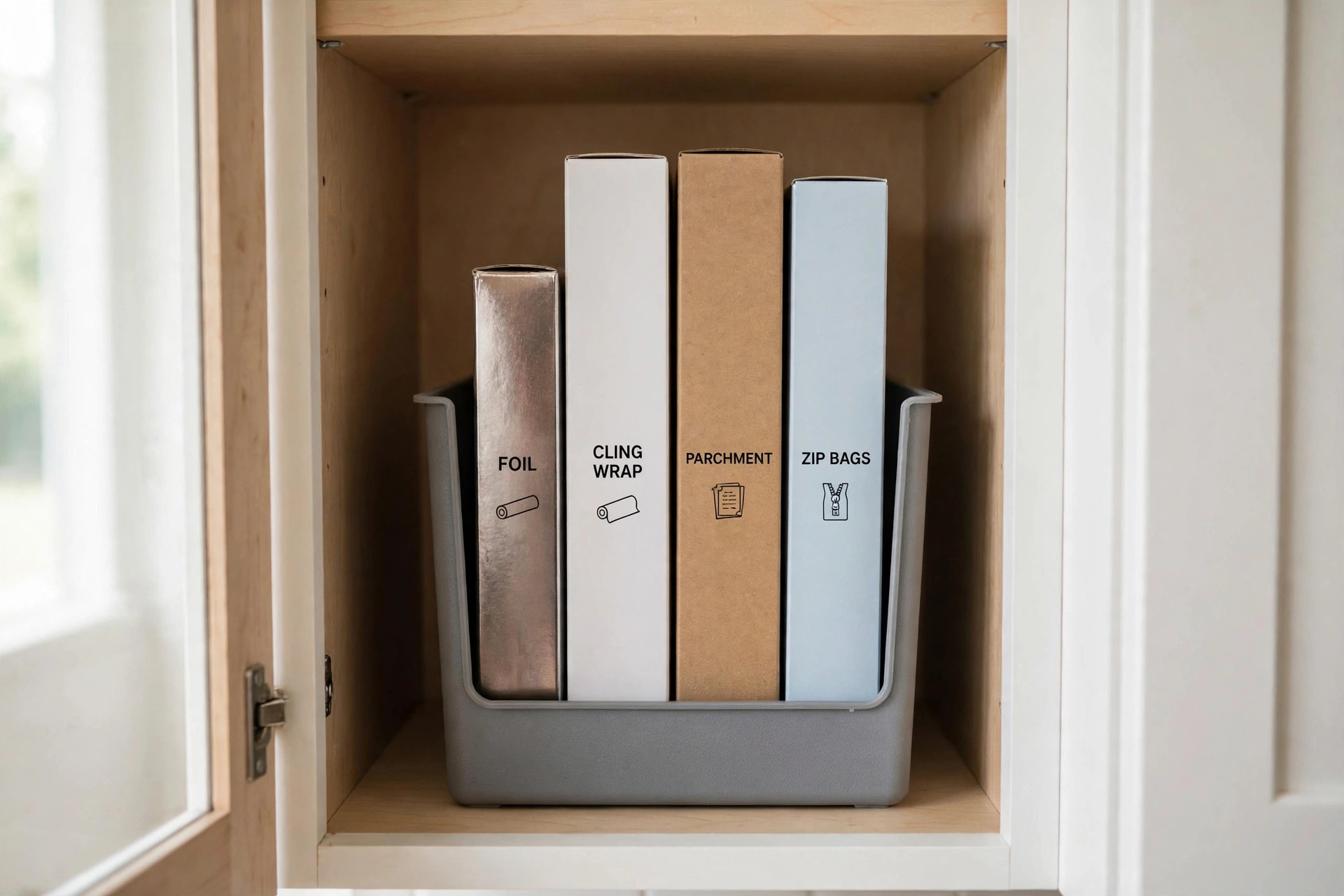
Foil, cling wrap, parchment and sandwich bags arrive in long, flimsy boxes that slide, topple and wedge themselves behind everything else on the shelf. Few things so small cause so much daily annoyance.
Left loose, those four boxes sprawl across more room than a stack of dinner plates. They also end up in three different cabinets, so you end up buying wraps you already own.
Stand them together in one narrow bin, a magazine file or a holder inside the cabinet door, teeth up and labels out. One slim slot near the prep area ends the sprawl for good.
13. Thinking One Neat Row Means an Organized Cabinet

A single tidy row looks organized in a photo. In real life, the front row becomes a wall, and everything behind it might as well be stored in another house across town.
Tall bottles and cereal boxes are the usual wall builders. Short jars, cans and packets disappear behind them, get forgotten, and get bought again while the originals age quietly at the back.
Build in steps instead: tall at the back, short at the front, on a tiered shelf if the cabinet is deep. When every label shows, nothing hides and nothing gets bought twice.
14. Buying Organizers Before Measuring a Single Cabinet
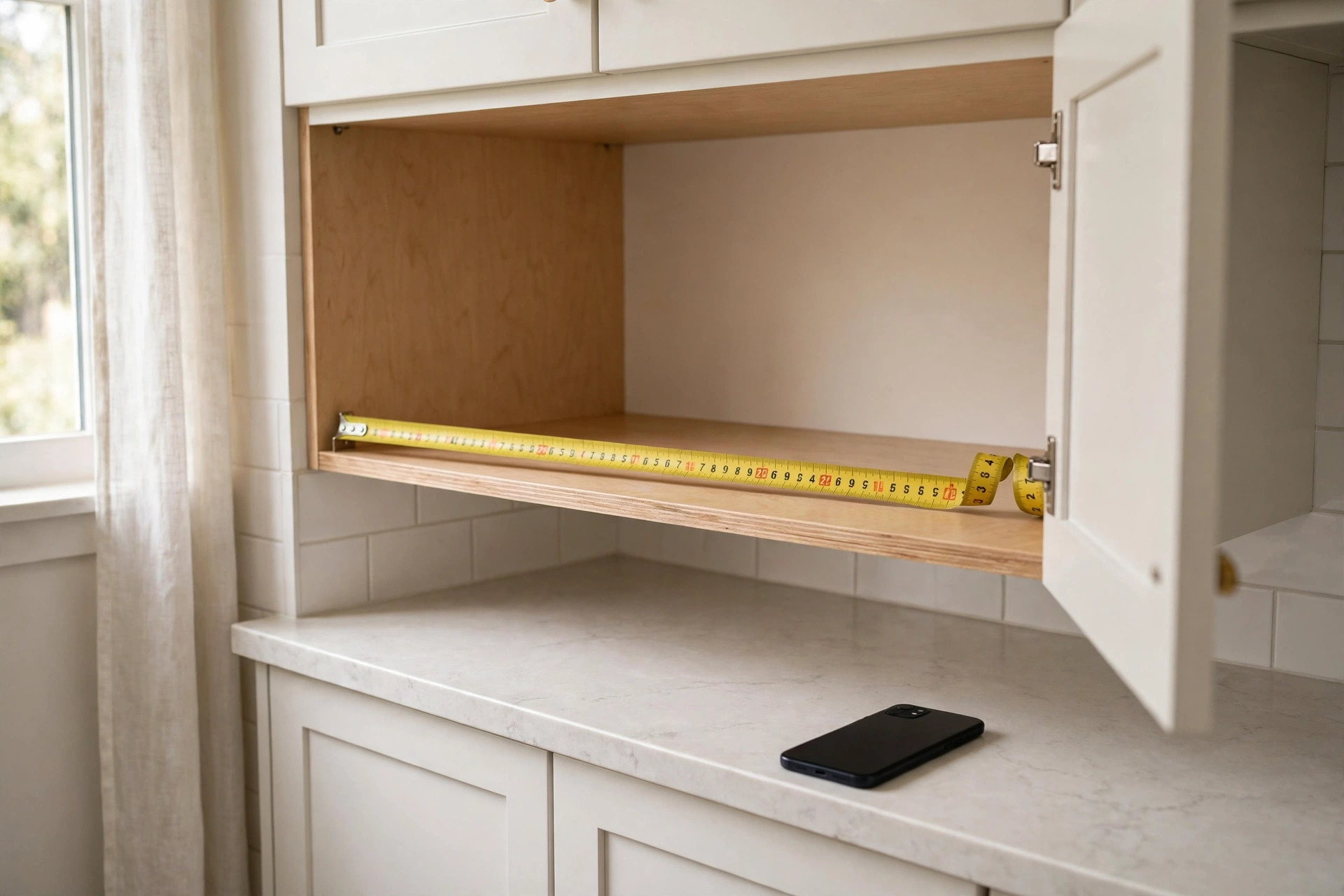
The basket looked perfect in the store. At home it is an inch too wide, the door will not close, and now the organizer itself needs a place to be stored.
Cabinet sizes vary more than people expect, and small kitchens punish guesses the hardest. A bin that fights the door wastes more space than the clutter it was bought to fix in the first place.
Measure first: depth, width and the clear height between shelves, plus the room the hinges steal. Write the numbers on your phone and shop with them in hand, not with hope.
15. Letting the Corner Cabinet Swallow Everything You Own
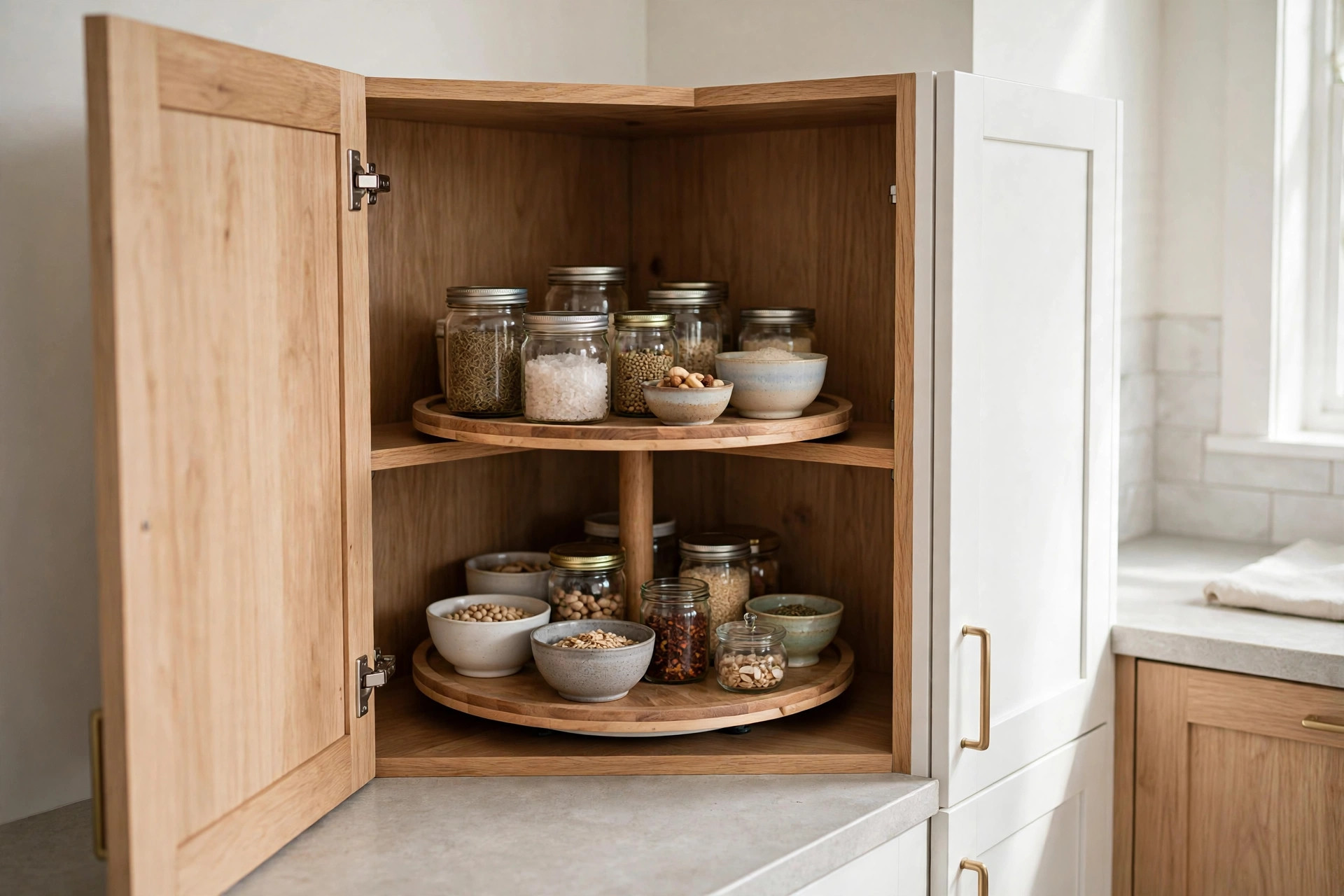
Every small kitchen has one: the corner cabinet with the dark, deep pocket where small appliances and spare bowls go in and somehow never come back out again.
That pocket is often the biggest single space in the kitchen, and the worst used. Items at the back are unreachable, so the front fills with daily things stacked two and three deep.
A lazy susan or a pair of tiered trays turns the pocket into a working shelf. One spin brings the back row to you, and the corner finally earns the size it takes up. The corner stops hiding things and starts storing them.
None of these fixes ask for new cabinets. They ask for one honest hour: measure the space, sort by how often you reach for things, and give every item a single clear home.
Work through these small kitchen storage mistakes wasting your cabinets one shelf at a time, and the same cabinets will hold noticeably more, with room to spare for the things you buy next.
If cabinets alone still cannot hold it all, our small kitchen ideas with open shelves show how to move the overflow up the wall. Save this list to your small kitchen board for later.


