

15 Cozy First Apartment Ideas Warm on a Tiny Budget
A first apartment can feel cold for weeks after move in day. Bare floors echo, white walls glare at night, and one ceiling light leaves every corner looking flat and thin.
Warmth does not need a big spend or a full room of new things. It comes from a clear order: soft layers first, warm light second, and hard bare surfaces covered last.
These cozy first apartment ideas warm on a tiny budget follow that order. Each step uses texture, warm color, and light you can add in small pieces, in the share that matters most.
Start where you sit and sleep. A sofa that feels soft and a bed that looks warm will carry the whole home, even while the rest is still plain.
Keep the plan free where you can. Moving a lamp, folding a blanket you own, and grouping your own books cost nothing, and they often warm a room before any new piece arrives.
This post contains affiliate links. If you buy through them, we may earn a small commission at no extra cost to you. See our Affiliate Disclosure.
1. Layer Throws and Cushions on the Sofa First
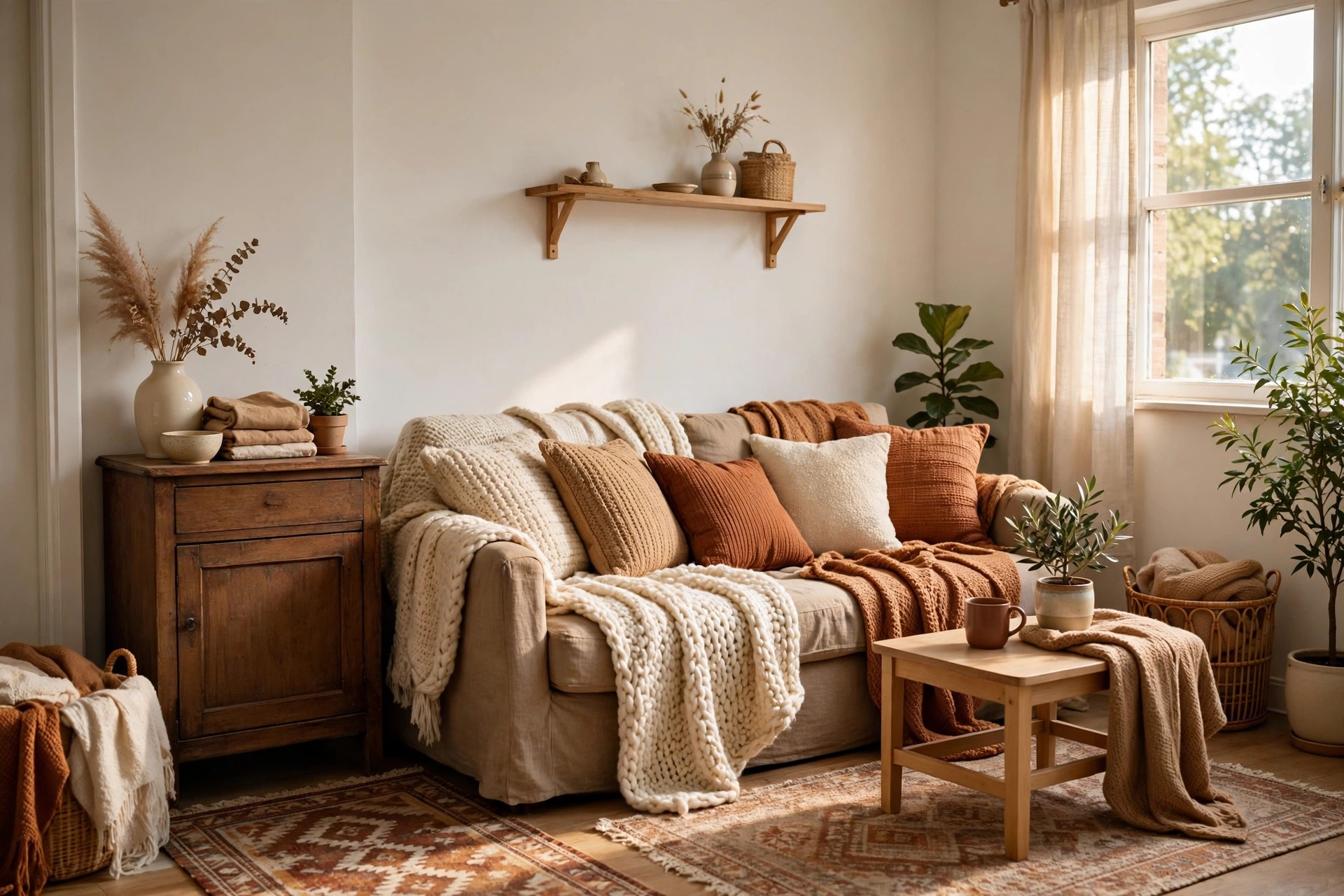
The sofa is where a cold room shows first. A bare sofa in a plain fabric reads flat from the door, and it makes the rest of the room feel unfinished.
Add soft layers before anything else. One knit throw over the arm, one folded blanket on the seat, and two cushions in warm tones give the sofa depth at once.
Mix textures rather than colors at this stage. A chunky knit beside a smooth cushion and a plain woven throw reads rich, even when every piece is a calm neutral.
Our notes on cozy fall small living room ideas with plaid and amber show how far warm layers alone can take one small seating area.
2. Build One Warm Lamp Corner and Skip the Ceiling Light
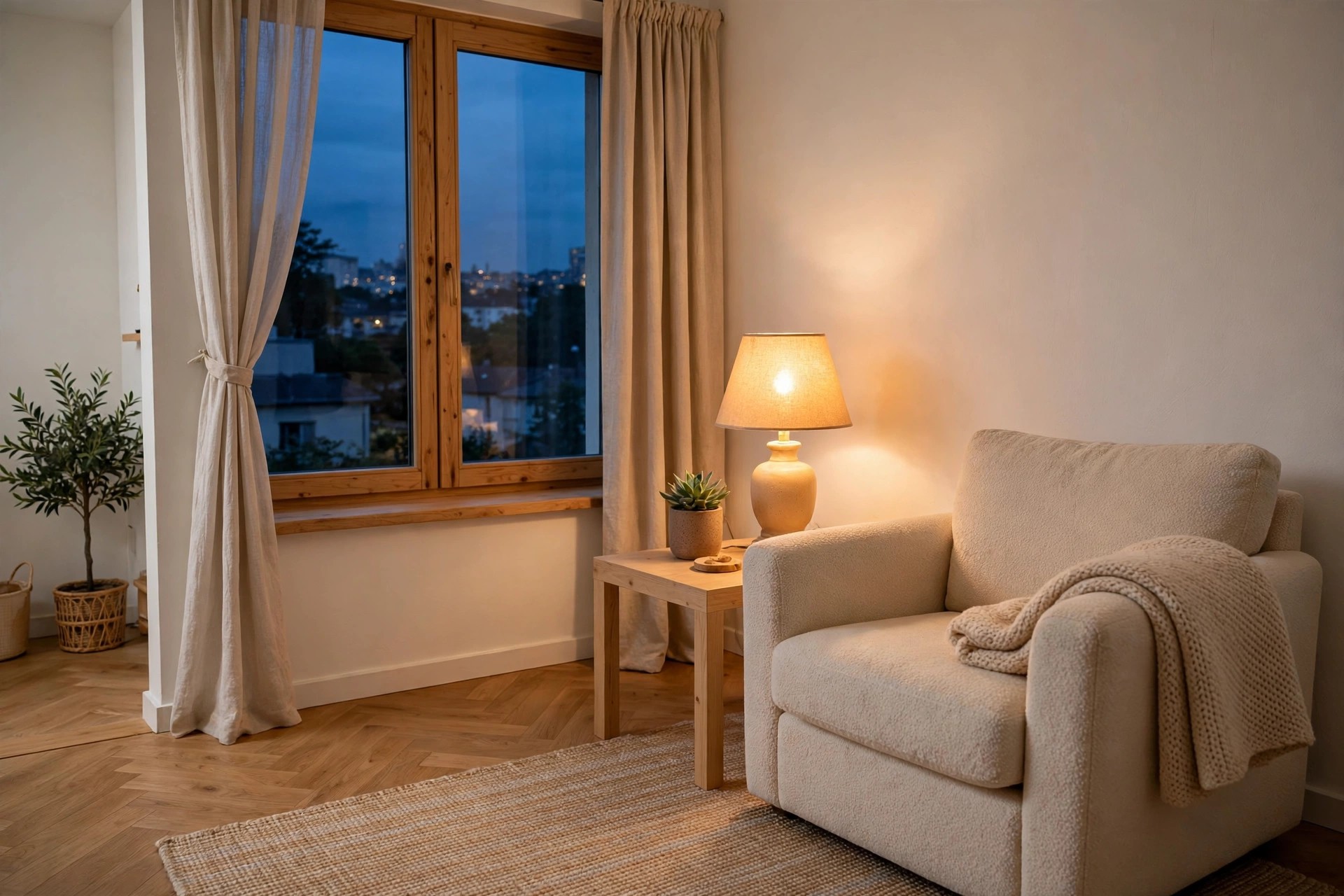
Overhead light is the top reason a first apartment feels cold at night. It falls straight down, flattens every color, and leaves the edges of the room in gray shadow.
Set one lamp at seat height beside the chair or sofa instead. Light that sits low and glows warm pools around the seat, where you read, talk, and rest.
Pick a shade that lets the glow spread sideways. A plain fabric shade in cream softens the bulb, while a bare or clear shade throws harsh lines on the wall.
Test the corner at dusk before you buy a second lamp. One good lamp in the right spot often warms the whole sitting area on its own.
3. Lay a Soft Rug Under the Main Seat Zone
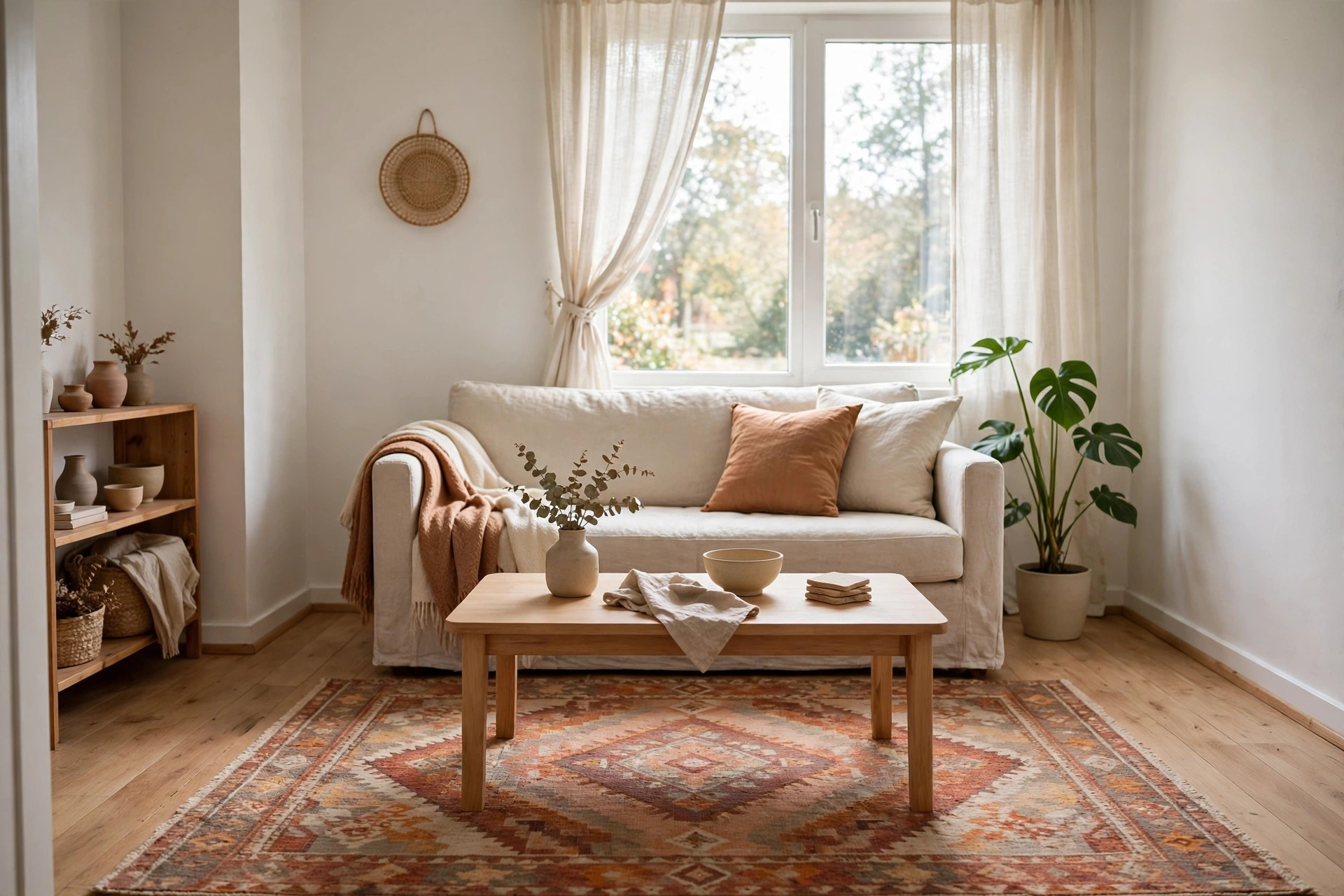
Cold floors drain warmth from a room faster than cold walls do. Your feet meet the floor first each morning, and a hard bare surface sets the tone for the day.
Place one soft rug under the sofa front legs and the coffee table. That single patch marks the warm zone of the room and covers the coldest stretch of floor.
Choose a warm pattern or a plain warm tone with a visible weave. Flat, tight rugs read cold, while a soft pile or a clear pattern adds heat underfoot.
Size it so both front feet of the sofa sit on the rug. A small rug floating alone in the middle makes the room feel smaller and the warmth feel lost.
4. Hang Curtains High and Full at the Window
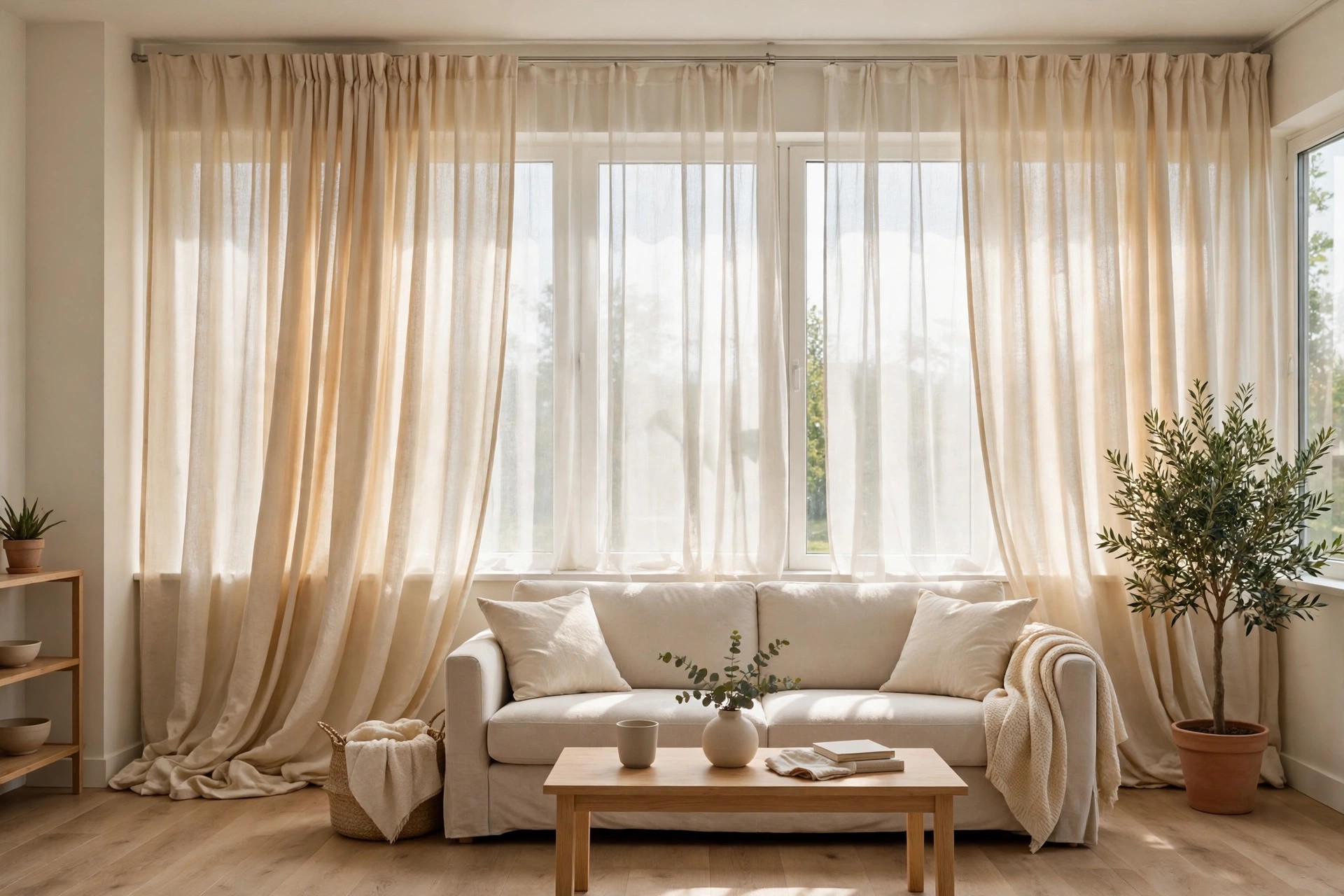
Bare window frames are hard lines of glass and trim. At night they turn black and cold, and in the day they leave the wall beside them looking thin and bare.
Hang curtains from a rod set high above the frame and wider than the glass. Fabric that runs from near the ceiling to the floor softens the whole window wall.
Let the panels sit mostly on the wall when open. The glass stays clear for daylight, and the folds of cloth still frame the view with a warm edge.
Warm cream and soft camel tones suit this job best. Cool gray curtains can chill a warm scheme, so hold the fabric beside the sofa before you commit.
5. Repeat One Warm Wood Tone Three Times

Wood brings a warm color that paint cannot copy. One wood piece alone can look lost, but the same tone repeated in three spots reads calm and planned.
Count a coffee table, a side table, and simple frames as your three. They do not need to match in style, only in tone, light honey or warm mid brown.
Secondhand wood works well here, since old pieces often carry the warm tones new flat pack lines skip. A thrifted table beside a new sofa looks settled, not mismatched.
That mix is the heart of our guide to first home ideas with thrifted furniture glow ups, where one warm wood tone ties found pieces together.
6. Warm the Entry With a Mat, Hooks and a Small Bench
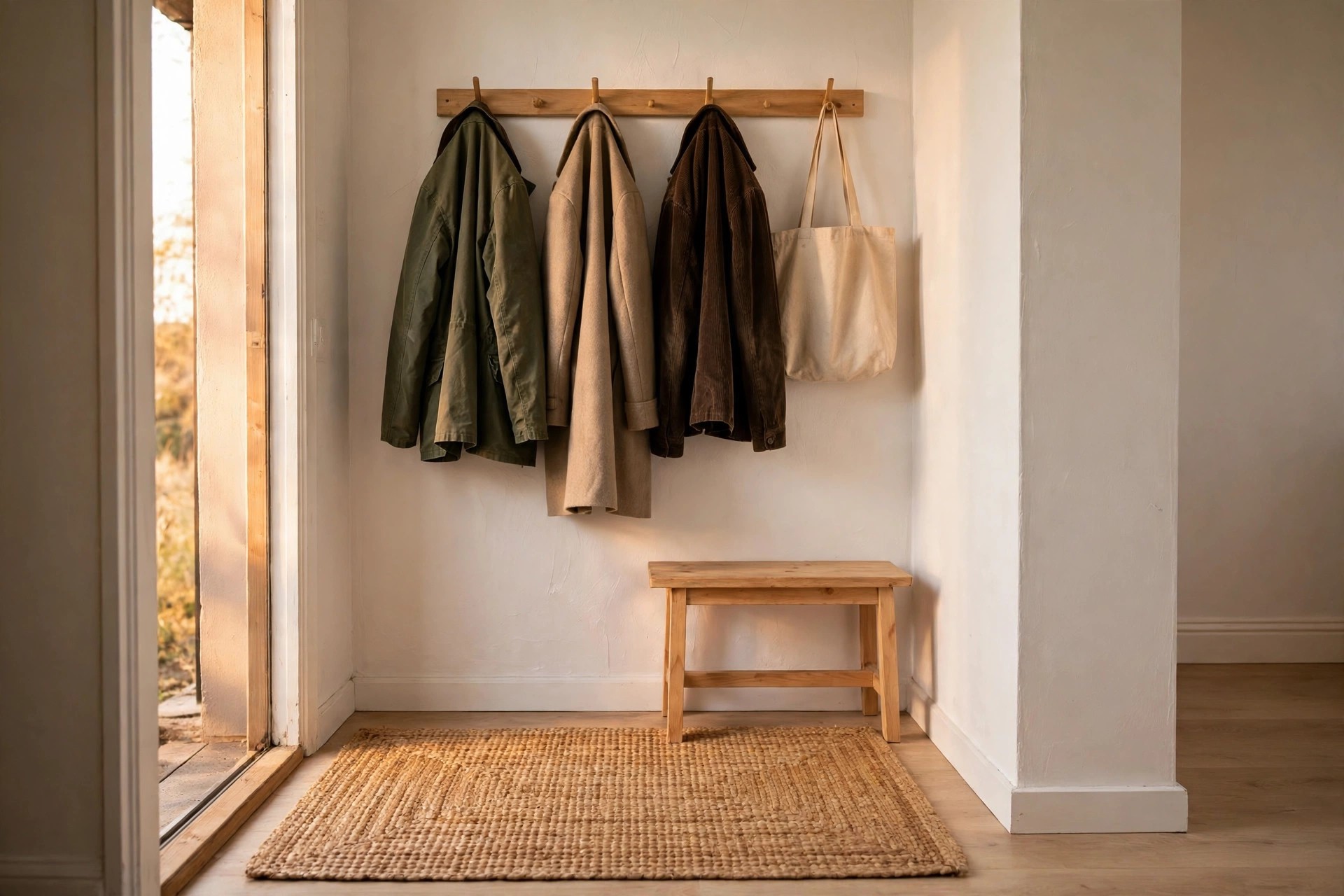
The entry sets the feel of the whole home in three steps. A bare door wall with shoes on cold floor tells you the apartment is not settled yet.
Lay a woven mat inside the door first. It catches dirt, covers the coldest floor patch in the home, and gives the eye a warm texture at the threshold.
Add a simple hook rail for coats and a bag, then a small bench or stool below it. Hooks keep soft coats in view, and coats in view read as warmth.
These renter friendly living room ideas use the same no drill thinking, with rails and mats that lift away clean at move out.
7. Fold a Warm Blanket Across the Foot of the Bed
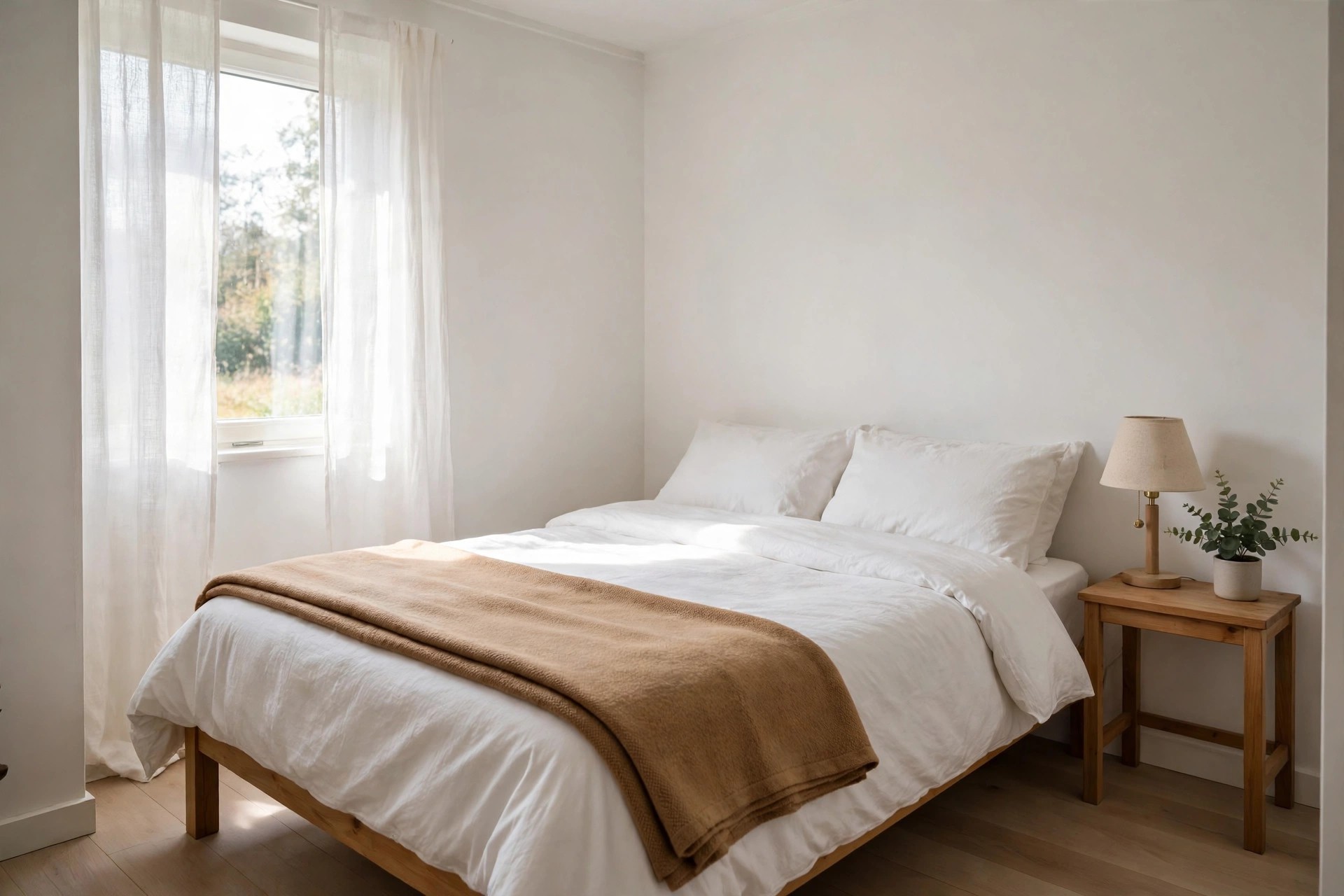
A bed made with plain white bedding can look crisp and still feel cold. The wide flat surface needs one warm band to break it up and ground it.
Fold a blanket in camel, rust, or warm plaid across the foot of the bed. That low band covers about a third of the bed and warms the view from the door.
Keep the rest of the bed simple. White or cream sheets, two pillows, and the folded blanket read calm, and the bed takes a few short minutes to make.
For more low spend bed layering, our dream bedroom ideas on a budget work through blankets, cushions, and lamp light in the same order.
8. Run a Warm Runner Through a Cold Kitchen
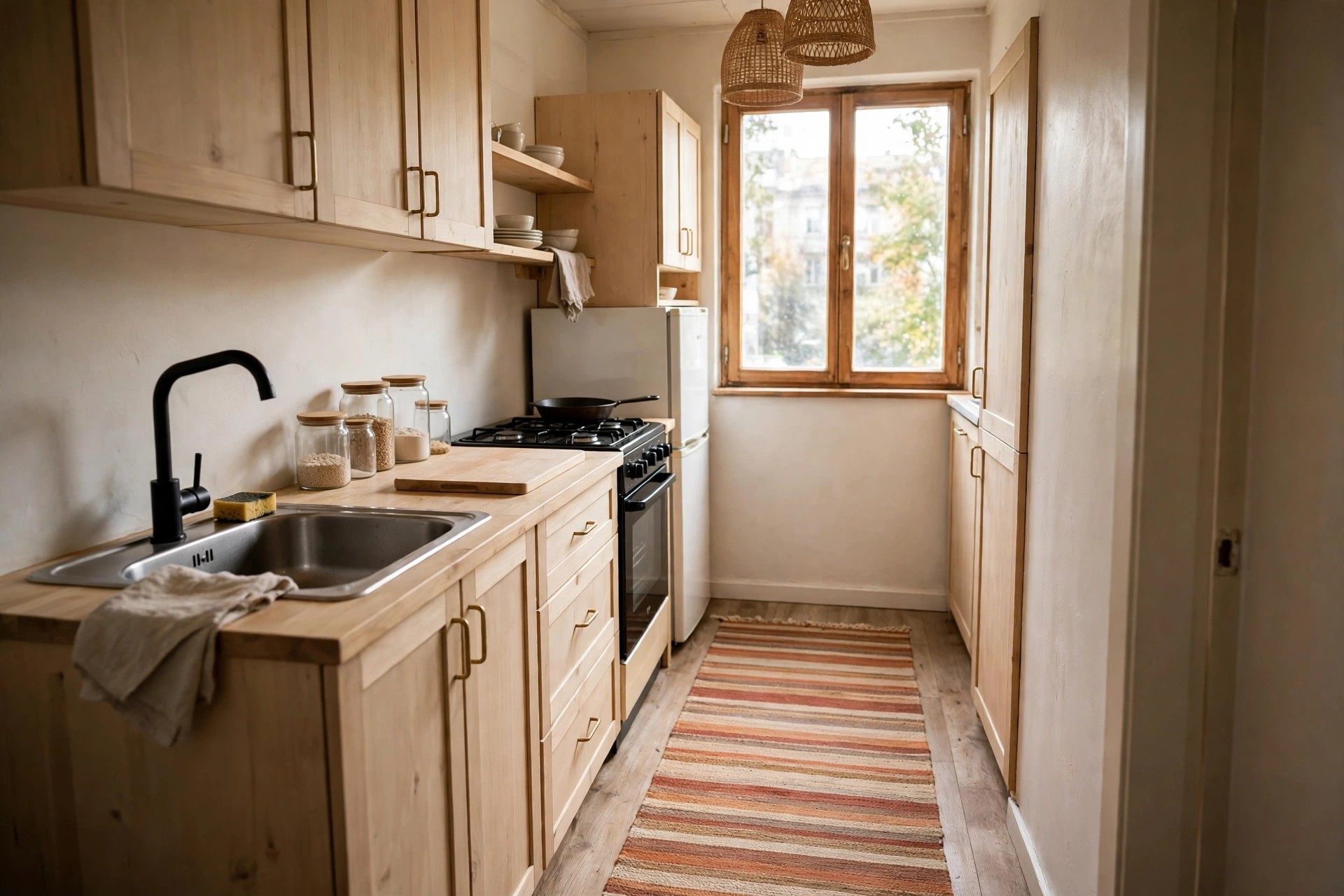
Kitchens in first apartments are often the coldest room in the home. Tile or vinyl floors, plain cabinets, and one hard light leave little softness anywhere you look.
A long runner in front of the sink and stove softens the whole strip. Warm stripes or a faded pattern hide crumbs well and warm your feet during slow cooking.
Add one light wood board left out on the counter. It earns its place for daily use, and its warm tone breaks up a run of cold plain cabinets.
Keep jars and tools in one tight group, not spread along the counter. A grouped corner reads cozy, while a thin spread reads like storage waiting for a home.
9. Soften the Bathroom With Warm White Towels and Wood

It is easy to leave the bathroom bare, since it is small and plain. Yet you start and end each day there, and a cold bathroom makes the home feel rented.
Hang warm white or cream towels in a thick fold. Bright white towels can read blue and cold under plain bulbs, while warm white stays soft at night.
Set a small wood stool or a woven basket beside the tub or sink. One natural texture against tile and porcelain warms the room more than any small decor set.
Fold the spare towels where they can be seen. A neat stack on the stool adds soft height and tells guests the room was finished with care.
10. Group Books and Loved Objects on One Shelf

Warmth is about more than fabric and light. A room with none of your own things in view feels like a short stay, no matter how soft the sofa is.
Give one shelf or bookcase the job of holding your story. Stack books on their sides, stand a framed photo upright, and set one plant or mug beside them.
Keep the group tight and leave some shelf space empty. A calm group reads warm and personal, while a shelf packed edge to edge reads like storage.
Use what you own before you shop for decor. A chipped mug you love and a worn book stack carry more warmth than a cart of new matching ornaments.
11. Cluster Plants Where the Best Light Already Falls

Green leaves soften hard corners in a way few cheap pieces can. A single small plant alone on a sill can look lost, so group plants where light is strongest.
Set two or three pots at the bright window, at mixed heights. One on the sill, one on a stool, and one trailing from a shelf edge build a small green corner.
Choose plants that suit the light you have, not the light you wish for. A plant that fades in a dark corner adds sadness, not warmth, to the room.
Tie the pots together with one material, like plain clay. Matching pots calm the group and let the leaves, in all their shapes, do the lively work.
12. Hang One Large Warm Print Low Over the Sofa
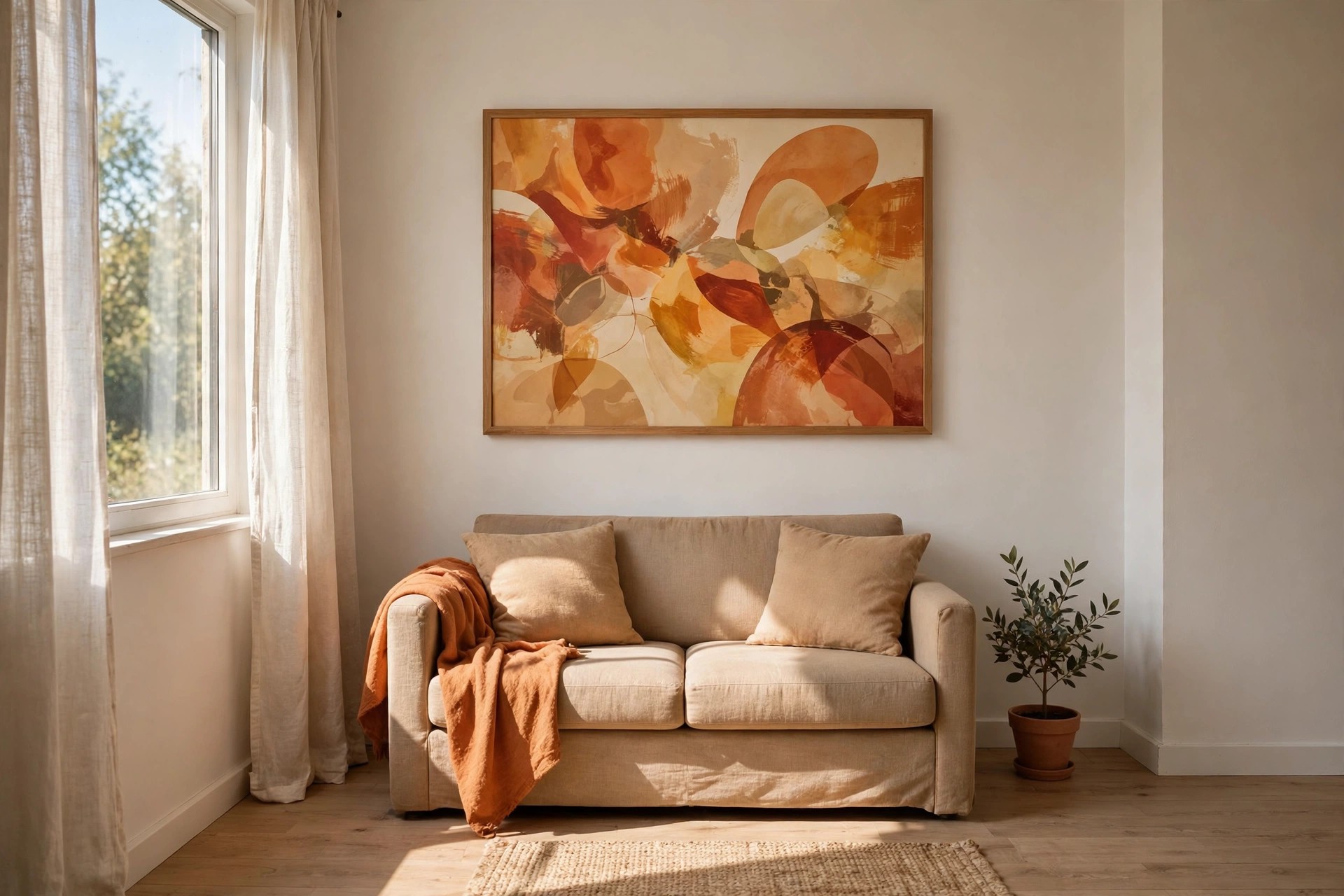
A big bare wall behind the sofa keeps a room feeling new and cold. Small frames scattered across it can look busy, so one large piece is the calmer fix.
Choose a print in warm tones, like clay, sand, soft gold, or faded rust. Hung in a simple wood frame, it brings a wide field of warm color to the room.
Hang it lower than you think, with its base a hand span above the sofa back. Art that floats too high feels apart from the room and warms nothing below it.
Leave the rest of that wall bare for now. One strong piece plus plain wall reads settled, and you can judge the room clearly before adding more.
13. Add Cloth and Cushions to a Plain Dining Corner

Many first apartments eat at a plain table with hard chairs pushed under it. That corner can look like a waiting area, even when the rest of the room feels warm.
Lay a cloth runner down the middle of the table. It softens the hard surface, adds a warm tone at the center, and takes one minute to shake out and reset.
Set thin cushions on the chair seats in a warm plain tone. Chairs you can sit on for a long meal make the corner feel lived in and kind.
Keep one small bowl or plant at the center, nothing more. A clear table that is ready to use reads warmer than a table dressed like a shop display.
14. Cover a Bare Wall With One Woven Textile

Some walls stay cold because paint and plaster have no texture at all. A woven hanging brings the softness of fabric to the wall without a frame or a heavy fix.
Hang one woven piece in cream, rust, and warm brown tones. The pattern can be bold here, since the rest of the room is plain and the textile works alone.
Use a simple wood dowel or a rail that lifts off clean. The hanging should sit flat and still, with its lower edge clear of the sofa back below it.
This is also a kind way to warm a wall you cannot paint. Cloth adds color and texture for now, and it packs away in a drawer at move out.
15. Keep a Three Tone Warmth Order in Every Room

A tiny spend goes further when each new piece joins a plan. Pick three warm tones, like cream, camel, and rust, and let every small buy repeat one of them.
Give cream the large share on walls, bedding, and curtains. Camel takes the middle share on wood, rugs, and blankets, while rust stays small on cushions and art.
This order stops the slow drift into random color. Each thrifted find or gift can be judged in seconds: it joins a tone, or it waits for another home.
If neutrals are more your pace, our neutral first apartment ideas to add color later keep the same calm base and hold color for a later step.
Warmth on a small spend is an order, not a haul. Soft layers on the sofa and bed come first, one warm lamp replaces the ceiling light, and rugs and curtains cover the cold hard edges last.
Work room by room and repeat the same three warm tones as you go. The home will feel joined up long before it feels full, and each small piece will earn its place.
Save these cozy first apartment ideas warm on a tiny budget to your first apartment ideas board, and start with the sofa layers this week.


