

15 Small Kitchen Ideas for a Shared Dorm Style Kitchen
The hard part of a shared kitchen is not the size. It is four people opening the same fridge, using the same counter, and leaving the same sink for someone else.
These small kitchen ideas for a shared dorm style kitchen fix that with fairness first. Each person gets clear space, shared food gets one home, and cleaning has a simple rota.
Nothing here needs a remodel. It is shelves, bins, colors, and habits that stop small mix ups before they turn into daily friction for everyone in the house, week after week, term after term.
Start with the spaces that cause rows: the fridge, the food cabinet, and the sink. Give those three a clear split first, and the rest of the kitchen gets easier.
The ideas below suit a dorm style shared kitchen, a student house, or any small home where several adults cook apart but live together day to day.
This post contains affiliate links. If you buy through them, we may earn a small commission at no extra cost to you. See our Affiliate Disclosure.
1. Give Each Person One Cabinet Shelf Of Their Own

Start by splitting the main food cabinet by shelf, one shelf per person, top to bottom. Each shelf holds only that person’s dry food, snacks, and tea or coffee.
Keep the split even when one shelf looks emptier than another. Fair space stays fair, and nobody has to move a housemate’s jars just to reach their own pasta.
Renters sharing a fixed cabinet can learn a lot from small kitchen ideas for renters, since clear shelf splits need no screws and no landlord talks at all.
Write the shelf order on a small card inside the cabinet door, in colors only. New housemates can copy the order at a glance, without asking anyone at all.
2. Use One Color Per Person For Bins And Boxes

Pick one color for each person and use it everywhere: bins, boxes, food clips, and container lids. Blue is one person, green is another, and so on through the house.
Color works faster than names. At a glance, anyone can see whose bin sits on the wrong shelf and slide it back without opening a single lid to check.
Keep spare bins in the same colors under the sink. When a new housemate moves in, hand over one full color set and the whole system explains itself.
Keep the colors plain and bold, not pale shades that blur in low light. Strong color reads from the doorway, which is where most quick checks happen each day.
3. Split The Fridge By Shelf, Not By Guesswork

Give each person one fridge shelf or one clear bin on a shared shelf. Food that sits outside that zone is either shared food or food in the wrong place.
The door stays shared for sauces and drinks, since door space is hard to split fairly. One small bin per person in the door solves most of the crowding there.
Check the split once a week. Fridge zones drift a little at a time, and a two minute reset keeps small overlaps from turning into lost and wasted food.
Allow one small overflow bin on the bottom shelf for tall bottles and party food. Agree that overflow food moves or goes within two days, no exceptions for anyone.
4. Keep A Communal Staple Zone In The Middle

Set aside one middle shelf or one counter basket for food the whole house shares: oil, salt, rice, oats, and basic spices. Nothing personal lives in this zone.
When a staple runs low, the person who used the last of it adds it to the house list. That one small rule stops the empty oil bottle problem for good.
Houses with very little cupboard room can borrow the stacking logic in kitchen storage ideas for apartments with no pantry and keep staples in one tight, shared tower.
Store staples in clear jars with blank lids in the house color. Anyone can top up a jar, and the zone still reads as shared from across the room.
5. Run A Blank Label And Color Dot System
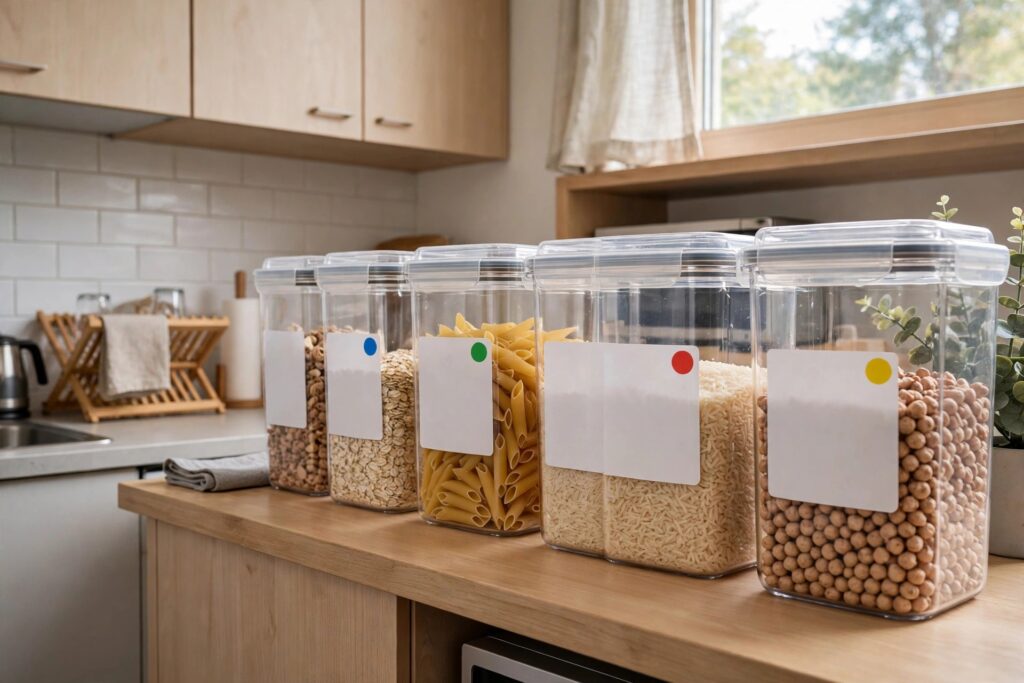
Labels in a shared kitchen work best when they stay simple. Use blank labels and color dots, one color per person, plus one house color for shared food only.
A dot on a lid tells everyone who owns the food and a second dot in the house color means anyone may use it. No long notes, no names squeezed onto tape.
Keep the dots and blank labels in one small pot by the fridge. If the pot lives anywhere else, people stop labeling, and the whole system fades within a week.
Replace dots as food moves. A leftover that becomes shared food gets a house color dot on top of the old one, so the new status is clear at once.
6. Give Everyone A Rolling Cart That Parks In A Row

A slim rolling cart per person holds the overflow that cabinets cannot: lunch boxes, bottles, baking bits, and the odd mug that never seems to fit anywhere else at all.
Park the carts in one row along a free wall, each cart in its owner’s color. A neat row reads as one planned unit, not as four carts scattered around.
Roll your cart to the counter when you cook, then roll it back when you finish. The counter stays clear, and your things travel with you in one move.
Measure the parking row before anyone buys a cart. Carts that match in width look neat, roll in and out cleanly, and never jam against each other in the row.
7. Share One Dish Set In Per Person Colors
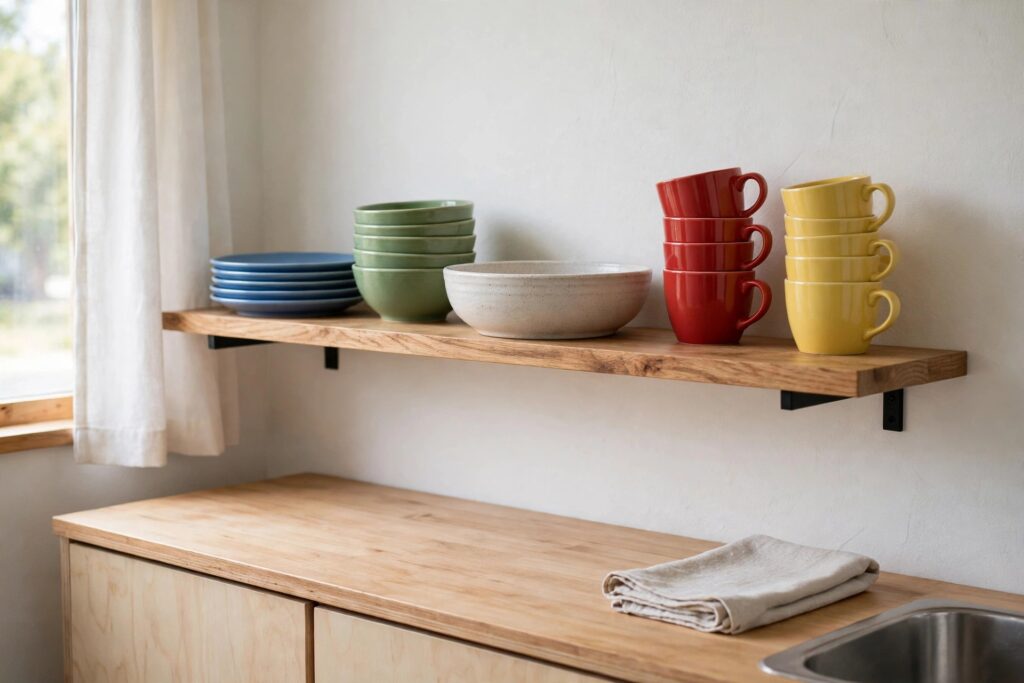
Four full dish sets will swamp a small kitchen. One shared set is calmer, but give each person a mug, bowl, and plate in their own color within that set.
Color makes washing up fair. The blue mug in the sink belongs to one person, and everyone knows it without a debate over who left what and when.
Store the set on one shelf, stacked by type, colors mixed. It looks friendly and lived in, and the shelf holds a quarter of what four separate sets would need.
Keep one spare mug and plate in plain white for guests. Guest pieces live on top of the set, so they never blur the color system the house relies on daily.
8. Put A Simple Cleaning Rota Board By The Sink
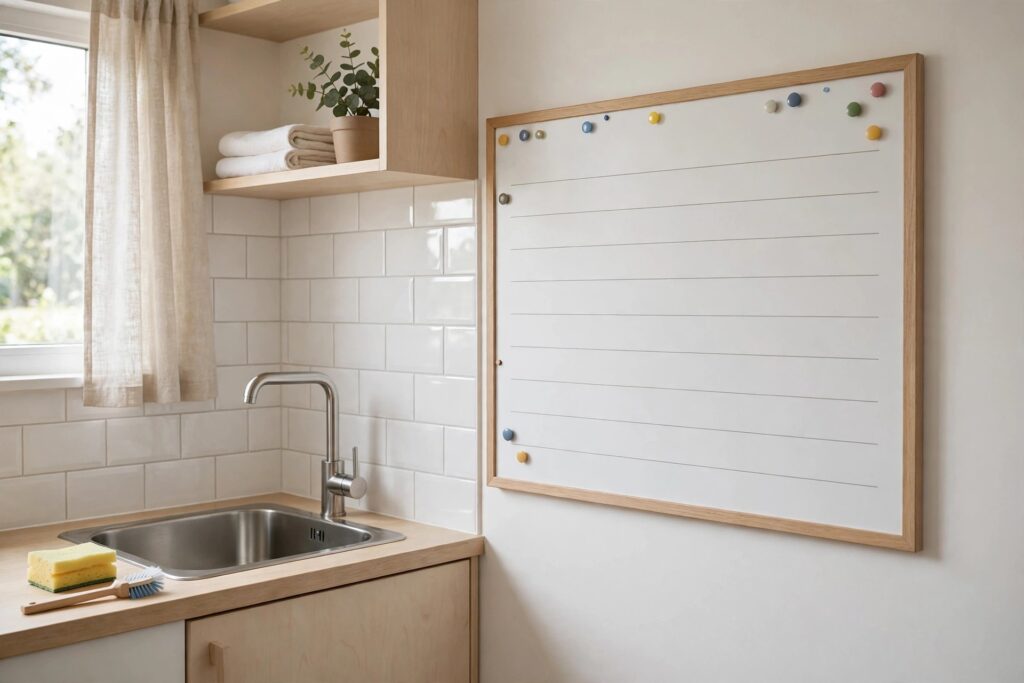
A small board by the sink carries the cleaning rota: wipe counters, empty the bin, clean the hob, and mop the floor, one job per person each week, then rotate.
Keep the board plain, with blank rows and color dots next to each job. It shows what is due at a glance, without long notes or group chat reminders.
Swap jobs every Monday so nobody keeps the worst task for long. Fair rotation is the whole point, and the board makes the fairness easy for everyone to see.
Mark done jobs with a small magnet in the job color. By Sunday, the board shows who did what, and gaps are plain to see without any chasing or blame.
9. Set Up A Morning Counter For Kettle And Mugs

Mornings clash when everyone wants tea, toast, and counter space at once. Give the kettle, mugs, and tea or coffee one short counter run and keep it there always.
Stand mugs in per person colors on a small tray under the kettle spot. One tray holds the whole morning kit and lifts away in seconds when the counter is needed.
Prep work then takes the other end of the counter. Two small flows, morning drinks at one end and food prep at the other, stop most early day bottlenecks.
Fill the kettle the night before and set mugs out in a row. The first person up starts drinks in seconds, and late sleepers still find their mug waiting neatly.
10. Use Stackable Clear Bins For Dry Food Overflow
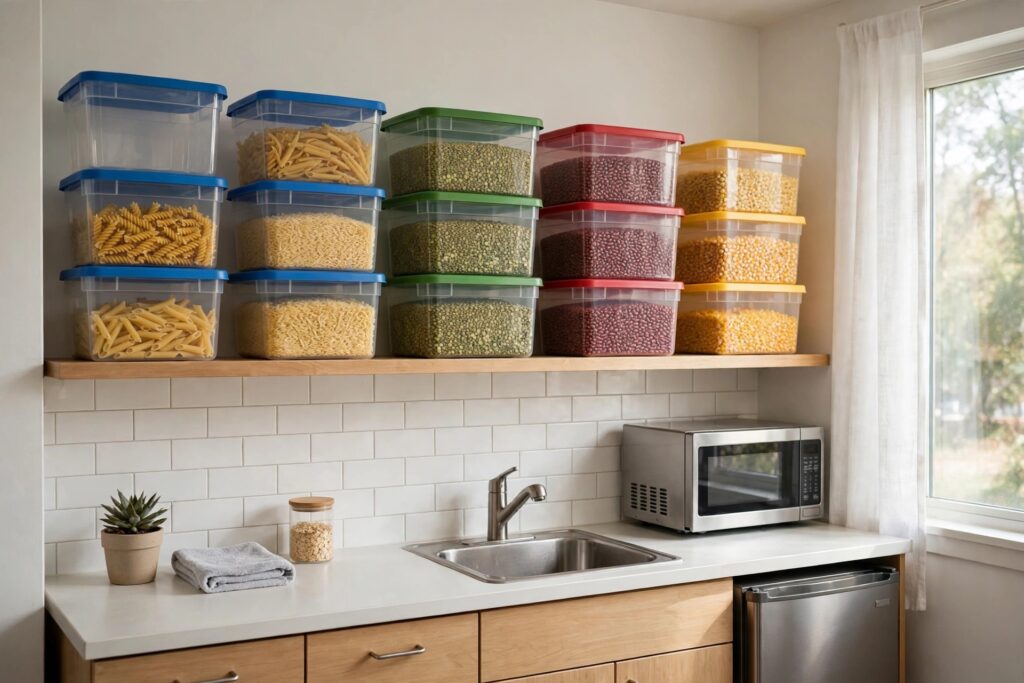
When per person shelves fill up, dry food overflow goes into stackable clear bins on top of the cabinets or on one high shelf. Clear sides show what is inside fast.
One bin per person, in their color, keeps overflow fair too. A bin that will not close is a clear sign to eat down the stock before buying more.
Many shared kitchens repeat the small kitchen storage mistakes of loose bags and mystery boxes. Stacked, see through bins end both problems in one simple move.
Put the heaviest bin at the bottom of the stack and snacks at the top. Daily food stays easy to reach, while bulk flour and rice sit low and steady below.
11. Keep One Prep Zone And One Clear Landing Strip
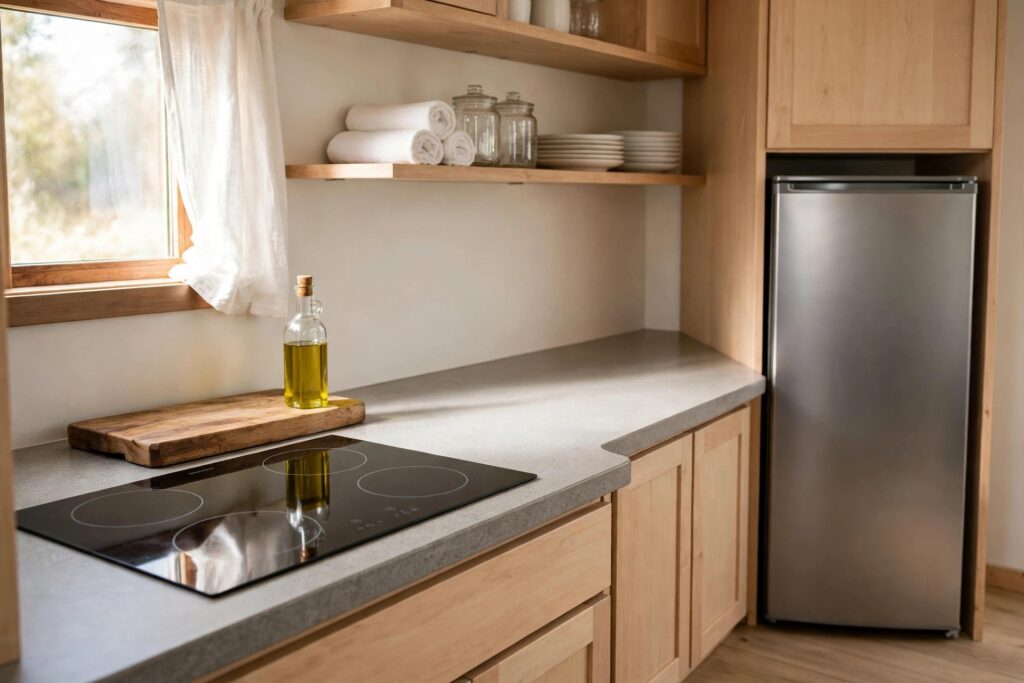
Agree on one prep zone next to the hob, with the shared board, knife block, and oil inside it. Whoever cooks uses that zone and leaves the rest of the counter alone.
Next to the fridge, keep one landing strip fully clear. Bags land there on shopping day, get unpacked into zones at once, and the strip goes back to empty straight away.
These two agreements protect each other. Prep stays in one place, shopping has one place, and no bag or board slowly takes over the whole small counter run.
Tape a thin line on the counter edge to mark the landing strip. It fades into the room, yet it reminds every shopper where bags stop and zones begin each time.
12. Hang Shared Tools On A Wall Rail Everyone Can Reach

Shared tools belong on the wall, not buried in one person’s drawer. A rail above the prep zone holds ladles, tongs, scissors, and the one good peeler everyone uses.
Hang tools in use order, left to right, and return each one to its hook straight after washing. A gap on the rail shows at once what is still in use.
For a fuller wall system, the layouts in small kitchen ideas with magnetic wall storage rails show how rails can hold even more without using counter space.
Leave one empty hook on the rail on purpose. It gives a washed tool a place to drip dry, and it stops wet tools from being laid on clean counters.
13. Fill Narrow Gaps With One Shared Pull Out Store

The thin gap beside the fridge or stove is dead space in most small kitchens. A slim pull out store turns it into shared storage for bottles and tall jars.
Give this store to the house, not to one person. Shared oil, vinegar, sauces, and cleaning spray live here, close to the hob and off the main counter for good.
The gap filler layouts in small kitchen ideas with pull out pantry gap fillers cover widths and placements that suit these narrow, often wasted spaces well.
Keep bottles in use order, cooking oils first, then sauces, then spray at the back. A set order means the store slides out, gets used, and slides back without sorting.
14. Reserve A Free For Anyone Shelf For Shared Leftovers

Leftovers cause more shared kitchen tension than almost anything else. Solve it with one fridge shelf marked in the house color, where food is open to anyone in the house.
Food on your own shelf stays yours. Food on the shared shelf is a gift to the house. That single clear line ends the daily is this mine or yours question.
Clear the shared shelf every few days. Old shared food helps nobody, and a quick joint check keeps the shelf useful, fresh, and trusted by everyone who uses it.
Add one small rule: shared food goes in plain, clear boxes only. Clear boxes on that shelf invite use, while colored lids still signal private food on other shelves clearly.
15. End The Day With A Five Minute Counter Reset

Keep one reset basket on the counter. Anything left out at night that belongs in a zone goes into the basket, then back to its shelf, bin, or cart.
Whoever is last in the kitchen runs the reset. It takes five minutes: clear the landing strip, wipe the hob top, hang the tools, and empty the basket fully.
Morning then starts clean for the first person up. A shared kitchen that resets daily rarely slides into the kind of mess that needs a full house meeting.
Keep the basket small on purpose. A small basket forces a real reset each night, instead of letting left out bits build up into a second, messy storage spot.
A shared kitchen works when the system is visible. One shelf each, one color each, one home for shared food, and a rota everyone can see at a glance.
Start with the fridge split and the color bins, since those two steps calm the most daily friction. Add the carts, rail, and reset basket as the house settles in.
Save this list of small kitchen ideas for a shared dorm style kitchen to your small kitchen ideas board for later, and share it with the house before shopping day.


