

15 Small Kitchen Ideas for Empty Nesters Downsizing
The first dinner in the new kitchen tells you a lot. The roasting pan lives on the top shelf, the good knives are in a box somewhere, and everything you actually use is buried behind things you no longer need. It is a fixable problem.
Downsizing does not mean giving up real cooking. It means the kitchen finally works at your pace, for meals for one or two, without the climbing, stretching and digging a family kitchen demanded.
These small kitchen ideas for empty nesters downsizing focus on comfort first: everything within easy reach, counters that stay clear, and storage that never asks you to kneel or stretch. The fancy gear can go. The pleasure stays.
Many couples land in a condo or a smaller house near family, and the same thinking behind good small condo kitchen ideas applies here: fewer steps, fewer extras, and room for the parts of cooking you still love.
This post contains affiliate links. If you buy through them, we may earn a small commission at no extra cost to you. See our Affiliate Disclosure.
Put Everyday Dishes Where Your Hands Already Are
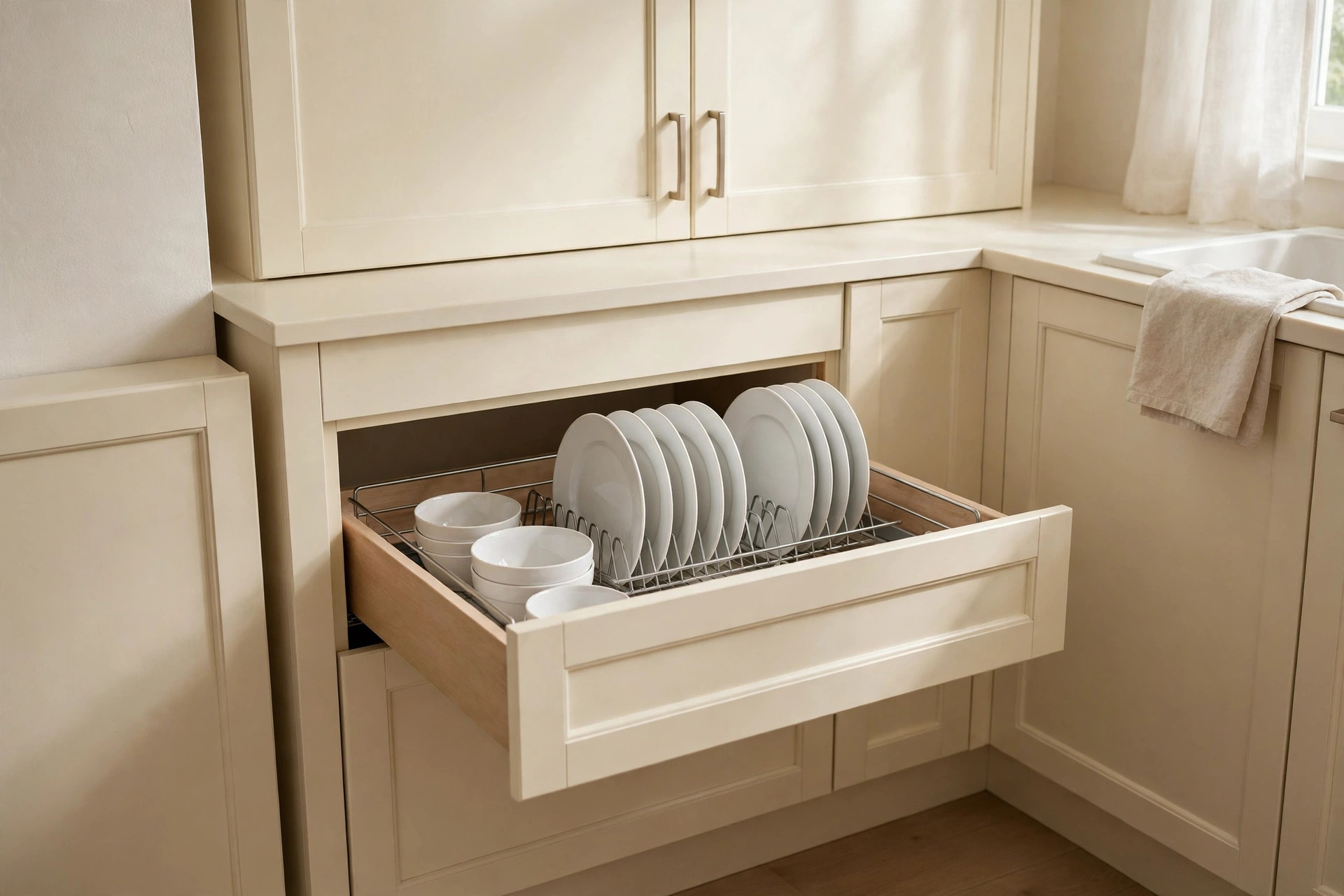
In the old house, the dinner plates sat above the dishwasher and the bowls lived two shelves up. That meant a small stretch and lift for every single meal, three times a day, every day.
Move the daily set into a deep drawer or onto a shelf between waist and shoulder height. Eight plates, four bowls, glasses and mugs, all in one easy zone you can reach without thinking.
A drawer fitted with a simple plate rack works especially well. You lift each plate up and out, instead of reaching down a stack from above.
Keep the good china and the big serving pieces somewhere else entirely, or pass them on. The shelf you use daily should hold only what daily life actually needs, nothing more.
Add Pull-Out Shelves So Nothing Hides at the Back
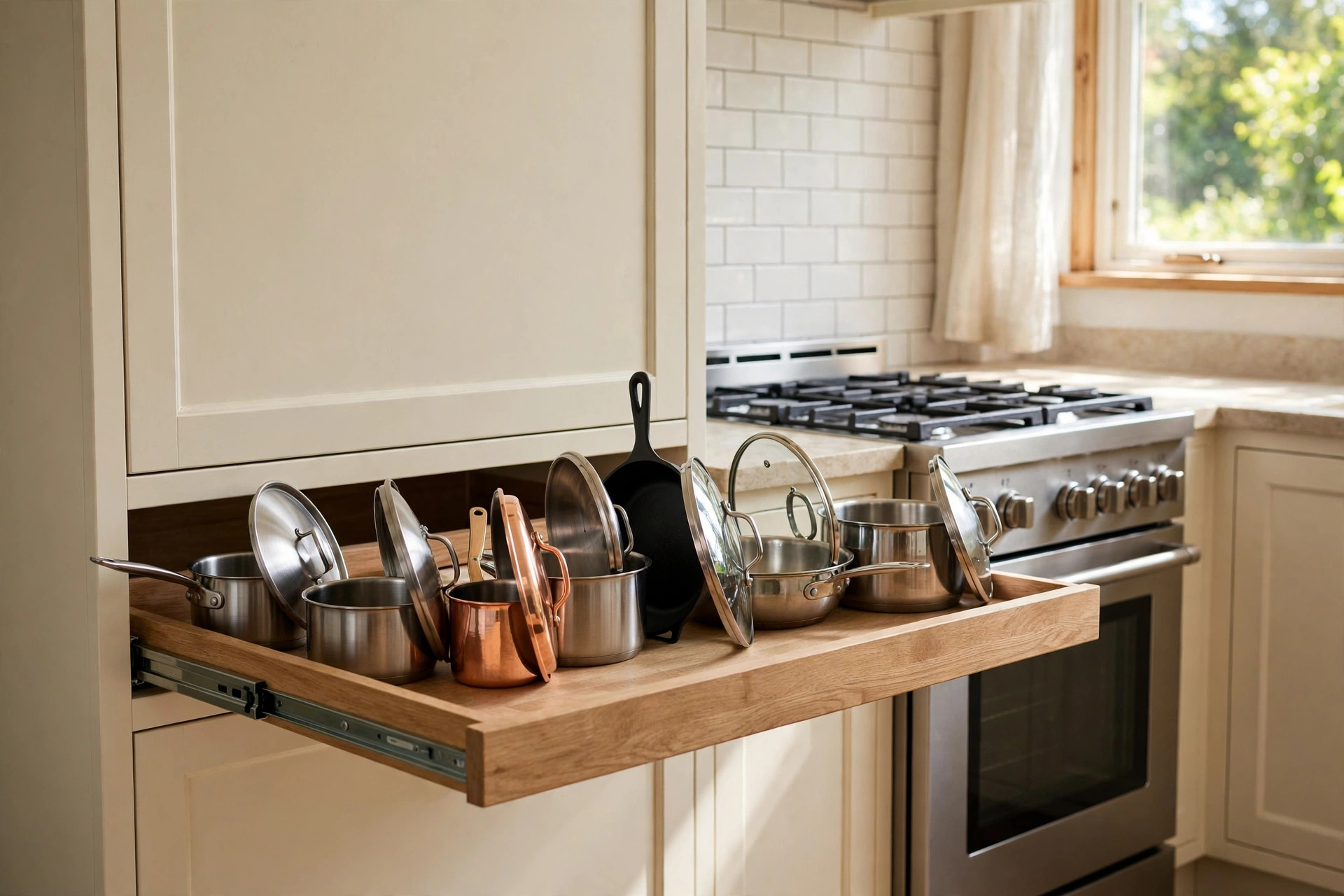
Pull-out shelves end the worst job in a small kitchen: kneeling on the floor to dig for a pot that slid to the back of a deep cabinet.
The shelf rolls toward you, so every pan, lid and small appliance is visible at once. You take what you need and roll it shut, all while standing up straight.
Most base cabinets accept a ready-made pull-out frame with a few screws. Measure the inside width, leave room for the door hinges, and start with the cabinet you open most.
Start with the pot cabinet beside the stove. After a week of cooking without kneeling, most people add the second one. It is a small change that pays back every single day.
Shrink the Cookware Set Down to Pieces for Two

Start by cooking the way you cook now, not the way you cooked for a full house. Most weeknight meals for two use the same three or four pans, week after week.
Keep one wide skillet, one medium saucepan, one lidded pot for soup and pasta, and a rimmed sheet pan. That short list covers eggs, sauces, roasts and almost everything between.
The second stockpot, the giant roaster and the spare frying pans can go to family, a charity shop, or a labeled box in storage for the twice-a-year big lunch.
With fewer pans, each one gets a real home on a pull-out shelf or a hook. Nothing stacks, nothing clangs, and finding the right pan takes seconds.
Keep One Stretch of Counter Always Clear

The rule is simple: one stretch of counter, about the length of a cutting board and a half, stays empty all the time. No mail, no fruit bowl, no appliances parked there.
That clear stretch is your landing zone. Hot pans come out of the oven onto it, shopping bags land there, and prep work always has a home. It sounds minor, but it changes how the kitchen feels at 6 p.m.
Everything else earns its counter spot by daily use. The kettle and the coffee maker stay. The bread machine that comes out twice a year moves to a closet shelf.
A clear landing zone also makes a small kitchen feel calm. You walk in and see a workspace ready for you, not a pile of jobs waiting.
Light the Counters, Not Just the Room

Late afternoon light fades, the ceiling light clicks on, and your own shadow falls exactly where you are chopping. It is the most common complaint in a small kitchen, and the easiest to fix.
Slim light strips under the wall cabinets wash the counters in warm, even light. Knife work feels safer, labels are easy to read, and the whole room looks softer at night.
Battery and plug-in strips need no electrician, and many switch on with a wave of the hand. Our guide to small kitchen lighting ideas walks through the options room by room.
Choose warm white bulbs that match your ceiling light. Mixed colors make even a tidy kitchen look unsettled in the evening. Reading a recipe card should never mean carrying it to the window.
Use a Rolling Cart as Your Extra Counter
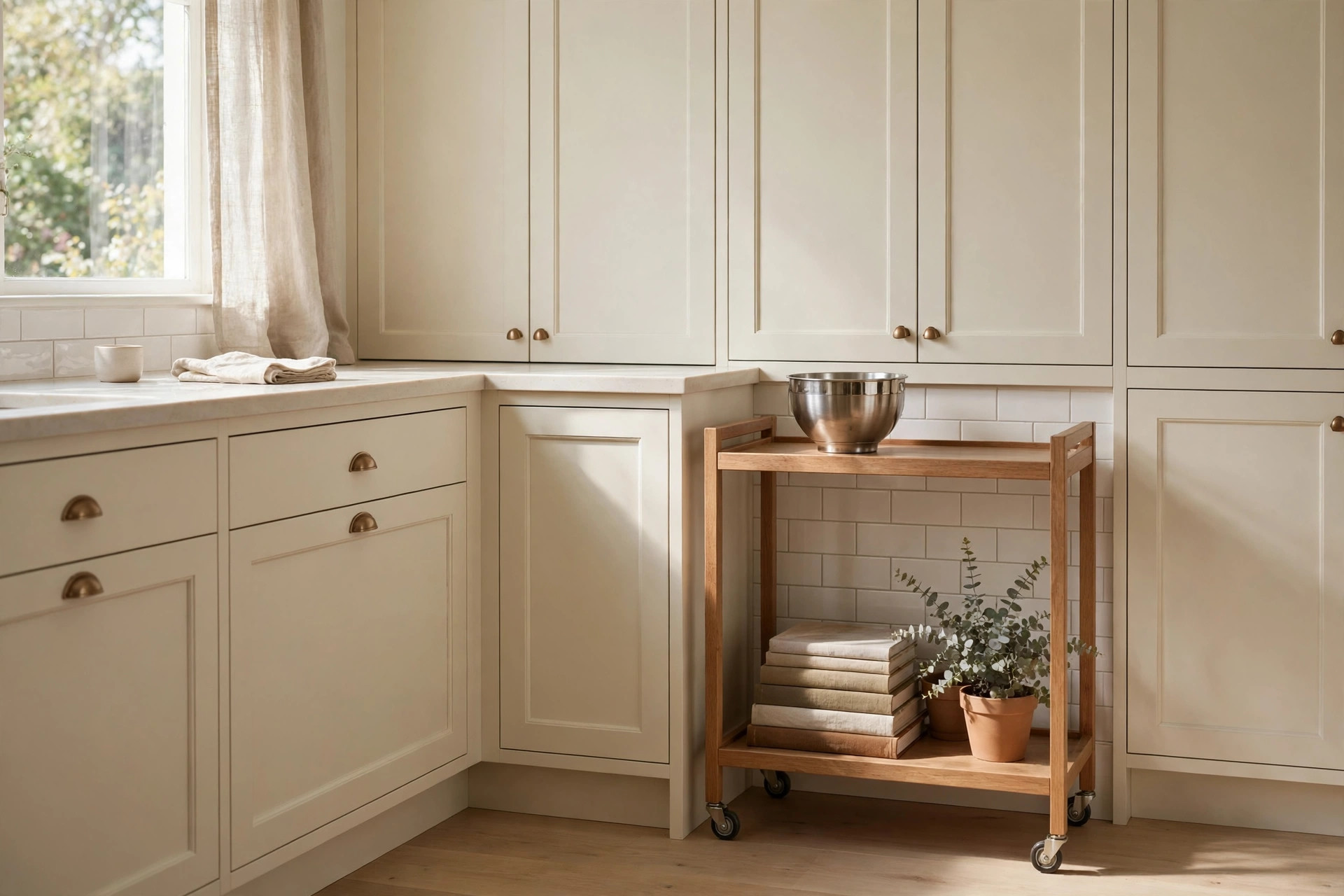
Sunday morning, pancakes for two and a grandchild on the way. The batter bowl sits on a slim rolling cart beside you, the counter stays free, and breakfast feels easy instead of crowded.
A narrow cart on wheels does three jobs in a small kitchen. It adds a work surface, holds the mixer or the bread bin below, and parks in a gap when guests arrive.
Look for one with a solid wood or metal top that can take a hot dish, and locking wheels so it stays put while you work.
When the grandkids visit, the same cart becomes a drinks station or a serving trolley. On quiet weeks it holds cookbooks, a plant and the radio.
Make a Breakfast Corner for Two
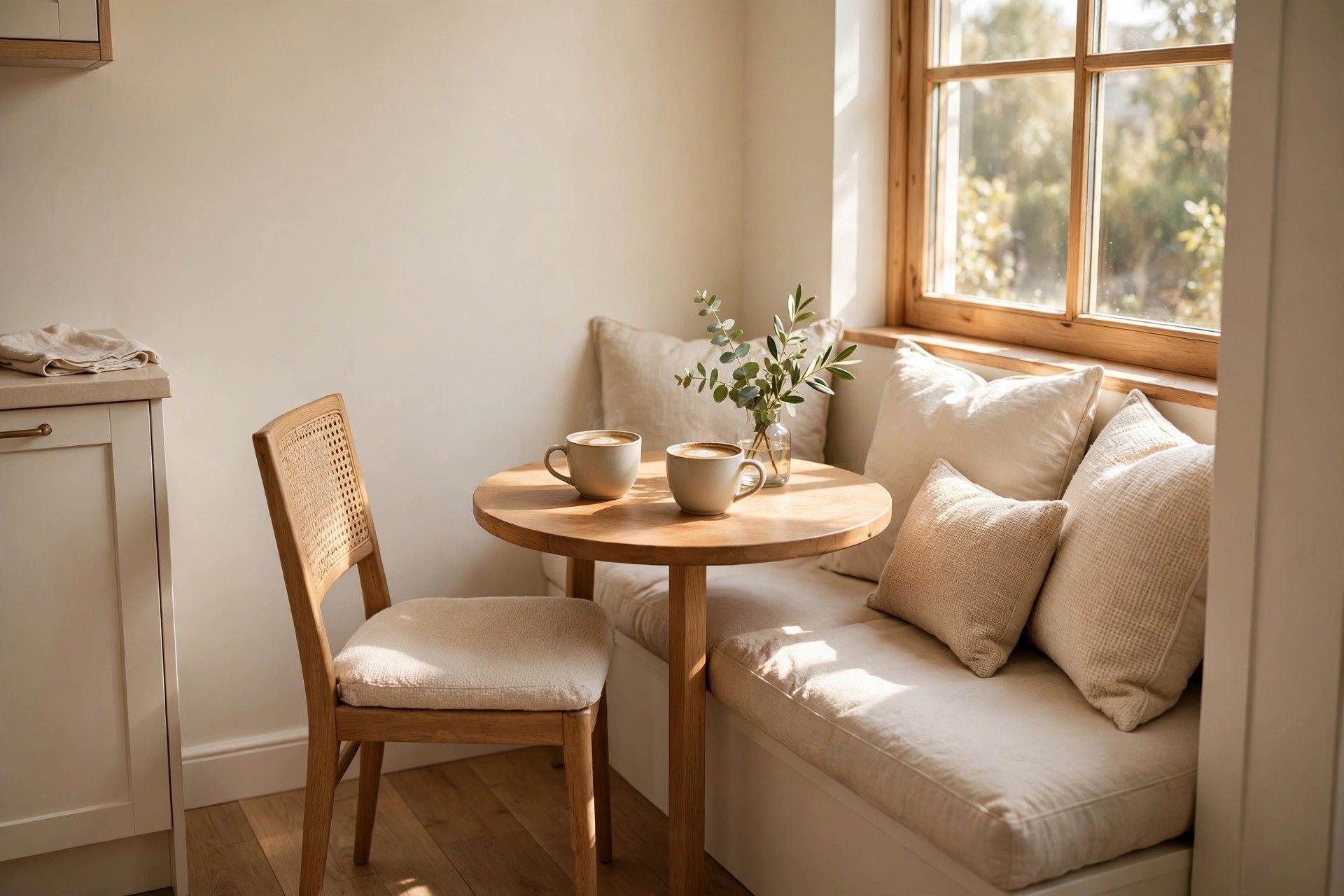
The nicest seat in many downsized homes turns out to be a small corner of the kitchen, close to the kettle and the morning light. Big dining rooms rarely get used before noon. It is where the day starts slowly, together.
A compact table for two, or a short bench along one wall, gives you a place for coffee, the crossword and a proper cooked breakfast. No trays on laps, no eating standing at the counter.
Our roundup of small breakfast nook ideas shows corners that work in very little floor space, including narrow kitchens where a full table never fit.
Add two cushions you actually like sitting on and a small lamp or candle for winter mornings. Comfort is what turns a corner into a habit.
Cooking for Two Does Not Mean Tiny Portions
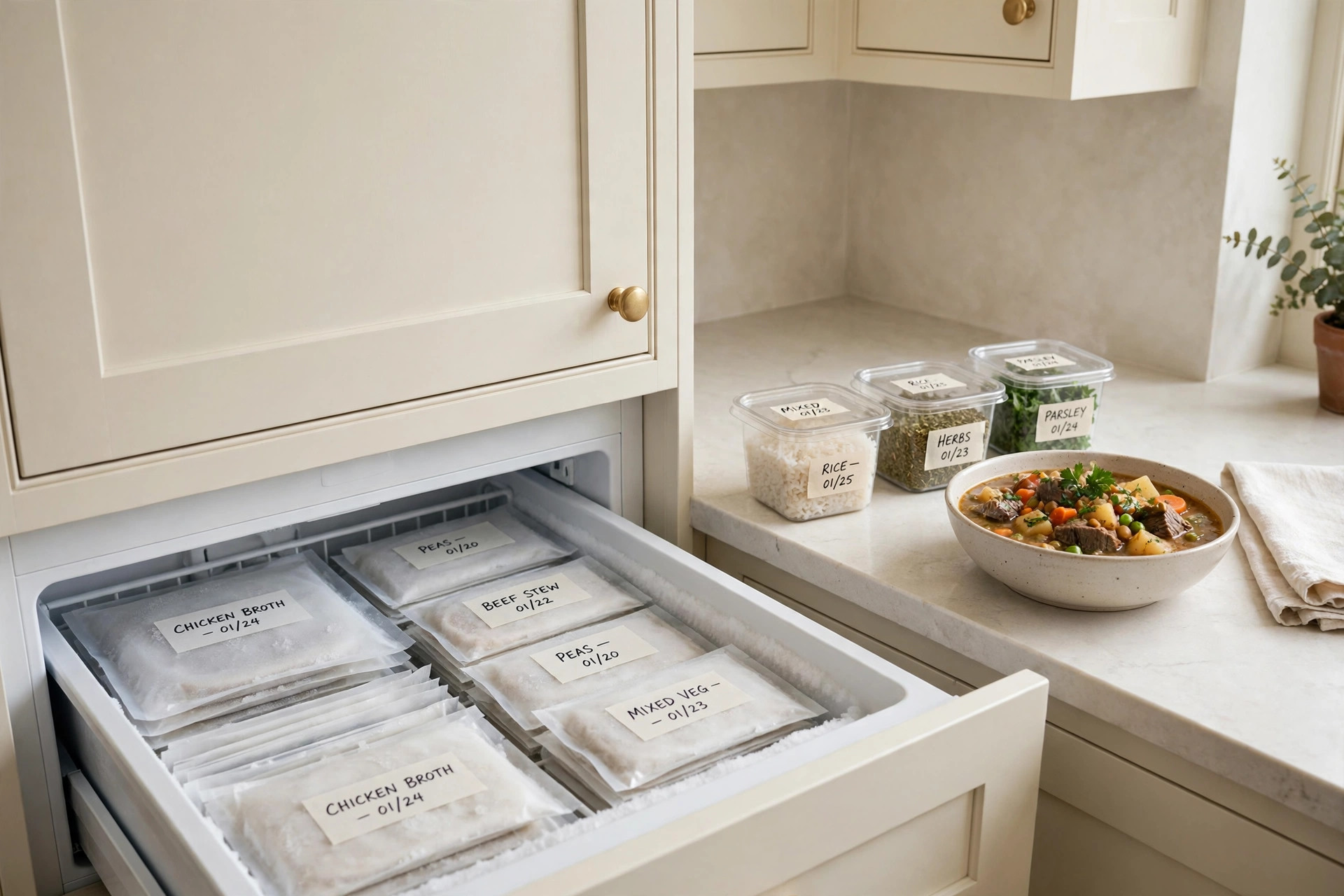
There is a stubborn myth that a smaller kitchen means smaller, plainer cooking. In practice, most couples eat better after downsizing, because the kitchen finally suits the cook.
Keep cooking the recipes you love, in the amounts you love. Make the full stew, eat it tonight, and freeze the rest in single portions for an easy night next week. Nothing about that needs a bigger room.
Flat freezer bags and small square containers stack neatly and thaw fast. Label each one with the dish and the date in plain marker, no guessing at the back of the freezer.
A small freezer drawer of ready meals is real freedom. It is dinner on the nights you would rather be in the garden or out walking.
Choose One Deep Sink Over Two Shallow Ones

A double sink sounds practical, but in a small kitchen each half is often too small for a roasting pan or a big pot. You end up washing them at an angle, splashing water everywhere.
One wide, deep single basin swallows the biggest pan flat. A pull-down spray tap reaches every corner, and rinsing a baking tray stops being a juggling act.
A slim rack that sits across the sink holds washing-up out of the way while it drains. The counter beside the sink stays free for the next job.
If a new sink is not on the cards, a tall tap alone makes a real difference. It is the cheaper half of the upgrade and plumbers fit them quickly.
Stop Stacking Everything You Own
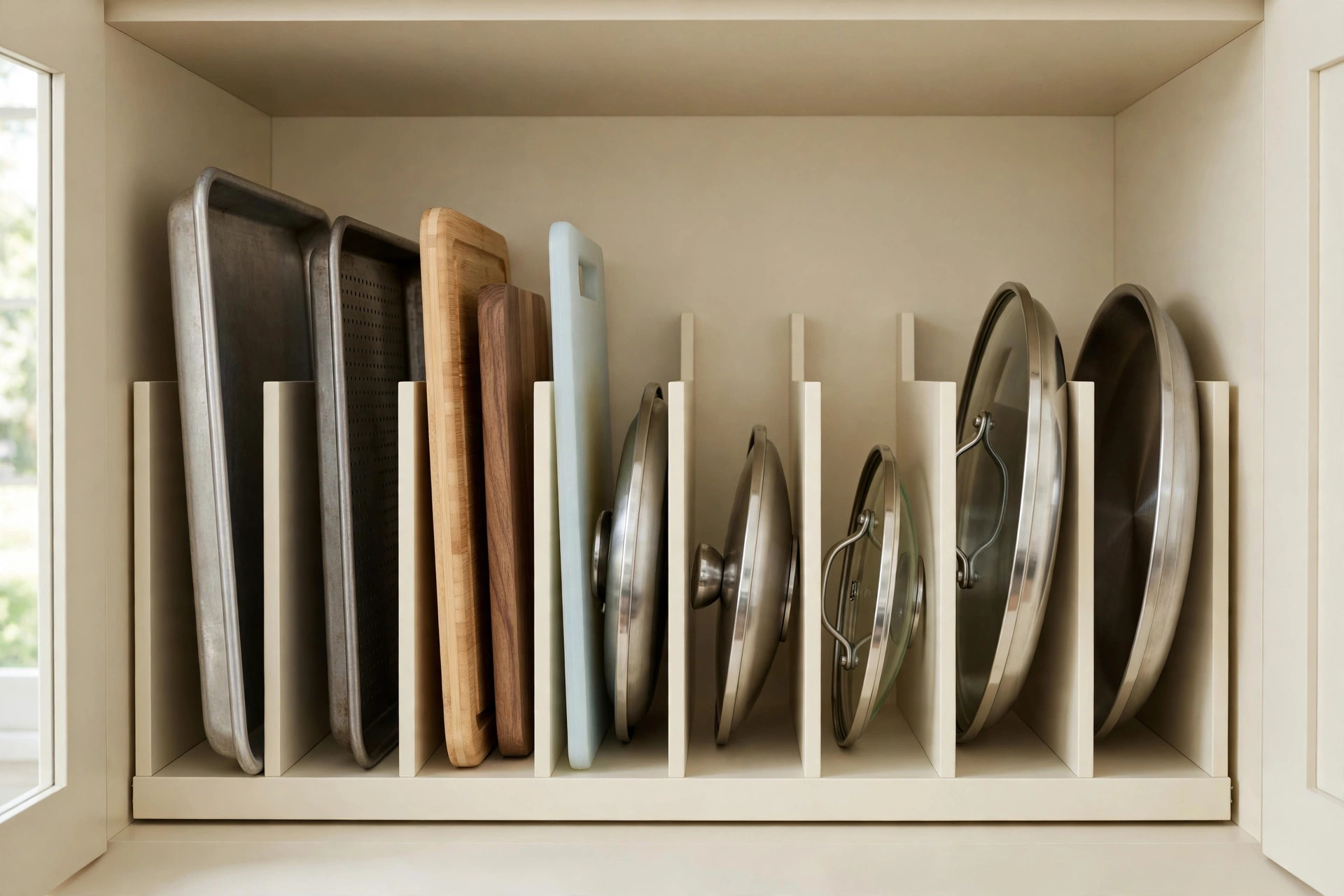
The quick mistake in a downsized kitchen is treating it like the old one, only smaller. Casseroles stack inside casseroles, lids slide into a drawer jumble, and every meal starts with a dig.
Give each thing one visible home instead. Stand baking trays and cutting boards upright in a divided slot, like files in a drawer, and lift out the one you need.
Lids behave on a simple rack inside a cabinet door or in a shallow drawer. Bowls nest only with their true matches, and odd spares go in the donation box.
The test is simple. If you can see it and reach it in one movement, it is stored well. If you move three things first, it is not.
Grow Something Small on the Windowsill

A pot of basil on the sill, rosemary by the tap, morning light coming through the leaves. A living windowsill makes even the smallest kitchen feel cared for, and dinner tastes better for it.
Herbs suit cooking for two perfectly, because you pick a handful at a time and nothing wilts in the fridge. Start with basil, parsley and mint in separate small pots. A tomato plant can work too, in a sunny spot.
The ideas in our guide to a small kitchen with a window cover sill depth, light and simple shelves that keep pots off the work surface.
Water little and often, and turn each pot a quarter turn every few days. The plants lean toward the light, and the turning keeps them even.
Soften the Floor for Legs and Backs
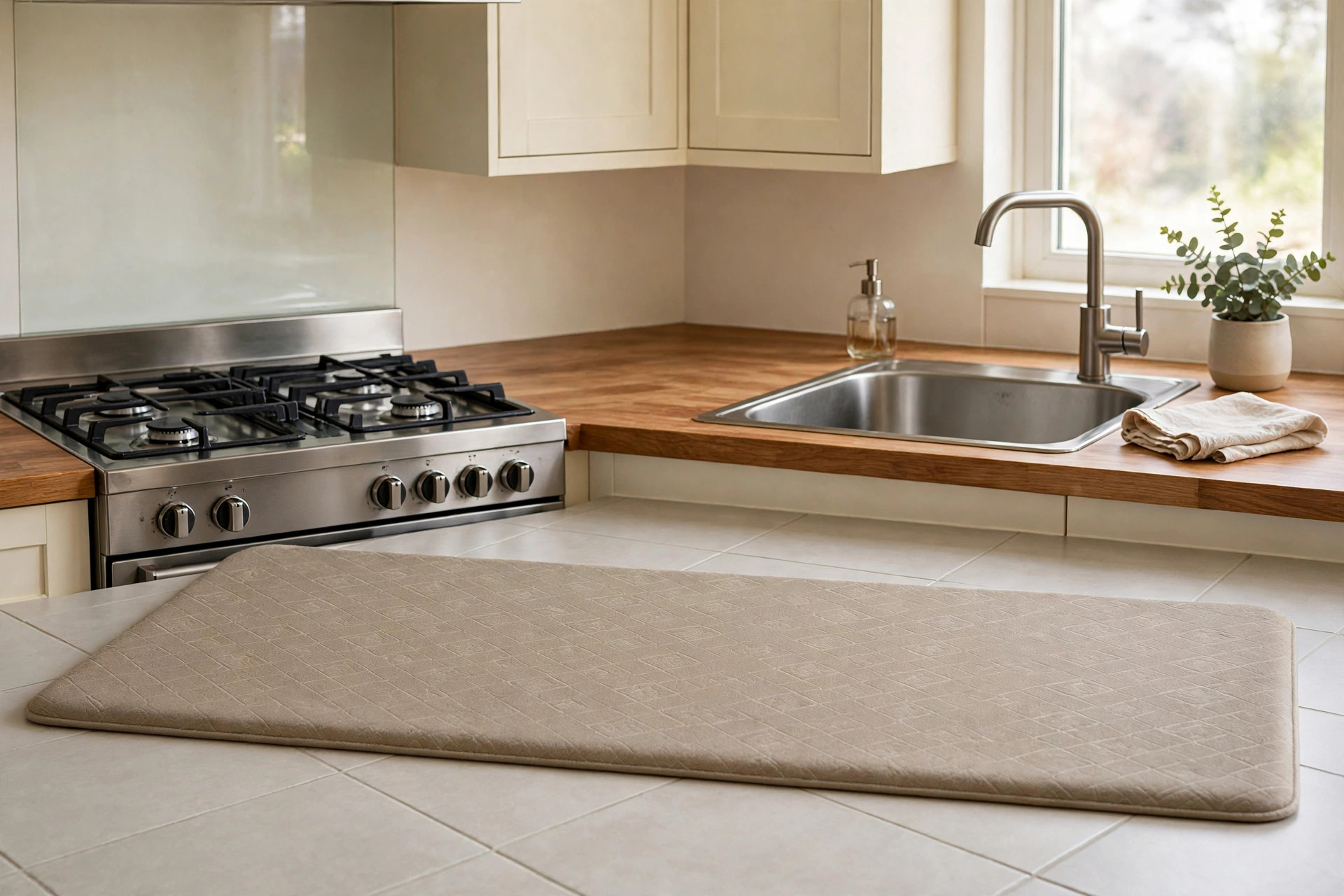
An hour of cooking on a hard tile floor leaves its mark: aching feet, a stiff back, and a cook who sits down before the washing-up is even started.
A cushioned anti-fatigue mat in front of the stove and sink takes the edge off all of it. The good ones are thick, wipe clean, and stay flat at the edges.
Choose a mat long enough to cover both work spots, so you are not stepping on and off it all evening. Low patterns hide the odd crumb between cleanings. Washable runners work too, if mats feel too plain.
Pair it with supportive indoor shoes kept by the door for cooking sessions. Small comforts like these are what keep cooking a pleasure, not a chore.
Run a One-In, One-Out Rule for Gadgets

One rule keeps a small kitchen honest: when a new gadget comes in, an old one goes out. The air fryer earns its shelf only when the dusty sandwich press leaves.
Downsizing usually leaves a surplus of gadgets bought for family life. The ice cream maker, the second slow cooker, the bread machine with the missing paddle, most of them can go.
Keep the tools that match how you eat now. For most couples that means a good kettle, a compact food processor, and one appliance that does several jobs well.
Offer the spares to family first, then donate the rest. A clearer shelf is easier to clean, and every kept gadget gets used more often. Write the rule on a card inside the cabinet door if it helps.
Pick Smaller Appliances That Suit Two People

Family-size appliances waste counter space and energy in a kitchen for two. A full-size oven takes an age to heat for one tray of fish, and a giant fridge hums half empty. It also costs more to run than the meal deserves.
A compact countertop oven handles most weeknight cooking for two: roasts, bakes, reheats, even a small pizza. It heats in minutes and sips power compared with the big oven.
The same logic applies to the coffee maker, the kettle and the toaster. Slim two-person versions free a surprising amount of counter, which you will feel every morning.
Keep the big oven for Sunday roasts and family visits. Day to day, the small machines do the work faster, cheaper and with far less fuss.
Keep the Pleasure In: A Tray, a Chair, a Favorite Book
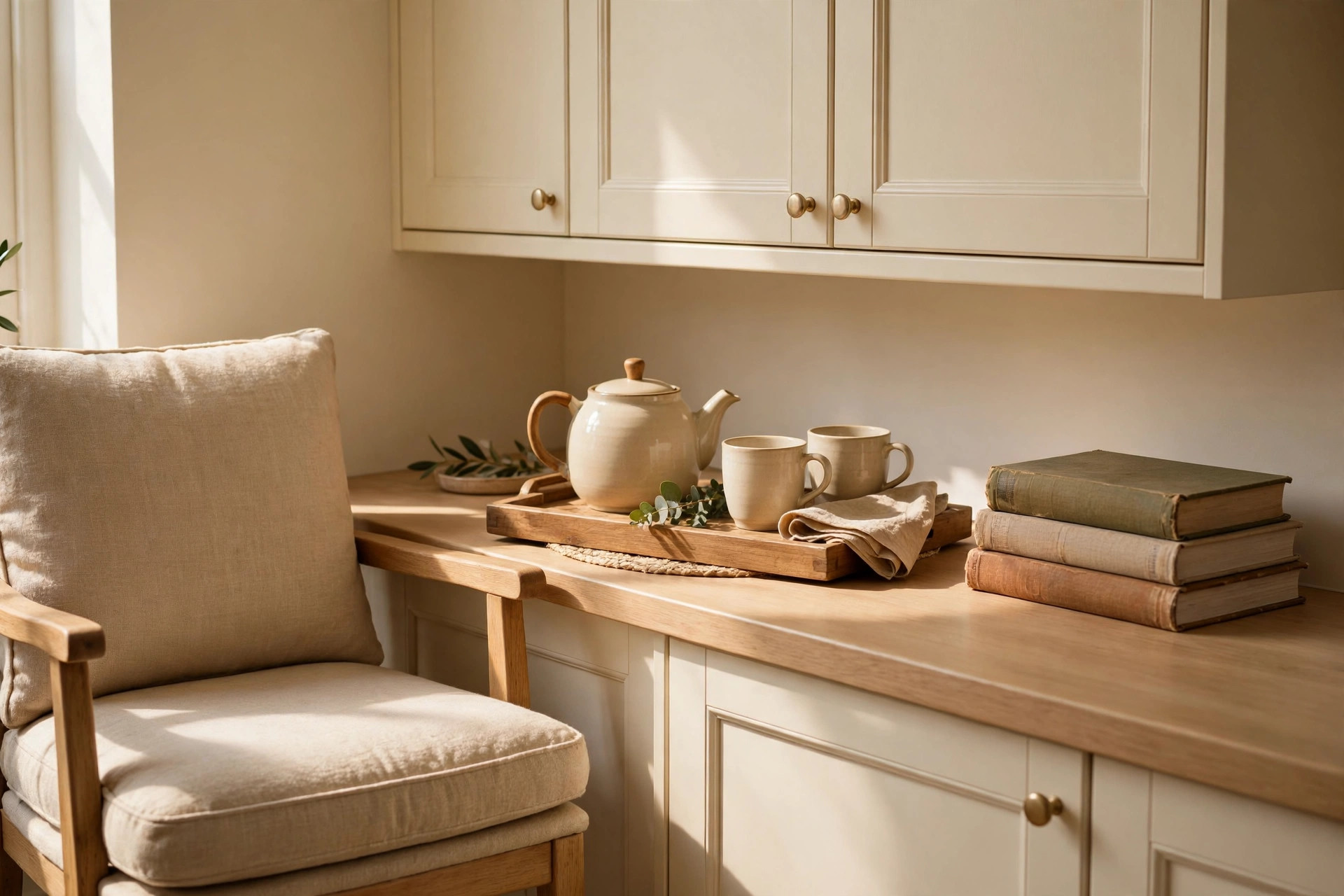
The best reason to get a small kitchen right is that cooking stays fun. A well planned room invites you in, instead of reminding you of everything that used to fit.
Set up one small pleasure corner. A tray with the good tea things, a comfortable stool or chair, and two or three favorite cookbooks within reach of the stove.
Cooking for two means choosing what you like, at the hour you like it. Soup at five, a long Sunday sauce, cake because it is Tuesday, the menu is finally yours.
That is the real prize of downsizing. Less house to run, fewer things to manage, and a kitchen that gives you time back instead of taking it.
Small kitchen ideas for empty nesters downsizing are not about making do. They are about reach, comfort and keeping the cooking you love, in a room that works at your speed.
Start with one change, the pull-out shelf or the clear counter, and live with it for a week. Our notes on small kitchen banquette seating ideas can help if a cozy seat for two is next on your list.
Save this to your small kitchen board for later, and pass it to anyone trading a big family kitchen for a smaller, easier one.


