

15 Spring Refresh Ideas for a Small Living Room Under $150
After a long winter, a small living room can feel dim, heavy, and closed in. The thick throw stays on the sofa, the curtains stay shut, and every surface seems to collect one more thing.
Spring gives you a simple reset. You do not need new furniture or a big project to feel the change. Light, air, pale color, and one living plant can shift the whole room in a weekend.
This list keeps every idea spring-specific and small-room-specific, with a clear note on cost. Start with the free moves, then spend only on what your room still needs.
Here are spring refresh ideas for a small living room under 150 dollars, planned so the total stays inside that limit.
If you want the wider tour first, see our small living room ideas for apartments. Then come back here for the spring-only version, built around light layers, fresh air, and simple swaps.
This post contains affiliate links. If you buy through them, we may earn a small commission at no extra cost to you. See our Affiliate Disclosure.
1. Open the Windows and Wash the Glass
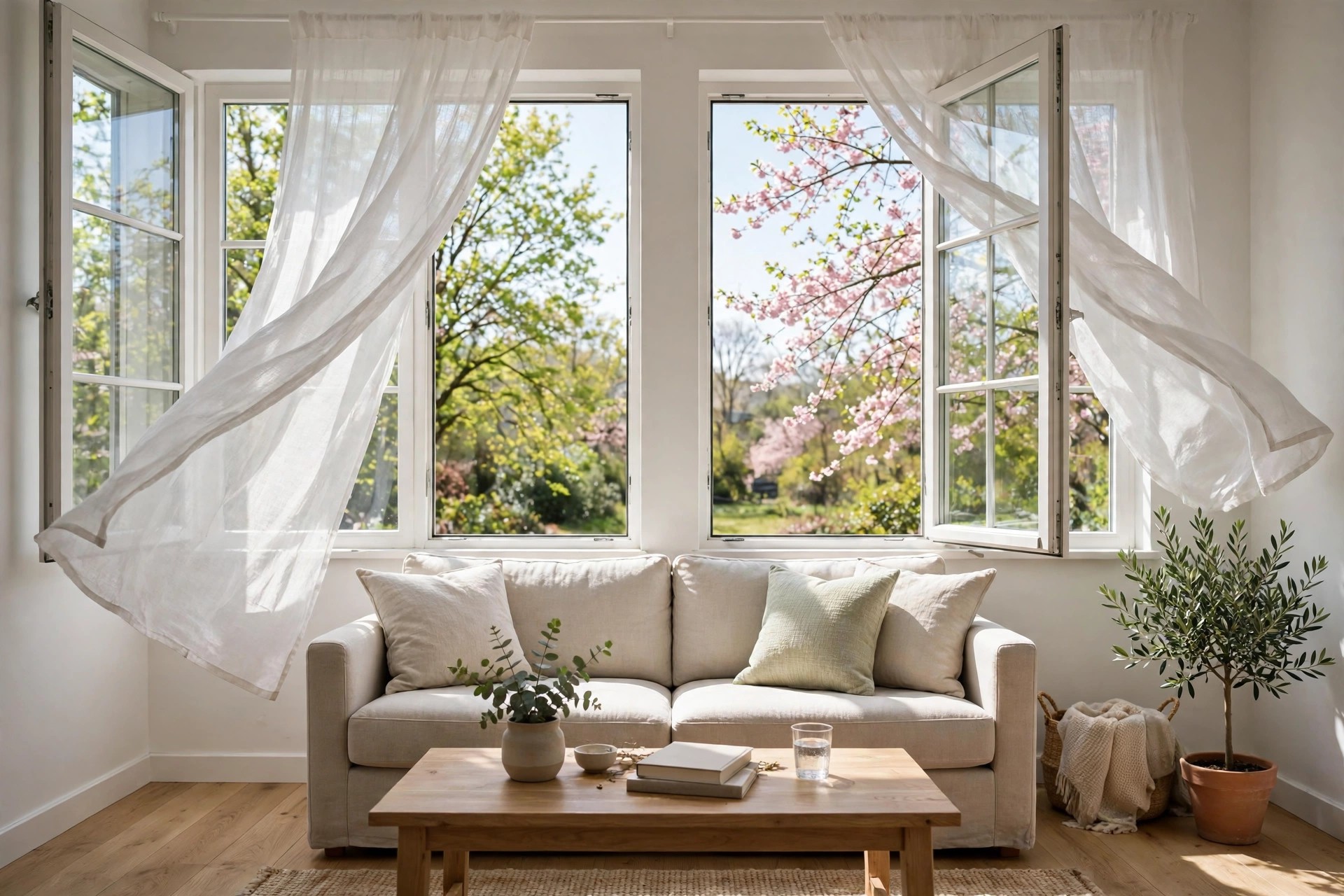
Start with air, not shopping. Open the windows for a short while on a mild day and let the stale winter air out. Cost: free, and it is often the fastest change you will feel.
Wash the inside of the glass next. Dust and winter film block more light than most people expect. Use a plain cloth, warm water, and a little soap, then dry the panes well.
Check the sills as you go. Wipe off dust, dead leaves, and grit that collect there over winter. A clean sill makes the whole window look cared for, even before you change anything else.
Stand back and look at the room in daylight. With clear glass and fresh air, you can judge what still needs work.
2. Pull Sheer Curtains Wide to the Sides
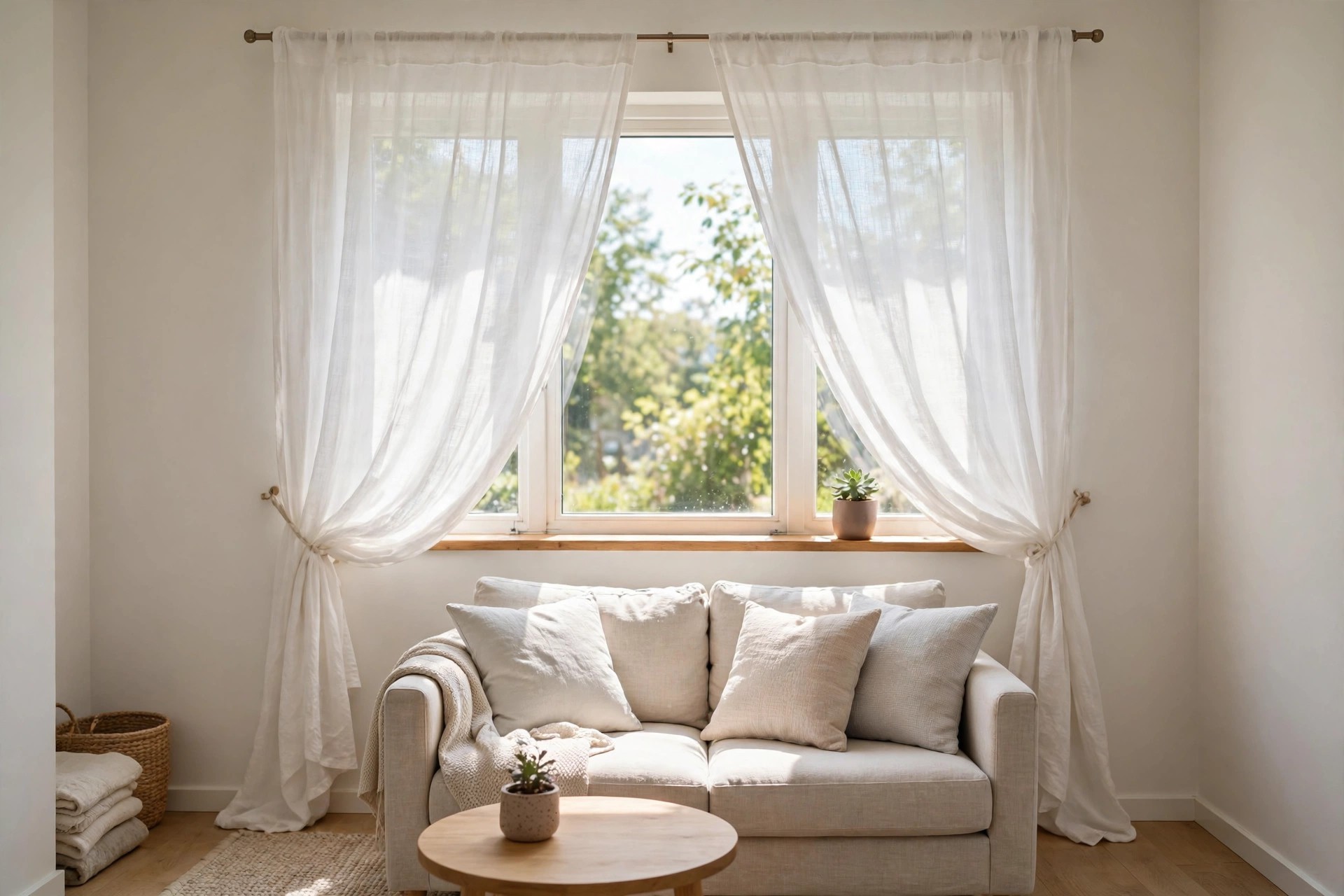
Heavy curtains can make a small room feel like a cave. If you already own sheers, hang them and pull them fully to the sides during the day. Cost: free if you reuse what you have.
Let the full window show. In a small room, even a few inches of covered glass can dim the seating area. Tiebacks or simple hooks hold the panels back without fuss.
If you need new sheers, pick one pale pair in a light fabric. Keep them simple and unlined so daylight passes through. One pair is enough for most small living rooms.
Renters can use a tension rod inside the frame or hooks that leave no marks. For more no-drill ideas, see our renter-friendly living room ideas. The goal is light first, pattern second.
3. Swap Dark Pillow Covers for Pale Spring Covers
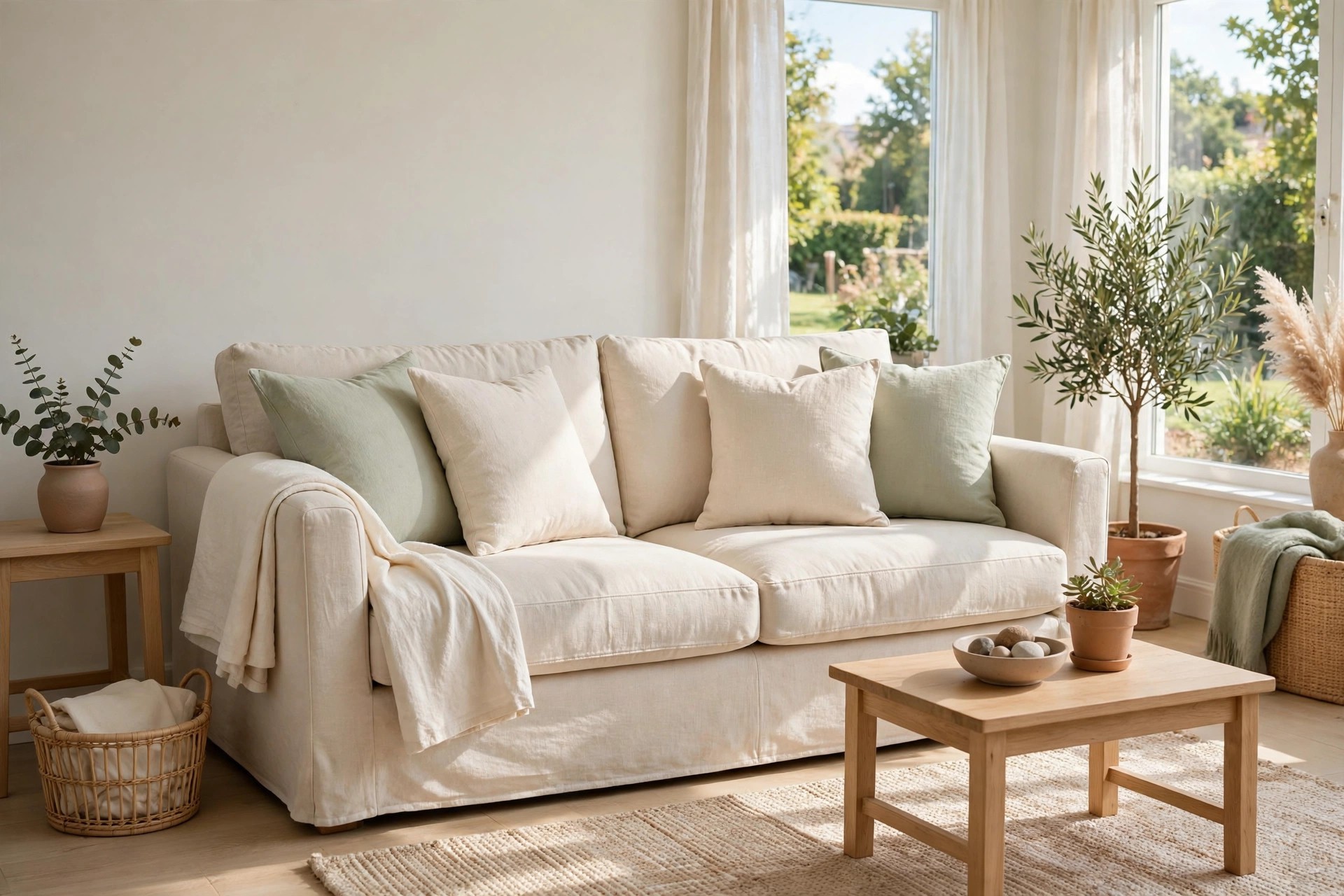
Pillow covers are the quickest color swap in a small room. Take off the dark winter covers and slip on pale sage, cream, or soft blue ones. Cost: low, and you keep your old inserts.
Use two colors at most. A small sofa looks calm with one pale green and one cream, for example. Too many colors can make a tight room feel busy and hard to rest in.
Fluff each insert before you close the cover. Punch the center lightly, then pull the corners out so the pillow looks full. Flat pillows drag a fresh cover down fast.
Store the winter covers in one bag, out of sight. When spring ends, you can swap them back without hunting through closets. That small habit keeps the refresh easy to repeat.
4. Trade the Heavy Throw for a Light Cotton Throw
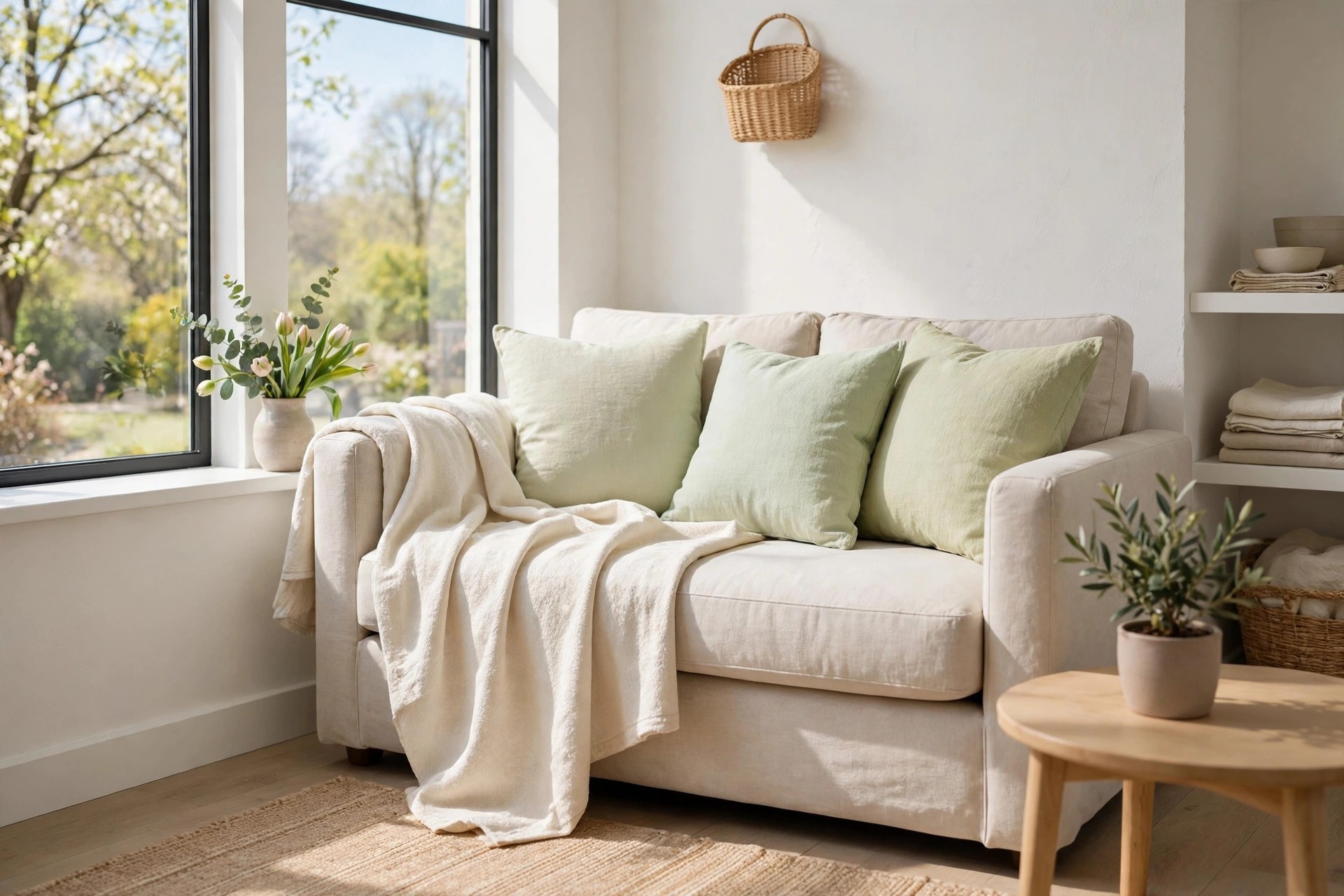
A thick winter throw can weigh down a small sofa, even when it is folded neatly. Swap it for a light cotton throw in cream or pale yellow. Cost: low, and one throw covers the job.
Drape it over one arm, not across the whole sofa. In a small room, a throw that covers the seat looks like bedding. A neat fold on the arm reads as a spring layer instead.
Choose a fabric you can wash at home. Spring throws pick up dust, pet hair, and outdoor pollen fast. A washable throw stays fresh longer and saves you a trip to the cleaners.
Fold the winter throw and store it with the dark pillow covers. One bag for all winter textiles keeps the closet tidy.
5. Add One Real Potted Plant by the Window
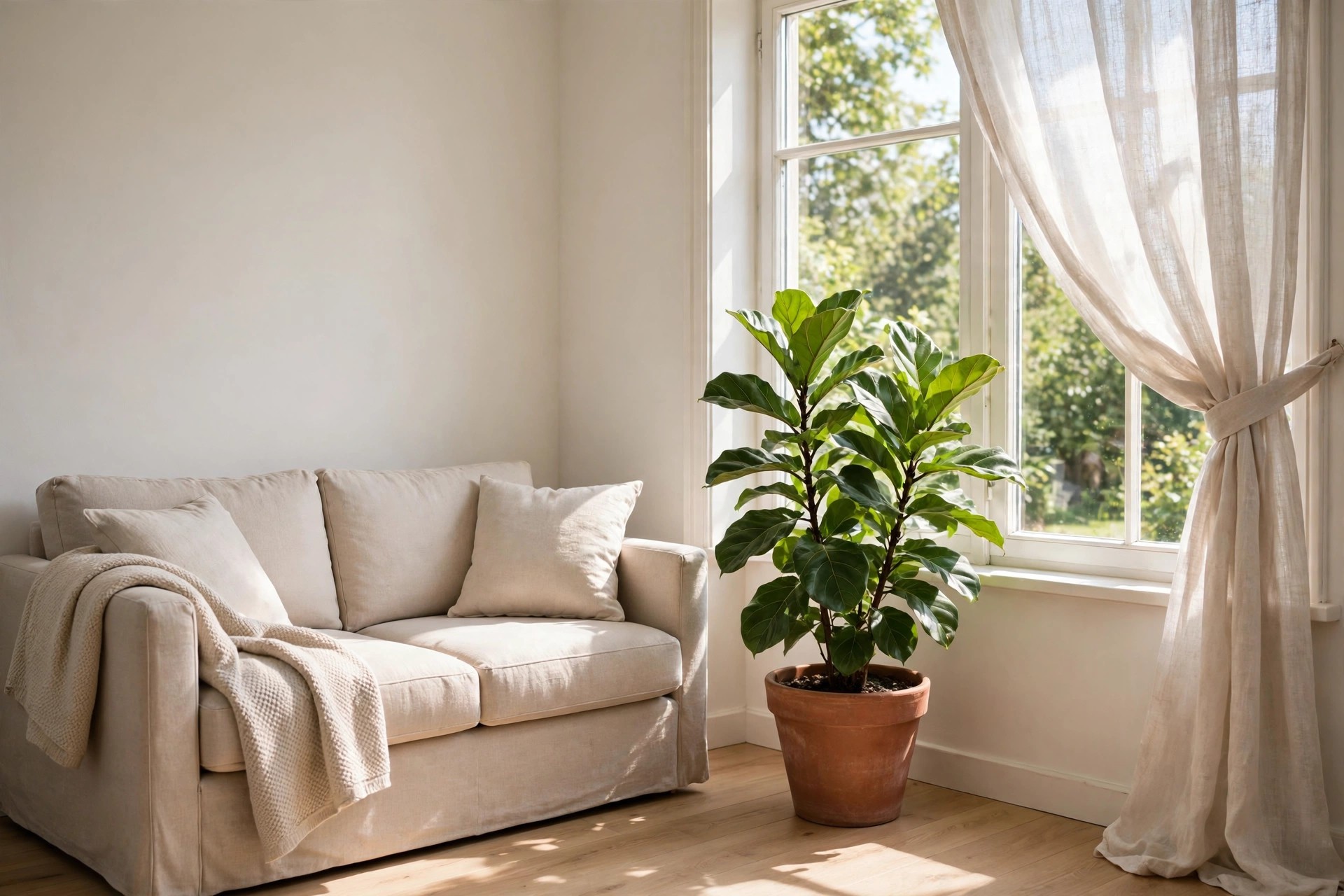
One healthy plant does more for a small room than five small ones crowded on a sill. Pick a single pot that fits your light and your care routine. Cost: low for one plant and pot.
Place it where it gets bright light but does not block the walkway. A corner by the window works well in most small rooms. The plant softens the corner without taking floor space you need.
Water it on a set day each week and empty the saucer after. A plant sitting in water can smell damp and stain the floor. A dry saucer keeps the spot clean and the roots happy.
Skip the urge to buy a whole indoor garden at once. One plant you can keep alive beats a shelf of struggling ones.
6. Put Fresh Stems in a Jar on the Coffee Table
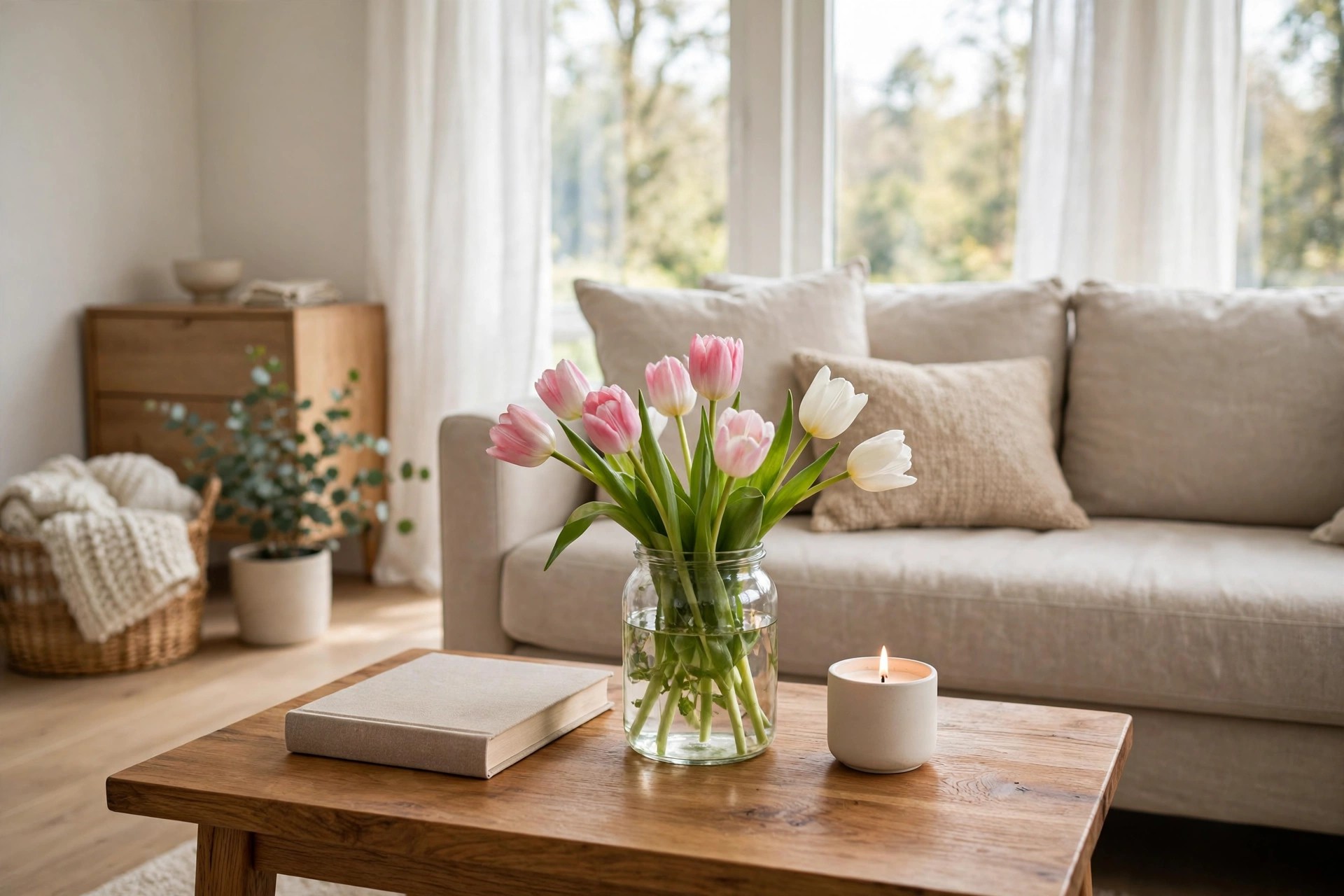
Fresh stems bring spring to the center of the room for very little money. Use a plain glass jar you already own and a small bunch of tulips or daffodils. Cost: low, and the jar costs nothing.
Trim the stems at an angle and change the water every two or three days. Fresh water keeps the stems firm and stops the jar from smelling stale. Cut off any leaves that sit below the water line.
Keep the bunch small. In a small living room, a tall bouquet can block talk across the table. Five to seven stems in a low jar give color without taking over the surface.
When the stems fade, compost them or bin them and start fresh. A weekly bunch is a small treat, not a big spend.
7. Grow a Herb Pot on the Sill
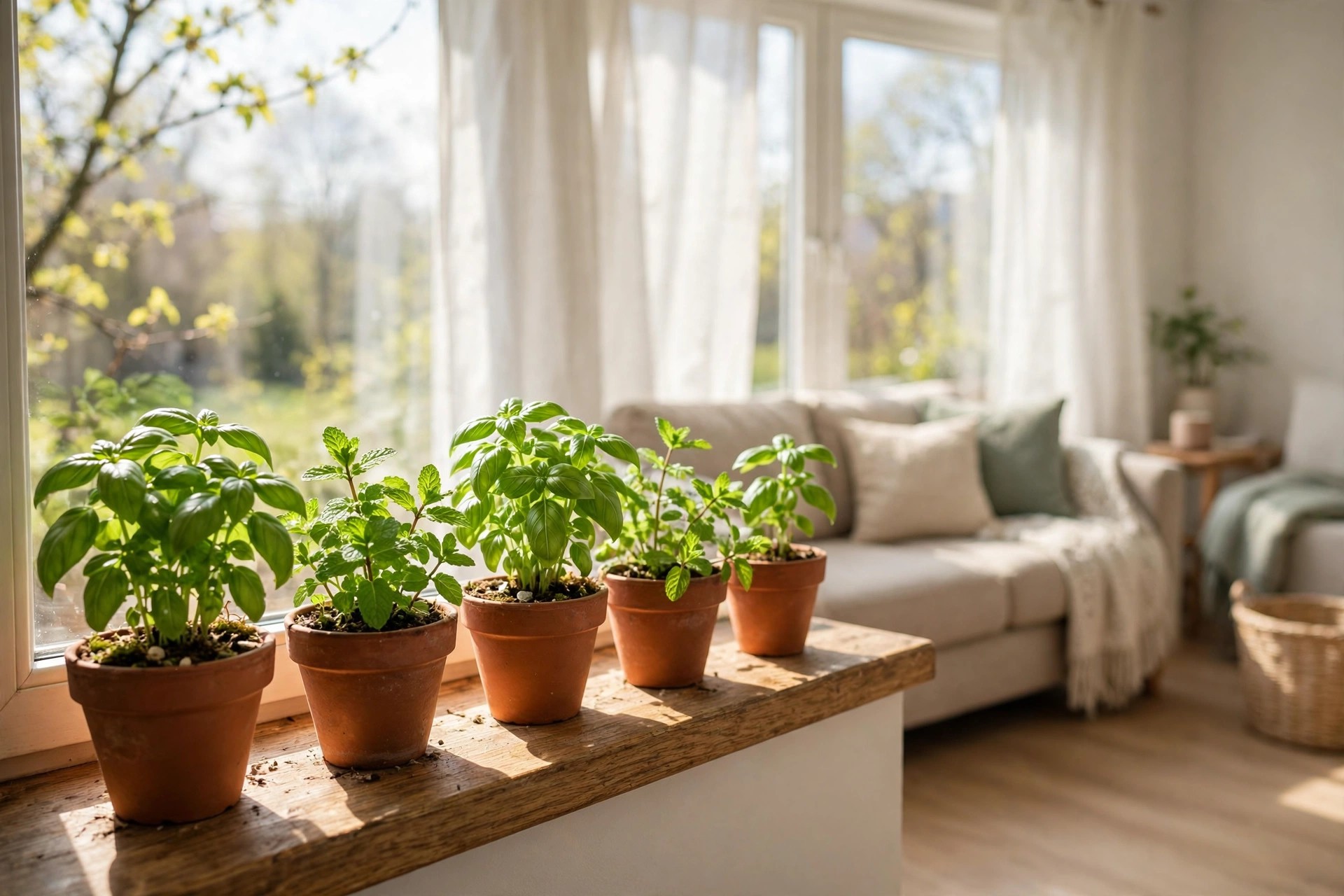
A herb pot gives you green leaves and a fresh scent in one small footprint. Basil and mint are good first picks because they grow fast and show new leaves often. Cost: low for pots and plants.
Use a tray under the pots to catch water. A sill without a tray can stain paint and warp wood over time. Wipe the tray dry after watering so the sill stays clean.
Pinch the top leaves often to keep the plants bushy. If you let one stem grow tall and bare, the pot looks thin fast. Regular pinching gives a full, tidy shape instead.
Keep herbs near light and away from cold drafts at night. A sill that gets morning sun suits most herbs well.
8. Move Your Seat Toward the Daylight
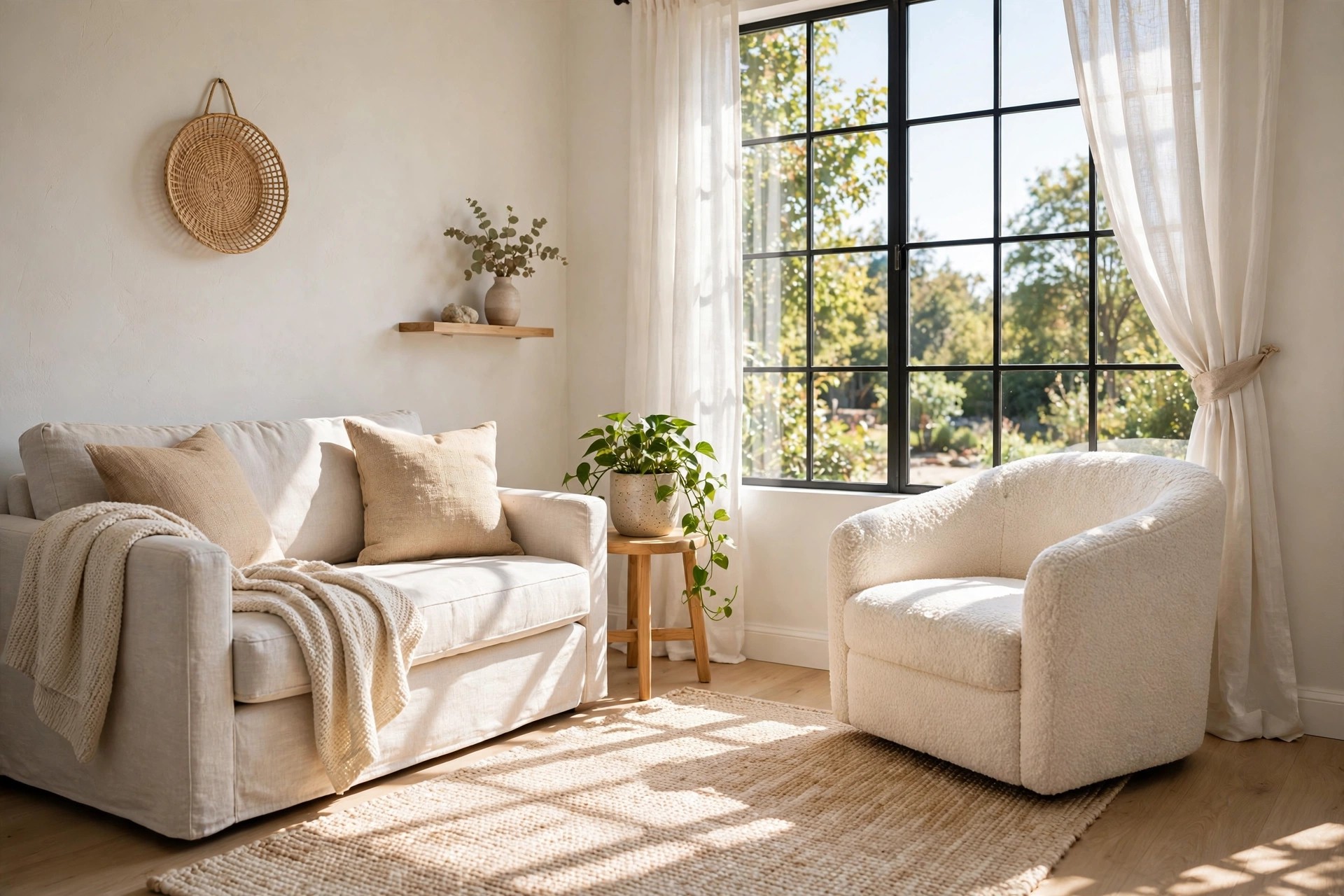
Before you buy anything, try moving your seat. In many small rooms, the sofa sits against the darkest wall out of habit. Cost: free, and you can test it in ten minutes.
Angle one chair toward the window instead of facing the wall. You will read in better light and notice the room feels larger. The window becomes the view, not just a light source.
Keep a clear path to the door as you move things. A chair angled for light should not block the walkway. Slide it a few inches at a time until light and passage both work.
Live with the new spot for a day before you decide. Sit, read, and watch TV from there at different times.
9. Hang a Mirror Opposite the Window
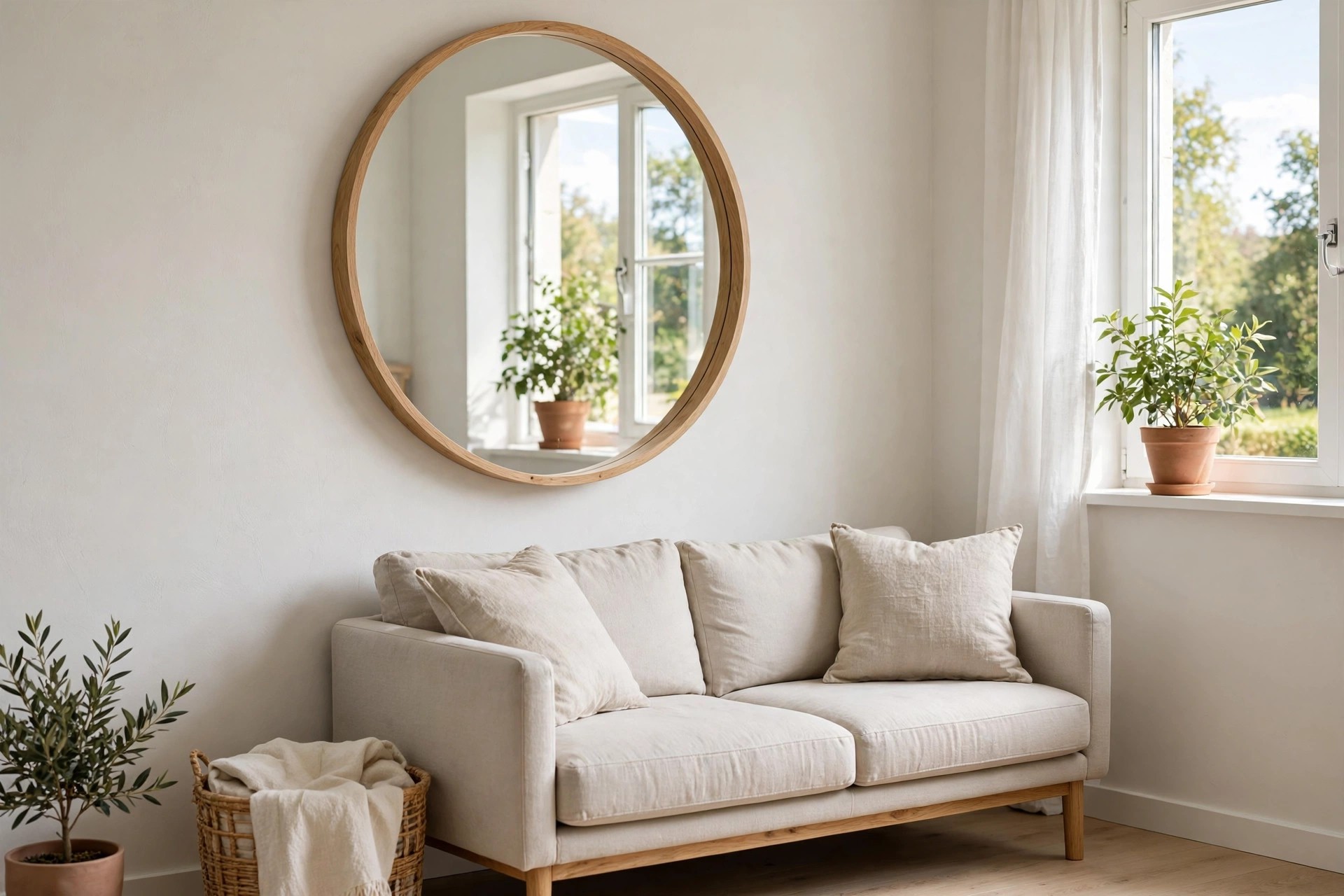
A mirror opposite the window bounces daylight deeper into a small room. It works best when it reflects the window itself, not a blank wall. Cost: low for one simple mirror.
Hang it at eye level when you sit down, not high near the ceiling. A mirror hung too high reflects the ceiling and wastes the light. Sit on the sofa and check the view before you fix it.
Keep the frame plain and light. A heavy dark frame can undo the bright effect you want. A thin wood or white frame blends in and lets the reflected light do the work.
Dust the mirror when you clean the windows. A dusty mirror dims the light it should bounce back. One quick wipe each week keeps the room bright without any new spending.
10. Swap One Wall Print for a Botanical Print
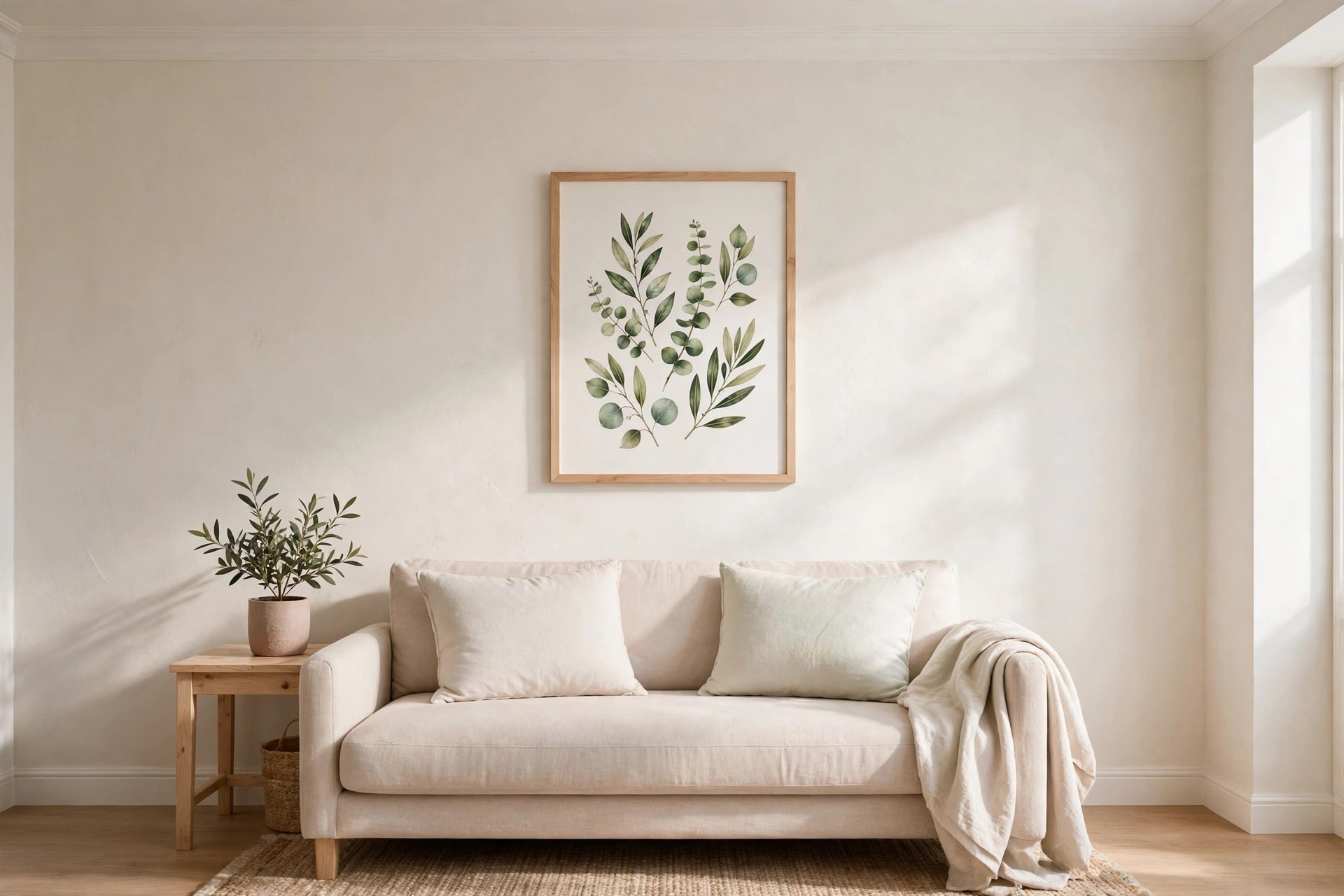
You do not need a new gallery wall for spring. Swap one print for a simple botanical image with green leaves on a pale ground. Cost: low, and one swap changes the wall.
Reuse the frame you already have. Take out the old print, slip in the new one, and hang it back in the same spot. That keeps the wall balanced and avoids new holes.
Pick a print with plenty of pale space around the leaves. In a small room, a dense dark print can feel heavy even in spring. Light ground and clear stems read as fresh air on the wall.
If you rent an older home, use the hooks or rails already in place where you can. Our small living room ideas for renters in older buildings covers those quirks in more depth.
11. Style One Spring Tray on the Coffee Table
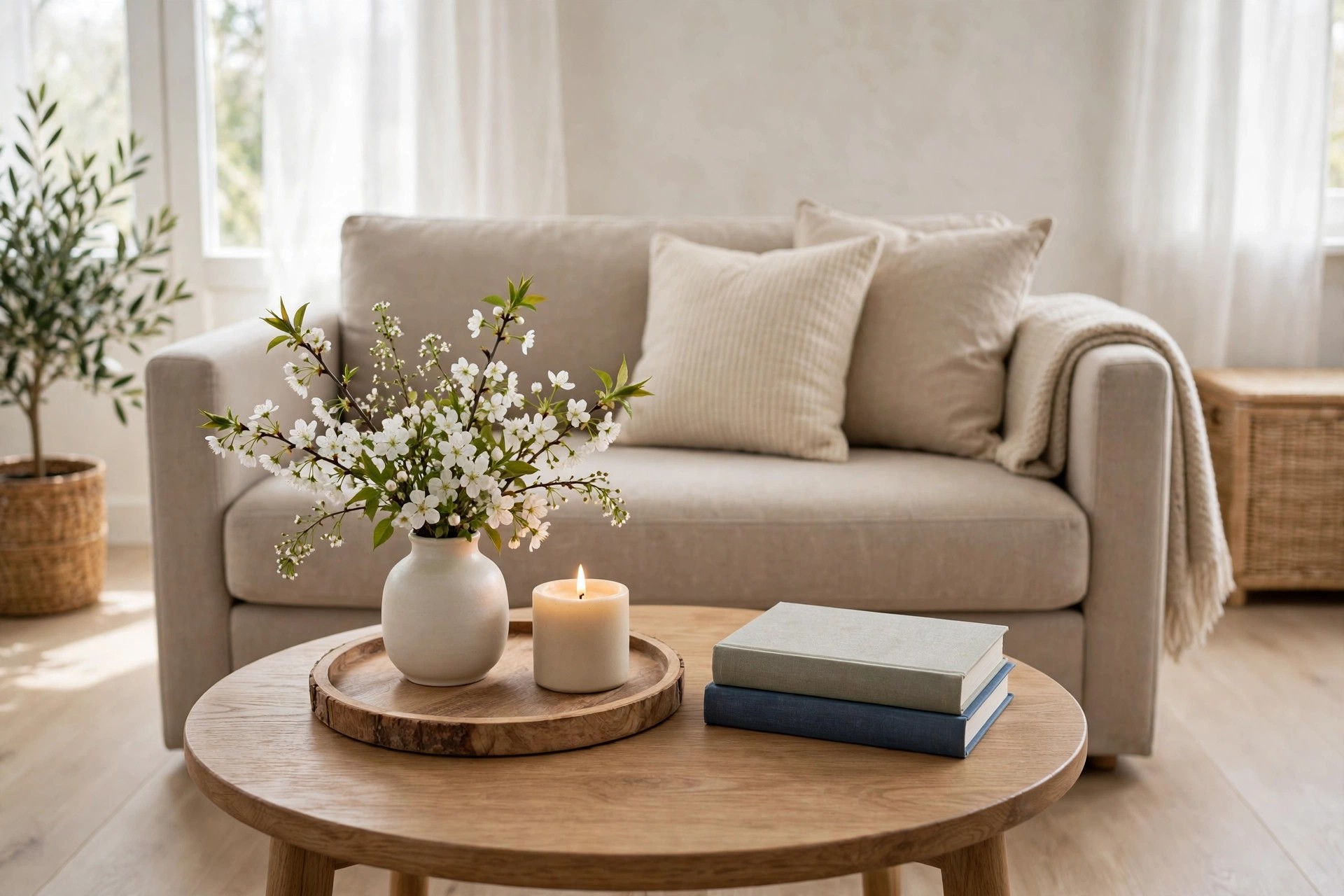
A tray turns a scattered coffee table into one tidy spring spot. Use a tray you own, or pick one plain wood tray. Cost: low, and it holds everything in one place.
Set three things on it at most: a small vase, a candle, and one book. Three items look calm on a small table. Five or six items look like clutter, even when each one is pretty.
Leave the rest of the table clear. Remotes can live in a small box or a drawer nearby. A clear table makes the tray stand out and gives you room for a cup of tea.
Change only the vase stems through spring, not the whole tray. Fresh stems each week keep the tray feeling new. The tray itself can stay put all season without extra cost.
12. Lighten the Lampshade for Softer Evening Light
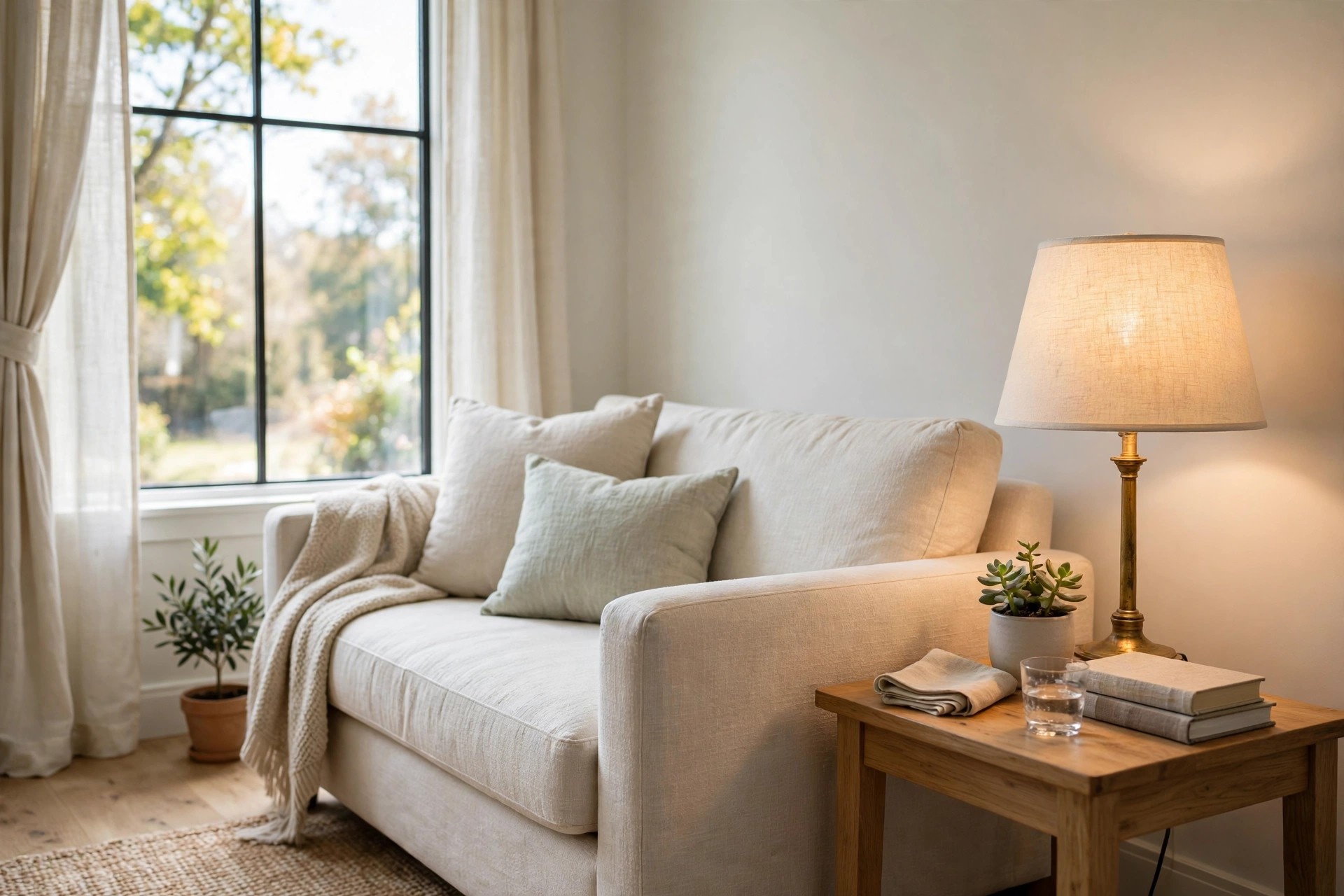
Winter lampshades are often dark and heavy, and they can tint evening light yellow or brown. Swap one shade for a light cream linen shade. Cost: low for a single shade.
Check the fit before you buy. Note the shade height, the top width, and how it clips or sits on the lamp. A shade that wobbles or sits crooked will annoy you every night.
Use a warm white bulb that suits the lamp rating on the base. Do not exceed that rating, even for a brighter look. Safe light matters more than a slightly brighter room.
At night, use the table lamp instead of the harsh ceiling light. Soft lamp light makes pale spring colors look warm after dark. The room keeps its spring feel into the evening.
13. Tidy Throws Into One Woven Basket
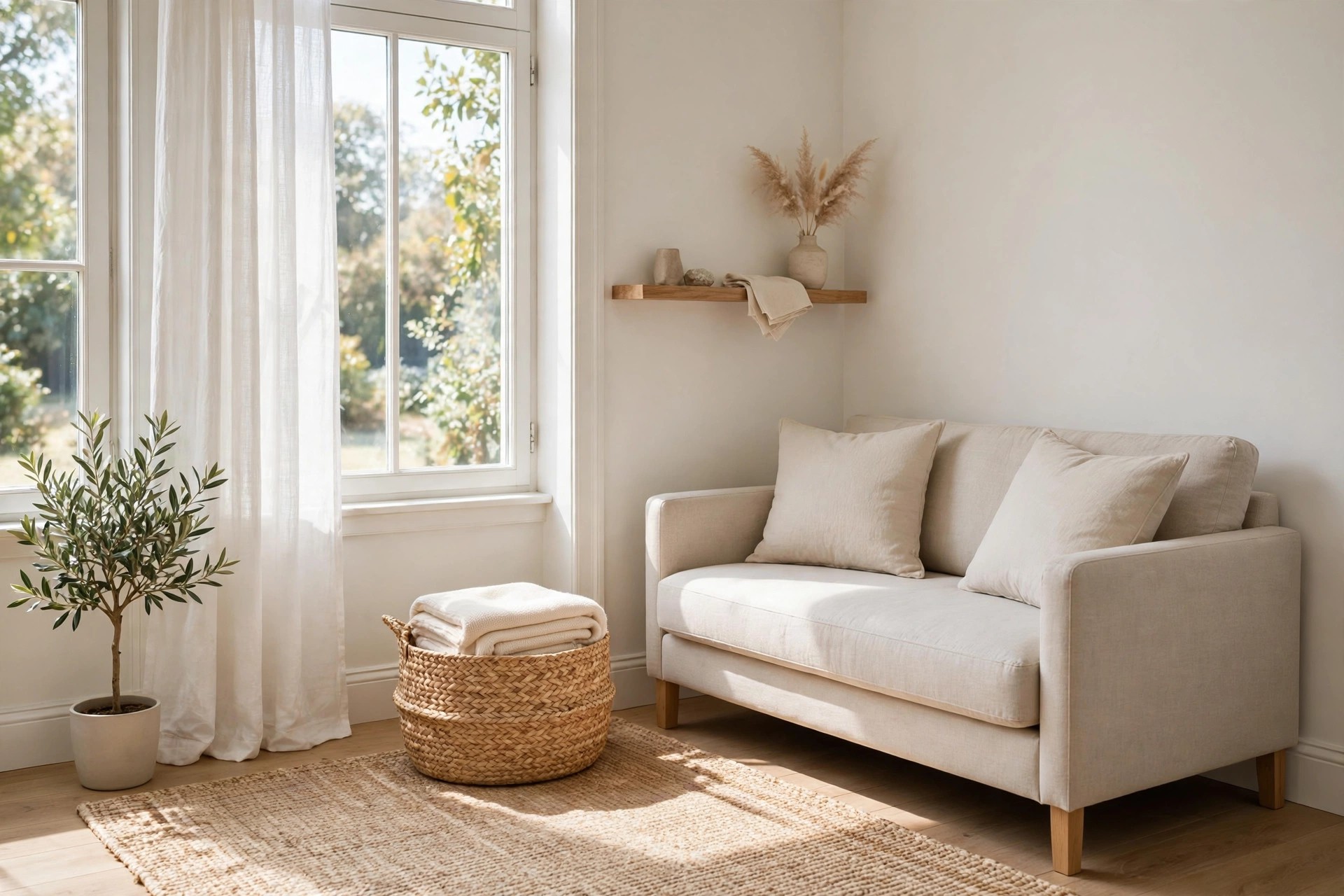
Spare throws and blankets can pile up fast in a small room. One woven basket by the sofa holds them all in a single tidy spot. Cost: low for one basket that fits the corner.
Fold each throw before it goes in. Rolled or stuffed throws look messy even inside a basket. A neat fold on top makes the whole basket look planned, not like storage overflow.
Keep only the throws you use in spring. Move heavy winter blankets to a closet bag until cold weather returns. The basket should hold two light throws at most, not every blanket you own.
Put the basket where you can reach it without standing up. A basket behind the sofa defeats its purpose on a cool evening. Beside the sofa arm, it is both tidy and useful.
14. Lay a Light Flatweave Rug Over the Floor
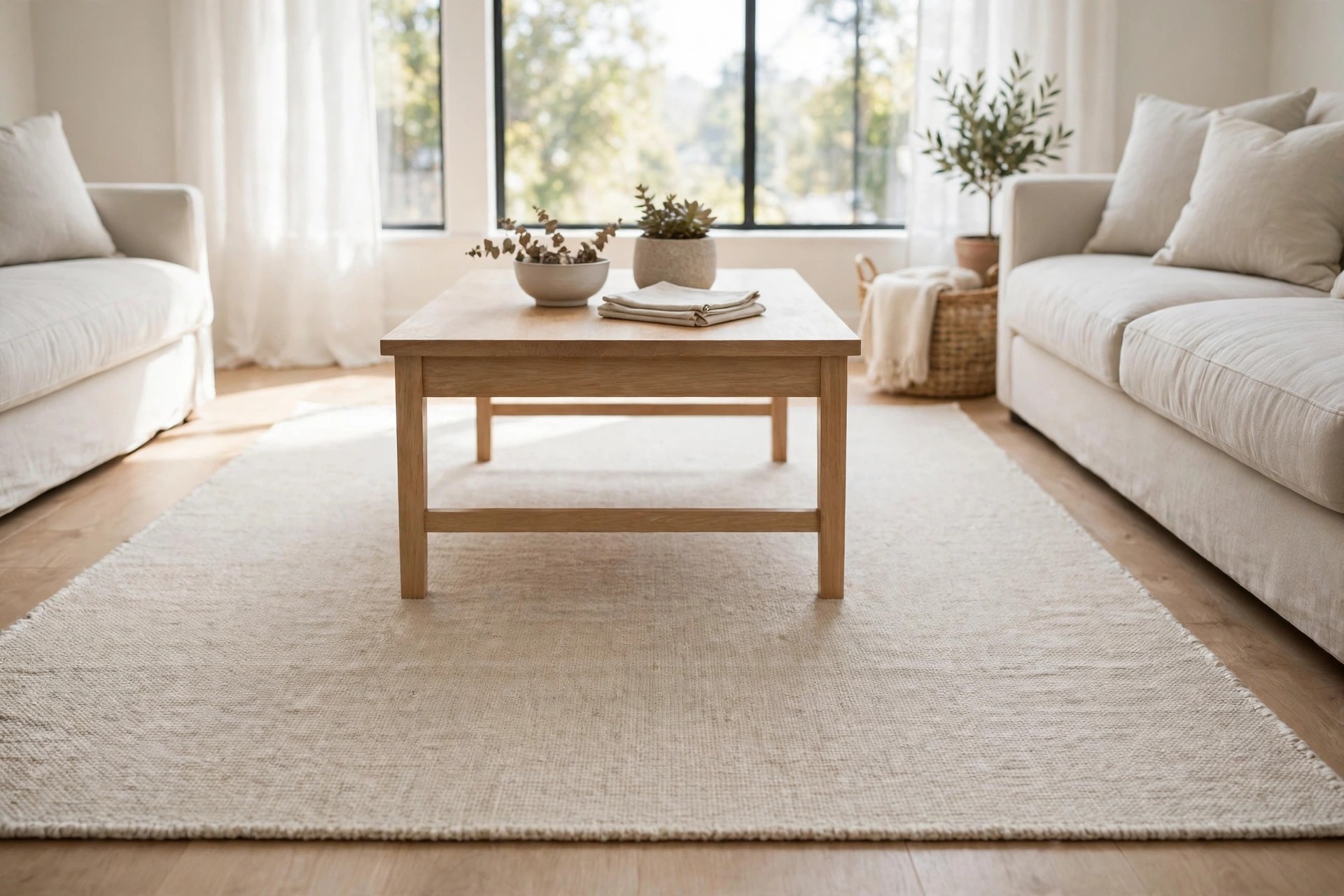
A dark, thick rug can anchor a room in winter and weigh it down in spring. Roll it up and lay a light flatweave rug in its place. Cost: low to moderate, so weigh it against your other swaps.
Pick a pale beige or soft gray rug that fits under the front legs of the sofa. A rug that floats in the middle of the floor can look lost in a small room. Legs on the rug ground the seating area.
Choose a flat weave you can shake out and spot clean with ease. Thick pile traps spring dust and pet hair fast. A flat rug stays fresh with a quick shake outside and a regular vacuum.
Store the winter rug rolled, not folded, in a dry spot. A folded rug can crease and hold damp.
15. Plan Your $150 Spend in This Order
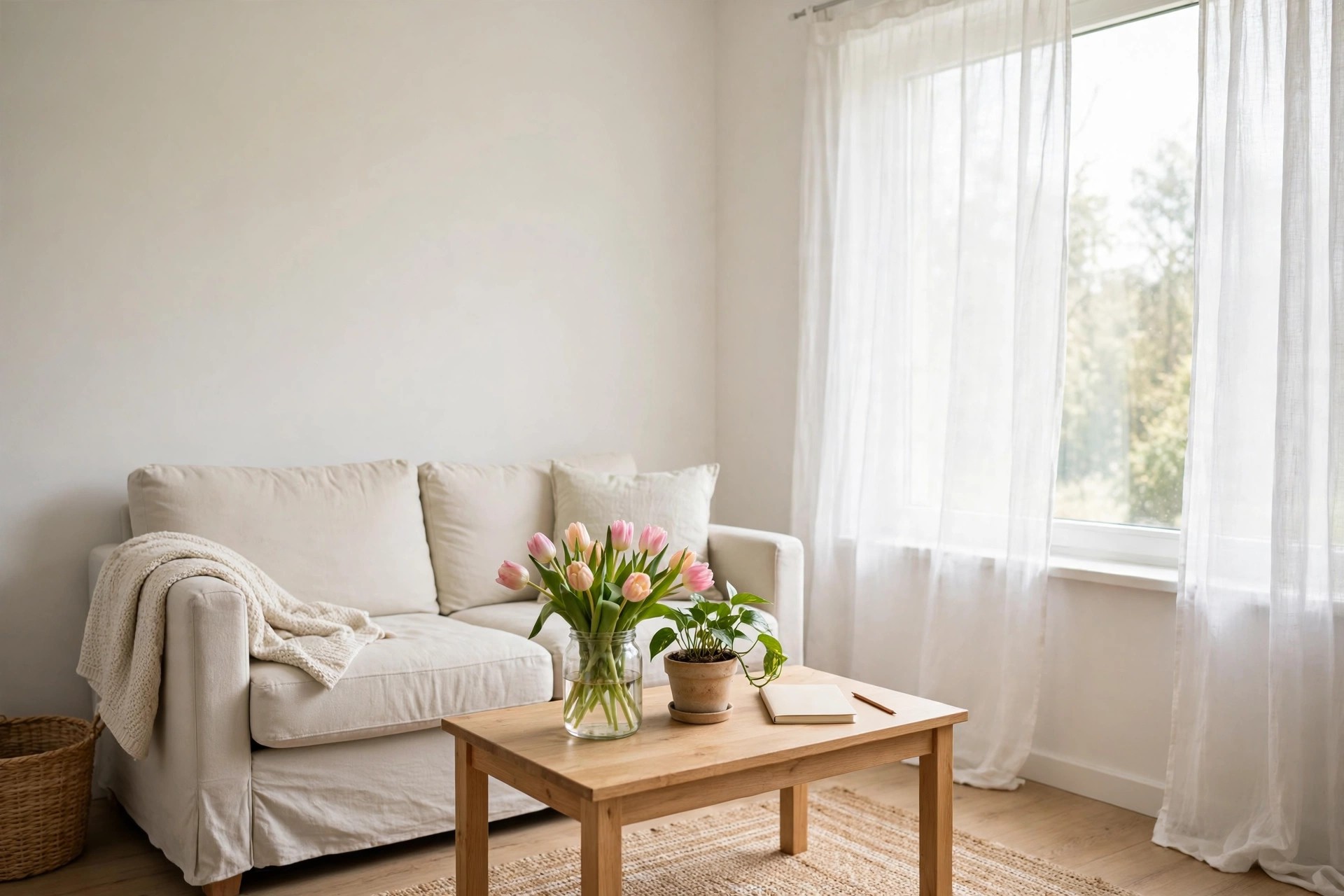
The last idea is the plan that keeps the whole refresh inside budget. Start with the free moves in this list, then buy textiles, then plants, then one accent. Cost: none to plan, and it guards the total.
Write your list on paper before you shop. Note what you already own, what you truly need, and what can wait. A written list stops impulse buys that eat the budget fast.
Buy the biggest visual change first, which is usually pillow covers or sheers. Then add plants and stems with what remains. Leave the rug or mirror last, since those cost more than a cover swap.
If you are setting up a first home, pair this order with our small living room ideas for a first apartment move-in. A clear order turns a wish list into a refresh you can finish in one weekend.
Spring in a small room is not about buying more. It is about light, air, pale layers, and a few living things.
Pick three ideas and do them this weekend. Free moves first, then one low-cost swap, then one plant or bunch of stems.
Keep your list and winter textiles in one bag for next year. For a bigger budget version, see our living room makeovers under $500.
Save this to your small living room board for later. Try the free air and light moves first.
That is the best kind of spring refresh ideas for a small living room under 150 dollars.


