

15 Best Folding Kitchen Carts With Drop Leaf Tops
The cutting board lands on the stove again because there is nowhere else to put it. Dinner for four is coming, the onions are half chopped, and the counter ran out ten minutes ago.
A cart that folds solves the timing problem. It rolls out when prep starts, gives you a real work surface, then folds flat and leaves when the floor needs to be a floor again.
This guide walks through the best folding kitchen carts with drop leaf tops by job, not by hype. Each pick below covers a different gap, from a breakfast bar on demand to a baking station that parks out of sight.
Measure the gap before you fall for any cart in a photo. The folded width, the open leaf width and the parking spot decide more than finish or brand ever will.
The fifteen picks below move from carts that vanish flat to carts that host dinner. Read for the job your kitchen actually needs, and keep a tape measure beside you.
This post contains affiliate links. If you buy through them, we may earn a small commission at no extra cost to you. See our Affiliate Disclosure.
1. A Flat Fold Frame That Slides Beside the Fridge

Start with the cart that disappears. A flat fold frame opens into a full worktop, then collapses into a slim panel that slides beside the fridge or behind a door.
Bob Vila describes the Origami folding cart as one that folds down to a narrow profile and arrives pre assembled, opening in seconds. That kind of setup suits kitchens where the cart is a guest, not a resident.
Keep the folded spot measured and clear. If the cart has a true home when closed, you will actually fold it away instead of leaving it open and working around it all week.
Fold it with the shelves empty the first few times. The motion becomes habit fast, and an empty fold teaches you where fingers and hinges meet.
2. A Single Drop Leaf That Doubles Your Prep Strip

One leaf is the honest workhorse. Lift it and a narrow cart gains a second strip of counter, wide enough for a cutting board, a mixing bowl and the knife you keep reaching for.
Set the cart along the wall with the leaf facing the room. Prep on the leaf, keep raw ingredients on the fixed top, and the two zones stop the usual shuffle of bowls across a crowded counter.
Our roundup of small kitchen ideas for a first apartment makes the same point in another form. One extra surface, used well, changes how a tiny kitchen cooks.
Lift the leaf with one hand and support it until the brace clicks. A leaf dropped the last inch bangs the frame and loosens hinges over time.
3. Two Drop Leaves for a Breakfast Bar on Demand

Two leaves turn a cart into a small table. Raise both sides and two people can sit with plates, mugs and a laptop without booking the whole dining area for breakfast.
Bob Vila notes the Winsome drop leaf cart is made of solid beechwood, with two leaves that extend the worktop and lockable casters below. A cart like that earns the dining job because it feels like furniture, not gear.
Fold one leaf down when only one person eats. The half open setup keeps the walkway clear and still holds a plate, a book and a cup of coffee without crowding.
Stoop down and check both braces sit level before loading the leaves. A brace half seated feels fine empty and sags under a full dinner service.
4. A Butcher Block Top That Earns Its Floor Space
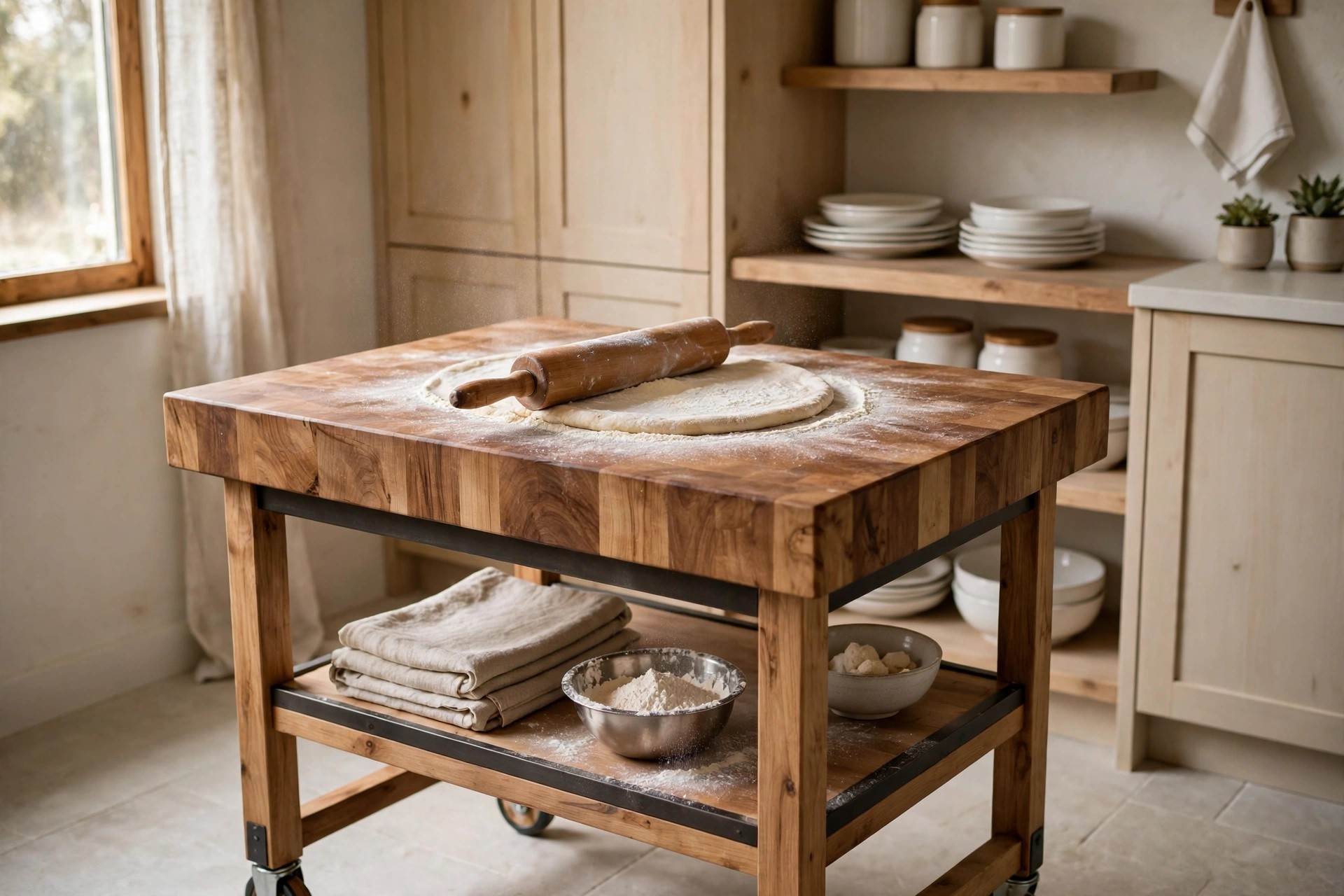
A thick wood top is the surface you will trust with real work. Dough gets rolled on it, hot trays land on a trivet, and the board stays put instead of sliding toward the edge.
Wood asks for small care in return. Wipe it after prep, oil it now and then, and keep standing water off the seams where the leaf meets the fixed top.
If you are setting up a kitchen from scratch, our first apartment kitchen starter kit pairs well with this pick. A solid top cart covers the work surface most starter kitchens lack.
Oil the top on the side you chop on most. That half takes the knife marks, the heat rings and the daily wipes, and it shows wear first.
5. Locking Casters That Hold Still While You Chop

Wheels are the point of a cart, and locks are the point of the wheels. A cart that creeps across tile while you press down on a squash will teach you to check the brakes fast.
Look for locks on at least two casters, easy to reach with a toe. Test the hold on your own floor, because smooth tile and old wood boards grip very differently.
Park the cart, lock it, then lean your weight on the top once before food comes out. That one habit turns a rolling cart into a steady station you can trust mid recipe.
Lock the casters on the side you lean against, every time. Two locked wheels on the working side hold better than four half remembered ones.
6. A Low Shelf Stack for Pots You Use Every Week

Open shelves under the top hold the heavy rotation: the Dutch oven, the stockpot, the skillet that never really gets put away. Low storage keeps the weight down where the cart stays stable.
Leave the top shelf for lighter gear and the lowest shelf for pots. Heavy items riding high make a narrow cart feel tippy every time a caster crosses a grout line.
Freeing that cabinet space matters beyond the cart. The tools you grab daily, like the ones in our guide to utensil crocks for narrow counter spaces, belong within reach of the stove, not buried behind pot lids.
Load the heaviest pot centered over the casters, not at the shelf edge. Centered weight rolls straight and keeps the frame from twisting on turns.
7. A Drawer and Cabinet Pair That Hides the Clutter

Open shelves show everything, which is fine until the everything is plastic tubs and charger cords. A drawer plus a closed cabinet gives the cart a place to hide the visual noise.
Put cutlery and prep tools in the drawer, right under your hands. Bulky items go in the cabinet below, where doors keep the kitchen looking calm even on a busy cooking night.
Measure the cabinet opening before you buy storage boxes for it. One box that fits the shelf beats three that almost fit and end up living on the counter instead.
Wipe inside the cabinet monthly. Closed storage hides flour dust and onion skins, and a dark cabinet can look clean long after it stops being clean.
8. A Towel Bar and Spice Rack Built Into the End

The ends of a cart are free real estate. A towel bar on one end keeps a hand towel off the oven handle, and a slim spice rack holds the five jars you use nightly.
Keep the rack shallow and honest. Five or six spices in a single row stay visible and fresh, while a deep rack becomes a hiding place for jars from two years ago.
Mount nothing on the folding side. The leaf needs a clear path down, and a rack in the way turns a ten second fold into a small daily argument with your own kitchen.
Keep one dry towel on the bar and one working towel on your shoulder. The bar towel stays presentable, the shoulder towel takes the real spills.
9. A Cart That Parks Under the Counter Overhang

Some kitchens have a counter overhang with dead space beneath it. A cart that rolls under that lip parks flush, reads as part of the kitchen, and leaves the floor plan untouched.
Measure height with the leaf down and anything stored on top removed. The cart should slide in without scraping, with room for your hand to grip the top edge and pull it out.
This is the same dead space thinking behind our no pantry kitchen storage ideas. Small kitchens rarely lack space entirely. They lack space that has been given a job.
Mark the parking height on the wall with a small pencil line. Anyone in the house can then park the cart right without test pushing it.
10. A Light Frame One Person Can Move Alone

A cart you cannot move alone will not get moved at all. A lighter steel or slim wood frame rolls from wall to island position with one hand on the top edge.
Test the move in the shop if you can, or picture your tightest turn. Most kitchens have one awkward corner, often where the fridge door swings into the path the cart must take.
Light does not have to mean flimsy. A braced frame, tight joints and a solid top matter more than raw weight, and a wobble test at full extension tells you the truth quickly.
Roll the cart fully out and back once a week, even in quiet weeks. Casters that sit loaded in one spot develop flat habits and stiff turns.
11. A Coffee Station Cart That Folds Away on Weekends

Give the cart a morning job. Kettle, brewer, mugs and beans live on top, the leaf holds a small tray, and the whole station rolls to the outlet instead of owning the main counter.
On weekends the station folds or rolls into the dining corner for guests. Coffee gear in one place makes hosting simple, and the main counter stays free for actual cooking.
Keep a small cloth on the lower shelf for drips. Coffee stations get sticky in a ring under the brewer, and a weekly wipe keeps the wood top from marking.
Rinse the brewer parts on the cart, not at the sink across the room. Keeping the whole coffee routine on one surface keeps drips in one wipe zone.
12. A Baking Cart With Room for a Stand Mixer Below
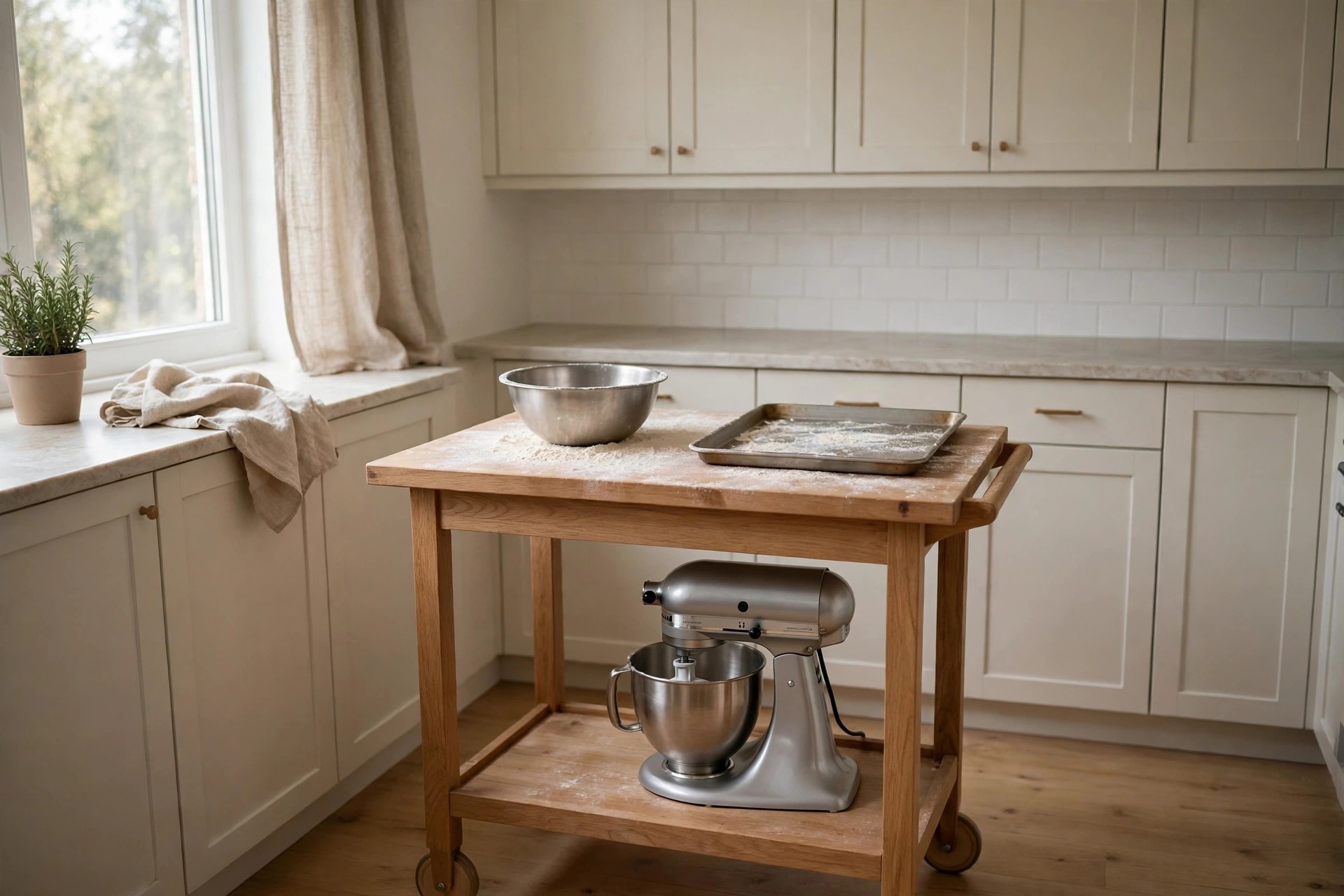
Baking takes more surface than dinner does. Flour, scale, bowl, tray and cooling rack all want a spot at once, and a wide leaf gives the project one contained home.
Store the mixer on the low shelf and lift it up only for baking days. The cart top becomes the flour zone, so the dust stays off the counters you need for dinner later.
Flour and sugar bins pair with the counter thinking in our guide to compact bread boxes for small kitchen counters. Baking gear grouped in one zone keeps a small kitchen calm on project days.
Cool trays land on the leaf, never on the low shelf. Hot trays low down warm stored flour and sit right where knees and hands reach.
13. A Serving Cart for Guests in a Kitchen With No Island

When friends come over, the cart changes sides. Roll it to the dining area, raise the leaf, and it holds drinks, sides and the bread basket while the kitchen stays a work zone.
A serving surface at counter height saves the trips. Dishes land on the cart instead of the stove, and clearing the table takes one roll back instead of six trips with full hands.
After the meal, fold the leaf and the cart shrinks back to a wall panel. Guests remember the dinner, not the furniture shuffle that made it possible.
Set a small lamp or candle on the raised leaf for evening serving. A lit serving surface pulls guests to the cart and away from the cooking zone.
14. A Narrow Cart for the Gap Between Cabinets
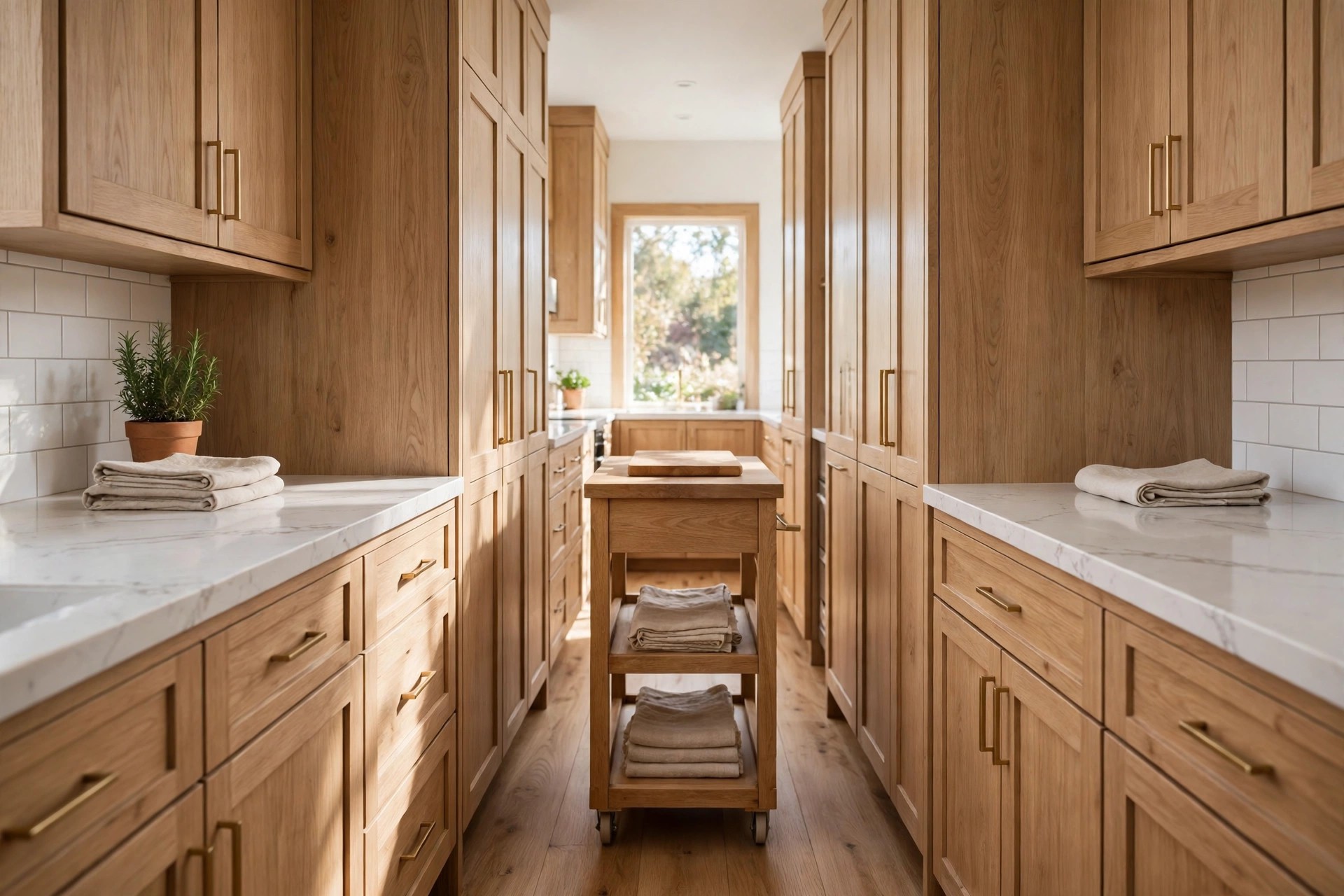
Many galley kitchens have one odd gap, too wide for a step stool and too narrow for a cabinet. A narrow cart claims that gap and turns it into prep space with storage below.
Measure the gap at floor level and at counter height, because old cabinets are rarely plumb. The smaller number rules, and the cart casters need a straight path in and out.
Stock this cart with one job only, like breakfast or baking. A single job keeps the narrow shelves tidy, and a cart with a clear job gets used every single day.
Keep the narrow cart’s top clear between uses. A slim top buried under post and bags cannot do its one job when prep time comes.
15. A Fold Flat Habit That Keeps the Walkway Clear

The best cart in a small kitchen is the one that goes away. Build the fold into the clean up routine: wipe the top, drop the leaf, roll it home, and the floor is yours again.
Time the routine once. Most carts fold in under a minute, and knowing that number stops the lazy habit of leaving it open just this once, every night, for a month.
Leave the parking spot empty on purpose. The moment the folded cart spot becomes storage for bags and boxes, the cart stays open and the small kitchen feels small again.
Fold the cart before you mop, not after. A clear floor washes in half the time, and the dry floor is ready when the cart rolls home.
Start by measuring two things for the best folding kitchen carts with drop leaf tops: the widest prep surface you actually need, and the slim spot where the cart will live when folded. Those two numbers narrow this whole list fast.
Pick the frame that fits your real routine, lock the casters, and give the parking spot a permanent claim. Save this list to the Small Kitchen Gadget Ideas board so the measurements and picks are together when you shop.


