

15 Best Spice Drawer Inserts for Deep Kitchen Drawers
Open a deep spice drawer in most kitchens and you will find the same scene: a front row you can read, and a back row lost in shadow. Jars hide behind jars, duplicates get bought, and dinner waits while you dig.
The best spice drawer inserts for deep kitchen drawers fix the depth itself. Tiers lift the back row into view, angled trays tilt labels up to your eyes, and dividers stop jars rolling into one mixed pile every time the drawer moves.
This list covers fifteen insert styles for deep drawers, from stepped bamboo tiers to a simple non slip liner. Each one is judged on one test: can you find the cumin at a glance, with one hand, mid recipe.
Measure your drawer inside, width, depth and height, before you choose. Those three numbers matter more than any finish, and they take two minutes to get.
This post contains affiliate links. If you buy through them, we may earn a small commission at no extra cost to you. See our Affiliate Disclosure.
1. A Three Tier Stepped Insert That Lifts the Back Row

The stepped insert is the deep drawer classic. Three levels rise toward the back like small stadium seats, so every jar stands higher than the one in front and every label stays in view when the drawer opens.
Upright jars suit cooks who read side labels and grab by the lid. Keep your tallest jars on the top step and the short ones at the front, and the whole drawer reads in one sweep of the eyes.
Leave a little headroom above the top step. A jar that scrapes the drawer above teaches you fast, so check the tallest jar in place before you fill every step and call the job done.
2. An Angled Tray Insert That Tilts Labels Up to You

Angled trays lay jars on a slope, lids toward you, labels facing up. In a deep drawer this is often the fastest layout to scan, because you read the drawer the way you read a page, top to bottom.
The slope also stops jars rolling. Each jar rests in its own channel, so opening the drawer hard does not send the paprika travelling into the turmeric by the end of the week.
Angled trays hold fewer jars than stepped tiers in the same drawer. Choose the tray when you value speed over count, and keep a smaller, tighter collection rather than every spice you have ever bought.
3. An Expandable Insert That Fits Your Drawer Exactly

Drawers rarely match the insert sizes on the box. An expandable insert slides wider or narrower until its edges meet your drawer sides, so jars stop drifting into the gaps where small bottles go to hide.
A snug fit also keeps the insert itself still. Nothing is more annoying than an organizer that slides back every time the drawer opens, taking your neat rows with it and tipping the front jars over.
For more drawers and cabinets sorted by size, our guide to kitchen storage ideas for apartments with no pantry works through the same measure first approach across the whole kitchen.
4. A Warm Bamboo Insert for a Drawer You Open Daily

Bamboo inserts bring a warm, calm look to a drawer you open three times a day. The material is light, wipes clean with a damp cloth, and sits well in kitchens with wood boards and open shelves.
Choose bamboo with smooth, sealed edges. Rough edges catch on jar labels and shed splinters into the drawer, while a sealed finish shrugs off the odd spill of oil or honey from a sticky jar.
Keep bamboo dry where you can. A jar put back wet will leave a ring on any wood, so a quick wipe of the jar base before it goes back keeps the insert looking good for years.
5. A Clear Acrylic Insert That Lets You See Through the Tiers
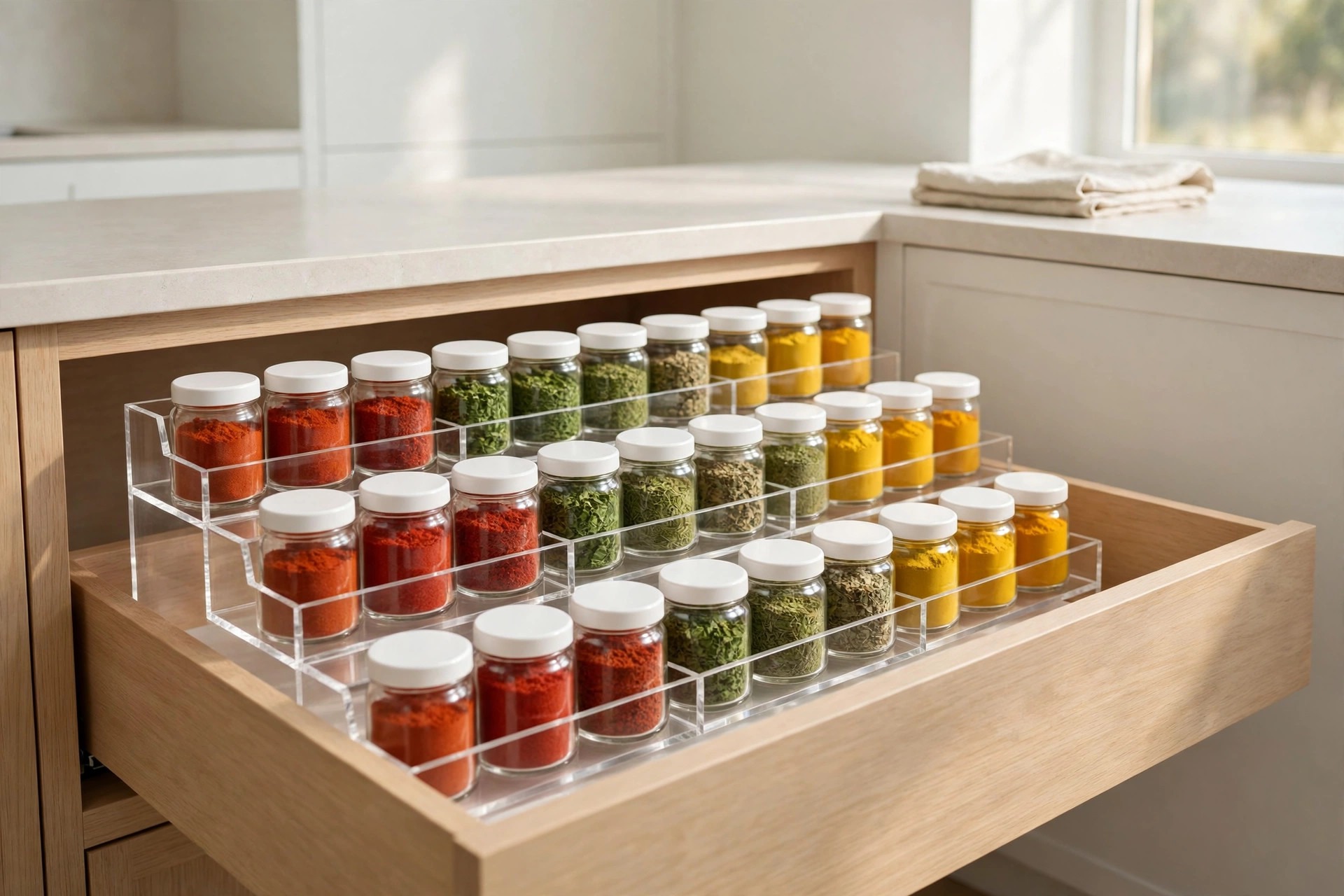
Clear acrylic tiers almost disappear in the drawer, which makes the spice colors the whole show. That sounds like a small thing until you are scanning fast: red paprika, green herbs and yellow turmeric sort themselves by sight.
Acrylic also wipes clean in seconds and shows every spill, so the drawer never builds up that hidden layer of spice dust in the corners. A weekly wipe while you cook keeps it looking new.
Handle acrylic with a little care when you lift it out. It is sturdy in place, but dragging full jars across it can scratch the surface over time, and scratches cloud the clear look you bought it for.
6. A Two Level Insert With a Sliding Top Tray

Deep drawers hide a second layer of space under the first. A two level insert uses it: everyday spices sit on a top tray that slides aside, and bulk jars or refills live in the level below.
This layout suits cooks with a big collection and a small drawer. The top tray holds the twelve jars you use weekly, while the lower level stores the rest without crowding the working set.
Slide the tray gently and keep the lower jars upright and capped. One loose lid down there scents the whole drawer, and ground spices will find their way into every corner if you let them.
7. An Upright Divider Insert for Tall Jars in a Deep Drawer

Height is the one gift a deep drawer gives you, so use it. An upright divider insert keeps tall jars standing in neat rows, with dividers between them, instead of lying them down and wasting the depth below.
Upright storage reads by lid labels, so add plain lid stickers if your jars came without them. A name and a date on each lid turns the drawer into a list you can scan in seconds.
Group the rows by how you cook: baking at one side, weeknight spices in the middle, heat at the other side.
A set order means your hand learns the drawer, and deep drawers nearby can hold pot lid organizers for deep kitchen drawers in the same upright spirit.
8. A Non Slip Liner With Loose Rows and No Insert at All

Not every drawer needs a fitted insert. A non slip liner cut to size, with jars in simple rows, gives odd shaped collections a flexible home that no fixed tray can match, and it costs very little.
The liner does the quiet work: jars stay where the drawer movement would otherwise roll them. Line the rows up by size, tallest at the back, and a deep drawer stays readable without any hardware.
Wash or replace the liner when it gets grubby. Liners catch every spill by design, and a fresh one twice a year keeps the drawer clean underneath the jars, where spice dust likes to settle.
9. A Trim to Fit Wooden Insert for an Odd Sized Drawer
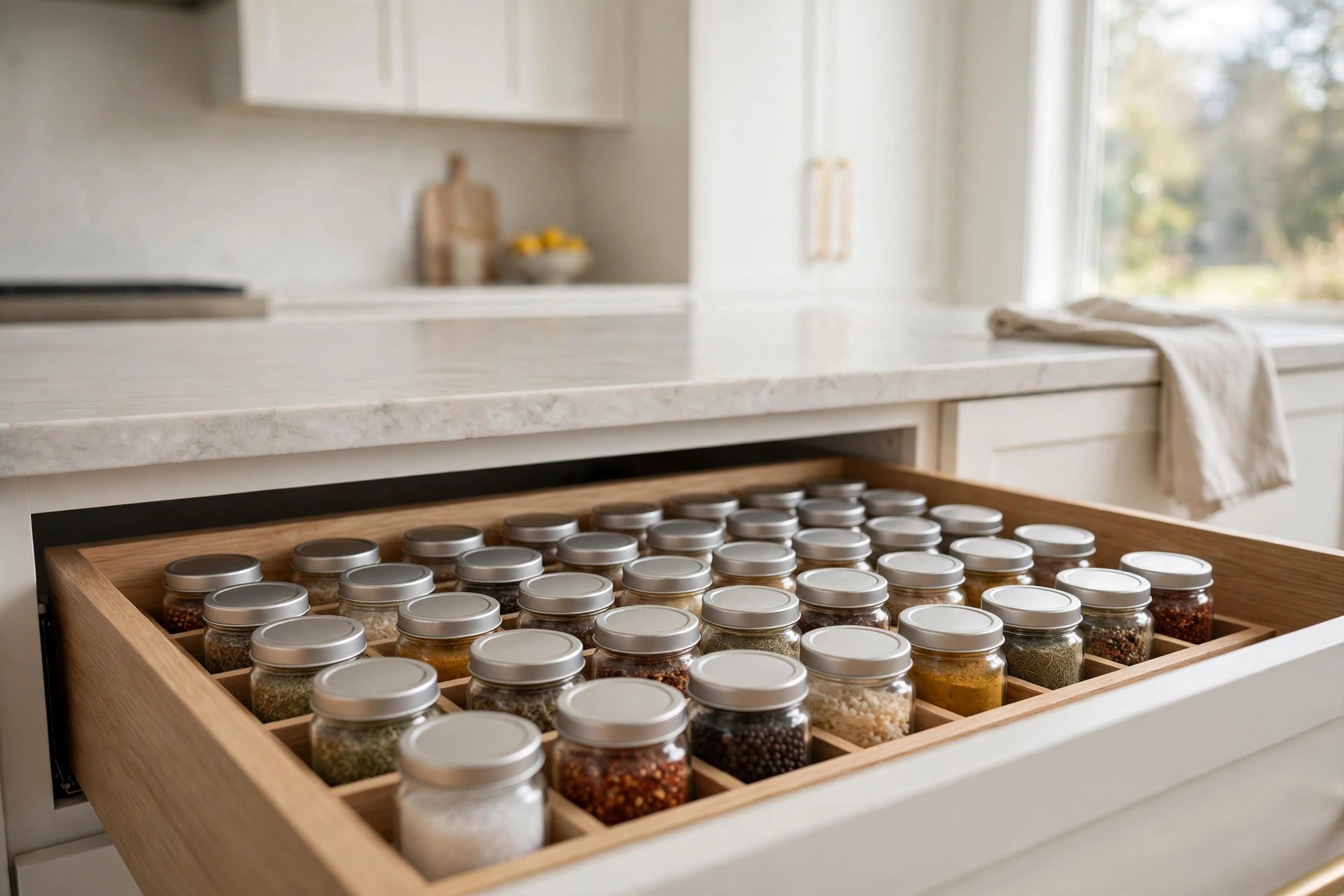
Older kitchens and handmade cabinets often have drawers that match no standard size. A trim to fit wooden insert starts oversized and cuts down to your exact drawer, so the finished fit looks built in.
Measure twice and cut once, and test the fit before you load it. A wooden insert that binds on the drawer sides will fight you daily, while one with a hair of clearance slides sweetly.
This is the one insert worth taking your time over. Done well, it lasts as long as the kitchen, and it is the style guests ask about when they open the drawer looking for salt.
10. A Grid Insert With Square Cells for Square Jars

Square jars waste no space when they sit side by side, and a grid insert keeps them that way. Each jar gets a cell, each cell keeps its jar upright, and the drawer holds more in the same footprint.
Grids suit cooks who buy matching jar sets and refill from bulk bags. The uniform look is satisfying, but the real win is count: square in square packs tighter than round jars ever will.
Keep one cell free if you can. A spare slot gives a new spice a home the day it arrives, instead of starting a second, messier overflow zone at the back of another drawer.
11. A Half Drawer Insert That Leaves Room for Bulk Bags
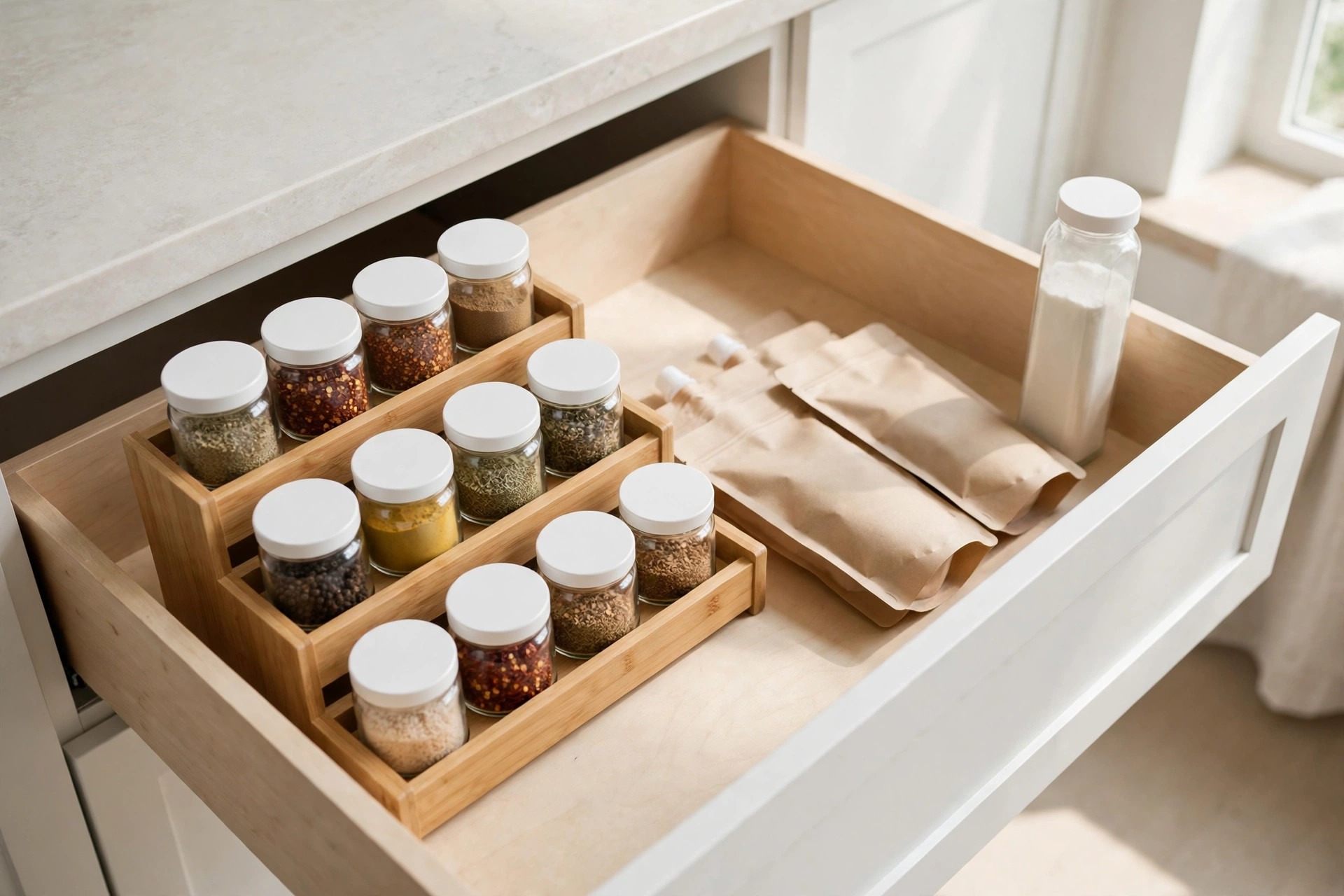
Not everything comes in a jar. A half drawer insert tiers the jars on one side and leaves the other side open for bulk bags, refill pouches and the odd tall bottle that fits no tray.
The open side needs a small upright divider or a simple box to keep bags from slumping over the jars. A cut down cardboard box works while you test the layout, then you can upgrade it later.
Pair this drawer with door storage for the overflow: slim spice racks that fit cabinet doors take the small jars, and the drawer keeps the working set and the refills together.
12. A Deep Insert With a Tall Back Row for Big Jars

Big jars of onion powder, seasoned salt and family size blends defeat shallow trays. A deep insert with a tall back row stands them upright at the rear, where the drawer depth finally works in your favor.
Put the daily small jars in front at reading height and the big jars behind them. Your hand passes over the small row without moving it, and the big jars stay visible by their height alone.
Check the drawer slides before you load the heavy row. Deep drawers full of glass get weighty, and a drawer that sags or sticks will undo all the order the insert just gave you.
13. A Wire Insert That Rinses Clean in the Sink

Powdered spices drift. However tidy you are, a fine dust settles under the jars, and a wire insert answers it best: lift the whole thing out, rinse it in the sink, dry it, and drop it back in.
Wire also suits damp prone kitchens because nothing traps moisture under the jars. Air moves through the frame, and the drawer base stays dry and easy to wipe while the insert is out.
Choose wire with small gaps if your jars are slim. Narrow bottles can tip into wide wire spacing, so match the grid to your smallest jar before you commit to this style.
14. A Modular Pair of Small Inserts You Can Grow Over Time

Two small inserts side by side give you options one big insert cannot. Start with one tiered tray, add a second when the collection grows, and rearrange the pair as your cooking changes through the year.
Modular setups also fit drawers with a cutlery tray habit: one insert for spices, one open tray for the tools you use beside the stove. The drawer serves prep as one station instead of two hunts.
Keep the pair in the same material and finish if you can. Matching inserts make the drawer read as one planned system, which somehow makes the tidy habit easier to keep up week after week.
15. An Insert With a Label Forward Front Row

End the list with the habit that makes every insert work better: a front row set label forward, on purpose. Tilt or stand the first row so its labels face your eyes the second the drawer opens.
Your most used spices belong in that row: salt, pepper, garlic, paprika, the jars your hand wants before your brain has finished reading the recipe. Everything else can live a step behind them.
Starting a kitchen from scratch? Our first apartment kitchen starter kit lists the core spices worth buying first, so a new drawer starts full of jars you will actually finish.
A deep drawer is good storage hiding a layout problem. Give the back row height, give every jar a set place, and the drawer that used to eat your spices starts handing them to you instead.
Measure first, pick the insert style that matches how you read jars, and keep one order once you choose it.
Save this list to the Small Kitchen Gadget Ideas board, and choose your best spice drawer inserts for deep kitchen drawers with those three measurements in hand.


