

How to Decorate a First Apartment Room by Room: The Order in 15 Steps
An empty first apartment makes every job feel urgent at once. The bed is in pieces, the kitchen boxes are open, and the living room still echoes when you talk.
Order fixes that feeling faster than any single buy. When you learn how to decorate a first apartment room by room, the order stops being a guess and becomes a simple list you can follow.
This order starts where you sleep, eat, and wash, then moves to the rooms guests see. Each step makes the next one easier, cheaper, and less likely to be redone.
Work one room at a time and finish it before you start the next. A half done bedroom and a half done kitchen will drain you more than one bare room will.
You do not need a big budget or a full weekend for each room. You need a sequence you trust, so no room gets decorated twice and no buy blocks the job that should have come before it.
This post contains affiliate links. If you buy through them, we may earn a small commission at no extra cost to you. See our Affiliate Disclosure.
1. Start With the Bedroom So You Can Sleep Well From Night One

The bedroom comes first because rest pays for every other job. Build the bed, hang the curtains, and put a lamp within reach before you touch any other room.
A made bed also gives you one clean surface in a flat full of boxes. You can fold clothes on it, sort papers on it, and rest on it between trips.
Keep the first version plain. Frame, mattress, two pillows, one warm layer, and a small bedside surface are enough for week one, and the pretty layer can wait.
Close the bedroom door on the mess at night. That one finished room proves the order works, and it keeps your sleep apart from the unpacking still to come.
2. Set Up the Bathroom Basics Before Anything Pretty

Step two is the smallest room and the fastest win. A shower curtain, a bath mat, towels on a rail, and a bin by the sink make the morning feel normal.
Put daily items where your hands expect them. Toothbrush by the sink, towels within reach of the shower, and cleaning spray under the basin where spills happen.
Skip matching sets and fancy storage for now. One hook for a robe and one tray for small bottles will carry this room for months without any fuss.
Check the light while you are here. A warm bulb over the mirror makes early mornings kinder, and it costs less than any other change in the room.
3. Make the Kitchen Work for One Real Meal
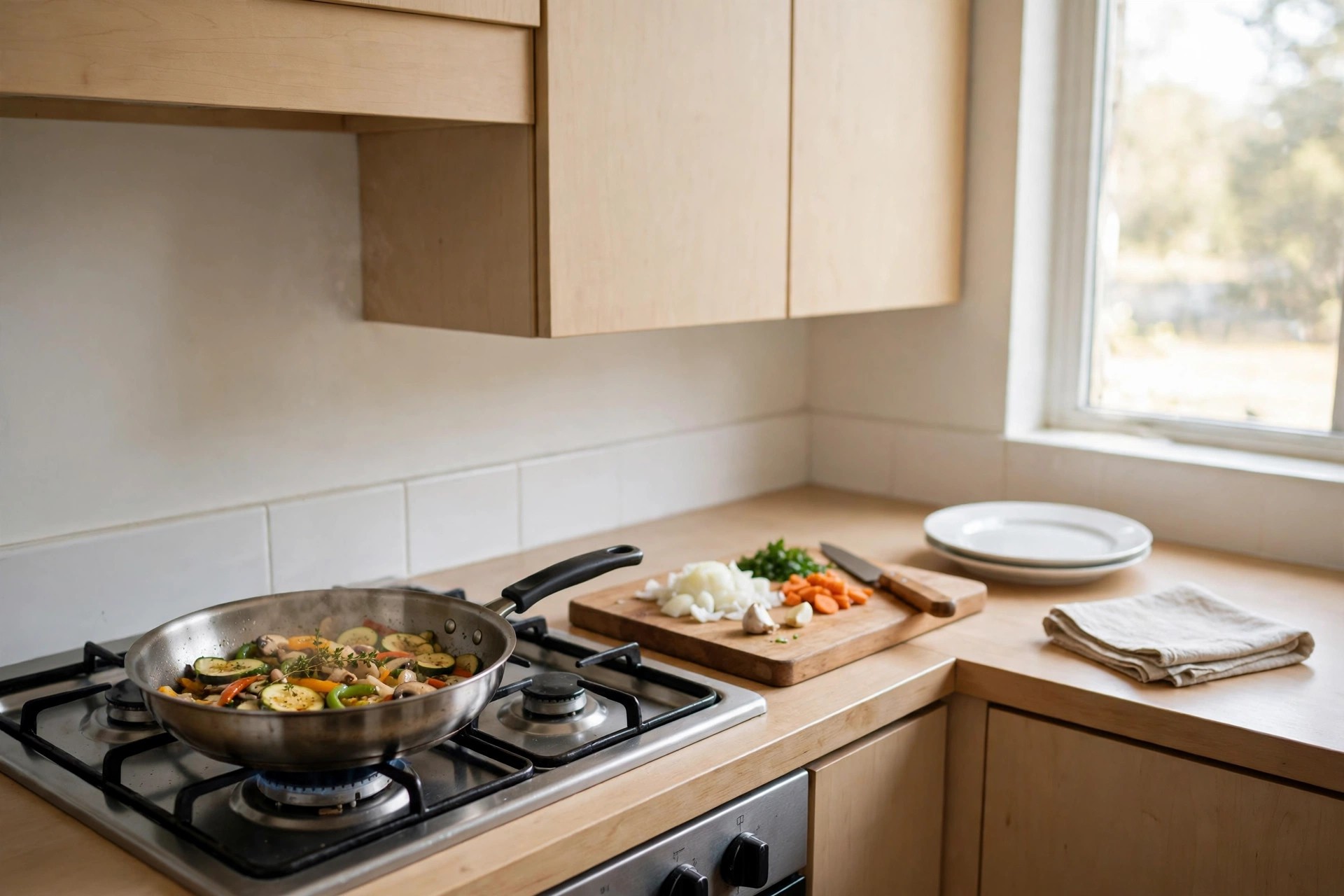
The kitchen is third, and the test is one real meal. You need a pan that heats evenly, a board that stays put, and plates you can eat from at a clear counter.
Set the room up by task. Cooking tools near the stove, mugs near the kettle spot, and the bin where scraps fall while you chop, not across the room.
Leave one stretch of counter empty on purpose. That clear space is where shopping bags land, dough rests, and post gets sorted on busy weeknights.
Our notes on small kitchen ideas for a first apartment go deeper on tight counters and short cabinet runs once this basic setup works.
4. Place the Biggest Living Room Piece First

Now the living room, and it starts with one piece only. Put the sofa against the longest clear wall, sit on it, and check the view, the light, and the walkway.
Every smaller choice depends on this one. The rug size, the table shape, and the lamp spots all follow where the sofa lands, so guesswork drops fast.
Leave space at both ends if you can. A sofa jammed corner to corner leaves no room for a lamp or a basket, and the room feels smaller for it.
Live with the sofa alone for a day or two. You will learn where you sit, where drinks land, and where your feet rest before you buy anything else.
5. Add Living Room Seating and a Surface to Land On

With the sofa set, add one more seat and one flat surface. A single armchair, a sturdy stool, or a secondhand chair gives a guest a place that is not the floor.
The surface matters as much as the seat. Mugs, books, and remotes need a home at arm height, or they spread across the sofa cushions within a week.
Keep the new pieces lighter than the sofa in color and weight. Mixed pieces look settled in a first apartment, and lighter items are easier to move alone.
For layout help at this stage, these first apartment living room ideas show how small seating groups fit in real rooms.
6. Sort Entry Storage So Clutter Stops at the Door

The entry comes sixth because it collects what other rooms reject. Keys, post, shoes, and bags land here daily, so give each one a fixed spot by the door.
A small tray, a row of hooks, and a basket for shoes cover most of it. The rule is simple: if it has no spot, it will live on the floor.
Keep the entry kit narrow. In a first apartment the door swing eats floor space, and a deep unit turns coming home into a squeeze every single night.
Add a small mirror or print last, once the working parts fit. The entry should help you leave on time first and look good second.
7. Choose One Simple Color Plan for the Whole Apartment
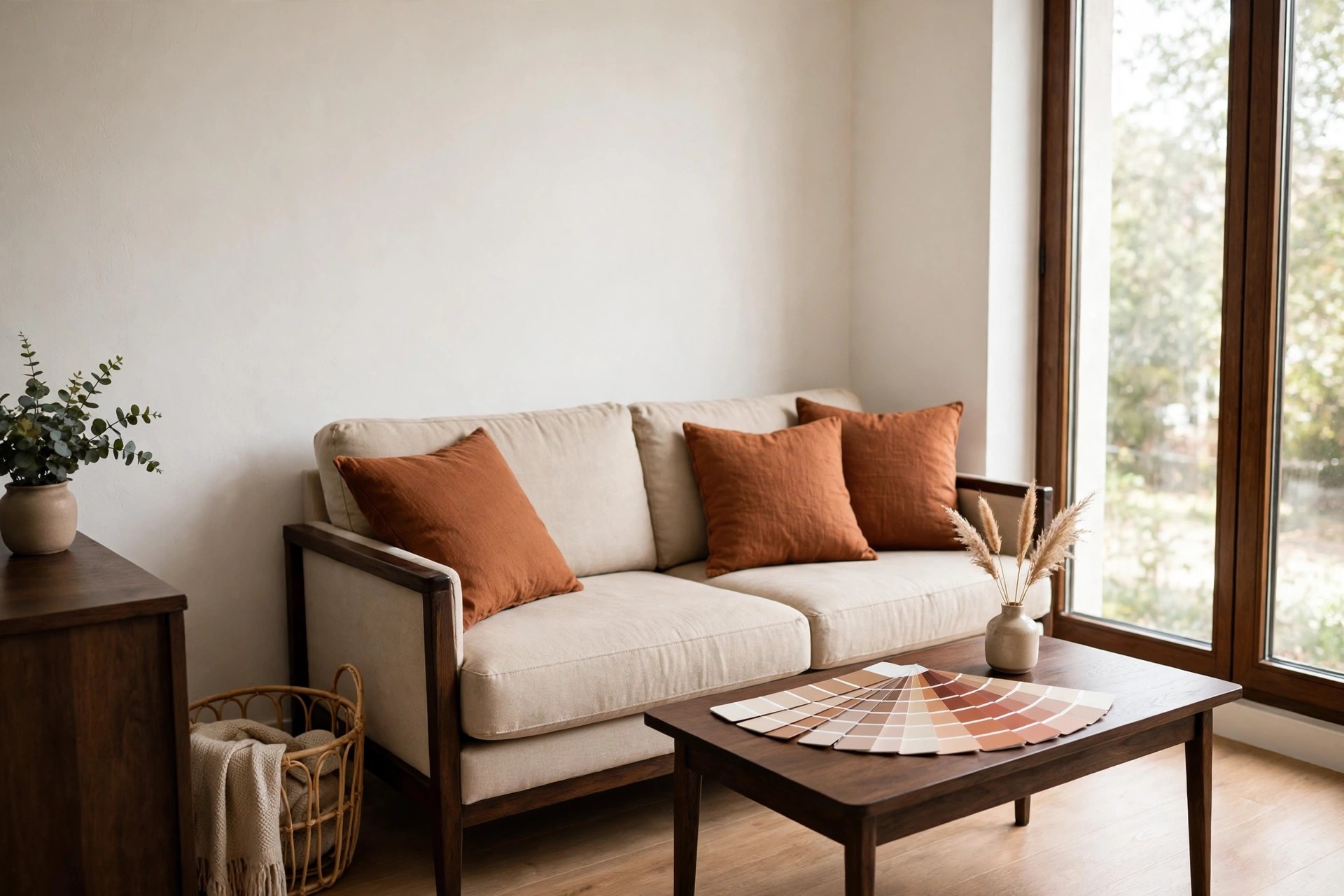
By step seven the big pieces are in, and now color ties them together. Pick one main neutral, one warm accent, and one darker tone, then repeat them in each room.
Three colors are enough for a small home. The neutral carries walls and big fabric, the accent shows up in cushions and art, and the dark tone grounds legs and frames.
Test the plan with what you own first. A throw from the bedroom on the sofa tells you more than a paint card held up in a store.
Write the three colors on your phone. Every later buy gets checked against that short list, which stops the slow drift into a mix that never settles.
8. Hang Curtains in the Bedroom, Then the Living Room
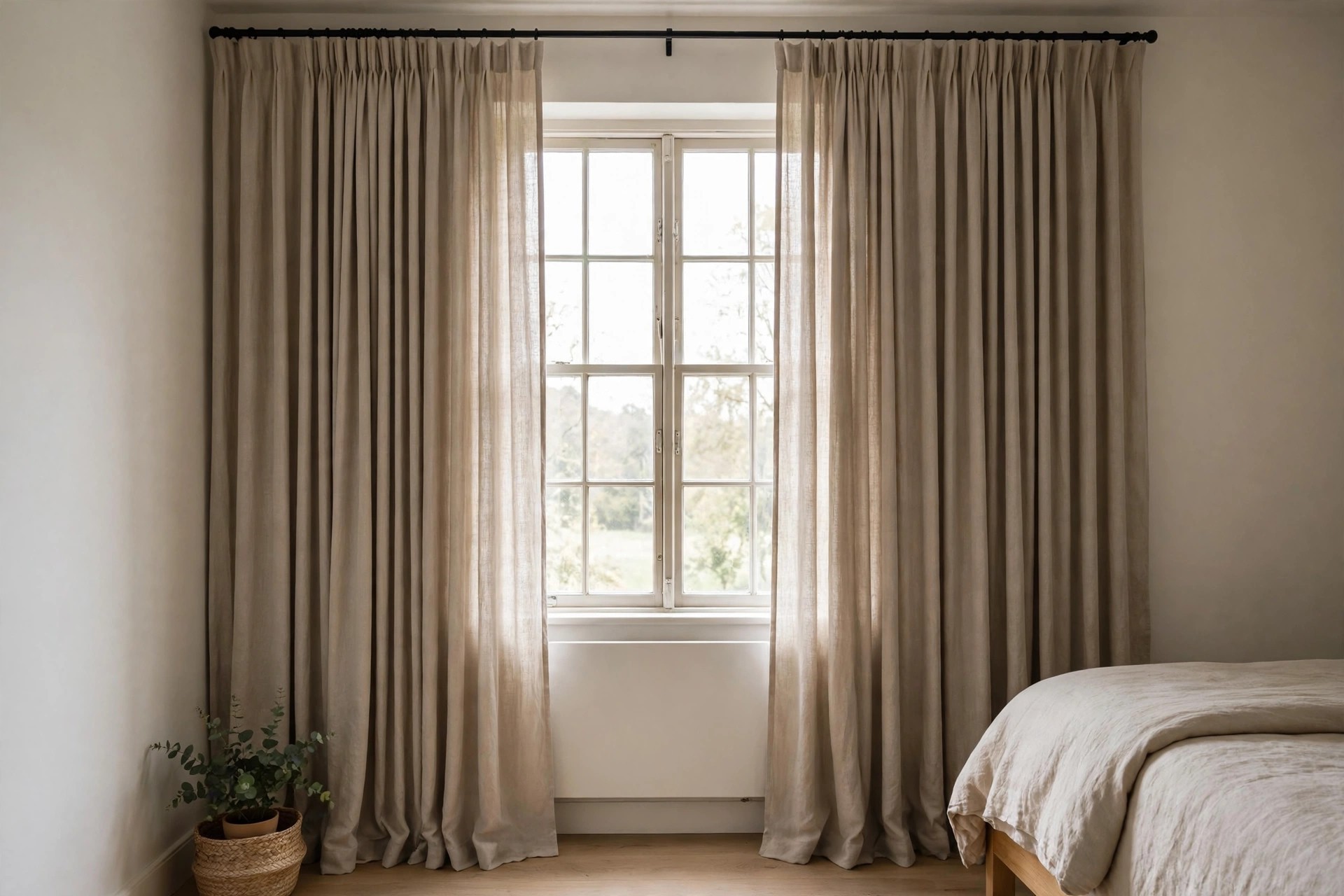
Curtains come after the color plan because fabric is a big color block. Start in the bedroom, where privacy and dark mornings matter most, then match the living room tone.
Hang rods high and wide where the lease allows fixings. The panels then clear the glass in the day and make a low ceiling feel a little taller.
Choose one fabric weight for both rooms. Lined panels in the bedroom block street light, while the same tone in a lighter weave keeps the living room bright.
Steam or iron one panel before you hang the rest. A creased pair can make a good color look cheap, and you only learn that once they are up.
9. Lay Rugs Where Your Feet Land First

Rugs follow curtains because both set the soft layer of a room. Start where bare feet land: beside the bed, in front of the sofa, and inside the front door.
Size each rug by the furniture, not the room. Front sofa legs on the rug, bed rugs clear on both sides, and an entry rug long enough for two wet shoes.
Keep colors inside your three color plan. A rug is the largest pattern most rooms hold, so a wild one will fight every cushion and curtain you own.
Put a pad under each rug from day one. Pads stop the slow creep across hard floors and save you the daily tug back into place.
10. Add Lamps Room by Room, Starting With the Darkest Corner

Lighting is step ten because you need to live in the rooms to find the dark spots. Walk through at dusk and note where you squint, cook in shadow, or read badly.
Fix the worst corner first. One floor lamp by the sofa or a table lamp on the dresser often does more than a new ceiling light ever will.
Keep bulbs warm and matched across a room. Mixed bulb colors make one side look yellow and the other blue, and small rooms show that split at once.
Our guide to how to arrange a small living room with 5 layouts that work pairs lamp spots with seating plans if your corners still feel dim.
11. Bring in Storage That Matches How Each Room Fails

Storage works best when it answers a real pile. By now you know yours: clothes on the bedroom chair, papers on the kitchen counter, games under the coffee table.
Buy or thrift one piece per pile, not a full system. A lidded basket, a narrow shelf, or a drawer unit sized to the mess will beat a big vague unit.
Measure the pile before you shop. Storage that is two inches too small gets returned or ignored, and both outcomes waste the money you were saving.
Watch out for the money traps in our list of first apartment mistakes that waste money beginners make before you buy storage for rooms that are not settled yet.
12. Put Art and Photos Up Last in the Main Rooms

Art goes up late for a plain reason: walls are easy to fill and hard to redo. Once furniture, rugs, and lamps are set, the right wall spots show themselves.
Start with one large piece per room. A single framed print over the sofa or a photo group over the dresser reads calmer than ten small frames scattered wide.
Hang the center of the piece at eye level when you stand. Art hung too high floats away from the furniture, and guests feel it even if they cannot name it.
Use your own photos for at least one wall. A first apartment starts to feel like yours the day a familiar street, trip, or face looks back at you.
13. Finish the Kitchen With Small Working Zones

Return to the kitchen now that you have cooked in it for a while. You know which drawer sticks, which counter corner collects crumbs, and what tool you keep hunting for.
Build three small zones: prep, cooking, and washing up. Each zone holds only its own tools, so a busy night does not turn into a drawer hunt.
Add one comfort item at this stage. A soft mat at the sink, a stool for a guest, or a small radio makes the room feel finished without new units.
Clear the fridge door while you finish. Old takeaway menus and loose magnets make a tidy kitchen look busy, and the fix takes five quiet minutes.
14. Give the Bedroom Its Quiet Finishing Layer

The bedroom gets its soft layer near the end, when the budget is clear. A folded throw, one cushion you love, and art that suits slow mornings are enough.
Keep surfaces near the bed almost empty. A lamp, a book, and a glass of water belong there; chargers, coins, and paperwork belong in a drawer or tray.
Check the room from the bed, not the door. That is the view you fall asleep to, and a calm one helps the whole apartment feel done.
If a cozy corner is still missing, our guide to what to buy first for a new home helps you rank the last bedroom buys against kitchen and living room needs.
15. Do a Final Walk Through and Fix the Gaps in Order
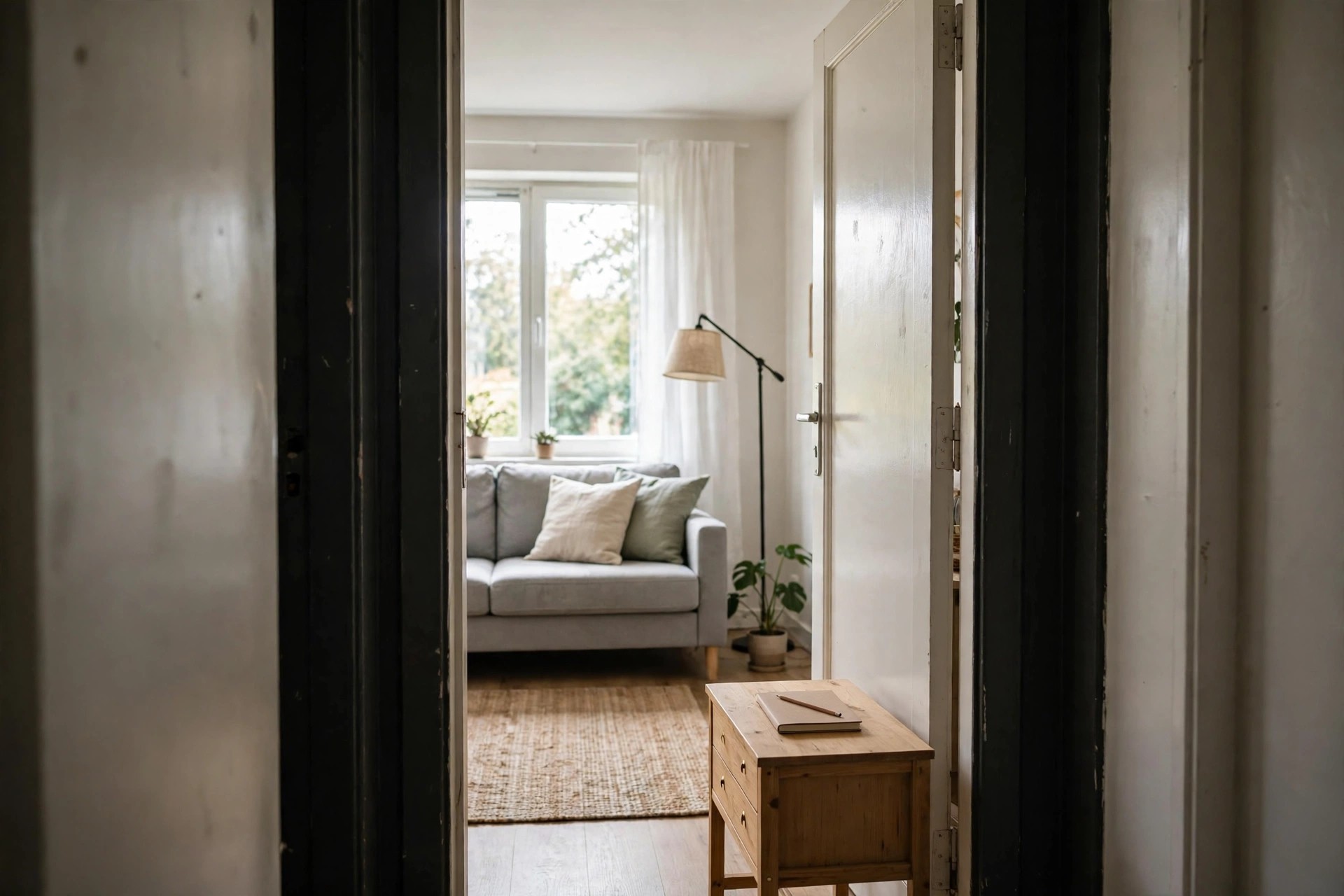
The last step is a slow walk with a notebook, room by room, in the same order you decorated. Note what still fails in daily use, not what looks unfinished in photos.
Rank each gap by how often it annoys you. A wobbly chair you sit in daily beats a bare hallway wall you pass twice a week, every time.
Fix one gap a week and stop there. Small steady fixes keep the budget calm and stop the apartment from sliding back into a project site each weekend.
Take one photo of each finished room for yourself. On the next hard day, those photos show how far the place has come since the first box arrived.
A first apartment settles fastest when the order follows your day: sleep, wash, eat, sit, then store and style. That is why learning how to decorate a first apartment room by room, in the right order, matters more than any single pretty buy.
Start with the bedroom tonight, even if the fix is only a made bed and a lamp. One finished room gives you the energy and the proof to finish the rest.
Save these steps to your first apartment ideas board for later, and work the list in order each time a new room or a new home needs the same calm start.


