

15 Small Bedroom Wall Art Ideas That Do Not Shrink the Room
Your small bedroom can feel smaller the minute you hang the wrong art, and that is frustrating when you only wanted it to feel finished. Dark, busy, or heavy pieces pull the walls in. Light, calm art does the opposite.
The good news is simple. You do not need bare walls to keep space. You need art with light color, clear breathing room, and a size that suits the wall.
These small bedroom wall art ideas follow that rule, so the room stays open and calm.
Before you buy, it also helps to check common wall art size mistakes that make a bedroom look off, since scale is often the real problem in a tight room.
Think about the light in your room, the color of your bedding, and the one wall you see most from the bed. If the art is light, calm, and given room to breathe, it can add charm without adding visual weight at all.
The fifteen ideas below keep that balance, one simple choice at a time, with pieces you can swap or move as your room changes over the seasons.
This post contains affiliate links. If you buy through them, we may earn a small commission at no extra cost to you. See our Affiliate Disclosure.
1. Choose One Larger Light Piece Instead of Many Small Dark Ones
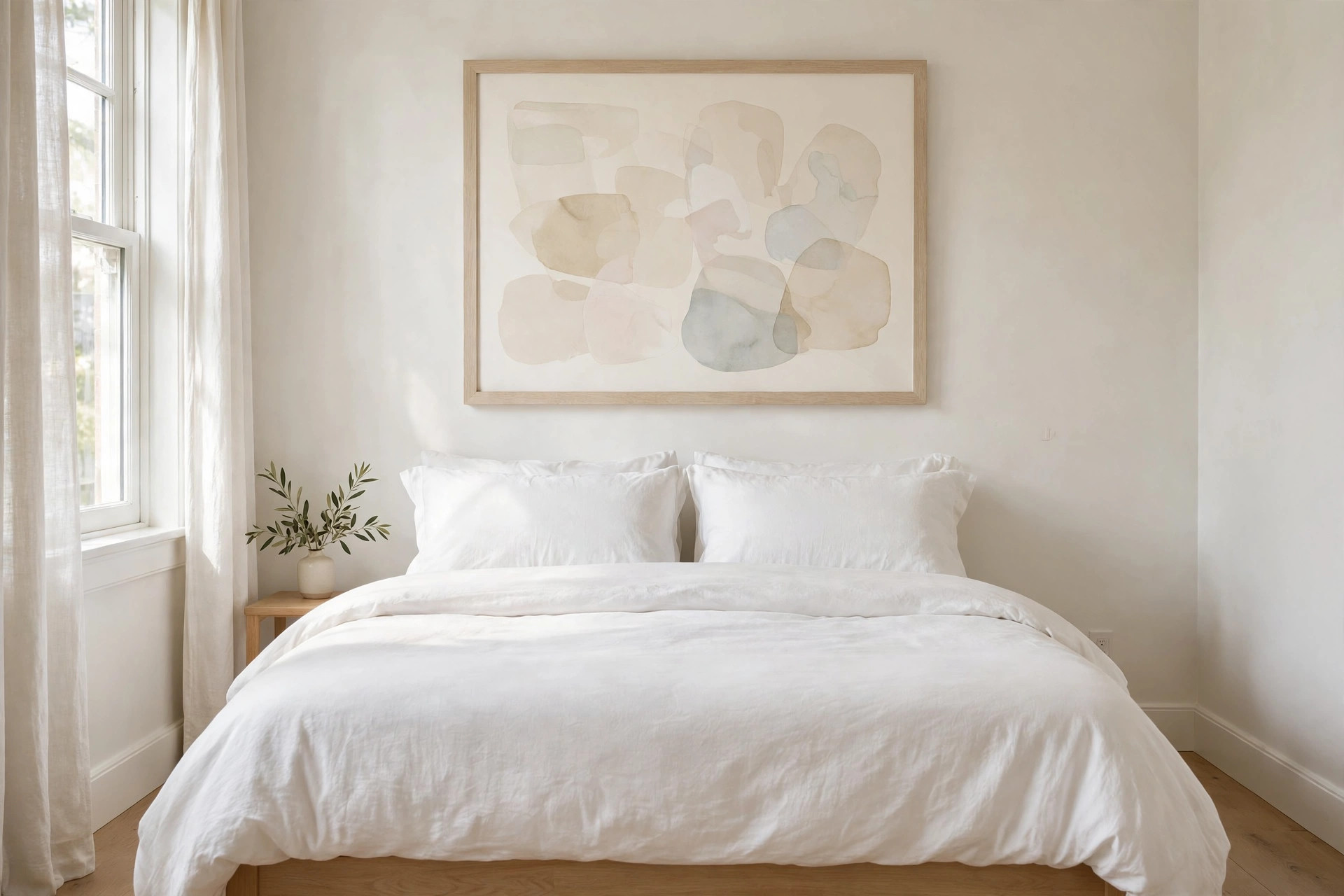
A wall covered in small dark frames can feel busy fast, and busy walls read as clutter in a small room. One larger piece in pale tones gives the eye a single calm place to land.
Pick a soft cream, white, or light gray background with a simple shape or quiet scene. Hang it above the bed or dresser, centered, with clear space on each side.
Leave the bedding plain nearby, in white or light linen, so the art does not fight for attention. The result feels planned and open. One clear focal point almost always beats six small pieces that pull your gaze in six directions at once.
Measure the wall first, and leave clear space on each side so the piece never feels squeezed into place.
2. Pick a Pale Landscape With Real Depth and Distance
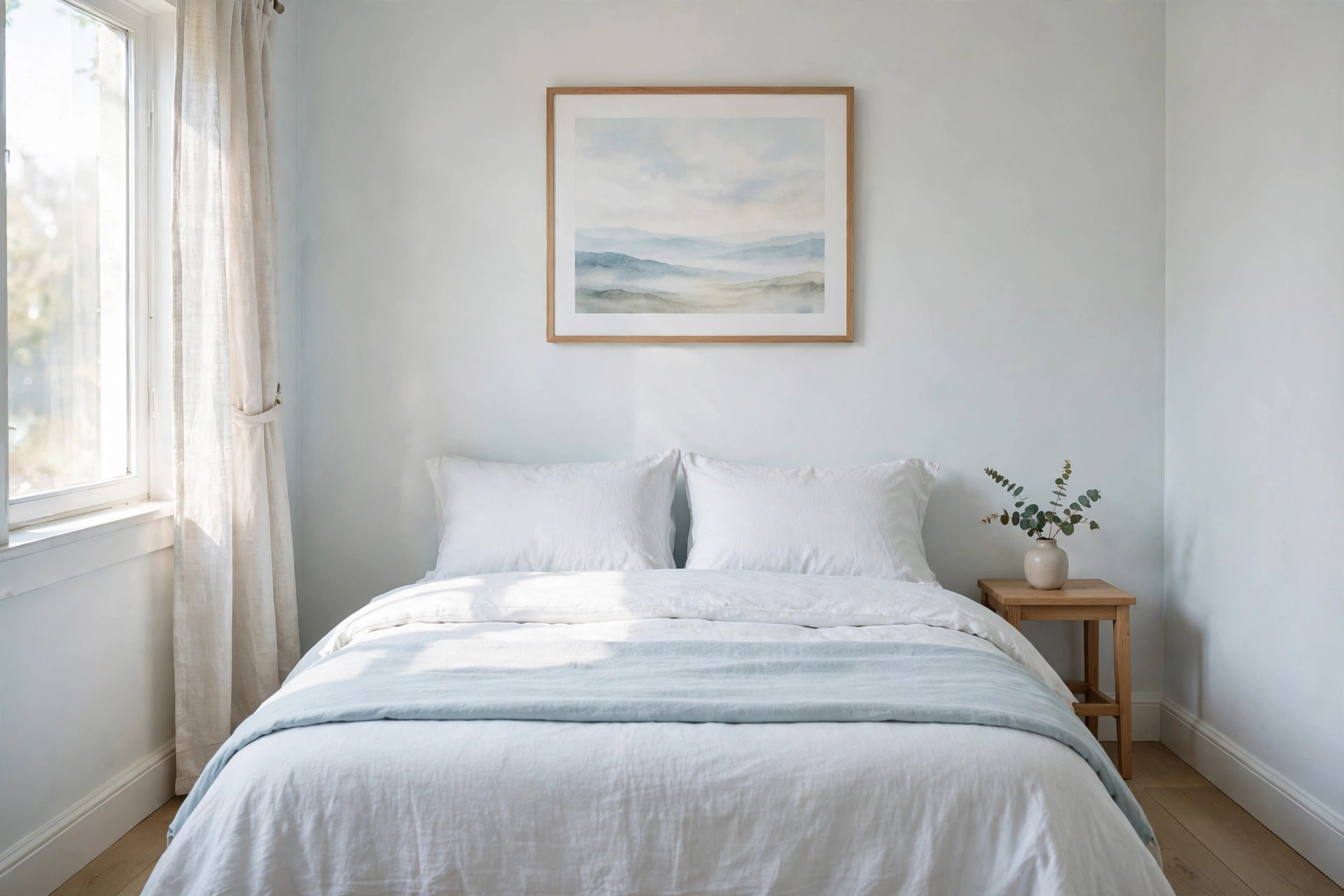
Some art feels flat against the wall, while a pale landscape opens a small window into distance. Look for a scene with a light sky, a soft horizon, and gentle layers that fade toward the back.
Pale blue, misty gray, and warm white work well above a bed with simple bedding. The eye travels into the picture instead of stopping at the wall, and that small shift helps the room feel less boxed in.
Keep the frame slim so the scene stays the focus. A landscape with a low, calm horizon tends to feel restful at night and bright in the morning light by a nearby window.
If the scene has tiny dark details, step back and check that the overall feel still reads soft and pale.
3. Give Each Print a Wide White Mat for Breathing Room
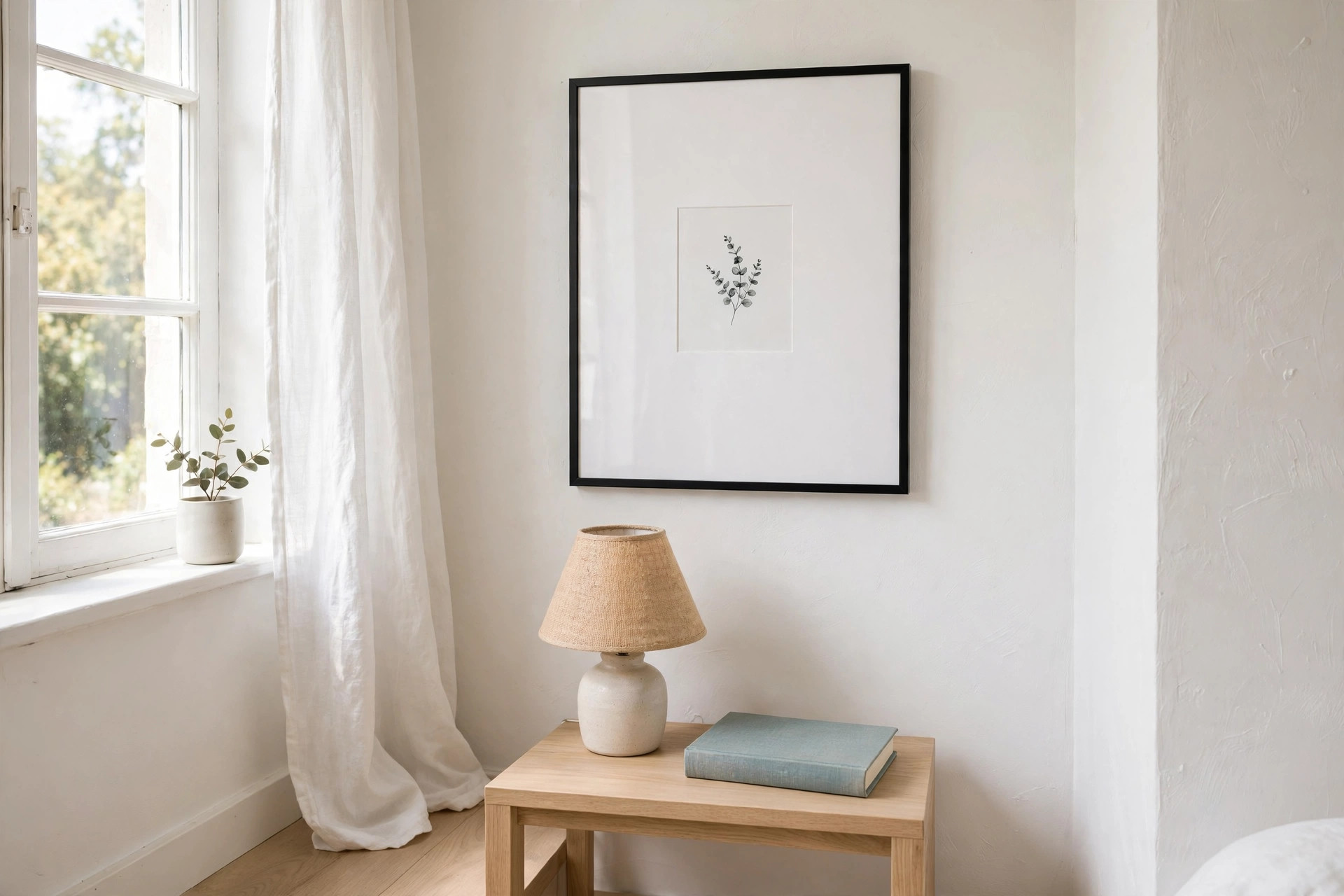
Here is a tiny rule that makes a small print look calm instead of cramped: choose a wide white mat. The mat adds blank space around the image, so the art feels light on the wall.
A small print in a larger frame with a broad mat also looks more finished than the same print squeezed edge to edge. Try this above a nightstand, where a lamp and a book already take up visual space.
The white border keeps the corner from feeling crowded. Use the same mat color for two prints if you hang a pair, so they read as one quiet set rather than two separate pieces.
A mat with a clean white core looks bright for years, so check the edge before you frame the print.
4. Use Thin Pale Frames That Stay Light on the Wall
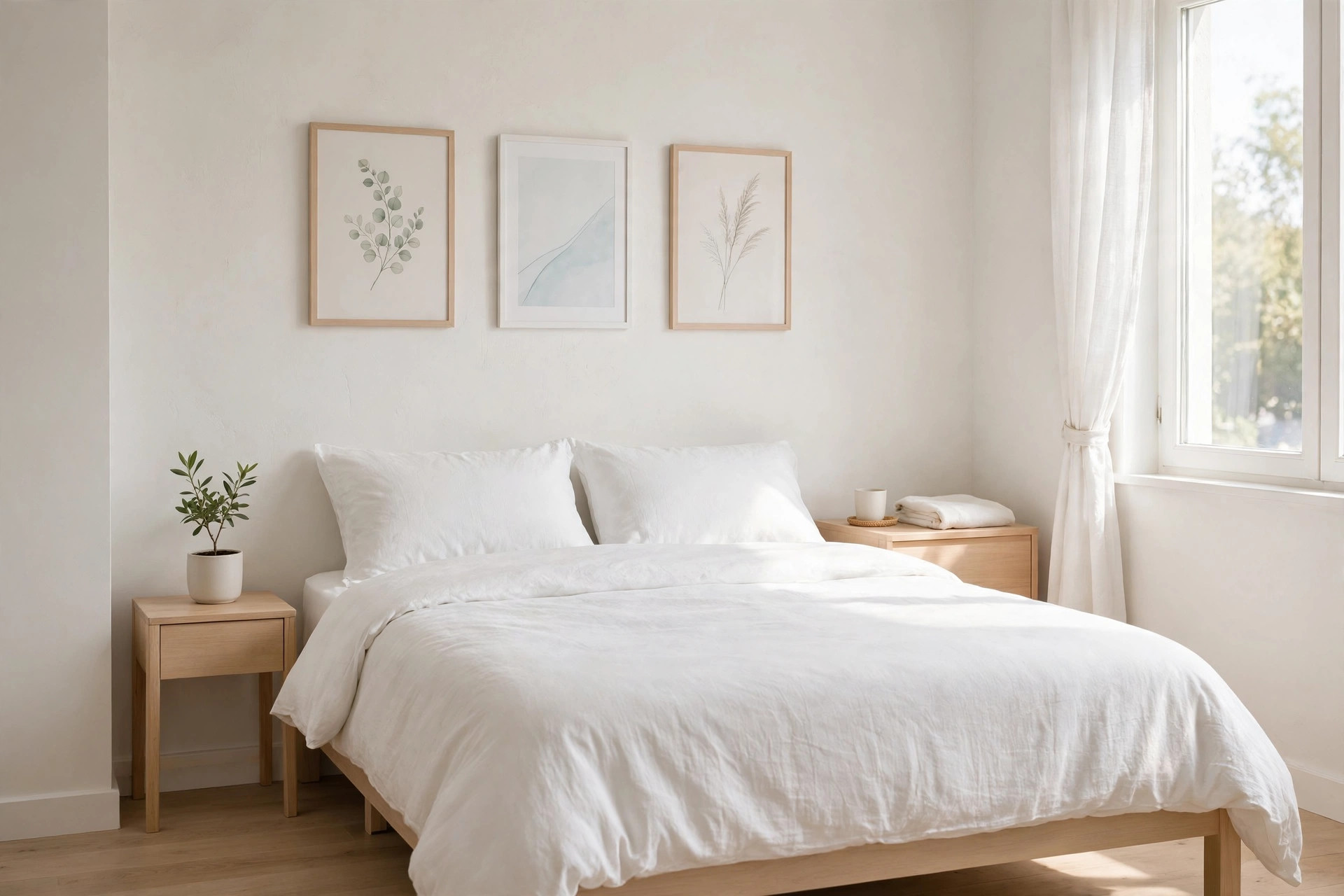
Thick black or dark wood frames can look heavy, even when the art inside them is light. Thin frames in white, pale oak, or soft gold keep the edge quiet and let the wall show through the overall look.
They suit prints, photos, and line art, and they mix well in a small room with light furniture. Run your hand along a sample frame if you shop in person.
If it feels chunky and deep, it will likely look that way on the wall too. A slim profile, about an inch or less, keeps the piece close to the wall and helps a narrow room feel calm and tidy.
Pale frames also show dust less than dark ones, which helps the wall look fresh with very little effort.
5. Treat a Simple Mirror as a Piece of Art
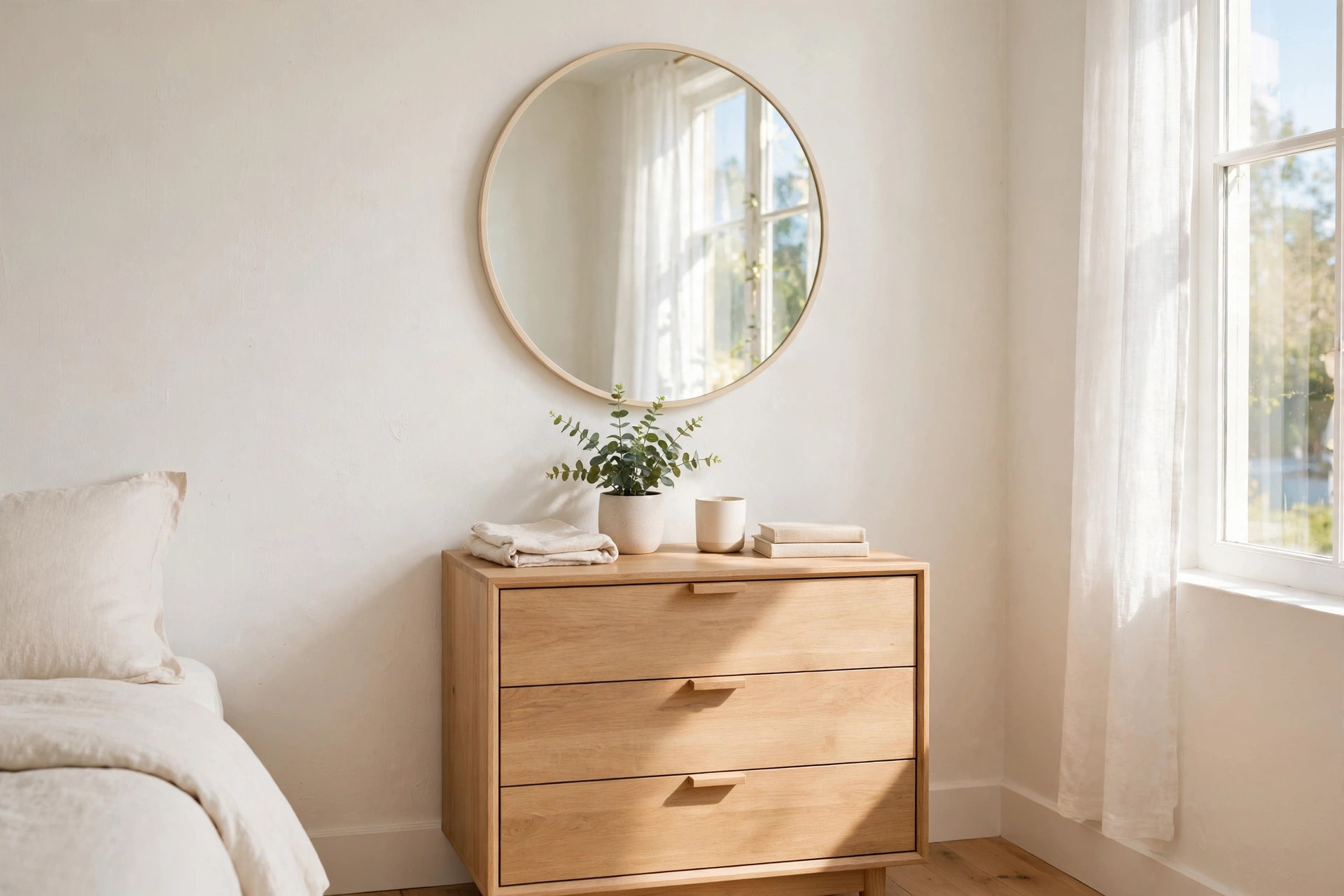
A mirror does the work of art and light at the same time. It reflects the window, bounces soft daylight around the room, and gives a plain wall a clear focal point without adding dark color.
Choose a round or arched shape with a thin pale frame for a soft look above a dresser. Place it so it reflects light or a calm view, not a pile of laundry in the corner.
Wipe the glass clean, since smudges show fast in a small space. In many cozy small bedroom art setups, a mirror is the one piece that keeps the room bright all day.
Angle it a little if glare is a problem, and the reflection will soften while the light still spreads.
6. Hang Vertical Art to Draw the Eye Up
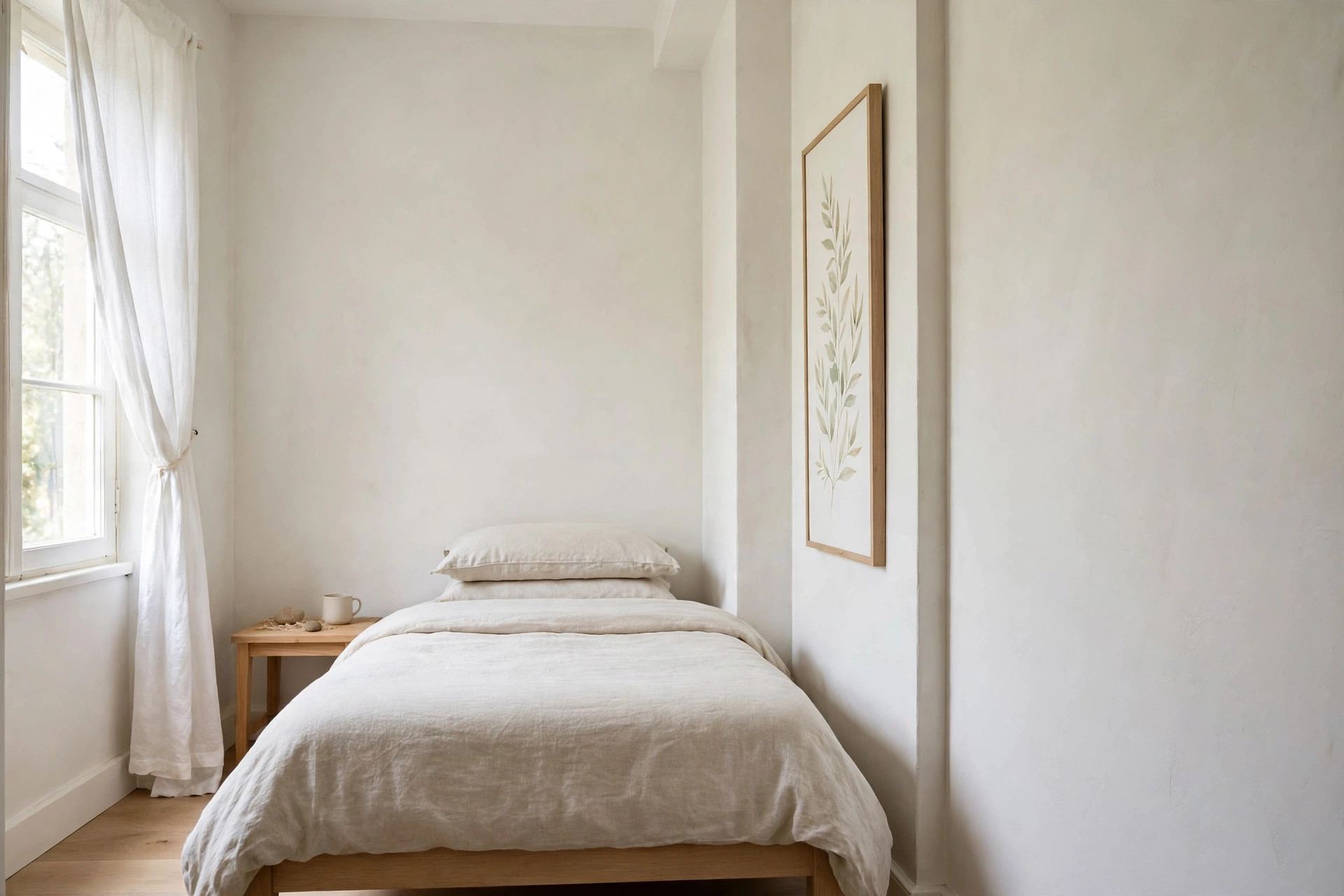
Low ceilings can make a small bedroom feel pressed down, so give the eye a reason to travel up. A tall, narrow print does that work without taking much wall width.
Look for a vertical botanical stem, a simple abstract with upward lines, or a tall coastal scene in pale tones. Hang it on a narrow wall section beside the bed or near the door, where a wide piece would not fit.
Pair it with low furniture nearby, like a short nightstand, so the height contrast is clear. The wall feels taller, and the floor plan does not lose a single inch to the art itself.
Keep the bottom edge level with nearby tall items, like a wardrobe top, for a neat and planned line.
7. Match Tone on Tone Art Close to Your Wall Color
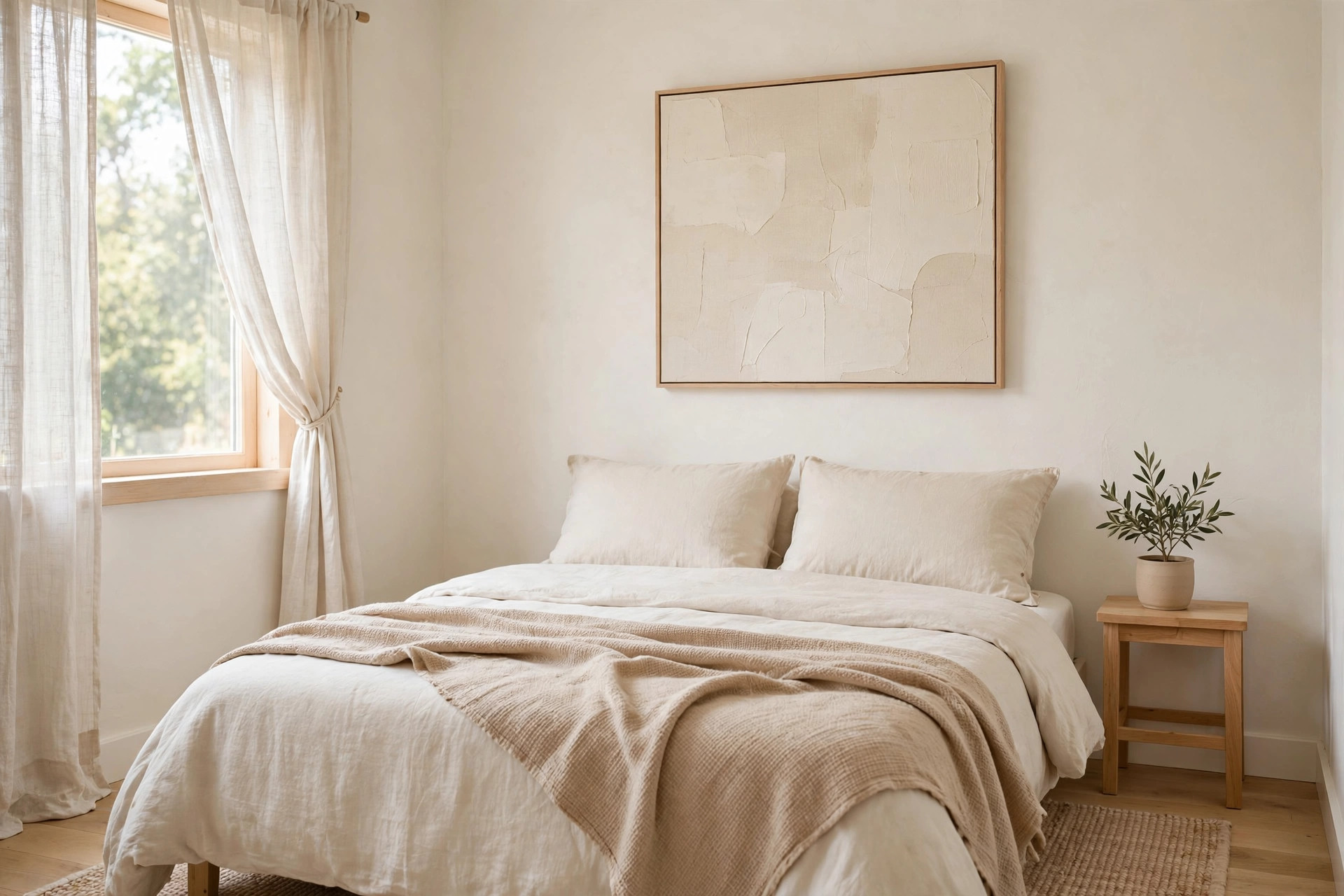
Strong contrast can chop up a small wall, so soft tone on tone art keeps things smooth. If your walls are warm white, try cream and beige art. If they are pale gray, try art in soft gray and white.
The piece adds texture and interest without a hard edge that stops the eye. This works well on the wall you see first from the door, since the room reads calm right away.
Add depth with a raised texture, a linen look canvas, or a print with gentle shading, rather than bold color. A small woven throw in a similar tone on the bed helps the whole wall feel planned.
Hold a paint swatch beside the art in daylight, since soft tones can shift a lot by evening.
8. Try Airy Botanical Line Prints With Lots of White Space
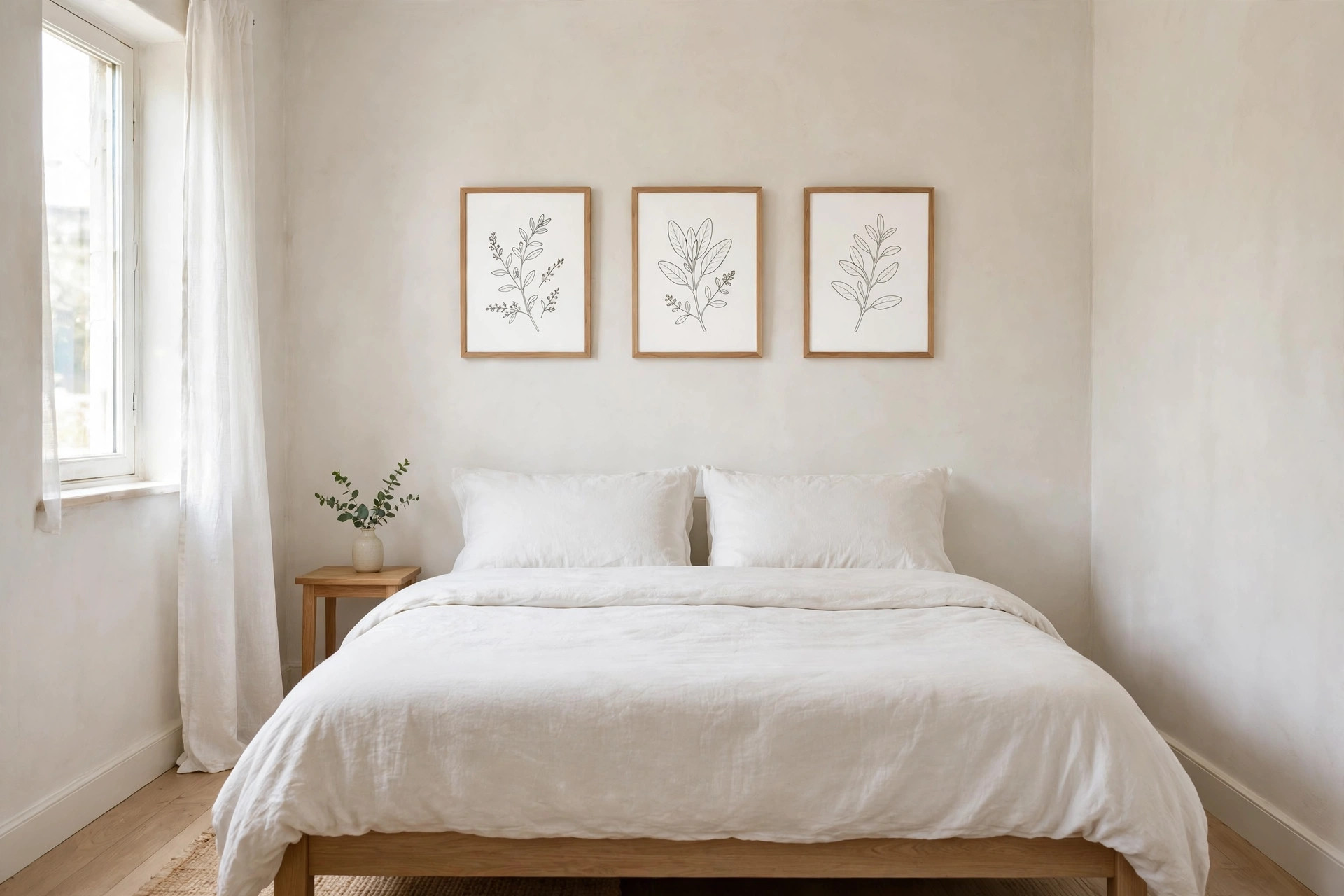
Botanical prints can go heavy if the leaves fill every inch, so pick line versions with lots of white space instead. A single stem, leaf branch, or flower drawn in thin black, gray, or sage lines feels light and fresh.
Hang two or three in a neat row above the bed, with even gaps between them. The white background in each frame blends with the wall, so the set feels open rather than boxed in.
This style also suits rooms that already have patterned bedding, since the art stays quiet. Keep nearby decor simple, perhaps a plain vase on the dresser, and the wall will stay calm.
Even gaps matter more than exact size here, so use tape marks and step back before you hang them.
9. Choose an Unframed Canvas With Light Painted Edges
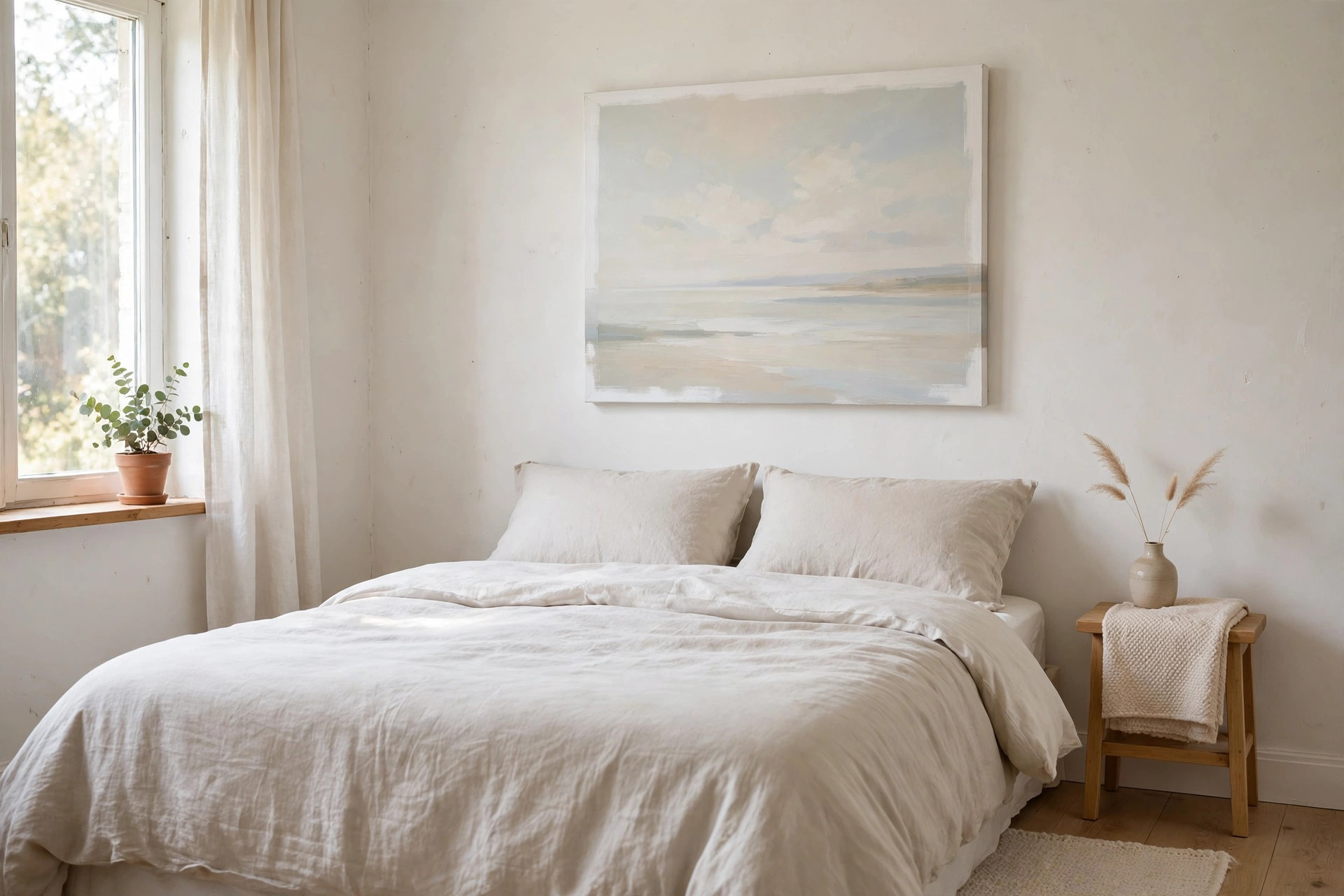
Frames add weight, so an unframed canvas can feel softer in a very small room. Pick one with light colors that wrap around the edges, so there is no dark border cutting the image off.
Soft abstract washes, pale seascapes, and light floral art all work in this format. Hang the canvas flush to the wall above the bed and check it from the doorway. If the edge color is white or cream, the piece blends in gently.
This is a good pick for renters too, since many canvases are light to hang. For more placement help, see these art ideas for a small apartment bedroom with tight walls.
Check the side view from the door too, because a thick canvas can feel bulky in a narrow room.
10. Hang Your Art a Little Higher Than Usual
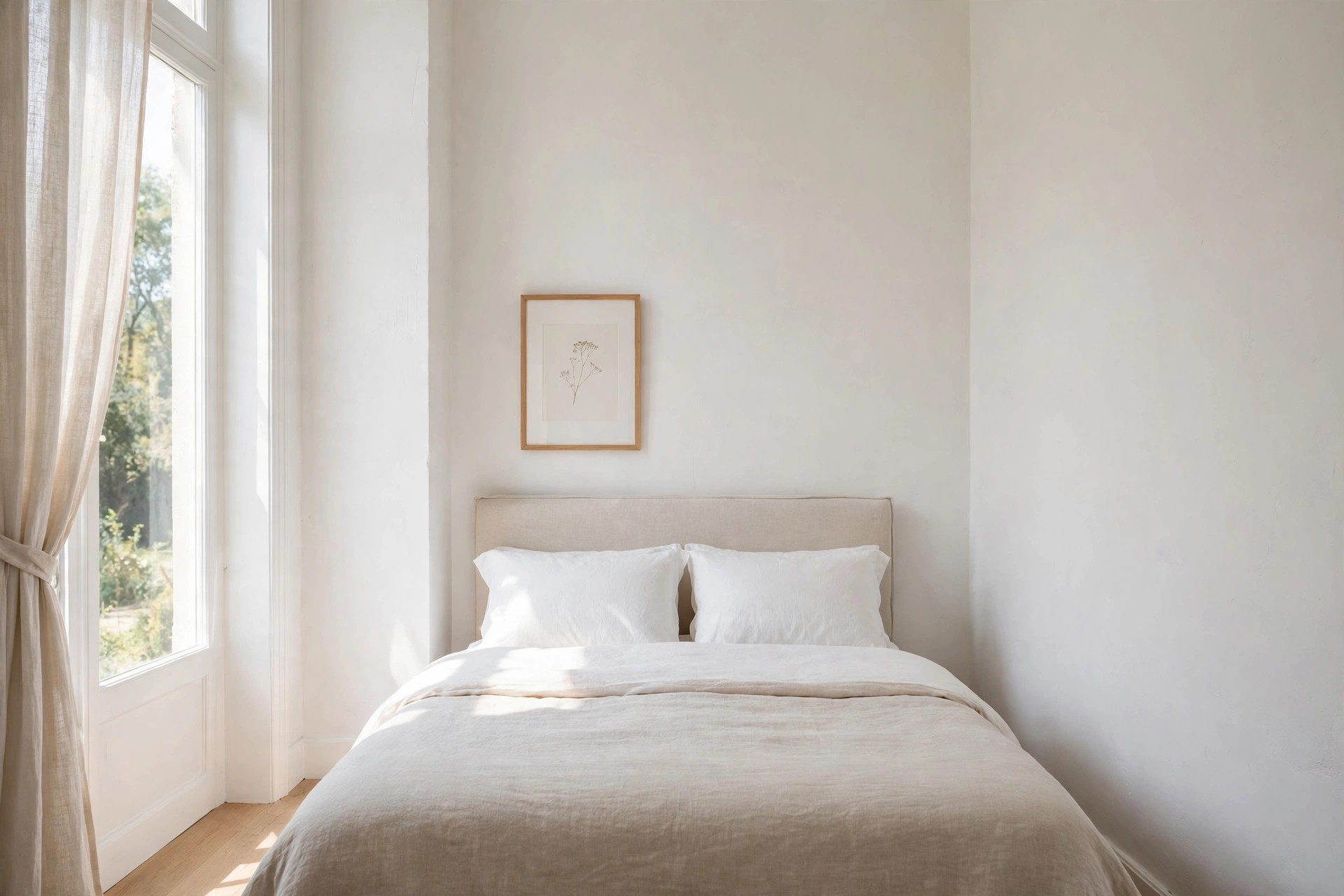
Art hung too low can drag a small room down and crowd the furniture below it. Raise the piece a few inches above your usual spot, and the wall above the bed or dresser feels taller and clearer.
Leave enough gap so the art does not hit the ceiling line, and keep the bottom edge clear of pillows or a headboard. Use painter tape to mark the new height first, then live with it for a day before you drill.
A small step like this costs nothing. For exact placement, read how to hang bedroom wall art at the right height before you start. Mark the spot in the morning and check it again at night, since lamp light changes how high art feels.
11. Keep It Simple With a Single Color Line Drawing
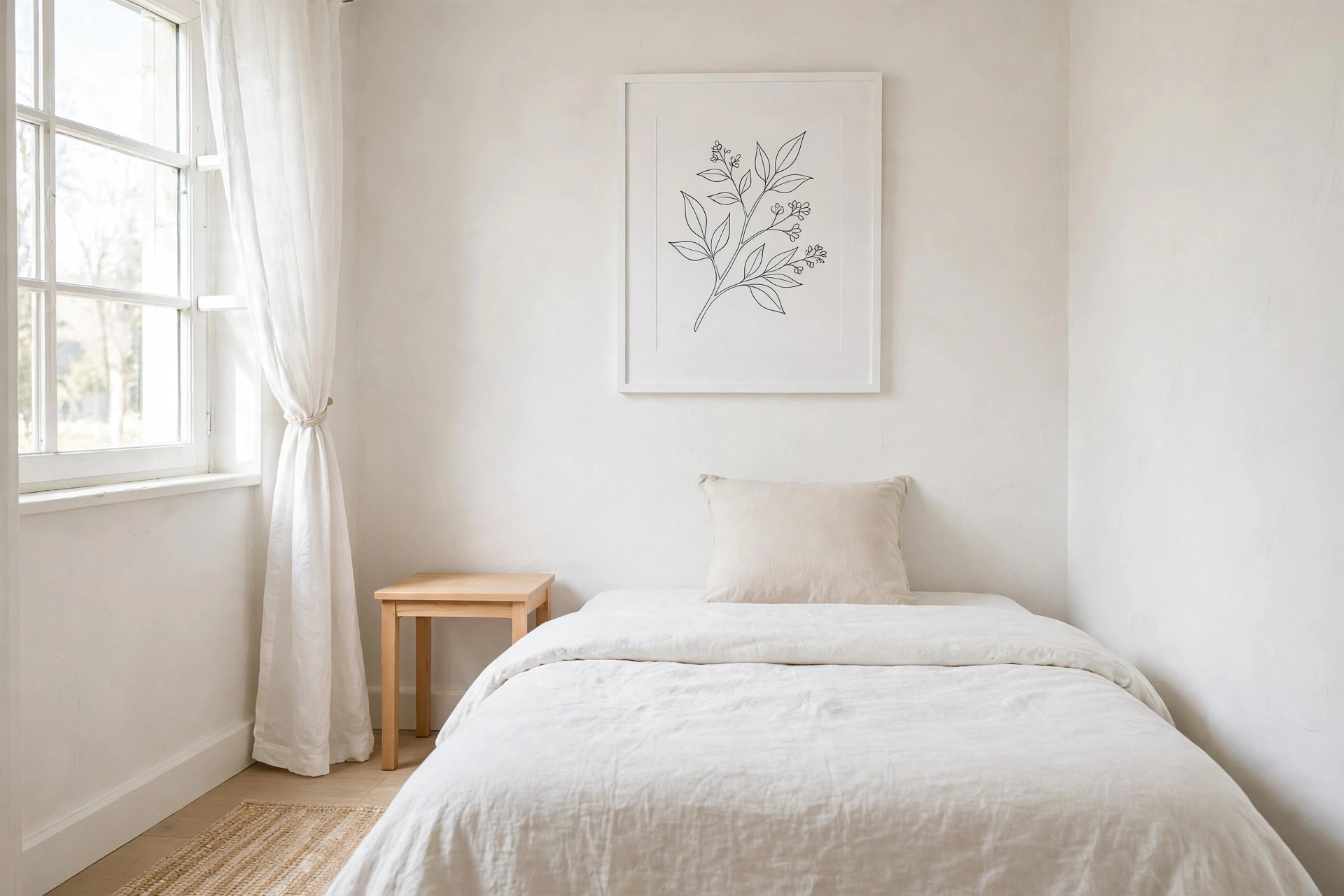
One common slip is picking art with five colors and a busy scene for a wall that is only a few feet wide. A single color line drawing solves that in one move.
A face outline, a resting figure, or a simple branch in black, gray, or soft brown on white paper feels calm and clear. It pairs well with plain bedding and a single accent color in a cushion or throw.
The lack of fill color keeps the piece light, even at a larger size. If you draw or print your own, leave wide margins around the line work so the image has room to breathe.
A plain white frame keeps the focus on the line itself, and it suits almost any bedding color nearby.
12. Use a Narrow Picture Ledge With Only Two or Three Pieces
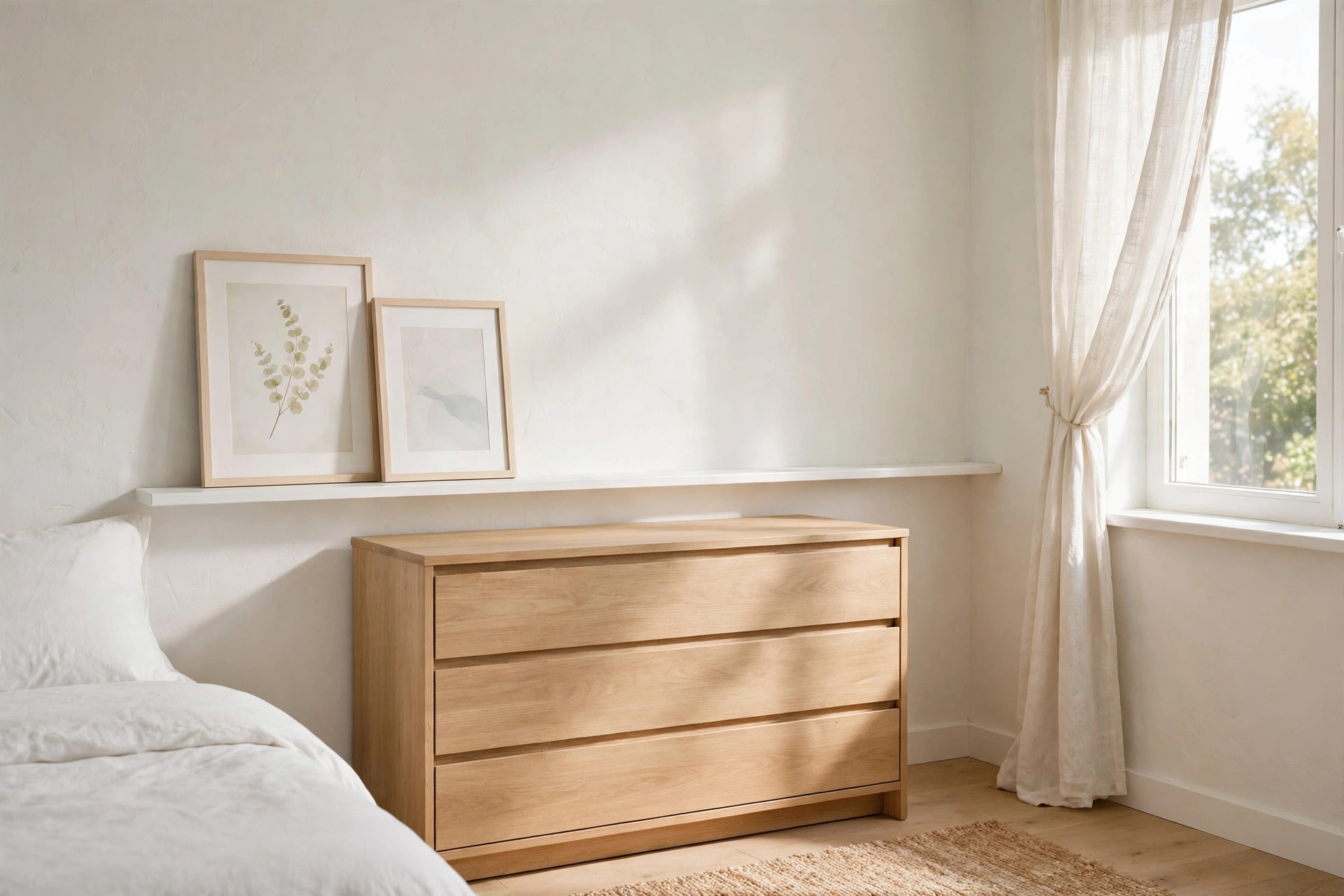
A picture ledge gives you change without a wall full of holes, but the trick is to stop at two or three pieces.
Lean one larger pale print and one or two small ones on a narrow white or pale wood ledge above a dresser or bed. Leave empty ledge space at one end, since that blank stretch is what keeps it feeling open.
Swap prints by season instead of adding more. The ledge itself should be slim, so it does not jut into the room. Wipe dust off the ledge each week, as a dusty ledge reads as clutter in photos and in person.
Start with the largest piece on the left, then balance it with the smaller ones and one clear gap.
13. Pick Glass Front Frames That Catch and Reflect Light
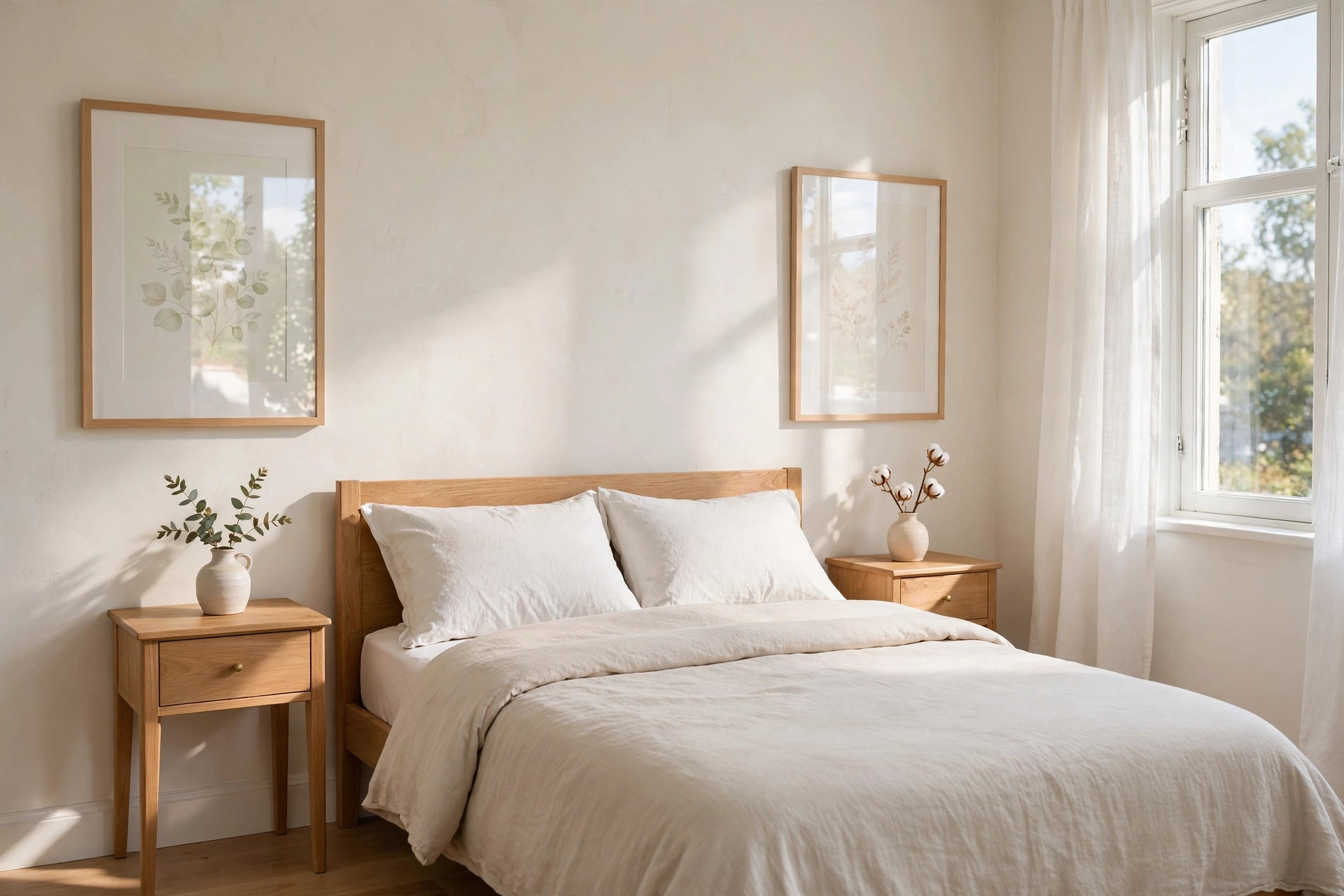
Look closely at a glass front frame in daylight and you will see why it helps a small room. The glass catches light from the window and gives the wall a soft shine, much like a mirror but gentler.
Use it for pale prints, pressed leaves, or light photos that will not get lost in glare. Hang glass frames on a wall that gets indirect light, not harsh sun all day, so reflections stay soft. Keep the glass clean with a soft cloth.
A pair of glass frames above matching nightstands can make the bed wall feel bright, even on a gray morning with the curtains half open. Test one frame near the window first, and watch it for a day if you worry about strong reflections.
14. Put Art Above the Bed Only and Leave Other Walls Bare
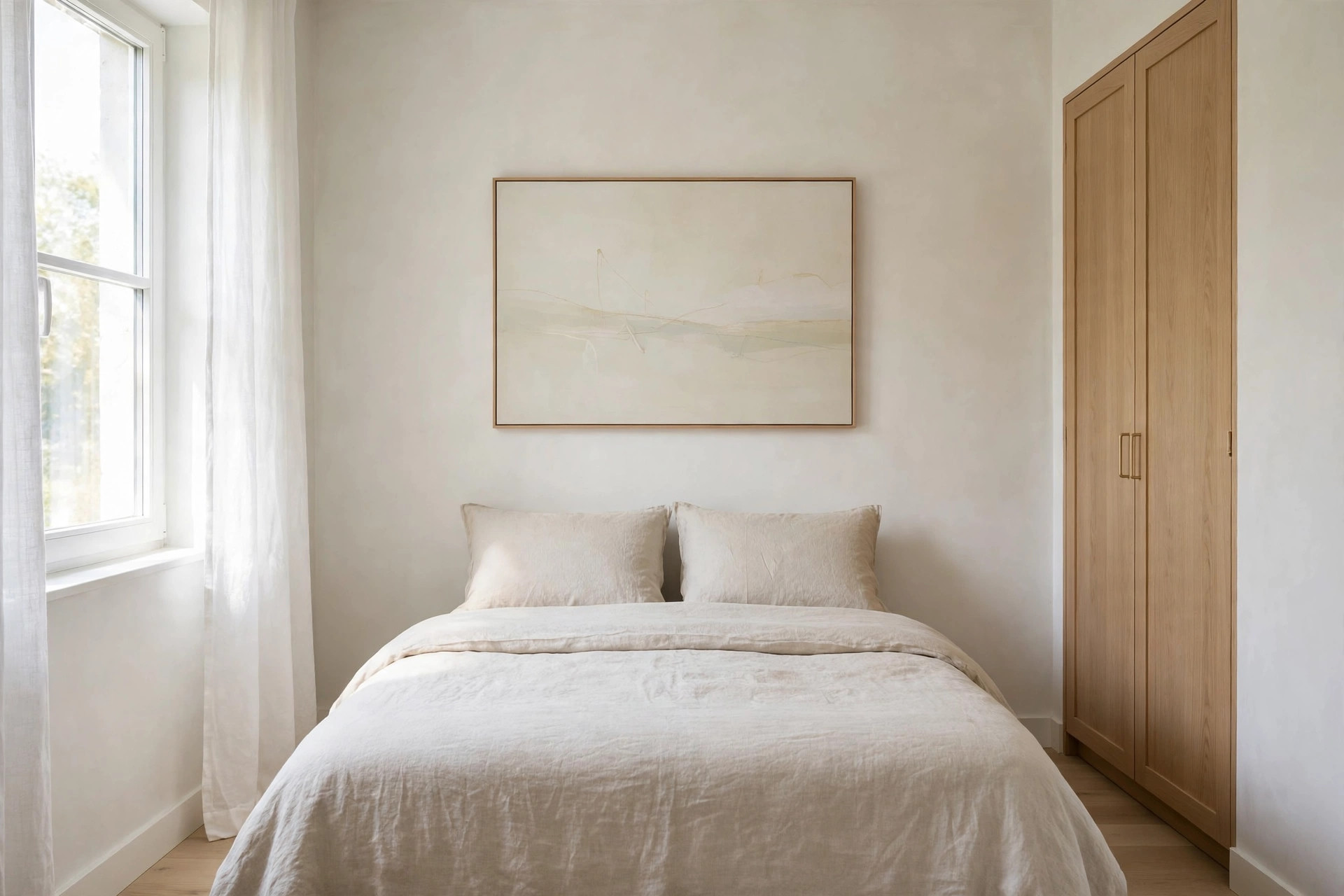
Compare a room with art on every wall to one with art only above the bed, and the second one feels calmer almost every time. Bare side walls give the eye rest and make the bed wall stand out as the clear focus.
Choose one wide pale piece or a neat pair above the headboard, then stop. This plan suits rooms where a wardrobe and door already break up the other walls. It also makes cleaning and repainting simpler later.
If the bare walls feel too plain at first, add texture with plain curtains or a woven rug instead of more frames. These above bed decor ideas for small bedrooms show the same focus well.
Plain walls also make the bed feel wider, since nothing at the sides pulls attention away from it.
15. Choose a Soft Horizon Print That Reads Like a Window View
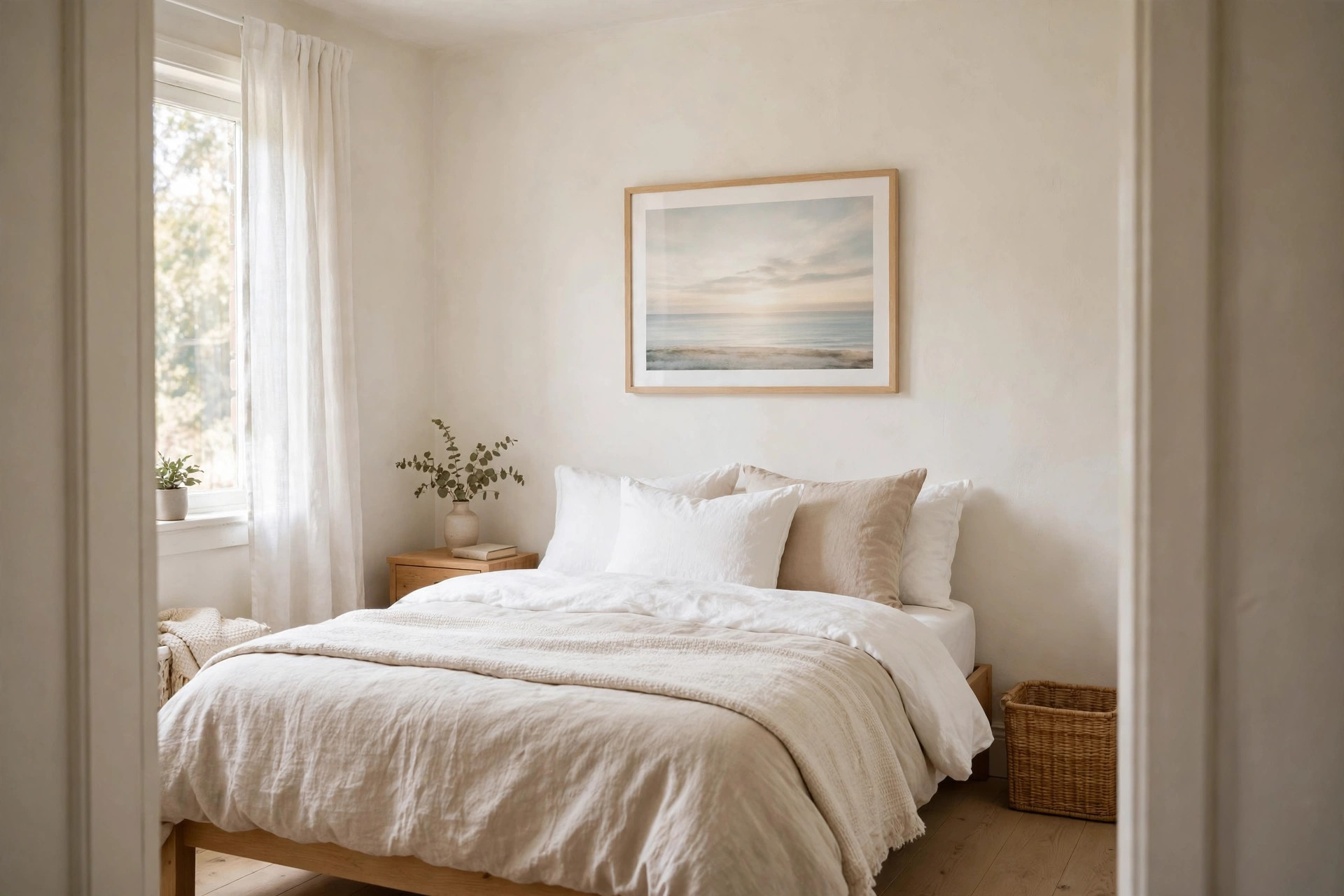
In my view, the calmest small bedrooms borrow a trick from a good window: a soft horizon line. A print with a pale sky above and a quiet sea, field, or sand line below gives the wall a sense of distance.
Hang it where you see it from the bed, so the view is the last thing you notice at night. Keep colors washed and light, with no dark frame to box it in.
A wide format works best, since it spreads the horizon across the wall. Pair it with plain white or sand bedding, and the whole bed area feels like a quiet place to rest.
Prop it on a dresser for a day first, so you can check the horizon line from where you sleep.
Start with one wall, one light piece, and plenty of clear space around it. That single change shows you how much room your walls still have.
From there, add only what keeps the calm feeling: pale color, slim frames, and art with distance or white space built in. These small bedroom wall art ideas work because they respect the size of the room instead of fighting it.
Pick your favorite idea, try it above the bed first, and live with it for a week. Save this to your bedroom board for later when you plan the next wall.


